
CNF 253 C S742C - Refrigerator VALBERG - Free user manual and instructions
Find the device manual for free CNF 253 C S742C VALBERG in PDF.



| Product type | Combined refrigerator-freezer |
| Brand | VALBERG |
| Model | CNF 253 C S742C |
| Dimensions (W x D x H) | 600 x 540 x 1810 mm |
| Power supply | 220-240 V, 50 Hz |
| Refrigerator temperature setting | Rotary knob: OFF, COLD, COLDER, COLDEST |
| Freezer temperature setting | Slider: intermediate position recommended |
| Freezing+ mode | Yes (activation by sequence OFF then turn within 10 s) |
| Open door alarm | Yes (flashing after 90 s) |
| Interior lighting | LED (replacement by professional) |
| Door opening direction reversal | Yes (kit supplied) |
| Removable shelves | Yes (slides on walls) |
| Door balconies | Removable for cleaning |
| Vegetable drawer | Yes (with cover) |
| Leveling feet | Yes (adjustable at front) |
| Interior maintenance | Clean with warm water and mild soap |
| Defrosting | Manual (in case of frost accumulation) |
| Safety | Mandatory earthing; do not use steam cleaner |
| Climate class | SN, N, ST, T (according to rating plate) |
| Warranty | 2 years (upon presentation of receipt) |
Frequently Asked Questions - CNF 253 C S742C VALBERG
User questions about CNF 253 C S742C VALBERG
0 question about this device. Answer the ones you know or ask your own.
Ask a new question about this device
Download the instructions for your Refrigerator in PDF format for free! Find your manual CNF 253 C S742C - VALBERG and take your electronic device back in hand. On this page are published all the documents necessary for the use of your device. CNF 253 C S742C by VALBERG.
USER MANUAL CNF 253 C S742C VALBERG
Thank you for choosing this VALBERG product. VALBERG products are chosen, tested, and recommended by ELECTRO DEPOT, so you can be sure you are getting a top-quality, easy-to-use product that won't let you down. We're confident your new device will be a pleasure to use every day!
Welcome to ELECTRO DEPOT.
Table of Contents
A Product overview
Parts
B Product usage
Installation, User control panel, Daily use, Helpful hints and tips
Cleaning and maintenance
Cleaning and maintenance, Troubleshooting
A Product overview
Parts
A Led light
E Crisper
B Temperature control knob
Freezer drawers
C Fridge shelves
Leveling feet
D Crisper cover
Fridge balconies

Note: The above picture is for reference only. The actual appliance may differ.
Installation
Space Requirement
- Select a location without direct exposure to sunlight;
- Select a location with enough space for the refrigerator doors to open easily;
- Select a location with level (or nearly level) flooring;
- Allow sufficient space to install the refrigerator on a flat surface;
- Allow clearance to the right, left, back, and top when installing. This will help reduce power consumption and keep your energy bills lower.
- Keep at least 50mm gap at two sides and back.
Positioning
Install this appliance at a location where the ambient temperature corresponds to the climate class indicated on the rating plate of the appliance: for refrigerating appliances with climate class:
- extended temperate: this refrigerating appliance is intended to be used at ambient temperatures ranging from 10°C to 32°C ; (SN)
- temperate: this refrigerating appliance is intended to be used at ambient temperatures ranging from 16°C to 32°C ; (N)
- subtropical: this refrigerating appliance is intended to be used at ambient temperatures ranging from 16°C to 38°C ; (ST)
- tropical: this refrigerating appliance is intended to be used at ambient temperatures ranging from 16°C to 43°C ; (T)
Location
The appliance should be installed well away from sources of heat such as radiators, boilers, direct sunlight etc. Ensure that air can circulate freely around the back of the cabinet. To ensure best performance, if the appliance is positioned below an overhanging wall unit, the minimum distance between the top of the cabinet and the wall unit must be at least 50 mm. Ideally, however, the appliance should not be positioned below overhanging wall units. Accurate leveling is ensured by one or more adjustable feet at the base of the cabinet.
This refrigerating appliance is not intended to be used as a built-in appliance.
Warning! It must be possible to disconnect the appliance from the mains power supply; the plug must therefore be easily accessible after installation.
Electrical connection
Before plugging in, ensure that the voltage and frequency shown on the rating plate correspond to your domestic power supply. The appliance must be earthed. The power supply cable plug is provided with a contact for this purpose. If the domestic power supply socket is not earthed, connect the appliance to a separate earth in compliance with current regulations, consulting a qualified electrician. The manufacturer declines all responsibility if the above safety precautions are not observed. This appliance complies with the E.E.C. Directives.
Door Reversibility
Before reversing the door, please be prepared below tools and material: straight screwdriver, cross screwdriver, spanner and the components included in the poly bag:
| Left door hinge cover x 1 | Left aid-closer on upper door x 1 | Left aid-closer on lower door x 1 |
- Unscrew top hinge cover and then unscrew the top hinge.
Then lift upper door and place it on a soft pad to avoid scratch and damage.
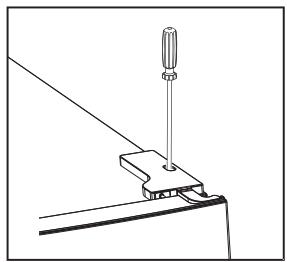
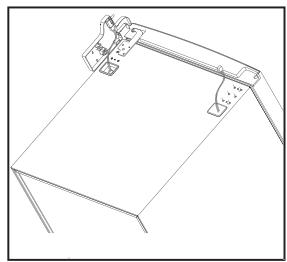
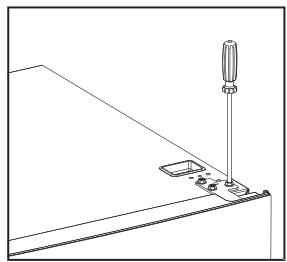
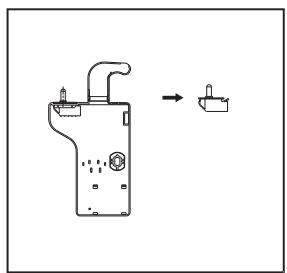
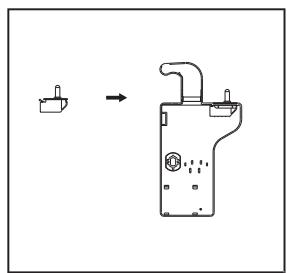
- Remove the top left screw cover.
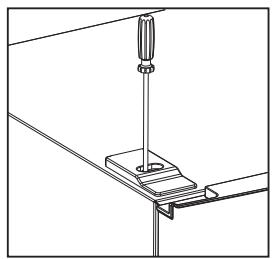
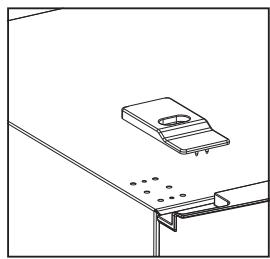
B Product usage
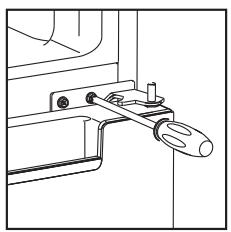
- Take off the upper door, take out the screw from the middle hinge by cross screwdriver, then take off the lower door.
- Laying down the refrigerator, take out the adjusting feet as below, then take off the lower hinge by cross screwdriver.
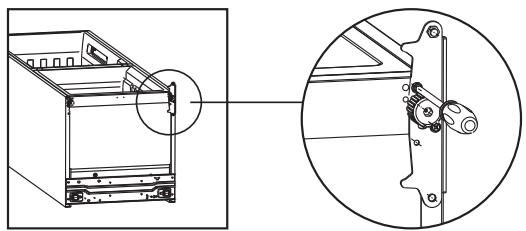
- Adjusting the hinge core position of the lower hinge and upper hinge to opposite position.
1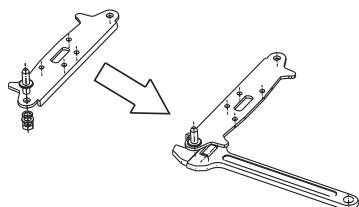
2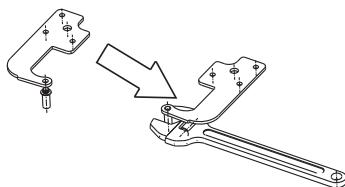
- Install the lower hinge under to the refrigerator like below, screwing in the adjusting feet, make sure the position in horizon.
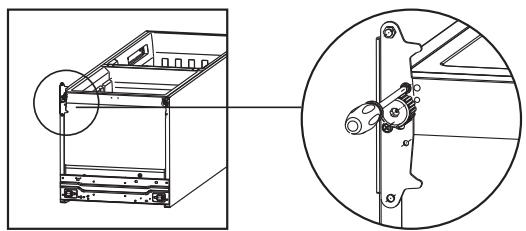
- Detach the Fridge and the Freezer door gaskets and then attach them after rotating.
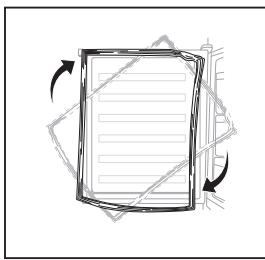
- Remove the original aid-closers from upper and lower door, then install the aid-closers from the internal bag (with instruction manuals) to the opposite side.
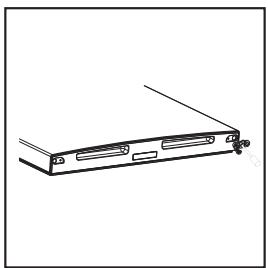
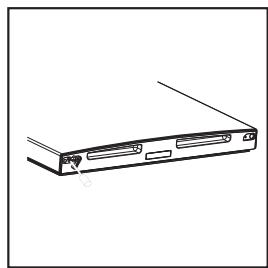
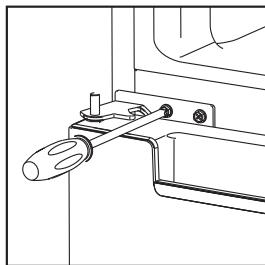
- Install the lower door, adjust and fix the middle hinge onto the cabinet.
B Product usage
- Place the upper door back on. Ensure the door is aligned horizontally and vertically so that the seal are closed on all sides before finally tightening the top hinge. Then inert the top hinge and screw it to the top of unit and then fix hinge cover (in accessory bag) by screw.
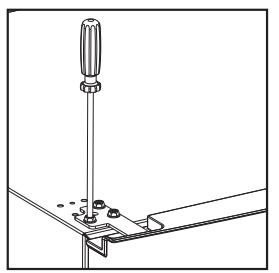
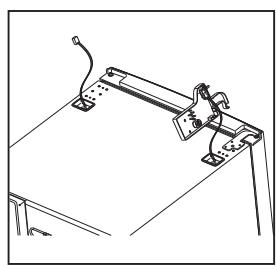
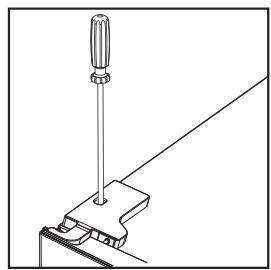
- Fix the screw cover.
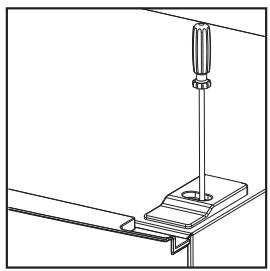
Space Requirement
- Keep enough space of door open.
- Keep at least 50mm gap at two sides and back.
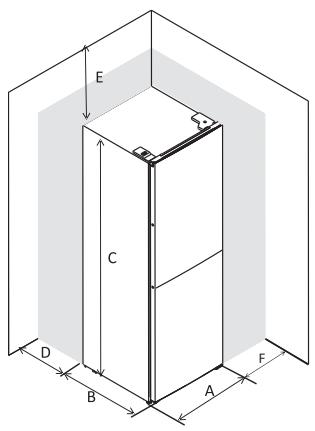
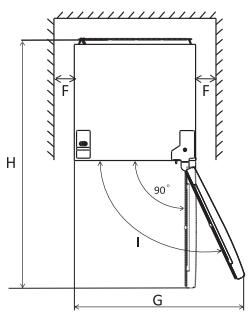
| A | 540 |
| B | 600 |
| C | 1810 |
| D | min=50 |
| E | min=50 |
| F | min=50 |
| G | 1100 |
| H | 1135 |
| I | 135° |
B Product usage
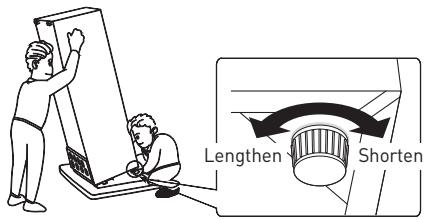
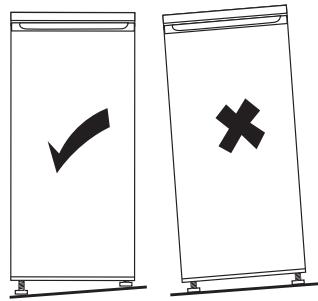
Levelling the unit
To do this adjust the two levelling feet at front of the unit. If the unit is not level, the doors and magnetic seal alignments will not be covered properly.
User control panel
Temperature setting of the Fridge Compartment
The fridge temperature setting knob
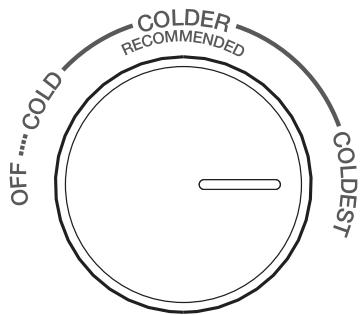
- The knob in fridge compartment is used to adjust temperature of fridge compartment.
- The internal temperature is controlled by a sensor. There are 4 settings: OFF, COLD, COLDER and COLDEST. COLD is warmest setting and COLDEST is coldest setting.
- The appliance may not operate at the correct temperature if it is in a particularly hot or if you open the door often.
- Neither fridge, nor freezer compartment works when the setting is OFF.
B Product usage
Temperature setting of the Freezer Compartment
The freezer temperature setting slider
FREEZER CONTROL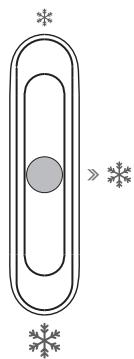
- This slider in the fridge compartment is used to adjust the temperature of the freezer compartment.
- When the slider is positioned toward [one direction], the temperature in the freezer compartment will be higher. Conversely, the temperature in the freezer compartment will be lower if the slider is moved toward [the other direction].
- When the slider is positioned toward [one direction], the temperature in the freezer compartment will be higher. Conversely, the temperature in the freezer compartment will be lower if the slider is moved toward [the other direction].
- When the slider is positioned toward [one direction], the temperature in the freezer compartment will be higher. Conversely, the temperature in the freezer compartment will be lower if the slider is moved toward [the other direction].
- When the slider is positioned toward [one direction], the temperature in the freezer compartment will be higher. Conversely, the temperature in the freezer compartment will be lower if the slider is moved toward [the other direction].
- When the slider is positioned toward [one direction], the temperature in the freezer compartment will be higher. Conversely, the temperature in the freezer compartment will be lower if the slider is moved toward [the other direction].
- When the slider is positioned toward [one direction], the temperature in the freezer compartment will be higher. Conversely, the temperature in the freezer compartment will be lower if the slider is moved toward [the other direction].
- When the slider is positioned toward *, the temperature in the freezer compartment will be higher. Conversely, the temperature in the freezer compartment will be lower if the slider remains in the same position.
- The middle position of the slider is the recommended position for normal use.
- To achieve the lowest temperature in the freezer compartment, you can adjust the setting knob to the coldest setting and position the slider at ***.
Super Freeze
To enter Super Freeze mode:
First, turn the temperature control knob to the "OFF" position, and then operate the temperature control knob in the sequence shown in the figure below within 10 seconds. After the operation is completed, wait for 1.5 seconds; the light will flash at 0.5 Hz (on for 1.5 seconds, off for 0.5 seconds), and the fast freeze mode will be activated.
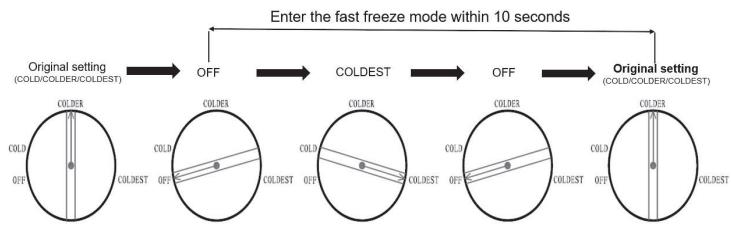
To exit Super Freeze mode (choose one of the following methods):
- Adjust the knob to "OFF".
- Power off to exit the super freeze mode.
- Super freeze will automatically turn off after running for 50 hours.
After exiting super freeze mode, the refrigerator will run according to the knob setting, and the lighting will return to normal control.
Door open alarm
If the door is open for 90 seconds and not closed, the refrigerating light flashes 3 times (light on for 0.5 seconds and light off for 0.5 seconds is a flash); after each flash, pause for 3 seconds.
Temperature setting recommendation
| Environment temperature | 16°C | 25°C | 32°C |
| Fridge | OFF-COLD COLDER RECOMMENDED COILEST | OFF-COLD COLDER RECOMMENDED COILEST | OFF-COLD COLDER RECOMMENDED COILEST |
| Freezer | * * * | * * * | * * * |
The information above gives users recommendations for temperature setting. - In winter or when the temperature is below 16°C, users should avoid setting on star and cold. - For energy saving, the star-star-star and coldest settings only apply to special needs (such as quick-freezing or ice making), and need to be turned back after the special need.
Daily use
First use
Cleaning the interior
Before using the appliance for the first time, wash the interior and all internal accessories with lukewarm water and some neutral soap to remove the typical smell of a brand new product, then dry thoroughly.
Important! Do not use detergents or abrasive powders, as these will damage the finish.
Daily use
Position different food in different compartments according to the table below:
| Refrigerator compartments | Type of food |
| Door or balconies of fridge compartment | · Foods with natural preservatives, such as jams, juices, drinks, condiments. · Do not store perishable foods. |
| Crisper drawer (salad drawer) | · Fruits, herbs and vegetables should be placed separately in the crisper bin. · Do not store bananas, onions, potatoes, garlic in the refrigerator. |
| Fridge shelf – middle | · Dairy products, eggs |
| Fridge shelf – top | · Foods that do not need cooking, such as ready-to-eat foods, deli meats, leftovers. |
| Freezer drawer(s)/shelf | · Foods for long-term storage. · Bottom drawer/shelf for raw meat, poultry, fish. · Middle drawer/shelf for frozen vegetables, chips. · Top drawer/shelf for ice cream, frozen fruit, frozen |
Freezing fresh food
- The freezer compartment is suitable for freezing fresh food and storing frozen and deep-frozen food for a long time.
- Place the fresh food to be frozen in the bottom compartment. The maximum amount of food that can be frozen in 24 hours is specified on the rating plate. The freezing process lasts 24 hours: during this period do not add other food to be frozen.
Storing frozen food
When first starting up or after a period out of use, before putting the product in the compartment, let the appliance run at least 2 hours on the higher settings.
Important! In the event of accidental defrosting, for example the power has been off for longer than the value shown in the technical characteristics chart under "rising time", the defrosted food must be consumed quickly or cooked immediately and then re-frozen (after cooking).
Thawing
Deep-frozen or frozen food, prior to use, can be thawed in the freezer compartment or at room temperature, depending on the time available for this operation.
Small pieces may even be cooked still frozen, directly from the freezer. In this case, cooking will take longer.
B Product usage
Accessories Movable shelves
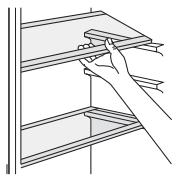
The walls of the refrigerator are equipped with a series of runners so that the shelves can be positioned as desired.
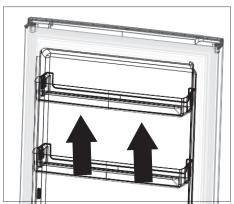
Position the door balconies
Door balconies can be disassembled for cleaning. To disassemble, proceed as follows: gradually pull the balcony in the direction of the arrows until it comes free; after cleaning, reposition it.
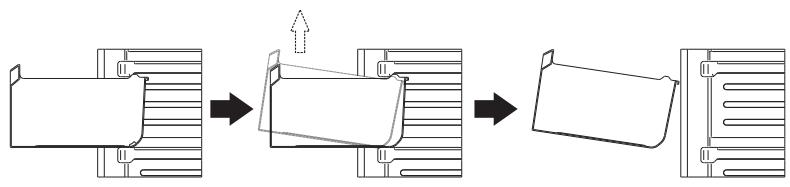
Disassemble the bottom drawer
- Pull out the bottom drawer to the stopper position.
- Lift up the front of the drawer.
- Pull out the bottom drawer.
Helpful hints and tips
Hints for freezing
To help you make the most of the freezing process, here are some important hints:
- The maximum quantity of food which can be frozen in 24 hours is shown on the rating plate.
- The freezing process takes 24 hours. No further food to be frozen should be added during this period. Only freeze top quality, fresh, and thoroughly cleaned foodstuffs.
- Prepare food in small portions to enable it to be rapidly and completely frozen and to make it possible to subsequently thaw only the quantity required.
B Product usage
- Wrap up the food in aluminium foil or polythene and make sure that the packages are airtight.
- Do not allow fresh, unfrozen food to touch food which is already frozen, thus avoiding a rise in temperature of the latter.
- Lean foods store better and longer than fatty ones. Salt reduces the storage life of food.
- Water ices, if consumed immediately after removal from the freezer compartment, can possibly cause the skin to be freeze burnt.
- It is advisable to show the freezing-in date on each individual pack to enable you to keep track of the storage time.
- It is advisable to show the freezing-in date on each individual pack to enable you to keep track of the storage time.
Hints for storage of frozen food
To obtain the best performance from this appliance, you should:
- make sure that the commercially frozen foodstuffs were adequately stored by the retailer;
- be sure that frozen foodstuffs are transferred from the food store to the freezer in the shortest possible time; not open the door frequently or leave it open longer than absolutely necessary.
Once defrosted, food deteriorates rapidly and cannot be refrozen. - Do not exceed the storage period indicated by the food manufacturer.
Hints for fresh food refrigeration
To obtain the best performance:
- Do not store warm food or evaporating liquids in the refrigerator.
- Do cover or wrap the food, particularly if it has a strong flavour.
Hints for refrigeration
Useful hints:
- Meat (all types): wrap in polythene bags and place on the glass shelves above the vegetable drawer.
- For safety, store in this way only one or two days at the most. Cooked foods, cold dishes, etc.... these should be covered and may be placed on any shelf.
- Fruit and vegetables: these should be thoroughly cleaned and placed in the special drawer(s) provided. Butter and cheese: these should be placed in special airtight containers or wrapped in aluminum foil or polythene bags to exclude as much air as possible. Milk bottles: these should have a cap and should be stored in the balconies on the door.
- Bananas, potatoes, onions and garlic, if not packed.
- For energy efficiency, all drawers, baskets, and shelves must be in the right place.
Cleaning and maintenance
For hygienic reasons, the appliance interior, including interior accessories, should be cleaned regularly.

Caution! The appliance may not be connected to the mains during cleaning. Danger of electrical shock! Before cleaning, switch the appliance off and remove the plug from the mains, or switch off or turn out the circuit breaker or fuse. Never clean the appliance with a steam cleaner. Moisture could accumulate in electrical components, danger of electrical shock! Hot vapors can lead to the damage of plastic parts. The appliance must be dry before it is placed back into service.

Important! Ethereal oils and organic solvents can attack plastic parts, e.g. lemon juice or the juice from orange peel, butyric acid, cleansers that contain acetic acid.
- Do not allow such substances to come into contact with the appliance parts.
- Do not use any abrasive cleaners.
- Remove the food from the freezer. Store it in a cool place, well covered.
- Switch the appliance off and remove the plug from the mains, or switch off or turn out the circuit breaker or fuse.
- Clean the appliance and the interior accessories with a cloth and lukewarm water. After cleaning, wipe with fresh water and rub dry.
- After everything is dry, place the appliance back into service.
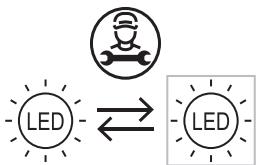
Replace the lamp
- This product contains a light source exempted from energy efficiency class. The light source in this product can only be replaced by qualified professionals. Please contact after-sales service
if the light source fails. The light source shall be removed at the end of the product's useful life, with sorting and recycling done separately.
Troubleshooting
Caution! Before troubleshooting, disconnect the power supply. Only a qualified electrician or competent person must do the troubleshooting that is not in this manual.
Important! There are some sounds during normal use (compressor, refrigerant circulation).
| Problem | Possible Cause | Solution |
| Appliance does not work | • Temperature regulation knob is set at coldest • Mains plug is not plugged in or is loose • Fuse has blown or is defective • Socket is defective | • Set the knob at other switch on the appliance. • Insert mains plug. • Check fuse, replace if necessary. • Mains malfunctions are to be corrected by an electrician. |
| Appliance freezes or cools too much | • Temperature is set too cold or the appliance runs at coldest. | • Turn the temperature regulator to a warmer setting temporarily. |
| The food is not frozen enough. | • Temperature is not properly adjusted. • Door was open for an extended period. • A large quantity of warm food was placed in the appliance within the last 24 hours. • The appliance is near a heat source. | • Please look in the initial Temperature Setting section. • Open the door only as long as necessary. • Turn the temperature regulation to a colder setting temporarily. • Please look in the installation location section. |
| Heavy build up of frost on the door seal. | • Door seal is not air tight. | • Carefully warm the leaking sections of the door seal with a hair dryer (on a cool setting). At the same time shape the warmed door seal by hand such that it sits correctly. |
| Unusual noises | • Appliance is not level. • The appliance is touching the wall or other objects. • A component, e.g. a pipe, on the rear of the appliance is touching another part of the appliance or the wall. | • Re-adjust the feet. • Move the appliance slightly. • If necessary, carefully bend the component out of the way. |
| Water on the floor | • Water drain hole is blocked. | • See the Cleaning and maintenance section. |
| Side panels are hot. | • It's normal. Heat exchange parts are in the sides. | • Take gloves to touch sides if needed. |
If the malfunction shows again, contact the Service Center. These data are necessary to help you quickly and correctly. Write the necessary data here, refer to the rating plate.
Thank you!
This product is guaranteed against faults caused by defects in manufacturing or the materials used for a period of two years, starting from the date of purchase.* This warranty does not cover defects or damage caused by failure to install the device correctly, incorrect use of the product, or excessive wear and tear.
*proof of purchase required.
- TABLE OF CONTENTS
- A PRODUCT OVERVIEW
- PARTS
- INSTALLATION
- SPACE REQUIREMENT
- POSITIONING
- LOCATION
- ELECTRICAL CONNECTION
- DOOR REVERSIBILITY
- B PRODUCT USAGE
- LEVELLING THE UNIT
- USER CONTROL PANEL
- TEMPERATURE SETTING OF THE FRIDGE COMPARTMENT
- TEMPERATURE SETTING OF THE FREEZER COMPARTMENT
- SUPER FREEZE
- DOOR OPEN ALARM
- TEMPERATURE SETTING RECOMMENDATION
- DAILY USE
- FIRST USE
- FREEZING FRESH FOOD
- STORING FROZEN FOOD
- THAWING
- ACCESSORIES MOVABLE SHELVES
- POSITION THE DOOR BALCONIES
- DISASSEMBLE THE BOTTOM DRAWER
- HELPFUL HINTS AND TIPS
- HINTS FOR FREEZING
- HINTS FOR STORAGE OF FROZEN FOOD
- HINTS FOR FRESH FOOD REFRIGERATION
- HINTS FOR REFRIGERATION
- CLEANING AND MAINTENANCE
- REPLACE THE LAMP
- TROUBLESHOOTING
- THANK YOU
Brand : VALBERG
Model : CNF 253 C S742C
Category : Refrigerator