USER MANUAL CNF 255 E S180C VALBERG
Thank you for choosing this VALBERG product. VALBERG products are chosen, tested, and recommended by ELECTRO DEPOT, so you can be sure you are getting a top-quality, easy-to-use product that won't let you down. We're confident your new device will be a pleasure to use every day!
Welcome to ELECTRO DEPOT.
Table of Contents
| A Product overview | Parts |
| B Product usage | Unpacking the appliance
Installation
Reversing the door
Using the appliance
Food storage tips |
| C Cleaning and maintenance | Cleaning and maintenance
Troubleshooting guide |
A Product overview
Parts
• Interior lighting B Control panel Glass shelves Fruit and vegetable bin
Freezer drawer F Front feet adjustable in height (x 2) Door shelves Bottle shelf
Unpacking the appliance
- Remove the transport packaging.
- Make sure that the appliance has not been damaged during transport. Do not plug the appliance into the mains if damaged! Contact your retailer instead.
- Remove all the adhesive tape and packaging materials from the inside and outside of the appliance.
Before initial use
- Clean the inside of the appliance with warm water and a little white vinegar. Do not use soap or detergents as the odour can linger. When you have finished cleaning the appliance, dry it completely. Only wipe electrical parts with a soft cloth.
- White spirit can be used to remove adhesive residue from the exterior.
- Always unplug the appliance, remove the fuse or switch off the circuit breaker before cleaning.
Installation
Installation location
- Always stand the combined refrigerator on a flat, stable surface. As your appliance will be heavy when filled with food, it must be stood on a strong, solid floor.
- The appliance must be installed in a dry, well-ventilated room at ambient temperature. Refer to the table in the next section "Climate class".
- Never put devices that generate heat such as microwave ovens, toasters and the like on top of the refrigerator.
- Do not expose the appliance to direct sunlight.
- Do not expose the appliance to rain.
- Do not install the appliance next to radiators, cookers or other heat sources. The ambient temperature affects energy consumption and appliance efficiency.
- The mains outlet must remain accessible when the appliance is installed.
- The appliance can be installed alone, next to a piece of furniture or in front of a wall. Make sure there is enough space around the appliance to conveniently open the door and drawers. After installation, make sure that the appliance does not rest on its power supply cable.
- Before plugging the appliance into the mains for the first time, allow two hours for it to settle if it has been transported in the upright position, or 24 hours if it has been transported horizontally; this is to allow the refrigerant gas to flow back into the compressor. Failure to do so could damage the compressor.
Adequate ventilation
Make sure that air can circulate freely around the appliance. To ensure that your appliance works properly, do not obstruct the air vents.
Dimensions in mm:
| W | D | H | A | B | C (°) | E | F |
| 550 | 563 | 1797 | 940 | 1120-1140 | 135 | 50-70 | 100 |
Fig. 1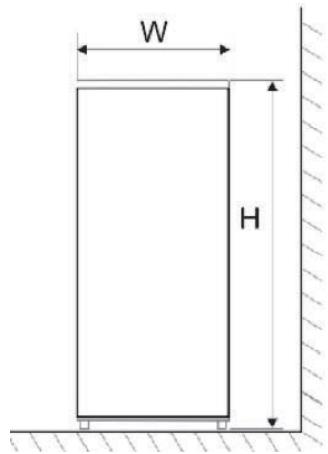
Fig. 2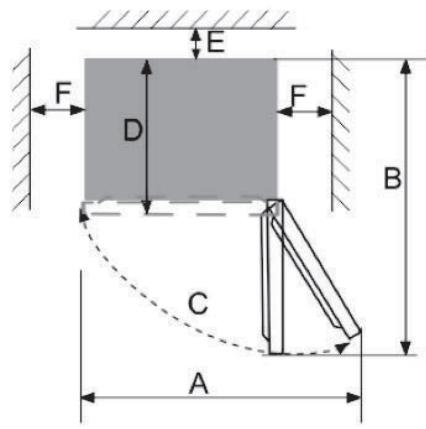
If you are going to install your appliance next to another refrigerator or freezer, make sure they are not stuck together as this could cause condensation on the outside.
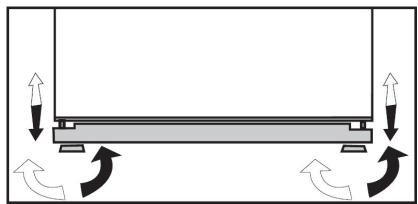
Leveling
- The appliance must be made level to prevent vibration in use. To level the appliance, adjust the front feet.
Climate class
The appliance must be installed in a location with an ambient temperature that is compatible with the climate class for which it was designed (see table below). The climate class is on the data plate on the outside of the appliance.
The table below sets out which ambient temperatures are compatible with which climatic classes:
| Climate class | Ambient temperature |
| SN | +10 to +32°C |
| N | +16 to +32°C |
| ST | +16 to +38°C |
| T | +16 to +43°C |
Your CNF 255 E X180C refrigerator is SN/N/ST rated. If the room temperature is below or above the ambient room temperature, the performance of your freezer may be affected, and your food may spoil.
Reversing the door
The side at which the door opens can be changed, from the right side (as supplied) to the left side, if required.
Warning!
When reversing the door, the appliance must not be connected to the mains. Ensure that the plug is removed from the mains socket.
| Not provided |
| 8mm socket wrench | Thin-blade screwdriver | Putty knife |
| | |
| Cross-shaped screwdriver | Monkey wrench | 8mm wrench |
Additional parts (in the plastic bag)
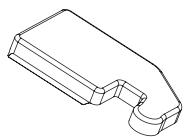
Left hinge cover
B Product usage
Note: If required, you may lay the refrigerator on its back to gain access to the base. Rest it on soft foam packaging or similar material to avoid damaging the back panel. To reverse the door, the following steps are generally recommended.
- Stand the refrigerator upright. Open the upper door to remove all door shelves (to avoid damage), then close it.
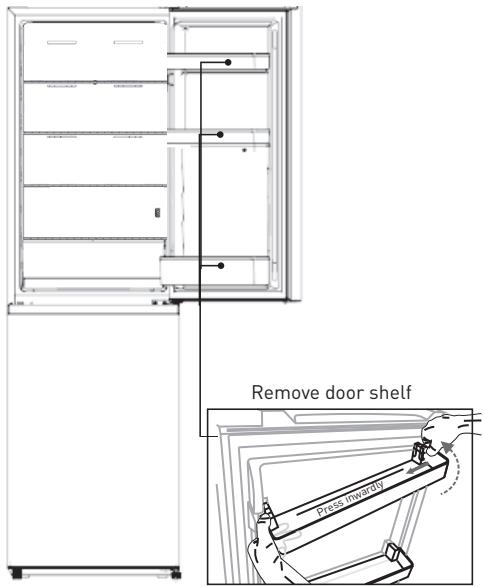
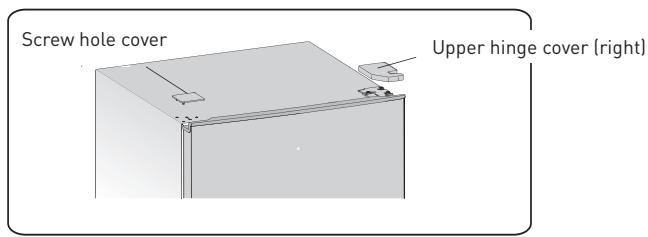
- Use a putty knife or thin-blade screwdriver to pry off the screw hole cover at the top left corner of the refrigerator, and the upper hinge cover at the top right corner.
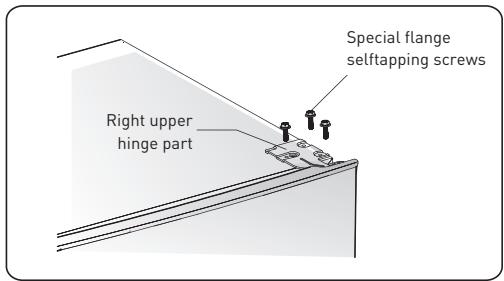
- Unscrew the special flange self-tapping screws that fix the right upper hinge part using an 8mm socket wrench or a spanner (support the upper door with your hand while doing this).
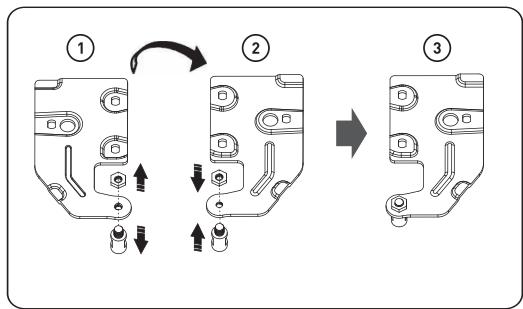
- Remove the upper hinge axis, transfer it to the reversed side, tighten securely, and put it in a safe place.
- Remove the upper door from the middle hinge by carefully lifting the door straight up.
Note: When removing the door, watch for washer(s) between the center hinge and the bottom of the upper door that may stick to the door. Do not lose them.
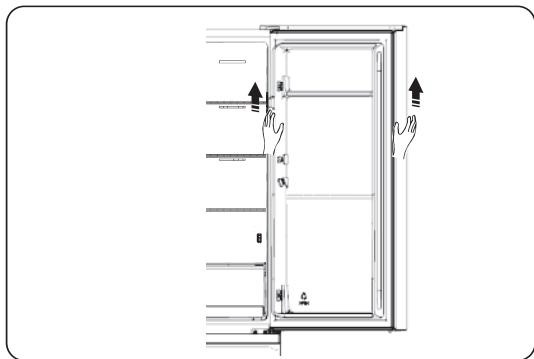
B Product usage
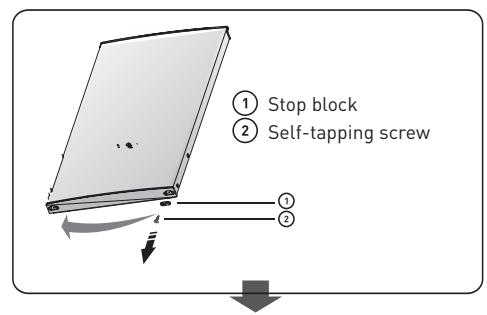
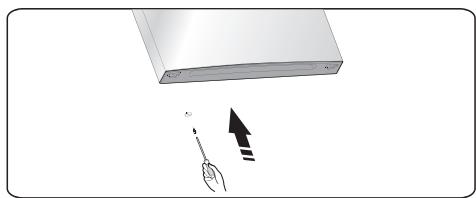
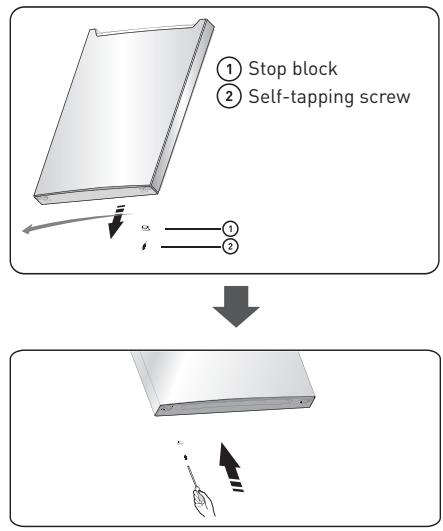
- Place the upper door on a smooth surface with its panel facing up. Loosen screw ② and part ①, then install them on the left side and tighten securely.
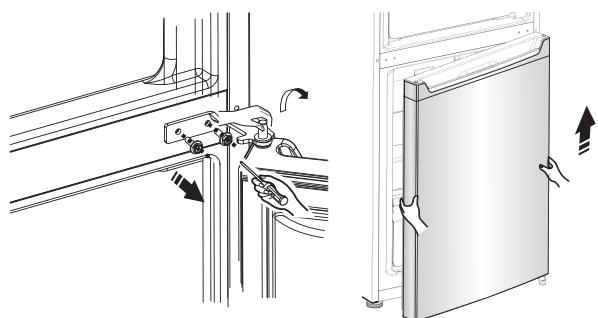
- Unscrew the two special flange self-tapping screws that fix the middle hinge part, then remove the middle hinge part that holds the lower door in place.

Note: When removing the door, watch for washer(s) between the lower hinge and the bottom of the lower door that may stick to the door. Do not lose them.
B Product usage
- Place the lower door on a smooth surface with its panel facing up. Loosen screw ② and part ①, then install them on the left side and tighten securely.
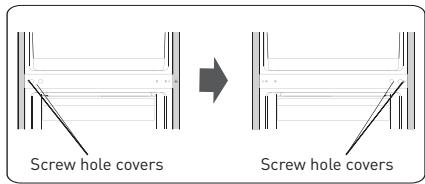
- Change the screw hole covers on the middle cover plate from left to right (as shown in the figure below).
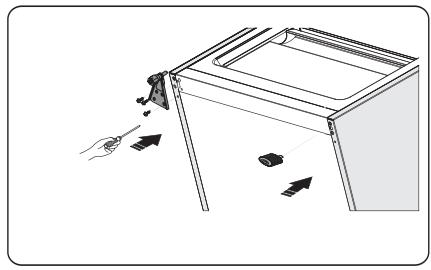
- Lay the refrigerator on soft foam packaging or similar material. Remove both adjustable bottom feet parts, and the lower hinge part by unscrewing the special flange self-tapping screws.

B Product usage
- Replace the lower hinge part to the left side and fix it with the special flange self-tapping screws. Replace the adjustable bottom feet parts to another side and fix them.
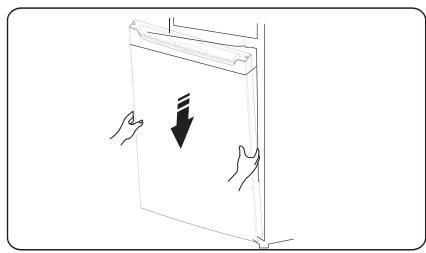
- Transfer the lower door to the proper position, adjust the lower hinge part, make the hinge axis into the lower hole of the lower door, then tighten the bolts.
- Upturn the middle hinge part 180 degrees, adjust its position, change the washer on the axis to the lower side, make the middle hinge axis into the upper hole of the lower door, tighten the bolts.
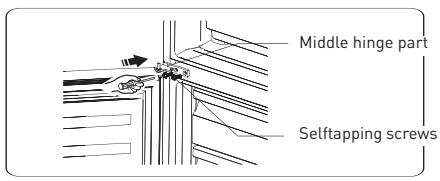
- Transfer the upper door to the appropriate position. Secure the door's level, make the middle hinge axis into the lower hole of the upper door.
B Product usage
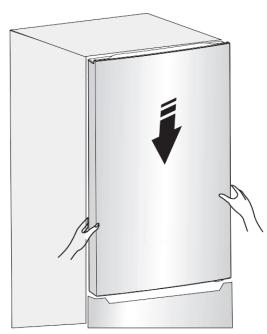
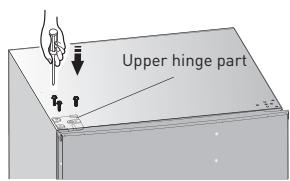
- Transfer the upper hinge part and make the upper hinge axis into the upper hole of the upper door, and adjust the position of the upper door (please support the upper door with your hand when doing it), fix the upper hinge part with the special flange self-tapping screws.
- Install the screw hole cover on the top right corner of the refrigerator. Install the upper hinge cover (which is in the plastic bag) on the left corner. Put the other upper hinge cover into the plastic bag.
Upper hinge cover (left) Screw hole cover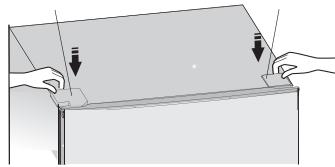
- Open the upper door and install the door shelves, then close it.
Warning!
When changing the side at which the door opens, the appliance must not be connected to the mains. Remove plug from the mains beforehand.
Using the appliance
Switching on
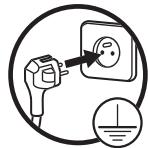
- Plug the appliance into an easily accessible, earthed mains outlet. The power indicator comes on. The control panel lights up.
- When the door is opened, the interior light in the refrigerator compartment comes on.
Before plugging the appliance into the mains socket for the first time, leave it to stand for two hours if it has been transported in the upright position, or 24 hours if it has been transported horizontally: this allows the refrigerant gas to flow back into the compressor. Failure to do so could damage the compressor.
Description of the control panel
When the cooling system is switched on for the first time, all the icons on the display panel turn on for two seconds.
Functions
Setting the temperature
To set the temperature, press the °C button repeatedly until you reach the desired setting (between 2 and 8°C). The indicator lamp for the selected temperature will light up.

The selection cycle is as follows:

When the cooling system is switched on for the first time, all the icons on the display panel turn on for two seconds and the advised temperature of 4°C is selected by default.
Mode selection
Mode selection: Two modes are available in addition to the temperature settings. Press the °C button to activate the desired mode.
B Product usage
Super Freeze mode (fast freezing)

This mode rapidly lowers the temperature of the freezer section so that food will freeze faster.
- Press the °C button for 3 seconds to activate this mode.
- Once this mode has been selected, the Super Freeze indicator lamp will light up.
- The freezer temperature is set to -25°C if the ambient temperature is below 20°C, or to -30°C if the ambient temperature is above 20°C.
- This mode automatically switches off after 52 hours. The device will then automatically be set to the previously chosen mode.
Holiday mode

This mode allows your appliance to operate using a minimum of energy while you are away on holiday.
- Press the °C button until the Holiday Mode indicator lamp lights up.
- When this mode is selected, the freezer temperature is set to -18°C and the refrigerator temperature to 15°C.
Warning!
Do not store any food in the appliance when this mode is active.
On/Off
- When the appliance is switched on, press the button for 3 seconds to switch it off. The appliance will beep to indicate that it has been switched off.
- When the appliance is off, press the button for 1 second to switch it on. The appliance will beep to indicate that it has been switched on.
Coldest part of the refrigerator compartment
The symbol indicates the coldest part of the refrigerator where the temperature is 4°C or below. It is located in the chiller compartment (as shown in the diagram on page 17). - To ensure that it stays at the correct temperature, make sure the removable shelf covering it is installed next to the sticker.
Temperature indicator
- To keep food fresh in your refrigerator, especially if it is in the coldest part, make sure that the temperature indicator reads "OK". If OK is not displayed, it means that the average temperature is too high, in which case the refrigerator thermostat should be set to a higher temperature.
Incorrect setting
Correct setting
- Whenever you alter the temperature setpoint, you should leave the internal temperature time to stabilise before making any other changes. The temperature should only be changed progressively and you should wait at least 12 hours before rechecking the temperature and making further changes.
- It is normal for OK not to show on the temperature indicator after loading the appliance with fresh food or repeatedly opening the door (or leaving it open for a long time); please therefore wait at least 12 hours before adjusting the temperature.
Food storage tips
The stored food must always be spaced apart and not touch the walls so that cold air can circulate freely between food items.

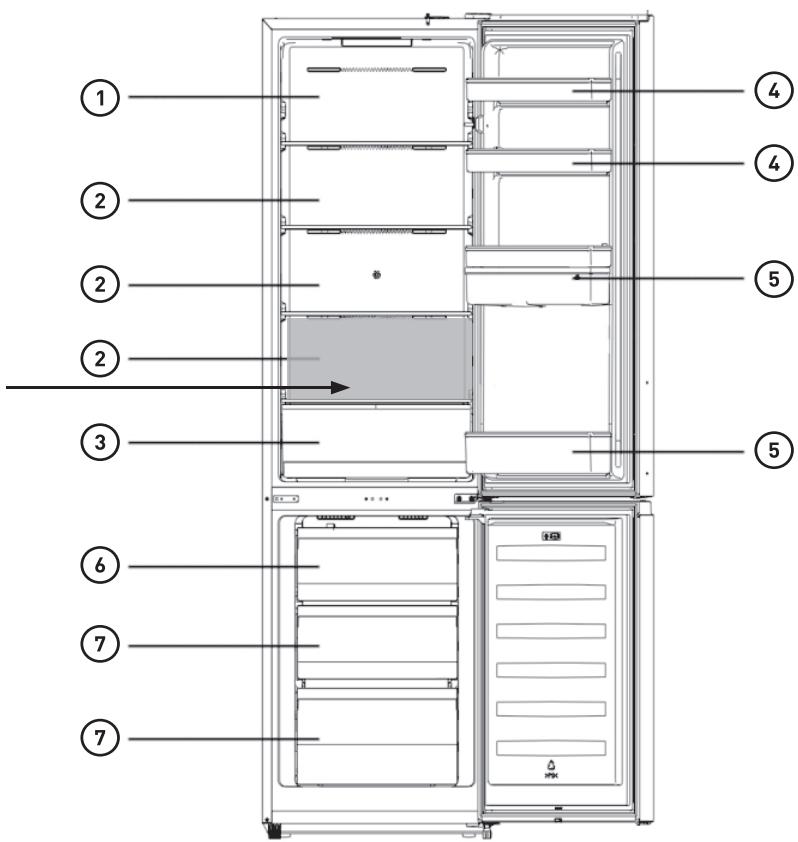
- Homemade preparations, yoghurts, cheeses
- Meat, cold cuts, fish
- Fruits and vegetables
- Butter, eggs, condiments
- Bottles and other beverages, open fruit juices
- Quick freezing/ice-making
- Frozen food storage
B Product usage
Storing food in the refrigerator compartment
- Only put fresh food that has been washed and wrapped or put in appropriate containers in the refrigerator. Washed meat and fish should be wrapped in plastic or clingfilm and preferably consumed within two days.
- Fruits and vegetables can be stored directly in the vegetable drawer. It is not necessary to package them separately.
- Never cover the shelves with paper or plastic sheets as this will disrupt the airflow.
| Foodstuff | Duration |
| Eggs, marinades, smoked meat | Up to 10 days |
| Cheese | Up to 10 days |
| Root vegetables | Up to 8 days |
| Fresh butter | Up to 7 days |
| Desserts, fruits, cooked meals, fresh minced meat | Up to 2 days |
| Fish, seafood | 1 day |
Recommendations for saving energy
We recommend that you follow the following tips to save energy:
- To prevent the refrigerator temperature from rising, do not open the door more often than necessary and never leave it open for long periods.
- Make sure that the appliance is located away from any heat source (direct sunlight, electric heating, baking trays, etc.).
- Never set the temperature lower than necessary.
- Do not store hot food or liquids that evaporate in the appliance. Hot food and drinks should be allowed to cool to room temperature before placing them in the appliance.
- Do not open the door if there is a power outage.
- Place the appliance in a well-ventilated room without humidity. Please refer to the chapter on installing the appliance.
- Follow the recommendations in the diagram on page 17 showing the correct positioning of the shelves and other compartments of the appliance. This is the ideal position to save energy.
Use of the fresh food compartment
- Set the temperature of the food storage compartment to between 2 and 8°C, and place the foods that you are going to consume quickly in this section.
B Product usage
- Refrigerator shelf: when you remove the shelf, lift it before pulling it out; when you place it back, tilt it at an angle before setting it back down. The rear edge of the shelf must face upwards to prevent the food from coming into contact with the wall. When you take the shelf out or place it back in, hold it firmly and handle it carefully to avoid damaging it.
- Vegetable drawer: pull the vegetable drawer towards you to access the food. After having taken out or cleaned the vegetable drawer lid, don't forget to put it back into place in order to maintain the internal temperature of the drawer.
Making ice cubes
- To make ice cubes, pour cold water into the ice cube tray (provided) until three quarters full, then place it in the freezer and leave it there for at least 2 hours.
- To remove the ice cubes, slightly twist the tray or place it under running water for a few seconds. To reduce the amount of time it takes to make ice cubes, you can select "Quick freeze" mode.
Storing frozen food in the freezer compartment
- Your refrigerator bears the 4-Star logo ××××, signifying that it is capable of storing frozen food, freezing fresh food and making ice cubes.
Review:
| Appliance types | Temperatures in the coldest compartment | Storage periods |
| No star | Freezer: 0°C | Ice cubes |
| * | Freezer: -6°C | Ice cubes
Frozen food suitable for short-term storage: 3 to 4 days* |
| ** | Freezer: -12°C | Ice cubes
Frozen food suitable for medium-term storage: 1 to 4 weeks* |
| *** | Storage compartment: -18°C or below | Ice cubes
Frozen food suitable for long-term storage: 3 to 12 months |
| **** | Freezer compartment: From -18°C to -24°C | Ice cubes
Frozen food suitable for long-term storage: 3 to 12 months
Possible freezing of fresh products |
(*) Shelf life depends on the type of food; see manufacturer's instructions on the food box. The quantity of food to be frozen must not exceed the quantity indicated on the nameplate. If the quantity to be frozen is greater than this value, it is always possible to freeze in several stages.
B Product usage
We recommend waiting for 2 hours after the appliance is switched on before placing fresh food in the freezer compartment. There is no need to wait if the appliance is already running. - Never put hot food in the freezer as this could cause food that is already in the freezer to go off. Allow it to cool first. - Place the fresh food you want to freeze at the top drawer and use the two drawers underneath to store food that is already frozen. Do not mix fresh food with food that is already frozen. - When you freeze food such as meat, mince, fish, etc., it is a good idea to divide it into separate portions that can be consumed in one go. - Leave a space of at least 3 cm between the food to be frozen and the top wall inside the drawers. Use hermetically-sealed packaging that is easy to open and close to freeze your food (freezing bags, storage bags, etc.). - Never refreeze food that has been defrosted. This is a serious health risk which can cause food poisoning. - When you buy frozen food, make sure it has been frozen properly and that the packaging is not torn. - You must follow the storage instructions on the packaging when putting away frozen food. If there are no instructions, the food should be consumed as soon as possible. - Frozen food must be transported in appropriate packaging to preserve its quality and put in the freezer as soon as possible. - If the frozen food packaging is damp or smells bad, the food inside may not have been stored properly. Throw it out! - The length of time frozen food will keep depends on the ambient temperature, how many times the freezer door is opened and shut, the temperature setting, the type of food and the time between buying the food and putting it in the freezer. Always follow the instructions on the packaging and never exceed the use by date.
Important note:
- Never put bottles or cans in the freezer compartment. They can shatter when their contents freeze and fizzy drinks may even explode! Do not store lemonade, fruit juice, beer, sparkling wine, etc. in the freezer compartment.
- Do not put ice cream or ice cubes in your mouth immediately after taking them out of the freezer compartment. Very cold ice can freeze to your lips or tongue and cause injury.
- Never touch frozen food with wet hands. The ice could make them stick to the food.
- Never use electrical appliances inside the refrigerator and/or the freezer (e.g. electric ice-cream makers, mixers, etc.).
| Foodstuff | Storage periods |
| Fruit, beef | 10 to 12 months |
| Vegetables, veal, poultry | 8 to 10 months |
| Game | 6 to 8 months |
| Pork | 4 to 6 months |
| Ground or chopped meat | 4 months |
| Bread, cakes, cooked meals, lean fish | 3 months |
| Tripe | 2 months |
| Smoked sausages, oily fish | 1 month |
Recommended Temperature
| Fridge setting / Freezer setting |
| Thermostat setting according to ambient temperature (°C): COLD ≈ +16 °C (± 4 °C) | 5 °C |
| Thermostat setting according to ambient temperature (°C): NORMAL ≈ +24 °C (± 4 °C) | 3 °C |
| Thermostat setting according to ambient temperature (°C): HOT ≈ +32 °C (± 4 °C) | 4 °C |
Cleaning and maintenance
Cleaning
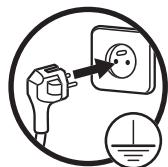
Unplug the appliance before you clean it.
We recommend that you regularly clean and disinfect your appliance.
- Remove the fresh and frozen food from the appliance. Wrap the frozen food in several layers of newspaper, cover and store in a cool place.
- Clean the fridge and freezer compartments with a soft sponge dipped in a solution of bicarbonate of soda and warm water.
- Clean the accessories with a soft sponge and warm soapy water.
- Rinse with fresh water and dry carefully after cleaning.
- Remove the accumulated dust from the rear of the appliance at least once a year. Use a soft brush, electrostatic cloth or vacuum cleaner to do so.
- The appliance can be turned back on once everything is clean and dry.
Warning! Never use abrasive or caustic cleaning products or scrub sponges to clean the interior or exterior of your appliance.
- Make sure that no water gets into the light housing or other electrical parts.
- Regularly inspect the door seals to check that they are clean and not harbouring any food particles. It is important to keep the door seals clean at all times. Clean them with hot water and dry thoroughly.
- Do not use hot water to clean the glass shelves if they are cold. There is a risk that the glass will shatter because of the sudden change in temperature which could cause injury and serious damage.

Important:
Never put oil or oily dishes in the refrigerator in open containers as the fatty substances can damage the plastic surfaces of the refrigerator. If you spill or splash oil on the plastic surfaces, clean it up and immediately wash the affected parts with hot water.
Disassemble the parts
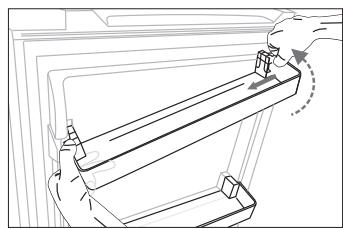
Refrigerator bottle-holder door shelves:
Hold the left-hand side of the shelf and press the right-hand side inwards.
Once the right-hand side has come away from the door, you can remove the shelf.
Refrigerator shelf:
Lift the shelf at the edges, and then pull it outwards to remove it.
Defrosting
The refrigerator compartment defrosts automatically.
Inside light
Your appliance has LED lighting. This type of lighting is designed to last much longer than conventional light bulbs. Contact your retail store service desk if your refrigerator lighting develops a fault.
Replacing the LED light:
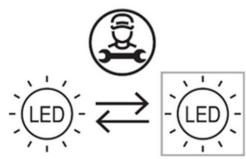
Warning! The LED light must not be replaced by the user! If the LED light is damaged, contact the customer helpline for assistance.
To replace the LED light, the below steps can be followed:
- Unplug your appliance.
- Remove light cover by pushing up and out.
- Hold the LED cover with one hand and pull it with the other hand while pressing the connector latch.
- Replace LED light and snap it correctly in place.
Replace the lamp
This product contains a light source of energy efficiency class F. Light source in this product can only be replaced by qualified professionals. Please contact after-sales service if the light source fails. The light source shall be removed at the end of the product's useful life, with sorting and recycling done separately.
Troubleshooting guide
Fixing malfunctions
If the appliance malfunctions, it may be due to a minor problem that you can rectify by following the instructions below. Before you call in a technician, you should carry out the following checks:
| Problem | Possible cause & Solution |
| Your refrigerator is not working | Check:
·That it is plugged in,
·That the socket it is plugged into is suitable and working properly.
To check, plug a different appliance into the socket in question.
·That the fuse has not blown or is faulty. |
| Your refrigerator is not working effectively | Check:
·That you have not overfilled it,
·That the doors have been shut properly, and have not been left open for too long,
·That you have not put hot food inside,
·That the appliance is not next to a heat source,
·That the gap at the back and around the sides is large enough. |
| Your appliance is noisy | The cooling gas that circulates in the refrigeration system can sometimes make small noises, even when the compressor is not operating. Do not be concerned, this is completely normal.
If you hear a different noise, check:
·That the appliance is level,
·That nothing is touching the rear of the appliance,
·That the contents of the appliance are not vibrating. |
If this does not solve your specific problem, please contact your retail store service desk and do not attempt to make repairs yourself.
Your refrigerator should only be repaired by qualified maintenance technicians. Poorly-done repairs can be dangerous for the user and are not covered by the warranty.
Noises in operation
The appliance may make the following noises when operating normally:
Crackling (ice cracking):
This noise is produced during automatic defrosting.
It may also be produced when the refrigerator is in a cooling or warming phase and is due to expansion of the appliance materials.
Clicking:
This noise is produced when the compressor starts and stops.
Compressor noise:
Normal motor noise. This noise indicates that the compressor is working normally. When the compressor cuts in, the noise can rise slightly for a brief moment.
Bubbling or gurgling:
Noise produced when the refrigerant fluid flows through the coils inside the system.
Running water:
Normal noise produced when the water flows out of the evaporation container during defrosting. This noise may also be audible inside the appliance during defrosting.
If you are going to be away or the appliance is not going to be used for a long period
If you are not going to be using the appliance for a long period, empty it, unplug it, clean it and leave the doors open to prevent mould and unpleasant odours from forming.
If there is a power cut
- If the power outage only lasts a short time, the food inside the fridge will not be affected. You should not, however, open either of the doors. The length of time the fridge freezer varies according to how full the appliance is.
- When the appliance is switched on again, the refrigerator and freezer compartments operate with the settings defined before the power failure. If the outage is going to last longer, you should transfer the frozen and deep-frozen food to another freezer.
- As soon as you notice food products start to thaw, they should be consumed as soon as possible.
Warning! Any thawed food must not be refrozen.
- To avoid damage to the appliance in the event of sudden power cuts and restarts, the appliance does not start immediately if the power outage time is less than 5 minutes.

Thank you!
This product is guaranteed against faults caused by defects in manufacturing or the materials used for a period of two years, starting from the date of purchase.* This warranty does not cover defects or damage caused by failure to install the device correctly, incorrect use of the product, or excessive wear and tear.
*proof of purchase required.