
DIGIMAX130 - Camera SAMSUNG - Free user manual and instructions
Find the device manual for free DIGIMAX130 SAMSUNG in PDF.


| Product type | Compact digital camera |
| Brand | Samsung |
| Model | DIGIMAX130 |
| Sensor resolution | 1.3 megapixels (1/3.2" CCD) |
| Lens | F2.8 / F8.0, f=5.5 mm (equivalent to 42.5 mm) |
| Digital zoom | 2x in recording mode, 2x/4x in playback mode |
| LCD screen | 1.6-inch TFT color screen |
| Viewfinder | Real-image optical viewfinder |
| Focus | Wide, normal distance: 0.8 m to infinity, macro: 0.4 m to 0.8 m |
| Shutter | Mechanical and electronic, speed 1/10 to 1/520 sec |
| Exposure | Program AE, compensation ±1.8 EV in 0.3 EV steps |
| ISO equivalent | 100, 200 (automatic) |
| White balance | Auto, manual (sunny, shady, fluorescent, tungsten) |
| Flash | Auto, red-eye reduction, fill-in, off; range 0.2 to 2.0 m |
| Self-timer | 10 seconds |
| Internal memory | 8 MB flash memory |
| External storage | CompactFlash™ card (Type I) |
| File format | JPEG (DCF, DPOF compliant) |
| Image resolutions | 1280x960 pixels (large) and 640x480 pixels (small) |
| Interface | USB, NTSC/PAL video output, 6V power input |
| Power source | 4 AA alkaline batteries or AC adapter (optional) |
| Dimensions (W x H x D) | 106 x 71 x 47 mm |
| Weight (without batteries) | 190 g |
| Included software | Driver, MGI PhotoSuite III SE, MGI PhotoVista |
| Operating system | Windows 98/98SE/2000/ME, Mac OS 8.6 or later |
Frequently Asked Questions - DIGIMAX130 SAMSUNG
User questions about DIGIMAX130 SAMSUNG
0 question about this device. Answer the ones you know or ask your own.
Ask a new question about this device
Download the instructions for your Camera in PDF format for free! Find your manual DIGIMAX130 - SAMSUNG and take your electronic device back in hand. On this page are published all the documents necessary for the use of your device. DIGIMAX130 by SAMSUNG.
USER MANUAL DIGIMAX130 SAMSUNG
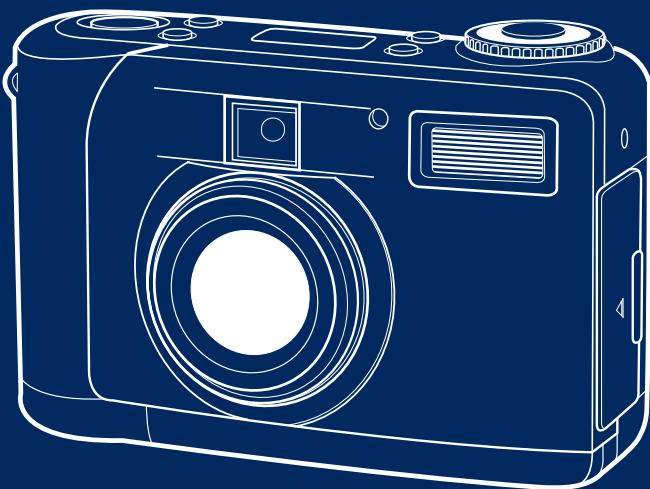
Thank you for buying a Samsung Camera. This manual will guide you through using the Digimax 130, Including taking pictures, downloading images and using MGI PhotoSuite software.
Please read this manual before using your new camera.
ENGLISH / DEUTSCH / FRANÇAIS /
ESPANOL / ITALIANO / DUTCH
Thank you for buying a Samsung Digital Camera. This digital camera possesses the following features.
A high resolution of 1.3 mega pixels
2xdigitalzoom
USB interface function
1.6 inch TFT LCD monitor
8MB internal memory and CompactFlash card compatible
A FCC warning
- This device has been tested in accordance with the limits of a class B digital device under item 15 of the FCC rules. These limits are designed to provide protection against harmful interference in commercial installation.
This equipment generates, absorbs and can emit radio frequency energy. If it is not installed and used in accordance with the instructions, it may cause harmful interference to radio communication.
There is however, no guarantee that interference will not occur in a some situations.
Should any interference occur when this device is in operation, please try one or more of the following measures.
Change the location and direction of any aerial.
■ Increase distance between camera and affected device.
Use a different socket away from the affected device.
Please contact a Samsung agent or a radio/TV engineer.
- This device complies with part 15 of the FCC Rules.
MANUFACTURE'S CONTENTS
Please check that you have the correct contents before using this product.
Digital camera
Application S/W, Driver CD-ROM
Video cable
4 AA Alkaline Batteries
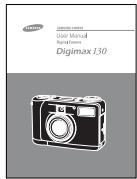
User manual
USB cable
Pouch
Product warranty
Camera strap
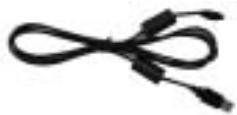
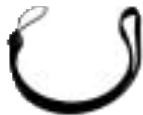
Accessories (Optional)
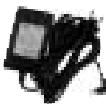
AC Adapter
CompactFlash card (CF CARD)
Viewing images on TV
Recording images onto CD
Printing images
Editing images on a PC
Creation of a digital photo album
Inserting images directly into any electronic document

Taking a self-portrait and using the image to personalize name cards

You can even create your own unique gift-wrap paper by using your digital images.
Ready
Getting to know your camera 7
Safety note 8
- Identification and features 10
■ Viewfinder 12
LCD panel indicator 13
LCD menu 14
Ready 15
- Connecting to Power 15
Using the batteries 15
Using the AC power adapter 16
Inserting CF CARD 17
Removing CF CARD. 17
■ Instructions on how to use CF CARD 18
Selecting the date and time 20
- Attaching the strap 21
Basic
Camera working mode 22
Now let's take a picture 22
- Identifications and Functions 24
Digital zoom 26
■ Instruction of camera mode 28
-Record mode 28
-Play mode 28
. Set up mode 29
-Delete mode 29
.PCmode 29
LED Messages 29
- Setting up the function 30
Setting up the function by using the LCD panel ... 30 -
Select the Flash mode 30
-
Select the quality and the resolution mode 31
- Select the Self-timer mode 32
Checking the battery 32
Advanced
- Setting up the function 33
- Setting up the function by using a LCD monitor … 33
- Record mode 33
Play mode 37 - Setup mode 41
Delete mode 47
-PCmode 49
Before contacting service center 50
Specifications 51
Software
- Software manual 52
Please read the user manual carefully before using the camera 52
System requirements 53
How to set up the software 54
■ How to set up the software 54
- Setting up Camera Driver 55
■ Setting up the MGI PhotoSuite III SE 57
Setting up the MGI PhotoVista 59
- How to use editing software 61
■ MGI PhotoSuite III SE 61
■ MGI PhotoVista 74 -
Setting up Camera Driver for Mac 80
-
Prior to using this camera, please read the user manual thoroughly.
- Keep the manual in a safe place.
About the image mark
This manual contains instructions on using this camera that will help you to use this camera safely and correctly. This will help prevent danger and injury to others.

Warning
This is a descriptive statement warning of the result if the instructions are ignored or not understood.

Note
This explains use of the camera, please refer to this.

Reference
This should assist further in the operation of the camera.

WARNING
■ Do not attempt to modify this camera in any way. This may result in fire, injury, electric shock or severe damage to you or your camera. Internal inspection, maintenance and repairs should be carried out by your dealer or Samsung Camera Service Center.
- Do not use the flash in close proximity to the people or animals. Positioning the flash too close to your subject's eyes, may cause eyesight damage. Do not attempt to photograph children using a flash, closer than a 1 meter proximity.
- When taking photographs, never point the lens of the camera directly into very strong light. This may result in permanent damage to the camera or your eyesight.
Please do not use this product in close proximity to flammable or explosive gases, as this could increase the risk of explosion.
■For safety reasons keep this product and accessories out of reach of children or animals to prevent accidents e.g.:
- Swallowing batteries or small camera accessories. In case of accidents, please consult a doctor immediately.
- There is a risk of permanent eye damage if the flash is operated at a distance of less than one meter from a person's eyes.
-
There is a possibility of injury from the camera's moving parts.
-
Should any form of liquid enter the camera, do not use it. Switch off the camera, and then disconnect the power source (batteries or AC Power Adapter).
You must contact your dealer or Samsung Camera Service Center.
Do not continue to use the camera as this may cause a fire or electric shock.
Turn the camera off immediately, then disconnect the power source (batteries or AC Power Adapter).
Then contact your dealer or Samsung Camera Service Center.
Do not continue to use the camera as this may cause a fire or electric shock.
- Do not insert or drop metallic or inflammable foreign objects into the camera through access points e.g. CF CARD slot and battery chamber. This may cause a fire or electric shock.
- Do not operate this camera with wet hands. This could pose a risk of electric shock.

NOTE
■Do not leave this camera in places subject to extremely high temperatures, such as a sealed vehicle, direct sunlight or other places of extreme variances in temperature.
Exposure to extreme temperatures may adversely affect the camera's internal components and could cause a fire.
When in use, do not cover the camera or AC Power Adapter.
This may cause heat to build up and distort the camera case or cause a fire.
Always use the camera and its accessories in a well-ventilated area.
Leakage, overheating, or burst batteries could result in fire or injury.
Do not short circuit, heat or dispose of batteries in fire.
Do not use old batteries with new ones, or mix brands of batteries.
Ensure the batteries are positioned correctly with regard to polarity (+ / -) .
■When the camera is not in use for long periods, always unplug the camera from its power source (batteries or AC Power Adapter) for safety purposes.
Leaking batteries can cause fire and pollution to the environment.
- Allowing dust to accumulate in the camera over a long period is hazardous as extreme circumstances may cause a fire. It is best to clean your camera prior to seasonal periods of high humidity.
Consult your dealer or Samsung Camera Service Center for information on the cost of cleaning your camera.
■Do not move the camera while it is switched on, if you are using the AC Power Adapter.
After use, always switch off the camera before unplugging the adapter from the AC Power wall socket. Then make sure that any connector cords or cables to other devices are disconnected before moving the camera.
Failure to do so may damage the cords or cables and cause a fire or electric shock.
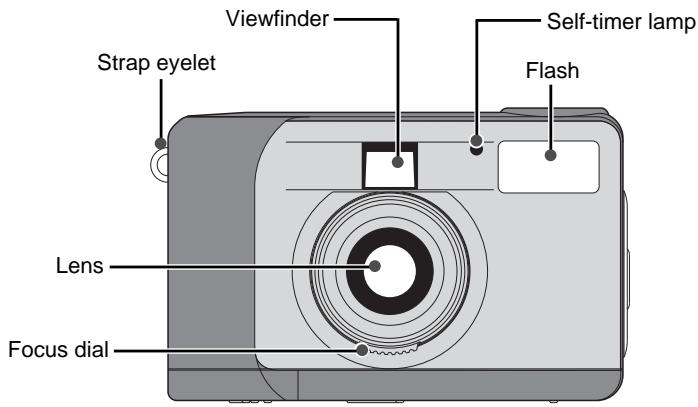
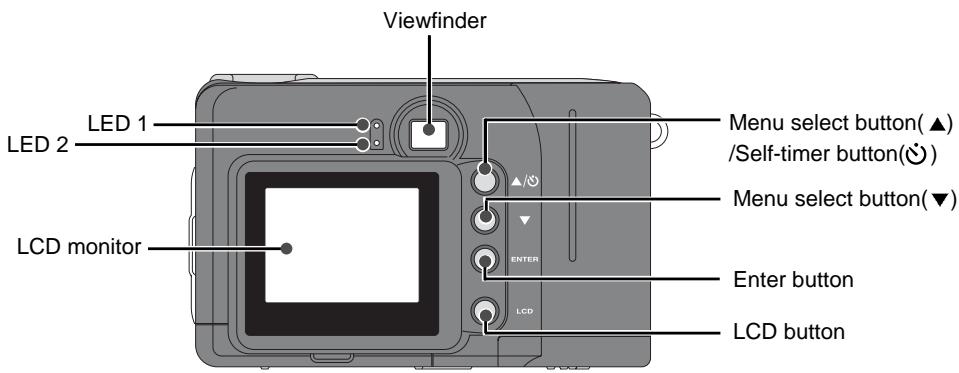
Product Exterior (Front)
Product Exterior (Rear)
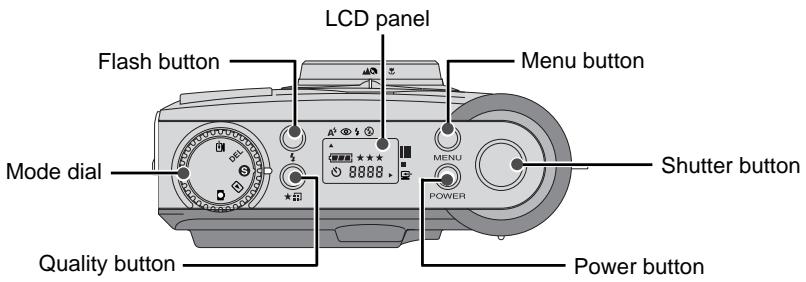
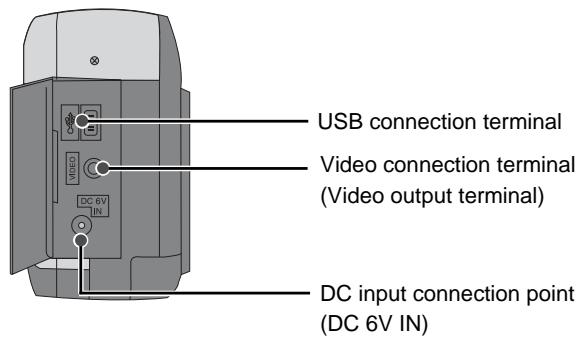
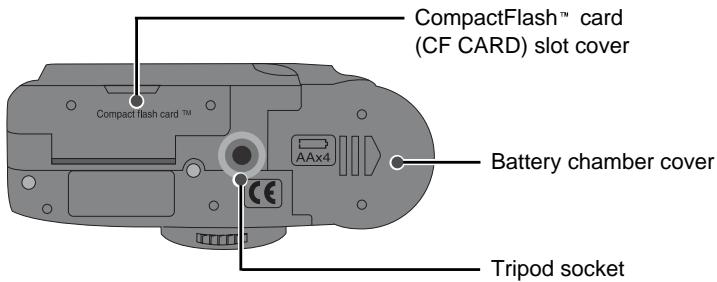
Product Exterior (Top/Side/Bottom)
Viewfinder
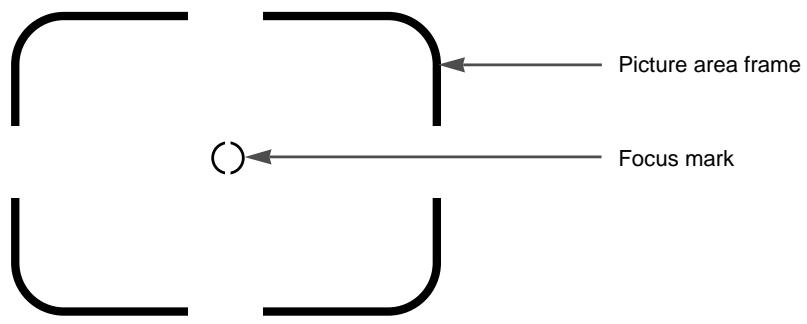

reference
Vertical and Horizontal shots are taken in the same way.
. Avoid obstructing the lens or the flash when you take a picture.
A picture can be spoiled when a finger, hair or camera strap is in front of the lens or the flash.

bte
Please use the LCD monitor when using Macro mode (0.4m~0.8m).
As there can be some differences between what is seen through the Viewfinder and the resulting image when taken at a range closer than 1.5m , it is recommended that you use the LCD monitor to compose the shot.
LCD panel indicator
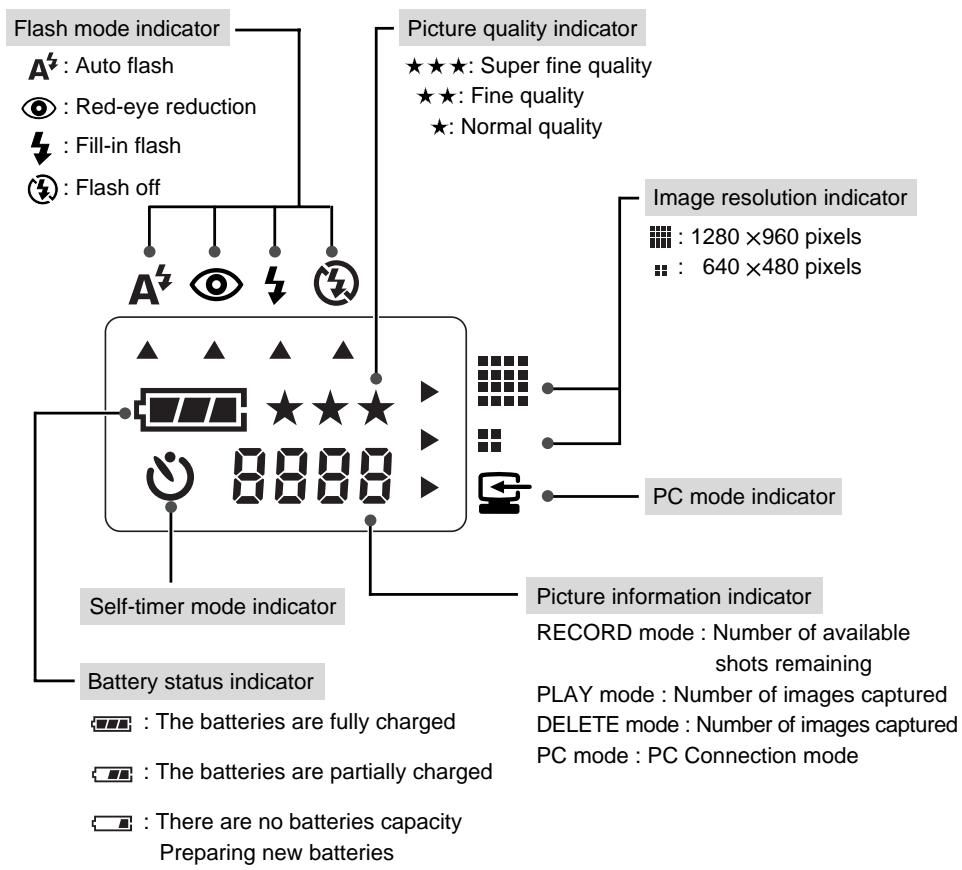
The camera will be forced to switch off immediately The batteries need replacing
LCD Menu
The function menu will be displayed on LCD monitor.
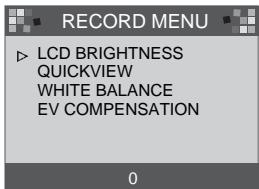
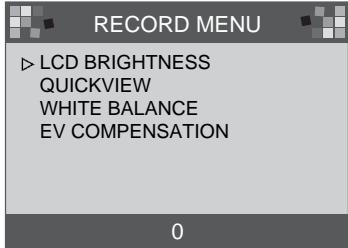
[RECORD Menu] LCD BRIGHTNESS: change LCD BRIGHTNESS QUICKVIEW: view the captured image straight away. WHITE BALANCE: change WHITE BALANCE EV COMPENSATION: change EV COMPENSATION
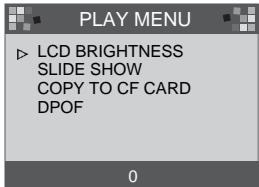
[PLAY Menu]
LCD BRIGHTNESS : change LCD BRIGHTNESS
SLIDE SHOW : view all captured image continuously
COPY TO CF CARD : copy images in the internal memory to CF CARD
DPOF : Digital Print Order Format
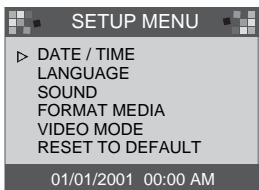
[SETUP Menu]
DATE / TIME : DATE / TIME setting
LANGUAGE : LANGUAGE setting
SOUND : buzzer sound setting
FORMAT MEDIA : formatting CF CARD or Internal memory
VIDEO MODE : change VIDEO MODE (NTSC or PAL)
RESET TO DEFAULT : change the settings to factory default settings
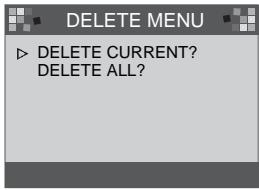
[DELETE Menu]
DELETE CURRENT? : delete current image
DELETE ALL? : delete all images
Connecting to Power
There are two ways in which to provide the camera with power.
One is using batteries (AA Alkaline), alternatively use an AC Adapter (DC 6V / 2.5A).
Using the batteries
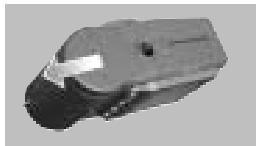
1 Open the battery chamber cover by pushing in the direction of the arrow.
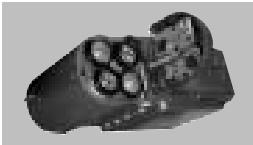
2 Insert the batteries taking note of the polarity (+ / -) .
3 To close the battery chamber cover, push it until it clicks.

Note
Important information about battery usage
Please remove the batteries if the camera will not be used for long periods.
Batteries can lose power over time and are prone to leak if kept inside the camera.
Do not use manganese batteries as they cannot deliver sufficient power.
Low temperatures (below 0ircC ) can cause the camera to work for a shorter period of time due to reduced battery performance. The batteries will recover at normal temperatures.
Do not use old and new batteries or different types together.
Extended use of the camera may cause the camera body to become warm.
This is perfectly normal.
If you are planning to use this camera for long periods of time, it is advisable to use an AC adapter.
Using the AC power adapter
- If you have access to a main supply, using an AC Adapter allows the camera to be used
for long periods of time. If you connect the camera to a computer, it is advisable to use an AC adapter rather than the camera's battery, as this will enable extended use.
-
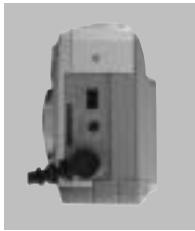
Plug the adapter into the connection point (DC 6V IN) on the camera. Please ensure that you use an AC adapter with the correct specification for the camera.
-
Failure to do so may affect your warranty.

WARNING
- Always turn off the power before taking the AC adapter out of the main supply.
- Keep the metallic part of camera away from any metallic material to prevent fatal damage.
Auto power off in each mode
This camera will automatically switch off when not in use for a period time.
| Mode | Auto power off |
| RECORD mode | 3 Minutes |
| PLAY mode | 3 Minutes (excluding SLIDE SHOW) |
| SETUP mode | 3 Minutes |
| DELETE mode | 3 Minutes |
| PC mode | X |
Inserting CF CARD
If your camera doesn't have enough space for image storage, insert a CF CARD.
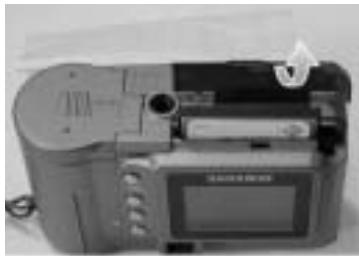
Pull the card cover in the direction of the arrow to open.
2 Insert the card towards the arrow. The front side of the CF CARD(red arrow printed) and front side of camera should face the same direction when card is inserted.
3 To close the CF CARD cover, push the CF CARD cover in the opposite direction of the arrow until you hear a click.
Removing CF CARD
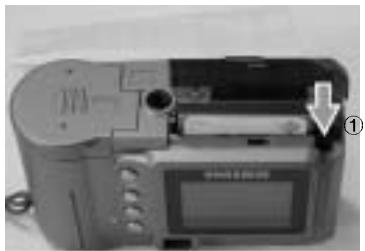
1 Turn the power off using the power button.
2 Push the Card eject lever(①) down.
3 Remove CF CARD as shown in the picture.

Reference
When using an 8MB internal memory, the specification/shooting capacity will be as follows. This is based on the conditioning standard of our company.
| Image resolution | Recorded picture quality | File format | Number of shots |
| L (1280×960 pixels) | Super fine quality | .JPG | 16±1 |
| Fine quality | .JPG | 24±1 | |
| Normal quality | .JPG | 48±2 | |
| S (640×480 pixels) | Super fine quality | .JPG | 33±2 |
| Fine quality | .JPG | 66±2 | |
| Normal quality | .JPG | 134±4 |
The number of normal shots can vary according to the picture content.
Instructions on how to use CF CARD
Using a new CF CARD for the first time
- Before using the CF CARD, it must be initialized.
- Initializing prepares the CF CARD for recording data.
For more details, please refer to the page 44 (FORMAT MEDIA).

Note
- If used over extended periods, a CF CARD may deteriorate and its performance may be impaired. If this occurs, it is best to replace with a new CF CARD.
Should this be the case, you will need to purchase a new CF CARD.
- Always turn the power off when replacing the CF CARD.
Preserving the CF CARD data
- If the card is subjected to any of the following, the recorded data may become corrupted:
- When the CF CARD is used incorrectly.
- If the power is switched off while initializing, reading or removing the CF CARD.
It is advisable to copy important data onto other media as back-up e.g. floppy disks, hard disks etc.
Samsung cannot be held responsible for lost data.

Note
Important information whilst using the CF CARD
- When a CF CARD is inserted, the camera only operates using the CF CARD.
So, in RECORD mode, the images only store in CF CARD and, in PLAY mode, you can only view the images from the CF CARD. - If you switch off the camera while it is reading, initializing or playing, the information on the CF CARD may be corrupted.
- The CF CARD is an electronic precision device.
- Do not bend, drop or subject the card to any heavy impact.
- Do not store the CF CARD in an environment with strong electronic or magnetic fields, e.g. near loud speakers or TV receivers.
- Please do not use or store in an environment where there are extremes of temperature.
- Do not allow the CF CARD to come into contact with dirt. Should this happen, clean the dirt off with a soft cloth.
- Please keep the CF CARD in its case when not in use.
- During and after periods of extended use, you may notice that the CF CARD is warm. This is perfectly normal.
※ CompactFlash™ card, CF CARD is the registered trademark of Sandisk.
Selecting the date and time
■ You can record the date and time with the image data in the memory card when you take a picture.
Please select the date and time when you use the camera for the first time or when the batteries have been removed from the camera for over 60 seconds.
1 Turn on the power by pressing the Power button.
2 Switch to SETUP mode, and the SETUP menu will then be displayed.
3 Select DATE/TIME by pressing Menu select button ( / )
4 Press Enter button, and the cursor will skip to the data field. The first item (Month) in this field will be selected.
Press Enter button to proceed to the next item.
6 Use Menu select buttons ( / ) to change the numbers.
7 Repeat 5,6 to change the date or time.
8 When the last item is selected/changed, press the Enter button to return to the SETUP menu.
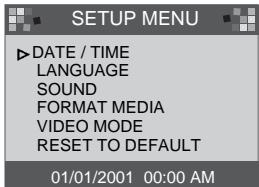
SETUP MENU
DATE / TIME
LANGUAGE
SOUND
FORMAT MEDIA
VIDEO MODE
RESET TO DEFAULT
01/01/2001 00:00 AM

Reference
The date is indicated as below

- The selection range for date/time setup covers from 2001 - 2099. (It is automatically programmed to allow for a leap year/ month)
- It is originally set as [01/01/2001 00:00 AM].
. If 1 minute passed where the camera did not have batteries in it, you will need to check date/time.
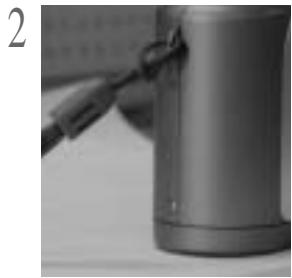
Attaching the strap
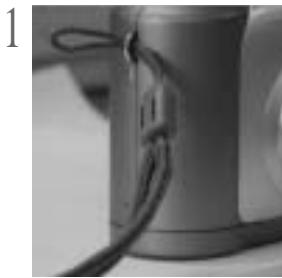
To prevent accidental damage to the camera, always use the strap.
Refer to the illustrations below
Now let's take a picture
If the internal memory is full, insert a CF CARD.
1 Turn the power on.
- The beep is activated whenever the power is turned on.
- Should the color of the condition indicator lamp(LED1) next to the viewfinder be red, it means that the camera is booting up. When it changes to green, the camera is ready for use.
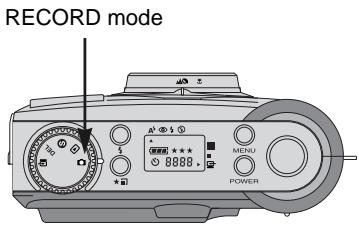
2 Turn the Mode dial to RECORD mode ( ).
Focus dial
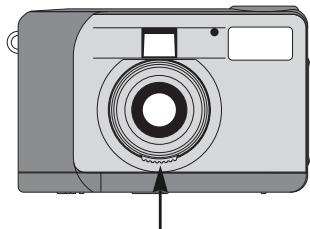
2 Select the desired mode(macro or portrait/landscape) by turning the Focus dial.
. Landscape / Portrait ( 🅱 🅱 ): 0.8 m ~ infinity
Macro (): between 0.4m 0.8m
4 Select the desired image quality and resolution on the LCD panel with the Quality button ( ★ ).
Using the LCD monitor, you can set the function in detail. Refer to page 33~48 of the user manual for setting up function using the LCD monitor.
Now let's take a picture
6 Use the viewfinder or LCD monitor to frame your shot.
- Turn the LCD button on to use the LCD monitor.
7 When taking pictures, squeeze the Shutter button gently to prevent camera shake.
- If you press the Shutter button down fully, the picture will be taken and the data that makes up the picture, will be stored in the internal memory or CF CARD.
The LED will blink red while the images are being captured and stored.

Reference
If there is insufficient memory available,
- The [0000] mark will be displayed on the LCD panel.
- If you press the Shutter button, the following message will be displayed and the warning sound for low card storage capacity will be heard as two short "beeps".
MESSAGE
MEMORY FULL OK
- Press the Enter button to remove the message.
- To extend the amount of memory on the camera, replace the CF CARD or delete unnecessary images stored on the internal memory or CF CARD.

Note
We cannot guarantee the quality of pictures, should they be taken under certain circumstances:
- If the subject is highly reflective or shiny.
- If the subject is moving at high speed.
- When there is strong reflected light, or when the background is very bright.
Identities and Functions
Power button (POWER)
Press the Power button to turn the camera ON/OFF.
If the camera is turned on and no buttons are pressed, or if there is no host communication with it for 90 seconds, the LCD panel and LCD monitor will automatically be turned off to conserve battery power. The camera will be in standby mode and if any buttons are pressed or the Mode dial is rotated during this time, the camera will be in normal mode again immediately.
Should the camera not be in use for 3 minutes or more, the system will switch itself off and the Power button will need to be pressed to turn the camera back on.
The AC adapter and the batteries each have the same settings as mentioned above.
Menu button (MENU)
The Menu button is only active in RECORD mode and PLAY mode.
Press the Menu button to turn on the RECORD menu and PLAY menu.
To turn off the menu, press the Menu button again.
▶Shutter button
Press the button in RECORD mode for image capturing, processing and storing.
Before taking a shot, please ensure that your camera has sufficient storage capacity and that there is appropriate light for successful image capture.
By pressing the Shutter button on PLAY mode, the DPOF setting will change.
For more information about DPOF, refer to page 40.
▶ Flash button (
The Flash mode can only be set under RECORD mode.
There are 4 modes available: Auto flash, Red-eye reduction, Fill-in flash and Flash off.
Quality button ( ★
The image quality and resolution can only be set under RECORD mode.
This camera provides 6 different image resolution & quality combination settings.
Identities and Functions
▶ Menu select button (▲/▼)
Use the Menu select button when you wish to select the menu for each mode.
Self-timer button (
The Self-timer button is active only in RECORD mode.
When the Self-timer button is pressed, the 10-second Self-timer is enabled.
The image will be captured 10 seconds after you have pressed the Shutter button.
After taking the picture, the Self-timer mode will be disabled.
. To cancel the Self-timer function, do any of the following:
- Press the Self-timer button again.
- Power off the camera.
- Change to another mode excluding RECORD mode.
- The camera automatically disables the Self-timer function after an image is captured.
Enter button (ENTER)
The Enter button is active at any time when a menu or dialog box is displayed.
Use the button to select/confirm the currently highlighted item.
LCD button (LCD)
The LCD button is only active in RECORD mode and PLAY mode.
While in RECORD mode, pressing the LCD button will enable the LCD monitor to be turned
On or Off. In PLAY mode, press the LCD button to preview the images.

Note
Extensive use of the LCD monitor to view a potential picture will drain the batteries in a short period of time. To safeguard against this, it is advisable to use the optical viewfinder.
Digital zoom
- You can take a extended picture (2x ZOOM) on RECORD mode by pressing LCD button and Enter button successively.
Extended (2x ZOOM) image stores as 640 x 480 pixels.
But, you must set the image resolution to 1280 x 960 pixels to take a extended (2x ZOOM) picture
-
There is a 2x and 4x Digital zoom available in PLAY mode.
-
Enter button: In PLAY mode, to use the Digital zoom, press the Enter button and the image will be magnified. The magnification rate will be changed by pressing the Enter button as 2x, 4x.
-
Menu select button: In PLAY mode to scroll through the images, use the Menu select button. However, in Digital zoom mode, the Menu select button will highlight the various images.
The zoom indicator and magnification number shown in the upper and lower left side, indicates the zoom position and magnification.
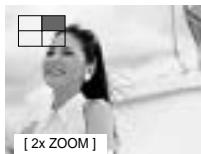
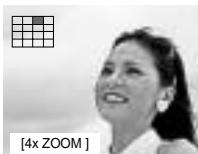
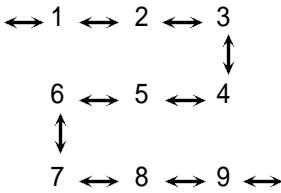
1 image screen play mode
1 Turn the power on.
2 The most recent image captured will be shown when the Mode dial is set to PLAY mode.
3 Use the Menu select button ( / ) to browse the captured images.
- In single image display, press the Enter button once to view the extended image(2x Zoom) and press the Enter button twice to view an even more extended image(4x Zoom). By pressing the Enter button 3 times, the extended image will return to its initial image size. For more information refer to page 26.
- Thumbsail play mode
1 Turn the power on.
2 The most recent image captured will be shown when the Mode dial is set to PLAY MODE.
3 Press LCD button once to display image size, date and time information on the LCD monitor. Press LCD button again to view images in Thumbnail mode.
4 Press the Menu select button to select an image.
Pressing the Enter button will extend the image.
[1 image screen play mode]
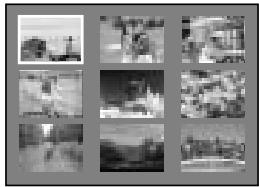
[ Thumbsail play mode ]
[Image sequence]
Instruction of camera mode
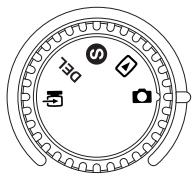
■ You can select the appropriate mode by using the Mode dial located at the top of the camera.
This digital camera has 5 working modes, which are listed below.
RECORD mode (
This mode is used for taking pictures.
In this mode, LCD BRIGHTNESS, QUICKVIEW, WHITE BALANCE,
EV COMPENSATION settings can be changed.
The images are stored on the internal memory or CF CARD.
- You should set the Focus dial before taking a picture.
There are 2 kinds of focus modes that can be selected by switching the Focus dial.
Landscape / Portrait (▲ ): For a normal / long distance shot
Focusing range: 0.8m infinity
Macro():Foramacoshot
Focusing range: 0.4m 0.8m

- When making a Macro shot, you will need to use a tripod to avoid camera shake.
- Please use the LCD monitor when using Macro photography(0.4m~0.8m).
- When shots are taken of a subject within a range of 1.5m , there can be some differences between the result and what you viewed through the optical viewfinder. It is therefore recommended in these instances that pictures are composed using the LCD monitor.
PLAYmode(
In this mode, the images stored on the CF CARD or internal memory can be viewed on the LCD monitor on the back of the camera, or on an external monitor using a video output terminal.
You can set SLIDE SHOW, LCD brightness and DPOF settings.
SETUPmode(S
DATE/TIME, LANGUAGE, SOUND, FORMAT MEDIA, VIDEO MODE and RESET TO DEFAULT settings can be changed.
DELETE mode (DEL)
In this mode you can delete images in the internal memory or CF CARD.
In DELETE mode, the recorded images can be deleted all at once, or singularly.
PC mode (
In this mode, images stored on the internal memory or CF CARD can only be transferred via USB cable.
LED Messages
LED status is situated next to the viewfinder.
| LED | Color | Status | Instruction |
| LED1 | Red | BLINKING | Busy detecting a system error |
| Green | ON | When Power is on | |
| Red | BLINKING | Image processing (Compression/Decompression/Download) | |
| LED2 | Green | ON | CF CARD is inserted |
| Green | OFF | CF CARD is not inserted |
■ Front side, Self-timer lamp
| Self-timer lamp | Red | BLINKING | Self-timer is in operation |
| Red | ON | Self-timer button has been pressed |
Setting up the function by using the LCD panel
Select the Flash mode
- The flash mode can only be set under RECORD mode.
- There are 4 modes available: Auto flash, Red-eye reduction, Fill-in flash and Flash off. The default setting is Auto flash.
- Use the flash mode that is best suited for the environment.
- To change the setting, press the Flash mode button until the desired mode is highlighted.
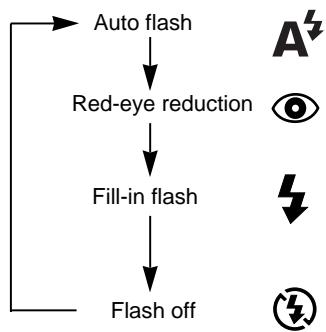
In low light conditions, flash will automatically fire to obtain the correct exposure.
Pre-Flash to reduce red eye effect
The flash will fire, regardless of the prevailing lighting conditions.
The flash is disabled.

Note
. When a subject is closer than 1m there will be an additional exposure (2~3times) to ensure the correct lighting levels. Please do not move until the main flash fires.
. Using the flash frequently will reduce the life of the batteries.
- Under normal operating conditions, the charging time for the flash is normally under 10 seconds. If the batteries are weak, the charging time will be longer.
. If you take a outdoor photography or the subject is in shady place, set the flash mode Fill-in flash to get a good result.
. If you take a picture in dark place and the flash mode is off, LOW LUMINANCE message will display on the LCD monitor. In addition, it may cause the camera to lock the Shutter automatically. In this case, set the flash mode to Auto flash and take a picture again.
Setting up the function by using the LCD panel
Select the quality and the resolution mode
- Image quality and resolution can only be set under RECORD mode.
- This camera provides 6 different image resolution & quality combination settings.
- The default setting is [1280X960 pixels] resolution( ), at the Super fine quality( ★★★).
- To change the setting, press the Quality button a number of times until the desired one is selected.
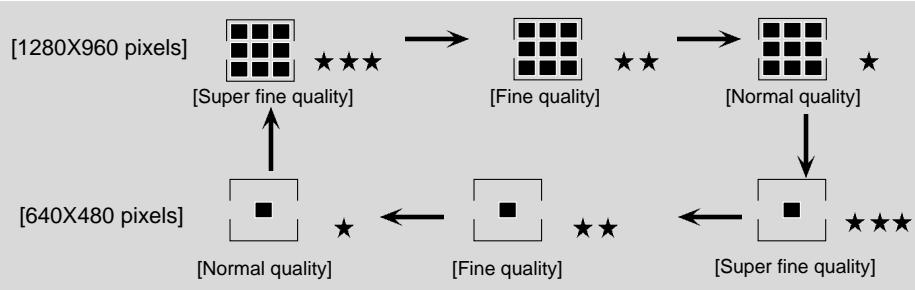
- The setting is maintained even if the camera power is off.
Image Resolution Indicator
- RECORD mode : Indicates the resolution setting of the captured image.
- PLAY mode : Shows the resolution of the image currently displayed.
Image Quality Indicator
- RECORD mode : Shows the quality setting of the captured image.
- PLAY mode : Shows the quality of the image currently displayed.

Reference
- The resolution and quality shown on the LCD panel indicates the resolution and quality of the picture about to be taken. The resolution and quality stored in the CF CARD or internal memory cannot be changed once an image has been captured.
Setting up the function by using the LCD panel
Selecting the Self-timer mode
This function is used when the photographer would also like to be in the picture. The Self-timer mode can only be set under RECORD mode.
1 Press the Self-timer button( ) to activate it.
- The Self-timer lamp(red) is turned on.
2 Press the Shutter button to activate.
3 When you press the Self-timer button, the Self-timer lamp blinks slowly for 7 seconds. The lamp will blink rapidly for a further 3 seconds before the picture is taken.
Checking the battery
Refer to page 13.
Setting up the function by using the LCD monitor
RECORD Mode
Press the Menu button in RECORD mode, the Record menu will be displayed.
LCD BRIGHTNESS
Changes the brightness setting of the LCD monitor.
1 Turn the power on.
2 Set the camera to RECORD mode ( ).
3 By pressing the Menu button, the RECORD menu will be displayed on the LCD monitor.
4 Use the Menu select button ( /) to select LCD BRIGHTNESS setting.
Press the Enter button and the cursor will skip to the data field.
6 Use the Menu select button (▲▼) to increase/decrease the LCD BRIGHTNESS.
- Brightness setting: -5 +5 , Interval = 1
. Default setting is 0.
7 Press the Enter button again to make the change.
- The cursor returns to the RECORD menu automatically when the change has been made.
Press the Menu button again to make the RECORD menu disappear.
The setting is saved even if the camera power is off.
In PLAY mode, the same setting is applied.
Setting up the function by using the LCD monitor
■ QUICKVIEW
If QUICKVIEW is selected, you can view the most recently captured image immediately on the LCD monitor.
1 Turn the power on.
2 Set the camera to RECORD mode ( ).
3 By pressing the Menu button, the RECORD menu will be displayed on the LCD monitor.
4 Use the Menu select button ( / ) to select QUICKVIEW setting.
Press the Enter button and the cursor will go to the data field.
6 Use the Menu select button ( / ) to select the data (ON, OFF). The default setting is ON.
7 Press the Enter button again to make the change. The cursor returns to the RECORD menu automatically when the change has been made.
Press the Menu button again to make the RECORD menu disappear.
LCD BRIGHTNESS
QUICKVIEW
WHITE BALANCE
EV COMPENSATION
RECORD MENU
ON
Setting up the function by using the LCD monitor
WHITE BALANCE
The color of the image may alter according to lighting conditions during shooting. By using this function, you will be able to obtain more naturally colored images.
1 Turn the power on.
2 Set the camera to RECORD mode ( ).
3 By pressing the Menu button, the RECORD menu will be displayed on the LCD monitor.
4 Use the Menu select button ( / ) to select WHITE BALANCE setting.
Press the Enter button and the cursor will skip to the data field.
RECORD MENU
LCD BRIGHTNESS QUICKVIEW
WHITE BALANCE EV COMPENSATION
AUTO

6 Use the Menu select button ( / ) to select WHITE BALANCE setting (Auto, Sun, Shade, Fluorescent, Tungsten). The default setting is AUTO.
7 Press the Enter button again to make the change. The cursor returns to the RECORD menu automatically when the change has been made.
Press the Menu button again to make the RECORD menu disappear. This setting is reset to AUTO when the camera power is off.
Setting up the function by using the LCD monitor
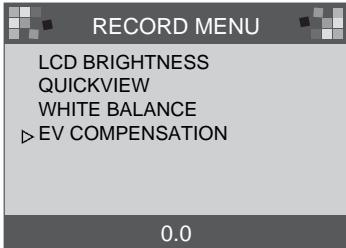
EV COMPENSATION
This camera will automatically control the exposure value and you can select exposure compensation.
If you increase (+) the exposure, you will obtain a brighter image.
If you decrease(-) the exposure, you will obtain a darker image.
1 Turn the power on.
2 Set the camera to RECORD mode ( ).
3 By Pressing the Menu button, the RECORD menu will be displayed on the LCD monitor.
4 Use the Menu select button to select EV COMPENSATION setting.
Press the Enter button and the cursor will skip to the data field.
6 Use the Menu select button to select data. The exposure compensation is over a range of -1.8 to +1.8 EV in steps of 0.3 EV. The default setting is 0.0
7 Press the Enter button again to make the change. The cursor returns to the RECORD menu automatically, when the change has been made.
Press the Menu button again to make the RECORD menu disappear. This setting is reset to 0.0 when the camera power is off.

Note
- RECORD mode : Although EV is changed, the image on the LCD monitor will not be changed.
- PLAY mode: You can view EV changed image on the LCD monitor.
Setting up the function by using the LCD monitor
PLAY mode
Press the Menu button in PLAY mode, the PLAY menu will be displayed.
LCD BRIGHTNESS
Refer to page 33.
■SLIDE SHOW
This displays the recorded images in sequence, with a user-defined delay time in between
2 and 10. The power (battery, or AC power) will continue until the slide show is finished.
After finishing the SLIDE SHOW, the auto power off system will be applied.
If running time of the SLIDE SHOW is over 30 minutes, the auto power off system will be applied.
1 Turn the power on.
2 Set the camera to PLAY mode.
3 By pressing the Menu button, the PLAY menu will be displayed on the LCD monitor.
4 Use the Menu select button ( /) to select SLIDE SHOW.
Press the Enter button and the cursor will skip to the data field.
6 Use the Menu select button ( / ) to select data.
- The delay is between 2 and 10 seconds in increments of 2 senconds.
The default setting is 2.
PLAY MENU
LCD BRIGHTNESS
SLIDESHOW
COPY TO CF CARD
DPOF
2
Setting up the function by using the LCD monitor
7 Press the Enter button again to make the change.
8 The SLIDE SHOW will start.
- If you want to stop the SLIDE SHOW, press one of the following buttons: LCD button, Menu button, Enter button and Menu select button and camera turns to PLAY mode.
This setting is reset to 2 minutes when the camera power is off.

Reference
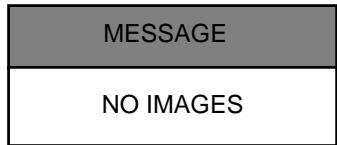
- When the SLIDE SHOW starts without images on the internal memory or CF CARD, the following message will appear.
MESSAGE
NO IMAGES
Setting up the function by using the LCD monitor
COPY TO CF CARD
Copy the recorded images on the internal memory to CF CARD.
1 Turn the power on.
2 Set the camera to PLAY mode.
3 By pressing the Menu button, the PLAY menu is displayed on the LCD monitor.
4 Use the Menu select button to select COPY TO CF CARD.
Press the Enter button and the cursor will skip to the data field.
6 Use the Menu select button to select data.
- When you press the Enter button after selecting YES [message 1] will be displayed on the LCD monitor and [message 2] will be displayed after copy has been completed. Press the Enter button and the cursor will return to the PLAY menu automatically.
- Press the Enter button after selecting NO and the cursor will return to the PLAY menu automatically.
7 Press the Menu button again to make the PLAY menu disappear.

Note
A NO CARD message will be displayed on the LCD monitor and the camera will make beep sounds when you press Enter button after selecting YES, should the CF CARD not have been inserted.
| MESSAGE |
| NO CARD OK |
Should this be the case, press the Enter button and turn the power off. Then insert the CF CARD and repeat 1-6.
PLAY MENU
LCD BRIGHTNESS SLIDE SHOW COPY TO CF CARD OPOF
YES NO
MESSAGE
PLEASE WAIT
[message 1]
MESSAGE
ALL IMAGE COPIED OK
[message 2]
Setting up the function by using the LCD monitor
DPOF(Digital Print Order Format)
- If you are using a printer that supports DPOF, you will be able to print the captured image from CF CARD.
- A NO CARD message will display on the LCD monitor if a CF CARD is not inserted.
- Only images stored on the CF CARD can be printed.
■PRINT QUANTITY : setting PRINT QUANTITY. Default setting is 1.
■PRINT SIZE : setting PRINT SIZE. Default setting is PRINT STD.
■PRINT INDEX : print images on a page as THUMBAILS. Default setting is ON.
■PRINT ENABLE : set up DPOF.
DPOF
PRINT QUANTITY
PRINT SIZE
PRINT INDEX
PRINT ENABLE
1-9

Note
-
When you change each item of DPOF, set up PRINT ENABLE as ENABLE. Otherwise the DPOF setting is discarded.
-
By pressing the Shutter button on PLAY mode, the DPOF setting will be changed.
- Some printers support DPOF QUANTITY only.
Setting up the function by using the LCD monitor
SETUP mode
You can set up the items (DATE/TIME, LANGUAGE, SOUND, FORMAT MEDIA,VIDEO MODE, RESET TO DEFAULT).
DATE / TIME
The date and time can be selected.
This will allow you to put the date and time on your data.
Refer to page 20 for more information.
SETUP MENU
DATE / TIME
LANGUAGE
SOUND
FORMAT MEDIA
VIDEO MODE
RESET TO DEFAULT
01/01/2001 00:00 AM

Note
- The date/time that is displayed on the LCD monitor does not print onto the images when printed or viewed by the image viewer. To print date/time onto the images, please use an image processing program such as PhotoSuite.
Setting up the function by using the LCD monitor
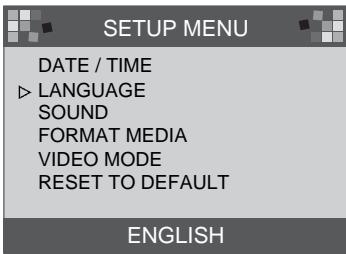
LANGUAGE
There are 7 languages available for your selection.
1 Turn the power on.
2 Set the camera to SETUP mode and the SETUP menu will be displayed on the LCD monitor.
3 Use the Menu select button to select a LANGUAGE setting.
4 Press the Enter button and the cursor will skip to the LANGUAGE data field. Use the Menu select button to select a LANGUAGE. The default setting is ENGLISH.

Press the Enter button again to make the change and the cursor will automatically return to the SETUP menu.
The setting is saved even if the camera power is off.
Setting up the function by using the LCD monitor
■SOUND
You can select whether or not the beep sound is activated.
1 Turn the Power on.
2 Set the camera to SETUP mode and SETUP menu will be displayed on the LCD monitor.
3 Use the Menu select button ( / ) to select SOUND setting.
4 Press the Enter button and the cursor will skip to the SOUND data field.
Use the Menu select button to select data (ON, OFF).
The default setting is ON.
- Press the Enter button again after selecting ON and the cursor will return to the SETUP menu automatically. The SOUND is set to ON.
- Press the Enter button again after selecting OFF and the cursor returns to the SETUP menu automatically. The SOUND set off.
The setting is saved even if the camera power is off.
SETUP MENU
DATE / TIME
LANGUAGE
SOUND
FORMAT MEDIA
VIDEO MODE
RESET TO DEFAULT
ON OFF
Setting up the function by using the LCD monitor
■FORMAT MEDIA
Formats the CF CARD or internal memory.
6 Select YES and press the Enter button. The cursor will return to the SETUP menu automatically.
1 Turn the power on.
2 Set the camera to SETUP mode and the SETUP menu will be displayed on the LCD monitor.
3 Use the Menu select button ( /) to select FORMAT MEDIA.
4 Press the Enter button and the cursor will skip to the FORMAT MEDIA data field.
Use the Menu select button ( / ) to select data (YES, NO). The default setting is NO.
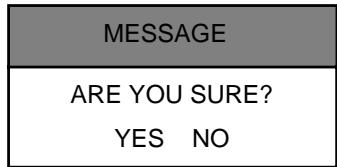
- To format the CF CARD or internal memory, Select YES and press Enter button. The message [ARE YOU SURE?] will be displayed to confirm FORMAT MEDIA.
After selecting NO, press the Enter button to discard FORMA MEDIA. The cursor will then return to the SETUP menu automatically.
SETUP MENU
DATE / TIME
LANGUAGE
SOUND
FORMAT MEDIA
VIDEO MODE
RESET TO DEFAULT
YES NO
MESSAGE
ARE YOU SURE? YES NO
MESSAGE
PLEASE WAIT
[processing]
MESSAGE
FORMAT COMPLETE OK
[complete]

Reference
- You must format the CF card in the following circumstances:
the CF CARD is not initialized.
-the CF CARD is not recognized by the camera.
Setting up the function by using the LCD monitor
VIDEO MODE
- You can set up the Video output signal from the camera in NTSC or PAL, depending on the type of device (monitor or TV, etc.) to which it is being connected.
- Select the correct video output for the device that is to be connected.
- The LCD monitor of camera will automatically switch off when the camera is connected to an external monitor.
The information on the external screen will be exactly the same as on the LCD monitor. Refer to page 37~40.
1 Turn the power on.
2 Set the camera to SETUP mode and the SETUP menu will be displayed on the LCD monitor.
3 Use the Menu select button ( / ) to select VIDEO MODE.
4 Press the Enter button and the cursor will skip to the VIDEO MODE data field.
Use the Menu select button to select data (NTSC, PAL). The default setting is NTSC.
Press the Enter button again to make the change and the cursor will automatically return to the SETUP menu.
DATE / TIME
LANGUAGE
SOUND
FORMAT MEDIA
VIDEO MODE
RESET TO DEFAULT
NTSC PAL

Note
- Video mode is only available in PLAY mode.
SETUP MENU
Setting up the function by using the LCD monitor
RESET TO DEFAULT
returns all the camera settings to the factory default settings.
1 Turn the power on.
2 Set the camera to SETUP mode and SETUP menu will be displayed on the LCD monitor.
3 Use the Menu select button ( / ) to select RESET TO DEFAULT.
4 Press the Enter button and the cursor will skip to the RESET TO DEFAULT data field.
Use the Menu select button to select data(YES, NO).
- After selecting YES, press the Enter button again to make the change and the cursor will return to the SETUP menu automatically.
- After selecting NO, press the Enter button again to discard RESET TO DEFAULT and the cursor will return to the SETUP menu automatically.
| ITEM | DEFAULT |
| Resolution | 1280 ×960 |
| Quality | Super fine quality |
| White Balance | Auto |
| Flash | Auto |
| Quickview | ON |
| LCD Brightness | 0 |
| EV Compensation | 0.0 |
| Slide Show Delay | 2 seconds |
| SOUND | ON |
| VIDEO | NTSC |
SETUP MENU
DATE / TIME
LANGUAGE
SOUND
FORMAT MEDIA
VIDEO MODE
RESET TO DEFAULT
YES NO
Setting up the function by using the LCD monitor
DELETE mode
In DELETE mode, users can delete all the recorded images at once or one after another.

Note
- To delete the images recorded in the camera (internal memory), do not insert any CF CARD as the camera will not be able to read the internal data with a CF CARD inserted.
- To delete the images recorded in the CF CARD, make sure that the card is inserted before deletion.
DELETE CURRENT
1 Turn the power on.
2 Set the camera to DELETE mode and the SETUP menu will be displayed on the LCD monitor.
3 Use the Menu select button ( / ) to select DELETE CURRENT?.
4 By pressing the Enter button, the last image captured will be displayed.
Use the Menu select button to select image.
6 Pressing the Enter button will delete the image.
7 Press the MENU button and the cursor will return to DELETE menu.
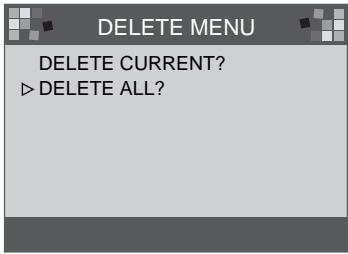
DELETE MENU
DELETE CURRENT?
DELETE ALL?
Setting up the function by using the LCD monitor
DELETE ALL
1 Turn the power on.
2 Set the camera to DELETE mode and DELETE menu will be displayed on the LCD monitor.
3 Use the Menu select button ( /) to select DELETE ALL?.
4 Press the Enter button and the following message will be displayed.
Use the Menu select button to select data (YES, NO).
After selecting YES, press the Enter button again to delete all and the following message will be displayed.
- Take a picture turning the Mode dial to RECORD mode.
6 After selecting NO, press the Enter button again and the setting will be discarded. The cursor will return to the DELETE menu.
Setting up the function by using the LCD monitor
PC mode
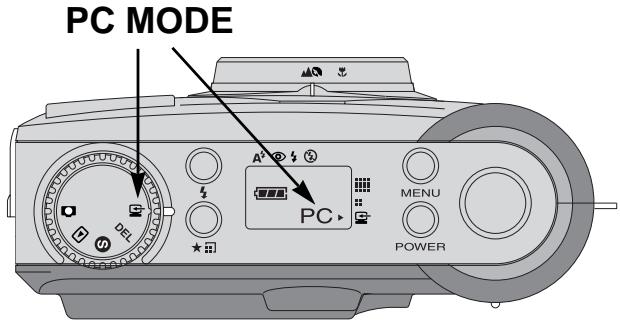
- In this mode, images can be transferred to a PC via USB cable.
- There are no menus associated with this mode.
- When you connect the camera to the PC, you should ensure that the camera is in PC mode.

Note
-
Before connecting the camera to the PC, you will need to do the following in this order.
-
Turn the Mode dial to PC mode.
- Turn the power on.
- Connect USB cable.
Before contacting a service center, please check the following
| Symptoms | Causes | Steps |
| The power is not turned on | · The batteries need replacing · The AC Power Adapter is not connected | · Replace the batteries with new ones · Connect the AC Power Adapter |
| The power is turned off during use | · The batteries need replacing · The camera has automatically turned itself off · The adapter has not been connected properly | · Replace the batteries with new ones · Power on · Plug the adapter in correctly |
| The battery power is draining quickly | · The external temperature is too cold · The camera is using both old and new batteries | · Keep batteries at the correct temperature · Replace all batteries with new ones |
| Camera does not take pictures when the Shutter button is being pressed | · The camera is not set to RECORD mode · The batteries are weak · The power has not been switched on · The memory card has not been initialized | · Set it to RECORD mode · Replace the batteries with new ones · Power on. · Initialize |
| Images are dim | · You have selected the incorrect focus mode | · If the subject is closer than 0.8m, select macro mode and if the subject is beyond 0.8m, select normal mode |
| The flash mode does not work | · The camera's flash is turned off | · Cancel the Flash off mode |
| The incorrect date/time is displayed | · The wrong date/time is displayed or has been saved as basic numbers | · Select the appropriate date in SETUP mode |
| The screen is too bright | · There is excessive exposure · LCD monitor is too bright | · Reset exposure compensation · Set LCD BRIGHTNESS |
| The screen is not very clear | · The lens cover is smudged or dirty | · You should clean the lens cover |
| Image Sensor | 1/3.2" CCD with 1.3 Mega pixels |
| Lens F2.8 / F8.0 | f=5.5mm (35mm film equivalent : 42.5mm) |
| Real image optical viewfinder | |
| Digital Zoom | RECORD mode : 2X, PLAY mode : 2X, 4X |
| Viewfinder | Real image optical viewfinder |
| LCD Monitor | 1.6"color TFT LCD |
| Focusing | Pan focusing |
| Focusing Range | Normal : 0.8m ~ infinity Macro : 0.4m ~ 0.8m |
| Shutter | Mechanical and Electronic shutter |
| Shutter Speed | 1/10 ~ 1/520 sec. |
| Exposure | Program AE / Exposure compensation ±1.8 EV (0.3 EV steps) |
| ISO Equivalent | 100, 200 (Automatic) |
| White Balance | Auto / Manual (Sun, Shade, Fluorescent, Tungsten) |
| Flash | Auto flash / Red - eye reduction / Fill-in flash / Flash off |
| Flash Rating ~ 2.0m | |
| Self-Timer | 10 sec. |
| Storage | · Internal memory: 8MB flash memory · External memory: CompactFlash " card (Type I) |
| File Format | JPEG (DCF compliant), DPOF compliant |
| Image Resolution | Large : 1280 x960 pixels, Small : 640 x480 pixels |
| Storage Capacity (8MB) | Large : Super fine 16 ±1, Fine 24 ±1, Normal 48 ±2 Small : Super fine 33 ±2, Fine 66 ±2, Normal 134 ±4 |
| Image Play | Single image / Thumbsils / Slide show |
| Interface | Digital output connector : USB Video output : NTSC / PAL (user selectable) DC power input connector : 6.0V |
| Power Source | 4 x AA alkaline / Ni-MH batteries AC adapter (optional) |
| Dimensions(W×H×D) | 106 x71 x47mm / 4.2 x2.8 x1.9in |
| Weight | 190g / 6.7oz (without batteries) |
| Software | Camera Driver (Windows 98/98SE/2000/ME, Mac OS 8.6 or later) MGI PhotoSuite, PhotoVista |
※ Specifications are subject to change without prior notice.
Please read the user manual carefully before using the camera
Software Notes
- The attached softwares are image editing softwares for Windows.
- Under no circumstances should all or part of both the software and the user manual be reproduced.
Copyright for both software is licensed only for use with a camera. - In the unlikely event of a manufacturing fault, we will repair or exchange your camera. We cannot, however, be held responsible in any way for damage caused by inappropriate use.
- Before reading this manual, you should have a basic knowledge of computers and O/S (Operating Systems).
Windows is a registered trademark of Microsoft.
※ Macintosh, Mac is the registered trademark of Apple computer, USA.
System Requirements (2001 August)
For Windows
Computer : A personal computer with a processor more advanced than MMX Pentium 133 MHz.
Operating System : Windows 98/98SE/2000/ME
Memory: Minimum 32MB RAM
Others: USB port, CD-ROM Drive
80MB of available hard-disk space
16 bit color display adapter and compatible monitor
a desktop area of 800 by 600 pixels
(24 bit color display adapter, True color display recommended)
For Macintosh
Computer : Power Mac G3 or later
Operating System : Mac OS 8.6 or later
Memory: Minimum 32MB RAM
Others : USB port, CD-ROM Drive
64MB of available hard-disk space
How to set up the software
■When you put the Driver CD-ROM provided with this camera into the CD-ROM drive, the following frame is automatically run.
- Camera Driver : This is the driver for connecting the PC to the Camera.
For windows : refer to page 55.
For Macintosh : refer to page 80.
- MGI PhotoSuite III SE : Photography program. Refer to page 61.
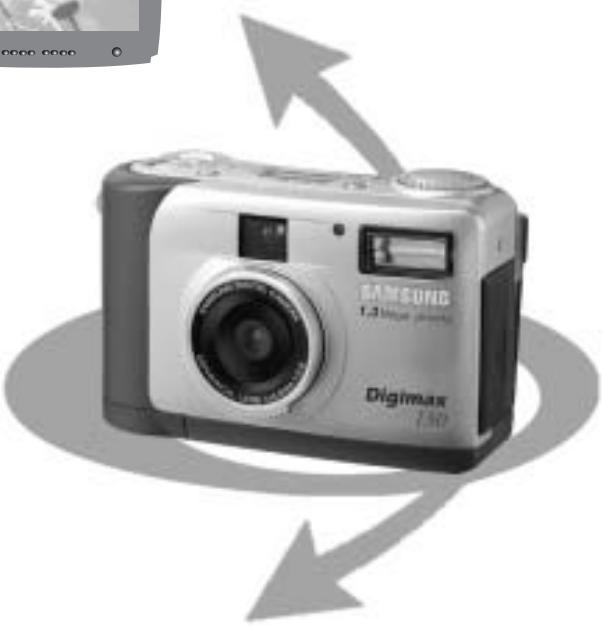
- MGI PhotoVista : This program enables you to create spectacular 360irc panoramic images in a snap. Refer to page 74.
Internet link
http://www.samsungcamera.com : English
http://wwwzoomimin.co.kr : Korean

Reference
- If the frame is not displayed, run [Windows Explorer] and select [D:\ camera.exe] in the CD-ROM root directory. D:\ is usually the default name for the CD-ROM drive.
Setting up the Camera Driver
To use this camera with a PC, first install the Camera Driver. After this has been done, the captured images in the camera can be moved to the PC and can be edited by a PC Photography program.
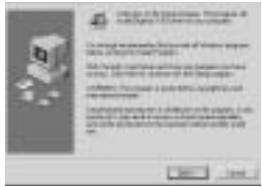
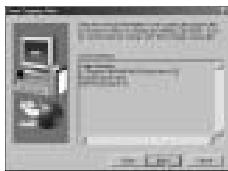
1 Click the Camera Driver icon in the auto run frame(54 page). A WELCOME window will then be displayed. Click [Next>] to prepare the Camera Driver installation.
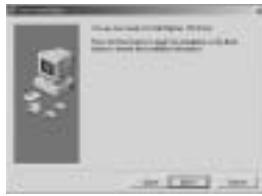
2 Start Installation of Digimax 130 window will be displayed. Click [Next>] to start installation.
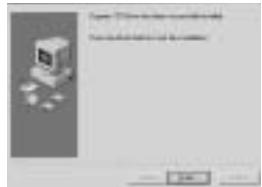
3 An Installation Complete window will be displayed. Click [Finish > ] and the installation will be completed.
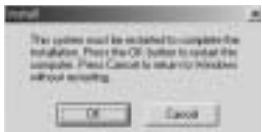
4 In order to activate the Camera Driver, you will need to restart your computer. The Install window will be displayed to indicate when you will need to restart the computer. Click [OK] to restart the computer. Click [Cancel], and an autorun frame will be displayed.

Note
- Ensure that the Camera Driver has been installed before connecting the camera to the PC via the USB cable.
- Restart computer after Camera Driver installation.
- Should the computer not find the Camera Driver after installation or when you connect the camera to PC before Camera Driver installation, please re-install the Camera Driver using the following steps.
Trace [start menu → setting → controller → system → device manager] and if there is the Other device, click the right mouse button over the Other device. Then select Properties and click driver re-install. The Device driver update wizard will start.
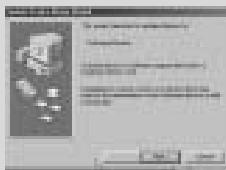
1. Device driver update wizard will start
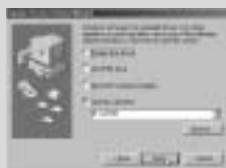
3. Select search location and click [Browse...]
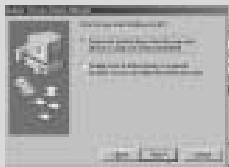
2. Selet search method
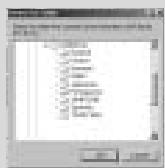
4. To select search location, trace D:(CD-ROM) (\rightarrow) USB driver (\rightarrow) English
- If problems are experienced after Driver installation, you have to remove the Camera Driver first and then re-install it.
Setting up the MGI PhotoSuite III SE
1 Click the MGI PhotoSuite III SE icon on autorun frame.
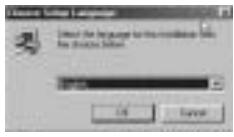
2 Select language. Chinese(PRC), Chinese(Taiwan), English, French(Standard), German, Italian, Spanish.
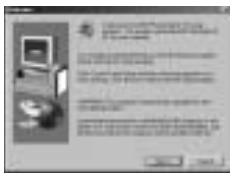
3 A Welcome window will be displayed. Click [Next >] to move to the next step.
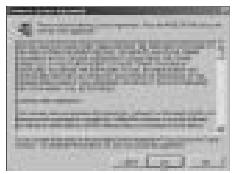
4 The Software License Agreement window will be displayed. If you agree to this, click [Yes], the window will then move to the next step. If you disagree, click [Cancel] and the install program will be canceled.
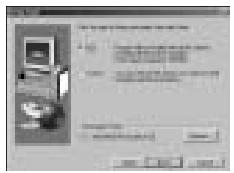
5 Select set up type. Full: the program will be installed with all the options. Custom: you can choose what you would like to install.
Setting up the MGI PhotoSuite III SE
6 Start Copying Files window will display. Click [Next >] to start installation.
7 The MGI Registration window will be displayed before completing installation.
Send: send your name and e-mail address to MGI.
Register now : move to the on-line registration window.
Register later : postpone registration.
Installation is completed.
You should restart computer after finishing installation.
Setting up the MGI PhotoVista
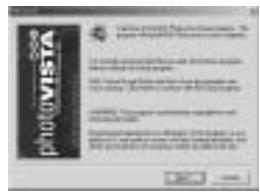
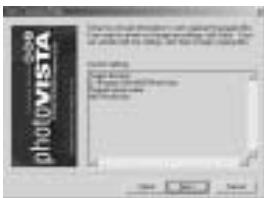
1 Click the MGI PhotoVista icon on the autorun window.
2 Select language. English, Deutsch, japanese, french are available.
3 A Welcome window will be displayed. Click [Next >] to move to the next step.
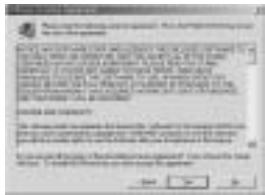
4 The Software License Agreement window will be displayed. If you agree to it, click [Yes]. This will take you to the next step. If you disagree, click [Cancel] and the install program will be canceled.
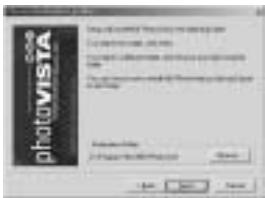
5 Select a folder where you would like PhotoVista to be installed. The default folder is C:\Program Files\MGI\Photovista. If you want to install PhotoVista in a different folder, click [Browse..] and select a folder.
Setting up the MGI PhotoVista
6 Select the Program Folder where MGI PhotoVista will be installed.
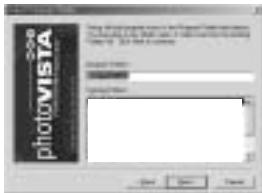
7 The Start Copying Files window will display. Click [Next > ] to start installation.
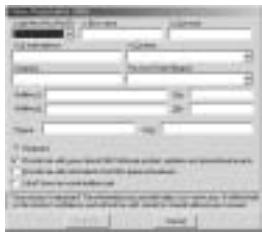
The Online Registration window will display. Click [Continue..] to continue. The Online Registration Utility window will be displayed. The *mark means that it is a required field. Click [Cancel] should you not wish to register.
9 Set up is complete. Click [Finish] to finish set up.
MGI PhotoSuite III SE
This software is only compatible with Windows.
To open MGI PhotoSuite III SE, click the [start → programs → MGI PhotoSuite III SE →
MGI PhotoSuite III SE] and MGI PhotoSuite III SE will then open.
MGI PhotoSuite III SE
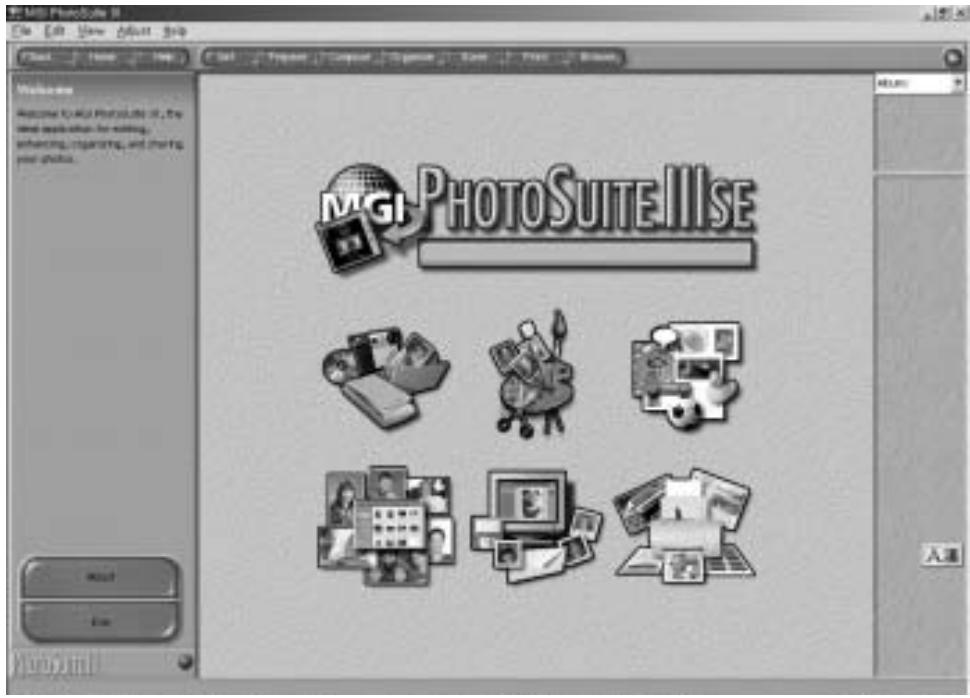
An introduction to the Welcome screen
| Get Get images. | |
| Prepare A number of photo editing activities can be performed within this module. | |
| Compose Use your photos in a variety of fun, creative and interesting ways. | |
| Organize Organize your photos and other media files into albums. | |
| Share Save your results to show to others. | |
| Print Print hard copies of photos and projects. |
MGI PhotoSuite III SE
Introduciton to navigation bar

| Back | Back return to the previous step. |
| Home | Home Return to Welcome screen. |
| Help | Help Display help window. |
| Get | Get Get images. |
| Prepare | Prepare A number of photo editing activities can be performed within this module. |
| Compose | Compose Use your photos in a variety of fun and interesting ways. |
| Organize | Organize Organize your photos and other media files into albums. |
| Share | Share Save your results to show to others. |
| Print Print hard copies of photos and projects. | |
| Browse | Browse Browse the web site. |
MGI PhotoSuite III SE
GET : Get images
To obtain images from the computer
1 To acquire images, Click the large [Get] button on the Welcome screen, or the [Get] button on the Navigation bar. Click [Computer] from the list of options displayed on the activity panel.
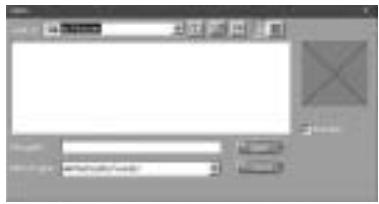
2 The Open file selector is displayed. Now select the image file and click [open].
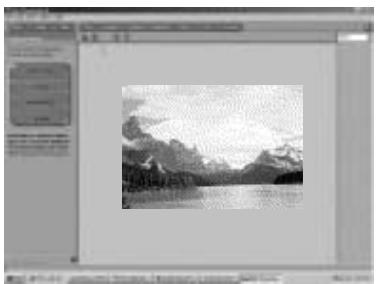
3 The Welcome screen will change to the next work step, with the selected image displayed.
MGI PhotoSuite III SE
When you obtain images from the digital camera.

Note
-
When you connect a PC to the Camera, use the following sequence :
-
Turn the Mode dial to PC mode.
- Turn the power on.
- Connect the USB cable.
Refer to page 49 for more information about connecting the cable.
1 To acquire images, click the large [Get] button on the Welcome screen, or the [Get] button on the Navigation bar.
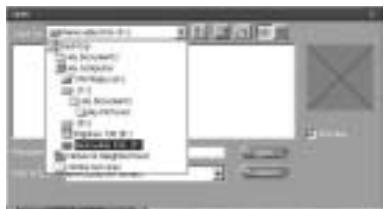
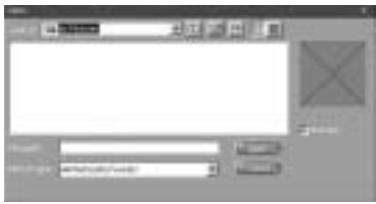
2 Click [Computer] from the list of options displayed on the activity panel. The Open file selector is displayed. Click [Look in :] to choose Removable Disk( :) and click [open] for the open file window to be displayed.
MGI PhotoSuite III SE
3 Select [Digital camera(:)] and select folder. Then select image and click [Open].
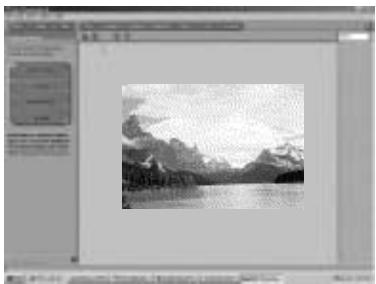
4 The Welcome screen will change to the next work step, with the selected image displayed.

Reference
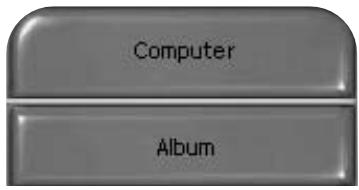
When you use the Digimax 130, only [Computer] and [Album] from the list of options displayed are available. You will be able to obtain images from the digital camera.
[Computer and Album Only]
MGI PhotoSuite III SE
Acquiring images from an Album.
1 To acquire images, click the large [Get] button on the Welcome screen, or the [Get] button on the Navigation bar. Click [Album] from the list of options displayed on the activity panel.
2 After selecting Album on the ① Choose a photo album, click an image in the album and click [Open].
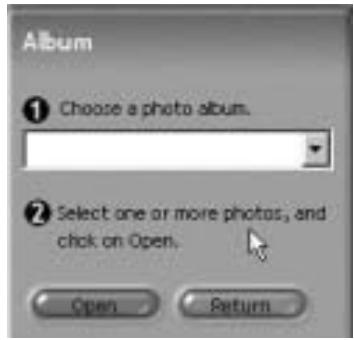
3 The Welcome screen will change to the next work step, with the selected image displayed.
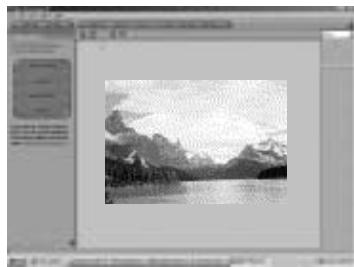
※ Refer to page 71 for more information about creating an Album.
MGI PhotoSuite III SE
PREPARE
When the image is loaded, the step changes to Prepare automatically.
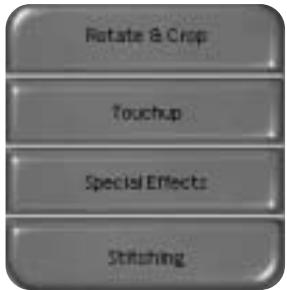
■Menu of [PREPARE] step
- Rotate & Crop
You can rotate, flip or crop images along with a host of others.
- Touchup
Remove Red eye, Remove Scratches etc.. are available in this menu.
- Special Effects
A number of special effects can be applied.
. Stitching
Join a series of photos together to create a sweeping panoramic effect.
MGI PhotoSuite III SE
COMPOSE
Add Text, Compound Images etc.. are available in this step.
■Menu of [COMPOSE] steps
- Collage: A collage consists of several photos or sections of photos arranged together on a common background.
- Photo Layouts : The Photo Layouts activity includes many collage and layout options.
- Card & tag : Use your photos to create items such as Gift Tags, Greeting Cards, Invitations, Postcards, and Sports Cards.
- Calendars : Use your photos to create a variety of calendars (monthly, quarterly, seasonal, yearly).
- Collections: Photos can also be used to create a variety of items for business purposes.
Add frames and boarder effects to your photos with the predefined templates.
![SAMSUNG DIGIMAX130 - ■Menu of [COMPOSE] steps - 1](/content/2020/05/23623/images/dbfa7266f71ff7c8ef2c9c01730052cefdac75906a5d1c12d03b6b18da7cb925.jpg)
MGI PhotoSuite III SE
ORGANIZE
Organize your photos and other media files into albums.
■Menu of [ORGANIZE] step
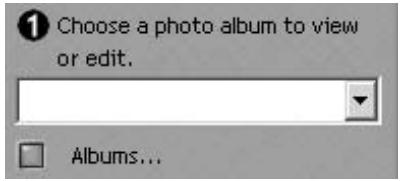
① Choose a photo album to view or edit
Select Album : To create an Album, click [Organize] in the welcome screen or navigation bar.
Album...: Open Master Album.
② Select a photo, and choose an action below.
Open: Open selected image.
Delete: Delete selected image.
Properties.: view image information.
③ Choose an action to manage your album.
Add: click [Add] to add an image to an Album.
Sort: click [Sort] to Sort saved images.
Search: click [Search] to Search saved images.
Reset: click [Reset] to reset the setting.
Update: click [Update] to update images.
Create Slide Show..: click [Create Slide Show]
to create a Slide Show.
Always start on this page: If you select this option, the program will start in [Organize].
![SAMSUNG DIGIMAX130 - ■Menu of [ORGANIZE] step - 1](/content/2020/05/23623/images/e2757a46159afeec2cb00fc9d18b280618c45874d70eb1df259a14090228a317.jpg)
MGI PhotoSuite III SE
Creating an Album
1 To create an Album, click the large Organize button on the Welcome screen, or the Organize button on the Navigation bar.
2 Click [Album..] in ① Choose a photo album to view or edit.
3 The Master Album window will be displayed, then click [New..].
4 Put a new Album name in the New Album window and click [OK]. A new album will now be created.
MGI PhotoSuite III SE
SHARE
Saving images
1 Saving or sharing images.
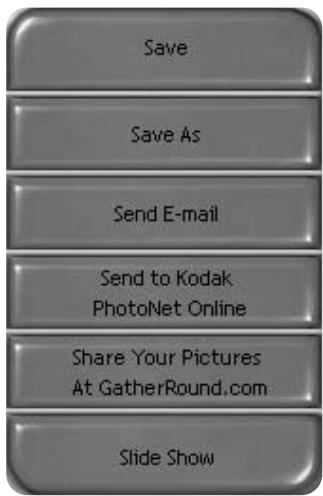
■ Menu of [SHARE] step
- Save
To save the active file according to its current name and path.
- Save As
To assign a new name or path to the file.
Send E-mail
e-mailing images.
. Send to Kodak PhotoNet Online
Sending images to Kodak PhotoNet.
- Share Your Pictures At GatherRoom.com
Sending images to GatherRoom.com and sharing images.
- Slide Show
Viewing images as a slide show.
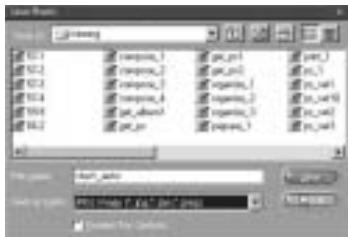
2 Click [SAVE] and the Save Project window will be displayed. Enter the file name and click [Save(S)] to save an image.
MGI PhotoSuite III SE
Printing images
1 You can print images.
■Menu of [PRINT] step
Printing images.
. Print Multiples
Print multiple copies of a photo or project, or one copy of each of the photos included in an album, according to a predefined template.
![SAMSUNG DIGIMAX130 - ■Menu of [PRINT] step - 1](/content/2020/05/23623/images/ad449879c534f9a8fc678aae3760c6c30510de3bd4ed0dd7595a2440fa003610.jpg)
2 Choose a printer, choose an orientation, choose the print size, choose the number of copies. You can then print the images.
![SAMSUNG DIGIMAX130 - ■Menu of [PRINT] step - 2](/content/2020/05/23623/images/81051eb7e1789ec7c0aa2e0203ddeeda4e206e5d9d2a52e2d9503bc6b6295ab8.jpg)
Reference
For more information, please refer to the Help file in [Help → MGI PhotoSuite III help].
MGI PhotoVista
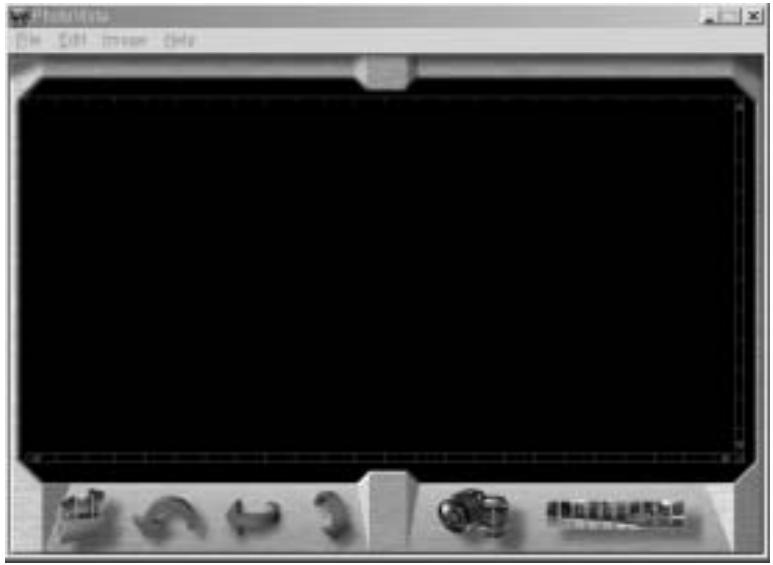
MGI Photovista is an easy-to-use program that lets you create spectacular 360irc panoramic images in a snap.
This software is only compatible with Windows.
To open MGI Photovista, click [start button → programs → MGI Photovista → MGI Photovista] and it will open.
MGI PhotoVista

Introduction
| Open the Image Source Load the first image source of the panorama | |
| Rotate Images Rotates all selected images counterclockwise | |
| Flip Image Horizontally Flips the selected image horizontally | |
| Flip Image Vertically Flips the selected image vertically | |
| Select Lens Select lens for effect | |
| Stitch Panorama Creating a panoramic effect |
MGI PhotoVista
Opening an image source and creating panoramic effects.
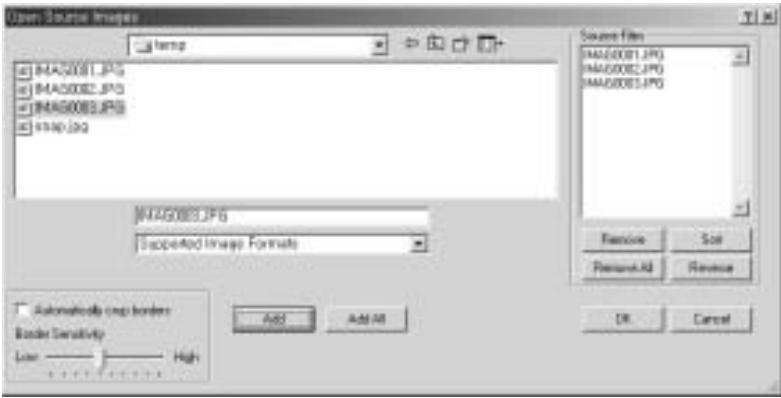
1 Click [open image source] in the menu bar to select the first image of the sequence. A dialogue box will then be displayed.
| BUTTON | DESCRIPTION |
| Add | Add image to source file |
| Add All | Add all images to source file |
| Remove | Remove image from source file |
| Remove All | Remove all images from source file |
| Sort | Images are sorted by file name |
| Reverse | Images are sorted by file name in reverse order |
MGI PhotoVista
The file names are Displayed in the Select Lens window. Click [Select Lens] to select a lens.
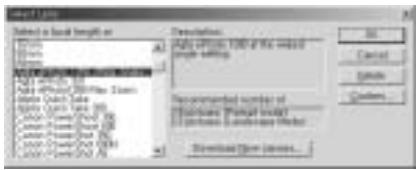
3 When you click [Stitch Panorama], the Stitch Options window will be displayed.
- When checking Full 360irc panorama.
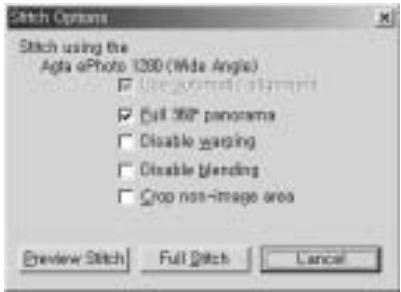
4 360irc panorama image will be displayed.

MGI PhotoVista
Saving images
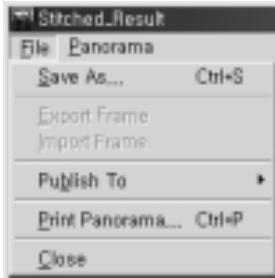
1 Click [File] in Stitched(Result menu to save a panoramic image.
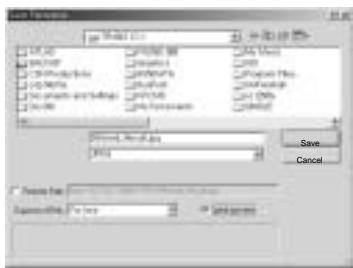
2 To save a panoramic image as a JPG or BMP file format, click [Save As..].
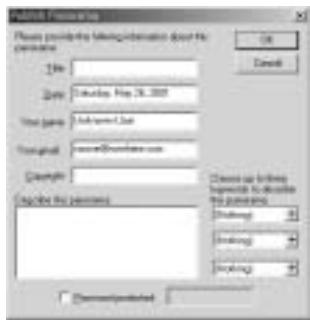
3 Click [Publish Panorama] to send the image to a designated server for sharing purposes.
MGI PhotoVista
4 Click [Upload Pictures] and images are sent to www.GatherRound.com
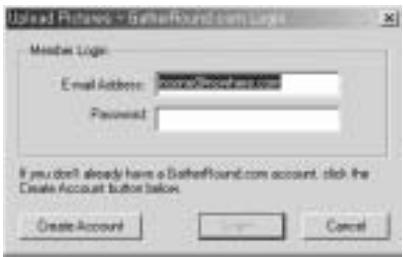
5 Click [Print Panorama] to print it.

Reference
For more information, please refer to the Help file in [Help → Quick Start Tutorial].
Setting up Camera Driver for Mac
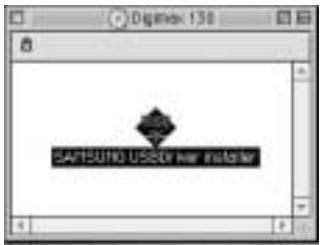
1 Insert CD-ROM. Click SAMSUNG USB Driver installer that is in Digimax 130 folder. and Camera Driver installation for Mac will start.
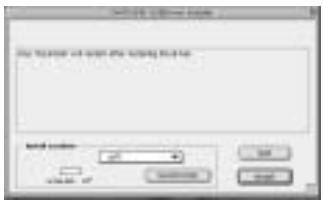
2 Select Install Location and click [Install].
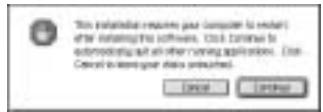
3 Click [Cancel] and the installation will be canceled. Click [Continue] and the installation will progress.
4 Installation was successful. Click [Continue] for additional installation. Click [Restart] to restart the computer.
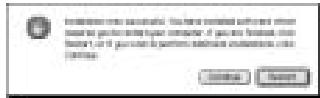
After restarting computer, a new folder will be made automatically on the desktop when you connect camera to Mac.

Note
-
Please make sure of restarting computer after installation.
-
Don't take off the USB cable or turn off the power during the image download or opening the image file. It may make the system shutdown.
- It is impossible to transfer image from Mac to camera and delete image that is in Removable Disk.
User Manual
Digital Camera
Digimax 130
DPOF : Digital Print Order Format
[Menu SETUP]
DATE / TIME : Réglage DATE / HEURE
LANGUAGE : Configuration de la LANGUE
DPOF (Digital Print Order Format)
- Presione el botón de Entrar para borrar el mensaje.
- Paraacularly, a card is a card with a particular name. For example, the card "The four" would be called "La CARD".

Nota
No Holocausts: No Holocausts.
[Solo computer e album]
MGI PhotoSuite III SE
8 De installment is voltooid.
OPTICS & DIGITAL IMAGING DIVISION
145-3, SANGDAEWON 1-DONG, JUNGWON-GU, SUNGNAM
CITY, KYUNGKI-DO, KOREA 462-121
TEL:(82)31-740-8086,8088,8090,8092,8099
FAX: (82) 31-740-8398, 8399
SAMSUNG OPTO-ELECTRONICS AMERICA, INC.
HEADQUARTERS
40 SEAVIEW DRIVE, SECAUCUS, NJ07094
TEL:(1)201-902-0347
FAX:(1)201-902-9342
WESTERN REGIONAL OFFICE
18600 BROADWICK ST.,
RANCHO DOMINGUEZ, CA 90220
TEL: (1) 310-537-7000
FAX:(1)310-537-1566
SAMSUNG U.K. LIMITED.
PHOTOPRODUCTSDIV.
SAMSUNG HOUSE, 3 RIVERBANK WAY
GREAT WEST ROAD, BRENTFORD,
MIDDLESEX,TW8 9RE,U.K.
TEL:(44)20-8232-3348
FAX:(44)20-8569-8385
PARIS CEDEX 15, FRANCE
TEL:(33)1-4279-2282
FAX:(33)1-4320-4510
S.MARKET COM.IMP.EXP.LTDA
Av.zaki narchi 1392. v. guilherme cep : 02029-001
SÃO PAULO-SP BRAZIL
TEL:(55)11-6221-6833
FAX:(55)11-6221-6833
SAMSUNG TECHWIN MOSCOW OFFICE
KOSMODAMIANSKAYA NABEREZNA 40/42
MOSCOW, 113035, RUSSIA
TEL: (7) 095-937-7950
FAX:(7)095-937-4851
SAMSUNG (Aust.) PTY. LTD.
LEVEL 33, NORTHPOINT BLDG., 100 MILLER STREET, NORTH SYDNEY,
NSW 2060, AUSTRALIA
TEL: (61) 2-9955-3888
FAX: (61) 2-9955-4233
- Thank you for buying a Samsung Digital Camera. This digital camera possesses the following features.
- A FCC warning
- MANUFACTURE'S CONTENTS
- Accessories (Optional)
- Ready
- Basic
- Advanced
- Software
- About the image mark
- Warning
- Note
- Reference
- Product Exterior (Front)
- Product Exterior (Rear)
- Product Exterior (Top/Side/Bottom)
- Viewfinder
- bte
- LCD panel indicator
- LCD Menu
- Connecting to Power
- Using the batteries
- Important information about battery usage
- Using the AC power adapter
- Auto power off in each mode
- Inserting CF CARD
- Removing CF CARD
- Instructions on how to use CF CARD
- Using a new CF CARD for the first time
- Preserving the CF CARD data
- Important information whilst using the CF CARD
- Selecting the date and time
- SETUP MENU
- Attaching the strap
- Refer to the illustrations below
- Now let's take a picture
- If the internal memory is full, insert a CF CARD.
- Turn the power on.
- Turn the Mode dial to RECORD mode ( ).
- Select the desired mode(macro or portrait/landscape) by turning the Focus dial.
- Select the desired image quality and resolution on the LCD panel with the Quality button ( ★ ).
- Using the LCD monitor, you can set the function in detail. Refer to page 33~48 of the user manual for setting up function using the LCD monitor.
- MESSAGE
- MEMORY FULL OK
- Identities and Functions
- Power button (POWER)
- Menu button (MENU)
- ▶Shutter button
- ▶ Flash button (
- Quality button ( ★
- ▶ Menu select button (▲/▼)
- Self-timer button (
- Enter button (ENTER)
- LCD button (LCD)
- Digital zoom
- image screen play mode
- - Thumbsail play mode
- Instruction of camera mode
- LED Messages
- Setting up the function by using the LCD panel
- Select the Flash mode
- Select the quality and the resolution mode
- Image Resolution Indicator
- Image Quality Indicator
- Selecting the Self-timer mode
- Checking the battery
- Setting up the function by using the LCD monitor
- RECORD Mode
- LCD BRIGHTNESS
- ■ QUICKVIEW
- RECORD MENU
- ON
- WHITE BALANCE
- AUTO
- EV COMPENSATION
- PLAY mode
- ■SLIDE SHOW
- PLAY MENU
- COPY TO CF CARD
- PLEASE WAIT
- ALL IMAGE COPIED OK
- DPOF(Digital Print Order Format)
- DPOF
- SETUP mode
- DATE / TIME
- LANGUAGE
- ■SOUND
- ■FORMAT MEDIA
- VIDEO MODE
- RESET TO DEFAULT
- DELETE mode
- DELETE CURRENT
- DELETE MENU
- DELETE ALL
- PC mode
- Before contacting a service center, please check the following
- Please read the user manual carefully before using the camera
- Software Notes
- System Requirements (2001 August)
- For Windows
- For Macintosh
- How to set up the software
- Setting up the Camera Driver
- Setting up the MGI PhotoSuite III SE
- Setting up the MGI PhotoVista
- MGI PhotoSuite III SE
- GET : Get images
- PREPARE
- ■Menu of [PREPARE] step
- - Rotate & Crop
- - Touchup
- - Special Effects
- Stitching
- COMPOSE
- ■Menu of [COMPOSE] steps
- ORGANIZE
- ■Menu of [ORGANIZE] step
- SHARE
- ■Menu of [PRINT] step
- MGI PhotoVista
- Saving images
- Setting up Camera Driver for Mac
- User Manual
- Digital Camera
- Digimax 130
- DPOF (Digital Print Order Format)
- Nota
Brand : SAMSUNG
Model : DIGIMAX130
Category : Camera