EasyManual
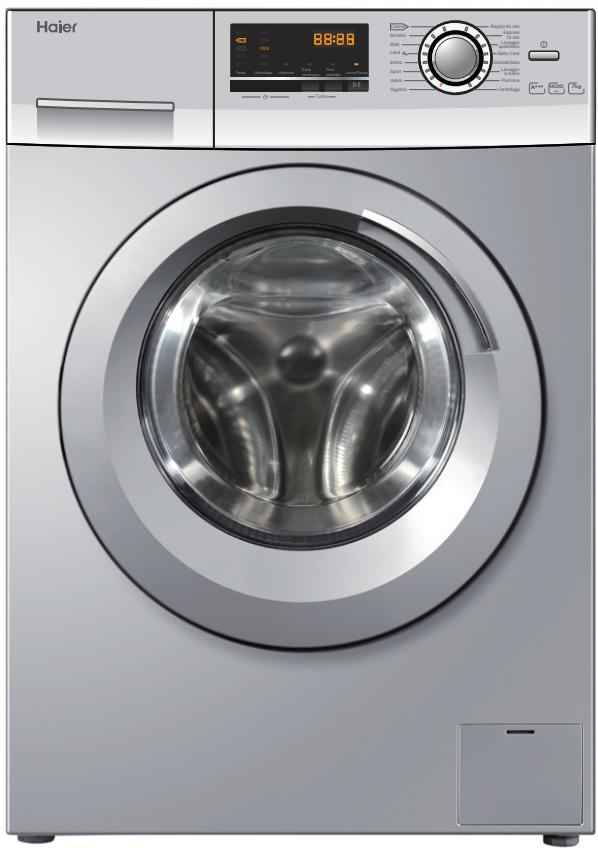
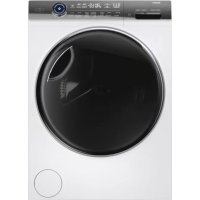
HW 7014829 - Washing machine HAIER - Free user manual and instructions
Find the device manual for free HW 7014829 HAIER in PDF.


User questions about HW 7014829 HAIER
0 question about this device. Answer the ones you know or ask your own.
Ask a new question about this device
Download the instructions for your Washing machine in PDF format for free! Find your manual HW 7014829 - HAIER and take your electronic device back in hand. On this page are published all the documents necessary for the use of your device. HW 7014829 by HAIER.
USER MANUAL HW 7014829 HAIER
Thanks for purchasing a Haier Product
Please read these instructions carefully before using this appliance. The instructions contain important information which will help you get the best out of the appliance and ensure safe and proper installation, use and maintenance.
Keep this manual in a convenient place so you can always refer to it for the safe and proper use of the appliance.
If you sell the appliance, give it away, or leave it behind when you move house, make sure you also pass on this manual so that the new owner can become familiar with the appliance and safety warnings.
Accessories
Check the accessories and literature in accordance with this list:
1x User Manual
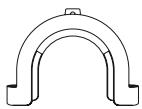
1x Drain hose brocket
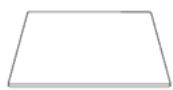
1x Bottom Cover
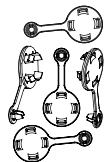
5x Blanking Plugs
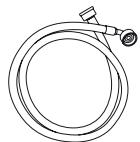
1x Inlet hose assembly
Cautions 3
Before Use 5
Functions 8
Maintenance 16
Trouble-Shoo ting 19
After-Sale Service 21
Legend

Yes

No

Optional

Caution

Attention
Disposal
The presence of this symbol on the product, accessories or materials that goes with this information indicates that at the end of its useful life the product or its electronic accessories (ex. charger, headset, USB cable) should be disposed with other household waste.
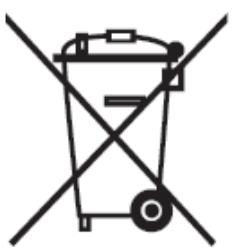

To prevent possible damage to the environment or human health from uncontrolled waste disposal, please separate these items from other types of waste and recycle them. This will promote the sustainable reuse of material resources.
Household users should co n tact either the retailer where they purchased the product or the relevant local authorities to find out how they can take this item for environmentally safe recycling and safe.
Business users should contact their supplier and check the conditions of the purchase. This product and itselectronic accessories should be mixed with other commercial waste.
Before switching the appliance on for the first time
This appliance can be used by children aged from 8 years and above and persons with reduced physical, sensory or mental capabilities or lack of experience and knowledge if they have been given supervision or instruction concerning use of the appliance in a safe way and understand the hazards involved. Children shall not play with the appliance. Cleaning and user maintenance shall not be made by children without supervision. Children of less than 3 years should be kept away unless continuously supervised.
Do...
Make sure that the transport bolt is removed.
Use a separate earthed socket for the power supply.
Make sure that the plug is accessible.
Hold the plug and not the electric cable when unplugging the power supply.
Make sure that the fuses in the power circuit are rated for 15A.
- Keep it away from heat sources and direct sunlight to prevent plastic and rubber components from aging.
- Make sure that the power card is not caught under or in the appliance and avoid damage to the power cable.
Check that hose joints and connections are firm and with no water leaking. If joints are not firm there will be leakage, turn off the water supply and refill it. Do not use the washing machine until the hoses are totally fixed.
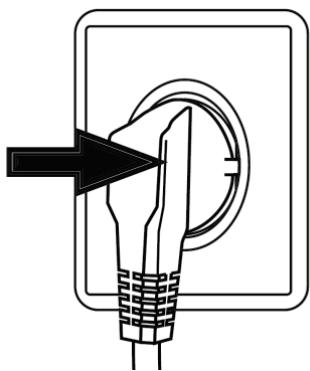
Do not...
× Touch or use the appliance when barefoot or with wet or damp hands or feet.
× Use flammable detergent or dry cleaning agent.
× Use any flammable sprays in close vicinity to the appliance.
× Remove or insert the plug in presence of flammable gas.
× Allow children or infirm persons to play with the appliance or packing materials.
× Install the appliance outdoors in a damp place, or in an area which may be prone to water leaks such as under or near a sink unit. In the event of a water leak allow the machine to dry naturally.
× Place the washing machine directly on a carpet, or close to a wall or furniture.
During daily use of the appliance
Do...
Pull up zips and fix loose threads to prevent the items from being entangled. If necessary, put small items into a small bag or pillow.
Turn off the machine after each wash program and switch it off at the mains to save electricity, and for safety. Wipe clean the lower part of the porthole.
- Keep the door slightly open when the washing machine is not in use to prevent formation of odors.
√ Let the power cord be replaced by the manufacturer, his service agent or other accordingly qualified people, in case it is damaged.
Do not...
× Touch the washer door during the washing process, it gets hot.
× Place heavy objects or sources of heat or damp on top of the appliance.
Hot wash from rubber or sponge-like materials
× Open the detergentdistribution drawer during the wash cycle.
× Force the washer door to open, the door is fitted with a self-lock device and will open shortly after the washing procedure is ended.
× Open the washer door if the water level is visibly over the porthole.
× Cover the washing machine with a plastic cover so that the washing machine can dry out when not in use
Saving Tips
Achieve the best use of energy, water, detergent and time by using the recommended maximum load size
Do not exceed the detergent dosages indicated in the manufacturer's instructions.
The Eco-Ball –a special system in the outlet will prevent detergent loss from the drum to avoid detergent loss into the environment.
Use "Prewash" for heavily soiled laundry only. Save detergent, time, water and energy consumption by not selecting "Prewash" for slightly to normally dirty laundry.
Save energy and time by selecting a high spin speed to reduce the water content in laundry before using a tumble dryer.
Choose the correct washing temperature. Modern detergents can wash with very good result already in lower temperature than 60^ . Only use higher temperature than 60^ for very dirty laundry.
Description
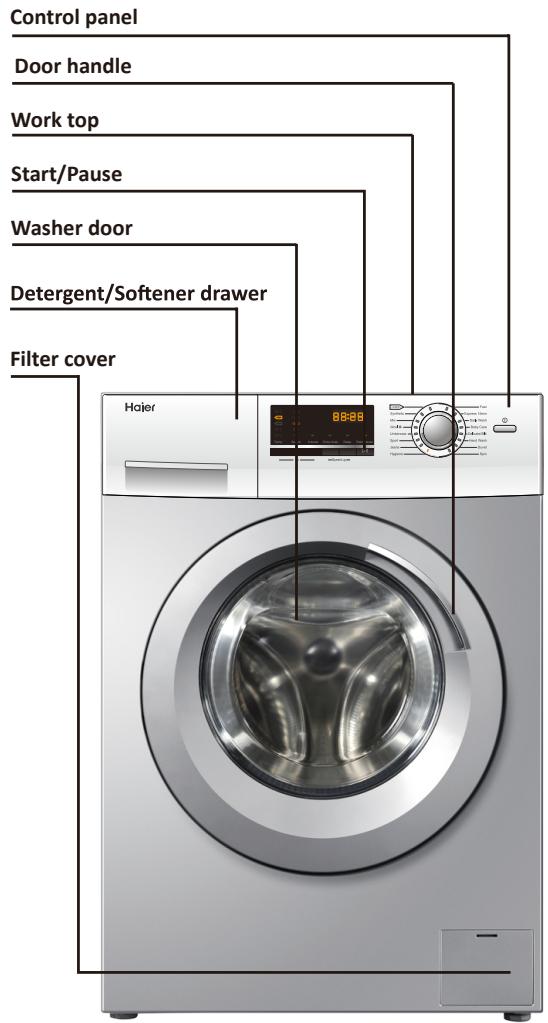
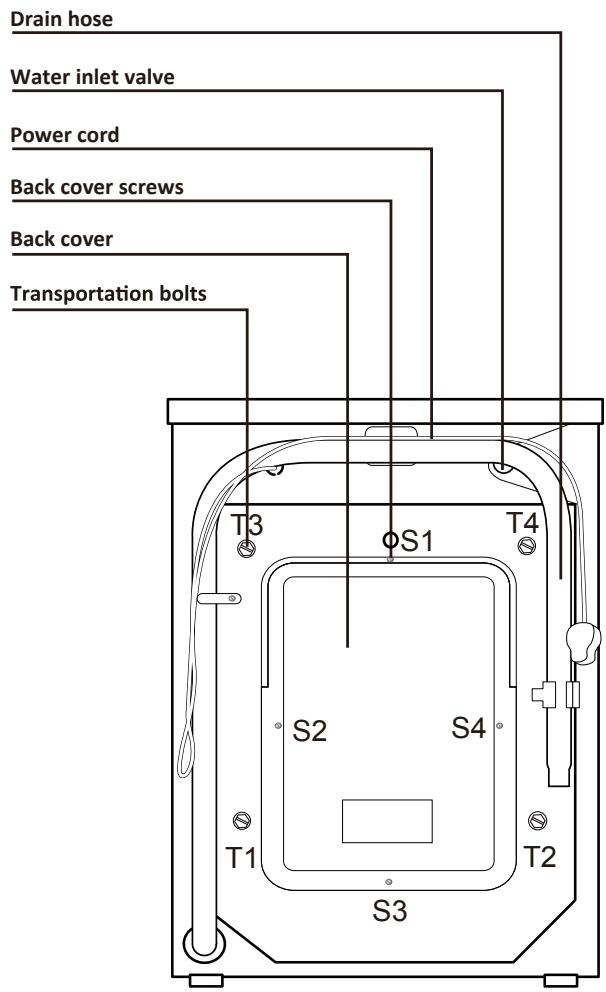
This diagram may be slightly different from the layout of the washing machine you have just purchased.
Preparing the machine
Remove all the packing materials to prevent unsteadiness, including the polystyrene base. Upon opening the package, water drops may be seen on the plastic bag and the porthole. This is normal phenomenon resulting from water tests in the factory.
Installation Warning. The washing machine is very heavy. Use safe lifting techniques
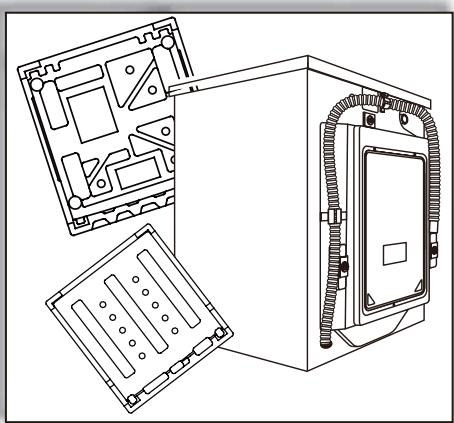
Paste the felts and install the plastic board
When opening the shrink package, you will find a plastic board and a felt. They are used for reducing noise after covering the bottom of the cabinet.
1.Paste the felts on any side of the plastic board(figuer 1.)
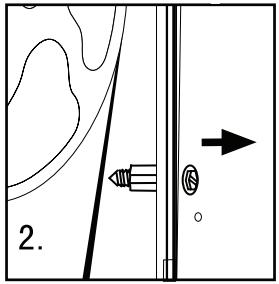
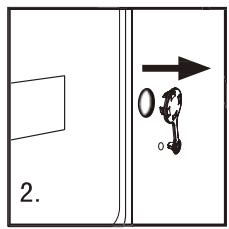
2.Put down the machine backwards, Remove the four screws (figure 2.)
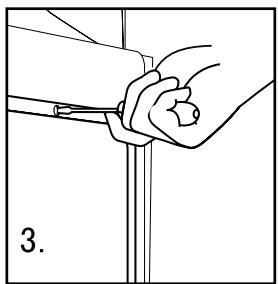
3.Put on the plastic board which the side with felts is inward.then install the screws which go
across the four holes on the plastic board (figure 3).Finally lift the machine upright.
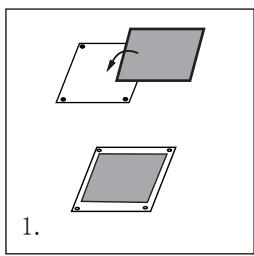
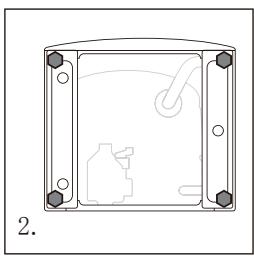
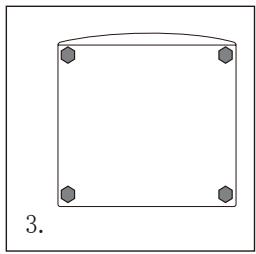
Dismantle the transportation bolts
The transportation bolts are designed for clamping anti-vibration components inside of the washing machine during the transportation process.
Remove the back cover.
Remove the four bolts on the rear side and take out the plastic stabilizers from within the machine.
Replace the back cover.
Fill the holes left by the bolts with blanking plugs.
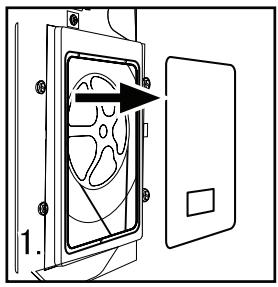
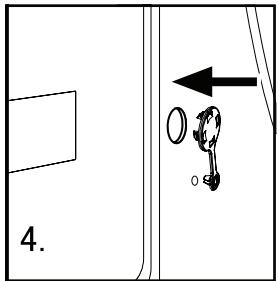
Note:
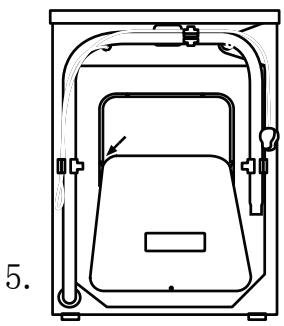
When you replace the back cover, the convex must face to outside, and you have to insert the back cover from the two gaps as shown in fig.5.
Keep the transportation bolts and plastic stabilizers in a safe place for later use.
Adjusting the feet
There are adjustable feet under the bottom of the washing machine. Before use, they should be adjusted so that the machine is level. This will minimize vibrations and thus noise during use. It will also reduce wear and tear. We recommend using a spirit level to level the appliance. The floor should be as stable and flat as possible.
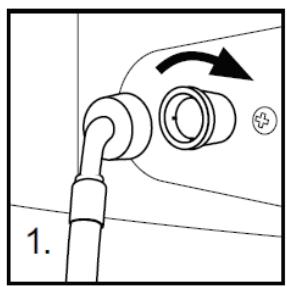
Inlet Hose
Connect the nut on the inlet hose to the connector on the water valve.
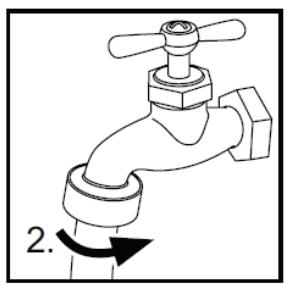
Connect inlet hose to a water tap with cold, fresh water.
Use the hose-set supplied with the appliance. Old hose-sets should not be reused.
Drain Hose
- Use the drain hose bracket to keep the end of the drain hose retained and prevents the outflow of water. Don't extend the length of the drain hose; if an extended hose is required, please consult a serviceman or plumber.
The height of the drainage outlet must be 80-100 cm. Fix the drain hose to the clip at the back of the washing machine to prevent it from dropping off.
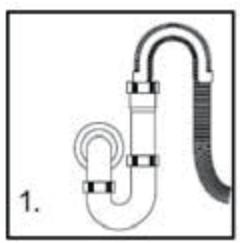
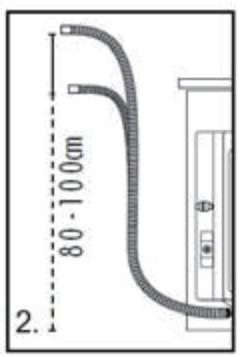
The drain hose should not be submerged in water and should be securely fixed and leak-free. If the drain hose is placed on the ground or if the pipe is at a height of less than 80cm , the washing machine will continuously drain while being filled (self-siphoning).
Connecting to Power Supply
Before connecting to the power supply, check:
- The socket is adequate for the maximum power of the washing machine (For safety, fuses in the power circuit should be rated for no less than 13A).
The voltage should meet the requirement on the rating plate. - The power outlet should be capable of accepting the washing machine plug.
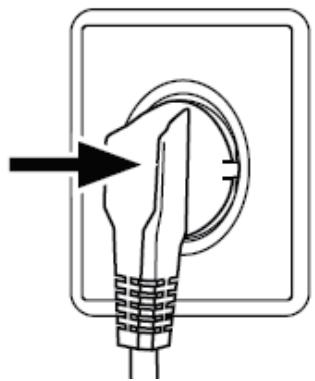
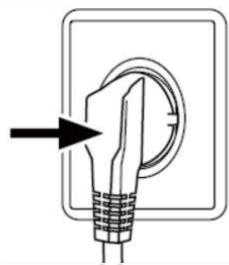
Connect the machine to an earthed socket outlet.
- Detergent/Softener Diagram
- Intense button
- Power Button
- Extra Rinse
- Program Dial
- Delay
- Wash Temp
- Start/Pause Button
- Spin Speed
- LED Display
Operational Functions
No Function
Explication
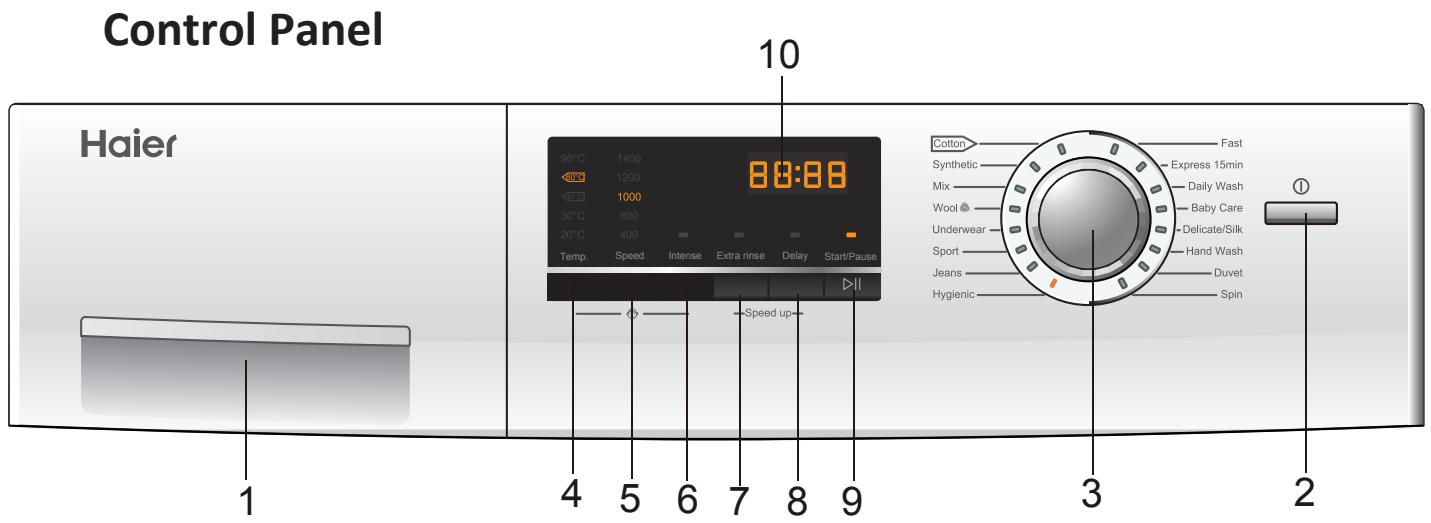
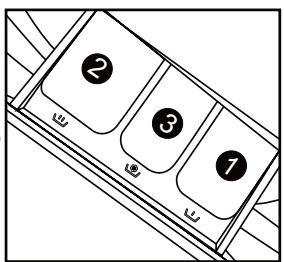
| 1 | Detergent distribution drawer | Open the drawer, three compartments can be seen: Compartment 1: Prewash detergent Compartment 2: Detergent for programs 1 to 15. Compartment 3: Softener, conditioning agent. The recommendation on the type of detergents is suitable for the various washing temperatures, please refer to the manual of detergent. | |
| 2 | Power Button | Press this button to switch on the washing machine. Press it again to switch it off. Press this button gently for 2 seconds to switch off the machine as buttons are soft touch sensitive. | |
| 3 | Program Dial | By turning the knob clockwise/counterclockwise, the required program can be selected. There are 16 programs available. After a program is selected, the corresponding light will illuminate. | |
| 4 | Wash Temp | Touch this button lightly, the washing temperature will be displayed on the indicator. Select a temperature according to the type of laundry.Note: If there is no indicator light displayed, this means cold wash. | |
| 5 | Spin Speed | Touch this button lightly to select the desired speed. When a speed is set, it will be displayed on the indicator.Note: If there is no indicator light displayed, this means no spinning. | |
| 6 | Intense button | Different water temperatures and spinning speeds can be set for different laundries. Wash using the default settings if there is no special requirement. If the laundry is very dirty, press this button before starting the program. When the button is pressed, the washing time increases. | |
| 7 | Extra Rinse | Press this button, the washing machine will perform additional rinses. Press the button once to select one additional rinse. The display will show "P-1". Press the button repeatedly and the screen will display "P-2" or "P-3", indicating two or three additional selected rinses. The "extra rinse light" is activated and flashes during the performance. "P-1/2/3" is displayed alternating with the remaining time. The light turns off and the display disappears when the extra rinse ends. | |
| 8 | Delay | You can select if you require this function when prgrams 1-15 are used. Touch this button lightly, the washing machine will start operation after a period of time and the corresponding indicator will go on. The range is 0.5-24 hours; each touch of this button increases a half hour. After the button is set, press the Start/Pause button to start countdown of the set time (the time is displayed on the screen until the program ends). The delay time must be longer than the program time otherwise the washing machine will start the wash program directly. | |
| 9 | Start/Pause Button | When the washing machine is connected to the power socket and a program is selected, lightly touch this button to start operation. During a wash cycle, touch it lightly ,operation will stop and the digits on the screen start blinking. Touch it again to resume operation. To cancel a wash program during a wash cycle, touch this button, when the digits on the screen start blinking, press the Power switch, the program will be cancelled. | |
| 10 | LED Display | Information as remaining wash time and error messages will be shown here. After a wash program is started the display will go on and the remaining wash time decreases. As the water pressure and temperature may differ, the remaining time may be adjusted accordingly. When the laundry is not balanced during spinning, the time may be automatically prolonged. | |
| To cancel audible alarm Alarm sound can be cancelled if it is required (not recommended) Switch on the washing machine and turn the program knob to spin cycle, then press the "Delay" and "Extra rinse" button, hold on for 3 seconds. The message "BEEP OFF" will be displayed on the screen, indicating that the alarm sound has been cancelled. To reinstate audible alarm Switch on the washing machine and turn the program knob to spin cycle, then press the "Delay" and "Extra rinse" button, hold on for 3 seconds.The "BEEP ON" message will be displayed on the screen, indicating that the alarm sound has been reinstated. Speed Up Function press extra rinse and delay at the same time for 3 seconds,then the display area shows " SPEEd uP" (display 3S circularly),this function be activated.press these two button again, this "SPEED uP" function will be canceled. |
Program Modes
| Programme | Temp. Max | Preset | 2 | 3 | 1 | Fibre Type | Preset Spin Speed |
| 1 Cotton | 0-90°C | 30°C | ✓ | ◎ | × | Cotton /Synth | 1000 rpm |
| 2 Synthetic | 0-60°C | 30°C | ✓ | ◎ | × | Chemical fibre fabrics | 1000 rpm |
| 3 Mix | 0-60°C | 30°C | ✓ | ◎ | × | Cotton /Synth | 1000 rpm |
| 4 Wool | 0-40°C | --- | ✓ | ◎ | × | Woolen fabrics | 800 rpm |
| 5 Underwear | 0-60°C | 40°C | ✓ | ◎ | × | Underwear | 1000 rpm |
| 6 Sport | 0-40°C | 20°C | ✓ | ◎ | × | Sports Wear | 1000 rpm |
| 7 Jeans | 0-60°C | 30°C | ✓ | ◎ | × | Jeans | 1000 rpm |
| 8 Hygienic | 90°C | 90°C | ✓ | ◎ | × | Cotton | 1000 rpm |
| 9 Fast | 0-60°C | 40°C | ✓ | ◎ | × | Cotton | 1000 rpm |
| 10 Express 15 min | 0-40°C | 0°C | ✓ | ◎ | × | Cotton /Synth | 1000 rpm |
| 11 Daily Wash | 0-60°C | 30°C | ✓ | ◎ | × | Cotton fabrics | 1000 rpm |
| 12 Baby Care | 0-90°C | 40°C | ✓ | ◎ | × | Cotton /Synth | 1000 rpm |
| 13 Delicate/Silk | 0-30°C | 30°C | ✓ | ◎ | × | Silk | 800 rpm |
| 14 Hand Wash | 0-30°C | 30°C | ✓ | ◎ | × | Cotton fabrics | 800 rpm |
| 15 Duvet | 0-60°C | 30°C | ✓ | ◎ | × | Cotton | 1000 rpm |
| 16 Spin | --- | --- | × | × | × | --- | 1000 rpm |
Consumption Table
| Program | Temp. | Max.Load HW70-14636 HW80-14636 HW100-14636 | Energy Consumption HW70-14636 HW80-14636 HW100-14636 | Water Consumption HW70-14636 HW80-14636 HW100-14636 | Wash Time HW70-14636 HW80-14636 HW100-14636 | Spin Performance HW70-14636 HW80-14636 HW100-14636 |
| Synthetic | 30°C | 3.5/4/5kg | / | / | / | 49% |
| Standard | 40°C* | 3.5/4/5kg | 0.485/0.647/0.757kwh | 28.4/34.3/38.9L | 2:55h | 53% |
| 60°C* | 3.5/4/5kg | 0.776/0.933/0.995kwh | 23.5/34.0/38.4L | 3:20h | 53% | |
| 60°C* | 7/8/10kg | 0.747/0.926/0.954kwh | 40.0/51.3/54.0L | 3:20h | 53% |
The standard 60^ C and 40^ C cotton programs are suitable to clean normally dirty cotton laundry and they are the most efficient programs in terms of combined energy and water consumptions for washing that type of cotton laundry; The actual water temperature may differ from the declared cycle temperature.
- Energy Label Program Settings: 1."Cotton +40°C+Intense+Max speed"
2."Cotton +60°C+Intense+Max speed"
Choose the best Detergent
| Universal | Color | Delicate | Special | Softener | |
| Cotton | L/P | L/P | - | - | O |
| Synthetic | L/P | L/P | L | - | O |
| Mix | L/P | L/P | - | - | O |
| Wool | - | - | - | L | O |
| Underwear | L/P | L/P | - | - | O |
| Sport | - | - | - | L | O |
| Jeans | L/P | L/P | L | - | O |
| Hygienic | L/P | L/P | L | - | O |
| Express 15 min | L | L | - | - | O |
| Daliy Wash | L/P | L/P | L | - | O |
| Baby Care | L/P | L/P | - | - | O |
| Delicate | - | - | L | - | O |
| Hand Wash | - | - | - | L | O |
| Detergent | Temperture range in ℃ | |
| L | Liquid | cold - 60 |
| P | Powder | 40 - 90 |
| O | Optional | --- |
| - | No | --- |
If using liquid detergent, it is not recommended to activate the delayed start. The amount of detergent required please refer to the detergent packaging.
Info:Modern washing detergents work at low temperatures.
Washing Methods
This washing machine is for domestic use only. If the machine is used for commercial purpose the guarantee will not be valid anymore. Do not use it for purposes other than that for which it was designed. Follow the instructions given on the label of each garment and wash only machine-washable garments.
Power Supply
Connect the washing machine to the power supply (220V to 240V~/50Hz).
Water Connection
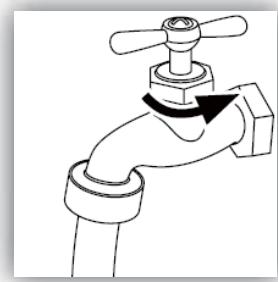
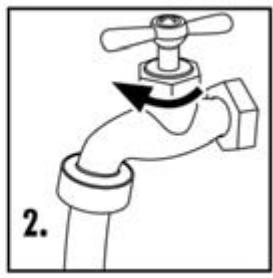
Turn on the tap. The water must be clean and clear.
Before use, check for leaks in the joints between the tap and the inlet hose by turning on the tap.
Preparing the Laundry
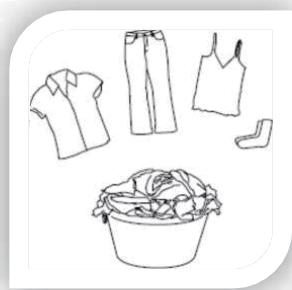
Sort out clothes according to fabric (cotton, synthetics, wool or silk) and to how dirty they are.
Separate white clothes from colored ones. Wash them first by hand to check if they fade or run.
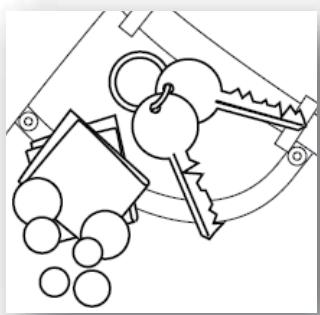
Empty pockets (keys, coins, etc.) and remove the harder decorative objects (e.g. brooches).
Attention: Small parts (like buttons, etc) may lead to repair work which user has to pay by him and can cause damage in the machine.
Garments without hems, underwear, and finely woven textile such as fine curtains are to be put into wash bag (it is better not to wash them in a washing machine).
Close zippers and hooks, make sure the buttons are sewn on tightly and place small items such as socks, belts, bras, etc. in the wash bag.
Unfold large pieces of fabric such as bed sheets, bedspreads, etc.
Turn shirts inside out.
Loading the appliance
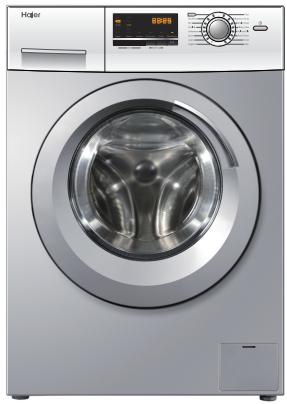
Open the washer door put in the laundry piece by piece. Close the door tightly.
When first using the washing machine, let it run unloaded for one program to prevent the laundry from being tainted by oil or dirty water from the washing machine. Before washing you should run the machine without laundry, but with detergent, with 60^ program.
Do not overload the washing machine.
Selecting Detergent
The washing efficiency and the performance is determined by the quality of detergent used. Special non-foaming detergent produces good washing results. Use specific detergents for synthetic and woollen goods. Do not use dry cleaning agents such as trichloroethylene and similar products.
Do not add more detergent than needed; otherwise, it may cause the situations as following and washing machine malfunction impacting washing machine's life.
Due to the increasing foam, the rinse time will be longer than normal;
The foam may overflow from the detergent drawer because of the increasing pressure of the foam;
It may remain foam without cleaning out after the final spinning cycle.
Recommendation:
Clean the detergent drawer once a week.
When using the prewashing program, please add half of the rating dosage.
Please follow the dosage recommendation on the powder or liquid detergent package.
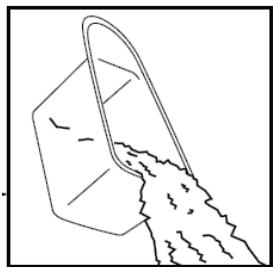
Adding Detergent
Slide out the detergent drawer and put the required detergent and softening agent into the corresponding compartments. Push back the drawer gently. (Refer to the instructions on the drawer)
For prewashing program, detergent should be added to both compartments 1 and 2.
For other programs, do not add detergent to compartment 1.
Use liquid detergent according to the instructions on its package. Do not use liquid detergent if the prewash mode or "Delay" is selected.
Do not overuse softener; otherwise, it will damage the artificial fibers.
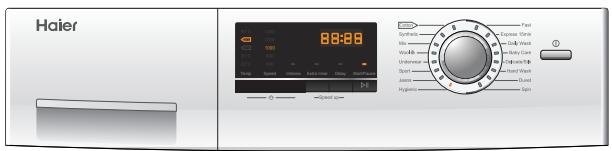
Selecting program
To get the best washing results, an appropriate washing program should be selected according to the laundry type. Please turn the program knob to select the right program.
Selecting functional
Select the required options. (Refer to the "Control panel" pages 8,9 and 10)
Setting washing temperature
Press and hold down the temperature button until the desired temperature is selected.
Setting spin speed
Press and hold down the speed button until the desired speed is selected. See "Operational functions" on the "Control panel" pages (08 and 09) for selecting temperature and spin speed. It is advisable to select the recommended value.
Washing
Press the Start/Pause button. The washing machine will operate according to the preset programs. The washing machine will stop operation automatically when a washing cycle ends. The "End" sign will appear on the display. Open the washer door and take out the laundry.
After washing
Turn off the water supply and unplug the power cord. Open the washer door to prevent formation of moisture and odors. Leave the door open while not used.
Care Chart
| Machine Wash, COLD | Hand Wash | Tumble Dry,NO HEAT | Do Not Tumble Dry | Iron, Steam or Dry, with LOW HEAT |
| Machine Wash, WARM | Do Not Wash | Tumble Dry,LOW HEAT | Line Dry | Iron, Steam or Dry, with MEDIUM HEAT |
| Machine Wash, HOT | Bleach as needed Any bleach, like Clorox® | Tumble Dry,MEDIUM | Drip Dry | Iron, Steam or Dry, with HIGH HEAT |
| Machine Wash,COLD Permanent Press | may be safely used | Tumble Dry,HIGH | Dry Flat | Do Not Iron with Steam |
| Machine Wash,WARM Permanent Press | Non-chlorine Bleach as needed Use only a color-safe bleach, like Clorox 2® | Tumble Dry,Permanent Press, NO HEAT | Don't dry clean | Do Not Iron |
| Machine Wash,HOT Permanent Press | Tumble Dry,Permanent Press, LOW HEAT | Dry on clothes hanger | Dryclean May appear with additional letters and/or lines Take this item to a professional drycleaner | |
| Machine Wash,COLD Gentle Cycle | Do Not Bleach No bleach product should be used including detergents with bleach - or follow bleach package test procedures to test for bleach safety. | Tumble Dry,Permanent Press, MEDIUM | Tumble dry, Medium heat | Do Not Dryclean |
| Machine Wash,WARM Gentle Cycle | Tumble Dry,Gentle Cycle, NO HEAT | Tumble dry, low heat | Dry cleaning with any solvent | |
| Machine Wash,HOT Gentle Cycle | Tumble Dry, Gentle Cycle, LOW HEAT | Don't tumble dry | Dry cleaning with pericloride | |
| Wool Mark | Tumble Dry,Gentle Cycle, MEDIUM |
Load Reference
| Material | Made of | Load in grams |
| Bed Sheet | Cotton | Approximately 800 |
| Blanket | Wool | Approximately 3000 |
| Blended fabric clothes | / | Approximately 800 |
| Jackets | Cotton | Approximately 800 |
| Jeans | / | Approximately 800 |
| Overalls | Cotton | Approximately 950 |
| Ladies Pyjamas | / | Approximately 200 |
| Shirts | / | Approximately 300 |
| Socks | Blended fabrics | Approximately 50 |
| T-Shirts | Cotton | Approximately 300 |
| Underwear | Blended fabrics | Approximately 70 |
Cleaning and Care
After washing
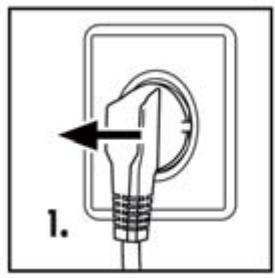
Turn off the water supply and remove the electrical plug after each wash. Open the washer door to prevent formation of moisture and odors. If the washing machine is left idle for a long period, drain the water in the machine and replace the drain hose.
Cleaning the detergent drawer
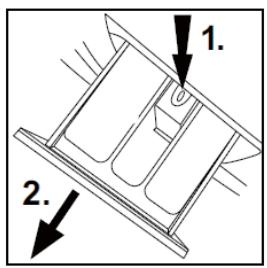
Clean the detergent distribution drawer regularly.
Pull out the drawer, flush it clean with water and then replace it.
Cleaning the machine
Unplug the machine during cleaning and maintenance. Use a soft cloth dampened with soap liquid to clean the machine case and rubber components. Do not use organic chemicals or corrosive solvents.
Cleaning the filter
Clean the filter once a month:
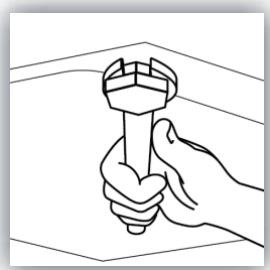
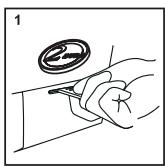
Open the bottom cover.
Remove the filter by turning counterclockwise.
Flush the filter clean with running water.
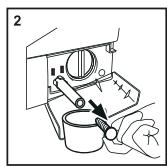
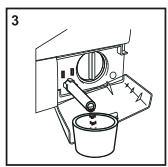
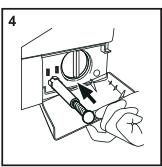
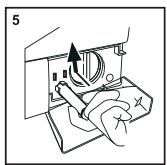
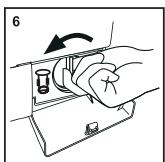
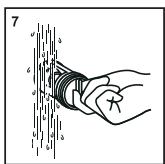
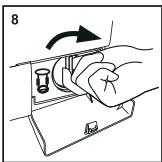
Replace the filter by turning clockwise and remount the cover.
The filter must be in place, or it may lead to leakage.
Place a container under the drain pump filter, to collect any excess water that may come out of the drain pump
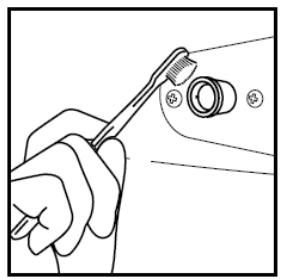
Water inlet valve and inlet valve filter
To prevent blockage to the water supply by ingress of foreign substances, clean the water inlet valve and inlet valve filter regularly.
Moving the machine
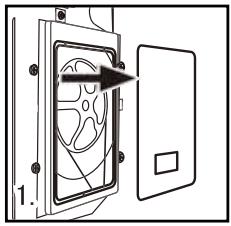
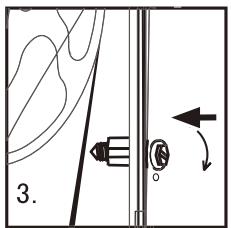
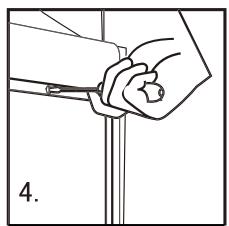
If the machine is to be moved to a distant location, replace the transportation bolts removed before installation to prevent damage as shown below.
Remove the back cover.
Remove the blanking plugs.
Insert the plastic stabilizers and the transportation bolts.
Tighten the bolts with a spanner.
Replace the back cover.
Long periods of disuse
If the washing machine is left idle for a long period, pull out the electrical plug and turn off the water supply. Open the washer door to prevent formation of moisture and odors. Leave the door open while not used.
Display Codes
Display Codes and Special functions
Codes
Causes
Solutions
| E1 | Drainage error, water not emptied within 6 minutes. | Clean the filter and check the drain hose for blockage. If error still exists, please contact the maintenance personnel. |
| E2 | Door is not properly shut. | Shut the door properly, and then press the Start/Pause button. |
| F3 | Temperature sensor not properly connected or damaged. | Contact the maintenance personnel. |
| F4 | Heater error (Appears at the end of a cycle). | Contact the maintenance personnel. |
| E4 | Water level not met in 7/8/10 minutes. The height of the drain hose is below 80 cm. The drain hose is in water. | Make sure that tap is turned on, and water pressure is normal. If problem still exists, please contact the maintenance personnel. Install drain hose within 80-100 cm of height. Make sure the drain hose is not in water. |
| F7 | Motor Err r | Contact the maintenance personnel. |
| E8 | Water exceeds protective level. | Contact the maintenance personnel. |
| FA | Water level sensor error. | Contact the maintenance personnel. |
| FC1 | Abnormal communication error display board and motor | Contact the maintenance personnel. |
| FC2 | Abnormal communication error display board and power board | Contact the maintenance personnel. |
| End | End of wash cycle. | |
| 19:30 | Status information: Preset time for delayed operation. | |
| 1:25 | The remaining time is 1 hour 25 minutes. | |
| UNb | Washing machine has an unbalanced load protection function.When unbalanced weight is greater than allowable maximum, the washing machine will not spin and will run at a speed to avoid abnormal vibration and noise | 1.In case washing 1 piece of laundry(carpet, bed sheet,table sheet,ect) make it symmetrical inside the drum. 2.Lower the wet weight of laundry pieces by wringing manually and placing them back in the drum in symmetrical position. 3.Take out and then reposition the laundry piesces inside the washing machine in a more balanced position on the inner wall of the drum. 4.Add 1 or 2 pieces of laundry into the durm to reduce the unbalanced load effects. 5.Restart the spin cycle by cloosing spin programme.In case the failure persists, please ask a qualified technician to repair it. 6.Select a lower spin speed, and if OK then select Spin program and a higher spin speed. |
Control panel lock function: Press the " Temp." and the " Intense " buttons simultaneously for 3 seconds after starting a program. It can no longer be changed by operating buttons or knobs. To unlock press the " Temp." and " Intense " buttons again for 3 seconds.
Power-off memory function: In case of abrupt power failure or the need to cut off the power during a program cycle, the present settings will be saved and the preset operation will resume when the power is on again.
To cancel a program. Press the "Start/Pause" button, then switch off the power and the program is automatically cancelled. Turn the program selector again to choose another program.
During the spin process, if too much foam is inspected, in order to protect the motor, the washing machine will eliminate the foam automatically; the motor will stop and the drain pump will drain the water continuously for 90 seconds. If it happens more than 3 times, the motor will stop until the end of cycle without spinning.
Trouble-Shooting
| Problem | Causes | Solutions |
| Washing machine fails to operate. | Poor connection to the power supply. Power failure. The washer door is not properly closed. Machine has not been switched on. | ✓ Check connection to the power supply. ✓ Check the power supply. ✓ Close the washer door properly. ✓ Make sure the machine is switched on. |
| Washing machine cannot be filled with water. | The "Start/Pause" button is not pressed. Water tap is not turned on. Water pressure is less than 0,03 MPa. The inlet hose is kinked. Water supply failure. The program knob is not properly set. The washer door is not properly closed. The inlet hose filter is blocked. | ✓ Press the "Start/Pause" button. ✓ Turn on the water tap. ✓ Check water pressure. ✓ Check the inlet hose. ✓ Ensure the water supply. ✓ Set the program knob properly. ✓ Close the washer door properly. ✓ Unblock the inlet hose filter. |
| Machine is draining while being filled. | The height of the drain hose is below 80 cm. The drain hose is in water. | ✓ Install drain hose within 80-100 cm of height. ✓ Make sure the drain hose is not in water. |
| Drainage failure. | Drain hose is blocked. Drain hose end is higher than 100 cm above the floor level. The filter is blocked. | ✓ Unblock the drain hose. ✓ Make sure the drain hose end is lower than 100 cm above floor level. ✓ Unblock the filter. |
| Strong vibration while spinning. | Not all transportation bolts have been removed. Washing machine is located on an uneven surface or is not level. Machine load is over 7/8/10kg. | ✓ Remove all transportation bolts. ✓ Make sure the washing machine is on an even surface and levelled. ✓ Reduce amount of laundry in the drum. |
| Operation stops before completing wash cycle. | Water or electricity failure. | ✓ Check the power supply or water supply. |
| Operation stops for a period of time. | Washing machine gives an error message. Washing machine is in soaking cycle? | ✓ Check display codes. ✓ Press the rinse hold button or the Start/pause button again to cancel it. |
| Excessive foam in the drum, which is spilled to the distribution drawer. | The detergent is not a low-foaming type or for manual wash. Excessive use of detergent. | ✓ Check if your detergent is appropriate. ✓ Reduce amount of detergent in the distribution drawer. |
| Automatic adjustment of the washing time. | The washing program duration will be adjusted | ✓ This is normal and doesn't affect the functionality. |
| Spinning fails | Unbalance of the laundry | ✓ Add clothes or run a spinning program again. |
| Product Fiche (according EU 1061/2010) | |||
| Trade mark | Haier | Haier | Haier |
| Model No. | HW70-14636 | HW80-14636 | HW100-14636 |
| Rated capacity(kg) | 7 | 8 | 10 |
| Energy efficiency class | A+++ | A+++ | A+++ |
| Energy consumption per year (kWh)1) | 170 | 195 | 220 |
| Energy consumption of cotton 60°C, full load (kWh/cycle) | 0.747 | 0.926 | 0.954 |
| Energy consumption of cotton 60°C, partial load (kWh/cycle) | 0.776 | 0.933 | 0.995 |
| Energy consumption of cotton 40°C, partial load (kWh/cycle) | 0.485 | 0.647 | 0.757 |
| Weighted power consumption of the off-mode | 0.48 | 0.48 | 0.48 |
| Weighted power consumption of the left-on mode | 0.48 | 0.48 | 0.48 |
| Water consumption per year (L)2) | 10908 | 10220 | 11040 |
| Spin-drying efficiency class3) | B | B | B |
| Max spun speed (rpm)4) | 1400 | 1400 | 1400 |
| Remaining moisture content (%)4) | 53 | 53 | 53 |
| standard 60°C cotton program5) | Cotton+60°C+Intense+Max speed | ||
| standard 40°C cotton program5) | Cotton+40°C+Intense+Max speed | ||
| Program time of cotton 60°C, full load (min) | 200 | 200 | 200 |
| Program time of cotton 60°C, partial load(min) | 200 | 200 | 200 |
| Program time of cotton 40°C, partial load (min) | 175 | 175 | 175 |
| Duration of the left-on mode (min)6) | - | - | - |
| Airborne acoustical noise (washing/spinning)(dB(A))7) | 64/67 | 72/75 | 74/78 |
| Type | freestanding | ||
| 1) Based on 220 standard washing cycles for cotton programmes at 60°C and 40°C at full and partial load, and the consumption of the low-power modes. Actual energy consumption will depend on how the appliance is used. | |||
| 2) Based on 220 standard washing cycles for cotton programmes at 60°C and 40°C at full and partial load. Actual water consumption will depend on how the appliance is used. | |||
| 3) Class G is the least efficient and Class A is the most efficient. | |||
| 4) Based on the standard 60°C cotton program at full load and the standard 40°C cotton program at partial load | |||
| 5) "standard 60°C cotton program" and "standard 40°C cotton program" are the standard washing programmes to which the information in the label and fiche relates. These programmes are suitable to clean normally soiled cotton laundry and they are the most efficient programmes in terms of combined energy and water consumption. | |||
| 6) In case there is a power management system | |||
| 7) Based on the standard 60°C cotton program at full load | |||
Basic technical information regarding the appliance.
| HW70-14636 | HW80-14636 | HW100-14636 | |
| Power source | 220 - 240V~/50 Hz | 220 - 240V~/50 Hz | 220 - 240V~/50 Hz |
| Max. working current (A) | 10 | 10 | 10 |
| Water pressure (MPa) | 0.03≤P ≤1 | 0.03≤P ≤1 | 0.03≤P ≤1 |
| Washing programs | 16 | 16 | 16 |
| Max power (W) | 2000 | 2000 | 2000 |
| Dimensions (HxDxW mm) | 850 x 510 x 595 | 850 x 600 x 595 | 850 x 650 x 595 |
| Net weight (kg) | 64 | 72 | 74 |
If after checking the trouble-shooting part, the problem is not solved. Please check the Warranty Card included in the product.
Useful Information
Haier Italy
AS Phone number; 199-100912
Haier Spain
AS Phone number (ES & PT); 902 50 91 23
Haier Germany
AS Phone number (DE/ AT) ; 0180 5 39 39 99 / 0820 00 12 05
Haier UK
AS Phone number; 0333 003 8122
Haier France
AS Phone number; 0980 406 409
Haier Republic of Ireland
AS phone number ; 01 431 1342
Add the crossed out wheelie bin symbol
DISPOSAL
The presence of this symbol on the product, accessories or materials that goes with this information indicates that at the end of its useful life the product or its electronic accessories should not be disposed with other household waste.
To prevent possible damage to the environment or human health from uncontrolled waste disposal, please separate these items from other types of waste and recycle them.
This will promote the sustainable reuse of material resources. Household users should contact either the retailer where they purchased the product or relevant local authorities to find out how they can take this item for environmentally safe recycling and safety.
Business users should contact their supplier and check the conditions of the purchase. This product and its electronic accessories should not be mixed with other commercial waste.
Haier
Manuale utente
HW70-14636
HW80-14636
HW100-14636