
FCS100XE - Washing machine CANDY - Free user manual and instructions
Find the device manual for free FCS100XE CANDY in PDF.


User questions about FCS100XE CANDY
0 question about this device. Answer the ones you know or ask your own.
Ask a new question about this device
Download the instructions for your Washing machine in PDF format for free! Find your manual FCS100XE - CANDY and take your electronic device back in hand. On this page are published all the documents necessary for the use of your device. FCS100XE by CANDY.
USER MANUAL FCS100XE CANDY
WARNING: The appliance and its accessible parts become hot during use. Care should be taken to avoid touching heating elements.
-
Children under 8 Year of age must be kept away from the appliance unless they are continuously supervised.
-
This appliance can be used by children aged from 8 years and above and persons with reduced physical, sensory or mental capabilities or lack of experience and knowledge if they have been given supervision or instruction concerning use of the appliance in a safe way and understand the hazards involved.
-
Children must not play with the appliance.
- Cleaning and user maintenance shall not be made by children without supervision.
- During use the appliance becomes hot. Care should be taken to avoid touching heating elements inside the oven.
WARNING: Accessible parts may become hot during use. Young children must be kept away.
- Do not use harsh abrasive cleaners or sharp metal scrapers to clean the oven door glass since they can scratch the surface, which may result in shattering of the glass.
- The oven must be switched off before removing the guard, after cleaning, the guard must be replaced in accordance with the instructions.
- Only use the temperature probe recommended for this oven.
- Do not use a steam cleaner for cleaning operations.
- WARNING: Avoid possibility of electric shock - ensure the appliance is switched off before replacing the lamp.
- The means for disconnection must be incorporated in the fixed wiring in accordance with the wiring rules.
- The instructions state the type of cord to be used, taking into account the temperature of the rear surface of the appliance.
- If the supply cord is damaged, it must be replaced by a special cord or assembly available from the manufacturer or its service agent.
- CAUTION: In order to avoid a hazard due to inadvertent resetting of the thermal cutout, this appliance must not be supplied through an external switching device, such as a timer, or connected to a circuit that is regularly switched on and off by the utility.
CAUTION: Accessible parts may be hot when the grill is in use. Young children must be kept away. - Excess spillage must be removed before cleaning.
- During self-cleaning pyrolytic operation the surfaces may get hotter than usual and children MUST be kept away.
GENERALWARNINGS
Thank you for choosing one of our products. To get the most out of your oven we recommend that you:
-
Read the notes in this manual carefully: they contain important instructions on how to install, use and service this oven safely.
-
Keep this booklet in a safe place for easy, future reference.
When the oven is first switched on it may give out acrid smelling fumes. This is because the bonding agent for insulating panels around the oven has been heated up for the first time.
This is a completely normal, if it does occur you merely have to wait for the fumes to clear before putting the food into the oven.
An oven by its very nature becomes very hot. Especially the glass of the oven door.
DECLARATION OF COMPLIANCE
The parts of this appliance that may come into contact with foodstuffs comply with the provisions of EEC Directive 89/109.
CE Appliance complies with European Directives 73/23/EEC and 89/336/EEC, replaced by 2006/95/EC and 2004/108/EC, and subsequent amendments.
When you have unpacked the oven, make sure that it has not been damaged in any way. If you have any doubts at all, do not use it: contact a professionally qualified person. Keep packing materials such as plastic bags, polystyrene, or nails out of the reach of children as they are dangerous.
SAFETY HINTS
- The oven must be used only for the purpose for which it was designed: it must only be used for cooking food. Any other use, e.g. as a form of heating, is an improper use of the oven and is therefore dangerous.
-
The manufacturers cannot be held responsible for any damage caused by improper, incorrect or unreasonable use. When using any electrical appliance you must follow a few basic rules.
-
Do not pull on the power cable to remove the plug from the socket.
- Do not touch the oven with wet or damp hands or feet.
- Do not use the oven unless you are wearing something on your feet.
-
It is not generally a good idea to use adapters, multiple sockets for several plugs and cable extensions.
-
If the oven breaks down or develops a fault switch it off at the mains and do not touch it.
-
If the cable is damaged it must be replaced promptly.
When replacing the cable, follow these instructions. Remove the power cable and replace it with one of the H05RRF, H05VV-F, H05V2V2-F type. The cable must be able to bear the electrical current required by the oven. Cable replacement must be carried out by properly qualified technicians. The earthing cable (yellow-green) must be 10mm longer than the power cable.
Use only an approved service centre for repairs and ensure that only original parts are used. If the above instructions are not adhered to the manufacturers cannot guarantee the safety of the oven.
- Do not line the oven walls with aluminium foil or single-use protection available from stores. Aluminium foil or any other protection, in direct contact with the hot enamel, risks melting and deteriorating the enamel of the insides.
INSTALLATION
Installation is the customer's responsibility. The manufacturers have no obligation to carry this out. If the assistance of the manufacturer is required to rectify faults arising from incorrect installation, this assistance is not covered by the guarantee.
The installation instructions for professionally qualified personal must be followed. Incorrect installation may cause harm or injury to people, animals or belongings. The manufacturer cannot be held responsible for such harm or injury.
FITTING THE OVEN INTO THE KITCHEN UNIT
Fit the oven into the space provided in the kitchen unit; it may be fitted underneath a work top or into an upright cupboard. Fix the oven in position by screwing into place, using the four fixing holes in the frame. (Fig.on last page).
To locate the fixing holes, open the oven door and look inside. To allow adequate ventilation, the measurements and distances indicated in the diagram on last page must be adhered to when fixing the oven.
Note: For ovens that are combined with a hob unit the instructions contained in the manual for the hob unit must be followed.
IMPORTANT
If the oven is to work properly, the kitchen housing must be suitable. The panels of the kitchen unit that are next to the oven must be made of a heat resistant material. Ensure that the glues of units made of veneered wood can withstand temperatures of at least 120^ . Plastics or glues that cannot withstand such temperatures will melt and deform the unit. Once the oven has been lodged inside the unit, the electrical parts must be completely insulated. This is a legal safety requirement. All guards must be firmly fixed into place so that it is impossible to remove them without using special tools.
Remove the back of the kitchen unit to ensure an adequate current of air circulates around the oven. The hob must have a rear gap of at least 45mm .
CONNECTING TO THE POWER SUPPLY
Plug into the power supply. Ensure first that there is a third contact that acts as earthing for the oven. The oven must be properly earthed.
If the model of oven is not fitted with a plug, fit a standard plug to the power cable. It must be able to bear the power supply indicated on the specifications plate. The earthing cable is yellowgreen. The plug must be fitted by a properly qualified person. If the socket and the plug are incompatible the socket must be changed by a properly qualified person. A properly qualified person must also ensure that the power cables can carry the current required to operate the oven.
An ON/OFF switch may also be connected to the power supply. The connections must take account of the current supplied and must comply with current legal requirements. The yellow-green earthing cable must not be governed by the ON/OFF switch. The socket or the ON/OFF switch used for connecting to the power supply must be easily accessible when the oven has been installed.
Important: During installation, position the power cable in such a way that it will not be subjected to temperatures of above 50^ at any point. The oven complies with safety standards set by the regulatory bodies. The oven is safe to use only if it has been adequately earthed in compliance with current legal requirements on wiring safety. You must ensure that the oven has been adequately earthed.
The manufacturers cannot be held responsible for any harm or injury to persons, animals or belongings caused by failure to properly earth the oven.
WARNING: the voltage and the supply frequency are showed on the rating plate (fig. on last page).
The cabling and wiring system must be able to bear the maximum electric power required by the oven. This is indicated on the specifications plate. If you are in any doubt at all, use the services of a professionally qualified person.
OVEN EQUIPMENT (according to the model)
It is necessary to do an initial cleaning of the equipment before the first use of each of them. Wash them with a sponge. Rinse and dry off.
The simple shelf can take baking trays and dishes.
The tray holder shelf is especially good for grilling things. Use it with the drip tray.
The special profile of the shelves means they stay horizontal even when pulled right out. There is no risk of a dish sliding or spilling.
The drip tray catches the juices from grilled foods. It is only used with the Grill, Rotisserie, or Fan Assisted Grill; remove it from the oven for other cooking methods.
Never use the drip tray as a roasting tray as this creates smoke and fat will spatter your oven making it dirty.
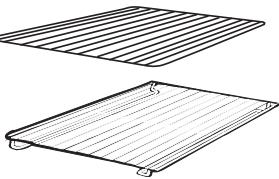
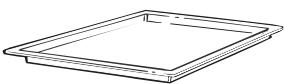
Accessories must be removed from the oven when not in use.
SHELF SAFETY SYSTEM
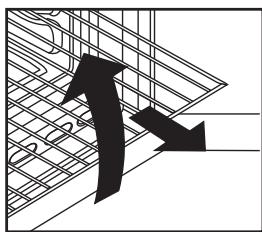
The oven features a new shelf safety system.
This allows you to pull out the oven shelves when inspecting the food without danger of food spillages or shelves falling accidentally out of the oven.
To remove the shelves pull out and lift.
GRILLING
Grilling makes it possible to give food a rich brown colour quickly. For browning we recommend that you insert the grill onto the fourth level, depending on the proportions of the food (see fig. page 7).
Almost all food can be cooked under the grill except for very lean game and meat rolls.
Meat and fish that are going to be grilled should first be lightly doused with oil.
COOKING TIME
For recommended cooking times and temperatures the first time you use the oven, refer to the tables on pages 7, 8. You may then wish to vary these times and settings in the light of your own experience.
SELF-CLEANING OVEN WITH CATALYTIC
Special self-cleaning panels covered in a micro-porous coating are available as optional extras for all models. If they are fitted, the oven no longer needs to be cleaned by hand.
The fat that is splattered onto the sides of the oven during roasting is eliminated by the microporous coating which breaks the fat down by catalysis and transforms it into gas.
Excessive splattering may nevertheless block the pores and therefore hinder self-cleaning. The self-cleaning capacity may be restored by switching on the empty oven to maximum for about 10-20 minutes.
Do not use abrasive products, metal cleaning wads, sharp objects, rough cloths, or chemical products and detergents that may permanently damage the catalytic lining.
It is a good idea to use deep roasting trays to roast fatty foods such as joints of meat etc. and to put a tray underneath the grill to catch surplus fat. If the walls of the oven are so thickly coated in grease that the catalytic lining is no longer effective remove surplus grease with a soft cloth or sponge soaked in hot water.
The lining must be porous for self-cleaning to be effective.
N.B.: All catalytic linings currently on the market have a working life of about 300 hours. They should therefore be replaced after about 300 hours.
CLEANING AND MAINTENANCE
Clean the stainless steel and enamelled surfaces with warm, soapy water or with suitable brand products. On no account use abrasive powders that may damage surfaces and ruin the oven's appearance. It is very important to clean the oven each time that it is used. Melted fat is deposited on the sides of the oven during cooking. The next time the oven is used this fat could cause unpleasant odours and might even jeopardise the success of the cooking. Use hot water and detergent to clean; rinse out thoroughly.
To make this chore unnecessary all models can be lined with catalytic self-cleaning panels: these are supplied as an optional extra (see the section SELF-CLEANING OVEN WITH CATALYTIC LINING).
Use detergents and abrasive metal pads like «brillo pads» for the stainless steel grills.
The glass surfaces facia panel, oven door and warming compartment door must be cleaned when they are cold. Damage that occurs to them because this rule was not adhered to are not covered by the guarantee.
To replace the interior light:
- switch off the mains power supply and unscrew bulb. Replace with an identical bulb that can withstand very high temperatures
SERVICE CENTRE
Before calling the Service Centre
If the oven is not working, we recommend that:
you check that the oven is properly plugged into the power supply. If the cause of the fault cannot be detected:
disconnect the oven from the mains, do not touch the oven and call the after sales service.
Before calling the Service Centre remember to make a note of the serial number on the specifications plate (see fig. On last page).
The oven is supplied with a guarantee certificate that ensures that it will be repaired free of charge by the Service Centre
OPERATING INSTRUCTIONS
| Function dial | Thermostat dial | Function |
| Turns on the oven light This will automatically activate the cooling fan (on fan cooled models only) | ||
| 50÷MAX | Natural convection Bottom and top oven elements are used. This is the traditional form of baking and roasting. It is ideal for roasting joints of meat and game, baking biscuits and apples and making the food nice and crispy. | |
| 50÷MAX | Lower Resistance Lower element. This function is ideal for delicate dishes (pies-souffle). | |
| 50÷MAX | GRILL: use the grill with the door closed. The top heating element is used alone and you can adjust the temperature. Five minutes preheating time is required to get the elements red-hot. Success is guaranteed for grills, kebabs and gratin dishes. White meats should be put at a distance from the grill; the cooking time is longer, but the meat will be tastier. You can put red meats and fish fillets on the shelf with the drip tray underneath. |
TABLES OF COOKING TIMES
The overall suggested cooking times set out below are intended as a rough guide only. They may in fact vary according to the quality, the freshness, the size and the thickness of the food cooked and of course cooking time is also partly a matter of taste. Let the food stand for a few minutes before serving because the ingredients continue cooking after they have been removed from the oven.
HANDY TIP: Lower the temperature so as to avoid the surface of the food becoming hard and dry.
Shelf position
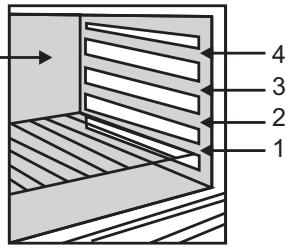
| Static electric oven | Electric fan oven | |||||||
| Food | Quantity | Shelf | Time of cooking in minutes | Oven temperature | Shelf | Time of cooking in minutes | Oven temperature | Remarks |
| · Pasta | ||||||||
| Lasagne | Kg 3,5 | 2 | 70 ÷ 75 | 220 | 2 | 60 ÷ 65 | 200 | Put the lasagne into an unheated oven |
| Cannelloni | Kg 1,8 | 2 | 50 ÷ 60 | 220 | 2 | 40 ÷ 50 | 200 | Put the cannelloni into an unheated |
| Oven baked pasta | Kg 2,5 | 2 | 55 ÷ 60 | 220 | 2 | 45 ÷ 50 | 200 | Put the oven baked pasta into an unheated oven |
| · Baking (not cakes) | ||||||||
| Bread | Kg 1 di pasta | 2 | 35 10 (pre-heating) | 200 | 2 | 30 ÷ 35 10 (pre-heating) | 180 | Form the dough into a loaf and make a cross with a knife on top of the dough leave the dough to rise for at least 2 hours. Grease the baking tin and put the dough in the middle of it. |
| Pizza | Kg 1 | 1 | 25 ÷ 35 | 190 | 1 | 20 ÷ 25 | 190 | Warm the oven for 15 minutes and place the pizzas on the greased baking tray. Garnish them with tomatoes, mozzarella, ham, oil, salt and origano. |
| Pastry (frozen) vol au vents | n° 24 | 1 | 30 ÷ 35 | 220 | 2 | 25 ÷ 30 | 200 | Place 24 vol au vents in the oven and bake. |
| Focaccia (n° 4) | gr. 200 of dough each | 2 | 25 ÷ 30 | 200 | 2 | 20 ÷ 25 | 180 | Warm the oven for 15 minutes, grease the baking tray, season the 4 focaccia with oil and salt and leave them to rise at room temperature for at least 2 hours before putting them in the oven. |
| · Meat | ||||||||
| All meats can be roasted in shallow or deep roasting trays. It is advisable to cover the shallow trays to avoid splattering the sides of the oven with grease. The roasting times are the same whether the meat has been covered up or not. | ||||||||
| Whole joint of beef | Kg 1 | 3 | 70 ÷ 80 | 220 | 3 | 50 ÷ 60 | 200 | Put the meat into a deep Pyrex dish and season with salt and pepper; turn the meat half way through cooking. |
| Joint of deboned | Kg 1 | 2 | 100 ÷ 110 | 220 | 2 | 80 ÷ 90 | 200 | Cook the meat in a covered Pyrex dish with herbs, spice, oil and butter. |
| Joint of deboned veal | Kg 1,3 | 1 | 90 ÷ 110 | 220 | 2 | 90 ÷ 100 | 200 | Cook as indicated above |
| Joint of fillet of beef | Kg 1 | 2 | 80 ÷ 90 | 220 | 2 | 80 ÷ 90 | 200 | Cook as indicated above. |
| · Fish | ||||||||
| Trout | 3 whole trout or / Kg 1 | 2 | 40 ÷ 45 | 220 | 2 | 35 ÷ 40 | 200 | Cover the trout with salt, oil and onions and cook in a Pyrex dish. |
| Salmon | 700 g 2,5 cm slice | 2 | 30 ÷ 35 | 220 | 2 | 30 ÷ 25 | 200 | Cook the salmon in an open Pyrex dish with salt, pepper and oil. |
| Sole | Kg 1 | 2 | 40 ÷ 45 | 220 | 2 | 35 ÷ 40 | 200 | Cook the sole with salt and a spoonful of oil. |
| Bream | 2 whole ones | 2 | 40 ÷ 45 | 220 | 2 | 35 ÷ 40 | 200 | Cook the bream in oil and salt in a covered dish. |
| Rabbits and Poultry | ||||||||
| Guinea fowl | Kg 1-1,3 | 2 | 60 ÷ 80 | 220 | 2 | 60 ÷ 70 | 200 | Place the guinea fowl in a deep Pyrex or pottery dish with very little oil and season with herbs and spices. |
| Chicken | Kg 1,5-1,7 | 2 | 110 ÷ 120 | 220 | 2 | 100 ÷ 110 | 200 | Follow the procedure for cooking the guinea fowl. |
| Rabbit pieces | Kg 1-1,2 | 2 | 55 ÷ 65 | 220 | 2 | 50 ÷ 60 | 200 | Put all the pieces of the same size in the glazed tray. Season with herbs and spices. Turn the pieces as and when required. |
| Cakes | ||||||||
| Coconut cake baked in a tin | 1 | 55 | 180 | 1 | 50 | 160 | Use a tin that is 22 cm deep. Pre-heat for 10 mins. | |
| Sponge cake | 1 | 55 | 175 | 1 | 40 ÷ 45 | 160 | Use a tin that is 22 cm deep. Pre-heat for 10 mins. | |
| Carrot cake baked in a tin | 1 | 65 | 180 | 1 | 50 ÷ 60 | 160 | Use a tin that is 22 cm deep. Pre-heat for 10 mins. | |
| Apricot pie | 700 gr | 1 | 40 | 200 | 2 | 30 ÷ 35 | 180 | Use a tin that is 22 cm deep. Pre-heat for 10 mins. |
| Vegetable | ||||||||
| Fennel | 800 gr | 1 | 70 ÷ 80 | 220 | 1 | 60 ÷ 70 | 200 | Cut the fennel into four pieces, add butter, salt and potatoes if required and place in a Pyrex face up. Cover the dish. |
| Courgettes | 800 gr | 1 | 70 | 220 | 1 | 60 ÷ 70 | 200 | Slice the courgettes, place in a Pyrex dish and add butter and salt. |
| Potatoes | 800 gr | 2 | 60 ÷ 65 | 220 | 2 | 60 ÷ 65 | 200 | Cut the potatoes into equal parts and place in a Pyrex dish. Season with salt, origano and rosemary. Cook in oil. |
| Carrots | 800 gr | 1 | 80 ÷ 85 | 220 | 1 | 70 ÷ 80 | 200 | Slice the carrots, place in a Pyrex dish and cook. |
| Fruit | ||||||||
| Whole apples | Kg 1 | 1 | 45 ÷ 55 | 220 | 2 | 45 ÷ 55 | 200 | Bake the fruit in an open Pyrex or earthen-ware dish. Leave it to cool inside the oven. |
| Pears | Kg 1 | 1 | 45 ÷ 55 | 220 | 2 | 45 ÷ 55 | 200 | Follow procedure above. |
| Peaches | Kg 1 | 1 | 45 ÷ 55 | 220 | 2 | 45 ÷ 55 | 200 | Follow procedure above. |
| Grilling | ||||||||
| Place the food to be grilled underneath the infra-red grill. Warning: When the grill is on it takes on a bright red colour. Place the tray underneath the grill to collect juices and fat from the food being grilled. | ||||||||
| Squares of bread for toasting | 4 pieces | 4 | 5 (5 to heat up grill) | Grill | 4 | 5 (10 to heat up grill) | Grill | Lay the bread on the grill tray. When one side of the bread has been toasted, turn over and toast the other side. Remember: keep the toast warm at the bottom of the oven until you are ready to serve it. |
| Toasted sandwiches | 4 | 3 | 10 (10 to heat up grill) | Grill | 3 | 5/8 (10 to heat up grill) | Grill | Lay the bread on the grill tray. When one side of the sandwich has been toasted, turn over and toast the other side. |
| Sausages | n°6 / Kg 0,9 | 4 | 25/30 (5 to heat up grill) | Grill | 4 | 15/20 (10 to heat up grill) | Grill | Cut the sausages in half and lay them face down on the grill. Half way through grilling turn them over. Every so often, check that they are being cooked equally all over. (If this is not happening, turn and reposition the ones being cooked either less or more than the others. |
| Ribs of beef | n°4 / Kg 1,5 | 4 | 25 (5 to heat up grill) | Grill | 4 | 15/20 (10 to heat up grill) | Grill | Make sure that the ribs of beef are exposed to the full effect on the main grill. |
| Chicken legs | n°4 / Kg 1,5 | 3 | 50/60 (5 to heat up grill) | Grill | 3 | 50/60 (10 to heat up grill) | Grill | Turn them over twice during grilling |

m = 311 ;
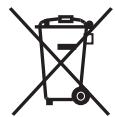
This appliance is marked according to the European directive 2012/19/EU on Waste Electrical and Electronic Equipment (WEEE). WEEE contains both polluting substances (which can cause negative consequences for the environment) and basic components (which can be re-used). It is important to have WEEE subjected to specific treatments, in order to remove and dispose properly all pollutants, and recover and recycle all materials. Individuals can play an important role in ensuring that WEEE does not become an environmental issue; it is essential to follow some basic rules: WEEE shall not be treated as household waste. WEEE shall be handed over to the relevant collection points managed by the municipality or by registered companies. In many countries, for large WEEE, home collection could be present. When you buy a new appliance, the old one may be returned to the retailer who has to collect it free of charge on a one-to-one basis, as long as the equipment is of equivalent type and has the same functions as the supplied equipment.
DECLARATION DE CONFORMITE:
MISE EN PLACE DU FOUR DANS SON MEUBLE
a Takke BcneIcdTbne HapyuWeHnna npabn ero 3Kcnnyataun. Pnp noJIb3OBaHHn 3NeKtpnueckmmn npnbopamn cJeYet co6JHOdaTb prd OCHOBhIX npabn 6eO3nacHOCTN.
- Bce IocTyHbIe DeTaNi CnIbHO HArpeBaHTcB BO BpEma pa6Otbl npIbopa, 6yIbTe OCTOpOKHbI N He pNkacaiTeCb K HIM.
-He TaHHTe 乌Hyp nHTaHnY, UTObI BbHyTb BNky u3 pO3eTKN. - He npikacaiTebc K dYXOBKe MOKpbIMN INBn BnAkhblmpyKaMn INHOrAMN.
- He nol3yntecb dYxOBKO, ecn Bbl pa3ytbl.
- He pa3pe7aIte IIOJIb3OBAtbcra IyXOBKoB 6e3 IpiCmOTpa JeTAM NIIb6OJIbHbIM JIOdM.
- He pekomehnyeTcN cNoIb3ObaTb aadantpebl, TpOHNKn ydINHtEN.
- B cIyueae HneCnpaBHOCTN u/IMN OKNHOHENr O'T HopMaJIbHO rO peXHMa paOTo bIyoxOBky CJeDyET BbIKIOHHTb N He PbITaTbC aMoOCTOrTeHbHO OTPMOHTIPoBA Tb.
-Bcnyae NOBpexKeHnIa Hpya erO cneIyET,He OTKnaDbIbAra,3aMeHHTb, Jnryo BbInONHIne CneIyUOnne Onpaun:
OTkpOte KpbIbKU KJIeMMHOn KOpOBKn, OTOeDINHTE UHyp NITaHnN 3aMeHNTe ERO h HOBb LUny Tpe6yeMoN dInHb (TIN HO5RR-F, H05VV-F, H05V2F), COOTBeTCTByUoosM MOuHocTn Pn6Opa. DaHna OtnepauN DoJXHa BbIOJNHTcB KBAJINuNpuOBaHHbIM CneuaNtCtOM. 3a3eMJIooN pPOBoD (XeJITo-3eJIeHb) DOJXeHn 6o3aTeIbHO 6bItb PrnPmepHo Ha 10 MM DInHHeE OCTaJIbHbIX pOBOID.
Pn Heo6xoDmOCTn PpOBedeHnpeMOHTa CneJyET ObpaataBcB ABTOP30BaHbNt CepBCHNt LcHTp, NcPONb3yOuI npINHaNbHbIe 3aNaChBie cactn. Hec6LIOHeNe pAabN, n3IOXeHHbIX BblE, MOKeT pPiBeCTN K hapyeHnIO beO3oNaCHOCTn pnpOba.
-ДуховkaобладаETочноЗаданьIMТexнчecКIMNХapakTePnCTNKaMNIOTOMYBHENEBO3MOKHO BHOCINTBN3MeHeHЯ.
- HeJIb3I pOJIb3OBAtbcI npIb6opamN, OuIuaHOUcIMn Iprn IOMoU napa noD BbICOKIM DaBJIeHMeM.
- HeJIb3a CTaBntb B DnyxOBky BOCIIpMaHReIOUeCg npEIMTebl. Ppi CnyaHOM BKJIIOUeHHN OHN MOYT 3aIOpETbcra.
-He oBIOkaUBaIteCb n He cKaaTe DeTeu Ha DBepu yDxOBKn.
- YTO6bI NocTaNtB BdyXOBky N BbyHytB n3 Hee nocSy, 6JIOda I DOnOHNHeJIbHOe OOpyOBOAHnI POnb3yInTeCb CneuaJIbHOpyKaBnCeI.
- He nokpbIbaiTe BHyTppeHHne NOBepxHOCTn DyXOBKn aIOMHHeBOI ΦIbToN dpyrIMN Ondop3oBbIMN yNaKOBOuHbIMN MaTePnaIaMn, KOTOpBe IpoDaHOTcB XO3YnCTBeHHbIX Mara3INHax. AIIOMHHeBaI ΦIbTa NnDpyroynyAkoBOUHbMI MaTePnaI pni KONTAKe C rOpJey 3MaJInpoBAHHO NObepxHOCTbO DyXOBKn MOKeT paCnPaIBtCBNcIO NBpeNTb BHYTppeHHIO 3MaJInpoBAHHyIO NOBepxHOCTb DyXOBKn.
YCTAHOBKA
YctahOBka npbiopopa npoi3BOOHTCRA 3a cHT NOKyntAe.ΦIpMa-npO3BOOHTJIb He HecET o63aTeJBCTB NO daHHo YcNye. Ha pemOH, KOtOpB MoKet 6bITb Bbl3BaH HeIpaBnHOb YCTaHOKo, He paCnpocTpaHReTcraPANTu, I pmpMa- npO3BOOHTJIb erO He KOMPeHCpyET.
YctahOBKa DOLKHa IPOUN3BOOINbC B COOTBETCTBn C NHCTpyKUnei KBaIINcPNIUPOBAHHbIM CNEUJIANCTOM. HeNPABINbNAy YCTAHOBKa PnIBopa MOKeT INBeCTN K TPABMIPoBAHIO JIODeI N XNBOTbIX, a TAKKe HAnecTeu Uyepe6 IMyECTBy, 3a YTOΦnpMa-IPON3BOOInTeJIb He 6yDet HeCTN OTBETCTBEHNOCTb.
Me6eIb, B KOTopyIO DoJIXHb CBTpaNBaTcBcIyXOBKa, DoJIXHa 6bITb BblIOJIHeHa I3 MaTePnaIOB YCTOUIIBbIX K BbICOKIM TEMpeaTypam.
DyXOBKa MoKet BCtpanBaTbCak KND CTOneUHnUy, TAK N BOJIOHky. PpeJe KpennneHMe: Heo6xOdNMo npedymOTpeB xopooyu BENTnIaunio NOMeueHn, ryeCTaHaBnBaTeC npnbop, yTO6bI oBeCneHTb HOpMaJIbHyO UkpYnauNo Bo3dyxa, Heo6xOdMOrO dnyoxJaKeHnBHTpeHHnx DeTaNen. DnA STOrO cNeDuET npedymOTpeB cneuaNbHbte OTBepCTra (CM. nocJeDHOIO CTpaHnUy).
YcTaHOBka DyXOBOrO WkaΦa B KxOHbI rapHnTp
IomeCTte DxyoBoi kaf B OTBeHHe OJI HeO MeTO; OH MOKeT 6bITb NOMEeH KAK NOI CTOnEWHNHy, TAK I B BePTKAbhbl ukaΦ.3aKePInTe DxyOBky, npBHTNB Ee chep3 CneuaJIbHbIe OTBepCTnI dJI KpeNExKa Ha pame (CM. PcunHO KaNoCNEJHd CTpaHmUe). YTo6bl HauTI OTBepCTnI dJI KpeNExKa, OKpoTe DbeCyI a3JIaHNTe BHyTpB. YTo6bl ObecneuHT HeoXoDmyIO BEHTNIaIIO, NapamETpbI paCCToTHnY, yka3aHHbIe B DaIarPAMMe HA NoCpeNDHe CTpaHmUe, DoJIxHbI HeyKOChNTeBJHo CObHODaTc pni UyctAHOBke. O6paTIte BHIMme: I dyuOXBbl WkAFOB, KObUnHPOBaHNbIX C BapOCHNO NaHElbIO, HEoXoDMO CLeEOBaTb IHCTpyKcIyM DJI BapOCHNO NaHEII.
3JIKTPUeCKOE NOJKNIOUeHNE
YCTAHOBKA DYXOBKN IOJIXHA IPOIN3BOIDITbCOTPYDNIKOM ABTOPI3OBAHHOG CEPBNCHOTO CEHTPA NJI CNIEUAAJNTCTOM, IMEIOUIM COOTBETCTBYUO U KBAJIINΦUKALUHO.
AnHHbI npH6Op DoJIxHeYCTaHaBnBaTbCBA COOTBETCTBnC DeIcTByOuIMN HOpMaMn I npAunAmn.
B cIyue Heco6bHIOeHnna 3tNx Hopm pnpMa-IPoIN3BOJNTeJIb He HecET HnKaKoI OTBETCTBEHHOCTN.
DyXOBka COOTBETCTBYET Tpe6oBaHnIe 6e3oNaChOCTN, PpeYCMOTpeHHbIM HOpMaMn, INdoJxHa 6bITb CHa6ZeHa TpexPiIOHcHoi BUNKO C 3a3eMJIeHHbIM POJIHOCOM, O6ecneuBaOHUM HaedKHOe 3a3eMJIeHne.
Pn3eKtpnueckOM POKJIHouEHN CNEyET PneYCMOTpeb yCTaHOBky COOTBETCTBYUOxIN PpeoXpaHNTeEN INCIOJIb3OBAt Ka6eJIb C DoCTaTOHyBM DnHOPMaJbHOrO FyHKUOHPOBaHn DyXOBKn CeEHHeM.
IPOKJIIOUCHENH:
CEPBNUCHOE OBCJNYKINBAHNE
Ipeed Tem kak o6paatabcra B cepBnchb yentp.
B cnyae ecn nyxobka he pa6oTaet, pekomeHyuem Bam:
- npOBepntb, npaBnIbHO nBCTabJIeHa BUNka B po3eTKy; Ecn He ydactcObHApYKnTb pInuHny HEnCnpaBHOctn:
BbIKIOHnTe np6Op, He npeInpHmMaIte nonbIcK caMOCToTebHO OTPMOHTNPOBaTb erO n IO3BOHnTE B aBTOpN3OBaHHb CEpBCHbI cEHTp. Ipn oBaPaeHN B aBTOpN3OBaHHb cEBPNCbH b cEHTp oB3aTEbHO CNEyET COoBtB hA3BaHHe MOJEn n cepNbH b HOMe pNDEJNA, KOToPbE Bbl MoXeTe HAITN B rapaNTHOM CBnDETeJBCTBe NIN Ha MapKnPOBOHOn TaBNIuKe. K n3dJIHO pInnAaetcra rapaHTnHOoe CBnDETeJBCTBO, H a OCHOBAHN KOToPoro OHO 6bET Be6cnlAHTO OTPMOHTNPOBaHO B aBTOpN3OBaHHom cEBPCHOM cEHTpB TeueHne rapaNTnHOrO cPoka.
CepnHbI HOMep coCToNT n3 16 uΦp. NepBbIe 8 uΦp KoD MoDeII. CneDuOJIe 4 uΦpbl dAa IpoN3BOJcTBa (roI, HeJeI). PocneHne 4 uΦpbl 3abOJcKne HOMepa.
INCHTPKUINIIO PIPIMHEHIO
m = 311 ;
DanHbI npHbOp Hmeet MapKnpoBky B COOTBeTCTBnC Ebponecko DnpeKTHBOy 2012/19/EC o6 OTxOaX npOn3BODCTBa 3eKtpueckoro n 3eKtpOHoro o6pOuOBHn (WEEE). OToXobI npOn3BOcTBA 3eKtpueckoro n 3eKtpOHoro o6pOuOBHn coepkata 3aqr3hOuHne BceCTBA (KOTOpbIE MOryt HeaTINBHO BnA Tb Ha OkpykaHou CpeDy) u OCHOBHbIe KOMNoHEbTI (KOTOpbIE NDoJIeKAT NOBOTOPHOMy IcNolb3OBAHIO). BaxHo, YTObI OTxOdbI npOn3BOcTBA 3eKtpueckoro n 3eKtpOHoro o6pOuOBHn IOBepraInCb cneuaJIbHO mAp6oTeC ceIbIy UdaHeHn y UtniHa3aun BCex 3aRpa3HauOuixs BeUeCTB, a TAKKe pereHepaun N NOBtOPHOro NCnOlb3OBAHn BCeMATEpnaIOB.
KaJdb moKet cDetaT cyueCTBeHbB KlaaB n PpeoTbpaueHne 3KOLOrueckn X npObem, Bbl3bBaembIX OTXoamn pOn3BOcTBA 3NeKtpnueckoro and NektpoHHoro o6OpUdoBaHa; Ipn 3TOR BaxHo npDepkuBaTbCn HeKOTopbIX OCHOBhix npabn..HeJIb3ra obaaTaBcA C
OTXoAMN pOON3BODCTBA 3eKTPnueckoro n 3eKTPoHNO o6OpUdoBaHn, kAc C 6bIToBbIMN OTxODAMN. OTXoDbI pOni3BODCTBa 3eKTPnueckoro n 3eKTPoHNO o6OpUdoBaHn, cIeYET nepeDaabaB B nyHKtBc6opA, KOHTpOINpyEmbIe OpraHAMM MeCTHO BnactNI 3apERiNCTpUPOBaHNbIMN KOMTNaHnMI. Bo MHOINxCpaHax Prn HAnuHn 60JIbWoR KOINueCTBa OTXoOB pOni3BODCTBa 3eKTPnueckoro n 3eKTPoHNO o6OpUdoBaHn c6Op OTXoOB OCyUcSETBnA TcHOMy.. PInp Nokynke HOBO pIn6opa CTapB INPbO MPKHO BO3BpaNTb PO3HNUHOMy TOPROBOMy pPeDnpyTIO, KOToPOE 683aHO pInHnTb Ero 6ecnIIaTHo H A OCHOB B3aAMHObO-ODHO3NaHORO COOTBcTbNIA, ECNI 3TO pIn6obpbl aHaIOrnHORO Tnna, I BO3BpaUaEMbl pIn6obm IMeET Te Jce FyHKznn, YTO n pOniDaBaembl.
MRO
IyUHe COJIMTB MRCIO OKOHuaHIN PnIroTOBneHIn, TaK KaK COnb CnOCO6CTByET BbIeJIeHIno Xupa, YTO yBeJIuHnBaET 3aIrp3HeHne JxapOCHN KAmepbl N BblJeJIeHne DbIMa.
PpeHa3NaeHbIe DnJxapKnTeJIaTHNy,6apAHHy,CBHNHy n pbl6y moKHO CTaBtB XoNoDHy dYXOBky. BpempiRTOBHeHnyBvEnuYBaETcno CpeDbAPntbHo pa3OgPeToI dYXOBko,ODHako PPOHKNHOBeHne Tepla K CEHTpy PPOyKTob PPOxCxoNT 6Oone NOCTeHNO,UTo Daet LyUwne pe3yNbTaTbI. PpaBnblnPipeBapntbHbI pa3OgpeB dYxOBkn rapaHTnpuyet XopoWne pe3yNbTaTbI ppiRTOBHeHny ROyAnHbI n CBHNHbI.
Ipeed tem kak cTaBnTb 6HIOo B DuxOBky: doCTaHbTe Mco I3 XOJIOINbHnka 3a HeCKOJIbKO qacOB Do npriGTOBHeHn. PeKOMeHdyETc POJOxNtB erO H BInTBaHOuYbMya, TaKIM O6pa3OM, MRCO NOJUyNTc6 60Jee HexHbIM, BKyCHbIM n He OKaXetC XOJIOHNbIM BHyTpN. Ppeed JkapKoM mco CneJyET NocBInatb CNEiAIM, He CoJIte Do OKOHuaHn PpRTOBJIeHn, INaHe MRCO OKaXetC MeHeE HexHbIM n BKYChbIM.
TtateBcMxaBbTe OINBKBOBbIM MacnIOM PnPi NMOuN KnCTOCh, LyuWe Bcero NcNoJIb3OBaTb WnPOKyo I NIOCKyO KNCTOChy. DoabBe Tpeuc n Cpeun.
Bo Bpem npirotoBneHnIKoTda He npotbikai Te PPOyKtbi BO Bpem npirotoBneHnAxe npinpeBopauBaHn, INaue BeCb COK BbITEeT mRcO pOnyHTcay CyxIM.
Protection trim (supplied with the oven when necessary)
IT
Targhetta matricola
GB
Rating plate
FR
Plaque signalitique
RU
MapKinpobOuHna Ta6nUka
ES
Tarjeta matricula
IT
The manufacturer will not be responsible for any inaccuracy resulting from printing or transcript errors contained in this brochure. We reserve the right to carry out modifications to products as required, including the interests of consumption, without prejudice to the characteristics relating to safety or function.