
USB 2.0 LATPOP DOCKING STATION - USB Docking Station TARGUS - Free user manual and instructions
Find the device manual for free USB 2.0 LATPOP DOCKING STATION TARGUS in PDF.



| Product Type | USB 2.0 Docking Station with Video |
| Brand | TARGUS |
| Model | USB 2.0 LATPOP DOCKING STATION |
| Connectivity | USB 2.0 (x4), Ethernet 10/100 (RJ-45), DVI output, 3.5 mm audio input/output |
| USB Ports | 2 white ports (500 mA), 2 black ports (1 A with continuous power) |
| Maximum Video Resolution | 2048 x 1152 in 32-bit (via DVI) |
| Audio | Stereo headphone output, microphone input |
| Power | AC power adapter (required, included) |
| Compatible Operating Systems | Windows Vista SP1 (32/64-bit), Windows XP SP3 |
| Main Functions | Screen extension, mirror mode, network connection, audio, permanent USB charging |
| Security | Compatible Kensington lock slot |
| Protection | Per-port USB overcurrent protection (resettable) |
| Package Contents | Docking station, USB 2.0 cable, driver mini CD, power adapter |
| Care and Cleaning | Unplug before cleaning; use a soft, dry cloth |
| Repairability | No user-serviceable parts; contact DisplayLink/Targus support |
Frequently Asked Questions - USB 2.0 LATPOP DOCKING STATION TARGUS
User questions about USB 2.0 LATPOP DOCKING STATION TARGUS
0 question about this device. Answer the ones you know or ask your own.
Ask a new question about this device
Download the instructions for your USB Docking Station in PDF format for free! Find your manual USB 2.0 LATPOP DOCKING STATION - TARGUS and take your electronic device back in hand. On this page are published all the documents necessary for the use of your device. USB 2.0 LATPOP DOCKING STATION by TARGUS.
USER MANUAL USB 2.0 LATPOP DOCKING STATION TARGUS
USB 2.0 Laptop Docking Station With Video 2
Deutsch
Congratulations on your purchase of the Targus USB 2.0 Laptop Docking Station with Video. This portable expansion module allows you to connect through a single USB connection up to 4 USB devices, monitor, network (Ethernet/LAN) connection, speakers and microphone. The docking station also offers two, Targus Power Ports providing twice the USB spec for high power devices, and USB ports that are widely spaced for larger adapters. Targus Always On provides power to the USB ports even when the notebook is shut-down, disconnected from the docking station or in hibernate/stand-by mode. This allows USB devices that charge via the USB port to keep charging under any circumstance as long as the AC adapter is plugged in.
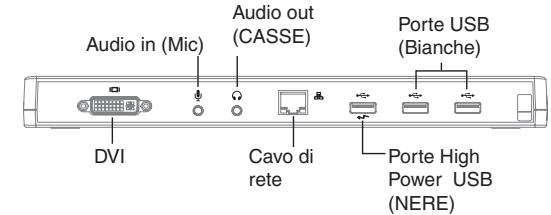
The Docking Station provides the following ports:
- DVI Single Link (supports up to 2048 x 1152 at 32 bit color)
- Two 3.5mm Audio: (1) stereo out (1) microphone in
RJ-45 Ethernet 10/100 - Two USB 2.0 (White)
- Two USB Power Ports (Black) - providing current up to 1 Ampere
Package Contents
In addition to this user guide, the package contains:
Targus USB 2.0 Laptop Docking Station with Video
High-speed USB 2.0 upstream cable
- Driver software CD (mini CD)
- AC power adapter (required)
System Requirements
Hardware
- PC with an Intel® Pentium® processor or equivalent
- CD-ROM drive (support mini CD)
- USB version 2.0 port
- AC power source (AC adapter required)
Operating System
- Windows Vista® with Service Pack 1 (32-bit or 64-bit)
- Windows® XP with Service Pack 3

NOTE: WHEN CONNECTED TO A USB VERSION 1.1 PORT ON YOUR COMPUTER, THE DOCKING STATION'S PERFORMANCE LEVEL WILL BE LESS THAN OPTIMAL AND THE VIDEO PORT WILL NOT FUNCTION PROPERLY. FOR BEST RESULTS, CONNECT IT TO A USB VERSION 2.0 PORT.
Installing the Device and Drivers
To use the Targus Docking Station, you must first install the driver onto your computer. Then, connect the docking station to your computer and Windows plug-and-play will install the hardware drivers for each port.

WARNING: YOU MUST INSTALL THE DOCKING STATION SOFTWARE BEFORE CONNECTING IT TO YOUR COMPUTER. OTHERWISE, THE DOCKING STATION WILL NOT WORK PROPERLY.
Installing the Docking Station Driver
Installing the docking station driver enables your operating system to recognize the docking station and its ports once it's connected.
1 Turn on your computer.
2 Insert the driver software CD into your computer's CD-ROM drive.
If setup does not begin automatically, click Start, Run, and enter D:\Setup.exe (where D: is the path of your CD-ROM drive) and then click OK.
3 Follow any on-screen instructions to complete the installation.
4 Click Finish and restart your computer when prompted.
Connecting the Docking Station to Your Computer
After installing the docking station software, you are ready to connect the docking station to your computer. To do this:
1 Connect the supplied AC power adapter to the AC power jack on the docking station.
2 Connect one end of the USB cable to the docking station and the other end into an available USB 2.0 port on your computer.

WARNING: THE DOCKING STATION WILL NOT FUNCTION PROPERLY WITHOUT THE AC ADAPTER PLUGGED INTO AN AC OUTLET.
DO NOT CONNECT ANY DEVICES TO THE DOCKING STATION UNTIL THE INSTALLATION IS COMPLETED.
Docking Station Ports
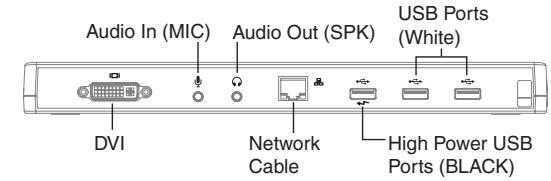
Back View
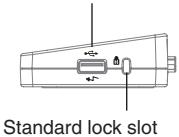
High Power USB Ports (BLACK)
Right side
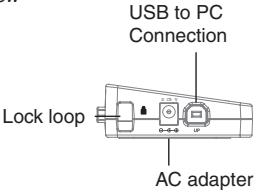
Left side
- Green Tx light illuminates when connected to a network and the yellow Rx light flashes when data is transmitting to or from the network.

NOTE: THE DOCKING STATION SUPPORTS HOT SWAPPING OF THE NETWORK CABLE.
Connecting New Devices
To avoid possible damage when connecting a new device, do not force the cable connector into the port on the docking station. If the cable connector does not attach smoothly, turn the connector over and try attaching it again.
Connecting to a Local Area Network
To connect an ethernet cable with RJ-45 connect, attach the cable connector to the ethernet/network port on the docking station. Additional procedures to connect to an actual network depend on the type of network you are using. Contact your network administrator for detailed instructions.
Connecting a USB Device
To connect a USB device, plug it into a USB port on the docking station and follow the additional instructions provided with the device. All four USB ports meet USB hi-speed requirements by providing 480Mbps through-put and 500mA of power.
However, the two black USB ports have two unique features. See "Targus Always On" more details.
The white USB ports are high-speed ports that provide standard 500mA of power. The black USB power ports are high-speed ports that provide up to 1Amp.
Connecting and Configuring an Audio Device
- Plug your headphones or speakers into the green 3.5mm Audio Out port on the docking station.
- To connect a microphone, plug it into the mono Audio In port.
- The sound and mic should come out automatically when you plug the docking station. Make sure that both speaker and microphone volume is not set to MUTE.
- To manually enable your headphones or speakers in case automatic transfer is not possible
For Windows XP
Go to the Control Panel and choose Sound and Audio. Select the Audio tab. Under Sound Playback, change Preferred Device to USB Multimedia Audio Device from the drop down list.
- Click Apply, then click OK.
For Windows Vista
Go to the Control Panel and select Sound. Under the Playback tab, check that USB Audio Device is set as the default. If it is, click OK. If it isn't, select it, click Set Default, then click OK.

NOTE: AUDIO DEVICES WILL NOT WORK SIMULTANEOUSLY ON THE PORT STATION AND THE HOST COMPUTER

CAUTION: ALL AUDIO OR MULTIMEDIA APPLICATIONS MUST BE TERMINATED BEFORE SWITCHING BETWEEN THE PORT STATION AUDIO OUTPUT AND THE HOST COMPUTER AUDIO OUTPUT.
Connecting to a Monitor or LCD
Any monitor or LCD connected to the video port of the docking station will be limited to a maximum resolution of 2048 x 1152 at 32 bit color

NOTE: THE MAXIMUM RESOLUTION OF 2048 x 1152 IS ONLY SUPPORTED IF THE MONITOR OR LCD IS PLUGGED INTO THE DOCKING STATION BEFORE CONNECTING THE DOCKING STATION TO THE NOTEBOOK. IF THE MONITOR OR LCD IS PLUGGED INTO THE DOCKING STATION AFTER THE DOCKING STATION IS CONNECTED TO THE NOTEBOOK, THE RESOLUTION IS SET TO 1024 X 768.
Controlling the Display using Docking Station's Video Menu Options
Video menu options can be accessed by right-clicking on the Docking Station icon in the system tray or through the Windows Display Properties.
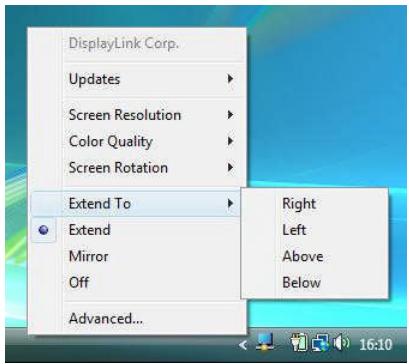
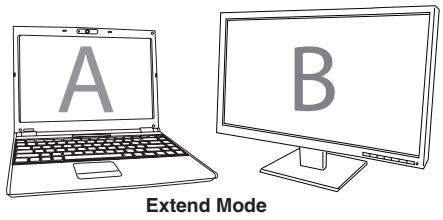
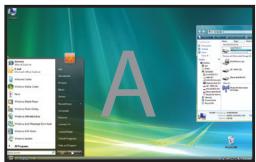
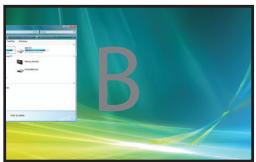
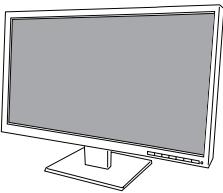
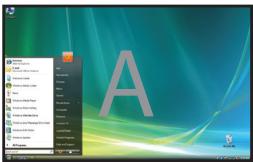
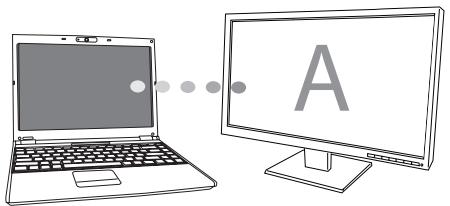
Extend: You are using your notebook screen as your primary display and your monitor or LCD is a secondary screen.
To set the display into this mode, select 'Extend' in the Docking Station Icon application menu. The device will now be extending in the direction it was the last time the display was in this mode. For more control, navigating to the 'Extend To' submenu and selecting one of the options will not only put the device into extend mode, but will also place it to the Left/Right/Above/ Below the main (primary) monitor.
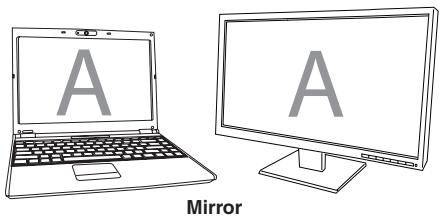
Mirror: You are using your notebook screen as your primary display and your monitor or LCD replicates your notebook screen.
To set the display into this mode, simply select 'mirror' from the docking station icon application menu. The resolution, colour depth and refresh rate of the primary screen are replicated on the monitor connected to the docking station graphics adapter.

NOTE: IF THE MONITOR CONNECTED TO THE DOCKING STATION SUPPORTS A LOWER RESOLUTION THAN THE PRIMARY PICTURE FITS ON THE EXTERNAL SCREEN. WHERE THE MONITOR CONNECTED TO THE DOCKING STATION IS OF A LARGER SIZE THAN THE PRIMARY SCREEN THE IMAGE WILL BE LETTER-BOXED TO KEEP THE ASPECT RATIO CORRECT.
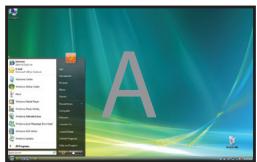
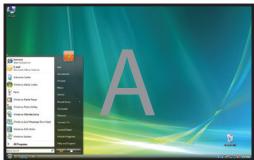
Off: You are using your notebook screen as your primary display and your monitor or LCD is turned off.
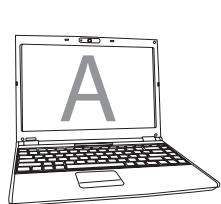
Off

Controlling the Display using Windows Display Properties
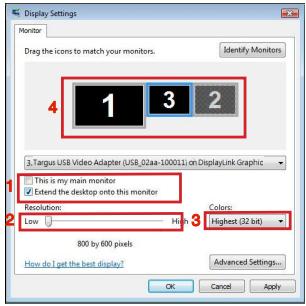
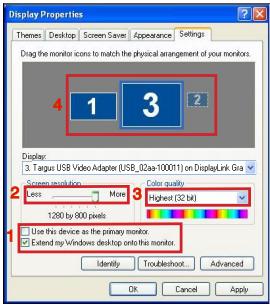
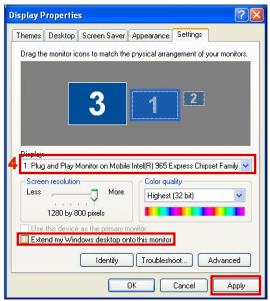
Docking Station's video setting can also be configured from the Windows Display Properties dialog box. To do this on Windows Vista, right click on the desktop, click on "Personalize" and then select the 'Display Settings' link. The corresponding feature is available in Windows XP by right clicking on the desktop, selecting 'Properties' and then navigating to the 'Settings' tab.
Windows Vista
Windows XP
Figure 1
Extend Mode: To set the display into this mode, check the box marked 'Extend my Windows desktop onto this monitor' (1 in Figure 1). Arrange screen resolution and colour quality using the appropriate controls (2 and 3), and arrange its position with respect to the other monitors on the extended desktop in using the drag area (4).
Mirror Mode: To set the display into mirror mode, simply uncheck the box marked 'Extend the desktop onto this monitor' (1 in Figure 1 on previous page.).
Setting the Primary Display: To make the monitor attached to the Docking Station as the primary display, follow the instructions below:
- In Display Properties window, using the drop down list, select the monitor that is attached to the Docking Station.
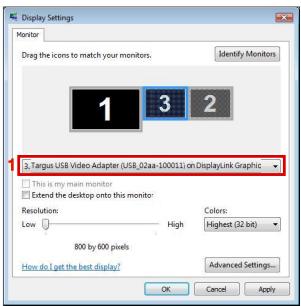
Windows Vista
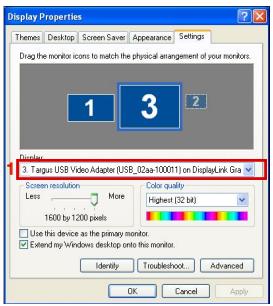
Windows XP
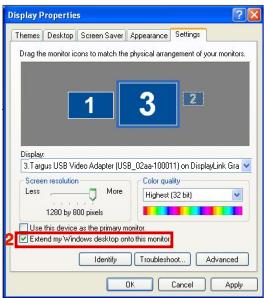
- After selecting the corresponding monitor, check the box next to "extend the desktop onto this monitor" (for Vista) or "extend my Windows desktop onto this monitor" (for XP).
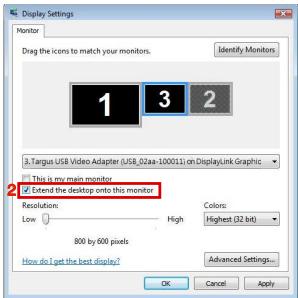
Windows Vista
Windows XP
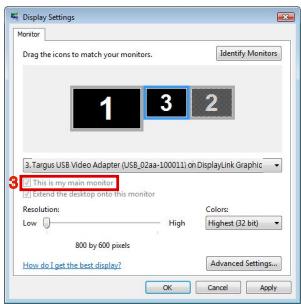
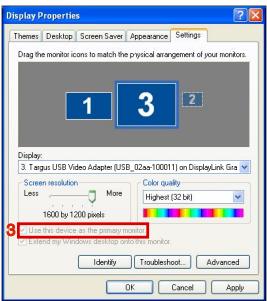
- Then, check the box next to "This is my main monitor" (for Vista) "Use this device as the primary monitor" (for XP).
Windows Vista
Windows XP
-
Click "Apply".
-
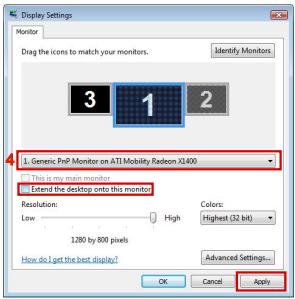
Select the Laptop monitor using the drop down list and uncheck the box "extend the desktop onto this monitor" (for Vista) or "Extend my Windows desktop onto this monitor" (for XP) and click "Apply"
Windows Vista
Windows XP

NOTE: IT IS POSSIBLE TO WORK MORE CONVENIENTLY WITH A LAPTOP BY SETTING ITS ACTION ON LID CLOSED TO 'DO NOTHING' AND SETTING THE DOCKING TO PRIMARY MODE. THE LAPTOP LID CAN THEN BE CLOSED AND THE LAPTOP USED WITH THE EXTERNAL KEYBOARD AND MOUSE.
The monitor attached to the Docking Station stays primary if the PC enters hibernate or suspend mode or is rebooted. If the Docking Station is detached, the laptop's display becomes primary again.
Upon reconnection, the monitor attached to the Docking Station will return to primary mode.
Automatic Updates
Automatic Updates is a product maintenance feature from DisplayLink. The automatic update mechanism ensures that the Docking Station's graphics Adapter has the most up-to-date drivers and software, providing the user with increased performance and stability.
Disconnecting the Docking Station
If the Docking Station is powered off or the USB cable is removed from the computer, the display blanks. All windows and icons will shift to the primary screen.
On reconnection or powering up of the Docking Station, the display returns to the same mode as it was before disconnection. However, windows and icons that were previously on the screen will not be moved back.
Targus Always On
Targus Always On enables the black USB ports to continue providing power even when the laptop is powered down or disconnected from the docking station. This allows you to charge the batteries of any USB rechargeable accessory you may have connected.
Using USB Devices That Require More Power
Some devices, which use large amounts of power, such as printers and optical drives, should be plugged into the USB Power Ports. These ports will provide up to 1000mA of power - double the power on standard USB ports.
Supported Resolution
| Resolution | Refresh Rates available at 32 bit |
| 640 x 480 | 60 67 72 75 85 |
| 720 x 480 | 50 60 |
| 768 x 576 | 50 60 |
| 800 x 600 | 56 60 72 75 85 |
| 832 x 624 | 75 |
| 800 x 480 | 60 |
| 848 x 480 | 60 |
| 1024 x 600 | 60 |
| 1024 x 768 | 60 70 72 85 |
| 1152 x 864 | 75 |
| 1152 x 870 | 75 |
| 1280 x 720 | 50 60 |
| 1280 x 800 | 60 75 85 |
| 1280 x 960 | 60 |
| 1280 x 1024 | 60 75 |
| 1360 x 768 | 60 |
| 1366 x 768 | 60 75 85 |
| 1400 x 1050 | 60 |
| 1440 x 900 | 60 |
| 1600 x 1200 | 60 |
| 1680 x 1050 | 60 |
| 1920 x 1080 | 50 60 |
| 1920 x 1200 | 60 |
| 2048 x 1152 | 60 |
Actual support resolutions area depend on the support of connected monitor.
Troubleshooting
Device Not Working
- Make sure that the device is fully inserted into the correct port on the docking station.
- Plug the device into a different port on the docking station. If it still doesn't work, test the device by connecting it directly to your computer.
- Verify that you ran the Setup or Install program for the device.
- Make sure that the device appears in Device Manager. For more information refer to "Verifying Devices are Installed"
- Disconnect all devices from the docking station and reconnect them, one at a time. Check that each device works before plugging in the next one.
Each USB port is equipped with over-current protection. Should a USB device draw more current than the USB port can supply, the port will shut down. To re-enable the port, unplug the device and go to Device Manager or to the message in the system tray and choose the Reset option. You can then plug the device back into the USB port. If a shut down reoccurs, check the power requirements of the device.
Product Limitations
Some devices may halt temporarily when a high data transfer is occurring. For example, your mouse may respond slowly while a graphic print job is printing or while you are experiencing heavy network traffic. We recommend the following guidelines:
- Do not transfer data to or from multiple high-speed devices, such as a digital camera or scanner, at the same time.
- If speed degradation does occur, close other programs that use a USB device to improve device performance.
Verifying Devices are Installed
You can view the devices installed on the docking station from the Device Manager window in System Properties. Right-click My Computer, Properties, then click the Hardware tab, and then the Device Manager button.
From the Device Manager window, expand the following:
-
Display Adapters:
-
Displaylink Graphic Adapter (XP only)
- Displaylink Mirror Adapter (XP only)
Network Adapters:
- High speed USB Ethernet Adapter
Sound, Video and Game Controllers:
-
USB Audio Device
-
USB Display Adapters
-
Targus USB Video Adapter
Monitor
- Targus USB Video Adapter
FAQ - DisplayLink
DisplayLink provides this support website to help answer questions. This may answer any questions you may have.
http://www.displaylink.com/support/index.php
TARGUS USB 2.0 LAPTOP DOCKSTATION MIT VIDEO
Einführung
- Windows Vista® with Service Pack 1 (32-bit or 64-bit)
- Windows® XP with Service Pack 3

Collegare la Docking Station al computer
Portedella Docking Station
NOTA: LA DOCKING STATION É COMPATIBLE CON HOT SWAP DEL CAVO DI RETE
Disconnettere la Docking Station
TARGUS USB 2.0 DOCKING STATION (KOPPELSTATION)
VOOR DE LAPTOP MET
VIDEOTOEPASSINGEN
Introductie
Visit our website at www.targus.com
Features and specifications are subject to change without notice.
© 2009 Targus Group International, Inc. and Targus Group (UK) Ltd.
- Deutsch
- The Docking Station provides the following ports:
- Package Contents
- System Requirements
- Hardware
- Operating System
- Installing the Device and Drivers
- Installing the Docking Station Driver
- Connecting the Docking Station to Your Computer
- Docking Station Ports
- Connecting New Devices
- Connecting to a Local Area Network
- Connecting a USB Device
- Connecting and Configuring an Audio Device
- For Windows XP
- For Windows Vista
- Connecting to a Monitor or LCD
- Controlling the Display using Docking Station's Video Menu Options
- Controlling the Display using Windows Display Properties
- Automatic Updates
- Disconnecting the Docking Station
- Targus Always On
- Using USB Devices That Require More Power
- Troubleshooting
- Device Not Working
- Product Limitations
- Verifying Devices are Installed
- FAQ - DisplayLink
- TARGUS USB 2.0 LAPTOP DOCKSTATION MIT VIDEO
- Einführung
- Collegare la Docking Station al computer
- Portedella Docking Station
- Disconnettere la Docking Station
- TARGUS USB 2.0 DOCKING STATION (KOPPELSTATION)
- VOOR DE LAPTOP MET
- VIDEOTOEPASSINGEN
- Introductie
Brand : TARGUS
Model : USB 2.0 LATPOP DOCKING STATION
Category : USB Docking Station