
RB-1091 - Audio amplifier tuner ROTEL - Free user manual and instructions
Find the device manual for free RB-1091 ROTEL in PDF.


| Product Type | Monophonic Power Amplifier |
| Brand | ROTEL |
| Model | RB-1091 |
| Number of Channels | 1 channel |
| Output Power (8 ohms, 20-20 kHz, 0.003% THD) | 500 watts |
| Output Power (4 ohms, 0.09% THD) | 1,000 watts |
| Peak Current | 40 A |
| Total Harmonic Distortion | < 0.03% (20-20 000 Hz, 8 ohms) |
| Signal-to-Noise Ratio | 118 dB (A-weighted IHF) |
| Frequency Response | 10 Hz - 40 kHz (± 3 dB) |
| Amplification Gain | 27.2 dB |
| Input Sensitivity / Impedance | 2.2 V / 11.1 kΩ |
| Damping Factor | 400 (8 ohms) |
| Mains Power (US/Europe Version) | 120 V/60 Hz or 230 V/50 Hz |
| Power Consumption (max / avg / standby) | 300 W / 34 W / 3 W |
| Dimensions (W x H x D) | 432 x 92 x 407 mm |
| Front Panel Height (rack mount) | 80 mm |
| Net Weight | 7.8 kg |
| Inputs | 1 x RCA unbalanced, 1 x 12 V Trigger (3.5 mm jack) |
| Speaker Outputs | 2 pairs of screw terminals, 1 x Speakon NL4 (4-pin) |
| Protection | Thermal and overload protection, front panel LED indicator |
| Power On Mode | Manual or via 12 V Trigger (selectable) |
| Maintenance and Cleaning | Dry cloth or vacuum cleaner, do not use liquids |
| Safety | Double electrical insulation; unplug if moisture or object falls inside |
| Spare Parts and Repairability | No user-repairable parts; contact an authorized Rotel service center |
Frequently Asked Questions - RB-1091 ROTEL
User questions about RB-1091 ROTEL
0 question about this device. Answer the ones you know or ask your own.
Ask a new question about this device
Download the instructions for your Audio amplifier tuner in PDF format for free! Find your manual RB-1091 - ROTEL and take your electronic device back in hand. On this page are published all the documents necessary for the use of your device. RB-1091 by ROTEL.
USER MANUAL RB-1091 ROTEL
WARNING: There are no user serviceable parts inside. Refer all servicing to qualified service personnel.
WARNING: To reduce the risk of fire or electric shock, be sure that the apparatus shall not be exposed to dripping or splashing and that no objects filled with liquids, such as vases, shall be placed on the apparatus.
Do not allow foreign objects to get into the enclosure. If the unit is exposed to moisture, or a foreign object gets into the enclosure, immediately disconnect the power cord from the wall. Take the unit to a qualified service person for inspection and necessary repairs.
Read all the instructions before connecting or operating the component. Keep this manual so you can refer to these safety instructions.
Heed all warnings and safety information in these instructions and on the product itself. Follow all operating instructions.
Clean the enclosure only with a dry cloth or a vacuum cleaner.
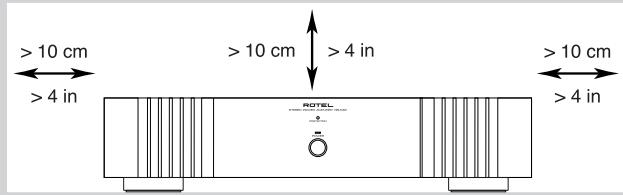
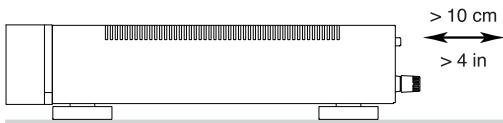
You must allow 10 cm or 4 inches of unobstructed clearance around the unit. Do not place the unit on a bed, sofa, rug, or similar surface that could block the ventilation slots. If the component is placed in a bookcase or cabinet, there must be ventilation of the cabinet to allow proper cooling.
Keep the component away from radiators, heat registers, stoves, or any other appliance that produces heat.
The unit must be connected to a power supply only of the type and voltage specified on the rear panel of the unit.
Connect the component to the power outlet only with the supplied power supply cable or an exact equivalent. Do not modify the supplied cable in any way. Do not attempt to defeat grounding and/or polarization provisions. Do not use extension cords.
Do not route the power cord where it will be crushed, pinched, bent at severe angles, exposed to heat, or damaged in any way. Pay particular attention to the power cord at the plug and where it exits the back of the unit.
Main plug is used as the mains disconnect device and shall remain ready accessible.
The power cord should be unplugged from the wall outlet if the unit is to be left unused for a long period of time.
Immediately stop using the component and have it inspected and/or serviced by a qualified service agency if:
- The power supply cord or plug has been damaged.
- Objects have fallen or liquid has been spilled into the unit.
- The unit has been exposed to rain.
- The unit shows signs of improper operation
- The unit has been dropped or damaged in any way
Please use Class 2 Wiring when connecting the speaker terminals of the unit to ensure proper insulation and minimize the risk of electrical shock.
Place the unit on a fixed, level surface strong enough to support its weight. Do not place it on a moveable cart that could tip over.


This symbol means that this unit is double insulated. An earth connection is not required.

CAUTION
RISK OF ELECTRIC SHOCK DO NOT OPEN

CAUTION: TO REDUCE THE RISK OF ELECTRIC SHOCK, DO NOT REMOVE COVER. NO USER-SERVICEABLE PARTS INSIDE REFER SERVICING TO QUALIFIED SERVICE PERSONNEL.
APPLICABLE FOR USA, CANADA OR WHERE APPROVED FOR THE USAGE
CAUTION: TO PREVENT ELECTRIC SHOCK, MATCH WIDE BLADE OF PLUG TO WIDE SLOT. INSERT FULLY.
ATTENTION: POUR EVITER LES CHOCSE ELECTRIQUES, INTRODUIRE LA LAME LA PLUS LARGE DE LA FICHE DANS LA BORNE CORRESPONDANTE DE LA PRISE ET POUSSER JUSQU AU FOND.

This symbol is to alert the user to the presence of uninsulated dangerous voltages inside the product's enclosure that may constitute a risk of electric shock.

This symbol is to alert the user to important operating and maintenance (service) instructions in this manual and literature accompanying the product.

Rotel products are designed to comply with international directives on the Restriction of Hazardous Substances (RoHS) in electrical and electronic equipment and the disposal of Waste Electrical and Electronic Equipment (WEEE). The crossed wheelie bin symbol indicates compliance and that the products must be appropriately recycled or processed in accordance with these directives.
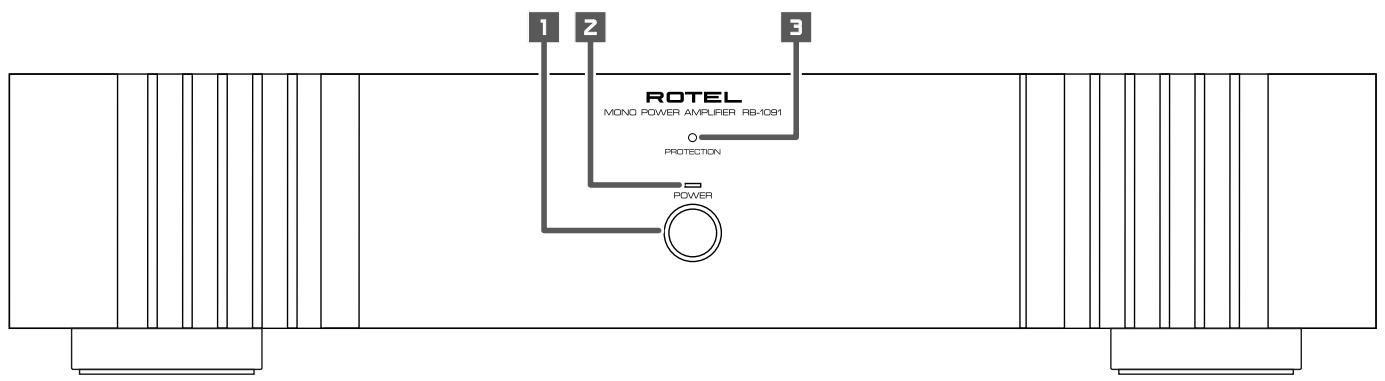
Figure 1: Controls and Connections\
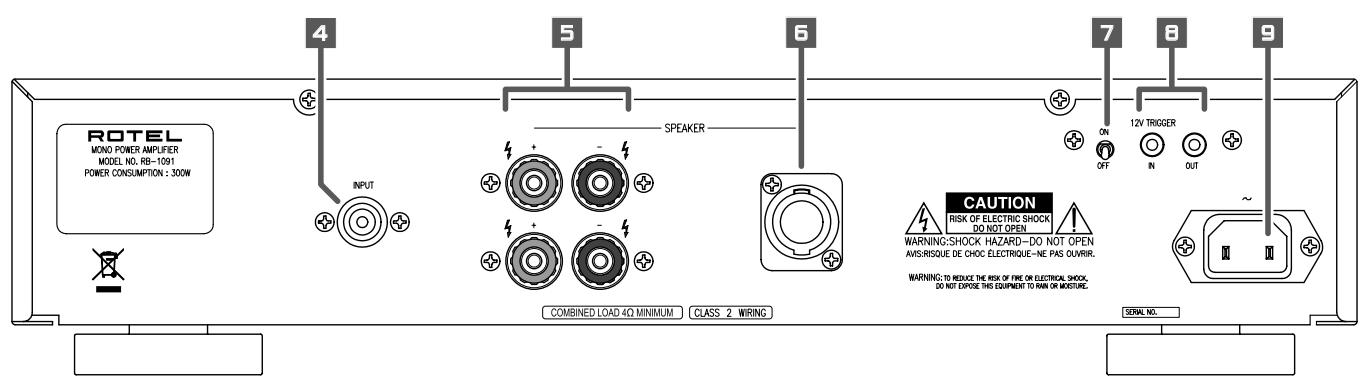
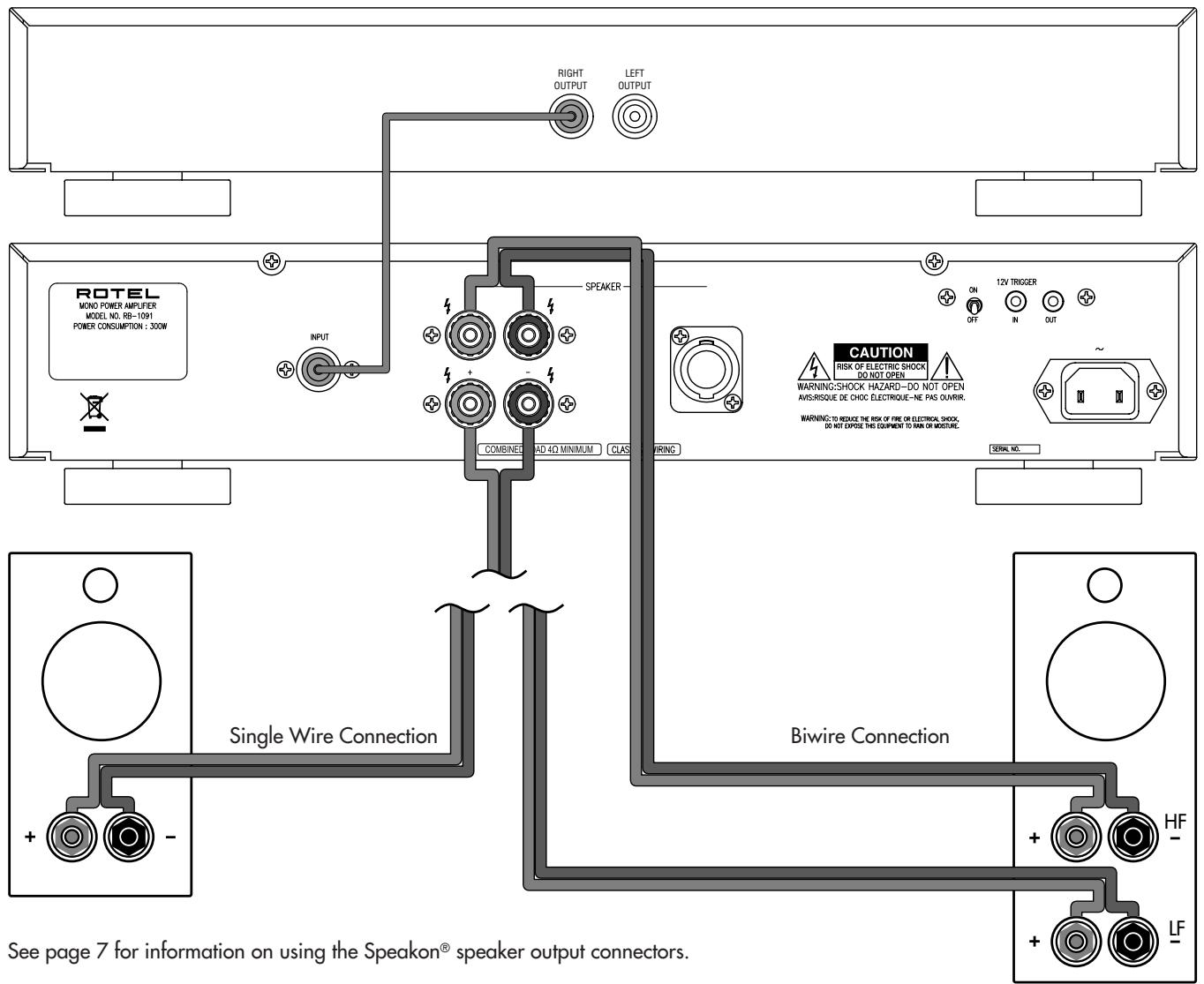
Figure 2: Input and Output Connections
Important Notes
When making connections be sure to:
Turn off all the components in the system before hooking up any components, including loudspeakers.
Turn off all components in the system before changing any of the connections to the system.
It is also recommended that you:
Turn the volume control of the amplifier all the way down before the amplifier is turned on or off.
Preamp or Sound Processor
Contents
Important Safety Information 2
Figure 1: Controls and Connections 3
Figure 2: Input and Output Connections 4
About Rotel 5
Getting Started. 5
Operating Features 5
A Few Precautions 5
Placement 5
AC Power and Control 6
AC Power Input 6
Power Switch and Indicator 12 6
Turn On/Off Mode Selector 6
+12V Trigger Input and Output 6
Protection Indicators 3 6
Input Signal Connection 4 .6
Speaker Connection 7
Speaker Selection 7
Speaker Wire Selection 7
Polarity and Phasing 7
Conventional Speaker Wire Connections 5 7
Speakon® Speaker Connection 6 7
Troubleshooting 8
Front Panel Power Indicator Is Not Lit 8
No Sound 8
Protection Indicator Is Lit 8
Specifications 8
About Rotel
A family whose passionate interest in music led them to manufacture high fidelity components of uncompromising quality founded Rotel over 40 years ago. Over the years that passion has remained undiminished and the goal of providing exceptional value for audiophiles and music lovers regardless of their budget, is shared by all Rotel employees.
The engineers work as a close team, listening to, and fine tuning each new product until it reaches their exacting musical standards. They are free to choose components from around the world in order to make that product the best they can. You are likely to find capacitors from the United Kingdom and Germany, semiconductors from Japan or the United States, and toroidal power transformers manufactured in Rotel's own factory.
Rotel's reputation for excellence has been earned through hundreds of good reviews and awards from the most respected reviewers in the industry, who listen to music every day. Their comments keep the company true to its goal – the pursuit of equipment that is musical, reliable and affordable.
All of us at Rotel thank you for buying this product and hope it will bring you many hours of enjoyment.
Getting Started
Thank you for purchasing the Rotel RB-1091 Mono Power Amplifier. When used in a high-quality music or home theater system, your Rotel amplifier will provide years of musical enjoyment.
The RB-1091 is a sophisticated single-channel power amplifier. It's digital amplifier circuitry, switching power supply, premium components, and Rotel's Balanced Design ensure superb sound quality. High current capability allows the RB-1091 to drive difficult speaker loads with ease.
Operating Features
- Single channel amplifier.
- User selectable power on/off configuration: manual or controlled by remote 12 volt trigger signal.
Protection circuitry with front panel indicator. - Dual binding post and Speakon® speaker output.
A Few Precautions
Please read this manual carefully. In addition to installation and operating instructions, it provides information on various RB-1091 system configurations. Please contact your authorized Rotel dealer for answers to any questions you might have. In addition, all of us at Rotel welcome your questions and comments.
Save the RB-1091 shipping carton and packing material for future use. Shipping or moving the RB-1091 in anything other than the original packing material may result in severe damage to your amplifier.
Be sure to keep the original sales receipt. It is your best record of the date of purchase, which you will need in the event warranty service is ever required.
Placement
The RB-1091 generates heat as part of its normal operation. The heat sinks and ventilation openings in the amplifier are designed to dissipate this heat. The ventilation slots in the top cover must be unobstructed. There should be 10cm (4 inches) of clearance around the chassis, and reasonable airflow through the installation location, to prevent the amplifier from overheating. Likewise, remember the weight of the amplifier when you select an installation location. Make sure that the shelf or cabinet can support its weight.
AC Power and Control
AC Power Input 9
The RB-1091 is supplied with the proper AC power cord. Use only this cord or an exact equivalent. Do not use an extension cord. A heavy duty multi-tap power outlet strip may be used, but only if it is rated to handle the current demand of the RB-1091.
Be sure the Power Switch on the front panel of the RB-1091 is turned off. Then, plug one end of the cord into the AC power connector on the back panel of the amplifier. Plug the other end into an appropriate AC outlet.
Your RB-1091 is configured at the factory for the proper AC line voltage in the country where you purchased it (USA: 120 volts/60 Hz, Europe: 230 volts/50 Hz). The AC line configuration is noted on a label on the back panel.
NOTE: Should you move your RB-1091 to another country, it is possible to configure your amplifier for use on a different line voltage. Do not attempt to perform this conversion yourself. Opening the enclosure of the RB-1091 exposes you to dangerous voltages. Consult a qualified technician or the Rotel factory service department for information.
If you are going to be away from home for an extended period of time, it is a sensible precaution to unplug your amplifier.
Power Switch and
Indicator 12
The Power Switch is located on the front panel. To turn the amplifier on (or to activate either of the optional automatic power-on modes), push the switch in. The LED indicator above the switch will light, indicating that the amplifier is turned on. To turn the amplifier off, push the button again and return it to the out position.
Turn On/Off Mode Selector
The RB-1091 can be turned on and off automatically by using its "12V Trigger" system. The Turn On/Off Mode Selector switch is used to select which method is used.
- With the switch in the OFF position, the amplifier is turned on or off manually using the front panel power switch.
- With the switch in the 12V TRIG. position, the amplifier is turned on automatically when a 12 volt trigger signal is applied to the 3.5mm Jack labeled IN. The front panel POWER SWITCH overrides this function. It must be ON for the +12V trigger to work. Turning the switch OFF cuts power to the amplifier, regardless of whether or not a trigger signal is present.
+12V Trigger Input and Output
The jack labeled IN is for connecting the 3.5mm Plug/Cable carrying a +12 volt trigger signal to turn the amplifier on and off. To use this feature the adjacent switch must be set in the 12V TRIG position (see previous section). This input accepts any control signal (AC or DC) ranging from 3 volts to 30 volts.
The jack labeled OUT is for connecting another 3.5mm plug/cable to provide a 12V trigger signal to other components. The 12V output signal is available whenever a +12 volt trigger signal is applied to the IN connector.
Protection Indicators 3
Thermal and protection circuits protect the amplifier against potential damage in the event of extreme or faulty operating conditions. Unlike many designs, the RB-1091's protection circuit is independent of the audio signal and has no impact on sonic performance. Instead, the protection circuit monitors the temperature of the output devices and shuts down the amplifier if safe limits are exceeded.
In addition, the RB-1091 includes overcurrent protection which operates only when load impedances drop too low.
Should a faulty condition arise, the amplifier will stop playing and the PROTECTION LED on the front panel will light.
If this happens, turn the amplifier off, let it cool down for several minutes, and attempt to identify and correct the problem. When you turn the amplifier back on, the protection circuit will automatically reset and the PROTECTION LED should go out.
In most cases, the protection circuitry activates because of a fault condition such as shorted speaker wires, or inadequate ventilation leading to an overheating condition. In very rare cases, highly reactive or extremely low impedance speaker loads could cause the protection circuit to engage.
Input Signal Connection

See Figure 2
The RB-1091 has a standard unbalanced RCA-type input connector, the type used on nearly all audio equipment. This RCA input accepts audio signals from preamplifiers or surround sound processors. Use high quality audio interconnect cables for best performance.
Speaker Connection
See Figure 2
The RB-1091 has two sets of dual binding post speaker connection terminals. In addition there is a four-contact Speakon® connector. Some speakers also have Speakon® connectors which make it easy to connect the speakers by simply plugging in wires that are terminated with Speakon® plugs. Even if your speakers do not have Speakon® connectors you can still use speaker wires that have Speakon® plugs on one end.
Speaker Selection
The nominal impedance of the loudspeaker(s) connected to the RB-1091 should be no lower than 4 ohms.
Speaker Wire Selection
Use insulated two-conductor stranded wire to connect the RB-1091 to the speakers. The size and quality of the wire can have an audible effect on the performance of the system. Standard speaker wire will work, but can result in lower output or diminished bass response, particularly over longer distances. In general, heavier wire will improve the sound. For best performance, you may want to consider special high-quality speaker cables. Your authorized Rotel dealer can help in the selection of appropriate cables for your system.
Polarity and Phasing
The polarity – the positive/negative orientation of the connections – for every speaker and amplifier connection must be consistent so all the speakers will be in phase. If the polarity of one connection is mistakenly reversed, bass output will be very weak and stereo imaging degraded. All wire is marked so you can identify the two conductors. There may be ribs or a stripe on the insulation of one conductor. The wire may have clear insulation with different color conductors (copper and silver). There may be polarity indications printed on the insulation. Identify the positive and negative conductors and be consistent with every speaker and amplifier connection.
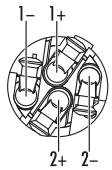
If you are using Speakon® plugs be sure the wires are connected to the proper terminals on the plug.
Conventional Speaker Wire Connections 5
The RB-1091 has two sets of color coded terminals. Having two sets of terminals makes it easy to biwire a speaker. The speaker terminals accept bare wire, connector lugs, or "banana" type connectors (except in the European Community countries where their use is not permitted).
Route the wire(s) from the RB-1091 to the speakers. Give yourself enough slack so you can move the components to allow access to the speaker connectors.
If you are using banana plugs, connect them to the wires and then plug into the backs of the speaker connectors. When using banana plugs, the collars of the binding post terminals should be screwed in all the way (clockwise).
If you are using terminal lugs, connect them to the wires. If you are attaching bare wires directly to the speaker connectors, separate the wire conductors and strip back the insulation from the end of each conductor. Be careful not to cut into the wire strands. Unscrew (turn counterclockwise) the binding post collar. Place the connector lug around the shaft, or insert the bundled wire into the hole in the shaft. Turn the collars clockwise to clamp the connector lug or wire firmly in place.
NOTE: Be sure there are no loose wire strands that could touch adjacent wires or connectors.
Speakon® Speaker
Connection 5
The RB-1091 has a four-contact Speakon speaker connector. The four contact connectors make it easy to make biwire speaker connections. The connector on the RB-1091 also accepts two contact Speakon connectors if you do not plan to biwire the speakers.
Pre-wired Speakon® connector cables are available. You may also wire your own cables using wire you choose.
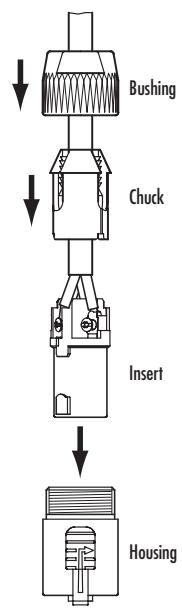
Wiring Speakon Connectors
This information describes how to wire the NL4FC four-contact Speakon connector. The NL2FC two-contact connector is connected in a similar way. See the instruction sheet that comes with the connector for more information, or go the manufacturer's web site, www.neutrik.com.
Place the bushing and chuck on the cable as shown before attaching the wires to the terminals on the insert.
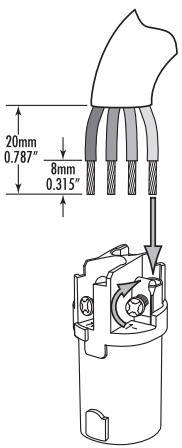
Remove the outer jacket of the wire and strip the insulation from the wires as shown. Twist the wire strands together and insert it into the terminal. Tighten the terminal screw with a screw driver or a 1/16'' allen wrench to clamp the cable wire in place.
The insert terminals are labeled 1+ , 1- , 2+ and 2- . Connect the wires to the terminals of the connector insert for the other end of the cable before you assemble the connectors so you can be sure that each wire is connected to the corresponding terminal on each insert.
Push the insert all the way into the housing. Slide the chuck down the wire into place behind the insert. Thread the bushing onto the housing and tighten it so the chuck clamps the cable in place.
Troubleshooting
Most difficulties in audio systems are the result of poor or wrong connections, or improper control settings. If you encounter problems, isolate the area of the difficulty, check the control settings, determine the cause of the fault and make the necessary changes. If you are unable to get sound from the RB-1091, refer to the suggestions for the following conditions:
Front Panel Power Indicator Is Not Lit
No main power to the RB-1091. Check AC power connections at the amplifier and the AC outlet. Check the front panel power switch. Make sure that it is set to the ON position. If using 12V trigger power-on, make sure that a trigger signal is present at rear panel 12V TRIG IN jack.
No Sound
If the amp is getting AC power, but is producing no sound, check the PROTECTION INDICATOR on the front panel. If lit, see below. If not, check all of your connections and control settings on associated components. Make sure that your input connections and speaker connections match your system configuration.
Protection Indicator Is Lit
The front panel PROTECTION INDICATOR will light when the RB-1091 protection circuits have shut off the amplifier. Typically, this occurs only when the amplifier has overheated, when there is faulty speaker wiring, or after a period of extreme use. Turn off the system and wait for the amp to cool. Then push the front panel power switch in and out to reset the protection devices. If the problem is not corrected or reoccurs, there is a problem with the system or the amplifier itself.
Specifications
Power Configurations
Watts/Channel
1×500Watts
500 watts, with 20KHz filter, 8 ohm load,
20-20 kHz, 0.03% THD
Total Harmonic Distortion (20Hz-20kHz, 8 ohms)
Continuous Rated Power
One-Half Rated Power
One Watt per Channel
< 0.03%
< 0.03%
<0.03%
Power Output (4 Ohms, 0.09% THD)
Output Peak Current
Intermodulation Distortion 60 Hz:7 kHz, 4:1
Damping Factor (8 ohms)
Amp Gain
Input Sensitivity/Impedance
Frequency Response
Signal to Noise Ratio (IHFA)
Power Requirements
USA
Europe
Power Consumption
Panel Height (for rack mounting)
Weight (net)
40A
<0.03%
400
27.2dB
2.2 V/11.1 kohms
10-40KHz(±3dB)
118 dB
120 Volts, 60 Hz
230 Volts, 50 Hz
300 Watts
34 Watts - Idling
3 Watts - Standby
432× 92× 407mm
17^1 / 8× 3^5 / 8× 16^1 / _8 in
80 mm, 3% in
7.8kg 17.2 lb.
All specifications are accurate at the time of printing.
Rotel reserves the right to make improvements without notice.
RISQUE D'ÉLECTROCUTION NE PAS OUVRIR

ATTENTION: POUR RÉDUIRE LE RISQUE D'ÉLECTROCUTION, NE PAS RETIRER LE CAPOT. IL N'Y A À L'INTERIEUR AUCUNE PIECE SUSCEPTIBLE D'ÊTRÉ MODIFIÉE PAR L'UTILISATEUR. EN CAS DE PROBLÉME, ADRESSEZ-VOUS À UN RÉPARATEUR AGRÉE.

Bxoid N BbyXoA +12V Trigger
THe3IO C HAnNcBIO IN npEHa3NaHcHcO nI IIOKluOeHHa 3.5 MM wTeKKepa Ka6eJI c +12-BoJbTObIM TpHrRePbIM CnIHaON - IIN BkLIOUeHH N BbIKluOeHHyCynITeJI. IIN TORO, YTO6bl OH cpa6OtaI, ycHInTeIb DOJnxH 6bITb YCTAHOBIIe CNeKToPOM B NOJoxHeNe 12V TRIG (CM. npEblDyuIyNKT).
TOT BXOД пинимаETПбОБСИнHAN(NOCTOHHORI HINпеременHorO HanpЯжЕн)BДиANA3OHe OTO 3Bdo30B.
THe3do cHaannncbO OUT npedna3haeNo dnoNoknouehn npyto Ka6enc pa3bemom 3.5 MM, yTo6bl nOaTb ynpaBnIoUnn CnHan daIbwe Ha npyrne KOMnoHEntb. OH no8BnEETca Ha BixOe OndHOBpeMeHHo c +12 B Ha BxOdHom pa3beme IN.
HnKatopbl 3aunTbi
Cxema tennoB3auntbI npedoxpnaeret ycnntenb ot nobpeXdHn npn 3kctpeMaBHOH Harpy3e nn HnnpabInbHOn 3KcNpyatau. B OTnnue ot MhOrnx KOHCTpyKu, cxema 3auNTb RB-1091 He3aBncmaO ataydno CnHana n He Bnraet Ha KaeeCTBO Bocnpo3BedeHn. OHa OTcnexKnBaet temepatpy BxOaHbIX TpaH3nctopoB n Cnyae npebblSeHn 6eONaCHOH Temnepatypi npekpaaet pa6oty ycHnTe. Kpome toro, RB-1091 o6OpydoBan 3auTtof ot neperpy3kn no Toky, kOtopar cpa6aTaBbAe npn naDeHHn nonHoTo conpotnbEHHn Harpy3Kn HnKe 3aDaHHoN.
PnCpa6aBbAHIN3aHtB yCNHTB npEkpaaet pa6oty, n 3aropaeTcN HNDKATOP PROTECTION. BbIKNoHTe NITAHNE yCNHTEN, daIte EMy oCTbTB HeCKoJIbKO MInHT N NObItaNTecb NoHrTb npUChNY cpa6aTbBAHNA 3aHNTb. KOrDa BbI ChOBa BKNOHTe YCNHTEN, 3aHNTa ABtOMaTHueckn c6pocHTc, a HNDKATOp norachET.
Kak npabnno, 3aunita cpa6abtibaet n3-3a 3ambkaHna aydno ka6enei nn HeoctatoHoro npitoka Bo3dyxa K annapaty. B ouehb peeknx cnuyaxcpa6abtibaHne 3aunTb MoKet 6blb BbiBaHO cepcUpr H3Km HmpeJahcom AC nn erO npko BbyapKeHHo peAKTHBocTbIO. Ecnn 3aunita cpa6abtibaet nobTopHO Bam He ydaetca HaTHn pnuHny, npokOHcyIbtpHyTecb y abtopn3OBaHHoro Dnepa Rotel.
HOMHnHaBbHmNpeAnc (noHoe cOpOTnBHeHne) AC, noCoeHHReMbIX K RB-1091 DoJxHo 6blb He Mehee 4 OM.
Bb6op akcytnecknx ka6eJei
Дя noCoeHHeHЯ AC nCnoB3yIte H3OInpoBaHbI MHOrOxKnIbHbI Ka6eNb C DByMa npoBoHNkAm. Pa3Mep n KaueCTBO Ka6eN MaYr 3aMeTHo BnIbHa 3ByuHne cHcTeMbI. CAndapThb aKycTnueckn Ka6eNb NDoJet, HO eTo BnHHe MoKET bIpa3nTcB C ChXKeHn 3ByKOBO rBixOJa Hn yXdUWeHn 6acOBoi XapaTepeHCTKN, Ooc6eHNo np6 Bonbwo JInHe Ka6eN. O6bHuO Yem TOnIe npoBod, Te m Lyuwe 3ByK.ДЯ haHnPyUeRo pe3yNbTa tA hCnoB3yIte CneunAbHbIe BicOKokaueeCTBeHHbIe aKycTnueckne Ka6eN. BaawabTopn3OBaHbI dInep Rotel nomoxet Bam Hx Bb6pTaB.
PonpaHocbNΦa3a
PnIpyHocb - noKIOUChHe npoBoDnHa Ka nOIOXHTeBHO HnO OtnpuAteBHO KJEMMe - Ha BcEx AC uCINNTene DOxHa 6bTb OdnHakOBa. Torda CnHan Ha Bcex AC 6ydet HmEtb ODNHAKOBYo 03y.Ecnn PNOIpyHocb ODHO rO3 coEHN HeHH nepeNYtana, To cyueCTBeHHO CHNkaetcBAixoD 6aca N npOTTC 3ByKOBOI CTpeo 06pa3. YTo6bMoXHo 6blO OTnHHTb OIN npOboDnK OT dpyrO, BCE aKyctuYeCKne Ka6enH MeHOT MapKnPOBky: nOJIaun ODHOro npOboDnKa MoXet 6bIt pe6pHcTOn, NOnOCaTOn I.T.I. TaKke 6bBaIOT Ka6enC nPo3paHoi nOJIauneH npOboDnKAMn Pa3HOrO cBETA (MeINbH nOcepe6peHHbH). HnOHa HA nO3OIauHn HAnOCtC3 hA KIOpHocTH. UCTAHOBte, Kaokn npOboDnK 6yDet nOIOXHTeBbIM, a KaOK - OTPNUATEbHBiM, IN pNDepKXBaITecb 3TO TOrO npABIna npNoDOeHNHeHH Bcex AC.
EcnBbI nCnObl3yete pa3bEmbl Speakon, yIOCTOBepbTeCb,TO npOBoDa npABInbHO noDnaHb K KOHTAKTAM Ha HIX.
IopKnIOUeHne KOJHOK 5
RB-1091 6obopyoBOAH DByMn napamn BnHTOBbIX KLEMm CzBETOBOoi KOINPOBKOHa 3aDHeN PAnHEn. OHN MOryt HcPOnlb3OBaTbCnI NODcoEINHeHn DByx AC nHn OOnH 6uBaepHHrom. 3TN KLEMmbi DOpyCKaOT NODcoEINHeHne 3auuHbIX rONbIX KOHCOb Ka6eJI, HAKOHeuHKnOB "nonatKa" n "6aHaH" (3a NcKlNoUeHEm cTpaH E3C, Ipe OHN 3anpeSeHbI).
He ropnt nndkaTOp nHTaHn
Ha RB-1091 He noaetc nitaHne O tNeKtpocetn. IpoBepbte BbIKIOuATEb NHTAHN Ha nepeIHeN naHeIn. Y6eNTecb, Yo OH HaxoITcB NonoJKeHN ON (BKn.). IpoBepbte NoCoEINHeHne shyura nHTAHN K yCunNTeHn Ho po3Te Ke nekTPOcETn. Ecn nCnoJIb3yeTc TpHreRpbH bXoD 12 B, npobepbte, noaetc nn CnHAn H a rHe3do 12 V TRIG IN.
Het 3Byka
Ecnn nittanhe Ha ycnilntenb noaetc, Ho 3byka Het, npOBepbte Hnndnkatopbl 3auntbI. Ecnn OHn roprt, cm. cneayuonn nykT. Ecnn HET, npOBepbte Bce coeHNHeHnN I NOLOXHeHne opraHOB ynpablnHeHn NODcoEHNHeHHbIX KOMNoHEHToB. IpOBepbte, COOTBETCTBYOT JIN CoeHNHeHnHa BxOJe I NOKNIUChE Hn KOHOH KOnfHpyaounn BaWei ayDINO CNTembl.
Toput nHnKaTOp PROTECTION
Cpa6otana cxema 3auntbI. O6bIyHO 3to npOncxOoHn npn 6NoKpOBKe BENTnlaOnHHbx OTBepCTn, HnnpabINbHOM NOcOeHNHeHHN AC nnn npOdoJXHTenbHON pa6ote B 3kctpeMaIbHOM pexnme. BbIKIOUHTe CnCTemy N noDOxNITE, noka ycHInTe b OCTbHET. 3aTeM BKIOUHTe N BbIKIOUHTe KONKY nITAHn, YTO6bI c6pocNTb YCTPOIcTBO 3auntbI. Ecn 3aunTa cpa6aTbIBaet NobtopHo, 3HaHT, HEnCpABHOCTB B CnCTeme INn CAMOM ycHInTe.
Texhnueckne xapaktepncnK
North Reading, MA 01864-2699
USA
Phone: +1 978-664-3820
Fax: +1 978-664-4109
Rotel Europe
Dale Road
Worthing, West Sussex BN1 12BH
England
Phone: +44 (0)1903 221 761
Fax: +44 (0)1903 221 525
Rotel Deutschland
- CAUTION
- APPLICABLE FOR USA, CANADA OR WHERE APPROVED FOR THE USAGE
- Important Notes
- When making connections be sure to:
- It is also recommended that you:
- Contents
- About Rotel
- Getting Started
- Operating Features
- A Few Precautions
- Placement
- AC Power and Control
- AC Power Input 9
- Power Switch and
- Indicator 12
- Turn On/Off Mode Selector
- +12V Trigger Input and Output
- Protection Indicators 3
- Input Signal Connection
- Speaker Connection
- Speaker Selection
- Speaker Wire Selection
- Polarity and Phasing
- Conventional Speaker Wire Connections 5
- Speakon® Speaker
- Connection 5
- Wiring Speakon Connectors
- Troubleshooting
- Front Panel Power Indicator Is Not Lit
- No Sound
- Protection Indicator Is Lit
- Specifications
- RISQUE D'ÉLECTROCUTION NE PAS OUVRIR
- Bxoid N BbyXoA +12V Trigger
- HnKatopbl 3aunTbi
- Bb6op akcytnecknx ka6eJei
- PonpaHocbNΦa3a
- IopKnIOUeHne KOJHOK 5
- He ropnt nndkaTOp nHTaHn
- Het 3Byka
- Toput nHnKaTOp PROTECTION
- Texhnueckne xapaktepncnK
Brand : ROTEL
Model : RB-1091
Category : Audio amplifier tuner