
DR-H300 - Audio Receiver TEAC - Free user manual and instructions
Find the device manual for free DR-H300 TEAC in PDF.



| Product type | Audio receiver with DVD player |
| Brand | TEAC |
| Model | DR-H300 |
| Dimensions (W × H × D) | 215 × 110 × 350 mm |
| Net weight | 4.5 kg |
| Power supply | AC 120 V, 60 Hz |
| Power consumption | 50 W (standby: 0.98 W) |
| Power output (stereo, 4 Ω) | 50 W + 50 W (EIAJ, 20 Hz-20 kHz, 1% THD) |
| Audio inputs | AUX1 (RCA), AUX2 (stereo mini-jack) |
| Audio outputs | Headphone jack (PHONES), line outputs (RCA), optical and coaxial digital outputs, HDMI, S-Video, composite video, component video |
| USB connector | Front, compatible with USB flash memory (FAT12/16/32, max 300 folders, 650 files) |
| Disc playback formats | DVD-Video, Audio CD, Video CD, SVCD, MP3, WMA, JPEG, DivX |
| FM tuner section | 87.5-108.0 MHz (100 kHz steps), signal-to-noise ratio: 55 dB (mono), 45 dB (stereo) |
| AM tuner section | 520-1710 kHz (10 kHz steps), sensitivity 900 μV/m |
| Number of radio presets | 20 FM + 20 AM |
| Audio functions | Preset equalizer (Classic, Jazz, Rock, Pop, Flat), S-BASS, Loudness, night mode, mute |
| Supplied accessories | Remote control (RC-1144), AAA batteries ×2, AM loop antenna, FM antenna, RCA video cable, manual, warranty card |
| Country of origin | China |
Frequently Asked Questions - DR-H300 TEAC
User questions about DR-H300 TEAC
0 question about this device. Answer the ones you know or ask your own.
Ask a new question about this device
Download the instructions for your Audio Receiver in PDF format for free! Find your manual DR-H300 - TEAC and take your electronic device back in hand. On this page are published all the documents necessary for the use of your device. DR-H300 by TEAC.
USER MANUAL DR-H300 TEAC
The lightning flash with arrowhead symbol, within an equilateral triangle, is intended to alert the user to the presence of uninsulated "dangerous voltage" within the product's enclosure that may be of sufficient magnitude to constitute a risk of electric shock to persons.

The exclamation point within an equilateral triangle is intended to alert the user to the presence of important operating and maintenance (servicing) instructions in the literature accompanying the appliance.
IMPORTANT SAFETY INSTRUCTIONS
1) Read these instructions.
2) Keep these instructions.
3) Heed all warnings.
4) Follow all instructions.
5) Do not use this apparatus near water.
6) Clean only with dry cloth.
7) Do not block any ventilation openings. Install in accordance with the manufacturer's instructions.
8) Do not install near any heat sources such as radiators, heat registers, stoves, or other apparatus (including amplifiers) that produce heat.
9) Do not defeat the safety purpose of the polarized or grounding-type plug. A polarized plug has two blades with one wider than the other. A grounding type plug has two blades and a third grounding prong. The wide blade or the third prong are provided for your safety. If the provided plug does not fit into your outlet, consult an electrician for replacement of the obsolete outlet.
10) Protect the power cord from being walked on or pinched particularly at plugs, convenience receptacles, and the point where they exit from the apparatus.
11)Only use attachments/accessories specified by the manufacturer.
12) Use only with the cart, stand, tripod, bracket, or table specified by the manufacturer, or sold with the apparatus. When a cart is used, use caution when moving the cart/apparatus combination to avoid injury from tip-over.
13) Unplug this apparatus during lightning storms or when unused for long periods of time.
14) Refer all servicing to qualified service personnel. Servicing is required when the apparatus has been damaged in any way, such as power-supply cord or plug is damaged, liquid has been spilled or objects have fallen into the apparatus, the apparatus has been exposed to rain or moisture, does not operate normally, or has been dropped.
- Do not expose this apparatus to drips or splashes.
- Do not place any objects filled with liquids, such as vases, on the apparatus.
- Do not install this apparatus in a confined space such as a book case or similar unit.
- The apparatus draws nominal non-operating power from the AC outlet with its STANDBY/ON switch in the standby position.
- The apparatus should be located close enough to the AC outlet so that you can easily grasp the power cord plug at any time.
- An apparatus with Class I construction shall be connected to an AC outlet with a protective grounding connection.
- Batteries (battery pack or batteries installed) shall not be exposed to excessive heat such as sunshine, fire or the like.
- Excessive sound pressure from earphones and headphones can cause hearing loss.
WARNING: TO PREVENT FIRE OR SHOCK HAZARD, DO NOT EXPOSE THIS APPLIANCE TO RAIN OR MOISTURE.
CAUTION
- DO NOT REMOVE THE EXTERNAL CASES OR CABINETS TO EXPOSE THE ELECTRONICS. NO USER SERVICEABLE PARTS ARE WITHIN!
- IF YOU ARE EXPERIENCING PROBLEMS WITH THIS PRODUCT, CONTACT TEAC FOR A SERVICE REFERRAL. DO NOT USE THE PRODUCT UNTIL IT HAS BEEN REPAIRED.
- USE OF CONTROLS OR ADJUSTMENTS OR PERFORMANCE OF PROCEDURES OTHER THAN THOSE SPECIFIED HEREIN MAY RESULT IN HAZARDOUS RADIATION EXPOSURE.
For U.S.A.
This equipment has been tested and found to comply with the limits for a Class B digital device, pursuant to Part 15 of the FCC Rules. These limits are designed to provide reasonable protection against harmful interference in a residential installation. This equipment generates, uses, and can radiate radio frequency energy and, if not installed and used in accordance with the instructions, may cause harmful interference to radio communications. However, there is no guarantee that interference will not occur in a particular installation. If this equipment does cause harmful interference to radio or television reception, which can be determined by turning the equipment off and on, the user is encouraged to try to correct the interference by one or more of the following measures:
- Reorient or relocate the equipment and/or the receiving antenna.
- Increase the separation between the equipment and receiver.
- Connect the equipment into an outlet on a circuit different from that to which the receiver is connected.
- Consult the dealer or an experienced radio/TV technician for help.
CAUTION
Changes or modifications to this equipment not expressly approved by TEAC CORPORATION for compliance will void the user's warranty.
This product has been designed and manufactured according to FDA regulations "title 21, CFR, chapter 1, subchapter J, based on the Radiation Control for Health and Safety Act of 1968", and is classified as class 1 laser product. There is not hazardous invisible laser radiation during operation because invisible laser radiation emitted inside of this product is completely confined in the protective housings.
The label required in this regulation is shown ①.
① For U.S.A.
CERTIFICATION
THIS PRODUCT COMPLIES WITH DHHS RULES 21 CFR
SUBCHAPTER J APPLICABLE AT DATE OF MANUFACTURE
TEAC CORPORATION
Manufacturer: SANYO Corporation
Laser output : Max 0.70 mW on the objective lens
Wavelength : 650 nm (DVD)
790 nm (CD)
Thank you for choosing TEAC. Read this manual carefully to get the best performance from this unit.
Before Use 5
Connection (FM antenna) 5
Connection (AM antenna). 6
Speaker Connections 7
Connection to a TV. 8
Connection to audio equipments etc. 10
Remote Control Unit. 11
Identifying the Parts 12
Front panel display 15
Discs. 16
Basic Operation. 18
DISC/USB
Listening to a Disc. 20
Listening to a USB Memory Device 21
On-screen menu 21
Basic Operations for a Disc and USB Memory Device 23
Skipping playback 24
Fast scanning 24
Selecting a chapter or track. 24
Selecting audio 24
Selecting subtitles 25
Changing camera angle 25
PictureZoom 25
Slow motion 25
Repeat playback 26
Repeat and Shuffle playback 26
A-B repeat playback 27
Changing the display mode 27
Time Search 28
Chapter Search/ Time Search 29
Programmed playback 30
Settings for DVD playback 32
TV Display 33
OSD Language 33
Screen Saver 33
DivX Code 33
SPDIF Setup 34
DOLBY DIGITAL Setup (Dual Mono) 34
3D Processing 34
Night Mode (Dynamic range control) 34
Video Output 35
TV Mode 35
Quality 35
HDMI 36
Resolution 36
TV Type 36
Audio, Subtitle, Disc Menu 36
Parental 36
Default. 36
Parental (Parental control) 37
Password Mode 37
Password 37
TUNER
Listening to the Radio 38
Preset Tuning 39
AUX
Listening to an External Source 40
Setting the Clock 41
Setting the Timer 42
Sleep Timer. 43
Troubleshooting 44
Specifications 46
"DTS" is a registered trademark of DTS, Inc. and "DTS 2.0 + Digital Out" is a trademark of DTS, Inc.
Manufactured under license from Dolby Laboratories. Dolby, Pro Logic and the double-D symbol are trademarks of Dolby Laboratories.
HDMI, the HDMI logo and High-Definition Multimedia Interface are trademarks or registered trademarks of HDMI Licensing LLC.
DivX and the DivX logo are registered trademarks of DivX, Inc.
Windows Media is a trademark of Microsoft Corporation.
This product incorporates copyright protection technology that is protected by method claims of certain U.S. patents and other intellectual property rights owned by Macrovision Corporation and other rights owners. Use of this copyright protection technology must be authorized by Macrovision Corporation, and is intended for home and other limited viewing uses only, unless otherwise authorized by Macrovision Corporation. Reverse engineering or disassembly is prohibited.
Read this before operation
- As the unit may become warm during operation, always leave sufficient space around the unit for ventilation. The ventilation holes should not be covered. Make sure there is at least 20~cm of space above and at least 5cm of space on each side of the unit. Do NOT place anything on top of the unit.
- The voltage supplied to the unit should match the voltage as printed on the rear panel. If you are in any doubt regarding this matter, consult an electrician.
- Choose the installation location of your unit carefully. Avoid placing it in direct sunlight or close to a source of heat. Also avoid locations subject to vibrations and excessive dust, heat, cold or moisture.
- Do not place the unit on the amplifier/receiver.
- Do not open the cabinet as this might result in damage to the circuitry or electrical shock. If a foreign object should get into the unit, contact your dealer or service company.
- When removing the power plug from the wall outlet, always pull directly on the plug, never yank the cord.
- To keep the laser pickup clean, do not touch it, and always close the disc tray.
- Do not attempt to clean the unit with chemical solvents as this might damage the finish. Use a clean, dry or slightly damp cloth.
- Keep this manual in a safe place for future reference.
DO NOT MOVE THE UNIT DURING PLAYBACK
During playback, the disc rotates at high speed. Do NOT lift or move the unit during playback. Doing so may damage the disc or the unit.
WHEN MOVING THIS UNIT
When changing places of installation or packing the unit for moving, be sure to remove the disc and return the disc tray to its closed position in the player. Then, press the power switch to turn the power off, and disconnect the power cord. Moving this unit with the disc loaded may result in damage to this unit.
Conventions about this manual
- The types of functions and operations that can be used for a particular disc vary depending on the features of that disc. In some cases, these functions and operations may differ from the descriptions given in this Owner's Manual. In this event, follow the instructions given on the screen. This Owner's Manual only covers basic disc operations.
- For some operations, the PROHIBIT icon “ ” may appear on the screen. This indicates that the operation described in this Operations Manual is not permitted for the current disc.
CAUTION:
- Turn off the power of all the equipment before making connections.
- Read instructions of each component you intend to use with this unit.
- Be sure to insert each plug securely. To prevent hum and noise, do not bundle the connection cords with the power cord or speaker cables.
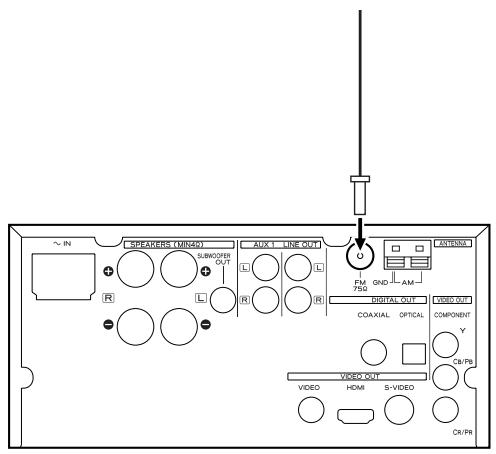
FM Indoor Antenna
Connect the lead-type FM antenna to the FM 75Ω socket, extend the lead and tune the tuner to your favorite station. Adjust the antenna in a suitable location like a window frame or wall until the reception is best and then affix the antenna in that position using thumb tacks, push pins or any other suitable means.
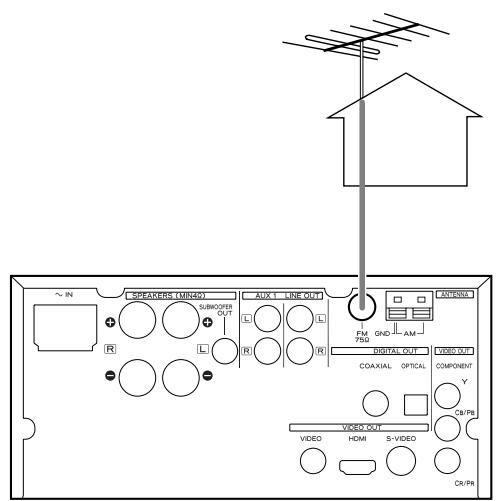
FM Outdoor Antenna
In an area where FM signals are weak, it will be necessary to use an 75-ohm unbalanced-type outdoor FM antenna. Generally, a 3-element antenna will be sufficient; if you live in an area where the FM signals are particularly weak, it may be necessary to use one with 5 or more elements.
- Disconnect the FM indoor antenna when using an outdoor antenna.
AM Indoor Loop Antenna
The high-performance AM loop antenna provided with this unit is sufficient for good reception in most areas.
To stand the loop antenna on a surface, fix the claw to the slot in the antenna base.
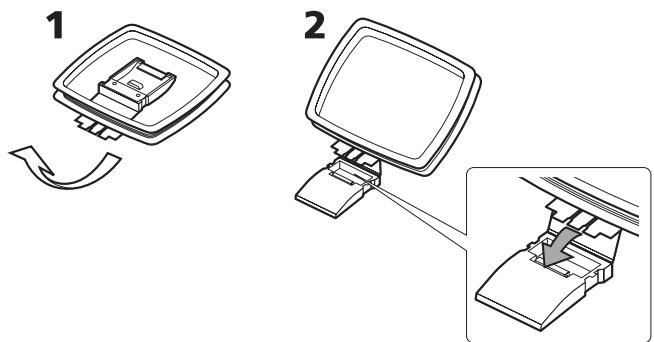
Connect the loop antenna's wires to the AM antenna terminals.
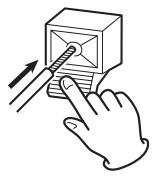
Press the lever, insert the end of the cord, then release the lever. Make sure it is fastened securely by pulling the cord lightly. Make sure only the bare, stripped wire is inserted in the jack and that no plastic insulation is preventing contact between the antenna wire and terminal.
Place the antenna on a shelf or hang it on a window frame, etc., in the direction which gives the best reception. Keep all other wires such as power cords, speaker wires or interconnect wires as far away as possible from the antenna.
- If the AM loop antenna provided does not deliver sufficient reception (often due to being too far from the transmitter or in a concrete building, etc.), it may be necessary to use an outdoor AM antenna.
Use either a high quality commercial AM antenna or, if not available, an insulated wire more than 5m long, strip one end, and connect this to the terminal as shown.
The antenna wire should be strung outdoors or indoors near a window. For better reception, connect the GND terminal to a reliable ground.
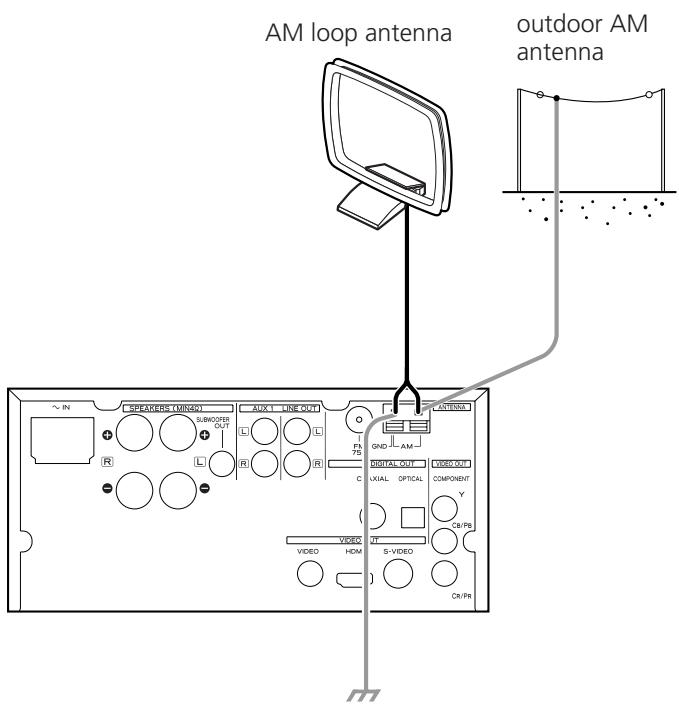
Note:
Even when using an outdoor AM antenna, do not disconnect the AM loop antenna.
Caution:
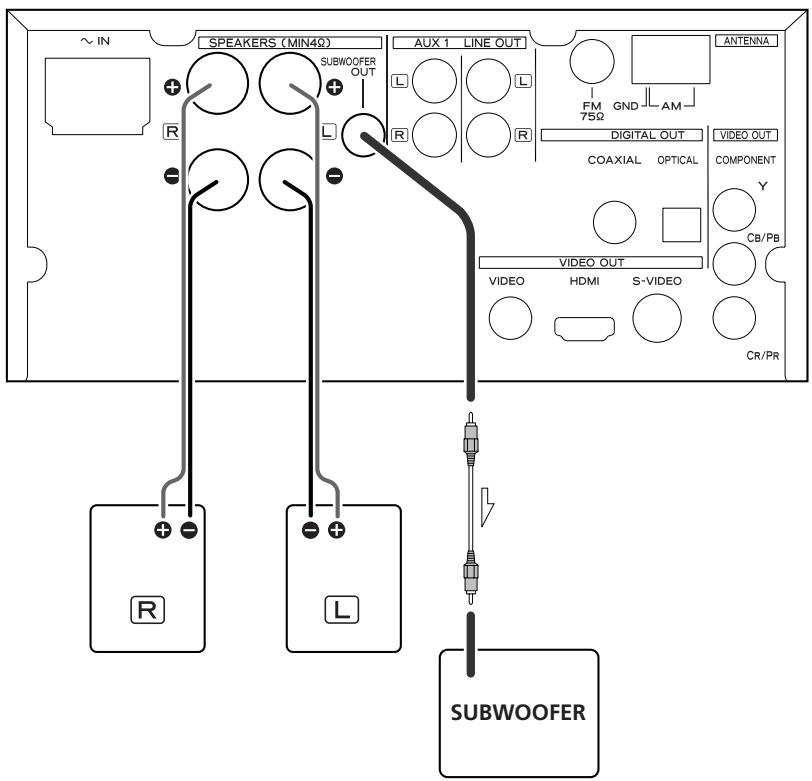
To avoid damaging the speakers with a sudden high-level signal, be sure to switch the power off before connecting the speakers.
Check the impedance of your speakers. Connect speaker with an impedance of 4 ohms or more.
The black speaker terminals are - (negative).
Generally, the + side of the speaker cable is marked to make it distinguishable from the - side of the cable. Connect this marked side to the + terminal and the unmarked side to the black - terminal.
Prepare the speaker cables for connection by stripping off approximately 10mm or less of the outer insulation. (Removing too much insulation may lead to a short circuit if the bared wired should come in contact with each other.) Twist the strands of the stripped wires tightly together:
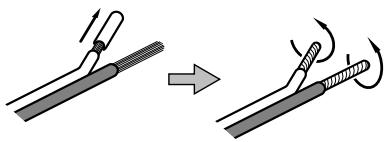
Caution:
The metal portions of the two separate wires should not touch or an electrical short can occur. Shorted wires can create a fire hazard or induce a failure in your equipment.
How to connect speakers:
- Turn the terminal cap counterclockwise to loosen it. The speaker terminal caps cannot be fully removed from the base.
- Insert the wire into the terminal fully and turn the terminal cap clockwise to securely connect it:
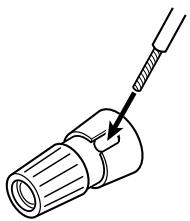
Make sure none of the wire insulation is under the terminal, only the bare, stripped wire.
- Make sure it is fastened firmly by pulling the cable lightly.
Subwoofer
Connect a subwoofer using a commercially-available RCA cable.
Use a subwoofer with built-in amplifier referred to as a "powered subwoofer".
CAUTION:
- Switch off the power to all equipment before making connections.
- Read the instructions of each component you intend to use with this unit.
- Be sure to insert each plug securely. To prevent hum and noise, avoid bundling the signal interconnection cables together with the AC power cord or speaker cables.
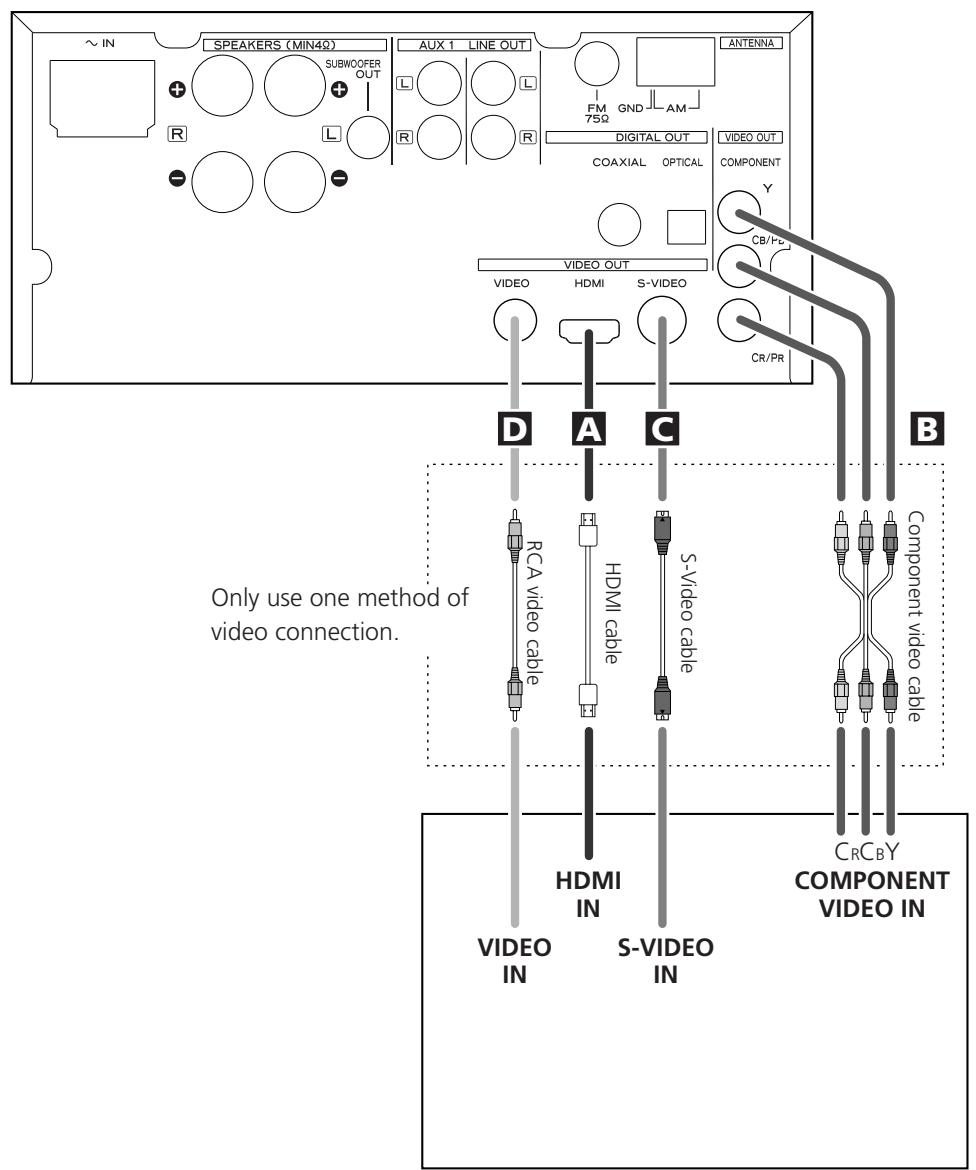
TV (Monitor)
- Adjust the video aspect ratio to match that of the television (see page 33).
- This unit adopts analog copy protection features. If the unit is connected to a TV through a VCR (video cassette recorder), the resulting playback may be affected. Connect the unit directly to the television.
- In all cases, use the highest quality cables for the best possible picture.
- Select proper setting in the Video Output setup (see page 35).
A HDMI video/audio output terminal
Use a commercially available HDMI cable to connect the unit to a HDMI compatible television or monitor.
HDMI video output formats
480p (NTSC) or 576p (PAL)
720p
1080i
- See page 36 for further details on HDMI video output formats.
- If the television or monitor is equipped only with a DVI terminal, a suitable adaptor cable or adaptors should be used. Note that the television connected in this way must be HDCP compatible.
Also note that this connection outputs no sound.
- Make sure that you read and understand the documentation provided with the HDMI component, as well as this unit's documentation.
To output audio from the HDMI terminal
If the connected HDMI component is capable of inputting HDMI audio, digital audio can be output from the HDMI terminal.
- Select "ALL" or "PCM only" in the SPDIF setup (see page 34).
- To enjoy the digital surround audio from DVD-Video discs, connect the HDMI terminal to a surround amplifier and set the SPDIF Setup to "ALL" (see page 34).
B Component video output terminals
Use commercially available component video cables to connect the unit to the component video inputs of a suitably equipped television or monitor to enjoy a high-quality picture. Use these terminals in preference to S-Video or composite video connections.
- If the component video terminals are connected to a television with progressive scan capabilities, the output can be set to match this (see page 35).
- Note that these terminals cannot be connected to high definition component terminals.
C S-Video output terminal
Use a commercially available S-Video cable to connect the unit to the S-Video input of a suitably equipped television or monitor. Use this connection in preference to a composite video connection.
Composite video output terminal
Use a commercially available RCA (pin) video cable to connect the unit to the composite video connector of a television or monitor. Use this connection only if no other video connection method is available.
CAUTION:
- Switch off the power to all equipment before making connections.
- Read the instructions of each component you intend to use with this unit.
- Be sure to insert each plug securely. To prevent hum and noise, avoid bundling the signal interconnection cables together with the AC power cord or speaker cables.
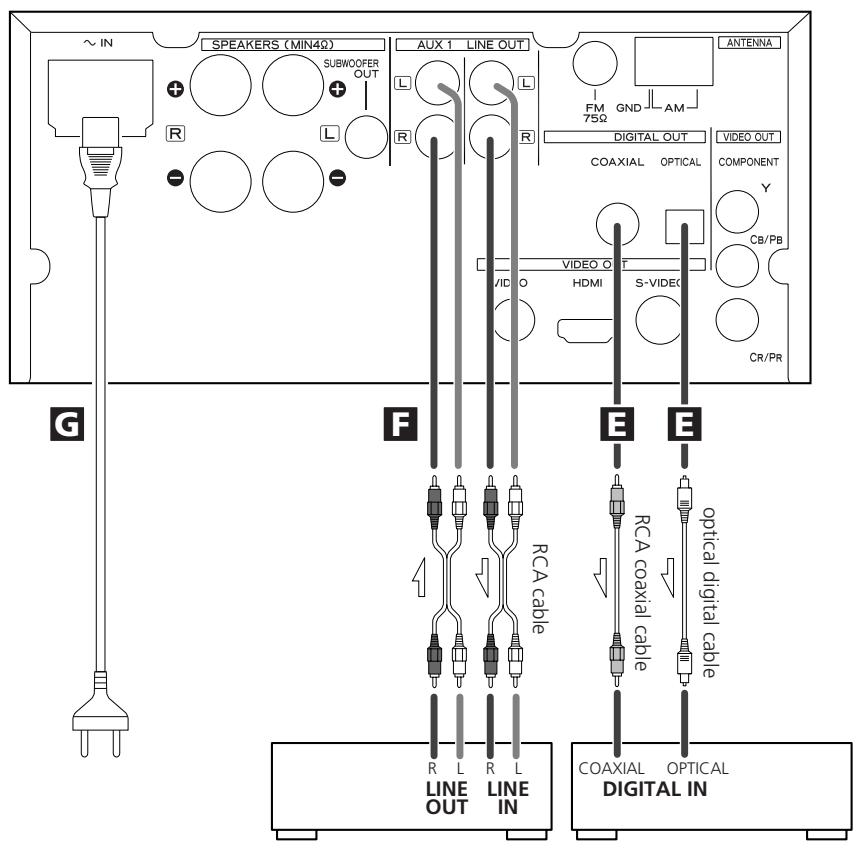
Cassette tape deck etc.
Digital audio device (CD recorder, MD deck, etc.)
Digital audio output terminals
Digital audio from DVD-Video, CD and video CD is output from these terminals.
The unit may be connected using either coaxial or optical (TOS) commercially available cables to amplifiers including a decoder, or to digital audio devices such as CD recorders, etc.
COAXIAL: Use RCA (pin) digital audio cable
OPTICAL: Use optical digital audio cable (TOS)
- Keep the supplied cap to cover the OPTICAL terminal when it is not in use.
- Select "ALL" or "PCM only" in the Digital Audio Setup (see page 34).
AUX 1/LINE OUT jacks
Analog 2-channel audio signal is input or output from these jacks. Connect a cassette tape deck etc. to these jacks using commercially-available RCA cables.
Make sure to connect:
white plug white jack (L: left channel)
red plug red jack (R: right channel)
G Power cord receptacle
After all other connections have been made, insert the supplied AC power cord into this receptacle, then connect the other end of the power cord into the wall socket. Ensure that your AC voltage corresponds to the voltage marked on the rear panel of the unit. Consult a qualified electrician if you are in doubt.
- In order to avoid the risk of electric shock, fire, and so on, only use the supplied power cord.
- If you are not going to use the unit for some time, disconnect the power cord from the wall socket.
The provided Remote Control Unit allows the unit to be operated from a distance.
When operating the remote control unit, point it towards the remote sensor on the front panel of the unit.
- Even if the remote control unit is operated within the effective range (5m), remote control operation may be impossible if there are any obstacles between the unit and the remote control.
- If the remote control unit is operated near other products which generate infrared rays, or if other remote control devices using infrared rays are used near the unit, it may operate incorrectly. Conversely, the other products may operate incorrectly.
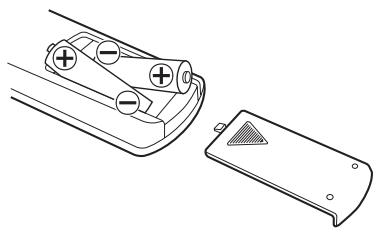
Battery Installation
- Remove the battery compartment cover.
- Insert two "AAA" (R03 or UM-4) dry batteries. Make sure that the batteries are inserted with their positive "⊕" and negative "⊗" poles positioned correctly.
- Close the cover.
Battery Replacement
If the distance required between the remote control unit and main unit decreases, the batteries are exhausted. In this case replace the batteries with new ones.
Precautions concerning batteries
- Be sure to insert the batteries with correct positive “⊕” and negative “ ” polarities.
- Use batteries of the same type. Never use different types of batteries together.
- Rechargeable and non-rechargeable batteries can be used. Refer to the precautions on their labels.
- When the remote control unit is not to be used for a long time (more than a month), remove the batteries from the remote control unit to prevent them from leaking. If they leak, wipe away the liquid inside the battery compartment and replace the batteries with new ones.
- Do not heat or disassemble batteries and never dispose of old batteries by throwing them in a fire.
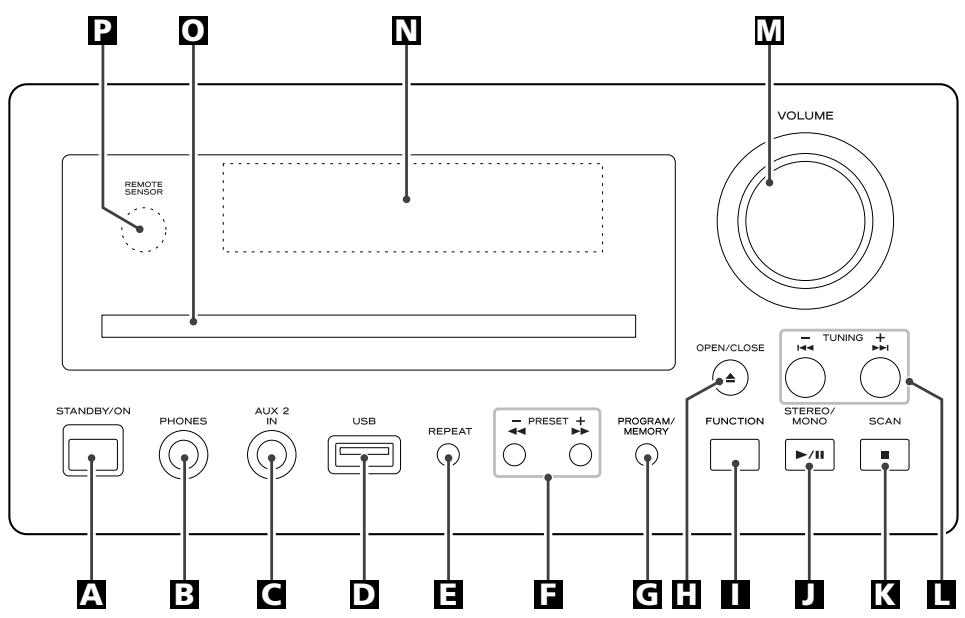
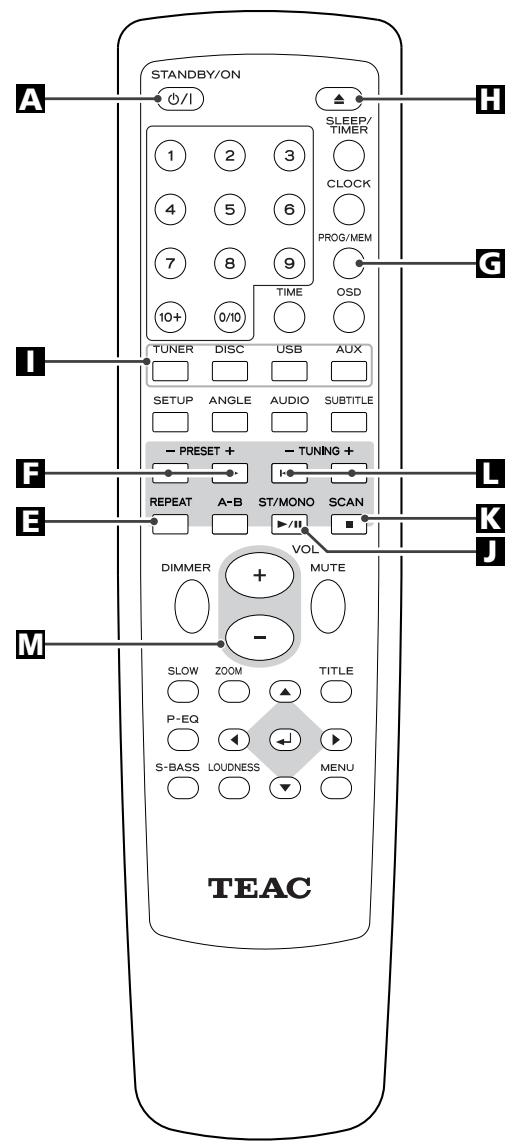
A STANDBY/ON
Use this button to turn the unit on and standby. The standby indicator lights in the standby mode. It turns off when the unit is turned on.
The equipment draws nominal non-operating power from the AC outlet with its STANDBY/ON in the standby position.
B PHONES
For private listening, insert the headphones plug into this jack, and adjust the volume using the VOLUME knob.
C AUX 2 IN
You can connect a portable audio player to this jack.
USB connector
You can connect an USB memory device to this connector.
REPEAT
In DISC or USB mode, use this button for repeat playback.
F SCAN ( / ) , PRESET
In the preset tuning mode, use these buttons to select a preset channel.
In DISC or USB mode, use these buttons to search for a part of a track.
MEMORY, PROGRAM
In DISC or USB mode, use this button to program tracks. In TUNER mode, use this button to preset stations.
OPEN/CLOSE
Use this to open and close the disc tray.
FUNCTION
Use this button to select a function (FM, AM, DISC, USB, AUX1 or AUX2).
Play/Pause ( /II) ,STEREO/MONO
In DISC or USB mode, use this button to start or pause playback.
In FM tuner mode, use this button to select stereo or monaural.
K Stop (■), SCAN
In DISC or USB mode, use this button to stop playback. In TUNER mode, use this button to preset stations automatically.
SKIP(1
In DISC or USB mode, use these buttons to skip tracks. In TUNER mode, use these buttons to tune in a station.
VOLUME
Turn this knob (or press the VOLUME buttons of the remote control unit) to adjust the volume level.
N Display
Disc tray
Remote control sensor
Receives signals from the remote control unit. Point the remote control unit at this sensor when operating the remote control unit.
Note:
To simplify explanations, instructions in this manual refer to the names of the buttons and controls on the front panel only. Associated controls on the remote control will also operate similarly.
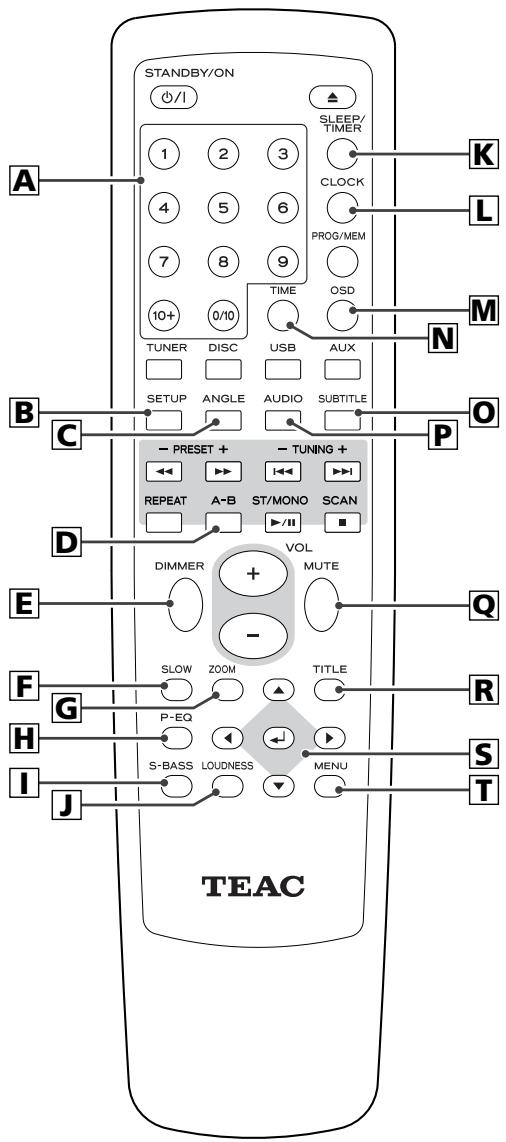
A Number buttons
Use these buttons to key in track numbers, passwords, etc.
B SETUP
Use this button to enter the setup menu where you can set up the parameters of the unit.
C ANGLE
Use this button to select camera angles during DVD playback.
D REPEAT A-B
In DISC or USB mode, use this button to specify a section and play it repeatedly.
DIMMER
Use this button to change the brightness of the front panel display.
F SLOW
In DISCmode, use this button for slow motion video playback.
G ZOOM
In DISC or USB mode, use this button to enlarge the video image.
P-EQ (Preset Equalizer)
This button offers Classic, Jazz, Pop, Rock and FLAT (off) modes.
S-BASS
Use this button to boost bass.
LOUDNESS
Use this button to compensate for the loss of bass at low volumes.
K SLEEP, TIMER
When the unit is on, use this button to set sleep timer. In the standby mode, use this button to set timer.
L CLOCK
In the standby mode, use this button to adjust clock.
M OSD
Use this button to display information about the currently playing disc.
N TIME
Use this button to start time search.
SUBTITLE
Use this button to select the displayed subtitles during DVD playback.
AUDIO
Use this to select the audio for playback.
MUTE
Use this button to mute the sound.
R TITLE
When a VCD (version 2.0) is loaded, use this button to turn the PBC function on or off.
During PBC playback, use this button to display a menu.
5 Cursor buttons and ENTER
Use these cursor buttons for navigation of on-screen menus and the ENTER button to confirm selections.
T MENU
Use this button with menu-enabled DVD discs to bring up the DVD menu.
During playback of MP3/WMA/JPEG files, use this button to switch between the folder list and the file list.
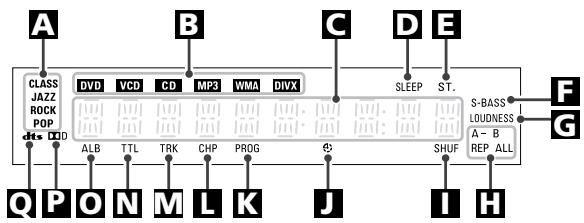
A Shows currently selected equalizer.
B Shows the type of disc or file currently loaded.
C Shows frequency, volume, etc.
D Lights when SLEEP TIMER is set.
E Lights when an FM stereo broadcast is tuned
F Lights when the S-BASS function is on.
Lights when the Loudness function is on.
Lights during repeat playback.
Lights during shuffle playback.
Lights when the Timer function is on.
K Lights during programmed playback.
Chapter
M Track
N Title
Album
P Lights to show that Dolby Digital audio is being played back.
Lights to show that DTS audio is being played back.
Type of discs that can be played on this system
This player can playback discs bearing any of the following logos:
| DVD Video: • Single-sided or double-sided discs • Single layer or dual layer discs • Dolby Digital, DTS, MPEG or Linear PCM digital audio • MPEG-2 digital video • This unit can play DVD-R discs recorded in DVD video format. • This unit can play DVD-RW discs recorded in DVD video format or DVD video recording format. Discs are generally divided into one or more titles. Titles may be further subdivided into chapters. | |
| AUDIO CD: • 12cm or 8cm discs • Linear PCM digital audio Audio CDs are divided into tracks. | |
| Video CD: • 12cm or 8cm discs • MPEG-1 digital audio • MPEG-1 digital video Video CDs are divided into tracks. | |
| SVCD: • 12 cm or 8 cm discs • MPEG-1 Audio Layer2 • MPEG-2 digital video |
Region Number of DVD Video discs:
DVD players and discs are designed with region numbers that dictate the regions in which a disc can be played. If the region number on the disc you want to play does not match the region number of your DVD player, you will not be able to play the disc. In that case, an error message will appear on the screen.
The region number is printed on the rear panel of this unit.

U.S.A./Canada model

Europe model

Asia model
About DVD-RW
DVD-RW discs that were recorded with copy-once only permission cannot be played.
- When playing a DVD-RW disc that was edited on a DVD recorder, the screen may momentarily black out at the edited point.
- When playing a DVD-RW disc that was edited on a DVD recorder, you may see scenes from just before the edited point.
About CD-R/CD-RW
CD-R/RW discs recorded in Audio CD format and finalized correctly are playable. But depending on the quality of the disc and/or the condition of the recording, some CD-R & CD-RW discs may not be playable.
Playable file format
This unit can play following files recorded on a CD-R, CD-RW, DVD-R, DVD-RW or USB memory device:
- MP3 files
- Windows Media-formatted audio files
- JPEG files
-
DivX video files (DivX 5, DivX 4, DivX 3 and DivX VOD video content)
-
File names should be alphanumeric characters. This unit cannot display symbols and full-size or double-byte characters (such as Japanese, Chinese, etc.) correctly. Also, be sure to use the file extension. ('.mp3' for MP3 files, '.wma' for WMA files, '.avi' or '.divx' for DivX video files, '.jpg' or '.jpeg' for JPEG files.)
- Files are played in alphabetical order.
- MP3 files must be monaural or stereo MPEG-1 Audio Layer 3 format. This unit can play MP3 files with sampling frequency 44.1kHz or 48kHz , bit-rate 320kbps or less.
- This unit can play WMA files with sampling frequency 44.1 kHz, bit-rate 192 kbps or less.
- This unit cannot display the bit-rate of VBR (variable bit rate) files correctly.
- The disc must be finalized in order to play.
- This player is NOT compatible with multi-session discs.
The CD-ROM must be ISO 9660 compatible. - It may take time to display a progressive JPEG picture.
- Depending on the file size and compression rate, some JPEG pictures cannot be displayed correctly.
USB memory device compatibility
- Only USB flash memory can be used.
- Some flash memory players that charge from a USB terminal cannot be played back.
- Hard disk drives, CD/DVD drives, and others connected via USB cannot be used.
- The DR-H300 cannot copy, move, or delete files.
- Playable format: FAT12, FAT16, FAT32
- NTFS, HFS, HFS+ cannot be used.
Max. number of playable folders: 300
Max. number of playable files: 650
Caution:
- If you record a disc using a personal computer, even if it is recorded in a compatible format, there are cases in which it may not play because of the settings of the application software used to create the disc. (Check with the software publisher for more detailed information.)
- Unfinalized CD-R/CD-RW/DVD-R/RW discs cannot be played.
Following discs cannot be played with this unit:
DVD-Audio, Super Audio CD, CD-G, Data part of CD-EXTRA, and PHOTO CD discs
- discs recorded in a color system other than PAL or NTSC
- illegally produced discs
- scratched or damaged discs
- discs that are dusty, soiled or marked with fingerprints
Warning:
If you attempt to play back such discs, there is a risk that sudden loud noise can blast over the speakers at full volume and cause damage to the speakers and your hearing.
Copy-protected discs, DualDiscs and other discs that do not conform to the CD standard may not play back correctly in this player. If you use such discs in this unit, TEAC Corporation and its subsidiaries cannot be responsible for any consequences or guarantee the quality of reproduction. If you experience problems with such non-standard discs, you should contact the producers of the disc.
Example of Icons used on DVD discs:
| 1. English 2. French |
| 2. English 2. French |
| 16:9 LB |
| 2 |
number of audio tracks recorded on the disc
number of subtitles recorded on the disc
screen aspect ratio
disc recorded with multiple camera angles
region code
- Always place the disc on the disc tray with the label side up. (Compact discs can be played or recorded only on one side.)
- To remove a disc from its storage case, press down on the center of the case and lift the disc out, holding it carefully by the edges.
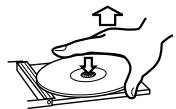
How to remove the disc
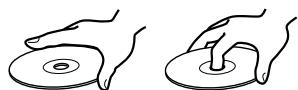
How to hold the disc
- Should the disc become dirty, wipe the surface radially (from the center hole outward towards the outer edge) with a soft, dry cloth:
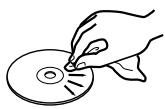
- Never use such chemicals as record sprays, antistatic sprays or fluid, benzine or thinner to clean the discs. Such chemicals will do irreparable damage to the disc's plastic surface.
- Discs should be returned to their cases after use to avoid dust and scratches that could cause the laser pickup to "skip."
- Do not expose discs to direct sunlight or high humidity and temperature for extended periods. Long exposure to high temperatures will warp the disc.
- Do not play any disc that is warped, deformed or damaged. Playing such discs may cause irreparable harm to the playing mechanisms.
- CD-R and CD-RW discs are more sensitive to the effects of heat and ultraviolet rays than ordinary CDs. It is important that they are not stored in a location where direct sunlight will fall on them, and which is away from sources of heat such as radiators or heat-generating electrical devices.
- Printable discs aren't recommended, as the label side might be sticky and damage the unit.
- Do not stick papers or protective sheets on the discs and do not use any protective coating spray.
- Use a soft oil-based felt-tipped pen to write the information on the label side. Never use a ball-point or hard-tipped pen, as this may cause damage to the recorded side.
- Never use a stabilizer. Using commercially available CD stabilizers with this unit will damage the mechanisms and cause them to malfunction.
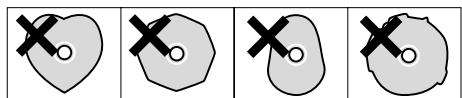
- Do not use irregular shape discs (octagonal, heart shaped, business card size, etc.). Discs of this sort can damage the unit:
- If you are in any doubt as to the care and handling of a disc, read the precautions supplied with the disc, or contact the disc manufacturer directly.
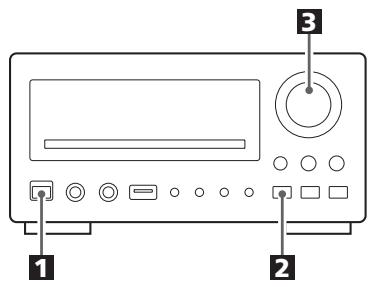
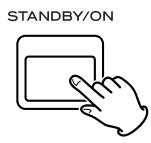
Press the STANDBY/ON button to turn the unit on.
- The unit turns on with the source that was last selected.
- You can also use the FUNCTION button (or the TUNER, DISC, USB or AUX button of the remote control unit) to turn the unit on.
Press the FUNCTION button (or the TUNER, DISC, USB or AUX button of the remote control unit) to select a source.
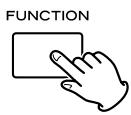
The selected source is shown on the front panel's display.
Each time the FUNCTION button is pressed, the source changes as follows:
FM RADIO, AM RADIO, DISC, USB, AUX1, AUX2
- Press the TUNER button of the remote control unit once or twice to select FM or AM.
- To listen to an external source connected to the AUX IN jack, select AUX1 or AUX2. Press the AUX button of the remote control unit once or twice to select AUX 1 or AUX 2.
Play the source, and adjust the volume using the VOLUME knob.
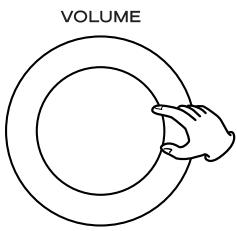
The volume is adjustable from MIN (00) to MAX (31). You can hold down the VOLUME – or + buttons of the remote control unit to reduce or bring up the volume continuously.
- Press the STANDBY/ON button to put the unit in the standby mode when it is not being used.
- If you press the STANDBY/ON button to put the unit in the standby mode when FUNCTION is set for AUX1 or AUX2, first, the speaker sound stops and then after about two seconds the output to the sub woofer stops.
Recording a Source
You can record a source such as a Compact Disc onto a MD or a cassette tape connected to the DIGITAL OUT terminal or the LINE OUT jacks.
1. Select a source to be recorded by pressing the FUNCTION button.
2. Start recording.
- The volume, and tone control (S-BASS, LOUDNESS and P-EQ) have no effect on the recording signals.
Dimmer
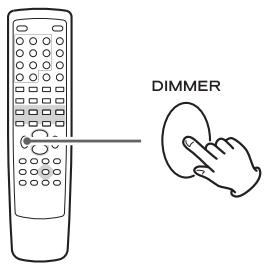
You can dim the front panel's display.
Use the DIMMER button to cycle between these settings:
Full brightness, Medium brightness, Minimum brightness
Muting
To mute the sound temporarily, press the MUTE button. Press the MUTE button again to restore the sound.
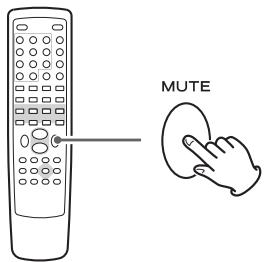
- While muting is engaged, "MUTING" blinks on the display.
- If you change the volume during the muting, the muting will be canceled.
Headphones
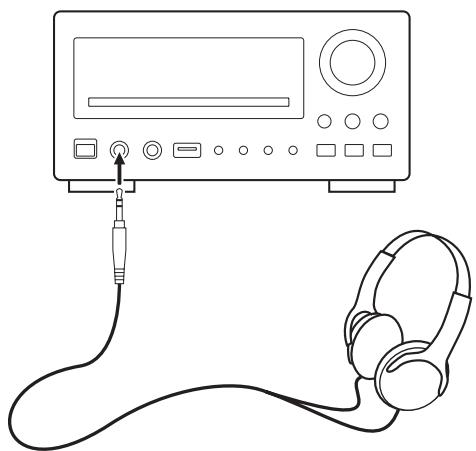
Insert the headphones plug into the PHONES jack, and adjust the volume.
CAUTION
Always lower the volume level prior to plugging in your headphones. TO AVOID DAMAGING YOUR HEARING - Do not place your headphones on your head until after you have plugged them in.
Preset Equalizer
Press the P-EQ button repeatedly to select a preset equalizer.
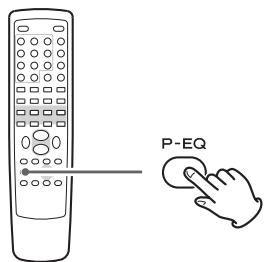
CLASSIC: A balanced sound; suitable for classical music.
JAZZ: suitable for jazz music.
ROCK: Provides a heavy powerful sound; suitable for rock music.
POP: Emphasizes vocal tones; suitable for popular music.
FLAT: Equalizer is off.
S-BASS (Super Bass) button
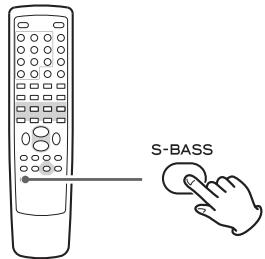
Press the S-BASS button to turn the Bass boost function on or off.
The S-BASS indicator lights when this function is on.
- The S-BASS and the LOUDNESS buttons don't work together.
LOUDNESS button
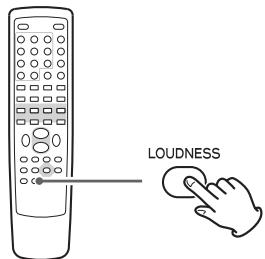
This button compensates for the loss of bass at low volumes.
The LOUDNESS indicator lights when this function is on.
Select off when listening at normal levels.
Listening to a Disc
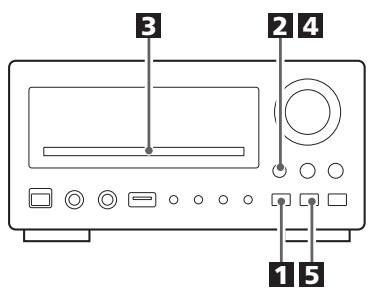
Press the FUNCTION button to select "DISC".
- When no disc is loaded in the CD player, "NO DISC" is displayed.
Press the OPEN/CLOSE button () to open the tray.
Insert the disc label side up.
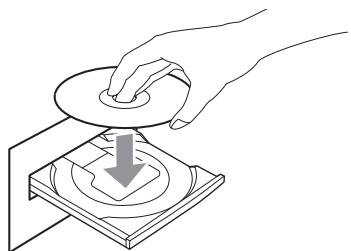
- In the case of double-sided discs, the side to be played should be face down.
- Make sure the disc is centered in the tray in order to avoid any malfunction or jamming of the tray or damage to the disc.
4 Press the OPEN/CLOSE button (▲) again to close the tray.
The tray will close. Take care that you don't catch your fingers in the tray.
The unit reads the disc (this may take a little time).
Some discs may automatically start playback.
Press the PLAY button to start playback if playback has not started automatically.
If a menu is shown on screen (some DVD or video discs may show such a menu), see "On-screen menu" on page 21-22.
Listening to a USB Memory Device
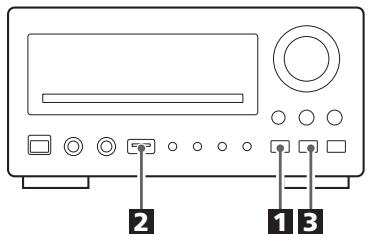
- Do NOT use a high-capacity USB hard disc with this unit.
Press the FUNCTION button to select "USB".
Plug your USB memory device into the USB connector.
- You can reverse steps 1 and 2.
It takes a few seconds for the unit to load the USB memory device. Some files may automatically start playback.
Press the PLAY button to start playback if playback has not started automatically.
USB memory device compatibility
- Only USB flash memory can be used.
- Some flash memory players that charge from a USB terminal cannot be played back.
- Hard disk drives, CD/DVD drives, and others connected via USB cannot be used.
- The DR-H300 cannot copy, move, or delete files.
- Playable format: FAT12, FAT16, FAT32
- NTFS, HFS, HFS+ cannot be used.
Max. number of playable folders: 300
Max. number of playable files: 650
On-screen menu 1
An on-screen menu is shown when a DVD or video CD with playback control (PBC) content is loaded.
The way in which the menu works may differ from disc to disc.
DVD menus
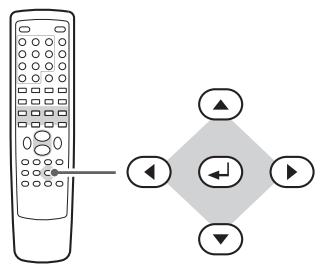
Use the cursor buttons to select the menu item from a DVD, and confirm the selection using the ENTER button.
Returning to the menu screen
Press either the MENU button or the TITLE button.
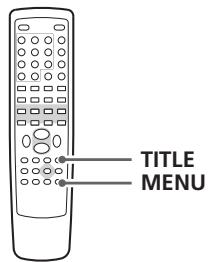
- Depending on the disc, pressing MENU during playback may restart playback from the first chapter.
- This function is not available with a DVD-RW disc with VR content.
Video CDs with PBC
When a Video CD (Version 2.0) or Super Video CD with Playback Control functions (PBC) is loaded, a menu will appear on the screen.
Select an item using the numeric buttons, and then press the ENTER button to start playback.
- Press the button to advance to the next page. Press the button to return to the previous page.
- If you press the TITLE button during playback, the menu will appear on the screen.
- Press the MENU button to turn the PBC function on or off. If you press the MENU button during playback, playback will stop.
When the PBC function is off:
If you press the PLAY/PAUSE button ( / ) in the stop mode, playback will start from the first track.
When the PBC function is on:
If you press the PLAY/PAUSE button ( / ) in the stop mode, a menu will appear on the screen.
Select an item using the numeric buttons, and then press the ENTER button to start playback.
On-screen menu 2
MP3 and Windows Media-formatted audio files
When a disc or USB is loaded, a list of directories appears on the screen.
Select a directory by pressing the / buttons and press the ENTER button.
File names will appear on the screen. Select a file and press the ENTER button or the PLAY/PAUSE (▶/II) button. Playback will start from the selected file.
- Press the MENU button to switch between the folder list and the file list.
- If you want to return to the parent folder, display the folder list using the MENU button, select "... using the cursor buttons and press the ENTER button.
- Depending on the disc, invisible folders such as "TRASH" might be shown on the screen. Please disregard folders which do not contain playable files.
- If may take 30 seconds or more to display the list of files depending on the disc you are playing back.
- During playback, elapsed time of the current file is displayed on the front panel display.
JPEG files
Choose a picture in the directory list and after a short wait a thumbnail of the picture will appear on the right. Press / / / to select a picture to view. Press ENTER or PLAY/PAUSE to view the picture at full-screen size.
- When viewing at full-screen size, press SKIP buttons (▶/▶) to view a previous or next photo. You can also use the / buttons to rotate the image.
- When viewing at full-screen size, press STOP button to display a number of thumbnails at a time on the screen. You can use the / / / buttons to select a particular photo and then press ENTER button to view that image at full-screen size. You can also select SLIDE SHOW to view all the photos in a series or MENU to adjust settings. You can also select PREV or NEXT to move to the previous or next screen of thumbnail images.
- Press MENU button to exit thumbnail or full-screen views.
- Some photos may appear distorted due to the configuration or characteristics of the disc. Larger photos may take a short while to appear due to their larger data size.
Pausing playback (freezing the picture)
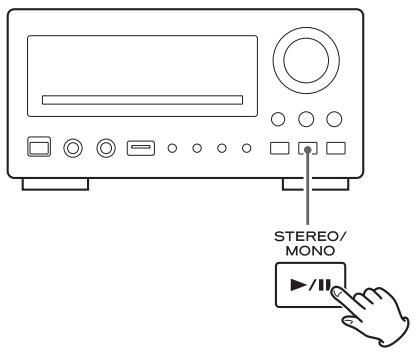
Press the PLAY/PAUSE button to pause audio playback. Any DVD or video CD image is frozen.
Press the PLAY/PAUSE button again to restart playback.
- Caution - do not leave player in the "pause" mode for extended periods of time. Damage to your television or the player may occur.
Stopping playback (Resume mode)
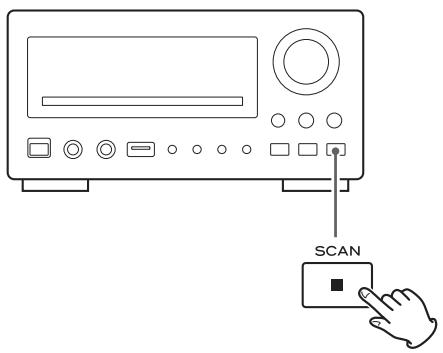
When the STOP button is pressed, playback is stopped, and the display shows "Press Play Key To Continue". Pressing PLAY continues playback.
Pressing any of the following buttons cancels resume mode: STOP in the stop mode, OPEN/CLOSE, FUNCTION, STANDBY/ON
Opening and closing the tray
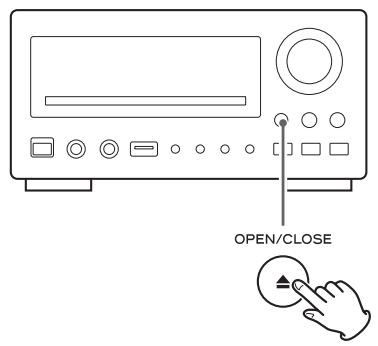
Pressing OPEN/CLOSE opens the tray if it is closed, and closes it if it is open. When the tray is opened during playback, it may take a few seconds before the disc is "unloaded" and the tray opens.
Skipping playback
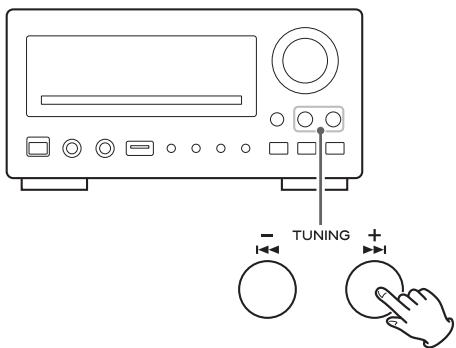
Press the SKIP button (or ) repeatedly until the desired chapter or track is found. The selected chapter or track will be played from the beginning.
- When playing back video CDs with PBC, the 1 button is disabled.
DVD VCD CD MP3 WMA JPEG DIVX
Fast scanning
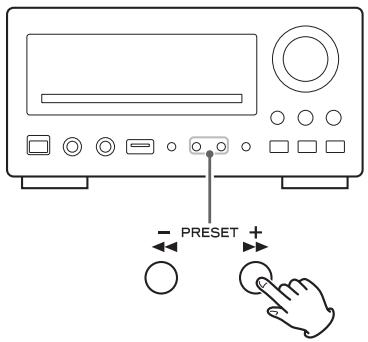
Search for a part of a chapter/track
To search quickly the disc in the forward or reverse direction, press the SCAN buttons (or) during playback.
Press the PLAY/PAUSE button (▶/■) when the part you want to listen to is found.
Each time the SCAN button (or ) is pressed, the search speed changes as follows:
x2 x4 x8 x16 x32 normal speed
- VCD/CD/MP3: When you forward fast to the end of a track (or reverse to the beginning of a track), the scan function will be cancelled and normal speed playback will continue.
- The sound is muted during playback of DVD and VCD.
- This function may not work with some discs.
Selecting a chapter or track
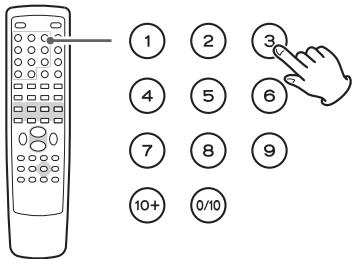
Use the number button to select tracks or chapters for playback.
For instance, to select track number 35, press "3" and "5".
To select a MP3 or WMA file, enter 3 digit numbers. As an example, to select number 5, press "0", "0" and "5". (Optionally, you may press just the number "5" and then wait a few seconds.)
- The numeric buttons do not work during PBC playback of video CDs.
DVD VCD CD MP3 WMA JPEG DIVX
Selecting audio
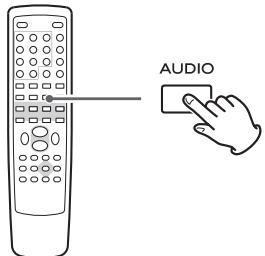
Many DVD discs include audio in different languages, as well as stereo and multi-channel surround versions of the soundtrack.
CDs and video CDs allow the left, right or stereo channels to be selected.
Pressing the AUDIO button changes between the different audio tracks available, and the result is shown on screen.
- Sometimes the picture playback will appear to freeze momentarily when the audio is changed.
- It may be necessary to change the audio on some discs using the on-screen disc menu.
- Some discs cannot have their audio changed in the way described here, as well as some discs which only have one audio stream. If you attempt to select different audio with these discs, the prohibit icon "O" is shown on screen.
Selecting subtitles
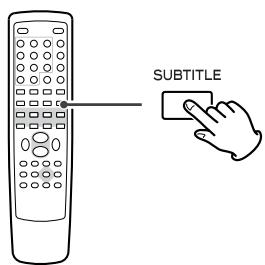
Use the SUBTITLE button to select DVD subtitles.
Repeated presses of this button cycle through available languages on a disc until OFF is reached (no subtitle).
- Subtitles do not always appear immediately after the language has been selected. It may be necessary to wait a few seconds until the subtitles appear.
- Some captions on some discs cannot be removed or changed using this button. Additionally, a disc must have at least one captioning language available for this to work. Some discs may have only one sub-caption language, in which case, the choice is obviously restricted to one subtitle or no subtitles.
- It may be necessary to change the subtitles on some discs using the on-screen disc menu.
- Some discs cannot have their subtitles changed in the way described here. If you attempt to select a different subtitle with these discs, the "prohibit" mark is shown on screen.
DVD
Changing camera angle
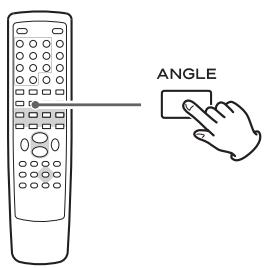
When a scene recorded with multiple angles is played, the angle icon appears on the screen. Each time you press the ANGLE button while the angle icon is displayed, the camera angle changes.
- When no other angle is recorded, the prohibit icon "∅" will be displayed.
- The ANGLE button doesn't work during pause.
Picture Zoom
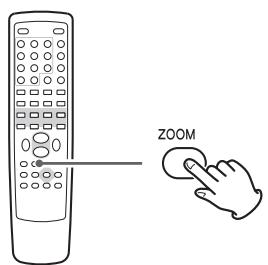
To zoom the picture, press the ZOOM button during playback.
Each time the ZOOM button is pressed, the magnification level changes as follows:
DVD, DivX, VCD:
2x, 3x, 4x, 1/2, 1/3, 1/4, OFF
JPEG:
100%, 125%, 150%, 200%, 75%, 50%, OFF
- You can shift the zoom point by pressing the / / / buttons during zoom playback.
- Zooming does not work on subtitles or menu screens.
DVD VCD DIVX
Slow motion
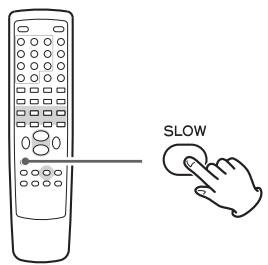
For video discs only (DVD and VCD)
To play a disc in slow motion, press the SLOW button. Each time the SLOW button is pressed, the speed changes as follows:
DVD:
1/2, 1/4, 1/8, 1/16, 1/2, 1/4, 1/8,
1/16, normal speed
VCD/DivX:
1/2, 1/4, 1/8, 1/16, normal speed
To resume normal playback, press the PLAY/PAUSE button ( / ) .
The sound is muted during slow-motion playback.
Repeat playback
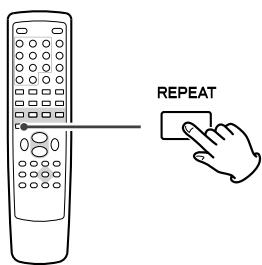
Each time the REPEAT button is pressed, the mode is changed as follows:
REPEAT 1 REPEATALL OFF
- This feature is not available for all discs. The "prohibit" mark is shown on screen in such cases when an attempt is made to repeat playback.
- If one of the following buttons is pressed, repeat mode will be canceled:
STANDBY/ON, OPEN/CLOSE, FUNCTION
Chapter or track repeat
The REP indicator lights on the display.
When this is selected, the currently selected chapter (or track) repeats. If another chapter is selected during repeat playback, the newly-selected chapter repeats.
Title or disc repeat
The REP ALL indicator lights on the display. The current title or disc repeats.
Repeat and Shuffle playback
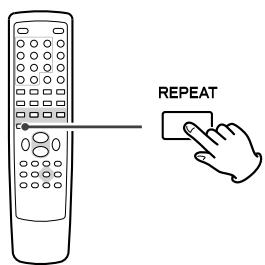
Each time the REPEAT button is pressed, the mode is changed as follows:
REPEAT 1 REPEAT ALL SHUFFLE OFF
- If one of the following buttons is pressed, repeat mode will be canceled:
STANDBY/ON, FUNCTION
File repeat
The REP indicator lights on the display.
When this is selected, the currently selected file repeats. If another file is selected during repeat playback, the newly-selected track repeats.
Folder repeat
The REP ALL indicator lights on the display.
All the files in the folder will be played repeatedly.
Shuffle (MP3/WMA/DivX only)
The SHUF indicator lights on the display.
The whole contents of the disc will be played randomly.
A-B repeat playback
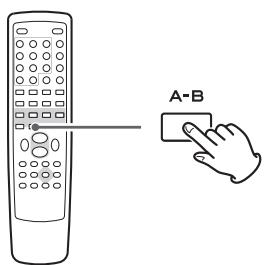
Repeat Playback of a Designated Section (A-B Repeat)
- Start playback and designate the point at which the A-B repeat should start (point A) by pressing the A-B button.
"A-" appears on the display.
- When the point at which repeat playback should end (point B) is reached, press the A-B button again.
"A-B" appears on the display.
The designated section will be played repeatedly.
- When playing a CD/VCD, the point A and B should be selected from the same track.
- The SEARCH button (▶) can be used to fast-forward to point B after designating point A.
- There should be more than one second between A and B.
- To cancel the A-B Repeat, press the A-B button again.
Changing the display mode
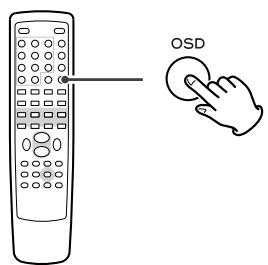
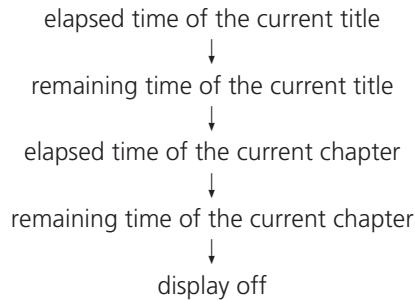
Each time the OSD button is pressed during playback, following information appears on the screen.
DVD
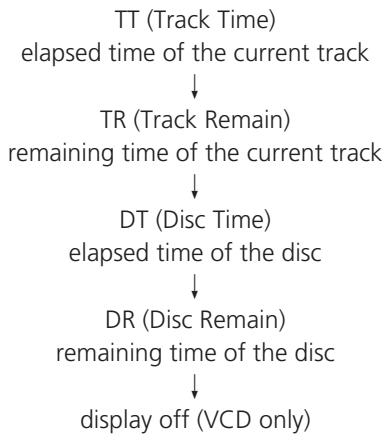
CD/Video CD
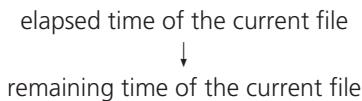
DivX
Time Search (VCD/CD)
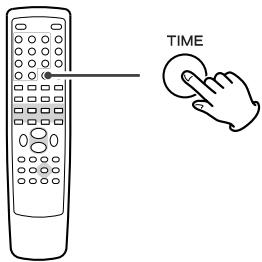
1. During playback, press the TIME button.
If you want to search the entire disc, press the TIME button once.
"DT: -- : --" is highlighted on the screen.
If you want to search within the current track, press the TIME button twice.
"TT: -- : --" is highlighted on the screen.
2. Within 7 seconds, enter your desired hour and minute using the numeric buttons.
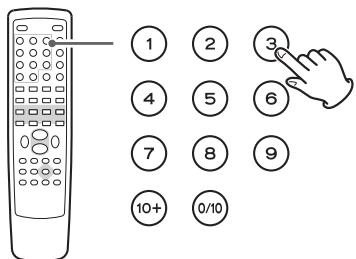
For example, if the length of the current track is 3 minutes, enter a number smaller than 3 minutes.
Playback starts from the selected part.
Time Search (MP3/WMA)
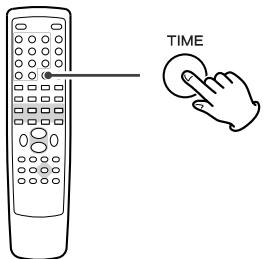
1. During playback, press the TIME button twice.
"---:---" is highlighted on the screen.
2. Within 7 seconds, enter your desired hour and minute using the numeric buttons.
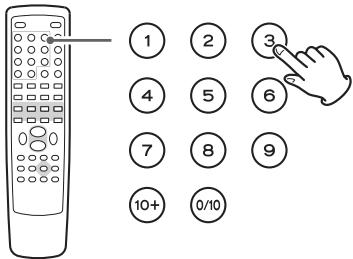
For example, if the length of the current file is 3 minutes, enter a number smaller than 3 minutes.
Playback starts from the selected part.
Chapter Search/ Time Search (DVD)
Chapter Search
- During playback, press the TIME button once.
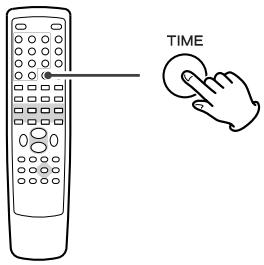
- Within 7 seconds, enter your desired chapter number (2 digit) using the numeric buttons.
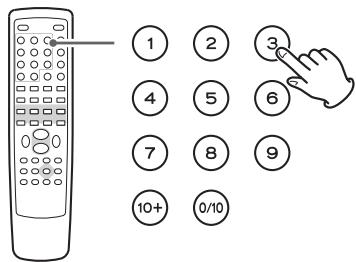
Playback starts from the selected chapter.
Time Search
- During playback, press the TIME button.
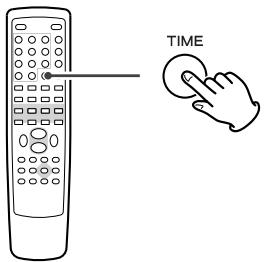
If you want to search within the current title, press the TIME button twice.
If you want to search within the current chapter, press the TIME button three times.
- Within 7 seconds, enter your desired hour, minute and second using the numeric buttons.
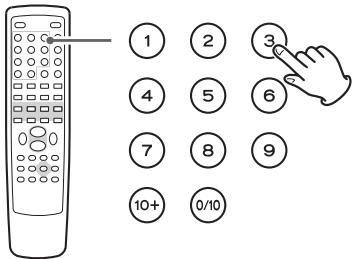
Playback starts from the selected part.
Chapter Search/ Time Search (DivX)
Chapter Search
- During playback, press the TIME button once.
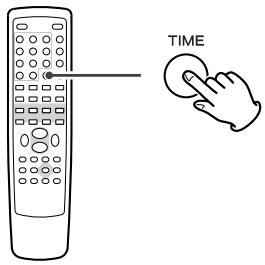
"SELECT -- " appears on the screen.
- Within 7 seconds, enter your desired file number (3 digit) using the numeric buttons.
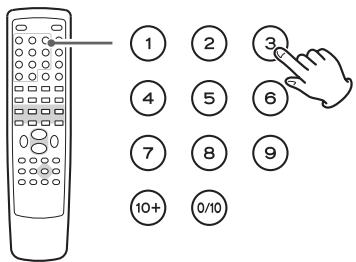
Playback starts from the selected file.
Time Search
- During playback, press the TIME button twice.
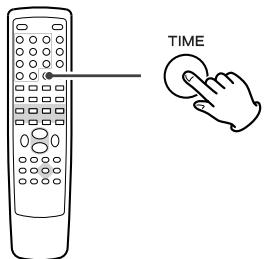
"GO TO --- - - - - " appears on the screen.
- Within 7 seconds, enter your desired hour, minute and second using the numeric buttons.
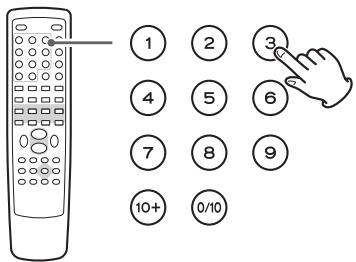
Playback starts from the selected part.
Programmed playback
Up to 20 chapters/tracks can be programmed in the desired order.
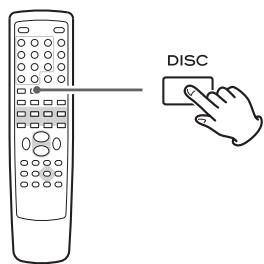
If another source is selected, press the DISC button or the FUNCTION button to select "DISC".
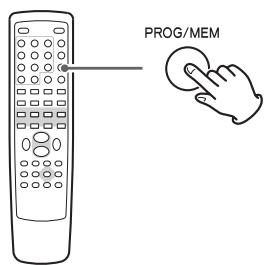
Press the PROGRAM button.
The program list appears on the screen.
- To cancel the program mode, press the PROGRAM button again, or select "EXIT" using the cursor buttons and press the ENTER button.
Enter your desired "title and chapter number" or "track number" using the numeric buttons.
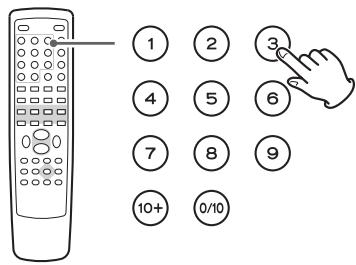
Example:
To enter number 5, press "0" and "5".
Repeat this step to program more chapters/tracks.
- If you made a mistake, move the cursor on the track number and overwrite it using the numeric buttons.
- To program more than 11 chapters/tracks, press the button to advance to the next program page (or select "▶I" using the cursor buttons and press the ENTER button). Press the button to return to the previous page.
4 When the selection of chapter/track numbers is completed, select "START" using the cursor buttons and press the ENTER button to start programmed playback.
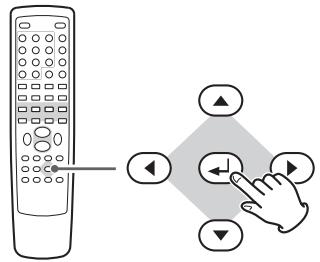
- During programmed playback, the numeric buttons don't work.
- When playback ends, the program is cleared.
- If you press one of the following buttons, the programmed contents will also be cleared.
OPEN/CLOSE, STANDBY/ON, STOP
FUNCTION (AUX, USB, TUNER)
Programmed playback
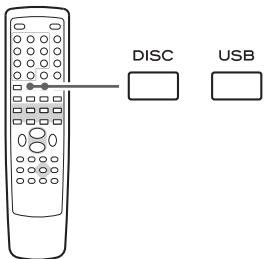
If another source is selected, press the FUNCTION button to select "DISC" or "USB".
2 Select a file using the cursor buttons and press the PROGRAM button.
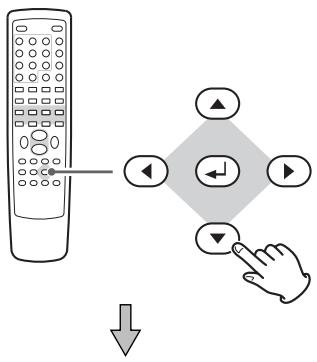
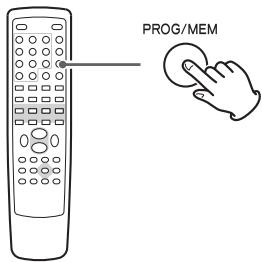
The file is added to the program list.
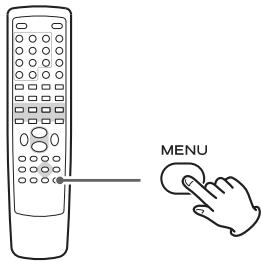
Press the MENU button once or twice to display the program list.
4 Highlight the first file in the program list using the cursor buttons.
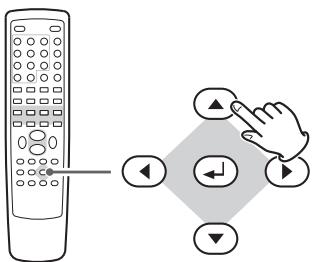
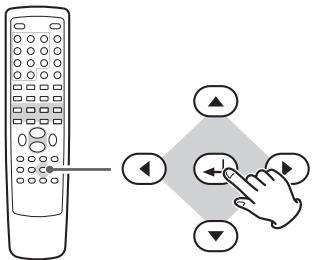
Press the ENTER button or the PLAY/PAUSE button to start programmed playback.
- If you press one of the following buttons, the programmed contents will be cleared.
FUNCTION (AUX, USB, TUNER)
OPEN/CLOSE (in DISC mode), STANDBY/ON,
Settings for DVD playback (introduction)
This chapter describes how to use the SETUP menu. Most settings and adjustments are required to be set when you first use the system.
Using the SETUP menu, you can adjust the picture size, set a preferred language for audio and the OSD (on screen displays), limit playback by children, et cetera.
1 Turn on the main unit, and the television (monitor).
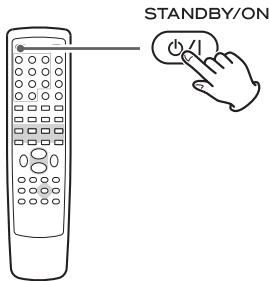
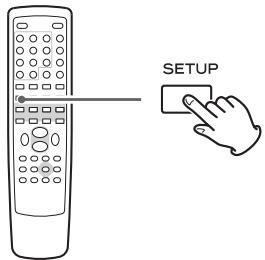
Press the SETUP button.
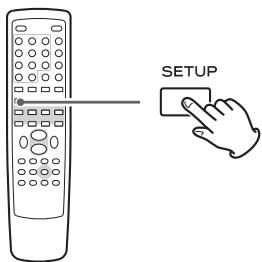
The setup menu appears on the screen.
- Exit the setup mode by pressing SETUP once again.
- Although it is possible to enter the setup menu while playback is continuing (or in resume mode), not all menu functions will be available. Expand the number of available functions by pressing the STOP button twice.
Use the cursor buttons to navigate the menus.
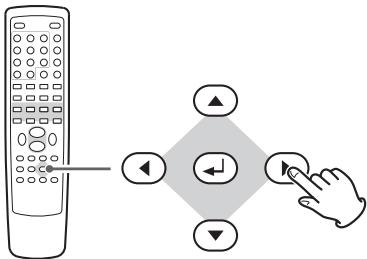
If no cursor is visible on the screen, use the left and right buttons to select a page.
Use the up and down buttons to highlight menu items within the selected page.
Press the left button to return to the upper menu.
4 Enter the menu item with the right cursor button.
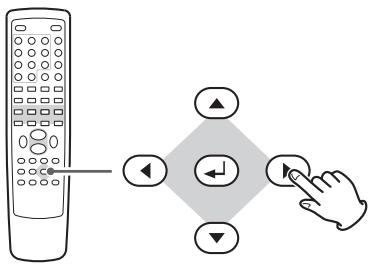
Use the up and down cursor buttons to select the options within the menu item, and ENTER to confirm the entry.
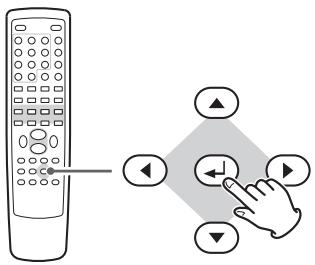
Individual menu functions are described on pages 33 through 37.
Repeat steps 3 through 5 as required.
6 Exit the setup mode by pressing SETUP once more.
TV Display
Because the shape of the television or monitor may not match the shape of the movie frame, you may need to change the way in which the image is displayed to avoid distortion on older televisions, which use a 4:3 aspect ratio; high-definition televisions use 16:9 (as do movies).
Note that you may need to read your television's manual in conjunction with this section in order to achieve the best results. Some discs do not allow the aspect ratio to be changed and you will therefore have to change the aspect ratio on the TV.
Make this setting while playback is stopped; you cannot do this while playing back a disc.
4:3 PAN SCAN
This mode is used with 4:3 televisions. 4:3 images are displayed normally. When showing 16:9 programs, the full height of the screen is used, but the left and right part of the image are cut off.
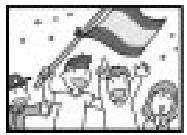
4:3 picture
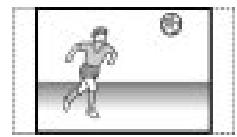
16:9 picture
4:3 LETTER BOX
This mode is used with 4:3 televisions. 4:3 images are displayed normally. 16:9 images are visible at their full width, but a blank area is left at the top and bottom of the screen.
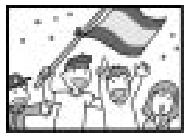
4:3 picture
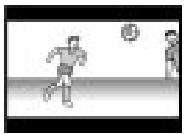
16:9 picture
16:9
Use with a 16:9 wide television.

4:3 picture
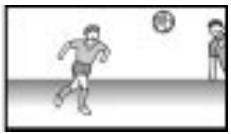
16:9 picture
- Some wide-screen discs that do not permit Pan & Scan mode playback are automatically played in Letterbox mode.
- Depending on the DVD, 4:3 Letterbox may be selected automatically instead of 4:3 Pan & Scan and vice versa.
- If WIDE is selected and a normal TV is connected, 16:9 content will appear distorted during playback (objects look thin).
OSD Language
Select the desired language for onscreen menus from the following:
English (default), French, German, Italian, Spanish, Dutch
NOTE: If the unit is set to a foreign language and you find it impossible to read the menu settings, you can restore all the factory default settings, and the menus will appear in English again (all other settings will be wiped out).
Screen Saver
ON(Default):
The screen saver starts up if nothing is played back and no operations are performed for 3 minutes.
OFF:
The screen saver does not start up.
DivX Code
In case you need the registration code to play DivX files, select this.
The registration code of the player will be displayed.
Digital Audio Setup
SPDIF OFF:
Select this when you don't use the DIGITAL OUT or the HDMI terminal.
No signal is output from these terminals.
ALL:
Select this when the unit is connected to an audio component equipped with a built-in Dolby Digital or DTS decoder via the DIGITAL OUT or the HDMI terminal.
PCM only (Default):
Select this when the unit is connected to an audio component such as amplifier/receiver, CD recorder or MD deck via the DIGITAL OUT or the HDMI terminal.
DOLBY DIGITAL Setup (Dual Mono)
STEREO
Left channel is output from the left speaker, and right channel is output from the right speaker.
L-MONO
Left channel is output from the front left and right speakers.
R-MONO
Right channel is output from the front left and right speakers.
3D Processing
This setting provides following sound effects:
Off, Concert, Living Room, Hall, Bathroom, Cave, Arena, Church
Night Mode (Dynamic range control)
ON
Applies dynamic range control to Dolby Digital material, reducing the volume of loud sounds, and increasing the volume of quiet ones. This is useful for spoken word material, etc. as well as nighttime listening.
OFF (default)
Turns off the audio dynamic compression.
- This function is effective only when playing back a DVD disc recorded with Dolby Digital. This control has no effect on other discs.
- The overall effect of this setting depends on many things: the disc being played, the amplifier, and the speakers used for reproduction.
Video Output
S-VIDEO
Select this when your TV or monitor is connected to the S-VIDEO terminal.
Y Cb/Pb Cr/Pr
Select this when your TV or monitor is connected to the COMPONENT VIDEO terminals.
TV Mode
This setting is available only when "COMPONENT" is set to "Y Cb/Pb Cr/Pr".
This setting allows the selection of interlaced (INTERLACE) or progressive-scan (P-SCAN) video from the component video outputs.
Progressive-scan video provides a better, clearer picture. However, it is not supported by every television or monitor, and you should ensure that this is supported fully before turning on this option.
- When your TV isn't compatible with progressive scan, never select "P-SCAN". No picture will be shown on the monitor. In case you select "Progressive" by mistake, connect your TV via the VIDEO OUT jack or S-VIDEO jack to display the Setup menu and change the setting to "INTERLACE".
'CONSUMERS SHOULD NOTE THAT NOT ALL HIGH DEFINITION TELEVISION SETS ARE FULLYCompatible WITH THIS PRODUCT AND MAY CAUSE ARTIFACTS TO BE DISPLAYED IN THE PICTURE. IN CASE OF 480 (525) OR 576 (625) PROGRESSIVE SCAN PICTURE PROBLEMS, IT IS RECOMMENDED THAT THE USER SWITCH THE CONNECTION TO THE 'STANDARD DEFINITION' OUTPUT. IF THERE ARE QUESTIONS REGARDING OUR TV SET COMPATIBILITY WITH THIS MODEL 480p (525p) AND 576p (625p) DVD PLAYER, PLEASE CONTACT OUR CUSTOMER SERVICE CENTER.'
Color Setting
- Highlight "Color Setting" and press the right button.
- Use the up and down buttons to select the parameter.
Sharpness
Adjusts the sharpness of the picture shown on the monitor.
Select HIGH, MEDIUM or LOW using the cursor buttons, and press the ENTER button.
Brightness
Adjusts the brightness of the picture
Use the left and right buttons to change the value, and press the ENTER button.
Contrast
Adjusts the picture contrast
Use the left and right buttons to change the value, and press the ENTER button.
Gamma
Adjusts the gamma value of the picture
Select HIGH, MEDIUM, LOW or NONE using the cursor buttons, and press the ENTER button.
Hue
Adjusts the green/red balance of the picture (only for progressive-scan and S-Video output)
Use the left and right buttons to change the value, and press the ENTER button.
Saturation
Adjusts the saturation level.
Use the left and right buttons to change the value, and press the ENTER button.
Luma Delay
Adjusts the luma delay.
Select 0T or 1T using the cursor buttons, and press the ENTER button.
- Press the left button when done, to return to the Video Setup Page.
Settings (Video Setup Page)
HDMI
ON
Select this when your TV or monitor is connected to the HDMI terminal.
OFF
Select this when you don't use the HDMI terminal.
No signal is output from the HDMI terminal.
- When your TV isn't connected to the HDMI terminal, never select "ON". No picture will be shown on the monitor.
Resolution
This setting is available only when "HDMI" is set to "ON". Select proper resolution for yout TV or monitor.
480p 60Hz
720p 60Hz
1080i 60Hz
576p 50Hz
720p 50Hz
1080i 50Hz
Settings (Preference Page)
TV Type
NTSC(Default):
Select this when the unit is connected to an NTSC TV.
AUTO:
Select this when the unit is connected to a MULTI TV.
PAL:
Select this when the unit is connected to a PAL TV.
Audio, Subtitle, Disc Menu
You can select a preferred language for audio, subtitle and disc menu.
- When you select a preferred language that is not recorded on the DVD, one of the recorded languages is automatically selected.
- You can override the AUDIO setting in the SETUP menu by pressing the AUDIO button on the remote control unit while a DVD disc is playing.
- You can override the SUBTITLE setting in the SETUP menu by pressing the SUBTITLE button on the remote control unit while a DVD disc is playing.
- Select OFF to turn subtitles off.
Note that subtitles on some discs cannot be removed even when you select OFF.
Parental
See page 37 for details.
Default
All the items in the SETUP menu (except for the password and parental control) will be reset to the default settings.
Parental (Parental control)
Playback of some DVD discs can be limited depending on the age of the users. The parental control system allows the playback limitation level to be set by the parent. The default setting is "8".
Notes
- The lower the level, the stricter the limitation.
-
If the rating of the loaded DVD disc is higher than the level you set, the system will require a password. Enter your password and press the ENTER button to start playback.
-
Select the desired parental control level from the menu, then press ENTER to save it.
- You will be prompted to enter your password. Use the numeric buttons to enter 2580 (or your privacy password if already established).
No need to enter a password if "Password Mode" is set to OFF.
Password Mode
To change this setting, select ON or OFF, enter your password, and press the ENTER button.
ON
You need a password to change the level of parental control.
OFF
You can change the level of parental control without a password.
You cannot temporarily unlock discs for playback.
Password
You can set a new password for parental control. The default password is 2580.
- Select "Change" and press the ENTER button.
- Enter 2580 (or your privacy password) using the numeric buttons.
- Enter a new password.
- Enter the same password again to confirm.
- Press the ENTER button.
Remember your password as you will need it to change the level of control in the future as well as to temporarily unlock discs for playback.
If you forget your password, use 2580.
- Select FM or AM using the FUNCTION button (or the TUNER button of the remote control unit).
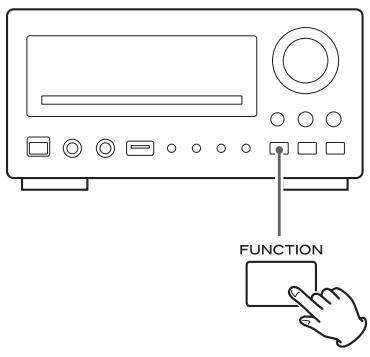
- Select the station you want to listen to (auto selection).
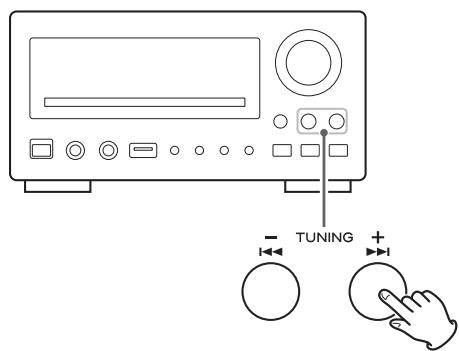
Hold down the TUNING button (+ or -) of the main unit for more than 1 seconds.
"SEARCH . . ." appears on the display, and the unit starts searching for a station.
When a station is tuned in, the tuning process will stop automatically.
Repeat this step until the station you want to listen to is found.
- If you want to stop the tuning process, press the TUNING button.
Selecting stations which cannot be tuned automatically (manual selection)
When the TUNING button is pressed momentarily, the frequency changes by a fixed step.
Press the TUNING button repeatedly until the station you want to listen to is found.
STEREO/MONO Button
Pressing this button alternates between Stereo mode and Mono mode.
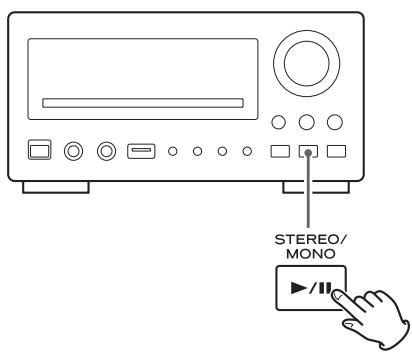
STEREO
FM stereo broadcasts are received in stereo and the "ST." indicator lights in the display.
- If the sound is distorted and the "ST." indicator flashes, the signal is not strong enough for good stereo reception. In this case, change to MONO mode.
MONO
To compensate for weak FM stereo reception, select this mode. Reception will now be forced to monaural, reducing unwanted noise.
If the reception is poor
For the best reception, rotate the FM or the AM antenna until you get stations clearly.
You can store up to 20 FM and 20 AM stations.
Automatic Memory Presetting
- Select FM or AM using the FUNCTION button (or the TUNER button of the remote control unit).
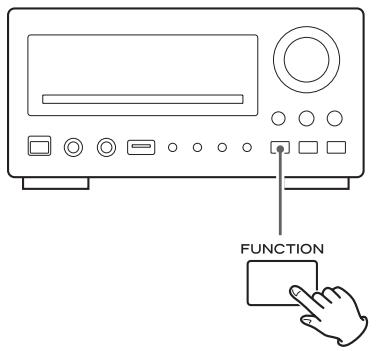
- Press the SCAN button.
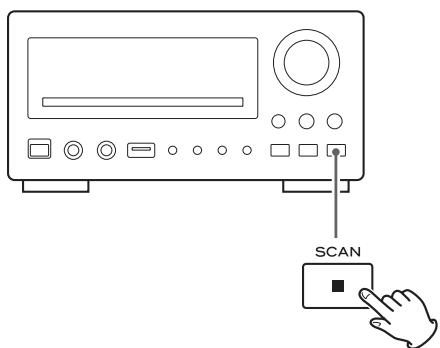
Up to 20 of the best received stations in your area will be stored automatically.
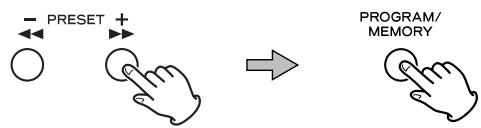
Manual Memory Presetting
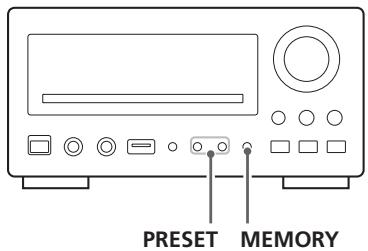
1 Tune in a station you want to listen to (see steps 1 to 3 of page 38).
Press the MEMORY button.
The PROG indicator blinks on the display.
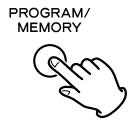
While the "PROG" indicator is blinking, Select a preset channel to store the station using the PRESET buttons, and then press the MEMORY button.
The station is stored and the PROG indicator goes off.
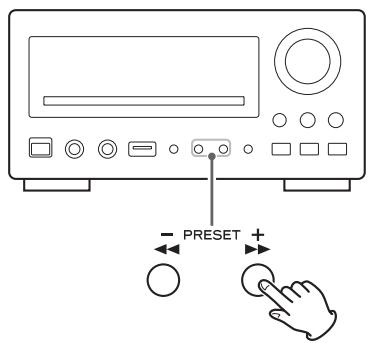
How to select preset stations
- Select FM or AM using the FUNCTION button (or the TUNER button of the remote control unit).

- Select a preset channel using the PRESET buttons.
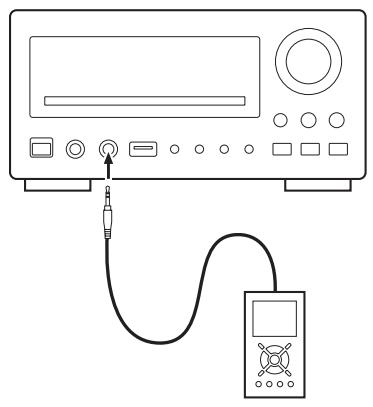
1 Connect the PHONES jack (audio output jack) of a portable audio player to the AUX 2 IN jack of the DR-H300 using the supplied stereo mini plug cable.
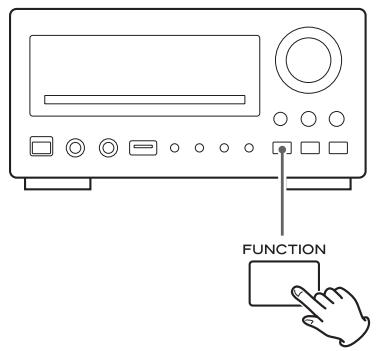
Press the FUNCTION button or the AUX button to select "AUX2".
3 Play the source, and adjust the volume using the VOLUME knob of the DR-H300 and of the audio player.
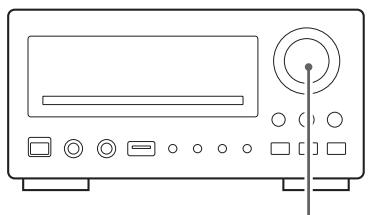
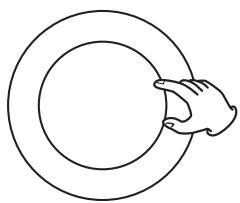
VOLUME
When using the PHONES jack of your mini player, you must adjust the volume of the mini-player or you may hear no sound from your DR-H300.
- Turning the volume of the mini player up too high may cause the sound from your DR-H300 to be distorted. If this is the case, reduce the volume of the mini player until the distortion stops and then adjust the volume level of the DR-H300 to a comfortable listening level
1 If the unit is on, press the STANDBY/ON switch to turn it standby.
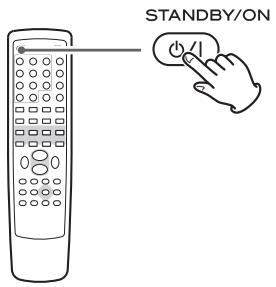
Press the CLOCK button.
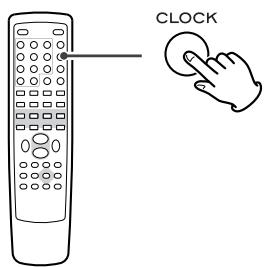
(If “- - - - ” blinks on the display, press the CLOCK button again.)
"CLOCK SET" briefly appears on the display, and the "hour" value starts blinking.
- If no button is pressed for 10 seconds, the time setting mode will be cancelled.
Press the VOLUME button to set the current hour.
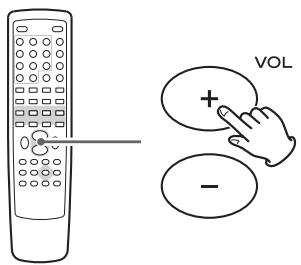
4 Press the CLOCK button.
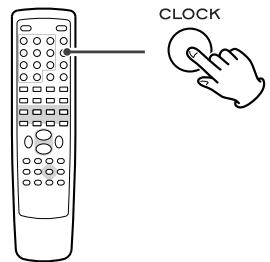
The "minute" value starts blinking
Press the VOLUME button to set the current minute.
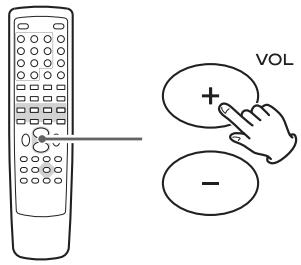
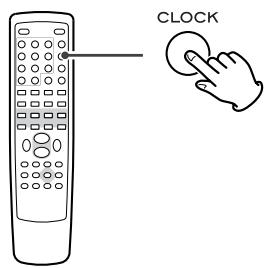
6 Press the CLOCK button.
The clock starts.
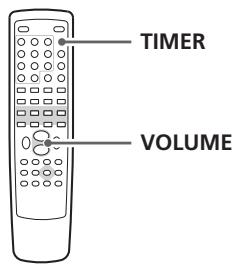
- The unit can be programmed to turn on at a specified time.
- Adjust the clock before setting the timer.
If the unit is on, press the STANDBY/ON switch to turn it standby
Press the TIMER button.
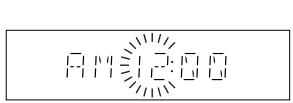
"TIMER SET" briefly appears on the display, and the "hour" value starts blinking.
- When no button is pressed for 10 seconds, the timer setting mode will be cancelled.
Press the VOLUME button to set the start time (hour), and then press the TIMER button.
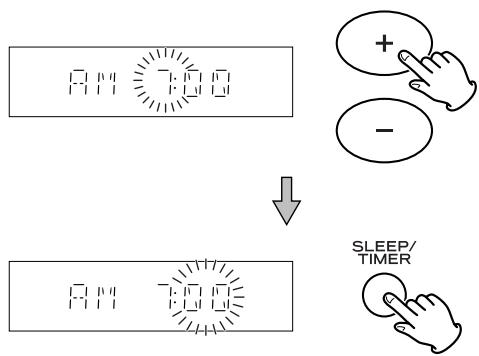
The "minutes" value starts blinking.
4 Press the VOLUME button to set the start time (minute), and then press the TIMER button.
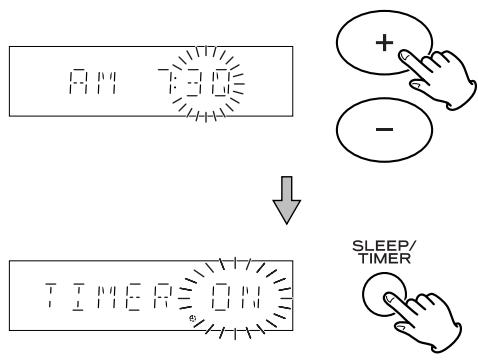
"ON" or "OFF" starts blinking.
Press the VOLUME button to turn ON or OFF the timer function, and then press the TIMER button.
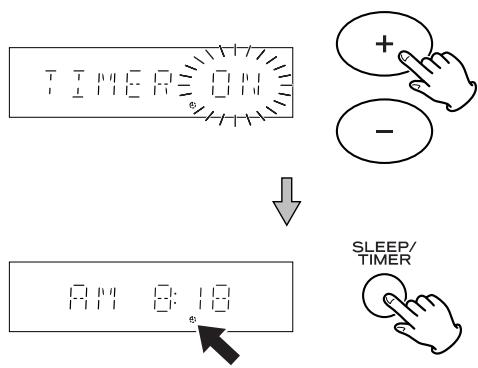
Select ON to turn the timer function on.
The TIMER indicator (4) appears on the display.
When you don't use the timer, select OFF. (The TIMER indicator disappears from the display.)
6 Turn the unit on and prepare the source.
To play a disc, select "DISC" using the FUNCTION button and set a disc.
To play a USB memory device, select "USB" using the FUNCTION button and set a USB memory device.
To listen to the radio, select "FM" or "AM" using the FUNCTION button and tune in a station.
Press the STANDBY/ON button to turn the unit off (standby).
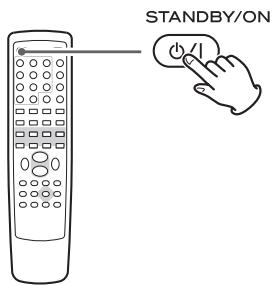
The clock and the TIMER indicator ( G ) are displayed.
- The unit will turn on at the specified time every day.
- The unit turns on with the source that was last selected.
Don't forget to turn the unit off (standby), or the timer won't work.
The power can be switched off after a specified amount of time.
Press the SLEEP button repeatedly until desired time appears on the display.
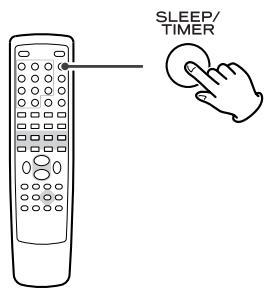
SLEEP-90 (60, 30, 20, or 10):
The power will be switched off 90 (60, 30, 20, or 10) minutes later.
The SLEEP indicator lights on the display.
SLEEP OFF:
The sleep timer is off.
- If you want to check the remaining time, press the SLEEP button once. The remaining time will be displayed for 3 seconds, and then return to the normal display.
If you have problems with your system, look through this chart and see if you can solve the problem yourself before calling your dealer or TEAC service center.
General
No power
Check the connection to the AC power supply. Check and make sure the AC source is not a switched outlet and that, if it is, the switch is turned on. Make sure there is power to the AC outlet by plugging another item such as a lamp or fan.
Press the STANDBY/ON button to turn the unit on.
Remote control doesn't work.
Press the STANDBY/ON button to turn the unit on.
If the batteries are dead, change the batteries.
Use remote control unit within the range (5 m) and point at the front panel.
Clear obstacles between the remote control unit and the main unit.
If a strong light is near the unit, turn it off.
Severe hum or noise is heard.
Place the unit as far away from a TV as possible.
Make sure the line cords and speaker cables are as far away from the AC supply as possible.
DISC/USB
Will not play.
Reload the disc with the label side UP.
Use a playable disc (see page 16).
If the disc is dirty, clean the surface of the disc.
A blank disc has been loaded. Load a prerecorded disc.
Check the region code of the DVD (see page 16).
If the unit is condensed, leave the unit for one or two hours with the power turned on (see page 45).
PROHIBIT icon "O" appears on the screen.
The operation is not permitted by the disc or the unit.
Note that during playback of a title part (cautions, software maker's logo, etc.), most operations are prohibited by the disc.
If another operation is still in process, wait a moment and try again.
Cannot access some setup menu items.
Although it is possible to enter the setup screen while playback is continuing (or in resume mode), not all menu functions will be available. Expand the number of available functions by pressing the STOP button twice (see page 32).
Scanning stops.
Scanning does not work within menus.
Sound skips.
Place the unit on a stable place to avoid vibration and shock.
If the disc is dirty, clean the surface of the disc.
Don't use scratched, damaged or warped discs.
There is no sound or only a very low-level sound is heard.
Adjust the volume.
Check the connection to the speakers.
Check the SPDIF output setting (see page 34).
The sound is muted during pause, slow-motion, and fast forward/reverse. Press the PLAY/PAUSE button to resume normal playback.
No digital audio output.
Check that the SPDIF OUTPUT setting is set to "ALL" or "PCM only" (see page 34).
Digital audio recording is not possible on another device.
Check that the SPDIF OUTPUT setting is set to "PCM only".
Copy-prohibit material cannot be copied digitally.
No picture/distorted picture
Check the connection to the television (monitor)
Check the operating instructions for the television (monitor) to make sure that you have the right input selected, etc.
If you are using a HDMI connection, make sure it is configured correctly (see page 36).
When your television/monitor isn't compatible with Progressive scan, never set the TV MODE setting to "P-SCAN (Progressive scan)" (see page 35).
Picture noise.
If video from this system has to go through your VCR to get to your TV, the copy-protection applied to some DVD programs could affect picture quality. Please connect the unit directly to your TV.
The image is distorted or monochromatic.
Make sure that the PAL-NTSC setting matches the television/monitor (see page 36).
Adjust the aspect ratio to correspond to the television/monitor in use (see page 33).
The aspect ratio of the screen cannot be changed.
The aspect ratio might be fixed by the disc.
Picture and sound don't match up.
With some TV sets there may be a short pause from when the video signal is received until the image appears. If the sound from the speaker does not match the TV image, minimize the volume level of the DR-H300 and output the sound from the TV.
Tuner
Cannot listen to any station, or signal is too weak.
Tune in the station properly.
Rotate the FM or AM antenna for the best reception position.
Though the broadcast is stereo, it sounds monaural.
Press the STEREO/MONO button.
If normal operation cannot be obtained, unplug the power cord from the outlet and plug it again. This resets the internal micro-computer which can be disturbed during electrical storms, power interruptions, et cetera.
If unplugging the power cord does not solve the probe, try the following procedure to reset the internal micro-computer.
- Turn the unit on.
- Press the STOP button while holding down the PLAY/PAUSE button.
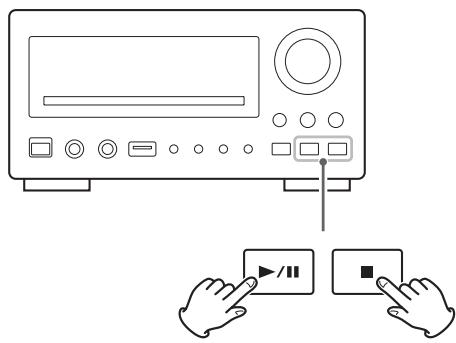
- Release the STOP button when "DR-H300V**" appears on the display.
- Release the PLAY/PAUSE button.
- Press the STOP button.
Beware of condensation
When the unit (or a disc) is moved from a cold to a warm place, or used after a sudden temperature change, there is a danger of condensation; vapor in the air could condense on the internal mechanism, making correct operation impossible. To prevent this, or if this occurs, leave the unit turned on for one or two hours. Then the unit will stabilize at the temperature of its surroundings.
Maintenance
If the surface of the unit gets dirty, wipe with a soft cloth or use diluted neutral cleaning liquid. Be sure to remove any fluid completely. Do not use thinner, benzine or alcohol as they may damage the surface of the unit.
DVD Player
Pickup . . . . . Semiconductor laser, Wave length 650/790 nm
Signal System NTSC/PAL
Video signal horizontal resolution . More than 480 lines (DVD)
Video signal-to noise ratio . . . . . . . . More than 50 dB (DVD)
Audio frequency response. 20 Hz to 20 kHz (+1 / -3dB)
Audio signal-to-noise ratio 62 dB
Dynamic range 80 dB
S-Video output
Y (luminance) - Output level . 1 Vp-p (75 Ω)
C (color) - Output level 286 mVp-p (75 Ω)
Jacks . S-VIDEO jack
Video output
Output level 1 Vp-p (75 Ω)
Jacks RCA jack
Component video output (Y, C_B / P_B , C_R / P_R )
Y-Output level 1.0 Vp-p (75 Ω)
C_B / P_B, C_R / P_R -Output level 0.7 Vp-p (75 Ω)
Jacks. RCA jacks
HDMI output
Jack.HDMI 19 pin (version 1.2a)
Amplifier
Output Power
(Stereo, EIAJ, 20 Hz to 20 kHz, 4 Ω) . . . . . . . . . . . . . . . . . . . . . . . . . . . . . . . . . . . . . . . . . . . . . . . . . . . . . . . . . . . . . . . . . . . . . . . . . . . . . . . . 50 W + 50 W
(Stereo, 1 % THD, 20 Hz to 20 kHz, 4 Ω) . . . . . 36 W + 36 W
Total harmonic distortion . . . . . . . . . . . . . . . . . . . . . . . . . . . . . . . . . . . . . . . . . . . . . . . . . . . . . . . . . . . . . . . . . . . . . . . . . . . . . . . . . . . . . . . . at 5 W, 1 kHz, 4 Ω)
Audio Input sensitivity/impedance. LINE: 600 mV/47 kΩ
Output level/impedance (LINE OUT) 1000 mV / 10 kΩ
Frequency Response 20 Hz to 20 kHz, +0 / -3 dB
Signal-to-noise Ratio 90 dB (IHF-A)
FM Tuner Section (Without notes 100.1 MHz, 65 dBf)
Tuning Range. . . . . . . 87.5 MHz to 108.0 MHz (100 kHz steps)
Total Harmonic Distortion (1 kHz) .. Mono: 1%, Stereo: 1.5%
Frequency Response 40 Hz to 10 kHz
Stereo Separation (1 kHz) 35 dB
Signal-to-Noise Ratio Mono: 55 dB
Stereo: 45 dB
AM Tuner Section
Tuning Range 520 kHz to 1,710 kHz (10 kHz steps)
Useable Sensitivity. 900 V/m
Total Harmonic Distortion 1.5% at 100 dB/m
Signal-to-Noise Ratio 40 dB at 100 dB/m
General
Power Requirements AC 120 V, 60 Hz
Power Consumption. 50 W (STANDBY: 0.98 W)
Dimensions (W x H x D) 215 x 110 x 350 mm
Weight (net) 4.5 kg
Standard Accessories
AM Loop Antenna x 1
FM Antenna x 1
Remote Control Unit (RC-1144) x 1
Batteries (AAA, R03, UM-4) x 2
RCA video cable x 1
Warranty card x 1
Owner's manual x 1
- Design and specifications are subject to change without notice.
- Weight and dimensions are approximate.
- Illustrations may differ slightly from production models.
Play/Pause (▶/II), STEREO/MONO
| 1. English 2. French |
| 1. English 2. French |
| 16:9 LB |
| 2 |
Touche S-BASS (Super Bass)
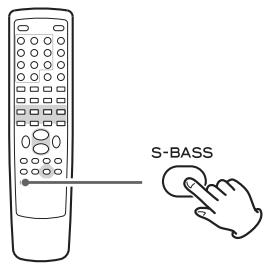
100%, 125%, 150%, 200%, 75%, 50%, OFF
STANDBY/ON, OPEN/CLOSE, FUNCTION
STANDBY/ON, FUNCTION
OPEN/CLOSE, STANDBY/ON, STOP
FUNCTION (AUX, USB, TUNER)
Lecture programmée
Off, Concert, Living Room, Hall, Bathroom,
Cave, Arena, Church
Brightness (Luminosite)
L SALTO (I▲ / ▷▶), TUNING
FUNCTION, STANDBY/ON
comoAbrirycerrarlabandeja
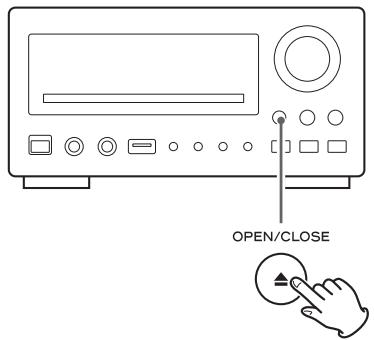
This appliance has a serial number located on the rear panel. Please record the model number and serial number and retain them for your records.
- IMPORTANT SAFETY INSTRUCTIONS
- CAUTION
- For U.S.A.
- CERTIFICATION
- DISC/USB
- TUNER
- AUX
- Read this before operation
- DO NOT MOVE THE UNIT DURING PLAYBACK
- WHEN MOVING THIS UNIT
- Conventions about this manual
- CAUTION:
- FM Indoor Antenna
- FM Outdoor Antenna
- AM Indoor Loop Antenna
- Note:
- How to connect speakers:
- Subwoofer
- A HDMI video/audio output terminal
- HDMI video output formats
- To output audio from the HDMI terminal
- B Component video output terminals
- C S-Video output terminal
- Composite video output terminal
- Digital audio output terminals
- AUX 1/LINE OUT jacks
- G Power cord receptacle
- Battery Replacement
- Precautions concerning batteries
- A STANDBY/ON
- B PHONES
- C AUX 2 IN
- USB connector
- REPEAT
- F SCAN ( / ) , PRESET
- MEMORY, PROGRAM
- OPEN/CLOSE
- FUNCTION
- Play/Pause ( /II) ,STEREO/MONO
- K Stop (■), SCAN
- SKIP(1
- VOLUME
- N Display
- Disc tray
- Remote control sensor
- A Number buttons
- B SETUP
- C ANGLE
- D REPEAT A-B
- DIMMER
- F SLOW
- G ZOOM
- P-EQ (Preset Equalizer)
- S-BASS
- LOUDNESS
- K SLEEP, TIMER
- L CLOCK
- M OSD
- N TIME
- SUBTITLE
- AUDIO
- MUTE
- R TITLE
- Cursor buttons and ENTER
- T MENU
- Type of discs that can be played on this system
- Region Number of DVD Video discs:
- About DVD-RW
- About CD-R/CD-RW
- Playable file format
- USB memory device compatibility
- Following discs cannot be played with this unit:
- Warning:
- Example of Icons used on DVD discs:
- Press the STANDBY/ON button to turn the unit on.
- Press the FUNCTION button (or the TUNER, DISC, USB or AUX button of the remote control unit) to select a source.
- Play the source, and adjust the volume using the VOLUME knob.
- Recording a Source
- Select a source to be recorded by pressing the FUNCTION button.
- Start recording.
- Muting
- Headphones
- Preset Equalizer
- S-BASS (Super Bass) button
- LOUDNESS button
- Listening to a Disc
- Press the FUNCTION button to select "DISC".
- Press the OPEN/CLOSE button () to open the tray.
- Insert the disc label side up.
- Press the OPEN/CLOSE button (▲) again to close the tray.
- Press the PLAY button to start playback if playback has not started automatically.
- Listening to a USB Memory Device
- On-screen menu 1
- DVD menus
- Returning to the menu screen
- Video CDs with PBC
- When the PBC function is off:
- When the PBC function is on:
- On-screen menu 2
- MP3 and Windows Media-formatted audio files
- JPEG files
- Pausing playback (freezing the picture)
- Stopping playback (Resume mode)
- Opening and closing the tray
- Skipping playback
- Fast scanning
- Search for a part of a chapter/track
- Selecting a chapter or track
- Selecting audio
- Selecting subtitles
- Use the SUBTITLE button to select DVD subtitles.
- DVD
- Changing camera angle
- Picture Zoom
- DVD, DivX, VCD:
- JPEG:
- DVD VCD DIVX
- Slow motion
- For video discs only (DVD and VCD)
- DVD:
- VCD/DivX:
- Repeat playback
- Chapter or track repeat
- Title or disc repeat
- Repeat and Shuffle playback
- File repeat
- Folder repeat
- Shuffle (MP3/WMA/DivX only)
- A-B repeat playback
- Repeat Playback of a Designated Section (A-B Repeat)
- Changing the display mode
- CD/Video CD
- DivX
- Time Search (VCD/CD)
- During playback, press the TIME button.
- Within 7 seconds, enter your desired hour and minute using the numeric buttons.
- Time Search (MP3/WMA)
- During playback, press the TIME button twice.
- Chapter Search/ Time Search (DVD)
- Chapter Search
- Time Search
- Chapter Search/ Time Search (DivX)
- Programmed playback
- Example:
- Settings for DVD playback (introduction)
- TV Display
- 4:3 PAN SCAN
- 4:3 LETTER BOX
- 16:9
- OSD Language
- Screen Saver
- ON(Default):
- OFF:
- DivX Code
- Digital Audio Setup
- SPDIF OFF:
- ALL:
- PCM only (Default):
- DOLBY DIGITAL Setup (Dual Mono)
- STEREO
- L-MONO
- R-MONO
- 3D Processing
- Night Mode (Dynamic range control)
- ON
- OFF (default)
- Video Output
- S-VIDEO
- Y Cb/Pb Cr/Pr
- TV Mode
- Color Setting
- Sharpness
- Brightness
- Contrast
- Gamma
- Hue
- Saturation
- Luma Delay
- Settings (Video Setup Page)
- HDMI
- OFF
- Resolution
- Settings (Preference Page)
- TV Type
- NTSC(Default):
- AUTO:
- PAL:
- Audio, Subtitle, Disc Menu
- Parental
- Default
- Parental (Parental control)
- Notes
- Password Mode
- Password
- Selecting stations which cannot be tuned automatically (manual selection)
- STEREO/MONO Button
- MONO
- If the reception is poor
- Automatic Memory Presetting
- Manual Memory Presetting
- How to select preset stations
- Turn the unit on and prepare the source.
- Press the STANDBY/ON button to turn the unit off (standby).
- SLEEP-90 (60, 30, 20, or 10):
- SLEEP OFF:
- General
- No power
- Remote control doesn't work.
- Severe hum or noise is heard.
- Will not play.
- PROHIBIT icon "O" appears on the screen.
- Cannot access some setup menu items.
- Scanning stops.
- Sound skips.
- There is no sound or only a very low-level sound is heard.
- No digital audio output.
- Digital audio recording is not possible on another device.
- No picture/distorted picture
- Picture noise.
- The image is distorted or monochromatic.
- The aspect ratio of the screen cannot be changed.
- Picture and sound don't match up.
- Beware of condensation
- Maintenance
- DVD Player
- Amplifier
- AM Tuner Section
- Standard Accessories
- Play/Pause (▶/II), STEREO/MONO
- Touche S-BASS (Super Bass)
- Lecture programmée
- Brightness (Luminosite)
- L SALTO (I▲ / ▷▶), TUNING
- comoAbrirycerrarlabandeja
Brand : TEAC
Model : DR-H300
Category : Audio Receiver