
KH 1177 NOODLE MACHINE - Pasta machine BIFINETT - Free user manual and instructions
Find the device manual for free KH 1177 NOODLE MACHINE BIFINETT in PDF.


| Product type | Electric pasta machine |
| Brand | BIFINETT |
| Model | KH 1177 NOODLE MACHINE |
| Mains voltage | 220-240 V~, 50/60 Hz |
| Power consumption | 100 W |
| Protection class | II |
| Maximum continuous operation time | 15 minutes |
| Recommended rest before reuse | 15 minutes minimum |
| Types of pasta possible | Lasagnes, Spaghetti, Taglierini, Tagliatelle |
| Included accessories | Motor, crank, smooth rollers, cutting rollers, mounting bracket, power cord |
| Main materials | Steel and plastic |
| Approx. dimensions (L x W x H) | 30 x 20 x 25 cm |
| Approx. weight | 3 kg |
| Cleaning method | Brush and wooden stick; do not immerse or put in dishwasher |
| Main safety instructions | Unplug before cleaning; do not open motor housing; use max 15 min |
| Warranty | See the accompanying warranty sheet |
| Customer service | Komperna GmbH, Burgstrasse 21, 44867 Bochum, www.kompernass.com |
| Intended use | Domestic use only |
Frequently Asked Questions - KH 1177 NOODLE MACHINE BIFINETT
User questions about KH 1177 NOODLE MACHINE BIFINETT
0 question about this device. Answer the ones you know or ask your own.
Ask a new question about this device
Download the instructions for your Pasta machine in PDF format for free! Find your manual KH 1177 NOODLE MACHINE - BIFINETT and take your electronic device back in hand. On this page are published all the documents necessary for the use of your device. KH 1177 NOODLE MACHINE by BIFINETT.
USER MANUAL KH 1177 NOODLE MACHINE BIFINETT
Operating Instructions
- Intended use 10
- Technical data 10
- Safety instructions 10
- Operating elements 11
5.Preparing the machine 11
6.Preparing the dough 12
Pasta recipe suggestion for 6 persons. 12
7.Preparing the noodles 12
8. Cleaning / maintaining the machine 13
9. Disposal 14
10.Warranty & Service 14
Read the operating instructions carefully before using the appliance for the first time and preserve this booklet for later reference. Hand over the manual to anyone you pass on the appliance to.
Noodle Machine KH1177
1. Intended use
This appliance is intended for making noodles in a household environment. It is not intended for use in commercial or industrial settings.
2. Technical data
Mains voltage: 220-240 V~, 50/60 Hz
Power consumption: 100 W
Protection class: II,
KB-time: 15 minutes
3. Safety instructions
Danger of electrical shock!
- Only connect the appliance to a properly installed power socket with a mains voltage of 220 - 240V at 50 / 60Hz
- In event of operating malfunctions and before cleaning the appliance, pull the power plug out of the power socket.
- Never immerse the motor unit of the appliance in liquid and do not allow any liquids to enter the casing of the motor unit.
- Never subject the appliance to moisture and do not use it outdoors. If liquid does enter the appliance casing, immediately pull the power plug and have the appliance repaired by a qualified technician.
-
Never grip the power cord or plug with wet hands.
-
Always hold the plug to pull the power cord out of the socket, do not pull on the cord itself.
- Do not kink or crush the power cord and lay the power cord so that no one will step on it or trip over it.
- If the power cord or the motor unit are damaged, you must have the appliance repaired by qualified technicians before using it again.
- You may not open the motor unit casing. In such an event, safety is not guaranteed and the warranty shall become void.
- Pull the power cord after every use and before every cleaning to prevent accidental activation. The appliance is only completely without current when the power plug has been pulled out of the socket.
Always pull the plug out of the socket before removing or attaching the motor.
Fire hazard!
- Do not use the appliance near hot surfaces.
- Never leave the machine unsupervised, particularly when it is connected to the power socket!
- Do not keep the appliance in places that are exposed to direct sunlight, as this could lead to overheating and cause irreparable damage.
- Only use the appliance for the purposes listed in the operating instructions and for a maximum duration of 15 minutes at a time. Then allow the appliance to cool down for at least 15 minutes before using it again.
Injury hazard!
- Always store the appliance outside the reach of children. Children may not use the appliance.
- Do not wear ties, scarves or necklaces; tie up long hair.
- Make certain that the appliance is stabile.
- Do not operate the appliance if it has sustained a fall or is damaged. Get the appliance checked and repaired by experts, if necessary.
4. Operating elements
① Motor
② Connection socket for the power cord
③ Operating switch (ON I/OFF 0/PULSE II)
④ Smoothing rollers
⑤ Adjustor (Distance between the smoothing rollers)
⑥ Cutting rollers
⑦ Connections for C-clamp
⑧ Connections for motor or crank
⑨ C-clamp
Crank
⑪ Power cord
5. Preparing the machine
- Fasten the noodle machine to a suitable table surface with the help of the C-clamp (Fig. 1).
- When using the machine for the first time, clean it first with a dry cloth to remove any oil residue.
To clean the rollers ④ + ⑥ you can send some dough through, but this dough should then be discarded. - To remove the motor ① from the machine, it must be turned upward about 30^ and pulled out (Fig. ②).
- To attach the motor ① to the smoothing rollers ④, it must be brought toward the machine from above at about a 30^ angle.
- Insert the peg into the opening ⑧ in the rollers (Fig. 3). Press on the motor ① until it rests against the side. Turn the motor ① down by about 30^ until it snaps into the side openings.
6. Preparing the dough
Pasta recipe suggestion for 6 persons. Ingredients: 500g ( 1 lb) soft wheat flour (type 405) and 5 eggs; the 5 eggs can also be replaced by a glass of water. To keep noodles "al dente", 250g of soft wheat flour (type 405) must be mixed with 250g hard wheat flour (type 1050).
Do not salt!
- Put the flour in a bowl and the eggs in the centre (Fig. 4). Mix the eggs with a fork and work into the flour well.
1 Do not use eggs directly from the refrigerator! Let the eggs warm to room temperature first. - Then knead the resulting dough (Fig. 5) well with your hands until a uniform mass is achieved.
If the dough is dry, some water must be added. If the dough is too soft, you can firm it up with some flour. A good dough should never stick to your hands.
Take the dough out of the bowl and lay it on a lightly floured table surface (Fig. 6). If necessary, knead the dough again somewhat. - Then cut the dough into small pieces (Fig. ⑦).
7. Preparing the noodles
① All the work described here can alternatively be performed with the crank ⑩. Pay heed when placing the crank that the drivers in the crank sit properly in the recesses of the connectors ⑧.
- Pull the adjustor ⑤ out of the machine and turn it to position 1 so that the two smoothing rollers ④ are completely open (approx 3 ~mm (Fig. 8).
- Set the operating switch ③ to position I to start the motor ①, and let some dough run through the smoothing rollers ④ (Fig. ⑨).
- Repeat this process 5 - 6 times, folding the dough together and, if necessary, spreading some flour on it (Fig.10).
- If the dough now has an even shape, you can set the adjustor ⑤ to position 2 and run the dough through one more time (Fig. 1).
- Now let the dough run through in adjustor position 3 - 9 until the dough has reached the desired thickness.
To make round spaghetti, it is advisable to stop at adjustor position 4; for other noodle types you can continue to position 9 (approx. 2 mm at position 9).
- Now cut the dough into pieces 25cm (= 10^ ) long with a knife.
- Attach the motor ① to the corresponding rollers ④ + ⑥ to make the following noodle types:
Lasagne (Fig. 1): Smoothing rollers / dough rolled in adjustor position 9
Spaghetti (Fig. 12): Front rollers / dough rolled in adjustor position 4
Taglierini (Fig. 12): Front rollers / dough rolled in adjustor position 9
Tagliatelle (Fig. 13): Middle rollers / dough rolled in adjustor position 5 - 9
If the cutting rollers do not cut the dough, this means that the dough is too soft. In this case, we recommend adding some flour to the dough and running it through the smoothing rollers again.
However, if the dough is too dry and is not "gripped" by the cutting rollers as a result, you can add some water and run the dough through the smoothing rollers again.
During use, the edges beneath the rollers should be cleaned periodically with a kitchen towel.
- Then lay the noodles on a kitchen towel and let them dry for at least one hour. You can store the dough products for up to 1 - 2 weeks if they are kept in a cool and dry place and covered with a kitchen towel.
- Then place the noodles in a sufficient amount of salted, boiling water (about 4 litres per 1/2kg of noodles). Fresh noodles are ready within 2 - 5 minutes, depending on the thickness of the dough. While cooking, stir carefully, then drain the noodles in a colander.
8. Cleaning / maintaining the machine
Always remove the motor ① first before cleaning the machine (use the crank ⑩ to turn the rollers).
- Pull the plug out of the socket before cleaning the motor or before starting maintenance on the machine! Clean the motor exclusively with a lightly moistened cloth.
- To remove the cutting unit from the machine, lift it up and pull it out along the smoothing rails. To attach the cutting unit to the machine (Fig. 14), follow the above steps in reverse.
- The machine must never be cleaned under flowing water or in a dishwasher! (Fig. 15).
To clean the machine after use, you can use a brush and a small wooden stick (Fig. 16).
Never clean the rollers with a knife or run a cloth through them! The appliance could be damaged beyond repair.
- After use, always store the machine and its accessories in the original packaging.
- Repairs to the electric machine components may only be performed by specialised experts.
- If necessary, lubricate the ends of the cutting rollers with some vegetable oil (Fig. ⑦).
KH 1177
9. Disposal
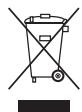
Never throw the noodle machine into normal household waste.
Dispose of the Noodle Machine
KH 1177 through an approved waste disposal company your community waste facility.
Observe the currently applicable regulations. In case of doubt, contact your disposal facility.
10. Warranty & Service
Please refer to the guaranty and service conditions on the enclosed warranty card.
Komperna GmbH
Burgstrasse 21
44867 Bochum
www.kompernass.com
44867 Bochum (Germany)
www.kompernass.com