
EXPRESS PRESSURE COOKER - Pressure Cooker FAGOR - Free user manual and instructions
Find the device manual for free EXPRESS PRESSURE COOKER FAGOR in PDF.



| Product type | Pressure cooker |
| Brand | FAGOR |
| Model | EXPRESS PRESSURE COOKER |
| Material | 18/10 stainless steel |
| Pressure levels | 2 (medium and high pressure) |
| Maximum filling capacity | 2/3 of capacity (1/2 for foods that expand) |
| Base | Multilayer thermal diffuser (aluminum between steel) |
| Heat source compatibility | Gas, electric, ceramic glass, induction |
| Safety valves | Operating valve, safety valve, pressure indicator, safety window |
| Included accessories | Stainless steel basket, metal trivet |
| Sealing gasket | Replaceable rubber (Fagor part 009) |
| Gasket maintenance | Wash with warm soapy water, oil after each use, replace annually |
| Cleaning | Hand wash with mild detergent, do not use dishwasher or metal scouring pad |
| Safety | Automatic locking preventing opening under pressure, visual pressure indicator |
| Valve maintenance | Clean the openings regularly, check before each use |
Frequently Asked Questions - EXPRESS PRESSURE COOKER FAGOR
User questions about EXPRESS PRESSURE COOKER FAGOR
0 question about this device. Answer the ones you know or ask your own.
Ask a new question about this device
Download the instructions for your Pressure Cooker in PDF format for free! Find your manual EXPRESS PRESSURE COOKER - FAGOR and take your electronic device back in hand. On this page are published all the documents necessary for the use of your device. EXPRESS PRESSURE COOKER by FAGOR.
USER MANUAL EXPRESS PRESSURE COOKER FAGOR
FAGOR EXPRESS PRESSURE COOKER USER'S MANUAL
CONTENTS
Important Safeguards .... 3
Introduction 4
EXPRESS Pressure Cooker line .... 4
Components and Features .... 5
Cooking with the Fagor EXPRESS Pressure Cooker 6
- Getting started
- Adding Food and Liquid
- Cooking time control
- Releasing Pressure After Cooking
Care and Cleaning 9
Maintenance for Safe Use 9
Basic instructions for cooking 10
- Fresh and frozen vegetables
- Fresh and dried fruits
• Dried beans and other legumes - Grains
- Meat
- Seafood and fish
- Adapting Traditional Recipes to Use in the Pressure Cooker
- Troubleshooting
Pressure cooking recipes 17
Limited Warranty 69
This is a U.L.-listed appliance. The following safeguards are recommended by most portable appliance manufacturers.
IMPORTANT SAFEGUARDS
When using pressure cookers, basic safety precautions should always be followed:
- Read all instructions.
- Do not touch hot surfaces. Use handles or knobs.
- Close supervision is necessary when the pressure cooker is used near children.
- Do not place the pressure cooker in a heated oven.
- Extreme caution must be used when moving a pressure cooker containing hot liquids.
- Do not use pressure cooker for other than intended use.
- This appliance cooks under pressure. Improper use may result in scalding injury. Make certain unit is properly closed before operating. See Operating Instructions.
- Do not fill the unit over two thirds full. When cooking foods that expand during cooking such as rice or dried vegetables, do not fill the unit over one half full. Over filling may cause a risk of clogging the vent pipe and developing excess pressure. See Food Preparation Instructions.
- Be aware that certain foods, such as applesauce, cranberries, pearl barley,
oatmeal or other cereals, split peas, noodles, macaroni, rhubarb, or spaghetti can foam, froth, and sputter, and clog the pressure release device (steam vent). These foods should not be cooked in a pressure cooker.
-
Always check the pressure release devices for clogging before use.
-
Do not open the pressure cooker until the unit has cooled and all internal pressure has been released. If the handles are difficult to push apart, this indicates that the cooker is still pressurized - do not force it open. Remove the pressure regulator and run cold water over the cooker to cool it to reduce the internal pressure. Any pressure in the cooker can be hazardous. See Operating Instructions.
-
Do not use this pressure cooker for pressure frying with oil.
-
When the normal operating pressure is reached, turn the heat down so all the liquid, which creates the steam, does not evaporate.
-
SAVE THESE INSTRUCTIONS.
Introduction
Today's pressure cookers are a far cry from those used by our mothers and grandmothers. When first introduced in the late 1930's, pressure cookers were acclaimed to be the housewives best friend, allowing her to prepare delicious, economical, healthy meals in a fraction of the time. While this element of healthy, rapid cooking still remains true, the design and engineering of today's pressure cookers have gone through a major evolution.
Surrounded by endless myths, pressure cookers are probably the least understood of cookware. This is unfortunate since pressure cookers provide many advantages over traditional cooking. First and foremost, most foods can be cooked in a fraction of the time it normally would take, in most cases, cooking in up to one-third of the time. Since the food is being cooked for such a short period, it is less likely to lose its color and flavor, as well as many of the vital minerals and vitamins that are normally washed away when cooking in large quantities of water in a open pot, for longer periods of time.
Made from high-quality, heavy-gauge, 18/10 stainless steel, Fagor pressure cookers are designed and manufactured with a concern for function and safety, meeting all international safety standards. If you are familiar with cooking in a pressure cooker, you will first notice that the rotating, weighted valve has been eliminated. By incorporating into the lid four pressure release valves, as well as a pressure indicator, you will never again have to worry if the rotating valve is functioning properly and whether or not there is too much pressure. Fagor's easy-to-read pressure indicator makes it simpler than ever to determine the proper amount of pressure and how to maintain it, as the pressure release valves signal when to lower or raise the burner heat in order to maintain the level of pressure desired.
With proper use and care, your Fagor pressure cooker will provide you with many years of carefree use, not to mention quick and easy delicious meals.
EXPRESS Pressure Cooker line
THE EXPRESS PRESSURE COOKER LINE CONSISTS OF THE FOLLOWING MODELS:
- 4 QT MODEL INCLUDES INSTRUCTION MANUAL AND COLOR RECIPE BOOK (ITEM # 918011858)
-
6QT MODEL INCLUDES- INSTRUCTION MANUAL AND COLOR RECIPE BOOK (ITEM # 918011885)
-
EXPRESS SET –INCLUDES 8 QUART PRESSURE COOKER, 4 QUART POT (FITS EXPRESS PRESSURE COOKER LID), TEMPERED GLASS LID (EASILY CONVERTS EITHER POT TO A SAUCEPAN), STAINLESS STEEL PASTA/ STEAMER BASKET, INSTRUCTION MANUAL AND COLOR RECIPE BOOK (ITEM# 918011901)
Fagor Express Pressure Cooker
Components and Features
- Pressure Cooker Pot: Made of high-quality, heavy-gauge, 18/10 stainless steel, all cooking takes place in the pressure cooker pot.
- Lid: Made of high-quality, heavy-gauge, 18/10 stainless steel, the lid must be properly locked in position in order to build-up sufficient pressure for cooking. The raised indentation on top of the lid, located to the left of the handle, allows you to easily position the lid by lining it up to the cutout on top of the base handle. (Fig. 5)
NEVER FORCE THE PRESSURE COOKER OPEN

natural_image
Line drawing of a mechanical device with directional arrows indicating motion (no text or symbols)- Base Handle: Besides being used to move and carry the pressure cooker, the base handle interlocks with the lid handle when the lid is turned clockwise. (Fig. 5)
- Lid Handle: Used to remove the lid from the pressure cooker, the lid handle contains important components vital to the use of the pressure cooker.
- Support Grip: The support grip provides greater stability when moving or carrying the pressure cooker.
- Operating Valve: This operating valve features 2 pressure settings, a steam release position, and a unlock
position in order to clean the valve (Figures 8-9)

natural_image
Diagram of a mechanical device with a dial indicator and handle, no text or symbols present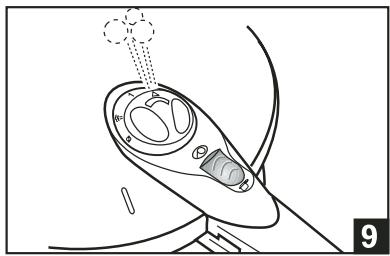
natural_image
Line drawing of a mechanical device with a dial indicator and a numbered label (9), no readable text or symbols present.| Selector's Position | Pounds of Pressure per Square Inch (psi) | Pressure level |
| 12 | 0815 | ReleaseLowHigh |
- Pressure Lock: The pressure lock allows you to lock the pressure cooker in order to build-up pressure when the lid is closed. To lock the pressure cooker, slide the pressure lock button up towards the lid. (Fig. 6).

natural_image
Line drawing of a hand gripping a mechanical component with an arrow indicating motion (no text or symbols)- Rubber gasket: In order to provide an air-tight seal, a rubber gasket is
positioned around the underside of the lid. Never use the pressure cooker without the rubber gasket properly positioned. Do not use the pressure cooker with a worn or torn gasket, which should be replaced immediately. Contact the Fagor Customer Service Department at the phone number provided in the warranty information.
- Automatic safety valve: Located under the lid handle. Press with toothpick or pin to verify its function. Safety valve is activated in case of an excess pressure build up. The pressure cooker can not be opened if there is still pressure inside the cooker.
- Thermo Heat Conductive Base: Since the objective of a pressure cooker is rapid cooking, the bottom of the pressure cooker pot has a thermo heat conductive base, comprised of three layers of metal. Aluminum, one of the fastest heat conductors is sandwiched between two sheets of stainless steel which makes contact with the burner. This allows for induction cooking.
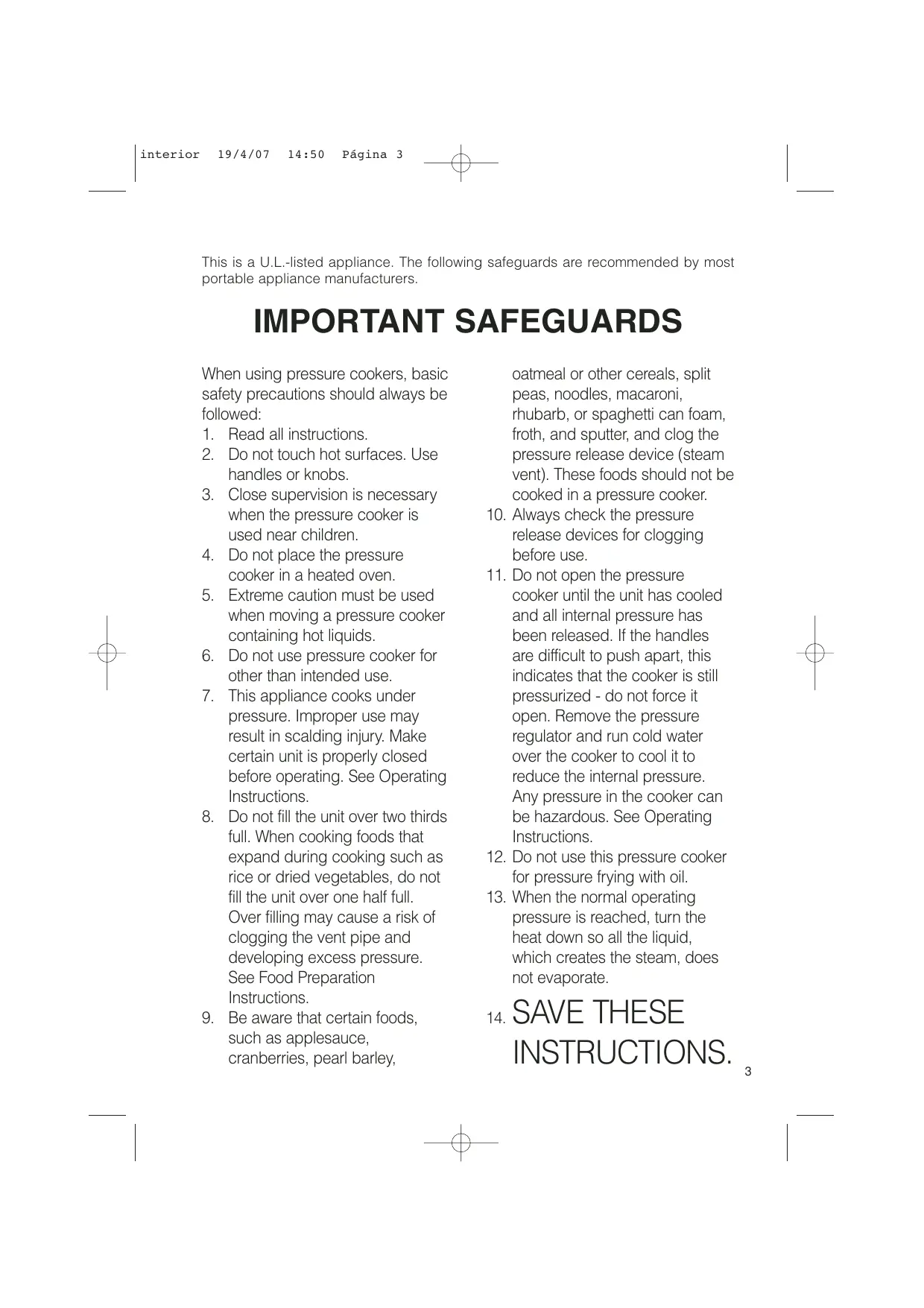
- Indicator: Indicates whether there is pressure inside the cooker. As the pressure cooker heats and pressure builds, the pressure indicator (the yellow tipped rod, located on top of the lid handle) will raise automatically and there will be a slight amount of steam coming out of the lid handle. (Fig. 13).
natural_image
Diagram of a device with a control panel and wiring, no text or symbols presentIf the pressure indicator is raised, there is pressure inside the cooker and the pressure cooker can not be opened. If the pressure indicator is not raised, there is no pressure inside the cooker.
- Safety Vent: In case of high-pressure build-up, steam will be released through the safety vent cutout located in the rim of the lid. (Fig. 14).

natural_image
Pure technical diagram of a mechanical component without any text, numbers, or symbolsCooking with the Fagor EXPRESS Pressure Cooker
* NOTE: FAGOR PRESSURE COOKERS ARE INTENDED FOR DOMESTIC COOKING SURFACES FOR HOUSEHOLD USE ONLY.
Getting started
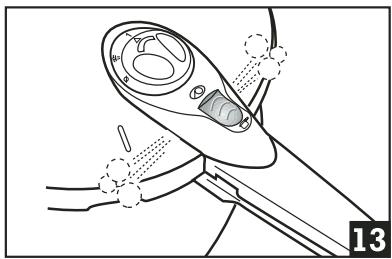
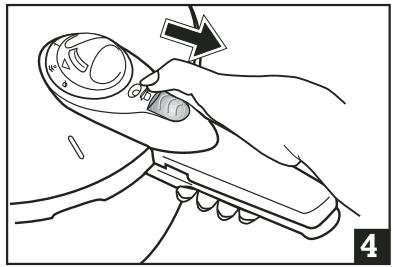
- Select with the operating valve one of the two levels of pressure. When using the cooker for first time, the operating valve is placed on the high level of pressure - Level 2.Slide the pressure lock button down towards the bottom of the handle (Fig. 4) and turn the lid handle to the right, holding the base handle with the left hand.
natural_image
Illustration of a hand using a rotary tool to interact with a device (no text or symbols visible)- Before using the Fagor EXPRESS Pressure Cooker for the first time, wash all the parts and components with warm water and mild dish washing soap. Rinse well and towel dry. Never place any of the parts or components in the dishwasher.
- Always remove the rubber gasket when washing the lid. Wash the gasket with warm, soapy water; rinse well and towel dry. Cover with a thin coat of cooking oil (e.g., vegetable, olive, canola, etc.). Follow this procedure every time you wash the pressure cooker in order to extend the life of the gasket and to facilitate locking the lid in place.
Adding Food and Liquid
- To cook with the EXPRESS pressure cooker, it is very important to use at least a 1/2 cup of liquid; NEVER USE LESS. Do not fill the pressure cooker more than 2/3 full with liquid and food.
- When called for in the instructions or in your recipe book, place food on the stainless steel cooking rack, positioned on the metal support trivet in the pressure cooker.
- Fill only halfway when cooking foods that will either expand in size and/or produce foam as they cook, such as dried beans, or other legumes and grains. Fill only halfway when preparing soups or stock.
- When cooking sauces, make sure they are not too thick. Shake the cooker before opening it, then release pressure completely and open cooker.
Cooking time control
- Place the lid on the pressure cooker by lining up the raised indentation on the lid with the cutout on the
base handle. Press down lightly on the lid and turn clockwise just until the two handles match up and lock together. (Fig. 5 & 6)

natural_image
Line drawing of a car interior with directional arrows indicating movement or force (no text or symbols)
natural_image
Line drawing of a hand gripping a car's steering wheel (no text or symbols)- Before locking the cooker, always make sure that both the operating (Fig. 2) and safety valve are clean (Fig. 3). After locking the cooker, slide the pressure lock button up towards the lid (Fig. 6). Select the desired level of pressure.

- Position the pressure cooker on the center of the stove burner. The EXPRESS Fagor pressure cooker can be used on all types of burners including gas, electric, ceramic, and induction.
As to not discolor the sides of the pot, always adjust the burner so that when using gas, the flames remain
under the base and do not extend up the sides. When cooking on an electric burner, select a burner the same diameter as the base or smaller.
- Begin heating with burner set on high heat. Electric stove users please see note below.
When the steam comes out of the automatic valve for first time, lower the heat to maintain a gentle, steady stream of steam. At this moment, the COOKING TIME STARTS. It is recommended that a kitchen timer be used to monitor the exact cooking time. - If at any time during cooking an excessive amount of steam is released by the operating valve, lower the burner heat to adjust and maintain the proper level of pressure.
- If the pressure drops and little or no steam comes out of the operating valve, raise the burner heat just until a gentle, steady stream of steam is released and can be maintained.
- While cooking, never inadvertently shake the pressure cooker. This can cause the automatic valve to release steam, which will create a drop in pressure.
NOTE TO ELECTRIC STOVE USERS
Since the coils on an electric stove retain heat for a long time, food often becomes overcooked when the burner is turned down for simmering (when cooking time is started). To compensate for that, you have two options:
- Turn on two electric stove burners, one on high and other on low. Place your pressure cooker on the burner to high, and bring to pressure. Once pressure has been attained, move your cooker over to the burner turned on low and start
your pressure cooking time. Or...
- Turn on one burner to medium heat and bring your cooker to pressure. Once pressure has been attained, turn your burner to low and start your pressure cooking time.
Releasing Pressure After Cooking
-
Always check your recipe to determine if the pressure cooker should be cooled down naturally or whether the quick release method should be used. The EXPRESS pressure cooker also features an automatic release position on the automatic valve that can be used for releasing pressure automatically when cooking foods such as stews, meats, poultry and soups. Do not use for vegetables or tender foods as this may result in overcooking.
-
Natural Release Method: To use this method, remove the pressure cooker from the hot burner and let the pressure drop and cool down naturally. Depending on the amount of food and liquid in the cooker, this method can take from 10 - 15 minutes. Once pressure has totally been released and no more steam comes out of the operating valve, go to #5 in this section.
-
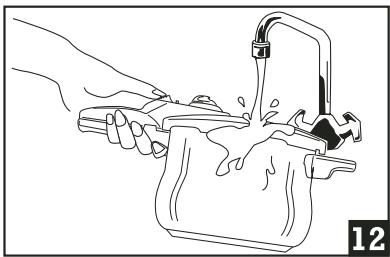
Quick Release Method: Also called the cold-water release method, is used to release pressure as quickly as possible, primarily used for vegetables, seafood and other tender foods that can quickly overcook. To use this method, remove the pressure cooker from the burner, place in the sink and run cold tap water gently over the lid until steam dissipates. (Fig. 12) and the pressure indicator is lowered. When putting the cooker in the sink, tilt it so the cold water will run downwards. Once pressure has totally been released and no more
steam comes out of the operating valve, go to #5 in this section. NEVER FULLY IMMERSE THE PRESSURE COOKER IN WATER.
natural_image
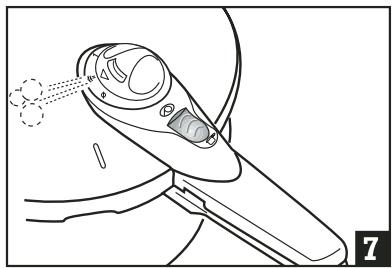
Line drawing of hands washing a cup with a faucet, no text or symbols present- Automatic Release Method: When using the automatic release method, turn the dial on the operating valve to the release position (steam drawing position, Fig. 7) and the steam will release. Once steam has totally been released and no more steam comes out of the operating valve, go to 5 (below).
natural_image
Line drawing of a mechanical device with a handle and circular component, no text or symbols present- After all the pressure has been released and you see the pressure indicator has lowered, slide the pressure cooker lock down to the bottom of the handle (Fig. 4). Grasp the bottom of the base handle with your left hand and with your right hand on the lid handle slowly rotate the lid counterclockwise. Even though you have already released the pressure, never open the pressure cooker toward your face since there may be intense cooking steam still inside the unit.
Care and Cleaning
- The Fagor EXPRESS Pressure Cooker is made of high-quality, heavy gauge, 18/10 stainless steel.
- The pressure cooker pot and lid should be washed with warm water, mild, dish-washing soap and a non-abrasive cleaning pad, since stainless steel can discolor in a dishwasher. Since the exterior of the pressure cooker has a mirror finish, do not clean with metal scouring pads or abrasive cleaners, which will scratch the finish. Wash the lid with water and towel dry.
- To remove stubborn stains and any discoloration in the interior of the pressure cooker, try adding the juice of half a lemon and 1 to 2 cups of water to the pressure cooker pot. Cook at high pressure for 15 minutes, then remove from heat. Let pressure release naturally, then wash as usual.
- After cleaning, towel dry with a clean, soft kitchen cloth to retain the polished mirror finish.
- In order to extend the life of the rubber gasket, remove after each use and wash with warm water and mild, dish washing soap. Rinse and dry well, then cover with a thin coat of vegetable oil before replacing.
- To store, DO NOT LOCK THE LID IN PLACE. Simply place the lid upside-down on top of the pressure cooker pot.
Maintenance for Safe Use
- Each time, before using the Fagor EXPRESS pressure cooker, always check to make sure that the operating valve is clean of any built-up particles.
• TO REMOVE THE OPERATING VALVE FOR CLEANING PURPOSES:
- Put the operating valve on the release pressure position (Fig. 10).

natural_image
Line drawing of a mechanical component with a handle and circular head (no text or symbols)Pull the operating valve up (Fig. 15).

natural_image
Line drawing of a mechanical device with an upward arrow and numbered label (15), no readable text or symbols present.- Move the operating valve to the position ∅ (Fig. 16).

natural_image
Line drawing of a hand operating a device with a knob and scroll (no text or symbols)- Take the valve out and clean.
-
For increased safety and best results, the rubber gasket should be replaced approximately every twelve months. This can be done by contacting the Fagor Customer Service Number provided in the warranty information.
-
Each time, before using the Fagor EXPRESS pressure cooker, always
check the handles, the base handle, support grip, and the lid handle to make sure that they are securely screwed in place. If not, tighten the handle screws with a screwdriver.
- Replacement Parts: Only use authentic replacement parts manufactured and distributed by Fagor America, Inc. The use of any unauthorized parts and or attachments may cause unit failure and will void any warranty protection provided by the manufacturer. Telephone the Fagor Customer Service Number 1-800-207-0806.
Basic instructions for cooking
Basic instructions for cooking the foods which are most commonly prepared in pressure cookers.
Fresh and frozen vegetables
- Wash all fresh vegetables thoroughly.
- Peel all root vegetables, such as red beets, carrots, potatoes and turnips.
- Whole winter pumpkin should be pierced several times with a fork before cooking.
- When you cook vegetables in a steamer basket (sold separately) you should use at least half a cup of water.
- If the approximate cooking time is more than 10 minutes you should use two cups of water.
- You should never fill the pressure cooker to more than two thirds of its capacity.
- When you cook frozen vegetables you must extend the total cooking time by between 1 and 2 minutes.
- Use the quick release method when the cooking time is completed.
| VEGETABLES | APPROXIMATE COOKING TIME | PRESSURE LEVEL |
| Swiss chard, thickly cut | 2 minutes | High |
| Artichoke, large, without leaves | 9-11 minutes | High |
| Artichoke, medium, without leaves | 6-8 minutes | High |
| Peas, in the pod | 1 minute | High |
| Broccoli, shoots | 8 minutes | High |
| Broccoli, stalks | 8 minutes | High |
| Zucchini, Acorn, half | 7 minutes | High |
| Zucchini, Summer, 1-inch slices | 8 minutes | High |
| Pumpkin, 2-inch slices | 3-4 minutes | High |
| Onions, whole, 1 1/2-inch diameter | 2 minutes | High |
| Common cabbage, thickly cut | 1-2 minutes | High |
| Green curly kale, thickly cut | 5 minutes | High |
| Cauliflower, flower heads | 2-3 minutes | High |
| Endive, thickly cut | 1-2 minutes | High |
| Asparagus, fine, whole | 1-1 1/2 minutes | High |
| Asparagus, thick, whole | 1-2 minutes | High |
| Spinach, frozen | 4 minutes | High |
| Spinach, fresh, thickly cut | 2 minutes | High |
| Beans, white, in the pod | 8 minutes | High |
| Beans, in the pod | 4 minutes | High |
| Green beans, whole | 2-3 minutes | High |
| Corn, on the cob | 3 minutes | High |
| Swede, 1 -inch slices | 7 minutes | High |
| Turnip, small, in quarters | 3 minutes | High |
| Turnip, in 1 1/2-inch slices | 3 minutes | High |
| Okra, small pods | 2-3 minutes | High |
| Sweet potato, 1 1/2-inch slices | 5 minutes | High |
| Potatoes, white, new, small whole | 5 minutes | High |
| Potatoes, white, 1 1/2-inch slices | 6 minutes | High |
| Potatoes, red, new, small whole | 5 minutes | High |
| Potatoes, red, 1 1/2-inch slices | 6 minutes | High |
| Red beet, in 1/4 inch slices | 4 minutes | High |
| Red beet, large, whole | 20 minutes | High |
| Red beet, small, whole | 12 minutes | High |
| Brussels sprouts, whole | 4 minutes | High |
| Cabbage, red or green, in quarters | 3-4 minutes | High |
| Cabbage, red or green, 1/4 inch slices | 1 minute | High |
| Tomatoes, in quarters | 2 minutes | High |
| Carrots, 1/4 inch slices | 1 minute | High |
| Carrots, 1-inch slices | 4 minutes | High |
Fresh and dried fruit
Fresh fruit:
- Wash and pit or core fruit. If you prefer, peel and slice it.
- Cook fruit in a steamer basket (sold separately) and add at least half a cup of water or fruit juice.
- Never fill the pressure cooker to more than two thirds of its capacity.
- If you prefer, add sugar and/or seasoning to the fruit before or after cooking.
- When you cook whole or halved fruit, use the quick release method. When you cook fruit in slices or pieces to make purée or conserve use the natural cooling method.
- Cooking times can vary depending on the ripeness of the fruit.
Dried fruit:
- Put dried fruit in the pressure cooker with 1 cup of water or fruit juice for each cup of dried fruit.
- If you prefer, you can add seasoning or other flavoring. Use the quick release method when the cooking period is complete. If after the cooking period the fruit is still hard, let it simmer in the cooker with the lid removed until it is ready. Add water if necessary.
| FRUIT | APPROXIMATE COOKING TIME | PRESSURE LEVEL |
| Apples, dried | 3 minutes | High |
| Apples, fresh in slices or pieces | 2-3 minutes | Medium |
| Apricots, dried | 4 minutes | High |
| Apricots, fresh, whole or in halves | 2-3 minutes | Medium |
| Peaches, dried | 4-5 minutes | High |
| Peaches, fresh, in halves | 3 minutes | Medium |
| Pears, dried | 4-5 minutes | High |
| Pears, fresh in halves | 3-4 minutes | Medium |
| Prunes | 4-5 minutes | High |
| Raisins | 4-5 minutes | High |
Dried beans and other legumes
- Clean out any foreign particles. Rinse them with warm water.
- Soak beans in four times their volume of warm water for at least four hours before cooking them, or if you prefer, leave them to soak
overnight. Do not add salt to the water as this hardens the beans and prevents them from absorbing water.
- Do not soak dried split lentils.
• After soaking, remove floating beans and shell. - Strain the water off the beans.
- Rinse them in warm water (this also applies to dried split lentils).
- Put the beans or legumes in the pressure cooker. Add three cups of water for each cup of beans or legumes. Do not add salt; beans and legumes should be seasoned after cooking.
- Add a tablespoon of vegetable oil for each cup of water to eliminate the foam which they produce.
- Since legumes expand when cooked, never fill the pressure cooker to more than half its capacity.
- To add more flavor, cook beans or lentils with some bay leaves and a small peeled onion embedded with two cloves of spice.
• After the cooking time, allow the pressure to decrease naturally. - Cooking times may vary depending on the quality of the beans or other legumes. If after the recommended cooking time legumes are still hard, continue cooking them with the lid off. If necessary, add water.
- A cup of beans or other legumes yields approximately two cups when cooked.
| VEGETABLES | APPROXIMATE COOKING TIME | PRESSURE LEVEL |
| Blueberries | 8-10 minutes | High |
| Azuki | 4-5 minutes | High |
| Beans, white | 5-7 minutes | High |
| Beans, scarlet, red | 10-12 minutes | High |
| Beans, black | 8-10 minutes | High |
| Beans, colored | 4-6 minutes | High |
| Pigeon peas | 7-9 minutes | High |
| Chick peas | 10-12 minutes | High |
| Lentils, red | 7-9 minutes | High |
| Lentil soup | 8-10 minutes | High |
| Lentils, green | 8-10 minutes | High |
Grains
- Clean out any foreign particles. Rinse them with warm water. Soak grains, in four times their volume of warm water for at least four hours before cooking them, or if you prefer, leave them to soak overnight. Do not add salt for this will harden grains and prevent them from absorbing water.
- Do not leave rice to soak.
• After soaking remove floating grains or shell. - Drain the water off the grains.
- When preparing, rinse them in warm water (this also applies to rice.)
- Cook each cup of grain in the quantity of water indicated.
- If you prefer, add salt to taste.
- Add a tablespoon of vegetable oil for each cupful of water to eliminate the foam which they produce.
- Never fill the pressure cooker to more than half of its capacity since grains expand when cooked.
• After the cooking period, since grains expand when cooked let the pressure decrease naturally. - Cooking times may vary depending on the quantity of the grains. If after the recommended cooking time the grains are still hard, continue cooking them with the lid off. If necessary, add water.
- A cup of grains expands to approximately two cupfuls when cooked.
| GRAINS(1 cup) | APPROXIMATEWATER QUANTITY | COOKINGTIME | PRESSURELEVEL |
| Rice, basmati | 1 1/2 cups | 5-7 minutes | High |
| Rice, brown | 1 1/2 cups | 15-20 minutes | High |
| Rice, long grain | 1 1/2 cups | 5-7 minutes | High |
| Rice, wild | 3 cups | 22-25 minutes | High |
Meat and Poultry
- Remove all the visible fat from the meat or poultry. Note: Meat and poultry cut up into small pieces which cooks more quickly.
- To achieve best results, brown the meat or poultry with 2 to 3 tablespoons of vegetable or olive oil in the pressure cooker with the lid off and before adding the other ingredients. Do not overload the pressure cooker. Brown meat in batches if necessary. Drain off the excess fat and begin as indicated in the recipe.
- Always cook meat and poultry with at least 1/2 cupful of liquid. If the cooking time exceeds 15 minutes, use two cups of liquid. Meats with preservatives or salted meats should be covered by the water.
- Never fill the pressure cooker to more than half its capacity.
- When you prepare a concentrated stock or soup, put all the ingredients in the pressure cooker and add water to half its capacity.
- Exact cooking times vary depending on the quality and quantity of the meat which is cooked. Unless the recipe indicates otherwise, the cooking times given are for 3 lbs of meat or poultry. Also, the larger the cut of meat, the longer the cooking time will be.
• After the cooking time, let the pressure decrease naturally. - When you cook beef or poultry with vegetables, begin by cooking the meat in stock or another liquid. Subtract from the cooking time recommended for the meat, the cooking time of the vegetable ingredient which takes longest to
cook. Pressure cook the meat for this time. Eliminate the pressure from the cooker using the quick release method. Open the cooker and add the vegetables. Continue pressure cooking for the cooking time recommended for the vegetables. Check the seasoning. If you want to add vegetables which cook rapidly, such as peas or mushrooms, do not pressure cook them with the other vegetables. Add them to the cooker before serving and boil them in the pressure cooker with the lid off until they are ready.
| MEAT | APPROXIMATE COOKING TIME | PRESSURE LEVEL |
| Beef/veal, roast or brisket | 35-40 minutes | High |
| Beef/veal, (shanks) | ||
| 1 1/2-inch wide | 25-30 minutes | High |
| Beef/veal, | ||
| 1-inch cubes, 1 1/2-pounds | 10-15 minutes | High |
| Beef/veal, roast or brisket | 35-40 minutes | High |
| Beef, dressed, 2 pounds | 10-15 minutes | Low |
| Meatballs, 1-2 pounds | 5-10 minutes | Medium |
| Beef, cured | 50-60 minutes | High |
| Pork, roast | 40-45 minutes | High |
| Pork, ribs, 2 pounds | 15 minutes | High |
| Pork leg, smoked, 2 pounds | 20-25 minutes | High |
| Pork, ham, pieces | 20-25 minutes | High |
| Lamb, leg | 35-40 minutes | High |
| Lamb, 1-inch cubes, 1 1/2-pounds | 10-18 minutes | High |
| Chicken, whole, 2 to 3 pounds | 12-18 minutes | High |
| Chicken, in pieces, 2 to 3 pounds | 8-10 minutes | High |
| Spring chickens, two | 8-10 minutes | High |
| Soup or concentrated stock of beef or fowl | 10-15 minutes | High |
Seafood and fish
- Clean and gut fish. Take out all the visible bones.
-
Scrub and rinse shellfish in cold water. Soak clams and mussels in a container of cold water with the juice of one lemon, for an hour, to remove sand from them.
-
Cooking times can vary depending on the seafood which is cooked.
- Cook seafood in the steamer basket on the support trivet (sold separately) with at least 3/4 of a cup of liquid.
- If you prefer, add seasoning or flavoring to the cooking liquid.
- Never fill the pressure cooker to more than two thirds of its capacity.
- When you prepare concentrated stock or soup put all the ingredients in the pressure cooker and add water to half of its capacity.
- Use the quick release method when the cooking period is over.
| SEAFOOD AND FISH | APPROXIMATE COOKING TIME | PRESSURE LEVEL |
| Crab | 2-3 minutes | Low |
| Fish fillet, 1 1/2-to 2 pounds thick | 2-3 minutes | Low |
| Fish soup or concentrated fish stock | 5-6 minutes | High |
| Fish, whole, gutted | 5-6 minutes | Low |
| Lobster, 1 1/2-to 2 pounds | 2-3 minutes | Low |
| Mussels | 2-3 minutes | Low |
| Prawns (shrimp) | 1-2 minutes | Low |
prepare. Add meat, poultry or seafood to the pressure cooker along with any desired vegetables, herbs and spices. Add liquid ingredients, filling pressure cooker only halfway.
Tomato Sauce and Fruit Preserves: When preparing tomato sauce, sautè minced onion and/or garlic. Add and brown the meats as specified in the recipe. Add the strained or pureed tomatoes, filling the pressure cooker only halfway. Position lid and lock in place. Cook for 20 minutes. Remove from heat and let pressure drop naturally. Season with salt and pepper to taste.
To make fruit preserves, place the fruit in the pressure cooker with the desired quantity of sugar. Let sit one hour to release natural juices of fruit. Bring to a boil, uncovered. Stir well and add other ingredients as indicated in your recipe. Position lid and lock in place. Cook for 8 minutes. Remove from heat and let pressure drop naturally.
Adapting Traditional Recipes to Use in the Pressure Cooker
It is easy to adapt your favorite recipe for use in a pressure cooker. For the most part, soups, stews, braised and slow-roasted meats and poultry, and slow-simmered recipes, such as tomato sauce and fruit preserves provide the best results.
Meats and Poultry: When preparing meats and poultry, brown well in the pressure cooker pot using at least 2 tablespoons of vegetable or olive oil. Pour off any excess fat and sautè onions, garlic or any other vegetables as called for in the recipe. Add the remaining ingredients and at least a 1/2 cup of cooking liquid such as broth, diluted tomato puree or wine.
Soups: Soups are quick and easy to
Troubleshooting
In order to ensure best results when using the Fagor EXPRESS pressure cooker, be certain to read all of the instructions and safety tips contained in this owner's manual and all other printed materials provided by the manufacturer. The following are practical tips and solutions to some common problems you may experience when using the Fagor EXPRESS pressure cooker.
PROBLEM:
There is no steam released by the operating valve.
REASON:
- The pressure cooker is not properly locked.
- There is not enough liquid in the cooker.
-
The rubber gasket is not in place, or is dirty or worn.
-
The burner heat is not high enough.
- The valve is dirty and/or obstructed.
SOLUTION:
- Slide the pressure lock up towards the lid.
- Make sure there is enough liquid.
- Make sure the rubber gasket is clean and well positioned before using the pressure cooker. After continued use, the rubber gasket will begin to wear and should be replaced after at least once a year if the pressure cooker is used frequently.
- Turn up the heat until a gentle, steady stream of steam is released from the operating valve.
- The valve can become dirty when cooking foods which have a tendency to foam, such as dried beans. Clean the valve periodically.
PROBLEM:
Pressure does not build-up.
REASON:
- Not enough liquid.
- The pressure cooker was not properly closed.
- The valve is dirty and/or obstructed.
- The rubber gasket is not in place, or is dirty or worn.
SOLUTION:
- Always use the appropriate amount of liquid called for in the recipe. This amount should never be less than 1/2 cup. However, never fill the pressure cooker more than half full with liquids.
- Following the instructions given in this manual, close the pressure cooker so that a tight seal is created, which will allow for adequate pressure build-up.
- The valve can become dirty when cooking foods which have a tendency to foam, such as dried beans. Clean the valve periodically.
- Make sure the rubber gasket is clean and well positioned before using the pressure cooker. After continued use, the rubber gasket will begin to wear
and should be replaced after at least once a year if the pressure cooker is used frequently.
PROBLEM:
- A gentle, steady stream of steam is released from the operating valve and small drops of water condensation collect on the lid.
- A large, continuous amount of steam is escaping from the operating valve with or without drops of condensation.
REASON:
-
When used properly, the operating valve will release a gentle steady stream of steam as well as some drops of condensed water on the lid.
-
a) The burner heat is too high.
b) The valve is dirty
c) The safety valve is malfunctioning.
SOLUTION:
-
Normal operation.
-
a) Lower the heat so that only a gentle, steady stream of steam is released.
b) Check the valve to see if there are any remaining food particles. Remove with a toothpick.
c) The safety valve must be replaced. Contact Fagor America Customer Service Dept. at the address and or phone number provided in the warranty information.
PROBLEM:
Steam is escaping around the edge of the lid.
REASON:
- The pressure cooker is too full.
- The pressure cooker was not closed properly.
- The rubber gasket is not in place, or is dirty or worn.
SOLUTION:
- Never fill the pressure cooker more than 1/2-2/3 full, depending on the type of food being prepared.
- Following the instructions given in this manual, close the pressure cooker so
that a tight seal is created which will allow for adequate pressure build-up.
- Make sure the rubber gasket is clean and well positioned before using the pressure cooker. After continued use, the rubber gasket will begin to wear and should be replaced after at least once a year if the pressure cooker is used frequently.
PROBLEM:
The pressure cooker cannot be opened after cooking.
REASON:
- There is still pressure built-up in the pressure cooker.
SOLUTION:
-
Use the quick release method to release any remaining pressure. Try opening again.
-
Move the operating valve to the position showed in Fig. 11. Take the valve out.
PROBLEM:
Foods are under-cooked.
REASON:
-
Cooking time is too short.
-
Quick release method was used to release the pressure.
SOLUTION:
-
Always check the cooking time in your recipe. If still under-cooked, extend cooking time by approx. 1 to 2 minutes and cook under pressure, or simmer without lid and pressure under desired texture is achieved.
-
Use natural release method so that food has benefit of additional cooking time as pressure drops.
PROBLEM:
Food is overcooked.
SOLUTION:
-
Always check the cooking times in your recipe. If food is overcooked, shorten the cooking time by at least 1 to 2 minutes.
-
Use quick release method so that pressure drops immediately.
PRESSURE COOKING RECIPIES
The pressure cooker works by controlling the release of steam from inside the unit and increasing the pressure and so the temperature at which food can be cooked. At these higher cooking temperatures the cooking times required are greatly reduced so saving time and energy. The higher pressure forces heat through the food and increases the tenderizing effect of cooking. In addition smaller amounts of cooking liquid are required and little liquid is lost during cooking so the maximum nutritional value of the food is maintained. The pressure cooker is manufactured in 18/10 quality stainless steel for durability and ease of cleaning and has a heavy aluminium base for maximum fuel economy.
The cooker is provided with a number of safety devices to make pressure cooking both safe and easy. A valve carefully controls the pressure during the entire cooking process. Two additional safety valves situated on the cover release any excess pressure which may build up inside the unit as a result of an abnormal function of the valve. The lock mechanism incorporated in the handle prevents the risk of accidental opening while the cooker is under pressure.
SOUPS
GENERAL INDICATIONS
Pressure cooking enables you to prepare delicious, nourishing, home-made soups in a matter of minutes, taking full advantage of available fresh vegetables and even left-overs from other dishes.
- Do not fill cooker over 2/3 full and only 1/2 full if foam is produced or if ingredients swell.
- Do not use excessive seasoning or
individual strong-tasting ingredients.
- Thicken soups after cooking period is over.
- If soups are to be frozen use slightly less liquid so they are concentrated. Reconstitute afterwards with additional water.
CLAM CHOWDER
3-4 minutes.
INGREDIENTS:
8 oz of bacon, onion, 1 oz butter, large potato, 1 1/2 pint of water, 1/4 pint of milk, salt, pepper and spices to taste parsley, 1 qt. clams, 2 table spoons corn-flour.
Slice and chop bacon, potato and onions and brown in butter for a few minutes. Add water, season to taste, close and cooker for approx. 3 minutes. Open and add clams. Boil for 2-3 minutes with the cooker open. Blend corn-flour and milk and stir into the soup until thickened. Sprinkle parsley and serve.
FRENCH ONION SOUP
3-4 minutes.
INGREDIENTS:
1 oz butter, 1 lb onions, 2 pints of beef stock, salt, pepper and spices to taste, slices of bread, grated cheese. Slice onions and brown in butter. Add stock and season to taste. Close cooker and cook 3-4 minutes. Serve in individual soup bowls Top with a slice of bread. Add cheese and grill for a few minutes until cheese is browned.
STOCK
30-35 minutes.
INGREDIENTS:
Fresh bones or left-overs from cooked meats, selection of fresh vegetables (carrots, swedes, onions, celery), salt, pepper and spices to taste, 2 pints of water.
Break bones as small as possible. Cut vegetables into small pieces. Place all
ingredients in cooker and pour in water. Close cooker and cook for 30-35 minutes. Strain and skim off fat before using.
CREAM OF TOMATO SOUP
3-4 minutes.
INGREDIENTS:
1 oz butter, onion, carrot, 2 oz bacon, leek, garlic, celery, 1-1 1/2 lb skinned tomato, 1-1 1/2 pints stock, parsley-double cream, salt, pepper and spices to taste.
Cut vegetables and bacon into small pieces. Melt butter in cooker, add vegetables and bacon and fry for 2-3 minutes. Pour in the stock, season to taste, close cooker and cook for 3-4 minutes. Liquidise or sieve the soup, stir in the cream (without boiling and sprinkle on a little parsley before serving).
VEGETABLES
GENERAL INDICATIONS
Pressure cooking is an excellent means of bringing out the best in fresh, frozen and dried vegetables, maintaining their flavor, nutritional value and color.
- This method should always be used when more than one vegetable is cooked at the same time (to avoid mixing flavours). Take care that cooking times of different vegetables are very similar.
- Dried vegetables should be saked prior to cooking.
- Respect cooking times and cool cooker quickly after cooking for best results.
• See instruction book for general cooking times. - Do not fill cooker more than 2/3 full or 1/2 if ingredients swell during cooking.
Season with care as normally less seasoning is needed.
STUFFED TOMATOES
2 minutes.
INGREDIENTS:
6 tomatoes, 3/4 oz margarine, 2 slices of bacon, 1 onion, 2 oz bread crumbs, chopped parsley, salt, pepper and 3/4 pint water.
Slice tops off tomatoes and empty. Chop bacon and onion and in a frying pan lightly brown in margarine. Mix in tomato pulp, breadcrumbs, parsley and seasoning. Stuff tomatoes with mixture and replace tops. Arrange tomatoes on basket (sold separately). Pour water into cooker, place support in water and basket (sold separately) with tomatoes on top. Close cooker and cook for 3 minutes. Cool quickly.
MIXED VEGETABLES
5-7 minutes.
INGREDIENTS:
Selection of fresh or frozen vegetables, olive oil, 4-5 oz ham-meat stock, 1 onion, garlic, mushrooms, tinned asparagus, 2 boiled eggs.
Select vegetables with similar cooking times and prepare in the usual way. Cooking times can be adjusted by cutting vegetables with longer cooking times into smaller pieces. Place the oil, chopped garlic, sliced onions, ham and mushrooms in the cooker and brown. Add the vegetables and meat stock (minimun 1/2 pint), close cooker and cook for 5-7 minutes. Cool quickly, open and serve into vegetable dish adding as much of sauce as required. Top with asparagus and sliced boiled egg.
VEGETABLE CHOP SUEY
2-3 minutes.
INGREDIENTS:
1 onion, 1/4 lb mushrooms, 1/4 lb celery, 2 oz clery leaves, 1/4 lb green beans, 3 oz green pepper, 3 meat cubes, 1 cup
water, Salt to taste, Worcestershire sauce, oil.
Slice onions, mushrooms and green peppers. Chop celery and leaves. Cut beans into small lengths. Heat oil in cooker and lightly brown onions, mushrooms, celery and leaves. Add water and dissolve meat cubes. Add remaining ingredients, season to taste with salt and Worcestershire sauce, close cooker and cook for 2-3 mintues. Cool quickly.
RATATOUILLE
4-5 minutes.
INGREDIENTS:
Onion, garlic, 1/2 pt. water, green pepper, 1 lb tomatoes, aubergine, red pepper, 1/2 lb courgettes, salt, pepper and seasoning to taste, olive oil. Slice onions, crush garlic and brown in olive oil in cooker. Prepare all other ingredients in the normal way taking care to remove seeds from peppers and skins from tomatoes. Add to browned onions, pour in water, close cooker and cook for 4-5 mintues. Cool cooker quickly. Can be served hot or cold.
RICE AND PASTAS
GENERAL INDICATIONS
Delicious rice and pasta dishes can be prepared quickly in the pressure cooker.
- Rice, particularly, will produce foam during cooking so cooker should never be filled to more than 1/2 indicated capacity.
• Always clean valve each time after rice has been cooked. - Rice and pastas should be added to boiling, salted water before pressure cooking.
PAELLA
5-6 minutes.
INGREDIENTS:
3/4 lb rice, 3/4 pint water, 2 oz ham, 1/2 chicken, 2 oz green peas, 2 oz green beans, 2 red peppers, 1 dozen prawns, 4 oz tomato puree, cayenne pepper, saffron and salt.
Chop the chicken and ham and brown in a little olive oil. Stir in the peppers, vegetables, seasoning, rice and other ingredients. Pour on the boiling water (until all ingredients are covered). Close cooker and cook for 5-6 minutes.
GAME AND POULTRY
GENERAL INDICATIONS
Pressure cooking of game and poultry is quick, economical and gives delicious results even with older and tougher pieces.
- Game and poultry should be thoroughly cleaned before cooking.
- Frozen poultry should be thawed completely before cooking.
- Small birds can be cooked whole but larger poultry should be cut into smaller pieces to make sure that steam can circulate freely.
POT ROAST CHICKEN
10 minutes.
INGREDIENTS:
1 chicken of approx. 2 lbs, cooking oil, salt, pepper, bacon and spices to taste, 1 1/2 cups water.
Heat a little cooking oil in cooker and brown chicken throughly on all sides, with seasoning, bacon and spices. Remove chicken. Pour water into cooker. Put chicken in cooker. Close and cook for 10 minutes.
RABBIT FRICASSEE
12-15 mintues.
INGREDIENTS:
1 rabbit, 2 onions, garlic, cooking oil, salt, pepper, 1/2 pint chicken stock, 2 oz streaky bacon, 1 lemon, parsley. Joint rabbit and brown in cooking oil with sliced onions and crushed garlic until
brown. Pour in chicken stock and season, adding chopped bacon and juice of lemon. Close cooker and cook for 12-15 minutes. Serve topped with parsley and pieces of fried bread.
CHICKEN CASSEROLE
3-4 minutes.
INGREDIENTS:
1 small chicken chopped into small pieces or 4-6 chicken breasts-cooking oil, garlic, selection of fresh or frozen vegetables with similar cooking times (peas, green beans, carrots, small pieces of cauliflower, potato, turnip, etc.), 1 onion, salt, pepper, 1 1/2-2 cups water Heat a little cooking oil in cooker and brown sliced onions and crushed garlic. Add chicken pieces and brown. Stir in all vegetables. Pour in water, season to taste, close cooker and cook for 3-4 minutes.
MEAT
GENERAL INDICATIONS
Of all the foods which can be cooked in a pressure cooker it is certainly with meat that the greatest advantages are obtained. Cooking times are reduced to 1/2 or even 1/3 of times required with conventional cooking methods. Important savings of energy are therefore made. Additionally the pressure cooker enables you to cook cheaper cuts of meat, normally considered to be less tender, with excellent results. Also the small loss of liquid during pressure cooking means that the vitamin and mineral salt content of your food is protected. The results are delicious meat dishes with high nutritional values, cooked in a fraction of the time you used to need.
- Brown meats well before pressure cooking as some color will be lost as a result of contact with steam.
-
Cooking times will depend on the thickness and quality of meat used.
-
Pieces of meat should not be larger than approx. 2 lbs and it is better to cook smaller pieces.
- Frozen meats should be thawed prior to cooking or cooking times slightly extended.
- Thicken sauces after pressure cooking not before. This is to avoid sticking during cooling and to ensure the correct production of steam.
- Cool cooker quickly after cooking.
- Vegetables can be cooked with meat if cooking times are similar. Otherwise stop cooking meat shortly before end of suggested cooking time. Cool cooker quickly. Add vegetables and complete cooking.
MEAT LOAF
12-15 minutes.
INGREDIENTS:
1/2 lbs minced steak, 1/2 lb minced pork, 1 onion, 1 carrot, 1 celery, 2 eggs, 1/2 cup Corn Flakes, dash of Worcestershire sauce, salt, pepper, 1 cup water, cooking oil.
Mix minced steak and pork thoroughly and season. Chop onion, celery and carrot into very small pieces (minced) and lightly beat eggs. Add vegetables, eggs, corn flakes and Worcestershire sauce to the minced steak and pork and mix well. Form 2 meat loaves from the mixture and wrap in greaseproof paper or tin foil. Chill in refrigerator overnight. Heat oil in cooker and brown meat loaves on all sides. Remove loaves. Pour water into cooker. Place loaves in cooker. Close cooker and cook for 12-15 minutes.
BRAISED STEAK
35-40 minutes.
INGREDIENTS:
Joint of meat (approx. 2 lbs), 6-8 carrots, 1 large tin peeled tomatoes, garlic, 1 large onion, 1 green pepper, dash of
brandy or wine, cooking oil, salt, pepper, 1-2 cups water
Heat a little cooking oil in cooker and lightly brown sliced onions and crushed garlic. Brown meat well on all sides. Add sliced carrots, peppers and peeled tomatoes and continue to cook for a few more minutes. Remove. Add water. Place meat in the cooker. Pour a little brandy or wine over meat, close cooker and cook for 15 minutes. Cool cooker quickly. Remove meat and cut in slices. At the same time blend cooking liquid and vegetables into a sauce. Place slices of meat into the sauce and add a litter water if required to cover meat. Close cooker and cook for an additional 20-25 minutes.
BEEF STEW
20 minutes.
INGREDIENTS:
1 1/2 lbs stewing steak, 1 onion, garlic, cooking oil, 3 carrots, election of fresh or frozen vegetables with similar cooking times (peas, green beans, small pieces of cauliflower, turnip, etc), salt, pepper, 2-2 1/2 cups water.
Cut steak into small pieces. Heat cooking oil in cooker and brown sliced onions and crushed garlic. Add meat and fry until well browned on all sides. Add vegetables, seasoning and water. Close cooker and cook for 20 minutes.
MINCED MEAT
3-4 minutes.
INGREDIENTS:
1 lb minced meat, 1 onion, garlic, cooking oil, 2 carrots, selection of fresh or frozen vegetables with similar cooking times (peas, green beans, small pieces of cauliflower, turnip, etc.), salt, pepper, 1 1/2 cups water.
Warm a little oil in cooker and brown sliced onions and crushed garlic. Add minced meat stirring well until browned.
Add vegetables, seasoning and water. Close cooker and cook for 4-5 minutes
SAUSAGE STEW
3-4 minutes.
INGREDIENTS:
6 beef sausages, 1 onion, garlic, cooking oil, 2 carrots, selection of fresh or frozen vegetables with similar cooking times (peas, green beans, small pieces of cauliflower, turnip, etc), salt, pepper, 1 1/2 cups water. Follow exactly the same method as for MINCED MEAT.
GOULASH
20 minutes.
INGREDIENTS:
1 1/2 lbs stewing steak, 2 onions, cooking oil, garlic, paprika pepper, 1/2 pint water or beef stock, 1/4 pint tomato juice, 4 potatoes, salt, pepper, spices to taste. Heat cooking oil in cooker and lightly brown sliced onions and crushed garlic. Add the steak cut into small pieces and brown well. Add all other ingredients except potatoes and cook for a few more minutes stirring continuously. Close cooker and cook for 15 minutes. Cool quickly, open cooker and add potato cut into large pieces. Close cooker again and cook for remaining cooking time (4-5 minutes).
POT ROAST
10-15 minutes per lb.
INGREDIENTS:
Joint of beef of 2-3 lbs, cooking oil, salt, pepper, 2-2 1/2 cups of water (or beef stock) according to size of joint. Remove as much as possible of fat on joint. Heat a little cooking oil and thoroughly brown joint on all sides, sesoning with a little salt or pepper to taste. Pour water or stock into cooker. Place meat in cooker. Close cooker and cook for suggested cooking tiem. Cool cooker
quickly. Gravy can be prepared from cooling liquid left in cooker.
FISH AND SEAFOOD GENERAL INDICATIONS
Regular cooking times of fish and seafood are not normally long so the pressure cooker will not save you too much time. There are however other advantages. Cooking smells, which are so difficult to get out of the house afterwards, are reduced or eliminated and steam cooling or casserole cooking under pressure improve the taste and nutritional value of the fish.
- Season carfully as rather less seasoning is needed. Lemon juice is a good substitute for salt during cooking. Salt may be added afterwards.
- Frozen fish do not need to be thawed, as cooking times are the same.
- Vegetables can be combined for "meal-in-one" cooking as times are similar.
FISH STEW
3-4 minutes.
INGREDIENTS:
Approx. 1 1/2 lbs fish fillets, 4 oz small mushrooms, 1 can peeled tomatoes, 4 oz bacon, butter, garlic, salt, pepper, bay leaf, 1/4 pint water, 8 oz courgettes. Heat cooker and lightly fry the chopped bacon. Add butter and fry the courgettes (small pieces). Add fish, mushrooms, tomatoes, crushed garlic, seasoning and water. Stir well. Close cooker and cook for 3-4 minutes. Cool quickly. Remove bay leaf before serving.
LOBSTER BELLA VISTA
3-4 minutes.
INGREDIENTS:
1 lobster 2 lbs, water, seasoning, vinagrette sauce, mayonnaise.
Fill half of cooker with water, season and
bring to boil. Put lobster in boiling water close and cook for 3-4 minutes. Remove and cool quickly in cold water.
Cut lobster in half, remove meat and slice taking care not to break shell. Place shells on serving tray and arrange slices of meat on shells. Decorate with thin strips of red pepper and surround with a julienne of lettuce. serve with vinagrette sauce or mayonnaise.
POACHED FISH FILLETS
2-3 minutes.
INGREDIENTS:
2 lbs fish fillets, 2 onions, 6 slices lemon, parsley, 4 peppercorns,
seasoning, 1 1/2 cups water.
Slice onions. Heat water in cooker. Add all ingredients, close and cook for 2-3 mintues. Cook quickly.
DESSERTS
GENERAL INDICATIONS
Tasty desserts are prepared in the pressure cooker in a fraction of the time needed with normal methods.
- Never fill cooker to more than 2/3 of capacity.
- Any available pudding basin or mould which fits into the cooker can be used provided in will withstand the temperatures produced inside the cooker (up to approx. 250^ ).
- Allow for swelling of ingredients inside mold.
RICE PUDDING
8-10 minutes
INGREDIENTS:
1 pint milt, 4 oz pudding rice, 3 oz sugar, 1/2 oz butter, vanilla essence or nutmeg or cinnamon (if flavoring desired).
Melt butter in cooker. Stir in milk and bring to boil. Add rice, sugar and flavouring (if desired). Close and cook for 8-10 minutes. Serve in dish and if desired sprinkle with nutmeg and brown under the grill.
PEARS IN RED WINE
3-4 minutes.
INGREDIENTS:
6 pears, 2 glasses wine, 4 oz sugar cinnamon.
Peel pears and cut in halves. Place in cooker. Sprinkle with sugar and cinnamon. Add wine. Close and cook for 3-4 minutes. Remove pears and arrange on dish. Filter liquid and pour over pears. Serve cold.
For pears with Chocolate substitute wine for 1 cup water and 2 spoonfuls brandy. Cook pears in same way. Remove and arrange on dish. Heat in a small pan the juice of the pears, chocolate and brady until chocolate is completely melted. Pour hot sauce over pears. Serve warm or chilled.
CREME CARAMEL
4-5 minutes.
INGREDIENTS:
7 egg yolks, 7 spoonfuls of sugar, 1 1/2 pints milk, cinnamon (or vanilla) to taste, small lemon peel.
Warm milk with cinnamon or vanilla to taste. Stir in sugar until well dissolved and cool. Break eggs into a deep dish, lightly whisked and add milk. Pour mixture into a mold previously caramelized with sugar and a little water and cover with tin foil so no steam escapes. Place mold in cooker with water up to approx. half its height. Close and cook for 4-5 minutes.
CHOCOLATE SPONGE PUDDING
25 minutes - Pre-steaming.
20-25 minutes.
INGREDIENTS:
Milk, 2 oz butter, 2 oz sugar, 1 egg, 3 oz self raising flour, 1 table spoonful cocoa
Thoroughly mix butter and sugar. Add egg and beat. Mix flour and cocoa and stir into mixture adding a little milk to obtain the consistency. Pour into a greased cake mold and cover with foil.
Place mold in cooker with water to about
half the height of the mold. Close cooker and pre-steam for 25 minutes. Close cooker and cook for 20-25 minutes.
Pre-steaming is done with the cooker in the open position (see instructions Fig. 7) and the stove at the lowest heat setting.
CUSTARD
4-5 minutes.
INGREDIENTS:
1 pint milk, 3 eggs, cinnamon or vanilla to taste, 3 table spoons sugar, nutmeg (optional), water
Heat milk and pour over beaten eggs, sugar and flavoring. Stir thoroughly. Pour into dish or individual custard cups.
Cover with aluminium foil, and place in cooker. Add water up to approx. half height of cups. Close and cook for 4-5 minutes. Nutmeg may be sprinkled on top of custard before cooking. Serve hot or cold.
MARMELADES/JAMS
8-10 minutes.
INGREDIENTS:
Fruit to taste and sugar.
Peel fruit, clean and cut in small pieces. Add the same amount of sugar as the weight of the fruit. Store in fridge overnight. The following day place in cooker with a little water and addicional sugar, close and cook for 8-10 minutes. Once cooked blend with a mixer.
OLLA A PRESION EXPRESS DE FAGOR MANUAL DEL USUARIO
INDICE
natural_image
Line drawing of a car interior showing hand positioning and directional arrows (no text or symbols)natural_image
Line drawing of a mechanical component with a dial indicator and a numbered label (8), no readable text or symbols present.
natural_image
Line drawing of a device with a dial indicator and a textured top section, no text or symbols presentnatural_image
Line drawing of a hand pressing down on a car's steering wheel (no text or symbols)natural_image
Diagram of a hand operating a device with control panel and buttons (no text or symbols)natural_image
Pure technical diagram of a mechanical component without any text, numbers, or symbolsnatural_image
Line drawing of a car interior showing hand positioning and directional arrows (no text or symbols)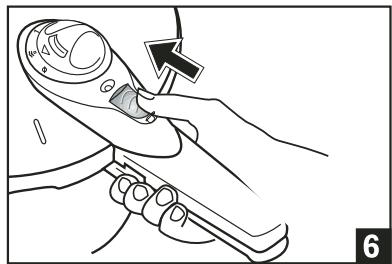
natural_image
Line drawing of a hand gripping a car's steering wheel (no text or symbols)natural_image
Line drawing of a mechanical joint or bracket with a knob and handle (no text or symbols)
natural_image
Simple line drawing of a knob with a handle and a small inset graph (no text or symbols)natural_image
Line drawing of a hand washing a bottle with a faucet, no text or symbols presentnatural_image
Line drawing of a mechanical device with a dial indicator and handle, no text or symbols presentnatural_image
Line drawing of a mechanical component with a handle and circular head (no text or symbols)natural_image
Line drawing of a mechanical device with an upward arrow and numbered label (15), no readable text or symbols present.natural_image
Line drawing of a car interior showing hand movement arrows (no text or symbols)natural_image
Line drawing of a mechanical component with a dial indicator and textured surface (no text or symbols)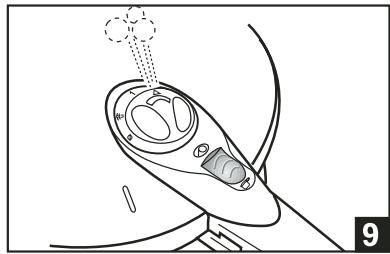
natural_image
Line drawing of a device with a dial indicator and smokestack emitting vapor (no text or symbols)| POSITION DU SELECTEUR | PRESSIONLivres/Pouces | NIVEAU DEPRESSION |
| 12 | 08.515.5 | MoyenHaut |
natural_image
Line drawing of a hand using a tool to press or adjust a mechanical component, with an arrow indicating the process (no text or symbols present)natural_image
Diagram of a mechanical device with a central knob and attached lever, showing no text or symbols.natural_image
Pure technical diagram of a mechanical component without any text, numbers, or symbolsnatural_image
Illustration of a hand using a tool to interact with a device, showing a curved arrow indicating rotation (no text or symbols present)natural_image
Line drawing of a car interior showing hand positioning and directional arrows (no text or symbols)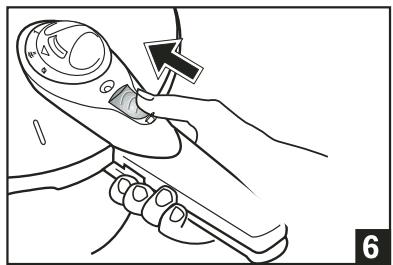
natural_image
Line drawing of a hand gripping a car's steering wheel (no text or symbols)natural_image
Line drawing of a hand washing a cup with a faucet, no text or symbols present
natural_image
Line drawing of a mechanical device with a handle and lever (no text or symbols)natural_image
Diagram of a mechanical device with an upward arrow and label '15' (no readable text or symbols)- FAGOR EXPRESS PRESSURE COOKER USER'S MANUAL
- CONTENTS
- IMPORTANT SAFEGUARDS
- Introduction
- EXPRESS Pressure Cooker line
- Fagor Express Pressure Cooker
- Components and Features
- NEVER FORCE THE PRESSURE COOKER OPEN
- Cooking with the Fagor EXPRESS Pressure Cooker
- Getting started
- Adding Food and Liquid
- Cooking time control
- NOTE TO ELECTRIC STOVE USERS
- Releasing Pressure After Cooking
- Care and Cleaning
- Maintenance for Safe Use
- Basic instructions for cooking
- Fresh and frozen vegetables
- Fresh and dried fruit
- Dried fruit:
- Dried beans and other legumes
- Grains
- Meat and Poultry
- Seafood and fish
- Adapting Traditional Recipes to Use in the Pressure Cooker
- Troubleshooting
- PROBLEM:
- REASON:
- SOLUTION:
- PRESSURE COOKING RECIPIES
- SOUPS
- GENERAL INDICATIONS
- CLAM CHOWDER
- INGREDIENTS:
- FRENCH ONION SOUP
- STOCK
- CREAM OF TOMATO SOUP
- VEGETABLES
- STUFFED TOMATOES
- MIXED VEGETABLES
- VEGETABLE CHOP SUEY
- RATATOUILLE
- RICE AND PASTAS
- PAELLA
- GAME AND POULTRY
- POT ROAST CHICKEN
- RABBIT FRICASSEE
- CHICKEN CASSEROLE
- MEAT
- MEAT LOAF
- BRAISED STEAK
- BEEF STEW
- MINCED MEAT
- SAUSAGE STEW
- GOULASH
- POT ROAST
- FISH AND SEAFOOD GENERAL INDICATIONS
- FISH STEW
- LOBSTER BELLA VISTA
- POACHED FISH FILLETS
- DESSERTS
- RICE PUDDING
- PEARS IN RED WINE
- CREME CARAMEL
- CHOCOLATE SPONGE PUDDING
- CUSTARD
- MARMELADES/JAMS
- OLLA A PRESION EXPRESS DE FAGOR MANUAL DEL USUARIO
- INDICE
Brand : FAGOR
Model : EXPRESS PRESSURE COOKER
Category : Pressure Cooker