EasyManual
GT5000 - Projector OPTOMA - Free user manual and instructions
Find the device manual for free GT5000 OPTOMA in PDF.


User questions about GT5000 OPTOMA
0 question about this device. Answer the ones you know or ask your own.
Ask a new question about this device
Download the instructions for your Projector in PDF format for free! Find your manual GT5000 - OPTOMA and take your electronic device back in hand. On this page are published all the documents necessary for the use of your device. GT5000 by OPTOMA.
USER MANUAL GT5000 OPTOMA
Safety Information. 2
Precautions. 3
Eye SafetyWarnings 5
Product Features 5
Introduction. 6
Package Overview 6
Product Overview 7
Main Unit 7
Control Panel 8
Input/Output Connections 9
Remote Control. 10
Installation 11
Connecting to the Projector 11
Connecting a Computer/Notebook.... 11
Connecting a Video source 12
Connect to 3D Video Devices.13
Using the 3D glasses. 15
Powering On/Off the Projector. 16
Powering On the Projector. 16
Powering Off the Projector. 17
Warning Indicator. 18
Adjusting the Projected Image 19
Adjusting the Projector's Height 19
Adjusting the Projector's Focus 20
Adjusting Projection Image Size 20
User Controls 23
Control Panel & Remote Control.....23
Control Panel 23
Remote Control. 24
On-screen Display Menu 27
How to operate 27
Menu Tree 28
IMAGE 35
IMAGE | Advanced 38
DISPLAY 43
DISPLAY|3D 48
SETUP 50
SETUP|Audio Settings. 53
SETUP | Security 55
SETUP | Network 57
SETUP | Network|LAN Settings. 58
SETUP | Network|Control Settings.... 60
SETUP | Signal (RGB) 70
SETUP | Signal (Video) 72
SETUP | Advanced 73
OPTIONS. 75
OPTIONS | Lamp Settings. 79
OPTIONS | Advanced 81
OPTIONS | Remote Settings 83
OPTIONS | Filter Settings. 84
Appendices. 85
Troubleshooting 85
Image Problems. 85
Other Problems. 87
Remote Control Problems 87
LED Lighting Messages. 88
On Screen Messages 89
Replacing the Lamp. 90
Installing and Cleaning the
Dust Filter 92
Compatibility Modes 93
RS232 Commands and
Protocol Function List 95
RS232 Pin Assignments 95
RS232 Protocol Function List 96
Ceiling Mount Installation. 104
Optoma Global Offices 105
Regulation & Safety Notices. 107
FCC Notice 107
Declaration of Conformity for
EU countries 108
Safety Information
The lightning flash with arrow head within an equilateral triangle is intended to alert the user to the presence of uninsulated "dangerous voltage" within the product's enclosure that may be of sufficient magnitude to constitute a risk of electric shock to persons.

The exclamation point within an equilateral triangle is intended to alert the user to the presence of important operating and maintenance (servicing) instructions in the literature accompanying the appliance.
WARNING: TO REDUCE THE RISK OF FIRE OR ELECTRIC SHOCK, DO NOT EXPOSE THIS APPLIANCE TO RAIN OR MOISTURE. DANGEROUS HIGH VOLTAGES ARE PRESENT INSIDE THE ENCLOSURE. DO NOT OPEN THE CABINET. REFER SERVICING TO QUALIFIED PERSONNEL ONLY.
Class B emissions limits
This Class B digital apparatus meets all requirements of the Canadian Interference-Causing Equipment Regulations.
Important Safety Instruction
- Do not block any ventilation openings. To ensure reliable operation of the projector and to protect from over heating, it is recommended to install the projector in a location that does not block ventilation. As an example, do not place the projector on a crowded coffee table, sofa, bed, etc. Do not put the projector in an enclosure such as a book case or a cabinet that restricts air flow.
- Do not use the projector near water or moisture. To reduce the risk of fire and/or electric shock, do not expose the projector to rain or moisture.
- Do not install near heat sources such as radiators, heaters, stoves or any other apparatus such as amplifiers that emits heat.
- Clean only with dry cloth.
- Only use attachments/accessories specified by the manufacturer.
-
Do not use the unit if it has been physically damaged or abused. Physical damage/abuse would be (but not limited to):
-
Unit has been dropped.
- Power supply cord or plug has been damaged.
Liquid has been spilled on to the projector. - Projector has been exposed to rain or moisture.
- Something has fallen in the projector or something is loose inside.
Do not attempt to service the unit yourself. Opening or removing covers may expose you to dangerous voltages or other hazards. Please call Optoma before you send the unit for repair.
- Do not let objects or liquids enter the projector. They may touch dangerous voltage points and short out parts that could result in fire or electric shock.
- See projector enclosure for safety related markings.
- The unit should only be repaired by appropriate service personnel.
Precautions

Please follow all warnings, precautions and maintenance as recommended in this user's guide.

When the lamp reaches the end of its life, the projector will not turn back on until the lamp module has been replaced. To replace the lamp, follow the procedures listed under "Replacing the Lamp" section on pages 90-91.
| Warning- | Do not look into the projector's lens when the lamp is on. The bright light may hurt your eyes. |
| Warning- | To reduce the risk of fire or electric shock, do not expose this projector to rain or moisture. |
| Warning- | Please do not open or disassemble the projector as this may cause electric shock. |
| Warning- | When replacing the lamp, please allow the unit to cool down. Follow instructions as described on pages 90-91. |
| Warning- | This projector will detect the life of the lamp itself. Please be sure to change the lamp when it shows warning messages. |
| Warning- | Reset the “Lamp Reset” function from the on-screen display “Options|Lamp Settings” menu after replacing the lamp module (refer to page 79). |
| Warning- | When switching the projector off, please ensure the cooling cycle has been completed before disconnecting power. Allow 90 seconds for the projector to cool down. |
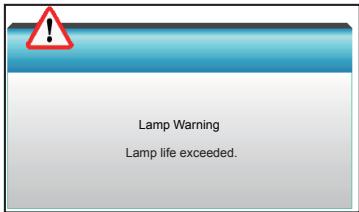
| Warning- | When the lamp is approaching to the end of its life time, the message “Lamp life exceeded.” will show on the screen. Please contact your local reseller or service center to change the lamp as soon as possible. |
Do:
Turn off and unplug the power plug from the AC outlet before cleaning the product.
Use a soft dry cloth with mild detergent to clean the display housing.
- Disconnect the power plug from AC outlet if the product is not being used for a long period of time.
Do not:
Block the slots and openings on the unit provided for ventilation.
Use abrasive cleaners, waxes or solvents to clean the unit.
Use under the following conditions:
- In extremely hot, cold or humid environments.
Ensure that the ambient room temperature is within 5^ 40^
Relative humidity is 10% 85%
In areas susceptible to excessive dust and dirt.
Near any appliance generating a strong magnetic field.
- In direct sunlight.
Eye SafetyWarnings
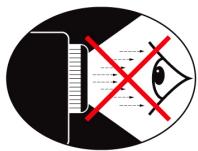
Avoid staring/facing directly into the projector beam at all times. Keep your back to the beam as much as possible.
- When projector is used in a classroom, adequately supervise students when they are asked to point out something on the screen.
In order to minimize the lamp power, use room blinds to reduce ambient light levels.

Product Features
Product features may vary depending on model.
1080p (1920x1080)
XGA (1024x768) / WXGA (1280x800) Native resolution
HD compatible - 720p and 1080p supported
BrilliantColor™ Technology
Kensington Lock
RS232 control
Rapid shutdown
Full 3D (See page 94)
Crestron/Extron/ PJLink™ compatibility.
Eco+ mode for more economic usage
USB Power Charger
Interactivity Support (Only for Interactive version)
Package Overview
Unpack and inspect the box contents to ensure all parts listed below are in the box. If something is missing, please contact Optoma customer service.
Standard Accessories
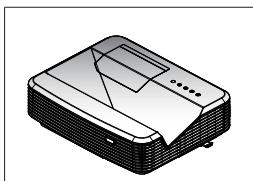
Projector
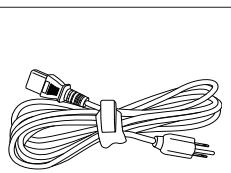
Power Cord
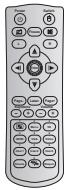
Remote

For other laser curtain accessories, please refer to the laser curtain user manual.

2×AAA Batteries
CD User Manual
Warranty Card
Basic User Manual
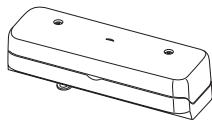
Documentation
Laser Curtain Module (for interactivity version only)
Optional Accessories

Optional accessories vary depending on model, specification and region.
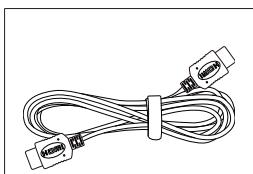
HDMI Cable
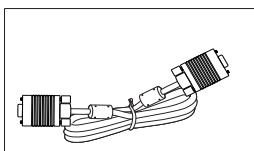
VGA Cable
Product Overview
Main Unit
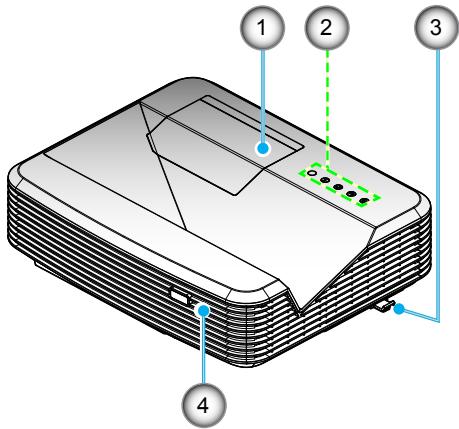

Do not block projector in/out air vents.
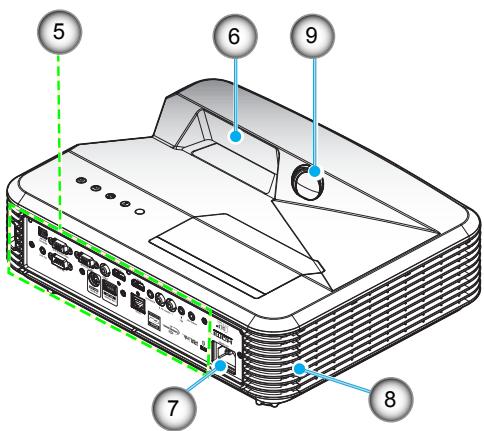
- Lamp Cover
- Control Panel
- Focus Switch
- IR Receiver
-
Input/Output Connections
-
Lens
- Power Socket
- Speaker
- IR Camera (Only for interactive version)
Control Panel



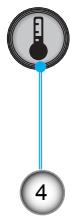

- Power
- Source
- Lamp Indicator
- Temperature (Temp) Indicator
- IR Receiver
Input/Output Connections
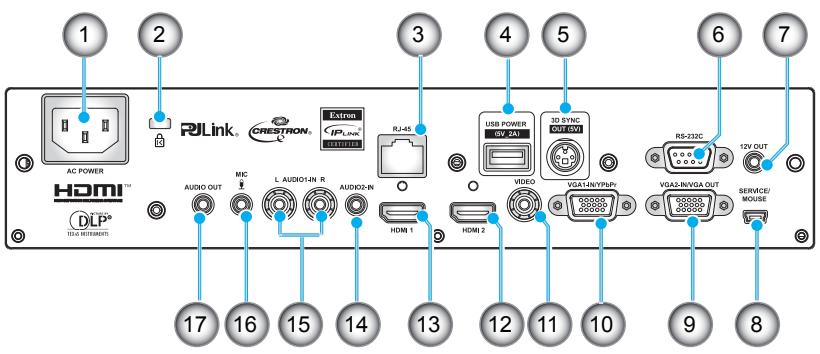

Remote mouse requires special remote.
- Power Socket
- Kensington™ Lock Port
- RJ45 Connector
- USB Power Connector (5V/2A Max.)
- 3D Sync Connector (5V)
- RS-232C Connector (9-pin DIN Type)
- 12V Audio Out Connector
- USB Connector (Connect to PC for Remote Mouse function)
- VGA-Out/VGA2-In Connector
- VGA1-In/YPbPr Connector (PC Analog Signal/Component Video Input/HDTV/YPbPr)
- Composite Video Input Connector
- HDMI2 Input Connector
- HDMI1 Input Connector
- Audio 2 In Connector (3.5mm mini Jack)
- Composite Audio Input (right/left) Connector
- Audio Input Connector (microphone)
- Audio Output Connector (3.5mm mini Jack)
Remote Control

Some keys may have no function for models which do not support these features.
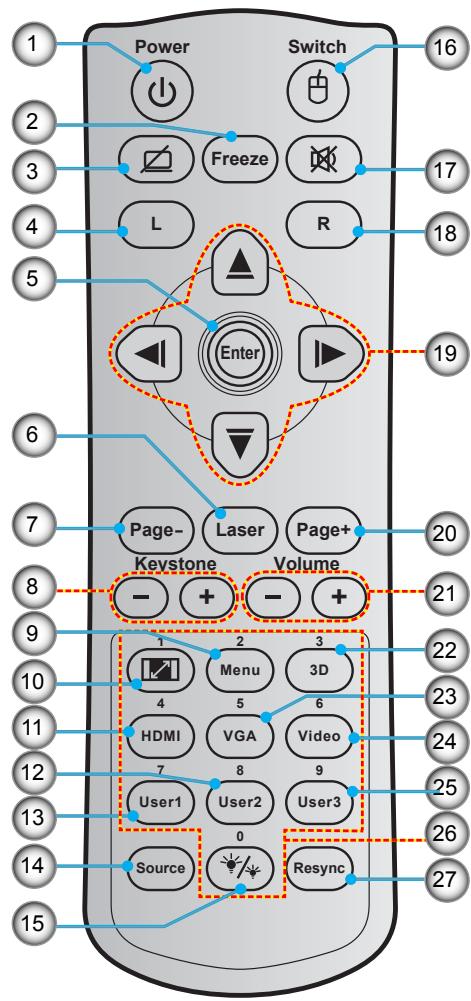
- Power on / off
- Freeze
- Display blank / audio mute
- Mouse left click
- Enter
- Laser
- Page -
- Keystone - / +
- Menu
- Aspect ratio
- HDMI
- User 2
- User 1
- Source
- Brightness mode
- Mouse on / off
- Mute
- Mouse right click
- Four directional select keys
- Page +
- Volume - / +
- 3D menu on / off
- VGA
- Video
- User 3
- Numeric keypad (0-9)
- Re-sync
Connecting to the Projector
Connecting a Computer/Notebook
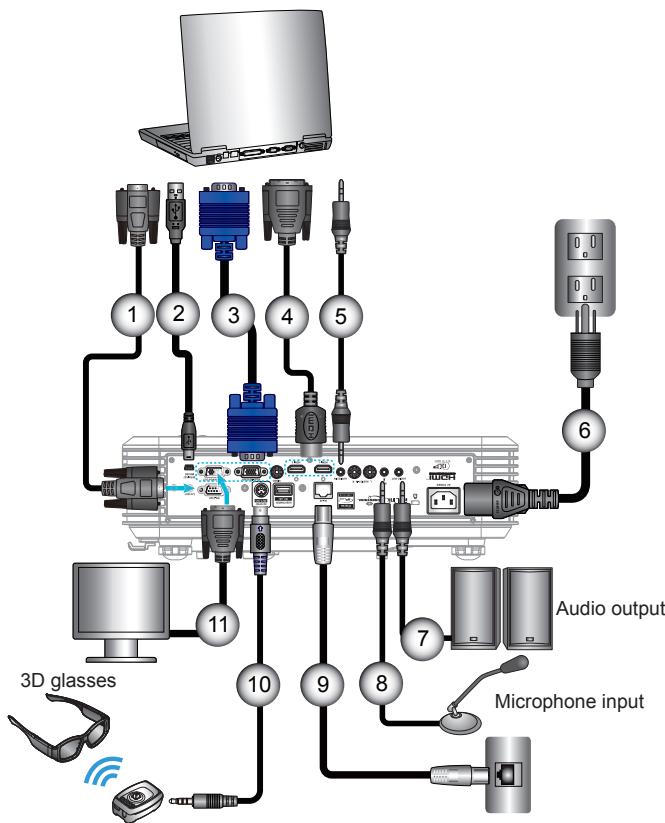

Due to the difference in applications for each country, some regions may have different accessories.
(*) Optional accessory
- RS-232C cable
- Remote Mouse USB cable
- VGA1-In/YPbPr cable
- *HDMI cable
- Audio 2 In cable
- Power cord
7 Audio Out cable - Audio In (microphone) cable
9.RJ-45 cable - *3D emitter cable
11.VGA-Out/VGA2-In cable
Connecting a Video source
DVD player, Blu-ray player, Set-top box, HDTV receiver, Games console
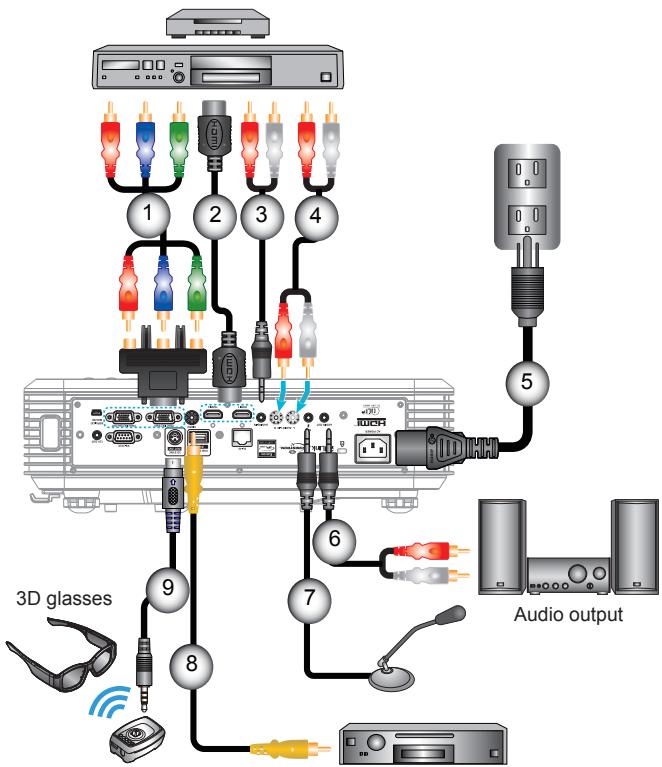
DVD player, Set-top box, HDTV receiver

Due to the difference in applications for each country, some regions may have different accessories.
(*) Optional accessory
- *3 RCA Component cable
- *HDMI cable
- *Audio2 In cable
- Audio In cable
- .Power cord
- Audio Out cable
- Microphone In cable
- Video cable
- *3D emitter cable

The 3D video source device must be powered on before the 3D projector.

If input video is normal 2D, please press "3D Format" and switch to "Auto".
If "SBS Mode" is active, 2D video content will not display correctly.
Connect to 3D Video Devices
Once you have connected your devices together with HDMI cables, as shown in the diagram, you are ready to begin. Power ON your 3D video source and your 3D projector.
PlayStation® 3 Games
- Make sure that you have updated your console to the latest software version.
- Go to the "Settings menu -> Display settings -> Video output -> HDMI". Select "Automatic" and follow the on-screen instructions.
- Insert your 3D game disc. Alternatively you can download games (and 3D updates) via the PlayStation® network.
- Launch the game. In the in-game menu, select "Play in 3D".
Blu-ray 3D™ Player
- Make sure that your player can support 3D Blu-ray™ disc and that 3D output is enabled.
- Insert the 3D Blu-ray™ disc into the player, press "Play".
3D TV (e.g. SKY 3D, DirecTV)
- Contact your TV service provider to enable any 3D channels on your channel package.
- Once enabled, switch to the 3D channel.
- You should see two images side-by-side.
- Switch to the "SBS Mode" of the 3D projector. The option is located in the "Display" section of the projector OSD menu.
3D Device (e.g. 3D DV/DC) with 2D 1080i side by side signal output
- Connect your 3D device and switch to out 3D content with 2D side-by-side output to 3D Projector.
- You should see two images side-by-side.
- Switch to the "SBS Mode" of the 3D projector. The option is located in the "Display" section of the projector OSD menu.
If watching 3D content from an HDMI 1.4a source (e.g. 3D Blu-ray) your 3D glasses should always be in sync. If watching 3D content from an HDMI 1.3 source (e.g. 3D broadcast using SBS mode) it may be necessary to use the projector's 3D Sync-Invert option to optimize your 3D experience. The option is located in the "Display ->3D" section of the projector OSD menu.
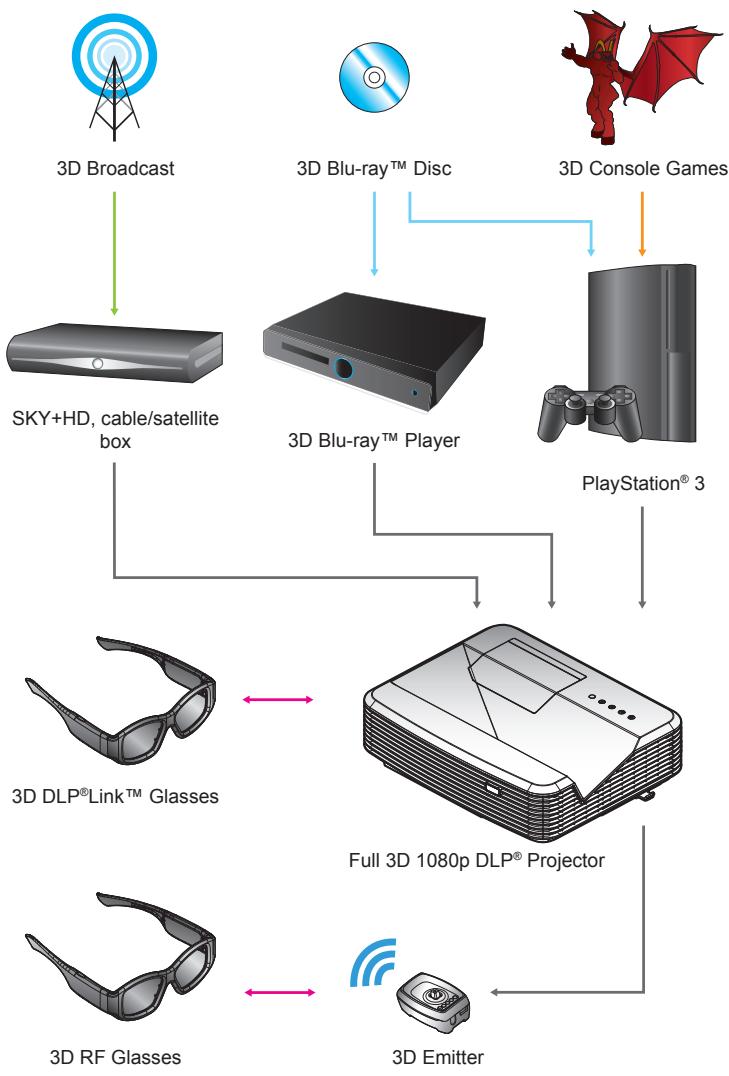

For more detailed information, please refer to 3D glasses user's guide.
Using the 3D glasses
- To turn ON 3D glasses.
- Verify that 3D content is being sent to the projector and signal is compatible with projector specifications.
- Turn on the "3D Mode" (Off/DLP-Link/VESA 3D - depending on which type of glasses you are using) of the 3D projector. The option is located in the "Display" section of the projector OSD menu.
- Turn on 3D glasses and verify image appears in 3D without eyestrain.
- If the image does not appear in 3D, please check 3D device set up correctly to send out 3D image or not. Or "SBS Mode" should turn on when input signal is 2D 1080i side-by-side and repeat previous steps 1 4 .
- It may be necessary to use projector's "3D Sync-Invert" option to optimize your 3D experience. The option is located in the "Display" section of the projector OSD menu.
- To turn OFF 3D glasses: Press the "Power" button and hold until the LED switches off.
- For more detailed information, please refer to the 3D glasses user's guide, or manufacturer's Website.
Powering On/Off the Projector
Powering On the Projector
- Securely connect the power cord and signal cable. When connected, the On/Standby LED will turn Red.
- Turn on the lamp by pressing "U" button either on the top of the projector or on the remote. The On/Standby LED will now turn Blue.
The startup screen will display in approximately 10 seconds. The first time you use the projector, you will be asked to select the preferred language and power saving mode.
- Turn on and connect the source that you want to display on the screen (computer, notebook, video player, etc). The projector will detect the source automatically. If not, push menu button and go to "OPTIONS".
Make sure that the "Source Lock" has been set to "Off".
If you connect multiple sources at the same time, press the "SOURCE" button on the Remote Control or direct source keys on the remote control to switch between inputs.

Turn on the projector first and then select the signal sources.
(*) Optional accessory.
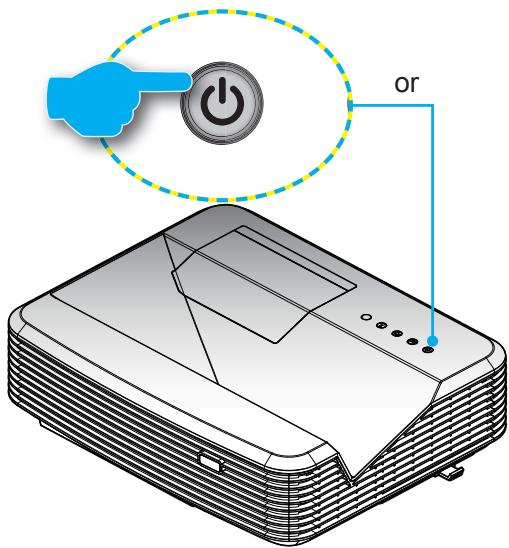
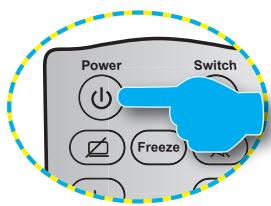
Powering Off the Projector
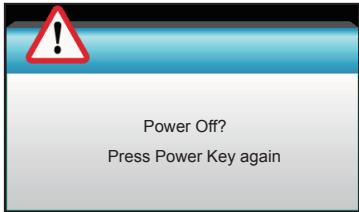
- Press the "U" button on the remote control or on the Control Panel to turn off the projector. The following message will be displayed on the screen.
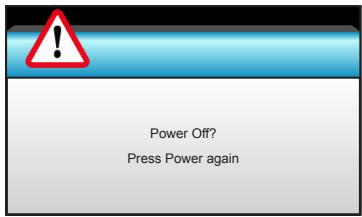
Press the "U" button again to confirm otherwise the message will disappear after 15 seconds. When you press the "U" button for the second time, the projector will display countdown timer and will shut down.
- The cooling fans continue to operate for about 10 seconds for cooling cycle and the On/Standby LED will flash Blue. When the On/Standby LED lights solid Red, the projector has entered standby mode.
If you wish to turn the projector back on, you must wait until the projector has completed the cooling cycle and has entered standby mode. Once in standby mode, simply press "O" button to restart the projector.
- Disconnect the power cord from the electrical outlet and the projector.
- Do not turn on the projector immediately following a power off procedure.

Contact the nearest service center if the projector displays these symptoms. See pages 105-106 for more information.
Warning Indicator
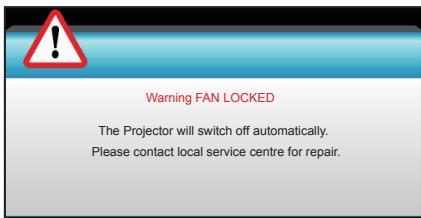
When the warning indicators (see below) come on, the projector will automatically shutdown:
"LAMP" LED indicator is lit red and if "On/Standby" indicator flashes red.
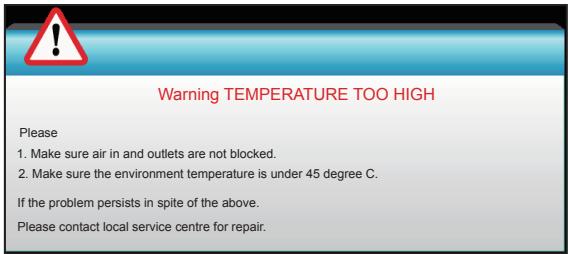
"TEMP" LED indicator is lit red and if "On/Standby" indicator flashes red. This indicates the projector has overheated. Under normal conditions, the projector can be switched back on.
"TEMP" LED indicator flashes red and if "On/Standby" indicator flashes red.
Unplug the power cord from the projector, wait for 30 seconds and try again. If the warning indicator light up again, please contact your nearest service center for assistance.
Adjusting the Projected Image
Adjusting the Projector's Height
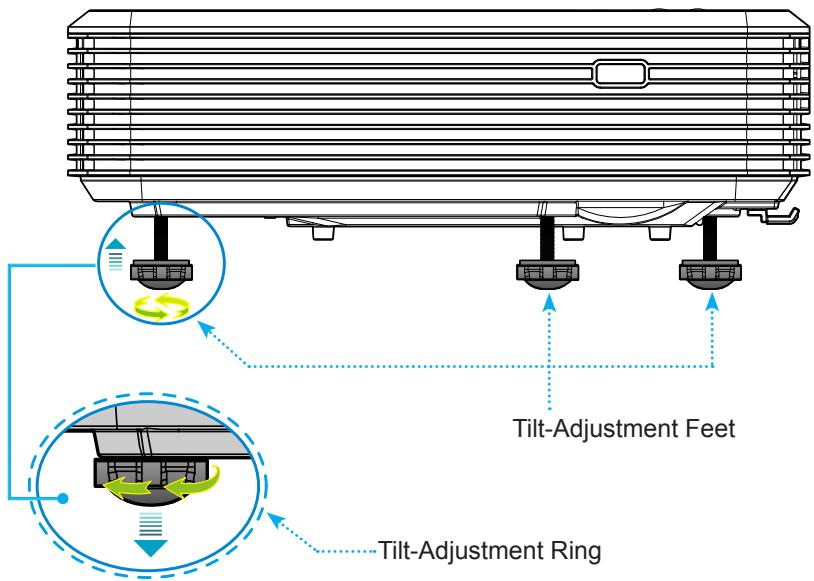
The projector is equipped with elevator feet for adjusting the image height.
- Locate the adjustable foot you wish to modify on the underside of the projector.
- Rotate the adjustable ring clockwise to raise the projector or counter clockwise to lower it. Repeat with the remaining feet as needed.
Adjusting the Projector's Focus
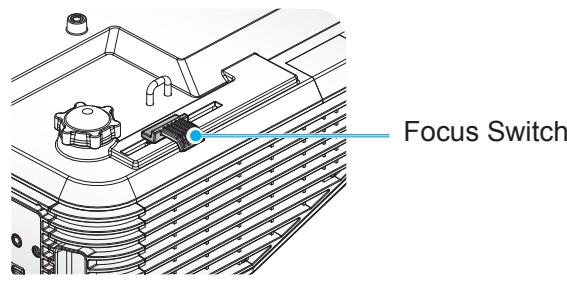
To focus the image, slide the focus switch until the image is clear.
Standard throw series (XGA): The projector will focus at distances from 1.55 to 2.21 feet (0.47 to 0.68 meters) counted from the center of lens..
Standard throw series (WXGA): The projector will focus at distances from 1.59 to 2.15 feet (0.49 to 0.66 meters) counted from the center of lens..
Standard throw series (1080p): The projector will focus at distance from 1.46 to 1.83 feet (0.45 to 0.56 meters) counted from the center of lens.
Adjusting Projection Image Size
Projection Image Size (XGA) from 70"-100" (1.78 to 2.54 meters).
Projection Image Size (WXGA) from 85"-115" (2.16 to 2.92 meters).
Projection Image Size (1080p) from 80"-100" (2.03 to 2.54 meters).
Variables:
"a": Image Offset (m) from the center of the lens to the top of the vertical image.
"b": Distance from the center of the lens to the bottom of the projector.
"c": Distance between the wall (projection surface) to the back of the projector.
"d": Image Diagonal.
"g": Distance between the center of the lens and wall (projection surface).
"m": Distance between the wall (projection surface) and the front of the projector.
"p": Distance from top of projector to the mounting hole.
"H": Height of the Image.
"W":Width of the image.
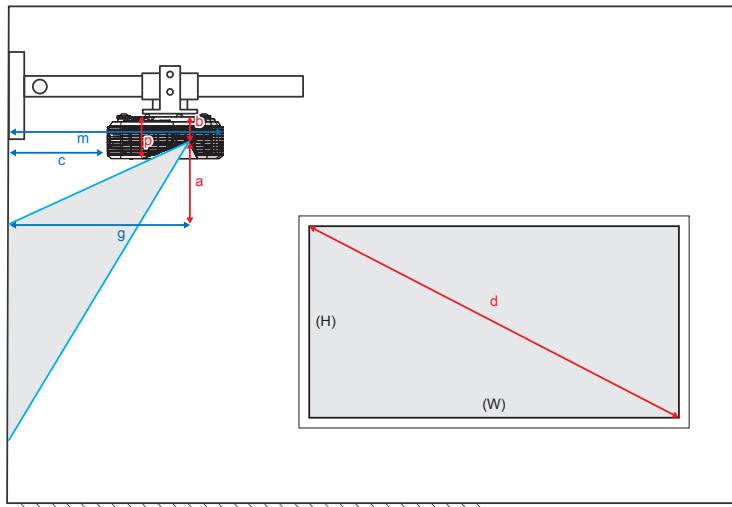
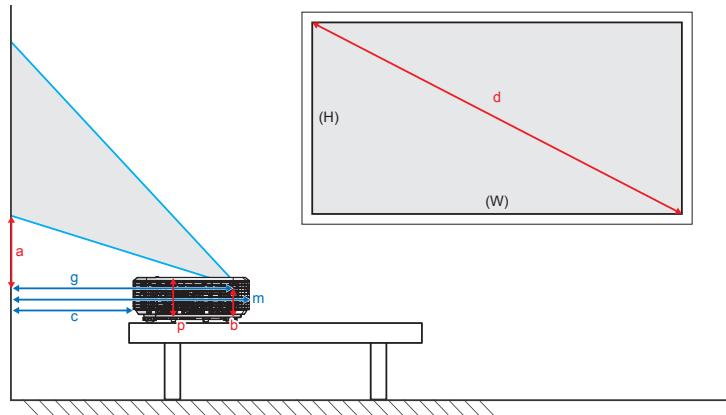
Standard throw XGA (4:3)
| a | b | c | d | W | H | g | m | P | |||
| Image Offset from the center of the lens to the top of the vertical image (m) | Distance from center of lens to the bottom of projector (m) | Distance between the wall (projection surface) to the back of projector (m) | Image Diagonal (inch) | Width of Image Size | Height of Im- age Size | Distance between the center of lens and wall(projection surface) | Distance between the wall(projection surface) and the front of the projec- tor (m) | Distance from top of projector to mounting hole (m) | |||
| (inch) | (m) | (inch) | (m) | (feet) | (m) | ||||||
| 0.181 | 0.0631 | 0.219 | 70 | 56.0 | 1.42 | 42.0 | 1.07 | 1.55 | 0.47 | 0.253 | 0.115 |
| 0.192 | 0.0631 | 0.246 | 74 | 59.2 | 1.50 | 44.4 | 1.13 | 1.64 | 0.50 | 0.253 | 0.115 |
| 0.207 | 0.0631 | 0.287 | 80 | 64.0 | 1.63 | 48.0 | 1.22 | 1.77 | 0.54 | 0.253 | 0.115 |
| 0.233 | 0.0631 | 0.354 | 90 | 72.0 | 1.83 | 54.0 | 1.37 | 1.99 | 0.61 | 0.253 | 0.115 |
| 0.259 | 0.0631 | 0.422 | 100 | 80.0 | 2.03 | 60.0 | 1.52 | 2.21 | 0.68 | 0.253 | 0.115 |
Standard throw WXGA (16:10)
| a | b | c | d | W | H | g | m | P | |||
| Image Offset from the center of the lens to the top of the vertical image (m) | Distance from center of lens to the bottom of projector (m) | Distance between the wall (projection surface) to the back of projector (m) | Image Diagonal (inch) | Width of Image Size | Height of Image Size | Distance between the center of lens and wall(projection surface) | Distance between the wall(projection surface) and the front of the projector (m) | Distance from top of projector to mounting hole (m) | |||
| (inch) | (m) | (inch) | (m) | (feet) | (m) | ||||||
| 0.172 | 0.0631 | 0.232 | 85 | 72.1 | 1.83 | 45.0 | 1.14 | 1.59 | 0.49 | 0.253 | 0.115 |
| 0.176 | 0.0631 | 0.245 | 87 | 74.0 | 1.88 | 46.2 | 1.17 | 1.63 | 0.50 | 0.253 | 0.115 |
| 0.182 | 0.0631 | 0.261 | 90 | 76.4 | 1.94 | 47.7 | 1.21 | 1.69 | 0.51 | 0.253 | 0.115 |
| 0.202 | 0.0631 | 0.318 | 100 | 84.8 | 2.15 | 53.0 | 1.35 | 1.87 | 0.57 | 0.253 | 0.115 |
| 0.222 | 0.0631 | 0.375 | 110 | 93.3 | 2.37 | 58.3 | 1.48 | 2.06 | 0.63 | 0.253 | 0.115 |
| 0.232 | 0.0631 | 0.403 | 115 | 97.5 | 2.48 | 60.9 | 1.55 | 2.15 | 0.66 | 0.253 | 0.115 |
Standard throw 1080p (16:9)
| a | b | c | d | W | H | g | m | P | |||
| Image Offset from the center of the lens to the top of the vertical image (m) | Distance from center of lens to the bottom of projector (m) | Distance between the wall (projection surface) to the back of projector (m) | Image Diagonal (inch) | Width of Image Size | Height of Image Size | Distance between the center of lens and wall(projection surface) | Distance between the wall(projection surface) and the front of the projector (m) | Distance from top of projector to mounting hole (m) | |||
| (inch) | (m) | (inch) | (m) | (feet) | (m) | ||||||
| 0.179 | 0.0631 | 0.193 | 80 | 69.7 | 1.77 | 39.2 | 1.00 | 1.46 | 0.45 | 0.253 | 0.115 |
| 0.200 | 0.0631 | 0.244 | 89 | 77.6 | 1.97 | 43.7 | 1.11 | 1.63 | 0.50 | 0.253 | 0.115 |
| 0.202 | 0.0631 | 0.249 | 90 | 78.4 | 1.99 | 44.1 | 1.12 | 1.65 | 0.50 | 0.253 | 0.115 |
| 0.224 | 0.0631 | 0.305 | 100 | 87.2 | 2.21 | 49.0 | 1.25 | 1.83 | 0.56 | 0.253 | 0.115 |

These tables are for user's reference only.
Control Panel & Remote Control Control Panel


Using the Control Panel
| POWER | Refer to the “Power On/Off the Projector” section on pages 16-17. | |
| SOURCE | Press → to select an input signal. | |
| Lamp LED | Indicate the projector's lamp status. | |
| Temp LED | Indicate the projector's temperature status. | |
| IR Receiver | Receives infrared signals from the remote control. |
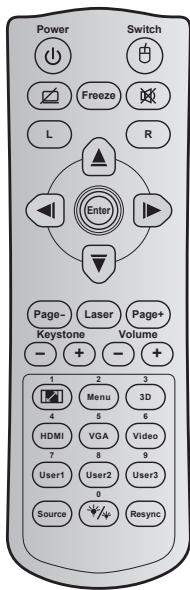

Remote Control
| Using the Remote Control | ||
| Power | Press to turn on / off the projector. | |
| Switch | Press to switch the USB mouse on / off. | |
| Display blank / audio mute | Press to hide / unhide the screen picture and turn off / on audio. | |
| Freeze | Press to freeze the projector image. | |
| Mute | Press to momentarily turn off / on the audio. | |
| Mouse left click | L | Use as mouse left click. |
| Mouse right click | R | Use as mouse right click. |
| Four directional select keys | Use ▲ ▼ ▲ ▲ to select items or make adjustments to your selection. | |
| Enter | Confirm your item selection. | |
| Page - | Press to page down. | |
| Laser | Use as laser pointer. | |
| Page + | Press to page up. | |
| Keystone | - + | Press to adjust image distortion caused by tilting the projector. |
| Volume | - + | Press to adjust to increase / decrease the volume. |
| Aspect ratio / 1 | Press to change aspect ratio of a displayed image. Use as numeric keypad number “1”. | |
| Menu / 2 | Press to display or exit the on-screen display menus for projector. Use as numeric keypad number “2”. | |
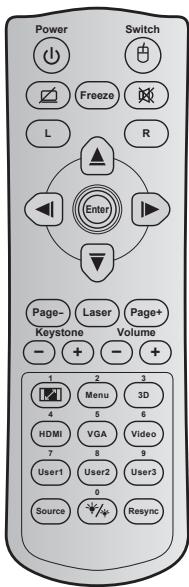
Using the Remote Control
| 3D / 3 | Press to manually select a 3D mode that matches your 3D content. Use as numeric keypad number “3”. | |
| HDMI / 4 | Press to choose HDMI source. Use as numeric keypad number “4”. | |
| VGA / 5 | Press to choose VGA source. Use as numeric keypad number “5”. | |
| Video / 6 | Press to choose composite video source. Use as numeric keypad number “6”. | |
| User1 / 7; User2 / 8; User3 / 9 | User defined keys. Use as numeric keypad numbers “7”, “8”, and “9” accordingly. | |
| Source | Press to select an input signal. | |
| Brightness mode / 0 | / | Press to automatically adjust the picture brightness to give an optimum contrast performance. Use as numeric keypad number “0”. |
| Re-sync | Press to automatically synchronize the projector to the input source. | |
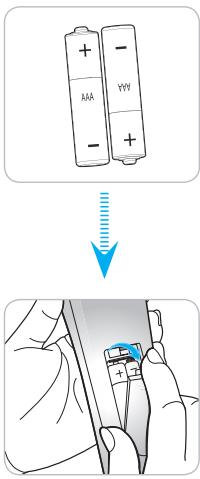
Installing Batteries
Two size AAA batteries are supplied for Remote Control.
Replace only with the same or equivalent type recommended by the manufacturer.

CAUTION
Improper use of batteries can result in chemical leakage or explosion. Be sure to follow the instructions below.
Do not mix batteries of different types. Different types of batteries have different characteristics.
Do not mix old and new batteries. Mixing old and new batteries can shorten the life of new batteries or cause chemical leakage in old batteries.
Remove batteries as soon as they are worn out. Chemicals that leak from batteries that come in contact with skin can cause a rash. If you find any chemical leakage, wipe thoroughly with a cloth.
The batteries supplied with this product may have a shorter life expectancy due to storage conditions.
If you will not be using the remote control unit for an extended period of time, remove batteries from it.
When you dispose of the battery, you must obey the law in the relative area or country.
On-screen Display Menus
The Projector has multilingual On-screen Display menus that allow you to make image adjustments and change a variety of settings. The projector will automatically detect the source.
How to operate
- To open the OSD menu, press "Menu" on the Remote Control or Control Panel.
2 When OSD is displayed, use keys to select any item in the main menu. While making a selection on a particular page, press or "Enter" key to enter sub menu. - Use keys to select the desired item in the sub menu and then press or "Enter" key to view further settings. Adjust the settings by key.
- Select the next item to be adjusted in the sub menu and adjust as described above.
- Press "Enter" or "Menu" to confirm, and the screen will return to the main menu.
- To exit, press "Menu" again. The OSD menu will close and the projector will automatically save the new settings.
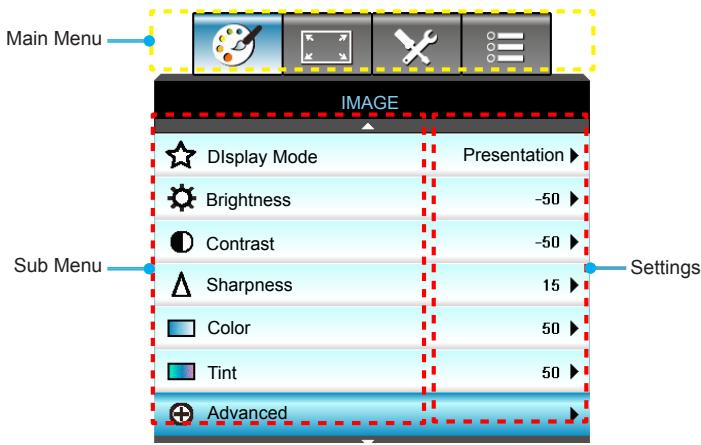
Menu Tree
| Main Menu | Sub Menu | Advanced Menu | Parameter | Single Item in the Menu | Value or Default | Notes |
| IMAGE | Display Mode | Presentation / Bright / Movie / sRGB / Blackboard / DICOM SIM. / 3D / User | Each mode can adjust and save to user mode. | |||
| Brightness | -50~+50 | |||||
| Contrast | -50~+50 | |||||
| Sharpness | 1~15 | |||||
| Color | -50~+50 | |||||
| Tint | -50~+50 | |||||
| Advanced | Noise Reduction | 0~10 | ||||
| BrilliantColor™ | 1~10 | |||||
| Gamma | Film/ Graphic/1.8/2.0/2.2/2.6/ Blackboard / DICOM SIM./3D | All gamma could be selected for all display modes. | ||||
| Color Temp. | Standard/Cool / Cold | |||||
| Color Space | Not HDMI Input: Auto / RGB / YUV | Auto | ||||
| HDMI Input: Auto/ RGB(0~255) / RGB(16~235)/ YUV | Auto | |||||
| RGB Gain/Bias | Red Gain | |||||
| Green Gain | ||||||
| Blue Gain | ||||||
| Red Bias | ||||||
| Green Bias | ||||||
| Blue Bias | ||||||
| Reset | To reset current source with current display mode for RGB Gain/Bias | |||||
| Exit | ||||||
| Color Matching | Red | Hue/ Saturation/Gain/ Exit | -50~+50 | |||
| Green | Hue/ Saturation/Gain/ Exit | -50~+50 | ||||
| Blue | Hue/ Saturation/Gain/ Exit | -50~+50 |
User Controls
| Main Menu | Sub Menu | Advanced Menu | Parameter | Single Item in the Menu | Value or Default | Notes |
| IMAGE | Advanced | Color Matching | Cyan | Hue/ Saturation /Gain/ Exit | -50~+50 | |
| Magenta | Hue/ Saturation /Gain/ Exit | -50~+50 | ||||
| Yellow | Hue/ Saturation /Gain/ Exit | -50~+50 | ||||
| White | R/G/B/Exit | -50~+50 | ||||
| Reset | To reset current source with current display mode for CMS settings | |||||
| Exit | ||||||
| Exit | ||||||
| Reset | Yes/No | To reset current source with current display mode for image settings. | ||||
| DISPLAY | Format | 4:3 | Auto | |||
| 16:9/16:10[WXGA] | ||||||
| LBX | ||||||
| Native | ||||||
| Auto | Default is "Auto" | |||||
| Zoom | -5~+25 | |||||
| Edge Mask | 0~10 | |||||
| Image Shift | H | -50~+50 | Up/Down/Right/Left(Icon in center) | |||
| V | -50~+50 | |||||
| V Keystone | -15~+15 | 1080p:-5~+5 | ||||
| IMAGE | 3D | 3D Mode | DLP-Link/ VESA 3D/Off (For projector don't have VESA port, use " IR ") | DLP-Link | ||
| 3D->2D | 3D/ L/ R | The items would be greyed out when 3D mode sets to Off. | ||||
| 3D Format | Auto/SBS/Top and Bottom/Frame Sequantail | |||||
| 3D Sync Invert | On/Off | Off | ||||
| Exit |
User Controls
| Main Menu | Sub Menu | Advanced Menu | Parameter | Single Item in the Menu | Value or Default | Notes |
| SETUP | Language | English / Deutsch / Français / Italiano / Espanol / Portugues / Polski / Nederlands / Sverige / Norsk/Dansk / Suomi / Elληνιδ/ 繁體中文 / 简体中文 / 日本語 / 英語/ Pyccknien / Magyar / Čéttina / Čává / Türkei / Čává / Románà/Slovenčina | English | |||
| Projection | Front-Desktop | Front Ceiling | ||||
| Rear-Desktop | ||||||
| Front-Ceiling | ||||||
| Rear-Ceiling | ||||||
| Screen Type | 16:10/16:9 (WXGA MODEL) | Default is "16:10" | ||||
| Menu Location | Top Left | Center | ||||
| Top Right | ||||||
| Center | ||||||
| Bottom Left | ||||||
| Bottom Right | ||||||
| SETUP | Security | Security Setting | On/Off | Off | ||
| Security Timer | Month | 0~12 | Password is required if “Security” is selected. | |||
| Day | 0~30 | |||||
| Hour | 0~24 | |||||
| Exit | ||||||
| Change Password | ||||||
| Exit | ||||||
| Signal (RGB) | Frequency | -5~+5 | Depends on signal | |||
| Phase | 0~63 | |||||
| H. Position | -5~+5 | |||||
| V. Position | -5~+5 | |||||
| Automatic | Enable/ Disable | |||||
| Exit | ||||||
| Signal (Video) | White Level | -50~+50 | ||||
| Black Level | -50~+50 | |||||
| Exit | ||||||
| Projector ID | 00~99 | |||||
| Auto Settings | Internal Speaker | On/Off | On | Audio 1 (RCA) for Composite Audio 2 (Mini jack) for VGA | ||
| Mute | On/Off | Off | ||||
| Volume | Audio | 0-10 | ||||
| MIC | 0-10 | |||||
| Audio Input | Default/Audio 1/Audio 2 | Default | ||||
| Exit | ||||||
| Advanced | Logo | Optoma/ Neutral /User | Optoma | |||
| Logo Capture | ||||||
| Closed Captioning | CC1/CC2/Off | Off | ||||
| Exit |
User Controls
| Main Menu | Sub Menu | Advanced Menu | Parameter | Single Item in the Menu | Value or Default | Notes |
| SETUP | Network | LAN Settings | Network Status | Read-Only | Never time-out on this page. | |
| DHCP | On/Off | |||||
| IP Address | ||||||
| Subnet Mask | ||||||
| Gateway | ||||||
| DNS | ||||||
| Apply | Yes/No | |||||
| MAC Address | Read-Only | |||||
| Exit | ||||||
| Control Settings | Crestron | On/Off | On | |||
| Extron | On/Off | On | ||||
| PJ Link | On/Off | On | ||||
| AMX Device Discovery | On/Off | On | ||||
| Telnet | On/Off | On | ||||
| Exit | ||||||
| OPTIONS | Input Source | HDMI 1/HDMI 2/VGA 1/VGA 2/Video | When no signal input, user still could do selection for “Input Source” from OSD. | |||
| Exit | ||||||
| Source Lock | On/Off | Off | ||||
| High Altitude | On/Off | Off | ||||
| Information Hide | On/Off | Off | ||||
| Keypad Lock | On/Off | Off | ||||
| Test Pattern | None / Grid(white)/Grid(Green)/Grid(Magenta)/White | None | ||||
| Background Color | Blue / Black / Red / Green / White | Blue | Default is Blue | |||
| 12V Trigger | On/Off | On | ||||
| VGA2 Switch | In/Out | Out |
User Controls
| Main Menu | Sub Menu | Advanced Menu | Parameter | Single Item in the Menu | Value or Default | Notes |
| OPTIONS | Advanced | Direct Power On | On/Off | |||
| Signal Power on | On/Off | |||||
| Auto Power Off (min) | 0~180 | |||||
| Sleep Timer (min) | 0~990 | |||||
| Power Mode (Standby) | Active/ Eco. | Eco. | ||||
| Quick Resume | On/Off | Off | ||||
| Remote Settings | User 1 | HDMI2/VGA2/Test Pattern/LAN/Brightness/ Contrast/Sleep Timer/ Color Matching/Color Temp/Gamma/ Source Lock /Projection/Lamp Settings/Zoom/Freeze | HDMI2 | |||
| User 2 | HDMI2/VGA2/Test Pattern/LAN/Brightness/ Contrast/Sleep Timer/ Color Matching/Color Temp/Gamma/ Source Lock /Projection/Lamp Settings/Zoom/Freeze | VGA2 | ||||
| User 3 | HDMI2/VGA2/Test Pattern/LAN/Brightness/ Contrast/Sleep Timer/ Color Matching/Color Temp/Gamma/ Source Lock /Projection/Lamp Settings/Zoom/Freeze | Test Pattern | ||||
| Exit | ||||||
| Lamp Settings | Lamp Hour | Read-Only[Range 0~9999] | ||||
| Lamp Reset | Yes/No | No | ||||
| Lamp Reminder | On/Off | On | ||||
| Brightness Mode | Bright/Eco./Dynamic/Eco+ | Bright | ||||
| Exit | ||||||
| Filter Settings | Filter Usage Hours | Read-Only [Range 0~9999] | ||||
| Filter Reminder | Off/300hr/500hr/800hr/1000hr | 500hr | ||||
| Filter Reset | Yes/No | No | ||||
| Exit |
User Controls
| Main Menu | Sub Menu | Advanced Menu | Parameter | Single Item in the Menu | Value or Default | Notes |
| OPTIONS | Reset | Current/All | The definition of Current: To reset all OSD settings to be default for current source and current timing. The definition of All: To reset all OSD settings to be default for all source and all timing.. |
User Controls
IMAGE
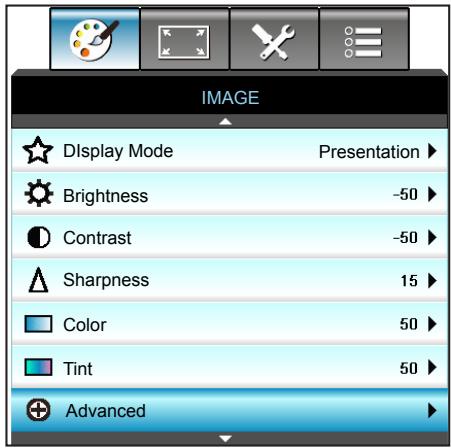
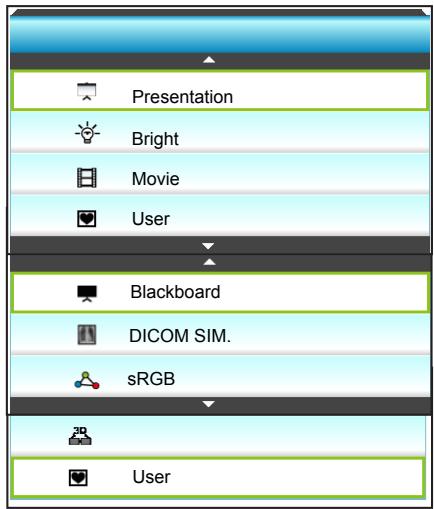
Display Mode
There are many factory presets optimized for various types of images.
Presentation: This mode is suitable for showing in front of public in connection to the PC.
Bright: Maximum brightness from PC input.
Movie: This mode is suitable for watching video.
User: Memorize user's settings.
Blackboard: This mode should be selected to achieve optimum color settings when projecting onto a blackboard (green).
DICOM SIM.: This mode can project a monochrome medical image such as an X ray radiography, MRI, etc.
sRGB: Standardized accurate color.
3D: To experience the 3D effect, you need to have 3D glasses, make sure your PC/portable device has a 120Hz signal output quad buffered graphics card and have a 3D Player installed.
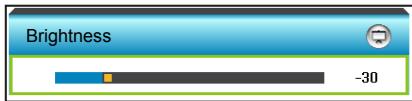
Brightness
Adjust the brightness of the image.
Press the to darken image.
Press the▶▶ to lighten the image.
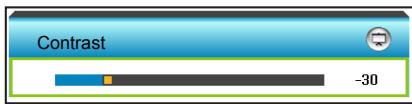
Contrast
The contrast controls the degree of difference between the lightest and darkest parts of the picture.
Press the to decrease the contrast.
Press the to increase the contrast.
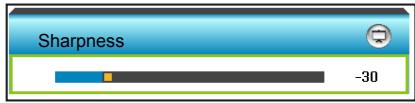
Sharpness
Adjust the sharpness of the image.
Press the to decrease the sharpness.
Press the to increase the sharpness.
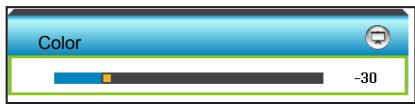
Color
Adjust a video image from black and white to fully saturated color.
Press the to decrease the amount of saturation in the image.
Press the to increase the amount of saturation in the image.
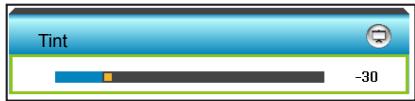
Tint
Adjust the color balance of red and green.
Press the to increase the amount of green in the image.
Press the to increase the amount of red in the image.
Reset
Choose "Yes" to return the factory default settings for "IMAGE".
Choose "Exit" to exit the menu.
IMAGE | Advanced
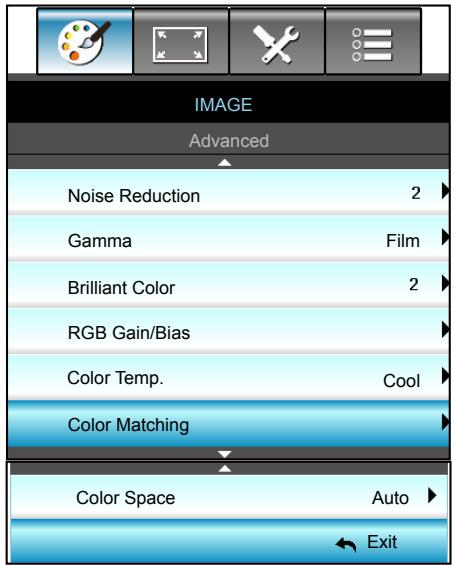
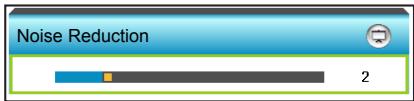
Noise Reduction
Selects a filter sensitivity to noise. A higher value may improve noisy sources, but it will soften the image.
Press the to decrease the noise in the image.
Press the to increase the noise in the image.
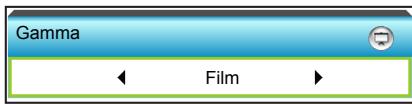
Gamma
This allows you to set up gamma curve type. After the initial setup and fine tuning is completed, utilize the Gamma Adjustment steps to optimize your image output.
Film: for home theater.
Graphics: for PC / Photo source.
Blackboard: This mode should be selected to achieve optimum color settings when projecting onto a blackboard (green).
DICOM SIM.: This mode can project a monochrome medical image such as an X ray radiography, MRI, etc.
Press the or to select the mode.
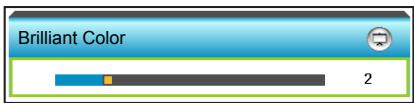
BrilliantColor™
This adjustable item utilizes a new color-processing algorithm and enhancements to enable higher brightness while providing true, more vibrant colors in picture.
Press the to stronger enhance the image.
Press the to less enhance the image.
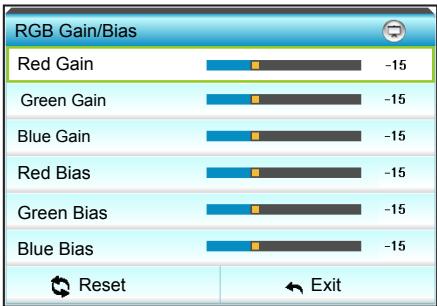
RGB Gain/Bias
This settings allows to configure the brightness (gain) and contrast (bias) of an image.
Press the to decrease a chosen color gain and bias.
Press the to increase a chosen color gain and bias.
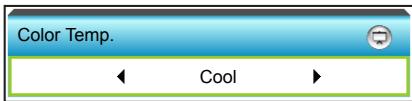
Color Temp.
Press the or to select a color temperature from Standard, Cool and Cold.
User Controls
Color Matching
Press the into the next menu and then use or or or to select the item.
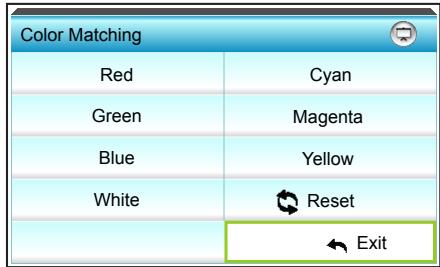
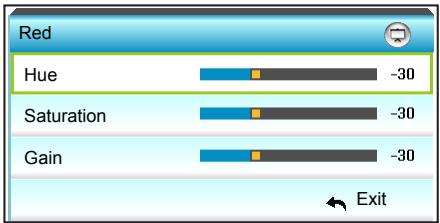
Red: Press the or to select Hue, Saturation and Gain Colors. Then press the or to decrease or increase the value respectively.
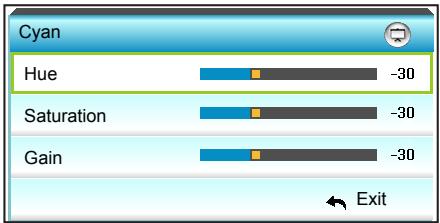
Cyan: Press the or to select Hue, Saturation and Gain Colors. Then press the or to decrease or increase the value respectively.
User Controls
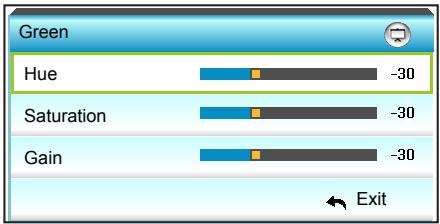
Green: Press the or to select Hue, Saturation and Gain Colors. Then press the or to decrease or increase the value respectively.
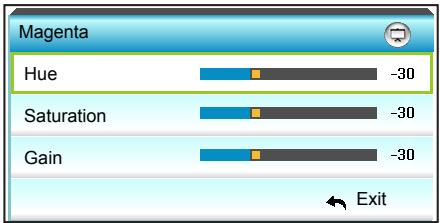
Magenta: Press the or to select Hue, Saturation and Gain Colors. Then press the or to decrease or increase the value respectively.
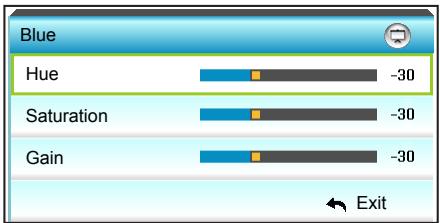
Blue: Press the or to select Hue, Saturation and Gain Colors. Then press the or to decrease or increase the value respectively.
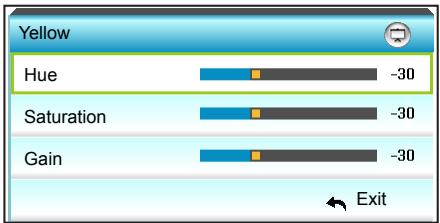
Yellow: Press the or to select Hue, Saturation and Gain Colors. Then press the or to decrease or increase the value respectively.
User Controls
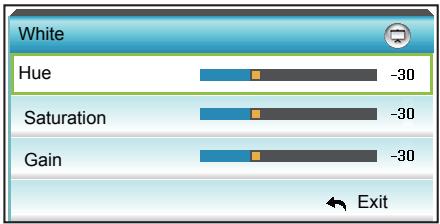
White: Press the or to select Hue, Saturation and Gain Colors. Then press the or to decrease or increase the value respectively.
Reset: Choose "Reset" to return the factory default settings for color adjustments.
Color Space
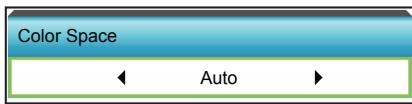
Press the or to select an appropriate color matrix type from the following:
Non-HDMI Input: Auto, RGB or YUV
HDMI Input: Auto, RGB(0-255), RGB(16-235) or YUV.
Reset
Current: Choose "Yes" to return the display parameters on this menu to the factory default settings.
All: Choose "Yes" to return the display parameters on all menus to the factory default settings.
Exit
Choose "Exit" to exit the menu.
User Controls
DISPLAY
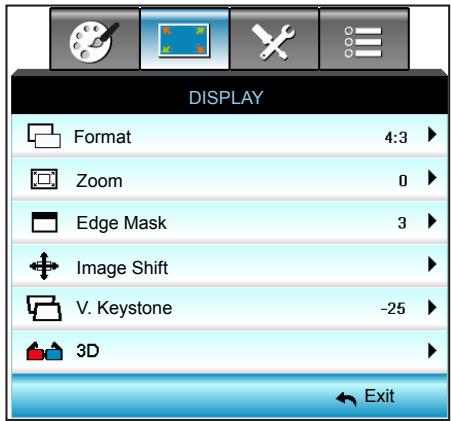
Format
Press the or to choose your desired aspect ratio between 4:3, 16:9/16:10 (WXGA), LBX, Native, and Auto.
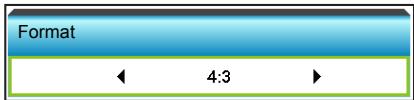
XGA
4:3: This format is for 4:3 input sources.
16:9: This format is for 16:9 input sources, like HDTV and DVD enhanced for Wide screen TV.
Native: This format displays the original image without any scaling.
AUTO: Automatically selects the appropriate display format.
| Source | 480i/p | 576i/p | 1080i/p | 720p |
| 4:3 | Scale to 1024 x 768 | |||
| 16:9 | Scale to 1024 x 576 | |||
| Native | No scaling will be made; the resolution is dependent on which input source and is then displayed. | |||
| Auto | ►If source is 4:3, it will be auto resized to 1024 x 768►If source is 16:9, it will be auto resized to 1024 x 576►If source is 15:9, it will be auto resized to 1024 x 614►If the source is 16:10, it will be auto resized to 1024 x 640 | |||
WXGA
4:3: This format is for 4:3 input sources.
16:9: This format is for 16:9 input sources, like HDTV and DVD enhanced for Wide screen TV.
16:10: This format is for 16:10 input sources, like widenscreen laptops.
LBX: This format is for non-16x9, letterbox source and for users who use external 16x9 lens to display 2.35:1 aspect ratio using full resolution.
Native: This format displays the original image without any scaling.
AUTO: Automatically selects the appropriate display format. Detail informations about LBX mode:
- Some Letter-Box Format DVDs are not enhanced for 16x9 TVs. In this situation, the image will not look right when displayed in 16:9 mode. In this situation, please try to using the 4:3 mode to view the DVD. If the content is not 4:3, there will be black bars around the image in 16:9 display. For this type of content, you can use LBX mode to fill the image on the 16:9 display.
- If you use an external anamorphic lens, this LBX mode also allows you to watch a 2.35:1 content (include Anamorphic DVD and HDTV film source) that support anamorphic wide is enhanced for 16x9 Display in a wide 2.35:1 image. In this case, there are no black bars. Lamp power and vertical resolution are fully utilized.
| 16:9 Screen | 480i/p | 576i/p | 1080i/p | 720p | PC |
| 4:3 | Scale to 960 x 720 | ||||
| 16:9 | Scale to 1280 x 720 | ||||
| LBX | Scale to 1280 x 960, in order to get the central 1280 x 720 image displayed on the screen. | ||||
| Native | 1:1 mapping centered | 1:1 mapping display 1280 x 720 | 1280 x 720 centered | 1:1 mapping centered | |
| Auto | ►If this format is selected, the screen type will automatically set to 16:9 (1280 x 720)►If source is 4:3, it will be auto resized to 960 x 720►If source is 16:9, it will be auto resized to 1280 x 720►If source is 15:9, it will be auto resized to 1200 x 720►If the source is 16:10, it will be auto resized to 1152 x 720 | ||||
| 16:10 Screen | 480i/p | 576i/p | 1080i/p | 720p | PC |
| 4:3 | Scale to 1066 x 800 | ||||
| 16:10 | Scale to 1280 x 800 | ||||
| LBX | Scale to 1280 x 960, in order to get the central 1280 x 800 image displayed on the screen. | ||||
| Native | 1:1 mapping centered | 1:1 mapping display 1280 x 800 | 1280 x 720 centered | 1:1 mapping centered | |
| Auto | Input source will be fit into 1280x800 display area and be kept its original aspect ratioIf source is 4:3, auto resize to 1066 x 800If source is 16:9 auto resize to 1280 x 720If source is 15:9 auto resize to 1280 x 768If source is 16:10 auto resize to 1280 x 800 | ||||
1080P
4:3: This format is for 4:3 input sources.
16:10: This format is for 16:10 input sources, like widenscreen laptops.
LBX: This format is for non-16x9, letterbox source and for users who use external 16x9 lens to display 2.35:1 aspect ratio using full resolution.
Native: This format displays the original image without any scaling.
AUTO: Automatically selects the appropriate display format.
| 16:9 Screen | 480i/p | 576i/p | 1080i/p | 720p | PC |
| 4:3 | Scale to 1440 x1080 | ||||
| 16:10 | Scale to 1920x1080 | ||||
| LBX | Scale to 1920 x 1440, in order to get the central 1920 x 1080 image displayed on the screen. | ||||
| Native | 1:1 mapping centered No scaling will be made; the resolution is dependent on which input source and is then displayed. | ||||
| Auto | ►If this format is selected, the screen type will automatically become 16:9►If source is 4:3, auto resize to 1440 x 1080►If source is 16:9 auto resize to 1920 x 1080►If source is 16:10 auto resize to 1920 x 1200 and cut to 1920 x x1080 area display | ||||
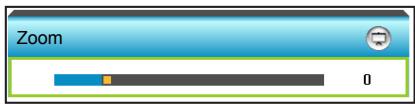
Zoom
Press the to reduce the size of an image.
Press the to magnify an image on the projection screen.
Edge Mask
Edge mask the image to remove video encoding noise on the edge of video source.
Press the to decrease the edge mask in image.
Press the to increase the edge mask in image.
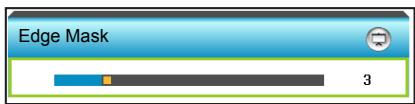

Each I/O has different setting of "Edge Mask".
"Edge Mask" and "Zoom" can't work at same time.
Image Shift
Press the into the next menu as below and then press the or or or to select item.
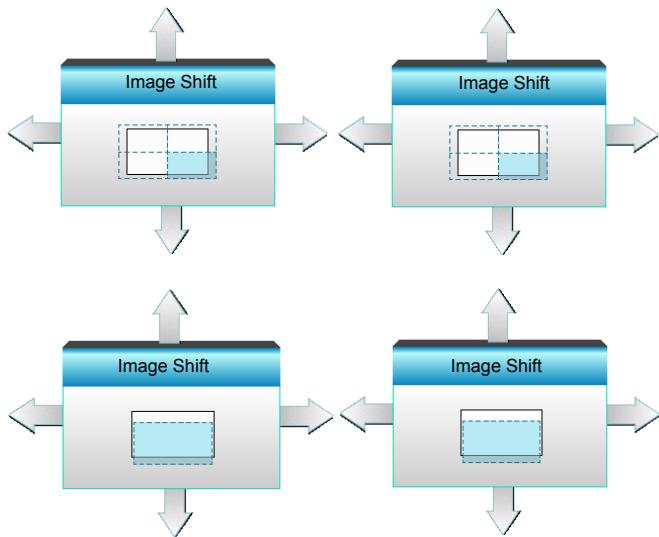
H: Press the to shift the projected image position horizontally.
V: Press the to shift the projected image position vertically.
V Keystone
Press the or to adjust image distortion vertically and make a squarer image.
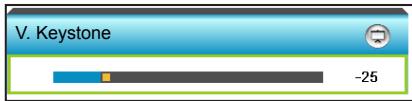
Exit
Choose "Exit" to exit the menu.
DISPLAY|3D
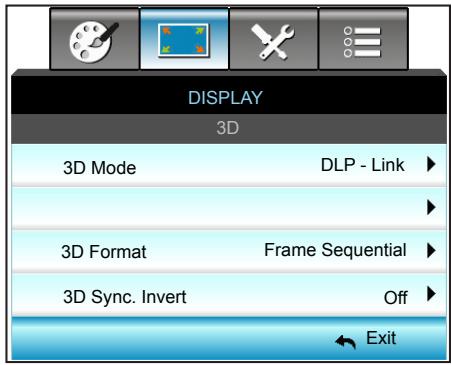
3D Mode

3D Format is only supported on 3D Timing on page 94.
3D Format" is only supported on non-HDMI 1.4a 3D timing.
Off: Select "Off" to turn off 3D mode.
Press the or to select the 3D mode.
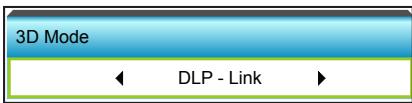
DLP-Link: Select "DLP-Link" to use optimized settings for DLP Link 3D Glasses. (refer to page 15).
VESA 3D: Select "VESA 3D" to use optimized setting for VESA 3D Glasses. (refer to page 15).
3D->2D
Press the or to select 3D -> 2D.
3D: Display 3D signal.
L (Left): Display the left frame of 3D content.
R (Right): Display the right frame of 3D content.
3D Format
Press the or to select 3D format.
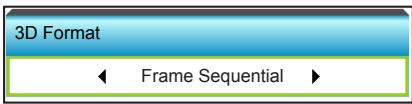
Auto: When a 3D identification signal is detected, the 3D format is selected automatically.
SBS: Display 3D signal in "Side-by-Side" format.
Top and Bottom: Display 3D signal in "Top and Bottom" format.
Frame Sequential: Display 3D signal in "Frame Sequential" format.
3D Sync. Invert
Press the or to select 3D sync. invert.
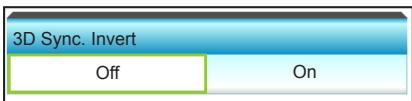
Press the "On" to invert left and right frame contents.
Press the "Off" for default frame contents.
Exit
Choose "Exit" to exit the menu.
User Controls

SETUP
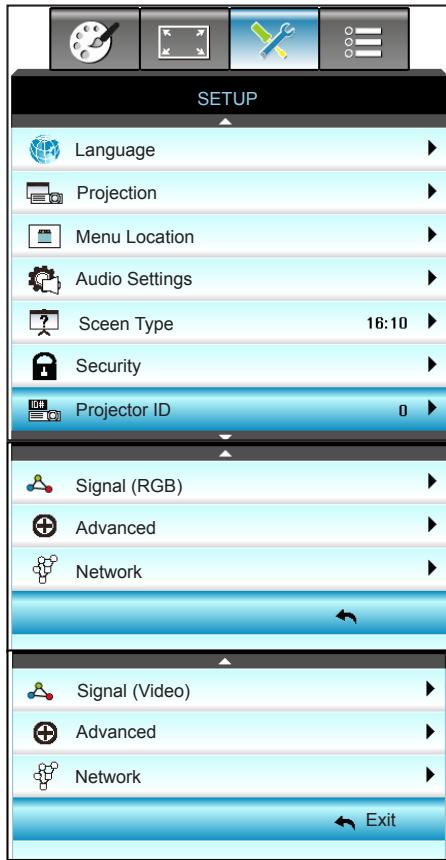
Language
Choose the multilingual OSD menu. Press into the sub menu and then press the or or or key to select your preferred language. Press "Enter" to finalize the selection.
| Language | |||
| English | Nederland | Čeština | Türkçë |
| Deutsch | Norsk/Dansk | Großy | Großy |
| Français | Polski | 繁體中文 | Slovenský |
| Italiano | Yuczký | 简体中文 | Romanian |
| Espanol | Suomi | 日本語 | |
| Português | ελληνία | 한국어 | |
| Svenska | Magyar | Inu | Exit |
Projection

Rear-Desktop and Rear-Ceiling are to be used with a translucent screen.
Press the or or or key to select the preferred projection.
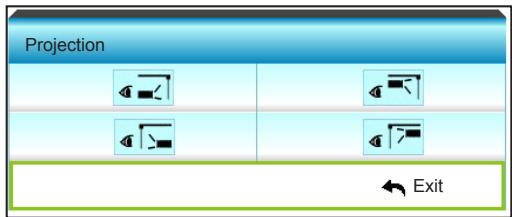
Front-Projection
This is the default selection. The image is projected straight on the screen.
Rear-Desktop
When selected, the image will appear reversed.
Front-Ceiling
When selected, the image will turn upside down.
Rear-Ceiling
When selected, the image will appear reversed in upside down position
Menu Location
Press the or or or key to select the preferred menu location.
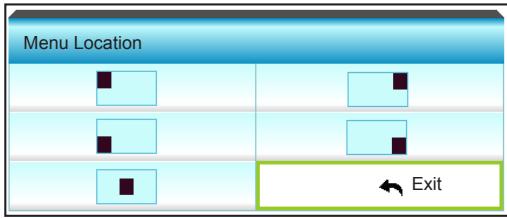

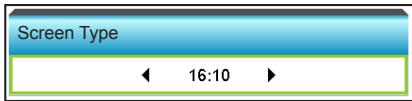
*This screen type applies to WXGA only.
Screen Type
Press the or to choose the screen type from 16:10* or 16:9.
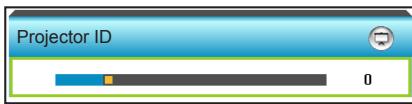
Projector ID
ID definition can be set up by menu (range 0-99), and allow user control an individual projector by RS232.
Press the to decrease the projector ID number.
Press the to increase the projector ID number.
Exit
Choose "Exit" to exit the menu.
User Controls
SETUP | Audio Settings
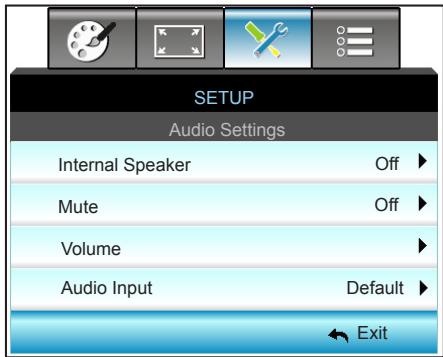

"Mute" function affects both internal and external speaker volume.
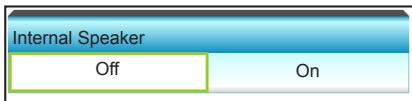
Internal Speaker
Choose the "On" or "Off" to turn on or off the internal speaker.
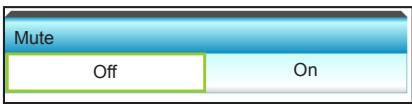
Mute
Choose the "On" to turn mute on.
Choose the "Off" to turn mute off.
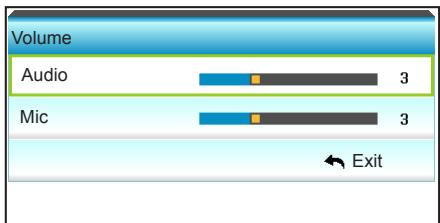
Volume
Press the to decrease the volume.
Press the to increase the volume.
Audio Input
The default audio settings are on the back panel of the projector. Use this option to reassign any of the Audio Inputs (1 or 2) to the current image source. Each Audio input can be assigned to more than one video source.
Press or to select audio input.
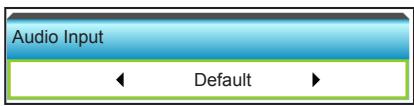
Default.
Audio 1: (RCA) for Composite
Audio 2: (Mini jack) for VGA
Exit
Choose "Exit" to exit the menu.
User Controls
SETUP | Security
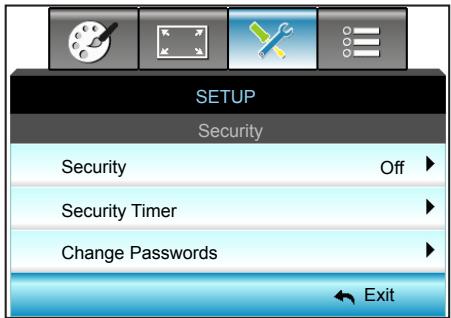
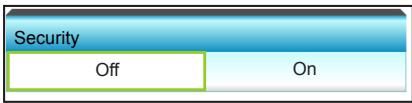
Security
On: Choose "On" to use security verification when the turning on the projector.
Off: Choose "Off" to be able to switch on the projector without password verification.
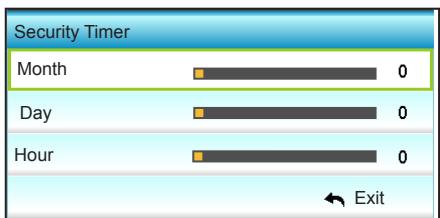
Security Timer
Can be select the time (Month/Day/Hour) function to set the number of hours the projector can be used. Once this time has elapsed you will be requested to enter your password again.
Press the or to set the month, day, and hour.

Pass-code default value is "1234" (first time).
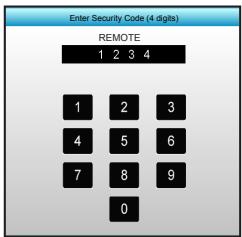
Change Password
First time:
- Press "Enter" key to set the password.
- The password has to be 4 digits.
- Use number button on the remote or on-screen numeric keypad to enter your new password and then press "Enter" key to confirm your password.
Change Password: (If your remote does not have a number keypad, please use the up/down arrows to change each digit of the password, then press enter to confirm)
- Press "Enter" to input old password.
- Use number button or on-screen numeric keypad to enter current password and then press "Enter" to confirm.
- Enter new password (4 digits in length) using the number buttons on the remote, then press "Enter" to confirm.
- Enter new password again and press "Enter" to confirm.
If the incorrect password is entered 3 times, the projector will automatically shut down.
If you have forgotten your password, please contact your local office for support.
Exit
Choose "Exit" to exit the menu.
User Controls
SETUP | Network
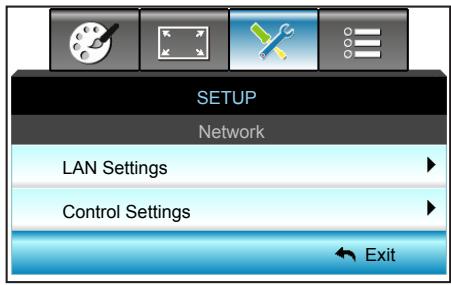
LAN Settings
For more information on LAN Settings, refer to page 58-59, and 62-69
Control Settings
For more information on Control Settings, refer to page 60-69.
SETUP | Network|LAN Settings
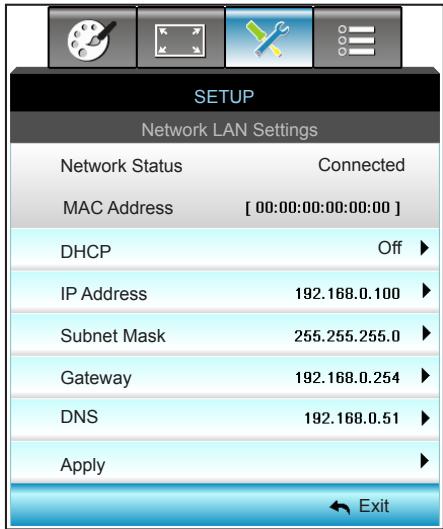
Network Status
Display the network connection status (read-only).
MAC Address
Display the MAC address (read-only).
DHCP
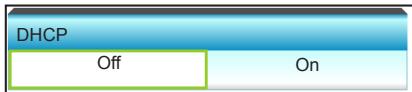
On: Projector will obtain an IP address automatically from your network.
Off: To assign IP, Subnet Mask, Gateway and DNS configuration manually.
Exiting OSD will automatically apply the entered values.
IP Address
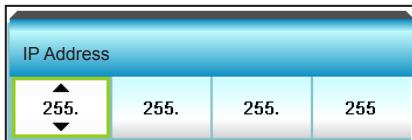
Display the IP address.
Subnet Mask
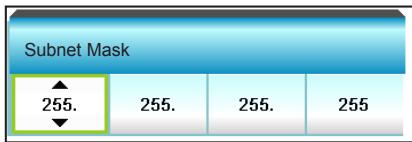
Display subnet mask number.
Gateway
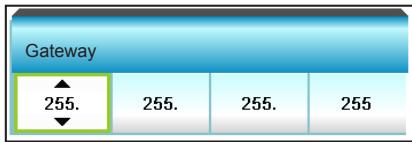
Display the default gateway of the network connected to the projector.
DNS
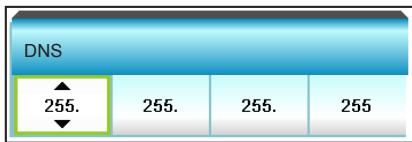
Display DNS number.
Apply
Press and then choose "Yes" to apply the selection.
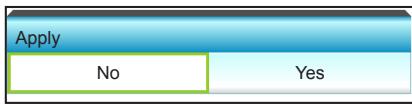
Exit
Choose "Exit" to exit the menu.
SETUP | Network|Control Settings
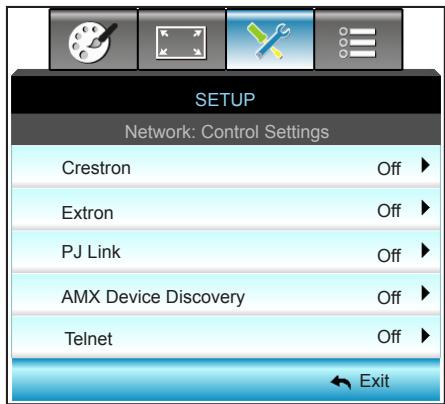
Crestron
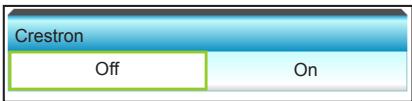
Use this function to select the network function (port: 41794). For more information, please visit http://www.crestron.com and www.crestron.com/getroomview.
On: The Crestron function is active.
Off: The Crestron function is inactive.
Extron
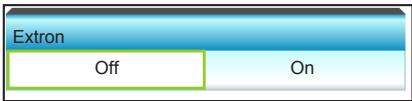
Use this function to select the network function (port: 2023).
On: The Extron function is active.
Off: The Extron function is inactive.
PJ Link
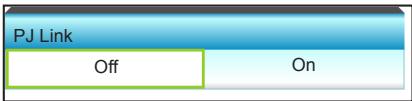
Use this function to select the network function (port: 4352).
On: The PJ Link function is active.
Off: The PJ Link function is inactive.
AMX Device Discovery
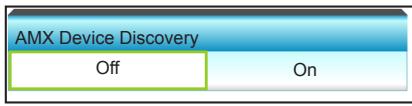
Use this function to select the network function (port: 1023).
On: The AMX Discovery function is active.
Off: The AMX Discovery function is inactive.
Telnet
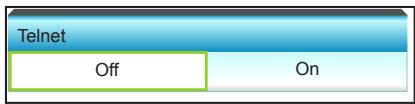
Use this function to select the network function (port: 23).
On: Telnet is enabled.
Off: Telnet is disabled.
Exit
Choose "Exit" to exit the menu.

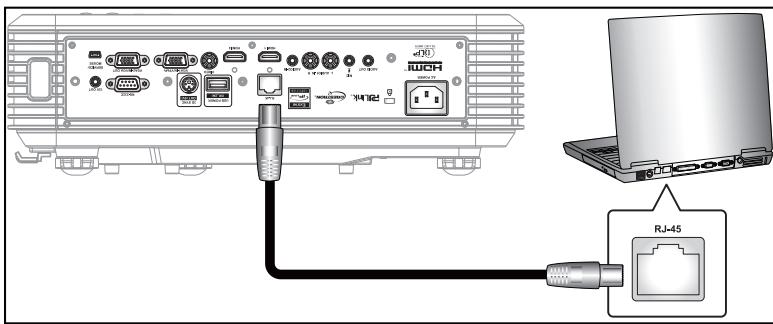
Use Ethernet Normal Cable to connect the projector to LAN..
LAN RJ45 Function
For simplicity and ease of operation, the W320UST projector provides diverse networking and remote management features. The LAN/RJ45 function of the projector through a network, such as remotely manage: Power On/Off, Brightness and Contrast settings. Also, projector status information, such as: Video-Source, Sound-Mute, etc.
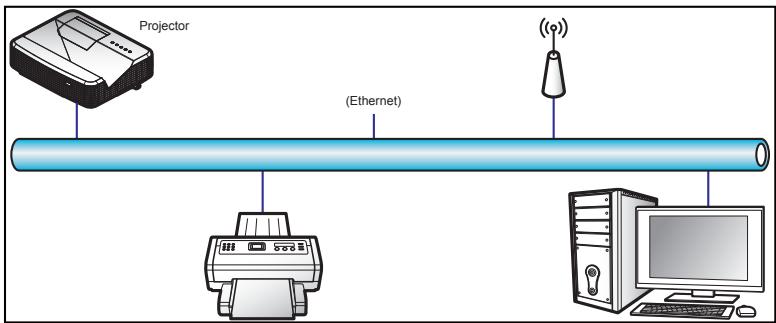
Wired LAN Terminal Functionalities
This projector can be controlled by using a PC (laptop) or other external device via LAN/RJ45 port and compatible ith Crestron / Extron / AMX (Device Discovery) / PJLink.
Crestron is a registered trademark of Crestron Electronics, Inc. of the United States.
Extron is a registered trademark of Extron Electronics, Inc. of the United States.
AMX is a registered trademark of AMX LLC of the United States.
PJLink applied for trademark and logo registration in Japan, the United States of America, and other countries by JBMIA.
Wired LAN Terminal Functionalities
W320UST projector is supported by the specified commands of the Crestron Electronics controller and related software, for example RoomView®.
http://www.crestron.com/
This projector is compliant to support Extron device(s) for reference.
http://www.extron.com/
This projector is supported by AMX ( Device Discovery ).
http://www.amx.com/
User Controls
This projector supports all commands of PJLink Class1 (Version 1.00).
http://pjlink.jbmia.or.jp/english/
For more detailed information about the various types of external devices which can be connected to the LAN/RJ45 port and remote/control the project, as well as the supported commands for these external devices, please contact the Support-Service directly.
LAN RJ45
- Connect an RJ45 cable to RJ45 ports on the projector and the PC (laptop).
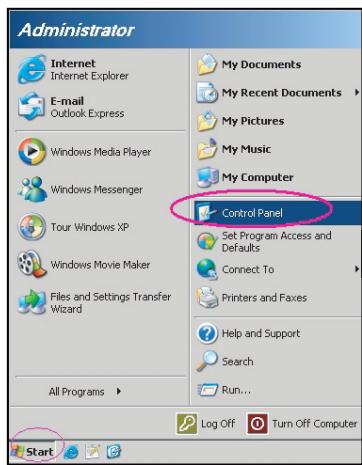
- On the PC (Laptop), select Start > Control Panel > Network Connections.
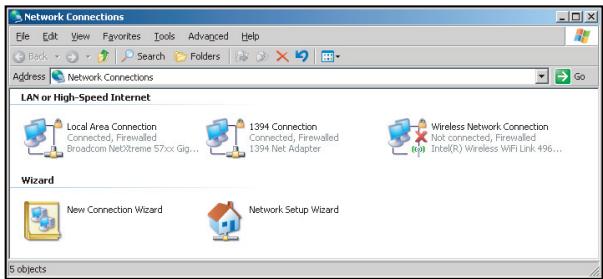
- Right-click on the Local Area Connection, and select Property.
- In the Properties window, select the General tab, and select Internet Protocol (TCP/IP).
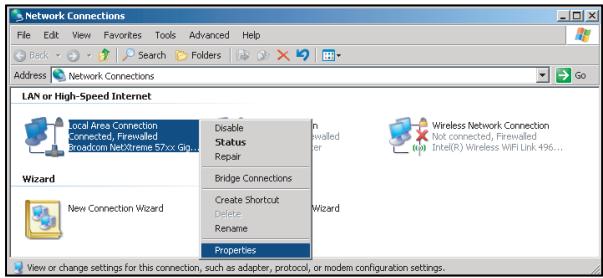
- Click "Properties".
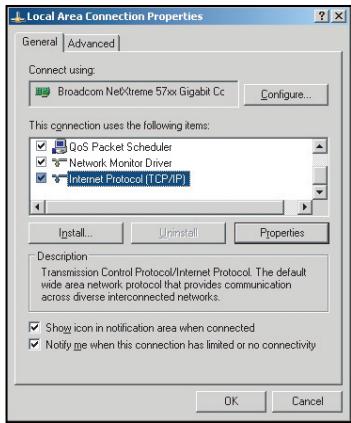
- Type in the IP address and Subnet mask, then press "OK".
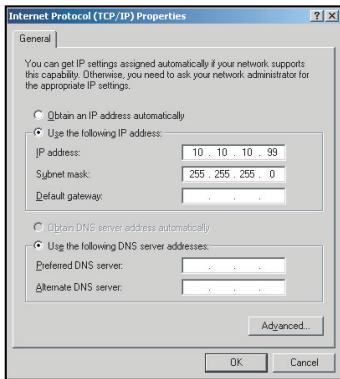
- Press the "Menu" button on the projector.
- Use keys to select SETUP > Network > LAN Settings.
- After getting into LAN Settings, input the following connection parameters:
DHCP: Off
IP Address: 10.10.10.10
Subnet Mask: 255.255.255.255
Gateway: 0.0.0.0
DNS:0.0.0.0
- Press "Enter" to confirm settings.
- Open a web browser, for example Microsoft Internet Explorer with Adobe Flash Player 9.0 or higher installed.
- In the Address bar, input the projector's IP address: 10.10.10.10.

13. Press "Enter".
The projector is setup for remote management. The LAN/RJ45 function displays as follows:
Information Page
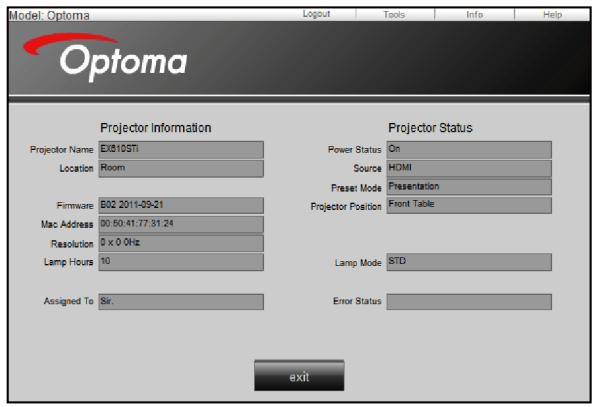
Main Page
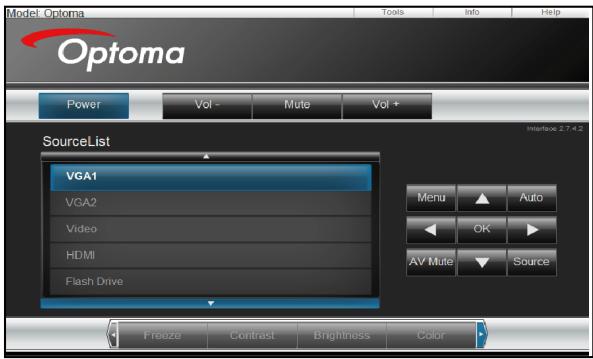
User Controls
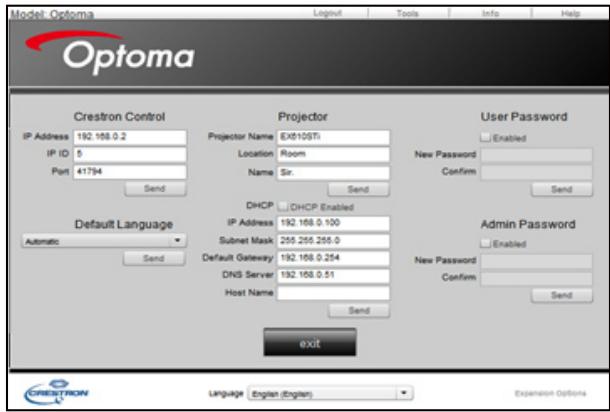
Tool Page
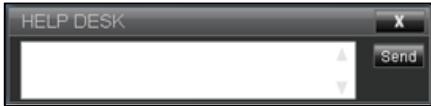
Contact IT Helpdesk
RS232 by Telnet Function
There is alternative RS232 command control way, in projector so called "RS232 by TELNET" for LAN/RJ45 interface.
Quick Start-Guide for "RS232 by Telnet"
Check and get the IP address on OSD of the projector.
Make sure that the PC/laptop can access the web-page of the projector.
Make sure that "Windows Firewall" setting is set disabled in case of "TELNET" function filtering out by PC/laptop.
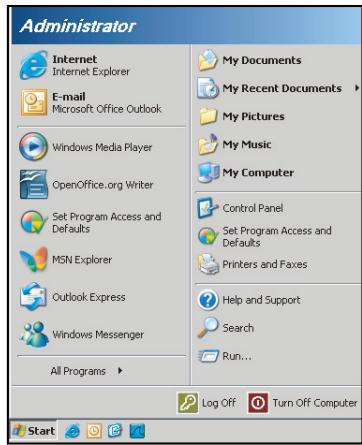
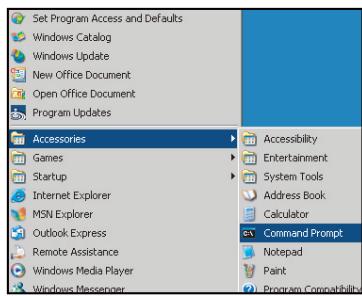
- Start > All Programs.> Accessories > Command Prompt.
- Input the command format as follows: telnet ttt.xxx.xxx.xxx 23 ("Enter" key pressed) (ttt.xxx.xxx.xxx IP-Address of the projector)
- If Telnet-Connection ready, and user can have RS232 command input, then "Enter" key pressed, the RS232 command will be workable.

In Windows XP built-in "TELNET.exe" utility, "Enter" key pressed will have "Carriage-Return" and "New-Line" code.
Specification for "RS232 by TELENT".
- Telnet: TCP.
- Telnet port: 23 (for more detail, kindly please get contact with the service agent or team).
- Telnet utility: Windows "TELNET.exe" (console mode).
- Disconnection for RS232-by-Telnet control normally: Close
- Windows Telnet utility directly after TELNET connection ready.
Limitation 1 for Telnet-Control: there is less than 50 bytes for successive network payload for Telnet-Control application.
Limitation 2 for Telnet-Control: there is less than 26 bytes for one complete RS232 command for Telnet-Control.
Limitation 3 for Telnet-Control: Minimum delay for next RS232 command must be more than 200 (ms).
SETUP | Signal (RGB)
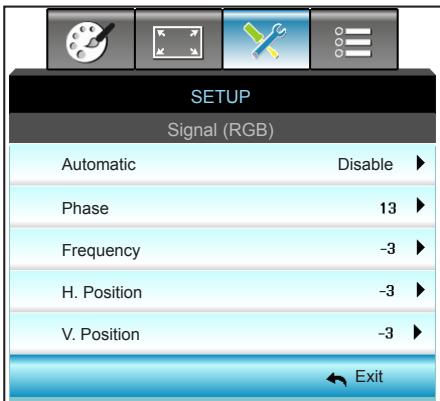

Automatic
"Signal" is only supported in Analog VGA (RGB) signal.
If "Signal" is automatic, the phase, frequency items are grayed out, and if "Signal" is not automatic, the phase, frequency items will appear for the user to manually tune and are saved in the settings after that for the next time projector is turned off and on again.
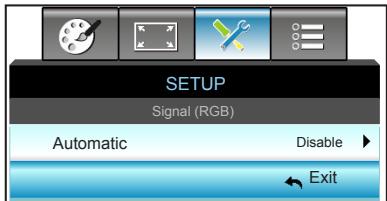
Automatically selects the signal. If you use this function, the Phase, frequency items are grayed out, and if Signal is not automatic, the phase, frequency items will appear for user to manually tune and saved in settings after that for next time projector turns off and on again
Phase
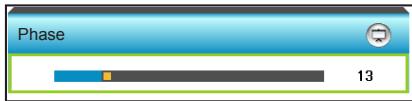
Synchronize the signal timing of the display with the graphic card. If the image appears to be unstable or flickers, use this function to correct it.
Press the to decrease the phase value.
Press the to increase the phase value.
Frequency
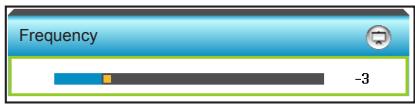
Change the display data frequency to match the frequency of your computer's graphic card. Use this function only if the image appears to flicker vertically.
Press the to decrease the frequency.
Press the to increase the frequency.
H. Position (Horizontal Position)
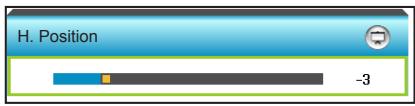
Press the to move the image left.
Press the to move the image right.
V. Position (Vertical Position)
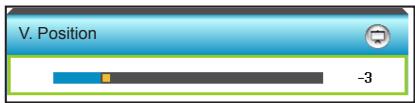
Press the to move the image down.
Press the to move the image up.
Exit
Choose "Exit" to exit the menu.
SETUP | Signal (Video)
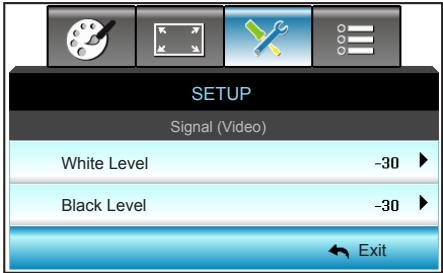
White Level
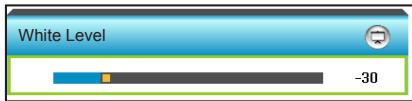
Adjust the overall white level of the projected image by applying a gain to the input image.
Press the to decrease the white level.
Press the to increase the white level.
Black Level
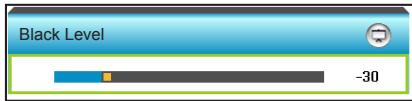
Adjust the overall black level of the projected image by applying a offset to the input image.
Press the to decrease the black level.
Press the to increase the black level.
Exit
Choose "Exit" to exit the menu.
SETUP | Advanced
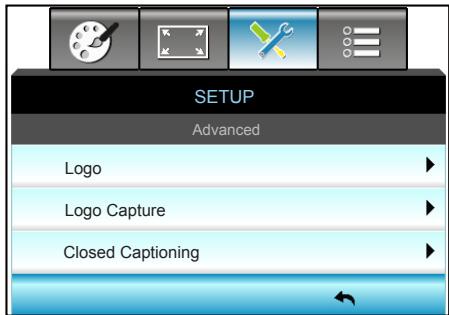
Logo

For a successful logo capture, ensure that the on-screen image does not exceed the projector native resolution. (1280 x 800).
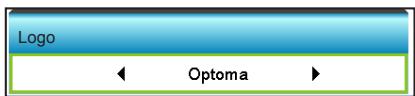
Use this function to set the desired startup screen. If changes are made they will take effect the next time the projector is powered on.
Neutral: Logo is not displayed on startup screen.
Optoma: Optoma logo is displayed on startup screen.
User:User-defined background is shown on startup screen.
Logo Capture
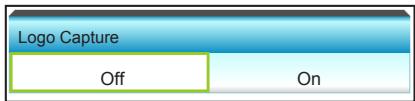
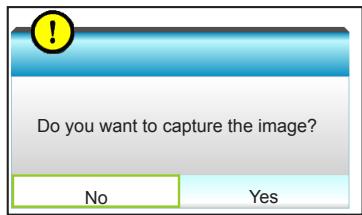
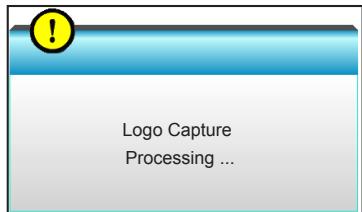
Choose "On" and "Yes" to capture an image of the picture currently displayed on screen.
Closed Captioning
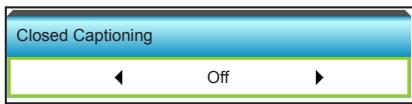
Closed Captioning is a text version of the program sound or other information displayed on the screen. If the input signal contains closed captions, you can turn on the feature and watch the channels. Press or to select between CCI, or CC2. Choose Off to disable this function.
Exit
Choose "Exit" to exit the menu.
OPTIONS
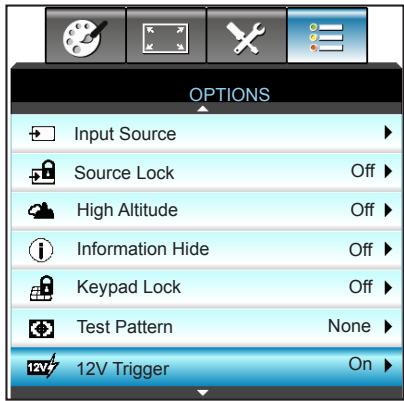

“VGA2” depends on the settings of "VGA2 Switch".
Input Source
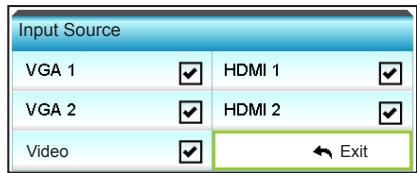
Use this option to enable/disable input sources. Press to enter the sub menu and select which sources you require. Press "Enter" to finalize the selection. The projector will only search for inputs that are enabled.
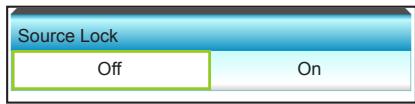
Source Lock
On: The projector will only search current input connection.
Off: The projector will search for other signals if the current input signal is lost.
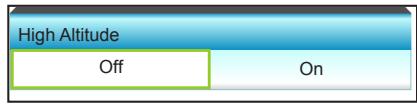
High Altitude
When "On" is selected, the fans will spin faster. This feature is useful in high altitude areas where the air is thin.
User Controls
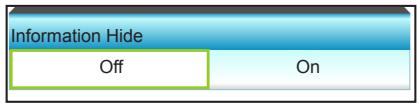
Information Hide
On: Choose "On" to hide the info message.
Off: Choose "Off" to show the "searching" message.
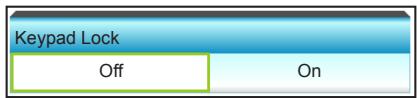
Keypad Lock
When the keypad lock function is "On", the Keypad will be locked however, the projector can be operated by the remote control. By selecting "Off", you will be able to unlock the Keypad.
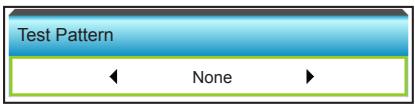
Test Pattern
Display a test pattern. There are Grid, White Pattern and None.
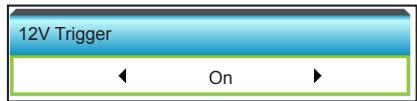
12V Trigger
Off: Choose "Off" to disable the trigger.
On: Choose "On" to enable the trigger.
User Controls
OPTIONS
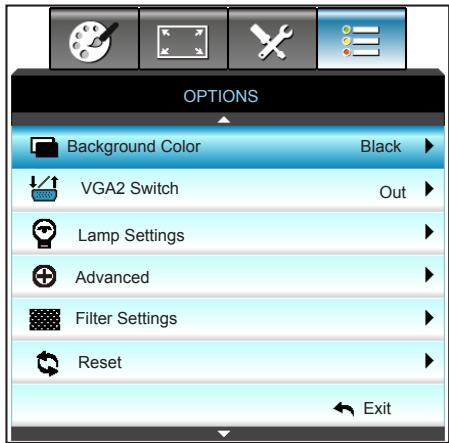
Background Color
Use this feature to display a "Black", "Red", "Blue", "Green" or "White", screen when no signal is available.
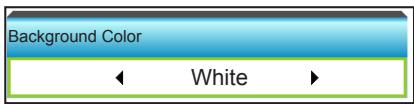
VGA2 Switch
When the "VGA2 Switch" feature is "In" then VGA2 port functions as input port. If the "VGA2 Switch" is "Out" then the port functions as output port for VGA1.
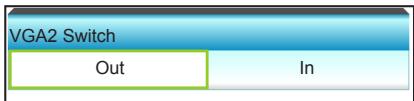
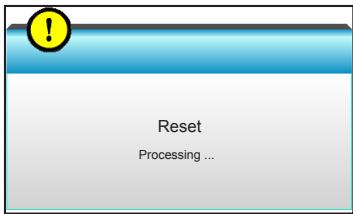
Reset
Current: Choose "Yes" to return the display parameters on this menu to the factory default settings.
All: Choose "Yes" to return the display parameters on all menus to the factory default settings.
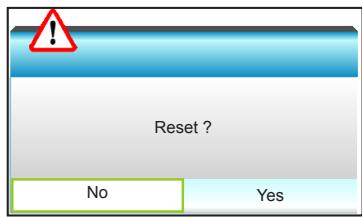
Exit
Choose "Exit" to exit the menu.
OPTIONS | Lamp Settings
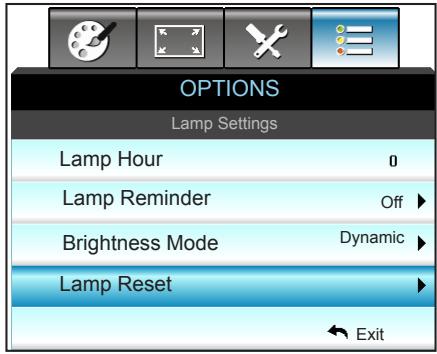

When ambient temperature is over 40^ in operating, the projector will switch to Eco automatically.
Dynamic model-lamp power can be dynamically adjusted from 100% to 30% .
Lamp Hours
Display the projection time.
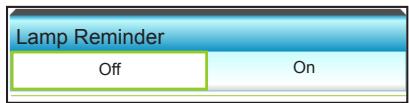
Lamp Reminder
Choose this function to show or to hide the warning message when the changing lamp message is displayed.
The message will appear 30 hours before suggested replacement of lamp.
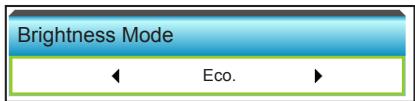
Brightness Mode
Bright: Choose "Bright" to increase the brightness.
Eco.: Choose "Eco." to dim the projector lamp which will lower power consumption and extend the lamp life.
Dynamic: Choose "Dynamic" to dim the lamp power which will be based on brightness level of the content and adjust lamp power consumption between 100% and 30% dynamically. The lamp life will be extended.
Eco+: When Eco+ mode is activated, the brightness level of the content is automatically detected to significantly reduced lamp power consumption (up to 70% ) during periods of inactivity.
Lamp Reset
Resetsthelamphourcounterafterreplacingthelamp.
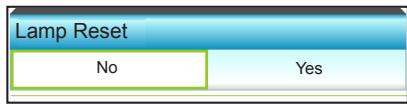
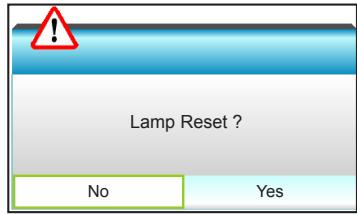
Exit
Choose "Exit" to exit the menu.
Lamp Behavior in different mode and function:
| Brightness Mode | Bright | Eco | Dynamic | Eco+ |
| White Pattern | 100% | 80% | 100% | 80% |
| Dimming range | N/A | N/A | 100%~30% | 80%~30% |
| Black Pattern | 100% | 80% | 30% (Sleep mode) | 30% (Sleep mode) |
| AV Mute | 30% (Sleep mode) | 30% (Sleep mode) | 30% (Sleep mode) | 30% (Sleep mode) |
| Quick Resume | 30% (Sleep mode) | 30% (Sleep mode) | 30% (Sleep mode) | 30% (Sleep mode) |
User Controls
OPTIONS | Advanced
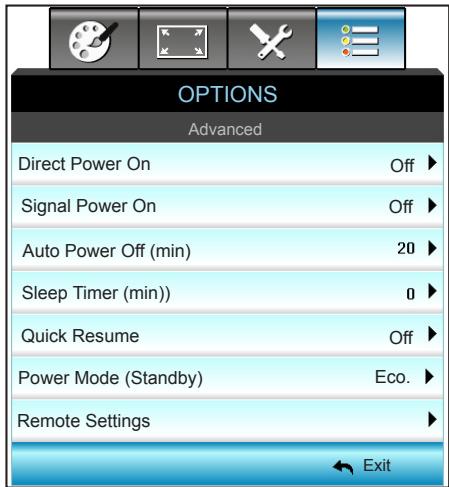
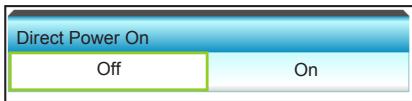
Direct Power On
Choose "On" to activate Direct Power mode. The projector will automatically power on when AC power is supplied, without pressing the "O" key on the projector Control Panel or on the remote control.

The Signal Power On function is not applicable if the input source is Video.
Signal Power On
Choose "On" to activate Signal Power mode. The projector will automatically power on when a signal is detected, without pressing the "U" key on the projector Control Panel or on the remote control.
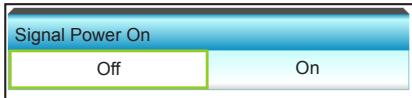

The value of sleep timer will be reset to zero after the projector power off.
Auto Power Off (min)
Sets the countdown timer interval. The countdown timer will start, when there is no signal being sent to the projector. The projector will automatically power off when the countdown has finished (in minutes).
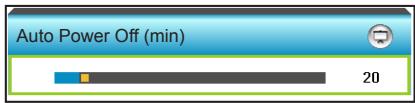
Press the to decrease the timer interval.
Press the to increase the timer interval.
Sleep Timer (min)
Sets the countdown timer interval. The countdown timer will start, with or without a signal being sent to the projector. The projector will automatically power off when the countdown has finished (in minutes).
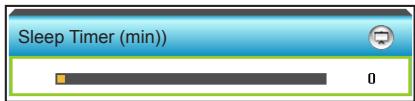
Press the to decrease the timer interval.
Press the to increase the timer interval.
Quick Resume
On: If the projector is accidentally turned off, this feature allows the projector to be instantly powered on again, if selected within a period of 100 seconds.
Off: The fan will start cooling the system after 10 seconds when user turns off the projector.
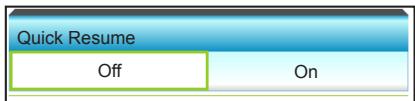
Power Mode (Standby)
Eco.: Choose "Eco." to save power dissipation further < 0.5W .
Active: Choose "Active" to return to normal standby.
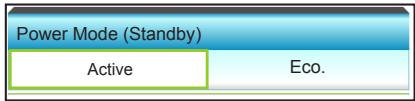
Exit
Choose "Exit" to exit the menu.
User Controls
OPTIONS | Remote Settings
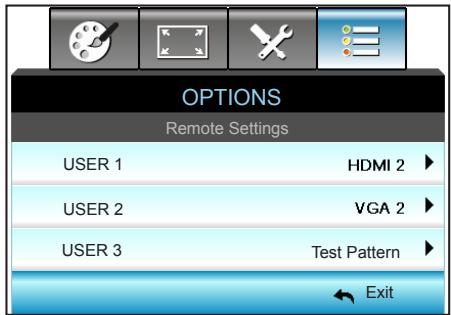
USER1
The default value is HDMI2.
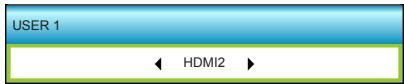
Press the into the next menu and then press the or to select HDMI2/VGA2/Test Pattern/LAN/Brightness/Contrast/Sleep Timer/ Color Matching/Color Temp/Gamma/ Source Lock /Projection/Lamp Settings/Zoom/Freeze.
USER2
The default value is VGA2.
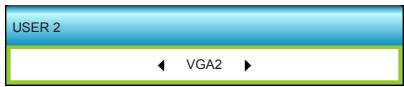
Press the into the next menu and then press the or to select HDMI2/VGA2/Test Pattern/LAN/Brightness/Contrast/Sleep Timer/ Color Matching/Color Temp/Gamma/ Source Lock /Projection/Lamp Settings/Zoom/Freeze.
USER3
The default value is Test Pattern.
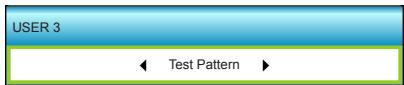
Press the into the next menu and then press the or to select HDMI2/VGA2/Test Pattern/LAN/Brightness/Contrast/Sleep Timer/ Color Matching/Color Temp/Gamma/ Source Lock /Projection/Lamp Settings/Zoom/Freeze.
OPTIONS | Filter Settings
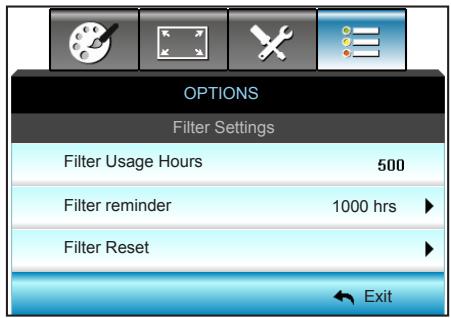

"Filter Usage Hours / Filter Reminder / Filter Reset" will only appear when "Optional Filter Installed" is "Yes".
Filter Usage Hours
Display the filter time.
Filter Reminder
Choose this function to show or hide the warning message when the changing filter message is displayed. (Factory default setting: 1000 hours)
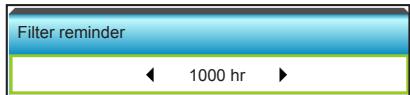
Press the to decrease the time period.
Press the to increase the time period.
Filter Reset
Reset the dust filter counter after replacing or cleaning the dust filer.
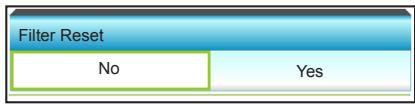
Exit
Choose "Exit" to exit the menu.
Troubleshooting
If you experience a problem with your projector, please refer to the following information. If a problem persists, please contact your local reseller or service center.
Image Problems
? No image appears on-screen
- Ensure all the cables and power connections are correctly and securely connected as described in the "Installation" section.
Ensure the pins of connectors are not crooked or broken. - Check if the projection lamp has been securely installed. Please refer to the "Replacing the Lamp" section.
Make sure the projector is switched on.
Ensure that the "AV Mute" feature is not turned on.
?Image is out of focus
Make sure the projection screen is between the required distance from the projector. (refer to pages 19-22)
? The image is stretched when displaying 16:9 DVD title
When you play anamorphic DVD or 16:9 DVD, the projector will show the best image in 16:9 format on projector side.
If you play the LBX format DVD title, please change the format as LBX in projector OSD.
If you play 4:3 format DVD title, please change the format as 4:3 in projector OSD.
If the image is still stretched, you will also need to adjust the aspect ratio by referring to the following:
Please setup the display format as 16:9 (wide) aspect ratio type on your DVD player.
?Image is too small or too large
Move the projector closer to or further from the screen.
Press "Menu" on the projector panel, go to "Display-->Format". Try the different settings.
?Image has slanted sides:
If possible, reposition the projector so that it is centered on the screen and below the bottom of the screen.
Use "Display--->V Keystone" from the OSD to make an adjustment.
?Image is reversed
Select "Setup-->Projection" from the OSD and adjust the projection direction.
? Blurry double image
Press "3D Format" button and switch to "Off" to avoid normal 2D image is blurry double image.
?Two images, side-by-side format
Press "3D Format" button and switch to "SBS" for input signal is HDMI 1.3 2D 1080i side-by-side.
?Image does not display in 3D
Check if the battery of 3D glasses is drained.
Check if the 3D glasses is turned on.
When the input signal is HDMI 1.3 2D (1080i side-by-side half), press "3D Format" button and switch to "SBS".
Other Problems
? The projector stops responding to all controls
If possible, turn off the projector, then unplug the power cord and wait at least 20 seconds before reconnecting power.
? Lamp burns out or makes a popping sound
- When the lamp reaches its end of life, it will burn out and may make a loud popping sound. If this happens, the projector will not turn on until the lamp module has been replaced. To replace the lamp, follow the procedures in the "Replacing the Lamp" section.
Remote Control Problems
? If the remote control does not work
- Check the operating angle of the remote control is within ± 15^ both horizontally and vertically of on of the IR receivers on the projector.
- Make sure there are not any obstructions between the remote control and the projector. Move to within 6 m (20 ft) of the projector.
Make sure batteries are inserted correctly.
Replace batteries if they are exhausted.
LED Lighting Messages
| Message | Power LED | Temp-LED | Lamp-LED |
| (Red/Green/Blue) | (Red) | (Red) | |
| Standby state (Input power cord) | Red | ○ | ○ |
| Power on (Warming) | Flashing Blue | ○ | ○ |
| Lamp lighting | Blue | ○ | ○ |
| Power off (Cooling) | Flashing Blue. Red (cooling fan has turned off) | ○ | ○ |
| Quick Resume (100 secs) | Flashing Blue | ○ | ○ |
| Error (Over temp.) | Flashing Red | ○ | ○ |
| Error (Fan failure) | Flashing Red | Flashing | |
| Error (Lamp failure) | Flashing Red | ○ |

Steady light No light O
On Screen Messages
Power off:
Lamp warning:
Temperature warning:
Fan failed:
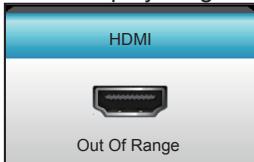
Out of display range:
Replacing the Lamp
The projector automatically detects the lamp life. When the lamp life is nearing the end of use, you will receive a warning message.
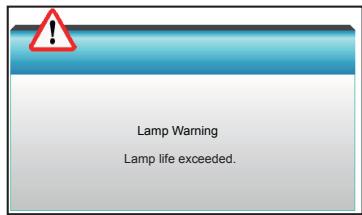
When you see this message, please contact your local reseller or service center to change the lamp as soon as possible. Make sure the projector has been cooled down for at least 30 minutes before changing the lamp.
CAUTION! Hg

HIGH TEMPERATURE COOL FOR 30 MINUTES.
HIGH PRESSURE LAMP MAY EXPLODE IF IMPROPERLY HANDED.
REFER TO LAMP REPLACEMENT INSTRUCTIONS.DISCONNECT POWER BEFORE CHANGING LAMP.
Warning: If ceiling mounted, please use caution when opening the lamp access panel. It is recommended to wear safety glasses if changing the bulb when ceiling mounted. "Caution must be used to prevent any loose parts from falling out of projector."

Warning: Lamp compartment is hot! Allow it to cool down before changing lamp!

Warning: To reduce the risk of personal injury, do not drop the lamp module or touch the lamp bulb. The bulb may shatter and cause injury if it is dropped.

The screw on the lamp cover and the lamp cannot be removed.
The projector cannot be turned on if the lamp cover has not been placed back on the projector.
Do not touch the glass area of the lamp. Hand oil can cause the lamp to shatter. Use a dry cloth to clean the lamp module if it was accidentally touched.
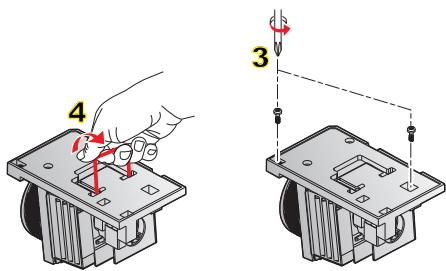
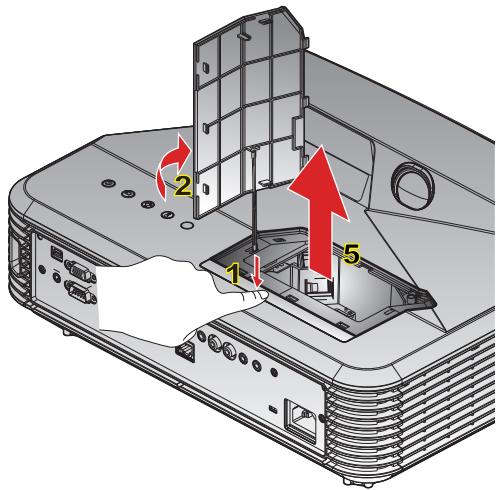
Lamp Replacement Procedure:
- Switch off the power to the projector by pressing the "O" button on the remote control or on the Control Panel of the projector.
- Allow the projector to cool down for at least 30 minutes.
- Disconnect the power cord.
- Press the release button to disengage the lamp cover from the main unit. 1
- Use your fingernail to pry the lamp cover loose and then remove it. 2
- Unscrew the two screws on the lamp module. 3
- Lift up the lamp handle 4 and remove the lamp module slowly and carefully. 5 To replace the lamp module, reverse the previous steps.
- Turn on the projector and reset the lamp timer.
Lamp Reset: (i) Press "Menu" (ii) Select "OPTIONS" (iii) Select "Lamp Settings" (iv) Select "Lamp Reset" (v) Select "Yes".

Dust filters are only required/supplied in selected regions with excessive dust.
Installing and Cleaning the Dust Filter
We recommend you clean the dust filter every 500 hours of operation, or more often if you are using the projector in a dusty environment.
When the warning message appears on the screen, do the following to clean the air filter:
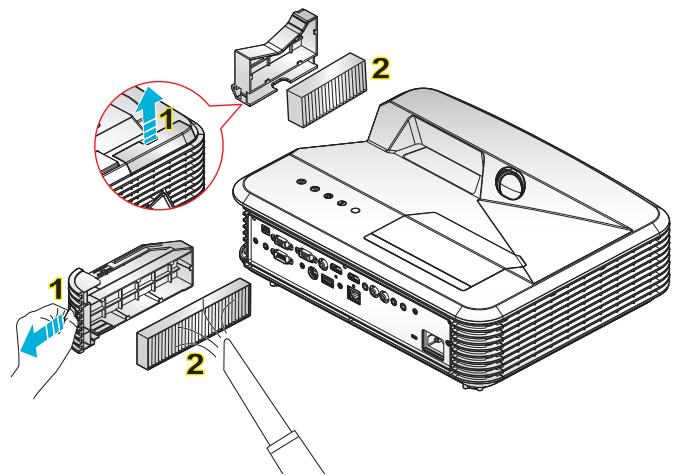
Air Filter Cleaning Procedure:
- Switch off the power to the projector by pressing the "O" button on the remote control or on the Control Panel of the projector.
- Disconnect the power cord.
- Pull out the latch to remove the dust filter compartment, as shown in the illustration. 1
- Carefully remove the air filter. Then clean or replace the dust filter. 2
To install the dust filter, reverse the previous steps.
- Turn on the projector and reset the filter usage counter after the dust filter is replaced.
Compatibility Modes
HDMI Compatibility
| Digital | ||
| B0/Established timing | B0/Standard timing | B0/Detail timing: |
| 720 x 400 @ 70Hz | XGA / WXGA | Native timing: |
| 640 x 480 @ 60Hz | 1440 x 900 @60Hz | XGA: 1024 x 768 @60Hz |
| 640 x 480 @ 67Hz | 1024 x 768 @120Hz | WXGA: 1280 x 800 @60Hz |
| 640 x 480 @ 72Hz | 1280 x 800 @60Hz | 1080P: 1920 x 1080 @60Hz |
| 640 x 480 @ 75Hz | 1280 x 1024 @60Hz | |
| 800 x 600 @ 56Hz | 1680 x 1050 @60Hz | |
| 800 x 600 @ 60Hz | 1280 x 720 @60Hz | |
| 800 x 600 @ 72Hz | 1280 x 720 @120Hz | |
| 800 x 600 @ 75Hz | 1600 x 1200 @60Hz | |
| 1024 x 768 @ 60Hz | 1080P | |
| 1024 x 768 @ 70Hz | 1280 x 720 @ 60Hz | |
| 1024 x 768 @ 75Hz | 1280 x 800 @ 60Hz | |
| 1280 x 1024 @ 75Hz | 1280 x1024 @ 60Hz | |
| 1400 x 1050 @ 60Hz | ||
| 1600 x 1200 @ 60Hz | ||
| 1440 x 900 @60Hz | ||
| B1/Video mode | B1/Detail timing: | |
| 640 x 480p @ 60Hz | 720 x 480p @ 60Hz | |
| 720 x 480p @ 60Hz | 1280 x 720p @ 60Hz | |
| 1280 x 720p @ 60Hz | 1366 x 768 @ 60Hz | |
| 1920 x 1080i @ 60Hz | 1920 x 1080i @ 50Hz | |
| 720(1440) x 480i @ 60Hz | 1920 x 1080p @ 60Hz | |
| 1920 x 1080p @ 60Hz | ||
| 720 x 576p @ 50Hz | ||
| 1280 x 720p @ 50Hz | ||
| 1920 x 1080i @ 50Hz | ||
| 720(1440) x 576i @ 50Hz | ||
| 1920 x 1080p @ 50Hz | ||
| 1920 x 1080p @ 24Hz | ||
| 1920 x 1080p @ 30Hz | ||
True 3D Video Compatibility
| Input resolution | Input timing | ||
| HDMI 1.4b 3D Input | 1280 x 720p @ 50Hz | Top-and-Bottom | |
| 1280 x 720p @ 60Hz | Top-and-Bottom | ||
| 1280 x 720p @ 50Hz | Frame packing | ||
| 1280 x 720p @ 60Hz | Frame packing | ||
| 1920 x 1080i @ 50 Hz | Side-by-Side (Half) | ||
| 1920 x 1080i @ 60 Hz | Side-by-Side (Half) | ||
| 1920 x 1080p @ 24 Hz | Top-and-Bottom | ||
| 1920 x 1080p @ 24 Hz | Frame packing | ||
| HDMI 1.3 | 1920 x 1080i @ 50Hz | Side-by-Side (Half) | While 3D Format is "SBS" |
| 1920 x 1080i @ 60Hz | |||
| 1280 x 720p @ 50Hz | |||
| 1280 x 720p @ 60Hz | |||
| 1920 x 1080i @ 50Hz | Top-and-Bottom | While 3D Format is "Top and Bottom" | |
| 1920 x 1080i @ 60Hz | |||
| 1280 x 720p @ 50Hz | |||
| 1280 x 720p @ 60Hz | |||
| 480i | HQFS | While 3D Format is "Frame sequential" | |
RS232 Commands and Protocol Function List
RS232 Pin Assignments

RS232 shell is grounded.
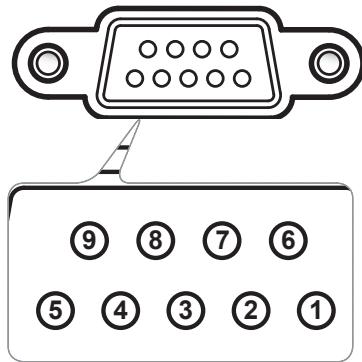
| Pin no. | Spec. (from projector side) |
| 1 | N/A |
| 2 | RXD |
| 3 | TXD |
| 4 | N/A |
| 5 | GND |
| 6 | N/A |
| 7 | N/A |
| 8 | N/A |
| 9 | N/A |
RS232 Protocol Function List

-
There is a
after all ASCII commands. -
0D is the HEX code for <CR> in ASCII code.
Baud Rate : 9600
Data Bits: 8
Parity: None
Stop Bits: 1
Flow Control : None
UART16550 FIFO: Disable
Projector Return (Pass): P
Projector Return (Fail): F
XX=01-99, projector's ID, XX=00 is for all projectors
| SEND to projector | |||
| 232 ASCII Code | HEX Code | Function | Description |
| ~XX00 1 | 7E 30 30 30 30 20 31 0D | Power ON | |
| ~XX00 0 | 7E 30 30 30 30 20 30 0D | Power OFF | (0/2 for backward compatible) |
| ~XX00 1 ~nnnn | 7E 30 30 30 30 20 31 20 a 0D | Power ON with Password | ~nnnn = ~0000 (a=7E 30 30 30 30) ~9999 (a=7E 39 39 39 39) |
| ~XX01 1 | 7E 30 30 30 31 20 31 0D | Resync | |
| ~XX02 1 | 7E 30 30 30 32 20 31 0D | AV Mute | On |
| ~XX02 0 | 7E 30 30 30 32 20 30 0D | Off (0/2 for backward compatible) | |
| ~XX03 1 | 7E 30 30 30 33 20 31 0D | Mute | On |
| ~XX03 2 | 7E 30 30 30 33 20 30 0D | Off (0/2 for backward compatible) | |
| ~XX04 1 | 7E 30 30 30 34 20 31 0D | Freeze | |
| ~XX04 0 | 7E 30 30 30 34 20 30 0D | Unfreeze | (0/2 for backward compatible) |
| ~XX05 1 | 7E 30 30 30 35 20 31 0D | Zoom Plus | |
| ~XX06 1 | 7E 30 30 30 36 20 31 0D | Zoom Minus | |
| ~XX12 1 | 7E 30 30 31 32 20 31 0D | Direct Source Commands | HDMI1 |
| ~XX12 15 | 7E 30 30 31 32 20 31 35 0D | HDMI2 | |
| ~XX12 5 | 7E 30 30 31 32 20 35 0D | VGA1 | |
| ~XX12 6 | 7E 30 30 31 32 20 36 0D | VGA 2 | |
| ~XX12 10 | 7E 30 30 31 32 20 31 30 0D | Video | |
| ~XX20 1 | 7E 30 30 32 30 20 31 0D | Display Mode | Presentation |
| ~XX20 2 | 7E 30 30 32 30 20 32 0D | Bright | |
| ~XX20 3 | 7E 30 30 32 30 20 33 0D | Movie | |
| ~XX20 4 | 7E 30 30 32 30 20 34 0D | sRGB | |
| ~XX20 5 | 7E 30 30 32 30 20 35 0D | User | |
| ~XX20 7 | 7E 30 30 32 30 20 37 0D | Blackboard | |
| ~XX20 13 | 7E 30 30 32 30 20 31 33 0D | DICOM SIM. | |
| ~XX20 9 | 7E 30 30 32 30 20 39 0D | 3D | |
| ~XX21 n | 7E 30 30 32 31 20 a 0D | Brightness | n = -50 (a=2D 35 30) ~ 50 (a=35 30) |
| ~XX22 n | 7E 30 30 32 32 20 a 0D | Contrast | n = -50 (a=2D 35 30) ~ 50 (a=35 30) |
| ~XX23 n | 7E 30 30 32 33 20 a 0D | Sharpness | n = 1 (a=31) ~ 15 (a=31 35) |
| ~XX44 n | 7E 30 30 34 34 20 a 0D | Tint | n = -50 (a=2D 35 30) ~ 50 (a=35 30) |
| ~XX45 n | 7E 30 30 34 35 20 a 0D | Color | n = -50 (a=2D 35 30) ~ 50 (a=35 30) |
Appendices
| ~XX327 n | 7E 30 30 33 32 37 20 a 0D | Color Matching | Red Hue | n = -50 (a=2D 35 30) ~ 50 (a=35 30) |
| ~XX328 n | 7E 30 30 33 32 38 20 a 0D | Green Hue | n = -50 (a=2D 35 30) ~ 50 (a=35 30) | |
| ~XX329 n | 7E 30 30 33 32 39 20 a 0D | Blue Hue | n = -50 (a=2D 35 30) ~ 50 (a=35 30) | |
| ~XX330 n | 7E 30 30 33 33 30 20 a 0D | Cyan Hue | n = -50 (a=2D 35 30) ~ 50 (a=35 30) | |
| ~XX331 n | 7E 30 30 33 33 31 20 a 0D | Yellow Hue | n = -50 (a=2D 35 30) ~ 50 (a=35 30) | |
| ~XX332 n | 7E 30 30 33 33 32 20 a 0D | Magenta Hue | n = -50 (a=2D 35 30) ~ 50 (a=35 30) | |
| ~XX333 n | 7E 30 30 33 33 33 20 a 0D | Red Saturation | n = -50 (a=2D 35 30) ~ 50 (a=35 30) | |
| ~XX334 n | 7E 30 30 33 33 34 20 a 0D | Green Saturation | n = -50 (a=2D 35 30) ~ 50 (a=35 30) | |
| ~XX335 n | 7E 30 30 33 33 35 20 a 0D | Blue Saturation | n = -50 (a=2D 35 30) ~ 50 (a=35 30) | |
| ~XX336 n | 7E 30 30 33 33 36 20 a 0D | Cyan Saturation | n = -50 (a=2D 35 30) ~ 50 (a=35 30) | |
| ~XX337 n | 7E 30 30 33 33 37 20 a 0D | Yellow Saturation | n = -50 (a=2D 35 30) ~ 50 (a=35 30) | |
| ~XX338 n | 7E 30 30 33 33 38 20 a 0D | Magenta Saturation | n = -50 (a=2D 35 30) ~ 50 (a=35 30) | |
| ~XX339 n | 7E 30 30 33 33 39 20 a 0D | Red Gain | n = -50 (a=2D 35 30) ~ 50 (a=35 30) | |
| ~XX340 n | 7E 30 30 33 34 30 20 a 0D | Green Gain | n = -50 (a=2D 35 30) ~ 50 (a=35 30) | |
| ~XX341 n | 7E 30 30 33 34 31 20 a 0D | Blue Gain | n = -50 (a=2D 35 30) ~ 50 (a=35 30) | |
| ~XX342 n | 7E 30 30 33 34 32 20 a 0D | Cyan Gain | n = -50 (a=2D 35 30) ~ 50 (a=35 30) | |
| ~XX343 n | 7E 30 30 33 34 33 20 a 0D | Yellow Gain | n = -50 (a=2D 35 30) ~ 50 (a=35 30) | |
| ~XX344 n | 7E 30 30 33 34 34 20 a 0D | Magenta Gain | n = -50 (a=2D 35 30) ~ 50 (a=35 30) | |
| ~XX345 n | 7E 30 30 33 34 35 20 a 0D | White/R | n = -50 (a=2D 35 30) ~ 50 (a=35 30) | |
| ~XX346 n | 7E 30 30 33 34 36 20 a 0D | White/G | n = -50 (a=2D 35 30) ~ 50 (a=35 30) | |
| ~XX347 n | 7E 30 30 33 34 37 20 a 0D | White/B | n = -50 (a=2D 35 30) ~ 50 (a=35 30) | |
| ~XX215 1 | 7E 30 30 32 31 35 20 31 OD | Reset | ||
| ~XX24 n | 7E 30 30 32 34 20 a 0D | RGB Gain/Bias | Red Gain | n = -50 (a=2D 35 30) ~ 50 (a=35 30) |
| ~XX25 n | 7E 30 30 32 34 20 a 0D | Green Gain | n = -50 (a=2D 35 30) ~ 50 (a=35 30) | |
| ~XX26 n | 7E 30 30 32 35 20 a 0D | Blue Gain | n = -50 (a=2D 35 30) ~ 50 (a=35 30) | |
| ~XX27 n | 7E 30 30 32 36 20 a 0D | Red Bias | n = -50 (a=2D 35 30) ~ 50 (a=35 30) | |
| ~XX28 n | 7E 30 30 32 37 20 a 0D | Green Bias | n = -50 (a=2D 35 30) ~ 50 (a=35 30) | |
| ~XX29 n | 7E 30 30 32 38 20 a 0D | Blue Bias | n = -50 (a=2D 35 30) ~ 50 (a=35 30) | |
| ~XX33 1 | 7E 30 30 32 39 20 a 0D | Reset | ||
| ~XX34 n | 7E 30 30 33 34 20 a 0D | BrilliantColorTM | n = 1 (a=31) ~ 10 (a=31 30) | |
| ~XX196 n | 7E 30 30 31 39 36 20 a 0D | Noise Reduction | n = 1 (a=31) ~ 10 (a=31 30) | |
| ~XX35 1 | 7E 30 30 33 35 20 31 OD | Gamma | Film | |
| ~XX35 10 | 7E 30 30 33 35 20 31 30 OD | Blackboard | ||
| ~XX35 3 | 7E 30 30 33 35 20 33 OD | Graphics | ||
| ~XX35 4 | 7E 30 30 33 35 20 34 OD | DICOM SIM. | ||
| ~XX35 5 | 7E 30 30 33 35 20 35 OD | 1.8 | ||
| ~XX35 6 | 7E 30 30 33 35 20 36 OD | 2.0 | ||
| ~XX35 7 | 7E 30 30 33 35 20 37 OD | 2.2 | ||
| ~XX35 8 | 7E 30 30 33 35 20 38 OD | 2.6 | ||
| ~XX35 9 | 7E 30 30 33 35 20 39 OD | 3D | ||
| ~XX36 1 | 7E 30 30 33 36 20 31 OD | Color Temp. | Standard | |
| ~XX36 2 | 7E 30 30 33 36 20 32 OD | Cool | ||
| ~XX36 3 | 7E 30 30 33 36 20 33 OD | Cold |
Appendices
| ~XX37 1 | 7E 30 30 33 37 20 31 0D | Color Space | Auto | |
| ~XX37 2 | 7E 30 30 33 37 20 32 0D | RGB\ RGB(0-255) | ||
| ~XX37 3 | 7E 30 30 33 37 20 33 0D | YUV | ||
| ~XX37 4 | 7E 30 30 33 37 20 34 0D | RGB(16 - 235) | ||
| ~XX73 n | 7E 30 30 37 33 20 a 0D | Signal (RGB) | Frequency | n = -5 (a=2D 35) ~ 5 (a=35) By signal |
| ~XX74 n | 7E 30 30 37 34 20 a 0D | Phase | n = 0 (a=30) ~ 31 (a=33 31) By signal | |
| ~XX91 1 | 7E 30 30 39 31 20 31 0D | Automatic | Enable | |
| ~XX91 0 | 7E 30 30 39 31 20 30 0D | Disable | ||
| ~XX75 n | 7E 30 30 37 35 20 a 0D | H. Position | n = -5 (a=2D 35) ~ 5 (a=35) By timing | |
| ~XX76 n | 7E 30 30 37 36 20 a 0D | V. Position | n = -5 (a=2D 35) ~ 5 (a=35) By timing | |
| ~XX200 n | 7E 30 30 32 30 30 20 a 0D | Signal(Video) | White Level | |
| ~XX201 n | 7E 30 30 32 30 31 20 a 0D | Black Level | ||
| ~XX60 1 | 7E 30 30 36 30 20 31 0D | Format | 4:3 | |
| ~XX60 2 | 7E 30 30 36 30 20 32 0D | 16:9 | ||
| ~XX60 3 | 7E 30 30 36 30 20 33 0D | 16:10(WXGA Model) | ||
| ~XX60 5 | 7E 30 30 36 30 20 35 0D | LBX | ||
| ~XX60 6 | 7E 30 30 36 30 20 36 0D | Native | ||
| ~XX60 7 | 7E 30 30 36 30 20 37 0D | Auto | ||
| ~XX62 n | 7E 30 30 36 32 20 a 0D | Digital Zoom | Zoom | n = -5 (a=2D 35) ~ 25 (a=32 35) |
| ~XX61 n | 7E 30 30 36 31 20 a 0D | Edge mask | n = 0 (a=30) ~ 10 (a=31 30) | |
| ~XX63 n | 7E 30 30 36 33 20 a 0D | H Image Shift | n = -100 (a=2D 31 30 30) ~ 100 (a=31 30 30) | |
| ~XX64 n | 7E 30 30 36 34 20 a 0D | V Image Shift | n = -100 (a=2D 31 30 30) ~ 100 (a=31 30 30) | |
| ~XX66 n | 7E 30 30 36 36 20 a 0D | V Keystone | n=-15 (a=2D 31 35) ~ 15(a=31 35) [1080p: n = -5 (a=2D 35) ~ 5(a=35)] | |
| ~XX230 1 | 7E 30 30 32 33 30 20 31 0D | 3D Mode | DLP-Link | |
| ~XX230 3 | 7E 30 30 32 33 30 20 33 0D | VESA | ||
| ~XX230 0(or2) 7E | 30 30 32 33 30 20 30(32) 0D | Off | ||
| ~XX400 0 | 7E 30 30 34 30 30 20 30 0D | 3D→2D | 3D | |
| ~XX400 1 | 7E 30 30 34 30 30 20 31 0D | L | ||
| ~XX400 2 | 7E 30 30 34 30 30 20 32 0D | R | ||
| ~XX405 0 | 7E 30 30 34 30 35 20 30 0D | 3D Format | Auto | |
| ~XX405 1 | 7E 30 30 34 30 35 20 31 0D | SBS | ||
| ~XX405 2 | 7E 30 30 34 30 35 20 32 0D | Top and Bottom | ||
| ~XX405 3 | 7E 30 30 34 30 35 20 33 0D | Frame sequential | ||
| ~XX231 0 | 7E 30 30 32 33 31 20 30 0D | 3D Sync Invert | On | |
| ~XX231 1 | 7E 30 30 32 33 31 20 31 0D | Off | ||
| ~XX70 1 | 7E 30 30 37 30 20 31 0D | Language | English | |
| ~XX70 2 | 7E 30 30 37 30 20 32 0D | German | ||
| ~XX70 3 | 7E 30 30 37 30 20 33 0D | French | ||
| ~XX70 4 | 7E 30 30 37 30 20 34 0D | Italian | ||
| ~XX70 5 | 7E 30 30 37 30 20 35 0D | Spanish | ||
| ~XX70 6 | 7E 30 30 37 30 20 36 0D | Portuguese | ||
| ~XX70 7 | 7E 30 30 37 30 20 37 0D | Polish | ||
| ~XX70 8 | 7E 30 30 37 30 20 38 0D | Dutch | ||
| ~XX70 9 | 7E 30 30 37 30 20 39 0D | Swedish | ||
| ~XX70 10 | 7E 30 30 37 30 20 31 30 0D | Norwegian/Danish |
Appendices
| ~XX70 11 | 7E 30 30 37 30 20 31 31 0D | Finnish | ||
| ~XX70 12 | 7E 30 30 37 30 20 31 32 0D | Greek | ||
| ~XX70 13 | 7E 30 30 37 30 20 31 33 0D | Traditional Chinese | ||
| ~XX70 14 | 7E 30 30 37 30 20 31 34 0D | Simplified Chinese | ||
| ~XX70 15 | 7E 30 30 37 30 20 31 35 0D | Japanese | ||
| ~XX70 16 | 7E 30 30 37 30 20 31 36 0D | Korean | ||
| ~XX70 17 | 7E 30 30 37 30 20 31 37 0D | Russian | ||
| ~XX70 18 | 7E 30 30 37 30 20 31 38 0D | Hungarian | ||
| ~XX70 19 | 7E 30 30 37 30 20 31 39 0D | Czechoslovak | ||
| ~XX70 20 | 7E 30 30 37 30 20 32 30 0D | Arabic | ||
| ~XX70 21 | 7E 30 30 37 30 20 32 31 0D | Thailand | ||
| ~XX70 22 | 7E 30 30 37 30 20 32 32 0D | Turkish | ||
| ~XX70 23 | 7E 30 30 37 30 20 32 33 0D | Farsi | ||
| ~XX70 28 | 7E 30 30 37 30 20 32 38 0D | Slovakian | ||
| ~XX70 27 | 7E 30 30 37 30 20 32 37 0D | Romanian | ||
| ~XX71 1 | 7E 30 30 37 31 20 31 0D | Projection | Front-Desktop | |
| ~XX71 2 | 7E 30 30 37 31 20 32 0D | Rear-Desktop | ||
| ~XX71 3 | 7E 30 30 37 31 20 33 0D | Front-Ceiling | ||
| ~XX71 4 | 7E 30 30 37 31 20 34 0D | Rear-Ceiling | ||
| ~XX72 1 | 7E 30 30 37 32 20 31 0D | Menu Location | Top Left | |
| ~XX72 2 | 7E 30 30 37 32 20 32 0D | Top Right | ||
| ~XX72 3 | 7E 30 30 37 32 20 33 0D | Centre | ||
| ~XX72 4 | 7E 30 30 37 32 20 34 0D | Bottom Left | ||
| ~XX72 5 | 7E 30 30 37 32 20 35 0D | Bottom Right | ||
| (WXGA/ Model) | ||||
| ~XX90 1 | 7E 30 30 39 30 20 31 0D | Screen Type | 16:10 | |
| ~XX90 0 | 7E 30 30 39 30 20 30 0D | 16:9 | ||
| ~XX77 n | 7E 30 30 37 37 20 aabbcc 0D | Security | Security Timer Month/Day/Hour n = mm/dd/hh mm=00 (aa=30 30) ~ 12 (aa=31 32) dd=00 (bb=30 30) ~ 30 (bb=33 30) hh=00 (cc=30 30) ~ 24 (cc=32 34) | |
| ~XX78 1 | 7E 30 30 37 38 20 31 0D | Security Settings | On | |
| ~XX78 0 ~nmmn | 7E 30 30 37 38 20 30 20 a 0D | Off (0/2 for backward compatible) ~9999 (a=7E 39 39 39 39) | ||
| ~XX79 n | 7E 30 30 37 39 20 a 0D | Projector ID | n = 00 (a=30 30) ~ 99 (a=39 39) | |
| ~XX80 1 | 7E 30 30 38 30 20 31 0D | Mute | On | |
| ~XX80 0 | 7E 30 30 38 30 20 30 0D | Off (0/2 for backward compatible) | ||
| ~XX310 0 | 7E 30 30 33 31 30 20 30 0D | Internal Speaker | Off | |
| ~XX310 1 | 7E 30 30 33 31 30 20 31 0D | On | ||
| ~XX81 n | 7E 30 30 38 31 20 a 0D | Volume(Audio) | n = 0 (a=30) ~ 10 (a=31 30) | |
| ~XX89 0 | 7E 30 30 38 39 20 30 0D | Audio Input | Default | |
| ~XX89 1 | 7E 30 30 38 39 20 31 0D | Audio1 | ||
| ~XX89 3 | 7E 30 30 38 39 20 33 0D | Audio2 | ||
| ~XX82 1 | 7E 30 30 38 32 20 31 0D | Logo | Optoma | |
| ~XX82 2 | 7E 30 30 38 32 20 32 0D | User | ||
| ~XX82 3 | 7E 30 30 38 32 20 33 0D | Neutral | ||
| ~XX83 1 | 7E 30 30 38 33 20 31 0D | Logo Capture | ||
| ~XX88 0 | 7E 30 30 38 38 20 30 0D | Closed Captioning | Off | |
| ~XX88 1 | 7E 30 30 38 38 20 31 0D | cc1 | ||
Appendices
| ~XX88 2 | 7E 30 30 38 38 20 32 0D | cc2 | |
| ~XX87 1 | 7E 30 30 38 37 20 31 0D | Network Status(Read only) Return :Oka, a=0/1 Disconnected/ Connected | |
| ~XX87 3 | 7E 30 30 38 37 20 33 0D | IP Address(Read only) Return: "Okaaa_bbb_ccc_ddd" | |
| ~XX454 0/2 | 7E 30 30 34 35 34 20 30(32) 0D | Crestron | Off |
| ~XX454 1 | 7E 30 30 34 35 34 20 31 0D | On | |
| ~XX455 0/2 | 7E 30 30 34 35 35 20 30(32) 0D | Extron | Off |
| ~XX455 1 | 7E 30 30 34 35 35 20 31 0D | On | |
| ~XX456 0/2 | 7E 30 30 34 35 36 20 30(32) 0D | PJLink | Off |
| ~XX456 1 | 7E 30 30 34 35 36 20 31 0D | On | |
| ~XX457 0/2 | 7E 30 30 34 35 37 20 30(32) 0D | AMX Device Discovery | Off |
| ~XX457 1 | 7E 30 30 34 35 37 20 31 0D | On | |
| ~XX458 0/2 | 7E 30 30 34 35 38 20 30(32) 0D | Telnet | Off |
| ~XX458 1 | 7E 30 30 34 35 38 20 31 0D | On | |
| ~XX39 1 | 7E 30 30 33 39 20 31 0D | Input Source | HDMI1 |
| ~XX39 7 | 7E 30 30 33 39 20 37 0D | HDMI2 | |
| ~XX39 5 | 7E 30 30 33 39 20 35 0D | VGA1 | |
| ~XX39 6 | 7E 30 30 33 39 20 36 0D | VGA2 | |
| ~XX39 10 | 7E 30 30 33 39 20 31 30 0D | Video | |
| ~XX100 1 | 7E 30 30 31 30 30 20 31 0D | Source Lock | On |
| ~XX100 0 | 7E 30 30 31 30 30 20 30 0D | Off (0/2 for backward compatible) | |
| ~XX101 1 | 7E 30 30 31 30 31 20 31 0D | High Altitude | On |
| ~XX101 0 | 7E 30 30 31 30 31 20 30 0D | Off (0/2 for backward compatible) | |
| ~XX102 1 | 7E 30 30 31 30 32 20 31 0D | Information Hide | On |
| ~XX102 0 | 7E 30 30 31 30 32 20 30 0D | Off (0/2 for backward compatible) | |
| ~XX103 1 | 7E 30 30 31 30 33 20 31 0D | Keypad Lock | On |
| ~XX103 0 | 7E 30 30 31 30 33 20 30 0D | Off (0/2 for backward compatible) | |
| ~XX195 0 | 7E 30 30 31 39 35 20 30 0D | Test Pattern | None |
| ~XX195 1 | 7E 30 30 31 39 35 20 31 0D | Grid(White) | |
| ~XX195 3 | 7E 30 30 31 39 35 20 33 0D | Grid(Green) | |
| ~XX195 4 | 7E 30 30 31 39 35 20 34 0D | Grid(Magenta) | |
| ~XX195 2 | 7E 30 30 31 39 35 20 32 0D | White | |
| ~XX192 0 | 7E 30 30 31 39 32 20 30 0D | 12V Trigger | Off |
| ~XX192 1 | 7E 30 30 31 39 32 20 31 0D | On | |
| ~XX104 1 | 7E 30 30 31 30 34 20 31 0D | Background Color | Blue |
| ~XX104 2 | 7E 30 30 31 30 34 20 32 0D | Black | |
| ~XX104 3 | 7E 30 30 31 30 34 20 33 0D | Red | |
| ~XX104 4 | 7E 30 30 31 30 34 20 34 0D | Green | |
| ~XX104 5 | 7E 30 30 31 30 34 20 35 0D | White | |
| ~XX105 1 | 7E 30 30 31 30 35 20 31 0D | Advanced | Direct Power On On |
| ~XX105 0 | 7E 30 30 31 30 35 20 30 0D | Off (0/2 for backward compatible) | |
| ~XX113 0 | 7E 30 30 31 31 33 20 30 0D | Signal Power On Off | |
| ~XX113 1 | 7E 30 30 31 31 33 20 31 0D | On | |
| ~XX106 n | 7E 30 30 31 30 36 20 a 0D | Auto Power Off n = 0 (a=30) ~ 180 (a=31 38 30) (min) | |
| ~XX107 n | 7E 30 30 31 30 37 20 a 0D | Sleep Timer n = 0 (a=30) ~ 990 (a=39 39 30) (min) | |
Appendices
| ~XX115 1 | 7E 30 30 31 31 35 20 31 0D | Quick Resume | On Off (0/2 for backward compatible) | |
| ~XX115 0 | 7E 30 30 31 31 35 20 30 0D | |||
| ~XX114 1 | 7E 30 30 31 31 34 20 31 0D | Power Mode(Standby) | Active (<=0.5W) Eco. (0/2 for backward compatible) | |
| ~XX114 0 | 7E 30 30 31 31 34 20 30 0D | |||
| ~XX109 1 | 7E 30 30 31 30 39 20 31 0D | Lamp Reminder | On | |
| ~XX109 0 | 7E 30 30 31 30 39 20 30 0D | Off (0/2 for backward compatible) | ||
| ~XX110 1 | 7E 30 30 31 31 30 20 31 0D | Brightness Mode | Bright | |
| ~XX110 2 | 7E 30 30 31 31 30 20 32 0D | Eco | ||
| ~XX110 3 | 7E 30 30 31 31 30 20 33 0D | Eco+ | ||
| ~XX110 4 | 7E 30 30 31 31 30 20 34 0D | Dynamic | ||
| ~XX111 1 | 7E 30 30 31 31 31 20 31 0D | Lamp Reset | Yes | |
| ~XX111 0 | 7E 30 30 31 31 31 20 30 0D | No (0/2 for backward compatible) | ||
| ~XX322 0 | 7E 30 30 33 32 32 20 30 0D | Filter Reminder | Off | |
| ~XX322 1 | 7E 30 30 33 32 32 20 31 0D | 300 hrs | ||
| ~XX322 2 | 7E 30 30 33 32 32 20 32 0D | 500 hrs | ||
| ~XX322 3 | 7E 30 30 33 32 32 20 33 0D | 800 hrs | ||
| ~XX322 4 | 7E 30 30 33 32 32 20 34 0D | 1000 hrs | ||
| ~XX323 1 | 7E 30 30 33 32 33 20 31 0D | Filter Reset | Yes | |
| ~XX323 0 | 7E 30 30 33 32 33 20 30 0D | No (0/2 for backward compatible) | ||
| ~XX112 1 | 7E 30 30 31 31 32 20 31 0D | Reset | Yes | |
| SEND to emulate Remote | ||||
| ~XX140 10 | 7E 30 30 31 34 30 20 31 30 0D | Up | ||
| ~XX140 11 | 7E 30 30 31 34 30 20 31 31 0D | Left | ||
| ~XX140 12 | 7E 30 30 31 34 30 20 31 32 0D | Enter (for projection MENU) | ||
| ~XX140 13 | 7E 30 30 31 34 30 20 31 33 0D | Right | ||
| ~XX140 14 | 7E 30 30 31 34 30 20 31 34 0D | Down | ||
| ~XX140 15 | 7E 30 30 31 34 30 20 31 35 0D | Keystone + | ||
| ~XX140 16 | 7E 30 30 31 34 30 20 31 36 0D | Keystone - | ||
| ~XX140 17 | 7E 30 30 31 34 30 20 31 37 0D | Volume - | ||
| ~XX140 18 | 7E 30 30 31 34 30 20 31 38 0D | Volume + | ||
| ~XX140 19 | 7E 30 30 31 34 30 20 31 39 0D | Brightness | ||
| ~XX140 20 | 7E 30 30 31 34 30 20 32 30 0D | Menu | ||
| ~XX140 21 | 7E 30 30 31 34 30 20 32 31 0D | Zoom | ||
| ~XX140 28 | 7E 30 30 31 34 30 20 32 38 0D | Contrast | ||
| ~XX140 47 | 7E 30 30 31 34 30 20 34 37 0D | Source | ||
| SEND from projector automatically | ||||
| 232 ASCII Code | HEX Code | Function | Projector Return | Description |
| when Standby/Cooling/Out of Range/Lamp fail/Fan Lock/Over Temperature/Lamp Hours Running Out/Cover Open | INFOn | n: 0/1/2/3/4/6/7/8/9 = Standby/Cooling/Out of Range/Lamp fail/Fan Lock/Over Temperature/Lamp Hours Running Out/Cover Open | ||
Appendices
READ from projector
| 232 ASCII Code | HEX Code | Function | Projectile Return | Description |
| ~XX121 1 | 7E 30 30 31 32 31 20 31 0D | Input Source Commands | Oka | a = 0 Nonea = 2 VGA-1a = 3 VGA-2a = 5 Videoa = 7 HDMI1a = 8 HDMI2 |
| ~XX122 1 | 7E 30 30 31 32 32 20 31 0D | Software Version | OKdddd | dddd: FW version |
| ~XX123 1 | 7E 30 30 31 32 33 20 31 0D | Display Mode | Oka | a = 0 Nonea = 1 Presentationa = 2 Bright/a = 3 Moviea = 4 sRGBa = 5 Usera= 7 Blackboarda = 9 3DA = 12 DICOM SIM. |
| ~XX124 1 | 7E 30 30 31 32 34 20 31 0D | Power State | OKn | n : 0/1 = Off/On |
| ~XX125 1 | 7E 30 30 31 32 35 20 31 0D | Brightness | OKn | |
| ~XX126 1 | 7E 30 30 31 32 37 20 31 0D | Format | OKn | n: 1/2/3/5/6/7 =4:3/16:9/16:10/LBX/Native/Auto |
| *16:9 or 16:10 depend on Screen Type setting | ||||
| ~XX128 1 | 7E 30 30 31 32 38 20 31 0D | Color Temperature (HD90/HD91) | Oka | a=0 Standarda=1 Coola=2 Cold |
| ~XX129 1 | 7E 30 30 31 32 39 20 31 0D | Projection Mode | OKn | n : 0/1/2/3 = Front-Desktop/ Rear-Desktop/ Front-Ceiling/ Rear-Ceiling |
| ~XX150 1 | 7E 30 30 31 35 30 20 31 1D | Information | Okabbbbbccddddee | a = Power Statusa=0 Power Offa=1 Power Onb = Lamp Hour (LED Hours)bbbb Lamp Hour (LED Hours)c = Input Sourcecc=00 Nonecc=02 VGA1cc=03 VGA2cc=05 Videocc=07 HDMI1cc=08 HDMI2d = Firmware Versionddd Firmware Versione = Display modeee=00 Noneee=01 Presentationee=02 Brightee=03 Movieee=04 sRGBee=05 Useree=07 Blackboardee=09 3Dee=12 DICOM SIM. |
| ~XX151 1 | 7E 30 30 31 35 31 20 31 0D | Model name | OKn | n:1/2/3=XGA/WGA/1080p |
| ~XX108 1 | 7E 30 30 31 30 38 20 31 0D | Lamp Hours | OKbbb | bbb: LampHour |
| ~XX108 2 | 7E 30 30 31 30 38 20 32 0D | Cumulative Lamp Hours | OKbbb | bbb: (5 digits) Total Lamp Hours |
| ~XX87 1 | 7E 30 30 38 37 20 31 0D | Network Status | Okn | n=0/1 Disconnected/Connected |
| ~XX87 3 | 7E 30 30 38 37 20 33 0D | IP Address | Okaaabbb_ccc_ddd | |
Appendices
| ~XX351 0 | 7E 30 30 33 35 31 20 30 0D | Fan1 speed(blower) | Oka | a=0000~9999 |
| ~XX352 1 | 7E 30 30 33 35 32 20 31 0D | System temperature | Oka | a=000~999 |
| ~XX353 1 | 7E 30 30 33 35 33 20 31 0D | Serial number | Okaaaaaaaaaa aaaaaaaa | a=serial number string |
| ~XX354 1 | 7E 30 30 33 35 34 20 31 0D | Closed Captioning | Oka | a: 0/1/2 = off/cc1/cc2 |
| ~XX355 1 | 7E 30 30 33 35 35 20 31 0D | AV Mute | Oka | a : 0/1 = Off/On |
| ~XX356 1 | 7E 30 30 33 35 36 20 31 0D | Mute | Oka | a : 0/1 = Off/On |
| ~XX357 1 | 7E 30 30 33 35 37 20 31 0D | LAN FW version | Okeeeee | eeee = Software Version |
| ~XX358 1 | 7E 30 30 33 35 38 20 31 0D | Current Lamp Watt | Okaaaa | aaaa=0000~9999 |
Ceiling Mount Installation
If you wish to use a third party ceiling mount kit, please ensure the screws used to attach a mount to the projector meet the following specifications:
Screw type: M4*3
Maximum screw length: 11mm
Minimum screw length: 8mm

Please note that damage resulting from incorrect installation will void the warranty.

Warning:
- If you buy a ceiling mount from another company, please be sure to use the correct screw size. Screw size will vary depending on the thickness of the mounting plate.
- Be sure to keep at least 10 cm gap between the ceiling and the bottom of the projector.
- Avoid installing the projector near a heat source.
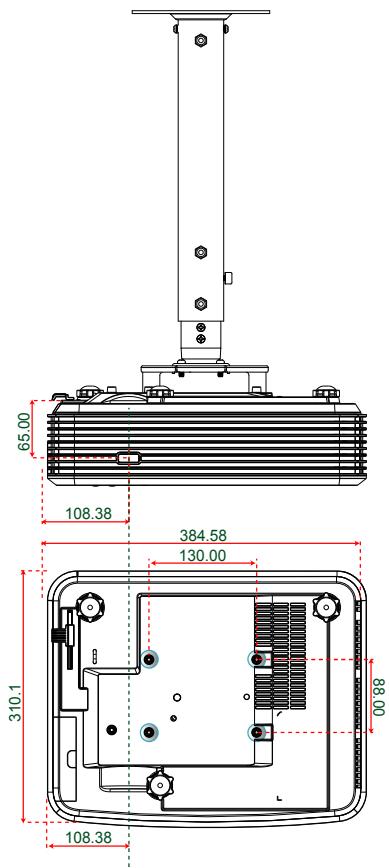
Unit: mm
Optoma Global Offices
For service or support please contact your local office.
USA
3178 Laurelview Ct.
Fremont, CA 94538, USA
www.optomausa.com
888-289-6786
同 510-897-8601
services@optoma.com
Canada
3178 Laurelview Ct.
Fremont, CA 94538, USA
www.optomausa.com
888-289-6786
同 510-897-8601
services@optoma.com
Latin America
3178 Laurelview Ct.
Fremont, CA 94538, USA
www.optomausa.com
888-289-6786
510-897-8601
services@optoma.com
Europe
42 Caxton Way, The Watford Business Park
Watford, Hertfordshire,
WD18 8QZ, UK
+44 (0) 1923 691 800
www.optoma.eu
+44 (0) 1923 691 888
Service Tel : +44 (0)1923 691865
service@tsc-europe.com
Benelux BV
Randstad 22-123
1316 BW Almere
The Netherlands
www.optoma.nl
+31 (0) 36 820 0252
+31 (0) 36 548 9052
France
Bâtiment E
81-83 avenue Edouard Vaillant
92100 Boulogne Billancourt, France
+33141461220
+33141469435
savoptoma@optoma.fr
Spain
C/ José Hierro,36 Of. 1C
28522 Rivas VaciaMadrid,
Spain
+34914990606
+34916700832
Deutschland
Wiesenstrasse 21 W D40549 Düsseldorf, Germany
+49 (0) 211 506 6670
+49 (0) 211 506 66799
info@optoma.de
Scandinavia
Lerpeveien 25
3040 Drammen Norway
+47 32 98 89 90
+47 32 98 89 99
info@optoma.no
PO.BOX 9515
3038 Drammen
Norway
Korea
WOOMI TECH.CO.,LTD. 4F,Minu Bldg.33-14,Kangnam-Ku, seoul,135-815,KOREA
+82+2+34430004
+82+2+34430005
Japan
info@os-worldwide.com www.os-worldwide.com
Taiwan
12F., No.213, Sec. 3, Beixin Rd., Xindian Dist., New Taipei City 231, Taiwan, R.O.C. www.optoma.com.tw
+886-2-8911-8600
+886-2-8911-6550
services@optoma.com.tw
asia.optoma.com
Hong Kong
Unit A, 27/F Dragon Centre, 79 Wing Hong Street, Cheung Sha Wan, Kowloon, Hong Kong
+852-2396-8968
+852-2370-1222
www(optoma.com.hk
China
5F, No. 1205, Kaixuan Rd., Changning District Shanghai, 200052, China
+86-21-62947376
+86-21-62947375
www(optoma.com.cn
Regulation & Safety Notices
This appendix lists the general notices of your projector.
FCC Notice
This device has been tested and found to comply with the limits for a Class B digital device pursuant to Part 15 of the FCC rules. These limits are designed to provide reasonable protection against harmful interference in a residential installation. This device generates, uses and can radiate radio frequency energy and, if not installed and used in accordance with the instructions, may cause harmful interference to radio communications.
However, there is no guarantee that interference will not occur in a particular installation. If this device does cause harmful interference to radio or television reception, which can be determined by turning the device off and on, the user is encouraged to try to correct the interference by one or more of the following measures:
Reorient or relocate the receiving antenna.
Increase the separation between the device and receiver.
- Connect the device into an outlet on a circuit different from that to which the receiver is connected.
Consult the dealer or an experienced radio/television technician for help.
Notice: Shielded cables
All connections to other computing devices must be made using shielded cables to maintain compliance with FCC regulations.
Caution
Changes or modifications not expressly approved by the manufacturer could void the user's authority, which is granted by the Federal Communications Commission, to operate this projector.
Operation Conditions
This device complies with Part 15 of the FCC Rules. Operation is subject to the following two conditions:
- This device may not cause harmful interference and
- This device must accept any interference received, including interference that may cause undesired operation.
Notice: Canadian users
This Class B digital apparatus complies with Canadian ICES-003.
Declaration of Conformity for EU countries
EMC Directive 2004/108/EC (including amendments)
Low Voltage Directive 2006/95/EC
R & TTE Directive 1999/5/EC (if product has RF function)

Disposal instructions
Do not throw this electronic device into the trash when discarding. To minimize pollution and ensure utmost protection of the global environment, please recycle it.