USER MANUAL XE-A137 SHARP
20038 Hamburg, Germany
SHARP CORPORATION
Printed in China
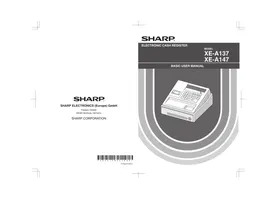
SHARP®
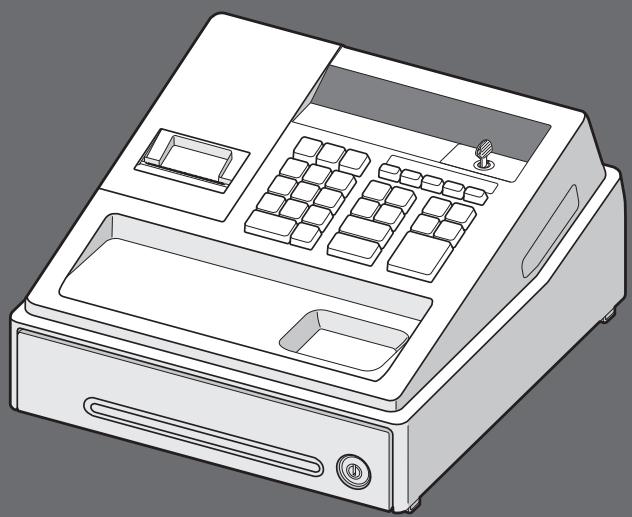
ELECTRONIC CASH REGISTER
MODEL
XE-A137
XE-A147
BASIC USER MANUAL
CAUTION:
The cash register should be securely fitted to the supporting platform to avoid instability when the drawer is open.
CAUTION:
The socket-outlet shall be installed near the equipment and shall be easily accessible.
VORSICHT:
For a complete electrical disconnection pull out the AC adapter.
CAUTION:
Thank you very much for your purchase of the SHARP Electronic Cash Register, Model XE-A137/XE-A147.
Please read this manual carefully before operating your machine in order to gain full understanding of functions and features.
Please keep this manual for future reference. It will help you if you encounter any operational problems.
For a free download of the "FULL DETAILED INSTRUCTION MANUAL", please go to the following related URL:
- The United Kingdom and Republic of Ireland: www.sharp-pos.co.uk
- Netherlands and Belgium and Luxemburg: www.sharp.nl
- Sweden: www.sharp.se
CAUTION!
Never install the batteries into the cash register before initializing it. Before you start operating the cash register, you must first initialize it, then install three new alkaline batteries LR6 ("AA" size) on the register.
Otherwise, distorted memory contents and malfunction of the cash register will occur. For this procedure, please refer to pages 6 to 7.
IMPORTANT
- Be very careful when removing and replacing the printer cover, as the cutter mounted on it is very sharp. • Install the cash register in a location not subject to direct sunlight, unusual temperature changes, high humidity, splashing water or dust and sand. Installation in such locations could cause damage to the cabinet, the electronic components and other precision components.
- Never operate the register with wet hands. The water could seep into the interior of the register and cause component failure.
- When cleaning your register, use a dry, soft cloth. Never use solvents, such as benzine and/or thinner. The use of such chemicals will lead to discoloration or deterioration of the cabinet.
- The register plugs into any standard wall outlet (official (nominal) voltage). Other electrical devices on the same electrical circuit could cause the register to malfunction.
- For protection against data loss, please install three alkaline batteries LR6 ("AA" size) after initializing the cash register. When handling the batteries, please observe the following: Incorrectly using batteries can cause them to burst or leak, possibly damaging the interior of the cash register.
- RISK OF EXPLOSION IF BATTERY IS REPLACED BY AN INCORRECT TYPE. DISPOSE OF USED BATTERIES ACCORDING TO THE INSTRUCTIONS.
- Be sure that the positive (+) and negative (−) poles of each battery are facing in the proper direction for installation.
- Never mix batteries of different types.
- Never mix old batteries and new ones.
- Never leave dead batteries in the battery compartment.
- Remove the batteries if you do not plan to use the cash register for long periods.
- Should a battery leak, clean out the battery compartment immediately, taking care to avoid letting the battery fluid come into direct contact with your skin.
- For battery disposal, follow the corresponding law in your country.
- For complete electrical disconnection, disconnect the AC adapter.
- Be sure to use the attached AC adapter. Otherwise, an electric shock or fire may be caused.
CONTENTS
INTRODUCTION 1
IMPORTANT....1
CONTENTS 2
PARTS AND THEIR FUNCTIONS .... 3
1 External View....3 2 Printer 3 3 Mode Switch and Mode key....4 4 Keyboard 4 5 Display....5 6 Drawer Lock Key 5
PREPARING THE CASH REGISTER....6
1 Initializing the Cash Register 6 2 Installing Batteries 7 3 Installing a Paper Roll....8
HELP FUNCTION....9
BASIC FUNCTION PROGRAMMING....10
1 Abbreviations and Terminology.... 10 2 Prior to Programming....10 3 Language Selection....12 4 Date and Time Programming....12 5 Tax Programming....13 6 Department Programming 14 7 PLU (Price Look-Up) and Subdepartment Programming 17 8 Text Programming....19
BASIC SALES ENTRY (Example) 21
1 Basic Sales Entry....21 2 PLU Sales Entry 22
CORRECTION......23
1 Cancellation of the Numeric Entry 23 2 Correction of the Last Entry (direct void) 23 3 Correction of the Next-to-last or Earlier Entry (indirect void) 24 4 Subtotal Void 24 5 Correction after Finalizing a Transaction (Void mode)....25
FULL SALES REPORT (X or Z REPORT) 26
MAIN FUNCTIONAL OVERVIEW 28
1 In Case of Power Failure 29 2 In Case of Printer Error.... 29 3 Cautions in Handling the Printer and Recording Paper 29 4 Replacing the Batteries....30 5 Replacing the Paper Roll 31 6 Removing a Paper Jam 32 7 Cleaning the Printer (Printer Head / Sensor / Roller)....32 8 Removing the Drawer 33 9 Opening the Drawer by Hand 33
BEFORE CALLING FOR SERVICE....34
SPECIFICATIONS....35
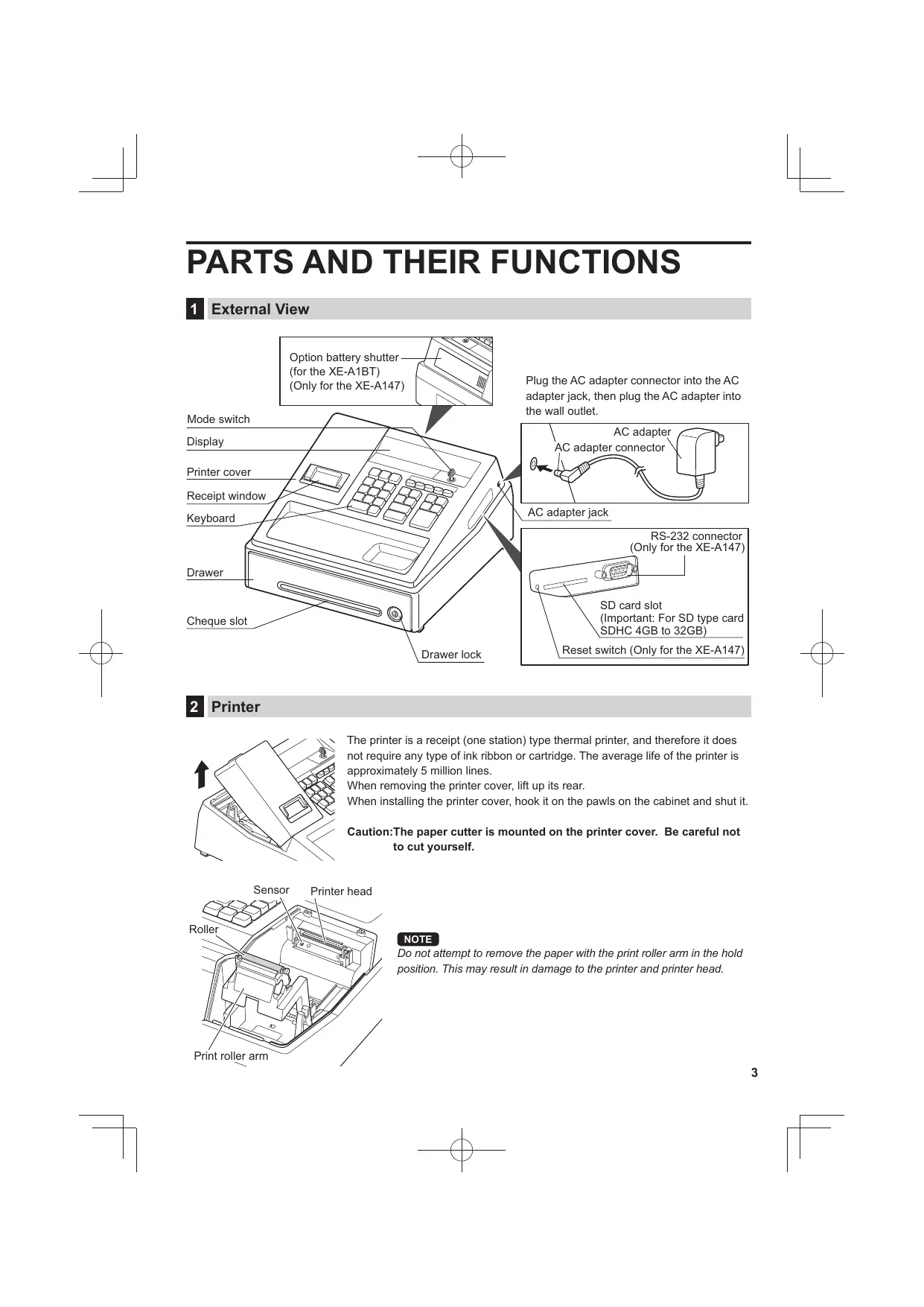
PARTS AND THEIR FUNCTIONS
1 External View
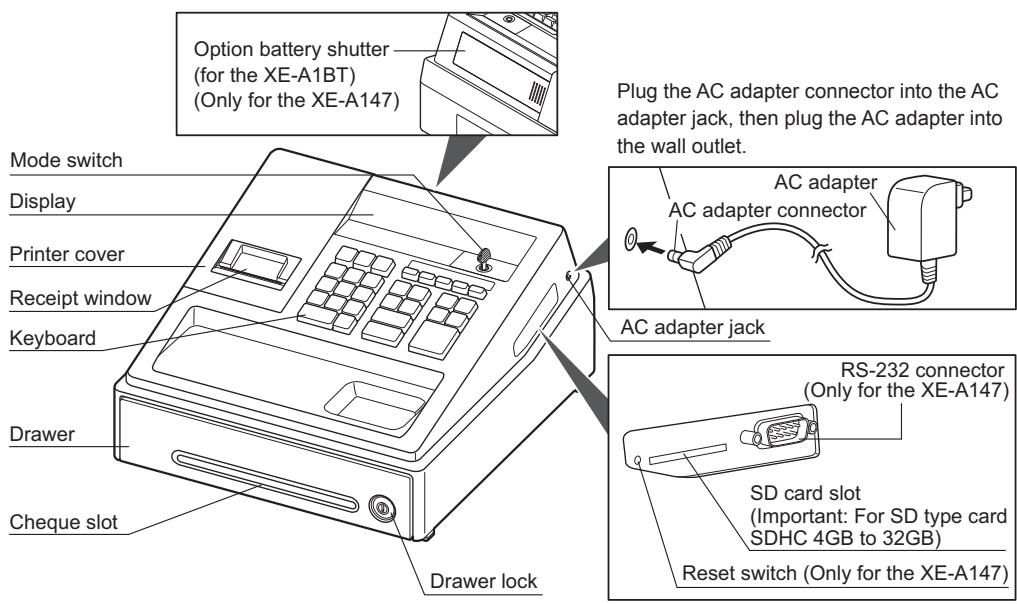
2 Printer
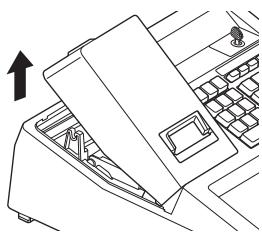
The printer is a receipt (one station) type thermal printer, and therefore it does not require any type of ink ribbon or cartridge. The average life of the printer is approximately 5 million lines.
When removing the printer cover, lift up its rear.
When installing the printer cover, hook it on the pawls on the cabinet and shut it.
Caution: The paper cutter is mounted on the printer cover. Be careful not to cut yourself.
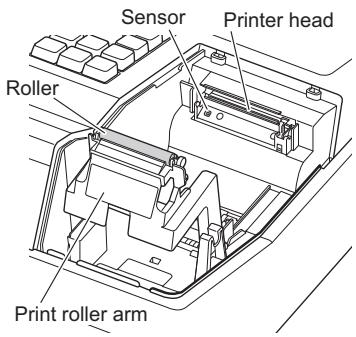
NOTE
Do not attempt to remove the paper with the print roller arm in the hold position. This may result in damage to the printer and printer head.
3 Mode Switch and Mode key
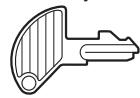
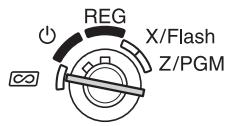
Insert the mode key (the same key as drawer lock key) into the mode switch and move the key to get an appropriate mode.
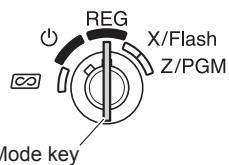
Turns the display off. No operations are possible.
REG: Permits transaction entry.
∞: Permits correction after finalizing a transaction.
X/Flash: Permits printing of sales reports and displaying the flash reports.
Z/PGM: Permits printing and resetting of sales reports and programming.
4 Keyboard
■ Keyboard layout
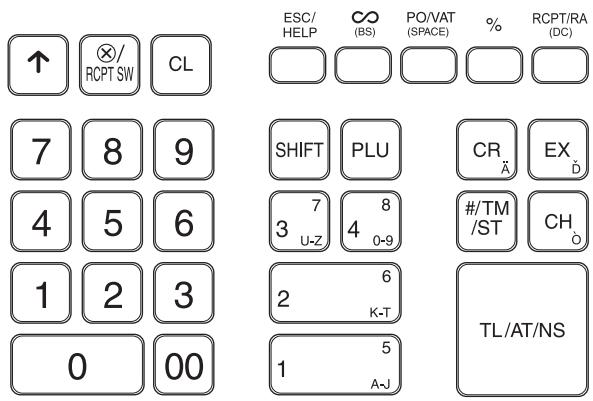
■ Key names

Paper feed key

PLU/Subdepartment key

Total/Amount tender/
No sale key

Multiplication/ receipt switch key
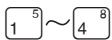
Department keys

Void key

Clear key

Credit key

Escape/Help key

Numeric keys

Foreign currency exchange key

Percent key
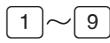
Shift key

Non-add code/Time display/Subtotal key

Paid-out/Value added tax key

Shift key

Cheque key

Receipt print/Received-on-account key
5 Display
■ Operator display
Your cash register is equipped with a front LED (Light-Emitting Diode) display that affords easy visibility of 9 digits for the operator during transaction.
PLU/Subdepartment code
Department code Repeat
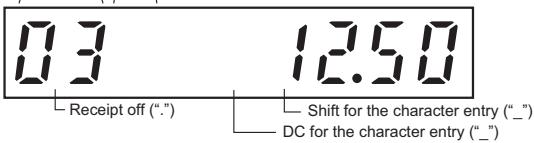
Amount: Appears in the far-right eight (max.) positions. When the amount is negative, the minus symbol “-” appears before the amount.
Number of repeats for repetitive registrations:
The number of repeats is displayed, starting at “2” and incrementing with each repeat. When you have registered ten times, the display will show “0”. (2 → 3 ..... 9 → 0 → 1 → 2 ...)
Receipt function status:
The indicator “.” appears in the receipt off position when the receipt function is in the OFF status.
Time: Appears in the first to fifth positions (using 24-hour format) in the REG or ☐ mode. Press the #/TM/ST key to display the time.
■ Machine state symbols
P : Appears during programming. E : Appears with an error code when an error is detected. For the details of error codes, please refer to "Error code table". ☐ : Appears when the subtotal is displayed or when the amount tendered is smaller than the sales amount. C : Appears when the EX key is pressed to calculate a subtotal in foreign currency. F : Appears when a transaction is finalized by pressing the TL/AT/NS, CH or CR key. L : Appears when the change due amount is displayed.
E-E : Appears in the far-left three positions at the timing of key entry when the electronic journal (EJ) memory is full. (Depending on programming.)
L : Appears when the voltage of the installed batteries is under the required level. You must replace with new ones within two days. Refer to page 30 for details. L : Appears when the batteries are not installed, or the installed batteries are dead. You must replace with new ones immediately. Refer to page 30 for details. - : May appear right below the seventh and eighth places at the timing of finalization of a transaction when the electronic journal (EJ) memory is nearly full.
E-EU: Appears when programmed date (and time) for EURO modification operation has come.
PPPPPPPP: Appears when the paper is not set or out.
6 Drawer Lock Key
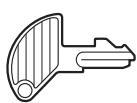
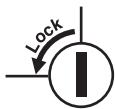
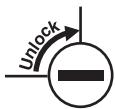
This key (the same key as mode key) locks and unlocks the drawer. To lock it, turn 90 degrees counterclockwise. To unlock it, turn 90 degrees clockwise.
PREPARING THE CASH REGISTER
Unpack the cash register and make sure all accessories are included. For details of accessories, please refer to "SPECIFICATIONS" section.
For installing the cash register, find a stable surface near an AC outlet where the cash register will not be subject to water sources or direct sunlight.
For preparing the cash register, please follow the three steps shown below: “1 Initializing the Cash Register” on this page, “2 Installing Batteries” on page 7, and “3 Installing a Paper Roll” on page 8.
1 Initializing the Cash Register
In order to operate the cash register properly, you must initialize it before operating for the first time. Follow this procedure.
- Insert the mode/drawer lock key into the mode switch and turn it to the REG position.
- Insert the AC adapter into the AC outlet.
IMPORTANT: This operation must be performed without batteries installed.
- The cash register has now been initialized. The register display will show "0.00" with "L".

L 0.00
NOTE: If this does not happen when inserting the AC adapter, then the initialization has not been done successfully. (This will occur when the voltage is high because you operated the cash register before starting initialization.) Wait at least one minute after pulling out the AC adapter and reinsert the AC adapter into the AC outlet only after this waiting time has passed.
2 Installing Batteries
Three new alkaline batteries LR6 ("AA" size) must be installed in the cash register to prevent the data and user-programmed settings from being erased from the memory, when the AC adapter plug is accidentally disconnected or in case of power failure. Once installed, the batteries will last approximately one year before needing replacement. At this time, the "L" symbol will appear on the display to indicate the batteries are low and must be replaced within two days. If the no battery symbol "L" appears, you must install the batteries at once. Install three new alkaline batteries LR6 ("AA" size) according to the procedure shown below with the AC adapter plug connected and set the mode switch to the REG position:
- Push the printer cover forward and detach it.
Be careful with the paper cutter, so as not to cut yourself.
- Open the battery compartment cover next to the paper roll cradle.
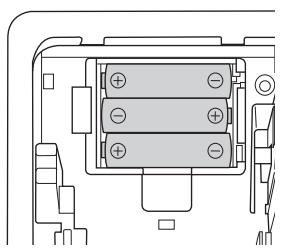
- Install three new alkaline batteries LR6 ("AA" size) as per the diagram. When the batteries are properly installed "L" on the display will disappear.
- Close the battery compartment cover.
NOTE: Be sure to observe precautions shown on page 1 when handling batteries.
If you press a key by mistake, an error symbol "PPPPPPPPPP" may be displayed. Press the CL key to clear the symbol after installing paper rolls.
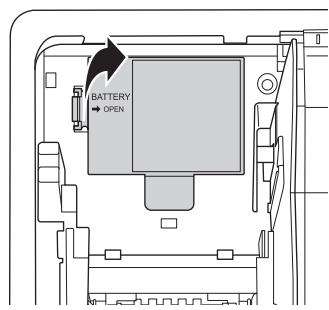
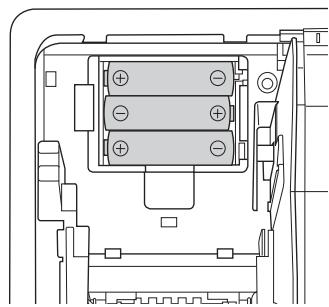
Caution: "L" or "L" can be displayed only when the cash register is being turned on. Please be advised that when the cash register is being turned off for a long time, the data in memory might be cleared without the warning symbols: "L" or "L".
3 Installing a Paper Roll
The register can print receipts. For the printer, you must install the paper roll provided with the register.
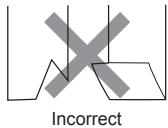
NOTE: Install the paper roll in the printer. Be careful then to set the roll and cut the paper end correctly.
(How to set the paper roll)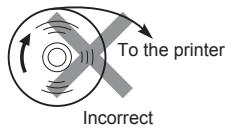
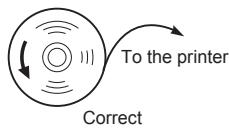
(How to cut the paper end)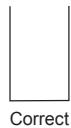
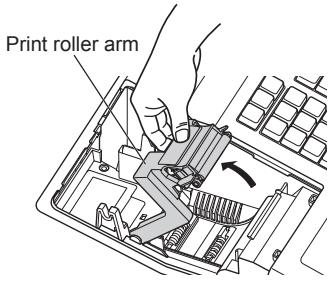
- Remove the printer cover.
- Lift up the print roller arm.
- Set the paper correctly in the paper roll cradle as per the diagram. NOTE: Before placing a new paper roll in the paper roll cradle, cut off the pasted (taped) part of the paper and confirm that the cut end of the paper is straight.
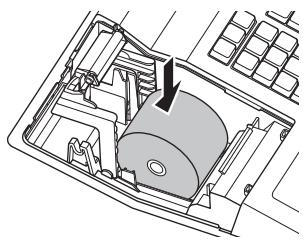
- Feed the end of the paper along with the paper positioning guides as per the diagram.
- While holding down the paper, slowly close the print roller arm, and push down the arm until you hear a click locking the arm.
NOTE: If the print roller arm is not securely locked, printing will not be done correctly. If this problem occurs, open the arm, and close the arm as instructed above.
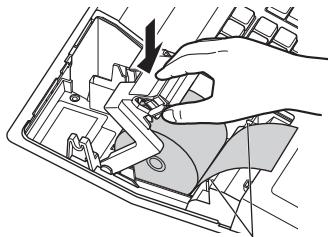
Paper positioning guides
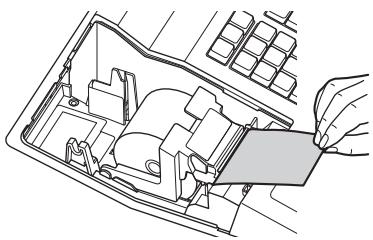
- Cut off the excess paper and replace the printer cover.
- Press the up arrow key to make sure the paper end comes out of the printer cover and clean paper appears.
NOTE: If the paper end does not come out, open the printer cover, and pass the paper end between the paper cutter and the paper guide of the printer cover, and replace the printer cover.
HELP FUNCTION
The help function allows you to print guidance messages for basic programming procedures of the cash register. This function is available in any mode switch position other than “□”. For more details on each programming, refer to “BASIC FUNCTION PROGRAMMING” on pages 10 to 20.
Press the ESC/HELP key to print the help menu. This menu provides a list of the programming procedures for which you can print the guidance messages.
Key operation
ESC/HELP
Print
1 LANGUAGE SELECTION 2 HOW TO SET THE PAPER 3 DATE SETTING 4 TIME SETTING 5 VAT RATE SETTING 6 VAT TEXT SETTING 7 VAT ASSIGNMENT TO DEPT. 8 DEPARTMENT TEXT SETTING 9 MINUS DEPARTMENT SETTING 10 PLU:DEPT.ASSIGNMENT/PRICE 11 PLU TEXT SETTING 12 LOGO MESSAGE SETTING 13 TEXT INPUT METHOD 14 DAILY Z REPORT PRINT 15 HOW TO SET RCPT SW OFF/ON 16 HOW TO OPERATE SD CARD TO PRINT ABOVE EACH HELP CONTENTS, EX) 1-[ESC/HELP]. MODE POSITION REG MODE.
■ Printing guidance messages
By reference to the help menu above, press the corresponding numeric key and then the ESC/HELP key to print the guidance message for each programming procedure.
Key operation
4 ESC/HELP
Print
4 TIME SETTING
MODE POSITION Z/PGM MODE.
[HHMM] - [#/TM/ST]
HH:00-23
MM:00-59
JOB#61-F: TIME FORMAT
24 HOUR = 1 (DEFAULT)
12 HOUR = 0
EX) PM4:30
(TIME FORMAT=24 HOUR)
1630- [#/TM/ST]
Sample print of TIME SETTING
NOTE
The ESC/HELP key works as the error escape function during a transaction. Finalize the transaction to use the key as the help function.
BASIC FUNCTION PROGRAMMING
Before starting sales entries, you must first program necessary items so the cash register suits your sales needs. In this manual, there are three sections, BASIC FUNCTION PROGRAMMING (pages 10-20) where required items must be programmed, “AUXILIARY FUNCTION PROGRAMMING” for using all available keyboard keys and “ADVANCED FUNCTION PROGRAMMING” are described in the separate “FULL DETAILED INSTRUCTION MANUAL”. Find the required functions and program them accordingly.
1 Abbreviations and Terminology
Dept.: Department; a category for merchandise classifications. Every sales item should belong to a department.
PLU: Price Look Up; a category for merchandise classifications. PLUs are used to call up preset prices by a code entry.
VAT: Value Added Tax
X report: Report to read sales data
Z report: Report to read and reset sales data
Receipt ON/OFF function: To print or not to print receipts in the REG mode.
2 Prior to Programming
■ Procedure for programming
- Check to see whether a paper roll is present in the machine. If there is not enough paper on a roll, replace it with a new one (refer to "Replacing the Paper Roll" in "OPERATOR MAINTENANCE" chapter for the replacement).
- Put the mode key in the mode switch and turn it to the Z/PGM position.
- Program necessary items into the cash register.
Every time you program an item, the cash register will print the setting. Please refer to print samples in each section.
- If necessary, issue programming reports for your reference.
NOTE • On the key operation example shown in the programming details, numbers such as “221012” indicates the parameter which must be entered using the corresponding numeric keys. - Asterisks in the tables shown in the programming details indicate default settings.
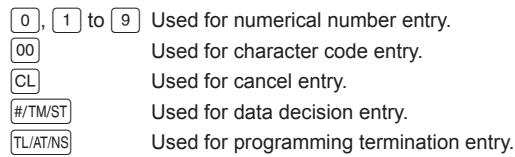
■ Description of special keys
■ Guidance for text programming
The register allows you to program texts for department item names, PLU/subdepartment item names, logo messages, foreign and domestic currency symbols, and function texts.
There are two ways for programming text; using character keys on the keyboard or entering character codes with numeric keys on the keyboard.
NOTE For details of entering character codes with numeric keys, please refer to "PRIOR TO PROGRAMMING" section in "FULL DETAILED INSTRUCTION MANUAL".
Character entry sequence
![graph LR A["Double-size character"] --> B["(DC)"] B --> C["Assigned number (0 to 9)"] C --> D["Shift"] D --> E["Character entry"] F["Capital letter selection"] --> D G["Small letter selection"] --> D](/content/2025/01/122400/images/ecf0c4845e736bb8d6d0a889502057ffa55b4e97a1bc28d5d2012207d773cc9e.jpg)
Assigned number and character table
| 5 \\ 1A-J | SHIFT 5 \\ 1A-J | 6 \\ 2K-T | SHIFT 6 \\ 2K-T | 7 \\ 3U-Z | SHIFT 7 \\ 3U-Z | 8 \\ 40-9 | SHIFT 8 \\ 40-9 | CR x | SHIFTCR Ä | EX | SHIFTEX | CH ° | SHIFTCH ° |
| 0 | A | a | K | k | U | u | 0 | 0 | Ä | ä | Đ | d' | Ö | ò |
| 1 | B | b | L | l | V | v | 1 | 1 | Ö | ö | È | è | Ó | ó |
| 2 | C | c | M | m | W | w | 2 | 2 | Ü | ü | É | é | Ö | õ |
| 3 | D | d | N | n | X | x | 3 | 3 | À | à | Ê | ê | Ö | õ |
| 4 | E | e | O | o | Y | y | 4 | 4 | Á | á | Ë | ë | Š | š |
| 5 | F | f | P | p | Z | z | 5 | 5 | Â | â | ì | ì | Ť | ť |
| 6 | G | g | Q | q | % | % | 6 | 6 | Ã | ã | Í | í | Ù | ù |
| 7 | H | h | R | r | + | + | 7 | 7 | À | à | Î | î | Ú | ú |
| 8 | I | i | S | s | - | - | 8 | 8 | Č | č | Ñ | ñ | Û | û |
| 9 | J | j | T | t | ! | ! | 9 | 9 | Ç | ç | Ñ | ñ | Ž | ž |
SHIFT Used for the small letter entry. (SPACE) Used for a space entry. (BS) Used to delete the last character or figure. (DC) Used for the double-size character entry. A-J, K-T, U-Z, 0-9, Ä, Đ, ò Used for character entry.
[Example] For entry character "MnH"
![SHARP XE-A137 - [Example] For entry character "MnH" - 1](/content/2025/01/122400/images/d14a53629e1356cd6a1e8615236f8488ea1c4f7164c98416398d4037a77ef6c6.jpg)
3 Language Selection
Procedure![graph LR A["#/TM/ST"] --> B["88"] B --> C["×/RCPTSW"] C --> D["*Language (0 - 4)"] D --> E["TL/AT/NS"] F["To set "0""] --> D](/content/2025/01/122400/images/9bad93bd383c2b5cc6f0542d0a8490171f73ca526aebb6c7f0acd449190d18a2.jpg)
*Language: 0: English 1: German 2: French 3: Spanish 4: Swedish By default, English is set.
/TM/ST 88 ✕/RCPTSW
0 [TL/AT/NS]
Key operation example
Print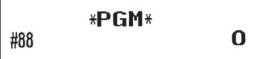
Caution: When you change the language, the texts such as logo messages and function texts, which you programmed, will be reset to the default settings. The language selection must be made before programming logo messages and function texts.
4 Date and Time Programming
Date
For setting the date, enter the date in 6 digits using the day-month-year (DD/MM/YY) format, then press the #/TM/ST key.
Procedure
Date(DD/MM/YY) → #/TM/ST
Key operation example
221012
(22 October, 2012)
/TM/ST
Print
*PGM*
22/10/12
— Date
Time
For setting the time, enter the time in 4 digits using the 24-hour format. For example, when the time is set to 2:30 AM, enter 230; and when it is set to 2:30 PM, enter 1430.
Procedure
Time(max. 4 digits in 24-hour format) → #/TM/ST
Key operation example
1430
/TM/ST
Print
*PGM*
14:30
-Time
N
5 Tax Programming
If you program the VAT/tax, the cash register can calculate the sales tax. In the VAT system, the tax is included in the price you enter in the register, and the tax amount is calculated when tendered according to the VAT rate programmed. In the tax system, the tax is calculated when tendered according to the tax rate programmed, and added to the price. The cash register can provide totally 6 kinds of VAT/tax systems (automatic VAT1-4, automatic tax 1-4, manual VAT 1-4, manual VAT 1, manual tax 1-4, and automatic VAT1 and automatic tax 2-4 systems) and 4 kinds of rates. By default, the cash register is pre-programmed as automatic VAT1-4 system.
When you program tax rate(s) and taxable status for each department (by default, VAT1/tax1 is set to taxable.), tax will be automatically added to sales of items assigned to the department according to the programmed tax status for the department and the corresponding tax rate(s).
For details of the tax systems, refer to “Computation of VAT (Value Added Tax)/tax” section in “FULL DETAILED INSTRUCTION MANUAL”. To change the tax system, please refer to “Other programming” of “Various Function Selection Programming 1” section in “FULL DETAILED INSTRUCTION MANUAL” (Job code 69).
Tax rate programming
The percent rate specified here is used for tax calculation on taxable subtotals.
Procedure
![graph TD A["#/TM/ST"] --> B["9"] B --> C["×/RCPTSW"] C --> D["Tax number (1 to 4)"] D --> E["×/RCPTSW"] E --> F["*Tax rate"] F --> G["#/TM/ST"] G --> H["TL/AT/NS"] H --> I["∞"] I --> J["To delete a tax rate"] J --> F K["To program '0.0000'"] --> F L["To program other kind of tax"] --> C M["*Tax rate…](/content/2025/01/122400/images/01421e536f4fb1910c21d330ca1af5b3b90f508d18d693be6dfbabd0698082c6.jpg)
Key operation example
/TM/ST 9 Ⓧ/RCPTSW
2 ☒/RCPTSW
0070000
/TM/ST
TL/AT/NS
Print
*PGM*
TAX2 7.0000%
0.00
6 Department Programming
Merchandise can be classified into a maximum of 8 departments. Items sold using the department keys can later be printed on a report shown as the quantities sold and sales amounts classified by department. The data is useful for making purchasing decisions and other store operations.
■ Department status
Procedure
![graph LR A["ABC"] --> B["×/RCPTSW"] B --> C["Dept. key"] C --> D["TL/AT/NS"] E["To set all zeros"] --> A F["For dept. 5 through 8"] --> G["SHIFT"] G --> C H["To program another department"] --> A](/content/2025/01/122400/images/5f29d3b4d3d503a9f5156234b2efb3a14e20e56fed3e413dde5fc71a204d8dec.jpg)
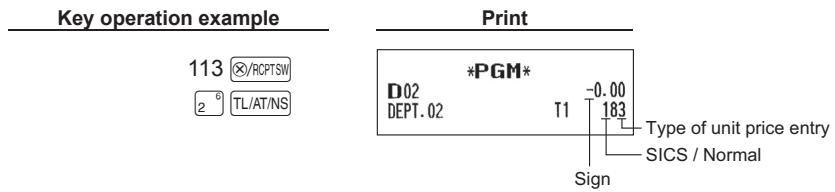
| Item: | Selection: | Entry: |
| A | SICS / Normal | SICS | 1 |
| Normal* | 0 |
| B | Sign | Negative department | 1 |
| Positive department* | 0 |
| C | Type of unit price entry | Open and preset | 3 |
| Preset only | 2 |
| Open only* | 1 |
| Inhibit department key | 0 |
* Default settings
SICS (Single Item Cash Sale)
- If an entry of a department programmed for SICS is made first, the sale will be finalized as a cash sale as soon as the department key is pressed. If the entry is made after entering a department not programmed for SICS, it does not finalize and result in a normal sale.
■ Preset unit price
Procedure![graph TD A["To program zero"] --> B["Unit price (max. 8 digits)"] B --> C["Dept. key"] C --> D["TL/AT/NS"] E["SHIFT"] --> C F["For dept. 5 through 8"] --> C G["To program another department"] --> B](/content/2025/01/122400/images/ef8764ee086f8eb85e96866d84f3affbf9c363b7d5fa0b7a2b253a65c221c084.jpg)
Key operation example
Print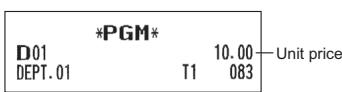
NOTE: If a department is not programmed to allow the entry of preset unit prices in functional programming, the department is automatically changed to allow the entry of preset unit prices by this programming entry.
■ VAT/tax status
Procedure![graph LR A["#/TM/ST"] --> B["20"] B --> C["⊗/RCPTSW"] C --> D["*VAT/tax status (1 to 4)"] D --> E["Dept. key"] E --> F["TL/AT/NS"] D --> G["To program zero"] G --> H["SHIFT"] H --> E style D fill:#f9f,stroke:#333 style E fill:#ccf,stroke:#333](/content/2025/01/122400/images/7aa4298832201f5b09900e0a8e0784757c2efc598b98e3c53def27707c28b636.jpg)
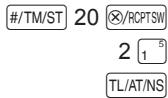
| *VAT/tax status | Selection: | Entry: |
| VAT/tax 1* | 1 e.g. for this number a VAT/tax rate of 7% is assigned |
| VAT/tax 2 | 2 |
| VAT/tax 3 | 3 |
| VAT/tax 4 | 4 |
| Non VAT/tax | 0 |
Key operation example
Print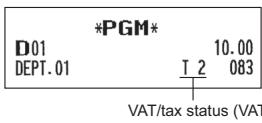
N
■ Department text (item label)
Procedure
![graph LR A["#/TM/ST"] --> B["101"] B --> C["×/RCPTSW"] C --> D["Dept. key"] D --> E["Character entry (max. 12 characters)"] E --> F["#/TM/ST"] F --> G["TL/AT/NS"] D --> H["SHIFT"] H --> I["For dept. 5 through 8"] D --> J["To program another department"] J --> K["To keep current setting"]](/content/2025/01/122400/images/dc3ee6cd4825fcdfd70c92f39642cedc93770e27ef989688125b013f4bc561f5.jpg)
Key operation example
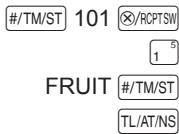
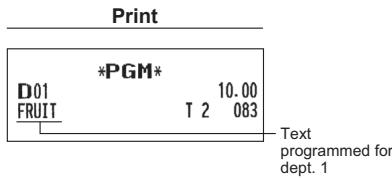
(Programming FRUIT for dept.1)
For details of the text entry (“FRUIT”), please refer to the “Guidance for text programming” on page 11.
(F:5 1\ A-J , R:7 2\ K-T , U:0 3\ U-Z , I:8 1\ A-J , T:9 2\ K-T )
7 PLU (Price Look-Up) and Subdepartment Programming
The PLU function allows speedy key entries whereby a price is automatically called up when a code is entered. The subdepartment is a kind of “open PLU”, which requires you to enter a price after the PLU code is entered. PLU/subdepartment setting for 1 through 200 codes are available.
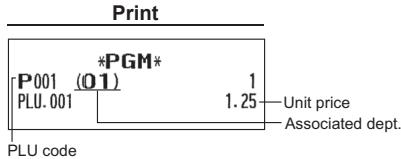
■ Unit price and associated department assignment
Procedure![graph TD A["PLU code"] --> B["PLU"] B --> C["Unit price (max. 8 digits)"] C --> D["To program or delete the following PLU code"] D --> E["Associated Dept. key"] E --> F["TL/AT/NS"] G["To program zero"] --> C H["To delete the PLU code"] --> I["∞"] I --> J["For dept. 5 through 8"] J --> K["SHIFT"] K -…](/content/2025/01/122400/images/4ee8c3b417c8177ebc22655e74e33a92a964e29d6a78458ea7465aa26057dccf.jpg)
Key operation example
■ PLU/subdepartment selection
Procedure![graph TD A["PLU code"] --> B["PLU"] B --> C["*A (0 or 1)"] C --> D["#/TM/ST"] D --> E["TL/AT/NS"] E --> F["To program another PLU code"] F --> A C --> G["To program the following PLU code"] G --> B style A fill:#f9f,stroke:#333 style B fill:#ccf,stroke:#333 style C fill:#cfc,stroke:#333 style D fill…](/content/2025/01/122400/images/55f908d4ee3bc7d7d34004c177557c5fcd94fec60b6461210bddf584a99946df.jpg)
*A: 0 for subdepartment or 1 for PLU
Key operation example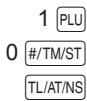
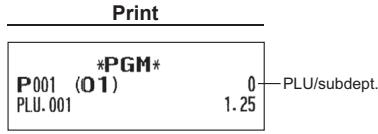
NOTE: When you program the last PLU code, the programming sequence will be complete with a press of the #/TM/ST key.
■ PLU text (item label)
Procedure
![graph LR A["#/TM/ST"] --> B["102"] B --> C["×/RCPTSW"] C --> D["PLU code"] D --> E["PLU"] E --> F["Character entry (max. 12 characters)"] F --> G["#/TM/ST"] G --> H["TL/AT/NS"] F --> I["To program following PLU code"] I --> J["To program setting"]](/content/2025/01/122400/images/4fb64e739c615a72f3c98b4daf5b9aae09ed759acf024d55f2c5aa2bf326dfbc.jpg)
To program another PLU code
Key operation example (Programming MELON to PLU1)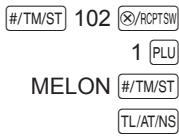
Print Text
programmed
for PLU code 1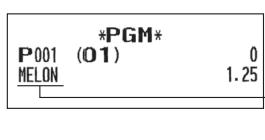
For details of the text entry (“MELON”), please refer to the “Guidance for text programming” on page 11.
(M:2 2K-T , E:4 1A-J , L:1 2K-T , O:4 2K-T , N:3 2K-T )
8 Text Programming
Please refer to "Guidance for text programming" section as for how to entering characters.
■ Logo messages (6 lines and 30 characters for each line)
The register can print programmed messages on every receipt. On the standard model, a header 3-line and footer 3-line logo message is printed on the receipt. If you want to print in other logo message format, please change the format. For the programming details, refer to “Logo message print format” in “FULL DETAILED INSTRUCTION MANUAL”.
Procedure
![graph LR A["#/TM/ST"] --> B["104"] B --> C["×/RCPTSW"] C --> D["*Line no. (1 - 6)"] D --> E["×/RCPTSW"] E --> F["Character entry (max. 30 characters)"] F --> G["#/TM/ST"] G --> H["TL/AT/NS"] H --> I["To program another line"] style D fill:#f9f,stroke:#333 style F fill:#ccf,stroke:#333 style G fill:#…](/content/2025/01/122400/images/91c9dc330e5df4e8010098459fb1b7170d13ebfb249661a115341d53e0395231.jpg)
*Line no.; “Header 3-line message” type : 1 to 3
"Header 6-line message" type : 1 to 6
"Header 3-line and footer 3-line message" type: 1 to 6 (1 to 3 as header, 4 to 6 as footer)
Header 1st line
Header 2nd line
Header 3rd line
Header 3-line message
Header 1st line
Header 2nd line
Header 3rd line
Header 4th line
Header 5th line
Header 6th line
Header 6-line message
Header 1st line
Header 2nd line
Header 3rd line
Footer 4th line
Footer 5th line
Footer 6th line
Header 3-line message and footer 3-line message (Default setting)
NOTE: A header 3-line and footer 3-line logo message is preprogrammed when shipped. Please start entering from the first line when you first program a logo message.
To print the logo message “THANK YOU” using double sized characters and centering on the third line.
Key operation example
/TM/ST 104 ✕/RCPTSW
3 ✕/RCPTSW
(DC) (SPACE) (DC) (SPACE) (DC) (SPACE)
(DC) T (DC) H (DC) A (DC) N (DC) K
(DC) (SPACE) (DC) Y (DC) O (DC) U
/TM/ST
TL/AT/NS
Print
*PGM*
THANK YOU
For details of the text entry, please refer to the "Guidance for text programming" on page 11.
(T:9 6 2 K-T, H:7 5 1 A-J, A:0 5 1 A-J, N:3 6 2 K-T, K:0 6 2 K-T, Y:4 7 3 U-Z, O:4 6 2 K-T, U:0 7 3 U-Z)
BASIC SALES ENTRY (Example)
1 Basic Sales Entry
Listed below is a basic sales entry example when selling items by cash. For operation details, please refer to "Additional Information for BASIC SALES ENTRY" in "FULL DETAILED INSTRUCTION MANUAL".
Mode switch setting
- Turn the mode switch to the REG position.
Item entries
- Enter the price for the appropriate department. For example, if the price is 15.00 EURO, enter "1500" using the numeric keys and then press the appropriate department key.
For departments 5 to 8, press the SHIFT key first before pressing the department key.
- Repeat step 2 for all department items.
Displaying subtotals
- Press the #/TM/ST key to display the amount due.
Finalizing the transaction
- Enter the amount received from the customer. (You can omit this step if the amount tendered is the same as the subtotal.)
- Press the TL/AT/NS key, and the change due is displayed and the drawer is opened.
- Tear off the receipt and give it to the customer with his or her change.
- Close the drawer.
Key operation example
| Item entries | 1500 15 | 0.1 | 15.00 |
| 2300 26 | 0.2 | 23.00 |
| Displaying subtotal | → #/TM/ST | 0 | 38.00 |
| Amount tendered | → 4000 | | 4000 |
| Finalizing the transaction | → TL/AT/NS | C | 2.00 |
(In this example, the tax system is set to automatic VAT 1-4 and the tax1 rate is set to 7%.)
Receipt print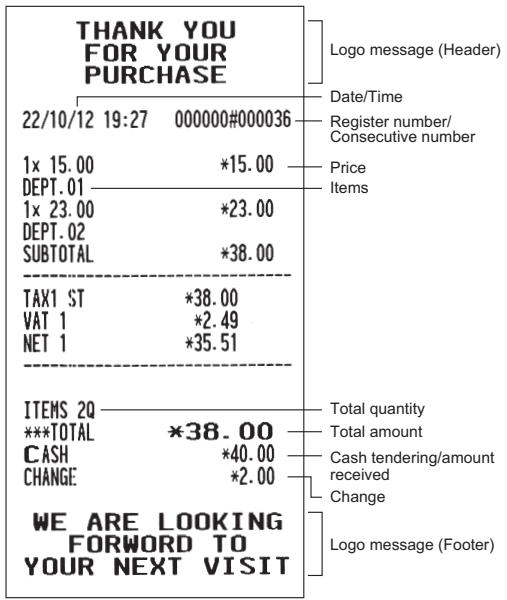
2 PLU Sales Entry
Enter a PLU code using numeric keys and press the PLU key.
| Key operation example | Operator display | Receipt print |
| 1 PLU | 001 15.0 | 1x 1.50 *1.50PLU.0011x 15.00 *15.00PLU.0711x 36.20 *36.20PLU.141ITEMS 3Q CASH *52.70 |
| 71 PLU | 071 15.00 |
| 141 PLU 3620 PLU | 141 36.20 |
| TL/AT/NS | F 52.70 |
CORRECTION
1 Cancellation of the Numeric Entry
If you make an incorrect numeric entry, you can clear the entry by pressing the CL key only before pressing a department key, PLU/subdepartment key or the % key.
2 Correction of the Last Entry (direct void)
If you make an incorrect entry relating to a department, PLU/subdepartment or percentage (%), you can void this entry by pressing the ∞ key immediately after the incorrect entry.
Key operation example
3 Correction of the Next-to-last or Earlier Entry (indirect void)
You can void any incorrect department entry, PLU/subdepartment entry or item refund entry made during a transaction if you find it before finalizing the transaction (e.g. pressing the TL/AT/NS key). This function is applicable to department, PLU/subdepartment and refund entries only.
Press the ∞ key just before you press a department key or PLU key.
| Key operation example | Operator display | Receipt print |
| 1310 SHIFT 26 | 06 | 13.10 | 1x 13.10 | *13.10 |
| 1755 SHIFT 37 | 07 | 17.55 | DEPT. 06 | *17.55 |
| 10 PLU | 010 | 7.15 | 1x 17.55 | *17.55 |
| Correction of a department entry | 12 PLU | 012 | 3.60 | DEPT. 07 | *7.15 |
| 825 SHIFT 37 | 07 | 8.25 | 1x 7.15 | *7.15 |
| 1310 ∞ SHIFT 26 | 06 | -13.10 | PLU.010 | *3.60 |
| Correction of a PLU entry | 12 ∞ PLU | 012 | -3.60 | PLU.012 | *8.25 |
| TL/AT/NS | F | 32.95 | 1x 8.25 | *8.25 |
| | | | DEPT. 07 | V-13.10 |
| | | -1x 13.10 | V-13.10 |
| | | DEPT. 06 | V-3.60 |
| | | -1x 3.60 | V-3.60 |
| | | PLU.012 | |
| | | | ITEMS 3Q | *32.95 |
| | | CASH | |
4 Subtotal Void
You can void an entire transaction. Once subtotal void is executed, the transaction is aborted and the register issues a receipt.
| Key operation example | Operator display | Receipt print |
| 1310 2 ° | 0.2 | 13.10 | 1x 13.10 | *13.10 |
| 2 ° | 2 | 13.10 | DEPT.02 | |
| 1755 SHIFT 2 ° | 0.6 | 17.55 | 1x 13.10 | *13.10 |
| DEPT.02 | |
| 1x 17.55 | *17.55 |
| 10 PLU | 0.10 | 7.15 | DEPT.06 | |
| 1x 7.15 | *7.15 |
| 35 PLU | 0.35 | 10.00 | PLU.010 | |
| 1x 10.00 | *10.00 |
| PLU.035 | |
| Subtotal void | #/TM/ST | 0 | 60.90 | SUBTOTAL | *60.90 |
| ∞ | | 0.00 | SBTL VOID | -60.90 |
| #/TM/ST | | 0.00 | ***TOTAL | *0.00 |
5 Correction after Finalizing a Transaction (Void mode)
When you need to void incorrect entries that are found after finalizing a transaction or cannot be corrected by direct, indirect void or subtotal void, the following steps should be taken:
- Turn the mode switch to the ☐ position using the mode key, to enter into the void mode.
- Repeat the entries that are recorded on an incorrect receipt. (All data on the incorrect receipt is removed from register memory; the voided amounts are added to the void mode transaction totalizer.)
Incorrect receipt
| 1x 10.00 | *10.00 |
| DEPT.04 | |
| 1x 1.50 | *1.50 |
| DEPT.03 | |
| ITEMS 2Q | |
| CASH | *11.50 |

Cancellation receipt
| * | VOID MODE * |
| 1x 10.00 | |
| DEPT.04 | *10.00 |
| 1x 1.50 | *1.50 |
| DEPT.03 | |
| ITEMS 2Q | |
| CASH | *11.50 |
FULL SALES REPORT (X or Z REPORT)
- Use the reading function (X) when you need to take a reading of sales information entered since the last reset. You can take this reading any number of times. It does not affect the register's memory.
- Use the resetting function (Z) when you need to clear the register's memory. Resetting prints all sales information and clears the entire memory except for the GT1 through GT3, reset count, and consecutive number.
X1 and Z1 reports: Daily sales reports
X2 and Z2 reports: Periodic (monthly) consolidation reports
When you take an X1 or X2 report, turn the mode switch to the X/Flash position, and use the corresponding key sequence.
When you take an Z1 or Z2 report, turn the mode switch to the Z/PGM position, and use the corresponding key sequence.
■ Daily full sales report (X1 or Z1 report)
Put the mode key in the mode switch and turn it to the X/Flash or the Z/PGM position.
Key operation
TL/AT/NS (For Z1 report: in the Z/PGM position)
Sample report
| *2 | Z1 0001 | Mode title*1 |
| GT1 | *00000000345.08 | Reset counter |
| GT2 | *00000000399.04 | Net grand total (GT2-GT3) |
| GT3 | -00000000053.96 | Grand total of plus registration |
| DEPT. | | Grand total of minus registration |
| D01 | 42 Q | Dept. code |
| DEPT.01 | *182.42 | Sales q'ty |
| D02 | 15 Q | Sales amount |
| DEPT.02 | *50.00 |
| D03 | 10 Q |
| DEPT.03 | *19.34 |
| D04 | 7 Q |
| DEPT.04 | *21.83 |
| D05 | 4 Q |
| DEPT.06 | *20.88 | “+” dept. counter and total |
| D08 | 11 Q |
| DEPT.08 | *68.53 |
| *DEPT TL | 93 Q |
| *369.08 |
| D07 | 7 Q | “-” dept. counter and total |
| DEPT.07 | -21.77 |
| DEPT(-) | 7 Q |
| -21.77 |
| TRANSACTION |
| % | 2 Q | Subtotal percent counter and total |
| NET 1 | -2.23 | Net sales total |
| TAX1 ST | *254.70 | Taxable 1 total |
| VAT 1 | *35.13 | VAT 1 total |
| TAX2 ST | *50.00 | |
| VAT 2 | *3.27 | |
| TAX3 ST | *18.55 | |
| VAT 3 | *1.37 | |
| TAX4 ST | *21.83 | |
| VAT 4 | *2.16 | |
| TTL TAX | *41.93 | Tax total |
| NET | *303.15 | Net total without tax |
| % | 3 Q | Item percent |
| -0.45 | counter and total |
| VOID | 4 Q | Item void counter |
| *19.01 | and total |
| VOID MODE | 1 Q | Void-mode transaction |
| *10.50 | counter and total |
| SBTL VOID | 1 Q | Subtotal void counter |
| *8.95 | and total |
| NO SALE | 2 Q | No-sales counter |
| GUEST | 11 Q | Customer counter |
| PAID TL | *345.08 | Paid total |
| AVE. | *31.37 | Paid total average per customer |
| SCM(+) | *200.00 | Starting cash memory (+) |
| SCM(-) | -100.00 | Starting cash memory (-) |
| SCM TTL | *100.00 | Starting cash memory total |
| ***RA | 1 Q | Received on account |
| *100.00 | counter and total |
| ***PO | 1 Q | Paid out counter and total |
| *50.00 | |
(To be continued on the next page) *1: When you take X1 report, "X1" is printed. *2: Printed in the Z1 report only.
| CASH | 5 Q*263.44 | Cash counter and total |
| CHECK | 2 Q*47.00 | Cheque sales counterand total |
| CREDIT | 2 Q*15.40 | Credit sale and tenderingcounter and total |
| EXCH | 2 Q22.00 | Exchange counter and total |
| DOM. CUR | *23.39 | Domestic currency |
| ****CID | *409.29 | Cash in drawer |
| *CH ID | *47.00 | Cheque in drawer |
| CA/CHK ID | *456.29 | Cash + cheque in drawer |
| CHK/CG | *3.40 | Change total for chequetendering |
■ Periodic consolidation (X2 or Z2 report)
Put the mode key in the mode switch and turn it to the X/Flash or the Z/PGM position.
Key operation
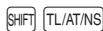
(For Z2 report: in the Z/PGM position)
Sample report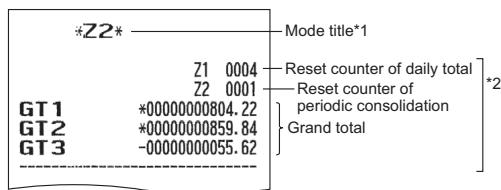
↓
The subsequent printouts are the same in format as in the Z1 full sales report.
*1: When you take X2 report, "X2" is printed. *2: Printed in the Z2 report only
MAIN FUNCTIONAL OVERVIEW
The register has the following main functions. For details, refer to "FULL DETAILED INSTRUCTION MANUAL".
Item Entries
Single item entries
Repeat entries
Multiplication entries
Single item cash sale (SICS) entries
Special Entries for PLU
PLU entries
Subdepartment entries
Display of Subtotals
Subtotal
Finalization of Transaction
Cash or cheque tendering
Mixed tendering (cheque + cash)
Cash or cheque sale that does not need any tender entry
Credit sale
Mixed-tender sale
Computation of VAT (Value Added Tax)/Tax
VAT/tax system
Auxiliary Entries
Percent calculations (premium or discount)
Printing of non-add code numbers
Auxiliary Payment Treatment
Currency exchange
Received-on-account entries
Paid-out entries
No-sale (exchange)
Correction
Correction of the last entry (direct void)
Correction of the next-to-last or earlier entries (indirect void)
Subtotal void
Correction after Finalizing a Transaction (Void mode)
Special Printing Function
After transaction receipt
Copy receipt printing
Other Functions
SD card mode
Electronic journal
Starting cash memory (+)(-)
Help function
Reports
General report
PLU report
Hourly report
Electric Journal report
Flash reports
Euro change
1 In Case of Power Failure
When power is lost, the machine retains its memory contents and all information on sales entries. (Note: Three alkaline batteries must be installed.)
- When power failure is encountered in register idle state or during an entry, the machine returns to normal operation after power recovery.
- When power failure is encountered during a printing cycle, the register prints “==========” and then carries out the correct printing procedure after power recovery. (See the sample print.)
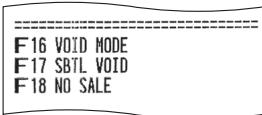
2 In Case of Printer Error
If the printer runs out of paper, the printer will stall, and “” will appear on the display. Key entries will not be accepted. Refer to section 5 in this chapter, install a new roll, then press the CL key. The printer will print the power failure symbol and resume printing.
3 Cautions in Handling the Printer and Recording Paper
■ Cautions in handling the printer
- Avoid dusty and humid environments, direct sunlight and iron powder. (A permanent magnet and electromagnet are used in this machine.)
- Never pull the paper when the print roller arm is locked. First lift up the arm, and then remove the paper.
- Never touch the surface of the printer head and print roller.
■ Cautions in handling the recording paper (thermal paper)
- Use only the paper specified by SHARP.
- Do not unpack the thermal paper until you are ready to use it.
- Avoid heat. The paper will color at around 70°C .
- Avoid dusty and humid storage places. Avoid direct sunlight.
- The printed text on the paper can discolor under conditions of high humidity and temperature, exposure to the direct sunlight, contact with glue, thinner or a freshly copied blueprint, and heat caused by friction from scratching or other such means.
- Be very careful when handling the thermal paper. If you want to keep a permanent record, copy the printed text with a photocopier.
4 Replacing the Batteries
This cash register displays a low battery symbol (L) when the batteries are low, and displays a no battery symbol (L) when batteries are extremely low or batteries are not installed.
When the low battery symbol is displayed, replace the batteries with new ones as soon as possible. The existing batteries will be dead in about two days.
When the no battery symbol is displayed, replace the batteries immediately. Otherwise, if the AC adapter plug is disconnected or a power failure occurs, all the programmed settings will be reset to the default settings and any data stored in memory will be cleared.
Caution: While the no battery symbol is being displayed, do not turn the mode switch to any positions. Follow the battery replacement procedure below without changing the mode switch position. Never pull out the AC adapter from the AC outlet, all the programmed settings will be reset to the default settings and any data stored in memory will be cleared.
NOTE Be sure to observe precautions shown on page 1 when handling batteries.
To replace the batteries:
- Make sure that the cash register is plugged in.
- Remove the printer cover.
- Open the battery compartment cover next to the paper roll cradle and remove the old batteries.
- Install three new alkaline batteries LR6 ("AA" size) in the battery compartment. Be sure the positive and negative poles of each battery are facing in the proper direction. When they are installed correctly, the "L" or "L" symbol will disappear.
- Close the battery compartment cover.
- Replace the printer cover.
5 Replacing the Paper Roll
Be sure to use paper rolls specified by SHARP.
The use of any other paper rolls other than those specified could cause paper jamming, resulting in register malfunction.
Paper specification
Paper width: 57.5 ± 0.5 mm
Max. outside diameter: 80 mm
Quality: High quality (0.06 to 0.08 mm thickness)
- Be sure to set the paper roll prior to using your machine, otherwise it may cause a malfunction.
Install the paper roll in the printer. Be careful to set the roll correctly.
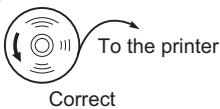
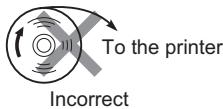
(How to set the paper roll)
■ Removing the paper roll
When a red dye appears on the paper roll, it is time to replace it. Replace the paper roll with a new one. If you plan on not using the register for an extended period of time, remove the paper roll, and store it in an appropriate place.
Caution: The paper cutter is mounted on the printer cover. Be careful not to cut yourself.
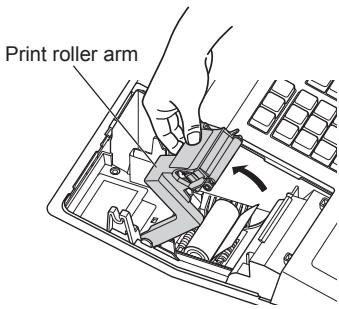
- Remove the printer cover.
- Lift up the print roller arm.
- Remove the paper roll from the paper roll cradle.
NOTE Do not pull the paper through the printer.
■ Installing the paper roll
For information on how to install paper rolls, refer to “Installing a Paper Roll” on page 8.
Caution: The paper cutter is mounted on the printer cover. Be careful not to cut yourself.
6 Removing a Paper Jam
Caution: The paper cutter is mounted on the printer cover. Be careful not to cut yourself. Never touch the printer head immediately after printing, as the head may still be hot.
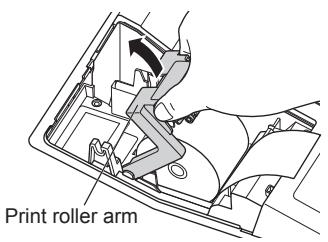
- Remove the printer cover.
- Lift up the print roller arm. (When a large roll paper is set, hold the both side of the print roller arm as per the diagram.)
- Remove the paper jam. Check for and remove any shreds of paper that may remain in the printer.
- Reset the paper roll correctly by following the steps in "Installing a Paper Roll" on page 8.
7 Cleaning the Printer (Printer Head / Sensor / Roller)
When the printed text is getting dark or faint, paper dust may be stuck to the printer head, sensor and/or roller. Clean them as follows:
Caution:
- Never touch the printer head with a tool or anything hard as it may damage the head.
- The paper cutter is mounted on the printer cover. Be careful not to cut yourself.
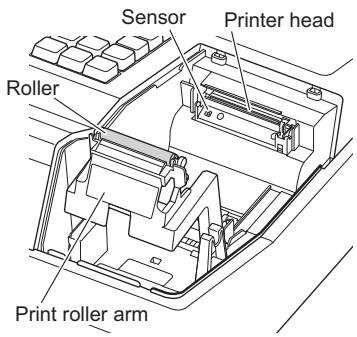
- Turn the mode switch to the "⏻" position.
- Remove the printer cover.
- Lift up the print roller arm.
- Remove the paper roll referring to the "Removing the paper roll" section.
- Clean the printer head with a cotton swab or soft rag moistened with ethyl alcohol or isopropyl alcohol. Clean the roller and the sensor in the same manner.
- Reset the paper roll correctly by following the steps in "Installing a Paper Roll" on page 8.
8 Removing the Drawer
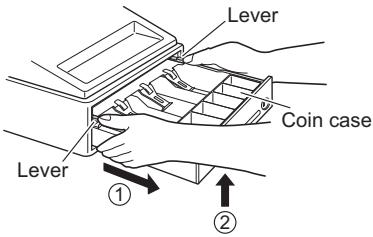
The drawer in the register is detachable. After closing your business for the day, remove the drawer. To detach the drawer, pull it forward fully, and while holding the lever down, lift the drawer slightly and remove. The 6-denomination coin case is detachable.
9 Opening the Drawer by Hand
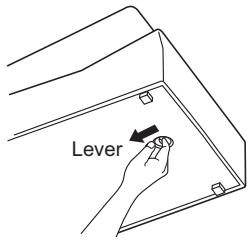
The drawer automatically opens. However, when a power failure occurs or the machine becomes out of order, slide the lever located on the bottom of the machine in the direction of the arrow. (See the diagram at the left.)
The drawer will not open if it is locked with the key.
BEFORE CALLING FOR SERVICE
The malfunctions shown in the left-hand column below, labeled "Fault," do not necessarily indicate functional faults of the machine. It is therefore advisable to refer to "Checking" shown in the right-hand column before calling for service.
| Fault | Checking |
| (1) The display shows symbols that do not make sense. | Has the machine been initialized properly as shown in “PREPARING THE CASH REGISTER”?(Note that initialization clears all the data and programmed settings stored in memory.) |
| (2) The display won’t illuminate even when the mode switch is turned to any other position than “⏻”. | Is power supplied to the electrical outlet?Is the AC adapter plug out or loosely connected to the AC outlet? |
| (3) The display is illuminated, but the whole machine refuses registrations. | Is the mode switch set properly at the “REG” position? |
| (4) No receipt is issued. | Is the paper roll properly installed?Is there a paper jam?Is the receipt function in the “OFF” status?Is the print roller arm securely locked? |
| (5) Printing is unusual. | Is the print roller arm securely locked? Open the print roller arm, and lock the arm by following the instruction of installation.Is the paper roll properly installed?Are the printer head/sensor/roller clean? |
| (6) Continuous printing stops. | “-” will be displayed in order from left to right continuously. It occurs when the printer temperature is high.Printing will automatically restart after several seconds. |
■ Error code table
When the following error codes are displayed, press the CL key and take a proper action according to the table below.
| Error code | Error status | Action |
| E01 | Registration error | Make a correct key entry. |
| E02 | Misoperation error | Make a correct key entry. |
| E11 | Compulsory depression of the#/TM/STkey | Press the#/TM/STkey and continue the operation. |
| E12 | Compulsory tendering | Make a tendering operation. |
| E33 | Compulsory SCM (starting cash memory) entry | Make the SCM (starting cash memory) entry. |
| E34 | Overflow limitation error | Make a registration within a limit of entry. |
| E35 | The open price entry is inhibited. | Make a preset price entry. |
| E36 | The preset price entry is inhibited. | Make an open price entry. |
| E37 | The direct finalization is inhibited. | Make a tendering operation. |
| E67 | Subtotal void is not allowed. | Finalize the transaction, and correct the wrong entries in themode. |
| E80 | The battery trouble is occurred. | Change the battery. |
SPECIFICATIONS
| Model: | XE-A137XE-A147 |
| Dimensions: | 335 (W) x 360 (D) x 190 (H) mm |
| Weight: | Approx. 5 kg |
| Power Source: | Official (nominal) voltage and frequency |
| Power Consumption: | Stand-by: 1.9 W (When the official voltage is 220 to 240 V, 50 Hz/60 Hz)Operating: 8.1 W (max.) (When the official voltage is 220 to 240 V, 50 Hz/60 Hz) |
| Working Temperature: | 0 to 40 °C (32 to 104 °F) |
| Humidity: | 20 % to 90 % |
| Electronics: | LSI (CPU) etc. |
| Display: | 7-segment display (9 positions) |
| Printer: | Type: One-station thermal printerPrinting speed: Approx. 7 lines/secondPrinting capacity: 30 digitsOther functions:- Logo message function- Receipt (ON-OFF) function |
| Logo: | Graphic logo printing:Size: 130 (H) x 360 (W) pixelArea of black must be less than 35% of all area.Logo message printing:Logo message for the receipt (max. 30 characters x 6 lines) |
| Paper Roll: | Width: 57.5 ± 0.5 mmMax. diameter: 80 mmQuality: High quality (0.06 to 0.08 mm thickness) |
| Cash Drawer: | 3 slots for bills and 6 for coin denominations |
| Accessories: | Basic user manual: 1 copyPaper roll: 1Mode key (same as drawer lock key): 2AC adapter: 1Fiscal caution sheet: 1 (for Germany and Norway) |
*Specifications and appearance are subject to change without notice for improvement.
Option
The following Sharp option is available only for your XE-A147 register.
- Option battery model XE-A1BT


CAUTION: (only for the XE-A147)
Shielded interface cables must be used with this equipment to maintain compliance with EMC regulations.
XE-A137
Noise level LpA: 56.4 dB(A-weighted)
Measured according to EN ISO 7779:2001
[Maximum value if the cash drawer springs open LpAI: 71.4 dB(A-weighted)]
XE-A147
Noise level LpA: 53.0 dB(A-weighted)
Measured according to EN ISO 7779:2001
[Maximum value if the cash drawer springs open LpAI: 70.1 dB(A-weighted)]