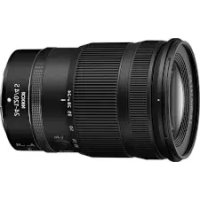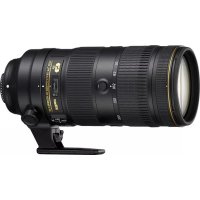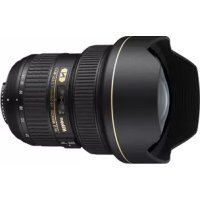
AF VR ZOOM-NIKKOR 80-400MM F4.5-5.6D - Camera lens NIKON - Free user manual and instructions
Find the device manual for free AF VR ZOOM-NIKKOR 80-400MM F4.5-5.6D NIKON in PDF.


| Lens type | Zoom-Nikkor AF type D with Nikon bayonet mount, built-in VR mechanism |
| Focal length | 80-400 mm |
| Maximum aperture | f/4.5-5.6 |
| Optical construction | 17 elements in 11 groups (3 ED elements) |
| Angle of view | 30°10' - 6°10' (20° - 4° on Nikon DX digital SLRs); 24°20' on IX240 system |
| Focusing | Autofocus (AF) or manual (M) with dedicated ring, VCM motor |
| Vibration reduction | Mode 1 (continuous) and Mode 2 (on release), switchable |
| Minimum focusing distance | 2.3 m |
| Maximum reproduction ratio | 1:25 (at 80 mm) - 1:4.8 (at 400 mm) |
| Diaphragm | 9 blades, nearly circular aperture, automatic |
| Aperture scale | f/4.5 - f/32 |
| Double aperture index | Index (line) for 80 mm, dot for 400 mm |
| Minimum aperture lock | Yes, on f/32 |
| Exposure measurement | Full aperture with AI and CPU cameras, stopped down for others |
| Infrared correction | Gold index at 80 mm, variable compensation depending on focal length |
| Filter | 77 mm (0.75 mm thread pitch) |
| Dimensions (diameter x length) | Approx. 91 mm x 171 mm (179 mm with tripod collar) |
| Weight | Approx. 1360 g (with tripod collar), 1210 g (lens only) |
| Tripod collar | Removable, rotatable, three positions |
| Supplied accessories | Front cap (77 mm), lens hood HB-24, rear cap LF-1, semi-soft case CL-M1 |
| Maintenance | Cleaning with a blower and a soft cloth dampened with ethanol, use an NC filter for protection |
| Compatibility | Nikon AF bodies (except F3AF), Nikon DX digital SLRs (equivalent focal length 120-600 mm) |
| Important note | Do not use AF-I/AF-S TC-14E/TC-20E teleconverters, nor the PK-1, PK-11, BR-4, K1 extension rings |
Frequently Asked Questions - AF VR ZOOM-NIKKOR 80-400MM F4.5-5.6D NIKON
User questions about AF VR ZOOM-NIKKOR 80-400MM F4.5-5.6D NIKON
0 question about this device. Answer the ones you know or ask your own.
Ask a new question about this device
Download the instructions for your Camera lens in PDF format for free! Find your manual AF VR ZOOM-NIKKOR 80-400MM F4.5-5.6D - NIKON and take your electronic device back in hand. On this page are published all the documents necessary for the use of your device. AF VR ZOOM-NIKKOR 80-400MM F4.5-5.6D by NIKON.
USER MANUAL AF VR ZOOM-NIKKOR 80-400MM F4.5-5.6D NIKON
This is the sum of the sum of the sum of the sum of the sum of the sum of the sum of the sum of the sum of the sum of the sum of the sum of the sum of the sum of the sum of the sum of the sum of the sum of the sum of the sum of the sum of the sum of the sum of the sum of the sum of the sum of the sum of the sum of the sum of the sum of the sum of the sum of the sum of the sum of
レンズのお手入手に取り挃上的ご注意
AatchMntS4s7:77mm(P=0.75mm)
① Zoom ring
② Focal length scale index line
③ Distance index line
④ Distance scale
⑤ Focus ring
(6) Infrared compensation index (at 80mm)
⑦ Focus mode release button
⑧ Hood mounting index
(9) Focus limit switch
10 Focus mode select ring
(1) Focal length scale
⑫ Tripod collar alignment index
(13) Position index
⑭ Aperture index (line)/Mounting index
15 Aperture index
16 Minimum aperture lock lever
1 Aperture scale
18 Aperture-direct-readout scale
19 Meter coupling ridge
20 CPU contacts
(2) Minimum aperture signal post (EE servo coupling post)
2 Aperture indexing post
② Aperture ring
(24) Vibration reduction mode switch
② Tripod collar lock screw
26 Tripod collar
Introduction
Thank you for purchasing the AF VR Zoom-Nikkor ED 80-400mm f/4.5-5.6D lens. This is a high-performance telephoto zoom lens featuring an exceptionally wide 5x zoom range, plus a special vibration reduction mechanism (hence the "VR" in its name). With this lens, you can take pictures at shutter speeds approx. 3 steps slower than you ordinarily could without using a VR lens and still get sharp results. For example, at the 400mm setting, instead of being limited to 1/500 sec., you can shoot at shutter speeds down to 1/60 sec. This lens makes telephoto shooting without a tripod much easier. Panning is also possible, as the lens automatically distinguishes panning from camera shake.
- Manual focus using focus assist as well as autofocus are possible with all Nikon AF camera bodies, except the F3AF.
- A (autofocus) or M (manual focus) mode can easily be selected with the focus mode select ring.
- More accurate exposure control is possible when this lens is mounted on a Nikon camera having 3D Matrix Metering capability, because subject-distance information is transferred from the lens to the camera body.
- The use of three ED (extra-low dispersion) lens elements ensures sharp pictures virtually free of color fringing. Also, by utilizing a 9-blade diaphragm that produces a nearly circular aperture, out-of-focus images in front of or behind the subject are rendered as pleasing blurs.
- Closest focusing distance of 2.3m (7.5 ft.) is provided.
- Detachable tripod collar is provided.
When mounted on Nikon Digital Cameras
This lens can be used as an interchangeable lens for the Nikon digital SLR (Nikon DX format) cameras, such as the D2-Series and D50. When mounted, the lens' picture angle becomes 20^ - 4^ and its 35mm equivalent focal length is approx. 120 - 600mm .
Important!
- Be careful not to soil or damage the CPU contacts.
- Do not use the AF-I Teleconverters TC-14E/TC-20E or the AF-S Teleconverters TC-14EII/TC-17EII/TC-20EII.
- Do not attach the following accessories to the lens, as they might damage the lens CPU contacts: Auto Extension Ring PK-1, PK-11/11A, Auto Ring BR-4 and K1 Ring. Other accessories may not be suitable when this lens is used with certain camera bodies. For details, refer to instruction manual for each product.
- This lens is not compatible when used with a Nikon F3AF camera with the AF Finder DX-1 attached.
- When the camera is pointed down, be careful not to hold the lens at the very end as indicated by the black marks in Fig. F, because the zoom ring or focus ring may rotate and pinch your fingers.
- With using this lens, particularly at low temperatures and at the wide angle position, the zoom ring may turn slightly during AF operation. Therefore, please check the image in the viewfinder to confirm the composition before releasing the shutter.
Focusing
Focus mode select ring and focus mode release button (Fig. A)
Rotate the focus mode select ring to align the “▲” mark with A (autofocus) or M (manual focus). The Ls on either side of A and M are the locked positions for autofocus or manual focus.
| L beside A | The ring is locked. Autofocus is possible. To release the lock, rotate the ring while pressing the focus mode release button. |
| A | The ring click stops into place. Autofocus is possible. |
| M | The ring click stops into place. Manual focus is possible. |
| L beside M | The ring is locked. Manual focus is possible. To release the lock, rotate the ring while pressing the focus mode release button. |
Setting the ring at the A or M click-stop position is recommended if you frequently change focus modes.
- Note that only manual focus (with the ring set to or the beside ) is usable when the lens is mounted on manual focus cameras or autofocus cameras set to the M mode.
Using the focus limit switch (Fig. B)
In the autofocus or manual focus mode, depending on the shooting distance, you can use this switch to limit the range of focus and reduce focusing time. The focus limit switch cannot be set at a position between approx. 3.5m (11.5 ft.) and 5m (16.4 ft.).
| Position | Shooting distance |
| LIMIT | Approx. 2.3m (7.5 ft.) to 3.5m (11.5 ft) or Approx. 5m (16.4 ft.) to infinity (∞) |
| FULL | Approx. 2.3m (7.5 ft.) to infinity (∞) |
Vibration reduction mode (Fig. C)
The following cameras are usable:
- 35mm SLR cameras: F6, F5, F100, F80-Series/N80-Series, F75-Series/N75-Series, F65-Series/N65-Series
- Digital cameras: D2-Series, D1-Series, D100, D70-Series, and D50
When using the lens with cameras other than those listed above, set the vibration reduction mode switch to OFF to cancel the vibration reduction mode.
With the Pronea 600i/6i camera, in particular, battery power may become depleted quickly if this switch is left ON.
Setting the vibration reduction mode switch
| Mode 1 ON | Vibration is reduced at the instant the shutter is released and also while the shutter release button is lightly pressed. Because vibration is reduced in the viewfinder, auto/manual focusing and exact framing of the subject are easier. |
| Mode 2 ON | Vibration is reduced only at the instant the shutter is released. In this mode, vibration of the image in the viewfinder is not reduced while the shutter release button is pressed lightly. |
| OFF | Vibration is not reduced. |
- In Mode 1 and Mode 2, wait at least one second before fully depressing the shutter release button after lightly pressing the shutter button. In Mode 1, it's recommended to release the shutter after the image in the viewfinder has stopped vibrating.
- The vibration reduction mechanism reduces camera shake. However, if you move the camera quickly, vibration in the direction of that movement may not be affected. For example, if you pan the camera horizontally, only vibration in the vertical direction is reduced, making smooth pans much easier.
-
Characteristic of the vibration reduction mechanism, the image in the viewfinder may blur after releasing the shutter.
-
Do not turn the camera power OFF while the vibration reduction mode is in operation. Otherwise the lens may emit a chattering noise when it is moved quickly. This is not a malfunction. Turn the camera power ON again to correct this.
- If the lens is removed from the camera while the vibration reduction mode is in operation, the same thing may happen as stated above. Mount the lens and press the shutter release button halfway to eliminate the chattering noise.
- When the shutter release button is lightly pressed, the vibration reduction mode does not work with cameras such as F80-Series/N80-Series or D100 while the camera's built-in Speedlight is recycling.
- When the lens is mounted on a tripod, set the vibration reduction mode switch to OFF. Set the vibration reduction mode switch to ON, when using a monopod or if the lens is mounted on a tripod without the head being locked in place.
- This mode may be less effective when pictures are taken from a moving vehicle.
- The vibration reduction mode does not work when the AF start (AF-ON) button is turned on with cameras so equipped.
Focusing, zooming, and depth of field
(Refer to Quick reference charts 1 and 2 on page 70.)
In the A (autofocus) mode, first turn the zoom ring until the desired composition is framed in the viewfinder before autofocusing. In the M (manual focus) mode, focusing is possible at any focal length, but the longer the focal length, the larger the image and the shallower the depth of field, making focusing easier. If your camera has a depth of field preview (stop-down) button or lever, depth of field can be observed while looking through the camera viewfinder. It is possible to determine depth of field by using the scale provided on page 70.
To use the depth-of-field scale:
1 Cut out the scales along the lines indicated.
2 Place scale 2 over scale 1 so the top edge of scale 2 is aligned with the focal length in use and the distance is aligned with the central indicator line of scale 1.
3 Read the scale 2 numbers that correspond to the aperture in use.
For example, if the lens is focused at 4m with the focal length at 105mm and the aperture at f/22, the depth of field will be approx. 3.3m to 5.5m (10.8 to 18 ft.).
Minimum aperture lock (Fig. D)
Use the minimum aperture lock lever to lock the lens aperture at f/32.
1 Set the lens to its minimum aperture (f/32) by aligning it with the aperture index.
2 Slide the lock lever toward the aperture ring, so the two orange dots are aligned. To release the lock, slide the lever in the opposite direction.
Variable aperture/two aperture indexes
(Refer to chart 3 on page 71.)
Zooming the lens from 80mm to 400mm decreases the maximum aperture approx. 2/3 of an f/stop. For cameras with TTL metering, there is no need to adjust the aperture. Likewise, for TTL auto flash photography with Nikon Speedlights, no adjustment is required. However, when the flash-to-subject distance approaches either the near or far limit of the automatic shooting range, the aperture may need to be adjusted slightly.
When using a separate exposure meter or taking photographs in the non-TTL flash mode, select the appropriate aperture index according to the focal length setting in the following way: The aperture index (line) is used for the 80mm focal length setting and the dot for the 400mm setting. Click stops are provided at the aperture index (line) for each aperture setting. For zoom settings between 80 and 400mm, align the aperture ring between the two indexes to obtain the best overall exposure. To determine the correct aperture, refer to the chart 3 on page 71—Relationship between focal length and maximum aperture.
Infrared compensation
When shooting black and white infrared film, it is necessary to make slight manual compensation to the focused distance. With color infrared film, no compensation in focus is needed. The small gold dot just to the left of the distance index line is the infrared compensation index at the 80mm setting. First, focus manually on the subject, then realign your focused distance with the small gold dot. Then attach a red (R60) filter for infrared photography. To determine the position of the infrared compensation index at all focal lengths, use this chart.
| Focused length setting | Compensation from distance index line (on distance scale) |
| 105mm | 4.1mm |
| 135mm | 2.3mm |
| 200mm | 0.7mm |
| 300mm | 0.2mm |
| 400mm | 0mm |
Recommended focusing screens
Various interchangeable focusing screens are available for certain Nikon SLR cameras to suit any picture-taking situation. The ones recommended for use with this lens are:
| Screen Camera | A | B | C | D | E | EC-B EC-E | F | G1 G2 G3 G4 | H1 H2 H3 H4 | J | K | L | M | P | R | S/T | U |
| F6 | ◎(-0.5) | * | ◎ | — | — | ◎ | — | — | — | ◎ | — | ◎(-0.5)* | — | — | — | — | |
| F5+DP-30 | ◎ | ◎ | ◎ | ◎ | ◎ | ◎ | |||||||||||
| F5+DA-30 | ◎(+1.0) | ◎ | — | ◎ | ◎ | — | — | ◎ | — | ◎(+1.0) | — | — | — | — | ○ | ||
| F4+DP-20 | — | ◎ | — | ◎ | — | — | ◎ | ◎ | — | ◎ | — | — | ◎(-1.0) | ||||
| F4+DA-20 | — | ◎ | — | ◎ | — | — | ◎ | ◎ | — | ◎ | — | — | ◎(-1.0) | ||||
| F3 | △ | ◎ | ◎ | ◎ | △ | △ | △ | △ | ◎ |
Excellent focusing
Acceptable focusing Slight vignetting or moiré patterns appear in the viewfinder, but not on the film.
Acceptable focusing The in-focus image in the central spot may prove to be slightly out of focus on film. Focus on the surrounding matte area.
Not available.
( ) Indicates degree of exposure compensation needed (Center-Weighted metering only). For F6 cameras, compensate by selecting "Other screen" in Custom Setting "b6: Screen comp." and setting the EV level to -2.0 to +2.0 in 0.5 EV steps. When using screens other than type B or E, "Other screen" must be selected even when the required compensation value is "0" (no compensation required). For F5 cameras, compensate using Custom Setting #18 on the camera body. For F4-Series cameras, compensate using the Exposure Compensation Dial for the focusing screen. See instruction manual of the camera body for more details.
Blank box means not applicable. Since type M screen can be used for both macrophotography at a 1:1 magnification ratio and for photomicrography, it has different applications than other screens.
When using the B/B2/B3, E/E2/E3, and K/K2/K3 focusing screens in cameras other than those listed above, refer to the columns on the F4 + DP-20's B, E and K screens, respectively.
- Exposure compensation at telephoto setting. No compensation needed at wide-angle setting.
Taking flash pictures with cameras having built-in flash
Check the focal length and shooting distance before taking flash pictures to prevent vignetting.
Usable at any focal length.
- F50-Series/N50, F-601/N6006, F-601M/N6000, F-401x/N5005, F-401s/N4004s, F-401/N4004
Useable at any focal length. However at 80mm the shooting distance must be 4.0m (13.1 ft.) or greater.
Pronea S
Usable at a focal length of 135mm or longer
Using a tripod (Fig. E)
This lens is equipped with a detachable rotating tripod collar. When using a tripod, attach it to the lens' tripod collar instead of the camera. To attach the tripod collar to the lens, follow these steps:
1 Loosen the tripod collar lock screw ① slightly.
2 Insert the lens by aligning the tripod collar alignment index on the lens with the mark on the tripod collar ②.
3 Turn the lens to an appropriate position index (three indexes are provided every 90^ ) on the tripod collar by aligning the tripod collar alignment index on the lens, then tighten the screw. (If the screw is not tight, the lens may accidentally come off the tripod collar.)
Removing the tripod collar
First loosen the tripod collar lock screw until the tripod collar rotates freely. Do not loosen the lock screw too much as it may come off. Then align the tripod collar alignment index on the lens with the mark on the tripod collar and pull off the tripod collar.
Attaching bayonet hood HB-24
Line up the white index on the hood with the hood mounting index on the front of the lens and turn the hood clockwise (as viewed from the front of the lens) until it click stops. To facilitate attachment or removal of the hood, hold it by its base rather than its outer edge. To store the lens hood, you can attach it in the reverse position.
Reproduction ratio and shooting distance
Normal focusing extends from infinity to 2.3m (7.5 ft.). A maximum reproduction ratio of approx. 1:25 is obtained at the 80mm setting, while a reproduction ratio of 1:4.8 is possible at 400mm.
Lens care
- Clean the lens surfaces with a blower brush. To remove dirt and smudges, use a soft, clean cotton cloth or lens tissue moistened with ethanol (alcohol) or lens cleaner. Wipe in a circular motion from center to outer edge, taking care not to leave traces or touch other parts of the lens.
- Never use thinner or benzene to clean the lens as this might damage it, result in a fire, or cause health problems.
- To protect the front lens element, an NC filter is recommended at all times. A lens hood also helps protect the front of the lens.
- When storing the lens in its lens case, attach both front and rear caps.
-
When the lens will not be used for a long time, store it in a cool, dry place to prevent mold. Also store the lens away from direct sunlight or chemicals such as camphor or naphthalene.
-
Do not get water on the lens or drop it in water as this will cause it to rust and malfunction.
- Reinforced plastic is used for certain parts of the lens. To avoid damage, never leave the lens in an excessively hot place.
Supplied accessories
- 77mm snap-on front lens cap
Bayonet hood HB-24
Rear lens cap LF-1
- Semi-soft case CL-M1
Optional accessories
- 77mm screw-in filters, including circular polarizing filter II
- Teleconverter TC-201 (Vibration reduction mode is not effective and only manual focus is available.)
Specifications
Type of lens:
D-type AF Zoom-Nikkor lens having built-in CPU and Nikon bayonet mount. Special vibration reduction (VR) mechanism incorporated
Focal length:
Maximum aperture:
Lens construction:
Picture angle:
Focal length scale:
Distance information:
Zooming:
Max. reproduction ratio:
Focusing:
Vibration reduction:
Shooting distance scale:
Aperture scale:
Minimum aperture lock:
Diaphragm:
Exposure measurement:
Attachment size:
Dimensions:
Weight:
80 to 400mm
f/4.5 to f/5.6
17 elements in 11 groups (including 3 ED lens elements)
30^10^ - 6^10^ [20°-4° with Nikon digital cameras (Nikon
DX format); 24^20^-5^ with IX240 system cameras]
80, 105, 135, 200, 300, 400mm
Output to camera body
Manually via separate zoom ring
1:25 (at 80mm)-1:4.8 (at 400mm)
Autofocus or manual focus via separate focus ring
Lens-shift method using voice coil motors (VCMs)
Graduated in meters and feet from 2.3m (8 ft) to infinity ()
f/4.5 - f/32 on both standard and aperture-direct-readout scales
Provided
Fully automatic
Via full-aperture method with AI cameras or cameras with CPU interface system; via stop-down method for other cameras
77mm (P = 0.75mm)
Approx. 91mm dia. x 171mm extension from the camera's lens mounting flange; overall length is approx. 179mm
Approx. 1360g (48 oz.) with tripod collar; approx. 1210g (42.7 oz.) for lens only
Nomenklatur
80,105,135,200,300,400mm
80,105,135,200,300,400mm
A l'appareil
F-401x/N5005、F-401s/N4004s、F-401/N4004*:
No reproduction in any form of this manual, in whole or in part (except for brief quotation in critical articles or reviews), may be made without written authorization from NIKON CORPORATION.