
WT-1 - Photo Accessories NIKON - Free user manual and instructions
Find the device manual for free WT-1 NIKON in PDF.




| Product Type | Wireless LAN Adapter for Nikon Cameras |
| Brand | NIKON |
| Model | WT-1 |
| Wireless Standard | IEEE 802.11b |
| Frequency | 2412–2472 MHz (13 channels) |
| Data Rate | 1, 2, 5.5, 11 Mbps |
| Security | WEP 64/128-bit |
| Standard Range | Approx. 30 m (with WA-S1 antenna) |
| Extended Range | Approx. 150 m (with WA-E1 antenna) |
| Network Modes | Infrastructure and Ad-hoc |
| Interface | USB (camera connection) |
| Power Supply | Via camera (13.5 V max) |
| Standby Consumption | 150 mA max |
| Transmission Consumption | 220 mA max |
| Max Power | 3 W |
| Operating Temperature | 0°C to 40°C |
| Humidity | ≤ 85% (non-condensing) |
| Weight | 220 g (without antenna) |
| Dimensions (L × H × D) | 146.5 × 34.5 × 65.5 mm |
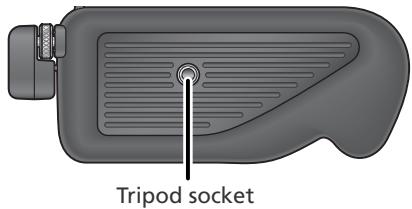
| Mounting | Mounting screw on tripod socket |
| Included Antenna | WA-S1 (standard) |
| Included Accessories | USB cable, locking wheel, contact protector |
| Maintenance | Avoid water and humidity, clean with a dry cloth |
| Repairability | Refer to an authorized Nikon service center |
| Spare Parts | Long-range antenna WA-E1 (optional) |
Frequently Asked Questions - WT-1 NIKON
User questions about WT-1 NIKON
0 question about this device. Answer the ones you know or ask your own.
Ask a new question about this device
Download the instructions for your Photo Accessories in PDF format for free! Find your manual WT-1 - NIKON and take your electronic device back in hand. On this page are published all the documents necessary for the use of your device. WT-1 by NIKON.
USER MANUAL WT-1 NIKON
Wireless Transmitter
WT-1
Wireless Transmitter
WT-1
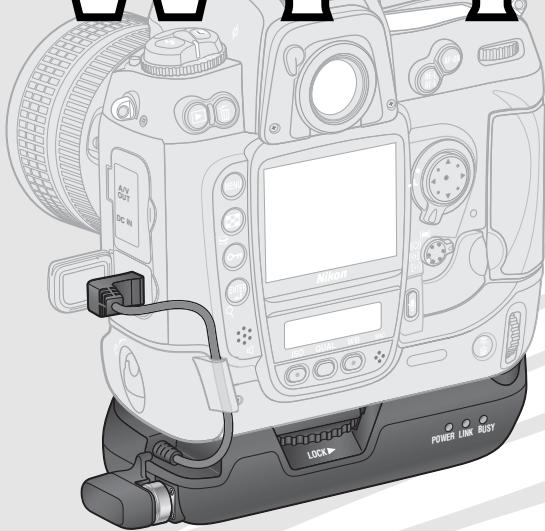
User's Manual
Trademark Information
Internet is a trademark of Digital Equipment Corporation. Microsoft and Windows are registered trademarks of Microsoft Corporation. All other trade names mentioned in this manual or the other documentation provided with this Nikon product are trademarks or registered trademarks of their respective holders.
For Your Safety
To prevent damage to your Nikon product or injury to yourself or to others, read the following safety precautions in their entirety before using this equipment. Keep these safety instructions where all those who use the product will read them.
The consequences that could result from failure to observe the precautions listed in this section are indicated by the following symbol:

This icon marks warnings, information that should be read before using this Nikon product to prevent possible injury.
WARNINGS

Do not disassemble
Failure to observe this precaution could result in fire, electric shock, or other injury. Should the product break open as the result of a fall or other accident, disconnect the camera power source and take the product to a Nikon-authorized service representative for inspection.

Turn camera off immediately in the event of malfunction
Should you notice smoke or an unusual smell coming from the equipment, immediately remove the battery from the camera, taking care to avoid burns. Continued operation could result in injury. After removing the battery, take the equipment to a Nikon-authorized service representative for inspection.

Keep dry
Do not immerse in or expose to water or rain. Failure to observe this precaution could result in fire or electric shock.

Do not use in the presence of flammable gas
Failure to observe this precaution could result in explosion or fire.

Do not handle with wet hands
Failure to observe this precaution could result in electric shock.

Keep out of reach of children
Failure to observe this precaution could result in injury.

Follow the instructions of hospital and airline personnel
This device emits radio frequency radiation that could interfere with medical or navigational equipment. Do not use this device in a hospital or on board an airplane without first obtaining the permission of hospital or airline staff.

Do not expose to high temperatures
Do not leave the device in a closed vehicle under the sun or in other areas subject to extremely high temperatures. Failure to observe this precaution could result in fire or in damage to the casing or internal parts.

Observe caution when using the WA-E1
When using the WA-E1 extended range antenna (available separately), be careful not to put the tip of the antenna in your eye accidentally. Failure to observe this precaution could result in blindness or other visual impairment.
Notices
- No part of the manuals included with this product may be reproduced, transmitted, transcribed, stored in a retrieval system, or translated into any language in any form, by any means, without Nikon's prior written permission.
-
Nikon reserves the right to change the specifications of the hardware and software described in these manuals at any time and without prior notice.
-
Nikon will not be held liable for any damages resulting from the use of this product.
- While every effort has been made to ensure that the information in these manuals is accurate and complete, we would appreciate it were you to bring any errors or omissions to the attention of the Nikon representative in your area (address provided separately).
Notice for Customers in the U.S.A.
U.S.A. Federal Communications Commission (FCC)
Declaration of Conformity
This device complies with Part 15 of the FCC rules. Operation of the device is subject to the following two conditions: (1) this device may not cause harmful interference, and (2) this device must accept any interference received, including interference that may cause undesired operation.
Products that contain a radio transmitter are labeled with FCC ID and may also carry the FCC logo.
Nikon
WT-1A

Tested To Comply
With FCC Standards
FOR HOME OR OFFICE USE
FCC Radio Frequency Interference Statement
This equipment has been tested and found to comply with the limits for a Class B digital device, pursuant to Part 15 of the FCC rules. These limits are designed to provide reasonable protection against harmful interference in a residential installation. This equipment generates, uses, and can radiate radio frequency energy and, if not installed and used in accordance with the instructions, may cause harmful interference to radio communications. However, there is no guarantee that interference will not occur in a particular installation. If this equipment does cause harmful interference to radio or television reception, which can be determined by turning the equipment off and on, the user is encouraged to try to correct the interference by one or more of the following measures:
- Reorient or relocate the receiving antenna.
- Increase the separation between the equipment and receiver.
- Connect the equipment into an outlet on a circuit different from that to which the receiver is connected.
- Consult the dealer or an experienced radio/television technician for help.
This device complies with FCC RF exposure requirements.
CAUTION
Modifications
The FCC requires the user to be notified that any changes or modifications made to this device that are not expressly approved by Nikon Corporation may void the user's authority to operate the equipment.
Notice for customers in the State of California, U.S.A.
WARNING: Handling the cord on this product will expose you to lead, a chemical known to the State of California to cause birth defects or other reproductive harm. Wash hands after handling.
Nikon Inc.,
1300 Walt Whitman Road, Melville, New York
11747-3064, U.S.A.
Tel.: 631-547-4200
Notice for customers in Canada CAUTION
This class B digital apparatus meets all requirements of the Canadian Interference Causing Equipment Regulations.
ATTENTION
Attaching the WT-1......4
Wireless LAN Setup 5
Uploading Images......6
Preparation 6
Uploading Images......7
Interrupting Transmission 8
"Send," "Sending," and "Sent" Icons....9
Network Status 10
Menu Guide....12
Transceiver....12
Status....12
Auto Send....13
Send File As: 13
Send Folder 13
Deselect All....14
Network Settings 14
Load Settings File 15
Wireless 15
TCP/IP 17
FTP 21
Appendices......26
Sample Network Settings ...... 26
Preparation 26
Building a Network 26
Configuring the Server 27
Configuring the Wireless LAN
Adapter 29
Configuring the WT-1 30
Uploading Pictures 31
Troubleshooting....34
Glossary 35
Specifications 38
Index 39
Introduction
Thank you for purchasing a WT-1 or WT-1A wireless transmitter for compatible Nikon digital cameras. When connected to the camera, the WT-1 and WT-1A can be used to transmit images from the camera memory card to a server. The WT-1 is for use only in Austria, Belgium, Denmark, Finland, France, Germany, Greece, Italy, Japan, the Netherlands, Portugal, Spain, Sweden, Switzerland, and the United Kingdom. The WT-1A is for use only in Canada and the United States of America. The principal difference between the WT-1 and WT-1A is in the number of channels supported (see pg. 38); unless otherwise stated, all references to the WT-1 also apply to the WT-1A.
This manual describes how to transmit images from the camera to a server via wireless LAN. Before using the WT-1, be sure to read the notices and warnings on pages i–iii.
The following symbols and conventions are used throughout this manual:

This icon marks cautions, information that should be read before use to prevent damage to the WT-1.

This icon marks notes, information that should be read before using the device.

This icon marks tips, additional information that may be helpful when using the WT-1.

This icon indicates that more information is available elsewhere in this manual.

Background Knowledge
This manual assumes basic knowledge of ftp servers and wireless local area networks (LAN). For more information on installing, configuring, and using devices in a wireless network, contact the manufacturer or network administrator.

Life-Long Learning
As part of Nikon's "Life-Long Learning" commitment to ongoing product support and education, continually-updated information is available on-line at the following sites:
- For users in the U.S.A.: http://www.nikonusa.com/
- For users in Europe: http://www.europe-nikon.com/support
- For users in Asia, Oceania, the Middle East, and Africa: http://www.nikon-asia.com/Visit these sites to keep up-to-date with the latest product information, tips, answers to frequently-asked questions (FAQs), and general advice on digital imaging and photography. Additional information may be available from the Nikon representative in your area. See the URL below for contact information:
http://www.nikon-image.com/eng/
Wireless Networks
The WT-1 wireless transmitter is a wireless LAN adapter that allows photographs to be uploaded from the camera to an ftp server. Photographs can be uploaded as they are taken, or photographs already on the camera memory card can be selected for upload. The WT-1 supports the following two types of network:
Infrastructure
Devices in an infrastructure network communicate via one or more wireless access points. The WT-1 supports an infrastructure mode for connection to a wireless network via an access point.
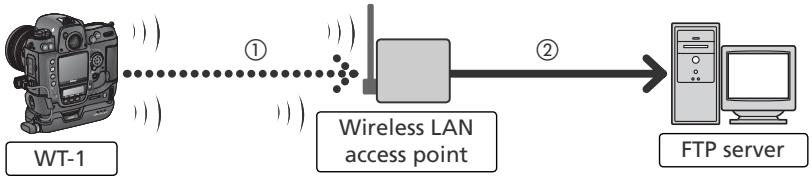
flowchart
graph LR
    A["WT-1 Device"] -->|①| B["Wireless LAN access point"]
    B -->|②| C["FTP server"]
Ad-hoc
Devices in an ad-hoc wireless network communicate directly (“peer-to-peer”), without a wireless access point. The WT-1 supports an ad-hoc mode for direct wireless connection to an ftp server.
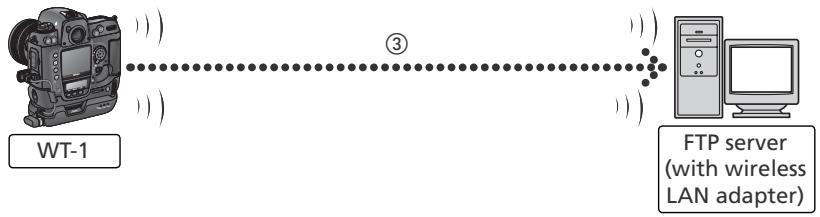
flowchart
graph LR
    A["WT-1"] -->|③| B["FTP server (with wireless LAN adapter)"]
① Configured using Wireless (15–17) and TCP/IP (17–21)
② Configured using FTP (21–25)
③ Configured using Wireless (15–17), TCP/IP (17–21), and FTP (21–25)
An environment with an ftp server and a wireless LAN is required to use the WT-1 (connection to an ftp server via the Internet is not supported). Operation has been confirmed on the following systems: Windows XP Professional and Windows 2000 Professional.
Parts of the WT-1
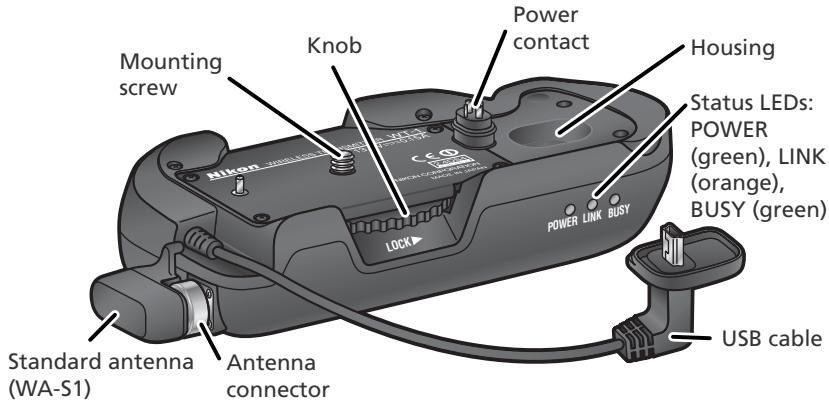
natural_image
Illustration of a vertical antenna with a coiled cable and connector (no text or symbols)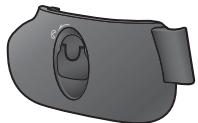
natural_image
3D rendered illustration of a gray ergonomic device with a circular opening and handle (no text or symbols)BL-2 battery-chamber cover (for camera battery chamber)
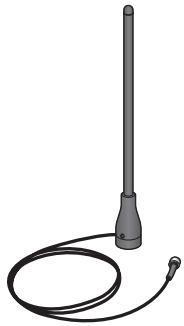
WA-E1 extended range antenna with tripod mount (available separately)
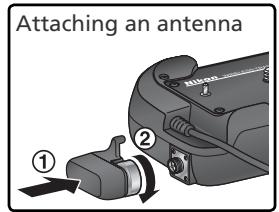
√ Reorienting the Antenna
Before reorienting the antenna, unscrew it from the antenna connector.
Attaching the WT-1
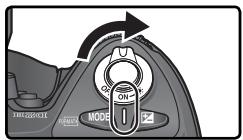
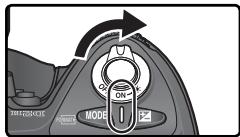
1 Turn the camera on.
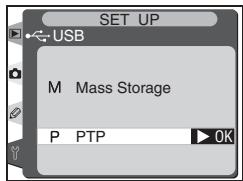
2 Before connecting the WT-1, set the USB option in the camera setup menu to PTP.
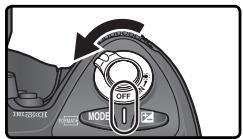
3 Turn the camera off.
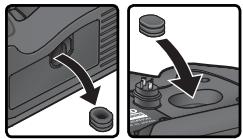
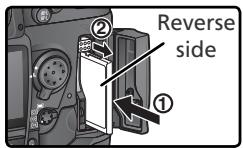
4 Remove the cover protecting the camera power contact. The cover can be stored in the housing on the WT-1.
5 Place the camera on the WT-1 and rotate the knob in the direction shown to fasten the WT-1 to the camera tripod mount.
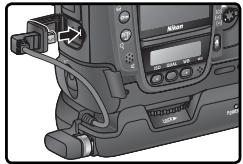
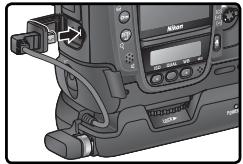
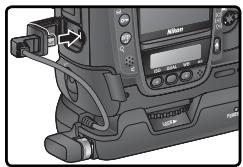
6 Open the camera USB connector cover and connect the USB cable to the USB connector.
7 Pass the cable over the guide on the BL-2 battery-chamber cover.
natural_image
Two-step diagram showing a mechanical component being inserted into a housing, with arrows indicating the process (no text or symbols present)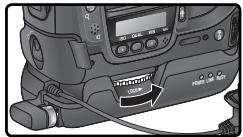
natural_image
Close-up of a Nikon DAX2 camera module with adjustment knobs and a digital display (no visible text or symbols)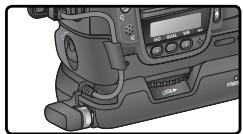
natural_image
Close-up of a professional video camera with LCD screen and buttons (no visible text or symbols)Wireless LAN Setup
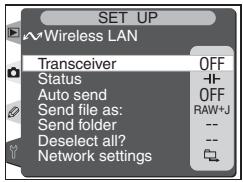
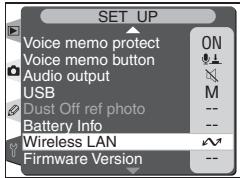
The Wireless LAN option in the camera setup menu is available when the WT-1 is attached. See the "Menu Guide" (12) for details.
| Option | Description | |
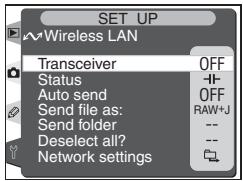
| Transceiver | Turn wireless LAN transceiver on or off. | 12 |
| Status | Shows status of link between server and WT-1. | 12 |
| Auto send | Choose whether to send pictures to server as they are taken. | 13 |
| Send file as: | Choose whether to send both NEF and JPEG files or only JPEG files when sending images taken at settings of NEF + JPEG Fine, NEF + JPEG Normal, or NEF + JPEG Basic. | 13 |
| Send folder | Send all images in selected folder. Images will be sent in sequence, starting from lowest file number. | 13 |
| Deselect all? | Remove transfer marking (“send,” “sending,” or “sent” indicators) from all files. | 14 |
| Network settings | Adjust settings for connection to server. | 14 |
Uploading Images
Preparation
1 Insert the memory card containing the pictures to be sent.
2 Turn the camera on.
3 Adjust network settings (16–25).
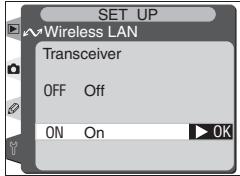
4 Select On for the Wireless LAN>Transceiver option in the camera setup menu (💡 12).
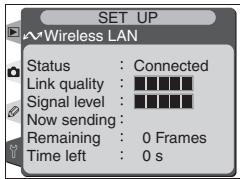
5 Select Status from the Wireless LAN menu and confirm that "Connected" is shown for "Status" (11). For information on what to do if the camera shows "Not connected" or "Failure," see "Troubleshooting" (34).
Uploading Images
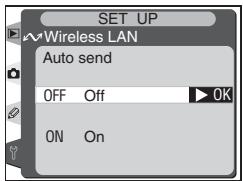
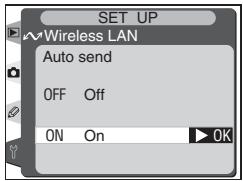
1 Select Off for Wireless LAN>Auto send (if Auto Send is on, new photographs can not be selected for upload; instead, photographs will be uploaded to the server as they are taken).
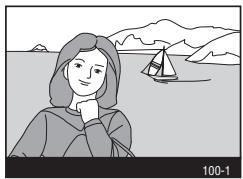
2 Press the 📋 button to view pictures on the memory card. Display the first picture to be sent in single-image playback or highlight it in the thumbnail list.
3 Press the center of the multi selector while pressing the Ⓐ button. The image will be marked with a white "send" icon and transmission will begin immediately. During upload, images are marked with a green "sending" icon. Repeat this process to send additional images (pictures will be sent in the order selected).
Images that have been successfully uploaded are marked with a blue "sent" icon.
natural_image
Illustration of a woman by the sea with a sailboat in the background (no text or symbols)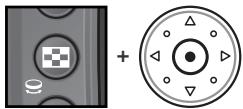
natural_image
Two abstract circular icons: a camera with a checkered pattern and a circular dial with triangular symbols (no text or labels)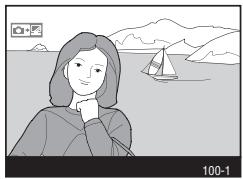
natural_image
Illustration of a woman by the sea with a sailboat and mountains in the background (no text or symbols)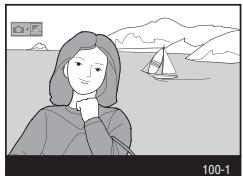
natural_image
Illustration of a woman by the sea with a sailboat and mountains in the background (no text or symbols)During Upload
Do not remove the memory card from the camera during upload.
File Names
If the destination folder on the ftp server contains files with the same names as files selected for upload, the files on the server will be replaced by the files uploaded from the camera.
Interrupting Transmission
To cancel transmission of images marked with a white "send" icon or green "sending" icon, select the images during playback and press the center of the multi selector while pressing the ⏻ button. The icon will be removed. Any of the following actions will also interrupt transmission:
- Turning the camera off
- Choosing Off in the Wireless LAN >Transceiver menu
- Selecting Deselect all? in the Wireless LAN menu
- Deleting the images by pressing the ⏻ button while the images are selected
- Formatting the memory card
Loss of Signal
Transmission may be interrupted if the signal is lost ⏻ 11). Transmission can be resumed by turning the camera off and then on again, activating the camera exposure meters, or selecting On for Wireless LAN >Transceiver once the signal is restored.
Turning the Camera Off
"Send" marking will be saved if the camera is turned off or Off is selected for Wireless LAN>Transceiver while transmission is in progress. Transmission of images marked with a "send" icon will resume when the camera is turned on or On is selected for Wireless LAN>Transceiver.
Voice Memos
Voice memos can not be uploaded separately, but will be included when the associated pictures are transmitted.
"Send," "Sending," and "Sent" Icons
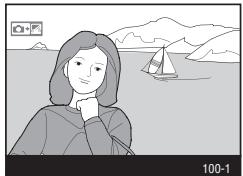
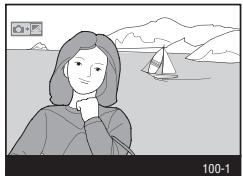
The following icons are displayed when images selected for upload are viewed during playback.
"Send"
Images that have been selected for upload are marked with a white "send" icon (☐).
natural_image
Illustration of a woman by the sea with a sailboat and mountains in the background (no text or symbols)"Sending"
During upload, the 📄 icon is displayed in green.
natural_image
Illustration of a woman by the sea with a sailboat and mountains in the background (no text or symbols)"Sent"
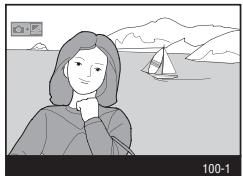
Images that have been uploaded successfully are marked with a blue 📄 icon.
natural_image
Illustration of a woman by the sea with a sailboat and mountains in the background (no text or symbols)Removing "Send," "Sending," and "Sent" Icons
"Send," "sending," and "sent" icons can be removed from all images by selecting Deselect all? from the Wireless LAN menu (14).
Network Status
The status of the link between the server and the WT-1 is shown by the status LEDs and by the Status display in the Wireless LAN menu.
The Status LEDs
The POWER LED lights when the WT-1 is receiving power from the camera.
| Status | POWER | LINK | BUSY |
| Camera or exposure meters off, or Off selected for Wireless LAN >Transceiver | ○ (off) | ○ (off) | ○ (off) |
| Camera on and On selected for Wireless LAN >Transceiver | ○ (on) | N/A* | N/A* |
* Blinks to indicate active connection.
† Lights while data are being transmitted.
The status of the link between the WT-1 and the server is shown by the LINK LED, which blinks at different speeds to indicate link quality. The BUSY LED lights while data are being sent.
| Status | POWER | LINK | BUSY |
| Connecting to server | ○ (on) | (blinks) | ○ (off) |
| Sending data | ○ (on) | (blinks) | ○ (on) |
The following indicate that an error has occurred:
| Status | POWER | LINK | BUSY |
| Connection error | (blinks) | (off) | (off) |
| WT-1 hardware malfunction | (blinks) | (blinks) | (blinks) |
The Status Display
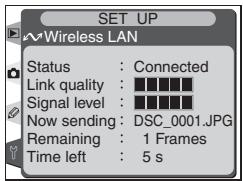
Network status can also be viewed by selecting Status from the Wireless LAN menu.
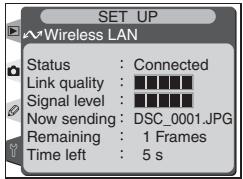
Status
The status of the link between the server and the camera.
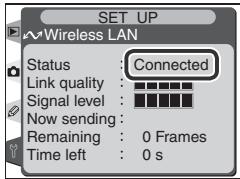
- Connected: connection established
- Not connected: camera not currently connected
- Failure: can not establish connection
Status : Connected
Link quality
A five-level indicator of link quality. Transmission speeds improve as quality increases.
Status . Connected
Link quality :
Signal level :
Signal level
A five-level indicator of signal strength.
Link quality .
Signal level :
Now sending: DSC 0001 JPG
Now sending
The name of the file currently being sent.
Signal level .
Now sending : DSC_0001.JPG
Remaining : 1 Fromee
Remaining
The number of images (frames) remaining to be sent.
Now sending . DSC_0001.JPG
Remaining : 1 Frames
Time left : 5 s
Time left
Estimated time required to send remaining data. Changes with link quality and signal strength.
Remaining . 1 Frames
Time left : 5 s
Menu Guide
This section describes the options available in the Wireless LAN sub-menu of the camera setup menu.
Transceiver
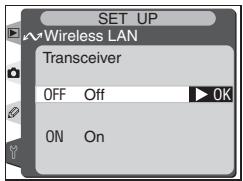
Turn the WT-1 transceiver on or off.
| Option | Description |
| Off (default) | Transceiver off. Camera can not communicate with server. |
| On | Transceiver on. Camera can communicate with server. |
Status
Current status of the link between the WT-1 and the server (11).
"Transceiver"
Transmission of images marked with a "send" icon begins as soon as On is selected for Wireless LAN >Transceiver. When the transceiver is off, the WT-1 receives no power from the camera. Select Off to reduce the drain on the batteries.
Auto Send
Choose whether to upload pictures to the server as they are taken.
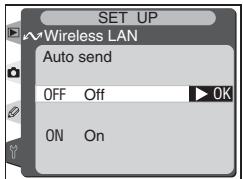
| Option | Description |
| Off (default) | Pictures are not automatically uploaded to server as they are taken. Pictures can be selected for transmission when camera is in playback mode. |
| On | Pictures are uploaded to server as they are taken.* Transmission begins as soon as picture has been recorded to camera memory card. Be sure memory card is inserted in camera before shooting. |
* Pictures will not be uploaded to the server if Off is selected in the Wireless LAN >Transceiver menu. Pictures will instead be marked with a "send" indicator as they are recorded to the memory card.
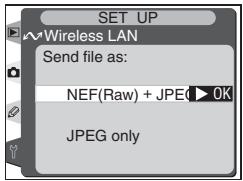
Send File As:
When sending images taken at settings of NEF + JPEG Fine, NEF + JPEG Normal, or NEF + JPEG Basic, choose whether to send both NEF (RAW) and JPEG files or only the JPEG files.
| Option | Description |
| NEF(Raw) + JPEG (default) | Send both NEF (RAW) and JPEG files. JPEG files are sent first. |
| JPEG only | Send JPEG files only. |
Send Folder
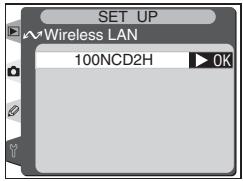
All files in the selected folder (including those already marked as "sent") will be uploaded in ascending order by file number. The folder itself will not be uploaded. Transmission begins when the folder is selected.
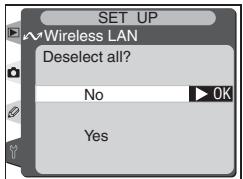
Deselect All
Remove “send,” “sending,” and “sent” marking from all images on the memory card.
| Option | Description |
| No (default) | Marking is not removed. |
| Yes | Remove marking from all images and terminate upload of images marked with “sending” icon. |
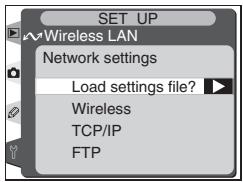
Network Settings
Adjust settings for connection to the server. Settings created using a computer can be loaded from a memory card (15), or network settings can be adjusted individually using the camera menus (15–25; sample settings are listed on page 26). To ensure that the monitor does not power off before changes to settings are complete, choose a long monitor off delay or use an AC adapter when adjusting settings manually.
Text Entry in the "Network Settings" Menu
If text entry is required to complete the selected setting, the following dialog will be displayed.
Keyboard area
Use multi selector to highlight letters, press center to select.
![SET UP + cursor Input ENTER OK ! "# $%& '() * +, -. / 0123456789 : ; <= ?@ABCDEFGHIJKLMNOPQRSTUVWXYZ [ ]_abcdefghijklmnopqrstuvwxyz /](/content/2019/11/116037/images/fcd86d86426f7050dca49aa93e068f537e56a56c3490b505063754a545a673d9.jpg)
Text display area
Text appears in this area. To move cursor, press ☐ while using up, down, left, and right buttons on multi selector.
Use the multi selector to highlight the desired character in the keyboard area and press the center of the multi selector to insert the highlighted character at the current cursor position. To delete the character under the cursor, press the 📋 button. To move the cursor to a new position, press the ⏻ button while using the multi selector. No more than thirty-two characters can be entered; if additional characters are entered when the display is full, all characters after the thirty-third will be deleted.
To complete entry and return to the Network settings menu, press the ENTER button. To exit to the setup menu without completing text entry, press MENU.
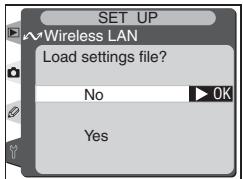
Load Settings File
Network settings created with a computer can be saved to the camera memory card.
| Option | Description |
| No (default) | Exit without changing settings. |
| Yes | Load Wireless, TCP/IP, and FTP settings from the memory card. |
Wireless
Adjust settings for connection to a wireless network as described on the following pages.
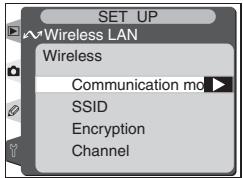
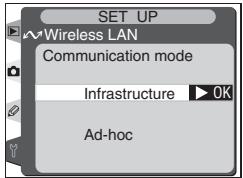
Communication Mode
Choose a mode according to how the wireless network is set up.
| Option | Description |
| Infrastructure (default) | Connection to wireless network is via access point. |
| Ad-hoc | Direct peer-to-peer wireless connection to ftp server. |

Creating a Settings File
An application for creating settings files is available from the web sites listed on page 1 of this manual. After creating a settings file, save it to the root directory of the camera memory card using a CompactFlash card reader or PCMCIA memory card adapter. No more than one settings file should be stored on the memory card at a time. Additional information is available from the download site.
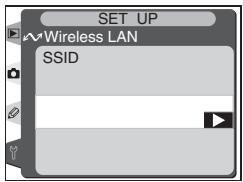
SSID
A BSS- or ESS-ID is required for connection to a wireless LAN adapter or access point. Leave this field blank to allow network to set SS-ID automatically ("any" connection). To change the current BSS- or ESS-ID, press the multi selector to the right and enter an ID as described on page 14. Press the ENTER button to return to the SS-ID display.
Encryption
Enter encryption settings according to how the network is set up. Press the multi selector up or down to highlight an option and press the multi selector to the right to select.
- Done: Save changes and exit to wireless menu.
- On: Enable or disable encryption. √ appears when encryption is enabled.
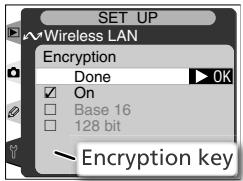
- Base 16: Enable or disable base-16 encryption. √ appears when base-16 encryption is enabled. Enable base-16 encryption to enter encryption key in hexadecimal notation using only numbers 0–9 and letters A–F. Disable base-16 encryption to enter encryption key in ASCII notation using standard alphanumeric characters.
- 128 bit: Enable or disable 128-bit encryption. √ appears when 128-bit encryption is enabled. If 128-bit encryption is disabled, 40-bit encryption will be used.
- Encryption key: Highlight current key and press multi selector to right to display edit dialog shown at right. Press multi selector left or right to select character, up or down to change. Press edit to return to encryption menu. Length of key depends on options selected for Base 16 and 128 bit:
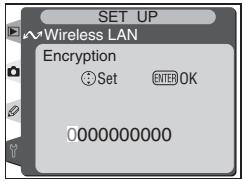
| Base 16 | 128 bit | Encryption key |
| — | — | Five characters (ASCII) |
| √ | — | Ten characters (hexadecimal) |
| — | √ | Thirteen characters (ASCII) |
| √ | √ | Twenty-six characters (hexadecimal) |
Channel\*
1

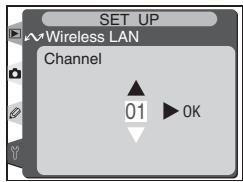
Choose channel. ^†
2

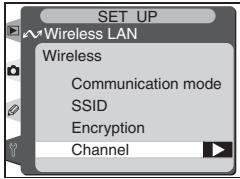
Return to wireless menu.
* Not required if Infrastructure is selected for Communication mode.
† The WT-1 offers a choice of thirteen channels (1–13), the WT-1A a choice of eleven channels (1–11).
TCP/IP
Adjust TCP/IP settings as described on the following pages.
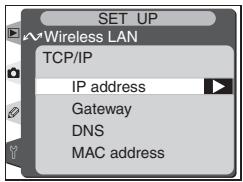
IP Address\*
1

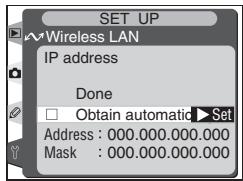
Highlight Obtain automatically.
2

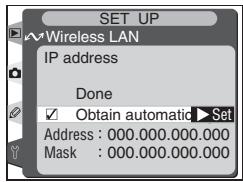
Turn √ on or off. If wireless network is configured to supply IP address automatically, turn √ on and proceed to Step 11. Otherwise remove √ and enter IP address and subnet mask provided by network administrator (Steps 3–10).
* Required.
3

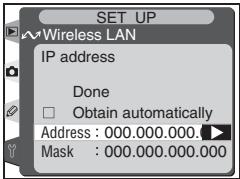
Highlight Address.
4

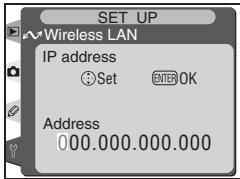
Enter edit mode.
5

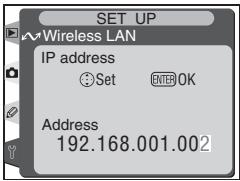
Press multi selector left or right to select, up or down to change.
6
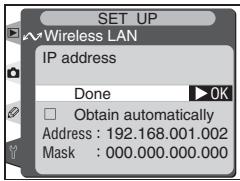
Exit to IP address menu. If no subnet mask is required, proceed to Step 11.
7

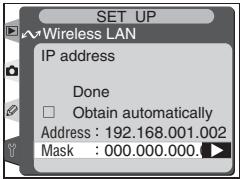
Highlight Mask.
8

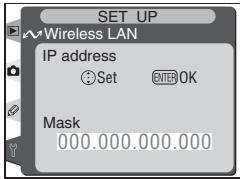
Enter edit mode.
9

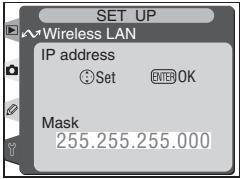
Choose subnet mask.
10
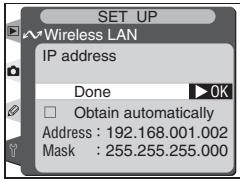
Exit to IP address menu.
11 Highlight Done and press multi selector to right to return to TCP/IP menu.
Gateway
1

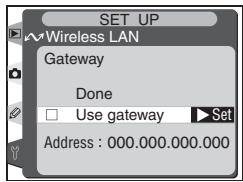
Highlight Use gateway.
2

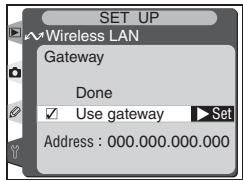
Turn √ on or off. If network requires gateway address, turn √ on and enter address provided by network administrator (Steps 3–6). Otherwise remove √ and proceed to Step 7.
3

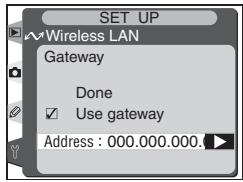
Highlight Address.
4

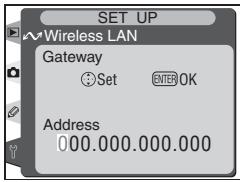
Enter edit mode.
5

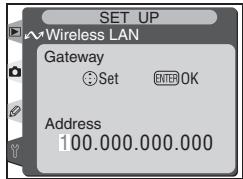
Press multi selector left or right to select, up or down to change.
6
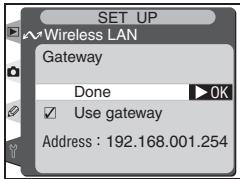
Return to gateway menu.
7 Highlight Done and press multi selector to right to return to TCP/IP menu.
1

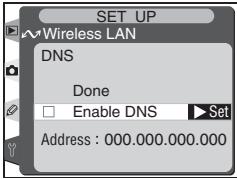
Highlight Enable DNS.
2

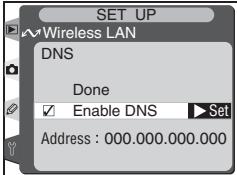
Turn √ on or off. If Domain Name Server (DNS) exists on network, turn √ on and enter DNS address provided by network administrator (Steps 3–6). Otherwise remove √ and proceed to Step 7.
3

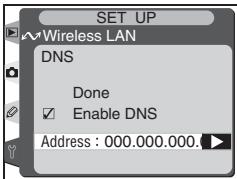
Highlight Address.
4

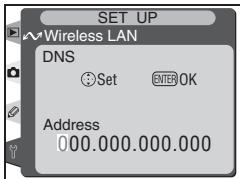
Enter edit mode.
5

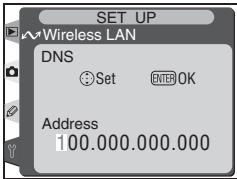
Press multi selector left or right to select, up or down to change.
6
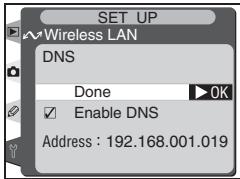
Return to DNS menu.
7 Highlight Done and press multi selector to right to return to TCP/IP menu.
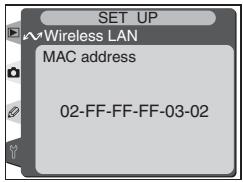
MAC Address
This field lists the twelve-digit Media Access Control (MAC) address for the WT-1.
FTP
Adjust ftp settings as described on the following pages.
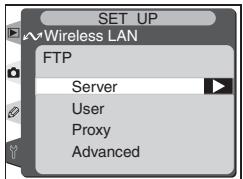
Server\*
1

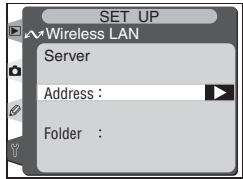
Highlight Address.
2

Display text entry dialog (☐ 14).
![SET UP + cursor Input ENTER OK ! " # $%& ' ) * +, - . / 0123456789 : ; = ?@ABCDEFGHIJKLMNOPQRSTUVWXYZ [ ] _ abcdefghijklm nopqrstuvwxyz { }](/content/2019/11/116037/images/b93de39ff8e42be98f634ccf56ca76b07aff9ffe3696ce468263d1f03d6161a2.jpg)

14).
3
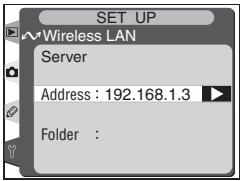
Enter address of ftp server to which pictures are to be uploaded (if unsure of correct address, contact server administrator). Press ENTER button to return to server menu.
* Required.
4

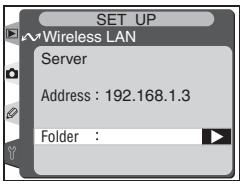
Highlight Folder.
5

![SET UP + cursor Input ENTER OK ! " # $%& ' ( ) * +, - . / 0123456789 : ; <= ?@ABCDEFGHIJKLMNOPQRSTUVWXYZ [ ] _abcdefghijklmnopqrstuvwxyz { }](/content/2019/11/116037/images/9655bd2c685dc76f8b36aca5262842148e3c62e00d695dafb7539527341bc75e.jpg)
Display text entry dialog (14).
6
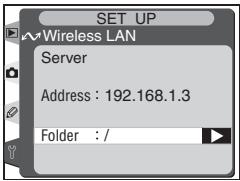
After entering name of destination folder on ftp server, press ENTER button to return to server menu.
7 Press multi selector to left to return to ftp menu.
User\*
1

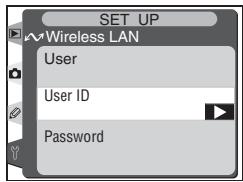
Highlight User ID.
2

![SET UP + cursor Input ENTER OK ! " # $%& ' ( ) * +, -. / 0123456789 : ; <= ?@ABCDEFGHIJKLMNOPQRSTUVWXYZ [ ] _ abcdefghijklm nopqrstuvwxyz { }](/content/2019/11/116037/images/af2573279a78576e8f32db9d1d41bb5d1b9bee935d810da0f76830c23f5954f3.jpg)
Display text entry dialog (14).
3
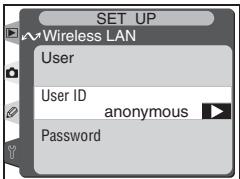
After entering user name for login to ftp server, press ENTER button to return to user menu.
4

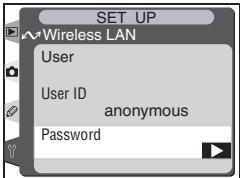
Highlight Password.
5

![SET UP + cursor Input ENTER OK ! " # $%& ' ( ) * +, - . / 0123456789 : ; <= ?@ABCDEFGHIJKLMNOPQRSTUVWXYZ [ ] _ abcdefghijklm nopqrstuvwxyz { }](/content/2019/11/116037/images/5237c8215801891f409cb499cb0264e4009a1a343cb58812064bd621381d0532.jpg)
Display text entry dialog (☐ 14).
6
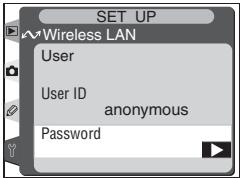
After entering password for login to ftp server, press ENTER button to return to user menu. Password will be disguised as row of dots when displayed in ftp menu.
7 Press multi selector to left to return to ftp menu.
* Required.
Proxy
1

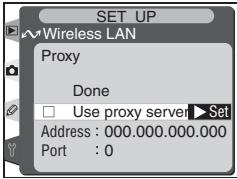
Highlight Use proxy server.
2

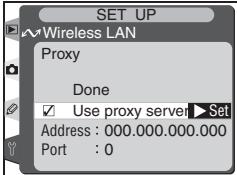
Turn √ on or off. If proxy server is required for ftp, turn √ on and enter address and port number (Steps 3–6). Otherwise remove √ and proceed to Step 7.
3

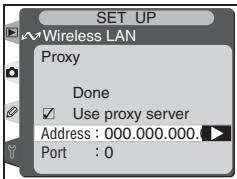
Highlight Address.
4

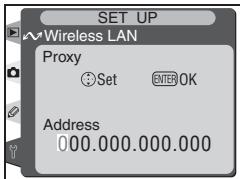
Enter edit mode.
5

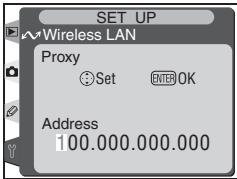
Press multi selector left or right to select, up or down to change.
6
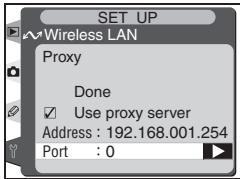
Return to proxy menu. Repeat steps 3–6 to enter Port number.
7 Highlight Done and press multi selector to right to return to ftp menu.
Advanced
1

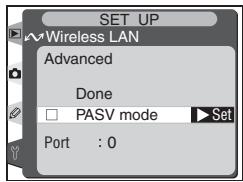
Highlight PASV mode.
2

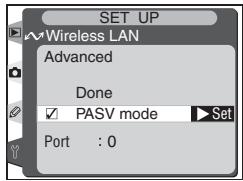
Turn √ on or off. Turn √ on to instruct ftp server to use PASV mode (be sure server supports PASV mode before turning this option on). Turn √ off to use normal (PORT) mode.
3

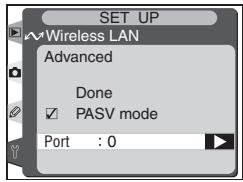
Highlight Port.
4

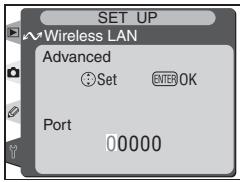
Enter edit mode.
5

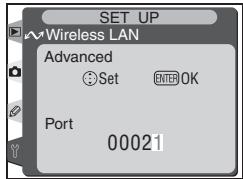
Enter port number for ftp connection (if required). Press multi selector left or right to select digit, up or down to change.
6
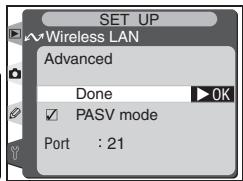
Return to advanced menu.
7 Highlight Done and press multi selector to right to return to ftp menu.
Appendices
Sample Network Settings
The following pages describe how to set up a simple infrastructure network using the WT-1 and a Windows XP Professional ftp server. Encryption and network security are not discussed.
1—Preparation.... 26
2—Building a Network.... 26
3—Configuring the Server 27–28
4—Configuring the Wireless LAN Adapter ...... 29
5—Configuring the WT-1 30–31
6—Uploading Pictures....31–33
Preparation
Ready the following items:
- D2H digital camera
-
ftp server ^1
-
WT-1 wireless transmitter
- wireless LAN adapter ^2
^1 Windows XP Professional computer with Internet Information Services (IIS) installed.
^2 Bridge type. Additional settings may be required when using wireless router. See documentation provided by manufacturer for details.
Building a Network
Configure the network as shown below. In this example, the wireless LAN access point is connected by a cable to the server, and the server is not connected to any other network devices.
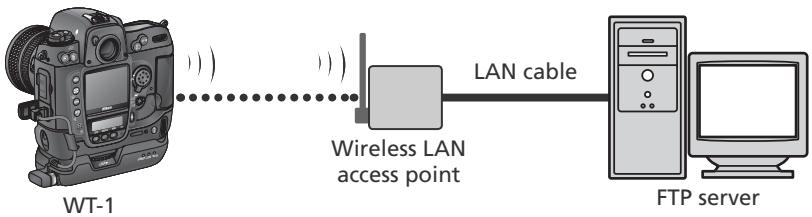
flowchart
graph LR
    A["WT-1 Camera"] -->|Wireless LAN access point| B["LAN cable"]
    B --> C["FTP server"]
Configuring the Server
The following example assumes that Windows XP Professional and Internet Information Services (IIS) are already installed (IIS is included in the standard install of Windows XP Professional; for more information, contact Microsoft). Be sure to use characters supported by the WT-1 (💡 14) when specifying such settings as user ID, password, and folder names.
Entering an IP Address
Open the Network Connections control panel. Right-click the Local Area Connection icon and select Properties from the menu that appears.
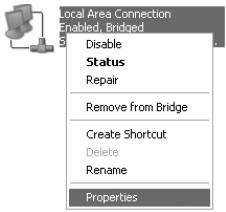
The “Local Area Connection Properties” dialog will be displayed. Select Internet Protocol (TCP/IP) and click Properties to display the “Internet Protocol (TCP/IP)” dialog. Enter an IP address and subnet mask for the ftp server.
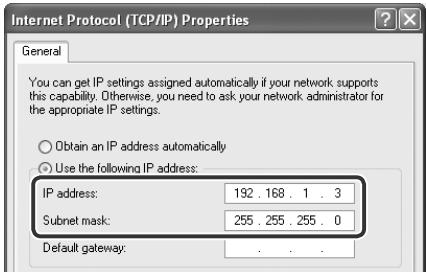
In this example, it is assumed that the network uses class C private IP addresses and subnet masks. Be sure that the IP address is not the same as that assigned to the wireless LAN adapter or the WT-1. For example, if the ftp server is given the IP address 192.168.1.3, the wireless LAN adapter can be assigned 192.168.1.1, and the WT-1 192.168.1.2. All addresses must be in the same class.
Creating an FTP Site
Go to Administrative Tools and open the Internet Information Services console. Right-click the Default FTP site folder and choose Properties from the menu that appears.
The “Default FTP Site Properties” dialog will be displayed. Open “Security Accounts” and select Allow Anonymous Connections and Allow IIS to control password. Make sure the default user ID (composed of “IUSR” plus the computer name) is unchanged and leave the password field blank.
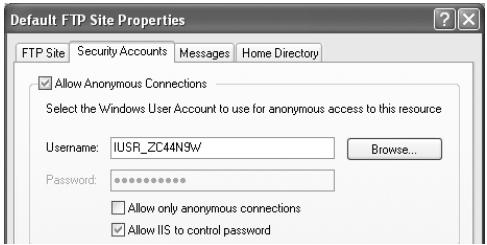
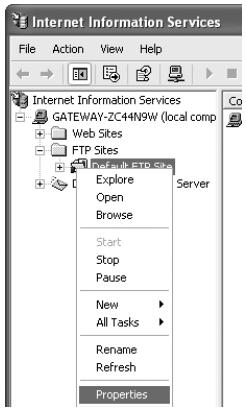
Next, open "Home Directory" and select A directory located on this computer. The root directory for images uploaded to the ftp server is listed in the Local Path text box; choose a folder and check Read, Write, and Log visits.
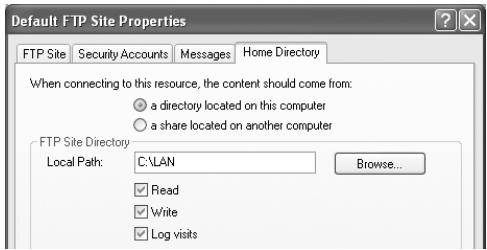
Before proceeding to the next step, click OK to close the properties dialog.
Configuring the Wireless LAN Adapter
The minimum information needed to configure a wireless LAN adapter is listed below. Contact the manufacturer for details.
| Wireless mode | 802.11b |
| SS-ID ^1 | D2H |
| Encryption (WEP) | Off |
| "Any" connection ^2 | Disabled |
| Channel | Any |
| IP address ^3 | Obtain IP address automatically: OffIP address: 192.168.1.1Subnet mask: 255.255.255.000 |
| Default gateway | 000.000.000.000 |
| DNS | 000.000.000.000 |
| MAC address ^4 | Unspecified |
^1 Same SS-ID must be assigned to WT-1.
^2 Not required if adapter does support “any” connection.
^3 In this example, it is assumed that network uses class C private IP addresses and subnet masks. Be sure that IP address is not same as that assigned to ftp server or WT-1. For example, if ftp server is 192.168.1.3, wireless LAN adapter can be assigned 192.168.1.1, and WT-1 can be assigned 192.168.1.2. All addresses must be in same class.
^4 If MAC address is required, enter MAC address for WT-1 (☐ 21).
Configuring the WT-1
Before adjusting network settings as shown below, select Off in the Wireless LAN>Transceiver menu.
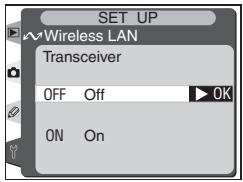
Wireless
| Communication mode | Infrastructure |
| SSID^1 | D2H |
| Encryption | Disabled |
| Channel | — |
^1 Same SS-ID must be assigned to wireless LAN adapter.
TCP/IP
| IP address1 | Obtain IP address automatically: OffIP address: 192.168.1.2Subnet mask: 255.255.255.000 |
| Gateway | Disabled |
| DNS | Disabled |
^1 In this example, it is assumed that network uses class C private IP addresses and subnet masks. Be sure that IP address is not same as that assigned to ftp server or wireless LAN adapter. For example, if ftp server is 192.168.1.3, wireless LAN adapter can be assigned 192.168.1.1, and WT-1 can be assigned 192.168.1.2. All addresses must be in same class.
FTP
| Server | Address: 192.168.1.3 ^1 Folder: / ^2 |
| User | User ID: anonymousPassword: |
| Proxy | Disabled |
| PASV mode | Disabled |
^1 Enter address assigned ftp server (☐ 27).
^2 Choose “/” to upload to root directory on ftp server (☐ 28).
Uploading Pictures
This section describes how to upload pictures as they are taken. For best results, the WT-1 and wireless LAN adapter should be within a few meters with no obstacles between them.
1 Select On for the Wireless LAN>Transceiver option in the camera setup menu.
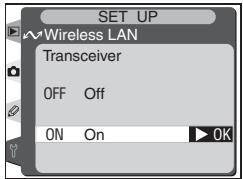
2 Confirm that a connection has been established. To check the connection from the camera, select Status from the Wireless LAN menu and confirm that "Connected" is displayed next to "Status." For information on what to do if the camera shows "Not connected" or "Failure," see "Troubleshooting" (34).
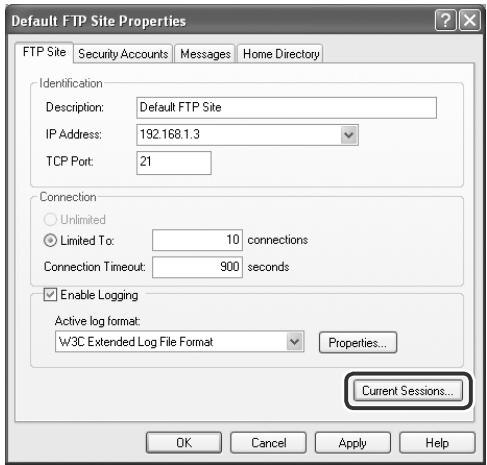
To check the status of the connection from the computer, right-click the Default FTP site folder and select Properties from the menu that appears. Open "FTP Site" and click Current Sessions....
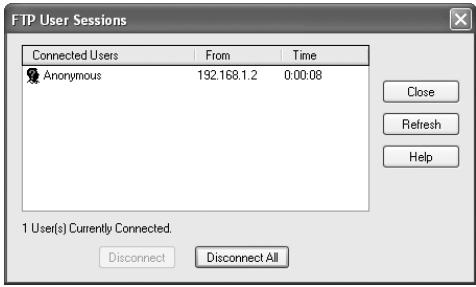
Confirm that "Anonymous" is listed under "Connected Users." For information on what to do if no connection is listed, see "Troubleshooting" (34).
3 Select On for Wireless LAN>Auto send. Take a picture and confirm that the image has been uploaded to the specified folder on the ftp server.
Troubleshooting
| Problem | Solution | |
| “POWER” LED does not light. | Turn camera on.Press shutter-release button halfway to activate exposure meters.Reattach WT-1. | 4—4 |
| All LEDs blink at once. | WT-1 hardware error. Contact a Nikon-authorized service representative. | — |
| Excessive radio interference. | Change orientation of camera or antenna. | — |
| Connection status shows “Not connected” or “Failure,” or ftp server does not list connection. | Turn transceiver off and check settings for WT-1, wireless LAN adapter or access point, and ftp server. | 26 |
Glossary
Ad-hoc
Devices in an ad-hoc wireless network communicate directly ("peer to peer"), without a wireless access point. The WT-1 supports an ad-hoc mode for direct wireless connection to an ftp server.
"Any" connection
Allows devices to connect to wireless network without an SS-ID. Can be used for wireless “hot spots” but is not as secure as connections that require an SS-ID.
BSS-ID (Basic Service Set ID)
All wireless devices on an ad-hoc wireless network share the same BSS-ID. The BSS-ID may be up to thirty-two characters long and is case sensitive. See also Ad-hoc.
Channel
When multiple wireless LANs with different ESS-IDs are operating on a single frequency within a given area, transmission speeds will drop. Specifying a separate channel (frequency) for each network can prevent interference and increase transmission speeds (note that all devices in the same network must be set to the same channel). In the IEEE 802.11b standard, the 2.4 GHz band is divided into 14 channels, each separated by 4 MHz.
DHCP (Dynamic Host Configuration Protocol) Server
Each device in a TCP/IP network requires an IP address. If a DHCP server is present on the network, IP addresses will be assigned automatically. A DHCP server will not be present on networks that consist solely of Windows Me, Windows 98, or Windows 95 computers. DHCP may be enabled on other networks; consult the network administrator or see the manual provided with the router or operating system.
DNS (Domain Name Server)
A server that contains a database of IP addresses and host names for the machines it administers and that converts host names to IP addresses in response to queries from clients. Each DNS can also query other Domain Name Servers for addresses not listed in its database.
ESS-ID (Extended Service Set ID)
Multiple BSSs can be configured to form an ESS, allowing users to roam between wireless access points. Only devices with the same ESS-ID as a given access point can communicate with that access point. The ESS-ID may be up to thirty-two characters long and is case sensitive.
IIS (Internet Information Services)
Microsoft's name for its Web server software. Notable for its close connection to Windows-based systems through Active Server Pages (ASPs). When installed as part of the operating system, IIS makes it relatively easy to build web a server.
Gateway
A network node that acts as an entrance to another network, for example between a company network and the Internet.
Infrastructure
Devices in an infrastructure network communicate via one or more wireless access points. The WT-1 supports an infrastructure mode for connection to a wireless network via an access point.
IP address
Address given to each node in a TCP/IP network. All nodes in a TCP/IP network must have a unique IP address. Private IP addresses are recommended for nodes that are part of a local network.
LAN (Local Area Network)
A network of computers located in relatively close proximity to one another. LANs generally support data transfer speeds of 10–100 Mbps.
MAC (Media Access Control) Address
A unique hardware address for each device on a network, required when sending and receiving packets.
PASV mode
PASV mode is used by clients behind firewalls, when it allows the ftp server to supply the port number.
Private IP address
An IP address that is only visible within a local network. Because packets using a private IP address can not be transmitted to another network, they are usually sent between networks via a proxy server or NAT. Private IP addresses in the range 10.0.0.0–10.255.255.255 are termed "class A." Class B addresses are in the range 172.16.0.0–172.31.255.255, class C addresses in the range 192.168.0.0–192.168.255.255. The class of address used depends on the size of the network. Class C addresses are often used for small networks.
Protocol
A set of rules for passing information back and forth between devices in a network. By defining such elements of communication as how links are established, how receipt of a signal is acknowledged, how data are encoded, and how to handle errors, a protocol ensures that data are transmitted without loss of information.
Proxy
A server that stands between large networks and local networks or computers, typically to ensure security. One element of a firewall.
Routing
The process of choosing a route for information packets to ensure that they reach the correct destination. Devices or software that perform this task are known as “routers.”
SS-ID
An SS-ID prevents interference between devices in different networks.
Subnet mask
A mask that divides a network into subnets.
TCP/IP (Transmission Control Protocol/Internet Protocol)
A dual protocol consisting of a transport-layer protocol (TCP) that divides data into packets which it later reassembles, and a network protocol (IP) that handles transmission of the packets between points in the network. It can be implemented on different platforms, allowing data to be transmitted between machines with different operating systems.
USB (Universal Serial Bus)
A standard for connecting peripheral devices. USB supports data transfer rates of up to 480 Mbps (USB 2.0). Devices connected via USB can be connected and disconnected with the power on (“hot plug”) and do not require separate IRQ (interrupt request) numbers, preventing conflicts with other devices.
WEP (Wired Equivalent Privacy)
A privacy protocol intended to provide users of wireless networks with the same level of privacy as a wired network. When using WEP, enter the encryption key provided by the network administrator.
Wireless LAN access point
A wireless transceiver that acts as the connection between wireless devices and a wireless network.
Specifications
| Standards | IEEE 802.11b (standard wireless LAN protocol), ARIB STD-T66 (standard for low power data communications systems) |
| Communication protocols | Direct Sequence Spectrum Spread (DS-SS); single (half duplex) |
| Range (line of sight) | Approximately 30 m (98') with WA-S1 standard antenna Approximately 150 m (492') with WA-E1 extended range antenna and large antenna at wireless LAN access point |
| Operating frequency | WT-1: 2412–2472 MHz (13 channels)WT-1A: 2412–2462 MHz (11 channels) |
| Data rates | 1, 2, 5.5, and 11 Mbps |
| Security | 128/64-bit (104/40-bit) WEP |
| Access protocols | Infrastructure/ad-hoc |
| Current consumption | Sleep: 150 mA maximum (at input voltage of 13.5 V)Send: 220 mA maximum (at input voltage of 13.5 V) |
| Power consumption | 3 W maximum |
| Operating environment | Temperature: 0–40 °C (32–131 °F)Humidity: less than 85% (no condensation) |
| Weight | 220 g/7.8 oz (excluding antenna) |
| Dimensions (W × H × D) | 146.5 mm × 34.5 mm × 65.5 mm (5.8" × 1.4" × 2.6") |
Index
A
Access point. See Wireless access point
Antenna, 3
Auto send, 13
B
BSS-ID, 16, 35
BUSY, 3, 10
C
Channel, 17, 35
selection, 17
Connecting the WT-1, 4
D
Deselect all?, 14
DHCP, 35
Domain Name Server (DNS) address, 20, 35
DNS, 20, 35
E
Encryption, 16, 29
key, 16
ESS-ID, 16, 35
F
Folders, 5, 13
FTP, 21
ftp, 2, 21, 28, 31
folder, 22
password, 23
PASV mode, 25
port number, 24, 25
proxy, 21
server, 2, 21
settings, 21
user ID, 23, 28
G
Gateway, 19, 35
Gateway address, 19
|
IP address, 17, 27, 29, 37
L
LAN, 2, 36
LED. See Status LEDs; BUSY; LINK; POWER
LINK, 3, 10
Link quality, 11
Link status, 10, 12
Load settings file?, 15
M
MAC address, 21, 29, 37
Mounting screw, 3
N
Network settings, 14
Network settings files, 14
P
Password, 23
POWER, 3, 34
Power contact, 3
S
Send folder, 13
"Send" marking, 14
Send file as, 13
"Sending" marking, 14
"Sent" marking, 14
Settings files. See Network settings files; Load settings file
Signal strength, 11
SS-ID, 16, 21, 37
Status, 10–12
Status. See Link status; Status LEDs
Status LEDs, 3, 10
Subnet mask, 17–18, 27, 37
T
TCP/IP, 17
TCP/IP, 17, 27, 30, 37
Transceiver, 12
U
Upload, 6
interrupting, 8
preparing camera for, 6
selecting images for, 7
USB, 4
USB, 4, 37
cable, 3, 4
connector, 4
setup, 4
User ID, 23, 28
V
Voice memos, 8
W
WEP, 29, 37, 38
Wireless, 15
Wireless access point, 2, 37
Wireless LAN, 2, 5
Wireless LAN, 2, 5, 29
configuration, 29
U.S.A. Federal Communications Commission (FCC)
1300 Walt Whitman Road, Melville, New York
11747-3064, U.S.A.
Tel.: 631-547-4200
This class B digital apparatus meets all requirements of the Canadian Interference Causing Equipment Regulations.
Table des matières
natural_image
Illustration of a vertical antenna with a coiled cable and connector (no text or symbols)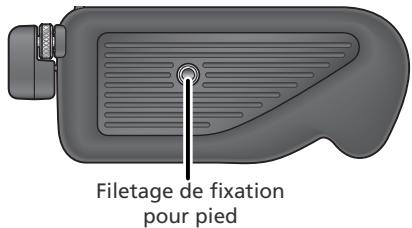
natural_image
3D rendered image of a gray ergonomic device with a circular vent and handle (no text or symbols)natural_image
Two-step diagram showing a mechanical component being inserted into a housing, with arrows indicating direction (no text or symbols present)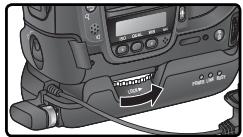
natural_image
Close-up of a Nikon DAX2 camera module with adjustment knobs and a digital display (no visible text or symbols)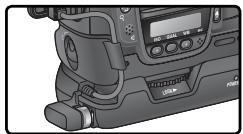
natural_image
Close-up of a professional video camera with LCD screen and buttons (no visible text or symbols)natural_image
Illustration of a woman by the sea with a sailboat on the water (no text or symbols)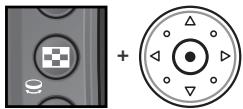
natural_image
Two abstract circular icons: a camera with a checkered pattern and a circular dial with triangular symbols (no text or labels)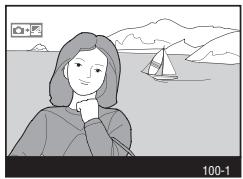
natural_image
Illustration of a woman by the sea with a sailboat and mountains in the background (no text or symbols)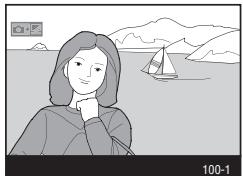
natural_image
Illustration of a woman by the sea with a sailboat and mountains in the background (no text or symbols)natural_image
Illustration of a woman by the sea with a sailboat and mountains in the background (no text or symbols)"Envoi en cours"
natural_image
Illustration of a woman by the sea with a sailboat and mountains in the background (no text or symbols)"Envoyé"
natural_image
Illustration of a woman by the sea with a sailboat and mountains in the background (no text or symbols)LAN (Local Area Network)
WEP (Wired Equivalent Privacy)
Adresse IP, 17, 27, 29, 37
Adresse MAC, 21, 29, 37
Antenne, 3
B
BSS-ID, 16,35
BUSY, 3,10
C
Canal, 17, 35
sélection, 17
Contact alimentation, 3
D
TCP/IP, 17, 27, 30, 37
Témoins DEL, 3, 10
Transfert, 6
interruption, 8
Do not handle with wet hands
Failure to observe this precaution could result in electric shock.

Follow the instructions of hospital and airline personnel
1300 Walt Whitman Road, Melville, New York
11747-3064, U.S.A.
Tel.: 631-547-4200
natural_image
Illustration of a vertical antenna with a coiled cable and connector (no text or symbols)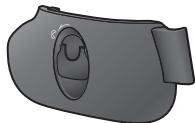
natural_image
3D rendered illustration of a gray ergonomic device with a circular opening and handle (no text or symbols)natural_image
Two-step diagram showing a mechanical component being inserted into a housing, with arrows indicating the process (no text or symbols present)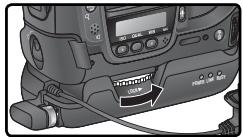
natural_image
Close-up of a Nikon DDA camera with adjustment knobs and control buttons (no visible text or symbols)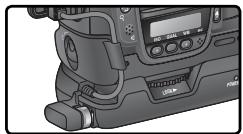
natural_image
Close-up of a camera module with LCD screen and control panel (no visible text or symbols)natural_image
Illustration of a woman by the sea with a sailboat in the background (no text or symbols)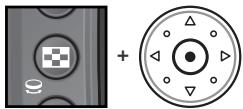
natural_image
Two abstract circular icons: a camera with a checkered pattern and a circular dial with triangular symbols (no text or labels)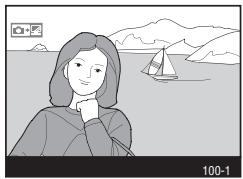
natural_image
Illustration of a woman by the sea with a sailboat and mountains in the background (no text or symbols)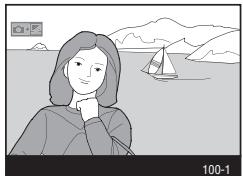
natural_image
Illustration of a woman by the sea with a sailboat in the background (no text or symbols)Durante la carga
natural_image
Illustration of a woman by the sea with a sailboat and mountains in the background (no text or symbols)"Enviando"
natural_image
Illustration of a woman by the sea with a sailboat and mountains in the background (no text or symbols)"Enviado"
natural_image
Illustration of a woman by the sea with a sailboat and mountains in the background (no text or symbols)LAN (Local Area Network)
WEP (Wired Equivalent Privacy)
TCP/IP, 17, 27, 30, 37
Tornillo de acople, 3
Transmisor-receptor, 12
U
USB, 4
USB, 4, 37
cable, 3, 4
conector, 4
configuración, 4
W
WEP, 29, 37–38
No reproduction in any form of this manual, in whole or in part (except for brief quotation in critical articles or reviews), may be made without written authorization from NIKON CORPORATION.