
WFT6412I - Washing machine THOMSON - Free user manual and instructions
Find the device manual for free WFT6412I THOMSON in PDF.



| Product type | Front-loading washing machine |
| Washing capacity | 6 kg maximum (depending on program) |
| Drying capacity | 4 kg maximum for wash+dry, 1.5 kg for delicates |
| Number of programs | 15 programs including cotton, synthetics, delicates, wool, drying and additional |
| Temperature range | Cold to 90°C depending on program |
| Special functions | Intensive wash, easy iron, extra rinse, stop with full tank |
| Detergent drawer | 3 compartments: prewash, wash, fabric softener |
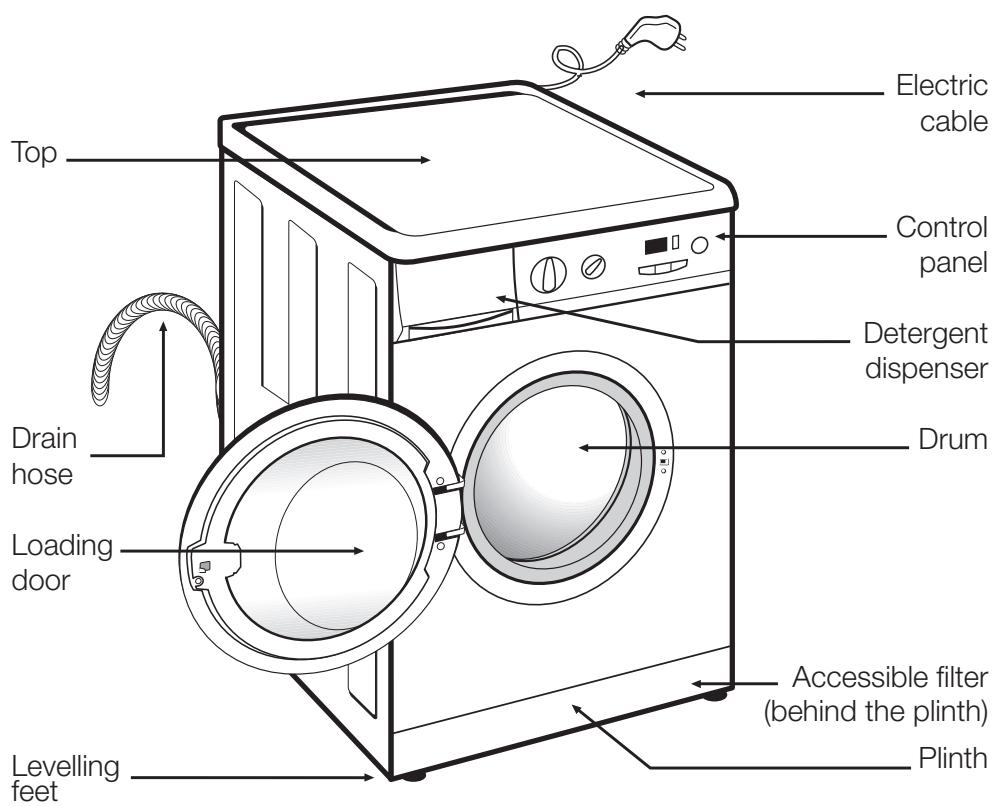
| Drain filter | Accessible at the bottom of the appliance |
| Safety | Anti-unbalance system for spin, safety stop if door open |
| Required water pressure | 0.05 to 1 MPa (0.5 to 10 kg/cm²) |
| Electrical supply | 220-240 V ~ 50 Hz (estimated) |
| Typical water consumption | 30 to 60 liters depending on program (e.g., cotton 60°C: 49 liters) |
| Typical energy consumption | 0.20 to 1.90 kWh depending on program (e.g., cotton 60°C: 1.02 kWh) |
| Error code display | F01 (no water), F02 (drain blocked), C3 (spin imbalance), F04 (door not closed properly) |
| Recyclable materials | Packaging and appliance recyclable according to WEEE directive |
Frequently Asked Questions - WFT6412I THOMSON
User questions about WFT6412I THOMSON
0 question about this device. Answer the ones you know or ask your own.
Ask a new question about this device
Download the instructions for your Washing machine in PDF format for free! Find your manual WFT6412I - THOMSON and take your electronic device back in hand. On this page are published all the documents necessary for the use of your device. WFT6412I by THOMSON.
USER MANUAL WFT6412I THOMSON
A manual containing the operating, maintenance and installation instructions is supplied with this washing machine. Please read all the instructions before using the washing machine, as indicated in the symbol.

- Do not dry any items in the tumble dryer if they have not been previously washed.
- Do not wash any articles that have previously been cleaned, washed, soaked or treated with petrol, dry cleaning solvents or any other flammable or explosive substances, as these produce vapours which could catch fire or explode.
- Do not add petrol, dry cleaning solvents or any other flammable or explosive substances to the washing water, as these produce vapours which could catch fire or explode.
Any items stained with substances such as cooling oil, acetone, alcohol, petrol, kerosene, stain remover, turpentine, wax or wax removing products must be washed in hot water with extra detergent before drying them in the tumble dryer. - Items such as foam rubber (latex foam), shower caps, waterproof fabrics, rubber-lined items and clothing or pillows stuffed with pieces of foam rubber must not be dried in the tumble dryer.
-
Do not repair or replace any part of the washing machine or attempt to carry out any type of servicing, unless it is expressly recommended in the maintenance instructions in the manual.
If the power cord is damaged, it must be replaced by the manufacturer, their after-sales service or similar qualified personnel, to avoid hazards. -
Do not use an extension lead or adaptor plug to connect the washing machine to the mains.
- Do not climb onto the washing machine or lean on the loading door when it is open.
The machine must only be used for the purpose for which it is designed.
Follow the washing instructions recommended by the manufacturer of the garment to be washed.
Fabric softeners or similar products should be used as described in the fabric softener instructions.
The appliance should not be installed behind a lockable or sliding door or a door with the hinges on the opposite side to where the tumble dryer is located. -
Do not start up the washing machine until you have ensured that:
-
It has been installed in accordance with the installation instructions.
- IAll the water, drainage, electrical and earth connections comply with local legislation and any other applicable regulations.
The final stage of a tumble dryer cycle does not use heat, so as not to damage the items (cooling cycle). Never stop the tumble dryer before the end of the drying cycle, unless you quickly remove all the items and lay them out for them to cool down.
This appliance is not designed for use by people (including children) whose physical, sensorial or mental capacities are impaired, or who lack sufficient experience or knowledge, unless they are supervised or have been instructed in the use of the appliance by a person responsible for their safety. Children must be supervised to ensure they do not play with the appliance.
ACCESSORIES
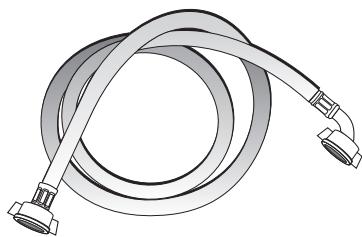
Water supply hose
1 UNPACKING AND UNBLOCKING THE WASHING MACHINE
UNPACKING
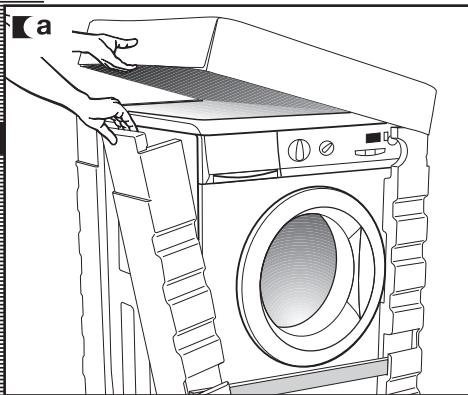
a Remove the base, the corner pieces and the top protection cover.
UNBLOCKING
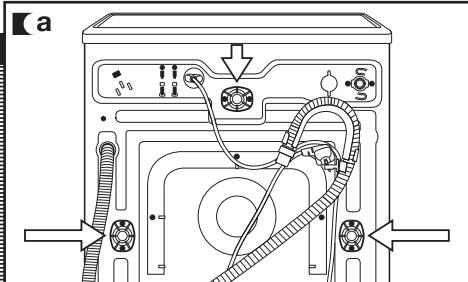
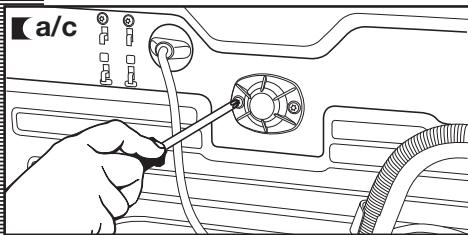
a Unscrew the screws holding the 3 plastic cover pieces in place, at the rear of the washing machine.
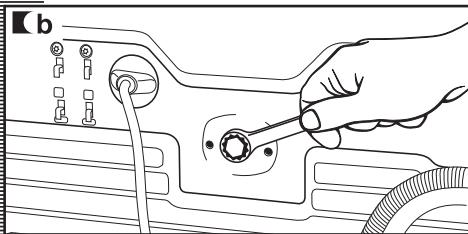
b Unscrew and remove the 3 metal fixing flanges.
Use the previously removed cover pieces to cover the holes.
Keep the metal fixing flanges, as they will be useful if you need to transport the appliance at a later date.
CONNECTING THE
WATER HOSE
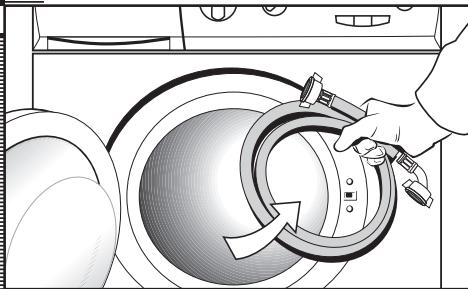
The water supply hose is inside the drum.
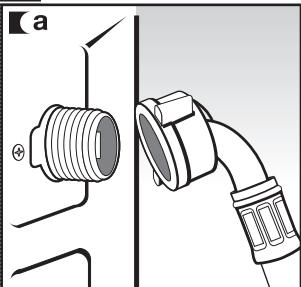
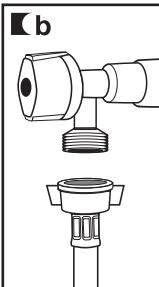
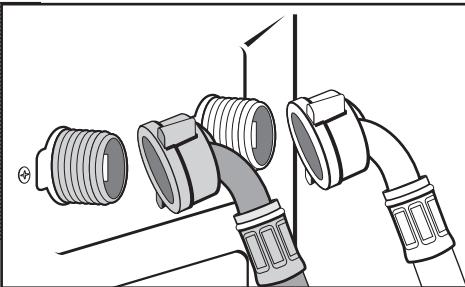
a Connect the bent end of the tube to the grooved input of the water valve on the rear of the appliance.
Connect the other end of the tube to the water supply. Make sure you firmly tighten the locking nut.
Make sure you connect the elbow of the water supply hose correctly, to avoid any risk of flooding.
If your washing machine allows for connection to a hot water supply intake, connect the red grooved tube to the hot water tap and the water valve to the red filter.
The washing machine must be connected to the water supply using the new supply hoses provided with the appliance. Do not use the old supply hoses. For the washing machine to function correctly, the water pressure should be between 0.05 and 1MPa (0.5 - 10Kg / cm^2) .
CONNECTING THE
DRAIN HOSE
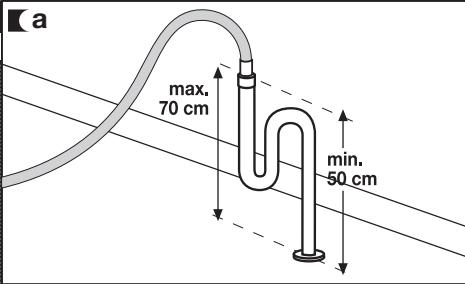
a We recommend a drain hose fixed at a distance of 50 - 70 cm from the floor. Make sure the drain hose is not blocked, kinked or squashed.
LEVELLING
Important
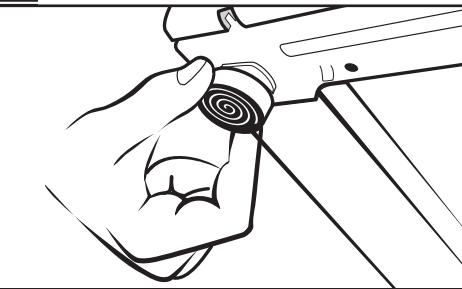
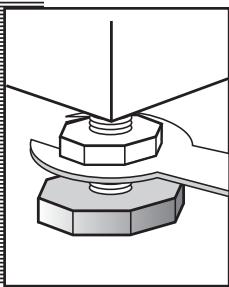
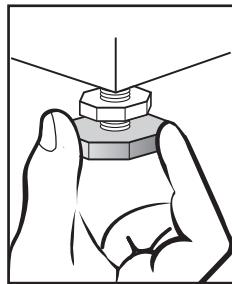
Level the appliance using its adjustable legs, to reduce noise and to stop the washing machine from moving during washing.
Do not pull the legs out too far, as this will affect the stability of the appliance.
For models with nuts, tighten the nuts with a spanner.
ELECTRICAL CONNECTION
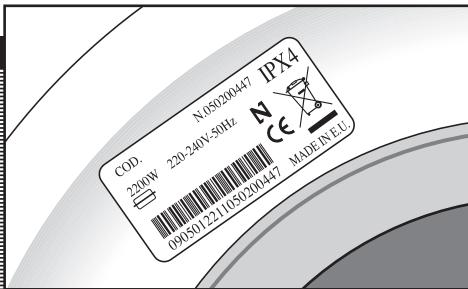
Consult the instruction plate on the washing machine loading door before making the electrical connection. Check the mains voltage corresponds to the voltage indicated on the instruction plate.
Never remove the instruction plate, as it contains important information.
Important
Make sure your washing machine is correctly plugged into an earthed socket.
The electrical installation, plug, mains socket and the fuses or automatic circuit-breaker and counter must withstand the maximum power indicated on the instruction plate.
Never plug the washing machine into the mains with wet or damp hands.
To unplug the appliance from the mains, pull on the plug. Never pull on the cable.
If the supply cable is damaged, it must be replaced as soon as possible with a cable or special unit provided by the manufacturer or after-sales service.
For built-in washing machines, the mains connection plug must be accessible after installation.
PRE-CLEANING
When your washing machine has been correctly installed, we recommend that you pre-clean the machine.
This is to check that the installation, the connections and the drainage are all correct, and to thoroughly clean the inside of the washing machine before any wash programmes are run (see the operating instructions on the following pages).
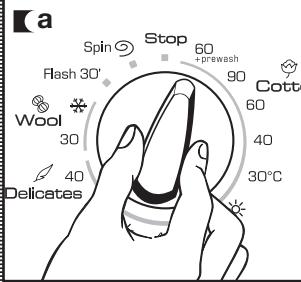
a Select the Cotton 60^ programme.
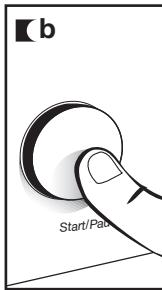
b Press the Start/Pause button.
using the appliance and practical tips
PREPARING
GARNMENTS FOR WASHING
PREPARATION
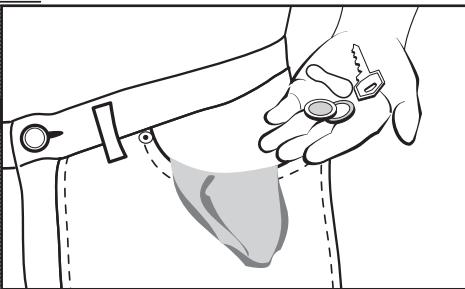
Make sure you empty the pockets of the clothes before you place them in the drum.
Small objects could block the drain pump.
SORTING THE LAUDRY
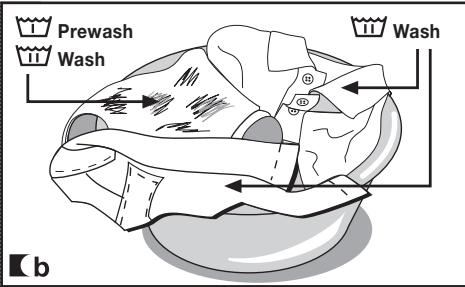
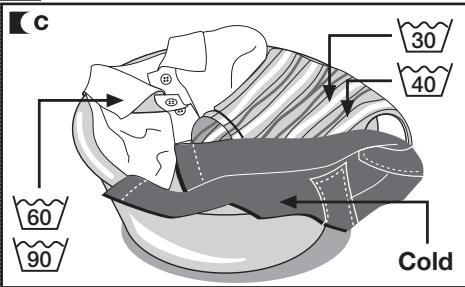
a Sort the clothes by fabric type
We recommend using the delicate programmes for more fragile items. Use the special wool wash programmes for washing woollens.
b Sort the clothes by level of soilness
- A short cold water programme is better for only slightly soiled clothes.
- Use a programme without prewash if the clothes are not very soiled.
- Only use the long programmes with prewash for very dirty items.
c Sort the laundry by colour
Wash whites and coloureds separately.
We recommend you load your washing machine to the maximum level, to economise on water and power.
We advise washing items of different sizes together whenever possible, as this optimises the washing process and favours the distribution of the load inside the drum on spin-drying, reducing noise.
Wash small delicate items in a net bag.
a
Important

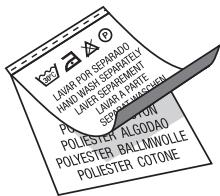
Check your woollens are machine-washable before washing them
If you wish to use the drying programme, first check that the fabric is suitable for machine-drying. Consult the label.
2 USING DETERGENTS AND ADDITIVES
using the appliance and practical tips
DETERGENTS
AND ADDITIVES
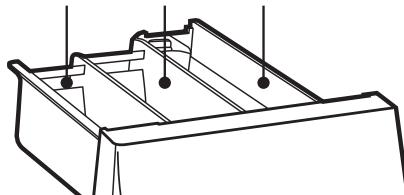
The detergent drawer of your washing machine is divided into 3 compartments.
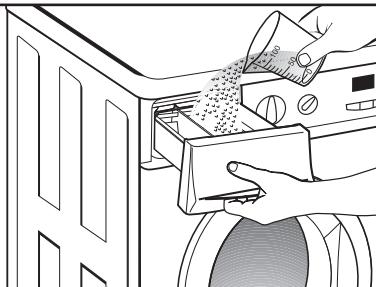
Before washing, place the detergent and additives in their corresponding compartments.
Important
The compartments are marked with a MAX line to show the maximum level to which they can be filled.
Remember that the amount of detergent to be used depends on:
The amount of clothes to be washed.
How dirty the clothes are.
The hardness of the water (to find out the water hardness in your area, contact the relevant local authorities).
Important
We recommend you use an anti-scale product if you live in a hard water area.

a
PREWASH

WASH

FABRIC SOFTENER
b
eco-note
Use only low-suds detergent formulated for drum type washes.
Using more detergent will not give you better wash results, and as well as

costing you money it will also have a negative effect on the environment.
We strongly recommend you follow the detergent manufacturer's instructions.
3 SELECTING THE WASHING AND DRYING PROGRAMMES
using the appliance and practical tips
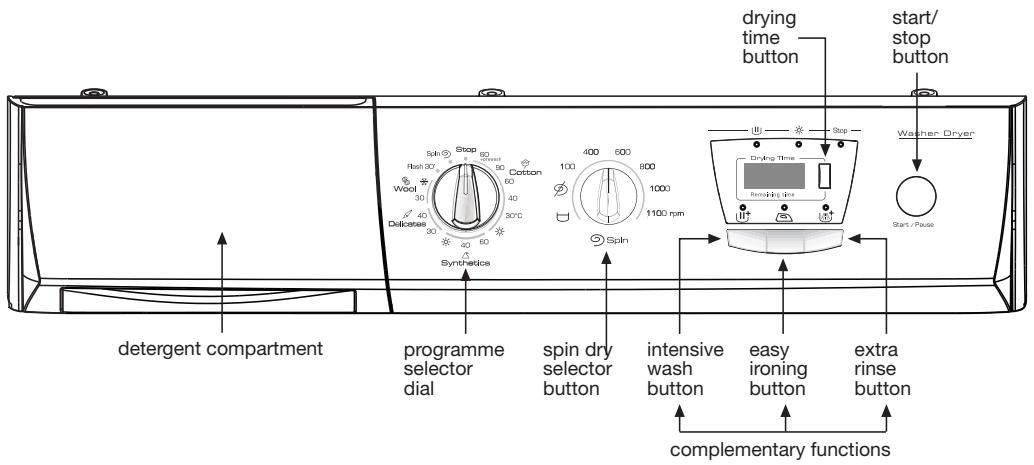
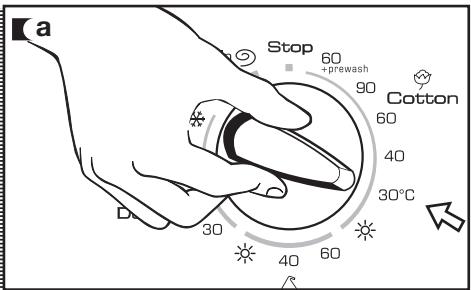
To select a wash programme, proceed as follows:
Starting from the "Stop" position, the washing machine will switch on when you select the desired wash programme (see programme chart).
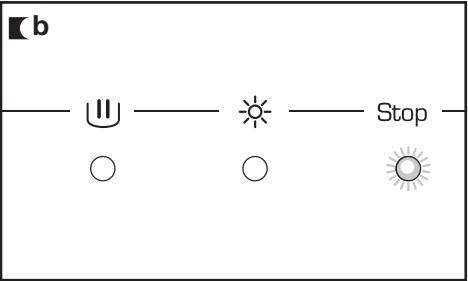
The "Stop" pilot light will start to flash on the control panel.
To select the drying time, proceed as follows:
a Select the drying time in minutes by pressing the drying time button.
The duration will appear on the display. Press this button several times to progressively increase the drying time.
Important
If you select a wash+dry function, make sure you do not exceed a load of 4Kg (or 1.5Kg for delicate wash programmes).
There are 6 programme types:
Cotton programmes
Synthetic programmes
Delicate programmes
Wool programmes
Drying programmes
Additional programmes
PROGRAMMES
| Cotton | Synthetic | Delicate | Wool | Drying | Additional |
| 1 Cotton-prewash 60°C | 7 Synthetic 60°C | 10 Delicate 40°C | 12 Wool 30°C | 6 Normal dry | 14 Quick 30' |
| 2 Cotton 90°C | 8 Synthetic 40°C | 11 Delicate 30°C | 13 Wool cold | 9 Delicate dry | 15 Spin dry |
| 3 Cotton 60°C | |||||
| 4 Cotton 40°C | |||||
| 5 Cotton 30°C |
eco-note
We recommend you choose the programme best adapted to the type of load, avoiding using the prewash programme as far as possible. You will save money and contribute to protecting the environment.

| Programme | Recommended Temperature | Fabric type | Option buttons | |||||||
| Extra Rinse | Intensive wash | Easy Inhoring | Select spin | Spin suppress | Full stop | |||||
| Cotton programmes | 1 | Cotton + Prewash 60°C | 60° | Cotton/Linen white/fast colours heavy soil | YES | |||||
| 2 | Cotton 90°C | 90° | Cotton/Linen white heavy soil | YES | ||||||
| 3 (*) | Cotton 60°C | 60° | Cotton/Linen fast colours medium soil | YES | ||||||
| 4 | Cotton 40°C | 40° | Cotton/Linen fast colours light soil | YES | ||||||
| 5 | Cotton 30°C | 30° | Cotton/Linen delicate colours light soil | YES | ||||||
| Drying P. | 6 | Standard dry | - | Cotton/Linen | - | |||||
| Synthetic P. | 7 | Synthetic 60°C | 60° | Synthetic/cotton mix white/fast colours medium soil | YES | |||||
| 8 | Synthetic 40°C | 40° | Synthetic/cotton mix delicate colours medium soil | YES | ||||||
| Drying P. | 9 | Delicate dry | - | Synthetic/mix | - | |||||
| Delicate P. | 10 | Delicate 40°C | 40/40 | Synthetic/cotton mix delicate colours medium soil | YES | |||||
| 11 | Delicate 30°C | 30/30 | Synthetic/cotton mix delicate colours light soil | YES | ||||||
| Wool P. | 12 | Wool 30°C | WOOL 30 | Wool/wool mix white/colour light soil | YES | NO | YES | |||
| 13 | Wool cold | Cold | Wool/wool mix white/colour very light soil | YES | NO | YES | ||||
| Additional P. | 14 | Quick 30' | - | Cotton/linen white/colour very light soil | YES | NO | YES | |||
| 15 | Spin dry | - | Cotton/cotton mix synthetic/Delicate wool/wool mix | NO | YES | NO | ||||
(*) For wash and energy consumption programmes in accordance with regulation EN60456, press intensive wash button.
| Max.Load(kg) | Detergent compartment | Programme Description | Total consumption (kwh/litre) | Approx.Duration(minutes) |
| 6 | M | Prewash, standard wash, rinses, automatic additive absorption if required and long final spin | 1,45/60 | 105 |
| 6 | M | Standard wash, rinses, automatic additive absorption if required and long final spin | 1,90/55 | 120 |
| 6 | 1,02/49 | 91 | ||
| 6 | 0,65/49 | 87 | ||
| 6 | 0,40/49 | 82 | ||
| 4 | - | Standard dry | 2,8/48 | 160 |
| 3 | 1,8/27 | 100 | ||
| 3 | M | Delicate wash, rinses, automatic additive absorption if required and short final spin | 1,00/55 | 70 |
| 3 | 0,60/55 | 55 | ||
| 1,5 | - | Delicate dry | 1,2/26 | 95 |
| 3 | M | Delicate wash, rinses, automatic additive absorption if required and short final spin | 0,60/55 | 65 |
| 3 | 0,35/55 | 60 | ||
| 1 | M | WOOL wash, rinses, automatic additive absorption if required and short final spin | 0,50/60 | 40 |
| 1 | 1,00/55 | 30 | ||
| 1,5 | M | SHORT wash, rinses, automatic additive absorption if required and long final spin | 0,20/30 | 30 |
| 6 | - | Drain and long final spin | 0,05/0 | 10 |
NOTE: The consumptions in kWh and litres and the programme durations may vary depending on the load type and size, water pressure, etc.
4 SELECTING THE COMPLEMENTARY FUNCTIONS
using the appliance and practical tips
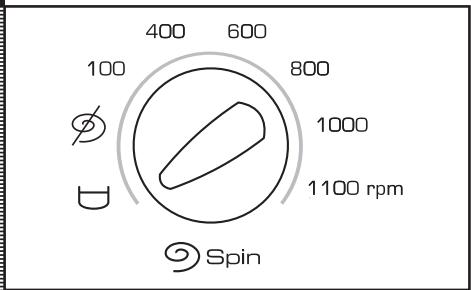
SPIN SPEED SELECTION
The programme selected is associated with a certain spin speed.
a To change it, turn the spin speed selector.
b No spin
Turn the spin speed selector to the "0" position to obtain a programme with no final spin, used to prevent particularly delicate fabrics from creasing.
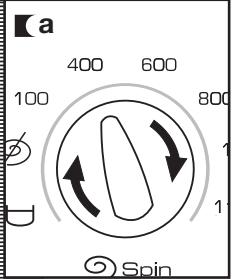
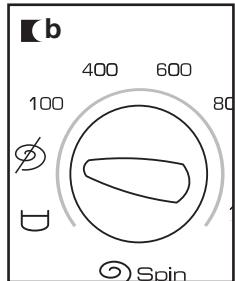
FULL TUB STOP
The wash programme stops on the last rinse, with the clothes left in water. When the function is deactivated, the washing machine continues the programme, draining and spin-drying. It is used, for example, when you are not at home and want to delay the spindrying until you get home, to prevent the clothes creasing after spin-drying and being left in the drum to be removed.
To use it, turn the spin speed selector to the full tub stop position.
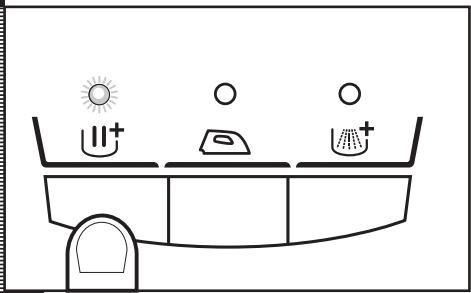
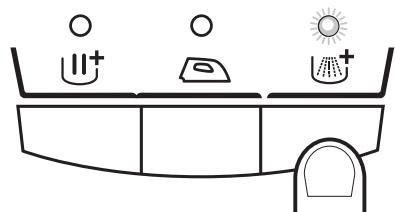
INTENSIVE WASH
This option, specially recommended for heavily soiled, stained clothes, achieves better results by extending the normal wash cycle.
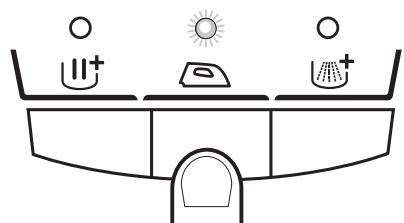
EASY IRONING
This option prevents garments from creasing by means of carrying out a special programme with special turns to fluff out the garments after spin-drying and make them easier to iron.
EXTRA RINSE
Increases the level of the final rinse obtained in the clothes; suitable for large loads and garments belonging to people with sensitive skin. Increases water consumption!
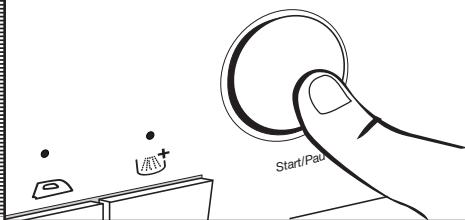
START/PAUSE
To start up your washing cycle, press the Start/Pause button.
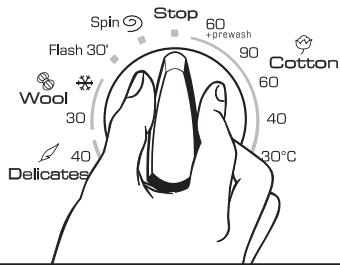
SWITCH OFF
Turn the programme selector dial to "Stop" to switch off the washing machine.
5
WASH AND DRY PROGRAMME RUNNING AND ELECTRICITY CUTS
using the appliance and practical tips
PROGRAMME
RUNNING
When the programme starts up, the remaining time until it finishes will appear on the screen.
Complementary functions can be selected at any time, providing the corresponding washing cycle has not finished and the programme admits this function.
If you press the Start/Pause button during the washing process, the washing machine will stop and go onto PAUSE.
Important
If you change the programme on the programme selector dial during washing and drying, the washer dryer will automatically go onto PAUSE and the programme running will be cancelled.
If you need to add or remove an item, press the Stop/Pause button. Check there is no danger of the water overflowing when you open the door and that the water temperature is not too high. To restart and continue the washing cycle, press the Start/Pause button again.
POWER
CUTS
If a power cut should occur, when the electricity comes back on the washing machine will continue functioning from where it left off (it has a memory of several hours).
U

#

Stop

tips
To reduce noise on spin drying, level the washing machine by regulating the adjustable feet.
■ You should wash clothes of different sizes on the same wash programme whenever possible, as this helps distribute the clothes inside the drum on spin-drying and improves spin performance.
All the models have a safety system to prevent spin-drying from starting up if the clothes are too concentrated inside the drum. This protects the washing machine from vibrating excessively. If you notice that the clothes are still too damp after spin drying, distribute them evenly inside the drum and then run the spin dry cycle again.
MAINTENANCE
After each wash programme, leave the loading door open for a short time so that air can circulate around the washing machine.
From time to time, depending on the water hardness in your area, it is recommendable to run a full wash cycle using an anti-scale product. This will prolong the life of your washing machine.
Unplug the washing machine from the mains before carrying out any cleaning or maintenance operations.
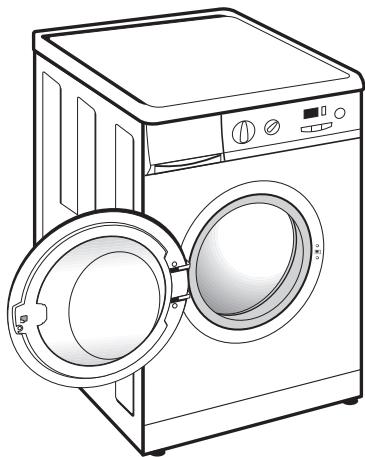
1 CLEANING THE DETERGENT DRAWER
You should clean the detergent drawer regularly to remove any wash product residue remaining inside it.
Pull outwards on the detergent drawer to remove it completely.
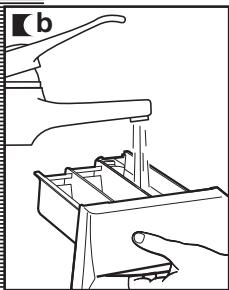
Use warm water and a brush to clean the compartments.
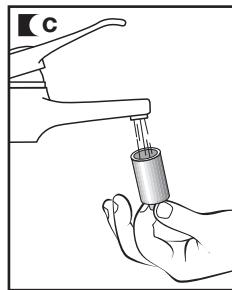
■c Also take out the additive compartment siphons, clean them and replace them. Then fit the drawer back into its housing.
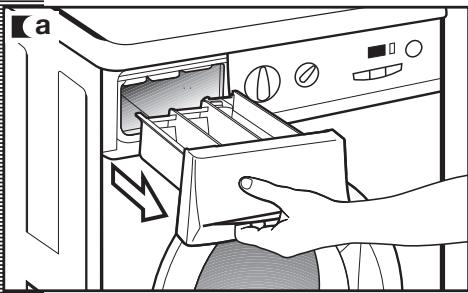
If the syphon is dirty or has not been correctly fitted it will prevent the additives from being used and water will be left in the compartment after washing.
2
CLEANING THE ACCESSIBLE FILTER AND THE OUTSIDE OF THE WASHING MACHINE
maintenance and cleaning
CLEANING THE FILTER
The accessible filter should be cleaned if the drain pump has become blocked by any foreign objects.
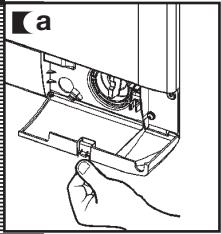
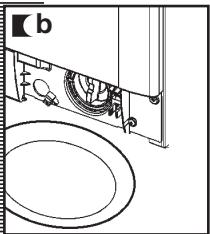
a Open the plinth cover, by pressing the lug and pulling gently on it.
Place a dish or similar recipient under the filter to collect the water that will run out of it when it is removed.
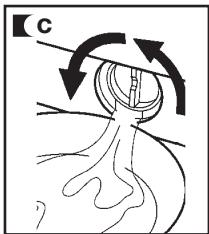
Turn the filter a quarter of a turn or a half turn to the left. The water will start to run out.
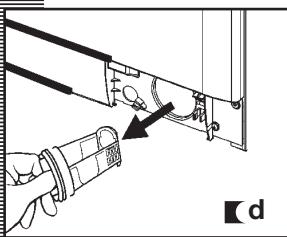
d When all the water has come out of the washing machine, turn the filter several times until it can be completely removed by gently pulling on it.
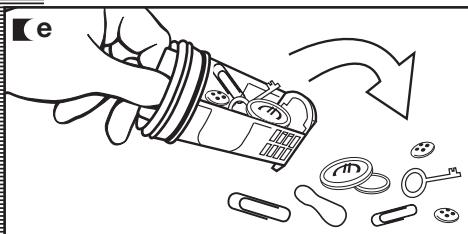
Remove the objects or fluff trapped in the filter.
f Replace the filter and the plinth.
Important
To prevent risk of burns, do not carry out this operation with washing water temperatures of over 30^ .
CLEANING THE OUTSIDE
To clean the outside of the washing machine, use warm soapy water or a gentle cleaning product. Do not use abrasive products or solvents.
Then dry it with a soft cloth.
Important
If any detergent or additives from the detergent drawer are spilt onto the outside of the washing machine, clean them off straight away as they are corrosive.
safety and troubleshooting
If you observe any problems with your washing machine, consult the indications below.
If they do not help you to solve the problem, unplug the appliance and contact the TECHNICAL ASSISTANCE SERVICE.
Important
Never open up the appliance yourself. There are no fuses or similar components inside it which can be changed by the user.
| Indicator | Problem |
| FO1 | Water is not entering |
| FO2 | The washing machine is not draining or spinning |
| CO3 | It is not spinning |
| FO4 | It will not start up |
| FO5 | Contact the Technical Assistance Service |
| F10 |
PROBLEMS
The washing machine will not start up
The washing machine is vibrating or making excessive noise
Possible causes:
Check the door is properly closed.
The washing machine is not plugged into the mains, or there is no electricity supply.
The Start/Pause button has not been pressed.
If the washing machine door is not properly closed, F04 will appear on the display.
Possible causes:
The drum blocking screws or transportation screws have not been removed.
The washing machine is not correctly levelled or it is not stable.
The washing machine is not filling
If F01 appears on the display: Check the water supply is not cut off, the water tap is open and the washing machine water entry filter is not blocked.
Solution: Wait until the water supply comes back on, turn on the water supply tap, remove the water inlet hose and clean the filter. If this failure occurs, F01 will appear on the display.
The washing machine is not draining or spinning
If F02 appears on the display: Check that the pump or the outlet pipe of the building are not blocked, and that the pump is properly connected.
Solution: If the pump is blocked, follow the instructions given in point 2 of Maintenance and Cleaning the appliance. If this failure occurs, F02 will appear on the display.
The washing machine is not spinning
- Cause: The clothes are badly distributed in the drum, and there is a risk of excessive vibration.
Solution: Redistribute the clothes evenly and run a spin dry programme. If this failure occurs, C3 will appear on the display.
I cannot see any water in the drum during washing
The washing machine is provided with an environment-friendly system able to adapt to the load and type of fabrics, adjusting the levels of water and energy used. So, although the water level you can see through the door may look low, there is no cause for concern as washing and rinsing efficiency will still be optimum.
Why is there water left in the detergent drawer?
Why can't I open the door as soon as the wash programme ends?
Why doesn't the time remaining on the clock coincide with the real end-of-cycle time selected?
Other indications
Check the detergent drawer is clean. To clean it, follow the instructions in Maintenance and Cleaning of the appliance.
1- Cleaning the detergent drawer.
Today's washing machines are equipped with user safety systems. The washing machine door cannot be opened if the drum has not totally come to a halt. You therefore need to wait around 2 minutes before you can open the door.
The time is for information purposes and it can be affected by the real conditions of the selected wash programme: the initial water temperature, the load of clothes, unbalance caused by the load on spin drying, etc.
Other problems may affect the washing machine. In this case, the indications F05, F06 etc. through to F10 will appear on the display. Contact the Authorised Technical Services.
The packaging materials for this appliance can be recycled. If you recycle them, you will contribute to protecting the environment. Please place them in the municipal recycling bins provided for this purpose.
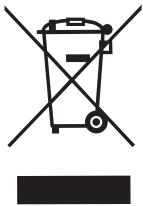
Your appliance also contains a large number of recyclable materials. It is marked with this symbol to show that in European Union countries used appliances must not be disposed of with other waste.
This will help your manufacturer to correctly recycle their appliances, in compliance with European directive 2002/96/EC concerning waste electrical and electronic equipment.
Please contact either your town council or the shop where you bought the product to find out where the nearest collection points for used appliances are.
Thank you for helping to protect the environment.
avertissements
- UNPACKING AND UNBLOCKING THE WASHING MACHINE
- UNPACKING
- UNBLOCKING
- CONNECTING THE
- WATER HOSE
- DRAIN HOSE
- LEVELLING
- Important
- ELECTRICAL CONNECTION
- PRE-CLEANING
- using the appliance and practical tips
- PREPARING
- GARNMENTS FOR WASHING
- PREPARATION
- SORTING THE LAUDRY
- a Sort the clothes by fabric type
- b Sort the clothes by level of soilness
- c Sort the laundry by colour
- USING DETERGENTS AND ADDITIVES
- DETERGENTS
- AND ADDITIVES
- eco-note
- SELECTING THE WASHING AND DRYING PROGRAMMES
- To select a wash programme, proceed as follows:
- SELECTING THE COMPLEMENTARY FUNCTIONS
- SPIN SPEED SELECTION
- FULL TUB STOP
- INTENSIVE WASH
- EASY IRONING
- EXTRA RINSE
- START/PAUSE
- SWITCH OFF
- 5
- WASH AND DRY PROGRAMME RUNNING AND ELECTRICITY CUTS
- PROGRAMME
- RUNNING
- POWER
- CUTS
- U
- #
- Stop
- tips
- MAINTENANCE
- CLEANING THE DETERGENT DRAWER
- 2
- CLEANING THE ACCESSIBLE FILTER AND THE OUTSIDE OF THE WASHING MACHINE
- maintenance and cleaning
- CLEANING THE FILTER
- CLEANING THE OUTSIDE
- safety and troubleshooting
- PROBLEMS
- avertissements
Brand : THOMSON
Model : WFT6412I
Category : Washing machine