Maxxum ST Si - Camera KONICA MINOLTA - Free user manual and instructions
Find the device manual for free Maxxum ST Si KONICA MINOLTA in PDF.


| Product Type | 35mm Film SLR Camera |
| Model | Maxxum ST Si |
| Brand | Konica Minolta |
| Film Format | 35mm (135 film) |
| Dimensions | 136 x 90 x 62 mm |
| Weight | 335 g (body only) |
| Power Source | Two CR123A lithium batteries |
| Battery Life | Approx. 20 rolls of 36 exposures |
| Lens Mount | Minolta A (AF) mount |
| Shutter Speeds | 30 - 1/2000 sec, bulb |
| ISO Range | 25 - 5000 (DX code) |
| Metering System | 16-segment honeycomb metering |
| Focus System | TTL phase-detection autofocus (3 sensors) |
| Built-in Flash | Yes, guide number 12 (ISO 100/m) |
| Flash Modes | Auto, fill-in, red-eye reduction, slow sync |
| Exposure Modes | Program, aperture-priority, shutter-priority, manual |
| Self-Timer | 10-second electronic timer |
| Drive Modes | Single-frame, continuous (1 fps) |
| Viewfinder | Eye-level pentamirror, 0.7x magnification |
| Maintenance | Clean lens with microfiber cloth; store in dry, cool place |
| Safety | Avoid water, excessive heat, and dropping |
| Spare Parts & Repairability | Support through authorized Konica Minolta service centers; limited parts available |
| Manual Included | Yes, free PDF download |
Frequently Asked Questions - Maxxum ST Si KONICA MINOLTA
User questions about Maxxum ST Si KONICA MINOLTA
0 question about this device. Answer the ones you know or ask your own.
Ask a new question about this device
Download the instructions for your Camera in PDF format for free! Find your manual Maxxum ST Si - KONICA MINOLTA and take your electronic device back in hand. On this page are published all the documents necessary for the use of your device. Maxxum ST Si by KONICA MINOLTA.
USER MANUAL Maxxum ST Si KONICA MINOLTA
FOR PROPER AND SAFE USE
This manual has been designed to help you understand the operation of your Minolta camera more quickly. After familiarizing yourself with the camera, start with Level I and learn to operate the camera in Full-Auto mode.
Move on to Level II and the Subject Program modes when you are comfortable with the camera and want to have more control. Here you decide the type of image you want to photograph and leave the exposure details to the camera.
When you are ready for full control, move on to Level III and the ASM exposure modes.
The information in this manual is relevant for products introduced before March, 1999. Contact the nearest authorized Minolta Service facility to obtain compatibility information for products released after this date.
This device complies with Part 15 of the FCC Rules. Operation is subject to the following two conditions: (1) This device may not cause harmful interference, and (2) this device must accept any interference received, including interference that may cause undesired operation. Changes or modifications not approved by the party responsible for compliance could void the user's authority to operate the equipment. This equipment has been tested and found to comply with the limits for a Class B digital device, pursuant to Part 15 of the FCC Rules. These limits are designed to provide reasonable protection against harmful interference in a residential installation. This equipment generates, uses and can radiate radio frequency energy and, if not installed and used in accordance with the instructions, may cause harmful interference to radio communications. However, there is no guarantee that interference will not occur in a particular installation. If this equipment does cause harmful interference to radio or television reception, which can be determined by turning the equipment off and on, the user is encouraged to try to correct the interference by one or more of the following measures:
- Reorient or relocate the receiving antenna.
- Increase the separation between the equipment and the receiver.
- Connect the equipment to an outlet on a circuit different from that to which the receiver is connected.
- Consult the dealer or an experienced radio/TV technician for help.
This Class B digital apparatus conplies with Canadian ICES-003.
Read and understand all warnings and cautions before using this product.

WARNING
Batteries may become hot or explode due to improper use.
- Use only the batteries specified in this instruction manual.
- Do not install the batteries with the polarity (+/-) reversed.
- Do not subject batteries to fire or high temperatures.
- Do not attempt to recharge, short, or disassemble.
- Do not mix batteries of different types, brands, or ages.
- Tape over lithium battery contacts before disposal.
Follow local regulations for battery disposal.
Use caution, accidents may occur when using this product near young children.
Keep batteries and other things that could be swallowed away from young children. Contact a doctor immediately if an object is swallowed.
Immediately remove the batteries and discontinue use if..
- the camera is dropped or subjected to an impact in which the interior is exposed.
- the camera emits a strange smell, heat, or smoke.
Do not disassemble. Electric shock may occur if a high voltage circuit inside the camera is touched. Take your camera to a Minolta Service Facility when repairs are required.
Do not look directly at the sun through the viewfinder.

CAUTION
Do not allow a camera lens to point directly at the sun. Fire may occur if sunlight comes to focus on a flammable surface. Replace the lens cap when the product is not being used.
TABLE OF CONTENTS
NAMES OF PARTS 4
QUICK OPERATION 8
GETTING STARTED
Strap 11
Batteries 12
Lens 14
Loading Film 16
Handling the Camera 18
Taking Pictures in Full-Auto 20
Focus Signals 21
Special Focus Situations....22
Focus Hold 23
Using the Built-in Flash Flash signals....25
Flash range....25
Fill flash 26
Flash cancel 26
Red-eye reduction 27
Rewinding the Film 28
SUBJECT PROGRAM SELECTION
Portrait Mode ....30
Landscape Mode ....31
Close-up Mode 32
Sports Mode 33
Night Portrait Mode....34
Photographing Night Scenes 35
Self-timer....36
Continuous Advance....37
TABLE OF CONTENTS
CREATIVE EXPOSURE MODES
A-MODE – Aperture Priority ....39
A-mode flash 40
Aperture control 41
S-MODE - Shutter Priority 42
S-mode flash 43
Shutter control 44
M-MODE - Manual 45
Metering in manual mode....46
M-mode flash 47
TAKING TIME EXPOSURES (buLb) 48
ADDITIONAL FEATURES
FOCUS
Manual Focus....51 AF Illuminator ....52
EXPOSURE
8 Segment Metering....53 Spot Metering....54
Exposure Compensation ..55 Setting the ISO Manually ..56
Bracketing....57 Multiple Exposure....58
FLASH
Slow Sync....61 Wireless/Remote Flash ....62
FOR OWNERS OF THE DATE MODEL
Exposing the Date/Time ....67 Setting the Date/Time......68
Replacing the Battery......69 Changing camera functions 70
APPENDIX
Program Reset Button .....71 Accessories .....72
Exposure Warnings .....75 Trouble Shooting .....76
Care and Storage....78 Specifications ....80
NAMES OF PARTS
For information on specific parts, refer to the page numbers shown in parenthesis.
Body
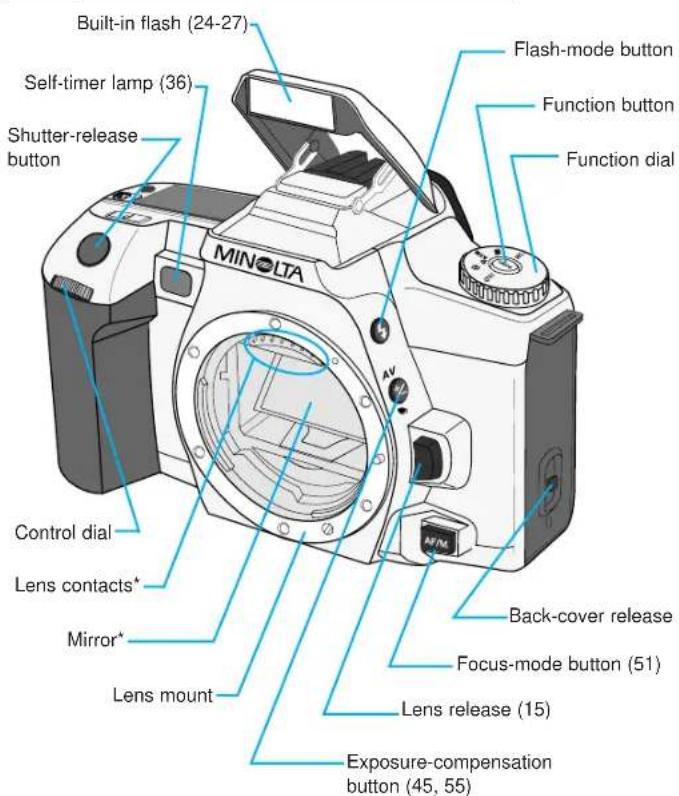
text_image
Built-in flash (24-27) Self-timer lamp (36) Shutter-release button MINOLTA Flash-mode button Function button Function dial Control dial Lens contacts* Mirror* Lens mount Back-cover release Focus-mode button (51) Lens release (15) Exposure-compensation button (45, 55)* Do not touch
NAMES OF PARTS
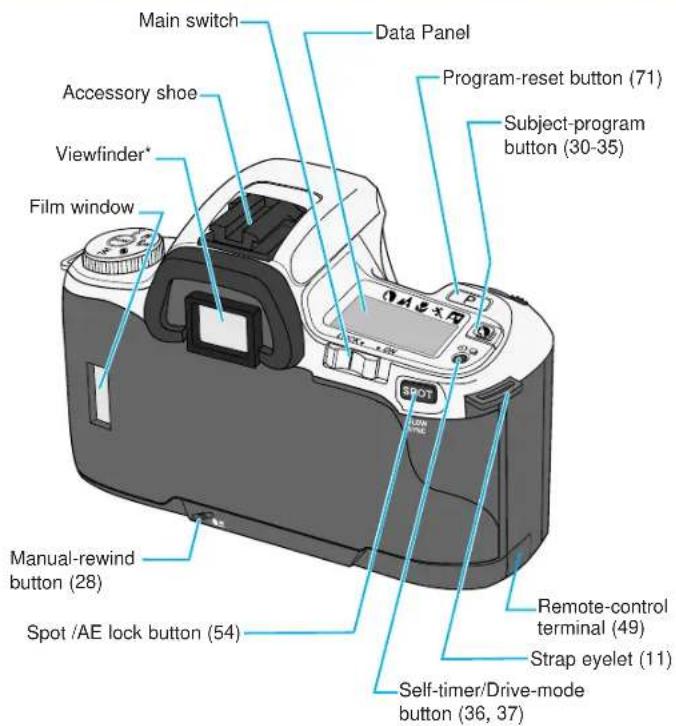
text_image
Main switch Data Panel Accessory shoe Viewfinder* Film window Program-reset button (71) Subject-program button (30-35) Spot /AE lock button (54) Manual-rewind button (28) Remote-control terminal (49) Strap eyelet (11) Self-timer/Drive-mode button (36, 37)
text_image
Battery-chamber door (12) Battery-chamber lock Tripod socketNAMES OF PARTS
NAMES OF PARTS
Data Panel Viewfinder

text_image
Flash-mode indicators Red-eye reduction indicator Multiple-exposure indicator Exposure-mode indicators Manual-focus indicator Shutter-speed/ISO display Aperture/Exposure-compensation display Exposure-compensation indicator Subject-program pointer Subject-program indicators P 8888s +8.8 ASM M.FOCUS AUTO WL 88 Self-timer indicator Battery-condition indicator Wireless flash indicator Drive mode indicator Cartridge mark Film transport signal Frame counter/Multiple-exposure display
text_image
Focus frame Spot-metering area Focus signals Shutter speed display Exposure-compensation indicator Aperture/Exposure-compensation display Spot/AE lock indicator Flash signalQUICK OPERATION
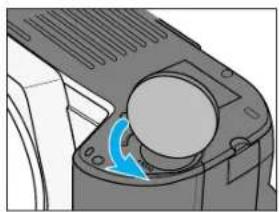
natural_image
Close-up of a mechanical component with a blue circular feature and arrow indicating rotation (no text or symbols)1. Insert batteries.
• This camera uses two CR2 lithium batteries.
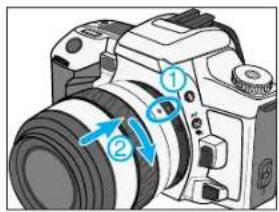
text_image
Diagram of a DSLR camera with numbered parts indicating camera lens and adjustment arrows2. Attach lens.
- Align the red mounting dot on the lens with the one on the camera. Gently insert the lens into the mount and turn it clockwise until it clicks into the locked position.
text_image
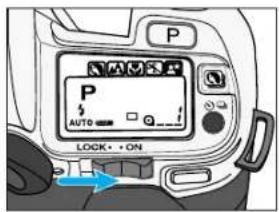
P P AUTO LOCK • ON3. Turn on power.
- Slide the main switch to ON.

natural_image
Diagram of a DSLR camera showing internal components and a highlighted blue circular area (no text or symbols)4. Load film.
- Align the film tip with the red mark, then close the back cover.
QUICK OPERATION

text_image
P P AUTO5. Set Full-Auto operation.
- Press the program-reset button to set the camera to fully-automatic operation.
natural_image
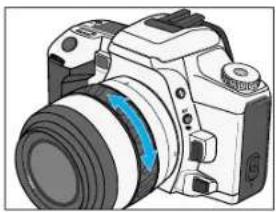
Illustration of a DSLR camera with lens and control buttons (no text or symbols)- If using a zoom lens, rotate the zooming ring to frame your subject as desired.
natural_image
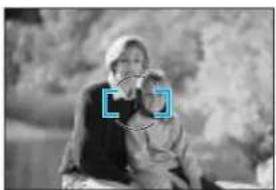
Black-and-white photo of two people sitting outdoors, one holding a small object (no visible text or symbols)- Center your subject in the focus frame, then press the shutter release button partway down.
- The camera will focus and set exposure automatically.

text_image
P P 250 5.6 AUTO8. Take the picture.
• Gently press the shutter-release button all the way down to take the picture.
LEVEL I
This section provides the information necessary to operate your camera in most photographic situations.
This section covers:
- Battery Installation
- Attaching and Removing the Lens
- Loading the Film
- Camera Handling
• Fully Automatic Camera Operation
• Special Focus Situations - Basic Flash Operation
- Rewinding the Film
Once you fully understand the instructions in this section, proceed to Level II, Level III, and Additional Features to obtain more enjoyment from your camera.
GETTING STARTED
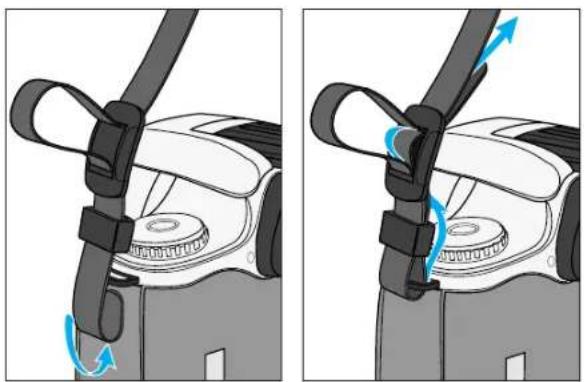
Attaching the Strap
natural_image
Diagram showing two steps of a device grip mechanism with blue arrows indicating motion (no text or symbols present)BATTERIES
BATTERIES
Installing the Batteries
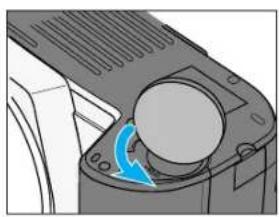
Your camera uses two 3V CR2 lithium batteries to supply power for all camera operations.
natural_image
Close-up of a mechanical component with a blue circular knob and arrow indicating rotation (no text or symbols)- Using a coin or similar object, turn the battery-chamber lock to OPEN, then open the battery-chamber door.

natural_image
Close-up of a battery inside a mechanical housing with a blue arrow pointing to the top part (no text or symbols visible)- Insert the batteries as indicated by the + and - marks.

natural_image
Close-up of a mechanical component with a blue circular knob and arrow indicating rotation (no text or symbols)- Close the battery-chamber door, then turn the battery-chamber lock to CLOSE.
- Setting the camera down with the battery-chamber door open may damage the camera.
Checking Battery Power
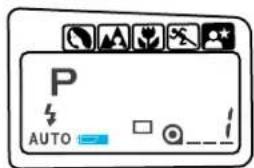
Each time the main switch is set to ON, a battery symbol appears in the data panel indicating the power status of the batteries.
text_image
P AUTOFull-battery symbol
Power is sufficient for all camera operations.
- will only appear for five seconds.

text_image
P AUTO 30Blinking low-battery symbol
Power is extremely low. All functions are operational, but the batteries will need to be replaced soon. Flash recycling time may be slow.

natural_image
Simple line drawing of a window with icons at top and bottom (no text or symbols)Blinking low-battery symbol appears alone and the shutter locks.
Power is insufficient for camera operation. Replace the batteries.
natural_image
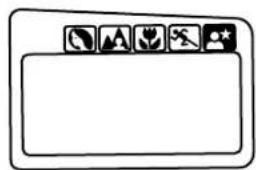
Simple line drawing of a blank rectangular frame with five small icons on top (no text or symbols)No display
Power is too low for the camera to operate. Replace the batteries or make sure they have been inserted correctly.
LENS
Attaching the Lens

text_image
Diagram showing camera lens assembly with blue arrow indicating direction and 'MEN' label on the lens- Remove the body and rear lens caps.
natural_image
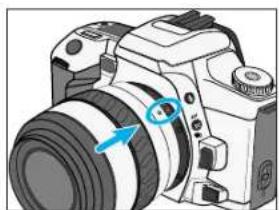
Diagram of a DSLR camera with an arrow pointing to the lens (no text or symbols present)- Align the red mounting dots on the lens and camera body.

natural_image
Illustration of a DSLR camera with blue arrows indicating direction (no text or symbols)- Gently insert the lens into the mount, then turn it clockwise until it clicks into the locked position.
- Do not insert the lens at an angle. - Do not press the lens release when attaching the lens.
LENS
Removing the Lens

natural_image
Diagram of a DSLR camera with labeled parts (1, 2, and directional arrows), no readable text or symbols present.-
Press the lens release and turn the lens counterclockwise until it stops.
-
Gently remove the lens and replace caps, or attach another lens.
Caution
- Do not force the lens if it does not turn smoothly. - Do not touch the inside of the camera, especially the lens contacts and mirror.
LOADING FILM
Check the film window before loading film. If film is loaded, do not open the back cover. Refer to Manual Rewind on page 28 for instructions on removing a partially exposed roll.
- Load film in the shade to reduce the chances of fogging the film.
- Do not use Polaroid Instant 35mm film. Winding problems may occur.
- If DX-coded film is used, the camera automatically sets the correct ISO (film speed).
- If non DX-coded film is used, the camera will use the previous roll's ISO setting. Refer to page 56 to set the film speed manually.
- Do not use infrared film in this camera. The camera's frame counter sensor will fog infrared film.
natural_image
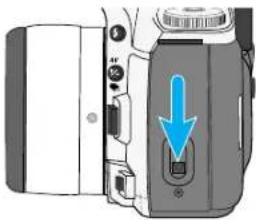
Diagram of a camera module with a blue arrow pointing to the left side (no text or symbols present)- Slide the back-cover release down to open the back cover.

natural_image
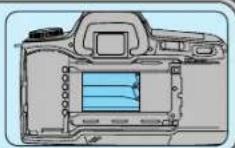
Diagram of a DSLR camera showing internal components and a blue arrow indicating a downward motion (no text or symbols present)- Insert a film cartridge into the film chamber.
The shutter curtain's precision design makes it extremely sensitive to pressure. Never touch it with your fingers or the film tip.
LOADING FILM
natural_image
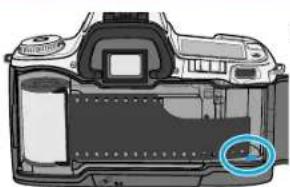
Diagram of a DSLR camera showing front and back views with a highlighted lens (no text or symbols present)3. Extend the leader between the guide rails to the index mark.
- If the film tip extends beyond the index mark, push the excess film back into the cartridge.

natural_image
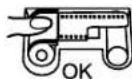
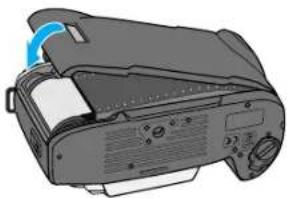
Illustration of a printer with a blue paper feed and paper inside (no text or symbols visible)4. Close the back cover.
- The camera automatically advances the film to the first frame. 1 will appear in the frame counter.
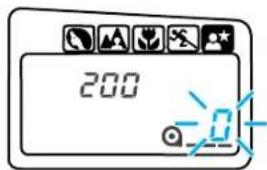
- The ISO is displayed in the data panel for 5 seconds after loading.
text_image
200- blinks in the frame counter and the shutter locks when the film is loaded incorrectly. Open the back cover and repeat steps 2 – 4.
If film is loaded with the power off...
The film's ISO and appear in the data panel for approx. five seconds to indicate successful loading, then the camera shuts down.
- If the film did not load, will blink in the data panel before the camera shuts down. Reload the film.
HANDLING THE CAMERA
Holding the Camera
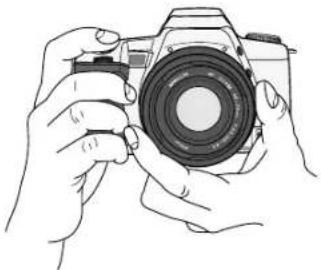
Grip the camera firmly with your right hand, while supporting the lens with your left. Keep your elbows at your side and your feet shoulder-width apart to hold the camera steady. Keep the camera strap around your neck or wrist in the event you accidentally drop the camera.
- Do not touch the end of the lens barrel while taking a picture.
- Use a tripod when using slow shutter speeds or a telephoto lens.
natural_image
Line drawing of hands holding a DSLR camera lens (no text or symbols)Pressing the Shutter-Release Button
Press the shutter-release button partway down to activate the camera's autofocus and auto-exposure systems.


Gently press the shutter-release button all the way down to take the picture.
Full-Auto is the camera's standard operating mode and is suited for use in almost any situation. When selected, the camera sets the focus and exposure automatically and fires the built-in flash when necessary. Use Full-Auto when you are just starting out or when you are shooting under conditions that would require you to constantly adjust the focus and/or exposure.
TAKING PICTURES IN FULL-AUTO
text_image
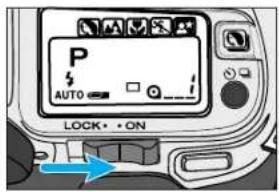
P AUTO LOCK • + ON- Slide the main switch to ON.
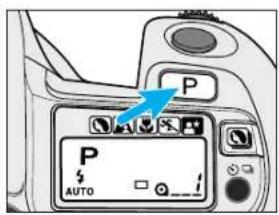
text_image
P P AUTO- Press the program-reset button to set the camera to Full-Auto.
- The camera will return to its default settings (p71).
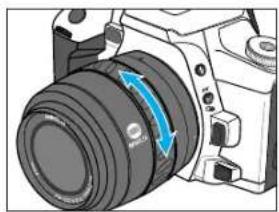
natural_image
Close-up of a DSLR camera with blue circular arrows indicating rotation or adjustment (no text or symbols)- If using a zoom lens, rotate the lens' zooming ring to frame the subject as desired.

natural_image
Black-and-white photo of a person sitting outdoors, with no visible text or symbols- Center your subject in the focus frame [ ], then press the shutter-release button partway down to activate autofocus.
• or will appear in the viewfinder when focus is confirmed.
- The built-in flash will pop-up and fire when necessary.
TAKING PICTURES IN FULL-AUTO
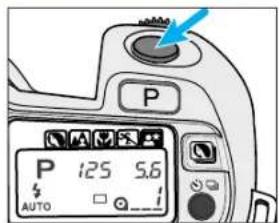
text_image
P 125 5.6 AUTO- Press the shutter-release button all the way down to take the picture.
- In low-light conditions, the AF illuminator (flash) will fire to determine focus distance. - Use focus hold (p23) if your subject is outside the focus frame.
Focus Signals
The following signals appear in the viewfinder to indicate the focus status when the shutter release button is pressed partway down.
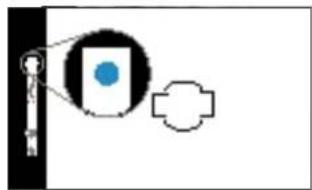
natural_image
Simple diagram with a blue circle containing a square and a white rectangle, connected by lines to a vertical bar (no text or symbols)| Focus is confirmed | |
| Continuous autofocus – Focus is confirmed | |
| Continuous autofocus – Lens focusingShutter is locked | |
| Focus cannot be confirmed – Shutter is locked.Subject is too close or is one of the special focus situations described on page 22. |
SPECIAL FOCUS SITUATIONS
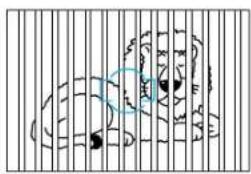
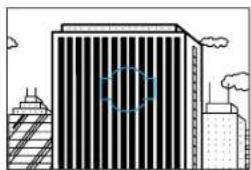
The camera may not be able to focus in situations like those described below. When the focus signal blinks, use focus hold (p23) or manual focus (p51). See page 21 for an explanation of the focus signals.

natural_image
Simple line drawing of a rural landscape with houses, trees, and a sun (no text or symbols)If the subject within the focus frame is very bright, or low in contrast.
text_image
Handwritten diagram with labeled vertical bars and a curved line marked with a blue circle, possibly indicating a measurement or annotation.If two subjects at different distances overlap in the focus frame.
natural_image
Illustration of a modern high-rise building with vertical stripes and surrounding structures (no text or symbols)If a subject composed of alternating light and dark lines completely fills the focus frame.

natural_image
Illustration of a person in uniform standing near a ship with stars and clouds (no text or symbols)If your subject is near a very bright object or area.
FOCUS HOLD
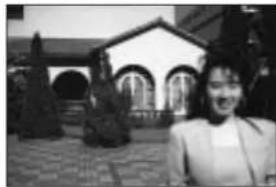
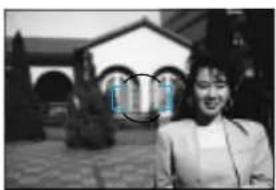
Use focus hold when your subject is outside the focus frame or when autofocus is difficult to confirm.
natural_image
Black-and-white photo of a person standing in front of a building with arched windows (no visible text or symbols)Focus hold cannot be used for moving subjects.

natural_image
Black-and-white photo of a person standing outdoors with a building in the background (no visible text or symbols)- Center your subject in the focus frame, then press the shutter-release button partway down.
• appears in the viewfinder when the focus is confirmed.
- Focus hold also locks the exposure settings.
natural_image
Black-and-white photo of a woman standing outdoors in front of a building with arches and trees (no visible text or symbols)-
Continue to hold the shutter-release button partway down while you compose your picture.
-
Press the shutter-release button the rest of the way down to take the picture.
- Remove your finger from the shutter-release button to cancel focus hold.
USING THE BUILT-IN FLASH
In Full-Auto mode (P), the built-in flash pops-up automatically when the shutter release button is pressed partway down in lowlight situation. Once the flash is up, it will fire when necessary.
• The shutter will not release until the flash is charged.
- Select flash cancel ( ) when you don't want the flash to fire.
- Pressing the program-reset button (P) resets the flash to autoflash mode.
Do not use the built-in flash with focal lengths shorter than 28mm. The built-in flash cannot cover focal lengths wider than 28mm.
Lens Shadowing
Lens shadowing occurs when the lens or lens hood blocks part of the output from the built-in flash. Lens shadowing appears as semi-circular shaded area at the bottom (horizontal) or side (vertical) of your image.
- Remove the lens hood before using the built-in flash.
- Lens shadowing may occur with the following lenses at shorter focal lengths.
AF Zoom 28-70mm f/2.8G
AF Zoom 17-35mm f/3.5G
AF Zoom 20-35mm f/3.5-4.5
AF Zoom 28-135mm f/4-4.5
AF Zoom 28-85mm f/3.5-4.5
AF Zoom 35-80mm f/4-5.6
• The built-in flash can not be used with the following lenses:
AF 300mm f/2.8 (APO tele)
AF 600mm f/4 (APO tele)
USING THE BUILT-IN FLASH
Flash Signals
| Flash is charged. | |
| Previous exposure was correct. |
Flash Range
The range of the built-in flash depends on the speed of the film and the selected aperture. Make sure your subject is within the flash range specified in the table below.
Make sure you are at least 1m (3.3 ft.) from your subject when using the built-in flash.
| Aperture ISO | 100 ISO 200 | SO 400 | |
| f/2.8 | 1.0 ~ 4.3m(3.3 ~ 14.1 ft.) | 1.0 ~ 6.1m(3.3 ~ 20.0 ft.) | 1.0 ~ 8.6m(3.3 ~ 28.2 ft.) |
| f/3.5 | 1.0 ~ 3.4m(3.3 ~ 11.2 ft.) | 1.0 ~ 4.8m(3.3 ~ 15.7 ft.) | 1.0 ~ 6.8m(3.3 ~ 22.3 ft.) |
| f/4.0 | 1.0 ~ 3.0m(3.3 ~ 9.8 ft.) | 1.0 ~ 4.2m(3.3 ~ 13.8 ft.) | 1.0 ~ 6.0m(3.3 ~ 19.7 ft.) |
| f/5.6 | 1.0 ~ 2.1m(3.3 ~ 6.9 ft.) | 1.0 ~ 3.0m(3.3 ~ 9.8 ft.) | 1.0 ~ 4.3m(3.3 ~ 14.1 ft.) |
USING THE BUILT-IN FLASH
Fill Flash
Use fill flash when taking pictures under fluorescent lighting or to eliminate harsh shadows. When set, the flash will fire every time a picture is taken. The TTL automatic flash metering system will ensure correct exposure.

natural_image
Diagram of a camera with blue arrows indicating motion or force directions (no text or symbols present)Press the flash-mode button and turn the control dial until appears in the data panel.
• Make sure your subject is within the flash range specified in the table on page 25.
- Press the flash-mode button and turn the control dial until appears to return to autoflash mode.
- For quick shots, hold the flash-mode button down when pressing the shutter-release button to fire the fill flash.
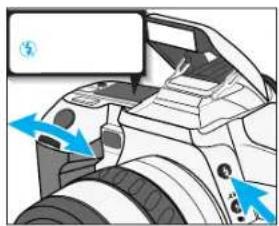
Flash Cancel
Use flash cancel when photographing twilight scenes or to capture the ambiance of existing light.
natural_image
Diagram of a camera with blue arrows indicating motion or force direction (no text or symbols)Press the flash-mode button and turn the control dial until ③ appears in the data panel.
- Press the flash-mode button and turn the control dial until appears to return to autoflash mode.
The shutter speed may be slow. Use of a tripod is recommended.
USING THE BUILT-IN FLASH
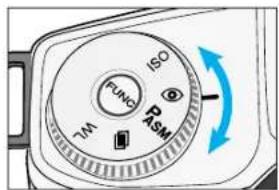
Red-Eye Reduction
Light reflecting from your subject's eyes may produce the effect known as red-eye. Use the built-in flash's red-eye-reduction mode to produce more natural looking photographs by reducing the red-eye effect.
text_image
PUNO ISO ASM- Turn the function dial to Ⓞ

text_image
ISO Rin P On- Press the function button and turn the control dial until Ⓑ and ON appear in the data panel.
- Warn your subject that the flash will fire a few short flash bursts just before the picture is taken.
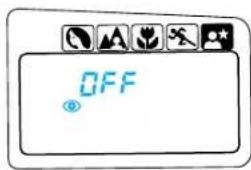
Cancelling Red-eye Reduction
text_image
OFFTurn the function dial to 📄 then press the function button and turn the control dial until Ⓞ and OFF appear in the data panel.
REWINDING THE FILM
Automatic Rewind
After you have exposed the last frame, the camera will automatically rewind the film. When the film is completely rewound, the motor will stop and 📄ill blink in the data panel indicating it is safe to open the back of the camera.

text_image
Icon set with camera and target symbols, including icons for navigation, settings, and camera control- Wait until the film is completely rewound.
- will appear and will think in the data panel.

natural_image
Close-up of a camera module with a blue arrow pointing to the button (no text or symbols visible)-
Slide the back-cover release down to open the back cover.
-
Remove the film, then close the back cover.
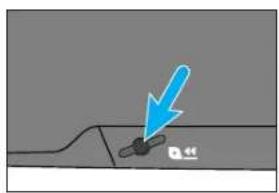
Manual Rewind
Use manual rewind to rewind the film before the current roll is finished.
natural_image
Diagram showing a blue arrow pointing to a small object on a dark surface, with no visible text or symbols.-
Press the manual-rewind button.
-
Follow steps 1-3 from Automatic Rewind.
LEVEL II
Now that you are comfortable with the operation of the camera, take more control of the creative process by telling the camera what kind of picture you want to take.
The subject program modes let you take more control without leaving the program exposure mode. In each of the subject program modes, the camera will automatically set the best possible shutter speed and aperture for the type of picture you are taking.
This section also lets you explore the use of the Self-timer and Continuous Advance modes.
Subject Program Selection Page
Portrait Mode 30
Landscape Mode 31
Close-Up Mode 32
Sports Mode 33
Night Portrait Mode 34
Photographing Night Scenes 35
Drive Mode Page
Self Timer 36
Continuous Advance 37
Each of these functions can be explored independently after Level I has been mastered.
- Press the program-reset button to return the camera to Full-Auto operation.
SUBJECT PROGRAM SELECTION
SUBJECT PROGRAM SELECTION
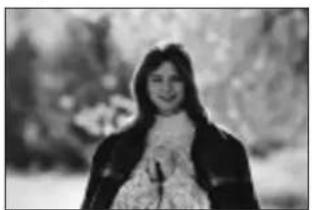
Portrait Mode
Portraits have the greatest impact when a shallow depth-of-field* is used to separate the subject from the background. In Portrait mode, the necessary settings are made automatically, leaving you free to capture the perfect expression.
* Depth-of-field is the area in front of and behind the point you focused on that appears sharp (p41).
natural_image
Black-and-white portrait of a woman with long hair, wearing a blazer and scarf, outdoors with blurred foliage background (no text or symbols visible)
text_image
P AUTOPress the subject-program button until the subject-program pointer is under 🔒
Tips
- For best results use a mid-telephoto lens with a large aperture.
- Use flash when your subject is backlit or there are strong shadows across the face (p26).
- Lock focus on your subject's eyes and be ready to capture the perfect expression.
Landscape Mode
Landscape photography requires a large depth-of-field to make sure everything is in focus. In Landscape mode, the camera is set to obtain the greatest depth-of-field possible, while maintaining a shutter speed fast enough to prevent blur due to camera shake.

natural_image
Person fishing in a lake with forested hills in the background (no visible text or symbols)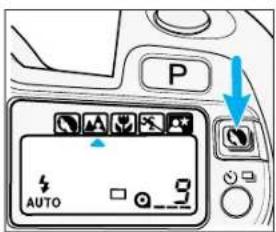
text_image
P AUTOPress the subject-program button until the subject-program pointer is under ▲
Tips
- For best results zoom to a wide view or use a wide angle lens and include a foreground subject or detail to create a feeling of depth in the picture.
- Use flash when a subject in the foreground is backlit or has strong shadows across the face. If there is no subject in the foreground, do not use flash.
- Use a tripod, especially at slower shutter speeds.
SUBJECT PROGRAM SELECTION
SUBJECT PROGRAM SELECTION
Close-Up Mode
Set Close-Up mode when photographing small objects like flowers or jewelry. In Close-Up mode, the camera automatically sets the best possible aperture and shutter speed for the picture you are taking.

natural_image
Black and white close-up of a flower petal (no text or symbols visible)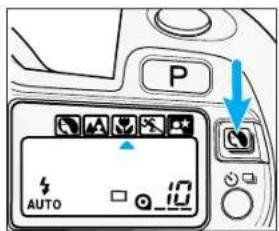
text_image
P AUTO 10Press the subject-program button until the subject-program pointer is under 📊
Tips
- For best results use a macro lens or a macro capable zoom lens.
- Do not use the built-in flash if your subject is closer than 1.0m (3.3 ft.). The lens may block the flash, creating a shadow at the bottom of your image (lens shadowing).
- Use a tripod to reduce camera shake.
Sports Mode
Fast shutter speeds are needed to stop action. In Sports mode, the camera will set the fastest possible shutter speed and continually adjust the focus to track fast-moving subjects.

natural_image
Black-and-white photo of a child kicking up a soccer ball on a field (no text or symbols visible)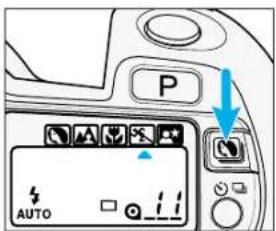
text_image
P AUTOPress the subject-program button until the subject-program pointer is under
Tips
- The built-in flash is only effective when your subject is within the flash range.
- Use fast film and keep the focus frame on your subject.
- Mount the camera on a tripod when using telephoto lenses.
SUBJECT PROGRAM SELECTION
Night Portrait Mode
Night portraits require the camera's flash exposure to be balanced with the background exposure. In Night Portrait mode, the camera sets the largest possible aperture with a longer shutter speed, allowing the background to appear in the photograph.

natural_image
Person standing on a balcony overlooking a cityscape at night (no visible text or symbols)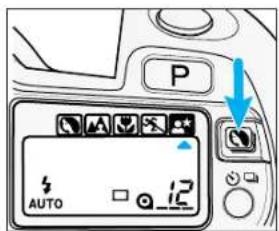
text_image
P AUTO 12Press the subject-program button until the subject-program pointer is under
Tips
- Set the flash to or when using Night Portrait mode. See pages 26 and 27.
- Use faster film and a tripod.
• Focus on the main part of your subject. - Warn your subject not to move while the picture is taken.
SUBJECT PROGRAM SELECTION
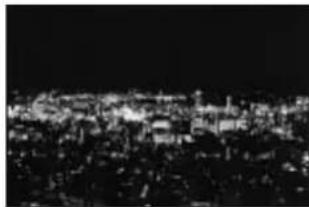
Photographing Night Scenes
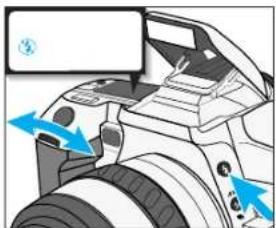
Cancel the flash in Night Portrait mode to photograph night scenes. The longer shutter speeds set in Night Portrait mode let you capture beautiful photographs of twilight scenes and night skylines.
natural_image
Nighttime cityscape with illuminated buildings and roads (no visible text or signage)
text_image
P AUTO 13- Press the subject-program button until the subject-program pointer is under

natural_image
Mechanical component diagram showing a cam or tire assembly with blue arrows indicating motion direction (no text or symbols)- Press the flash-mode button and turn the control dial until ③ appears in the data panel.
Tips
- Use faster film and a tripod.
- If you are photographing a dark night scene, it may be difficult for the camera to focus, use focus hold (p23) or manual focus (p51).
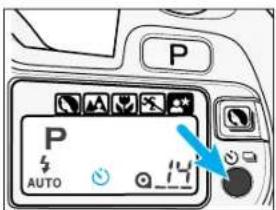
SELF-TIMER
CONTINUOUS-ADVANCE MODE
The self-timer delays the release of the shutter for approximately 10 seconds after the shutter-release button is pressed.
text_image
P P AUTO 14- Place the camera on a tripod, then press the self-timer button until appears in the data panel.

natural_image
Black-and-white photo of an elderly person sitting and holding a magnifying glass (no visible text or symbols)-
Center your subject in the focus frame.
-
Press the shutter-release button all the way down to start the timer.
- The self-timer indicator on the front of the camera will blink, then glow just before the shutter releases.
- Self-timer mode is cancelled after the shutter is released.
- Do not press the shutter-release button while standing in front of the camera.
- Attach the eyepiece cap if there is a bright light source behind the camera (p49).
Press the self-timer button or slide the main switch to LOCK to cancel the self-timer before the shutter releases.
In this mode, the camera continues to release the shutter and advance the film as long as the shutter-release button is held down.
- AF Zoom xi and Power zoom lenses cannot be zoomed when continuous-advance mode is selected.

text_image
P 4 AUTO 15-
Press the drive-mode button until appears in the data panel.
-
Press the shutter-release button down and hold.
-
When taking flash pictures, the shutter will release after the flash is charged.
- When the subject is moving, the shutter will release after the camera focuses on the subject.
- To return to single frame mode, press the drive mode button until 📄pears in the data panel.
A-MODE - APERTURE PRIORITY
LEVEL III
In this section you take full creative control of your camera. Depending on the selected exposure mode, you will control the aperture, shutter speed, or both to capture your image.
In the previous sections, only the Program (P) exposure mode has been explored. Here you will learn to use the Aperture Priority (A), Shutter Priority (S), and Manual (M) exposure modes. Select A-mode to control the depth-of-field in your images. Set S-mode to control the way moving subjects appear in your images. Set M-mode when you want full control over all the exposure functions.
Exposure Mode Page
A-Mode Manually select aperture 39
S-Mode Manually select shutter speed 42
M-Mode Manually select the shutter speed 45 and the aperture
• Each exposure mode can be explored independently.
In A-mode, you select the aperture and the camera automatically sets the shutter speed required for proper exposure. Set the camera to A-mode when you want to control the range of sharpness (depth-of-field) in an image. Refer to Aperture Control on page 41.

text_image
ISO FUNC PASM WL- Turn the function dial to P_ASM
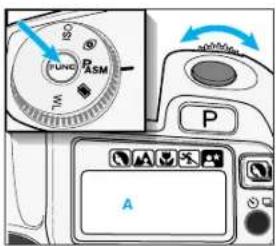
text_image
FUNC RASM TW P A- Press the function button and turn the control dial until A appears in the data panel.
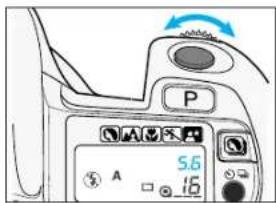
text_image
P 5.6 A 16- Turn the control dial to select the aperture.
If 2000 or 30 s blinks in the data panel, the required setting is beyond the camera's shutter speed range. Turn the control dial until the blinking stops.
A-MODE - APERTURE PRIORITY
A-Mode Flash
When the built-in flash is up or an attached accessory flash is on, it will fire each time a picture is taken. The camera's TTL automatic flash metering system will ensure proper exposure.

text_image
5.6 A 17Press the flash-mode button to pop-up the built-in flash.
• will appear in the data panel.
- The shutter speed is automatically set to 1/90 or slower.
- A smaller aperture (larger f-number) will result in a shorter flash range. Refer to Flash Range (p25) to determine the range of the built-in flash at the selected aperture.

text_image
90°C 56 $If 90 blinks in the viewfinder and the data panel, the light level is too bright for the selected aperture. Turn the control dial until the blinking stops or cancel the flash.
Cancelling the Flash
Push the built-in flash down or turn the accessory flash off.
- will be displayed in the data panel.
A-MODE - APERTURE PRIORITY
Aperture Control
natural_image
Black-and-white photo of a person sitting outdoors on a bench, no visible text or symbolsLarge Aperture (small f-number)
natural_image
Black-and-white photo of a young girl sitting outdoors near a fence, with trees and a building in the background (no visible text or symbols)Small Aperture (large f-number)
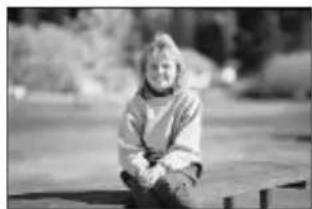
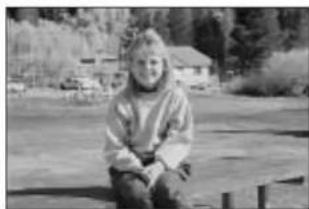
The size of the aperture (lens opening) determines the depth-of-field in the final image as well as the intensity of the light falling on the film. Depth-of-field is the range in front of and behind the focus point that appears sharp in the final image. In the viewfinder, only the plane the camera is focused on will appear sharp. The photographed image however, will have a depth-of-field corresponding to the selected aperture.
Large apertures (small numbers) limit the depth-of-field to a narrow range in front of and behind the point of focus. Set a larger aperture when photographing portraits to make your subject stand out from the background.
Small apertures (large numbers) provide greater depth-of-field. Set a small aperture when photographing landscapes to ensure your entire scene is sharp.
- Usable apertures will depend on the aperture range of the lens you are using.
S-MODE – SHUTTER PRIORITY
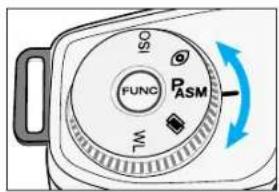
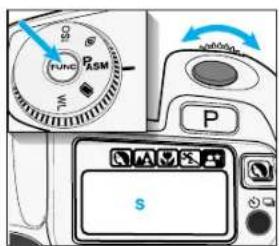
In S-mode, you select the shutter speed and the camera automatically sets the aperture required for proper exposure. Use S-mode when you want to control the blur caused by subject movement.
text_image
FUNC P ASM WL- Turn the function dial to P_ASM
text_image
S Function PASM M P S- Press the function button and turn the control dial until S appears in the data panel.

text_image
125 s 18- Turn the control dial to select the shutter speed.
• The number 60, or 125, displayed in the data panel stands for 1/60th or 1/125th of a second.
- The seconds indicator appears in the viewfinder and data panel if the shutter speed is one second or longer.
If the aperture display in the data panel blinks, the required setting is outside the aperture range of the lens. Turn the control dial until the blinking stops.
S-MODE – SHUTTER PRIORITY
S-Mode Flash
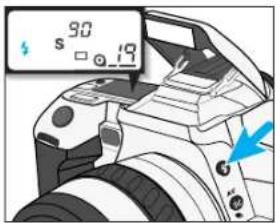
When the built-in flash is up or an attached accessory flash is on, it will fire each time a picture is taken. Flash exposure is controlled by the camera's TTL automatic flash metering system.
text_image
90 s 19- Press the flash-mode button to pop-up the built-in flash.
- will appear in the data panel.
- Turn the control dial to select any shutter speed up to 1/90th of a second.
- The camera automatically sets the aperture for the selected shutter speed.
Cancelling the Flash
Push the built-in flash down or turn the accessory flash off.
- will be displayed in the data panel.
S-MODE – SHUTTER PRIORITY
Shutter Control

natural_image
Black and white photo of a waterfall cascading down a rocky cliff (no text or symbols visible)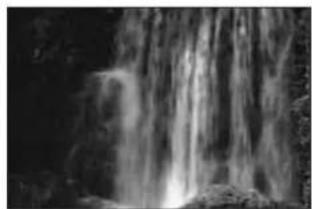
natural_image
Black and white photo of a waterfall cascading over rocks, surrounded by dense foliage (no text or symbols visible)Fast Shutter Speed Slow Shutter Speed
In addition to controlling the duration of the exposure, shutter speed determines how moving subjects will appear in the final image. Depending on the speed of your subject, slow shutter speeds will make a moving subject appear to flow, creating a feeling of motion. In addition to stopping action, fast shutter speeds can help prevent blur caused by camera movement during exposure, known as camera shake.
- Use a fast shutter speed to stop the motion of your subject.
- Use a slow shutter speed to blur the motion of your subject.
M-MODE - MANUAL
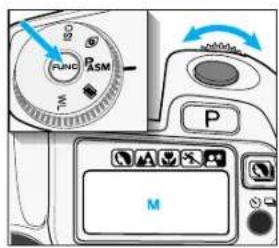
M-mode gives you full control of the exposure. The camera's meter index displays how your settings compare to the exposure determined by the camera's metering system.
text_image
FUNC RASM TM P M-
Turn the function dial to P_ASM
-
Press the function button and turn the control dial until M appears in the data panel.
-
Turn the control dial to select the shutter speed.
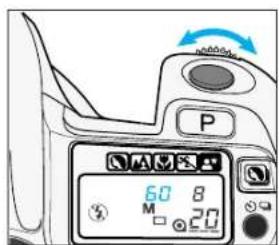
text_image
P 60 8 M 20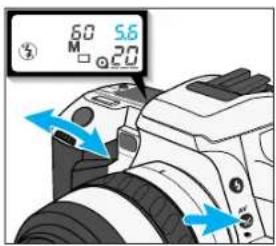
text_image
6.0 5.6 M 2.0- Press the exposure-compensation button and turn the control dial to select the aperture.
M-MODE - MANUAL
Metering in Manual Mode
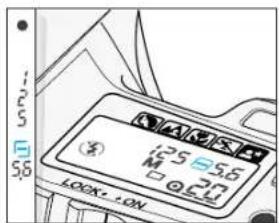
In manual mode, the meter index in the viewfinder and the data panel indicates how your exposure compares with the camera's meter reading.
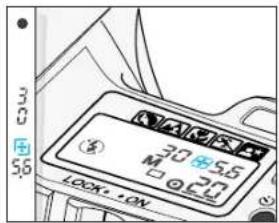
text_image
30 +5.5 M 27 LOCK - ONThe exposure will over-expose your subject.
text_image
125 M 27 OFF • ON- The exposure will under-expose your subject.
If an exposure compensation indicator does not appear, your settings agree with the exposure determined by the camera.
M-MODE - MANUAL
M-Mode Flash
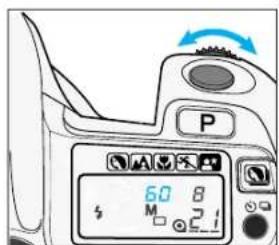
When the built-in flash is up or an attached accessory flash is on, it will fire each time a picture is taken. Flash exposure is controlled by the camera's TTL automatic flash metering system.
- Press the flash-mode button to pop-up the built-in flash.
- will appear in the data panel.
- Turn the control dial to select any shutter speed up to 1/90th of a second.
- Press the exposure-compensation button and turn the control dial to select the aperture.
- Refer to the flash range table on page 25 to determine the aperture setting and the flash range.
text_image
P 60 8 S M 2 i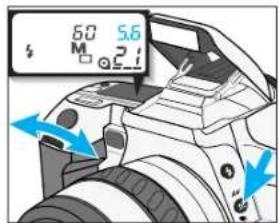
text_image
6.0 5.6 M 2.1Cancelling the Flash
Push the built-in flash down or turn the accessory flash off.
- will be displayed in the data panel.
TAKING TIME EXPOSURES (buLb)
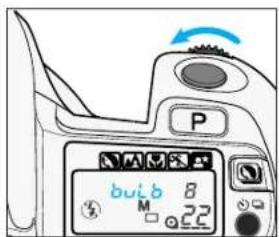
Set the shutter speed to bulb when you want to take time exposures. When bulb is selected, the shutter remains open as long as the shutter-release button is pressed.

natural_image
Nighttime highway with light trails from multiple lanes, city buildings in background (no visible text or signage)- Mount the camera on a tripod.
text_image
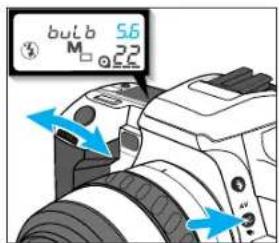
P bulb 8 M 22- Set the camera to M-mode, then turn the control dial until bulb appears in the data panel.
text_image
bulb 5.6 M 22-
Press the exposure-compensation button and turn the control dial to select the aperture.
-
Compose the scene and focus on your subject.
- If the scene is too dark for autofocus to operate, press the focus-mode button and focus the lens manually (p51).
TAKING TIME EXPOSURES (buLb)
natural_image
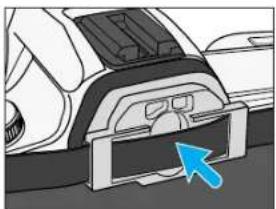
Close-up of a car interior panel with a blue arrow pointing to the front panel (no text or symbols visible)- Firmly press the eyepiece cap into the eyepiece.
• The eyepiece cap prevents light from entering thru the viewfinder and affecting the metered exposure.

text_image
P bulb 5.6 M 22- Press and hold the shutter-release button to take the picture.
- The shutter remains open as long as the button is pressed.
Attaching the Remote Cord
To reduce image blur, attach either the Remote Cord RC-1000S or RC-1000L (sold separately).

natural_image
Close-up of a black USB cable connector with a blue arrow pointing to it, next to an open port (no text or symbols visible)-
Flip the remote-control-terminal cover up.
-
Insert the plug into the terminal.
FOCUS – Manual Focus
ADDITIONAL FEATURES
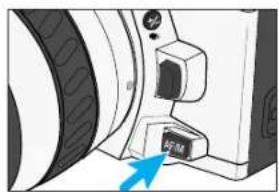
Focus the lens manually when autofocus is not suitable and focus hold is not possible. The autofocus system will monitor focus and indicate when a subject in the focus frame is in focus.
natural_image
Close-up of a camera lens component with a blue arrow pointing to the lens (no text or symbols visible)- Press the focus-mode button. M.FOCUS will appear in the data panel.
natural_image
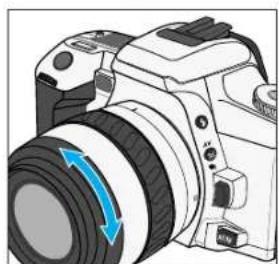
Diagram of a DSLR camera with blue directional arrows indicating rotation (no text or symbols)- Turn the focusing ring until your subject appears sharp and focused.
- appears in the viewfinder when the subject in the focus frame is in focus. - Press the focus-mode button again to return to the autofocus mode.
AF Power Zoom and xi-Series Lenses

natural_image
Illustration of a cylindrical container with internal slots and directional arrows indicating movement (no text or symbols)Pull and turn the control ring until your subject appears sharp.
FOCUS – AF Illuminator
natural_image
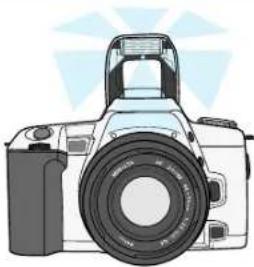
Illustration of a modern digital camera with lens and frame (no text or symbols)The AF Illuminator is a secondary function of the built-in flash. When the scene is too dark for the camera to focus accurately, the built-in flash fires a few short bursts when the shutter-release button is pressed partway down to provide the illumination necessary for the camera to focus on your subject.
- The range of the AF Illuminator flash is approximately one to five meters.
- The AF illuminator will not fire in continuous focus mode or if flash cancel (is selected.
- The AF illuminator will not operate with 300mm or longer single focal length lenses.
• The AF illuminator will not operate with 3x-1x Macro Zoom. - When an accessory flash is attached, its AF illuminator will be active in place of the camera's AF illuminator.
- Changing Camera Functions (p70) lets you cancel the built in flash's AF illuminator if it will interfere with your subject or is inappropriate.
EXPOSURE – 8 Segment Metering
Eight-Segment Honeycomb-Pattern Metering is the camera's standard metering mode and is appropriate for most photographic situations.

natural_image
Black-and-white photo of a person outdoors with blurred trees in the background (no visible text or symbols)
natural_image
Geometric pattern of light blue hexagons arranged in a flower shape (no text or symbols)EXPOSURE – Spot Metering

natural_image
Black-and-white photo of two people embracing, with ornate metal lattice background (no text or symbols)Use only the center metering segment to lock the exposure settings without locking the focus. The exposure remains locked until the spot/AE lock button is released.
- Pressing the spot/AE lock button sets the flash to slow sync mode (p61).
natural_image
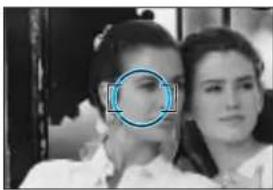
Close-up of two women's faces with a blue circular overlay highlighting the eyes (no text or symbols visible)- Place the spot-metering area on the subject whose exposure you want to lock.

text_image
60 58 27 SPOT SLOW SYNC- Press and hold the spot/AE lock button.
• and the locked exposure will be displayed in the viewfinder.
natural_image
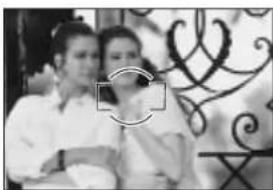
Black-and-white photo of two people seated, one holding a pen, with decorative metal lattice background (no text or symbols)- Recompose the scene as desired, then press the shutter-release button all the way down to take the picture.
- The exposure is held until the spot/AE lock button is released.
- Changing camera functions (p70) lets you change the operation of the spot/AE lock button to...
Press to activate/Press again to cancel
EXPOSURE – Exposure Compensation
The metering system in this camera averages the readings from each active metering segment to determine an exposure that will achieve an average middle grey tone on the film.

natural_image
Black-and-white exterior view of two tall modern skyscrapers under a cloudy sky (no visible text or signage)Compensated Exposure
Metered Exposure
Dark scenes are often overexposed. Exposure compensation lets you adjust the metered exposure +/- 3 stops in 1/2 stop increments.
This effect is most visible when slide film is being used.
text_image
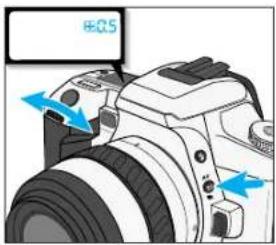
EC5Press the exposure-compensation button and turn the control dial until the desired compensation value appears in the data panel.
- Exposure compensation remains until it is reset or cancelled.
- To cancel exposure-compensation, repeat the above procedure and select 0.0 or press the program-reset button.
- Exposure compensation is not available in M-mode.
EXPOSURE – Setting the ISO Manually
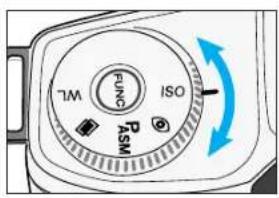
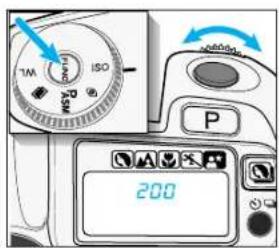
Set the film speed manually when you want to override the DX-coded film speed or when using non-DX-coded film. Film speeds can be set from ISO 6 to 6400 in 1/3EV increments.
Film must be loaded before the ISO can be changed.
text_image
1M FUNC ISO ASM- Turn the function dial to ISO.
text_image
TM ISO A58 P 200- Press the function button and turn the control dial until the desired ISO value appears in the data panel.
EXPOSURE – Bracketing

natural_image
Three filmstrip-style frames showing a dramatic black-and-white explosion or cloud formation, each with a labeled frame number (16, 17, 18) and a transition from 19A to 18A.Metered Exposure 1/2 Stop Under 1/2 Stop Over
This function automatically exposes a 3 frame 1/2 stop increment bracketed series. The order of the exposures will be the metered exposure, 1/2-stop under the metered exposure, 1/2 stop over the metered exposure.
- The automatic bracketing feature cannot bracket flash exposures.
This effect is most visible when slide film is being used.

natural_image
Close-up of a DSLR camera with blue arrows pointing to key components (no text or symbols visible)While pressing the exposure-compensation button, press the shutter release button all the way down and hold.
- The camera automatically exposes a three frame bracketed series.
- Releasing either button before the series is complete cancels the exposure series.
EXPOSURE – Multiple Exposure
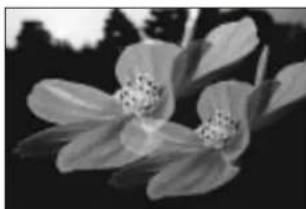
The multiple-exposure function makes it possible to expose two or more images on the same frame.
natural_image
Black and white close-up of delicate flowers with visible petals and centers (no text or symbols)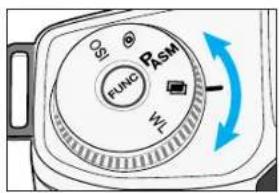
text_image
FUNC Rasm Wₗ- Turn the function dial to
text_image
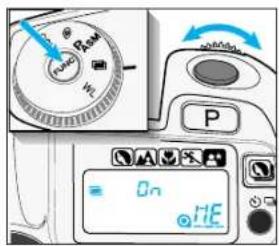
on He- Press the function button and turn the control dial until 📄 appears in the data panel.
• appears in the frame counter.

text_image
P AUTO- Compose the scene, then press the shutter-release button all the way down to take the first exposure.
HE blinks in the data panel, indicating the next exposure will be the last in the series.
• To take more than 2 exposures, repeat steps 1 and 2 until ME glows in the data panel.
EXPOSURE – Multiple Exposure
- Press the shutter-release button all the way down again to take the last exposure.
- Multiple-exposure mode is cancelled after the last exposure has been taken.
Metering Multiple Exposures
The meter in your camera determines exposure (EV) based on the assumption that only one exposure will be made on each frame. When making multiple exposures, the EV for each additional exposure needs to be reduced or over exposure will result.
- Compensation is not necessary if all of the exposures have dark backgrounds and the subjects of the exposures will not overlap.
Compensate the exposures as follows:
| Number of Exposures | 1 | 2 | 3 | 4 | 6 | 8 |
| Exposure Adjustment | 0 | -1 | -112 | -2 | -212 | -3 |
- The above corrections are intended as a general guideline. Some testing may be necessary to produce the desired results.
- Exposure can be compensated in 1/2 EV increments using the exposure compensation function (p55) and in 1/3 EV increments by changing the ISO manually (p56).
EXPOSURE – Multiple Exposure
Cancelling Multiple Exposure
- Turn the function dial to

text_image
RASM OFF- Press the function button and turn the control dial until OFF appears in the data panel.
Sliding the main switch to LOCK does not cancel multiple exposure mode.
FLASH – Slow Sync
natural_image
Black-and-white photo of a person standing on a balcony overlooking a cityscape at night (no visible text or symbols)Slow-shutter Sync
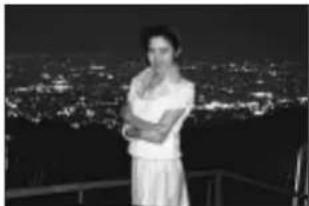
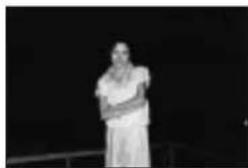
In P and A-modes, slow-shutter sync sets a slower shutter speed to increase the background or ambient lighting exposure in a flash picture. Flash output will automatically be decreased to maintain a correct exposure of your subject.
natural_image
Person standing on stage in traditional attire (no visible text or symbols)Conventional Flash

text_image
P 30 45 LPG 20 SPOT FLOW SYNC1. Frame your subject.
-
While pressing the spot/AE lock button, press the shutter-release button all the way down to take the picture.
-
If the background is bright or a large aperture is set (A-mode), the shutter speed may not be reduced.
- Use a tripod if the shutter speed becomes too slow to allow sharp, hand-held pictures after you press the spot/AE lock button.
- and the locked exposure will be displayed in the viewfinder.
FLASH – Wireless/Remote Flash
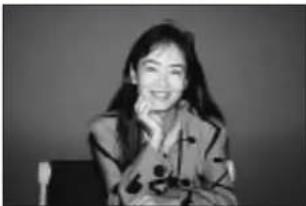
natural_image
Black-and-white portrait of a woman with long hair, wearing a patterned jacket, seated with hand on chin (no visible text or symbols)Normal Flash
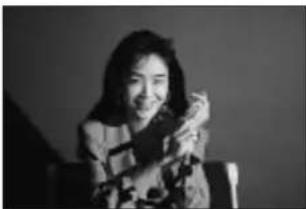
natural_image
Black-and-white photo of a smiling woman holding an object, no visible text or symbolsWireless/Remote Flash
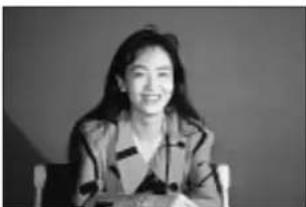
natural_image
Portrait of a smiling woman in professional attire, seated with arms crossed (no visible text or symbols)Wireless/Remote Ratio Flash
Wireless/Remote Flash is available with the Minolta 5400HS, 5400xi, and 3500xi accessory flashes.
Wireless/Remote flash lets you experience the creative control available with an accessory flash.
In Wireless/Remote flash mode, the off-camera flash is triggered by a coded signal from the camera's built-in flash when you press the shutter-release button. When proper exposure has been received, another signal cuts the accessory flash off.
You can also achieve a 2:1 lighting ratio automatically. When remote ratio flash is selected, the off-camera flash provides 2/3 of the full exposure while the built-in flash provides the remaining 1/3.
FLASH – Wireless/Remote Flash
Setting Wireless/Remote Flash Mode

natural_image
Mechanical device with a blue arrow pointing to a component, no visible text or symbols- Attach the accessory flash to the camera, then turn the camera and the flash on.
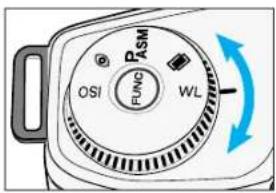
text_image
RASM OSI FUNC WL- Turn the function dial to WL.
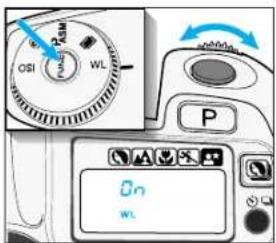
text_image
OSI P WL P On WL- Press the function button and turn the control dial until WL and On appear in the camera's data panel.

natural_image
Close-up of a mechanical component with a blue arrow pointing to a small circular feature (no text or symbols visible)- Detach the accessory flash, then press the camera's flash mode button to raise the built-in flash.
Continued on next page.
FLASH – Wireless/Remote Flash
Taking Pictures in Wireless/Remote Flash Mode
The off-camera flash will provide all of the exposure.
1. Position your camera and 3500xi flash unit using the information on this page.
- If you are not using the 3500xi flash, refer to your flash instruction manual for the correct camera to subject and flash to subject distances.

text_image
Camera-Subject Distance 3500xi-Subject Distance The off-camera flash may not detect the control signals if it is placed behind the subject. The maximum flash-subject distance for the 3500xi is 5.0m (16.4 ft).| Aperture Camera – Subject Distance 3500xi – Subject Distance |
| f/2.8 1.4 – 5.0m (4.6 – 16 ft.) 1.0 – 5.0m (3.3 – 16 ft.) |
| f/4.0 1.0 – 5.0m (3.3 – 16 ft.) 0.7 – 4.5m (2.3 – 14.5 ft.) |
| f/5.6 1.0 – 5.0m (3.3 – 16 ft.) 0.5 – 3.2m (2.3 – 10.5 ft.) |
• Calculated for ISO 100 film only.
FLASH – Wireless/Remote Flash
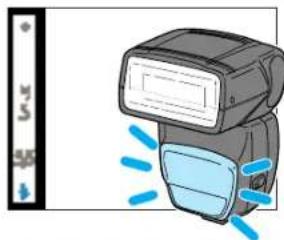
natural_image
Illustration of a black-and-white photo lens with blue spray effect, no text or symbols present2. Wait until both flash units are fully charged.
- appears in the viewfinder when the built-in flash is charged.
- When the off-camera flash is charged, its AF illuminator will blink.
Press the spot/AE lock button to test fire the accessory flash.
3. Press the shutter-release button all the way down to take the picture.
Wireless/Remote Ratio Flash
Press the flash-mode button when taking the picture. Both flashes will fire when the shutter is release at a 2:1 ratio. The built-in flash will provide 1/3 and the accessory flash will provide 2/3 of the total exposure.
FLASH – Wireless/Remote Flash
Cancelling Wireless/Remote Flash Mode
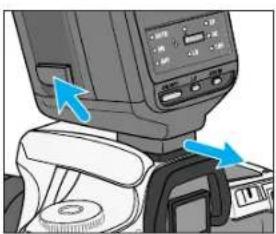
- Attach the accessory flash to the camera, then turn the flash on.
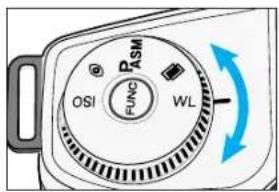
text_image
PASM OSI FUNC WL- Turn the function dial to WL.
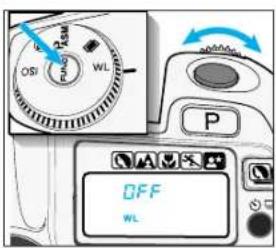
text_image
OSI Rsm Wt P OFF WL- Press the function button and turn the control dial until WL and OFF appear in the camera's data panel.
natural_image
Close-up of a camera caliper with blue arrows indicating direction (no text or symbols visible)- Detach the accessory flash.
FOR OWNERS OF THE QUARTZ DATE MODEL
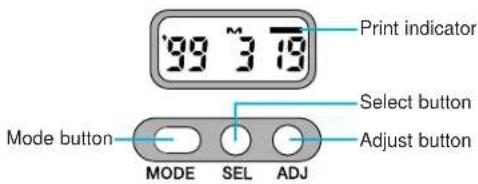
The Quartz-data function lets you record the date or time onto the lower-right corner of the photograph. The quartz data back has an automatic calendar through the year 2019.
- Imprinted data may be difficult to read if the lower-right corner of the photograph is bright or non-uniform.
- Imprinting size and position may differ according to printing conditions.
- Do not use the data back when temperatures exceed the operating range of 0 to 50^ (32 to 122^ ).
text_image
Print indicator 99 3 79 Select button Mode button MODE SEL ADJ Adjust buttonExposing the Date/Time
Before taking the picture...

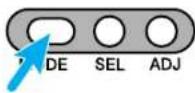
- Press the mode button to choose the data imprinting format.
• The display changes as follows:
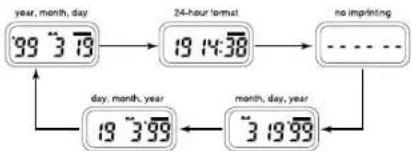
flowchart
graph TD
    A["99:37:00"] --> B["19:44:38"]
    B --> C["......"]
    C --> D["3:19:59"]
    D --> E["19:37:00"]
    E --> F["day, month, year"]
    F --> G["no imprinting"]
    G --> H["24-hour format"]
    H --> I["3:19:59"]
- Take the picture.
- If the print indicator blinks after the shutter is released, the data was exposed.
FOR OWNERS OF THE QUARTZ DATE MODEL
FOR OWNERS OF THE QUARTZ DATE MODEL
Setting the Date/Time


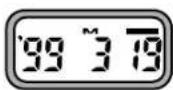
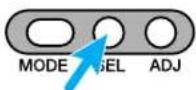
-
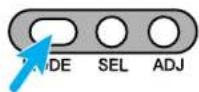
Press the mode button to choose the data imprinting format.
• M will appear above the month. -
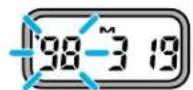
Use the select button (SEL) to move between different parts of the displayed data.
- The selected part will blink, indicating that it is the data to be changed.
-
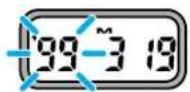
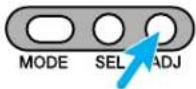
Press the adjust button (ADJ) to change the data to the correct value.
-
Data continues changing as long as the button is held down.
-
In time mode, pressing the ADJUST button while : is blinking resets the seconds counter to zero (not shown).
-
When all data is correct, press the select button (SEL) until the data stops blinking.
Replacing the Battery
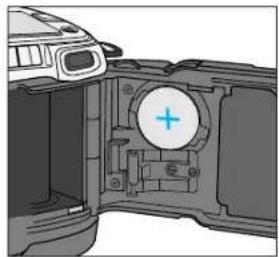
The quartz data back uses a CR2025 lithium battery, located on the inside of the back cover. Replace the battery if the display or imprinted data becomes dim.
- Open the back cover.

natural_image
Close-up of a hand pressing a component with a blue arrow indicating rotation (no text or symbols visible)- Using a coin or similar object, turn the battery cover counter-clockwise, then remove it.
natural_image
Cross-sectional diagram of a camera frame showing internal components and a central positive charge (no text or symbols)- Remove the old battery and replace it with a new one.
• The + side should face up.
4. Replace the battery cover, then reset the date and time.
CHANGING CAMERA FUNCTIONS
Spot/AE Lock Button Operation
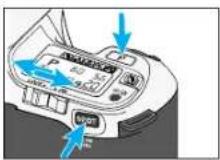
Slide the Main switch to LOCK, then to ON while pressing the Program-reset button and Spot/AE lock button.
- Repeat the above procedure to return to the previous setting.
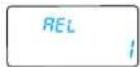
Press to activate, release to cancel.

Press once to activate, press again to cancel.
AF Illuminator (Built-in Flash) Function

Slide the Main switch to LOCK, then to ON while pressing the Flash-mode button.
- The status of the AF illuminator is displayed in the data panel.

AF Illuminator On
When the built-in flash is up, its AF illuminator fires when necessary to assist focus.
- The AF illuminator does not fire when flash cancel ( ) selected.
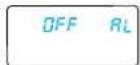
AF Illuminator Cancelled
The built-in flash's AF illuminator will not fire.
- An attached accessory flash's AF illuminator will not be cancelled.
- Other flash functions will operate normally.
APPENDIX
Program Reset Button
Press the program-reset button to return the following camera functions to their program settings.
| FUNCTION P-MODE SETTING | |
| Exposure mode P mode | |
| Focus mode Autofocus | |
| Flash mode Auto-on | |
| Exposure Compensation +/- 0 | |
| Film-drive mode Single-frame advance | |
| Self-timer Cancelled | |
| Wireless/Remote Flash Cancelled | |
| Bracketing Cancelled | |
| Multiple Exposure Cancelled | |
- Date, red-eye reduction. ISO settings will not change.
- Pressing the program-reset button will also reset an attached dedicated accessory flash's program settings. Refer to the flash instruction manual for details.
- Spot/AE lock button function, AF illuminator function will not change.
ACCESSORY INFORMATION
This camera is designed to work specifically with lenses and accessories manufactured and distributed by Minolta. Using incompatible accessories with this camera may result in unsatisfactory performance or damage the camera and accessories.
Compatibility of Accessories
Lenses
- All Minolta AF lenses can be used with this camera.
- MD and MC series lenses (manual focus) cannot be used with this camera.
Flashes
- All Minolta i, si, and HS series flash units, and the Vectis SF-1 flash, are compatible with this camera. (Hi-speed syncro mode on HS flash cannot be used with this camera.)
- The Flash Shoe Adapter FS-1100 is required to mount AF series flash units (4000AF, 2800AF, 1800AF, and Macro flash 1200AF).
- When the FS-1100 is used...
- The flash will fire every time the shutter is released.
- The AF illuminator will not activate.
- The built-in flash is set to fill flash when the accessory flash is removed.
- X-series flashes and flashes sold by other manufacturers cannot be used with this camera.
Others
- The following accessories are not compatible with this camera: Control Grip CG-1000 Data Receiver DR-1000 Creative Expansion Cards Anglefinder Magnifier Wireless Controller IR-1N
ACCESSORY INFORMATION
Accessory Flash Control
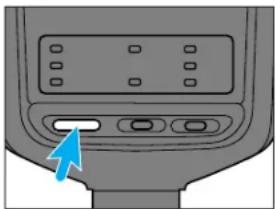
When using an accessory flash, the desired flash mode can be selected using the camera or the flash.

natural_image
Close-up of a DSLR camera with blue directional arrows indicating motion or movement (no text or symbols)CAMERA
Press the flash-mode button and turn the control dial to select the desired flash mode.
• The camera transfers data to the accessory flash immediately.
natural_image
Close-up of a handheld electronic device with a blue arrow pointing to the control panel (no text or symbols visible)FLASH
Press the flash's ON/OFF button to select the desired flash mode.
- Data is not transferred from the flash until the shutter-release button is pressed partway down.
- Fill flash cannot be selected when the camera is set to Full-Auto or any of the Subject Program modes.
ACCESSORY INFORMATION
For owners of the optional lens kits
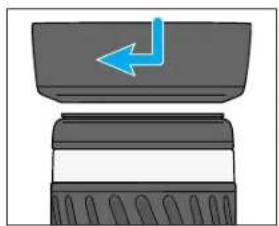
Lens Hood
Flare is non-image forming light that degrades image quality. A lens hood improves image quality by reducing flare.
- Remove a lens hood before using the camera's built-in flash.
natural_image
Diagram of a mechanical component with a blue arrow indicating direction (no text or symbols)Fit the lens hood into the mount at the end of the lens barrel, then turn the hood clockwise until it stops.
• To store the hood, reverse it, attach it to the lens, then replace the lens cap.
EXPOSURE WARNINGS
Indicators will blink in the viewfinder or data panel when there is a problem with the exposure.
| MODE | DISPLAY CAUSE ACTION | ||
| PASM | 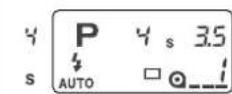 35 35 | Scene or subject brightness is beyond the camera's metering range. | Bright Light: use slower speed film, a neutral density (ND) filter, or reduce the light level of your surroundings.Low Light: use higher speed film or a flash. |
| P | 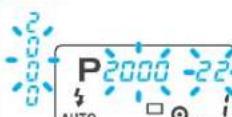 22 22 | Light level is beyond the range of available shutter speeds and apertures. | |
| A |  4 4 | The required shutter speed is beyond the range of the camera. | Select a larger or smaller aperture until the display stops blinking. |
| S | 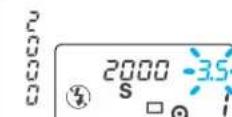 35 35 | The required aperture is beyond the range of the lens. | Select a faster or slower shutter speed until the display stops blinking. |
TROUBLE SHOOTING
TROUBLE SHOOTING
Contact your nearest Minolta Service Facility if the following information does not cover the problem which you are experiencing or the condition continues.
| PROBLEM CAUSE | SOLUTION PAGE | ||
| No display appears when the camera is switched on. | Batteries are loaded incorrectly. | Remove and reinstall the batteries. | 12 |
| Batteries are exhausted. | If the camera battery is exhausted, install a new battery. | 12 | |
| Autofocus does not work when shutter-release button is pressed partway down. | Situation is unsuitable for autofocus. | Use focus hold or manual focus. | 23/51 |
| Camera is set to manual focus mode. | Press the focus mode button to return the camera to autofocus mode. | 51 | |
| Subject is too close. Check the minimum focus distance for your lens. | - | ||
| Shutter cannot be released. | Focus cannot be confirmed. | Use focus hold or manual focus. | 23/51 |
| Camera is attached to a microscope or telescope. | Contact a Minolta service facility for information. | - | |
| Flash fires when the shutter-release button is pressed partway down. | The AF illuminator is on. This is a normal camera operation. | - | |
| Flash picture is too dark. | Subject is beyond flash range. Make sure the subject is within the flash range. | 25 | |
| Lower part of flash picture is dark. | Lens hood attached. Remove lens hood. | 74 | |
| Err appears in the data panel. | Camera Malfunction | Remove and reinstall the batteries. If normal camera operation does not resume or the camera malfunctions repeatedly, contact an authorized Minolta Service Facility. | 12 |
CARE AND STORAGE
Operating Temperature and Conditions
- This camera is designed for use from -20 to 50 °C (4 to 122 °F).
- Never leave your camera where it may be subjected to extreme temperatures such as the glove compartment of a car.
- Data panel response time will be slow at colder temperatures. The display will temporarily darken at higher temperatures, but will restore when the temperature normalizes.
- Never subject the camera to extreme humidity.
- To prevent condensation from forming, place the camera in a sealed plastic bag when bringing it from cold environment to a warm environment. Allow it to come to room temperature before removing it from the bag.
- The low-battery symbol may appear even with fresh batteries depending on the storage conditions. To restore camera power, repeat turning the camera on and off.
- Battery capacity decreases at colder temperatures. Keep your camera and spare batteries in a warm inside pocket when shooting in cold weather. Batteries will regain some of their capacity when warmed to normal operating temperature.
Storage
When storing your camera for extended periods,
• Always attach the protective caps.
- Store in a cool, dry, and well-ventilated area away from dust and chemicals such as moth balls. For long periods, place the camera in an airtight container with a silica gel drying agent.
- Periodically release the camera's shutter to keep it operating properly.
- Before using after prolonged storage, check the camera's operation to make sure it is functioning properly.
CARE AND STORAGE
Cleaning
- If the camera or lens barrel is dirty, wipe it gently with a soft, clean, dry cloth.
If the camera or lens comes in contact with sand, gently blow away loose particles - wiping may scratch the surface. - To clean the lens surface, first brush away any dust or sand then, if necessary, moisten a lens tissue with lens cleaning fluid and gently wipe the lens in a circular motion, starting from the center.
- Never place lens fluid directly on the lens.
- Never touch the interior of the camera, especially the shutter and mirror, doing so may impair their alignment and movement.
- Dust on the mirror will not affect the exposure but may affect the focus, Use a blower brush to remove dust from or around the mirror.
- Never use compressed air to clean the camera's interior, it may cause damage to sensitive interior parts.
- Never use organic solvents to clean the camera.
- Never touch the lens surface with your fingers.
Before Important Events
- Check the camera's operation carefully, or take test photographs.
- Minolta is not responsible for any loss that may occur due to an equipment malfunction.
Questions and Service
- If you have questions about your camera, contact your local camera dealer or write to the Minolta distributor in your area.
- Before shipping your camera for repair, please contact an authorized Minolta Service Facility for details.
SPECIFICATIONS
Camera Type: 35mm SLR with built-in flash, autoexposure (AE), and action predictive autofocus (AF)
Lens Mount: Minolta A-type bayonet mount
Viewfinder: SLR roof mirror type, 90% field of view, Magnification: 0.75X
Shutter
Type: Electronically-controlled, vertical-traverse, focal-plane type
Speeds: 30 sec. - 1/2000 sec., bulb
Flash sync speed: 1/90 or slower
Focus
Type: TTL phase-detection system, with one CCD sensor. Autofocus and manual focus modes.
AF Sensitivity Range: EV -1 to 18 (ISO 100)
AF Illuminator: Built-in with range of 1.0 - 5.0m. Automatically activated in low-light/ low-contrast situations.
AF Control: Single-shot, continuous, automatic AF-mode selection.
Exposure
Modes: P, A, S, M, and 5 Subject Program modes (Portrait, Landscape, Close-up, Sports, Night Portrait)
Type: TTL metering; direct TTL metering for flash Metering Cell: 8-segment honeycomb pattern SPC for ambient light and flash-metering SPC for flash.
Metering Range: Multi-segment metering: EV 1 - 20, Spot metering: EV 4 - 20 (ISO 100, f/1.4 lens)
Film-speed Setting: Automatic: ISO 25 to 5000 for DX-coded film. Manual: ISO 6 to 6400 in 1/3 EV increments. Flash: ISO 25 - 1000.
Film Transport
Loading: Auto load
SPECIFICATIONS
Drive Modes: Single frame, continuous advance
(1 frame/sec.), self-timer, exposure bracketing, and multiple exposure.
Rewind: Auto rewind, manual start (Count-down display)
Frame counter: Forward (shows number of exposures taken)
Built-in Flash
GN: 12 (ISO 100 in meters)
Coverage: 28mm angle of view
Recycling Time: Approx. 3 sec. (according to Minolta test methods)
Additional
Power: Two CR2 lithium batteries
Battery Performance:
| Condition A Condition B | ||||
| Flash Use (%) 20 °C -10 °C 20 °C -10 °C | ||||
| 0 40 rolls | 30 rolls | 65 rolls | 50 rolls | |
| 50 | 17 rolls | 13 rolls | 23 rolls | 18 rolls |
| 100 | 11 rolls | 8 rolls | 14 rolls | 10 rolls |
* 24 exposure rolls
Condition A: Lens(35-80 f/4-5.6) focused from infinity to 2m three times and the shutter-release button held partway down for ten seconds before each exposure.
Condition B: Lens(35-80 f/4-5.6) focused from infinity to 2m and the shutter-release button held partway down for five seconds before each exposure.
- Battery performance will vary with usage conditions.
- Exposures taken at a rate of 2 rolls/month.
Dimensions : 135.0 x 90.0 x 58.5mm (WxHxD)
QD model: 135.0 x 90.0 x 61.0mm (WxHxD)
Weight : 350g (w/o camera battery),
QD model: 360g (w/o camera battery)
Specifications and accessories are based on the latest information available at the time of printing and are subject to change without notice.
NOTES
NOTES

NOTES
NOTES

This mark certifies that this product meets the requirements of the EU (European Union) concerning interference causing equipment regulations. CE stands for Conformité Européenne (European Conformity).
Minolta Co., Ltd. 3-13, 2-Chome, Azuchi-Machi, Chuo-Ku, Osaka 541-8556, Japan
Minolta GmbH Kurt-Fischer-Strasse 50, D-22923 Ahrensburg, Germany
Minolta France S.A. 365 Route de Saint-Germain, F-78420 Carrières-Sur-Seine, France
Minolta (UK) Limited 7 Tanners Drive, Blakelands, Milton Keynes, MK14 5BU, England
Minolta Austria Ges. m.b.H. Amalienstrasse 59-61, A-1131 Wien, Austria
Minolta Camera Benelux B.V. Zonnebaan 39, P.O. Box 6000, NL-3600 HA Maarssen, The Netherlands
Belgium Branch Prins Boundewijnlaan 1, B-2550 Kontich, Belgium
Minolta (Schweiz) AG Riedstrasse 6, CH-8953 Dietikon, Switzerland
Minolta Svenska AB Albygatan 114, S-171 54 Solna, Sweden
Finland Branch Niittykatu 6 PL 37, SF-02201 Espoo, Finland
Minolta Portugal Limitada Av. do Brasil 33-A, P-1700 Lisboa, Portugal
Minolta Corporation
Head Office 101 Williams Drive, Ramsey, New Jersey 07446, U.S.A.
Los Angeles Branch 11150 Hope Street Cypress, CA 90630, U.S.A.
Minolta Canada Inc.
Head Office 369 Britannia Road East, Mississauga, Ontario L4Z 2H5, Canada
Vancouver Branch 230-3771 Jacombs Road, Richmond, B.C. V6V 2L9, Canada
Minolta Hong Kong Limited Room 208, 2/F, Eastern Center, 1065 King's Road, Quarry Bay, Hong Kong
Minolta Singapore (Pte) Ltd. 10, Teban Gardens Crescent, Singapore 608923
Shanghai Minolta Optical
Products Co., Ltd. 368 Minolta Road, Songjiang, Shanghai, China
© 1999 Minolta Co., Ltd. under the Berne Convention and Universal Copyright Convention
Printed in Malaysia 9222-2155-11 MM-B909