
SL-1200GEG - Turntable PANASONIC - Free user manual and instructions
Find the device manual for free SL-1200GEG PANASONIC in PDF.

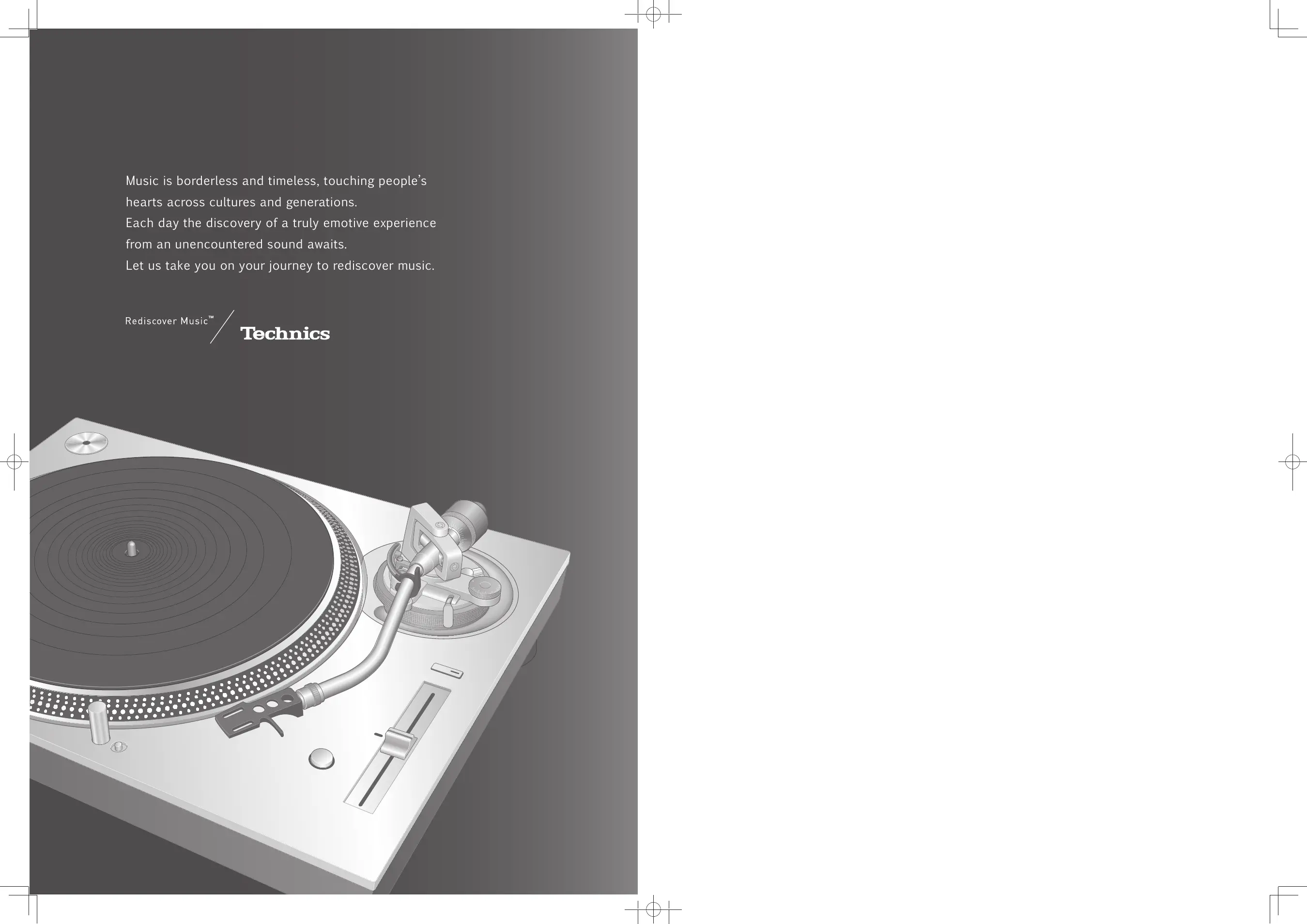


| Brand | PANASONIC (Technics) |
| Model | SL-1200GEG |
| Product Type | Direct Drive Turntable |
| Dimensions (W × H × D) | 453 × 173 × 372 mm |
| Weight | Approx. 18.0 kg |
| Power Supply | 110-240 V AC, 50/60 Hz |
| Power Consumption | 14 W (on), 0.2 W (off) |
| Motor | Brushless DC motor, coreless direct drive |
| Rotation Speeds | 33-1/3, 45 and 78 rpm |
| Pitch Control Range | ± 8% and ± 16% (switchable) |
| Starting Torque | 3.3 kg·cm |
| Wow and Flutter | 0.025% W.R.M.S. (JIS C5521) |
| Signal-to-Noise Ratio (Rumble) | 78 dB (IEC 98A weighted) |
| Tonearm Type | Static balanced |
| Effective Tonearm Length | 230 mm |
| Overhang | 15 mm |
| Tracking Error Angle | Less than 2° 32' (outer), 0° 32' (inner) for 30 cm disc |
| Offset Angle | 22° |
| Tonearm Height Adjustment | 0 – 6 mm |
| Stylus Pressure Adjustment | 0 – 4 g (direct reading) |
| Usable Cartridge Weight Range | 5.6 – 12.0 g (without auxiliary counterweight); 10.0 – 16.4 g (small counterweight); 14.3 – 19.8 g (large counterweight) |
| Platter | Brass + die-cast aluminum, diameter 332 mm, mass 3.6 kg (with rubber sheet) |
| Chassis Construction | 4 layers: aluminum, BMC, thick rubber, immaculate aluminum |
| Insulators | Special silicone rubber, high damping |
| Output Terminals | Brass, gold-plated |
| Maintenance | Clean stylus with soft brush; clean cover and chassis with soft cloth; avoid solvents |
| Safety | Do not expose to moisture; use supplied accessories; unplug before maintenance; max weight on stabilizer: 1 kg |
| Firmware Update | Via USB port (FAT16/32); download from www.technics.com/support/firmware/ |
| Included Accessories | Slip mat, dust cover, 45 rpm adapter, counterweight, headshell, protractor, PHONO cables, power cords |
Frequently Asked Questions - SL-1200GEG PANASONIC
User questions about SL-1200GEG PANASONIC
0 question about this device. Answer the ones you know or ask your own.
Ask a new question about this device
Download the instructions for your Turntable in PDF format for free! Find your manual SL-1200GEG - PANASONIC and take your electronic device back in hand. On this page are published all the documents necessary for the use of your device. SL-1200GEG by PANASONIC.
USER MANUAL SL-1200GEG PANASONIC
Operating Instructions
Bedienungsanleitung
Mode d'emploi
Direct Drive Turntable System
natural_image
Exterior view of a Technicolor 4.0725 transceiver with visible circuit breaker and control buttons (no text-heavy elements)Music is borderless and timeless, touching people's hearts across cultures and generations.
Each day the discovery of a truly emotive experience from an unencountered sound awaits.
Let us take you on your journey to rediscover music.
Rediscover Music™
Technics
natural_image
Illustration of a vintage CD or vinyl record with a circular head and mechanical tool (no text or symbols)Delivering the Ultimate Emotive Musical Experience to All
At Technics we understand that the listening experience is not purely about technology but the magical and emotional relationship between people and music.
We want people to experience music as it was originally intended and enable them to feel the emotional impact that enthuses and delights them.
Through delivering this experience we want to support the development and enjoyment of the world's many musical cultures. This is our philosophy.
With a combination of our love of music and the vast high-end audio experience of the Technics team, we stand committed to building a brand that provides the ultimate emotive musical experience by music lovers, for music lovers.
Director
Michiko Ogawa
Michoke Ogawa
Introduction
Thank you for purchasing this product.
Please read these instructions carefully before using this product, and save this manual for future use.
- About descriptions in these operating instructions
- Pages to be referred to are indicated as “(⇒ 00)”.
- The illustrations shown may differ from your unit.
Sales and Support Information
Customer Communications Centre
- For customers within the UK: 0333 222 8777
- For customers within Ireland: 01 447 5229
- Monday–Friday 9:00 am – 5:00 pm, (Excluding public holidays).
- For further support on your product, please visit our website: www.technics.com/uk/
Features
The coreless direct drive eliminates cogging and achieves smooth rotation
- The twin-rotor construction reduces minute vibration during rotation while maintaining high torque.
- The high-precision motor control technology switches the drive mode depending on the operational status of the motor. This technology combines high torque with high stability.
The tone arm with high-precision bearings achieves high initial-motion sensitivity
- The tone arm pipe employs magnesium which provides high rigidity.
- The use of traditional Technics gimbal suspension construction and high-precision bearings attains high initial-motion sensitivity.
Three-layered turntable that delivers smooth rotational stability
- The turntable has a three-layered construction with a rigidly combined brass and aluminium diecast platter, and a rubber covering its rear surface to eliminate unnecessary resonance. With this construction, high rigidity and vibration damping are achieved.
- The use of a heavyweight-class turntable that generates a large inertial mass. It delivers smooth rotational stability.
Four-layered cabinet construction and insulators based on thorough anti-vibration design
- The top panel of immaculate aluminium has been added to the three-layered construction of aluminium diecast, BMC, and heavyweight-class rubber. This four-layered construction combines high rigidity with a high quality finish and feel.
- The insulators employ special silicon rubber to ensure high vibration damping and long-term reliability. They completely dampen external vibration and suppress howling noise.
High-quality terminals
- The use of brass-milled and gold-plated terminals prevents degradation in sound quality.
- Inside the case, the metal shielding construction is used to diminish the effects of external noise.
Highly accurate turntable speed maintained with the pitch control
- The digital control method is adopted to achieve constant pitch control.
- The pitch variable range select button ( ×2 ) is provided. The pitch control with the range up to ±16% is possible.
Table of contents
- Before use
Safety precautions 6
Accessories 9
Parts Name 10
- Getting started
Putting the player together 11
- Attaching the cartridge .... 11
- Fitting the turntable 13
- Fitting the turntable mat .... 13
- Attaching the head shell.... 13
- Attaching the balance weight.... 13
Connections and installation 14
- Connecting to an integrated amplifier or component system.... 14
- Installation 15
- Fit the dust cover.... 15
Adjustment 16
- Horizontal balance 16
- Stylus pressure 16
- Anti-skating.... 17
- Tone arm height.... 18
- Armlift height.... 19
- Adjusting the turntable startup/brake speed ...... 19
- Playing back
Playing records....20
Pitch control (fine adjustment to pitch)....22
- Maintenance
Maintenance....23
Troubleshooting guide 24
Updating the firmware....24
Specifications 25
Safety precautions
Warning
Unit
- To reduce the risk of fire, electric shock or product damage,
-Do not expose this unit to rain, moisture, dripping or splashing.
-Do not place objects filled with liquids, such as vases, on this unit.
-Use only the recommended accessories. - Do not remove covers.
-Do not repair this unit by yourself. Refer servicing to qualified service personnel.
-Do not let metal objects fall inside this unit. - Do not place heavy items on this unit.
AC mains lead
- To reduce the risk of fire, electric shock or product damage,
-Ensure that the power supply voltage corresponds to the voltage printed on this unit.
-Insert the mains plug fully into the socket outlet.
-Do not pull, bend, or place heavy items on the lead.
-Do not handle the plug with wet hands.
-Hold onto the mains plug body when disconnecting the plug.
-Do not use a damaged mains plug or socket outlet. - The mains plug is the disconnecting device. Install this unit so that the mains plug can be unplugged from the socket outlet immediately.
- Ensure the earth pin on the mains plug is securely connected to prevent electrical shock.
-An apparatus with CLASS I construction shall be connected to a mains socket outlet with a protective earth connection.
Caution
Unit
- Do not place sources of naked flames, such as lighted candles, on this unit.
- This unit may receive radio interference caused by mobile telephones during use. If such interference occurs, please increase separation between this unit and the mobile telephone.
- This unit is intended for use in moderate and tropical climates.
- Do not put any objects on this unit. This unit becomes hot while it is on.
Placement
- Place this unit on an even surface.
- To reduce the risk of fire, electric shock or product damage,
-Do not install or place this unit in a bookcase, built-in cabinet or in another confined space. Ensure this unit is well ventilated.
-Do not obstruct this unit's ventilation openings with newspapers, tablecloths, curtains, and similar items.
-Do not expose this unit to direct sunlight, high temperatures, high humidity, and excessive vibration. - Ensure that the placement location is sturdy enough to accommodate the weight of this unit ( 25).
- Do not lift or carry this unit by holding the knobs. Doing so may cause this unit to fall, resulting in personal injury or malfunction of this unit.
Caution for AC Mains Lead
(For the AC mains plug of three pins)
For your safety, please read the following text carefully.
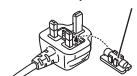
This appliance is supplied with a moulded three pin mains plug for your safety and convenience. A 10-ampere fuse is fitted in this plug.
Should the fuse need to be replaced please ensure that the replacement fuse has a rating of 10-ampere and that it is approved by ASTA or BSI to BS1362.
Check for the ASTA mark 📍 or the BSI mark 🍽 on the body of the fuse.
If the plug contains a removable fuse cover you must ensure that it is refitted when the fuse is replaced.
If you lose the fuse cover the plug must not be used until a replacement cover is obtained.
A replacement fuse cover can be purchased from your local dealer.
Before use
Remove the connector cover.
How to replace the fuse
The location of the fuse differ according to the type of AC mains plug (figures A and B).
Confirm the AC mains plug fitted and follow the instructions below.
Illustrations may differ from actual AC mains plug.
- Open the fuse cover with a screwdriver.
Figure A

Figure B
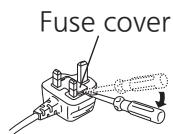
- Replace the fuse and close or attach the fuse cover.
Figure A
Fuse
(10 ampere)
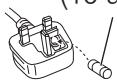
Figure B
Fuse
(10 ampere)
Safety precautions (continued)
Disposal of Old Equipment
Only for European Union and countries with recycling systems

These symbols on the products, packaging, and/or accompanying documents mean that used electrical and electronic products must not be mixed with general household waste.
For proper treatment, recovery and recycling of old products, please take them to applicable collection points in accordance with your national legislation.
By disposing of them correctly, you will help to save valuable resources and prevent any potential negative effects on human health and the environment.
For more information about collection and recycling, please contact your local municipality.
Penalties may be applicable for incorrect disposal of this waste, in accordance with national legislation.
Accessories
In order to prevent damage during shipping some of the equipment has been disassembled. Please check and identify the supplied accessories.
Turntable (1 pc.)(RYQ1618-X)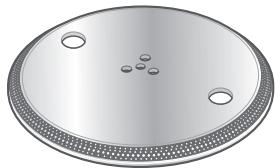 | Turntable mat (1 pc.)(RGS0008)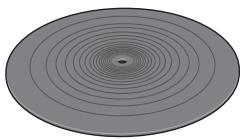 | Dust cover (1 pc.)(RYF1035-Q)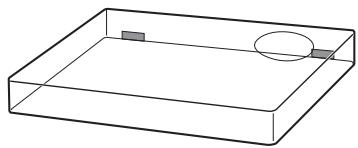 | ||
EP record adaptor (1 pc.)(RMX0551) | Balance weight (1 pc.)(RXQ2316)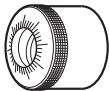 | Auxiliary weight small (1 pc.)(TPAKK61) | ||
Auxiliary weight big (1 pc.)(TPAKK62) | Head shell (1 pc.)(RFA3670)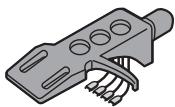 | Overhang gauge (1 pc.)(RMR2210-W)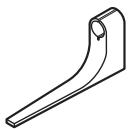 | ||
Screw set for cartridge (1 set)(RXQ2315)● Nuts (2 pc.)● Screws-short (2 pc.)● Screws-long (2 pc.)● Washers (2 pc.)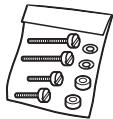 | PHONO cable (1pc.)(K2KYYYY00257)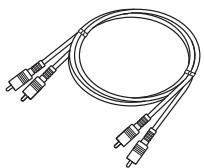 | PHONO earth lead (1pc.)(K4EY1YY00160)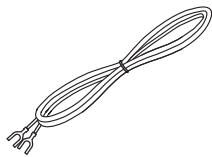 | ||
AC mains lead (1 pc.)(K2CT3YY00081)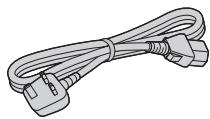 | AC mains lead (1 pc.)(K2CM3YY00041)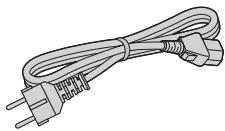 | AC mains lead (1 pc.)(K2CS3YY00033)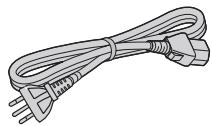 | Screw set for turntable (1 set)(RXQ2343)● Screws-long (3 pc.)● Washers (3 pc.)● Belleville springs (3 pc.)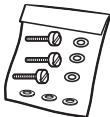 | |
- The model numbers of the accessories are as of June 2016. They are subject to change without notice.
- Dispose of the packaging materials in an appropriate manner.
- Follow the local regulations when disposing of the product.
- Do not use any other AC mains lead, PHONO cable and PHONO earth lead except the supplied one.
- Keep the cartridge, auxiliary weight, nuts, screws and washers out of reach of children to prevent swallowing.
Parts Name
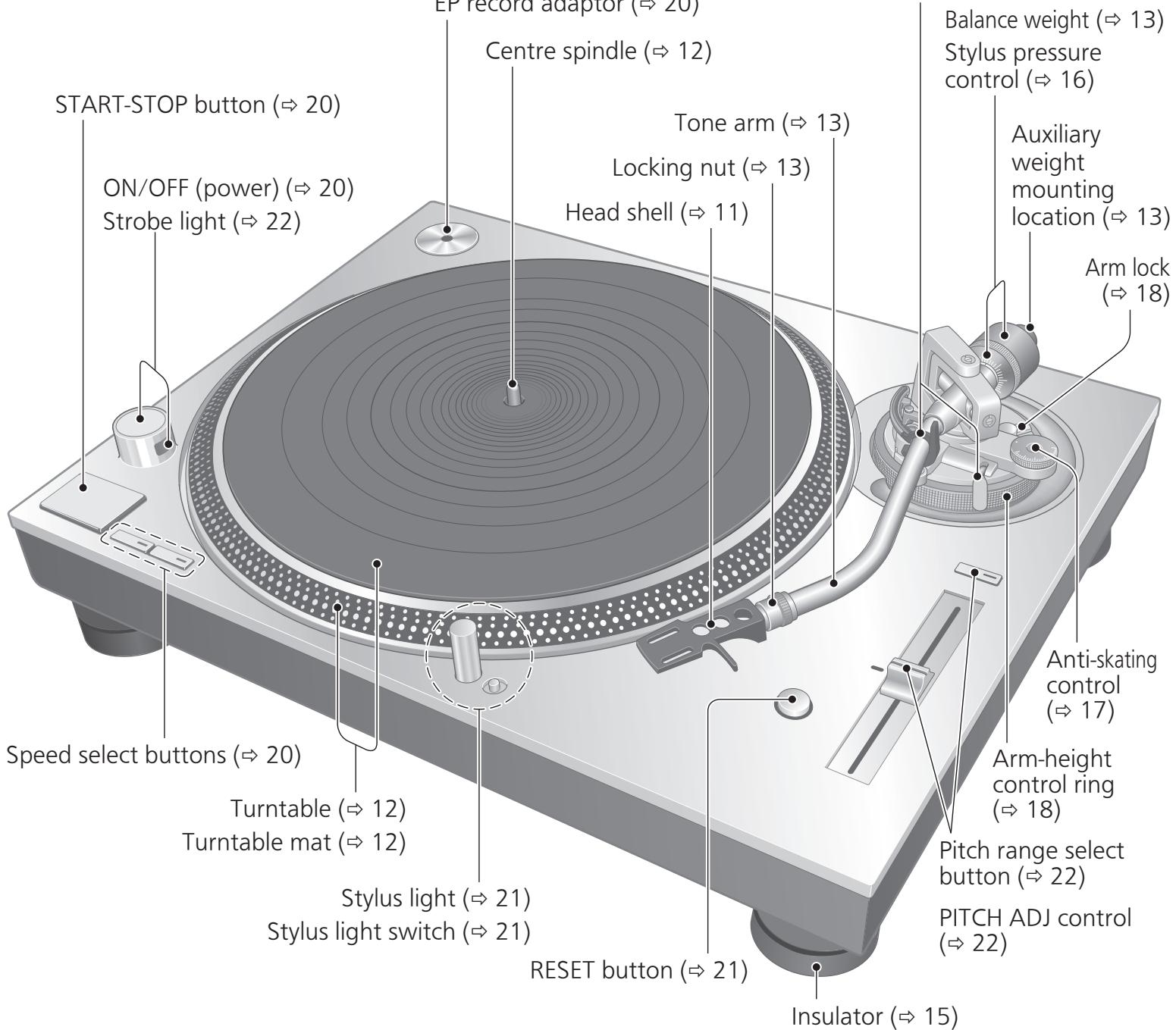
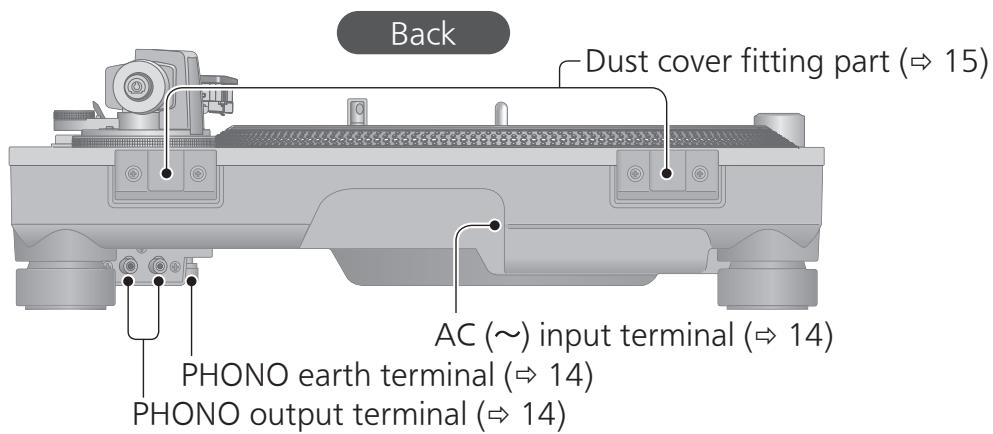
Numbers such as ( 20) indicate reference pages.
Arm clamp ( 16)
Arm rest ( 16)
Cue lever ( 16)
Putting the player together
Attaching the cartridge
1 Attach a cartridge (store-bought) tentatively.
Follow the cartridge's instructions to correctly attach it to the head shell, and tighten the screws lightly.
- If the mounting screws are included in the cartridge, use them.
- When playing SP records, use a cartridge for SP records.
- Use a commercially available mini flat screwdriver (4 mm).
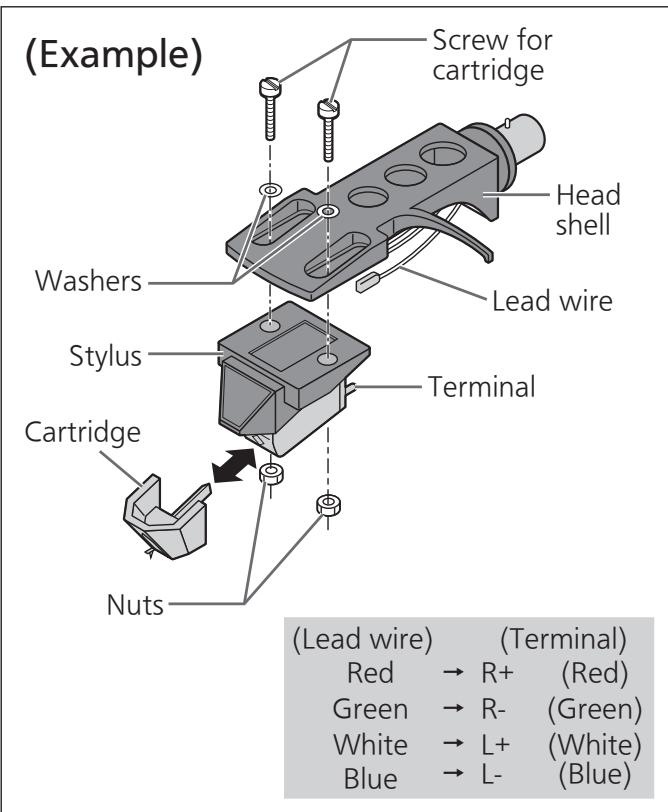
2 Adjust the overhang.
Use the included overhang gauge.
① Fit the overhang gauge to the head shell.
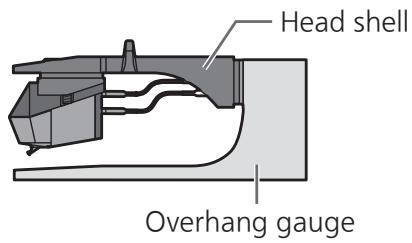
② Move the cartridge to line the stylus tip up with the end of the gauge.
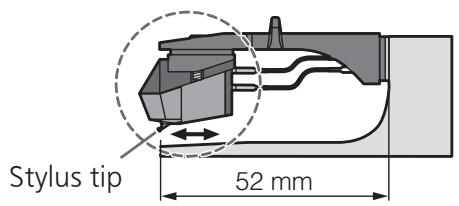
- The cartridge should be parallel on the shell head when viewed from the top and side (the illustration is the top view).
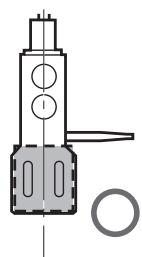
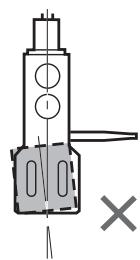
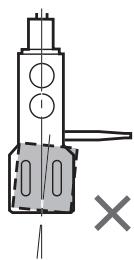
③ Tighten the screw for cartridge.
- Be careful not to allow the cartridge to slip out of place.
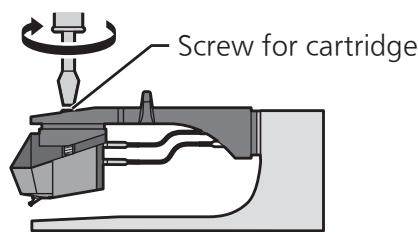
The overhang can be adjusted optimally.
Putting the player together (continued)
In order to prevent damage during shipping, some of the equipment has been disassembled. Put the player together in the following order.
Attention
Do not connect the AC mains lead until set up is complete.
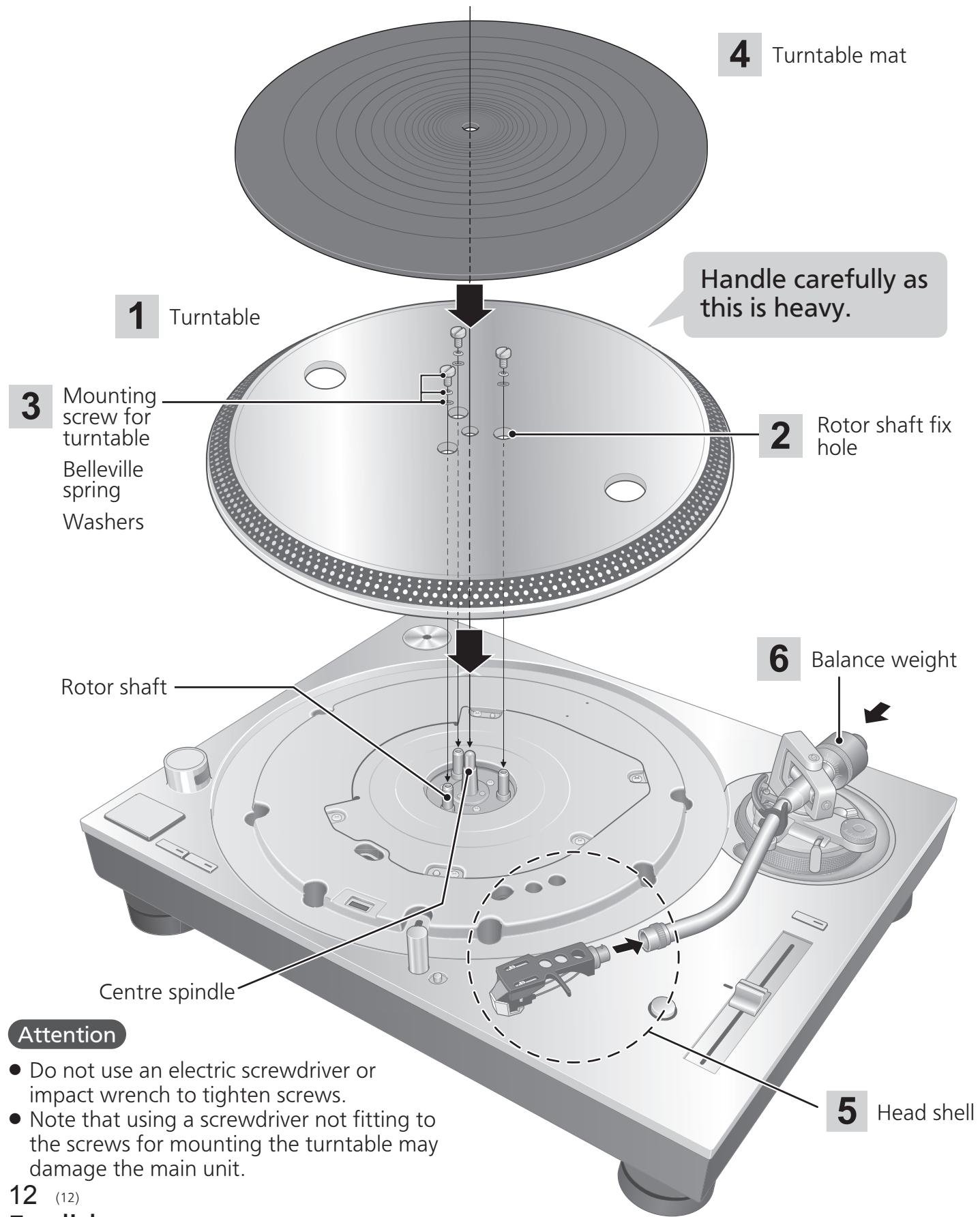
Fitting the turntable
1 Insert the centre spindle in the centre hole of the turntable.
Attention
- Be careful when handling the turntable, as it is heavy.
- Wipe off fingerprints or dirt with a soft cloth.
2 Slowly lower the turntable while aligning the rotor shaft fix holes (three locations) with the rotor shafts.
- Turn the turntable in both directions to align the holes with the rotor shafts.
Attention
- If the rotor shafts are misaligned, a gap remains between the turntable and main unit and you cannot mount the turntable correctly. Do not force the turntable downward.

natural_image
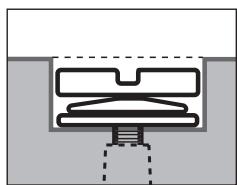
Diagram of a structural beam under load, showing support reactions and load directions (no text or labels)3 Attach the washers, belleville springs, and screws for turntable to the rotor shaft fix holes, and tighten the mounting screws securely.
natural_image
Pure mechanical assembly diagram without any text, numbers, or symbolsAttention
- When tightening screws, do not allow screw heads to protrude from the top surface of the turntable.
- Tighten the three screws evenly.
■ To remove the turntable
① Loosen the mounting screws for turntable and remove them.
-Keep the screws, belleville springs, and washers carefully.
② Hold the turntable with both hands and slowly pull it straight up.
Fitting the turntable mat
4 Lay the turntable mat on the turntable.
Attaching the head shell
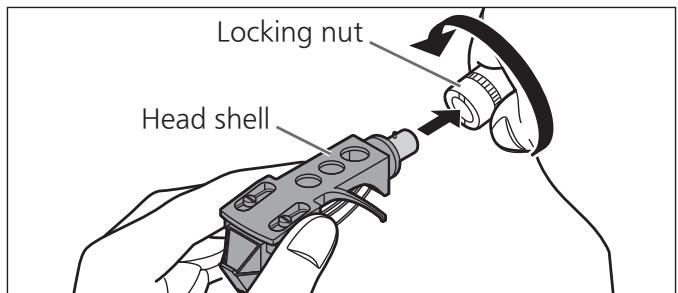
5 Fit the head shell with the cartridge into the tone arm. Keep the head shell horizontal and tighten the locking nut.
- Be careful not to touch the stylus tip.
0
Attaching the balance weight
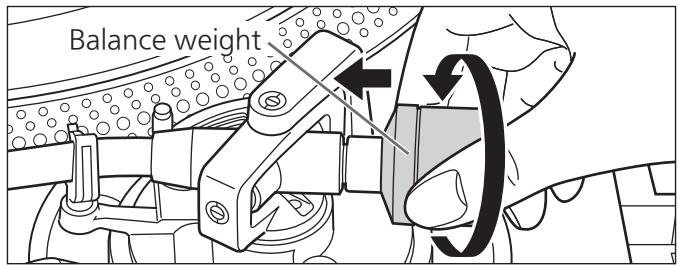
6 Attach the balance weight to the rear of the tone arm.
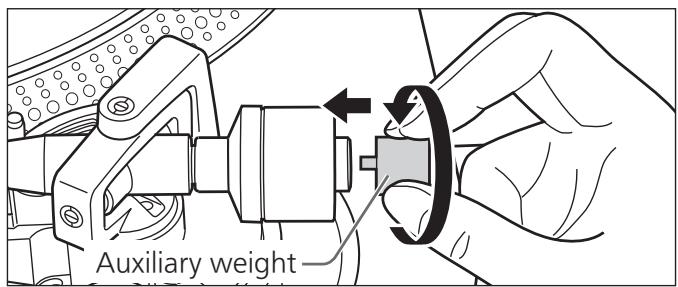
- Attach the included auxiliary weight to the rear of the tone arm according to the weight of your cartridge.
For adjustable cartridge weight ranges, see "Applicable cartridge weight range". (⇒25)
Note
- The inside of the balance weight is greased.
Connections and installation
- Turn off all units and disconnect the AC mains lead from the socket before making any connections.
- Connect the AC mains lead only after all other connections are completed.
- Be sure to connect the PHONO earth lead. Otherwise mains hum may occur.
- Refer also to the instruction manual of the connected device.
1 Connect the PHONO cables and PHONO earth lead to the PHONO terminals of the connected equipment.
- You will not have adequate volume or sound quality if the connected amplifier has no PHONO terminals.
2 Connect the AC mains lead.
- Confirm the wattage of the AC outlet on the connected equipment before using it for this unit. (This unit consumes 14 W.)
Connecting to an integrated amplifier or component system
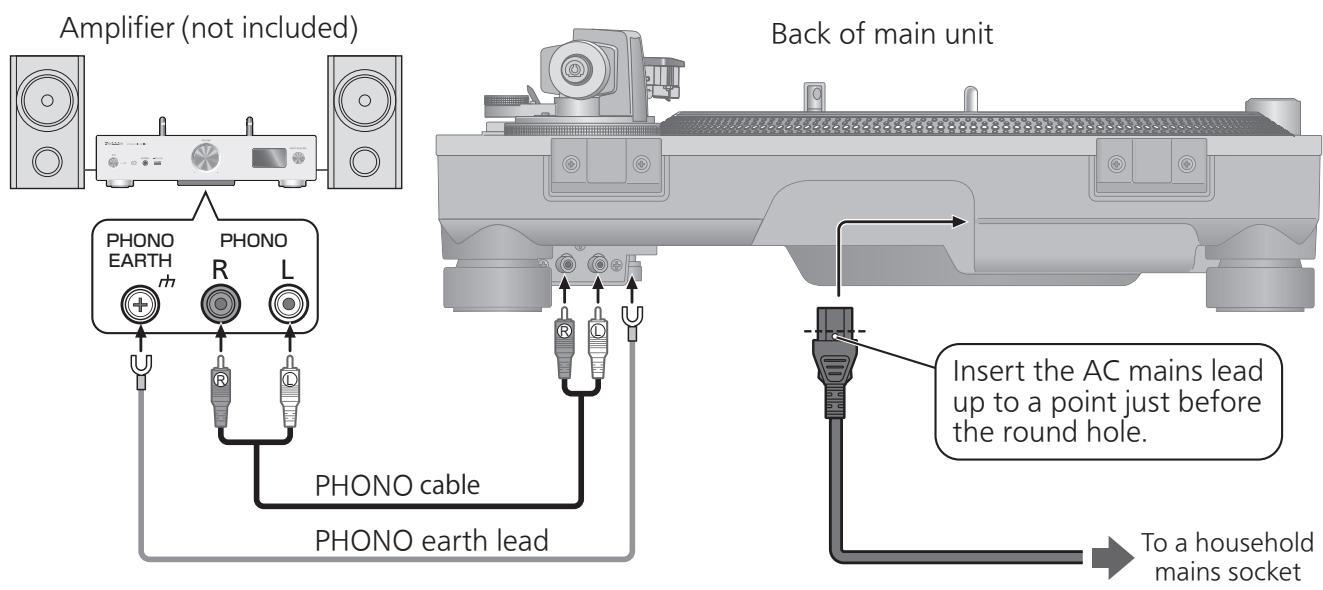
Note
- The operation switch does not separate entire unit from mains even if in "OFF" position. Remove the plug from the mains socket if you will not be using the unit for an extended period of time. Place the unit so that the plug can be easily removed.
Installation
Install the unit on a horizontal surface protected from vibrations.
Keep this unit as far as possible from speakers.
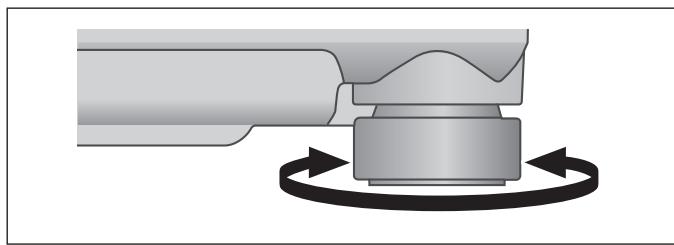
■ Adjusting the height to make the unit horizontal
natural_image
Mechanical component diagram showing a rotating shaft and housing with motion arrows (no text or symbols)Raise the main unit to turn the insulators and adjust the height.
- Clockwise: Reduces the height.
- Anti-clockwise: Increases the height.
Attention
- Do not turn the insulators too far.
Doing so may cause them to come off or damage them.
Fit the dust cover
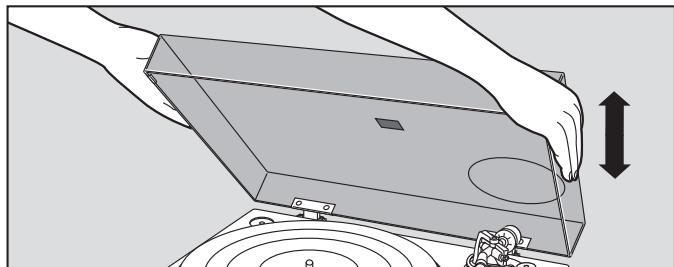
1 Hold the dust cover with both hands and insert it into the dust cover fitting parts ( 10) on the player.
- To remove the dust cover, keep it open and lift it straight above.
natural_image
Illustration of hands installing or adjusting a device into a box with circular components, next to a mechanical component (no text or symbols)Attention
- Return the tone arm to the arm rest and fix it with the arm clamp before you attach or detach the dust cover.
■ Notes for installation
- Before you move the unit, remove all devices connected and turn off the power supply.
- Ensure the unit is not exposed to direct sunlight, dust, humidity, and heat from a heating appliance.
- This unit may pick up interference from a radio if there is one nearby. Keep the unit as far as possible from a radio.
- Do not install the unit on a heat source.
- Avoid a place with large temperature variations.
- Avoid a place with frequent condensation.
- Avoid an unstable place.
- Do not put an object on the unit.
- Do not install the unit in a confined space such as a book shelf.
- Install the unit at a position well away from walls or other devices to ensure effective heat radiation from the inside of the unit.
- Make sure that the material of the installation location is sufficiently strong to withstand the weight of this unit.
- Note that the unit may be damaged by cigarette smoke or moisture from an ultrasonic humidifier.
Condensation
Think of taking out a cold bottle from a refrigerator. If you leave it in a room for a while, dewdrops will form on the bottle surface. This phenomenon is called “condensation”.
- Conditions causing condensation
◇ Rapid temperature change (caused by moving from a warm place to a cold place or vice versa, rapid cooling or heating, or direct exposure to cooled air)
◇ High humidity in a room with much steam, etc.
◇ Rainy season
- Condensation may damage the unit. If it has occurred, turn the unit off and leave it until it adapts to the ambient temperature (approximately 2 to 3 hours).
Adjustment
Horizontal balance
Preparation
- First, remove the dust cover.
- Remove the stylus cover, taking care not to damage the stylus, then release the arm clamp.
- Lower the cue lever.
- Turn the anti-skating control to "0".
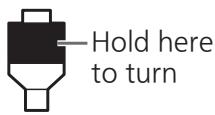
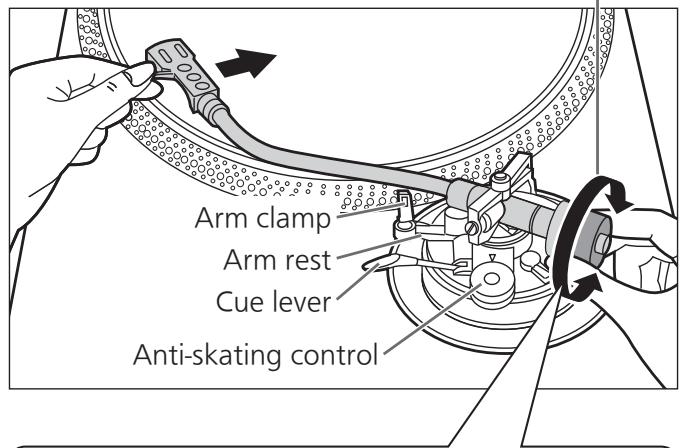
1 Free the tone arm from the arm rest and adjust horizontal balance by turning the balance weight.
Hold the tone arm and turn the balance weight in the arrow direction to adjust the balance until the arm is approximately horizontal.
● Take care not to allow the stylus tip to touch the turntable or main unit.
Balance weight
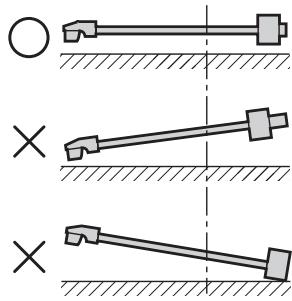
Balanced and the tone arm is parallel to the turntable.
The balance weight is too far forward.
The balance weight is too far back.
Stylus pressure
Preparation
- First, remove the dust cover.
- Return the tone arm to the arm rest and fix it with the arm clamp.
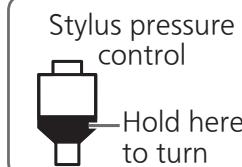
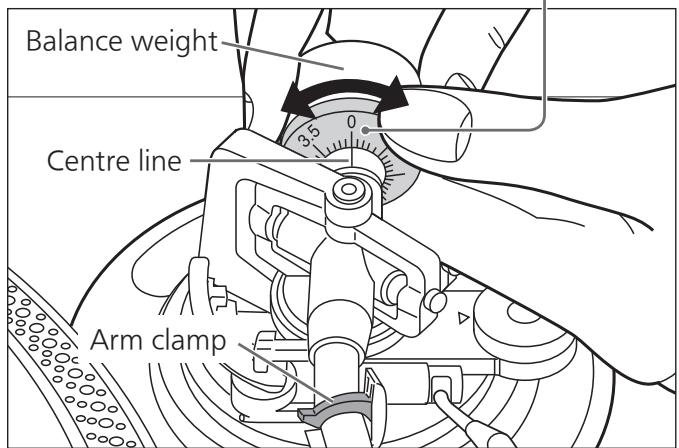
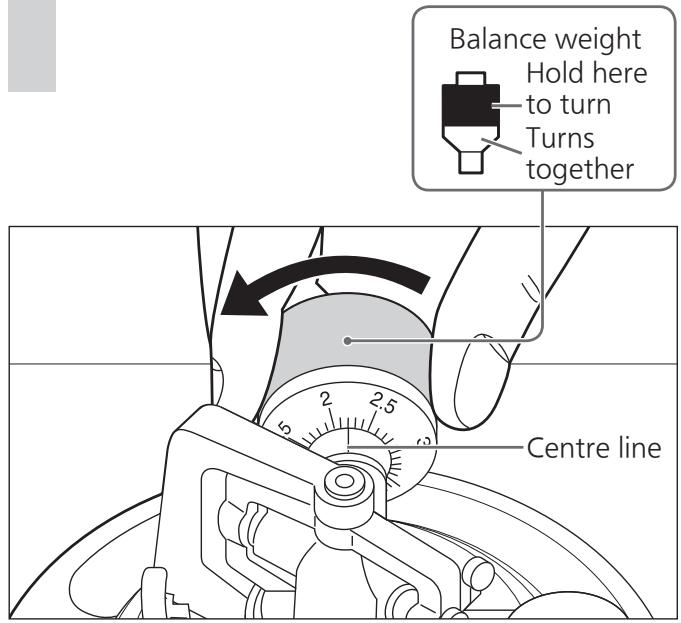
1 Turn the stylus pressure control until "0" comes to the centre line of the rear of the tone arm.
- Hold the balance weight still while doing this.
Note
- Refer to the user's guide for your stylus for the appropriate stylus pressure.
2 Turn the balance weight to adjust to the appropriate stylus pressure for the cartridge.
- The stylus pressure control will turn together with the balance weight.
- Turn until the centre line points to the appropriate stylus pressure.
Anti-skating
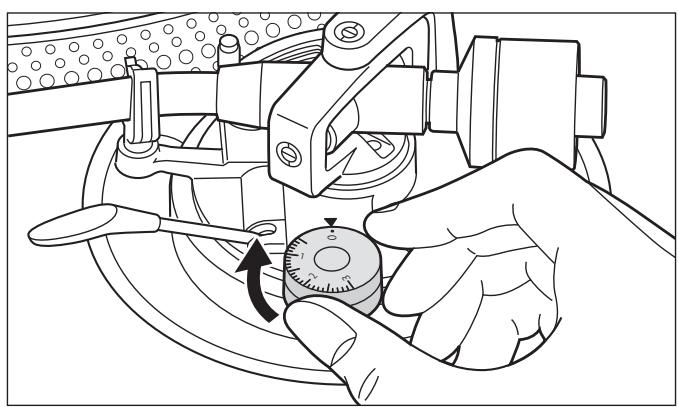
1 Turn the anti-skating control to adjust it to the same value as the stylus pressure control.
natural_image
Illustration of a hand operating a mechanical device with a dial and tool, showing no text or symbols.Note
- For stylus pressures 3 g and above, adjust anti-skating control to "3".
Adjustment (continued)
Tone arm height
Make this adjustment only if the cartridge you are using makes it necessary.
Preparation
- Put a record on the turntable.
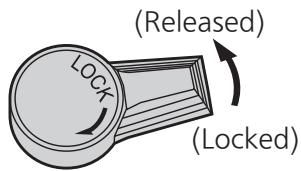
1 Release the arm lock.
Arm lock
2 Adjust the height with the arm-height control ring.
Adjust the arm height until the tone arm becomes parallel to the record.
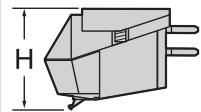
① Use the chart below as reference to find the appropriate position mark for the height of your cartridge.
(For supplied head shell)
| Cartridge height (H) in millimeters | Height control position | |
 | 17 | 0 |
| 18 | 1 | |
| 19 | 2 | |
| 20 | 3 | |
| 21 | 4 | |
| 22 | 5 | |
| 23 | 6 |
② Turn the arm-height control ring to align the position mark with the index line. 0 to 6 mm are marked on the arm height control ring.
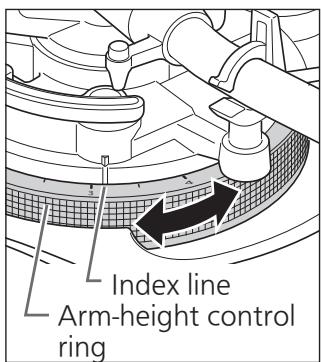
3 After arm height adjustment is finished, lock the tone arm by turning the arm lock knob.
■ When you don't know the cartridge height (H),
Remove the stylus cover, taking care not to damage the stylus, then release the arm clamp. Lower the cue lever, rest the stylus on the record and adjust the height control until the tone arm and record are parallel.
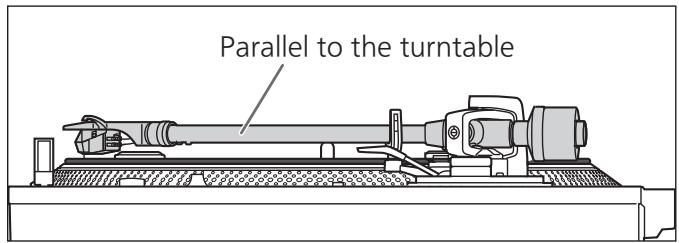
Attention
- Be careful not to damage the stylus tip.
- Do not use the product with the arm lock released.
Armlift height
Make an adjustment according to your cartridge if necessary.
Preparation
- Put a record on the turntable.
- Remove the stylus cover, taking care not to damage the stylus, then release the arm clamp.
- Lift the cue lever and move the tone arm over the record.
1 Check the armlift height (distance between the stylus tip and record surface). If adjustment is needed, go to step 2.
- The armlift height is factory-adjusted to 8 to 13 mm.
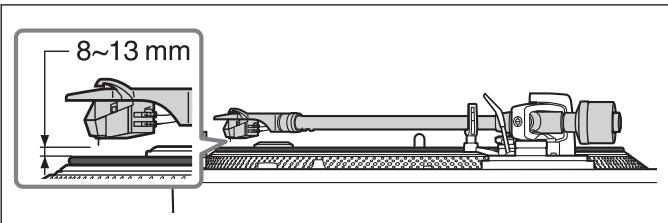
2 Return the tone arm to the arm rest and fix it with the arm clamp. Turn the adjustment screw.
- Turning the screw clockwise lowers the armlift.
- Turning the screw anti-clockwise raises the armlift.
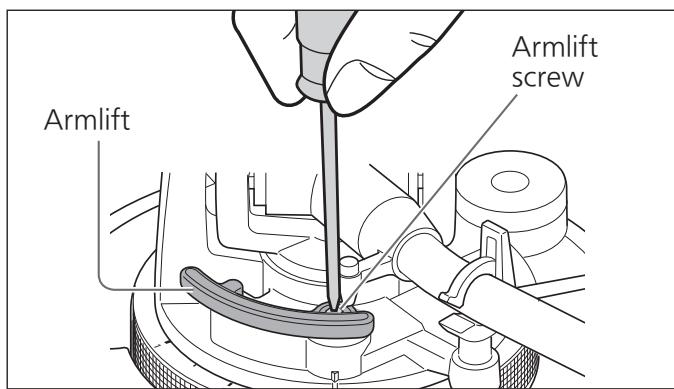
Adjusting the turntable startup/brake speed
You can choose manual mode or auto mode. (Factory setting: Auto mode)
Auto mode
We recommend auto mode that can maximize performance of the product. It adjusts the "startup speed" (described below) automatically. (The set torque control is not reflected.)
① Move the mode switch to [A] using a tool such as a thin screwdriver.
■ Manual mode
Allows you to adjust the "startup speed" manually.
① Move the mode switch to [M] using a tool such as a thin screwdriver.
Startup speed
You can adjust the startup speed (the time for the turntable to reach the constant speed) from pressing [START-STOP] and the torque gain at the constant speed.
① Adjust the torque knob using a flat screwdriver.
• H direction: Fast startup
- L direction: Slow startup
Brake speed
You can adjust the brake speed from pressing [START-STOP] until the turntable stops.
(Adjustment is possible in both auto and manual mode.)
① Adjust the brake speed control knob using a flat screwdriver.
- S direction: Slow stop
- F direction: Fast stop
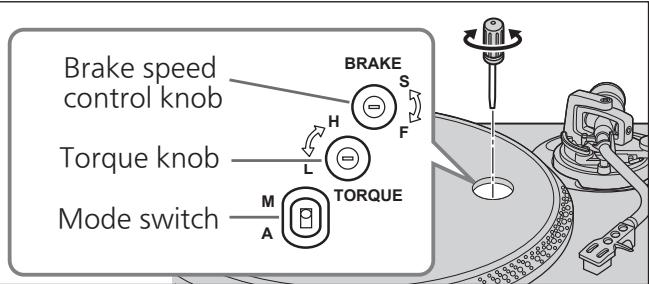
Note
- Use a commercially available mini flat screwdriver (2.4 mm) to adjust the torque/brake speed control knob.
- Do not turn the knob too far using an excessive force.
Playing records
Preparation
*1 Put a record on the turntable.
★2 Take off the stylus cover and release the arm clamp.
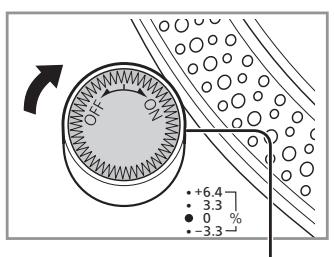
1 Turn [ON/OFF] to turn the unit on.
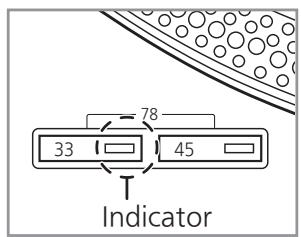
The strobe light comes on. 33-1/3 rpm is automatically selected and the indicator [33] lights.
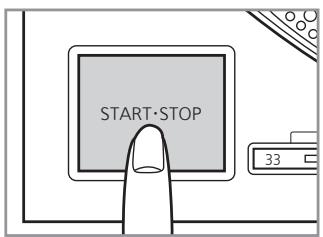
2 Press [START-STOP].
The turntable starts revolving.
Strobe light
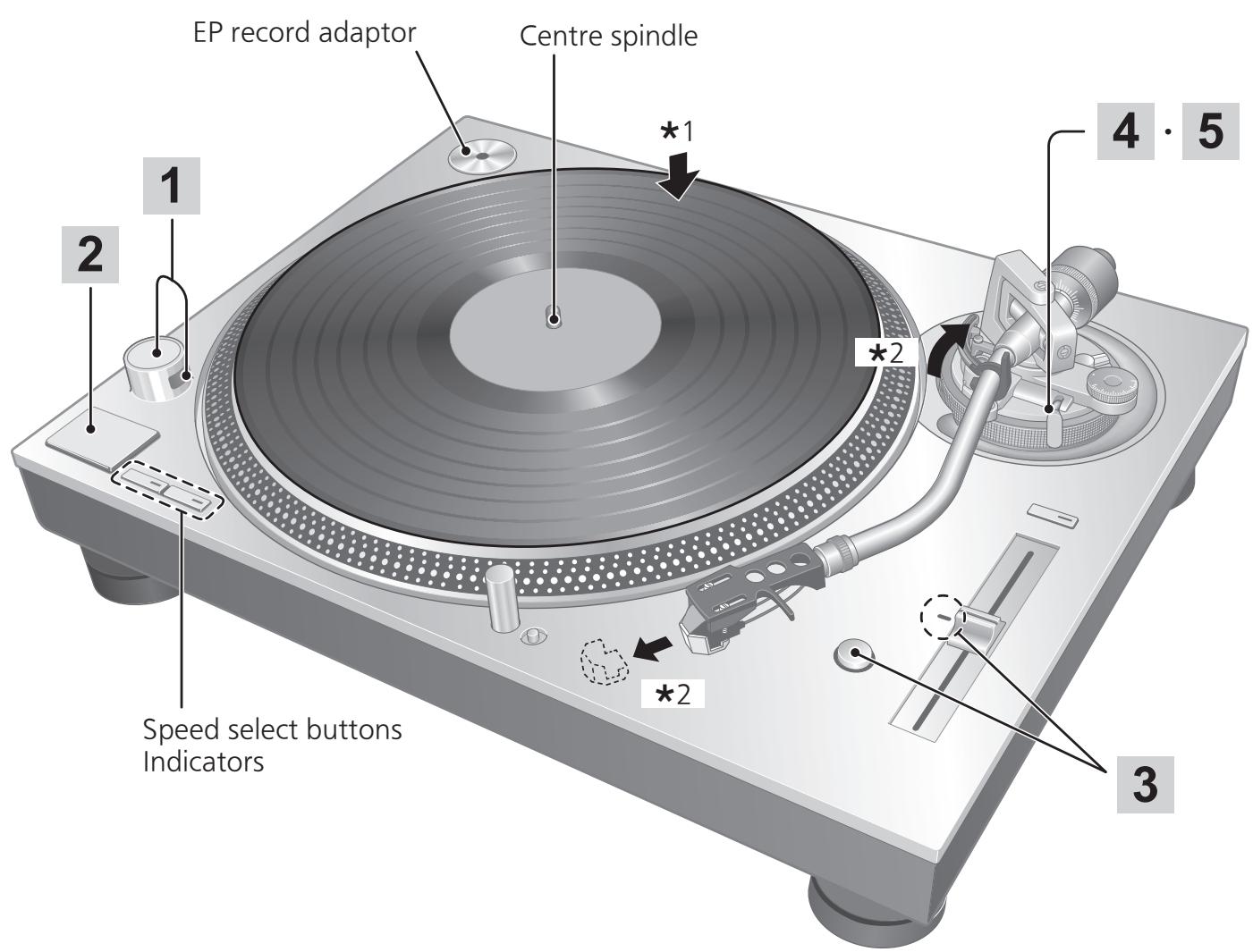
3 Press [RESET] to light the pitch control blue LED lamp.
The unit plays at a preset pitch (33-1/3, 45 or 78 rpm) regardless of the [PITCH ADJ] position.
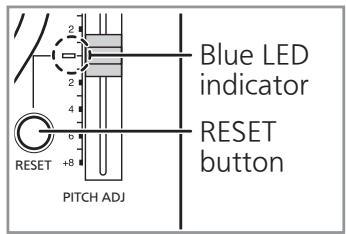
- Fine adjustment to pitch ( 22)
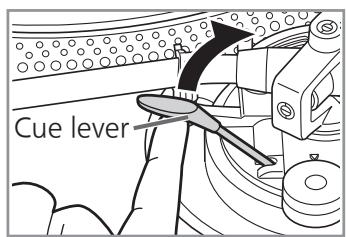
4 Lift the cue lever and move the tone arm over the record.
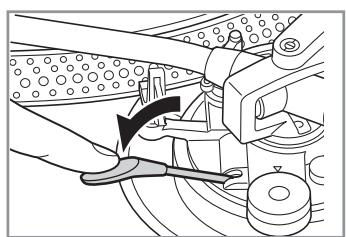
5 Lower the cue lever. The tone arm moves down slowly.
natural_image
Mechanical assembly diagram showing a tool interacting with a car wheel and gear (no text or symbols visible)Play starts.
■ To temporarily stop play
Lift the cue lever.
- The stylus lifts off the record.
- To start play again, lower the cue lever.
■ When play finishes
① Lift the cue lever, return the tone arm to the arm rest and lower the cue lever.
② Press [START-STOP].
The electronic brake gently stops the turntable.
③ Turn [ON/OFF] to turn the unit off.
④ Clamp the tone arm with the arm clamp.
⑤ Put the stylus cover back on (to protect the stylus tip).
■ To light up the stylus
The stylus tip is illuminated during play.
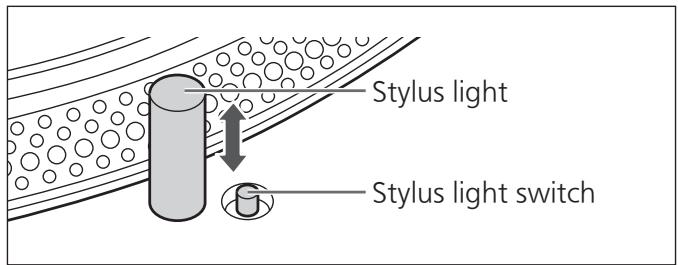
Press the stylus light switch.
- The stylus light (white LED) rises up and illuminates the stylus.
- Press down the stylus light to turn off the light.
Attention
Press the stylus light switch firmly. If the switch is lightly pressed, the light may come on but not rise up.
■ When playing EP records
- Press the speed select button [45] ([45] lights).
- Fit the EP record adaptor over the centre spindle.
■ When playing SP records
- Press the speed select buttons [33] and [45] at the same time (78 rpm: [33] and [45] light).
■ When using a record stabilizer (not included)
- See the instruction manual of the record stabilizer.
• Maximum weight: 1 kg
Pitch control (fine adjustment to pitch)
1 Press [RESET] to turn off the blue LED light.
2 Press the pitch range select button to select the pitch range.
- [×2] light on: ±16 %
- [× 2] light off: ± 8%
3 While the turntable is revolving
Slide [PITCH ADJ].
- Pitch can be adjusted between approx. -8 % and +8 % or approx. -16 % and +16 % according to your selection.
- The numbers represent approximate percentages for your adjustment.
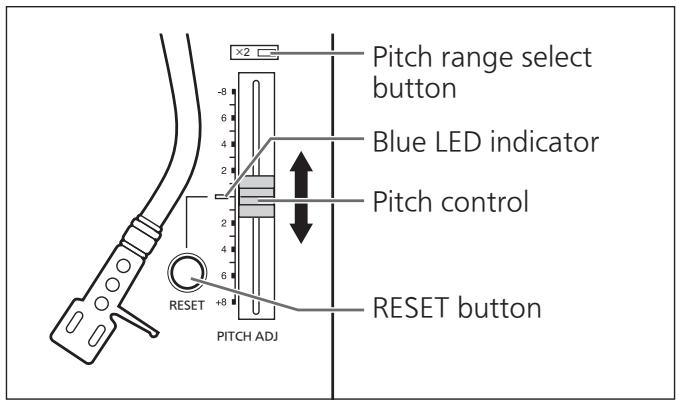
■ To reset pitch to the preset value
Press [RESET].
The blue LED indicator lights and the pitch immediately returns to a preset value regardless of the [PITCH ADJ] position.
(33-1/3, 45 or 78 rpm)
■ To measure pitch
The four rows of strobe mirrors around the edge of the turntable can assist you in measuring pitch.
Strobe mirrors
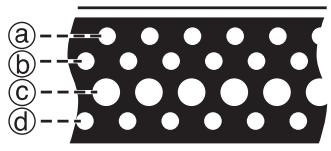
Ⓐ +6.4 % change in pitch when stationary
⑥ +3.3 % change in pitch when stationary
© Normal turntable speed (33-1/3, 45 or 78 r/min) when stationary
(d) -3.3 % change in pitch when stationary
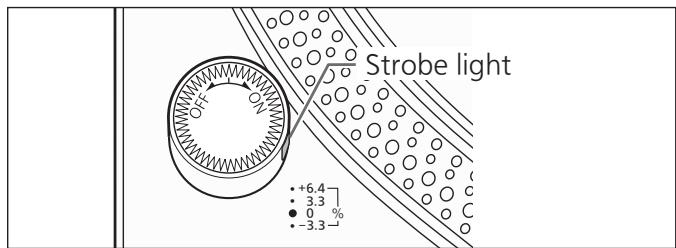
Attention
The strobe mirrors are lit by the strobe light (blue LED) synchronizing with the precise frequency of digital control.
Always use the blue LED to measure the pitch.
Maintenance
■ Care of the parts
Thoroughly clean dust off the stylus and record.
- Take off the head shell with the cartridge and clean the stylus using a soft brush. Brush from the base to the tip.
- Use a record cleaner to keep your records clean.
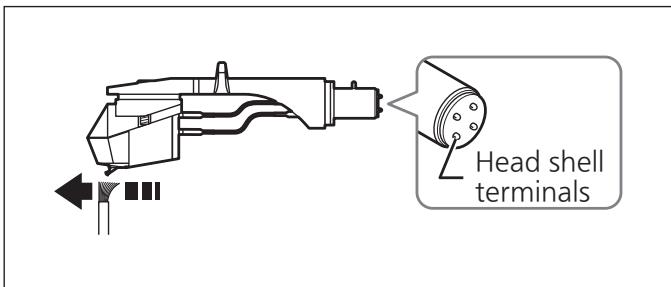
Wipe the head shell terminals occasionally.
Wipe the head shell terminals with a soft cloth and fit the head shell to the tone arm.
Turn the volume down or turn the amplifier off before fitting or removing the head shell. Damage to your speakers can occur if the head shell is moved while the volume is turned up.
■ Cleaning the dust cover
Wipe the dust cover and cabinet with a soft cloth.
When dirt is heavy, wring a wet cloth tightly to wipe the dirt, and then wipe it with a soft cloth.
- Do not use solvents including benzene, thinner, alcohol, kitchen detergent, a chemical wiper, etc. This might cause the exterior case to be deformed or the coating to come off.
- Do not wipe the dust cover while playing a record.
This can cause static electricity. This static can cause the tone arm to be attracted towards the dust cover.
■ Moving the unit
Repackage the unit in the packaging it came in.
If you no longer have the packaging, do the following:
- Take off the turntable and turntable mat and carefully wrap them.
- Remove the head shell and balance weight from the tone arm and carefully wrap them.
- Clamp the tone arm with the arm clamp and tape it in place.
- Carefully wrap the main unit in a blanket or paper.
■ WEEE symbol
Disposal of the product outside the EU countries

This symbol is valid within the EU only.
Contact a local governmental office or your dealer to confirm a right manner of disposal.
Troubleshooting guide
Before requesting service, make the below checks. If you are in doubt about some of the check points, or if the remedies indicated in the chart do not solve the problem, contact your dealer.
No power.
- Is the AC mains lead plugged in? Plug the mains lead in firmly. (⇒ 14)
There is power but no sound. Sound is weak.
- Are connections to the amplifier/receiver's PHONO terminals correct? Connect the PHONO cables to the amplifier's PHONO terminals. (⇒ 14)
Left and right sounds are reversed.
- Are the stereo connection cable connections to the amplifier or receiver reversed? Double check all connections. ( 14)
- Are connections of the head shell's lead wires to the cartridge terminals correct? Double check all connections. (⇒ 11)
Humming is heard during play.
- Are there other appliances or their AC mains lead near the stereo connection cable? Separate the appliances and their AC mains lead from this unit.
- Is the earth lead connected? Make sure the earth lead is correctly connected. (⇒ 14)
The Strobe light or the blue indicator blinks.
Perform the following operation when the strobe light or the blue indicator blinks. The symptom may be improved.
① Turn [ON/OFF] to OFF.
② Pull out the power plug, wait for three seconds, and then insert the plug again.
③ Turn [ON/OFF] to ON and press [START-STOP] to rotate the turntable.
- If the strobe light or the blue indicator blinks again, check which one is blinking and contact our service representative.
Updating the firmware
To improve operation or add new functions, the firmware for the unit is updated on an as needed basis.
Before updating
- From the support website, download the firmware for version upgrade and create a USB memory for version upgrade.
- See the following website for how to create a USB memory for version upgrade. www.technics.com/support/firmware/
1 Turn [ON/OFF] to OFF and remove the turntable. ( 13)
2 Connect the USB memory for version upgrade to UPDATE terminal of the unit.

3 Turn [ON/OFF] to ON.
- When update is started, the update lamps light up from left to right.

4 Check that all of the four update lamps are lit, and then turn [ON/OFF] to OFF.
- It takes approximately 120 seconds to update the firmware.
5 Remove the USB memory.
Attention
- Do not press [START-STOP] when the turntable is removed.
- Use a USB memory with FAT16 or FAT32 format.
- Do not connect any USB device other than the USB memory for version upgrade to the UPDATE terminal of this unit.
- No USB device can be charged from the UPDATE terminal of this unit.
- If after connecting the USB memory and turning [ON/OFF] to ON, the update lamps fail to light up within 15 seconds or they are blinking, see the following website. www.technics.com/support/firmware/
Specifications
| General | |
| Power supply | AC 110 - 240 V, 50/60 Hz |
| Power consumption | 14 W (Power ON)0.2 W (Power OFF) |
| Dimensions (W×H×D) | 453 x 173 x 372 mm |
| Mass | Approx. 18.0 kg |
| Turntable section | |
| Type | Direct drive manual turntable |
| Drive method | Direct drive |
| Motor | Brushless DC motor |
| Turntable | Brass and aluminum diecast combinedDiameter: 332 mmMass: Approx. 3.6 kg(including a rubber sheet) |
| Turntable speeds | 33-1/3, 45 and 78 rpm |
| Variable range pitch | ±8 % and ±16 % |
| Starting torque | 3.3 kg-cm |
| Build-up characteristics | 0.7 s. from standstill to 33-1/3 rpm |
| Braking system | Electronic brake |
| Wow and flutter | 0.025 % W.R.M.S.(JIS C5521) |
| Rumble | 78 dB (IEC 98A weighted) |
| Tone arm section | |
| Type | Static Balance |
| Effective length | 230 mm |
| Overhang | 15 mm |
| Tracking error angle | Within 2° 32' (at the outer groove of 30 cm (12") record)Within 0° 32' (at the inner groove of 30 cm (12") record) |
| Offset angle | 22° |
| Arm-height adjustment range | 0 - 6 mm |
| Stylus pressure adjustment range | 0 - 4 g (direct reading) |
| Head shell weight | Approx. 7.6 g |
| Applicable cartridge weight range | (Without the auxiliary weight)5.6 to 12.0 g14.3 to 20.7 g (including the head shell)(With the small auxiliary weight)10.0 to 16.4 g18.7 to 25.1 g (including the head shell)(With the big auxiliary weight)14.3 to 19.8 g23.0 to 28.5 g (including the head shell) |
| Head shell terminal lug | 1.2 mm φ 4-pin terminal lug |
Specifications are subject to change without notice.
Einleitung
natural_image
Technical diagram of a structural beam under load, showing support reactions and cross-section (no text or labels)natural_image
Pure mechanical assembly diagram without any text, numbers, or symbolsAchtung
natural_image
Mechanical component diagram showing a rotating shaft with motion arrows (no text or symbols)natural_image
Illustration of hands installing or adjusting a rectangular electronic device with circular components, no text or symbols presentAchtung
natural_image
Illustration of a hand using a caliper to adjust a dial, showing mechanical components and motion direction (no text or symbols)Hinweis
natural_image
Mechanical assembly diagram showing a rotating tool interacting with a mechanical component (no text or symbols visible)Hinweis
natural_image
Mechanical assembly diagram showing a tool interacting with a component, no text or symbols presentnatural_image
Technical diagram of a structural beam under load, showing support reactions and cross-section (no text or labels)natural_image
Pure mechanical assembly diagram without any text, numbers, or symbolsAttention
Raccordements et installation
natural_image
Mechanical component diagram showing a rotating shaft and housing with motion arrows (no text or symbols)natural_image
Illustration of hands operating a box with a mechanical component, no text or symbols presentAttention
natural_image
Three identical mechanical lever diagrams with fixed supports, shown from different angles (no text or labels)natural_image
Illustration of a hand using a dial indicator to adjust a mechanical component (no text or symbols present)Remarque
natural_image
Mechanical assembly diagram showing a lever mechanism with no visible text or symbolsLa lecture commence.
natural_image
Diagram of a structural beam supported by two supports, with downward and upward arrows indicating force or displacement (no text or symbols present)natural_image
Pure mechanical assembly diagram without any text, numbers, or symbolsAttenzione
natural_image
Mechanical component diagram showing a rotating shaft and housing with motion arrows (no text or symbols)natural_image
Illustration of hands installing a rectangular device with circular cutouts, next to a mounted component (no text or symbols)Attenzione
natural_image
Three mechanical diagrams showing different configurations of a lever or support structure, with no visible text or symbols.natural_image
Illustration of a hand using a mechanical device to adjust a dial, showing the mechanism with an arrow indicating rotation (no text or symbols present)Nota
natural_image
Technical illustration of a mechanical assembly with rotating components (no text or symbols)Nota
natural_image
Mechanical assembly diagram showing a tool interacting with a vehicle component (no text or symbols visible)natural_image
Technical diagram of a structural beam under load, showing support and load direction (no text or labels)natural_image
Pure mechanical assembly diagram without any text, numbers, or symbolsAtención
natural_image
Mechanical component diagram showing a rotating shaft and housing with motion arrows (no text or symbols)natural_image
Illustration of hands installing or adjusting a rectangular electronic device with circular components, no text or symbols presentAtención
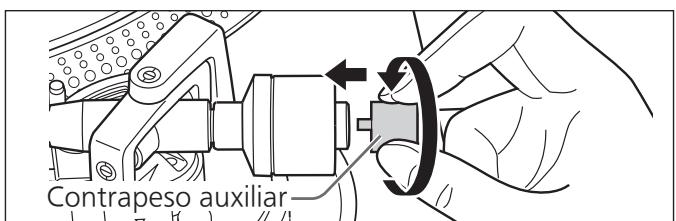
Contrapeso principal

natural_image
Illustration of a hand using a caliper to adjust a dial, showing mechanical components and motion direction (no text or symbols)Nota
natural_image
Technical illustration of a mechanical assembly with a tool and component (no text or symbols)Nota
natural_image
Mechanical assembly diagram showing a tool interacting with a car wheel and valve (no text or symbols present)natural_image
Diagram of a structural beam under load, showing support reactions and cross-section (no text or labels)natural_image
Pure mechanical assembly diagram without any text, numbers, or symbolsAandacht
natural_image
Mechanical component diagram showing a rotating shaft with curved arrows indicating motion (no text or symbols)natural_image
Illustration of hands installing or adjusting a rectangular electronic device with circular components, no text or symbols presentAandacht
natural_image
Illustration of a hand using a mechanical device to adjust a dial, showing the mechanism with an arrow indicating rotation (no text or symbols present)Opmerking
natural_image
Mechanical assembly diagram showing a lever mechanism with no visible text or symbolsnatural_image
Technical diagram of a structural beam supported by two beams, showing load distribution (no text or labels)natural_image
Pure mechanical cross-section diagram without any text, numbers, or symbolsObservera
natural_image
Mechanical component diagram showing a rotating shaft and housing with motion arrows (no text or symbols)natural_image
Illustration of hands installing a rectangular electronic device with circular components, next to a set of circuit boards (no text or symbols)Observera
natural_image
Illustration of a hand using a mechanical device to adjust a dial, showing the mechanism with an arrow indicating rotation (no text or symbols present)Observera
natural_image
Technical illustration of a mechanical assembly with a tool and rotating component (no text or symbols)Observera
natural_image
Mechanical assembly diagram showing a lever and tool interacting with a car wheel (no text or symbols)natural_image
Technical diagram of a structural beam under load, showing support reactions and cross-section (no text or labels)natural_image
Pure mechanical assembly diagram without any text, numbers, or symbolsBemærk
natural_image
Mechanical component diagram showing a rotating shaft and housing with motion arrows (no text or symbols)natural_image
Illustration of hands installing or adjusting a rectangular electronic device with circular components, no text or symbols presentBemærk
natural_image
Pure mechanical diagram showing three configurations of lever arms with cross symbols, no text or labels present.natural_image
Illustration of a hand operating a mechanical device with a dial and tool, showing no text or symbols.NB
- Ved tryk fra grammofonstift på 3 g eller derover skal du justere knappen for anti-glid til "3".
Armhøjde
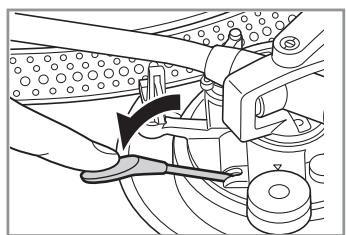
5 Sænk pickup-liften. Tonearmen går langsomt ned.
natural_image
Mechanical assembly diagram showing a tool interacting with a car wheel and valve (no text or symbols)- [×2] lyser: ±16 %
- [×2] slukket: ±8 %
3 Mens pladetallerkenen roterer
natural_image
Technical diagram of a structural beam with support columns and load arrows (no text or symbols)natural_image
Pure mechanical assembly diagram without any text, numbers, or symbolsHuomio
natural_image
Mechanical component diagram showing a rotating shaft and housing with motion arrows (no text or symbols)natural_image
Illustration of hands installing or adjusting a device with a box and circular components (no text or symbols)Huomio
natural_image
Illustration of a hand operating a mechanical device with a dial and tool, showing no text or symbols.Huomaa
natural_image
Mechanical assembly diagram showing a lever mechanism with no visible text or symbolsToisto alkaa.
natural_image
Diagram of a structural beam with support columns and load arrows, no text or symbols presentnatural_image
Pure mechanical assembly diagram without any text, numbers, or symbolsUwaga
natural_image
Mechanical component diagram showing a rotating assembly with curved arrows indicating motion (no text or symbols)natural_image
Illustration of hands installing or adjusting a rectangular electronic device with circular components, no text or symbols presentUwaga
natural_image
Illustration of a hand using a dial indicator to adjust a mechanical component (no text or symbols visible)Uwaga
natural_image
Mechanical assembly diagram showing a lever mechanism with no visible text or symbolsnatural_image
Diagram of a structural beam under load, showing support reactions and cross-section (no text or labels)natural_image
Pure mechanical assembly diagram without any text, numbers, or symbolsPozor
natural_image
Mechanical component diagram showing a rotating assembly with curved arrows indicating motion (no text or symbols)natural_image
Illustration of hands installing or adjusting a rectangular electronic device with circular components, mounted on a stove (no text or symbols)Pozor
natural_image
Three mechanical link diagrams showing different configurations of a lever or support structure (no text or symbols present)natural_image
Illustration of a hand using a caliper to adjust a circular dial (no text or symbols present)Poznámka
natural_image
Mechanical assembly diagram showing a lever interacting with a car wheel and valve (no text or symbols present)Začne přehrávání.
Kadoma, Osaka, Japan
Importer for Europe:
Panasonic Marketing Europe GmbH
Panasonic Testing Centre
Winsbergring 15, 22525 Hamburg, Germany
EU

Panasonic Corporation
Web Site: http://www.panasonic.com
EnGeFrItSpDuSwDaFiPoCz
- Technics
- Delivering the Ultimate Emotive Musical Experience to All
- Introduction
- Customer Communications Centre
- Features
- The coreless direct drive eliminates cogging and achieves smooth rotation
- The tone arm with high-precision bearings achieves high initial-motion sensitivity
- Three-layered turntable that delivers smooth rotational stability
- Four-layered cabinet construction and insulators based on thorough anti-vibration design
- High-quality terminals
- Highly accurate turntable speed maintained with the pitch control
- Table of contents
- - Before use
- - Getting started
- - Playing back
- - Maintenance
- Safety precautions
- Warning
- Unit
- AC mains lead
- Caution
- Placement
- Caution for AC Mains Lead
- Before use
- How to replace the fuse
- Safety precautions (continued)
- Disposal of Old Equipment
- Only for European Union and countries with recycling systems
- Accessories
- Parts Name
- Putting the player together
- Attaching the cartridge
- Attach a cartridge (store-bought) tentatively.
- Adjust the overhang.
- Putting the player together (continued)
- Attention
- Fitting the turntable
- Insert the centre spindle in the centre hole of the turntable.
- Slowly lower the turntable while aligning the rotor shaft fix holes (three locations) with the rotor shafts.
- Attach the washers, belleville springs, and screws for turntable to the rotor shaft fix holes, and tighten the mounting screws securely.
- ■ To remove the turntable
- Fitting the turntable mat
- Lay the turntable mat on the turntable.
- Attaching the head shell
- Fit the head shell with the cartridge into the tone arm. Keep the head shell horizontal and tighten the locking nut.
- Attaching the balance weight
- Attach the balance weight to the rear of the tone arm.
- Note
- Connections and installation
- Connect the PHONO cables and PHONO earth lead to the PHONO terminals of the connected equipment.
- Connect the AC mains lead.
- Installation
- Fit the dust cover
- Adjustment
- Horizontal balance
- Preparation
- Free the tone arm from the arm rest and adjust horizontal balance by turning the balance weight.
- Stylus pressure
- Turn the stylus pressure control until "0" comes to the centre line of the rear of the tone arm.
- Turn the balance weight to adjust to the appropriate stylus pressure for the cartridge.
- Anti-skating
- Turn the anti-skating control to adjust it to the same value as the stylus pressure control.
- Adjustment (continued)
- Tone arm height
- Release the arm lock.
- Adjust the height with the arm-height control ring.
- ■ When you don't know the cartridge height (H),
- Armlift height
- Check the armlift height (distance between the stylus tip and record surface). If adjustment is needed, go to step 2.
- Return the tone arm to the arm rest and fix it with the arm clamp. Turn the adjustment screw.
- Adjusting the turntable startup/brake speed
- Auto mode
- ■ Manual mode
- Startup speed
- Brake speed
- Playing records
- Turn [ON/OFF] to turn the unit on.
- Press [START-STOP].
- Press [RESET] to light the pitch control blue LED lamp.
- Lift the cue lever and move the tone arm over the record.
- Lower the cue lever. The tone arm moves down slowly.
- ■ To temporarily stop play
- ■ When play finishes
- ■ To light up the stylus
- Press the stylus light switch.
- ■ When playing EP records
- ■ When playing SP records
- ■ When using a record stabilizer (not included)
- Pitch control (fine adjustment to pitch)
- Maintenance
- ■ Care of the parts
- ■ Cleaning the dust cover
- ■ Moving the unit
- ■ WEEE symbol
- Disposal of the product outside the EU countries
- Troubleshooting guide
- No power.
- There is power but no sound. Sound is weak.
- Left and right sounds are reversed.
- Humming is heard during play.
- The Strobe light or the blue indicator blinks.
- Updating the firmware
- Before updating
- Specifications
- Einleitung
- Achtung
- Hinweis
- Raccordements et installation
- Remarque
- Attenzione
- Nota
- Atención
- Aandacht
- Opmerking
- Observera
- Bemærk
- NB
- Armhøjde
- Sænk pickup-liften. Tonearmen går langsomt ned.
- Huomio
- Huomaa
- Uwaga
- Pozor
- Poznámka
Brand : PANASONIC
Model : SL-1200GEG
Category : Turntable