PAMPERA 125 - Moto GAS GAS - Notice d'utilisation et mode d'emploi gratuit
Retrouvez gratuitement la notice de l'appareil PAMPERA 125 GAS GAS au format PDF.


| Type de produit | Moto tout-terrain |
| Marque | GAS GAS |
| Modèle | PAMPERA 125 (2007) |
| Catégorie | Moto |
| Moteur | 4-temps, 2 soupapes, monocylindre refroidi par air |
| Cylindrée | 123 cc |
| Alésage x course | 53 x 50 mm |
| Bougie d'allumage | TORCH D8RTC (écartement 0,7-0,8 mm) |
| Alimentation | Carburateur Keihin 22 |
| Capacité d'huile moteur | 1000 cc |
| Type d'huile moteur | SAE 10W-50, API SF ou SG |
| Transmission | 5 vitesses, chaîne 5/8 x 1/4 |
| Embrayage | Multidisque à bain d'huile, commande par câble |
| Châssis | Double poutre en acier, tubes rectangulaires et circulaires 28 mm |
| Suspension avant | Fourche télescopique Marzocchi Ø 40 mm, débattement 202 mm |
| Suspension arrière | Mono-amortisseur, débattement 220 mm |
| Frein avant | Disque 260 mm, étrier double piston AJP |
| Frein arrière | Disque 220 mm, étrier simple piston AJP |
| Pneu avant | 2.75 x 21" |
| Pneu arrière | 4.10 x 18" |
| Dimensions (L x l x H) | 2135 x 820 x 1120 mm |
| Empattement | 1450 mm |
| Garde au sol | 300 mm |
| Capacité du réservoir | 7,4 litres |
| Poids à sec | 119 kg |
| Instrumentation | Panneau multifonction LCD avec compte-tours, vitesse, odomètre, trip, chrono, horloge |
| Éclairage | Phare avant, clignotants, feux de détresse |
| Alimentation électrique | Batterie 12V sans entretien |
| Sécurité | Neiman, coupe-circuit moteur, contacteur d'arrêt d'urgence |
| Carburant recommandé | Sans plomb, indice d'octane 95 ou supérieur |
FOIRE AUX QUESTIONS - PAMPERA 125 GAS GAS
Questions des utilisateurs sur PAMPERA 125 GAS GAS
0 question sur cet appareil. Repondez a celles que vous connaissez ou posez la votre.
Poser une nouvelle question sur cet appareil
Téléchargez la notice de votre Moto au format PDF gratuitement ! Retrouvez votre notice PAMPERA 125 - GAS GAS et reprennez votre appareil électronique en main. Sur cette page sont publiés tous les documents nécessaires à l'utilisation de votre appareil PAMPERA 125 de la marque GAS GAS.
MODE D'EMPLOI PAMPERA 125 GAS GAS
GASGAS
PAMPERA 125-07
USER MANUAL
INTRODUCTION
GAS GAS would like to thank you for your confidence.
By choosing a new PAMPERA 125 2007 you have become part of the great GAS GAS family and, as a user of the number one manufacturer of off-road motorbikes, you deserve the best treatment we can offer you both in our after-sales relations and in the information given in this manual.
The new PAMPERA 125 2007 is a motorcycle that has been designed for your leisure. In fact, it is the result of many years of competition and experience in this highly demanding discipline and of the many excellent results obtained by the great riders who have provided the fundamental data to enable us to create excellent GAS GAS motorcycles with several key advantages: reliability, high-performance and stability.
Congratulations for making, without a doubt, the right choice. With skill at the commands of this motorbike, an adequate preparation and the corresponding essential servicing, this GAS GAS will remain highly reliable and you will be able to enjoy the most comfortable and rewarding motor sport.
Thank you for your confidence and welcome to GAS GAS motos S.A.
IMPORTANT WARNING
Read this manual carefully. This manual covers aspects that will contribute to your safety and to that of others, as well as guaranteeing a correct preservation and maintenance of your new GAS GAS motorcycle.
All the instructions required in order to correctly drive and handle the motorcycle are listed below. Each message will be preceded by a symbol.

DANGER
This warning symbol identifies special instructions or procedures that, if not correctly followed, could result in personal injury, or even death.

WARNING
This symbol identifies special instructions or procedures that, if not strictly observed, could result in damage to or destruction of the machine.

Note
This symbol indicates points of particular interest for more efficient and convenient operation.
Inadequate driving skill could cause environmental problems and conflicts with other people. Responsible use of your motorcycle will ensure that these problems and conflicts do not arise.
TO PROTECT THE FUTURE OF YOUR SPORT, MAKE SURE YOU USE YOUR BIKE LEGALLY, WITH CONCERN FOR THE ENVIRONMENT, AND RESPECT THE RIGHTS OF OTHER PEOPLE.
Motorcycle riding is a fantastic sport, and we hope you will enjoy it to the fullest.
CASCAS
USE OF OIL RECOMMENDED:

INDEX
INTRODUCTION 3
IMPORTANTWARNING 4
INDEX 5
IDENTIFICATION 7
Motorcycle identification code 7
Authorization plate 7
LOCATION OF COMPONENTS - OPERATION 8
Locating components 8
Clutch 10
Front brake 10
Ignition key and steering lock 10
Multi-function instrument panel and indicator lights 12
Electric start button 15
Engine stop button 15
Lights and indicators 16
Horn 17
Fuel tank 18
Fuel tap 18
Recommended fuel 18
Choke 19
Gear changer 19
Brake pedal 20
Stand 20
DRIVING INSTRUCTIONS 21
Starting the engine 21
Starting a cold engine 21
What to do when the engine is "flooded" 22
Stopping the engine 22
Stopping the motorcycle 22
Running-in period 23
MAINTENANCE INSTRUCTIONS 24
Maintenance chart 24
Clutch 25
- Adjustment 25
Brakes 26
- Position and play of the front brake lever 26
- Position and play of the rear brake pedal 26
Brake fluid 27
- Brake fluid level inspection 28
- Brake pad wear check 28
Handle bars 28
- Adjustment 28
Steering 29
Engine oil 30
- Oil level 30
- Changing the oil 30
- Cleaning the strainer 32
Carburettor 32
- Adjusting the accelerator control cable 32
- Adjusting idle speed 33
Spark plug 34
Air filter 35
Wheels 36
-Tyre pressure 36
- Adjusting the wheel spokes 37
Secondary transmission chain 37
-Chain slack - Checking 37
-Chain slack-Adjusting 38
-Chain wear 38
-Chainguides-Checking. 39
Battery 39
Exhaust system 41
-Removing the silencer 41
Front forks 41
- Height adjustment 41
Rear suspension 42
-Checking. 42
Lubrication 42
Tighten bolts and nuts 43
Tightening torque table 45
Fault diagnosis 46
CLEANING AND STORAGE 52
Cleaning 52
Storage 52
Starting after storage 52
TECHNICAL DATA 53
Engine 53
Chassis 53
GUARANTEE MANUAL 55
Guarantee 55
IDENTIFICATION
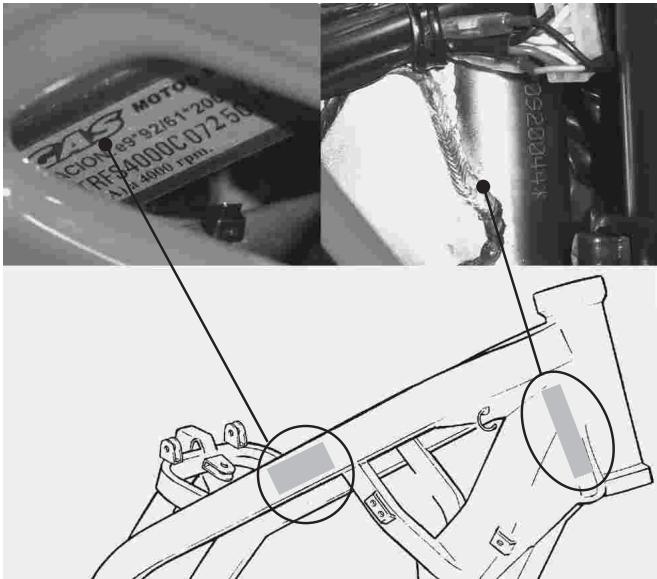
MOTORCYCLE IDENTIFICATION CODE
The motorcycle identification code is engraved on the steering stem.
AUTHORIZATION PLATE
The motorcycle has its own corresponding authorization plate including information such as the identification Code. The information on the authorization plate must correspond to the data in the vehicle documents.
LOCATION OF COMPONENTS - OPERATION
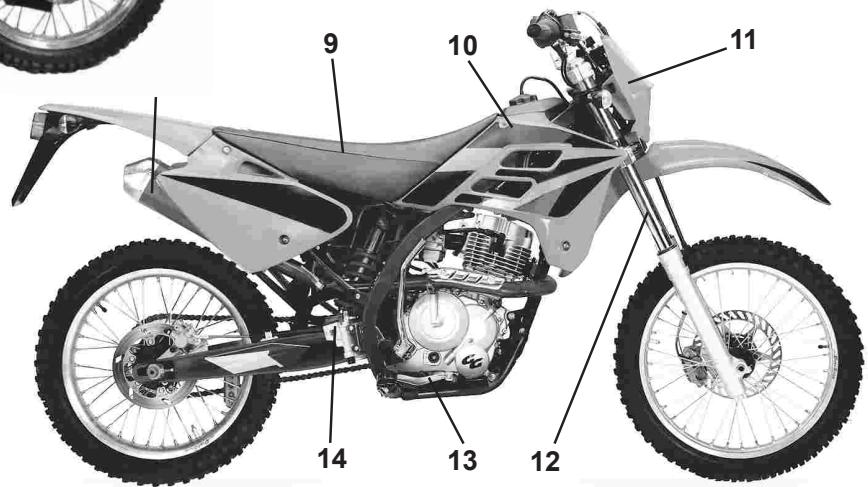
LOCATION OF COMPONENTS
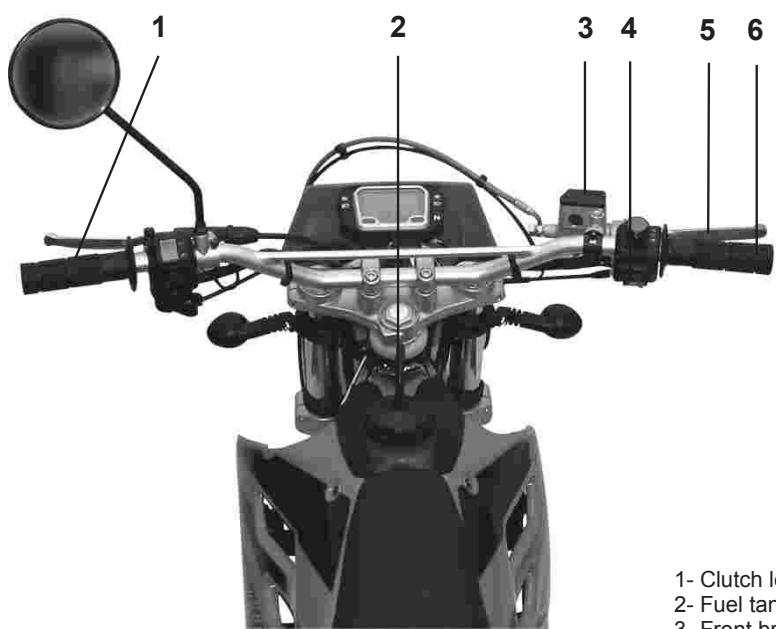
1- Clutch lever
2-Fuel tank cap
3- Front brake fluid tank
4- Engine start button
5-Front brake lever
6-Accelerator control
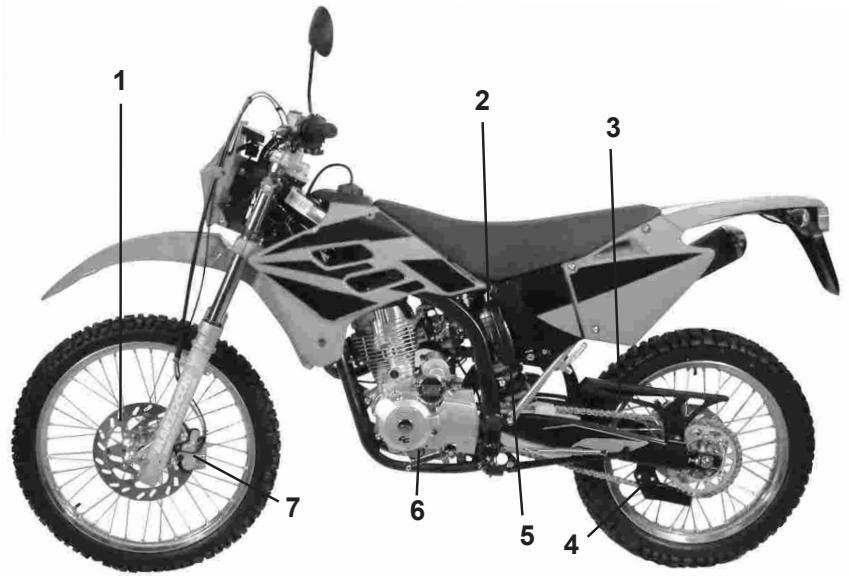
8-Silencer
9-Seat
10-Fuel tank
11- Headlight assembly
12- Front suspension
13- Rear brake pedal
14- Rear brake fluid tank
1-Front brake disk
2-Air filter
3-Chain
4-Chain guide
5- Rear shock absorber
6-Gear shift pedal
7- Front brake callipers
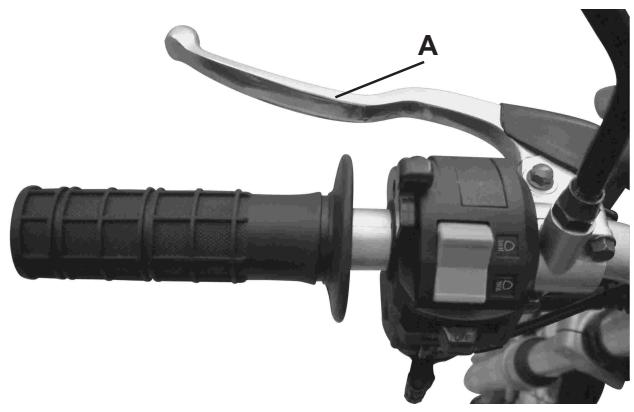
CLUTCH
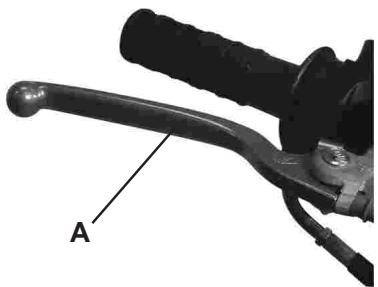
The clutch lever A is located on the left hand side of the handlebars. To adjust the cable, see the section "maintenance instructions".
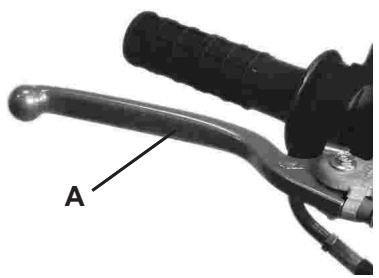
FRONT BRAKES
The front brake lever A is located on the right hand side of the handlebars.
IGNITION KEY AND STEERING LOCK
The ignition key A comes with the motorcycle and is inserted into the lock cylinder B located at the front of the handle bars.
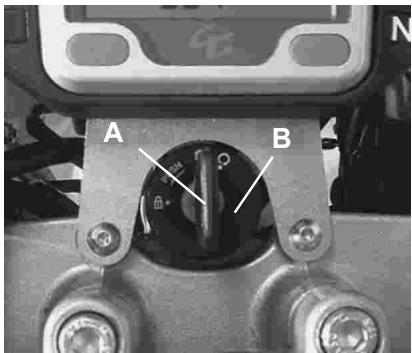
In the position everything is off and neither the lights or the horn will function. The battery is not used. In this position the hazard lights will not work either.
In the position the ignition is turned on, the engine may be started and both the lights and the horn may be used. The battery is used. In this position the hazard lights will operate.

Note
The motorcycle is fitted with a safety device allowing the engine to be started while the gear is engaged. See the section "Starting the engine".
The ignition key also operates the steering lock.
To activate the lock, insert the ignition key then:
- rotate the handlebars all the way to the left.
- from the position rotate the key to the left while pressing down to the position.
- remove the key; the steering is now locked.
MULTI FUNCTION INSTRUMENT PANEL AND INDICATOR LIGHTS
The multifunction apparatus, which is waterproof, has 4-8 LED indicators on both sides of a central indicator screen. This central indicator screen, made of liquid crystal and with illumination, gives information about the rpm, speed, journey, kilometres travelled, time, average speed, maximum speed, length of time with motor running and total time. The data relative to the distance travelled and total time of use is stored in the memory, even when the apparatus is switched off. When the multifunction apparatus is not activated, it displays a clock.
The wheel circumference value is adaptable, as is the measuring system (metric or imperial).
The number and distribution of the LED indicators, and the amount of information on screen may vary according to model.
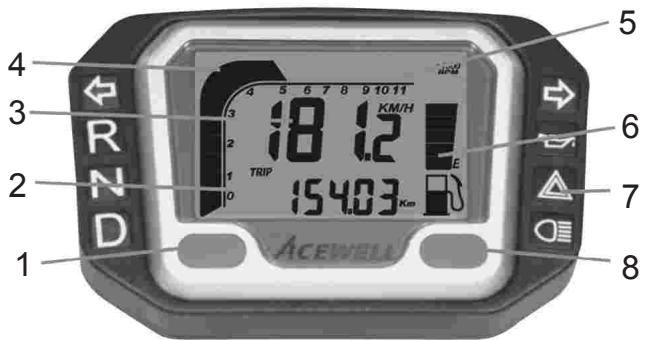
Panel
Panel description
- RESET button
- 2nd row of indicators
- 1st row of indicators
- Tachometer with bar graph
- Tachometer scale
- Fuel indicator bars (optional)
- LED indicator symbols
- MODE button
Description of symbols
| Left indicator / Green |
| Dipped headlights / Green |
| Motor oil / Red |
| Right indicator / Green |
| Full headlights / Blue |
| Neutral / Green (Optional) |
Technical characteristics
| FUNCTIONS | Symbol | TECHNICAL CHARACTERISTICS | INCREMENTS | PRECISION |
| Bar tachometer | 500 - 11,000 rpm | 500 rpm | ||
| Digital Tachometer | RPM | 100 - 19,900 rpm | 100 rpm | |
| Gear change indicator | RPM | 100 - 19,900 rpm | 100 rpm | |
| Maximum tachometer value | 100 - 19,900 rpm | 100 rpm | ||
| Speedometer | 2.3 - 300 kmph (187.5 mph) | 0.1 kmph o mph | ± 1% o ± 0,1 km/h / m/h | |
| Maximum speed gauge | MAX | 2.3 - 300 kmph (187.5 mph) | 0.1 kmph o mph | ± 1% o ± 0,1 km/h / m/h |
| Average speed gauge | AVG | 2.3 - 300 kmph (187.5 mph) | 0.1 kmph o mph | ± 1% o ± 0,1 km/h / m/h |
| Trip counter 1 and 2 | TRIP 1&2 | 0 - 999.9 km o 0 - 624.9 miles | 0.01 km o miles | ± 0.1 % |
| Mileometer | ODO | 0 - 999,999 km o 0 - 624,999 miles | 0.1 km o millas | ± 0.1 % |
| Operation time | RT | 0:00'00" - 99:59' 59" | 1 second | ± 50 PPM |
| Total time | TT | 0:00' - 9999:59' | 1 minute | ± 50 PPM |
| Clock | 0:00'00" - 23:59' 59" | 1 second/1 minute | ± 50 PPM |
Initial voltage: 12v CC.
Speed sensor: Non-contact magnetic sensor.
Tachometer input: CDI (capacitor discharge ignition) or ignition coil signal.
Wheel circumference adjustment: 1mm - 3.999mm (1 mm increments).
Working temperature: -10^ - + 80^ (engine casing interior).
Fuel sensor resistance: 100 (only in models with fuel level indicator).
Functions
RPM: Bar
Tachometer with bar graph. The bar graph of the tachometer displays up to 11,000 rpm.
RPM: Digital Tachometer
The rpm is shown in the second row. The digital tachometer displays up to 19,900 rpm. The tachometer signal can be read from the CDI (Capacitor Discharge Ignition) or the ignition coil.
Gear change indicator according to rpm
This function permits setting an indicator for changing gear at a specific rpm level. The tachometer bar flashes when the rpm reaches the specific level and stops flashing when the gear is changed.
MAX RPM: Maximum tachometer value
It appears in the 2nd row. It shows the highest level reached by the tachometer since the last resetting of the data.
SPD: Speedometer
The speedometer information appears in the first line of the screen. It shows up to 300km/h or 187.5mph .
MAX: Maximum speed gauge
The MAX value appears in the 1st line. It shows the highest speed reached since the last resetting of the data.
AVG: Average driving speed
The AVG value appears in the 1st line. It calculates the average speed since the last RESET operation.
TRIP: Journey counter
This appears in the second line of the screen. The TRIP function contains the vehicle's accumulated mileage since the last RESET operation.
ODO: Mileometer
It shows the total mileage accumulated by the vehicle. The data is stored in the memory, even when the device is not running.
RT: Time of use controller
It calculates the total time in use since the last RESET operation. It starts counting from the moment that movement begins.
TT: Total time of use controller
It calculates the vehicle's total time in use. It starts counting from the moment that movement begins. The data is stored in the memory, even when the device is not running.
12/24 hour clock
It shows the time in either 12 or 24 hour formats.
Fuel level indicator (only vehicles with this function) It has 7 bars showing the amount of fuel remaining in the fuel tank. The last bar flashes to indicate that the fuel level is too low.
ELECTRIC START BUTTON

Note
The motorcycle is fitted with a safety device allowing the engine to be started while the gear is engaged. See the section "Starting the engine".
The electric starter button A is located on the right-hand side of the handlebars and only operates if:
- the ignition key is in the position
- if the clutch is pressed in or the gear change pedal is in neutral.
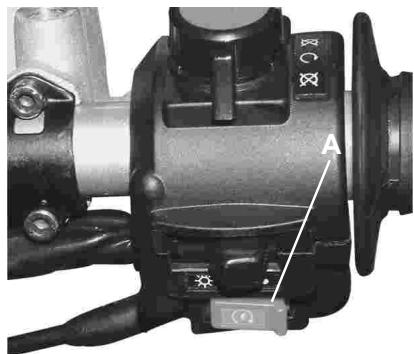
ENGINE STOP BUTTON
The switch A is located on the right-hand side of the handlebar and has three positions:

-Engine off
-Engine running
- Engine off
To stop the engine, moved the switch A 21 of the two positions indicated by the symbol .
LIGHTS AND INDICATORS

Note
With the ignition in position it is not possible to activate the lights or the horn. In this position the hazard lights will not work either.
Lights
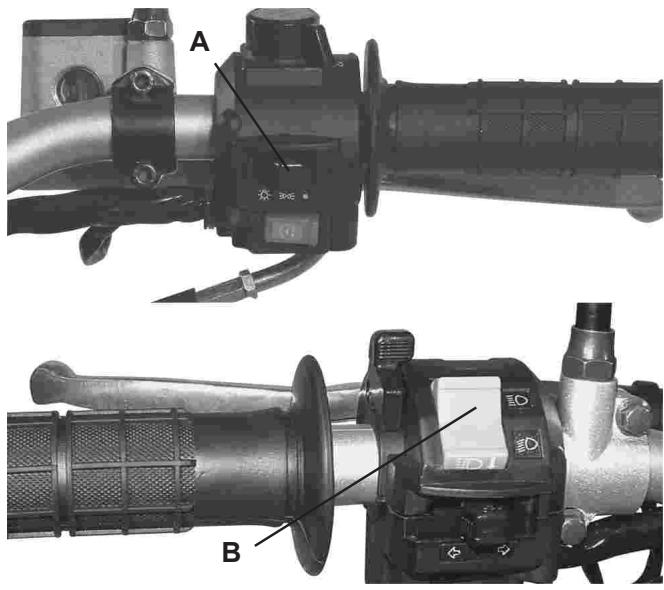
The switch A is located on the right-hand side of the handlebar and has three positions:
-Off
DO -Side lights
- Low beam / high beam
To switch from low beam to high beam operate the switch B located on the left hand side of the handlebars.
D - Low beam
D - High beam
Light burst
To operate the light burst, press the switch B to the position

Note
The switch A does not need to be activated to use the light burst. However the ignition key must be in the position .
Turn indicators
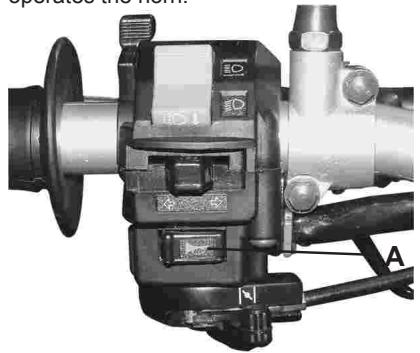
The switch A is located on the left-hand side of the handlebar and has three positions:
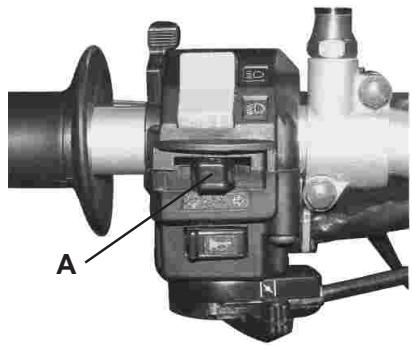

Right hand side indicator

Indicator off

Left hand side indicator
Hazard lights

WARNING
Regarding the use of these lights, follow the legal requirements of each country.

Note
The hazard lights only operate when the ignition is turned on.
The switch A is located on the left-hand side of the handlebar and has two positions:
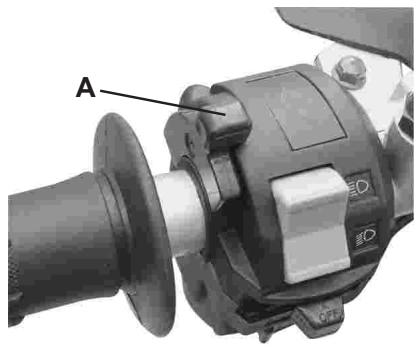

Hazard lights off

Hazard lights on
HORN
The button A, located on the left hand side of the handlebars, operates the horn.
FUEL TANK
The fuel tank holds 7.4 l.
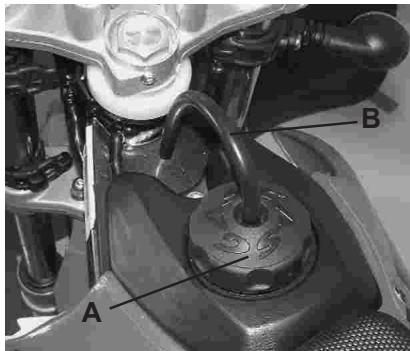
The tank has a rapid access cap A and a tube for ventilation B to clear and vapours that may form.
- Turn the cap to the left to open.

WARNING
Regularly check the cap seal and vent hose to ensure they are leak proof. Risk of spillage!
FUEL CUTOFF
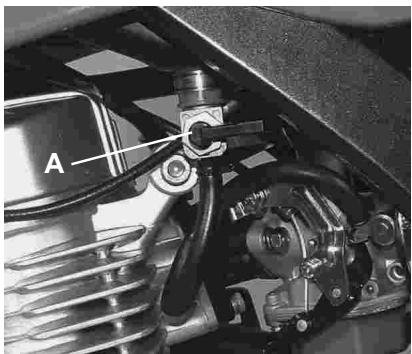
This has three positions:
The diagrams below show the position of the fuel tap (A) for each case.
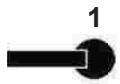

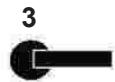
1- Reserve
2- Open
3-Closed
RECOMMENDED FUEL
Use lead-free petrol with an octane rating of 95 or higher.

WARNING
If knocking occurs, try a different brand of petrol or higher octane grade.

DANGER
Always stop the engine and do not smoke. Gasoline is extremely flammable and can be explosive under certain conditions. Make sure the area is well ventilated and free from any source of flame or sparks; this includes any appliance with a pilot light.
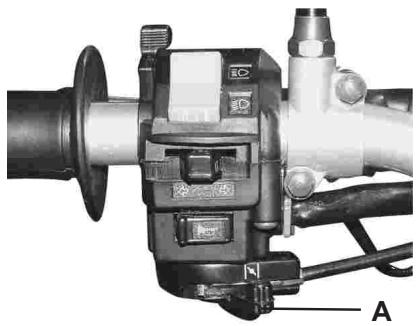
THROTTLE CONTROL
Moving the control A to the left will close the throttle and restrict the flow of air in the carburettor jet. While the control A remains in this position, the air/fuel mixture is enriched and this will facilitate cold starting. See also "Starting a cold engine".
GEARBOX
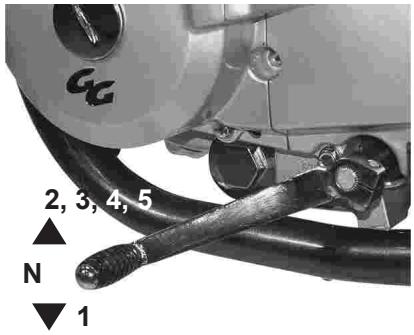
The motorcycle has 5 gears. It is a sequential gearbox, which means that in order to reach third gear from first gear, second gear must first be engaged, that is, the gears go up or down gear by gear.
To engage the first gear from neutral, press on the clutch, press the gearshift pedal all the way down then release the clutch slowly.
Neutral is located between first gear and second gear.

WARNING
To ensure correct gear engagement, operate the gearshift pedal firmly so that the transition is complete.
Incomplete or erratic insertion of gears could cause damage to the transmission system. Accident risk!
BRAKE PEDAL
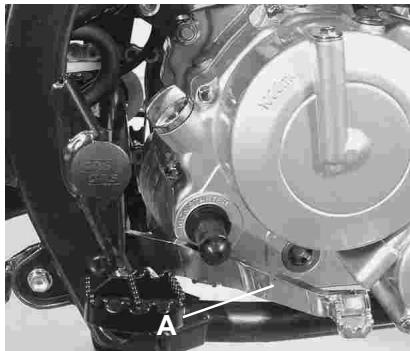
A - Rear brake pedal
The rear brake pedal is located in front of the right hand side footrest and may be adjusted to the position of the driver. SEE MAINTENANCE INSTRUCTIONS.
STAND

DANGER
Danger, risk of physical injury! Use the stand with care.
The uncontrolled return of the stand to its rest position could cause injury to the user or to others

WARNING
Do not start the engine or ride the motorcycle when the stand is down.
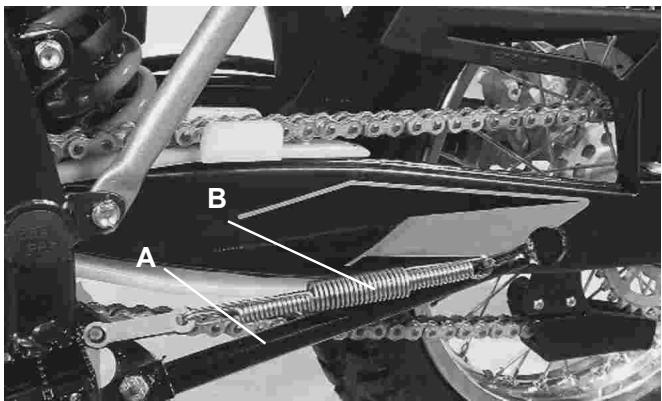
- Push the stand A downwards to the ground by foot until it supports the weight of the motorcycle.
Ensure that the surface on which the stand rests is sufficiently hard so that the motorcycle remains in a stable position.
- To take up the stand, remove the weight of the motorcycle by inclining it - the spring B will return the stand to its resting position.
DRIVING INSTRUCTIONS
STARTING THE ENGINE

DANGER
Do not start or leave the engine idling in closed spaces.
Exhaust fumes are highly toxic and may result in loss of consciousness or even death. When the engine is running, ensure that there is always adequate ventilation.

Note
The motorcycle is fitted with a safety device allowing the engine to be started while the gear is engaged.
To start the motorcycle, proceed as follows.
- Open the fuel tap.
- Put the gearbox into neutral or even hold in the clutch lever during the starting operation.
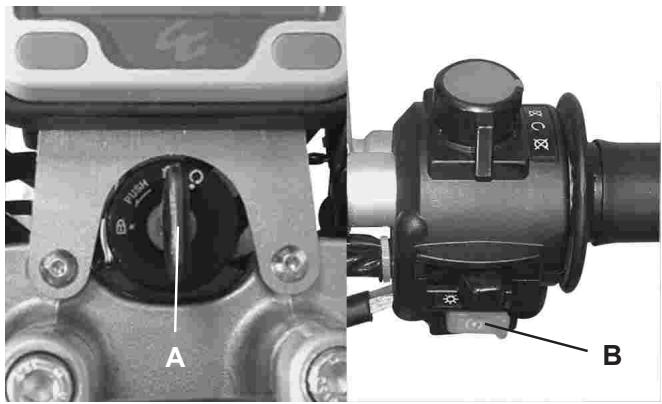
- Rotate the ignition key A clockwise to the position () , the electric circuits are activated and the motorcycle may start.
- Without using the throttle, press the electric start button B.

WARNING
When the key remains in the engine start position: If the engine is not started then a loss of battery electrical potential may occur.
STARTING A COLD ENGINE

WARNING
Do not fully load the motorcycle while the engine is cold.
Allow the engine to run at idle speed or drive slowly until the engine reaches normal operation speed.
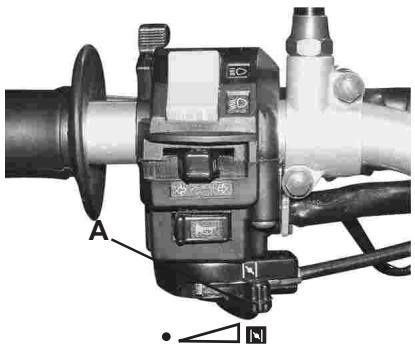
After some seconds, and depending on the outside temperature, the engine will reach a higher and more stable speed. This means that it has reached normal operation temperature. At this moment remove the choke by turning the control A to the right hand side.
WHAT TO DO WHEN THE ENGINE IS FLOODED
- Close the fuel tap.
- Following the instructions described in STARTING THE ENGINE, operate the starter button with the throttle completely open (full throttle) and the choke control all the way to the right; release the throttle control as soon as the engine starts.

Note
If the engine will not start, remove the spark plug and dry it. See "Removing the spark plug".
- Once the engine is running, open the fuel tap.
Stopping the engine
- Brake the motorcycle and put the gearshift pedal in neutral.
- Completely close the accelerator pedal and use the engine stop button.
- Rotate the ignition key anticlockwise to the position -1,1 .
- Close the fuel tap.
STOPPING THE MOTORCYCLE

DANGER
When driving in wet conditions or after washing the motorcycle, the brakes may be wet. If so, then the braking capacity is reduced until the braking elements are dry. Drive carefully and lightly apply both brakes in order to dry them.

WARNING
If the ground is slippery or loose then give preference to the rear brake.
Depending on circumstances and ground surface, it may be better to use the front or rear brakes independently.
Gear down gradually using the engine braking capacity.
For maximum deceleration, close the throttle A and apply both front and rear brakes.
RUNNING IN PERIOD

WARNING
Brutal acceleration during the run in period may cause engine damage.
All of the moving parts in the engine have been made to a high level of precision in order to obtain a quality contact surface and correct positioning.
However, correct engine care during the first hours of use is vital for obtaining the best from your motorcycle.
Therefore, we recommend:
- Start the engine and let it run at idle until the engine is thoroughly warmed up.
- Stop the engine and wait for it to completely cool.
-
Start the engine once again. For the first hour of use or for the first 100Km , use the engine at a moderate speed.
-
Never run the engine at maximum rpm.
- Vary the engine speed consistently using the throttle control.

Note
The spark plug may be soiled if the engine is used at a low speed during the running in period. If this occurs then replace the standard spark plug by a higher temperature spark plug for the running in period only. See the section regarding extraction of the spark plug.
Following the run-in period, fit a new standard spark plug.
MAINTENANCE INSTRUCTIONS
| MAINTENANCE CHART | |||
| Article | PeriodFirst 5 hours | Periodevery 30 hours | Periodevery 60 hours |
| Air filter | Inspect the following every time that the motorcycle has been used or when necessary | ||
| *Bolts on the silencer and the connections for the silencer | T | T | T |
| *Valve tolerances | I | - | I |
| Spark plug | - | I | R |
| Fuel lines | I | I*Change every 4 years | I |
| Engine oil | R | R | R |
| Oil strainer | C | - | C |
| Clutch | I | I | I |
| Chain | Clean, lubricate and inspect each time the motorcycle has run | ||
| *Brakes | I | I | I |
| Brake lines | I | I*Revise every 4 years | |
| Brake fluid | I | I*Change every 2 years | |
| Tyres | Inspect tyres for damage and check the tyre pressure every time the motorcycle has run | ||
| *Steering assembly | I | - | I |
| *Front forks | I | - | I |
| *Rear suspension | I | - | I |
| *Chassis bolts and nuts | T | T | T |
Note: I = Inspect and clean, adjust, replace or lubricate if necessary; R= Replace; T= Tighten; C= Clean
CLUTCH
Adjusting
Correct clutch lever play is 2-3 mm.

WARNING
Lower play than that indicated will reduce the clutch effectiveness and the clutch useful life.
To adjust the clutch lever play, proceed as follows:
- Remove the cap A.
- Loosen the lock nut C.
- Rotate the adjustment B in one direction to achieve the indicated play.
- Tighten the lock nut C to lock the adjustment B in position.
- Fit the protection cap.
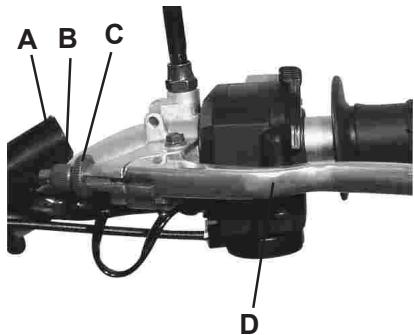
A- Protection cap
B-Adjustment
C- Lock nut
D- Clutch lever

Note
If the clutch lever adjustment is at its limit, play must be adjusted by using the clutch cam.
Correct clutch cam play is 2-3 mm.

WARNING
Lower play than that indicated will reduce the clutch effectiveness and the clutch useful life.
To adjust the clutch cam play, proceed as follows:
- Loosen the adjustment nuts B and rotate in one direction until the correct play is achieved.
- Tighten the adjustment nuts B to lock the adjustment in position.
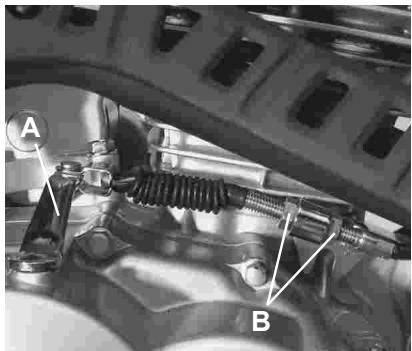
A-Cam
B- Adjustment nuts
BRAKES
Brake disc wear is automatically compensated mechanically and has no effect on the front brake lever or on the rear brake pedal. The only adjustments that need to be made are: Position and play both on the front brake lever and the rear brake pedal.
Position and play of the front brake lever
- Adjust the position of the front brake lever according to the size of your hand. Note that the front brake lever should have a play of at least 3mm when in rest position. Adjust the position and play of the brake lever using the bolt A.
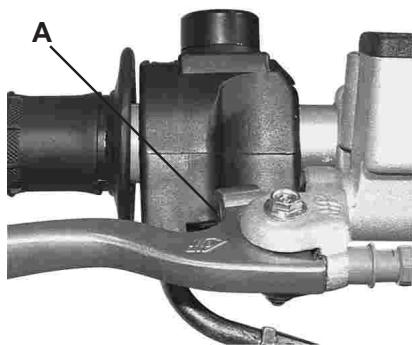
A - Adjustment bolt
DANGER
Never reduce the play of the front brake lever to less than 3mm . If the play is reduced then the brake cylinder acts on the front brake pads which then remain in permanent contact with the brake disc; this could result in brake failure due to overheating.
If the front brake has a spongy feeling then it is possible that there is air in the hydraulic circuit. We recommend that you visit a GAS GAS workshop immediately.
- Ensure that front brake lever adjustment is correctly suited to your hand.
Position and play of the rear brake pedal
The rear brake pedal should have a play of between 1 to 3mm when in rest position.
- Loosen the bolt A and adjust the play using the pin B.
- Tighten the nut A once again.
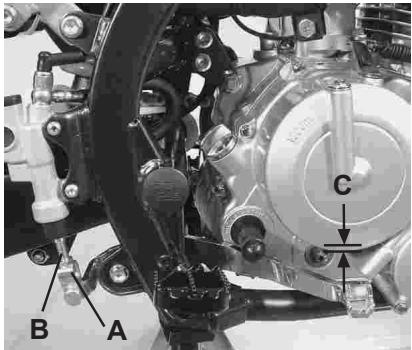
A - Nut
B - Pin
C - Play
- Ensure that the rear brake pedal adjustment is correct; if necessary repeat the adjustment until it is correct.
- Ensure that the pedal operates correctly and that it does not rub on any element of the motorcycle.

DANGER
Never reduce the play of the rear brake pedal to less than 10 mm. If the play is reduced then the brake cylinder acts on the rear brake pads, which then remain in permanent contact with the brake disc; this could result in brake failure due to overheating.
If the rear brake has a spongy feeling then it is possible that there is air in the hydraulic circuit. We recommend that you visit a GAS GAS workshop immediately.
BRAKE FLUID
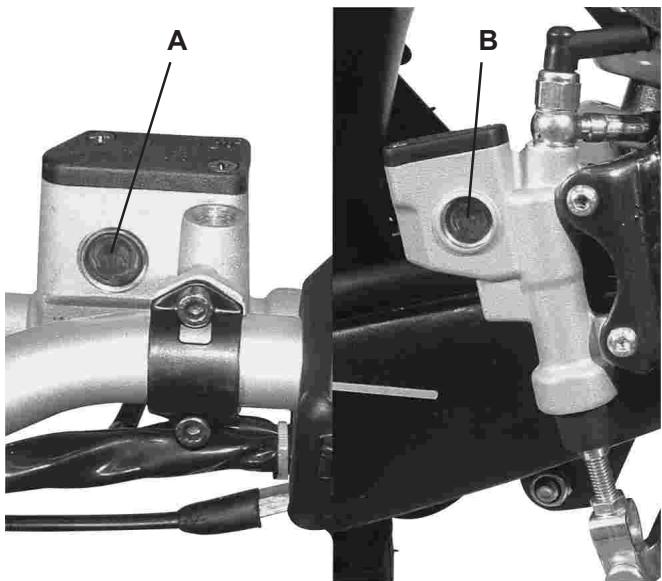
- Check the condition of the brake fluid using the level inspection windows on both the front brake tank A and rear brake tank B. If the brake fluid is dark or appears dirty then go immediately to an approved GAS GAS workshop to replace the fluid.

WARNING
Brake fluid absorbs ambient humidity and degrades with time. So that the brake fluid retains its specifications, use only fluid from sealed containers and respect the replacement periods as shown in the MAINTENANCE CHART.
Brake fluid is corrosive to paintwork. Avoid contact between the fluid and paintwork.
- Only use fluid in accordance with DOT 3 or DOT 4.
Brake fluid level inspection
- Check the brake fluid level using the inspection windows on both the front A and rear B brake tanks. The level should at least reach halfway up the inspection window.
If brake fluid is required:
- Ensure that brake fluid is not leaking from: front and rear brake cylinder seals, hoses and joints. If there is any leak, visit a GAS GAS workshop immediately.
- Add brake fluid, complying to the DOT 3 or DOT 4 standards, to the corresponding brake fluid tank in order to re-establish the correct level.
Checking brake pad wear
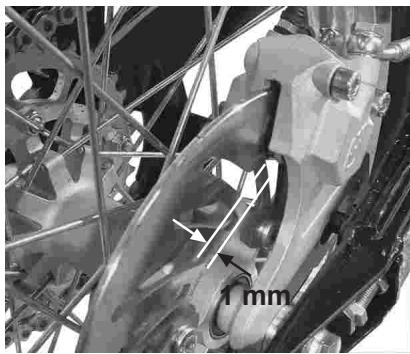
- Check the thickness of both the front and rear brake pads.
- Minimum brake pad thickness A: 1 mm
- If any brake pad is less than 1mm thick then replace the complete set.
HANDLEBARS
Adjustment
In order to better suit the driver size and preferences, the handlebar position may be adjusted forwards or backwards.
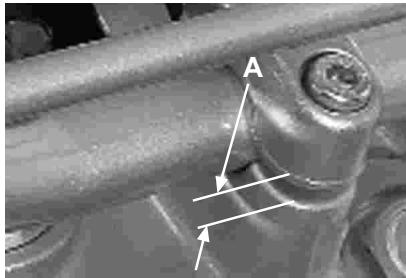
Loosen the handlebar A clamp bolts B then place the handlebars in the required position.
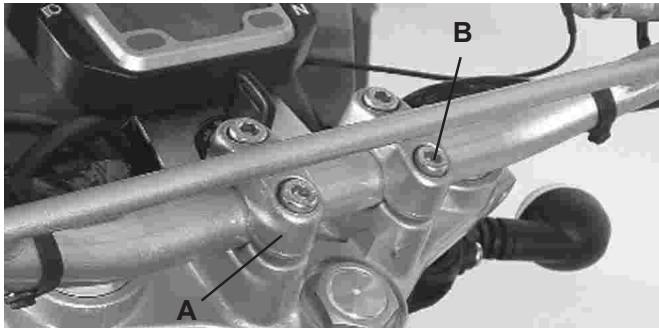
Tighten the bolts to 25Nm , firstly the forward bolts then the rear bolts. If the handlebars are correctly installed, there will be a minimal gap at the front and rear of the clamp after tightening A.
STEERING

DANGER
Handlebars with excessive play or an incorrect adjustment are extremely dangerous for driving.
Steering - verification
The steering should always be kept adjusted so that the handlebar will turn freely but without excessive play
To check the steering adjustment, proceed as follows:
- lift the motorcycle off the ground using a support under the chassis so that both wheels are suspended.
- move the steering gently from side to side.
If the steering continues to turn when released then this means that the some play has resulted from use.
Make a final test:
- with the motorcycle firmly attached to the supports and with the wheels suspended, stand in front of the motorcycle; pull and push the handlebars forward and back.
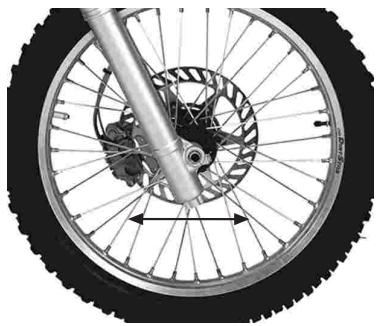
If the steering shaft moves then the steering must be adjusted.
Steering - adjustment
- Stabilise the motorcycle using a solid support under the chassis.
- Keep the front wheel off the ground.
- Remove the handlebar by loosening the handlebar clamp bolts A.

WARNING
Always work with the handlebars in such a way that cables and hydraulic lines are not damaged.
-Loosen the steering stem bolt B.
-Loosen the steering stem bolt C.
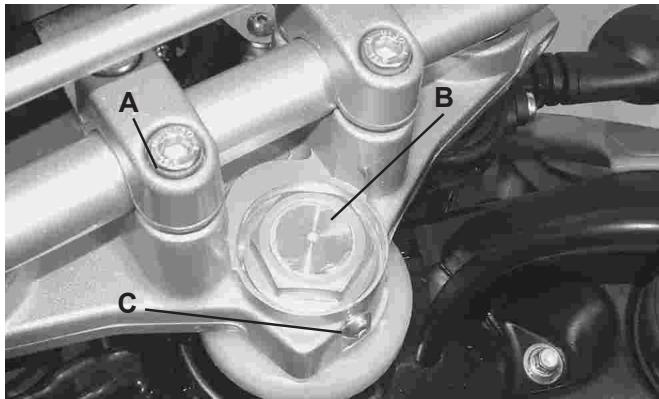
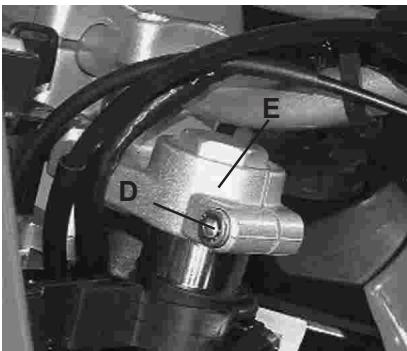
- Loosen the bolts D on both sides then remove the upper suspension plate E.
- Rotate the steering adjustment nut using the special spanner in order to obtain the appropriate adjustment.
- Fit the upper suspension plate E.
- Fit the washers, tighten the steering shaft bolt C, the steering shaft nut B and the bolts D to the correct torques below:
Steering nut: 44 Nm (4.5 Kgm)
Suspension plate bolts: 22 Nm (2.25 Kgm)
- Check the steering once more and adjust again if necessary.
- Refit all removed parts.
ENGINE OIL
The oil must comply with the SAE 10W-50 standard, classification API SF or SG.

Note
If you are using the motorcycle in climates with extreme temperatures then choose the most suitable engine oil using the attached table as a guide.
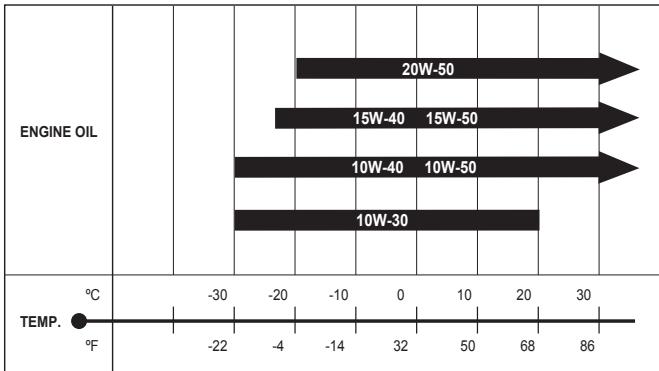
Oil level

Note
- To keep your engine in perfect working order, regularly check the oil level and change the oil.
- The engine oil increases in volume when it is hot. Check and adjust the level when the oil is cold.
- Initially replace the oil after 5 hours of operation and then every 60 hours. See the maintenance table.
Changing the oil

DANGER
- The engine oil and the exhaust manifold can be very hot and cause burns. Wait until the oil and the exhaust manifold are cool.
- Exhaust fumes are highly toxic and may result in loss of consciousness or even death. When the engine is running, ensure that there is always adequate ventilation.

WARNING
- Avoid all contact with the engine oil; this is a health risk and may cause irritations.
- Keep new or used oil away from the reach of children and animals.
- Wash yourself with neutral soap if oil comes in contact with your skin.
- Used oil should be kept in an appropriate recipient for subsequent recycling according to current legislation.

Note
- Change the oil when the engine is warm; this will facilitate the drainage of the oil from the drain in the lower part of the engine.
- Always use genuine GAS GAS parts.
To change the oil, take the following steps:
- Ensure that the motorcycle is on a suitable, solid, horizontal surface, for example a stand.
- Place an adequately sized container underneath the engine.
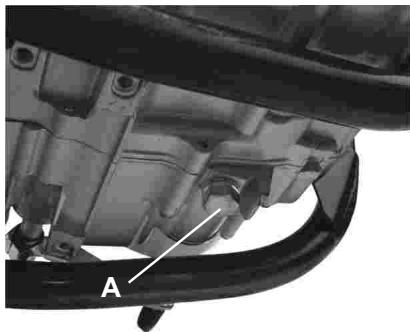
- Remove the bolt from the drain A.
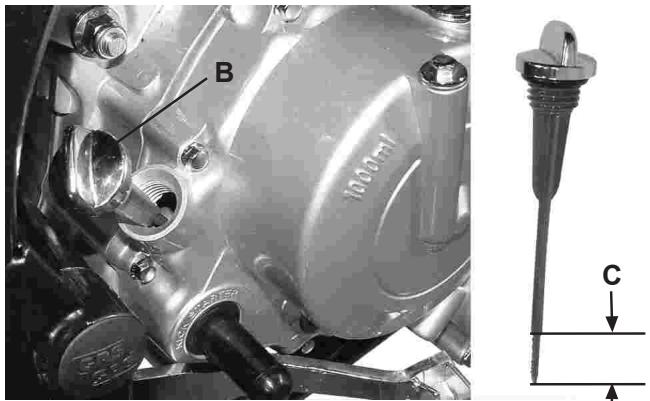
- Remove the oil level rod B.
- Allow the used oil to completely drain out.
- Replace the seal washer and replace the drain bolt A.
- Add oil in small quantities (for example 150ml ) and check the oil level using the oil level rod as usual (clean before checking).

Note
The engine has a visor on the right hand side cover – on the clutch side, close to the brake pedal – this can be used to check the approximate oil level.
- The oil level should never exceed the upper mark indicated by the grooved zone C on the oil level rod.
- Start the engine and keep it running for several minutes to ensure that oil is not leaking from the drain plug.
- Stop the engine.
- Ensure that the oil level is correct and if necessary add more oil.
Cleaning the strainer

Note
- The engine oil circuit, has a strainer to filter out particles that may contaminate the oil.
- The oil strainer should be cleaned as indicated in the Maintenance table.

WARNING
Used oil should be kept in an appropriate recipient for subsequent recycling according to current legislation.
- Empty the engine oil as indicated in the section Changing the engine oil.
- Remove the plug A located on the left hand side of the engine.
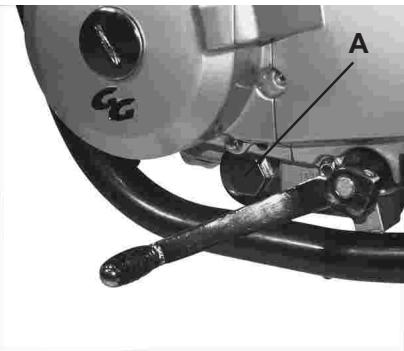
- Remove the spring B and the oil strainer C.
- Clean the strainer using petrol and dry using compressed air in order to remove the remains of petrol.
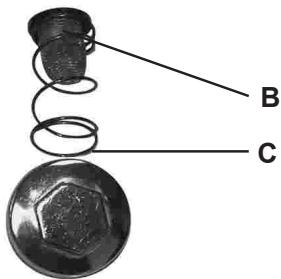
B- oil strainer
C- spring
- Fit the strainer, the spring and the cap.
- Refill the oil and ensure that there are no leaks as indicated in the section regarding oil changes.
CARBURETTOR
Adjusting the throttle control cable
The throttle control should have a play of 2-3 mm. If the play is not as indicated then proceed as follows:
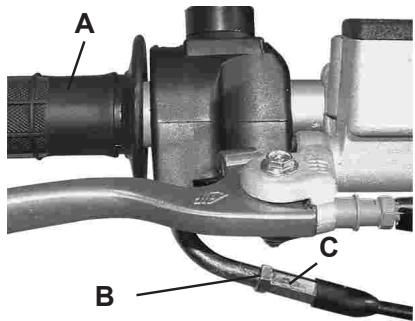
A-Throttle control
B - Lock nut
C - Adjustment
- Check that the throttle grip turns smoothly.
- Loosen the lock nut B.
- Rotate the adjustment bolt C until the indicated play is reached.
- Tighten the locknut B.
Adjusting idle speed

DANGER
The exhaust gasses are highly toxic. The idle adjustment operation must be carried out in open spaces or in suitably ventilated premises.
The carburettor has an idle adjustment screw A, which acts on the fuel opening cylinder in the carburettor.
The bolt B adjusts the supply of air-fuel for the deceleration system.
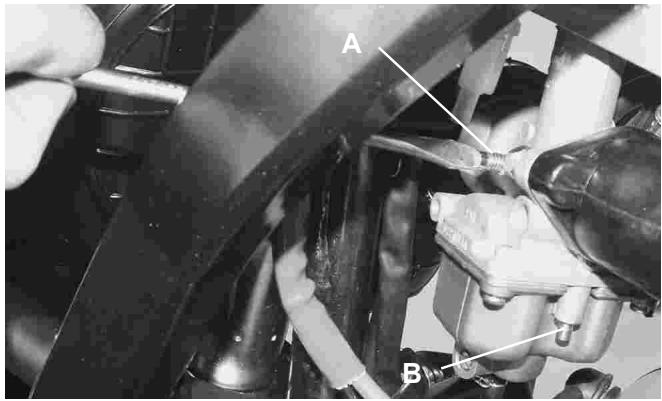
To set the engine speed to a minimum or slow the engine down then take the following steps:
- Use the motorcycle until the normal operation temperature is reached.
- Stop the engine and secure the motorcycle (for example on a support stand).
- Start the engine.
- Rotate the bolt A until the engine runs continuously.

Note
- Rotating the screw A clockwise will increase the engine speed.
- Rotating the screw A anticlockwise will decrease the engine speed.
- Rotate the bolt B until the engine reaches the highest speed.

Note
- Tightening the screw B will restrict the flow of air-fuel mixture
-
Loosening the screw B will open the flow of air-fuel mixture
-
Tighten the screw B about 1/4 of a turn.
Rotate the bolt A until the engine reaches the required idle speed.
SPARK PLUG

Note
- The spark plug should be regularly checked, according to the "Maintenance table" or if the engine has a problem. See the section "Trouble shooting".
- Note that if the engine performance falls then this could be due to the spark plug.
| Standard spark plug | TORCH D8RTC |
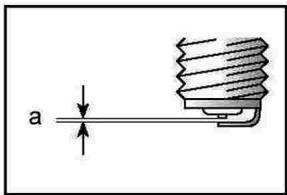
| Electrode spacing | 0.7 to 0.8 mm (0.028 – 0.031 in) |

WARNING
Incorrect installation of the spark plug or the choice of an incorrect temperature grade may cause serious damage to the engine. This damage is not covered by the guarantee.
Always use spark plugs recommended by GAS GAS. Consult the dealers or a qualified mechanic to know which spark plug is best for your bike.
Spark plug - removing
To remove the spark plug, take the following steps:
-
Remove the cap A from the spark plug.
-
Remove the spark plug B from its allotment using the special spark plug wrench.

Check the colour and the appearance of deposits on the spark plug. These deposits indicate if the standard spark plug is the most suitable for your motorcycle or if it should be replaced by another of a different temperature grade.
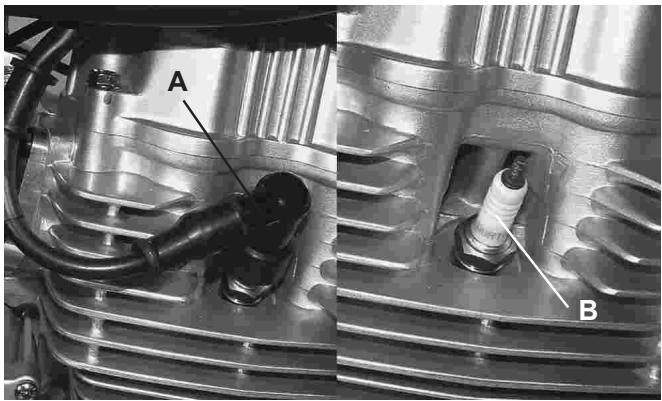
- If there is soot on the spark plug then clean using a metal brush.
- Check and, if necessary, adjust the electrode spacing to between 0.7 - 0.8 ~mm (0.028 - 0.031 in).

WARNING
If the spark plug electrodes are oxidised, damaged or the insulation is broken then replace the plug.
- Fit the spark plug and tighten to the specified torque of 11 Nm (1.0 kgm). See also the "Tightening torques table".
- Refit the hood for the spark plug.

Note
To ensure correct operation of the spark plug, keep the protection hood clean and dry.
AIR FILTER
A clean air filter will provide good engine performance and prolong its useful life.
An obstructed air filter restricts the air intake of the engine, increasing the petrol consumption and reducing the engine power as well as causing the destruction of the spark plug.

WARNING
If dirt enters the engine then this will lead to excessive wear and engine damage. Inspect the air filter regularly as indicated in the Maintenance table.
Air Filter - Cleaning

DANGER
When cleaning the air filter, ensure the area is well ventilated and free from any source of flame or sparks; this includes any appliance with a pilot light.
Do not use petrol to clean the filter as this could result in an explosion.
To remove the air filter, proceed as follows:
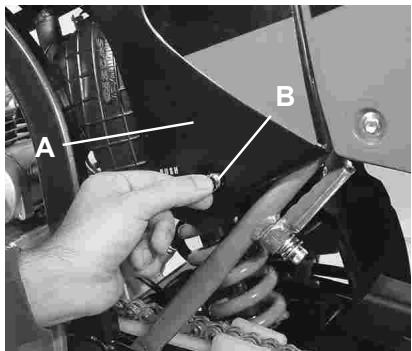
-Remove the cover A by rotating the clip B.
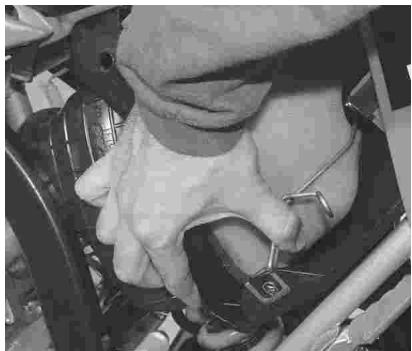
-Remove the retention rod C.
- Remove the filter element assembly
- Stuff a clean, lint-free towel into the intake manifold so no dirt is allowed to enter.
- Clean inside the filter housing using a damp cloth.
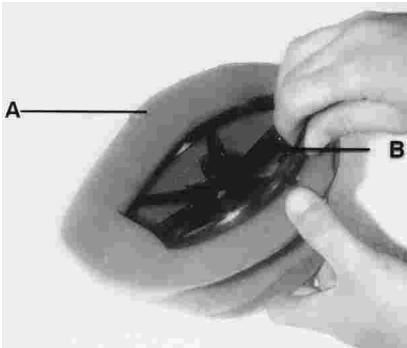
- Remove the cage B from the air filter A.
- Clean the filter in a bath of filter cleaning liquid using a gentle brush.
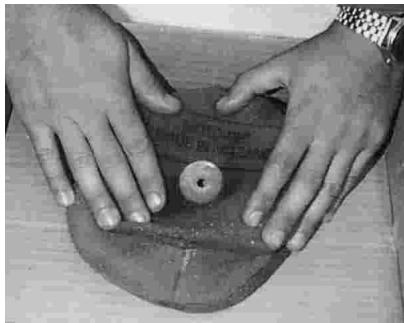
- Squeeze it and dry it with a clean cloth. Do not twist the filter or expose it to pressurized air otherwise it will be damaged.
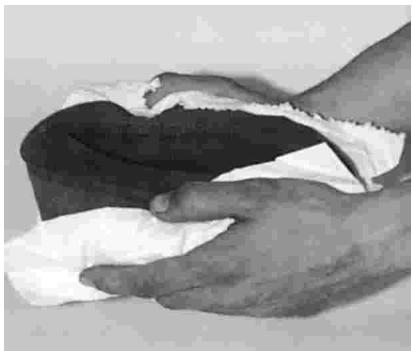
- Check the filter for damage such as rupture, scratching, hardening, or shrinkage. If it is damaged then replace it, otherwise dirt will enter the carburettor.
- Grease all of the connections and bolts of the air filter and inlets.
- Re-install the air filter in the motorcycle and make sure it is correctly secured.
WHEELS
Tyre pressure
Tyre pressure affects traction, handling, and tyre life.
- Adjust the tyre pressure to suit ground conditions and rider preference, but do not deviate excessively from the recommended pressure.

Note
Tyre pressure should be tested when the tyre is cold before driving.
Ground conditions
- Wet, sandy, muddy and slippery ground: reduce tyre pressure.
- Hard ground, stony ground: increase tyre pressure.
Adjusting the wheel spokes

DANGER
The wheel spokes must be evenly tightened.
One or more loose or incorrectly tightened wheel spokes may put the rim off-centre and put extra tension on the remaining spokes which may in turn rupture. Accident risk!
Centring the rim

Note
If the rim is bent or crooked then it must be replaced.
In case of small deformations of the rim, go to an approved GAS GAS workshop or specialist workshop.
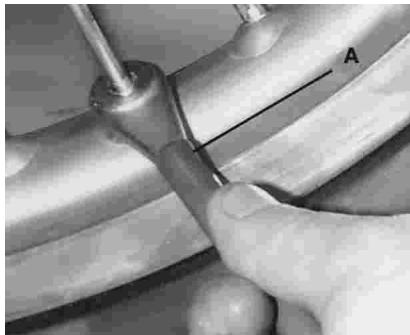
A- Wheel spoke adjustment tool
SECONDARY TRANSMISSION CHAIN

DANGER
A chain in bad condition, inadequately maintained or incorrectly adjusted may jump or rupture leading to a loss of control of the motorcycle.

Note
The chain should be regularly examined, according to the maintenance table or when the motorcycle is used in adverse conditions, for example in mud, rain or humid conditions.
Chain slack - Checking

Note
Under muddy or humid conditions, the chain will be under more tension. Eliminate mud from the chain before checking the play.
The distance between the chain B and the chain pad A should be about 30 a 50 mm.
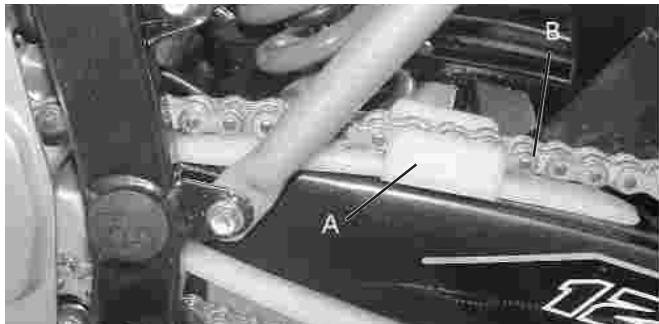
- To check this, rotate the rear wheel until the chain becomes more tense.
- Lift the chain B by hand in the area of the pad A and measure the distance between the pad surface and the lower part of the chain links.
- If the indicated specification is not reached then adjust the chain as described below.

Note
When checking the chain tension, rotate the rear wheel to check for damaged links and lost connections as well as worn or damaged teeth on the drive pinion and sprocket.
Chain slack - Adjusting

Note
The operation is described from the swinging arm side.
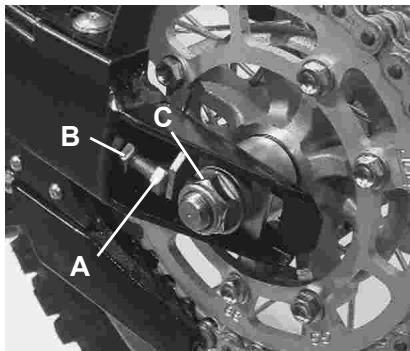
A - Adjustment bolt
B - Lock nut
C-Axle nut
Rear
- Loosen the axle nut C.
- Loosen the lock nuts B.
- Rotate the chain adjustment bolt A to reach the measurement indicated in the section "Chain slack - Checking".

WARNING
The operations described should be repeated on the opposite side given that the rear wheel must be aligned with the front wheel. To align both wheels, use the string method and adjust, if necessary, the adjustment bolts as described above.

DANGER
An incorrectly aligned wheel will cause abnormal tyre wear and may be dangerous for driving.
-Tighten the lock nuts.
-Tighten the rear axle nut to 98 Nm.

DANGER
An incorrectly tightened rear axle nut will be extremely dangerous for driving.
- Rotate the wheel and measure the position when the chain is most tense. Re-adjust if necessary.
Chain wear

WARNING
Replace the chain when the length exceeds 2% of its original length*.
Only use original replacement parts.
When the chain is replaced, the engine output pinion and the rear sprocket should also be replaced. If the teeth on these element are worn then this will lead to a rapid wear of the new chain.
Check the engine output pinion and rear sprocket teeth and replace them if they are worn.
- the chain must be removed by opening the connection link. The length is measured from the two ends of the chain.

WARNING
Whenever the chain is removed, ensure that the clip on the chain connection link is correctly installed with the closed part of the "U" in the direction of rotation.
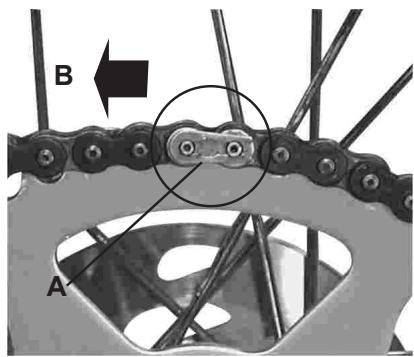
A - Clip
B - Direction of rotation of the chain
Chain guides - Checking
Check the chain guide A as well as the upper and lower parts of the chain pad B. If there is any serious damage then replace these elements.


Note
Only use original replacement parts.
BATTERY

Note
This battery is maintenance free and checking the fluid level is not required. It is advisable to check the charge of the battery periodically.
Battery - removing
To remove the battery, follow these steps:
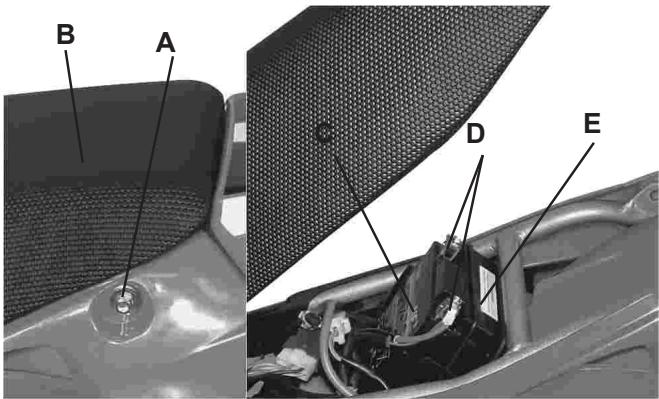
- Remove the bolts A and remove the seat B.
- Remove the terminals D carefully so that they do not come into contact with metal elements.
- Unhook the rubber element E.
- Remove the battery C from its allotment.

DANGER
Hydrogen gas produced by the battery may explode if exposed to open flame or sparks.
Keep the area ventilated and free from naked flames.
The operating instructions for the battery are as follows:
- Check the battery voltage in open circuit status (disconnected).
- If the battery voltage is below 12.6V , or if the storage period has exceeded 6 months, the battery has to be recharged following the instructions in paragraph 3.
If the battery voltage is above 12.6V , the battery can be installed on the vehicle without having to recharge it.
Constant voltage charge mode
- Constant voltage = 14.4 - 14.7 V
- Initial charge current = 0.1 - 0.5 Cn
- Charge duration = 6 hours minimum / 24 hours maximum.
Constant power charge mode
- Maximum charge current = 0.1Cn
-
Recommended charge time = 5 - 8 hours.
-
The product (charge current) x (charge duration) must be within the range: 0.5 - 0.8 Cn.

DANGER
Inverting the polarity of the battery terminals may cause battery charge problems and cause damage to the battery system.
The red terminal is positive (+) and the black terminal is negative (-) .

WARNING
Not using the standard manner of charging may seriously shorten the battery life.
Never exceed the standard charge.

Note
In case that a different mode of charging is used to those established here, never exceed the maximum allowed currents nor the maximum charge duration of 24 hours.
THE EXHAUST SYSTEM
The exhaust and the silencer reduce noise and carry the gasses away from the driver.
If the exhaust is damaged, rusted, dented or split then change it.
Removing the silencer
- Remove the right hand side number plate carrier by removing the attachment bolts.
- Remove the silencer B attachment bolts A.
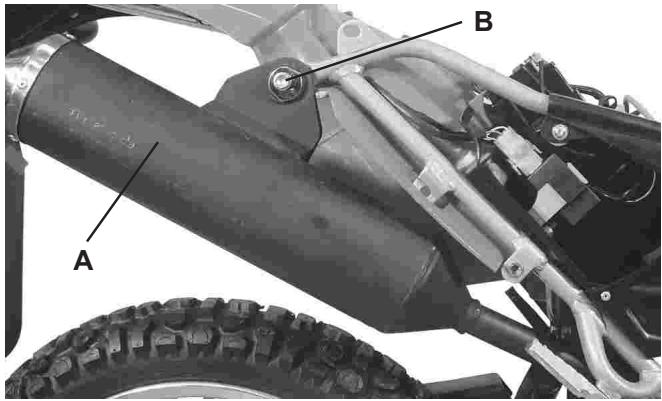
- Loosen the bolt A on the exhaust pipe clamp.
- Remove the silencer assembly
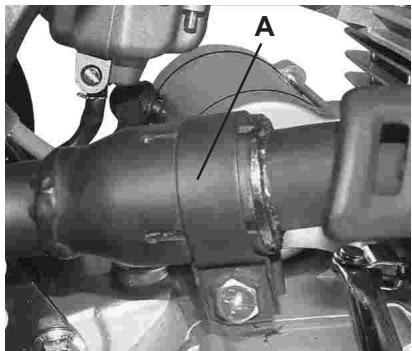
A- Clamp for exhaust pipe
FRONT FORKS
Height adjustment
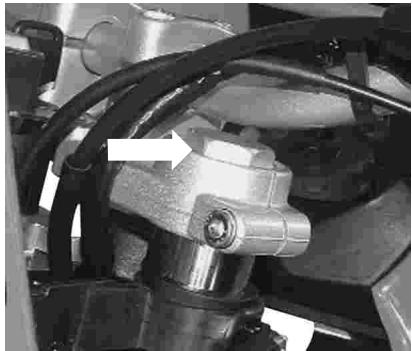
The flat surface around the front fork bars nut-cap should be flush with the surface of the upper plate.
REAR SUSPENSION
Checking
The rear suspension is fitted with a hydraulic telescopic shock absorber fitted to the chassis and to the swinging arm by ball joints. Maintenance of this system consists only of inspecting the ball joints and the swinging arm joint on the chassis.
LUBRICATION

Note
- Before lubricating each part, clean off any rusty spots with rust remover and wipe off any grease, oil, dirt, or grime.
- Lubricate the points shown here, with either motor oil or regular grease, periodically or whenever the vehicle is wet, and especially after using a high-pressure spray washer.
General lubrication
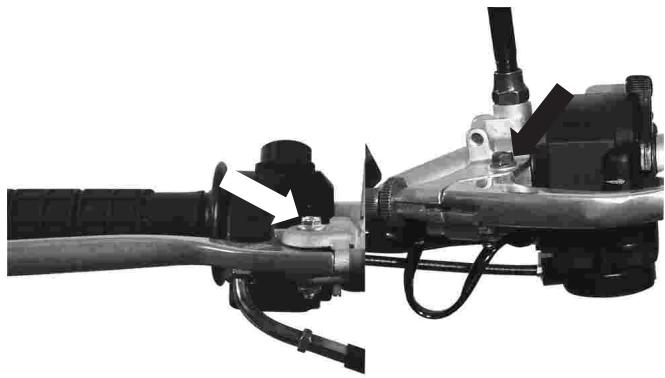
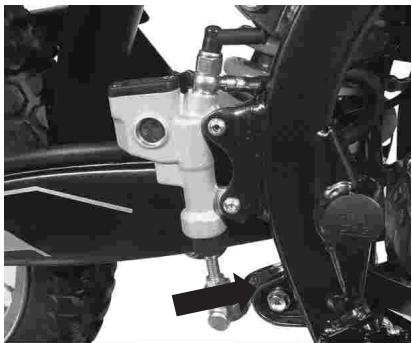
Lubricate the points indicated with an arrow
- Clutch lever.
- Front brake lever.
Rear brake pedal.

Note
In order to lubricate the control cables (for example the throttle control) several lubricants in aerosols are available on the market. Ask for information from your approved GAS GAS workshop.
Lubricating the secondary transmission chain
Lubricate the chain according to the intervals indicated in the maintenance charge or whenever the motorcycle is used in adverse conditions such as mud or rain.

Note
Several chain lubricants in aerosols are available on the market.
- Lubricate both sides of the chain links with chain lubricant. Dry the excess lubricant.
TIGHTENING NUTS AND BOLTS
Every day before using the bike, rapidly ensure that all bolts and nuts are tightened. Also make certain that all of the other fastenings are in place and in good condition.
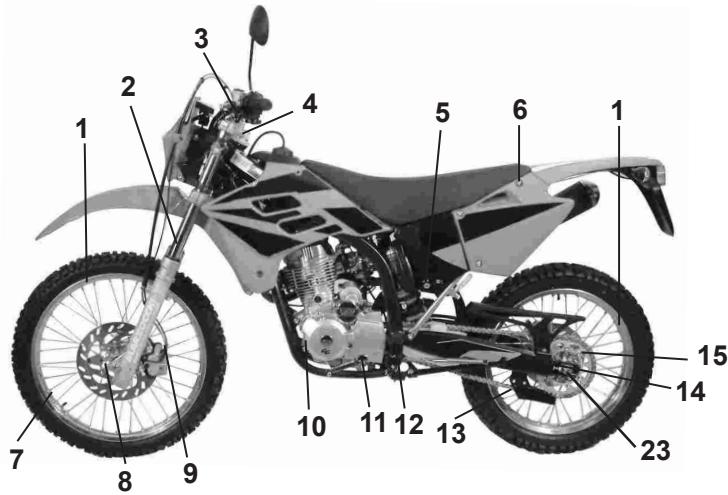
1- Front and rear wheels
2- Front forks
3- Handle bars
4- Upper plate nut
5- Air filter housing bolts
6- Seat bracket bolts
7-Spokes
8- Front axle bolt
9- Brake hose bolt
10- Bolts and nuts of the engine brackets.
11-Shift pedal bolts
12- Subframe support bolt
13-Chain guide bolts
14-Chain adjustment nut
15- Drive sprocket bolts
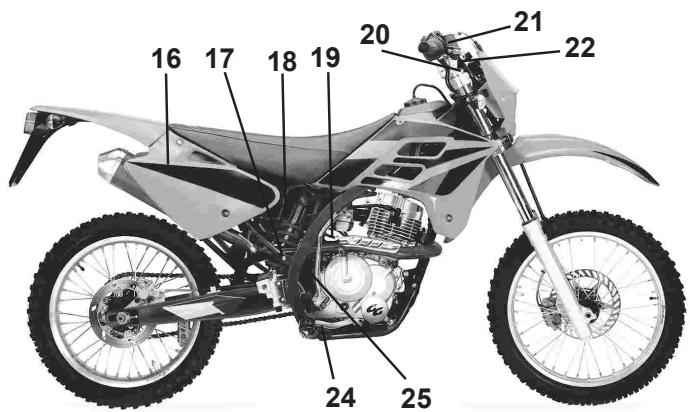
16-Silencer bracket bolts
17- Sub chassis bolts
18- Shock absorber bolts (rear)
19- Exhaust clamp bolt
20- Upper plate bolts (suspension)
21- Brake lever bolt
22- Handlebar bolts
23- Rear axle nut
24- Rear brake pedal bolt
25- Swinging arm nut
TIGHTENING TORQUE TABLE
| PART NUMBER | Nm | Kgm | |
| ENGINE | Engine drain plug | 20 | 2.0 |
| Shift pedal bolt | 10 | 1.0 | |
| Spark plug | 11 | 1.0 | |
| CHAINS | Calliper mounting bolts | 25 | 2.5 |
| Disc plate mounting screws | 10 | 1.1 | |
| Engine mounting bolts | 36 | 3.6 | |
| Front axle bolt | 51 | 5.1 | |
| Front brake lever support bolt | 6 | 0.6 | |
| Fork flange bolt | 29 | 3.0 | |
| Steering nut | 98 | 10.0 | |
| Rear axle nut | 98 | 10.0 | |
| Rear brake pedal bolt | 9 | 0.9 | |
| Subframe support bolt | 26 | 2.7 | |
| Rear shock absorber bolt | 39 | 4.0 | |
| Rear disc wheel drive bolt | 29 | 3.0 | |
| Spokes | 1.5 | 0.15 | |
| Steering axle bolt | 4 | 4.5 |
Tighten all of the bolts and nuts using the correct spanners. If not correctly tightened then motorcycle damage or even an accident could occur.
TROUBLE SHOOTING

Note
This is not an exhaustive list, it is meant simply as a rough guide to assist troubleshooting for some of the more common difficulties.
| FAULT | CAUSE | SOLUTION | |
| 1 | The starter motor does not work | - The fuse for the starter relay is blown. | - Remove the number plate on the right hand side and the air filter cover then change the starter motor relay fuse. |
| - Battery discharged. | - Charge the battery and investigate the causes for discharging. | ||
| 2 | The engine does not rotate | - Crankshaft locked. | - Visit an approved GAS GAS workshop. |
| - Cylinder/ piston/ crankpin journal seizure. | - Visit an approved GAS GAS workshop. | ||
| - Transmission assembly seizure. | - Visit an approved GAS GAS workshop. | ||
| 3 | Engine rotates but does not start | - Incorrect fuel supply. | - Ensure that the fuel tap is not damaged or obstructed. |
| - The motorcycle has been out of operation for a long period of time. | - Drain the old fuel from the fuel tank. | ||
| - Spark plug soiled or humid. | - Fill the fuel tank with new fuel. | ||
| - Engine flooded. | - Clean and dry the spark plug. | ||
| - The CDI pin connector, generator or coil oxidised or in bad condition. | - Clean the inside of the spark plug hood and apply an anti-humidity spray. | ||
| - Petrol / gas mixture incorrect. | - Move the accelerator to full position and press the electric start button twice within five seconds. Then start the engine as described before. If the engine does not start, remove the spark plug and dry it. | ||
| - Clean the inside of the CDI, generator or coil connectors. If the engine still does not start then visit an approved GAS GAS workshop. | |||
| - Clean the petrol tank ventilation. | |||
| 4 | The engine starts but does not stop | - Air supply incorrect. | - Close the choke. Clean the petrol tank ventilation. |
| - Fuel insufficient. | - Fill the fuel tank with fuel. | ||
| 5 | The engine overheats | - Engine cooling blades damaged, dirty or bent. | - Clean the engine cooling blades or replace. |
| 6 | The engine does not run smoothly | - Fuel system maladjusted | - Adjust the fuel system correctly. Visit an approved GAS GAS workshop. |
| - Valve adjustment incorrect. | - Adjust the valve play. Visit an approved GAS GAS workshop. | ||
| 7 | The engine is not powerful or accelerates badly | - Fuel supply faulty. | - Clean the fuel system and check for leaks. |
| - Air filter dirty. | - Clean or change the air filter. | ||
| - Exhaust deteriorated with leaks. | - Check if the exhaust system is deteriorated. Change if necessary. | ||
| - Valve play too low. | - Adjust the valve play. Visit an approved GAS GAS workshop. | ||
| 8 | High oil consumption | - Incorrect piston ring-cylinder tolerances. | - Adjust the tolerance by changing the piston rings. |
| - Engine oil level is too high. | - Correct the engine oil level by draining the required amount. | ||
| - The quality or viscosity of the oil is insufficient. | - Empty the engine oil and fill with oil of the recommended viscosity. | ||
| 9 | Abnormal engine noise | - Ignition problem. | - Visit an approved GAS GAS workshop. |
| - Valve play adjustment. | - Adjust the valve play. Visit an approved GAS GAS workshop. | ||
| - Over heating. | - See chapter 5. | ||
| 10 | Detonations in the exhaust | - Carbon in combustion chamber. | - Visit an approved GAS GAS workshop. |
| - The carburetion system is maladjusted. | - Visit an approved GAS GAS workshop. | ||
| - Incorrect or poor gasoline or wrong octane rating. | - Drain the low quality fuel from the fuel tank. | ||
| - Damaged or Incorrect spark plug. | - Fill the fuel tank with fresh fuel with the correct octane rating. | ||
| - Exhaust system joints deteriorated. | - Change the spark plug for a new one with the correct specifications. | ||
| - Check if the exhaust system is deteriorated. The joints must be in perfect condition. If necessary replace them. | |||
| 11 | Brown fumes from the exhaust | - Air filter obstruction. | - Clean or change the air filter. |
| 12 | Gears do not engage | - The clutch does not disengage. | - Visit an approved GAS GAS workshop. |
| - Shift fork worn or locked. | - Visit an approved GAS GAS workshop. | ||
| - Gear locked in transmission. | - Visit an approved GAS GAS workshop. | ||
| - Gear change lever damaged. | - Replace the gear operation lever. | ||
| Visit an approved GAS GAS workshop. | |||
| - Selector position spring loose or broken. | - Visit an approved GAS GAS workshop. | ||
| - Down shift selector mechanism spring broken. | - Visit an approved GAS GAS workshop. | ||
| - Gearbox cylinder broken. | - Visit an approved GAS GAS workshop. | ||
| - Gear ratchet spring broken. | - Visit an approved GAS GAS workshop. | ||
| 13 | Gears jump | - Gear fork worn in gears. | - Visit an approved GAS GAS workshop. |
| - Gear fork shaft: worn. | - Visit an approved GAS GAS workshop. | ||
| 13 | Gears jump | - Gear selection rail worn. | - Visit an approved GAS GAS workshop. |
| - Gear selection heads damaged. | - Visit an approved GAS GAS workshop. | ||
| - Gear drum groove worn. | - Visit an approved GAS GAS workshop. | ||
| 14 | Clutch slipping | - No play in the clutch lever. | - Check the adjustment of the clutch lever. Visit an approved GAS GAS workshop. |
| - Clutch plate worn. | - Visit an approved GAS GAS workshop. | ||
| - Clutch hub worn. | - Visit an approved GAS GAS workshop. | ||
| - Clutch spring broken or weak. | - Visit an approved GAS GAS workshop. | ||
| - Clutch plates worn. | - Visit an approved GAS GAS workshop. | ||
| 15 | Bike unstable | - Electrical installation, control cable or brake line interfere with steering. | - Check that the electrical installation support, the control cables or fuel lines are not interfering with the handlebar movement. |
| - Steering shaft nut too tight. | - Ensure that all of the electrical installation attachments, the control cables or the brake lines are fitted and in good condition. | ||
| - Steering bearings damaged or worn. | - Check the adjustment of the steering shaft nut. Visit an approved GAS GAS workshop. | ||
| - Steering shaft bent. | - Visit an approved GAS GAS workshop. | ||
| 16 | Shock absorption too hard | - Excessive oil level in front forks. | - Eliminate the excess oil to an adequate level. Visit an approved GAS GAS workshop. |
| - Front fork oil viscosity too high. | - Empty the fork oil and fill with oil of the recommended viscosity. Visit an approved GAS GAS workshop. | ||
| - Front forks twisted. | - Replace the front forks. Visit an approved GAS GAS workshop. | ||
| - Tyre pressure to high. | - Verify tyre pressure. | ||
| - Rear shock absorber maladjusted. | - Adjust the rear shock. Visit an approved GAS GAS workshop. | ||
| 17 | Shock absorption too soft | - Insufficient oil level in front forks. - Front fork oil viscosity too low. - Tyre pressure to low - Rear shock absorber maladjusted. | - Add oil to the forks as required. Visit an approved GAS GAS workshop. - Empty the fork oil and fill with oil of the recommended viscosity. Visit an approved GAS GAS workshop. - Verify tyre pressure. - Adjust the rear shock. Visit an approved GAS GAS workshop. |
| 18 | The bike makes unusual noise | - Drive chain incorrectly adjusted. - Chain worn. - Rear sprocket worn. - Chain lubrication insufficient. - Rear wheel misaligned. - 17-Insufficient oil level in front forks. - Front fork spring(s) weak or broken. - Brake disc excessively worn. - Brake pads, incorrect position or crystallised. - Engine cylinder damage. - Brackets, nuts, bolts not properly tightened. | - Adjust the chain. - Replace the chain, rear sprocket and secondary transmission pinion. Visit an approved GAS GAS workshop. - Change the rear sprocket. Visit an approved GAS GAS workshop. - Apply a suitable chain lubricant. - Align the rear wheel. - Add oil to the forks as required. Visit an approved GAS GAS workshop. - Replace the springs in the front forks. Visit an approved GAS GAS workshop. - Replace the brake disc. Visit an approved GAS GAS workshop. - Check the brake pad wear. - Replace the brake pads. Visit an approved GAS GAS workshop. - Replace the damaged cylinder. Visit an approved GAS GAS workshop. - Check all brackets, nuts and bolts and apply the correct torques. Visit an approved GAS GAS workshop. |
| 19 | The handlebars vibrate | - Tyre worn, swing arm or its needle bearing worn. - Rim off-centre. - Handlebar bracket or steering shaft nut loose. | - Replace the worn parts. Visit an approved GAS GAS workshop. - Centre the wheel. Visit an approved GAS GAS workshop. - Verify the tension of the wheel spokes. Adjust if necessary. - Tighten the handlebar bracket and the steering shaft nut to the correct tightening torques. Visit an approved GAS GAS workshop. |
| 20 | Motorcycle pulls to one side | - Chassis twisted. - Steering incorrectly adjusted. - Steering shaft bent. - Front forks twisted. - Wheels misaligned. | - Replace the chassis. Visit an approved GAS GAS workshop. - Adjust the steering. Visit an approved GAS GAS workshop. - Replace the steering shaft. Visit an approved GAS GAS workshop. - Change front forks. Visit an approved GAS GAS workshop. - Align the wheels. Visit an approved GAS GAS workshop. |
| 21 | The brakes do not function correctly | - Brake disc wear excessive. - Brake liquid leak. - Brake fluid degraded. - Brake cylinder worn or damaged. - Brakes incorrectly adjusted. | - Replace the brake discs. Visit an approved GAS GAS workshop. - Ensure that brake fluid is not leaking from: front and rear brake cylinder seals, hoses and joints. If there is any leak, visit a GAS GAS workshop immediately. - Replace the brake fluid. Visit an approved GAS GAS workshop. - Replace the brake cylinder. Visit an approved GAS GAS workshop. - Adjust the position and play of the front brake lever. |
| 22 | The bulbs blow constantly | - Voltage regulator defective. | - Remove the left hand side cover from the fuel tank and check the voltage regulator connections, the voltage regulator itself and all fuses. |
| 23 | The lighting system does not work | - Lighting installation fuse is blown. | - Remove the front headlights cover and check the fuse. |
CLEANING AND STORAGE
Cleaning

Note
Before cleaning the motorcycle, prepare the machine so that water does not penetrate certain areas of the bike.
Exhaust: Once this is cold, cover it with a plastic bag attached with rubber.
Clutch and brake levers, handgrips, engine stop button: cover with a plastic bag.
Air filter intake: Cover the opening with tape or stuff a cloth in it.
Where to be most careful
Avoid applying high-pressure water to:
Brake pump cylinder and callipers and under the petrol tank: If water enters the electric coil or the spark plug hood then the engine will not start and the affected parts must be dried.
Front and rear wheel hubs.
Steering pivots (steering tube).
Rear suspension system.
Swing arm pivots.
After washing
- Remove the plastic bags and clean the air filter intake.
- Lubricate the locations listed in the lubrication section.
- Start the engine and let it heat for 5 minutes.
- Check the brakes before driving the bike.

WARNING
Never wax or lubricate the brake disk, this could lead to brake failure and could provoke an accident. Clean the disc using trichloroethylene or acetone.
Storage
When the motorcycle is to be stored for any length of time, it should be prepared for storage as follows:
- Clean the entire vehicle thoroughly.
- Start the engine, and allowed to run for five minutes to teach the transmission oil then drain as indicated in the section about oil changes.
- Put in fresh transmission oil.
- Empty the fuel tank. If fuel is left for a long time it will deteriorate.
- Disconnect the battery.
- Lubricate the drive chain and all the cables.
- Spray oil on all unpainted metal surfaces to prevent rusting. Avoid getting oil on rubber parts or in the brakes.
- Set the motorcycle on a box or stand so that both wheels are raised off the ground. (If this cannot be done, put boards under the front and rear wheels to keep dampness away from the tire rubber).
- Tie a plastic bag over the exhaust pipe to prevent moisture from entering.
- Put a cover over the motorcycle to keep dust and dirt from collecting on it.
Starting after storage
- Remove plastic bag from exhaust.
- Tighten spark plug.
- Fill the fuel tank with fuel.
- Check all the points listed in the Daily Pre-ride Inspection Section.
- General lubrication
- Connect the battery.
TECHNICAL DATA
ENGINE
| Engine | 4-stroke, 2-valve, air-cooled single cylinder |
| Displacement in cubic centimetres | 123 cc |
| Bore and stroke | 53 x 50 mm |
| Spark plug | TORCH D8RTC |
| Fuel supply | Carburettor Keihin 22 |
TRANSMISSION
| Transmission type | 5 speed | |
| Clutch type | Cable operated, multi-disc in oil bath | |
| Secondary transmission | Chain 5/8 x 1/4 | |
| Gear ratio | 1st 2.76 (13/36) | |
| 2nd 1.88 (17/32) | ||
| 3rd 1.4 (20/28) | ||
| 4th 1.13 (23/26) | ||
| 5th 0.96 (25/24) | ||
| Primary transmission | 4,05 (18/73) | |
| Transmission oil | Capacity | 1000 cc |
| Type | 10W50 API SF or SG |
CHASSIS
Type Double-beam, rectangular and 28 mm circular steel tubes with chrome alloy finish. Steel swinging arm
Tyresizes Front 2.75x21"
Rear 4.10 x 18"
| Suspension | Front | Marzocchi telescopic fork Ø 40mm |
| Rear | Single shock absorber system | |
| Suspension stroke | Front | 202 mm |
| Rear | 220 mm | |
| Front suspension oil | MARZOCCHI SAE 7.5 | |
| Front fork oil level | Marzocchi: 200 mm (compressed, without spring) |
BRAKES
Front 260 mm diameter Disc Double piston calliper AJP* Rear 220 mm diameter Disc Cylinder with incorporated tank, single piston calliper AJP*
DIMENSIONS
| Overall height | 1,120 mm |
| Overall length | 2,135 mm |
| Overall width | 820 mm |
| Wheel base | 1,450 mm |
| Minimum ground clearance | 300 mm |
| Fuel tank capacity | 7.4 litres |
| Weight | 119 Kg |
Specifications may not be valid for all countries and may change without prior notice.
GUARANTEE MANUAL
(According to law 23/2003 of the 10 of July, regarding Consumer Goods Sales Guarantees.)
Manufacturer's guarantee regulations for GAS GAS Motos S.A.
The Company GAS GAS Motos S.A. (hereafter referred to as GG) hereby guarantees the final purchaser of a vehicle manufactured by GG that both materials and workmanship are free from defects according to the maximum quality standards. Consequently, GG hereby warrants to the final purchaser (hereinafter referred to as the "purchaser"), subject to the conditions stated below, to remove any defects in material or production detected in a new motorcycle free of charge within the agreed period of warranty without any limitation whatsoever in terms of the number of kilometres travelled or the number of operating hours.
Period of warranty
The period of warranty shall commence on the day of delivery of the vehicle by a licensed GG dealer to the purchaser, or in the case of demonstration models, on the date on which the vehicle is put into operation for the first time.
The vendor will respond to any conformity faults that appear within the period established by the Law 23/2003 of the 10th of July regarding Consumer Goods Sales Guarantees from the delivery of goods and in accord with the directive 1999/44/CE for the remainder of the European Community Member States. For those countries outside of the European Community the guarantee will be regulated by the relevant current legislation. However, if the conformity fault appears during the first six months following delivery of the motorcycle, it will be assumed that this fault existed when the motorcycle was delivered; from the sixth month, the purchaser must show that the fault existed at the moment the goods were delivered.
During the six months following the delivery of the repaired goods, the vendor will respond to the faults requiring repairs.
Any defect detected in the product must be brought to the attention of the authorized GG dealer within the period of the guarantee. If the last day of the warranty period is a Sunday or public holiday, the warranty period shall be extended in such a way that the last day of the warranty period is the next working day following the respective Sunday or public holiday.
Warranty claims shall be excluded for any defects not brought to the attention of a licensed GG dealer by the end of the warranty period.
Purchaser obligations
GG shall be entitled to refuse to accept warranty claims if and to the extent that:
a) The purchaser has failed to subject the vehicle to any of the inspections and/or maintenance work prescribed in the operating manual or has exceeded the date stated for such inspections or maintenance work, also excluding from the warranty defects that appear before the prescribed date of such inspection or maintenance work not performed or performed after the prescribed date.
b) the inspection, maintenance and repair of the vehicle is carried out by third parties unauthorized or not recognised by GG.
c) Any maintenance or repair work has been performed on the vehicle in violation of the technical requirements, specifications and instructions indicated by the manufacturer.
d) Spare parts not released for use by GG have been used to perform maintenance or repair work on the vehicle, or if and to the extent that the vehicle has been operated using other fuels, lubricants or operating fluids (including but not limited to cleaning agents) other than those expressly stated in the specifications in the operating manual;
e) The vehicle has been altered or modified in any way or equipped with other components than those expressly released by GG as admissible vehicle components.
f) The vehicle has been stored or transported in a way that does not meet the corresponding technical requirements.
g) The vehicle has been used for extraordinary use such as for competitions, races or attempts at any record whatsoever.
h) The vehicle has suffered a fall or accident provoking the damage indirectly or directly.
Exclusions from the warranty
The following items will be excluded from the warranty:
a) normal wear and tear on parts including, without limitation, spark plugs, batteries, fuel filters, oil filter elements, drive chains (secondary), engine pinions, rear sprockets, air filters, brake discs, brake pads, clutch discs, lamps, fuses, carbon brushes, footrest rubbers, tires, tubes, cables and other rubber components.
b) lubricants (e.g. oil, grease, etc.) and operating fluids (e.g. battery fluid, cooling liquid, etc).
c) inspection, adjustment and other periodical maintenance work as well as all kinds of cleaning work.
d) Damage to paint work and corrosion thereof due to external influences such as stones, salt, industrial exhaust gases and other environmental impacts or inadequate cleaning with inadequate products.
e) Any consequential harms caused by defects as well as incidental expenses directly or indirectly related to defects (e.g. communication charges, cost of board and lodging, cost of rental cars, public transport charges, cost of salvage and towing, packet service expenses, etc.) as well as other financial disadvantages (e.g. caused by loss of use of a motor vehicle, loss of earnings, loss of time, etc.).
f) Any aesthetic or acoustic phenomena that does not significantly affect the serviceable condition of the motorcycle (e.g. hidden or minor blemishes, normal operating noise or vibrations).
g) Phenomena due to the aging of the vehicle (e.g. fading of painted or metal-coated surfaces).
Miscellaneous
1- GG shall be entitled to decide in its sole discretion whether to repair or to replace defective parts should the repair or replacement cost be disproportional. The ownership of parts replaced, if any, shall pass to GG, free of any consideration whatsoever. The licensed GG dealer entrusted with the removal of defects shall not be authorized to issue binding declarations on behalf of GG.
2- In cases of doubt regarding the existence of a defect or if a visual inspection or material testing is required, GG shall be entitled to demand submission of the parts for which warranty claims are put forward or to order an examination of the defect by a GG expert. Any additional warranty obligations for parts replaced free of charge or for any service performed free of charge under the present warranty shall be excluded. The warranty of components replaced within the warranty period shall end at the date of expiry of the warranty period agreed for the original respective product.
3- If any defect cannot be removed and substitution is judged disproportional by the manufacturer, the guaranteed purchaser shall be entitled to demand termination of the contract (payment of a compensation) or partial reimbursement for the purchasing price (discount) instead of repair of the motorcycle.
4- The warranty claims of the purchaser under the contract of purchase and sale concluded with the respective licensed dealer shall not be affected by the present warranty. Neither shall the present warranty affect any additional contractual rights of the purchaser under the general business conditions of the licensed dealer. However, such additional rights are only valid with the licensed dealer.
5- If the purchaser resells the product within the warranty period, the terms and conditions of the present warranty shall continue to exist in their present scope, the right to put forward claims under the present warranty according to the terms and conditions hereof will be passed on to the new owner of the motorcycle.
Notes