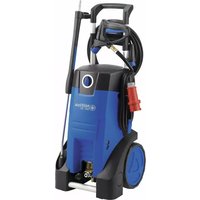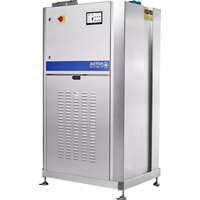
POSEIDON 2-26 PORTABLE - Nettoyeur haute pression NILFISK - Notice d'utilisation et mode d'emploi gratuit
Retrouvez gratuitement la notice de l'appareil POSEIDON 2-26 PORTABLE NILFISK au format PDF.


| Type d'appareil | Lave-vaisselle |
| Fonction principale | Nettoyage de la vaisselle |
| Alimentation électrique | Non précisé |
| Connexion à l'eau | Raccordement à l'alimentation en eau |
| Modes de fonctionnement | Mode aspiration et mode eau sous pression |
| Contrôle | Interrupteur marche/arrêt |
| Entretien | Nettoyage du filtre, vérification et changement de l'huile de la pompe |
| Stockage | Stockage recommandé à une température inférieure à 0°C |
| Accessoires | Poignée de pulvérisation |
| Garantie | Non précisé |
| Instructions de sécurité | Présentes |
| Plan de maintenance | Inclus |
| Dépannage | Guide disponible |
| Recyclage | Informations fournies |
| Conformité | Déclaration de conformité UE |
FOIRE AUX QUESTIONS - POSEIDON 2-26 PORTABLE NILFISK
Questions des utilisateurs sur POSEIDON 2-26 PORTABLE NILFISK
0 question sur cet appareil. Repondez a celles que vous connaissez ou posez la votre.
Poser une nouvelle question sur cet appareil
Téléchargez la notice de votre Nettoyeur haute pression au format PDF gratuitement ! Retrouvez votre notice POSEIDON 2-26 PORTABLE - NILFISK et reprennez votre appareil électronique en main. Sur cette page sont publiés tous les documents nécessaires à l'utilisation de votre appareil POSEIDON 2-26 PORTABLE de la marque NILFISK.
MODE D'EMPLOI POSEIDON 2-26 PORTABLE NILFISK
2 Description
3 Before starting the washer
1 Important safety instructions
4 Operation
5 After using the washer
6 Maintenance
7 Troubleshooting
8 Further information
2.1 Purpose 46
2.2 Operating elements 46
3.1 Setting up the washer.. 47
3.2 Connecting the high pressure hose 47
3.3 Connecting the water supply 47
3.4 Electrical connection 48
4.1 Connecting the spray lance to the spray handle 48
4.2 Switching on the washer 48
4.2.1 Switching on the washer when it is connected to a water supply. 48
4.2.2 Switching on the washer when it is connected to open tanks (suction mode). 48
5.1 Switching off the washer 49
5.2 Disconnecting supply lines 49
5.3 Storing the washer (below 0^ 49
6.1 Maintenance plan 50
6.2 Maintenance work 50
6.2.1 Cleaning water inlet filter 50
6.2.2 Checking the pump oil level 50
6.2.3 Changing the pump oil 50
51
8.1 Recycling the washer 51
8.2 Guarantee 52
8.3 Technical Specifications 52
8.4 EU Declaration of Conformity 52
8.5 Accessories 52
1 Important safety instructions
Symbols used to mark instructions

Before using the high-pressure washer, be sure to also read the enclosed opera
ting instructions and keep them within reach at all times.

This symbol is used to mark safety instructions that must be observed to prevent damage to the its performance.


Safety instructions in these operating instructions which must be observed
to prevent risks to persons are marked with this danger symbol.

This indicates tips and instructions to simplify work and
to ensure safe operation.
For your own safety
The high-pressure washer may only be used by persons instructed in its use and who have been expressly authorised to do so.
Although extremely easy to operate, children should not be allowed to use the washer.
General
Use of the high-pressure washer is subject to the applicable local regulations.
Besides the operating instructions and the binding accident prevention regulations valid in the country of use, observe recognised regulations for safety and proper use.
Do not use any unsafe work techniques.
Transport
Transport of the high-pressure washer in upright position only.
For safe transport in and on vehicles we recommend to prevent the equipment from sliding and tilting by fixing it with belts.
For transport at temperatures around or below 0^ , anti-freeze should be drawn into the pump beforehand (see chapter 5).
Before starting the washer
Before use, check that the high-pressure washer is safe and in proper condition.
Regularly check whether the power cord is damaged or shows signs of ageing.
Use the high-pressure washer only when the mains power lead is in a safe condition. (risk of electric shock if damaged!).
Check the rated voltage of the high-pressure washer before connecting it to the mains power supply. Ensure that the voltage shown on the rating plate corresponds to the voltage of
the local mains power supply.
We strongly recommend that the power supply to the high pressure washer be connected via a residual current circuit breaker.
This device stops the supply of electricity if the leakage current to earth exceeds 30mA for 30 ms or it has an earth tester circuit.
Operate the washer only in an upright position!
Please observe the regulations and provisions applicable in your country. Before putting the high-pressure washer into service, carry out a visual check of all the major components.
CAUTION!
High-pressure water jets can be dangerous if misused. The jet must not be directed at persons, animals, live electrical equipment or the washer itself. Wear appropriate protective clothing and eye protectors.
Do not direct the jet towards yourself or towards other persons in order to clean clothes or footwear.
During use, appropriate hearing protection has to be used.
During operation of the washer, recoil forces are produced at the spraying device and, when the spray lance is held at an angle, a torque is also created. The spraying device must therefore be held firmly in both hands.
Do not use the washer when other people without protective clothing are in the working area.
Check that cleaning will not result in dangerous substances (e.g. asbestos, oil) being washed off the object to be cleaned and harming the environment.
Do not clean delicate parts made of rubber, fabric, etc. with the 0^ jet. Keep some distance between high pressure nozzle and surface in order to prevent the surface from damage.
Do not use the high-pressure hose for lifting loads.
NOTE!
The specifications of the high-pressure hose (max. permissible pressure and temperature) are printed on the hose.
Do not continue to use the washer if the mains power lead or high-pressure hose is damaged.
Ensure adequate air circulation. Do not cover the washer or operate it in inadequately ventilated rooms!

Store the washer where it will not be exposed to frost!
Never operate the washer without water. Even brief shortages of water result in severe damage to the pump seals.
Operation
CAUTION!
Unsuitable extension cords can represent a source of danger. Always unwind cord from the reels completely to prevent the power cord overheating.
When using an extension cord, connectors must be of watertight construction.
When using an extension cord, check the minimum cross-sections of the cable:
| Cable length m | Cross section | |
| <16 A | <25 A | |
| up to 20 m | ø1.5mm² | ø2.5mm² |
| 20 to 50 m | ø2.5mm² | ø4.0mm² |
Do not damage the mains power lead (e.g. by driving over it, pulling or crushing it). Disconnect the power cord by pulling the plug only (do not pull or tug the power cord).
Electrical equipment

CAUTION!
Never spray electrical equipment with water: danger for persons, risk of short-circuiting.
The washer may only be connected to a correctly installed plug socket.
Switching on the washer may cause voltage fluctuations. Voltage fluctuations should not occur if the impedance at the transfer point is less than 0.15 . If in doubt, ask your local electricity supplier.
Maintenance and repair
CAUTION!
Always remove the plug from the mains plug socket before cleaning or carrying out maintenance work on the washer.
Carry out only the maintenance operations described in the operating instructions. Use only original spare parts. Do not make any technical modifications to the high-pressure washer.
Ensure that the machine is regularly serviced by Authorised dealers in accordance with the maintenance plan. Failure to do so will invalidate the warranty.
CAUTION!
High-pressure hoses, fittings and couplings are important for the safety of the washer. Use only high-pressure parts approved by the manufacturer!
If the power cord is damaged, it must be replaced by authorized Service or an electrician to avoid danger before use of the washer is continued.
Use only the type of power cord specified in Operating Instructions.
Please contact the Service department or an authorised specialist work-shop for all other maintenance or repair work!
Safety Devices
Unloader valve
Unacceptably high pressure is fed back without residual pressure via a bypass line into the intake line of the pump when the safety device is tripped.
The unloader valve is set and sealed at the factory and must not be adjusted.
2.1 Purpose
This high-pressure washer has been designed for professional use within
Trade
Construction industry
Small-scale farming
Always use the washer as described in these operating instructions. Any other use may damage the washer or the surface to be cleaned or may result in severe injury to persons.
2.2 Operating elements
See fold-out page at front of these operating instructions.

1 Handle
2 Mains power lead
3 Spray handle
4 High-pressure hose
5 Spray lance
6 Supply water connection with water inlet filter
7 High pressure hose connection
8 Main switch
3 Before starting the washer
3.1 Setting up the washer

- Before using the washer for the first time, check it carefully to detect any faults or damage.
- In the event of any damage contact your dealer immediately.
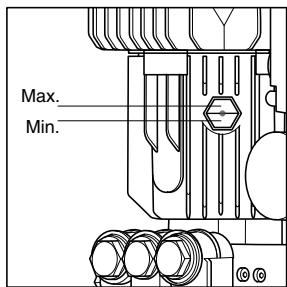
- Check whether the oil level is between the minimum and maximum marks. If necessary, add oil (see chapter 8.3 for type of oil). NOTE: Set the machine in upright position when checking the pump oil.
3.2 Connecting the high pressure hose

- Screw the quick connector of the high pressure hose onto the nipple on the washer (7).
3.3 Connecting the water supply
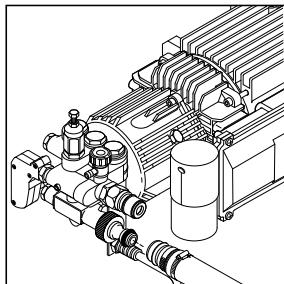
- briefly to a pipe interrupter with moving section
with a free outlet
See chapter 8.3 Technical Data for required quantity of water and water pressure.
In the case of poor water quality (sand, etc.), we recommend that a fine water filter is fitted in the water inlet.

Do not connect the washer directly to the public drinking water mains. Observe the regulations of your water supply company to prevent backflow of water into the supply line. A connection is permitted, however:
- Rinse the water supply hose briefly in order to prevent sand an other dirt particles entering into the machine.
- Connect water supply hose to the machine (3/4").
-
Open water tap.
-
Observe safety instructions in chapter 1.
- Put the plug into the electrical socket.
4 Operation
4.1 Connecting the spray lance to the spray handle

NOTE!
Always remove any dirt from the nipple before connecting the spray lance to the spray handle.
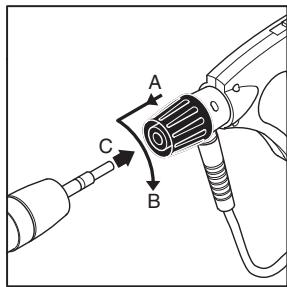
- Pull the blue quick-release grip (A) of the spray handle forwards and lock it by turning it to the left.
- Insert the nipple of the spray lance (C) into the quick-release connection and turn the blue quick-release grip to the right (B).
- Pull the spray lance (or other accessory) forwards to check that it is securely attached to the spray handle.
4.2 Switching on the washer
4.2.1 Switching on the washer when it is connected to a water supply
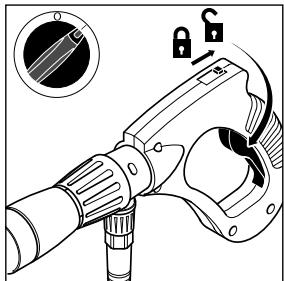

NOTE!
Operate the spray handle several times at short intervals to vent the system.
- Main switch
Turn the switch to position 1
- Unlock the spray handle and activate it.
- Lock the spray handle even during short pauses.
The washer switches off automatically after the spray handle has been closed. To start the washer again, activate the spray handle.
4.2.2 Switching on the washer when it is connected to open tanks (suction mode)
- Before connecting the detergent intake set to the washer, fill the hose with water.
-
Turn main switch to position 1
-
Unlock the spray handle and activate it.
Max. suction height = 0m
5 After using the washer
5.1 Switching off the washer
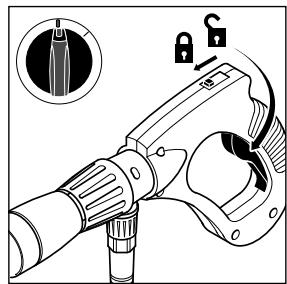
- Turn the main switch to position 0
- Close water tap.
- Activate the spray handle until the washer is depres-surised.
- Lock the safety catch on the spray handle.
5.2 Disconnecting supply lines
- Remove the water hose from the washer.
- Pull out the plug from the electrical socket.
5.3 Storing the washer (below 0^ )

- Store the washer in a dry room without danger of frost or protect as below:
CAUTION!
If the high-pressure washer is stored in a room with temperatures around or below 0^ , antifreeze should be drawn into the pump beforehand:
- Remove the water inlet hose from the washer.
- Remove the spray lance.
- Connect the suction hose to the water inlet of the washer and place it in a tank containing anti-freeze.
-
Switch on the washer with the main switch in position
-
Hold the spray handle over the tank containing anti-freeze and operate it to start suction.
- During suction operate the spray handle two or three times.
- Lift the suction hose from the tank containing antifreeze and operate the spray handle to pump off the remaining antifreeze.
- Switching off the washer
- Disconnect the plug from the socket.
- To avoid any risks, store the washer temporarily in a heated room before using it again.
6.1 Maintenance plan
| Weekly | After the first 50 operating hours | Every six months or 100 operating hours | As required | ||
| 6.2.1 | Cleaning water inlet filter | ● | ● | ||
| 6.2.2 | Checking pump oil level | ● | |||
| 6.2.3 | Changing pump oil | ● | ● | ||
6.2 Maintenance work
6.2.1 Cleaning water inlet filter
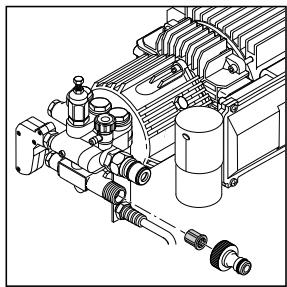
A water filter is fitted on the water inlet to prevent large particles of dirt from entering into the pump.
- Unscrew the quick-release connection.
- Remove the filter and rinse it. Replace damaged filter. Replace damaged filter.
6.2.2 Checking the pump oil level
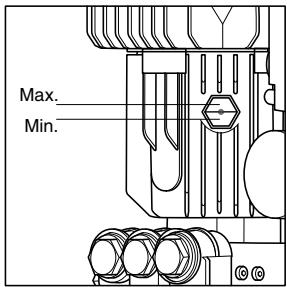
- Check whether the oil level is between the minimum and maximum marks. If necessary, add oil (see chapter 8.3 for type of oil).
6.2.3 Changing the pump oil
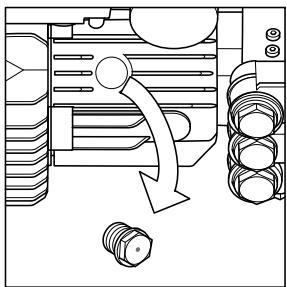
- Unscrew the oil drain plug (1) on the pump housing and dispose of the old oil in accordance with the disposal regulations.
- Fill with fresh oil and remount the oil drain plug. Check the oil level.
Oil type and volume, see chapter 8.3 Technical Data.
7 Troubleshooting
| Fault | Cause | Remedy |
| Pressure drop | > Air in the system > High pressure nozzle blocked worn | ·Vent the system by operating the spray handle several times at short intervals. If necessary, operate the washer for a short time without the high-pressure hose connected. ·Clean/replace the high pressu-re nozzle |
| Pressure fluctuations | > Pump draws in air (only possible in suction mode) > Lack of water > Water inlet hose is too long or its cross-section too small > Lack of water caused by blocked water filter > Lack of water because max. permissible suction height has not been heeded | ·Check that the suction set is air-tight ·Open water tap ·Use specified water inlet hose ·Clean the water filter in the water connection (never work without water filter) ·See instructions |
| The motor does not start when the washer is switched on | > The plug is not inserted properly, i.e. there is no current > The mains fuse is switched off | ·Check the plug, lead and switch and if necessary have them replaced by a trained electrician ·Switch on the mains fuse |
| When the washer is switched on the motor buzzes without starting | > The mains voltage is too low > The pump is blocked or frozen > Incorrect cross-section or length of the extension lead | ·Have the electrical connection checked ·Contact the customer service ·Use lead with correct cross section or length |
| The motor switches off | > The overload protection has been activated due to overheating or overloading of the motor > High-pressure nozzle is dirty | ·Check that the mains voltage and the washer voltage are the same. Switch off the washer and allow it to cool for at least 3 minutes ·Change the high-pressure nozzle |
| Water outflow under the machine | > Machine runs longer than 3 minutes with spray handle closed | ·Switch off the machine |
8 Further information
8.1 Recycling the washer
Make the old cleaner unusable immediately.
- Unplug the washer and cut the electric cable.
Do not discard electrical appliances with household waste.
As specified in European Directive 2002/96/EC on old electrical and electronic appliances, used electrical goods must be collected separately and recycled ecologically.
Contact your local authorities or your nearest dealer for further information.
8.3 Technical Specifications
8.4 EU Declaration of Conformity
| POSEIDON 2-24 PORTABLE | POSEIDON 2-26 PORTABLE | ||||
| Voltage 230 V / 1~/50Hz | DK | EU | DK | EU | |
| Fuse | A | 10 | 10 | 13 | 13 |
| Power rating | kW | 2.2 | 2.2 | 3.0 | 3.0 |
| Working pressure | bar (MPa) | 100 (10) | 100 (10) | 140 (14) | 140 (14) |
| Volume flow (max.) | l/h | 650 | 650 | 610 | 610 |
| Volume flow QIEC | l/h | 600 | 600 | 540 | 540 |
| Max. water inlet temperature | °C | 50 | |||
| Max. water inlet pressure | bar (MPa) | 10 (1) | |||
| Dimensions l x w x h | mm | 555 x 290 x 275 | |||
| Weight | kg | 24 | 24 | 26 | 26 |
| Noise pressure level at a distance of 1 m EN 60704-1 | dB(A) | 86.8 | 86.8 | 86.8 | 86.8 |
| Noise power level | dB(A) | 99.3 | 99.3 | 99.3 | 99.3 |
| Torque | N | 17 | 17 | 20 | 20 |
| Oil quantity in pump | ml | 150 | |||
| Oil type | HV68 | ||||
| Hand/arm vibration level | m/s2 | < 2.5 | |||
| CE EU Declaration of Conformity | |
| Product: | High Pressure Washer |
| Type: | Poseidon 2-24 Portable, Poseidon 2-26 Portable |
| Description: | 400 V 3-, 50 Hz - 230 V 1-, 50 Hz - IP X5 |
| The design of the unit corresponds to the following pertinent regulations: | EC Machine Directive 98/37/EEGEC Low-voltage Directive 73/23/EEGEC EMV Directive 89/336/EEG |
| Applied harmonised standards: | EN 292-1, EN 292-2, EN 60335-2-79EN 55014-1, EN 55014-2, EN 61000-3-2 |
| Applied national standards and technical specifications: | DS EN 60335-2-79 |
| Nilfisk-ALTODivision of Nilfisk-Advance A/SIndustrijev 1DK-9560 Hadsund | |
| Anton Sørensen | |
| V.P. Technical Operations Europe | Hadsund, 01.06.2004 |
8.5 Accessories
| Turbo-hammer | Cross grip | Powerspeed Vario | ||||
| Poseidon Portable | High pressure hose 3/8" | |||||
| 15 m | 20 m | 50 m | ||||
| 2-24 | 1402064 | 1402072 | 1402759 | 106402178 | 106402110 | 106402182 |
| 2-26 | 1402064 | 1402072 | 1402759 | 106402177 | 106402110 | - |