
Omada Pro AP7650 - Point d'accès TP-LINK - Notice d'utilisation et mode d'emploi gratuit
Retrouvez gratuitement la notice de l'appareil Omada Pro AP7650 TP-LINK au format PDF.


| Type de produit | Point d'accès Wi-Fi professionnel |
| Marque | TP-Link |
| Modèle | Omada Pro AP7650 |
| Norme Wi-Fi | Wi-Fi 6 (802.11ax) |
| Bandes de fréquence | Dual-band (2,4 GHz et 5 GHz) |
| Débit maximal | Jusqu'à 3000 Mbps |
| Dimensions | 200 x 200 x 40 mm |
| Poids | 500 g |
| Alimentation | PoE (Power over Ethernet) 802.3at/af |
| Ports | 1 port Gigabit Ethernet |
| Gestion | Via le contrôleur Omada ou application mobile |
| Sécurité | WPA3, chiffrement AES, filtrage MAC, portail captif |
| Fonctions avancées | MU-MIMO, OFDMA, beamforming, VLAN, QoS |
| Température de fonctionnement | 0°C à 40°C |
| Humidité de fonctionnement | 10% à 90% sans condensation |
| Montage | Plafond ou mural (kit inclus) |
| Entretien et nettoyage | Dépoussiérer avec un chiffon doux et sec |
| Pièces détachées et réparabilité | Adapter secteur vendu séparément |
FOIRE AUX QUESTIONS - Omada Pro AP7650 TP-LINK
Questions des utilisateurs sur Omada Pro AP7650 TP-LINK
0 question sur cet appareil. Repondez a celles que vous connaissez ou posez la votre.
Poser une nouvelle question sur cet appareil
Téléchargez la notice de votre Point d'accès au format PDF gratuitement ! Retrouvez votre notice Omada Pro AP7650 - TP-LINK et reprennez votre appareil électronique en main. Sur cette page sont publiés tous les documents nécessaires à l'utilisation de votre appareil Omada Pro AP7650 de la marque TP-LINK.
MODE D'EMPLOI Omada Pro AP7650 TP-LINK
Omada Pro
Business Cloud SDN Solution
Omada Pro AP - Business Wi-Fi Series :
AP9670 / AP9650 / AP9635 / AP8635-1 / AP7650

Contrôleur SDN Omada
Liste des produits
Point d'accès plafond
| Picture |  |  |  |
| Model AP9670 AP9650 AP9635 | |||
| Product | Omada Pro AX5400 Ceiling Mount Dual-Band Wi-Fi 6 Access Point | Omada Pro AX3000 Ceiling Mount Dual-Band Wi-Fi 6 Access Point | Omada Pro AX1800 Ceiling Mount Dual-Band Wi-Fi 6 Access Point |
| Speed | 2.4 GHz: 574 Mbps5 GHz: 4804 Mbps | 2.4 GHz: 574 Mbps5 GHz: 2402 Mbps | 2.4 GHz: 574 Mbps5 GHz: 1201 Mbps |
| Ethernet Port | 1x 2.5Gbps Ethernet Port | 1x Gigabit Ethernet Port | 1x Gigabit Ethernet Port |
| Power Supply 802 | 3at PoE or 12V/1.5A DC | EU: 48V Passive PoE or 802.3at PoE or 12V/1A DCUS: 48V Passive PoE or 802.3at PoE or 12V/1.5A DC | 48V Passive PoE or 802.3at PoE or 12V/1.5A DC |
| Internal Antennas | 2.4 GHz: 2x 4 dBi5 GHz: 4x 5 dBi | 2.4 GHz: 2x 4 dBi5 GHz: 2x 5 dBi | 2.4 GHz: 2x 4 dBi5 GHz: 2x 5 dBi |
Point d'accès mural
| Picture |  |
| Model AP7650 | |
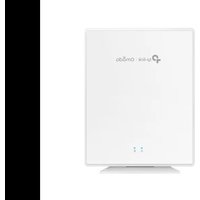
| Product Omada Pro AX3000 Wall Plate Wi-Fi 6 Access Point | |
| Speed | 2.4 GHz: 574 Mbps5 GHz: 2402 Mbps |
| Ethernet Port 4x Gigabit Ethernet Port | |
| Power Supply 802 3af/at PoE | |
| Internal Antennas | 2.4 GHz: 2x 3 dBi5 GHz: 2x 5 dBi |
Point d'accès extérieur
| Picture | |
| Model AP8635-1 | |
| Product Omada Pro AX1800 Indoor/Outdoor Wi-Fi 6 Access Point | |
| Speed | 2.4 GHz: 574 Mbps5 GHz: 1201 Mbps |
| Ethernet Port 1x Gigabit Ethernet Port | |
| Power Supply | 802.3at PoE /48V Passive PoE |
| Internal Antennas | 2 Internal Dual-Band Omni Antennas2.4 GHz: 4 dBi; 5 GHz: 5 dBi |
Spécifications
Point d'accès plafond
| Model AP9670 AP9650 AP9635 | ||||
| Name | Omada Pro AX5400 Ceiling Mount Dual-Band Wi-Fi 6 Access Point | Omada Pro AX3000 Ceiling Mount Dual-Band Wi-Fi 6 Access Point | Omada Pro AX1800 Ceiling Mount Dual-Band Wi-Fi 6 Access Point | |
| Main Design | LAN Interfaces | 1x 2.5Gbps Ethernet Port | 1x Gigabit Ethernet Port | 1x Gigabit Ethernet Port |
| Wi-Fi Standards IEEE 802.1 | 1 a/b/g/n/ac/ax | |||
| Maximum Data Rate | 574 Mbps (2.4 GHz)+4804 Mbps (5 GHz) | 574 Mbps (2.4 GHz)+2402 Mbps (5 GHz) | 574 Mbps (2.4 GHz)+1201 Mbps (5 GHz) | |
| Wireless Client Capacity 25 | 0+ 250+ 1000+ | |||
| Antennas | 2.4 GHz: 2x 4 dBi5 GHz: 4x 5 dBi | 2.4 GHz: 2x 4 dBi5 GHz: 2x 5 dBi | 2.4 GHz: 2x 4 dBi5 GHz: 2x 5 dBi | |
| Transmit Power | CE: < 20 dBm (2.4 GHz, EIRP); < 23 dBm (5 GHz, band 1&band 2, EIRP); < 30 dBm (5 GHz, band 3, EIRP);FCC: < 25 dBm (2.4 GHz); < 28 dBm (5 GHz) | CE: < 20 dBm (2.4 GHz, EIRP); < 23 dBm (5 GHz, band 1/2, EIRP); < 28 dBm (5 GHz, band 3, EIRP);FCC: < 25 dBm (2.4 GHz); < 25 dBm (5 GHz) | CE: < 20 dBm (2.4GHz, EIRP); < 23dBm (5 GHz, band1&band 2, EIRP);< 30 dBm (5 GHz,band 3, EIRP);FCC: < 25 dBm (2.4 GHz); < 25 dBm (5 GHz) | |
| Centralized Management | Omada Software Controller Pro | • | ||
| Omada Cloud-based Controller Pro | • | |||
| Omada APP | • | |||
| Security | WIDS/WIPS | • | ||
| Captive Portal Authentication | • | |||
| Access Control | • | |||
| Maximum number of MAC Filter | 4000 | |||
| Wireless Isolation between Clients | • | |||
| VLAN | • | |||
| Rogue AP Detection | • | |||
| Wireless Encryption WPA-Personal/Enterprise, WPA2-Personal/Enterprise, WPA3-Personal/Enterprise | ||||
| 802.1X Support | • | |||
Point d'accès plafond
| Model AP9670 AP9650 AP9635 | ||||
| Wireless Function | Multiple SSIDs 16 (8 on each band) | |||
| Enable/Disable Wireless Radio | • | |||
| Enable/Disable SSID Broadcast | • | |||
| Guest Network | • | |||
| Automatic Channel Assignment | • | |||
| Transmit Power Control | Adjust transmit Power on dBm | |||
| GoS (WMM) | • | |||
| Seamless Roaming | • | |||
| Mesh | • | |||
| Beamforming | • | |||
| MU-MIMO | • | |||
| Rate Limit | Based on SSID/Client | |||
| Load Balance | • | |||
| Airtime Fairness | • | |||
| Band Steering | • | |||
| RADIUS Accounting | • | |||
| PPSK Pro | • | |||
| Hotspot 2.0 | • (*To be supported with subsequent software update) | |||
| MAC Authentication | • | |||
| Reboot Schedule | • | |||
| Wireless Schedule | • | |||
| Wireless Statistics | • | |||
| Static IP/Dynamic IP | • | |||
| Support Data Rates | 802.11ax | 8 Mbps to 4804 Mbps (MCS0-MCS11, NSS = 1 to 4 HE20/40/80/160) | 8 Mbps to 2402 Mbps (MCS0-MCS11, NSS = 1 to 2 HE20/40/80/160) | 8 Mbps to 1201 Mbps (MCS0-MCS11, NSS = 1 to 2 HE20/40/80) |
| 802.11ac | 6.5 Mbps to 4333.3 Mbps (MCS0-MCS11, NSS = 1 to 4 VHT20/40/80/160) | 6.5 Mbps to 2166.7 Mbps (MCS0-MCS11, NSS = 1 to 2 VHT20/40/80/160) | 6.5 Mbps to 1083.3 Mbps (MCS0-MCS11, NSS = 1 to 2 VHT20/40/80) | |
| 802.11n | 6.5 Mbps to 600 Mbps(MSC0-MCS31, HT20/40) | 6.5 Mbps to 300 Mbps (MCS0-MCS15, HT20/40) | 6.5 Mbps to 300 Mbps (MCS0-MCS15, HT20/40) | |
| 802.11g 6, 9, 12, 18, 24, 36 | 48 ,54 Mbps | |||
| 802.11b 1, 2, 5.5, 11 Mbps | ||||
| 802.11a 6, 9, 12, 18, 24, 36 | 48 ,54 Mbps | |||
Point d'accès plafond
| Model AP9670 AP9650 AP9635 | ||||
| Intelligent Anomaly Detection and Analysis | • | |||
| Intelligent Network Optimization | • | |||
| Management | LED ON/OFF Control | • | ||
| Management MAC Access Control | • | |||
| Web-based Management | • | |||
| SNMP | v1, v2c, v3 | |||
| SSH | • | |||
| Restore & Backup | • | |||
| Firmware update via Web | • | |||
| NTP | • | |||
| System Log | • | |||
| Email Alerts | • | |||
| Physical & Environment | Power Supply 802.3at PoE or 12V/1.5A DC | EU: 48V Passive PoE or 802.3at PoE or 12V/1A DCUS: 48V Passive PoE or 802.3at PoE or 12V/1.5A DCPoE Adapter Not Included | 48V Passive PoE or 802.3at PoE or 12V/1.5A DC | |
| Maximum Power Consumption | EU: 18.05 W (For PoE); 16.39 W (for DC)US: 19.8 W (For PoE); 17.8 W (for DC) | EU: 12.7 W (For PoE); 11.43 W (for DC)US: 13.98 W (For PoE); 12.58 W (for DC) | EU: 14.4 W (For PoE); 13.1 W (for DC)US: 14.9 W (For PoE); 13.4 W (for DC) | |
| Reset | • | |||
| Mounting Ceiling / Wall mounting (Kits included) Ceiling / Wall mounting (Kits included) / Junction Box mounting | ||||
| Others | Certifications CE, FCC, RoHS, IC | |||
| Dimensions (W x D x H) 243 x 243 x 64 mm 160 x 160 x 33 mm 160 x 160 x 33 mm | ||||
| Environment | Operating Temperature: 0 °C–40 °C (32 °F–104 °F);Storage Temperature: -40 °C–70 °C (-40 °F–158 °F);Operating Humidity: 10%–90% non-condensing;Storage Humidity: 5%–90% non-condensing; | |||
Point d'accès mural
| Model AP7650 | ||
| Name Omada Pro AX3000 Wall Plate Wi-Fi 6 Access Point | ||
| Main Design | LAN Interfaces 4x Gigabit Ethernet Port | |
| Wi-Fi Standards IEEE 802.11 a/b/g/n/ac/ax | ||
| Maximum Data Rate 574 Mbps (2.4 GHz) + 2402 Mbps (5 GHz) | ||
| Wireless Client Capacity 100+ | ||
| Antonnas | 2.4 GHz 2x 3 dBi5 GHz: 2x 5 dBi | |
| Transmit Power | CE: < 20 dBm(2.4GHz, EIRP); <23dBm (5 GHz,band1&band 2,EIRP);< 26 dBm (5 GHz,band 3, EIRP);FCC: < 21 dBm (2.4 GHz); < 21 dBm (5 GHz) | |
| Centralized Management | Omada Software Controller Pro | • |
| Omada Cloud-based Controller Pro | • | |
| Omada APP | • | |
| Security | WIDS/WIPS | • |
| Captive Portal Authentication | • | |
| Access Control | • | |
| Maximum number of MAC Filter | 4000 | |
| Wireless Isolation between Clients | • | |
| VLAN | • | |
| Rogue AP Detection | • | |
| Wireless Encryption WPA-Personal/Enterprise, WPA2-Personal/Enterprise, WPA3-Personal/Enterprise | ||
| 802.1X Support | • | |
| Multiple SSIDs 16 (8 on each band) | ||
| Enable/Disable Wireless Radio | • | |
| Enable/Disable SSID Broadcast | • | |
| Guest Network | • | |
| Automatic Channel Assignment | • | |
| Transmit Power Control | Adjust transmit Power on dBm | |
| QoS (WMM) | • | |
| Seamless Roaming | • | |
| Mesh | - | |
| Beamforming | • | |
| Wireless Function | MU-MIMO | - |
| Rate Limit | Based on SSID/Client | |
| Load Balance | • | |
| Airtime Fairness | • | |
| Band Steering | • | |
| RAD/US Accounting | • | |
| PPSK Pro • | ||
| Hotspot 2.0 • (*To be supported with subsequent software update) | ||
| MAC Authentication | • | |
| Reboot Schedule | • | |
| Wireless Schedule | • | |
| Wireless Statistics | • | |
| Static IP/Dynamic IP | • | |
Point d'accès mural
| Model AP7650 | ||
| Support Data Rates | 802.11ax 8 Mbps to 2402 Mbps | (MCSO-MCS11, NSS = 1 to 2 HE20/40/80/160) |
| 802.11ac 6.5 Mbps to 2166.7 Mbps | (MCSO-MCS9, NSS = 1 to 2 VHT20/40/80/160) | |
| 802.11n 6.5 Mbps to 500 Mbps | (MCSO-MCS15, 1024QAM, HT20/40) | |
| 802.11g 6, 9, 12, 18, 24, 36, 48 | 54 Mbps | |
| 802.11b 1, 2, 5.5, 11 Mbps | ||
| 802.11a 6, 9, 12, 18, 24, 36, 48 | 54 Mbps | |
| Management | Intelligent Anomaly Detection and Analysis | |
| Intelligent Network Optimization | ||
| LED ON/OFF Control | ||
| Management MAC Access Control | ||
| Web-based Management | ||
| SNMP | v1, v2c, v3 | |
| SSH | ||
| Restore & Backup | ||
| Firmware update via Web | ||
| NTP | ||
| System Log | ||
| Email Alerts | ||
| Physical & Environment | Power Supply 802.3af/at PoE | |
| Maximum Power Consumption | EU: 12W (802.3at PoE)US: 12.6W (802.3at PoE) | |
| Reset | ||
| Mounting Wall mouting (Kits included) | ||
| Others | Certifications FCC, RoHS | |
| Dimensions (W x D x H) 143 x 86 x 42.6 mm | ||
| Environment | Operating Temperature: 0 °C-40 °C (32 °F-104 °F);Storage Temperature: -40 °C-70 °C (-40 °F-158 °F);Operating Humidity: 10%-90% non-condensing;Storage Humidity: 5%-90% non-condensing; | |
Point d'accès extérieur
| Model AP8635-I | ||
| Name Omada Pro AX1800 Indoor/Outdoor Wi-Fi 6 Access Point | ||
| Main Design | LAN Interfaces 1x Gigabit Ethernet | Port |
| Wi-Fi Standards IEEE 802.11a/b/g/n/ac/ax | ||
| Maximum Data Rate 574 Mbps (2.4 GHz) + 1201 Mbps (5 GHz) | ||
| Wireless Client Capacity 1000+ | ||
| Antennas | 2 Internal Dual-Band Omni Antennas2.4 GHz: 4 dBi; 5 GHz: 5 dBi | |
| Transmit Power | CE: < 20 dBm (2.4 GHz, EIRP), < 23 dBm (5 GHz Band1&2, EIRP), < 28dBm (5 GHz Band3, EIRP); FCC: < 25 dBm (2.4 GHz), < 25 dBm (5 GHz) | |
| Centralized Management | Omada Software Controller Pro | • |
| Omada Cloud-based Controller Pro | • | |
| Omada APP | • | |
| Security | WIDS/WIPS | • |
| Captive Portal Authentication | • | |
| Access Control | • | |
| Maximum number of MAC Filter 4000 | ||
| Wireless Isolation between Clients | • | |
| VLAN | • | |
| Rogue AP Detection | • | |
| Wireless Encryption WPA-Personal Enterprise, WPA2-Personal/Enterprise, WPA3-Personal/Enterprise | ||
| 802.1X Support | • | |
| Wireless Function | Multiple SSIDs 16 (8 for each band) | |
| Enable/Disable Wireless Radio | • | |
| Enable/Disable SSID Broadcast | • | |
| Guest Network | • | |
| Automatic Channel Assignment | • | |
| Transmit Power Control Adjust transmit Power on dBm | ||
| QoS (WMM) | • | |
| Seamless Roaming | • | |
| Mesh | • | |
| Beamforming | • | |
| MU-MIMO | • | |
| Rate Limit Based on SSID/Client | ||
| Load Balance | • | |
| Airtime Fairness | • | |
| Band Steering | • | |
| RADIUS Accounting | • | |
| PPSK Pro • | ||
| Hotspot 2.0 • (*To be supported with subsequent software update) | ||
| MAC Authentication | • | |
| Reboot Schedule | • | |
| Wireless Schedule | • | |
| Wireless Statistics | • | |
| Static IP/Dynamic IP | • | |
| Support Data Rates | 802.11ax | 8 Mbps to 1201 Mbps (MCS0-MCS11, NSS = 1 to 2 HE20/40/80) |
| 802.11ac 6.5 Mbps to 1083.3 Mbps (MCS0-MCS11, NSS = 1 to 2 VHT20/40/80) | ||
| 802.11n | 6.5 Mbps to 300 Mbps (MCS0-MCS15, HT20/40) | |
| 802.11g | 6, 9, 12, 18, 24, 36, 48, 54 Mbps | |
| 802.11b | 1, 2, 5.5, 11 Mbps | |
| 802.11a | 6, 9, 12, 18, 24, 36, 48, 54 Mbps | |
Point d'accès extérieur Modèle AP8635-I
| Management | Intelligent Anomaly Detection and Analysis | • |
| Intelligent Network Optimization • | ||
| LED ON/OFF Control | • | |
| Management MAC Access Control | • | |
| Web-based Management | • | |
| SNMP v1, v2c, v3 | ||
| SSH | • | |
| Restore & Backup | • | |
| Firmware update via Web | • | |
| NTP | • | |
| System Log | • | |
| Email Alerts | • | |
| Physical & Environment | Power Supply 802.3at PoE or 48V | Passive PoE (PoE Adapter Not Included) |
| Maximum Power Consumption | EU: 12.5W (802.3at PoE or Passive PoE)US: 14.7W (802.3at PoE or Passive PoE) | |
| Reset | • | |
| Mounting Pole/Wall mouting (Kits included) | ||
| Others | Certifications CE, FCC, RoHS | |
| Dimensions (W x D x H) 280.4 × 106.5 × 56.8 mm | ||
| Environment | Operating Temperature: -30 °C-70 °C (-22 °F-158 °F);Storage Temperature: -40 °C-70 °C (-40 °F-158 °F);Operating Humidity: 10%-90% non-condensing;Storage Humidity: 5%-90% non-condensing; | |
Diagrammes de rayonnement d'antenne
Point d'accès à montage au plafond
| AP9670 | ||||
| Elevation-0° Elevation-90° Azimuth Mapped 3D | ||||
| 2.45 GHz |  | 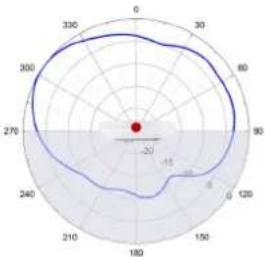 |  |  |
| 5.25 GHz |  |  |  | 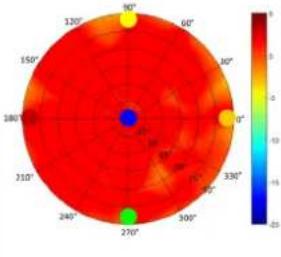 |
| 5.5 GHz |  |  |  |  |
| 5.75 GHz |  |  |  |  |
Diagrammes de rayonnement d'antenne
Point d'accès à montage au plafond
| AP9650 | ||||
| Elevation-0° Elevation-90° Azimuth Mapped 3D | ||||
| 2.45 GHz | 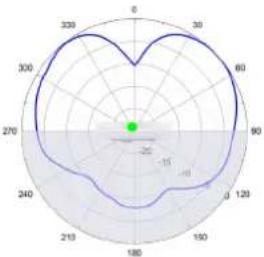 |  |  |  |
| 5.25 GHz |  |  |  |  |
| 5.5 GHz |  |  |  |  |
| 5.75 GHz |  |  |  |  |
Diagrammes de rayonnement d'antenne
Point d'accès à montage au plafond
| AP9635 | ||||
| Elevation-0° Elevation-90° Azimuth Mapped 3D | ||||
| 2.45 GHz |  |  |  |  |
| 270 | ||||
| 5.25 GHz |  |  |  |  |
| 270 | ||||
| 5.5 GHz |  |  | 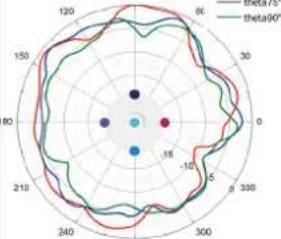 |  |
| 270 | ||||
| 5.75 GHz | 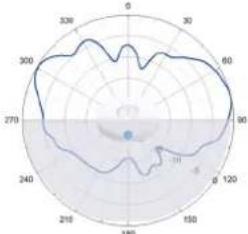 | 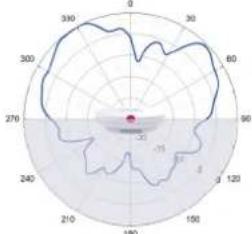 |  | 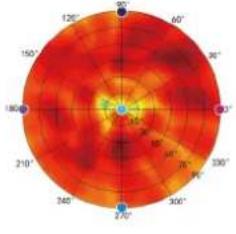 |
| 270 | ||||
Diagrammes de rayonnement d'antenne
Point d'accès à montage mural
| AP7650 | ||||
| Elevation-0° Elevation-90° Azimuth Mapped 3D | ||||
| 2.45 GHz |  |  |  |  |
| 5.25 GHz |  |  |  |  |
| 5.5 GHz | 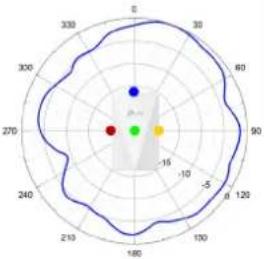 |  |  | 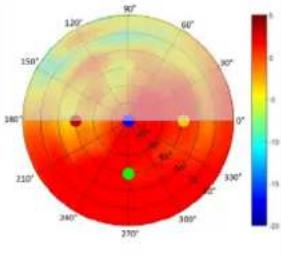 |
| 5.75 GHz | 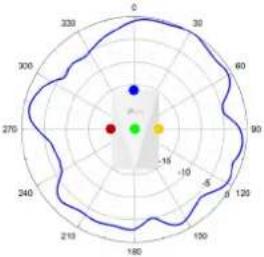 |  |  |  |
Diagrammes de rayonnement d'antenne
Point d'accès extérieur
| AP8635-1 | ||||
| Elevation-0° Elevation-90° Azimuth Mapped 3D | ||||
| 2.45 GHz |  |  |  |  |
| 5.25 GHz |  | 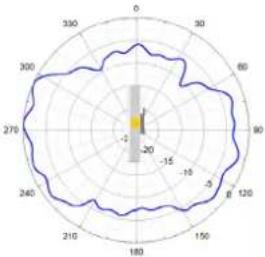 | 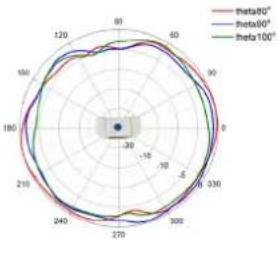 |  |
| 5.5 GHz |  |  |  |  |
| 5.75 GHz |  | 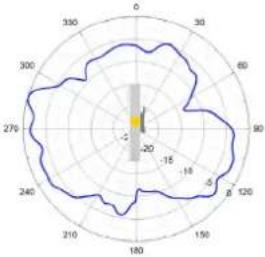 |  |  |
Avertissements sur les diagrammes de rayonnement d'antenne
Avertissement sur la vitesse et la portée sans fil
Les débits de transmission sans fil maximaux sont les débits physiques dérivés des spécifications de la norme IEEE 802.11. Les spécifications de portée et de couverture ont été définies selon les résultats de tests dans des conditions d'utilisation normales. Le débit de transmission sans fil réel et la couverture sans fil ne sont pas garantis et varieront en fonction de 1) facteurs environnementaux, notamment les matériaux de construction, les objets physiques et les obstacles, 2) conditions du réseau, notamment les interférences locales, le volume et la densité du trafic, l'emplacement du produit, la complexité du réseau et la surcharge du réseau, et 3) limitations du client, notamment les performances nominales, l'emplacement, la qualité de la connexion et l'état du client.
Avertissement sur la capacité des clients sans fil
Les spécifications de capacité des clients sans fil ont été définies selon les résultats de tests dans des conditions d'utilisation normales. La capacité réelle des clients sans fil n'est pas garantie et varie en fonction de : 1) facteurs environnementaux, notamment les matériaux de construction, les objets physiques et les obstacles ; 2) conditions du réseau, notamment les interférences locales, le volume et la densité du trafic, l'emplacement du produit, la complexité du réseau et les frais généraux du réseau ; et 3) limitations des clients, notamment les performances nominales, l'emplacement, la qualité de la connexion et l'état du client.
Avertissement sur la limitation des ports Ethernet
La vitesse réelle du réseau peut être limitée par le débit du port Ethernet WAN ou LAN du produit, le débit pris en charge par le câble réseau, les facteurs du fournisseur d'accès Internet et d'autres conditions environnementales.
Avertissement sur le MU-MIMO
(Uniquement pour certains appareils)
La fonctionnalité MU-MIMO nécessite des appareils clients qui prennent également en charge MU-MIMO.
Avertissement sur l'itinérance transparente
(Uniquement pour certains appareils)
L'itinérance transparente nécessite que le point d'accès et les appareils clients prennent en charge les protocoles 802.11k et 802.11v.
Avertissement sur la protection contre la foudre et les décharges électrostatiques
(Uniquement pour les appareils extérieurs)
La protection contre la foudre et les décharges électrostatiques peut être obtenue grâce à une configuration appropriée du produit, à la mise à la terre et au blindage des câbles. Reportez-vous au manuel d'instructions et consultez un professionnel de l'informatique pour vous aider à configurer ce produit.
Avertissement sur le PoE
Les calculs du budget PoE sont basés sur des tests en laboratoire. Le budget d'alimentation PoE réel n'est pas garanti et varie en fonction des limitations des clients et des facteurs environnementaux.
Certains modèles présentés dans ce guide peuvent ne pas être disponibles dans votre pays ou région. Visitez le site Web de TP-Link pour obtenir des informations sur les ventes locales : www.tp-link.com. Les spécifications sont sujettes à modification sans préavis.
© 2023 TP-Link



- OMADA PRO
- BUSINESS CLOUD SDN SOLUTION
- LISTE DES PRODUITS
- SPÉCIFICATIONS
- DIAGRAMMES DE RAYONNEMENT D'ANTENNE
- AVERTISSEMENTS SUR LES DIAGRAMMES DE RAYONNEMENT D'ANTENNE
- AVERTISSEMENT SUR LA VITESSE ET LA PORTÉE SANS FIL
- AVERTISSEMENT SUR LA CAPACITÉ DES CLIENTS SANS FIL
- AVERTISSEMENT SUR LA LIMITATION DES PORTS ETHERNET
- AVERTISSEMENT SUR LE MU-MIMO
- AVERTISSEMENT SUR L'ITINÉRANCE TRANSPARENTE
- AVERTISSEMENT SUR LA PROTECTION CONTRE LA FOUDRE ET LES DÉCHARGES ÉLECTROSTATIQUES
- AVERTISSEMENT SUR LE POE
Marque : TP-LINK
Modèle : Omada Pro AP7650
Catégorie : Point d'accès