D70H20L-DB(E17) - Microwaves Hanseatic - Free user manual and instructions
Find the device manual for free D70H20L-DB(E17) Hanseatic in PDF.


| Type of product | Microwave oven with grill and combi functions |
| Brand | Hanseatic |
| Model | D70H20L-DB(E17) |
| Order number | 65509859 |
| Appliance dimensions (H x W x D) | 26.2 cm x 45.2 cm x 36.0 cm |
| Net weight | Approx. 11.3 kg |
| Cooking chamber volume | 20 litres |
| Supply voltage | 230 V / 50 Hz |
| Required fuse | 16 A (min.) |
| Microwave power output (max.) | 700 W |
| Number of microwave power levels | 5 (125 W, 250 W, 400 W, 570 W, 700 W) |
| Grill power output | 900 W |
| Total power consumption (microwave) | 1200 W |
| Total power consumption (grill) | 900 W |
| Microwave frequency | 2,450 MHz |
| Heating modes | Microwave only, Grill only, Combi 1 (70% MW + 30% Grill), Combi 2 (49% MW + 51% Grill), Combi 3 (67% MW + 33% Grill) |
| Included accessories | Rotary plate, rotary plate drive, roller ring, grill rack |
| Control type | Two mechanical knobs (function and timer) |
| Safety features | Door interlock, child safety (supervision required), automatic shut-off when door opens |
| Cleaning and maintenance | Wipe surfaces with damp cloth; rotary plate dishwasher-safe; hand wash grill rack; do not use harsh cleaners |
| Spare parts and repairability | Contact service department for repairs; only authorised specialists may repair; do not attempt self-repair |
| Environmental class | Group 2, Class B (household use) |
Frequently Asked Questions - D70H20L-DB(E17) Hanseatic
User questions about D70H20L-DB(E17) Hanseatic
0 question about this device. Answer the ones you know or ask your own.
Ask a new question about this device
Download the instructions for your Microwaves in PDF format for free! Find your manual D70H20L-DB(E17) - Hanseatic and take your electronic device back in hand. On this page are published all the documents necessary for the use of your device. D70H20L-DB(E17) by Hanseatic.
USER MANUAL D70H20L-DB(E17) Hanseatic
natural_image
Illustration of a microwave oven with dual control knobs and a front panel (no text or symbols)Gebrauchsanleitung
Mikrowellengerät
Inhaltsverzeichnis
Lieferung DE-3
Lieferumfang DE-3
natural_image
Illustration of a microwave oven with open door and control knobs (no text or symbols)(2)
(3)

(4)
(5)
Lieferumfang
natural_image
Illustration of a microwave oven with dual door knobs and front panel (no text or symbols)User manual
Microwave oven
Table of contents
Delivery GB-3
Package contents . . . . . . . . . . . . . . GB-3
Check the delivery . . . . . . . . . . . . GB-3
Appliance parts / control elements . . . GB-4
Safety GB-5
Intended use . . . . . . . . . . . . . . . . . . . GB-5
Explanation of terms . . . . . . . . . . . GB-5
Safety notices . . . . . . . . . . . . . . . . . GB-5
Start-up GB-11
The correct storage location ..... GB-11
Cleaning before use . . . . . . . . . GB-11
Inserting the rotary plate . . . . . . . GB-11
Electrical connections . . . . . . . . GB-11
Initially heating up the appliance. . GB-12
Cooking chamber and lighting . . . GB-12
Ventilator lag . . . . . . . . . . . . . . . . . . GB-12
Information on microwaves ..... GB-13
Applications GB-13
Suitable cookware . . . . . . . . . . . . . . GB-14
Operation GB-15
Microwave mode . . . . . . . . . . . . . . GB-15
Grill/Combi mode . . . . . . . . . . . GB-16
Setting cooking time and
switching on the appliance ..... GB-16
Practical tips GB-17
The correct cooking time . . . . . . GB-17
The correct quantity of food . . . . . GB-17
Arrangement of food . . . . . . . . . . GB-17
Piercing and scarifying . . . . . . . GB-17
Stirring and turning . . . . . . . . . . . GB-18
Tips on defrosting . . . . . . . . . . . . GB-18
Care and maintenance . . . . . . . . GB-19
Cleaning the appliance . . . . . . . GB-19
Inspect device . . . . . . . . . . . . . . . . . GB-20
Troubleshooting table . . . . . . . . . . GB-21
Service. GB-22
Advice, order and complaint ..... GB-22
Spare parts . . . . . . . . . . . . . . . . . . GB-22
Environmental protection . . . . . . . GB-23
Disposing of old electrical devices in an environmentally-friendly manner . . . . . . . . . . . . . . . . . . . . . . . . . . GB-23
Packaging GB-23
Technical specifications . . . . . . . . GB-24
Read important safety instructions carefully and store for future use. Before using the
appliance, please first read through the safety instructions and user manual carefully. This is the only way you can use all the functions reliably and reliably. Be absolutely sure to also observe the national regulations in your country, which are also valid in addition to the regulations specified in this user manual.
Keep all safety notices and instructions for future reference. Pass all safety notices and instructions on to the subsequent user of the product.
Delivery
natural_image
Illustration of a microwave oven with dual rotary knobs (no text or symbols)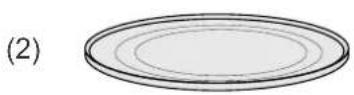
natural_image
Simple line drawing of a round table with three legs and a central handle (no text or symbols)Package contents
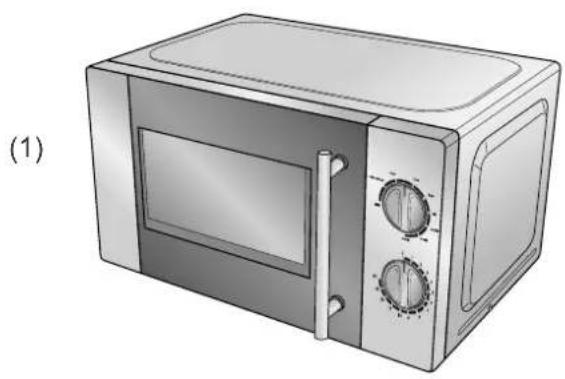
1× Microwave (1)
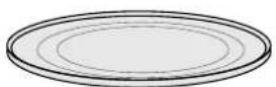
1× Rotary plate (2)
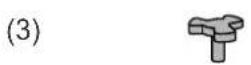
1× Rotary plate drive (3)
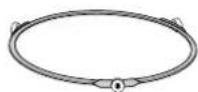
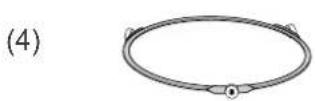
1× Roller ring (4)
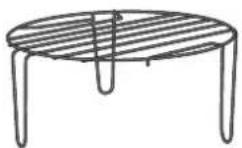
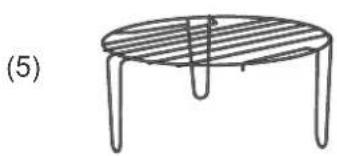
1× Grill rack (5)
1× User manual
Check the delivery
! NOTICE
Improper handling of the appliance may result in damage.
■ Do not use sharp or pointed objects to unpack it.
- Carefully unpack the device and remove all packaging items, plastic profiles, adhesive strips and foam padding from inside, outside and from the back plate of the device.
- Check that the delivery is complete.
- Check whether the appliance was damaged during transit.
- If the delivery is incomplete or the appliance has been damaged during transit, please contact our service department (see „Service“ on page GB-22).
WARNING!
Risk of electric shock and hazard due to microwave radiation!
■ Never use a damaged appliance.
Appliance parts/control elements
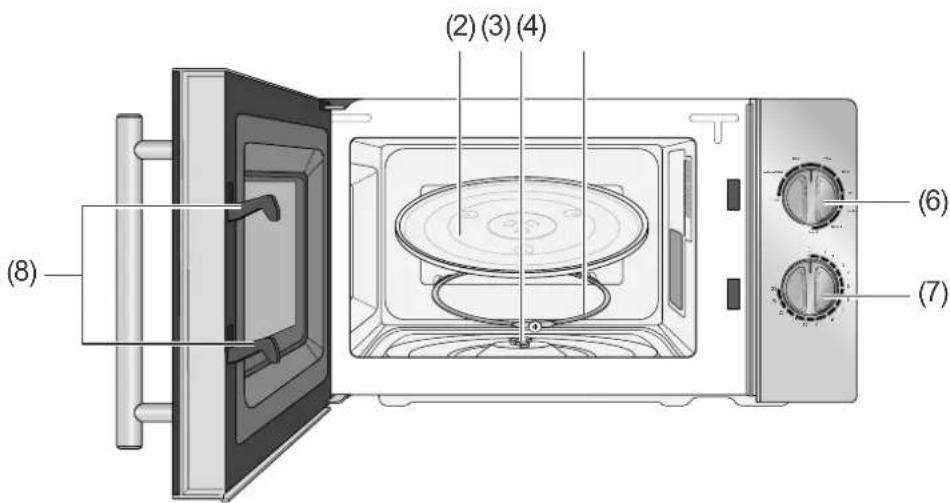
(2) Rotary plate
(3) Rotary plate drive
(4) Roller ring
(6) Control knob for setting the function
(7) Control knob for setting the cooking time
(8) Locking mechanism
Safety
Intended use
The device is intended for defrosting, warming up, cooking and grilling foods. The device is not suitable for heating a room or for drying objects.
The appliance is intended solely for use in private households.
Use the appliance exclusively as described in this user manual. Any other use is deemed improper and may result in damage to property or even personal injury. The manufacturer accepts no liability for damage caused by improper use.
Explanation of terms
The following symbols can be found in this user manual.

WARNING
This symbol indicates a hazard with a medium level of risk which, if not avoided, could result in death or serious injury.

CAUTION
This symbol indicates a hazard with a low level of risk which, if not avoided, could result in minor or moderate injury.

NOTICE
This symbol warns against possible damage to property.

This symbol refers to useful additional information.
Safety notices
In this chapter you will find general safety instructions which you must always observe for your own protection and that of third parties. Please also observe the warning notes in the individual chapters on operation, setup, etc.

WARNING
Risk of electric shock!
Touching live parts may result in severe injury or death.
■ Only use the appliance indoors. Do not use in wet rooms or in the rain.
■ Do not use or continue to operate the device if
– there are visible signs of damage, e.g. the connection cable is defective,
– the door is damaged or broken;
– smoke begins to form or there is a burning smell,
– it produces unusual sounds.
In this case, unplug from the mains and contact our service department (see „Service“ on page GB-22).
■ The device corresponds to Protection Class I and may only be connected to a plug socket with a correctly installed protective conductor. When connecting, make sure that it has the right voltage. You can find more detailed information about this on the nameplate.
The connection of a multiple socket strip or a multi-socket is not permissible and may result in a fi re hazard.
- Do not operate the appliance with an external timer or a separate remote control system.
■ Lay the mains cord so that it does not pose a tripping hazard.
- Keep the appliance, the mains plug and the mains cord away from open flames and hot surfaces.
- Do not kink or pinch the mains cord or lay it over sharp edges. This can result in a break in the cable.
■ If the mains cord of the appliance is damaged, it must be replaced by the manufacturer, through customer service or by a qualified specialist.
- Do not put any objects in or through the housing openings. Also make sure that children cannot insert any objects into them.
- When unplugging at the mains, always pull on the plug itself and not the cable.
■ Never touch the mains plug with wet hands.
■ Never immerse the mains cord or plug in water or any other liquids.
■ In the event of an error or before cleaning and maintenance, remove the mains plug.
■ Inspections and repairs to the appliance may only be carried out by authorised specialists, such as our service department (see page GB-22).
Independent repairs to the appliance may cause damage to property and personal injury and invalidate liability and warranty claims. Never try to repair a defective or suspected defective appliance yourself.
■ Only parts corresponding to the original appliance specifications may be used for repairs. This appliance contains electrical and mechanical parts which are essential for protection against potential sources of danger.
Risk due to microwaves!
A door that fails to close adequately can cause microwave radiation to escape. The appliance must not be used in such a case.
■ Pay particular attention to the cleanliness of the door seals and the door sealing surfaces with all adjacent parts.
- Do not operate the appliance if the door is warped or damaged, or if the viewing window, door latch, hinges, or door seals are defective, or if the door does not close tightly for any other reason. Appropriate repairs may only be carried out by a person specially trained for this purpose.
- It is hazardous for anyone – with the exception of a qualified professional – to undertake any form of servicing or repair work which necessitates the removal of the cover, which is there to protect against radiation as a result of microwave energy being emitted.
Danger of explosion!
The inappropriate use of the device can lead to damage or cause an explosion.
■ Never place a mixture of water and oil or fat into the device. Otherwise it could explode.
Health risk!
Improper handling of the appliance may cause harm to health.
■ Clean the appliance regularly and remove any existing leftover food immediately.
■ Make sure to completely cook poultry, food with fresh egg, and dishes which need to be warmed up to ensure that all pathogens (e.g. salmonella) are completely killed.
Acrylamide may be carcinogenic. Acrylamide is produced when starch is exposed to excessive heat, e.g. in potatoes (fries, chips), biscuits, toast, bread etc.
- Keep cooking times as short as possible.
■ Only brown the food slightly, do not allow it to brown too much.
Risk of suffocation for children!
Children can become entangled in the packaging film and suffocate.
■ Do not allow children to play with the packaging fi lm.
Dangers for children and people with limited physical, sensory or mental capacity!
■ This appliance can be used by children aged eight years and above and by persons with reduced physical, sensory or mental abilities, or who lack experience and/or knowledge, if they are supervised or have been instructed in the safe use and understand the dangers associated with its use.
■ Cleaning and maintenance must not be carried out by children unless they are supervised.
- Keep children away from the door glass. The door glass can become very hot during operation.
■ Children must not be allowed to play with the appliance.
CAUTION
Risk of scalding!
Heating the liquid can cause so-called ‘delayed boiling’. In the process, the liquid reaches a boiling temperature without a visible sign that it is actually boiling. Even a small vibration may cause the liquid to suddenly spray out, for example when removing it from the microwave oven.
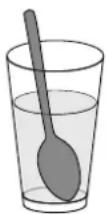
■ To avoid this delayed boiling phenomenon, place a spoon in the container. The spoon must always maintain a minimum distance of 2 cm from the inner walls of the device.
- Do not use tall, slender containers with a narrow neck.
■ Stir before heating up and after half the cooking time.
■ Wait shortly after heating. Carefully tap on the container and stir the food before you take the container out of the cooking compartment.
Risk of burns!
Improper handling of the appliance can lead to burns. When in operation, the device and its exposed component parts can become very hot. After using the grill or combi modes the grill (at the top of the cooking chamber) and the grill rack will be very hot. The containers can also get very hot due to the foods.
- Keep children under 8 years of age away from the device, unless they are under constant supervision.
■ Do not touch parts of the unit housing. - Allow the oven and grill to cool before cleaning.
■ When removing dishes from the cooking chamber, always use dishcloths or oven gloves.
■ Food that has been heated up in the microwave is sometimes heated unevenly. The containers also do not usually get as hot as the food. It is therefore important to carefully check the temperature of food with the utmost care, especially for children.
■ Before warming up baby food, remove the screw closure and teat from the feeding bottle.
■ Make absolutely sure to thoroughly stir or shake the baby food after heating; then immediately check the temperature of the baby food!
■ Set the power and time exactly according to the information on the packaging.
■ Never heat food or liquids in tightly closed containers! These can explode in the device or cause injury during opening.
- Do not heat shellfish, eggs in their shells or whole hard-boiled eggs in the microwave as these types of food can burst easily, even after the microwave heating process has ended. In order to prevent foodstuff from bursting, it is important to pierce holes in tomatoes, sausages, aubergines or similar dishes which are contained within closed skin.
Fire hazard!
Improper handling of the appliance may lead to a fire and to damage to property.
■ In order to ensure sufficient air circulation, the prescribed minimum dis-
tances must be complied with (see „Start-up“ on page GB-11).
■ Only use containers made of microwaveable, heat resistant material.
- Please ensure to closely monitor the heating up or cooking of dishes contained in fl ammable materials such as plastic or paper containers. There is a risk of infl ammunition.
- Do not place objects (cookery books, oven mitts, etc.) in the cooking compartment. Accidentally switching on the device can cause damage or even ignition.
■ Do not use the device to dry dishes or clothing or to heat up hot water bottles, slippers, sponges, moist cleaning cloth or similar items. This may result in injuries, infl ammation or a fire.
■ Never heat flammable objects or dishes containing alcohol in the device.
■ Never use the device to fry or heat oil! The temperature of the oil cannot be controlled.
- Do not use any baking paper or similar items with the grill or combi modes.
- In case of a fire or smoke in the cooking compartment: Do not open the door. Switch off the device, unplug at the mains or switch off at the fuse box.
! NOTICE
Risk of material damage!
Improper handling of the appliance may lead to damage to property.
■ Do not use sharp objects to unpack the appliance.
- Do not lift the appliance by the door handle.
■ Never remove the cover on the right-hand wall of the cooking chamber. It is designed to protect the magnetron, which emits the microwaves.
■ The device must never be operated without the rotary plate or foods/liquids!
■ Always place the cooking containers on the rotary plate. Liquid is thus prevented from entering the appliance should it boil over.
■ Only heat plastic containers from the freezer until the food can be transferred to another container.
■ The presence of any metal in the cooking chamber can cause sparks when operating the microwave or when using the Combi mode! This can destroy the device and the viewing pane! Do not use metal pots, metal pans and metal lids or cookware with metal parts such as gold edges under any circumstances. Exception: Spoon in the glass to avoid a boiling delay. - Do not use aluminium foil, as it may also produce sparks when it touches the walls of the cooking compartment.
- Do not use any containers made of porcelain, ceramic or plastic and any protective sheets during grill or multi-function mode which are not resistant to high heat!
■ If a container becomes hotter than the dish itself, then it is unsuitable for
use in a microwave. Do not use such containers.
- Do not place the hot rotary plate on a cold surface such as, for example, a work surface made of granite or tile. Otherwise, the rotary plate could shatter. Always place on top of a suitable mat.
■ Do not use any damaged containers! They could break and the contents could leak out into the device itself.
■ If the cookware or the grill rack is not fully placed in the cooking chamber, the viewing window may become scratched when closing the door. Please therefore ensure to place all parts completely in the cooking chamber. - Only use a special microwave thermometer inside the device. Normal liquid thermometers are not suitable.
- Insufficient cleanliness of the cooking appliance can lead to the destruction of the surfaces, which themselves influence the appliance's useful lifespan and could possibly also lead to dangerous situations. Clean the appliance regularly and remove any existing leftover food immediately.
- Keep in mind the following when cleaning:
- Under no circumstances should sharp, coarse, sodium carbonate-based, acidic, solvent-based or abrasive cleaning agents be used. All-purpose cleaners with a neutral pH are recommended.
– The door seals can be damaged by unsuitable cleaning agents. Use
care products only on the outer surfaces.
– Use only soft cloths for cleaning.
- Please ensure that no water seeps into the unit housing.
- The lamp in the appliance is exclusively used for lighting the cooking compartment. It is not suitable as a light source for a room.
Start-up
The correct storage location
The microwave should not be positioned directly next to a refrigerator or freezer. The heat emitted from the microwave would cause unnecessarily higher energy consumption by the refrigerator or freezer.
The microwave should be positioned at least 2 m away from radios, TVs etc., so that the reception is not disrupted.
The microwave should be positioned on a level, stable and heat-resistant surface.
When selecting a location for the microwave, please choose a place away from heat, steam or high air humidity. The microwave may not be used outdoors.
Please ensure that no highly flammable materials are located within the vicinity of the microwave.
The socket must be near to the device and easily accessible, in order that the plug can be quickly pulled out in the event of any malfunction.
In order to ensure sufficient air circulation, the following minimum lateral and vertical distances must be complied with:
Upwards: 30 cm
Backwards: 0 cm (place directly against the wall)
To the left: 20 cm
To the right: 20 cm
Cleaning before use
Cleaning the microwave before first use (see "Care and maintenance" on page GB-19).
Inserting the rotary plate
-
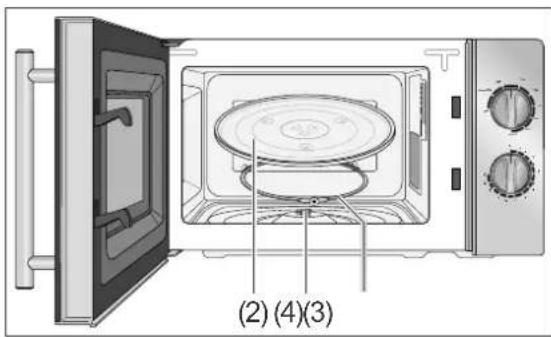
Place the rotary plate drive (3) in the recess in the middle and the roller ring (4) in the recess in the cooking compartment floor.
-
Place the rotary plate (2) with the ribbed side facing down onto the rotary plate drive (3) and the roller ring (4) and turn it until its centre clicks into place on the rotary plate drive (3).
• Always place the cooking container on the rotary plate (2). This ensures that the microwaves are distributed evenly, and that any liquid overflow from the food into the device is avoided.
- Use the rotary plate every time you use the microwave.
Electrical connections
- Please check whether the device's supply voltage is compatible with the supply voltage used in your house (please see the type plate).
- Please ensure you only connect the device to a professionally installed protective contact socket with sufficient fuse protection (see „Technical specifications“ on page GB-24).
- The plug socket must be located away from the reverse side of the microwave, otherwise the plug will be in contact with the back plate.
- Do not use any multiplugs, extension cables, timer switches or remote control systems.
Initially heating up the appliance
A slight odour may be produced during first use. This is not harmful and will disappear after a short time.
- Allow the appliance to run for 10 minutes in grill mode(see „Grill/Combi mode“ on page GB-16).
Cooking chamber and lighting
If the door is opened while the device is in operation, the cooking process will be stopped. The cooking process resumes once the door is closed again.
The cooking chamber light switches on automatically when the door is open or the appliance is in operation.
Ventilator lag
After the cooking time has finished, the fan will continue to run for a few minutes to cool the device down. The duration depends on how hot it is in the device.
Information on microwaves
What are microwaves?
Microwaves are electromagnetic waves. As with radio and TV, microwaves are also invisible and intangible.
Microwaves
– are reflected by all metals,
– penetrate glass, porcelain, plastic and paper,
– are taken up by food.
How do microwaves affect food?
- Microwaves penetrate into food to a depth of about 3 cm.
– They heat the water, fat and sugar molecules (food with a high water content is heated most intensely). - This heat then slowly permeates the entire food and defrosts, heats up and cooks the food.
- Stirring or turning is important for uniform cooking as the individual components of the food will otherwise be heated unevenly.
- The cooking compartment and the air in this compartment are not heated. The food container is primarily heated by the hot food.
- When heating liquids, a so-called “boiling delay” can occur. In the process, the liquid reaches a boiling temperature without a visible sign that it is actually boiling. Even a small vibration may cause the liquid to suddenly spray out, for example when removing it from the microwave oven.
– Every food needs a certain amount of energy to cook or defrost - according to the rule of thumb ‘high power setting, less time’ or ‘low power setting, more time’.
How does a microwave oven work?
– A microwave generator, the so-called magnetron, generates the microwaves and disperses them into the cooking chamber.
– The cooking compartment walls and inner pane reflect the microwaves so that they cannot escape from the cooking compartment.
- The rotary plate ensures that the microwaves are distributed evenly to the food.
– The microwave's power can be set to one of six levels.
– The microwave switches itself off
– once the preselected time has expired,
- when opening the cooking compartment door,
– by turning the control knob (7) to zero.
Applications
The microwave is particularly suited for defrosting small portions, as well as for preparing casseroles, soups, sauces, meat without the rind, steamed fish, vegetables, side dishes (rice, potatoes, certain pastry dishes) and hot beverages.
Suitable cookware
! NOTICE
Risk of material damage! Improper handling of the appliance may lead to damage to property.
■ The presence of any metal in the cooking chamber can cause sparks when operating the microwave or when using the Combi mode! This can destroy the device and the viewing pane! Do not use metal pots, metal pans and metal lids or cookware with metal parts such as gold edges under any circumstances.
- Do not use any containers made of porcelain, ceramic or plastic and any protective sheets during grill or multi-function mode which are not resistant to high heat.
- Do not use baking paper or similar!
- A container that gets hotter than the food contained in it is not suitable for microwave cooking. Do not use such containers.
The appliance offers different types of heating systems: microwave, grill and combi mode. Always choose the appropriate cookware for the different heating modes. Please also ensure to observe the manufacturer's guidelines. Unsuitable cookware can cause damage to the appliance.
For microwave mode
Only use microwaveable cookware. This includes:
– Fire-proof glass, ceramic, porcelain
– Fire- and frost-proof glass ceramic
– High heat resistant and microwaveable plastic (e.g. oven bag)
In order to find out whether the crockery is microwaveable, start the appliance at full microwave power for 30 seconds (see next page).
- If the crockery becomes hot or if sparks start to form, immediately open the door to stop the cooking process: This cookware is not suitable!
- If the cookware remains cold or only lukewarm, it can be used solely for microwave mode.
For grill and combi mode
Any materials used when cooking in a conventional oven can also be used for these heating modes.
Size and shape
- Flat wide containers are better than narrow high ones. 'Flat' food can cook more evenly.
– Round or oval containers are better than square ones. There is a risk of local overheating in the corners!
Operation
Microwave mode

WARNING
Risk due to microwaves!
A door that fails to close adequately can cause microwave radiation to escape. The appliance must not be used in such a case.
- Pay particular attention to the cleanliness of the door seals and the door sealing surfaces with all adjacent parts.
- Do not use the appliance if the door is warped or damaged, or if the door latch, hinges, or door seals are defective, or if the door does not close tightly for any other reason.

CAUTION
Risk of scalding!
Heating the liquid can cause delayed boiling. This may cause liquid to suddenly spray out, for example when removing a container from the microwave.
■ To avoid this delayed boiling phenomenon, place a spoon in the container.
The spoon must always have a safe distance of at least 2 cm from the inside walls of the microwave.
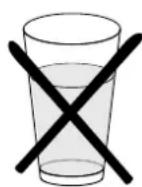
The development of heat inside the appliance while cooking food can generate steam.
■ Avoid contact with the hot steam that escapes when opening the door.

CAUTION
Risk of burns!
During its use, the device and its exposed parts can become hot.
■ Please avoid touching hot appliance parts and cookware.
■ Children aged 8 years or younger must be kept away from the device, unless they are under constant supervision.
Firehazard!
Any improper use of the device can lead to fi re.
■ In case of a fire or smoke in the cooking compartment:
Do not open the door! Switch off the device, unplug at the mains or turn off / remove the fuse.
■ Make sure there is adequate ventilation. Do not cover the ventilation openings, e.g. with a dish cloth etc.
Setting the microwave power
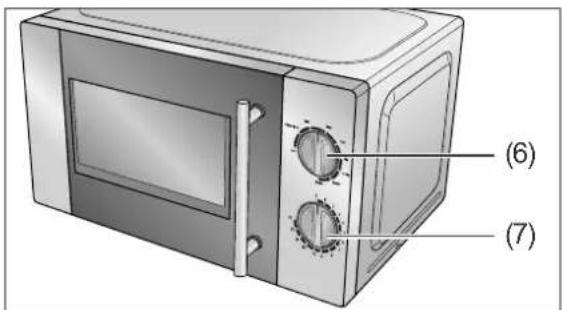
- Place the cookware and food on the rotary plate and close the door.
- Set the desired power using the control knob (6):
| Setting (microwave power) | Recommended use |
| 125 W 18%) | Gentle defrosting, e.g. of gateau or puff pastry. |
| Defrosting 250 W (36 %) | Defrosting from frozen. Cook rice, pasta and dump- lings, or heat baked egg custard. |
| 400 W (58%) | For preparing more dense foods that require a long cooking time on the stove, e.g. beef dishes. |
| 570 W (81%) | Longer cooking times for compact dishes such as roasts, meatloaf or plate dishes. Including for deli- cate dishes such as cheese sauces or pound cake. When using this setting, sauces do not boil over and dishes cook evenly, without the edges turning hard or the dish overflowing. |
| 700 W (100%) | Fast cooking or warming, e.g. for soups, casseroles, canned food, hot beverages, vegetables, fish etc. |
Grill/Combi mode
- Place the food on the grill rack (5), place this on the rotary plate and close the door.
- Set the desired grill or combi mode using the control knob (6):
| Setting | Recommended use |
| Grill100% Grill | For grilling and au gratin. |
| Combi 130% MW70% Grill | For normal cooking with powerful browning; e.g. for fish, chicken, gratin dishes. |
| Combi 249% MW51% Grill | For rapid cooking with medium browning; e.g. for pudding, omelettes, roast potatoes. |
| Combi 367% MW33% Grill | For fast cooking with little browning; e.g. for sweet potatoes. |
Setting cooking time and switching on the appliance
- To set the cooking time, turn the control knob (7) to the desired number of minutes.
The cooking process starts immediately, the cooking chamber light switches on. The set time runs like a timer.
Once the set time has expired, a signal sounds and the appliance switches off.
- You can increase or decrease the cooking time during operation.
Practical tips
The correct cooking time
Since microwaves react differently to water, fat and sugar, the cooking time essentially depends on the composition of the food.
- Foods with a high fat or sugar content (doughnuts, puddings, fruit flans) cook faster and reach higher temperatures than other foods. Please observe the recommended cooking time as otherwise the food will burn and may damage the appliance.
– Dishes that have a high water content (fish, vegetables, sauces) cook faster than “dry” dishes. - 'Dry' foods (rice, cereal products, dried beans) cook very slowly. Please add a little water before cooking.
The correct quantity of food
The larger the quantity of food to be cooked, the longer the cooking time. If one potato takes 4 minutes to cook, two potatoes will need 7 minutes.
Rule of thumb: Double the quantity needs nearly double the time.
- Smaller pieces cook faster than large ones. And equally sized pieces cook more evenly than differently sized pieces. If possible, cut all foods into pieces that are roughly the same size. Remember to do this when freezing!
- Size and shape play an important role when defrosting. Small, flat food portions defrost faster and more evenly than larger, thicker food portions. Separate the already defrosted parts during the defrosting process, as exposed pieces defrost faster.
Arrangement of food
In order to achieve an even cooking result, the correct arrangement of the food must be observed:
- Arrange food with several equally sized pieces (potatoes, meatballs, hamburgers) in a circle in the container and leave the middle empty.
- When working with food of different sizes, place the smaller or thinner pieces in the middle, as they are cooked less intensively there.
- For irregularly shaped pieces (e.g. fish) place the thin or flatter end towards the middle.
- Put thin meat slices on top of each other or crosswise.
- Put thicker slices and pieces of meat (roasting joints, sausages etc.) close together.
- Heat meat juices and sauce in a separate container; only fill this 23 full!
Piercing and scarifying
Heating creates an overpressure in many foods. It is therefore recommended to pierce or scarify certain foods to prevent them from bursting.
- Do not cook shellfish and eggs with shells in the microwave - except in special containers that are available to purchase.
- Pierce food with peels or skins (potatoes, tomatoes, sausages, aubergines, egg yolks) to prevent it from bursting open.
– Score the skin of whole fish to prevent it bursting open.
Stirring and turning

WARNING
Risk of burns!
Food is sometimes heated up unevenly in the microwave. The containers also do not usually get as hot as the food.
■ It is therefore important to carefully check the temperature of food with the utmost care, especially for children.
■ Make absolutely sure to thoroughly stir or shake the baby food after heating; then immediately check the temperature of the baby food!
– Baby food in particular must be thoroughly stirred to prevent burns. Always check the temperature of the food by tasting.
- Please ensure, with poultry, dishes containing raw egg and when heating up meals, that the food is thoroughly cooked in order to completely destroy pathogens such as salmonella.
- Stirring and turning the food halfway through the cooking time is particularly important due to the fact that food is not heated evenly when cooked in the microwave.
Tips on defrosting

WARNING
Health hazard!
The defrost water can contain harmful bacteria, especially with meat and poultry!
■ Avoid any physical contact.
■ Pour away the defrost water and do not use it for anything else.
■ Please ensure to thoroughly clean the crockery you have used.
- It is preferable to use food that has been frozen at -18 °C and divided up into smaller portions.
- Removal all packaging.
- Place the food in an appropriately large container, which can then collect the defrost water.
- Do not cover the dishes.
Care and maintenance

WARNING
Risk of electric shock!
If water comes into contact with current-carrying parts, this can lead to electric shock or a short-circuit.
■ Unplug the mains cable before cleaning. Please pull the plug out and do not tug on the cable.
- Please ensure that no cleaning water or other liquids can penetrate the ventilation slits or the electrical components.
- Do not use a steam or high-pressure cleaner. Steam could reach live components through cracks.

CAUTION
Risk of burns!
Parts of the device can become very hot after use.
■ Please allow the device to cool completely before cleaning.
■ Cleaning and user maintenance must not be carried out by children unless they are supervised.

NOTICE
The surfaces and door seals can get damaged by improper handling.
■ Never use harsh, soda, acid, solvent or abrasive cleaners. All-purpose cleaners with a neutral pH are recommended.
■ Use care products only on the outer surfaces.
■ Only use soft cloths.
Cleaning the appliance
Clean the appliance after every use. Dirt can otherwise dry on.
- Pull out the mains plug.
- Allow the device to cool down.
- Clean the unit housing by using a moist, soft cloth, paying particular attention to the cooking chamber floor and door sealing surfaces. Please use warm washing-up water or all-purpose cleaner as well as a soft sponge or cloth.
- Remove any stubborn stains with undiluted all-purpose cleaner. Wipe down with fresh water.
- You can place the rotary plate in the dishwasher or wash it by hand using washing-up liquid.
- It is best to clean the grill rack by hand with a mild detergent.
- Please ensure to dry all surfaces after cleaning with a soft cloth.
- Leave the cooking compartment door open so that the oven can dry completely.
Inspect device

WARNING
Risk due to microwaves!
A door that fails to close adequately can cause microwave radiation to escape. The appliance must not be used in such a case.
- Pay particular attention to the cleanliness of the door seals and the door sealing surfaces with all adjacent parts.
- Do not use the appliance if the door is warped or damaged, or if the door latch, hinges, or door seals are defective, or if the door does not close tightly for any other reason. Appropriate repairs may only be carried out by a person specially trained for this purpose.
For your own safety, check regularly that the appliance is intact:
- Are mains cords and mains plugs undamaged?
- Are the unit housing and the viewing screen undamaged?
- Are the rotary plate and grill rack undamaged?
- Are the door sealing surfaces clean?
- Can the door hinges move freely?
- Are both hooks on the door lock undamaged?
- Does the door close properly? If the door is defective, microwaves can be emitted from the device.
- If the cooking chamber lighting is defective, it may only be repaired by a qualified professional.
Troubleshooting table
Malfunctions can occur in all electrical appliances. This does not necessarily mean there is a defect in the appliance. For this reason, please check the tables to see if you can correct the malfunction.

WARNING
Risk of electric shock in case of improper repair!
Never try to repair a defective or suspected defective appliance yourself. You can put your own and future users' lives in danger. Only authorised specialists are allowed to carry out this repair work.
| Problem Possible | cause Solutions, tips | |
| Device will not start. | No electricity to socket. Check by | connecting another appli-ance. |
| Mains plug is loose. | Check that the mains plug is fitted se-curely. | |
| Door will not close properly. | Foreign bodies on the door sealing surfaces. | Clean the door sealing surfaces thor-oughly. |
| Door damaged or door lock defective. | Have the door repaired.Do not use the appliance! | |
| Cooking chamber lighting does not work. | Lamp defective. Contact our service team (see „Service“ on page GB-22). | |
| The rotary plate does not turn, or does not turn properly. | The rotary plate is not correctly positioned on the drive motor. | Insert the rotary plate correctly. |
| The cooking chamber floor is dirty. | Clean the cooking compartment floor thoroughly. | |
| Scratching, dragging noises in the cooking compartment. | The rotary plate does not turn correctly. | Insert the rotary plate correctly |
| The food dish is either too large or is positioned incorrectly. | The container may not protrude over the edge of the rotary plate. | |
| Exploding, popping noises in the cooking compartment. | The dish is being cooked and/or defrosted with too much power, and will burst open. | Cancel the setting and reselect a lower power level. |
| Other noises or flashes in the cooking compartment. | Sparks are produced - metal in the cooking compartment! | Switch off the device immediately and then remove any metallic objects. |
| The dish is cooked unevenly. | The dish was not sufficiently rotated or stirred. | Stir or rotate the food dish, and allow it to heat up a little more. |
| The dish does not heat up enough. | Power or time is set too low. Keep up warming up the food for a short | while in the microwave. |
| The dish was very cold when being placed inside. | ||
| Container is unsuitable if it be-comes hotter than the dish. | Use a suitable container. | |
| Door and/or viewing window steams up. | The dish releases moisture. No error. Simply wipe away any mois-ture after operation. | |
Service
In order for us to help you quickly, please tell us:
| Name of appliance Model Order number | ||
| hanseatic Microwave oven | D70H20L-DB(E17) 65509 | 859 |
Advice, order and complaint
Please contact your mail order company's customer service centre if
– the delivery is incomplete,
– the appliance is damaged during transport,
– you have questions about your appliance,
- a malfunction cannot be rectified using the troubleshooting table,
– you would like to order further accessories.
Spare parts
Customers in Germany
– Please contact the company
Monday - Thursday 8am - 3pm,
Friday 8am - 2pm
Customers in Austria
- Please contact your mail order company's customer service centre or product advice centre.
Please note:
You are responsible for the condition of the appliance and its proper use in the household. Damage resulting from non-compliance with this manual unfortunately cannot be recognised.
Environmental protection
Disposing of old electrical devices in an environmentally-friendly manner
Electrical appliances contain harmful substances as well as valuable resources.
Every consumer is therefore required by law to dispose of old electrical appliances at an authorised collection or return point. They will thus be made available for environmentally-sound, resource-saving recycling.
You can dispose of old electrical appliances free of charge at your local recycling centre.
Please contact your dealer directly for more information about this topic.
Packaging

Our packaging is made of environmentally-friendly, recyclable materials:
– Outer packaging made of cardboard
– Moulded parts made of foamed, CFC-free polystyrene (PS)
– Films and bags made of polyethylene (PE)
- Tension bands made of polypropylene (PP).
If you would like to dispose of the packaging, please dispose of it in an environmentally friendly way.
Technical specifications
| Brand | hanseatic |
| Type/description | Microwave oven D70H20L-DB(E17) |
| Order no. | 65509859 |
| Microwave oven power output max. 700 W | |
| Nominal frequency: 2,450 MHz | |
| Microwave power levels 5 (125–700 W) | |
| Built-in appliance No | |
| Fuse min. 16 A | |
| Total microwave power consumption | 1200 W |
| Grill power consumption | 900 W |
| Supply voltage 230 V / 50 Hz | |
| Cooking chamber volume approx. 20 litres | |
| Appliance dimensions (height × width × depth) in cm 26.2 cm | × 45.2 cm × 36.0 cm |
| Unloaded weight approx. 11.3 kg |
This microwave corresponds to the appliance class:
Group 2, Class B.
- Group 2: Generates high-frequency electromagnetic radiation that is suitable for the treatment of food.
- Class B: May be operated in the living area and directly from the normal mains at a voltage of up to 230 volts (low voltage network).

- Inhaltsverzeichnis
- Lieferumfang
- Table of contents
- Delivery
- Package contents
- Check the delivery
- ! NOTICE
- WARNING!
- Appliance parts/control elements
- Safety
- Intended use
- Explanation of terms
- WARNING
- CAUTION
- NOTICE
- Safety notices
- Danger of explosion!
- Health risk!
- Fire hazard!
- Start-up
- The correct storage location
- Cleaning before use
- Inserting the rotary plate
- Electrical connections
- Initially heating up the appliance
- Cooking chamber and lighting
- Ventilator lag
- Information on microwaves
- What are microwaves?
- Microwaves
- How do microwaves affect food?
- How does a microwave oven work?
- Applications
- Suitable cookware
- For microwave mode
- For grill and combi mode
- Size and shape
- Operation
- Microwave mode
- Firehazard!
- Setting the microwave power
- Grill/Combi mode
- Setting cooking time and switching on the appliance
- Practical tips
- The correct cooking time
- The correct quantity of food
- Arrangement of food
- Piercing and scarifying
- Stirring and turning
- Risk of burns!
- Tips on defrosting
- Health hazard!
- Care and maintenance
- Cleaning the appliance
- Inspect device
- Troubleshooting table
- Service
- Advice, order and complaint
- Spare parts
- Customers in Germany
- Customers in Austria
- Please note:
- Environmental protection
- Disposing of old electrical devices in an environmentally-friendly manner
- Packaging
- Technical specifications
- Group 2, Class B.
Brand : Hanseatic
Model : D70H20L-DB(E17)
Category : Microwaves