
LB6000E - Leaf blower EGO - Free user manual and instructions
Find the device manual for free LB6000E EGO in PDF.


| Product Type | Cordless Leaf Blower |
| Brand | EGO |
| Model | LB6000E |
| Weight (without battery) | 5.7 kg |
| Rated Voltage | 56 V (DC) |
| Air Volume (Turbo) | 1020 m³/h |
| Air Volume (High Speed) | 850 m³/h |
| Air Volume (Low Speed) | 440 m³/h |
| Max Air Speed (Turbo) | 232 km/h |
| Air Speed (High Speed) | 160 km/h |
| Air Speed (Low Speed) | 80 km/h |
| Runtime with 5.0 Ah Battery (Turbo) | 15 minutes |
| Runtime with 5.0 Ah Battery (High Speed) | 22 minutes |
| Runtime with 5.0 Ah Battery (Low Speed) | 120 minutes |
| Compatible Batteries | BA1120E, BA2240E, BA2800, BA3360, BA4200 |
| Compatible Charger | CH5500E, CH2100E |
| Guaranteed Sound Power Level | 97 dB(A) |
| Sound Pressure Level at Ear | 82.6 dB(A) |
| Vibration (ah) | 0.494 m/s² |
| Tube Length (Adjustable) | Two locking positions |
| Control Type | Continuous speed trigger + Turbo button |
| Blower Portability | Adjustable back harness |
| Maintenance | Clean with a dry cloth; do not use solvents |
| Replacement Parts | Use only genuine EGO parts |
| Safety | Eye and ear protection required; keep bystanders 15 m away |
Frequently Asked Questions - LB6000E EGO
User questions about LB6000E EGO
0 question about this device. Answer the ones you know or ask your own.
Ask a new question about this device
Download the instructions for your Leaf blower in PDF format for free! Find your manual LB6000E - EGO and take your electronic device back in hand. On this page are published all the documents necessary for the use of your device. LB6000E by EGO.
USER MANUAL LB6000E EGO
natural_image
Technical line drawing of a mechanical device with no visible text or symbolsOPERATOR'S MANUAL
56 VOLT LITHIUM-ION
natural_image
Diagram of a mechanical component with a curved arrow indicating rotational motion (no text or symbols)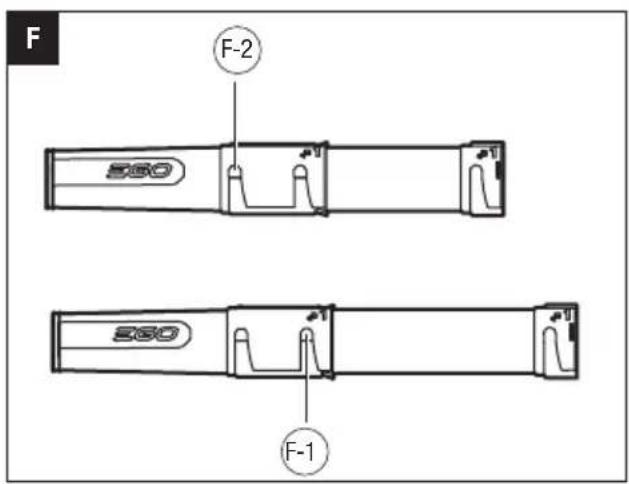

natural_image
Technical line drawing of a mechanical device with a downward arrow indicating motion (no text or symbols present)

natural_image
Illustration of a person adjusting a belt buckle (no text or symbols)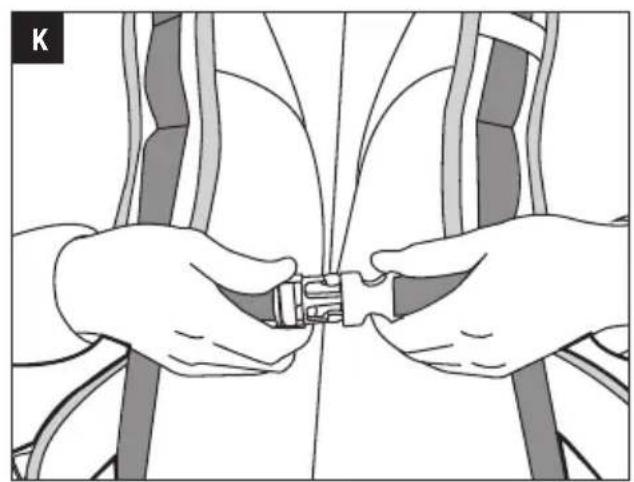
natural_image
Illustration of two hands adjusting a small mechanical component (no text or symbols visible)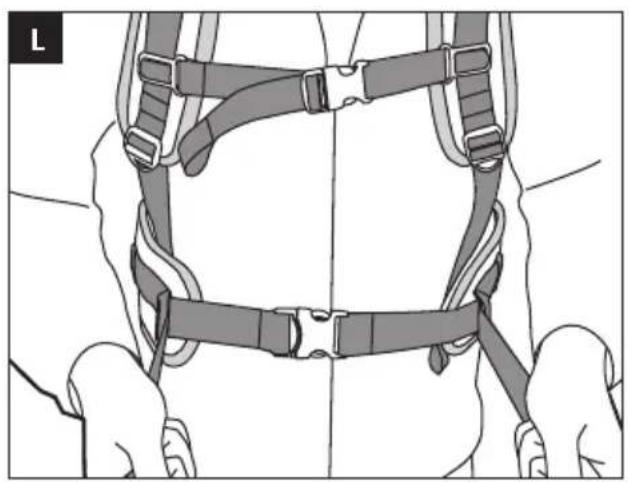
natural_image
Technical illustration of a person wearing a full-body harness and seatbelt (no text or symbols)
natural_image
Illustration of hands holding a belt or buckle, no text or symbols present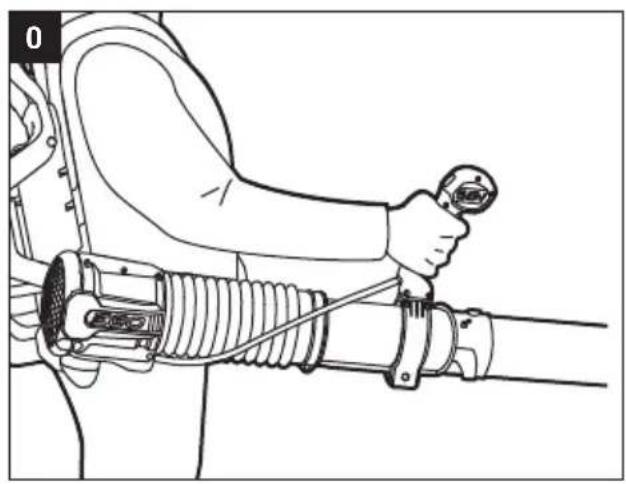
natural_image
Line drawing of a person using a handheld device to interact with a mechanical hose (no text or symbols visible)
natural_image
Illustration of a person's seatbelt buckle and belt (no text or symbols)
natural_image
Illustration of hands adjusting a white belt buckle with arrows indicating compression (no text or symbols)

natural_image
Technical line drawing of a mechanical assembly with no visible text or symbols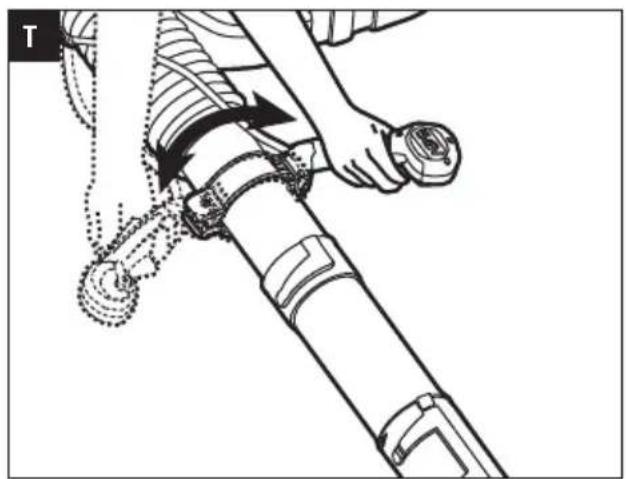
natural_image
Mechanical diagram showing a hand operating a lever mechanism with pulleys and joints (no text or symbols)
natural_image
Line drawing of a person holding a long, segmented tool or device with no visible text or symbols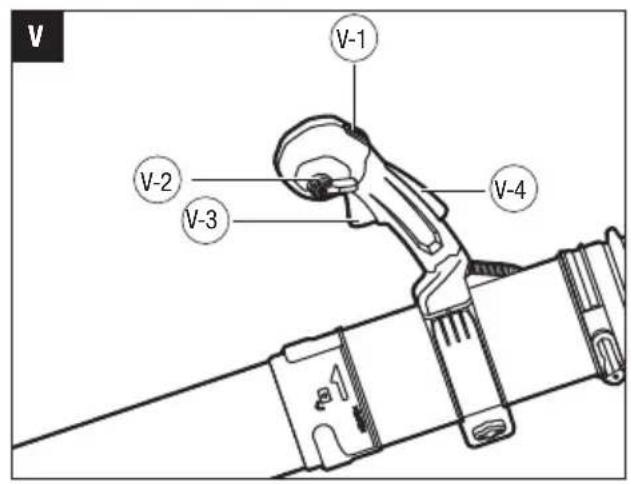
natural_image
Technical line drawing of a vacuum cleaner assembly (no text or symbols)EN
READ ALL INSTRUCTIONS!
READ & UNDERSTAND INSTRUCTION MANUAL
NOTICE: These instructions shall also be available in an alternative format, e.g. on a website.
Residual risk! People with electronic devices, such as pacemakers, should consult their physician(s) before using this product. Operation of electrical equipment in close proximity to a heart pacemaker could cause interference or failure of the pacemaker.
WARNING: To ensure safety and reliability, all repairs and replacements should be performed by a qualified service technician.
SAFETY SYMBOLS
The purpose of safety symbols is to attract your attention to possible dangers. The safety symbols and the explanations with them deserve your careful attention and understanding. The symbol warnings do not, by themselves, eliminate any danger. The instructions and warnings they give are no substitutes for proper accident prevention measures.
WARNING: Be sure to read and understand all safety instructions in this Operator's Manual, including all safety alert symbols such as "DANGER," "WARNING," and "CAUTION" before using this tool. Failure to following all instructions listed below may result in electric shock, fire, and/or serious personal injury.
DAMAGE PREVENTION AND INFORMATION MESSAGES
These inform the user of important information and/or instructions that could lead to equipment or other property damage if they are not followed. Each message is preceded by the word "NOTICE", as in the example below:
NOTICE: Equipment and/or property damage may result if these instructions are not followed.

WARNING: The operation of any power tools can result in foreign objects being thrown into your eyes, which can result in severe eye damage. Before beginning power tool operation, always wear safety goggles or safety glasses with side shields and a full face shield when needed. We recommend a Wide Vision Safety Mask for use over eyeglasses or standard safety glasses with side shields.
SAFETY INSTRUCTIONS
This page depicts and describes safety symbols that may appear on this product. Read, understand, and follow all instructions on the machine before attempting to assemble and operate.
 | Safety Alert | Precautions that involve your safety. |
 | Wear Eye Protection | Always wear safety goggles or safety glasses with side shields and a full face shield when operating this product. |
 | Wear Ear Protection | Always wear ear protection when operating this product. |
 | Read Operator's Manual | To reduce the risk of injury, user must read and understand operator's manual before using this product. |
 | Keep Bystanders Away | Keep all bystanders at least 15m away. |
 | Do Not Expose To Moisture | Do not use in the rain or leave outdoors while it is raining. |
| V Volt | Voltage | |
| A Amperes Current | ||
| Hz Hertz Frequency (cycles per second) | ||
| W Watt Power | ||
| min Minutes Time | ||
| m^3/h | Cubic Meter Per Hour | Air volume |
| km/h | Kilometers Per Hour | Air velocity |
 | Alternating Current | Type of current |
| :[KSZD] | Direct Current | Type or a characteristic of current |
| n_0 | No Load Speed | Rotational speed, at no load |
| ... /min P | Per Minute Revolutions per minute | |
When using an electrical appliance, basic precautions should always be followed, including the following:
GENERAL POWER TOOL SAFETY WARNINGS
WARNING: Read all safety warnings and instructions. Failure to follow the warnings and instructions may result in electric shock, fire and/or serious injury.
Save all warnings and instructions for future reference.
The term “power tool” in the warnings refers to your mains-operated (corded) power tool or battery-operated (cordless) power tool.
WORK AREA SAFETY
- Keep work area clean and well lit. Cluttered or dark areas invite accidents.
■ Do not operate power tools in explosive atmospheres, such as in the presence of flammable liquids, petrol or dust. Power tools create sparks which may ignite the dust or fumes. - Keep children and bystanders away while operating a power tool. Distractions can cause you to lose control.
ELECTRICAL SAFETY
■ Power tool plugs must match the outlet. Never modify the plug in any way. Do not use any adaptor plugs with earthed (grounded) power tools. Unmodified plugs and matching outlets will reduce risk of electric shock
■ Avoid body contact with earthed or grounded surfaces, such as pipes, radiators, ranges and refrigerators. There is an increased risk of electric shock if your body is earthed or grounded.
■ Do not expose power tools to rain or wet conditions. Water entering a power tool will increase the risk of electric shock.
- Do not abuse the cord. Never use the cord for carrying, pulling or unplugging the power tool. Keep cord away from heat, oil, sharp edges or moving parts. Damaged or entangled cords increase the risk of electric shock.
■ When operating a power tool outdoors, use an extension cord suitable for outdoor use. Use of a cord suitable for outdoor use reduces the risk of electric shock.
■ If operating a power tool in a damp location is unavoidable, use a Ground-fault circuit interrupter protected supply. Use of GFCI reduces the risk of electric shock.
PERSONAL SAFETY
EN
■ Stay alert, watch what you are doing and use common sense when operating a power tool. Do not use a power tool while you are tired or under the influence of drugs, alcoholor medication. A moment of inattention while operating power tools may result in serious personal injury.
■ Use personal protective equipment. Always wear eye protection. Protective equipment such as dust mask, non-skid safety shoes, hard hat, or hearing protection used for appropriate conditions will reduce personal injuries.
■ Prevent unintentional starting. Ensure the switch is in the off-position before connecting to power source and/or battery pack, picking up or carrying the tool. Carrying power tools with your finger on the switch or energizing power tools that have the switch on invites accidents.
■ Remove any adjusting key or wrench before turning the power tool on. A wrench or a key left attached to a rotating part of the power tool may result in personal injury.
■ Do not overreach. Keep proper footing and balance at all times. This enables better control of the power tool in unexpected situations.
■ Dress properly. Do not wear loose clothing or jewelry. Keep your hair, clothing and gloves away from moving parts. Loose clothes, jewelry or long hair can be caught in moving parts.
■ If devices are provided for the connection of dust extraction and collection facilities, ensure these are connected and properly used. Use of dust devices can reduce dust-related hazards.
POWER TOOL USE AND CARE
■ Do not force the power tool. Use the correct power tool for your application. The correct power tool will do the job better and safer at the rate for which it was designed.
■ Do not use the power tool if the switch does not turn it on and off. Any power tool that cannot be controlled with the switch is dangerous and must be repaired.
■ Disconnect the plug from the power source and/or the battery pack from the power tool before making any adjustments, changing accessories, or storing power tools. Such preventive safety measures reduce the risk of starting the power tool accidentally.
EN
■ Store idle power tools out of the reach of children TRAINING
and do not allow persons unfamiliar with the power tool or these instructions to operate the power tool. Power tools are dangerous in the hands of untrained users.
- Maintain power tools. Check for misalignment or binding of moving parts, breakage of parts and any other condition that may affect the power tool's operation. If damaged, have the power tool repaired before use. Many accidents are caused by poorly maintained power tools.
- Keep cutting tools sharp and clean. Properly maintained cutting tools with sharp cutting edges are less likely to bind and are easier to control.
■ Use the power tool, accessories and tool bits etc. in accordance with these instructions, taking into account the working conditions and the work to be performed. Use of the power tool for operations different from those intended could result in a hazardous situation.
BATTERY TOOL USE AND CARE
■ Recharge only with the charger specified by the manufacturer. A charger that is suitable for one type of battery pack may create a risk of fire when used with another battery pack.
■ Use power tools only with specifically designated battery packs. Use of any other battery packs may create a risk of injury and fire.
- When battery pack is not in use, keep it away from other metal objects, like paper clips, coins, keys, nails, screws or other small metal objects that can make a connection from one terminal to another.
Shorting the battery terminals together may cause burns or a fire.
■ Under abusive conditions, liquid may be ejected from the battery; avoid contact. If contact accidentally occurs, flush with water. If liquid contacts eyes, additionally seek medical help.
Liquid ejected from the battery may cause irritation or burns.
SERVICE
■ Have your power tool serviced by a qualified repair person using only identical replacement parts.
This will ensure that the safety of the power tool is maintained.
READ ALL INSTRUCTIONS BEFORE USING THIS PRODUCT!
- Read the instructions carefully. Be familiar with the controls and the proper use of the appliance.
■ Never allow children, persons with reduced physical, sensory or mental capabilities or lack of experience and knowledge or people unfamiliar with these instructions to use the machine.
■ Never allow people unfamiliar with these instructions to use the appliance. Local regulations may restrict the age of the operator.
■ Never operate the appliance while people, especially children, or pets are nearby.
■ The operator or user is responsible for accidents or hazards occurring to other people or their property.
PREPARATION
■ While operating the appliance, always wear substantial footwear and long trousers.
- Do not wear loose clothing or jewellery that can be drawn into the air inlet. Keep long hair away from the air inlets.
■ Wear protective goggles while operating.
■ To prevent dust irritation the wearing of a face mask is recommended.
■ Before using, check the batteries or battery packs for damage. Do not use the appliance if the batteries or battery pack is damaged.
■ Never operate the appliance with defective guards or shields, or without safety devices, for example debris collector in place.
OPERATION
■ Disconnect the batteries or battery packs:
- Whenever you leave the machine;
- Before clearing a blockage;
- Before checking, cleaning or working on the appliance;
- If the appliance starts to vibrate abnormally.
■ Operate the appliance only in daylight or in good artificial light.
■ Do not overreach and keep your balance at all times.
■ Always be sure of your footing on slopes.
■ Walk, never run.
- Keep all cooling air inlets clear of debris.
■ Never blow debris in the direction of bystanders.
- Recommendation to operate the machine only at reasonable hours – not early in the morning or late at night when people might be disturbed.
■ Recommendation to use rakes and brooms to loosen debris before blowing.
■ Recommendation to slightly dampen surfaces in dusty conditions or use mister attachment.
WARNING: Danger of rotating parts!
■ Use the full blower nozzle extension so the air stream can work close to the ground.
■ Not to operate the machine near open windows, etc.
MAINTENANCE AND STORAGE
- Keep all nuts, bolts and screws tight to be sure the appliance is in safe working condition.
■ Replace worn or damaged parts.
■ Use only genuine replacement parts and accessories
■ Store the appliance only in a dry place.
WARNING: To ensure safety and reliability, all repairs should be performed by a qualified service technician.
WARNING: To reduce risk of fire, electric shock, or injury:
IMPORTANT
READ CAREFULLY BEFORE USE.
KEEP FOR FUTURE REFERENCE.
- Know your power blower. Read the instruction manual carefully. Learn the blower's applications and limitations, as well as the specific potential hazards related to this blower. Following this rule will reduce the risk of electric shock, fire, or serious injury.
- Don't expose the blower to rain or wet conditions. Water entering a blower will increase the risk of electric shock.
■ Do not allow the blower to be used as a toy. Close attention is necessary when used by or near children. - Use only as described in this manual. Use only manufacturer's recommended attachments.
■ If the blower is not working as it should, has been dropped, damaged, left outdoors, or dropped into water, return it to a service center.
■ Do not handle the charger, including charger plug, or charger terminals with wet hands.
■ Do not put any object into any openings. Do not use with any opening blocked; keep openings free
of dust, lint, hair, and anything that may reduce air flow.
- Keep hair, loose clothing, fingers, and all parts of body away from openings and moving parts. Loose clothes, jewelry, or long hair can be drawn into air vents.
■ Secure long hair above shoulder level to prevent entanglement in moving parts.
■ Use extra care when cleaning on stairs.
■ Do not charge the battery pack outdoors.
■ Use only the charger supplied by the manufacturer to recharge.
■ Do not leave blower unattended when the battery is inserted. Remove the battery when the blower is not in use and before servicing.
■ Do not operate blowers in explosive atmospheres, such as in the presence of flammable liquids, gases, or dust. Blowers create sparks which may ignite the dust or fumes.
■ Use the battery operated blower only with specifically designated battery pack. Use of any other batteries may create a risk of fire.
■ Use only with battery packs and chargers listed below.
| BATTERY PACK CHARGER | |
| BA1120E, BA2240E,BA2800, BA3360, BA4200 | CH5500E,CH2100E |
WARNING:
- The battery pack must be removed from the appliance before it is scrapped.
- The battery shall be disposed of safely.
■ Stay alert, watch what you are doing and use common sense when operating a power blower. Do not use the blower while tired, upset, or under the influence of drugs, alcohol, or medication. A moment of inattention while operating blowers may result in serious personal injury.
■ Avoid accidental starting. Be sure that the switch is in the locked or off position before inserting the battery pack. Carrying blowers with your finger on the switch or inserting the battery pack into a blower with the switch on invites accidents.
EN
■ Use safety equipment. Always wear eye protection. Dust mask, non-skid safety shoes, hard hat, or hearing protection must be used for appropriate conditions.
- Do not use on a ladder, rooftop, tree, or other unstable support. Stable footing on a solid surface enables better control of the blower in unexpected situations.
■ Always take care of your feet, children, or pets around you when removing the battery pack from blower. Serious injury could result if the battery pack falls. NEVER remove the battery pack when in a high position.
- Do not use the blower if switch does not turn it on or off. A blower that cannot be controlled with the switch is dangerous and must be repaired.
■ Disconnect the battery pack from the blower before making any adjustments, changing accessories, or storing the blower. Such preventive safety measures reduce the risk of starting the blower accidentally.
■ Turn off all controls before removing the battery.
■ DO NOT attempt to clear clogs from the unit without first removing the battery.
- Check for misalignment or binding of moving parts, breakage of parts, and any other condition that may affect the blower's operation. If damaged, have the blower serviced before using. Many accidents are caused by poorly maintained blowers.
- Keep the blower and its handle dry, clean and free from oil and grease. Always use a clean cloth when cleaning. Never use brake fluids, gasoline, petroleum-based products, or any strong solvents to clean your blower. Following this rule will reduce the risk of loss of control and deterioration of the enclosure plastic.
■ Always wear safety glasses with side shields. Everyday glasses have only impact resistant lenses. They are NOT safety glasses. Following this rule will reduce the risk of eye injury.
■ Protect your lungs. Wear a face or dust mask if the operation is dusty. Following this rule will reduce the risk of serious personal injury.
■ Protect your hearing. Wear hearing protection during extended periods of operation. Following this rule will reduce the risk of serious personal injury.
■ Battery powered blowers do not have to be plugged into an electrical outlet; therefore, they are always in operating condition. Be aware of possible hazards when not using your battery powered blower or when changing accessories.
Following this rule will reduce the risk of electric shock, fire, or serious personal injury.
■ Wear heavy long trousers, long sleeves, boots, and gloves. Avoid loose garments or jewelry that could get caught in moving parts of the machine or its motor.
- Do not operate the equipment while barefoot or when wearing sandals or similar lightweight footwear. Wear protective footwear that will protect your feet and improve your footing on slippery surfaces.
■ Batteries can explode in the presence of a source of ignition, such as a pilot light. To reduce the risk of serious personal injury, never use any cordless product in the presence of an open flame. An exploded battery can propel debris and chemicals. If exposed, flush with water immediately.
- Keep firm footing and balance. Do not overreach. Overreaching can result in loss of balance.
- Check the work area before each use. Remove all objects such as rocks, broken glass, nails, wire, or string which can be thrown by or become entangled in the machine.
■ Do not point the blower tube in the direction of people or pets.
■ Never run the unit without the proper equipment attached. Always ensure that the blower tube is installed.
■ When not in use, the blower should be stored indoors in a dry, secure place out of the reach of children.
- Keep all bystanders, children, and pets at least 15m away.
■ Blower service must be performed only by qualified repair personnel. Service or maintenance performed by unqualified personnel may result in a risk of injury.
- When servicing a blower, use only identical replacement parts. Follow instructions in the Maintenance section of this manual. Use of unauthorized parts or failure to follow Maintenance Instructions may create a risk of shock or injury.
■ Never use the blower near fires or hot ashes. Use near fires or ashes can spread fires and result in serious injury and/or property damage.
■ Never use blower to spread chemicals, fertilizers, or any other toxic substances. Spreading these substances could result in serious injury to the operator or bystanders.
■ Never place the blower on any surface, except a hard, clean surface when the motor is running.
Gravel, sand, and other debris can be picked up by the air inlet and thrown at the operator or bystanders, causing possible serious injuries.
■ Save these instructions. Refer to them frequently and use them to instruct others who may use this tool. If you loan this tool to someone else, also loan these instructions to them to prevent misuse of the product and possible injury.
SAVE THESE INSTRUCTIONS!
SPECIFICATIONS
| Voltage | 56V --- |
| Air Volume | Boost: 1020 m3/h |
| High: 850 m3/h | |
| Low: 440 m3/h | |
| Maximum Air Velocity | Boost: 232 km/h |
| Average Air Velocity | Boost: 193 km/h |
| High: 160 km/h | |
| Low: 80 km/h | |
| Approximate Run Time (with EGO BA2800 56V Battery 5.0 Ah) | 15 min. (Boost) |
| 22 min. (High speed) | |
| 120 min. (Low speed) | |
| Blower Weight (Without battery pack, with tube) | 5.7 kg |
| Measured sound power level LWA | 95.21 dB(A)K=1.3 dB(A) |
| Sound pressure level at operator's ear LPA | 82.6 dB(A)K=2.5 dB(A) |
| Guaranteed sound power level LWA (according to 2000/14/EC) | 97 dB(A) |
| Vibration ah | 0.494 m/s2K=1.5 m/s2 |
■ The declared vibration total value has been measured in accordance with a standard test method and may be used for comparing one tool with another;
■ The declared vibration total value may also be used in a preliminary assessment of exposure.
NOTICE: The vibration emission during actual use of the power tool can differ from the declared value in which the tool is used; In order to protect the operator, user should wear gloves and ear protectors in the actual conditions of use.
PACKING LIST
| PART NAME QUANTITY | |
| Blower 1 | |
| Blower tube 2 | |
| Operator's manual 1 |
DESCRIPTION
KNOW YOUR BLOWER (Fig. A & B)
- Handle
- Battery-Release Button
- Latch
- Electric Contacts
- Ejection Mechanism
- Air Inlet
- Middle Tube
- Front Tube
- Air Outlet
- Control Handle
- Adjustable Support Harness
- Blower-Tube Storage Knob
- Lock-off Lever
- Boost Button
- Variable-Speed Lever
- Trigger
- Wing Nut
- Tube-Hanging Groove
WARNING: The safe use of this product requires an understanding of the information on the tool and in this instruction manual as well as knowledge of the project you are attempting. Before use of this product, familiarize yourself with all operating features and safety rules.
ASSEMBLY
WARNING: If any parts are damaged or missing, do not operate this product until the parts are replaced. Use of this product with damaged or missing parts could result in serious personal injury.
WARNING: Do not attempt to modify this product or create accessories not recommended for use with this blower. Any such alteration or modification is misuse and could result in a hazardous condition leading to possible serious personal injury.
EN
WARNING: To prevent accidental starting that could cause serious personal injury, always remove the battery pack from the tool when assembling parts.
ASSEMBLING THE BLOWER TUBES
- There are two tubes for the blower: a front tube and a middle tube (Fig. C).
- First attach the front tube onto the middle tube. Align either of the grooves in the front tube with the knob on the middle tube (Fig. D).
- Push the middle tube forward until the knob engages either of the grooves. Then rotate the middle tube in the direction of the arrow until the knob slides into the lock position (Fig. E).
Fig. C & D parts description see below:
| C-1 Front Tube D-1 Knob | |||
| C-2 M | Middle Tube D-2 | Grooves for different lock positions | |
NOTICE: Before the middle tube is locked into place during rotation, you will notice a built-in stop that will create some resistance. Continue to rotate the tube past the stop until it slides fully into the lock position.
- You may shorten or lengthen the tube length according to your preference by locking the middle tube into different lock positions (Fig. F).
Fig. F parts description see below:
| F-1 Locked in the first lock position |
| F-2 Locked in the second lock position |
- Attach the tube assembly onto the blower housing in the same way (Fig. G).
- To remove the tube assembly from the blower housing or to separate the two tubes, first turn the tube in the unlocking direction to disengage the latch and then pull the tube straight outward.
OPERATION
WARNING: Do not allow familiarity with this product to make you careless. Remember that a careless fraction of a second is sufficient to inflict serious injury.
WARNING: Do not use any attachments or accessories not recommended by the manufacturer of this product. The use of attachments or accessories not recommended can result in serious personal injury.
WARNING: Always remove the battery pack from the product when you are assembling parts, making adjustments, cleaning, or when not in use. Removing the battery pack will prevent accidental starting that could cause serious personal injury.
Before each use, inspect the entire product for damaged, missing, or loose parts, such as screws, nuts, bolts, caps, etc. Tighten securely all fasteners and caps and do not operate this product until all missing or damaged parts are replaced.
APPLICATION
You may use this product for the purposes listed below:
■ Clearing hard surfaces such as driveways and walkways.
- Keeping decks and driveways free from leaves and pine needles.
NOTICE: The tool is to be used only for its prescribed purpose. Any other use is deemed to be a case of misuse.
INSTALLING/REMOVING THE BATTERY PACK CHARGE BEFORE FIRST USE.
NOTICE: For best performance, we recommend use of the EGO 56V Battery BA2240E (4.0 Ah) or any EGO 56V battery with higher capacity.
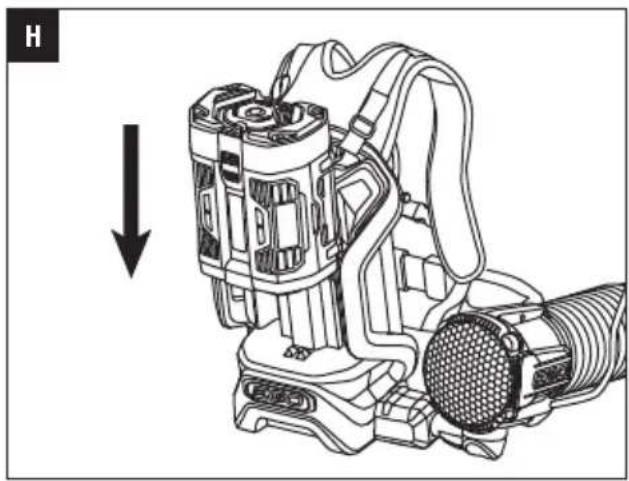
■ To Install (Fig. H)
Align the battery ribs with the mounting slots and press the battery pack down until you hear a "click".
■ To Remove (Fig. I)
Depress the battery-release button and pull the battery pack out.
WARNING: Always take care to note the location of your feet, children, or pets when pressing the battery-release button. Serious injury could result if the battery pack falls. NEVER remove the battery pack when in a high location.
WARNING: Dress properly to reduce the risk of injury when operating this tool. Do not wear loose clothing or jewelry. Wear eye and ear/hearing protection. Wear heavy, long pants, boots and gloves. Do not wear short pants or sandals or go barefoot.
To Adjust The Support Harness
- Put your arms through the backpack straps to support the blower on your back.
- Temporarily adjust both shoulder straps to comfortable positions (Fig. J), making sure that your elbow is comfortable.
- Snap the chest buckle and adjust its length if necessary (Fig. K).
- Snap the waist buckle and adjust its length so that the backpack is securely supported by your hips (Fig. L & M).
NOTICE: The backpack shouldn't sit too high on your back; it should be positioned closer to your hips than to your shoulders.
- Readjust the shoulder straps for security and comfort. Makes sure that the backpack sits securely on your back, with the weight supported by the waist strap, and without excess movement when you move (Fig. 0).
- Insert any extra length of belt around the waist into the elastic on both sides (Fig. P).
- To detach the tool from your back, just press the waist and chest buckles to release them and lower the tool (Fig. Q).
To Adjust The Control Handle
- Loosen the wing nut to adjust the handle forward or backward as needed (Fig. R & S) and then tighten the wing nut to secure the position of the handle.
- You may also rotate the handle as needed for comfort (Fig. T).
- To enlarge the area you are cleaning, move the tube to the left or the right (Fig. U).
STARTING/STOPPING THE BLOWER (Fig. V)
- To start the blower, press down on the lock-off lever and hold it, then depress the trigger. The blower will begin to run.
- To stop the blower, release the trigger.
ADJUSTING THE AIR SPEED (Fig. V)
The blower is equipped with stepless speed regulation to control air speed.
- To increase the air speed, pull the variable-speed lever downward when the blower runs; to reduce the air speed, push the knob upward.
- To boost the air speed at any setting, press the boost button to increase the air speed to the maximum. The blower will resume the previously selected speed when this button is released.
Fig. V parts description see below:
| V-1 Bopst Button V-3 Trigger | ||
| V-2 Variable-Speed Lever V-4 Lock-off Lever | ||
EN
TIPS FOR USING THE BLOWER
■ To keep from scattering debris, blow around the outer edges of a debris pile. Never blow directly into the center of a pile.
■ To reduce sound levels, limit the number of pieces of equipment used at any one time.
■ Use rakes and brooms to loosen debris before blowing. In dusty conditions, slightly dampen surfaces if water is available.
■ Watch out for children, pets, open windows, or freshly washed cars, and blow debris safely away.
■ After using blowers or other equipment, clean up! Dispose of debris properly.
MAINTENANCE
WARNING: When servicing, use only identical replacement parts. Use of any other parts may create a hazard or cause product damage. To ensure safety and reliability, all repairs should be performed by a qualified service technician.
WARNING: To avoid serious personal injury, always remove the battery pack from the product when cleaning or performing any maintenance.
GENERAL MAINTENANCE
Avoid using solvents when cleaning plastic parts. Most plastics are susceptible to damage from various types of commercial solvents and may be damaged by their use. Use clean cloths to remove dirt, dust, oil, grease, etc.
WARNING: Do not at any time let brake fluids, petrol, petroleum-based products, penetrating oils, etc., come in contact with plastic parts. Chemicals can damage, weaken or destroy plastic which may result in serious personal injury.
STORAGE
■ Remove the battery pack from the blower.
■ Clean all foreign material from the air inlets of the blower.
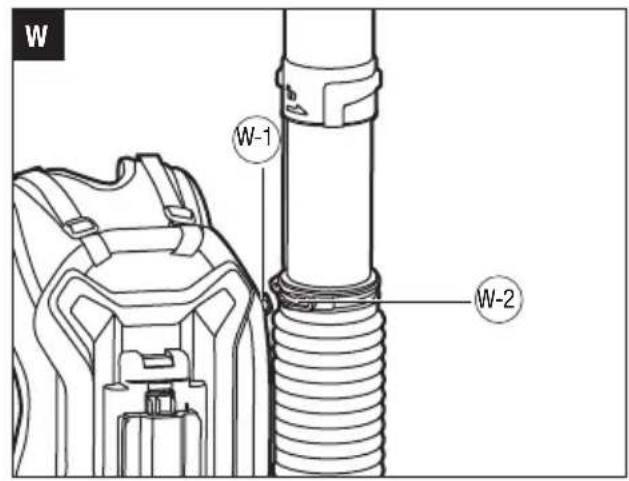
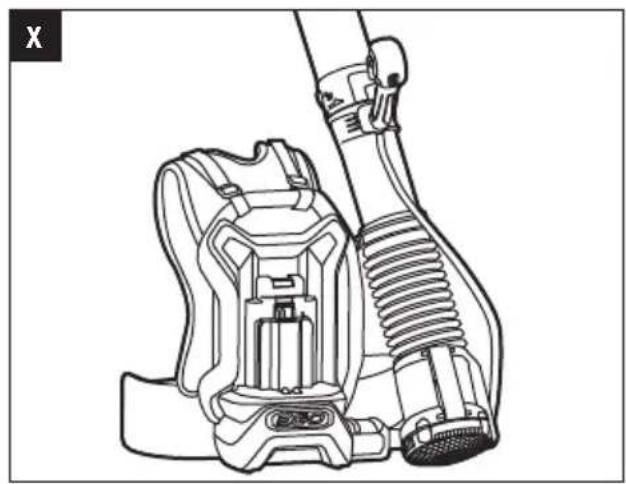
- Align the blower-tube storage knob with the tube-hanging groove and hook the blower tube onto the battery compartment housing (Fig. W & X).
■ Store in an enclosed space that is inaccessible to children. Keep away from corrosive agents, such as garden chemicals and de-icing salts.
EN
Fig. W parts description see below:
W-1 Blower-Tube Storage Knob
W-2 Tube-Hanging Groove
Protecting the environment
Do not dispose of electrical equipment, battery charger and batteries/rechargeable batteries into household waste!
According to the European law 2012/19/EU, electrical and electronic equipment that is no longer usable, and according to the European law 2006/66/EC, defective or used battery packs/batteries, must be collected separately and disposed of in an environmentally correct manner.
If electrical appliances are disposed of in landfills or dumps, hazardous substances can leak into the groundwater and get into the food chain, damaging your health and well-being.
EC DECLARATION OF CONFORMITY
CE
We, EGO EUROPE GMBH
Declare that the product 56V lithium-ion cordless backpack blower LB6000E complies with the essential health and safety requirements of the following Directives:
2006/42/EC, 2014/30/EU, 2011/65/EU, 2000/14/EC
Standards and technical specifications referred to:
EN60745-1, EN15503, EN62233, EN55014-1, EN55014-2
Measured Sound Power Level: 95.21 dB(A).
Guaranteed Sound Power Level: 82.6 dB(A).

Dong Jiankun
Peter Melrose Dong Jianxun
Managing Director of EGO
Europe GmbH
Quality Manager of Chervon
* (Authorized representative for CHERVON and responsible for technical documentation)
01/12/2016
TROUBLESHOOTING
EN
| PROBLEM CAUSE SOLUTION | ||
| Blower doesn’t work. | The battery pack is not attached to the blower.No electrical contact between the blower and battery.The battery pack is depleted.The battery pack or blower is too hot. | Attach the battery pack to the blower.Remove battery, check contacts and reinstall the battery pack.Charge the battery pack.Cool the battery pack and blower until the temperature drops below 67°C. For best performance, we recommend use of the EGO 56V Battery BA2240E (4.0 Ah) or any EGO 56V battery with higher capacity. |
| The air velocity decreases significantly. | Excessive wearing of motor fan.The air inlet is blocked by debris. | Contact EGO service center for repair.Remove the battery pack, clear the debris. |
WARRANTY
EGO WARRANTY POLICY
Please visit the website egopowerplus.com for full terms and conditions of the EGO Warranty policy.
DÉCLARATION DE CONFORMITÉ CE
C€
Nous, EGO EUROPE GMBH
■ Desligue a(s) bateria(s):
2006/42/CE, 2014/30/UE, 2011/65/UE, 2000/14/CE
WAARSCHUWING: Lees alle
SIKKERHET I ARBEIDSOMRÅDET
VEDLIKEHOLD OG LAGRING
GENERELT VEDLIKEHOLD
BEZPIECZEŃSTWO W MIEJSCU PRACY
DEKLARACJA ZGODNOŚCI WE
CE
Producent, EGO EUROPE GMBH
2006/42/WE, 2014/30/UE, 2011/65/UE, 2000/14/WE
POLITYKA GWARANCYJNA EGO
2006/42/CE, 2014/30/UE, 2011/65/UE, 2000/14/CE


- VOLT LITHIUM-ION
- EN
- READ ALL INSTRUCTIONS!
- READ & UNDERSTAND INSTRUCTION MANUAL
- SAFETY SYMBOLS
- DAMAGE PREVENTION AND INFORMATION MESSAGES
- SAFETY INSTRUCTIONS
- GENERAL POWER TOOL SAFETY WARNINGS
- WORK AREA SAFETY
- ELECTRICAL SAFETY
- PERSONAL SAFETY
- POWER TOOL USE AND CARE
- BATTERY TOOL USE AND CARE
- SERVICE
- READ ALL INSTRUCTIONS BEFORE USING THIS PRODUCT!
- PREPARATION
- OPERATION
- WARNING: Danger of rotating parts!
- MAINTENANCE AND STORAGE
- WARNING:
- SAVE THESE INSTRUCTIONS!
- DESCRIPTION
- KNOW YOUR BLOWER (Fig. A & B)
- ASSEMBLY
- ASSEMBLING THE BLOWER TUBES
- APPLICATION
- INSTALLING/REMOVING THE BATTERY PACK CHARGE BEFORE FIRST USE.
- To Adjust The Support Harness
- To Adjust The Control Handle
- STARTING/STOPPING THE BLOWER (Fig. V)
- ADJUSTING THE AIR SPEED (Fig. V)
- TIPS FOR USING THE BLOWER
- MAINTENANCE
- GENERAL MAINTENANCE
- STORAGE
- Protecting the environment
- EC DECLARATION OF CONFORMITY
- TROUBLESHOOTING
- WARRANTY
- EGO WARRANTY POLICY
- DÉCLARATION DE CONFORMITÉ CE
- WAARSCHUWING: Lees alle
- SIKKERHET I ARBEIDSOMRÅDET
- VEDLIKEHOLD OG LAGRING
- GENERELT VEDLIKEHOLD
- BEZPIECZEŃSTWO W MIEJSCU PRACY
- DEKLARACJA ZGODNOŚCI WE
- POLITYKA GWARANCYJNA EGO
Brand : EGO
Model : LB6000E
Category : Leaf blower