
10034416 - Washing machine Klarstein - Free user manual and instructions
Find the device manual for free 10034416 Klarstein in PDF.


| Product type | Compact washing machine with wash tub and removable spin basket |
| Brand | Klarstein |
| Model | 10034416 |
| Power supply | 220-240 V ~ 50/60 Hz |
| Programs | Wash, Rinse, Spin |
| Timer | Adjustable (turn the knob) |
| Safety | Automatic drum stop within 15 seconds after opening the lid |
| Safety | Earth connection required |
| Safety | Maximum water temperature: 55 °C |
| Cleaning | Removable lint filter, cleanable with warm water |
| Cleaning | Use only mild detergents |
| Included accessory | Spin basket with pressure lid |
| Installation | Direct connection to water supply with snap coupling |
| Installation | Drain hose to be hung for proper drainage |
| Function | Wash with powder detergent dissolved directly in water |
| Function | Drain after wash |
| Maintenance | Unplug the appliance before any maintenance |
| Material | Heat resistant housing (do not expose to flames) |
| Use | Do not use in a bathroom or humid place |
| Recycling | Compliant with European directives (EMC, LVD, RoHS) |
Frequently Asked Questions - 10034416 Klarstein
User questions about 10034416 Klarstein
0 question about this device. Answer the ones you know or ask your own.
Ask a new question about this device
Download the instructions for your Washing machine in PDF format for free! Find your manual 10034416 - Klarstein and take your electronic device back in hand. On this page are published all the documents necessary for the use of your device. 10034416 by Klarstein.
USER MANUAL 10034416 Klarstein
bar
| Category | Value | |---|---| | Category 1 | 100 | | Category 2 | 100 | | Category 3 | 100 | | Category 4 | 100 | | Category 5 | 100 | | Category 6 | 100 | | Category 7 | 100 | | Category 8 | 100 | | Category 9 | 100 | | Category 10 | 100 | | Category 11 | 100 | | Category 12 | 100 | | Category 13 | 100 | | Category 14 | 100 | | Category 15 | 100 | | Category 16 | 100 | | Category 17 | 100 | | Category 18 | 100 | | Category 19 | 100 | | Category 20 | 100 | | Category 21 | 100 | | Category 22 | 100 | | Category 23 | 100 | | Category 24 | 100 | | Category 25 | 100 | | Category 26 | 100 | | Category 27 | 100 | | Category 28 | 100 | | Category 29 | 100 | | Category 30 | 100 | | Category 31 | 100 | | Category 32 | 100 | | Category 33 | 100 | | Category 34 | 100 | | Category 35 | 100 | | Category 36 | 100 | | Category 37 | 100 | | Category 38 | 100 | | Category 39 | 100 | | Category 40 | 100 | | Category 41 | 100 | | Category 42 | 100 | | Category 43 | 100 | | Category 44 | 100 | | Category 45 | 100 | | Category 46 | 100 | | Category 47 | 100 | | Category 48 | 100 | | Category 49 | 100 | | Category 50 | 100 | | Category 51 | 100 | | Category 52 | 100 | | Category 53 | 100 | | Category 54 | 100 | | Category 55 | 100 | | Category 56 | 100 | | Category 57 | 100 | | Category 58 | 100 | | Category 59 | 100 | | Category 60 | 100 | | Category 61 | 100 | | Category 62 | 100 | | Category 63 | 100 | | Category 64 | 100 | | Category 65 | 100 | | Category 66 | 100 | | Category 67 | 100 | | Category 68 | 100 | | Category 69 | 100 | | Category 70 | 100 | | Category 71 | 100 | | Category 72 | 100 | | Category 73 | 100 | | Category 74 | 100 | | Category 75 | 100 | | Category 76 | 100 | | Category 77 | 100 | | Category 78 | 100 | | Category 79 | 100 | | Category 80 | 100 | | Category 81 | 100 | | Category 82 | 100 | | Category 83 | 100 | | Category 84 | 100 | | Category 85 | 100 | | Category 86 | 100 | | Category 87 | 100 | | Category 88 | 100 | | Category 89 | 100 | | Category 90 | 100 | | Category 91 | 100 | | Category 92 | 100 | | Category 93 | 100 | | Category 94 | 100 | | Category 95 | 100 | | Category 96 | 100 | | Category 97 | 100 | | Category 98 | 100 | | Category 99 | 100 | | Total (Total) = [sum of two separate bars] * [sum of the bars] * [values from the 'bar' in the 'box' table] * [values from the 'box' table] * [values from the 'box' table] * [values from the 'box' table] * [values from the 'box' table] * [values from the 'box' table]. The sum of the bars is calculated by subtracting the sum of the bars from the 'box' table. Note: The total bar length is based on the sum of the bars. The sum of the bars is calculated as the sum of the bars. The sum of the bars is derived from adding the sum of the bars to the total bar length. The sum of the bars is derived from adding the sum of the bars to the total bar length. The sum of the bars is derived from adding the sum of the bars to the total bar length. The sum of the bars is derived from adding the sum of the bars to the total bar length. The sum of the bars is derived from adding the sum of the bars to the total bar length. The sum of the bars is derived from adding the sum of the bars to the total bar lengths. The sum of the bars is derived from adding the sum of the bars to the total bar lengths. The sum of the bars is derived from adding the sum of the bars to the total bar lengths. The sum of the bars is derived from adding the sum of the bars to the total bar lengths. The sum of the bars is derived from adding the sum of the bars to the total bar lengths. The sum of the bars is derived from adding the sum of the bars to the total bar length. The sum of the bars is derived from adding the sum of the bars to the total bar length. The sum of the bars is derived from adding the sum of the bars to the total bar length. The sum of the bars is derived from adding the sum of the bars to the total bar length. The sum of the bars is derived from adding the sum of the bars to the total bar value. The sum of the bars is derived from adding the sum of the bars to the total bar value. The sum of the bars is derived from adding the sum of the bars to the total bar value. The sum of the bars is derived from adding the sum of the bars to the total bar value. The sum of the bars is derived from adding the sum of the bars to the total bar value. The sum of the bars is derived from adding the sum of the bars to the total bar values. The sum of the bars is derived from adding the sum of the bars to the total bar values. The sum of the bars is derived from adding the sum of the bars to the total bar values. The sum of the bars is derived from adding the sum of the bars to the total bar values. The sum of the bars is derived from adding the sum of the bars to the total bar values. The sum of the bars is derived from adding the sum of the bars to the total bar value. The sum of the bars is derived from adding the sum of the bars to the total bar value. The sum of the bars is derived from adding the sum of the bars to the total bar value.INHALTSVERZEICHNIS
natural_image
Simple line drawings of a bell, water bowl, and paper roll (no text or symbols)natural_image
Close-up of a perforated cylindrical container with dotted texture (no text or symbols visible)Korb Druckabdeckung
natural_image
Circular mechanical component with radial slots and central hole, no visible text or symbolsnatural_image
Close-up of a circular mechanical component with multiple blades and mounting holes (no visible text or symbols)natural_image
Two-panel image showing a hand placing a clock icon on a tire wheel, with no visible text or symbols.natural_image
Two-panel photo showing hands cleaning a steamer: one with cloth and paper, the other with hand holding a perforated dish (no text or symbols visible)SCHLEUDERFUNKTION
natural_image
Symbol of a trash bin crossed with a diagonal line, no text or numbers presentCongratulations on purchasing this equipment. Please read this manual carefully and take care of the following hints to avoid damages. Any failure caused by ignoring the items and cautions mentioned in the instruction manual is not covered by our warranty and any liability. Scan the QR code to get access to the latest user manual and other information about the product.

CONTENT
Safety Instructions 14
Product Overview 15
Use and Operation 15
Dehydration Function 19
Cleaning and Care 20
Troubleshooting 21
Hints on Disposal 22
Declaration of Conformity 22
TECHNICAL DATA
| Item number 10034416 | |
| Power supply 220-240 V ~ 50/60 Hz |
SAFETY INSTRUCTIONS
- Do not place the appliance in a bathroom or any other place where it may become wet.
- Use a grounded power outlet for operation.
- Connect the appliance directly to the wall outlet. Do not use multiple plugs.
- Keep the appliance away from heat or open fire that may deform the cabinet.
- Only connect the appliance to an outlet with the appropriate voltage.
- The electrical components of the unit must not come into contact with water during maintenance.
- Do not place any heavy or hot objects on top of the unit, as this may damage the cabinet.
- The unit may only be operated by qualified personnel.
- If the mains plug is dirty, clean it before plugging it into a socket.
- Do not use water warmer than 55^ , as this could deform the plastic parts.
- Never touch the drum or clothing before the drum has stopped completely.
- If the power plug is damaged, do not use the machine.
- Never put garments into the machine that have recently been cleaned with a solvent such as benzine.
- If the drum does not stop 15 seconds after opening the cover, contact the seller.
- Never pull the power cord, always pull the plug directly.
- When not in use or before cleaning/maintenance, unplug the appliance from the wall outlet. Never touch the plug with wet hands.
PRODUCT OVERVIEW
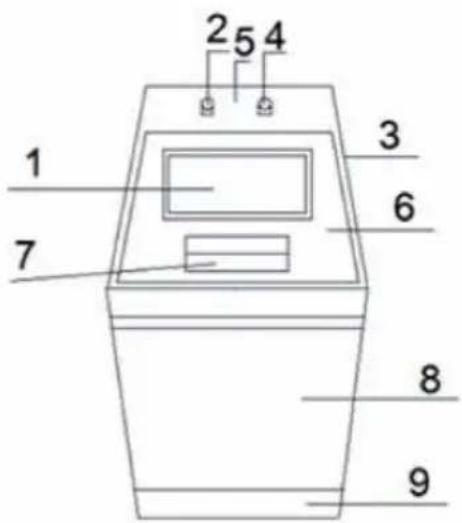
| 1 | Glass cover | 6 | Cover |
| 2 | Water inlet hole | 7 | Grip |
| 3 | Frame | 8 | Case |
| 4 | Washing switch and Timer | 9 | Motor foot |
| 5 | Control panel |
USE AND OPERATION
Commissioning
- The socket must be earthed.
- Lay out the drain hose so that the water can drain off well.
- Plug the mains plug into the socket.
- Connect the water supply: insert the hose into the opening provided until you hear a click.
Overview washing process
| 123 | ||
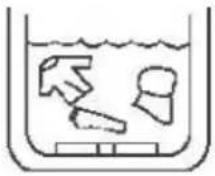 | 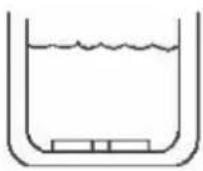 | 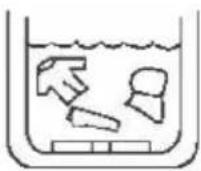 |
| Washing half-way | drain Cleaning |
Caution: If the water level is too high, the water will spill out of the drum.
To avoid deformation of the clothing, you should fold it up and close zippers (e.g. for trousers). Prepare the clothes as shown in the picture. All pockets must be emptied. Remove coins, nails, etc. Fur trimming or other decorations must be pulled to the left. Strong colours should be washed individually.
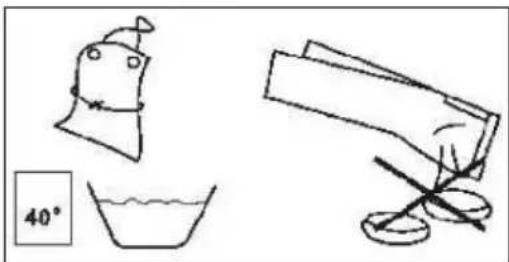
natural_image
Simple line drawings of a bell, a bowl with liquid, and a stand with scissors (no text or symbols)Dissolve washing powder directly
- Add the washing powder when the water level is low.
- Select a program.
- Start the machine and allow the water to mix for 1 minute.
- After the washing powder has completely dissolved, you can add more water.
- Select the correct washing time.
How to use the laundry basket
- Have the following accessories ready:
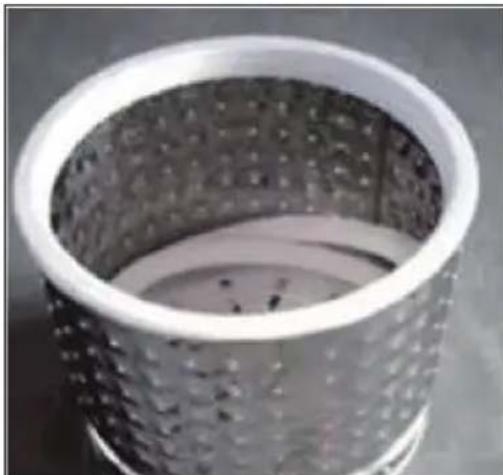
natural_image
Close-up of a perforated cylindrical container with a dotted pattern, no visible text or symbols.Basket Pressure cover
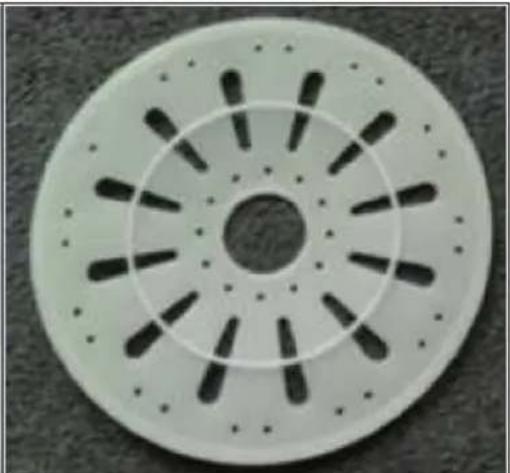
natural_image
Circular mechanical component with evenly spaced radial slots and a central hole (no text or symbols)- Check the position of the clip and the card slot
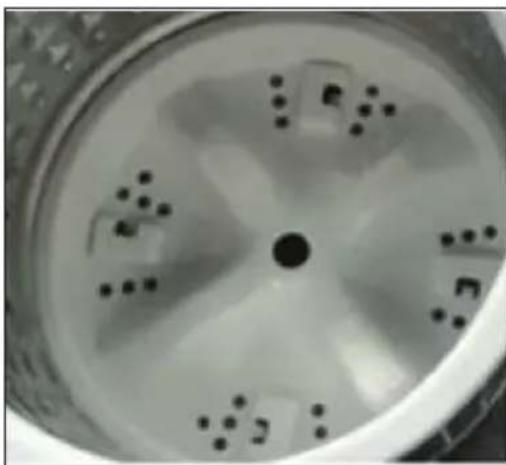
natural_image
Close-up of a circular mechanical component with multiple blades and mounting holes (no visible text or symbols)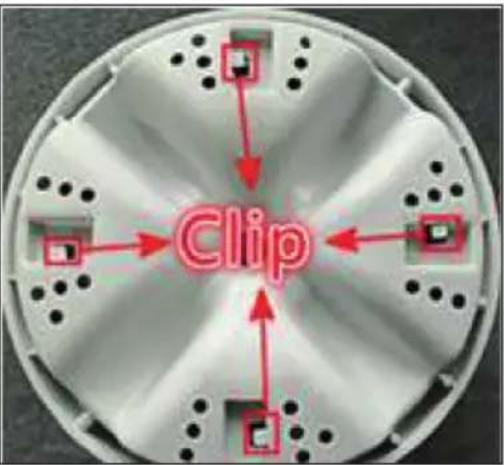
EN
- Put the basket into the washing machine and match the clip and the card slot, rotate it in place.
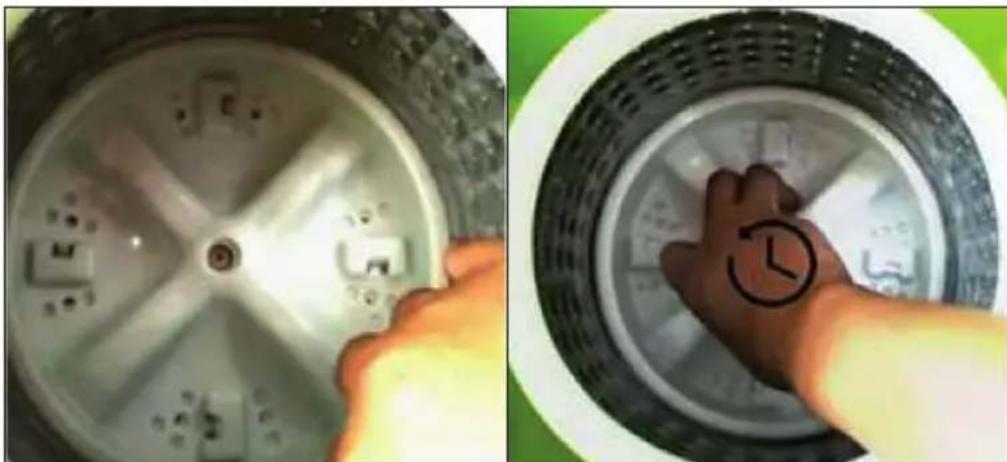
natural_image
Two-panel image showing a car tire with decorative patterns and hands holding a clock face (no text or symbols visible)- Put clothes should be evenly flat, and covered with a pressure cover.
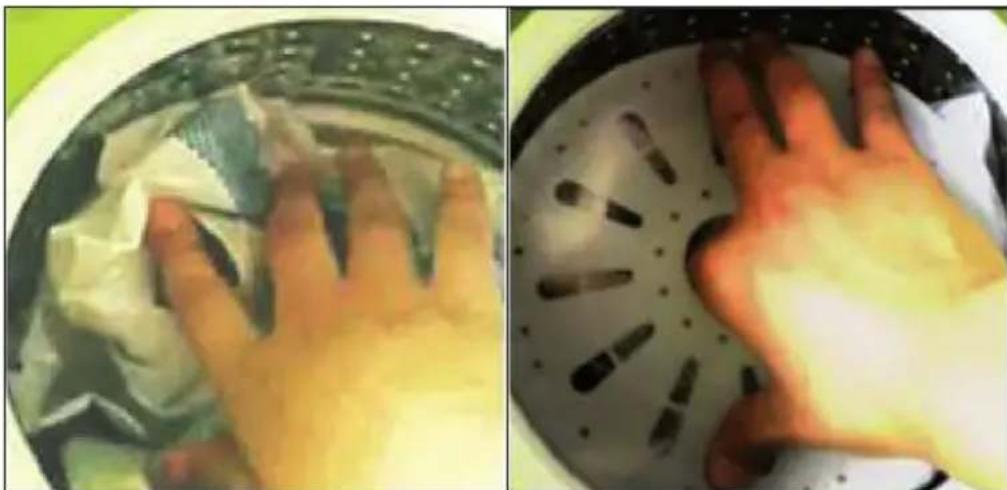
natural_image
Two-panel photo showing hands cleaning a steamer: one with cloth covering material, the other with hand holding a food item (no text or symbols visible)DEHYDRATION FUNCTION
- After the washing is completed, put down the drain, clean the water inside the barrel.
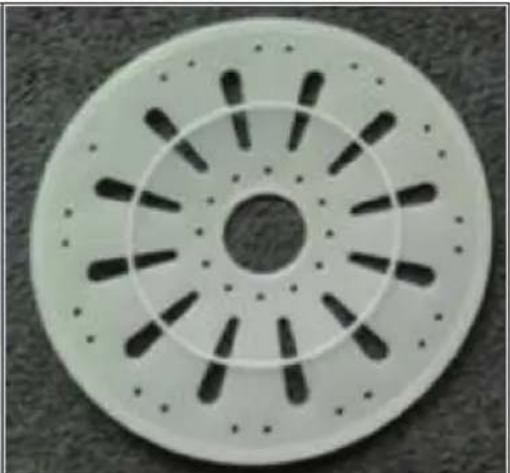
- Place the dewatering basket on the pulsator and turn the dewatering basket counterclockwise to snap into the groove of the pulsator.
- Put the laundry in the dewatering basket and press it into the cover (to prevent clothes from running out when it is dehydrated), cover the top cover, place the program selector switch in the „dewatering“ position, rotate the timer knob. Select the dehydration time according to the type of clothing and begin to dehydrate. If the time setting is too long, or halfway to stop, you can rotate the timer spin counterclockwise to the „off“ position, the dehydration basket will soon stop spinning.
Note: clothes should be evenly flat, and covered with a pressure cover, to avoid the uneven placement of the machine caused by shaking.
- To be dehydrated to the time (dehydration end), open the cover, remove the cover, and take out the clothes to dry.
- Turn the dewatering basket clockwise and pull it out of the dewatering basket.
Note: When washing, please remove the basket, washing method see the manual. The product of the dewatering basket can only be dehydrated to the clothes without dripping, but can not dry the clothes.
CLEANING AND CARE
- Disconnect the device from the power supply. Observe the safety instructions.
- After you have drained the water from the washing drum, set the controller of the pumps back to standard.
- Remove the lint filter and disassemble it by pressing on the floor from the inside. Clean the fluff filter in warm water.
- After cleaning, reassemble the fluff filter and reinsert it. As soon as it sits properly, you will hear a click.
- Disconnect the appliance from the water supply and attach the drain hose to the appliance.
- Rub off the housing. Use only mild detergents.
- Close the cover and place the washing machine in a well-ventilated place.
Important cleaning instructions
- The electrical components of the device must not come into contact with water during maintenance.
- If the mains cable is damaged, it must be replaced immediately by a specialist workshop.
TROUBLESHOOTING
| Problem Possible cause Solution approach | ||
| The washing machine isn't running. | Power outage. Check to see | if there was a blackout. |
| Poor contact in the socket or blown fuse. | Check the power outlet and fuse. | |
| The timer knob has not been turned. | Turn the timer knob on the top of the washing machine to select the desired washing time. | |
| The washing machine is not running. | The triangular strap has loosened during transport. | Open the rear cover, loosen the motor foot fixing screw, and move the motor back until the triangle strap is firmly seated. |
| The washing machine suddenly stops. | The triangle band has loosened during transport. | Attach the triangular strap |
| Voltage too low. Connect the device only to sockets which correspond to the voltage of the device. | ||
| The seal is leaking. Contact a qualified service company for repair. | ||
| The water drains off badly or not at all. | The drain is not deep enough. | Lay out the drain hose so that the water can drain well. |
| The drain hose is kinked. Remove the kink. | ||
HINTS ON DISPOSAL
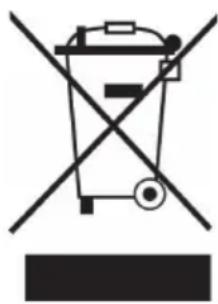
natural_image
Symbol of a trash bin crossed with a diagonal line, no text or numbers presentAccording to the European waste regulation 2012/19/EU this symbol on the product or on its packaging indicates that this product may not be treated as household waste. Instead it should be taken to the appropriate collection point for the recycling of electrical and electronic equipment. By ensuring this product is disposed of correctly, you will help prevent potential negative consequences for the environment and human health, which could otherwise be caused by inappropriate waste handling of this product. For more detailed information about recycling of this product, please contact your local council or your household waste disposal service.
DECLARATION OF CONFORMITY

Producer:
Chal-Tec GmbH, Wallstraße 16, 10179 Berlin, Germany.
This product is conform to the following European Directives:
2014/30/EU (EMC)
2014/35/EU (LVD)
2011/65/EU (RoHS)
Estimado cliente,
ÍNDICE
natural_image
Simple line drawings of a bell, water bowl, and paper roll (no text or symbols)natural_image
Close-up of a perforated cylindrical container with dotted texture (no text or symbols visible)natural_image
Circular mechanical component with radial slots and central hole, no visible text or symbolsnatural_image
Close-up of a circular mechanical component with radial blades and central hub (no visible text or symbols)Ranuras de inserción Clip = pinza
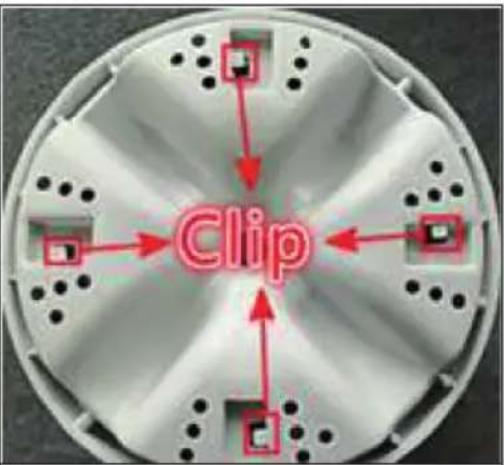
natural_image
Two-panel image showing a car wheel with icons and hands interacting with a tire (no text or symbols visible)natural_image
Two-panel photo showing hands cleaning a glass bowl and placing a steamer into a container (no text or symbols visible)natural_image
Symbol of a trash bin crossed with a diagonal line, no text or numbers presentSOMMAIRE
natural_image
Simple line drawings of a bell, water bowl, and paper roll (no text or symbols)natural_image
Close-up of a perforated ceramic cup with a dotted pattern, showing its inner and outer layers (no text or symbols visible)natural_image
Circular mechanical component with radial slots and central hole (no text or symbols)natural_image
Close-up of a mechanical component with multiple blades and circular features (no visible text or symbols)Fente d'insertion Clip = pince
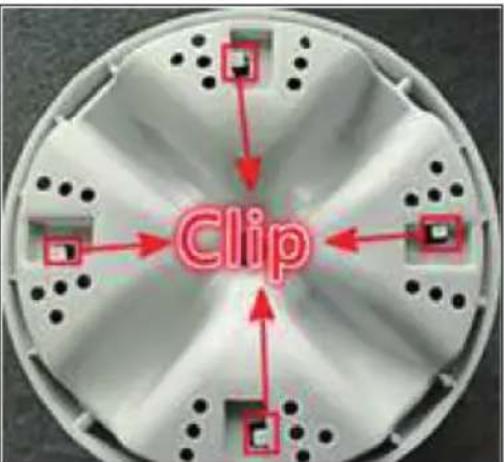
FR
natural_image
Two-panel image showing a car tire with decorative patterns and hands holding a clock face (no text or symbols visible)natural_image
Two-panel photo showing hands cleaning a steamer: one with cloth covering material, the other with hand holding a food item (no text or symbols visible)FONCTION CENTRIFUGE
natural_image
Symbol of a trash bin crossed with a diagonal line, no text or numbers presentDÉCLARATION DE CONFORMITÉ

Fabricant :
Chal-Tec GmbH, Wallstraße 16, 10179 Berlin, Allemagne.
INDICE
natural_image
Simple line drawings of a bell, a bowl with liquid, and a stand with scissors (no text or symbols)natural_image
Close-up of a perforated cylindrical container with dotted texture (no text or symbols visible)natural_image
Circular mechanical component with radial slots and central hole, no visible text or symbolsnatural_image
Close-up of a circular mechanical component with multiple blades and mounting holes (no visible text or symbols)natural_image
Two-panel image showing a hand placing a clock icon on a tire, with no visible text or symbols.natural_image
Two-panel photo showing hands cleaning a steamer and placing food into a bamboo steamer (no text or symbols visible)FUNZIONE CENTRIFUGA
natural_image
Symbol of a trash bin crossed with a diagonal line, no text or numbers presentbar
| Category | Value | |---|---| | Category 1 | 100 | | Category 2 | 100 | | Category 3 | 100 | | Category 4 | 100 | | Category 5 | 100 | | Category 6 | 100 | | Category 7 | 100 | | Category 8 | 100 | | Category 9 | 100 | | Category 10 | 100 | | Category 11 | 100 | | Category 12 | 100 | | Category 13 | 100 | | Category 14 | 100 | | Category 15 | 100 | | Category 16 | 100 | | Category 17 | 100 | | Category 18 | 100 | | Category 19 | 100 | | Category 20 | 100 | | Category 21 | 100 | | Category 22 | 100 | | Category 23 | 100 | | Category 24 | 100 | | Category 25 | 100 | | Category 26 | 100 | | Category 27 | 100 | | Category 28 | 100 | | Category 29 | 100 | | Category 30 | 100 | | Category 31 | 100 | | Category 32 | 100 | | Category 33 | 100 | | Category 34 | 100 | | Category 35 | 100 | | Category 36 | 100 | | Category 37 | 100 | | Category 38 | 100 | | Category 39 | 100 | | Category 40 | 100 | | Category 41 | 100 | | Category 42 | 100 | | Category 43 | 100 | | Category 44 | 100 | | Category 45 | 100 | | Category 46 | 100 | | Category 47 | 100 | | Category 48 | 100 | | Category 49 | 100 | | Category 50 | 100 | | Category 51 | 100 | | Category 52 | 100 | | Category 53 | 100 | | Category 54 | 100 | | Category 55 | 100 | | Category 56 | 100 | | Category 57 | 100 | | Category 58 | 100 | | Category 59 | 100 | | Category 60 | 100 | | Category 61 | 100 | | Category 62 | 100 | | Category 63 | 100 | | Category 64 | 100 | | Category 65 | 100 | | Category 66 | 100 | | Category 67 | 100 | | Category 68 | 100 | | Category 69 | 100 | | Category 70 | 100 | | Category 71 | 100 | | Category 72 | 100 | | Category 73 | 100 | | Category 74 | 100 | | Category 75 | 100 | | Category 76 | 100 | | Category 77 | 100 | | Category 78 | 100 | | Category 79 | 100 | | Category 80 | 100 | | Category 81 | 100 | | Category 82 | 100 | | Category 83 | 100 | | Category 84 | 100 | | Category 85 | 100 | | Category 86 | 100 | | Category 87 | 100 | | Category 88 | 100 | | Category 89 | 100 | | Category 90 | 100 | | Category 91 | 100 | | Category 92 | 100 | | Category 93 | 100 | | Category 94 | 100 | | Category 95 | 100 | | Category 96 | 100 | | Category 97 | 100 | | Category 98 | 100 | | Category 99 | 100 | | Total (Total) = [sum of two separate bars] * [sum of the bars] * [values from the 'bar' in the 'box' table] * [values from the 'box' table] * [values from the 'box' table] * [values from the 'box' table] * [values from the 'box' table] * [values from the 'box' table]. The sum of the bars is calculated by subtracting the sum of the bars from the 'box' table. Note: The total bar length is based on the sum of the bars. The sum of the bars is calculated as the sum of the bars. The sum of the bars is derived from adding the sum of the bars to the total bar length. The sum of the bars is derived from adding the sum of the bars to the total bar length. The sum of the bars is derived from adding the sum of the bars to the total bar length. The sum of the bars is derived from adding the sum of the bars to the total bar length. The sum of the bars is derived from adding the sum of the bars to the total bar length. The sum of the bars is derived from adding the sum of the bars to the total bar lengths. The sum of the bars is derived from adding the sum of the bars to the total bar lengths. The sum of the bars is derived from adding the sum of the bars to the total bar lengths. The sum of the bars is derived from adding the sum of the bars to the total bar lengths. The sum of the bars is derived from adding the sum of the bars to the total bar lengths. The sum of the bars is derived from adding the sum of the bars to the total bar length. The sum of the bars is derived from adding the sum of the bars to the total bar length. The sum of the bars is derived from adding the sum of the bars to the total bar length. The sum of the bars is derived from adding the sum of the bars to the total bar length. The sum of the bars is derived from adding the sum of the bars to the total bar value. The sum of the bars is derived from adding the sum of the bars to the total bar value. The sum of the bars is derived from adding the sum of the bars to the total bar value. The sum of the bars is derived from adding the sum of the bars to the total bar value. The sum of the bars is derived from adding the sum of the bars to the total bar value. The sum of the bars is derived from adding the sum of the bars to the total bar values. The sum of the bars is derived from adding the sum of the bars to the total bar values. The sum of the bars is derived from adding the sum of the bars to the total bar values. The sum of the bars is derived from adding the sum of the bars to the total bar values. The sum of the bars is derived from adding the sum of the bars to the total bar values. The sum of the bars is derived from adding the sum of the bars to the total bar value. The sum of the bars is derived from adding the sum of the bars to the total bar value. The sum of the bars is derived from adding the sum of the bars to the total bar value.KLARSTEIN NIEI SRA T EIN NIEI SRA T K LARS KLARSTEIN NIEI SRA T EIN NIEI SRA T K LARS KLARSTEIN NIEI SRA T EIN NIEI SRA T K LARS KLARSTEIN NIEI SRA T
- INHALTSVERZEICHNIS
- SCHLEUDERFUNKTION
- CONTENT
- SAFETY INSTRUCTIONS
- PRODUCT OVERVIEW
- USE AND OPERATION
- Commissioning
- Overview washing process
- Dissolve washing powder directly
- How to use the laundry basket
- DEHYDRATION FUNCTION
- CLEANING AND CARE
- Important cleaning instructions
- TROUBLESHOOTING
- HINTS ON DISPOSAL
- DECLARATION OF CONFORMITY
- Producer:
- Estimado cliente,
- ÍNDICE
- SOMMAIRE
- FONCTION CENTRIFUGE
- DÉCLARATION DE CONFORMITÉ
- Fabricant :
- INDICE
- FUNZIONE CENTRIFUGA
Brand : Klarstein
Model : 10034416
Category : Washing machine