MD 509 - Blood pressure monitor Medifit - Free user manual and instructions
Find the device manual for free MD 509 Medifit in PDF.


User questions about MD 509 Medifit
0 question about this device. Answer the ones you know or ask your own.
Ask a new question about this device
Download the instructions for your Blood pressure monitor in PDF format for free! Find your manual MD 509 - Medifit and take your electronic device back in hand. On this page are published all the documents necessary for the use of your device. MD 509 by Medifit.
USER MANUAL MD 509 Medifit
text_image
Diagram of a medical or electronic device with numbered parts and labeled parts, including a pressure monitor, earpiece, and connector.text_image
Technical diagram showing a mechanical assembly with labeled components and an arrow indicating direction of movement or force.ATTENZIONE
text_image
DC 6V ⊕-●-natural_image
Side profile illustration of a human head in profile with a heart symbol on the arm (no text or labels)Fig. 1
natural_image
Diagram of a human head in profile showing anatomical positioning with no text or symbolsFig. 2
PREPARAZIONE DEL BRACCIALE
natural_image
Diagram of a medical device with curved arrow indicating rotation or flow, no text or symbols presentnatural_image
Line drawing of a human wrist with bandages, showing hand placement on wrist (no text or symbols)text_image
2~3cm 4cm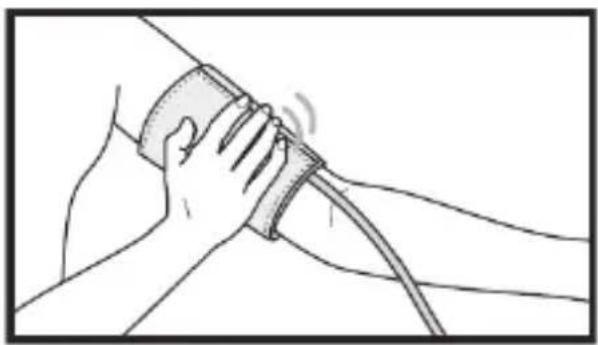
natural_image
Illustration of a hand holding a medical or surgical device with a probe inserted (no text or symbols visible)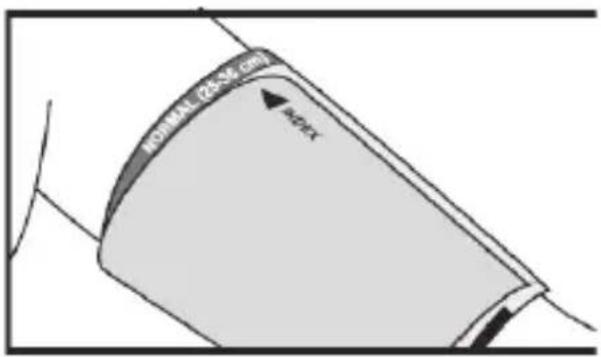
text_image
NORMAL (25.0x 6mm) MOXY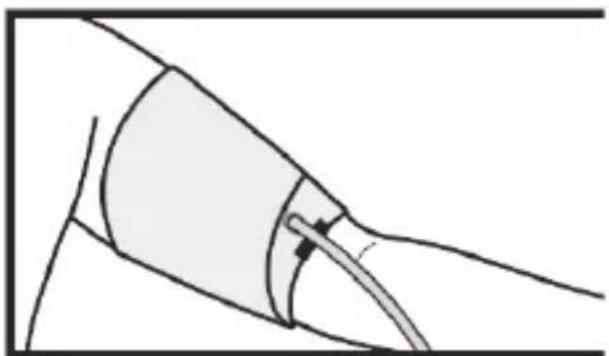
natural_image
Diagram of a curved mechanical component with a central cross mark, no text or symbols present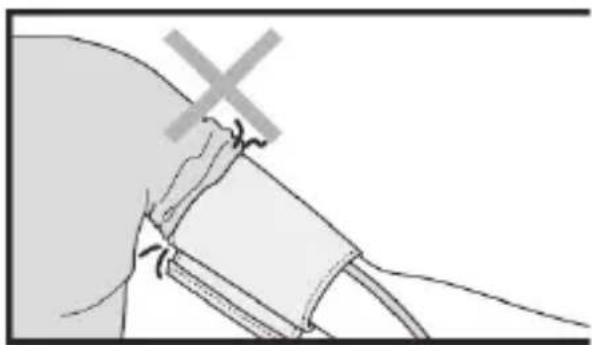
natural_image
Diagram of a hand holding a tool with a cross mark, no text or symbols presentbar
| Arterial blood pressure classification by World Health Organization | Diastolicarterial blood pressure (mmHg) | | :--- | :--- | | (severe) | 180 | | (mucerate) | 160 | | (mild) | 190 | | High normal | 130 | | Normal | 120 | | Coinal | 120 |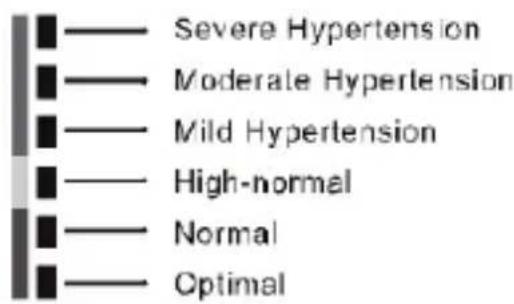
text_image
Severe Hypertension Moderate Hypertension Mild Hypertension High-normal Normal OptimalThanks for having purchased the automatic digital blood pressure monitor MEDIFIT MD-509.
For a proper use of the product, please read the following instructions carefully and save this manual for possible future consultation.
This instruction manual is intended to assist the user for safe and efficient operation of the automatic digital blood pressure monitor MD-509. The device must be used in accordance with the procedures described in the manual. It is important to read and understand the entire manual, especially the section
This device is intended for non-invasive measurement of systolic and diastolic arterial blood pressure and pulse rate adults (age 15 and above).
Consult a physician if measurement is taken in children or persons with arrhythmia as errors may occur.
PRINCIPLE OPERATION
This device adopts the oscillometric technology with Fuzzy Algorithm to measure the arterial blood pressure and pulse rate. The cuff is wrapped around the arm and automatically inflated by the air pump. The sensor of the device catches weak fluctuation of the pressure in the cuff produced by extension and contraction of the artery of the arm in response to each heartbeat. The amplitude of the pressure weaves is measured, converted in millimeters of the mercury column, and is displayed by digital value.
IMPORTANT: This device cannot provide reasonable accuracy if used or stored in the temperature or humidity beyond the range stated in the section SPECIFICATIONS of this manual.
NEW TECHNOLOGIES USED
Fuzzy Algorithm is the processing algorithm, taking into account the specialty of individual heartbeats, which provides higher accuracy of measurement.
TIPS ON TAKING BLOOD PRESSURE MEASUREMENT
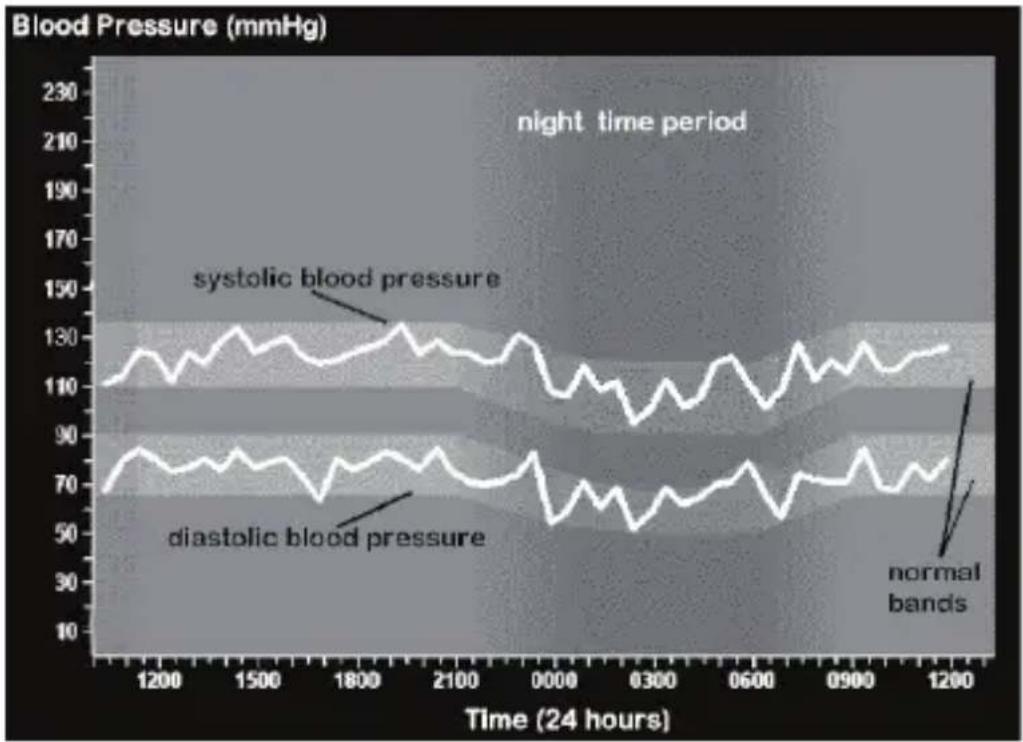
- 1. It is necessary to know that arterial blood pressure is subjected to sharp fluctuations. The level of the arterial blood pressure changes with atmospheric pressure and is affected considerably by many factors, e.g- physical loads, emotional excitability, stress, meals, etc. Medicines, Drinking, smoking affect greatly the level of an individual's blood pressure. When blood pressure is measured in hospital, the value is always higher than that at home. The reason is the intensity in such cases is especially serious in the group of patients, which is known as 'white coat effect' medically. Blood pressure will raise in low temperature, so it is better to take blood pressure measurement
in room temperature /approximately 20^ C). If this device was stored in low temperature, it is necessary to leave it in room temperature for at least 1 hour, otherwise the measurement can be inaccurate. Blood pressure does vary with age and individuals, and it is recommended to write down the readings from blood pressure records daily, then you can check with your doctor to find out what is a “normal blood pressure measurement” for you.
line
| Time (24 hours) | systolic blood pressure (mmHg) | diastolic blood pressure (mmHg) | | --------------- | ------------------------------ | ------------------------------- | | 1200 | ~110 | ~70 | | 1500 | ~130 | ~80 | | 1800 | ~125 | ~75 | | 2100 | ~130 | ~80 | | 0000 | ~110 | ~60 | | 0300 | ~90 | ~50 | | 0600 | ~110 | ~70 | | 0900 | ~125 | ~80 | | 1200 | ~130 | ~75 |The illustration is from British Hypertension Society
• 2. Take measurement under doctor's instruction for patients with cardio-vascular diseases. Under no circumstances should you alter the dosages of any drugs prescribed by your doctor.
• 3. Accurate measurement of blood pressure may be difficult in serious arteriosclerosis, weak pulse, or in patients in obvious fluctuation of heart contraction rhythm. Please consult a qualified physician to interpret your blood pressure readings.
bar
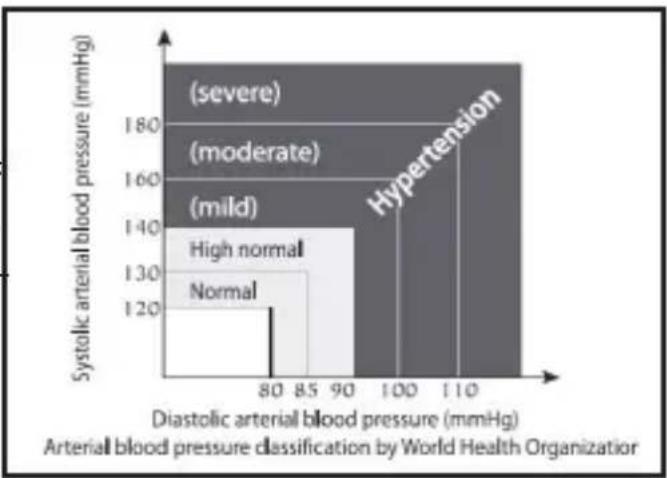
| Arterial blood pressure | Diastolic arterial blood pressure (mmHg) | Systolic arterial blood pressure (mmHg) | | :--- | :--- | :--- | | Normal | 80 | 120 | | High normal | 85 | 130 | | Mild | 90 | 140 | | Moderate | 95 | 160 | | Severe | 100 | 180 | | Hypertension | 110 | 190 |- 4. It is necessary to keep quiet during the measurement to get an accurate reading. Measurement should be conducted in a quiet environment at room temperature. Don't eat or smoke before a measurement.
This device is supplied with the standard cuff which is fit for the arm size 22-32 cm. Care should be taken to ensure that the cuff size is appropriate for the person whose blood pressure is being taken. Children and adults whose cuff size falls outside the range of the standard and large cuff size must select special size cuffs. Please contact the dealer to get these special size cuffs.
ATTENTION: Do not use cuff other than the original cuffs contained in this kit!
- 5. Repeated measurements with an interval of 3 minutes are recommended, so you can calculate the average to get a more accurate measurement. Atherosclerosis patients may require longer interval (10-15 minutes) as elasticity of patient's vessels decreases significantly with the disease. 10-15 minutes interval is also applicable for patients suffering from diabetes for a long period of time.
CLASSIFICATION
- Equipment not suitable for use in the presence of flammable mixture.
- Internally powered equipment.
- Type B applied parts.
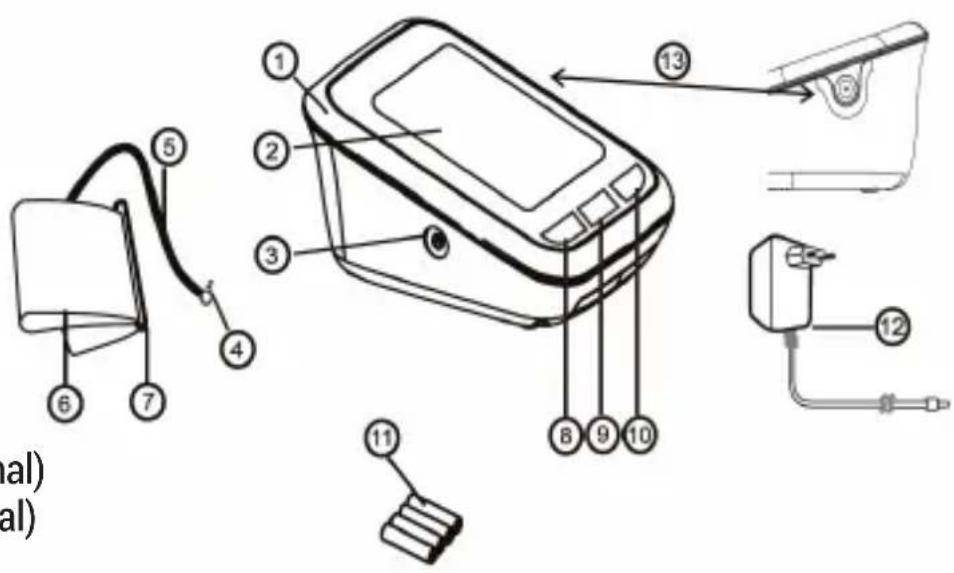
PARTS AND COMPONENTS
1 Main Body
2 Display
3 Air Connector
4 Tube Plug
5 Air Hose
6 Cuff
7 D-Ring
8 Button M1
9 Button
10 Button M2
11 Batteries (Optional)
12 Adapter (Optional)
13 Adapter Jack
BATTERY INSTALLATION
• 1. Open the battery cover and install four AA type batteries into the battery compartment as indicated. Make sure that the polarity is correct.
• 2. Close the battery compartment cover.
text_image
Diagram of a medical or electronic device with numbered parts and labeled parts in English- Replace the batteries when the replacement indication "☐" appears in the display or nothing after button is pressed.
- Batteries in this it are intended to check work capacity of the device and the life-span of the batteries can be shorter than the recommended time.
- Do not use rechargeable batteries.
- Only the same type of batteries are allowed to be used together. Replace all batteries simultaneously.
- If the device is to be unused for a long time, please take out the batteries.
- Don't leave the worn batteries in the device.
USE THE DEVICE WITH AC POWER ADAPTER
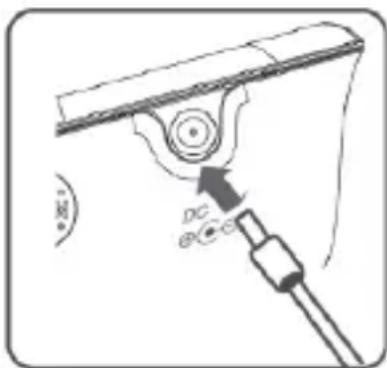
Besides batteries you can use AC power adapter as the power supply. Ac power adapter is optional for the device for sale.
- Insert the AC adapter cord into the jack on the right side of the monitor.
- Insert the AC adapter plug into the outlet.
- Remove the AC adapter, disconnect the adapter plug from the AC outlet first and then disconnect the cord from the monitor's jack.
text_image
Technical diagram showing a mechanical assembly with labeled components and directional arrow indicating motion or forceCAUTION
When using optional AC adapter, the AC adapter must comply with the requirements of standard IEC 60601-1:2005+A1:2012.
To avoid possible damage of the monitor, use only the exclusive AC adapter that can be purchased from authorized dealers. Other adapter may damage the blood pressure monitor.
Note: The monitor is designed not to draw power of the batteries when the AC adapter is in use.
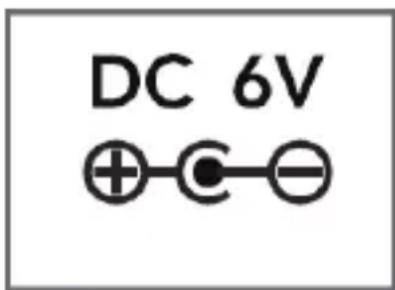
SPECIFICATION OF THE ADAPTER (NOT INCLUDED)
Input 220-240VAC 50 Hz
Output voltage: 6V DC ±5%
Max. output current: 600mA
Output plug polarity: <-> internally
text_image
DC 6V ⊕-●-SETTING THE DATE AND TIME
The function provides accurate measuring time for each measurement. To get an accurate date and time, the user should present the date and time correctly before the first use of this device.
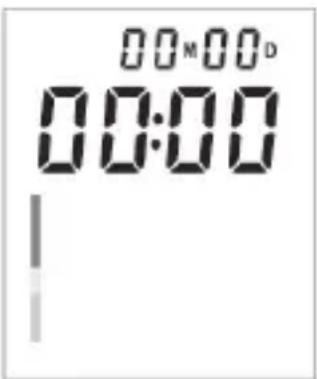
• 1. When the device is connected to power suppli at first, the display will show as in Fig. 7.
text_image
00M00D 00:00Fig.7
- 2. Press ⏻ and hold the button M1, then press, and the year number flashes as in Fig. 8.

text_image
2012Fig.8
-
- Press button M1 o M2 to subtract or add the number, and press button ⏻ to confirmation.
-
- When the year setup is finished, the month number will flash automatically. Please follow the same instruction as above to set month, date and time.
- 5 Press button ⏻ to finish the setup. If you want to change the date and time, please repeat procedure 2,3,4.
Annotation: When under the mode of Date/Time setting without any operation, the device will automatically return to standby mode after one minute.
CORRECT POSTURE FOR MEASUREMENT
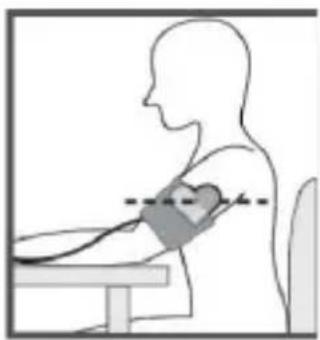
• 1. Sit beside the table and let the table support your arm as you take the measurement. Make sure that the cuff on the upper arm is at approximately the same level as the heart, and that the forearm is extended naturally on the table as in Fig. 1.
• 2. You may lie on your back and take a measurement. Look at the ceiling, keep calm, and don't move your neck or body during the measurement. Make sure that the cuff on the upper arm is at approximately at the same level as the heart as in Fig.2.
Fig. 1
natural_image
Side profile illustration of a human head with a shaded pressure monitor and measurement line (no text or symbols)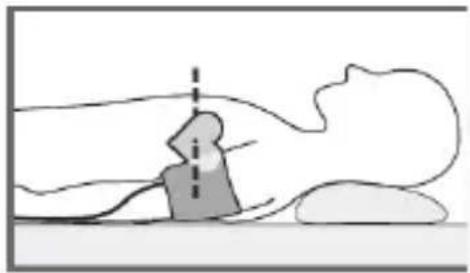
natural_image
Illustration of a human head in profile with a vertical line indicating measurement or alignment, no text or symbols present.Fig. 2
ASSEMBLIG THE CUFF
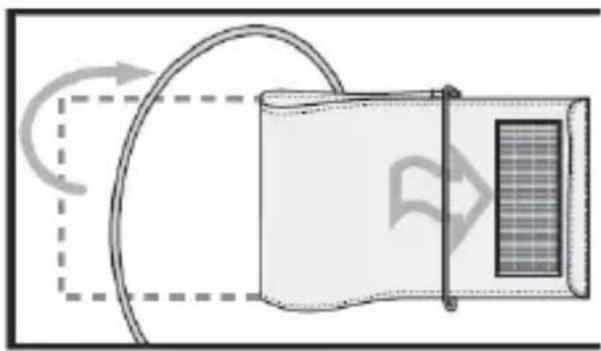
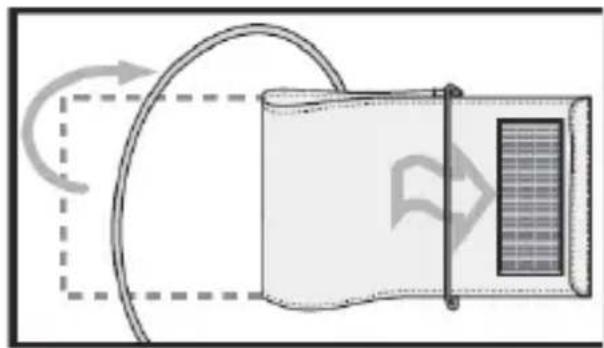
• 1. Insert the edge of the cuff approximately 5 centimeters into the D-ring as shown in figure.
natural_image
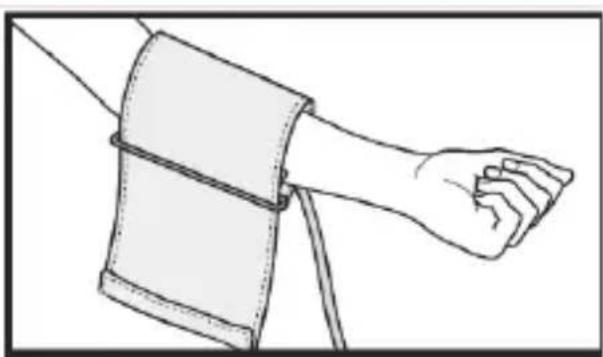
Diagram of a medical or laboratory device with curved arrows indicating flow or movement, no text or symbols present.• 2. . Put the cuff on the left upper arm with the tube pointing to the direction of the palm. If measurement on your left arm is difficult, you can use the right arm for measurement. In this case, it is necessary to know that the readings may differ about 5-10mmHg between left arm and right arm.
natural_image
Illustration of a human forearm and hand wearing a wristband (no text or symbols)-
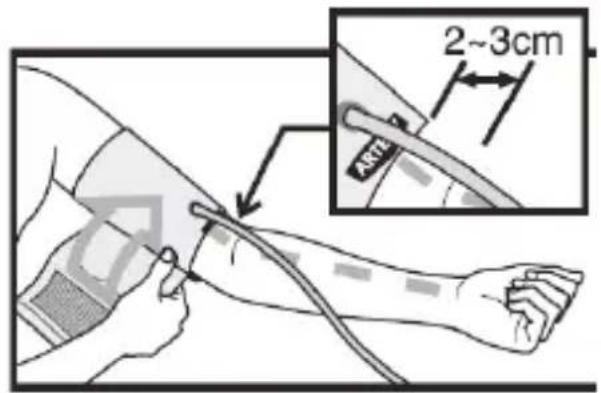
- Wrap cuff around your upper arm with the lower edge of the cuff approximately 2-3 centimeters above the elbow. The mark "ARTERY" must be over the artery of the arm.
• 4. Press the cuff to make sure that it is attached securely. The cuff should not be too tight or loose is greatly recommended. Two fingers should be easily put in between cuff and upper arm.
• 5. The mark INDEX on the cuff must point to area NORMAL. This means the cuff size is correct. If mark INDEX points to area beyond area NOMAL, please consult your dealer whether you need another size cuff.
- Wrap cuff around your upper arm with the lower edge of the cuff approximately 2-3 centimeters above the elbow. The mark "ARTERY" must be over the artery of the arm.
-
- Sometimes is difficult to make the cuff regular depending in the shape of the user's upper arm, the cone-shape assembly of cuff is also acceptable.
• 7. If your clothes restrict the blood circulation of your upper arm, or you roll your sleeve up so as to result in such restriction. Please take of your shirt to get an accurate measurement if necessary.
- Sometimes is difficult to make the cuff regular depending in the shape of the user's upper arm, the cone-shape assembly of cuff is also acceptable.
text_image
2~3cm AKT7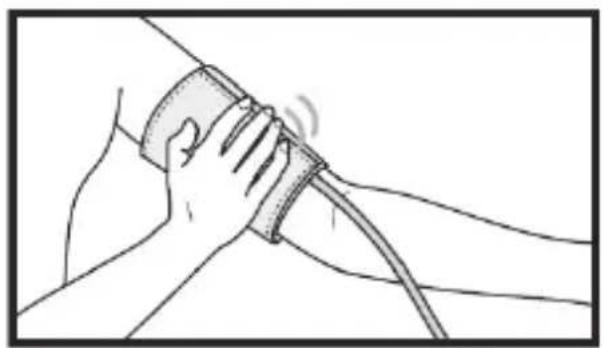
natural_image
Illustration of a hand holding a medical or surgical instrument with a probe inserted (no text or symbols visible)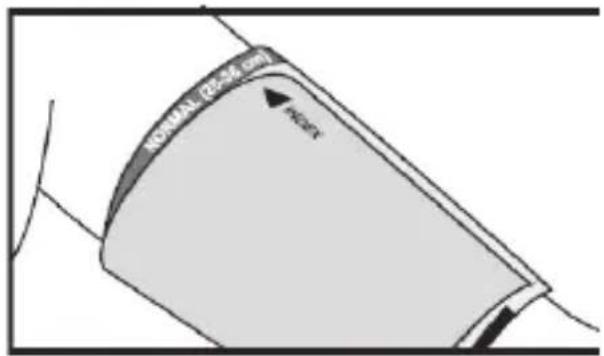
text_image
NORMAL (20-34 cm) NOW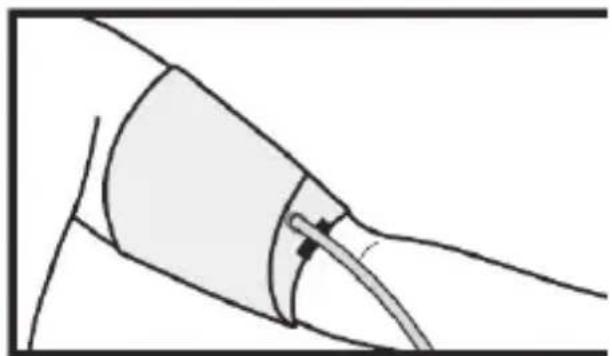
natural_image
Diagram of a curved mechanical component with a central mark, no text or symbols present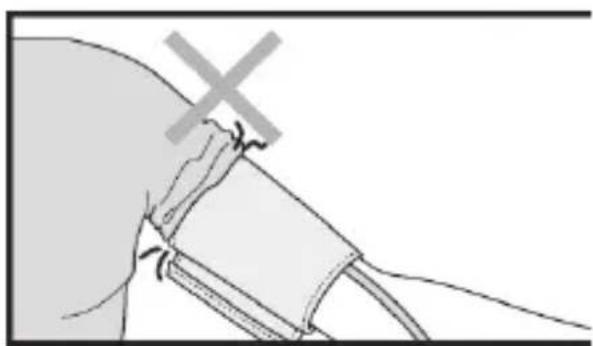
natural_image
Diagram of a hand holding a device with a cross mark, no text or symbols presentCARRYNG OUT A MEASUREMENT
• 1. Assembling the cuff, then insert the tube plug into the air connector. Before the measurement, take 3-5 times deep breath and relax yourself. Don't talk or move your arm.
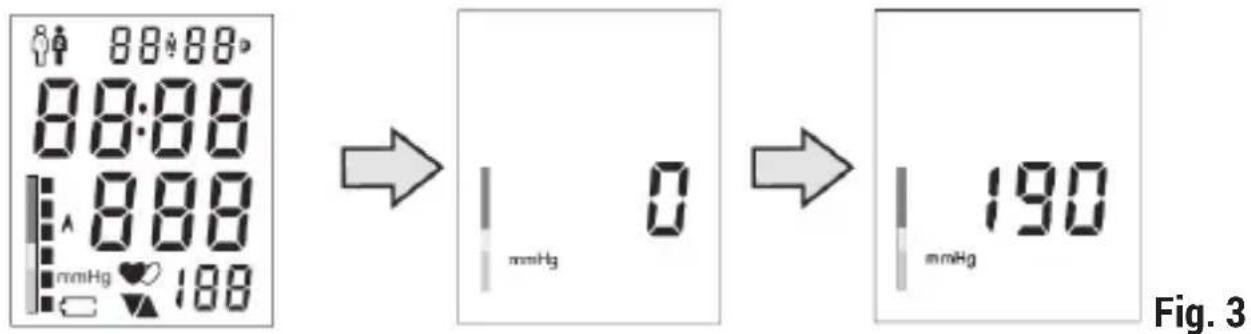
- 2. Press the button and all symbols will appear on display in 2 seconds. Then "0 mmHg" will appear on the screen. Pump begins to inflate with display showing the reading of pressure. Generally the pressure will reach 190 ~mmHg , as in Fig.3.
text_image
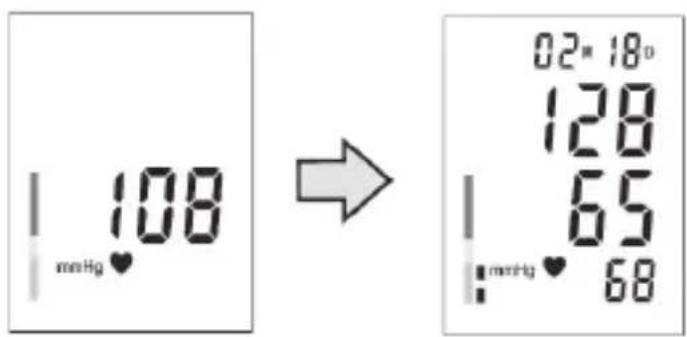
88:88 88:88 88 mmHg 188 → 0 mmHg → 190 mmHg Fig. 3• 3. The pump stops inflating and the pressure begins to decrease gradually, during which the user's blood pressure and pulse will be calculated as in Fig. 4.
Note: when the device has finished taking your measurement, your blood pressure readings, pulse are announced.
text_image
108 mmHg ♥ → 02" 18" 128 65 mmHg ♥ 68Fig. 4
IRREGULAR HEARTBEATING DETECTING
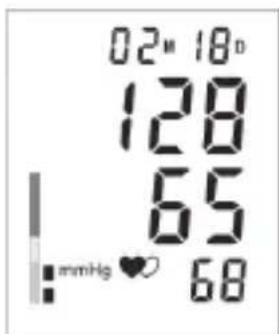
When the device detects the irregular heartbeat or any excessive body movement during measurement, icon will flashing 'on the screen as in Fig. 5.
text_image
02" 18" 128 65 mmHg ♥ 68Fig. 5
Attention: We recommend contacting your physician if ‘♥’ you see the indicator frequently.
• 4. The air in the cuff will deflate quickly and the blood pressure reading and pulse reading will show in the display. Then the icon “💡” will flash to remind the user to record the reading.
- 5. Press button M1 or button M2 to record the reading in the corresponding memory. Moreover the measurement time will be displayed on the screen alternately. If the user does not press button, the reading won't record.
- 6. Press ⏻ to turn off the device. Please rest for at least 3 minutes prior to another measurement. If the power supply is not switched off and the device is unused for 3 minutes, the device will be switched off automatically.
AUTOMATIC INFLATION
There are 4 given levels of given inflation pressure for this device: 190 mmHg, 230mmHg, 270mmHg, 300mmHg. When 190mmHg is not enough or movement o farm occurs, the device will automatically inflate to higher pressure level to ensure a successful measurement. It is not a fault.
RAPID DEFLATION DURING MEASUREMENT
If you don't fell well during measurement or want to stop the measurement for some reason, you can press the button ⏻The device will quickly release the air in cuff and the device will be returned to standby mode.
FUNCTION OF MEMORY
Memory recall
• 1. The device can store 90 sets of readings respectively in M1 and M2, and will automatically calculate the average value of the latest 3 readings for M1 and M2. When the memory is full (90 sets of readings are stored), the oldest reading will be replaced by a new one. Readings in the memory will not clear away even if power supply is removed.
text_image
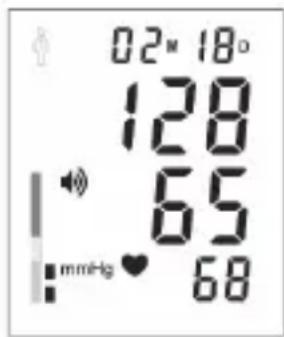
02* 18D 128 65 mmHg ♥ 68• 2. When a measurement is finished or the device is on stand by, the user can press button M1 or M2 to recall memory. Press button M2 or M2, the display will show the average value of the latest 3 readings as in Fig. 9.
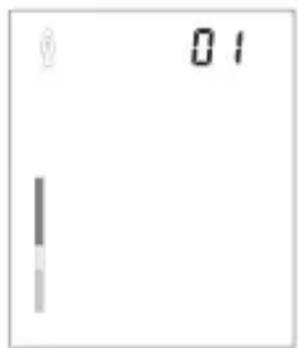
- 3. Press again, the display will show '01', which means the latest reading, then turn sto another screen to show readings an measuring time as in Fig.10. - 4. Press again, the display will show '02', which means the seconds to the latest reading.
text_image
01MEMORY CLEARANCE
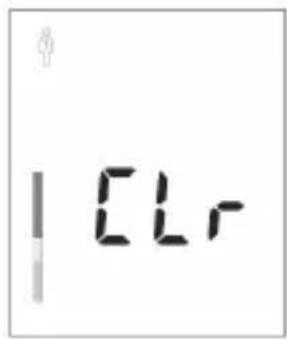
When a measurement is finished or when the device is on stand by, hold down button M1 or M2 for at least 5 seconds, the display will show 'Clr' which means the stored reading for M1 or m2 are removed as in Fig.11.
text_image
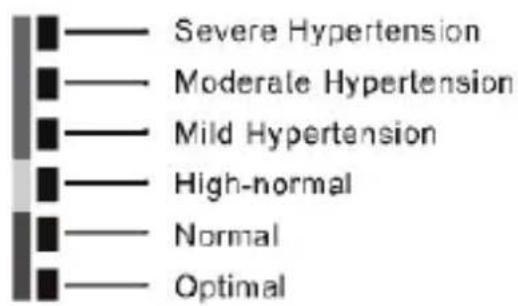
CLRWHO BLOOD PRESSURE CLASSIFICATION ("World Health Organization")
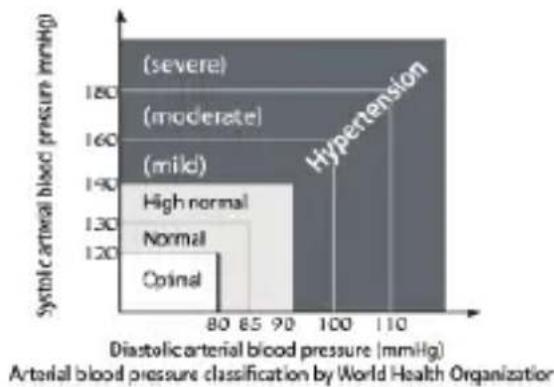
Standards for assessment of high or low blood pressure, regardless of age, have been established by World Health Organization (WHO) as shown in the chart as below:
bar
| Arterial blood pressure classification by World Health Organization | Diastolic arterial blood pressure (mmHg) | | :--- | :--- | | Hypertension | 110 | | Severe | 100 | | moderate | 90 | | mild | 80 | | High normal | 70 | | Normal | 65 | | Opinal | 60 |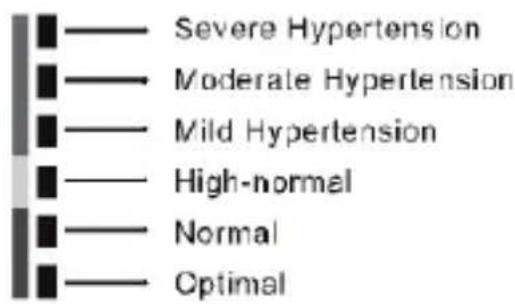
text_image
Severe Hypertension Moderate Hypertension Mild Hypertension High-normal Normal OptimalThe indicator display a segment, based on the current data, corresponding to the WHO classification. For example, if your blood press is 145mmHg (systolic pressure), 88mmHg (diastolic pressure), according to the world health organization standard, your blood pressure level is Mild Hypertesnion.
Note: If the systolic blood pressure and the diastolic blood pressure fall into different categories, the higher value should be taken for classification.
ERROR AND LOW BATTERY INFORMATION
| SYMPTOM CHECK POINT REMEDY | ||
 | The cuff is put on wrongly or the tube plug is inserted loosely.Arm/hand movement or talking occurred during measurementArrhythmia | Make sure that the cuff is put on correctly and the tube plug is inserted tightly and repeat the measurement.Entirely follow the recommendations in this manual and repeat the measurement. Consult your personal physician. |
 | The batteries are weak Replace all 4 batteries with new ones. | |
MAINTENANCE, STORING, REPAIR AND RECYCLING
- It is necessary to protect this device against high moisture, direct sunlight, shock,
solvent, alcohol and gasoline.
- Move the batteries if the device is being stored for a long time, and keep the batteries
far away from children.
- Keep the cuff away from sharp objection and don't extend or twist the cuff.
- Use only soft and dry cloth to clean the device
- The cuff is sensitive and must be handled with care. You can clean the cuff with damp
cloth for daily maintenance.
ATTENTION: to avoid cross infection when sharing the cuff, you can sterilize the fabric cover of the cuff with tampons moistened by 3% solution of hydrogen dioxide. Do not laundry the cuff as well ironing with a hot flatiron.
ATTENTION: under no circumstances may you wash the inner blander.
- Since neither the device nor batteries are household waste, follow your local re cycling rules and dispose them at an appropriate collection site.
- Do not open the device, or delicate electrical components a san intricate air unit could be damaged. If you can not fix the problem using the TROUBLE-SOOTING INSTRUCTION, please request service from your dealer.
- Generally, we recommend having the device inspected every 2 years to ensure proper function, accuracy and safety. Please contact your dealer for maintenance.
ATTENTION: Do not repair the device without manufacturer's authorization.
| SYMPTOM CHECK POINT REMEDY | ||
| No display after in-stalling the batteries | The batteries have run down.The polarity of installed bat-teries is wrong.The contact of battery com-partment is polluted. | Replace all the batteries with new ones.Install the batteries cor-rectly.Clean the battery terminals with dry cloth. |
| Inflation stops and re-inflate later. | 190mmHg is not enough or the device has moved excessively.Did you talk or move your arm (or hand) during meas-urement? | See AUTOMATIC INFLA-TION.Keep quit and silent during the measurement. |
| The reading is ex-tremely low or high. | Is the cuff at the same level as the heart. Is the cuff wrapped right?Did you strain your arm during measurement?Did you talk or move your arm (or hand) during meas-urement? | Make sure that your posture is right.Wrap the cuff correctly.Relax during measurement.Keep quit and silent during the measurement. |
| Pulse rate is too low or too high. | Did you talk or move your arm (or hand) during measurement? Did you make measurement right after exercise? | Keep quit and silent during the measurement.Take measurement again after resting for more than 5 minutes. |
| The batteries are run down soon. | Faulty batteries are used Suggest to use alkaline batteries of known manufacturers. | |
| The device is automatically turned off. | It is the result of automatically turn off system. | This is to save the power consumption of the device, and it is not a fault. |
SPECIFICATIONS
- Modello: MD-509
- Model: MD-509
• Size: 105 (L) x 120 (P) X 55 (H) mm
• Weight: approximately 310g without batteries
- Measuring method: oscillometry.
- Measuring range: 40 to 260 mmHg (blood pressure)
40 to 160 beats/minute (pulse rate)
- Measuring accuracy: ±3mmHg for static pressure ±5% of reading for the pulse rate
• Inflation: automatic by the pump
- Rapid deflation: automatic electronic valve
- Batteries: included 4 "AA" x 1,5V
- Adapter: not included, 6V 600mA
• Memory: 2 users with 90 sets of memory each
• Operation Temperature and humidity: +10°C to +40°C; 85% and below
- Storage temperature and humidity: -20°C to +50°C; 85% and below
- Upper arm circumference: 22\~32 cm (standard cuff)
- Complete Kit: Main body, cuff, 4xAA batteries, gift box, instruction manual, warranty card
The product is designed with features rated to operate up to an altitude of 2000 m
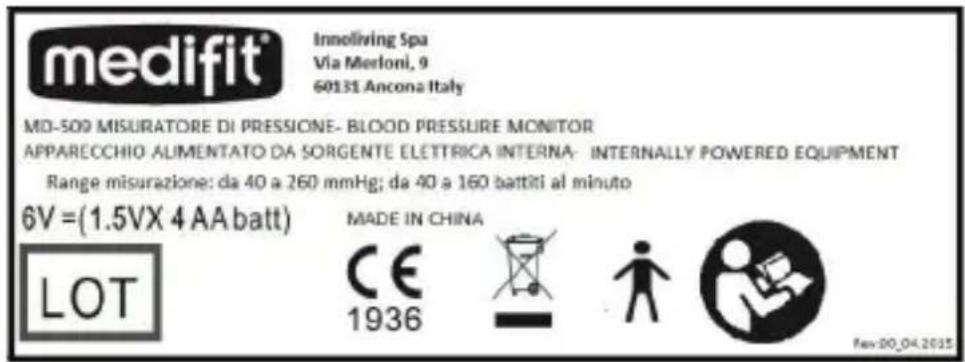
RATING LABEL
text_image
medifit® Innoliving Spa Via Merloni, 9 60131 Ancona Italy MD-500 MISURATORE DI PRESSIONE- BLOOD PRESSURE MONITOR APPARECCHIO ALIMENTATO DA SORGENTE ELETTRICA INTERNA- INTERNALLY POWERED EQUIPMENT Range misurazione: da 40 a 260 mmHg; da 40 a 160 battiti al minuto 6V = (1.5VX 4 AA batt) LOT MADE IN CHINA CE 1936 Fev 00_04_2015
The device complies with the European directive 93/42/CEE concerning the medical device and all the other applicable EU norms.

INFORMATION TO USERS according to Legislative Decree No. 49 of March 14, 2014 “2012/19/UE Implementation of the Directive on Waste Electrical and Electronic Equipment (WEEE)”
The crossed-out dustbin symbol indicates that the product at the end of its life must be collected separately from other waste. The user should, therefore, take the equipment with the essential components at the end of its useful life to the separate collection center of electronic and electrical waste, or return it to the retailer when purchasing new equipment of equivalent type, in ratio of one to one, or one to zero for devices with larger side less than 25 CM. The separate collection for the decommissioned equipment for recycling, treatment and environmentally compatible disposal contributes to avoid possible negative effects on the environment and human health and promotes recycling of the materials. Improper disposal of the product by the user entails the application of administrative sanctions according to Legislative Decree No. 49 of 14 March 2014.

The batteries used in this device must be disposed of in the special bins at the end of their life.
Please inform yourself about the local rules on separate collection of batteries. The correct disposal of batteries helps preventing potentially negative consequences on the environment and human health.

TYPE B applied parts

Read carefully the user manual
MANUFACTURER'S DECLARATIONS
The model MD-509 Digital Blood Pressure Monitor is intended for use in the electromagnetic environment specified below. The customer or the user of the model MD-509 Digital Blood Pressure Monitor should assure that is used in such an environment.
| Immunity test | IEC60601 test level | Compliance level | Electromagnetic environ-ment-guidance |
| Electrostatic discharge (ESD) IEC | 6 kV contact ± 8 kV air | 6 kV contact ± 8 kV air | Floor should be wood, concrete or ceramic tile. If floors are covered with synthetic material, the relative humidity should be at least 30% |
| Electrical fats transient / burst IEC/EN 61000-4-4 | 2kV for power supply | 2kV for power supply | Mains power quality should be that of a typical com-mercial or hospital environ-ronment. |
| Surge IEC 61000-4-5 | 1kv differential mode | 1kv differential mode | Mains power quality should be that of a typical com-mercial or hospital environ-ronment. |
| Voltage dips, short interrup-tions and volta-ge variations on power supply input lines IEC 61000-4-11 | <5 % UT (>95 % dip in UT) for 0,5 cycle 40 % UT (60 % dip in UT) For 5 cycle 70 % UT (30 % dip in UT) for 25 cycle <5 % UT (>95 % dip in UT) For 5 sec. | <5 % UT (>95 % dip in UT) for 0,5 cycle 40 % UT (60 % dip in UT) For 5 cycle 70 % UT (30 % dip in UT) for 25 cycle <5 % UT (>95 % dip in UT) For 5 sec. | Mains power quality should be that of a typical com-mercial or hospital environ-ronment. If the user of the MD-509 Digital Blood Pressure Mon-itor Equipment requires continued operation during power mains interruptions, it is recommended that the MD-509 Digital Blood Pres-sure Monitor Equipment be powered from an uninter-ruptible power supply or a battery. |
| Power frequen-cy magnetic field IEC 61000-4-8 | 3A/m 3A/m Power fre | frequency magnetic | fields should be at levels characteristic of a typical location in a typical com-mercial or hospital environ-ronment. |
GUIDANCE AND MANUFACTURER'S DECLARATION-ELECTROMAGNETIC IMMUNITY
The model MD-509 Digital Blood Pressure Monitor is intended for use in the electromagnetic environment specified below.
The customer or the user of the model MD-509 Digital Blood Pressure Monitor should assure that is used in such an environment
| Immunity test | IEC60601 test level | Compliance level | Electromagnetic environment-guidance |
| Conducted IEC 61000-4-6 | 3 Vrm 150 kHz a 80 MHz | 3 Vrm Portable and mobile RF communications equipment should be used no closer to any part of the MD-509 Digital Blood Pressure Monitor Equipment, including cables, than the recommended separation distance calculated from the equation applicable to the frequency of the transmitter. Recommended separation: d = [ 3.5V_i ] d = [ 3.5E_i ] 80MHz a 800MHz d = [ 7E_i ] 800MHz a 2.5GHz | |
| Radiated RF IEC 61000-4-3 | 10 V/m 80 MHz a 2.5 GHz | 3 V/m output power rating of the transmitter in watts (W) according to the transmitter manufacturer and d is the recommended separation distance in metres (m).b Fields strengths from fixed RF transmitters, as determined by an electromagnetic site survey, c should be less than the compliance level in each frequency range. d Interference may occur in the vicinity of equipment marked with the following symbol: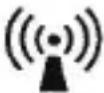 | |
Note 1 At 80 MHz and 800 MHz, the higher. Frequency range applies.
Note 2 These guidelines may not apply in all situations. Electromagnetic propagation is affected by absorption and reflection from structures, objects and people.
a) Field strength from fixed transmitters, such as base stations for radio telephones and land mobile radios, amateur radio, AM and FM radio broadcast and TV broadcast cannot be predicted theoretically with accuracy. To assess the electromagnetic environment due to fixed RF transmitters, al electromagnetic site survey should be considered. If Digital Blood Pressure Monitor is used exceeds the applicable RF compliance level above, the Model MD-509 Digital Blood Pressure Monitor should be observed to verify normal operation. If abnormal performance is observed, additional measures may be necessary, such as re-orienting or relocating the Model MD-509 Digital Blood Pressure Monitor.
b) Over the frequency range 150 kHz to 80 MHz, field strength should be less than 3 V/m.
The MD-509 Digital Blood Pressure Monitor is intended for use in an electromagnetic environment in which radiated RF disturbances are controller. The customer or the user of the MD-509 Digital Blood Pressure Monitor can help prevent electromagnetic interference by maintaining a minimum distance between portable and mobile RF communications equipment (transmitters) and the MD-509 Digital Blood Pressure Monitor as recommended below, according to the maximum output power of the communications equipment.
| Rated maximum output power of transmitter W | Separation distance according to frequency of transmitter (m) | ||
| 150 kHz to 80 MHz 80 | MHz to 800 MHz 800 MHz | Hz to 2,5 GHz | |
| d = [ 3.5V_i ] | d = [ 3.5E_i ] | d = [ 7E_i ] | |
| 0.01 0.117 0.117 0.233 | |||
| 0.1 0.369 0.369 0.738 | |||
| 1 1.167 1.167 2.333 | |||
| 10 3.689 3.689 7.379 | |||
| 100 11.667 11.667 23.333 | |||
For transmitters rated at maximum output power not listed above, the recommended separation distance d in metres (m) can be estimated using the equation applicable to frequency of the transmitter, where P is the maximum output power rating of the transmitter, in watts (W) according to the transmitter manufacturer.
Note 1: At 80 MHz and 800 MHz, the separation distance for the higher frequency range applies.
Note 2: These guidelines may not apply in all situations. Electromagnetic propagation is affected by absorption and reflection from structures, objects and people.
The manufacturer reserves the right to make technical changes without notice in the interest of progress.
Prior notices will not be given in case of any amendments within this manual.
The illustration is from British Hypertension Society
text_image
DC 6V ⊕—●—⊖natural_image
Side profile illustration of a human head with a heart symbol attached to the chest area, no text or symbols present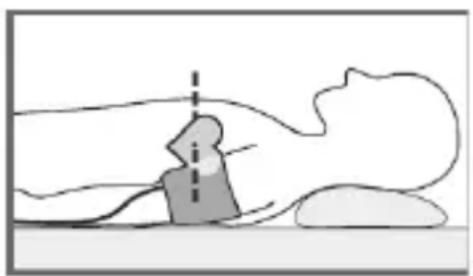
natural_image
Simple line drawing of a human head in profile with a shaded anatomical region, no text or symbols present.Fig. 2
natural_image
Diagram of a pressure measurement device with curved arrows indicating flow direction (no text or symbols)natural_image
Line drawing of a human forearm and hand wearing a wristband (no text or symbols)natural_image
Illustration of a hand holding a medical device with a cable, no text or symbols presenttext_image
NORMAL (24-34 CMH) MIXY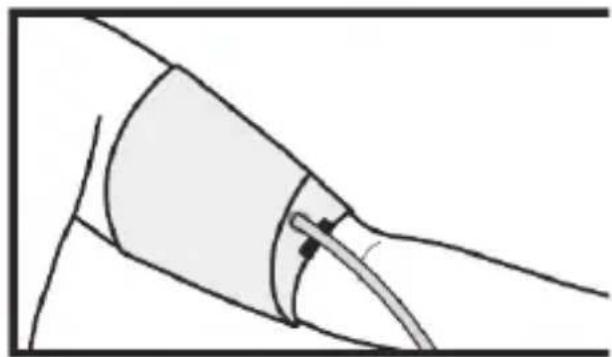
natural_image
Diagram of a hand holding a curved object with a small mark, no text or symbols present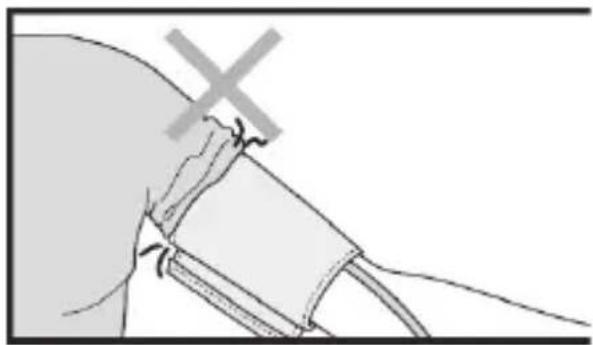
natural_image
Diagram of a mechanical joint or bracket with a cross mark, no text or symbols presentA MÉRÉS ELVÉGZÉSE
SFATURI PENTRU MASURAREA TENSIUNII
text_image
Diagram of a medical device with numbered parts and Chinese labels indicating components like pressure monitor, catheter, and electrical plug.INSTALAREA BATERIILOR
text_image
DC 6V ⊕—●—⊖SETAREA DATEI SI OREI
natural_image
Side profile illustration of a person seated with a medical device attached, showing no text or symbolsnatural_image
Illustration of a human head in profile with anatomical lines indicating pressure or measurement (no text or symbols)Fig. 2
ASAMBLAREA MANSETEI
• 1. Inserati capatul mansetei aproximativ 5 cm in inelul D asa cum apare in Figura de mai jos
natural_image
Diagram of a medical or scientific device with curved arrows indicating motion, no text or symbols presentnatural_image
Line drawing of a human forearm and hand wearing a wristband (no text or symbols)text_image
2~3cm ARTS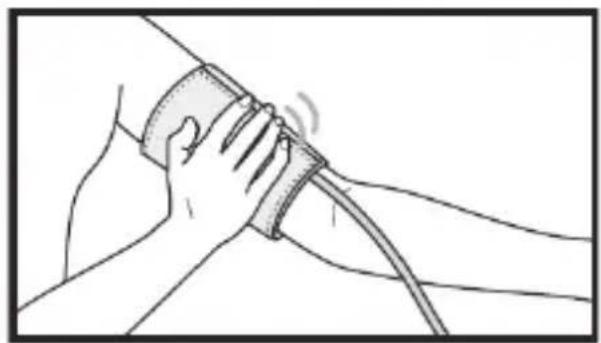
natural_image
Line drawing of a person receiving a medical or health check-up with a bandage (no text or symbols)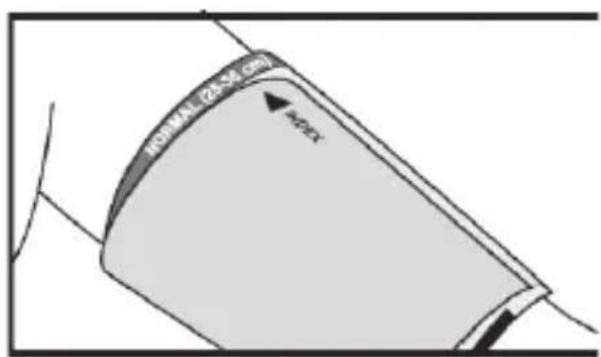
text_image
NORMAL (25-34.0cm) OFFY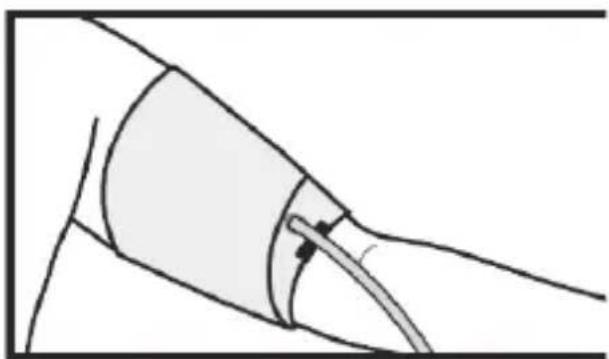
natural_image
Diagram of a curved mechanical component with a central hole, showing no text or symbols.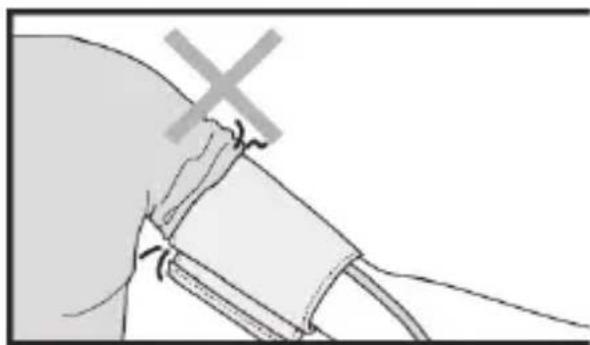
natural_image
Diagram of a hand holding a device with a cross mark, no text or symbols presentEFECTUAREA MASURATORII
bar
| Arterial blood pressure classification by World Health Organization | Diastolic arterial blood pressure (mmHg) | | :--- | :--- | | Optimal | 80 | | Normal | 85 | | High normal | 90 | | Mild | 100 | | Moderate | 110 | | Severe | 120 |