
MS23A7118AK - Microwaves SAMSUNG - Free user manual and instructions
Find the device manual for free MS23A7118AK SAMSUNG in PDF.


User questions about MS23A7118AK SAMSUNG
0 question about this device. Answer the ones you know or ask your own.
Ask a new question about this device
Download the instructions for your Microwaves in PDF format for free! Find your manual MS23A7118AK - SAMSUNG and take your electronic device back in hand. On this page are published all the documents necessary for the use of your device. MS23A7118AK by SAMSUNG.
USER MANUAL MS23A7118AK SAMSUNG
natural_image
Simple line drawing of a rectangular frame with two recessed inner panels (no text or symbols)natural_image
Pure electrical circuit lines without any symbols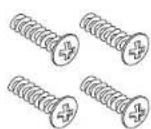
natural_image
Technical line drawing of two mechanical components with spring-like extensions (no text or symbols)natural_image
Four screws in different orientations (no text or symbols visible)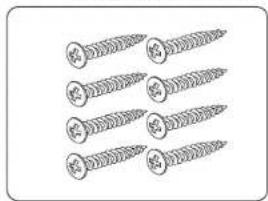
natural_image
Illustration of five screws with metal fasteners, arranged in a row (no text or symbols)Wkręty (typ B) (8)
Instalacja
natural_image
Technical line drawing of a mechanical component with circular and rectangular features, no text or symbols presentSzafka
| A 50 mm |
| B 550 mm |
| C 560 mm (+8) mm |
| D 362 mm |
| E 50 mm |
| F 850 mm |
| G 200 cm ^2 |
natural_image
Technical drawing of a rectangular frame with labeled dimensions A and B (no text or symbols beyond labels)Nakładka ozdobna
| A 381 mm |
| B 596 mm |
natural_image
Technical line drawing of a mechanical device with labeled components (no text or symbols)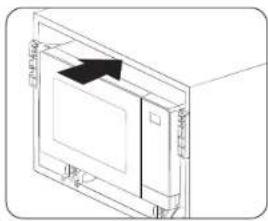
natural_image
Technical line drawing of a door frame with an arrow indicating direction (no text or symbols)natural_image
Technical line drawing of a microwave oven with internal components and mounting bracket (no text or symbols)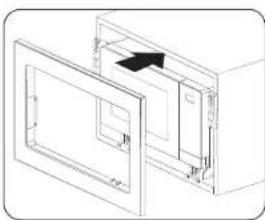
natural_image
Isometric line drawing of a mechanical or architectural component with no visible text, numbers, or symbols.natural_image
Line drawing of a chicken inside a rectangular frame with dashed lines indicating hidden edges (no text or symbols)| STOP/Eco | START/+30s(3 sec) |
Metoda 1
www.samsung.com/uk/aboutsamsung/sustainability/environment/our-commitment/data/
8 Magyar
Üzembe helyezés
Tartozékok
natural_image
Simple line drawing of a rectangular frame with two recessed cutouts (no text or symbols)natural_image
Pure electrical circuit lines without any symbols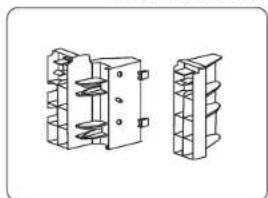
natural_image
Technical line drawing of two mechanical components with spring-like extensions (no text or symbols)natural_image
Four screws in different orientations (no text or symbols visible)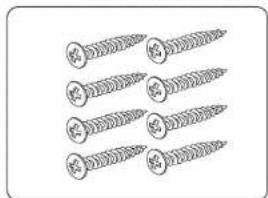
natural_image
Illustration of six different screw fasteners arranged in a row (no text or symbols)Csavar (B" tipus) (8)
Magyar 9

Üzembe helyezés
natural_image
Technical line drawing of a mechanical component with circular and rectangular features, no text or symbols presentSzekrény
| A 50 mm |
| B 550 mm |
| C 560 mm (+8) mm |
| D 362 mm |
| E 50 mm |
| F 850 mm |
| G 200 cm ^2 |
natural_image
Technical drawing of a rectangular frame with labeled dimensions A and B (no text or symbols beyond labels)Szegély
| A 381 mm |
| B 596 mm |
flowchart
graph TD
    A["TWOTO BBOJ"] --> B["BAL OLDAL"]
    B --> C["RIOCPANY UNICLOS"]
    C --> D["Directional arrows pointing inward toward B"]
    D --> E["Arrow pointing inward to B"]
    style A fill:#f9f,stroke:#333
    style B fill:#bbf,stroke:#333
    style C fill:#dfd,stroke:#333
    style D fill:#dfd,stroke:#333
    style E fill:#dfd,stroke:#333
natural_image
Simple line drawing of a rectangular room with internal layout and directional arrows (no text or symbols)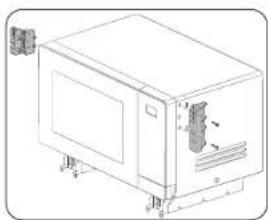
natural_image
Technical line drawing of a mechanical device with labeled components (no text or symbols)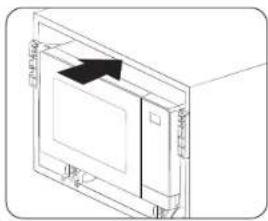
natural_image
Technical line drawing of a door frame with an arrow indicating direction (no text or symbols)natural_image
Technical line drawing of a microwave oven with internal components and mounting bracket (no text or symbols)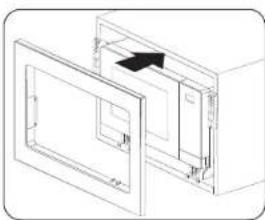
natural_image
Isometric line drawing of a mechanical or architectural component with no visible text, numbers, or symbols.01 Kijelzô
02 Microwave (Mikrochullám)
natural_image
Line drawing of a chicken inside a rectangular frame with dashed lines indicating hidden edges (no text or symbols)DÔLEŽITÉ BEZPEČNOSTNÉ POKYNY
POZORNE SI ICH PREČÍTAJTE A USCHOVAJTE ICH PRE BUDÚCE POUŽITIE.
natural_image
Simple line drawing of a rectangular frame with two recessed cutouts (no text or symbols)Pásik Základná konzola (2)
natural_image
Pure electrical circuit lines without any symbols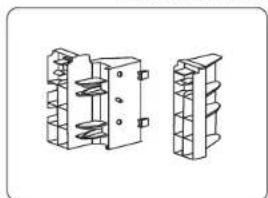
natural_image
Technical line drawing of two mechanical components with spring-like extensions (no text or symbols)Držiak pasika (2) Skrutka (typ A) (4)
natural_image
Four screws in different orientations (no text or symbols visible)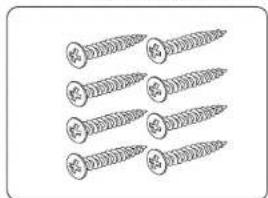
natural_image
Illustration of six different screw fasteners arranged in a row (no text or symbols)Skrutka (typ B) (8)
Slovenčina 9
Inštalácia
natural_image
Technical line drawing of a mechanical component with circular and rectangular features, no text or symbols presentSkrinka
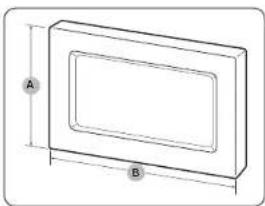
| A 50 mm |
| B 550 mm |
| C 560 mm (+8) mm |
| D 362 mm |
| E 50 mm |
| F 850 mm |
| G 200 cm ^2 |
natural_image
Technical drawing of a rectangular frame with labeled dimensions A and B (no text or symbols beyond labels)Pásik
| A 381 mm |
| B 596 mm |
flowchart
graph TD
    A["LAVA STRANA"] --> B["PAVA STRANA"]
    B --> C["SIRIDOGA NAVA"]
    C --> D["Output"]
    style A fill:#f9f,stroke:#333
    style B fill:#ccf,stroke:#333
    style C fill:#cfc,stroke:#333
    style D fill:#fcc,stroke:#333
natural_image
Simple line drawing of a rectangular room with internal compartments and directional arrows (no text or symbols)-
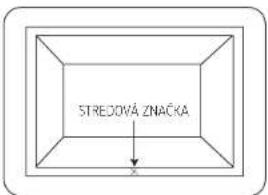
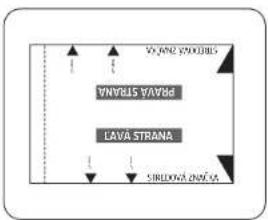
Odmerajte džku skrinky a v strede umiestnite značku.
-
Vystrihnite hárok so šablònou na strane 39.
-
Zarovnajte „STREDOVÚ ZNAČKU“ na pravej strane hárka so šablónou so stredovou značkou na skrinke.
natural_image
Technical line drawing of a mechanical device with labeled components (no text or symbols)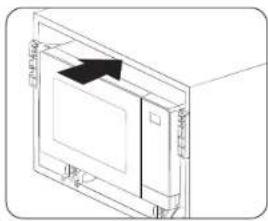
natural_image
Technical line drawing of a 3D cabinet or enclosure with an arrow indicating direction (no text or symbols present)natural_image
Technical line drawing of a microwave oven with internal components and mounting bracket (no text or symbols)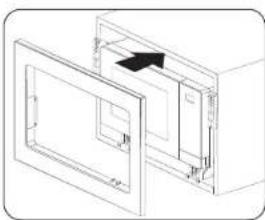
natural_image
Isometric line drawing of a mechanical or architectural component with no visible text, numbers, or symbols.natural_image
Line drawing of a roasted chicken inside a rectangular frame (no text or symbols)natural_image
Simple line drawing of a rectangular frame with two recessed inner panels (no text or symbols)natural_image
Pure electrical circuit lines without any symbols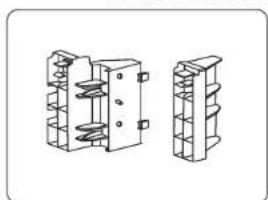
natural_image
Technical line drawing of two mechanical components with no visible text or symbolsDržak oblozeni (2) Šroub (typ A) (4)
natural_image
Four screws with different mounting holes, shown in a row (no text or symbols)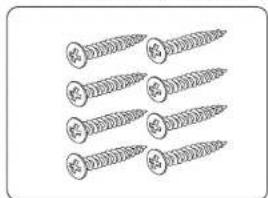
natural_image
Illustration of five identical screwdrivers arranged in two rows (no text or symbols)Šroub (typ B) (8)
Čeština 9

Umístění a zapojení
natural_image
Technical line drawing of a mechanical component with circular and rectangular features, no text or symbols presentSkřiň
| A 50 mm |
| B 550 mm |
| C 560 mm (+8) mm |
| D 362 mm |
| E 50 mm |
| F 850 mm |
| G 200 cm ^2 |
natural_image
Technical drawing of a rectangular frame with labeled dimensions A and B (no text or symbols beyond labels)Obložení
| A 381 mm |
| B 596 mm |
natural_image
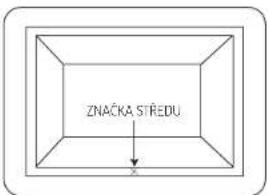
Simple line drawing of a rectangular room with internal compartments and directional arrows (no text or symbols)- Vyrovnejte „ZNAČKU STŘEDU” na pravé strané listu sablony se značkou stredu na skrini.
natural_image
Technical line drawing of a mechanical device with labeled components (no text or symbols)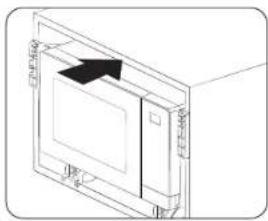
natural_image
Technical line drawing of a 3D cabinet or enclosure with an arrow indicating direction (no text or symbols present)natural_image
Technical line drawing of a microwave oven with internal components and mounting bracket (no text or symbols)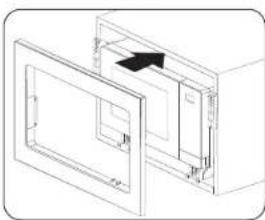
natural_image
Isometric line drawing of a mechanical or architectural component with no visible text, numbers, or symbols.natural_image
Line drawing of a roasted chicken inside a rectangular frame (no text or symbols)| STOP/Eco | START/+30s(3 sec) |
Postup 1
Safety instructions 3
Important safety instructions 3
General safety 6
Microwave operation precautions 7
Limited warranty 8
Product group definition 8
Correct Disposal of This Product
(Waste Electrical & Electronic Equipment) 8
Installation 9
Accessories 9
Included for installation 9
Installation instructions microwave oven 10
Installing the microwave oven 10
Dimensions 11
Microwave oven installation procedure 11
Maintenance 13
Cleaning 13
Replacement (repair) 13
Care against an extended period of disuse 13
Microwave oven features 14
Microwave oven 14
Control panel 14
Microwave oven use 15
How a microwave oven works 15
Checking that your microwave oven is operating correctly 15
Cooking/Reheating 16
Setting the time 17
Power levels and time variations 17
Adjusting the cooking time 18
2 English
Stopping the cooking 18
Setting the energy save mode 18
Using the Quick Defrost 19
Using Auto Cook 20
Using Home Dessert 23
Using Keep Warm 26
Using Deodorization 26
Using Child Lock 27
Switching the beeper off 27
Cookware guide 27
Cooking guide 28
Microwaves 28
Reheating 31
Reheating liquids 31
Reheating baby food 31
Manual defrosting 33
Tips and tricks 34
Troubleshooting and information code 34
Troubleshooting 34
Information code 37
Technical specifications 38
Safety instructions
IMPORTANT SAFETY INSTRUCTIONS
READ CAREFULLY AND KEEP FOR FUTURE REFERENCE.
WARNING: If the door or door seals are damaged, the oven must not be operated until it has been repaired by a competent person.
WARNING: It is hazardous for anyone other than a competent person to carry out any service or repair operation that involves the removal of a cover which gives protection against exposure to microwave energy.
WARNING: Liquids and other foods must not be heated in sealed containers since they are liable to explode.
WARNING: Only allow children to use the oven without supervision when adequate instructions have been given so that the child is able to use the oven in a safe way and understands the hazards of improper use. This appliance is intended to be used in household only and it is not intended to be used such as:
- staff kitchen areas in shops, offices and other working environments;
-
farm houses;
-
by clients in hotels, motels and other residential environments;
• bed and breakfast type environments.
Only use utensils that are suitable for use in microwave ovens.
When heating food in plastic or paper containers, keep an eye on the oven due to the possibility of ignition.
The microwave oven is intended for heating food and beverages. Drying of food or clothing and heating of warming pads, slippers, sponges, damp cloth and similar may lead to risk of injury, ignition or fire.
If smoke is observed (emitted), switch off or unplug the appliance and keep the door closed in order to stifle any flames.
Microwave heating of beverages can result in delayed eruptive boiling, therefore care must be taken when handling the container.
The contents of feeding bottles and baby food jars shall be stirred or shaken and the temperature checked before consumption, in order to avoid burns.
English 3
Safety instructions
Eggs in their shell and whole hard-boiled eggs should not be heated in microwave ovens since they may explode, even after microwave heating has ended.
The oven should be cleaned regularly and any food deposits removed.
Failure to maintain the oven in a clean condition could lead to deterioration of the surface that could adversely affect the life of the appliance and possibly result in a hazardous situation.
The appliance is intended to be used built-in only. The appliance shall not be placed in a cabinet.
Metallic containers for food and beverages are not allowed during microwave cooking.
The care should be taken not to displace the turntable when removing containers from the appliance.
The appliance shall not be cleaned with a steam cleaner.
The appliance should not be cleaned with a water jet.
The appliance is not intended for installing in road vehicles, caravans and similar vehicles etc.
This appliance is not intended for use by persons (including children) with reduced physical, sensory or mental capabilities, or lack of experience and knowledge, unless they have been given supervision or instruction concerning use of the appliance by a person responsible for their safety.
Children should be supervised to ensure that they do not play with the appliance.
This appliance can be used by children aged from 8 years and above and persons with reduced physical, sensory or mental capabilities or lack of experience and knowledge if they have been given supervision or instruction concerning use of the appliance in a safe way and understand the hazards involved.
Children shall not play with the appliance. Cleaning and user maintenance shall not be made by children without supervision.
This Appliance should be allowed to disconnection from the supply after installation. The disconnection may be achieved by having the plug accessible or by incorporating a switch in the fied wiring in accordance with the wiring rules.
If the supply cord is damaged, it must be replaced by the manufacturer, its service agent or similarly qualified persons in order to avoid a hazard.
This oven should be positioned proper direction and height permitting easy access to cavity and control area.
Before using the your oven first time, oven should be operated with the water during 10 minute and then used.
If the oven generates a strange noise, a burning smell, or smoke is emitted, unplug the power plug immediately and contact your nearest service center.
WARNING: When the appliance is operated in the combination mode, children should only use the oven under adult supervision due to the temperatures generated.
During use the appliance becomes hot. Care should be taken to avoid touching heating elements inside the oven.
WARNING: Accessible parts may become hot during use. Young children should be kept away.
Do not use harsh abrasive cleaners or sharp metal scrapers to clean the oven door glass since they can scratch the surface, which may result in shattering of the glass.
A steam cleaner is not to be used.
WARNING: Ensure that the appliance is switched off before replacing the lamp to avoid the possibility of electric shock.
The appliance must not be installed behind a decorative door in order to avoid overheating.
WARNING: The appliance and its accessible parts become hot during use.
Care should be taken to avoid touching heating elements.
Children less than 8 years of age shall be kept away unless continuously supervised.
CAUTION: The cooking process has to be supervised. A short term cooking process has to be supervised continuously.
The door or the outer surface may get hot when the appliance is operating.
English 5
Safety instructions
The temperature of accessible surfaces may be high when the appliance is operating.
The surfaces are liable to get hot during use.
The appliances are not intended to be operated by means of an external timer or separate remote-control system.
This appliance can be used by children aged from 8 years and above and persons with reduced physical, sensory or mental capabilities or lack of experience and knowledge if they have been given supervision or instruction concerning use of the appliance in a safe way and understand the hazards involved. Children shall not play with the appliance. Cleaning and user maintenance shall not be made by children unless they are older than 8 and supervised.
Keep the appliance and its cord out of reach of children less than 8 years.
General safety
Any modifications or repairs must be performed by qualified personnel only.
Do not heat food or liquids sealed in containers for the microwave function.
Do not use benzene, thinner, alcohol, or steam or high-pressure cleaners to clean the oven.
Do not install the oven: near a heater or flammable material; locations that are humid, oily,
dusty or exposed to direct sunlight or water; or where gas may leak; or an uneven surface.
This oven must be properly grounded in accordance with local and national codes.
Regularly use a dry cloth to remove foreign substances from the power plug terminals and contacts.
Do not pull, excessively bend, or place heavy objects on the power cord.
If there is a gas leak (propane, LP, etc) ventilate immediately. Do not touch the power cord.
Do not touch the power cord with wet hands.
While the oven is operating, do not turn it off by unplugging the power cord.
Do not insert fingers or foreign substances. If foreign substances enter the oven, unplug
the power cord and contact a local Samsung service centre.
Do not apply excessive pressure or impact to the oven
Do not place the oven over fragile objects.
Ensure the power voltage, frequency, and current matches the product specifications.
Firmly plug the power plug into the wall socket. Do not use multiple plug adapters,
extension cords, or electric transformers.
Do not hook the power cord on metal objects. Make sure the cord is between objects or behind the oven.
Do not use a damaged power plug, power cord, or loose wall socket. For damaged power plugs or cords, contact a local Samsung service centre.
Do not pour or directly spray water onto the oven.
Do not place objects on the oven, inside, or on the oven door.
Do not spray volatile materials such as insecticide on the oven.
Do not store flammable materials in the oven. Because alcohol vapours can contact hot
parts of the oven, use caution when heating food or drinks containing alcohol.
Children may bump themselves or catch their fingers on the door. When opening/closing
the door, keep children away.
Microwave warning
Microwave heating of beverages may result in delayed eruptive boiling; always use caution when handling the container. Always allow beverages to stand at least 20 seconds before handling. If necessary, stir during heating. Always stir after heating. In the event of scalding, follow these First Aid instructions:
-
Immerse the scalded area in cold water for at least 10 minutes.
-
Cover with a clean, dry dressing.
-
Do not apply any creams, oils, or lotions.
To avoid damaging the tray or rack, do not put the tray or rack in water shortly after cooking.
Do not use the oven for deep fat frying because the oil temperature cannot be controlled. This could result in a sudden boil over of hot oils.
Microwave oven precautions
Only use microwave-safe utensils. Do not use metallic containers, gold or silver trimmed dinnerware, skewers, etc.
Remove wire twist ties. Electric arcing may occur.
Do not use the oven to dry papers or clothes.
Use shorter times for small amounts of food to prevent overheating or burning.
Keep the power cord and power plug away from water and heat sources.
To avoid the risk of explosion, do not heat eggs with shells or hard-boiled eggs. Do not heat airtight or vacuum sealed containers, nuts, tomatoes, etc.
Do not cover the ventilation slots with cloth or paper. This is a fire hazard. The oven may overheat and turn off automatically and will remain off until it cools sufficiently.
Always use oven mitts when removing a dish
Stir liquids halfway during heating or after heating ends and allow the liquid stand at least 20 seconds after heating to prevent eruptive boiling.
Stand at arms length from the oven when opening the door to avoid getting scalded by escaping hot air or steam.
Do not operate the oven when it is empty. The oven will automatically shut down for 30 minutes for safety purposes. We recommend placing a glass of water inside the oven at all times to absorb microwave energy in case the oven is started accidentally.
Install the oven in compliance with the clearances in this manual. (See Installing your microwave oven.)
Use caution when connecting other electrical appliances to sockets near the oven.
Microwave operation precautions
Failure to observe the following safety precautions may result in harmful exposure to microwave energy.
- Do not operate the oven with the door open. Do not tamper with the safety interlocks (door latches). Do not insert anything into the safety interlock holes.
- Do not place any object between the oven door and front face or allow food or cleaner residue to accumulate on sealing surfaces. Keep the door and door sealing surfaces clean by wiping with a damp cloth and then with a soft, dry cloth after each use.
- Do not operate the oven if it is damaged. Only operate after it has been repaired by a qualified technician.
Important: the oven door must close properly. The door must not be bent; the door hinges must not be broken or loose; the door seals and sealing surfaces must not be damaged.
- All adjustments or repairs must be done by a qualified technician.
English 7
Safety instructions
Limited warranty
Samsung will charge a repair fee for replacing an accessory or repairing a cosmetic defect if the damage to the unit or accessory was caused by the customer. Items this stipulation covers include:
- Door, handles, out panel, or control panel that are dented, scratched, or broken. - A broken or missing tray, guide roller, coupler, or wire rack.
Use this oven only for its intended purpose as described in this instruction manual. Warnings and Important Safety Instructions in this manual do not cover all possible conditions and situations that may occur. It is your responsibility to use common sense, caution, and care when installing, maintaining, and operating your oven. Because these following operating instructions cover various models, the characteristics of your microwave oven may differ slightly from those described in this manual and not all warning signs may be applicable. If you have any questions or concerns, contact a local Samsung service centre or find help and information online at www.samsung.com. Use this oven for heating food only. It is intended for domestic use only. Do not heat any type of textiles or cushions filled with grains. The manufacturer cannot be held liable for damage caused by improper or incorrect use of the oven.
To avoid deterioration of the oven surface and hazardous situations, always keep the oven clean and well maintained.
Product group definition
This product is a Group 2 Class B ISM equipment. The definition of group 2 which contains all ISM equipment in which radio-frequency energy is intentionally generated and/or used in the form of electromagnetic radiation for the treatment of material, and EDM and arc welding equipment
For Class B equipment is equipment suitable for use in domestic establishments and in establishments directly connected to a low voltage power supply network which supplies buildings used for domestic purposes.
Correct Disposal of This Product (Waste Electrical & Electronic Equipment)
(Applicable in countries with separate collection systems)
This marking on the product, accessories or literature indicates that the product and its electronic accessories (e.g. charger, headset, USB cable) should not be disposed of with other household waste at the end of their working life. To prevent possible harm to the environment or human health from uncontrolled waste disposal, please separate these items from other types of waste and recycle them responsibly to promote the sustainable reuse of material resources.
Household users should contact either the retailer where they purchased this product, or their local government office, for details of where and how they can take these items for environmentally safe recycling.
Business users should contact their supplier and check the terms and conditions of the purchase contract. This product and its electronic accessories should not be mixed with other commercial wastes for disposal.
For information on Samsung's environmental commitments and product-specific regulatory obligations, e.g. REACH, WEEE, Batteries, visit: www.samsung.com/uk/aboutsamsung/sustainability/environment/our-commitment/data/
8 English
Installation
Accessories
Depending on the model that you have purchased, you are supplied with several accessories that can be used in a variety of ways.
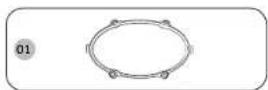
01 Roller ring, to be placed in the centre of the microwave oven. The roller ring supports the turntable.
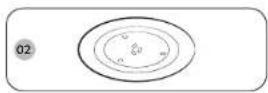
02 Turntable, to be placed on the roller ring with the centre fitting to the coupler. The turntable serves as the main cooking surface; it can be easily removed for cleaning.

CAUTION
Do not operate the microwave oven without the roller ring and turntable.
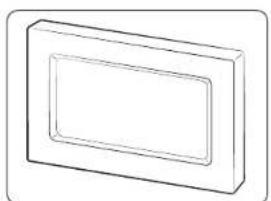
Included for installation
natural_image
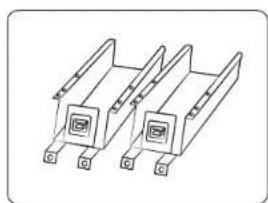
Simple line drawing of a rectangular frame with a recessed recess (no text or symbols)Trim Base bracket (2)
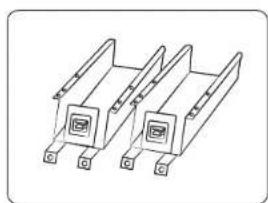
natural_image
Pure electrical circuit lines without any symbols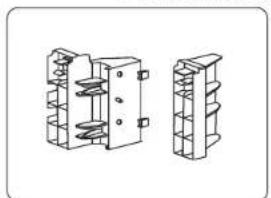
natural_image
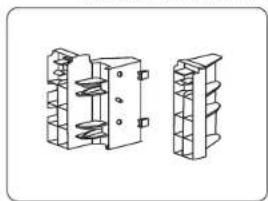
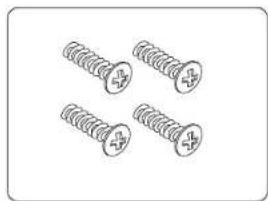
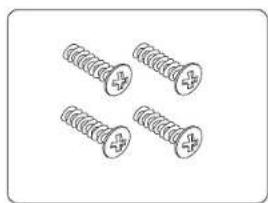
Technical line drawing of two mechanical components with internal spring-like structures (no text or symbols)Trim holder (2) Screw (Type A) (4)
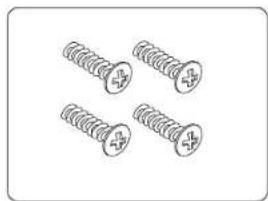
natural_image
Four screws in different orientations (no text or symbols visible)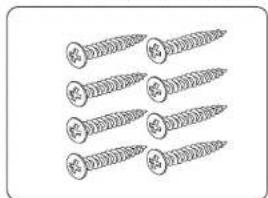
natural_image
Illustration of six different screw fasteners arranged in a row (no text or symbols)Screw (Type B) (8)
English 9
Installation
Installation instructions microwave oven
This appliance complies with the EU regulations.
Disposal of packaging and appliance.
The appliance's packaging is recyclable.
The following can be used:
- cardboard;
• polyethylene film (PE):
• CFC-free polystyrene(PS rigid foam).
Dispose of these materials in a responsible manner and in accordance with government regulations.
The authorities can provide you with infomation about how to dispose of discarded domestic appliances in a responsible manner.
Safety
The appliance should only be connected by a qualified technician.
The microwave oven has been designed for domestic use.
You should use it exclusively for cooking food.
The appliance is hot during and after use.
Bear this in mind if young children come anywhere near the appliance. Installation near to a conventional oven.
- Where a microwave oven is to be installed next to a conventional oven, sufficient space between them should be allowed to prevent overheating, as the trim can wrap with excessively high temperatures. Obviously, it is important to adherent strictly to the conventional oven manufacturer's installation instruction.
- A built-in microwave oven must not be installed above a conventional oven otherwise the microwave oven's cooling system may be adversely affected by hot air produced by the conventional oven.
Electrical connection
The house mains to which the appliance is connected should comply with national and local regulations.
If you wish to make a fixed connection, ensure that a multipolar switch with a minimum contact spacing of 3 mm is fitted in the supply line.
Installing the microwave oven
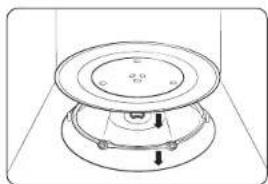
natural_image
Technical line drawing of a mechanical component with a circular base and mounting holes (no text or symbols)-
Remove all packing materials inside the oven. Install the roller ring and turntable. Check that the turntable rotates freely.
-
This microwave oven has to be positioned so that plug is accessible.
CAUTION
- If the supply cord is damaged, it must be replaced by a special cord or assembly available from the manufacturer or its service agent. For your personal safety, plug the cable into a 3-pin, 230 Volt, 50 Hz, AC earthed socket. If the power cable of this appliance is damaged, it must be replaced by a special cable.
- Do not install the microwave oven in hot or damp surroundings like next to a traditional oven or radiator. The power supply specifications of the oven must be respected and any extension cable used must be of the same standard as the power cable supplied with the oven. Wipe the interior and the door seal with a damp cloth before using your microwave oven for the first time.
10 English
Dimensions Microwave oven installation procedure
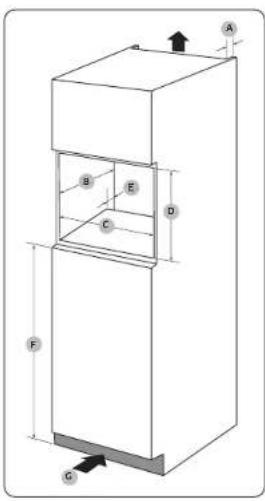
Cabinet
| A 50 mm |
| B 550 mm |
| C 560 mm (+8) mm |
| D 362 mm |
| E 50 mm |
| F 850 mm |
| G 200 cm ^2 |
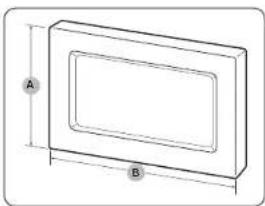
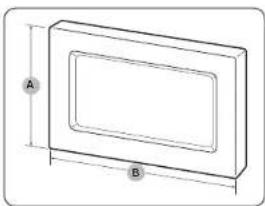
natural_image
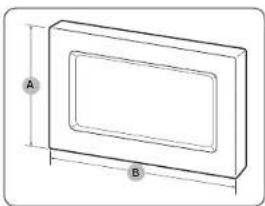
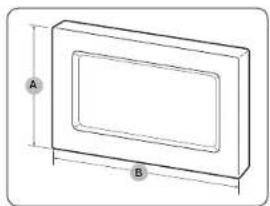
Technical drawing of a rectangular frame with labeled dimensions A and B (no text or symbols beyond labels)Trim
| A 381 mm |
| B 596 mm |
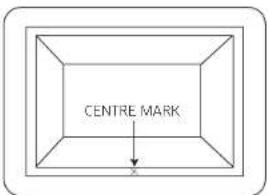
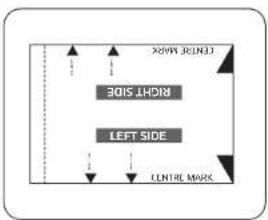
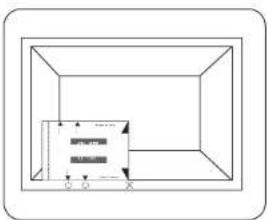
natural_image
Simple line drawing of a rectangular room with internal compartments and directional arrows (no text or symbols)-
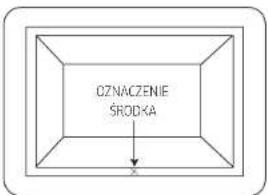
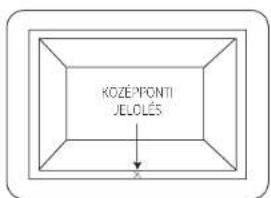
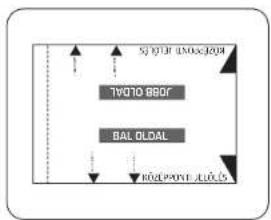
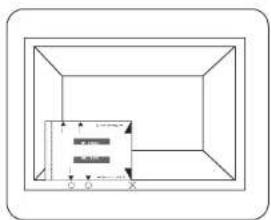
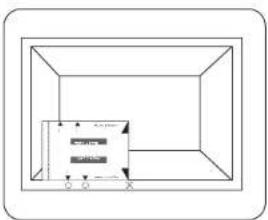
Measure the length of the cabinet and put a mark on the centre.
-
Cut out the template sheet on page 39.
-
Align the 'CENTRE MARK' on the right side of the template sheet with the centre mark on the cabinet.
- Make sure the text 'LEFT SIDE' is upright.
- Mark the screw hole locations on the cabinet.
English 11
Installation
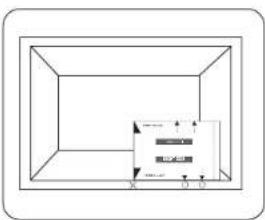
natural_image
Technical line drawing of a mechanical device with labeled components (no text or symbols)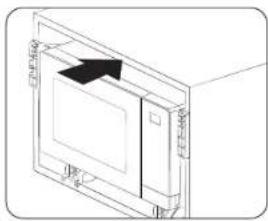
natural_image
Technical line drawing of a 3D cabinet or enclosure with an arrow indicating direction (no text or symbols present)- Turn the template sheet 180 degrees.
- Align the 'CENTRE MARK', now on the left side of the template sheet, with the centre mark on the cabinet.
-
Mark the screw hole locations on the cabinet.
-
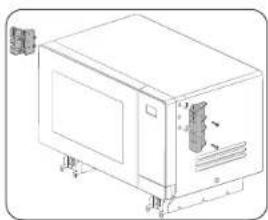
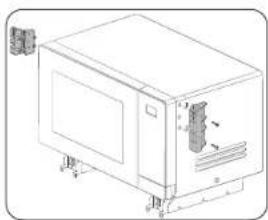
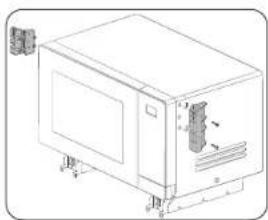
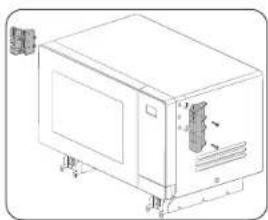
Use the provided screws (Type A) to fasten two Trim holders to the left and right side of the microwave.
- Check the markings (L: left, R: right) on the brackets to fasten them on the correct side.
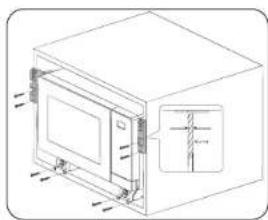
- Insert the microwave into the cabinet. Then, align the Base bracket holes with the marking from step 4 and 7.
natural_image
Technical line drawing of a microwave oven with internal components and mounting bracket (no text or symbols)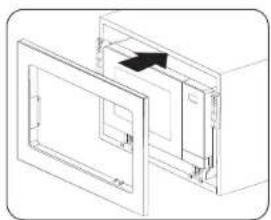
natural_image
Isometric line drawing of a mechanical or architectural component with no visible text or symbols-
Use a 3 mm drill to make holes in the cabinet to fasten the Base brackets. Then, fasten with the provides screws (Type B).
-
Attach the Trim, and then connect all electrical cables. Check if the appliance works properly.
Maintenance
Cleaning
Clean the microwave oven regularly to prevent impurities from building up on or inside the microwave oven. Also pay special attention to the door, door sealing, and turntable and roller ring (applicable models only).
If the door won't open or close smoothly, first check if the door seals have built up impurities. Use a soft cloth in soapy water to clean both the inner and outer sides of the microwave oven. Rinse and dry well.
To remove stubborn impurities with bad smells from inside the microwave oven
-
With an empty microwave oven, put a cup of diluted lemon juice on the centre of the turntable.
-
Heat the microwave oven for 10 minutes at max power.
-
When the cycle is complete, wait until the microwave oven cools down. Then, open the door and clean the cooking chamber.
CAUTION
- Keep the door and door sealing clean and ensure the door opens and closes smoothly. Otherwise, the microwave oven's lifecycle may be shortened.
• Take caution not to spill water into the microwave oven vents. - Do not use any abrasive or chemical substances for cleaning.
• After each use of the microwave oven, use a mild detergent to clean the cooking chamber after waiting for the microwave oven to cool down.
Replacement (repair)
WARNING
This microwave oven has no user-removable parts inside. Do not try to replace or repair the microwave oven yourself.
- If you encounter a problem with hinges, sealing, and/or the door, contact a qualified technician or a local Samsung service centre for technical assistance.
- If you want to replace the light bulb, contact a local Samsung service centre. Do not replace it yourself.
- If you encounter a problem with the outer housing of the microwave oven, first unplug the power cord from the power source, and then contact a local Samsung service centre.
Care against an extended period of disuse
If you don't use the microwave oven for an extended period of time, unplug the power cord and move the microwave oven to a dry, dust-free location. Dust and moisture that builds up inside the microwave oven may affect the performance of the microwave oven.
English 13
Microwave oven features
Microwave oven
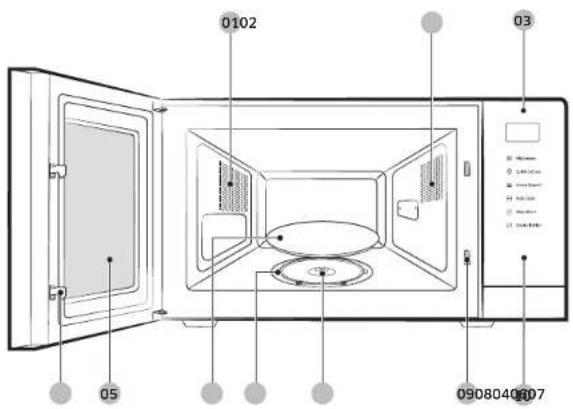
01 Ventilation holes
02 Light
03 Display
04 Door latches 05 Door 06 Turntable
07 Roller ring
08 Coupler
09 Safety interlock holes
10 Control panel
Control panel
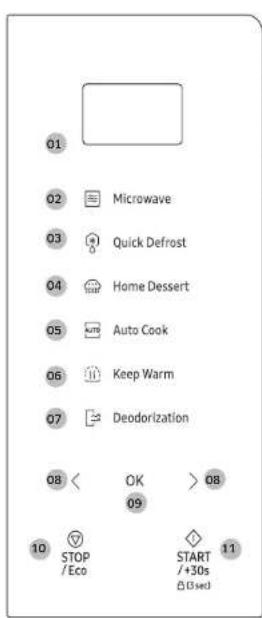
01 Display
02 Microwave
03 Quick Defrost
04 Home Dessert
05 Auto Cook
06 Keep Warm
07 Deodorisation
08 Decrease/Increase (Weight/Serving/Time)
09 OK (Clock)
10 STOP/Eco
11 START/+30s (Child Lock)
14 English

Microwave oven use
How a microwave oven works
Microwaves are high-frequency electromagnetic waves; the energy released enables food to be cooked or reheated without changing either the form or the colour.
You can use your microwave oven to:
- Defrost
- Reheat
• Cook
Cooking principle
natural_image
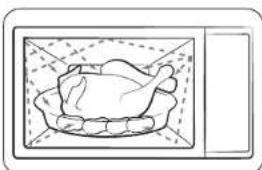
Line drawing of a chicken inside a rectangular frame (no text or symbols)- The microwaves generated by the magnetron reflected at cavity and are distributed uniformly as the food rotates on the turntable. The food is thus cooked evenly.
- The microwaves are absorbed by the food up to a depth of about 1 inch (2.5 cm). Cooking then continues as the heat is dissipated within the food.
- Cooking times vary according to the container used and the properties of the food:
• Quantity and density
- Water content
- Initial temperature (refrigerated or not)
NOTE
As the centre of the food is cooked by heat dissipation, cooking continues even when you have taken the food out of the microwave oven. Standing times specified in recipes and in this booklet must therefore be respected to ensure:
• Even cooking of the food right to the centre.
• The same temperature throughout the food.
Checking that your microwave oven is operating correctly
The following simple procedure enables you to check that your microwave oven is working correctly at all times.
If you have any problems, see the "Troubleshooting" section on pages 34 to 37.
NOTE
The microwave oven must be plugged into an appropriate wall socket.
The turntable must be placed in the microwave oven. If a power level other than the maximum (100% - 800 W) is used, the water takes longer to boil.
- Push the button to open the microwave oven door.
- Place a glass of water on the turntable, and then close the door.
- Press Microwave.
- Press START/+30s repeatedly to set the time to 4 or 5 minutes.
- The microwave oven heats the water for the set time. Check and make sure the water is boiling.
English 15

Microwave oven use
Cooking/Reheating
The following procedure explains how to cook or reheat food.
CAUTION
Always check your cooking settings before leaving the microwave oven unattended.
- Push the button to open the microwave oven door.
- Place the food on the centre of the turntable, and then close the door.
CAUTION
Do not operate the microwave oven when it is empty.
3. Press Microwave.
- The control panel display shows the corresponding icon (ind the maximum power level (800 W).
- Press < or > (Decrease/Increase) to select the desired power level, and then press OK.
- Refer to the "Power levels and time variations" section on page 17 for the appropriate power level.
- Press < or > (Decrease/Increase) to set the desired cooking time.
• The control panel display shows the cooking time.
- Press START/+30s to start cooking.
• The light turns on and the turntable starts to rotate.
- When the cooking is complete, the microwave oven beeps 4 times and the control panel display shows the current time. Then, the end reminder signal beeps once every minute for 3 times.
16 English

Setting the time
When power is supplied, "88:88" and then "12:00" is automatically displayed on the display. Please set the current time. The time can be displayed in either the 24-hour or 12-hour clock. You must set the clock:
- When you first install your microwave oven
• After a power failure
NOTE
You must manually change the time to apply daylight saving time.
-
Press OK.
-
Press < or > (Decrease/Increase) to select 24-hour or 12-hour clock, and then press OK.
- Press < or > (Decrease/Increase) to set the hour, and then press OK.
- Press < or > (Decrease/Increase) to set the minute, and then press OK.
NOTE
The control panel display shows the time when the microwave is not in use.
Power levels and time variations
The power level function enables you to adapt the amount of energy dissipated and thus the time required to cook or reheat your food, according to its type and quantity. You can choose between six power levels.
| Power level Percentage Output | |
| HIGH 100 % 800 W | |
| MEDIUM HIGH 75 % 600 W | |
| MEDIUM 56 % 450 W | |
| MEDIUM LOW 38 % 300 W | |
| DEFROST 23 % 180 W | |
| LOW 13 % 100 W |
The cooking times given in recipes and in this booklet correspond to the specific power level indicated.
- The cooking time decreases if you select a higher power level.
- The cooking time increases if you select a lower power level.
English 17
Microwave oven use
Adjusting the cooking time
You can increase or decrease the cooking time while the microwave oven is cooking.
- Check how cooking is progressing at any time simply by opening the door, and then increase or decrease the cooking time if necessary.
Method 1
Press START/+30s to increase the cooking time by 30 seconds.
• Example: To add three minutes, press START/+30s six times.
NOTE
You can only increase the cooking time.
Method 2
Press < or > (Decrease/increase) to adjust the cooking time.
Stopping the cooking
You can stop cooking at any time so that you can:
- Check the food
• Turn the food over or stir it
- Leave it to stand
To stop the cooking temporarily
- Open the door or press STOP/Eco once.
- Cooking stops temporarily.
- To resume cooking, close the door and press START/+30s.
To stop the cooking completely
- Open the door or press STOP/Eco once.
• Cooking stops temporarily. - Press STOP/Eco button again.
Setting the energy save mode
The microwave oven has an energy save mode.
- Press STOP/Eco. The control panel display turns off.
- To cancel the energy save mode, open the door or press STOP/Eco. The control panel display shows the current time.
NOTE
Auto energy saving function
The product returns to standby status if there is no input for 25 minutes in the middle of setting or while the operation has been paused. Also, if you leave the door open, the interior lamp automatically turns off after 5 minutes.
18 English

Using the Quick Defrost
The Quick Defrost features enable you to defrost meat, poultry, fish, frozen vegetable and frozen bread. The defrost time and power level are set automatically. You simply select the programme and the weight.

NOTE
Use only containers that are microwave-safe.
- Push the button to open the microwave oven door.
- Place the food on the centre of the turntable, and then close the door
- Press Quick Defrost.
- Press < or > (Decrease/Increase) to select the type of food, and then press OK
- For more information, see the "Quick Defrost programme description" section on page 19 to 20.
-
Press < or > (Decrease/Increase) to set the serving size, and then press OK.
-
Press START/+30s to start defrosting.
- When the microwave oven beeps, open the door and turn the food over.
- Close the door, and then press START/+30s to resume defrosting.
- When the defrosting is complete, the microwave oven beeps 4 times and the control panel display shows the current time. Then, the end reminder signal beeps once every minute for 3 times.
Quick Defrost programme description
The following table presents the various Quick Defrost programmes, serving size, standing times and appropriate instructions. Remove all kind of package material before defrosting. Place meat, poultry, fish, vegetable and bread on a flat glass dish or ceramic plate.
| Code | Food | Serving Size (g) | Instructions |
| 1 | Meat 200-1500 | Shield the edges | with aluminium foil. Turn the meat over, when the oven beeps. This programme is suitable for beef, lamb, pork,steaks, chops, minced meat.Stand for 20-60 minutes. |
| 2 | Poultry | 200-1500 | Shield the leg and wing tips with aluminium foil. Turn the poultry over, when the ovenbeeps. This programme is suitable for whole chicken as well as for chicken portions.Stand for 20-60 minutes. |
| 3 | Fish 200-1500 | Shield the tail of | a whole fish with aluminium foil. Turn the fish over, when the oven beeps. This programme is suitable for whole fishes as well as for fish fillets.Stand for 20-60 minutes. |
| 4 | Frozen Vegetable | 200-1500 | spread frozen vegetable evenly into a flat glass dish. Turn over or stir the frozen vegetable, when the oven beeps.This programme is suitable for all kind offrozen vegetable. Stand for 5-20 minutes. |
Microwave oven use
| Code | Food | Serving Size (g) | Instructions |
| 5 | Bread 200-1500 | Put bread horizontally on a piece of kitchen paper and turn over, as soon as the oven beeps. Place cake on a ceramic plate and if possible, turn over, as soon as the oven beeps. This programme is suitable for all kinds of bread, sliced or whole, as well as for bread rolls and baguettes. Arrange bread rolls in a circle. This programme is suitable for all kinds of yeast cake, biscuit, cheese cake and puff pastry. It is not suitable for short/crust pastry, fruit and cream cakes as well as for cake with chocolate topping. Stand for 10-30 minutes. | |
Using Auto Cook
Auto Cook has 18 pre-programmed cook settings.
You do not need to set either the cooking times or the power level.
CAUTION
Use only containers that are microwave-safe.
- Push the button to open the microwave oven door.
- Place the food on the centre of the turntable, and then close the door.
- Press Auto Cook.
- Press < or > (Decrease/Increase) to select the type of food, and then press OK.
- For more information, see the "Auto Cook programme description" section on pages 21 to 23.
20 English
- Press < or > (Decrease/Increase) to select the weight of food, and then press OK.
- For more information, see the "Auto Cook programme description" section on pages 21 to 23.
- Depending on the selected menu, you may have only one weight option available to select.
- Press START/+30s to start Auto Cook.
- The microwave oven cooks the food according to the selected pre-programmed setting.
- When the cooking is complete, the microwave oven beeps 4 times and the control panel display shows the current time. Then, the end reminder signal beeps once every minute for 3 times.
The following table presents quantities and appropriate instructions about 18 pre-programmed cooking options.
CAUTION
Use oven gloves when taking out food.
Auto Cook programme description
- Auto Cook
| Code | Food Serving Size | Instructions | |
| 1 | Ready Meal(chilled) | 350 g450 g | Put meal on a ceramic plate and cover with microwave cling film.This programme is suitable for meals consisting of 3 components (e.g. meat with sauce, vegetables and a side dish like potatoes, rice or pasta). Stand for 2-3 minutes. |
| 2 | VegetarianMeal (chilled) | 350 g450 g | Put meal on a ceramic plate and cover with microwave cling film.This programme is suitable for meals consisting of 2 components (e.g. spaghetti with sauce or rice with vegetables). Stand for 2-3 minutes. |
| 3 | Broccoli Florets 250g Rinse and clean broccoli florets. Put them evenly into a glass bowl with lid.Add 30-45 ml water. (2-3 tbsp.) Put bowl in the centre of turntable. Cook covered.Stir after cooking. This programme is suitable for broccoli as well as sliced courgette, egg plant, pumpkin or pepper.Stand for 1-2 minutes. | ||
English 21
Microwave oven use
| Code | Food Serving Size | Instructions | |
| 4 | Sliced Carrots 250 g | Rinse and clean | carrots cut into round slices evenly. Put them into a glass bowl with lid. Add 30-45 ml water. (2-3 tbsp.) Put bowl in the centre of turntable. Cook covered. Stir after cooking. This programme is suitable for sliced carrots as well as cauliflower florets or turnip cabbage. Stand for 1-2 minutes. |
| 5 | Green Beans 250 g | Rinse and clean | green beans. Put them evenly into a glass bowl with lid. Add 30 ml (1 tbsp.) water when cooking 250 g. Put bowl in the centre of turntable. Cook covered. Stir after cooking. Stand for 1-2 minutes. |
| 6 | Spinach 150 g Rinse | and clean spinach | Put into a glass bowl with lid. Do not add water. Put bowl in the centre of turntable. Cook covered. Stir after cooking. Stand for 1-2 minutes. |
| 7 | Corn on the Cob | 250 g Rinse | and clean corn on the cobs and put into an oval glass dish. Cover with microwave cling film and pierce film. Stand for 1-2 minutes. |
| 8 | Pooled Potatoes | 250 g Wash | and peel the potatoes and cut into a similar size. Put them into a glass bowl with lid. Add 45-60 ml (3-4 tbsp.) water. Put bowl in the centre of turntable. Cook covered. Stand for 2-3 minutes. |
| Code | Food Serving Size | Instructions | |
| 9 | Brown Rice (parboiled) | 125 g Use | a large glass ovenware dish with lid. Add double quantity of cold water (250 ml). Cook covered. Stir before standing time and add salt and herbs. Stand for 5-10 minutes. |
| 10 | Wholemeal Macaroni | 125 g Use | a large glass ovenware dish with lid. Add 1 L hot boiling water, a pinch of salt and stir well. Cook uncovered. Stir before standing time and drain thoroughly afterwards. Stand for 1 minutes. |
| 11 | Quinoa 125 g Use a | large glass ovenware dish with lid. Add double quantity of cold water (250 ml). Cook covered. Stir before standing time and add salt and herbs. Stand for 1-3 minutes. | |
| 12 | Bulgur 125 g Use a | large glass ovenware dish with lid. Add double quantity of cold water (250 ml). Cook covered. Stir before standing time and add salt and herbs. Stand for 2-5 minutes. | |
| 13 | Chicken Breasts | 300 g (2 pcs.) | Rinse pieces and put on a ceramic plate. Cover with microwave cling film. Pierce film. Put dish on turntable. Stand for 2 minutes. |
| 14 | Turkey Breasts 300 g | (2 pcs.) | Rinse pieces and put on a ceramic plate. Cover with microwave cling film. Pierce film. Put dish on turntable. Stand for 2 minutes. |
22 English
| Code | Food Serving Size | Instructions | |
| 15 | Fresh Fish Filets | 300 g(2 pcs.) | Rinse fish and put on a ceramic plate, add 1 tbsp. lemon juice. Cover with microwave cling film. Pierce film. Put dish on turntable. Stand for 1-2 minutes. |
| 16 | Fresh Salmon Filets | 300 g(2 pcs.) | Rinse fish and put on a ceramic plate, add 1 tbsp. lemon juice. Cover with microwave cling film. Pierce film. Put dish on turntable. Stand for 1-2 minutes. |
| 17 | Fresh Prawns 250 g | Rinse prawns | on a ceramic plate, add 1 tbsp. lemon juice. Cover with microwave cling film. Pierce film. Put dish on turntable. Stand for 1-2 minutes. |
| 18 | Fresh Trout 200 g | (1 fish) | Put fresh whole fish into an microwave oven proof dish. Add a pinch salt, 1 tbsp, lemon juice and herbs. Cover with microwave cling film. Pierce film. Put dish on turntable. Stand for 2 minutes. |
Using Home Dessert
Home Dessert has 7 pre-programmed cook settings. You do not need to set either the cooking times or the power level.
CAUTION
Use only containers that are microwave safe.
- Push the button to open the microwave oven door.
- Place the food on the centre of the turntable, and then close the door.
- Press Home Dessert.
- Press Down or Up button to select the type of food,
- For more information, see the "Home Dessert programme description" section on pages 24 to 25
-
Press START/+30s to start Home Dessert.
-
The microwave oven cooks the food according to the selected pre-programmed setting.
- When the cooking is complete, the microwave oven beeps 4 times and the control panel display shows the current time. Then, the end reminder signal beeps once every minute for 3 times.
The following table presents quantities and appropriate instructions about 7 pre-programmed cooking options.
CAUTION
Use oven gloves when taking out food.
English 23

Microwave oven use
Home Dessert programme description
| Code | Food Serving Size | Instructions | |
| 1 | Walnut Pound Cake | 1 serving IngredientsFlour 120 g, Butter 150 g, Black sugar 100 g. Egg 2 pcs., Walnut (Chopped) 50 g, Baking powder 4 g | |
| 1. Combine a butter and black sugar in bowl.2. Add egg and mix well.3. Add a flour, baking powder and keep stirring.4. Add a walnut and mix well.5. Pour a mixture in greased glass or plastic bowl.6. Put the bowl in the microwave oven and select the Home Dessert [1].7. After cooking, stand for 2-3 minutes. | |||
| 2 | Banana Bread | serving(6 pcs.) | IngredientsBanana 3 pcs., Pancake mix 120 g, Milk 120 g, Egg 1 pc., Malt syrup 2 tbsp. |
| 1. Chop the banana.2. Combine a pancake mix, milk, egg, malt syrup in bowl.3. Add banana and mix well.4. Pour a mixture in 6 paper cups.5. Put paper cups in the microwave oven and select the Home Dessert [2].6. After cooking, stand for 2-3 minutes. | |||
| Code | Food Serving Size | Instructions | |
| 3 | Sponge Cake 1 | serving Ingredients | Flour 170 g, Butter 50 g, Sugar 150 g,Egg 3 pcs., Baking powder 10 g |
| 1. Combine a butter and sugar in bowl.2. Add egg and mix well.3. Add a flour, baking powder and keep stirring.4. Pour a mixture in greased glass or plastic bowl.5. Put the bowl in the microwave oven and select the Home Dessert [3].6. After cooking, stand for 2-3 minutes. | |||
| 4 | Brownie 1 serving | Ingredients | Flour 90 g, Butter(Melted) 1⁄2 cup, Sugar 230 g, Egg 2 pcs., Cocoa powder 40 g |
| 1. Combine a butter, beaten eggs, sugar in bowl.2. Add a flour, cocoa powder and keep stirring.3. Pour a mixture in greased glass or plastic bowl.4. Put the bowl in the microwave oven and select the Home Dessert [4].5. After cooking, stand for 20-30 minutes. | |||
24 English
| Code | Food Serving Size | Instructions | |
| 5 | Egg Pudding 1 | serving(3 pcs.) | IngredientsMilk 250 g, Sugar 40 g, Egg 2 pcs. |
| 1.Crack the two eggs into a bowl. Lightly beat the egg with a balloon whisk. Don't let the tip of the whisk leave the bottom of the bowl to avoid creating too much foam.2.Combine milk, sugar in other bowl.3.Add the milk to the beaten egg while whisking the mixture.4.Sieve the egg mixture with a fine mesh strainer. Scrape off the bottom of the strainer with a spatula. Remove any foam on the surface with a spoon.5.Pour the mixture into custard cups.6.Put the cups in the microwave oven and select the Home Dessert [5].7.After cooking, refrigerate and serve. | |||
| 6 | Chocolate Mug Cake | 1 serving Ingredients | |
| 1.Combine the butter, egg and cream together in a mug until well combined.2.Add the flour, sugar and keep stirring.3.Add the cocoa, vanilla and stir until just combined.4.Stir in the chocolate chips.5.Put the mug in the microwave oven and select the Home Dessert [6].6.After cooking, stand for 2-3 minutes. | |||
| Code | Food Serving Size | Instructions | |
| 7 | Mug Cake 1 serving Ingredients | Butter 30 g, Sugar 60 g, Egg 1 pc., Flour 50 g, Milk 30 g, Vanilla 6 g, Almond powder 3 g. Baking powder 1.5 g | |
| 1. Combine the butter, egg together in a mug until well combined.2. Add the flour, sugar, baking powder and keep stirring.3. Add the almond powder, vanilla and stir until just combined.4. Put the mug in the microwave oven and select the Home Dessert [7].5. After cooking, stand for 2-3 minutes. | |||
English 25
Microwave oven use
Using Keep Warm
The Keep Warm feature keeps food hot until it's served. Use this function to keep food warm until ready to serve.
Note : The Keep Warm time has been specified as 99 minutes.
- Press Keep Warm.
- Press < or > (Decrease/Increase) button to set desired warming time.
- Press START/+30s.
• To stop warming the food, open the door or press STOP/Eco button.
CAUTION
- Do not use this function to reheat cold foods. This programmes are for keeping food warm that has just been cooked.
- Do not cover with lids or plastic wrap.
- Use oven gloves when taking out food.
• After star keep warm feature, set time cannot be changed
Using Deodorization
Use this features after cooking odorous food or when there is a lot of smoke in the oven interior. First clean the oven interior.
- Press the Deodorization button, and then press the START/+30s button.
- When it has finished, the oven beeps.
NOTE
- The Deodorization time has been specified as 5 minutes. It increases by 30 seconds whenever the START/+30s button is pressed or increase and decrease by 10 seconds whenever Press Down or Upbutton.
• The maximum deodorisation time is 15 minutes.
26 English
Using Child Lock
Your microwave oven is fitted with a special child lock programme, which enables the microwave oven to be "locked" so that children or anyone unfamiliar with it cannot operate it accidentally.
- To activate Child Lock, press and hold START/+30s for 3 seconds.
- The control panel is locked, and the control panel display shows "L".
- To deactivate Child Lock, press and hold START/+30s again for 3 seconds.

Switching the beeper off
You can switch the beeper off whenever you want.
- To turn the beeping sound off, press < and > (Decrease/Increase) at the same time.
• The control panel shows "OFF"
• To turn the beeping sound back on, press < or > (Decrease/Increase) at the same time again.
• The control panel shows "On"
Cookware guide
To cook food in the microwave oven, the microwaves must be able to penetrate the food, without being reflected or absorbed by the dish used.
Care must therefore be taken when choosing the cookware. If the cookware is marked microwave-safe, you do not need to worry.
The following table lists various types of cookware and indicates whether and how they should be used in a microwave oven.
| Cookware | Microwave-safe | Comments |
| Aluminium foil | √✗ | Can be used in small quantities to protect areas against overcooking. Arcing can occur if the foil is too close to the microwave oven wall or if too much foil is used. |
| Crust plate | √ | Do not preheat for more than 8 minutes. |
| China and earthenware | √ | Porcelain, pottery, glazed earthenware and bone china are usually suitable, unless decorated with a metal trim. |
| Disposable polyester cardboard dishes | √ | Some frozen foods are packaged in these dishes. |
| Fast food packaging• Polystyrene cups containers• Paper bags or newspaper• Recycled paper or metal trims | √✗✗ | Can be used to warm food. Overheating may cause the polystyrene to melt.May catch fire.May cause arcing. |
| Glassware• Oven to-tableware• Recycled paper | √✗ | Can be used, unless decorated with a metal trim.May cause arcing. |
Cookware guide Cooking guide
| Plastic• Containers | √ | Particularly if heat resistant thermoplastic. Some other plastics may warp or discolour at high temperatures.Do not use Melamine plastic. |
| • Cling film | √ | Can be used to retain moisture. Should not touch the food. Take care when removing the film as hot steam will escape. |
| • Freezer bags | √✗ | Only if boilable or oven proof. Should not be airtight. Prick with a fork, if necessary. |
| Wax or grease-proof paper | √ | Can be used to retain moisture and prevent spattering. |
√ : Recommended
√X : Use caution
x : Unsafe
28 English
Microwaves
Microwave energy actually penetrates food, attracted and absorbed by its water, fat and sugar content. The microwaves cause the molecules in the food to move rapidly. The rapid movement of these molecules creates friction and the resulting heat cooks the food.
Cooking
Cookware for microwave cooking:
Cookware must allow microwave energy to pass through it for maximum efficiency. Microwaves are reflected by metal, such as stainless steel, aluminium and copper, but they can penetrate through ceramic, glass, porcelain and plastic as well as paper and wood. So food must never be cooked in metal containers.
Food suitable for microwave cooking:
Many kinds of food are suitable for microwave cooking, including fresh or frozen vegetables, fruit, pasta, rice, grains, beans, fish, and meat. Sauces, custard, soups, steamed puddings, preserves, and chutneys can also be cooked in a microwave oven. Generally speaking, microwave cooking is ideal for any food that would normally be prepared on a hob. Melting butter or chocolate, for example (see the chapter with tips, techniques and hints).
Covering during cooking
To cover the food during cooking is very important, as the evaporated water rises as steam and contributes to cooking process. Food can be covered in different ways: e.g. with a ceramic plate, plastic cover or microwave suitable cling film.
Standing times
After cooking is over food the standing time is important to allow the temperature to even out within the food.
Cooking Guide for frozen vegetables
Use a suitable glass pyrex bowl with lid. Cook covered for the minimum time - see table. Continue cooking to get the result you prefer.
Stir twice during cooking and once after cooking. Add salt, herbs or butter after cooking. Cover during standing time.
| Food Serving | Size (g) Power (W) Time (min.) | ||
| Spinach 150 600 4 12 | 5 12 | ||
| InstructionsAdd 15 ml (1 tbsp.) cold water. Stand for 2-3 minutes. | |||
| Broccoli 300 600 9-10 | |||
| InstructionsAdd 30 ml (2 tbsp.) cold water. Stand for 2-3 minutes. | |||
| Peas 300 600 7 12 8 12 | |||
| InstructionsAdd 15 ml (1 tbsp.) cold water. Stand for 2-3 minutes. | |||
| Green Beans 300 600 8-9 | |||
| InstructionsAdd 30 ml (2 tbsp.) cold water. Stand for 2-3 minutes. | |||
| Mixed Vegetables(Carrots/Peas/Corn) | 300 600 7 12 -8 12 | ||
| InstructionsAdd 15 ml (1 tbsp.) cold water. Stand for 2-3 minutes. | |||
| Mixed Vegetables(Chinese Style) | 300 600 8-9 | ||
| InstructionsAdd 15 ml (1 tbsp.) cold water. Stand for 2-3 minutes. | |||
Cooking Guide for fresh vegetables
Use a suitable glass pyrex bowl with lid. Add 30-45 ml cold water (2-3 tbsp.) for every 250 g unless another water quantity is recommended - see table. Cook covered for the minimum time - see table. Continue cooking to get the result you prefer. Stir once during and once after cooking. Add salt, herbs or butter after cooking. Cover during a standing time of 3 minutes.
Hint: Cut the fresh vegetables into even sized pieces. The smaller they are cut, the quicker they will cook.
| Food Serving Size (g) Power (W) Time (min.) | |||
| Broccoli 250 | 500 | 800 4-4 12 | 7-7 12 |
| InstructionsPrepare even sized florets. Arrange the stems to the centre. Stand for 3 minutes. | |||
| Brussels Sprouts | 250 800 5 12 -6 12 | ||
| InstructionsAdd 60-75 ml (4-5 tbsp.) water. Stand for 3 minutes. | |||
| Carrots | 250 800 4 12 -5 | ||
| InstructionsCut carrots into even sized slices. Stand for 3 minutes. | |||
| Cauliflower | 250500 | 800 5-5 12 | 8 12 -9 |
| InstructionsPrepare even sized florets. Cut big florets into halves.Arrange stems to the centre. Stand for 3 minutes. | |||
| Courgettes | 250 800 3 12 -4 | ||
| InstructionsCut courgettes into slices. Add 30 ml (2 tbsp.) water or a knob of butter. Cook until just tender. Stand for 3 minutes. | |||
Cooking Guide
| Food Serving | Size (g) Power (W) Time (min.) | ||
| Egg Plants 250 800 | 312 -4 | ||
| InstructionsCut egg plants into small slices and sprinkle with 1 tbsp. lemon juice. Stand for 3 minutes. | |||
| Leeks 250 800 412 -5 | |||
| InstructionsCut leeks into thick slices. Stand for 3 minutes. | |||
| Mushrooms 125 | 250 | 800 112 -2 | 3-312 |
| InstructionsPrepare small whole or sliced mushrooms. Do not add any water. Sprinkle with lemon juice. Spice with salt and pepper. Drain before serving. Stand for 3 minutes. | |||
| Onions 250 800 512 -6 | |||
| InstructionsCut onions into slices or halves. Add only 15 ml (1 tbsp.) water. Stand for 3 minutes. | |||
| Pepper 250 800 412 | 5 | ||
| InstructionsCut pepper into small slices. Stand for 3 minutes. | |||
| Potatoes 250 | 500 | 800 4-5 | 712 - 812 |
| InstructionsWeigh the peeled potatoes and cut them into similar sized halves or quarters. Stand for 3 minutes. | |||
| Turnip Cabbage 250 | 800 5-512 | ||
| InstructionsCut turnip cabbage into small cubes. Stand for 3 minutes. | |||
Cooking Guide for rice and pasta
Rice: Use a large glass pyrex bowl with lid - rice doubles in volume during cooking. Cook covered. After the cooking time is over, stir before standing time and salt or add herbs and butter. Remark: the rice may not have absorbed all water after the cooking time is finished.
Pasta: Use a large glass pyrex bowl. Add boiling water, a pinch of salt and stir well. Cook uncovered. Stir occasionally during and after cooking. Cover during standing time and drain thoroughly afterwards.
| Food | Serving Size (g) | Power (W) | Time (min.) |
| White Rice (Parboiled) | 250 | 800 | 16-17 |
| Instructions Add 500 ml cold water. Stand for 5 minutes. | |||
| Brown Rice (Parboiled) | 250 | 800 | 21-22 |
| Instructions Add 500 ml cold water. Stand for 5 minutes. | |||
| Mixed Rice (Rice + Wild Rice) | 250 | 800 | 17-18 |
| Instructions Add 500 ml cold water. Stand for 5 minutes. | |||
| Mixed Corn (Rice + Grain) | 250 | 800 | 18-19 |
| Instructions Add 400 ml cold water. Stand for 5 minutes. | |||
| Pasta | 250 | 800 | 11-12 |
| Instructions Add 1000 ml hot water. Stand for 5 minutes. | |||
30 English
Reheating
Your microwave oven will reheat food in a fraction of the time that conventional ovens hobs normally take. Use the power levels and reheating times in the following chart as a guide. The times in the chart consider liquids with a room temperature of about +18 to +20 °C or a chilled food with a temperature of about +5 to +7 °C.
Arranging and covering
Avoid reheating large items such as joint of meat - they tend to overcook and dry out before the centre is piping hot. Reheating small pieces will be more successful.
Power levels and stirring
Some foods can be reheated using 800 W power while others should be reheated using 600 W, 450 W or even 300 W.
Check the tables for guidance. In general, it is better to reheat food using a lower power level, if the food is delicate, in large quantities, or if it is likely to heat up very quickly (mince pies, for example).
Stir well or turn food over during reheating for best results. When possible, stir again before serving.
Take particular care when heating liquids and baby foods. To prevent eruptive boiling of liquids and possible scalding, stir before, during and after heating. Keep them in the microwave oven during standing time. We recommend putting a plastic spoon or glass stick into the liquids. Avoid overheating (and therefore spoiling) the food.
It is preferable to underestimate cooking time and add extra heating time, if necessary.
Heating and standing times
When reheating food for the first time, it is helpful to make a note of the time taken - for future reference.
Always make sure that the reheated food is piping hot throughout.
Allow food to stand for a short time after reheating - to let the temperature even out.
The recommended standing time after reheating is 2-4 minutes, unless another time is recommended in the chart.
Take particular care when heating liquids and baby food. See also the chapter with the safety precautions.
Reheating liquids
Always allow a standing time of at least 20 seconds after the oven has been switched off to allow the temperature to even out. Stir during heating, if necessary, and ALWAYS stir after heating. To prevent eruptive boiling and possible scalding, you should put a spoon or glass stick into the beverages and stir before, during and after heating.
Reheating baby food
Baby food:
Empty into a deep ceramic plate. Cover with plastic lid. Stir well after reheating! Let stand for 2-3 minutes before serving. Stir again and check the temperature. Recommended serving temperature: between 30-40 °C.
Baby milk:
Pour milk into a sterilised glass bottle. Reheat uncovered. Never heat a baby's bottle with teat on, as the bottle may explode if overheated. Shake well before standing time and again before serving I Always carefully check the temperature of baby milk or food before giving it to the baby. Recommended serving temperature: ca. 37 °C.
Remark:
Baby food particularly needs to be checked carefully before serving to prevent burns. Use the power levels and times in the next table as a guide lines for reheating.
English 31
Cooking Guide
Reheating liquids and food
Use the power levels and times in this table as a guide lines for reheating.
| Food Serving | Size Power (W) Time (min.) | ||
| Drinks (Coffee, Tea and Water) | 150 ml (1 cup)250 ml (1 mug) | 800 1-1 12 | 1 12 -2 |
| InstructionsPour into cup and reheat uncovered. Put cup / mug in the centre of turntable. Keep in microwave oven during standing time and stir well. Stand for 1-2 minutes. | |||
| Soup (Chilled) 250 g | 800 3-3 12 | ||
| InstructionsPour into a deep ceramic plate. Cover with plastic lid. Stir well after reheating. Stir again before serving. Stand for 2-3 minutes. | |||
| Stew (Chilled) 350 g | 600 5 12 -6 12 | ||
| InstructionsPut stew in a deep ceramic plate. Cover with plastic lid. Stir occasionally during reheating and again before standing and serving. Stand for 2-3 minutes. | |||
| Pasta with Sauce (Chilled) | 350 g 600 4 12 -5 12 | ||
| InstructionsPut pasta (e.g. spaghetti or egg noodles) on a flat ceramic plate. Cover with microwave cling film. Stir before serving. Stand for 3 minutes. | |||
| Filled Pasta with Sauce (Chilled) | 350 g 600 5-6 | ||
| InstructionsPut filled pasta (e.g. ravioli, tortellini) in a deep ceramic plate. Cover with plastic lid. Stir occasionally during reheating and again before standing and serving. Stand for 3 minutes. | |||
| Food Serving | Size Power (W) Time (min.) | |
| Plated Meal(Chilled) | 350 g 600 5 12 6 12 | |
| InstructionsPlate a meal of 2-3 chilled components on a ceramic dish.Cover with microwave cling-film. Stand for 3 minutes. | ||
Reheating baby food and milk
Use the power levels and times in this table as guide lines for reheating.
| Food Serving | Size Power (W) Time | ||
| Baby Food (Vegetables + Meat) | 190 g 600 30 sec. | ||
| InstructionsEmpty into ceramic deep plate. Cook covered. Stir after cooking time. Before serving, stir well and check the temperature carefully. Stand for 2-3 minutes. | |||
| Baby Porridge (Grain + Milk + Fruit) | 190 g 600 20 sec. | ||
| InstructionsEmpty into ceramic deep plate. Cook covered. Stir after cooking time. Before serving, stir well and check the temperature carefully. Stand for 2-3 minutes. | |||
| Baby Milk 100 ml 300 | 30-40 sec.200 ml 50 sec. | to 1 min. | |
| InstructionsStir or shake well and pour into a sterilized glass bottle. Place into the centre of turn-table. Cook uncovered. Shake well and stand for at least 3 minutes. Before serving, shake well and check the temperature carefully. Stand for 2-3 minutes. | |||
Manual defrosting
Microwaves are an excellent way of defrosting frozen food. Microwaves gently defrost frozen food in a short period of time. This can be of great advantage, if unexpected guests suddenly show up.
Frozen poultry must be thoroughly thawed before cooking. Remove any metal ties and take it out of any wrapping to allow thawed liquid to drain away.
Put the frozen food on a dish without cover. Turn over half way, drain off any liquid and remove any giblets as soon as possible.
Check the food occasionally to make sure that it does not feel warm. If smaller and thinner parts of the frozen food start to warm up, they can be shield by wrapping very small strips of aluminium foil around them during defrosting. Should poultry start to warm up on the outer surface, stop thawing and allow it to stand for 20 minutes before continuing.
Leave the fish, meat and poultry to stand in order to complete defrosting. The standing time for complete defrosting will vary depending on the quantity defrosted. Please refer to the table below.
Hint: Flat food defrosts better than thick and smaller quantities need less time than bigger ones. Remember this hint while freezing and defrosting food.
For defrosting of frozen food with a temperature of about -18 to -20 °C, use the following table as a guide.
| Food Serving Size Power Time (min.) | |||
| MeatMinced Beef 250 gPork Steaks 250 g | 500 g180 W 7 12 8 12 | 180 W 6 12 -7 12 | 10-12 |
| InstructionsPlace the meat on a flat ceramic plate. Shield thinner edges with aluminium foil. Turn over after half of defrosting time!Stand for 5-25 minutes. | |||
| Food Serving Size Power Time (min.) | |||
| PoultryChicken Pieces 500Whole Chicken 900 | g (2 pcs) 180 W 14 g 180 W 28-30 | 12 - 1512 | |
| InstructionsFirst, put chicken pieces first skin-side down, whole chicken first breast-side-down on a flat ceramic plate. Shield the thinner parts like wings and ends with aluminium foil. Turn over after half of defrosting time! Stand for 15-40 minutes. | |||
| FishFish Fillets 250 g (2 pcs.)400 g (4 pcs.) | 180 W | 6-712-13 | |
| InstructionsPut frozen fish in the middle of a flat ceramic plate. Arrange the thinner parts under the thicker parts. Shield narrow ends with aluminium foil. Turn over after half of defrosting time!Stand for 5-15 minutes. | |||
| FruitsBerries | 250 g 180 W | 6-7 | |
| InstructionsDistribute fruits on a flat, round glass dish (with a large diameter). Stand for 5-10 minutes. | |||
| BreadBread Rolls (Each about 50 g)Toast/SandwichGerman Bread(Wheat + Rye Flour) | 2 pcs.4 pcs.250 g 180 W500 g 180 W | 180 W 412 -58-10 | 12 -1 2 - 212 |
| InstructionsArrange rolls in a circle or bread horizontally on kitchen paper in the middle of turntable. Turn over after half of defrosting time! Stand for 5-20 minutes. | |||
Cooking Guide
Tips and tricks
Melting crystallized honey
Put 20 g crystallized honey into a small deep glass dish.
Heat for 20-30 seconds using 300 W, until honey is melted.
Melting gelatine
Lay dry gelatine sheets (10 g) for 5 minutes into cold water.
Put drained gelatine into a small glass pyrex bowl.
Heat for 1 minute using 300 W.
Stir after melting.
Cooking glaze/icing (for cake and gateaux)
Mix instant glaze (approximately 14 g) with 40 g sugar and 250 ml cold water.
Cook uncovered in a glass pyrex bowl for 3½ to 4½ minutes using 800 W, until glaze/icing is transparent. Stir twice during cooking.
Cooking jam
Put 600 g fruits (for example mixed berries) in a suitable sized glass pyrex bowl with lid. Add 300 g preserving sugar and stir well. Cook covered for 10-12 minutes using 800 W.
Stir several times during cooking. Empty directly into small jam glasses with twist off lids. Stand on lid for 5 minutes.
Cooking pudding/custard
Mix pudding powder with sugar and milk (500 ml) by following the manufacturers
instructions and stir well. Use a suitable sized glass pyrex bowl with lid. Cook
covered for 6½ to 7½ minutes using 800 W.
5tir several times well during cooking.
Browning almond slices
Spread 30 g sliced almonds evenly on a medium sized ceramic plate.
Stir several times during browning for 3½ to 4½ minutes using 600 W.
Let it stand for 2-3 minutes in the oven. Use oven gloves while taking out!
Troubleshooting and information code
Troubleshooting
If you have any of the problems listed below try the solutions given.
| Problem Cause | Action | |
| General | ||
| The buttons cannot be pressed properly. | Foreign matter may be caught between the buttons. | Remove the foreign matter and try again. |
| For touch models: Moisture is on the exterior. | Wipe the moisture from the exterior. | |
| Child lock is activated. Deactivate Child lock. | ||
| The time is not displayed. | The Eco (power-saving) function is set. | Turn off the Eco function. |
| The microwave oven does not work. | Power is not supplied. Make sure power is supplied. | |
| The door is open. Close the door and try again. | ||
| The door open safety mechanisms are covered in foreign matter. | Remove the foreign matter and try again. | |
| The microwave oven stops while in operation. | The user has opened the door to turn food over. | After turning over the food, press the START/+30s button again to start operation. |
34 English
| Problem Cause | Action | |
| The power turns off during operation. | The microwave oven has been cooking for an extended period of time. | After cooking for an extended period of time, let the microwave oven cool. |
| The cooling fan is not working. | Listen for the sound of the cooling fan. | |
| Trying to operate the microwave oven without food inside. | Put food in the microwave oven. | |
| There is not sufficient ventilation space for the microwave oven. | There are intake/exhaust outlets on the front and rear of the microwave oven for ventilation.Keep the gaps specified in the product installation guide. | |
| Several power plugs are being used in the same socket. | Designate only one socket to be used for the microwave oven. | |
| There is a popping sound during operation, and the microwave oven doesn't work. | Cooking sealed food or using a container with a lid may causes popping sounds. | Do not use sealed containers as they may burst during cooking due to expansion of the contents. |
| Problem Cause Action | ||
| The microwave oven exterior is too hot during operation. | There is not sufficient ventilation space for the microwave oven. | There are intake/exhaust outlets on the front and rear of the microwave oven for ventilation. Keep the gaps specified in the product installation guide. |
| Objects are on top of the microwave oven. | Remove all objects on the top of the microwave oven. | |
| The door cannot be opened properly. | Food residue is stuck between the door and microwave oven interior. | Clean the microwave oven and then open the door. |
| Heating including the Warm function does not work properly. | The microwave oven may not work, too much food is being cooked, or improper cookware is being used. | Put one cup of water in a microwave safe container and run the microwave for 1-2 minutes to check whether the water is heated. Reduce the amount of food and start the function again. Use a cooking container with a flat bottom. |
| The thaw function does not work. | Too much food is being cooked. | Reduce the amount of food and start the function again. |
| The interior light is dim or does not turn on. | The door has been left open for a long time. | The interior light may automatically turn off when the Eco function operates. Close and reopen the door or press the STOP/Eco button. |
| The interior light is covered by foreign matter. | Clean the inside of the microwave oven and check again. | |
Troubleshooting and information code
| Problem Cause | Action | |
| A beeping sound occurs during cooking. | If the Auto Cook function is being used, this beeping sound means it's time to turn over the food during thawing. | After turning over the food, press the START/+30s button again to restart operation. |
| The microwave oven is not level. | The microwave oven is installed on an uneven surface. | Make sure the microwave oven is installed on flat, stable surface. |
| There are sparks during cooking. | Metal containers are used during the microwave oven/thawing functions. | Do not use metal containers. |
| When power is connected, the microwave oven immediately starts to work. | The door is not properly closed. | Close the door and check again. |
| There is electricity coming from the microwave oven. | The power or power socket is not properly grounded. | Make sure the power and power socket are properly grounded. |
| 1. Water drips.2. Steam emits through a door crack.3. Water remains in the microwave oven. | There may be water or steam in some cases depending on the food. This is not an microwave oven malfunction. | Let the microwave oven cool and then wipe with a dry dish towel. |
| Problem Cause Action | ||
| The brightness inside the microwave oven varies. | Brightness changes depending on power output changes according to function. | Power output changes during cooking are not malfunctions. This is not an microwave oven malfunction. |
| Cooking is finished, but the cooling fan is still running. | To ventilate the microwave oven, the cooling fan continues to run for about 3 minutes after cooking is complete. | This is not an microwave oven malfunction. |
| Turntable | ||
| While turning, the turntable comes out of place or stops turning. | There is no roller ring, or the roller ring is not properly in place. | Install the roller ring and then try again. |
| The turntable drags while turning. | The roller ring is not properly in place, there is too much food, or the container is too large and touches the inside of the microwave. | Adjust the amount of food and do not use containers that are too large. |
| The turntable rattles while turning and is noisy. | Food residue is stuck to the bottom of the microwave oven. | Remove any food residue stuck to the bottom of the microwave oven. |
36 English
| Problem Cause Action | ||
| Microwave oven | ||
| The microwave oven does not heat. | The door is open. Close the door and try again. | |
| Smoke comes out during preheating. | During initial operation, smoke may come from the heating elements when you first use the microwave oven. | This is not a malfunction, and if you run the microwave oven 2-3 times, it should stop. |
| Food is on the heating elements. | Let the microwave oven cool and then remove the food from the heating elements. | |
| There is a burning or plastic smell when using the microwave oven. | Plastic or non heat-resistant cookware is used. | Use glass cookware suitable for high temperatures. |
| There is a bad smell coming from inside the microwave oven. | Food residue or plastic has melted and stuck to the interior. | Use the steam function and then wipe with a dry cloth. You can put a lemon slice inside and run the microwave oven to remove the odour more quickly. |
| Problem Cause | Action | |
| The microwave oven does not cook properly. | The microwave oven door is frequently opened during cooking. | If you open the door often, the interior temperature will be lowered and this may affect the results of your cooking. |
| The microwave oven controls are not correctly set. | Correctly set the microwave oven controls and try again. | |
| The grill or other accessories are not correctly inserted. | Correctly insert the accessories. | |
| The wrong type or size of cookware is used. | Use suitable cookware with flat bottoms. |
Information code
| Information code Cause Action | ||
| C-d0 | Control buttons are pressed over 10 seconds. | Clean the keys and check if there is water on the surface around key. If it occurs again, turn off the microwave oven over 30 seconds and try setting again. If it appears again, call your local SAMSUNG Customer Care Centre. |
NOTE
if the suggested solution does not solve the problem, contact your local SAMSUNG Customer Care Centre.
English 37
MemoTechnical specifications
SAMSUNG strives to improve its products at all times. Both the design specifications and these user instructions are thus subject to change without notice. By right of the common regulation 2/1984 (III.10) BKM-lpM, we as distributors testify, that the MS23A7118A^ oven of Samsung comply with the undermentioned technological parameters.
| Model MS23A7118A* | |
| Power source 230 V | -50 Hz AC |
| Power consumptionMaximum powerMicrowave | 1150 W1150 W |
| Output power 100 W / 800 W - 6 levels (IEC 705) | |
| Operating frequency 2450 MHz | |
| Dimensions (W x H x D)OutsideOven cavity | 489 x 275 x 346 mm330 x 211 x 324 mm |
| Volume 23 liter | |
| WeightNet 13.7 kg approx. | |
| Noise Level 40 dBA | |
38 English

MARK HERE

MARK HERE
CENTRE MARK
RIGHT SIDE
Template for installation
LEFT SIDE
MARK HERE
MARK HERE

CENTRE MARK
SAMSUNG
Please be advised that the Samsung warranty does NOT cover service calls to explain product operation, correct improper installation, or perform normal cleaning or maintenance.
QUESTIONS OR COMMENTS?
| COUNTRY CALL OR VISIT US ONLINE AT | ||
| ALBANIA 045 620 202 www.samsung.com/al/support | ||
| BOSNIA 055 233 999 www.samsung.com/ba/support | ||
| North Macedonia 023 207 777 www.samsung.com/mk/support | ||
| BULGARIA | *3000 Цена на един градски разговор0800 111 31 Безплатен за всички оператори | www.samsung.com/bg/support |
| CROATIA 072 726 786 www.samsung.com/nr/support | ||
| CZECH | 800 - SAMSUNG(800-726786) | www.samsung.com/cz/support |
| HUNCARY 0580SAMSUNG (0680-726-7864) www.samsung.com/hu/support | ||
| MONTENEGRO 020 405 888 www.samsung.com/support | ||
| POLAND | [IM]801 172 678" lub +48 22 607-93-33"Specialistyczna infolinia do obsługi zacytań dotyczących telefonów komórkowych:801-672-678"* (opłata według taryfy operatora)[CE]801-172-678" lub +48 22 607-93-33"* (opłata według taryfy operatora) | http://www.samsung.com/pi/support/ |
| ROMANIA | *8000 (apel in retea)08008 726 78 64 (08008 SAMSUNC) Apel GRATUITAtenție: Dacă efectuatți apeul din retepaua Digi (RC5/RDS), vă rugăm să ne contactați formând numărul Telverde fără ultimele două cifre, astfel: 0800872678. | www.samsung.com/ro/support |
| SERBIA | 011 321 6899 | www.samsung.com/rs/support |
| SLOVAKIA | 0800 - SAMSUNC (0800-726 786) | www.samsung.com/sk/support |
| LITHUANIA | 8-800-77777 www.samsung.com/lt/support | |
| LATVIA | 8000-7267 | www.samsung.com/lv/support |
| ESTONIA | 800 7267 www.samsung.com/ec/support | |
| SLOVENIA | 080 697 267 (brezplačna Številka) | www.samsung.com/si/support |
| Kosovo | 0800 10 10 1 | www.samsung.com/support |

DE68-04660L-00