
KRF4151AX KRT - Fridge GORENJE - Free user manual and instructions
Find the device manual for free KRF4151AX KRT GORENJE in PDF.


| Product Type | Refrigerator with Freezer |
| Brand | Gorenje |
| Model | KRF4151AX KRT |
| Energy Source | Electricity |
| Voltage | 220-240 V |
| Frequency | 50 Hz |
| Climate Class | SN, N, ST, T (see rating plate) |
| Temperature Control | Thermostat knob with numbered settings (0 to MAX) |
| Refrigerator Defrost | Automatic |
| Freezer Defrost | Manual (when frost 3-5 mm thick) |
| Freezer Star Rating | 4 stars |
| Door Reversibility | Yes (left/right) |
| Interior Light | Yes (10 W, E14 base) |
| Ice Making | Ice cube tray included |
| Shelves | Wire shelf (top), glass shelves (middle), door balconies |
| Crisper | Yes, with cover |
| Adjustable Feet | Yes (front) |
| Condenser Location | Rear wall (wipe clean) |
| Safety Features | Lock breaking for old appliances, child safety |
| Handle Type | Separate handle (screw-mounted) |
| Freezer Capacity (24h) | See rating plate (approx. 4 kg) |
| Total Gross Capacity | See rating plate (approx. 300 L) |
Frequently Asked Questions - KRF4151AX KRT GORENJE
User questions about KRF4151AX KRT GORENJE
0 question about this device. Answer the ones you know or ask your own.
Ask a new question about this device
Download the instructions for your Fridge in PDF format for free! Find your manual KRF4151AX KRT - GORENJE and take your electronic device back in hand. On this page are published all the documents necessary for the use of your device. KRF4151AX KRT by GORENJE.
USER MANUAL KRF4151AX KRT GORENJE
Before fi rst operation GB
- The appliance is manufactured in compliance with all relevant safety standards; however, it is recommended that persons with impaired physical, motional, or mental abilities, or persons with inadequate experience and knowledge, do not use the appliance without due supervision. The same recommendation applies to minors using the appliance.
- Warning: Ventilation slots on the appliance or built-in element should always be kept clean and unobstructed.
- Warning: Do not use any mechanical accessories when thawing the refrigerator, except for those explicitly recommended by the manufacturer.
- Warning: To prevent any pollution be careful not to damage the insulation or refrigeration tubes at the rear wall during the installation, cleaning and disposal of the appliance.
- Warning: Do not use any electrical devices inside the appliance, except for those explicitly recommended by the manufacturer.
• After the installation, the appliance mains plug should be accessible!
Thank you for your trust and for buying this appliance. We hope it will successfully serve the purpose for many years.
Refrigerator with freezer is for domestic use only.
The lower part of the appliance is refrigerator and is used for storing fresh foods at the temperature of 0^ C and higher.
The upper part is freezer and is used for freezing fresh foods and storing frozen foods for longer periods of time (up to one year, depending on the kind of foods you store). The compartment is marked with four stars..
Before Putting Into Use ......2
Instructions for Use Mounting Instructions We Care for the Environment Tips for Energy Savings
Important ....3
Storing Time During Power Supply Interruption Disposing of the Worn Out Appliance
Placing and Installation ....4
Choosing the Right Place Connection to Power Supply Handle installation
Description of the Appliance......6
Operation Control ......6
Use 7
Storing Fresh Foods Freezing Fresh Foods Ice Making
Changing the Direction of Opening the
Door....10
Maintenance and Cleaning......12
Automatic Defrosting of the Refrigerator Manual Defrosting of the Frezing Compartment Cleaning the Appliance Switch Off the Appliance When Not In Use
Trouble-Shooting Guide ....13
Before Putting Into Use
- Before connecting the appliance to the mains supply, leave it stand for about 2 hours, which will reduce a possibility of malfunctions in the cooling system due to transport handling.
- Clean the appliance, and be thorough, especially in the interior (See Cleaning and Maintenance).
- In case the interior accessories are not correctly placed, rearrange them as described in chapter Description of the Appliance.
Instructions for Use
These instructions for use are intended for the user. They describe the appliance and its correct and safe use. They were prepared for various types of refrigerators therefore you
might find in it some functions that do not apply to your appliance and description of the accessories that your appliance does not include.
Mounting Instructions
Integrated appliances are equipped with instructions for mounting the appliance into the kitchen unit. The appliance should be mounted by qualified technician and instructions are for his use only.
We Care for the Environment
- Our appliances are distributed in packaging made of environmental friendly material which could safely be recycled, disposed off
or destroyed, with no effects on the nature whatsoever.
- These instructions are printed either on recycled paper or chlorine free bleached paper.
- When your appliance finally wears out, please try not to burden the environment with it; call your nearest authorised service agent. (See Disposing of the Worn Out Appliance).
Tips for Energy Savings
- Try not to open the door too often, especially when the weather is wet and hot. Once you open the door, mind to close it as soon as possible. This is especially important if you have an upright model.
-
Every now and then check if the appliance is sufficiently ventilated (adequate air circulation behind the appliance).
-
Use higher thermostat settings only when required or recommended.
- Before loading the appliance with packages of fresh foods, make sure they are cooled to ambient temperature.
- Ice and frost layer increase energy consumption, so do clean the appliance as soon as the layer is 3-5 mm thick.
- If the gasket is damaged or if it turns out that the sealing is poor, the energy consumption is substantially higher. To restore efficiency, replace the gasket.
- The condenser on the rear wall should be always clean, free of dust or any impurities.
- Always consider instructions stated in sections Positioning and Energy Saving Tips, otherwise the energy consumption is substantially higher.
⚠️ Important
- If you have bought this appliance to replace an old one equipped with a lock that cannot be opened from inside (lock, bolt), make sure that the lock is broken. This will make it impossible for children to lock themselves inside the appliance and suffocate.
- The appliance must be correctly connected to the mains supply. (see: Connecting to the Mains Supply).
- Do not touch the cooled surfaces while the appliance operates, especially not with wet hands, because the skin may stick to the cold surfaces.
- Do not freeze bottles containing liquid, especially not soft drinks, such as mineral water, sparkling wine, beer, cola etc., because liquid expands during freezing and the glass bottle is very likely to blow up.
- Do not eat frozen food (bread, fruit, vegetables), because you can get frostbites.
- If the food has strange smell or color, throw it away, because it is very likely that it is spoiled and therefore dangerous to eat.
- Disconnect the appliance from the power supply before repairing it (only a qualified technician should repair it), before cleaning and before replacing the light bulb.
-
Do not defrost the appliance with other electric devices (hair dryer etc.) and never scrape the ice or frost layer with sharp tools. Use only enclosed tools or tools recommended by the manufacturer.
-
For the sake of environment protection - be careful not to damage the rear wall of the appliance (the condenser unit or the tubes - for example when moving the appliance) or any part of the refrigerating system inside the appliance.
- The refrigerating system of the appliance is filled with refrigerant and oil, so when the appliance is damaged, handle it with care and dispose it of in compliance with environmental protecting precautions. (See We Care for the Environment).
- Heating element incorporated in the appliance, all around the rim, is controlled by the operation of the compressor and it prevents the door gasket to freeze on to the freezer housing.
- If the supply cord is damaged, it must be replaced by the manufacturer or his service agent or a qualified person in order to avoid hazard.
- The rating plate is inside the appliance or outside on the rear wall.

The symbol on the product or on its packaging indicates that this product may not be treated as household waste. Instead it shall be handed over to the applicable collection point for the recycling of electrical and electronic equipment. By ensuring this product is disposed of correctly, you will help prevent potential negative consequences for the
environment and human health, which could otherwise be caused by inappropriate waste handling of this product. For more detailed information about recycling of this product, please contact your local city office, your household waste disposal service or the shop where you purchased the product.
Storing Time During Power Supply Interruption
Do not open the freezer in case of failure or power supply interruption! In case the interruption is extended over longer period of time (16 hours), take food out of the freezer and use it, or make sure that is sufficiently cooled (perhaps you have an extra appliance).
Disposing of the Worn Out Appliance
- When your appliance finally wears out, dispose it of. If the appliance has a lock, break it, in order to prevent eventual accidents (danger of children get locked inside the appliance).
- The refrigerating system of the appliance is filled with refrigerant and insulating substances which should be separately treated and processed. Call your nearest authorised service agent or specialised servicing centre. If you don't find one, contact your local authorities or your distributor. Be careful not to damage the tubes on the rear wall of the appliance (danger of pollution).
Placing and Installation
Choosing the Right Place
Place the appliance in a dry and regularly ventilated room. Allowed ambient temperature depends on the model (class) of the appliance and is stated on the rating plate of the appliance. Never place the appliance near heat emitting devices (e.g. cooker, radiator, water heater or similar devices) and do not expose it to direct sunlight. The appliance should be positioned at least 3 cm away from the electric or gas cooker and at least 30 cm away from the oil or coal stove. If this is not possible, use an appropriate insulation. Behind the appliance there should be free space at least 200 cm² wide and above the appliance the high kitchen units should be at least 5 cm away from the appliance in order to assure adequate ventilation of the condenser unit.
| Class Ambient temperature | |
| SN (subnormal) | from + 10°C to + 32°C |
| N (normal) | from + 16°C to + 32°C |
| ST (sub-tropical) | from + 16°C to + 38°C |
| T (tropical) | from + 16°C to + 43°C |
Connection to Power Supply
Connect the appliance with the cable and plug to the power supply socket outlet with a ground terminal (safety socket). Required nominal voltage and frequency are indicated on the rating plate. The connection to the mains supply and earthing have to be made according to current standards and regulations. The appliance resists temporary voltage tolerance up to -6 to +6 %.
Handle installation
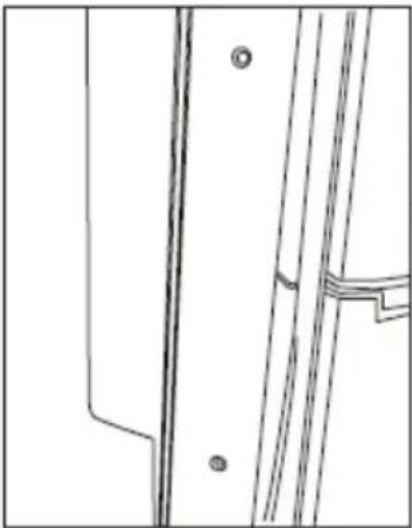
- Take off screw covers from the door
natural_image
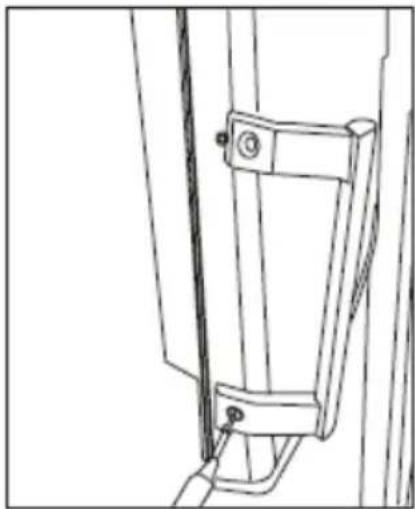
Pure technical line drawing of a mechanical component or bracket (no text or symbols)- Fix the handle by two screws
natural_image
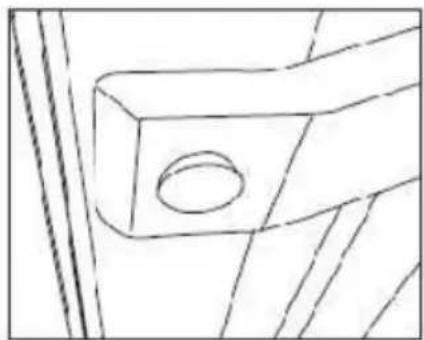
Technical line drawing of a mechanical bracket or frame assembly (no text or symbols)- Install the screw covers
natural_image
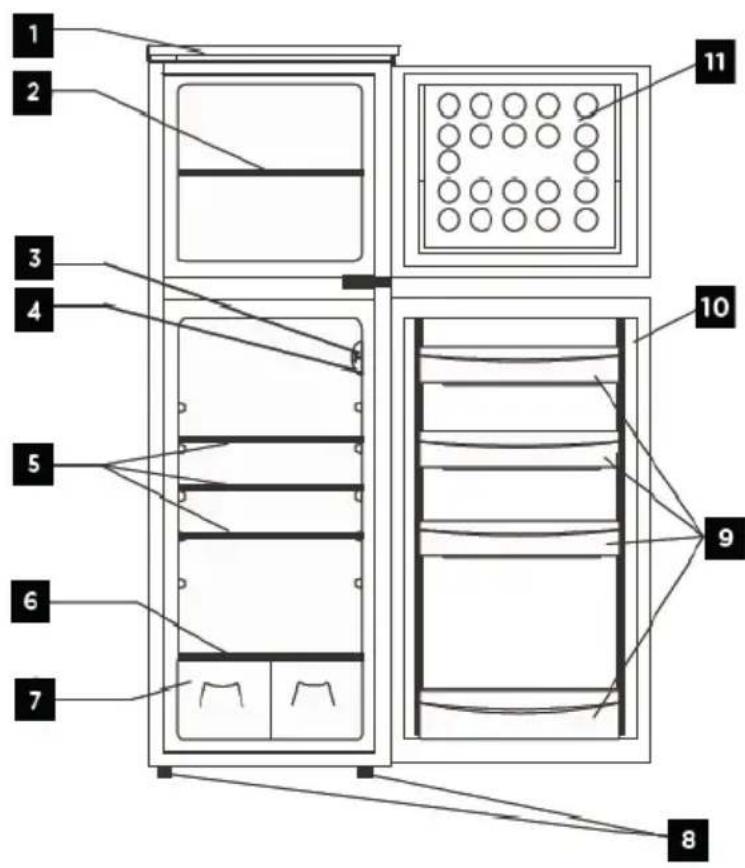
Technical line drawing of a mechanical bracket with a circular hole (no text or symbols)Description of the Appliance
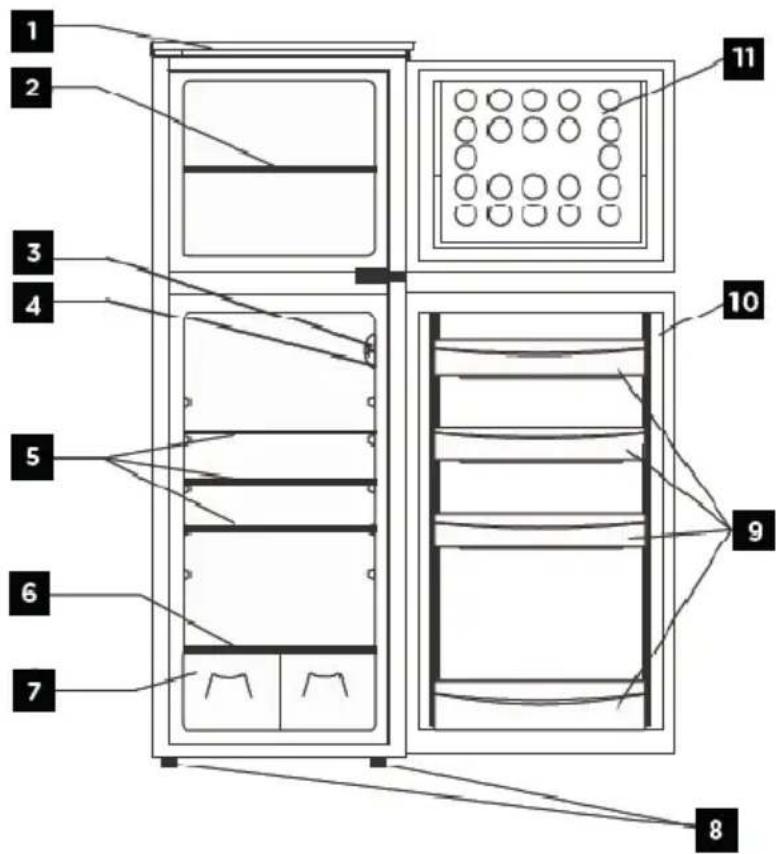
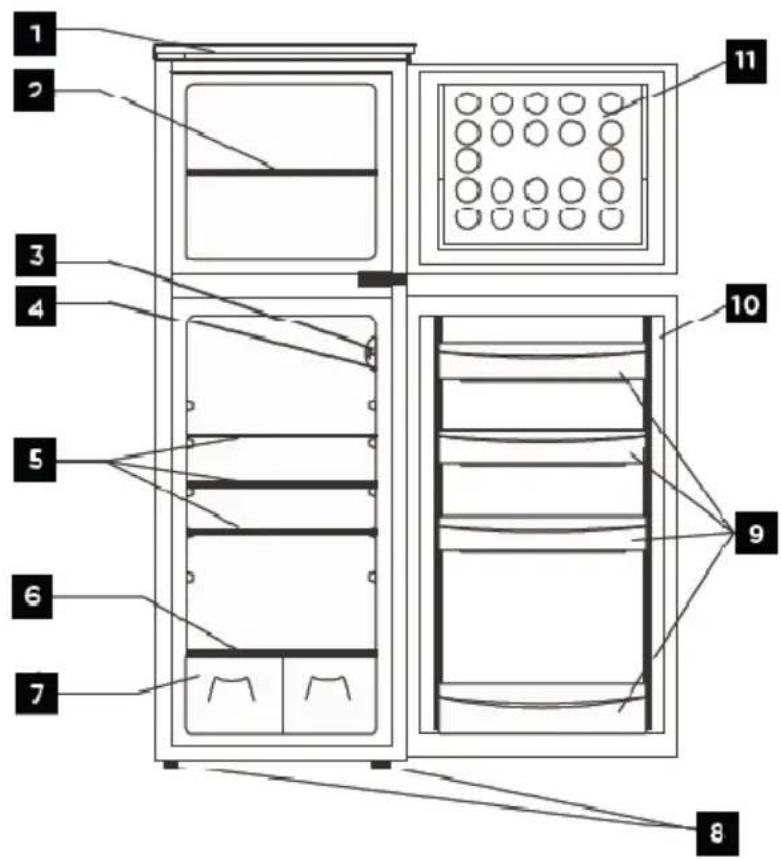
- Top cover
- Wire shelf
- Thermostat and lamp assembly
- Door switch
- Glass shelves
- Crisper cover
- Crisper
- Adjustable front feet
- Door balconies
- Fridge door gasket
- Freezer door
Operation Control
Controls for the fridge and freezer are located on the right lateral wall.
The thermostat knob controls the temperature.
The higher number setting, the longer the compressor runs. To adjust the temperature in the refrigerator compartment,
set the thermostat control knob to:
- lowest/MIN numbers for the LEAST COLD
internal
temperatures;
- highest/MAX numbers for the COLDEST
internal
temperatures.
Thermostat set to 0: no operation, no light.
Give your refrigerator time to cool down completely before adding food. It is the best to waiting 24 hours before adding food.
Use
Storing Fresh Foods
Proper use of the appliance, adequately packed food, correct temperature and taking into account hygienic precautions will substantially influence the quality of the food stored.
- Foods to be stored in the refrigerator should be properly packed as to prevent mixing various moisture degrees and odors (in polyethylene bags or sheet, aluminium foil, wax paper, or stored in covered containers or bottles). Before you store food in the refrigerator, cool it to ambient temperature.
- Before storing food in the refrigerator, remove the excessive packaging (like yoghurt in multi-package).
- Pack systematically and make sure that foodstuffs do not touch each other (various odours may mix). Assure adequate air circulation around packages.
- Never store inflammable, volatile or explosive substances.
- Beverages with high alcohol percentage shall be stored in tightly sealed bottles in vertical position.
- Food should not touch the rear wall of the refrigerator!
- Foods should be cooled down before storing.
- Crispy and delicate foods should be stored in the coldest parts of the refrigerator.
- Try not to open the door too often.
- Set the thermostat to the setting where lower temperatures are reached. Set the thermostat gradually as to avoid freezing of the foods. Use a thermometer and measure the temperature in the individual compartments. Place the thermostat in a glass vessel filled with water. Temperature readings are most reliable few hour after steady state is reached.
Fresh Food Storage Time in the Refrigerator
| Article of food | Storage time (days) |
| 1 2 3 4 5 6 7 8 9 10 11 12 13 14 | |
| Butter + + + + + + + = = = = = | |
| Eggs + + + + + + + + + + = = = | |
| Meat: fresh uncut + + = | |
| chopped + = | |
| smoked | + + + + + + + + + + = = = = |
| Fish | + = |
| Marinade | + + + + + + + + + + = = = |
| Root | + + + + + + + + + = = = = = |
- Some organic solutions like volatile oils in lemon or orange peel, acid in butter etc. can cause damages and when in contact with plastic surfaces or gaskets for longer period of time.
- Unpleasant odor inside the refrigerator is a sign that something is wrong with foods or that your refrigerator needs cleaning. Unpleasant odor can be eliminated or reduced by washing the interior of the refrigerator with a mild solution of water and vinegar. We also recommend using activated carbon filters to clean the air or to neutralize odors.
- If you plan a longer journey, make sure to remove quickly perishable articles of food out of the appliance before you leave.
| Cheese + + + + = | = = = | = = | = = = | = | |||||||||
| Sweets + + = = = = | |||||||||||||
| Fruit + + = = = = = = = = = | |||||||||||||
| Prepared dishes + + = = |
Legend:
+ recommended storage time
= possible storage time
Freezing Fresh Foods
- Carefully select food you intend to freeze; it should be of adequate quality and suitable for freezing.
- Use correct packaging and wrap it right.
- The packaging should be air tight and shouldn't leak since this could cause substantial vitamin loss and dehydration of foods.
- Foils and bags should be soft enough to tightly wrap around the foods.
- When preparing foods to be frozen, consider sanitary precautions.
- Mark packages with following data: kind and amount of foods and the date of loading.
- It is most important that the food is frozen as quickly as possible. Therefore we recommend the size of the package not to be too large and to be cooled before loading into the freezer.
- The amount of fresh foods that can be loaded in the freezer within 24 hours is indicated on the rating plate (freezing capacity). If the loaded amount is too large,
the quality of freezing is reduced which affects the quality of frozen foods.
Storing Frozen Foods
Packages of frozen foods are stored in the basket. If you remove the baskets, you can store frozen packages directly on the cooling shelves.
Commercially Frozen Foods
The storage time and the recommended temperature for storing commercially frozen foods are indicated on the packaging. For storing and using consider the manufacturer's instruction. When shopping, be careful and choose only adequately packed foods provided with complete data and stored in freezers where the temperature is not higher than -18°C. Do not buy packages of food covered with frost layer. This indicates that the package was thawed before at least once. Be careful that packages don't start to thaw, as the temperature raise reduces the quality of foods.
Approximate Storage Time for Frozen Foods
| Food | Storage time (in months) | |||||||||||
| 1 | 2 | 3 | 4 | 5 | 6 | 7 | 8 | 9 | 10 | 11 | 12 | |
| Vegetable | + | + | + | |||||||||
| Fruit | + | + | + | |||||||||
| Bread, pastries | + | |||||||||||
| Milk | + | |||||||||||
| Ready-made meals | + | |||||||||||
| Meat: Beef | + | + | + | |||||||||
| Veal | + | + | + | |||||||||
| Pork | + | + | + | |||||||||
| Poultry | + | + | + | |||||||||
| Game | + | + | + | |||||||||
| Minced meat | + | |||||||||||
| Smoked sausages | + | |||||||||||
| Fish: lean | + | |||||||||||
| fat | + | |||||||||||
| Offal | + | |||||||||||
Defrosting Frozen Food
Partially thawed or defrosted foods should be used as soon as possible. Cold air preserves the food but it does not destroy microorganisms which rapidly activate after defrosting and
make foods perishable. Partial defrosting reduces the nutritional value of foods, especially of fruits, vegetables and ready-made meals.
Ice Making
(certain models only)
Recommended thermostat position for ice making is on the middle setting. Fill two thirds of the ice tray with cold water or any other liquid convenient for freezing.
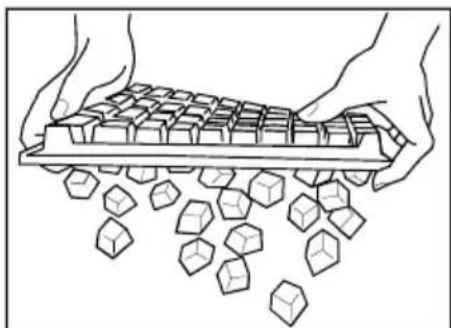
Time required for the ice to form, largely depends on ambient temperature, thermostat setting and on how often you open the door. It usually takes 2-6 hours (depends on which model of refrigerator you have). With smaller refrigerators we recommend you make a stock of ice cubes (store them in a separate plastic box). The easiest way to empty the ice tray is to turn the tray around, pour it with cold water and slightly twist it (bend it).
natural_image
Illustration of hands holding a tray with cubes, some falling below (no text or symbols)Changing the Direction of Opening the Door
The doors of your Fridge Freezer can be reversed.
- Ensure the Fridge Freezer is unplugged and empty.
• We recommend you have someone to assist you.
Tools required
• Phillips style screwdriver
- Flat bladed screwdriver
- 8mm and 10mm Socket or spanner.
When laying the Fridge Freezer on it's back in order to gain access to the base, you should never tip it back by more than 45° and must rest it on soft foam packaging or similar material to avoid damaging the cooling pipes at the rear of the Fridge Freezer.
Remove the two screws at the rear of the Fridge Freezer.
Lift the top off the Fridge Freezer.
Use the 8 mm socket or spanner to remove the 3 hinge bolts.
Remove the 3 bolts from the opposite side.
Remove bracket and plastic surround. Remove and replace the pin in the bracket. Replace on opposite side of the Fridge Freezer cabinet.
Lift the top door off middle hinge bracket and pull away from the body of the Fridge Freezer. Remove retaining screw from the top of the cabinet and replace on the other side.
Remove the middle hinge using an 8 mm socket/spanner. Take care not to lose the white spacer. Put hinge to one side. Lift door off the bottom bracket.
Remove blanking plates from the middle of the cabinet and replace in opposite side. Remove the blanking plates from the doors and replace the hinge bushes on the other side.
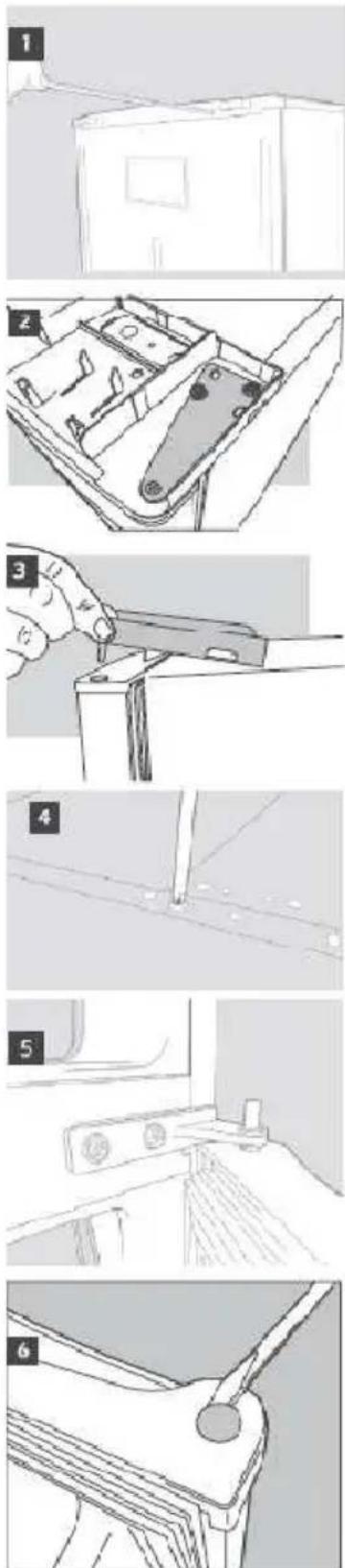
Remove the levelling feet by unscrewing.
Remove bottom bracket using an 8 mm socket or spanner. Remove and replace pin using a 10 mm spanner to undo the nut and a flat bladed screwdriver to remove the pin. You may need to push the pin through from the underside to remove fully.
Remove screw on base and replace on other side. Remove blanking plates from unused side of the Fridge Freezer and replace in holes left by the brackets.
Replace doors and brackets in reverse order. When replacing feet take care to ensure the larger foot is on the side without the bracket.
Check both doors are aligned horizontally and vertically, and that the seals are closed on all sides before finally tightening the bottom hinge
Automatic Defrosting of the Refrigerator
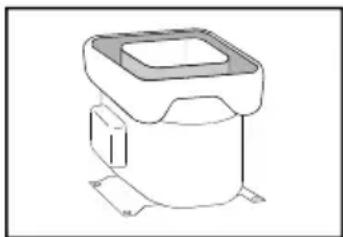
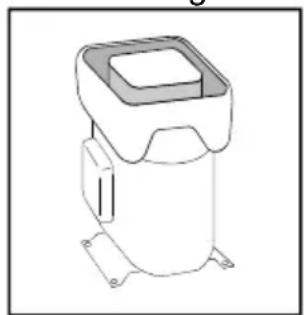
There is no need to defrost the refrigerator, because ice depositing on the inner back wall is defrosted automatically. Ice is depositing on the inner back wall during the compressor operation; later on, when the compressor is not operating ice is defrosting and water drops collect and drain through the outlet in the inner back wall into the drain pan situated above the compressor, from where it evaporates.
Manual Defrosting of the Frezing Compartment
When the frost and ice layer in the freezing compartment is 3-5 mm thick, you should clean the freezer.
- Few hours before defrosting set the thermostat to the coldest position, so that packages are well frozen. Reset the thermostat to OFF position and disconnect the power supply. Empty the freezer and take care that the packages remain frozen.
- Leave the door open for a while so that you can easy scrape off the frost. Use the plastic scraper but be careful not to damage the inner surfaces of the freezer. Wipe up the scraped frost and ice before it is completely defrosted.
- Avoid using defrosting sprays, as they may cause damage to the plastic parts and may be hazardous to health.
Cleaning the Appliance
Disconnect the power supply before cleaning the appliance.
Do not use coarse or aggressive cleaning agents as you can damage the surface. Be careful to remove any cleanser agent remaining after cleaning.
- Clean the exterior with water and detergent. Varnished surfaces are cleaned with soft cloth and an alcohol based cleaning agent (for example glass cleaners). You may also
-
use alcohol (ethanol or isophylic alcohol). The application of abrasive and specially
-
aggressive cleaners, such as the stainless steel cleaners, is not appropriate for the cleaning of plastic and coated parts.
- Remove the detachable accessories in the interior of the appliance and clean it with water and liquid detergent. Plastic parts cannot be washed in washing machine.
- Wash the interior of the appliance with lukewarm water, in which you added one or two spoonfuls of vinegar.
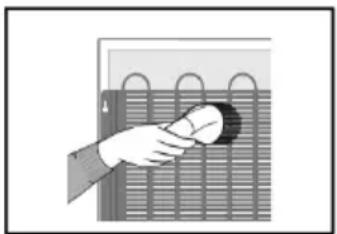
- Every now and then wipe the condenser on the rear wall. Use soft non-metal brush or vacuum cleaner.
natural_image
Illustration of a hand holding a small object against a grid-patterned background (no text or symbols)- Do not forget to clean also the defrost water receptacle above the refrigerator compressor (do not remove the receptacle).
natural_image
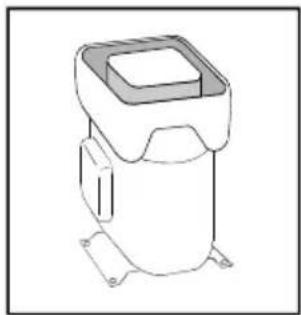
Line drawing of a mechanical component with a square top and mounting base (no text or symbols)After cleaning, connect the appliance to power supply and reload the packages.
Switch Off the Appliance When Not In Use
If you do not intend to use the appliance for a longer period, set the thermostat knob to the OFF postion, disconnect the power supply, take out the foods and defrost and clean the appliance. Leave the door slightly open.

Trouble-Shooting Guide
During the service, you can come across some troubles that in most cases result from improper handling of the appliance and can easy be eliminated.
The Appliance Fails to Operate After Connecting to the Mains Supply
- Check the supply in the outlet socket and make sure the appliance is switched on (thermostat knob in operating position).
Continuous Operation of the Refrigerating System
- the door was frequently opened or it was left opened for too long;
- the door is not properly closed (the door may sag, the gasket may be polluted or damaged);
• perhaps you have overloaded the appliance with fresh foods; - The reason may be inadequate ventilation of the compressor and condenser (assure adequate air circulation and wipe off the condenser);
- Continuous operation button activated (see section Freezing of Food).
Ice Formation on the Inner Rear Wall
As long as the defrost water runs to the channel and through the outlet to the drain pan on the compressor, automatic defrosting of the appliance is assured. In case the ice formation on the inner back wall is increased (3-5 mm), ice should be manually defrosted. Set the thermostat knob to OFF position and leave the door open. Never use electric devices for defrosting and do not scrape the ice or frost layer with sharp objects.
After completed defrosting, turn the knob to desired position and close the refrigerator door. The cause of increased ice formation may be one of the following:
- the door does not seal well (clean the gasket if it is contaminated, or replace it if it is damaged);
– the door was frequently opened or it was left opened for too long;
– the food stored in the refrigerator was warm;
– the food or dish is touching the inner back wall.
Water is Leaking From the Refrigerator
In case the discharge water outlet is clogged, or the defrost water drips over the channel, water leaks from the refrigerator.
- Clean the clogged opening, for example with a plastic straw.
- Manually defrost the increased ice layer. See "Ice Formation on the Inner Back Wall".
The Freezer Door is Hard to Open
If you want to open the door that has just or recently been closed, you may find it hard to open. The reason why this happens is, that when you open the door, warm air gets into the appliance and when it is getting cool, the underpressure seals the door. After few minutes (1-3), the door can easily be opened.
Noise
Cooling in refrigerating-freezing appliances is enabled by the cooling system with compressor, which produces noise. How noisy the appliance is depends on where it is placed, how it is used and how old the appliance is.
- During the operation of the compressor the noise of liquid is heard and when the compressor is not operating, the refrigerant flow is heard. This is a normal condition and it has no influence whatsoever on the lifetime of the appliance.
- After starting the appliance, the operation of the compressor and the refrigerant flow may be louder, which does not mean that something is wrong with the appliance and it has no influence on the lifetime of the appliance. Gradually the noise is reduced.
- Sometimes unusual and stronger noise is heard, which is rather unusual for the appliance. This noise is often a consequence of inadequate placing.
- The appliance shall be placed and levelled firmly on solid base.
- It should not touch the wall or kitchen units standing next to it.
- Check the accessories in the interior of the appliance, they should be placed correctly in their positions; also check the bottles, tins and other vessels that might touch each other and rattle.
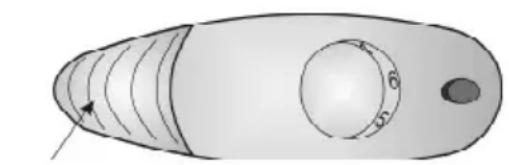
Bulb Replacement
It should be replaced by local service agent with same type of lamp and protective shield.
When changing the lamp and protective shield: Unplug to cut off the power supply.
Pull the lamp cover forwards, to gain accesses to the lamp. Unscrew the light bulb in an anti-clockwise direction from the holder. Replace the bulb with one of the correct type and size (10
watt E14 base). Replace the cover by Pushing the cover Backwards.
Reconnect the appliance to the mains supply.
natural_image
Diagram of a streamlined object with internal cylindrical structure and an arrow indicating direction (no text or symbols)Lamp
WE RESERVE THE RIGHT TO ALTER THE SPECIFICATIONS WITH NO INFLUENCE ON THE OPERATION OF THE APPLIANCE.
Kombinovani frižider sa zamrzivačem SRB
Zahvaljujemo vam na poverenju kojeg ste nam iskazali kupovinom ovog aparata. Nadamo se da ćete njime biti zadovoljni, i da će vam dobro služiti.
natural_image
Pure technical line drawing of a mechanical component or bracket (no text or symbols)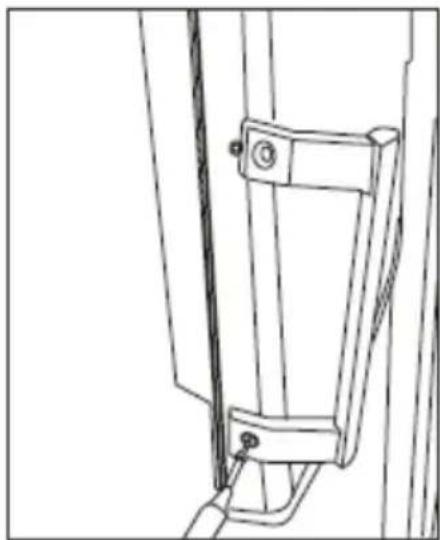
natural_image
Technical line drawing of a door handle assembly (no text or symbols)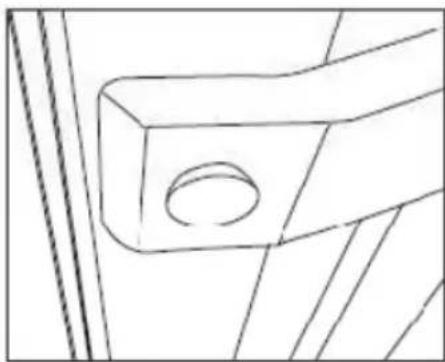
natural_image
Technical line drawing of a mechanical bracket or bracket with a circular hole (no text or symbols)Opis aparata
- Tabla
- Nosiva žičana rešetka
- Komplet termostata i sijalice
- Prekidač vrata
- Staklene police
- Poklopac fijoke za voće i povrće
- Fijoka za voće i povrće
- Regulacione prednje nožice
- Police u vratima
- Zaptivač vrata frižidera
- Vrata zamrzivača
Upravljanje aparatom
Elementi za upravljanje frižidera i zamrzivača nalaze se na desnoj bočnoj stenki unutrašnjosti frižidera.
Dugmetom termostata regulišete temperaturu. Što je veća podešena vrednost termostata, to duže kompresor radi i time postiže nižu temperaturu u aparatu.
natural_image
Simple line drawing of a boat hull with no text or symbolsUpotreba
Čuvanje sveže hrane
Pravilna upotreba aparata, odgovarajuće pakovanje hrane, održavanje prikladne temperature, te odgovarajuća higijena, odlučni su za kvalitet namirnica.
- Hrana koju stavljate u frižider mora da bude odgovarajuće upakovana, da ne pušta niti ne prima mirise i vlagu (umotana u polietilenske kesice odnosno foliju, alu-foliju, voštani papir ili u pokrivenim posudama i staklenkama). Pre stavljanja hrane u frižider, ohladite ju na sobnu temperaturu
- Pre stavljanja u frižider, skinite prodajnu ambalažu sa hrane (npr. dvostruka ambalaža pakovanja jogurta).
- Hranu sistematski poslažite da ne dođe u međusobni dodir (različiti mirisi bi se mogli pomešati).
natural_image
Illustration of hands holding a tray with scattered cubic blocks (no text or symbols)Promena smera otvaranja vrata
Smer otvaranja vrata vašeg frižidera sa zamrzivačem može da se promeni.
natural_image
Line drawing of a rectangular box with a recessed top and side handles, no text or symbols present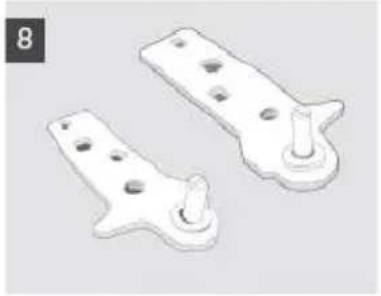
natural_image
Two white metal bracket components with mounting holes and a handle (no text or symbols)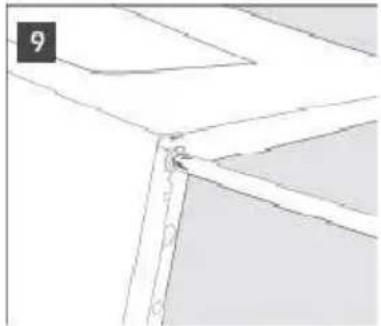
natural_image
Pure architectural line drawing of a corner joint or structural detail (no text or symbols)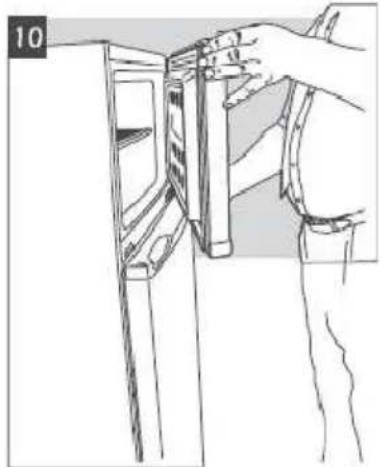
natural_image
Line drawing of a hand inserting a device into a door panel (no text or symbols)
natural_image
Simple line drawing of a two-tier refrigerator (no text or symbols)natural_image
Illustration of a hand holding a small object over a grid-patterned surface (no text or symbols)Nakon čišćenja ponovo priključite aparat na električnu mrežu i vratite hranu nazad.
natural_image
Line drawing of a mechanical component with a square top and mounting base (no text or symbols)Isključenje aparata kada ga ne koristite
Ukoliko ne nameravate koristiti aparat duže vreme, isključite ga iz električne mreže, izvadite iz njega hranu i očistite ga. Vrata ostavite pritvorena.
⑦ Uputstva za otklanjanje smetnji
U toku upotrebe aparata može doći do smetnji u radu koje su u većini slučajeva posledica nepravilne upotrebe, te ih možete otkloniti sami.
natural_image
Simple line drawing of a boat hull with no text or symbolssijalica
PRIDRŽAVAMO PRAVO NA PROMJENE SPECIFIKACIJA KOJE NE UTIČU NA FUNKCIONALNOST APARATA.
natural_image
Pure technical line drawing of a mechanical component or bracket (no text or symbols)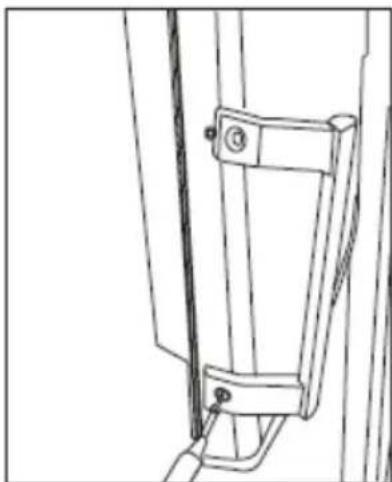
natural_image
Technical line drawing of a door handle assembly (no text or symbols)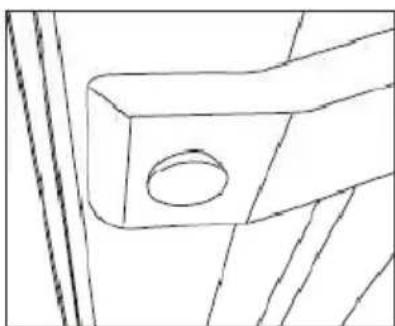
natural_image
Technical line drawing of a mechanical bracket or bracket with a circular hole (no text or symbols)natural_image
Simple line drawing of a cylindrical object with a circular hole and segmented body (no text or symbols)Përdorimi
natural_image
Illustration of hands holding a tray with cubes, no text or symbols presentnatural_image
Simple line drawing of a building with a window and chimney (no text or symbols)
natural_image
Technical line drawing of a mechanical component with no visible text or symbols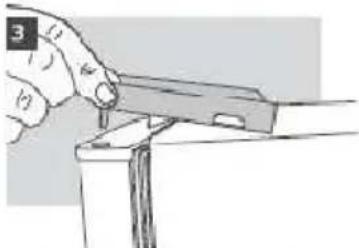
natural_image
Illustration of a hand using a tool to cut or apply material, no text or symbols present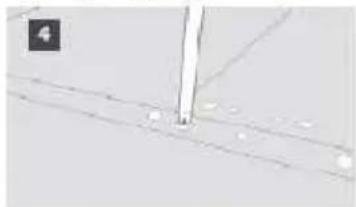
natural_image
Pure electrical circuit lines without any symbols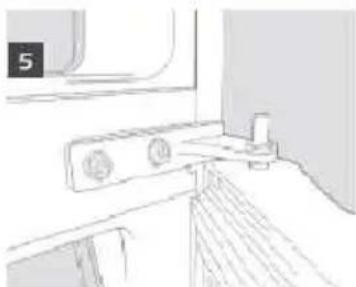
natural_image
Simple line drawing of a window with a door and a handle, no text or symbols present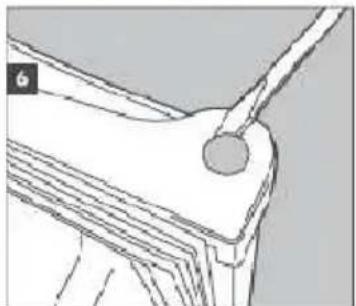
natural_image
Pure technical line drawing of a mechanical component with a tool, no text or symbols presentnatural_image
Line drawing of a rectangular box with a recessed top and side handles, no text or symbols present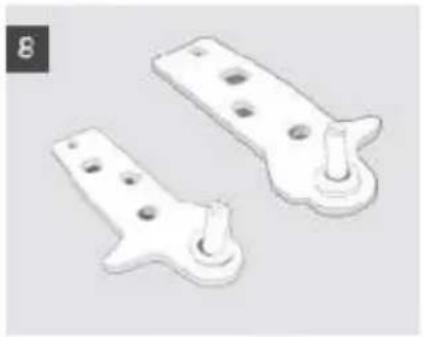
natural_image
Two white metal bracket components with mounting holes and adjustment knobs (no text or symbols)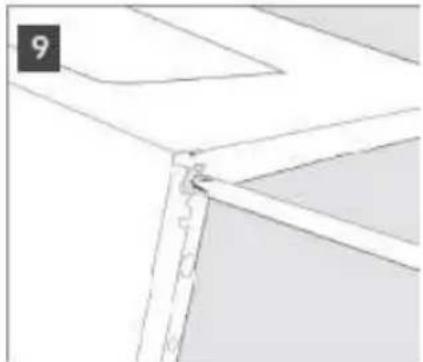
natural_image
Pure architectural line drawing of a corner joint or structural detail (no text or symbols)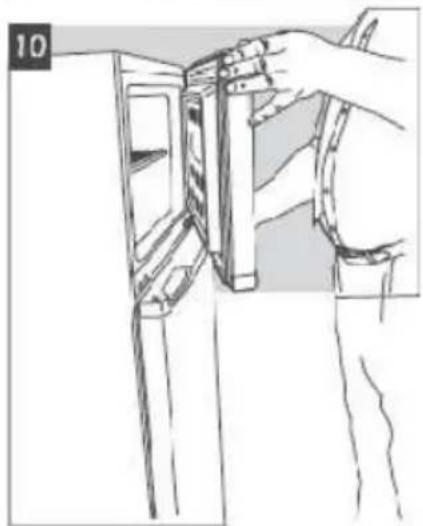
natural_image
Line drawing of a hand inserting a component into a door panel, with no visible text or symbols
natural_image
Simple line drawing of a two-tier refrigerator (no text or symbols)natural_image
Illustration of a hand holding a device against a grid-patterned surface (no text or symbols)natural_image
Line drawing of a mechanical device with a square top and mounting base (no text or symbols)natural_image
Top-down schematic of a boat hull with visible hull, hull, and side ports (no text or symbols)llambëza
MARRIM TË DREJTË PËR NDRYSHIME TË SPECIFIKACIONEVE TË CILAT NUK NDIKOJNË NË FUNKSIONALITETIN E APARATIT.
natural_image
Pure technical line drawing of a mechanical component or bracket (no text or symbols)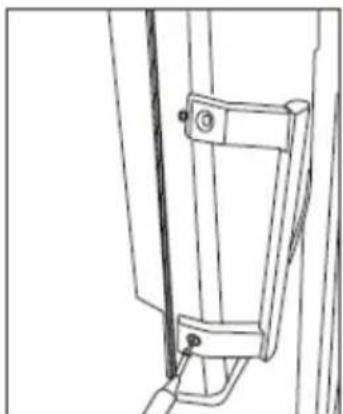
natural_image
Technical line drawing of a door handle assembly (no text or symbols)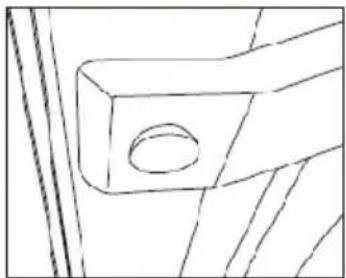
natural_image
Technical line drawing of a mechanical bracket or bracket with a circular hole (no text or symbols)Opis uređaja
- Gornja ploča
- Nosiva žičana rešetka
- Komplet termostata i žarulje
- Prekidač vrata
- Staklene police
- Pokrov ladice za voće i povrće
- Ladica za voće i povrće
- Podesive prednje nožice
- Police u vratima
- Brtva vrata hladnjaka
- Vrata zamrzivača
natural_image
Simple line drawing of a cylindrical object with a circular hole and segmented body (no text or symbols)Uporaba
natural_image
Illustration of hands sorting small cubes into a tray (no text or symbols)natural_image
Line drawing of a mechanical component or housing with a central opening and side brackets (no text or symbols)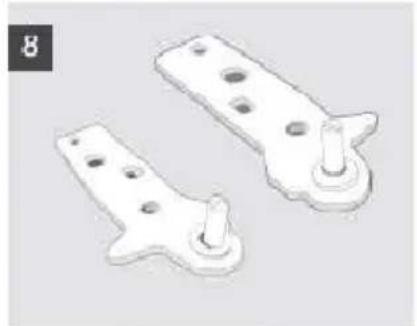
natural_image
Two white plastic mechanical components with mounting holes and a cylindrical pin (no text or symbols visible)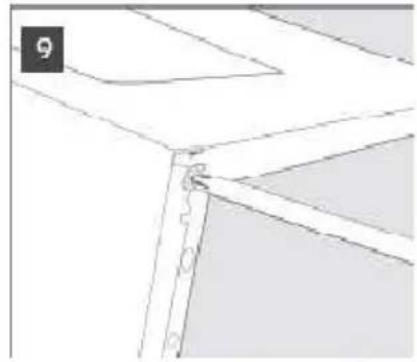
natural_image
Pure architectural line drawing of a corner joint or structural detail (no text or symbols)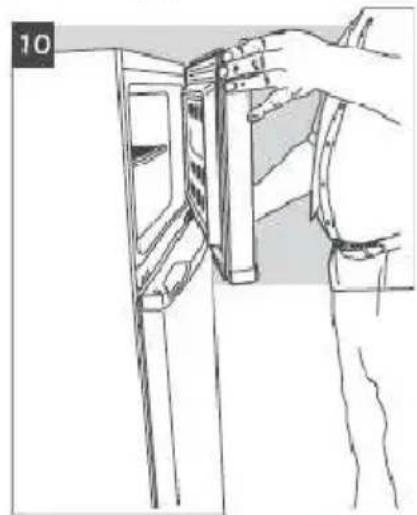
natural_image
Line drawing of a hand inserting a device into a door panel (no text or symbols)
natural_image
Simple line drawing of a two-tier refrigerator (no text or symbols)natural_image
Illustration of a hand holding a device against a grid-patterned surface (no text or symbols)Nakon čišćenja ponovo priključite uređaj na električnu mrežu i vratite hranu natrag.
natural_image
Line drawing of a mechanical device with a square top and mounting base (no text or symbols)Isključenje uređaja kada ga ne koristite
natural_image
Top-down schematic of a streamlined object with internal circular and curved features (no text or symbols)žarulja
PRIDRŽAVAMO PRAVO NA PROMJENE SPECIFIKACIJA KOJE NE UTJEČU NA FUNKCIONALNOST UREĐAJA.
natural_image
Pure technical line drawing of a mechanical component or bracket (no text or symbols)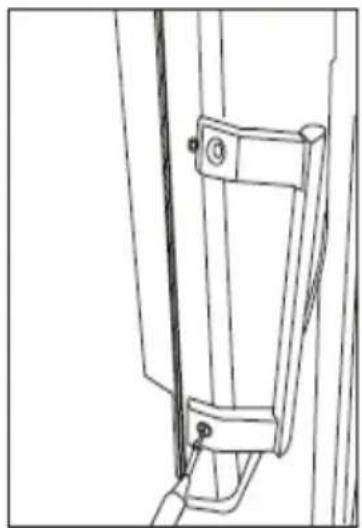
natural_image
Technical line drawing of a mechanical bracket or bracket assembly (no text or symbols)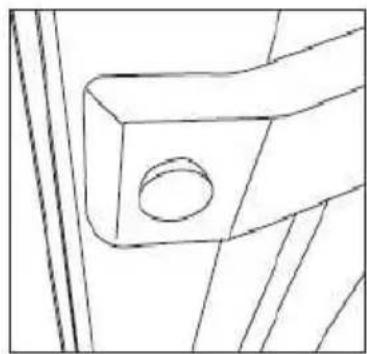
natural_image
Technical line drawing of a mechanical bracket or bracket with a circular hole (no text or symbols)natural_image
Simple line drawing of a cylindrical object with a circular hole and segmented body (no text or symbols)Uso
natural_image
Line drawing of hands sorting and packing 3D cubes into a tray (no text or symbols)natural_image
Illustration of a hand holding a circular object over a textured surface (no text or symbols)natural_image
Diagram of a streamlined object with internal circular features and a pointer arrow (no text or symbols)lampadina
LA CASA PRODUTTRICE SI RISERVA IL DIRITTO DELLE MODIFICHE NON ALTERANDO IL FUNZIONAMENTO DELL'APPARECCHIO.
Frigider-Congelator
RO
natural_image
Pure technical line drawing of a mechanical component or bracket (no text or symbols)natural_image
Technical line drawing of a mechanical bracket or bracket assembly (no text or symbols)natural_image
Technical line drawing of a mechanical bracket or bracket with a circular hole (no text or symbols)natural_image
Simple line drawing of a cylindrical object with a circular hole and segmented body (no text or symbols)Utilizare
Storing Fresh Foods
natural_image
Line drawing of hands sorting small cubes into a tray (no text or symbols)natural_image
Simple line drawing of a building with a chimney and windows (no text or symbols)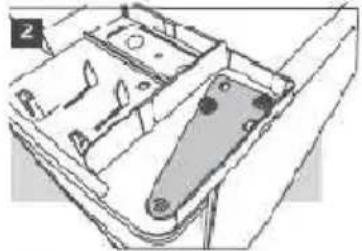
natural_image
Technical line drawing of a mechanical component with no visible text or symbols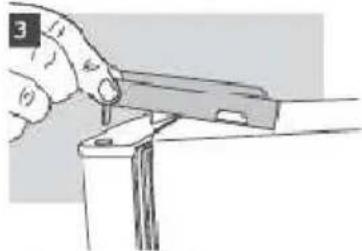
natural_image
Illustration of a hand holding a handgun over a surface, with no visible text or symbols
natural_image
Close-up of a white pen tip touching a thin surface with faint lines, no visible text or symbols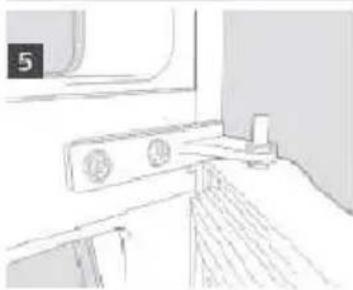
natural_image
Line drawing of a window with a door and ventilation grilles (no text or symbols)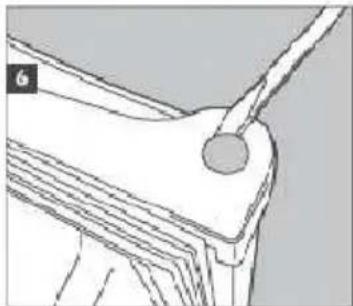
natural_image
Pure technical line drawing of a mechanical component with a handle and circular end (no text or symbols)natural_image
Line drawing of a wooden box with a lid and handle, no text or symbols present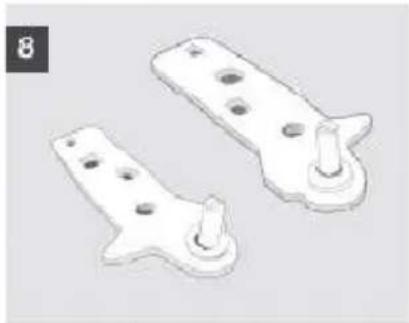
natural_image
Two white plastic electrical contactors with mounting holes and a cylindrical pin (no text or symbols visible)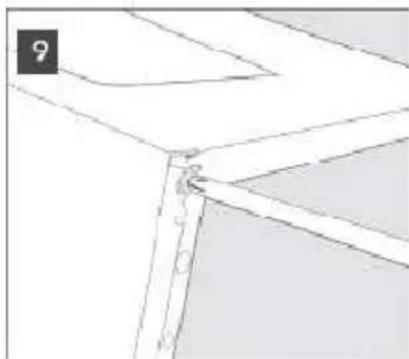
natural_image
Pure architectural line drawing of a roof structure without any text, numbers, or symbols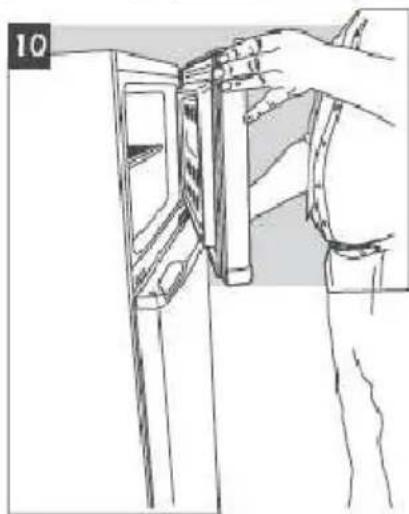
natural_image
Line drawing of a hand inserting a component into a door panel (no text or symbols)
natural_image
Simple line drawing of a two-tier refrigerator (no text or symbols)natural_image
Illustration of a hand holding a small object over a grid-patterned surface (no text or symbols)natural_image
Diagram of a streamlined object with internal curved lines and a central circular feature (no text or symbols)becului
NE REZERVĂM DREPTUL DE A MODIFICA SPECIFICATIILE FĂRĂ A AFECTA FUNCTIONAREA APARATULUI.
Hladilnik z zamrzovalnikom
SL
natural_image
Pure technical line drawing of a mechanical component or bracket (no text or symbols)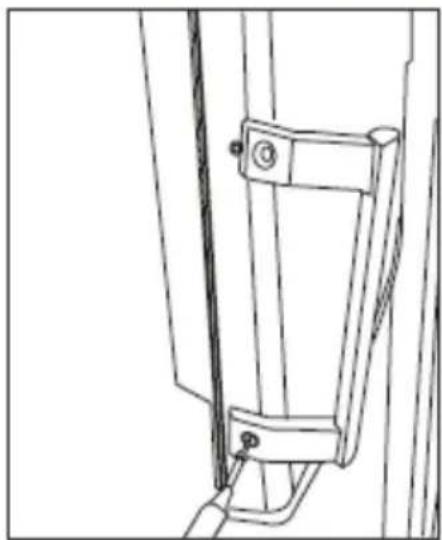
natural_image
Technical line drawing of a mechanical bracket or frame assembly (no text or symbols)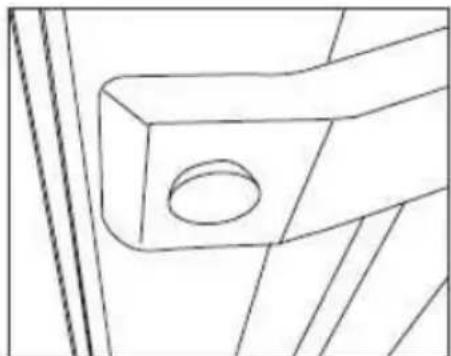
natural_image
Technical line drawing of a mechanical bracket or bracket with a circular hole (no text or symbols)Opis Aparata
- Zgornji pokrov
- Nosilna žična rešetka
- Komplet termostata in žarnice
- Stikalo vrat
- Steklene police
- Pokrov predala za sadje in zelenjavo
- Predal za sadje in zelenjavo
- Nastavljivi sprednji nogi
- Police v vratih
- Tesnilo vrat hladilnika
- Vrata zamrzovalnika
Upravljanje aparata
natural_image
Top-down schematic of a streamlined object with internal circular features and a central dot (no text or symbols)Uporaba
natural_image
Illustration of hands holding a tray with scattered cubes (no text or symbols)natural_image
Line drawing of a rectangular box with a recessed top and side handles (no text or symbols)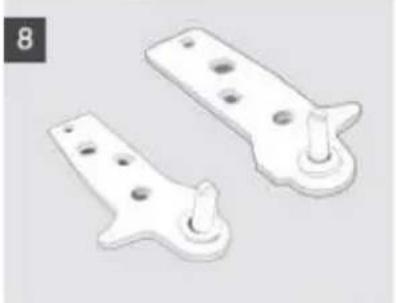
natural_image
Two white plastic mechanical components with mounting holes and adjustment knobs (no text or symbols)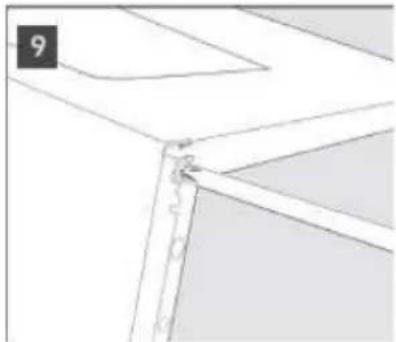
natural_image
Pure architectural line drawing of a window frame structure without any text or symbols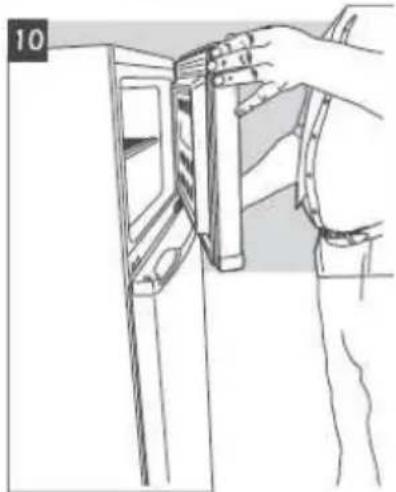
natural_image
Line drawing of a hand inserting a device into a door panel (no text or symbols)
natural_image
Simple line drawing of a two-tier refrigerator (no text or symbols)natural_image
Illustration of a hand holding a small object over a grid-patterned surface (no text or symbols)natural_image
Technical line drawing of a mechanical component with no visible text or symbolsnatural_image
Pure technical line drawing of a mechanical component or bracket (no text or symbols)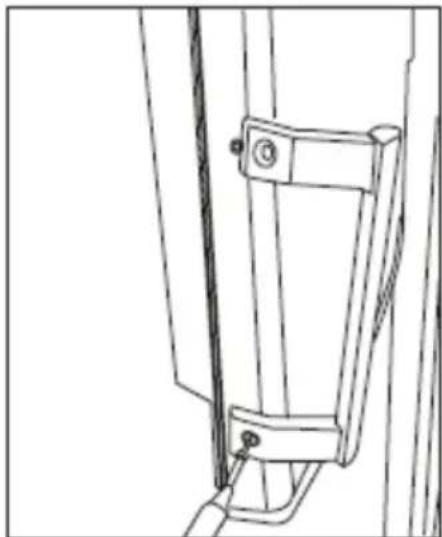
natural_image
Technical line drawing of a door handle assembly (no text or symbols)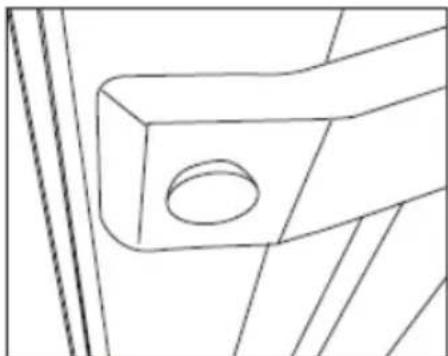
natural_image
Technical line drawing of a mechanical bracket or bracket with a circular hole (no text or symbols)natural_image
Simple line drawing of a boat hull with no text or symbolsGebrauch des Geräts
natural_image
Illustration of hands holding a tray with scattered cubes (no text or symbols)natural_image
Illustration of a hand holding a small object over a grid-patterned surface (no text or symbols)- Before fi rst operation GB
- Thank you for your trust and for buying this appliance. We hope it will successfully serve the purpose for many years.
- Before Putting Into Use ......2
- Important ....3
- Placing and Installation ....4
- Description of the Appliance......6
- Operation Control ......6
- Use 7
- Changing the Direction of Opening the
- Door....10
- Maintenance and Cleaning......12
- Trouble-Shooting Guide ....13
- Before Putting Into Use
- Instructions for Use
- Mounting Instructions
- We Care for the Environment
- Tips for Energy Savings
- ⚠️ Important
- Storing Time During Power Supply Interruption
- Disposing of the Worn Out Appliance
- Placing and Installation
- Choosing the Right Place
- Connection to Power Supply
- Handle installation
- Description of the Appliance
- Operation Control
- Use
- Storing Fresh Foods
- Fresh Food Storage Time in the Refrigerator
- Freezing Fresh Foods
- Storing Frozen Foods
- Commercially Frozen Foods
- Defrosting Frozen Food
- Ice Making
- Changing the Direction of Opening the Door
- Tools required
- Automatic Defrosting of the Refrigerator
- Manual Defrosting of the Frezing Compartment
- Cleaning the Appliance
- Disconnect the power supply before cleaning the appliance.
- Switch Off the Appliance When Not In Use
- Trouble-Shooting Guide
- The Appliance Fails to Operate After Connecting to the Mains Supply
- Continuous Operation of the Refrigerating System
- Ice Formation on the Inner Rear Wall
- Water is Leaking From the Refrigerator
- The Freezer Door is Hard to Open
- Noise
- Bulb Replacement
- Kombinovani frižider sa zamrzivačem SRB
- Opis aparata
- Upravljanje aparatom
- Upotreba
- Čuvanje sveže hrane
- Promena smera otvaranja vrata
- Smer otvaranja vrata vašeg frižidera sa zamrzivačem može da se promeni.
- Isključenje aparata kada ga ne koristite
- ⑦ Uputstva za otklanjanje smetnji
- Përdorimi
- Opis uređaja
- Uporaba
- Isključenje uređaja kada ga ne koristite
- Uso
- Frigider-Congelator
- RO
- Utilizare
- Hladilnik z zamrzovalnikom
- SL
- Upravljanje aparata
- Gebrauch des Geräts
Brand : GORENJE
Model : KRF4151AX KRT
Category : Fridge