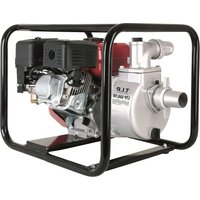
LTP 500/30 - Water pump T.I.P. - Free user manual and instructions
Find the device manual for free LTP 500/30 T.I.P. in PDF.


| Brand | T.I.P. |
| Model | LTP 500/30 |
| Product type | Petrol engine water pump |
| Engine type | 4-stroke, air-cooled engine |
| Displacement | 196 cm³ |
| Max. power | 3.85 kW (5.2 HP) at 3600 rpm |
| Fuel | Unleaded petrol (95 RON) or E10 |
| Tank capacity | 3.5 l |
| Recommended engine oil | SAE 15W-30 |
| Oil volume | 0.6 l |
| Spark plug | LD F6TC, LD F7TC or XL F7TC |
| Maximum flow rate (Qmax) | 30,000 l/h (30 m³/h) |
| Max. pressure | 3.0 bar |
| Max. delivery head (Hmax) | 30 m |
| Max. suction head | 6 m |
| Suction connection | 59.61 mm (2" AG), hose connection 50 mm |
| Discharge connection | 59.61 mm (2" male thread), hose connection 50 mm |
| Max. pumped liquid temperature | 40 °C |
| Min. pumped liquid temperature | 2 °C |
| Dimensions (L x W x H) | 51 x 39 x 45 cm |
| Net weight | 20 kg |
| Guaranteed sound power level (LWA) | 110 dB(A) |
| Sound pressure level (LpA) | 94.6 dB(A) |
| Pump type | Self-priming portable pump |
| Application | Irrigation, watering, water extraction from wells or cisterns, drainage |
| Maintenance | Oil change every 30 h or 6 months; air filter cleaning every 30 h; spark plug every 6 months or 100 h |
| Safety | Low oil protection |
Frequently Asked Questions - LTP 500/30 T.I.P.
User questions about LTP 500/30 T.I.P.
0 question about this device. Answer the ones you know or ask your own.
Ask a new question about this device
Download the instructions for your Water pump in PDF format for free! Find your manual LTP 500/30 - T.I.P. and take your electronic device back in hand. On this page are published all the documents necessary for the use of your device. LTP 500/30 by T.I.P..
USER MANUAL LTP 500/30 T.I.P.
natural_image
Exterior view of a T.I.P. water pump on a black metal frame, no visible text or symbols on the pump body.
natural_image
Exterior view of a T.I.P. water pump with attached motor and control panel (no visible text or symbols)D
Translation of original operating instructions Petrol-engine pump
F
EC declaration of conformity
We, T.I.P. Technische Industrie Produkte GmbH, Siemensstr. 17, D-74915 Waibstadt, declare in our sole responsibility that the products identified below comply with the basic requirements imposed by the EU directives specified below including all subsequent amendments: 2006/42/EC, 2014/30/EU, 2000/14/EC, 2005/88/EC, 97/68/EC, (EU) 2016/1628.

Operation condition according to point 56 Part B Annex III EU-RL of directive 2000/14/EC
LTP 250/25: Genehmigungsnummer Motor / Type approval number motor QS 160F: e24*2016/1628*2018/989SRA1/P*0136*00(V)
LTP 500/30: Genehmigungsnummer Motor / Type approval number motor QS 168F-1: e24*2016/1628* 2018/989 SRA1/P*0183*00(V)
LTP 250/25 Serien-No: ab xxxxQS0001/2020 bis xxxxQSxxxx/2020 / Serial-No.: from xxxxQS0001/2020 up to xxxxQSxxx/2020
Congratulations for buying your new device from T.I.P.!
Like all our products, this one, too, was developed using the latest technological knowledge. The device was manufactured and assembled on the basis of state-of-the-art pump technology using most reliable electrical or electronic components which ensure a high level of quality and a long life of your new product.
Please read through these operating instructions carefully to make sure that you can fully benefit from all features.
Some explanatory illustrations can be found at the end of these operating instructions.
We hope you will enjoy your new device!
Table of contents
- General safety information....1
- Range of use.... 2
- Technical data.... 3
- Scope of delivery 4
- Installation....4
- Putting into operation 5
- Maintenance and troubleshooting....7
- Warranty 10
- How to order spare parts.... 10
- Service.... 10
- Disposal hint 10
Annex: Illustrations
1. General safety information
Please read through these operating instructions carefully and make yourself conversant with the control elements and the proper use of this product. We shall not be liable in the case of damage caused as a result of the nonobservance of instructions and provisions of the present operating instructions. Any damage caused as a result of the nonobservance of the instructions and regulations contained in the present operating instructions shall not be covered by the warranty terms. Please keep these operating instructions in a safe place and hand them on together with the device should you ever dispose of it.
Children and other persons not conversant with the contents of these operating instructions must not use this device. Please keep an eye on children to make sure they will not use the unit as a toy to play with. In various countries, applicable provisions may be in place which might contain restrictions regarding the age of the user, and they have to be adhered to in any case.
The device must not be operated by people with restricted physical, sensory or mental capabilities unless they are either under the supervision of a person being responsible for their safety, or receiving from such a person instructions as how to use the device, respectively.
1.1. Safety of work place
- Keep your work place tidy and well lighted. Disorder or poorly lighted work places can cause accidents.
- Do not work with a motor driven device in an environment of flammable gas, vapor or liquids. Motor driven devices generate sparks, which can ignite combustible dust or vapor.
- Keep children and other persons out of reach when using this device. If distracted you might lose the control over the device.
1.2. Safety of persons
- Be careful, watch out what you are doing and work reasonable with a motor driven device. Do not use a motor driven device, if you are tired, under impact of drugs, alcohol or medication. A moment of carelessness could cause serious injuries.
- Avoid any accidental operation. Make sure, the motor driven device is switched off, before you pick it up or carry it.
1.3. Safety when using a combustion engine
-
Do NEVER operate an engine inside a building or in closed areas, except you make sure the exhausting gas is transported outside completely. The motor exhausting gas contains carbonmonoyde, which cause unconsciousness or even death.
-
Do not smoke or work near the machine.
-
Check regularly all fuel lines and tank for any leaks and cracks.
-
Switch of the engine, if the machine gets filled with fuel.
-
Do not refuel, if the machine is running or hot.
-
Do not refuel near of sparks, open fire or a smoking person.
- Never refuel a gasoline or Diesel engine inside a room without sufficient air ventilation.
- Do not overfill the tank and avoid to spill gasoline when refueling. Spilled gasoline or vapors can get ignited. In case gasoline was spilled out, please make sure everything is dry before starting the engine.
- Make sure, the tank lid is closed correctly and tightly.
- Under certain conditions, gasoline is easily combustible and extremely explosive.
- Keep gasoline only in designated containers.
1.4. Maintenance safety
Regular maintenance and care reduce the danger of possible operational disruptions and increase the life cycle of your device.
- Make sure, the repair of the motor and machine is done by qualified personal.
- Make sure, the motor is switched OFF and the ignition got interrupted, before the protective devices are dismounted or removed.
- Keep the engine clean and make sure all stickers are legible. On the stickers are important operational instructions and warnings. Replace missing or illegible stickers.
- Do not use any gasoline or flammable solvents for cleaning the machine. Vapors and solvents can get exploded. Store the machine properly at a clean, dry place, and keep out of reach for children.
Notes and instructions with the following symbol require particular attention:

Any non observance of these instructions involves the danger of bodily harm to people and/or damage to property.
Please inspect the device for damage occurred during transportation. In case of damage, the retailer has to be informed immediately, at the latest within 8 days after the date of purchase.
Please observe the following pictograms:

Use caution when operating machines powered by combustion engines!

You are required to read the operating instructions before placing the device in service!

Caution – keep your distance from the device. Heat generation!
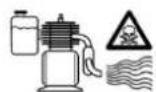
Caution – combustion engines generate exhaust gases!

Do not use in enclosed spaces or in rain or snow! Read the operating instructions!
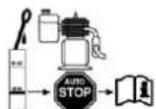
The device is equipped with a low-oil safety feature. Read the operating instructions!

Before placing the device in service, make sure that it has sufficient engine oil! Check the engine oil level!
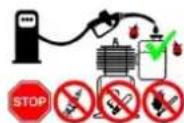
Switch the device off before filling up. No smoking! No naked flames!
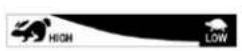
Accelerator lever Speed control High Low
Guaranteed Noise power level

Wear hearing protection
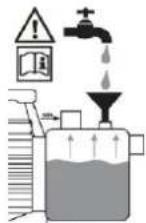
Before initial operation, fully bleed the pump housing by filling it with water.

Choke Operation Start
2. Range of use
Petrol engine pumps from T.I.P. are portable, self-priming pumps operated with petrol or a petrol-oil mixture, depending on the model. These high-quality products with their convincing performance data were developed especially for mains-independent irrigation or drainage applications. Compact dimensions and a low weight facilitate transportation between changing locations of use.
These units are suitable for pumping clean to slightly dirty water.
The typical ranges of use of petrol-engine pumps include:
• Water supply on construction sites
- Irrigation of gardens, garden beds, fields as well as sprinkling applications
• Water discharge from wells, cisterns, watercourses etc.
- Drainage and filling of ponds, basins etc.

This pump is not suitable for discharging salt water, faecal waste, inflammable, etching, explosive or other hazardous liquids. Likewise, it is not to be used for discharging drinking water and other food.

Please observe the max. and min. temperatures of the liquids to be discharged stated in the technical data.
- Technical data
| Model | LTP 250/25 | LTP 500/30 |
| Engine | 4-stroke engine, air-cooled | 4-stroke engine, air-cooled |
| Cylinder capacity | 127 cm ^3 | 196 cm ^3 |
| Max. power | 1.8 kW / 3,600 U/min ^-1 / (2.5 HP) | 3.85 kW / 3,600 U/min ^1 (5,2 HP) |
| Fuel | Petrol, unleaded (RON 95) | Petrol, unleaded (ROZ 95) |
| Tank volume | 1.6 l | 3.5 l |
| Motor oil | SAE 15W-30 | SAE 15W-30 |
| Motor oil amount | 0.5 l | 0.6 l |
| Spark plug | LD E6TC | LD F6TC, LD F7TC, XL F7TC |
| Max. flow rate (Qmax) ^1) | 15,000 l/h | 30,000 l/h |
| Max. pressure | 2.5 bar | 3.0 bar |
| Max. delivery height (Hmax) ^1) | 25 m | 30 m |
| Max. suction height | 6 m | 6 m |
| Pressure port ∅ | 47.80 mm (1 12 “), male, 40 mm hose port | 59.61 mm (2 “ AG), 50 mm hose port |
| Suction port ∅ | 47.80 mm (1 12 “), male, 40 mm hose port | 59.61 mm (2 “ AG), 50 mm hose port |
| Max. fluid temperature (Tmax) | 40 °C | 40 °C |
| Min. fluid temperature | 2 °C | 2 °C |
| Weight (w/o fuel) | 16,5 kg | 20 kg |
| Dimensions (L x D x H) | 43.5 x 35.0 x 40.5 cm | 51 x 39 x 45 cm |
| Guaranteed. sound power level (LWA) ^2) | 92 dB (A) | 110 dB (A) |
| Measured sound power level (LWA) ^2 | 88.7 dB (A) | 107,8 dB (A) |
| Sound pressure level (LpA) ^2) | 76.1 dB (A) | 94,6 dB (A) |
| Item no. | 30188 | 30197 |
1) The indicated maximum performance values were obtained with a clear, non-reduced in- and outlet.
2) Noise emission values obtained according to the EN 12639 regulation. Measurement method according to EN ISO 3744.
Power curve for LTP 250/25 & LTP 500/30
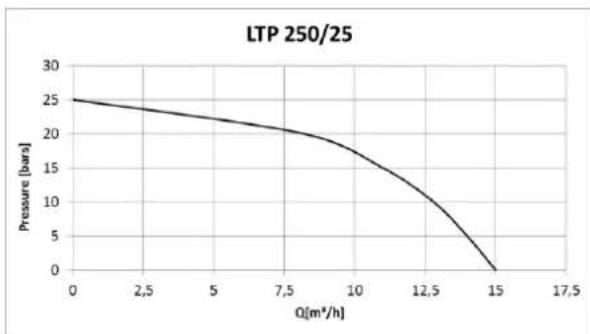
line
| Q[m³/h] | Pressure [bars] | | ------- | --------------- | | 0 | 25 | | 2.5 | 23 | | 5 | 21 | | 7.5 | 19 | | 10 | 16 | | 12.5 | 10 | | 15 | 0 |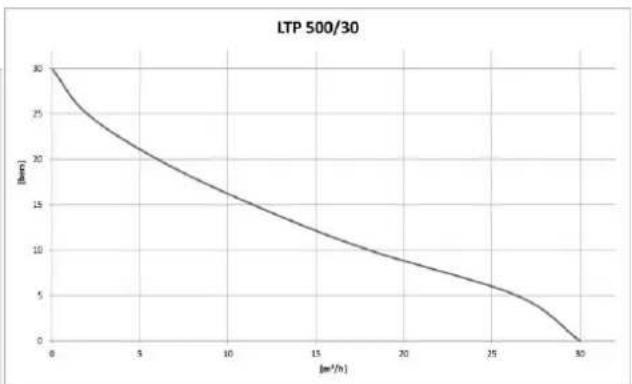
line
| Concentration [m³/h] | Length [mm] | | --------------------- | ----------- | | 0 | 30 | | 5 | 25 | | 10 | 20 | | 15 | 15 | | 20 | 10 | | 25 | 5 | | 30 | 0 |4. Scope of delivery
The scope of the delivery of this product includes:
One petrol-driven motor pump, one set of usage instructions, two hose connecting pieces with seals, two hose clips, one intake strainer, one handle (only LTP 250/25, mounting hints on last page).
Please verify that the scope of delivery is complete. Depending on the purpose of the application, additional accessories may be necessary (please refer to the chapters titled "Installation", "Maintenance and troubleshooting" and "How to order spare parts").
If possible, keep the packing until the warranty period has expired. Please dispose of the packing materials in an environmental-friendly manner.
5. Installation
Depending on the unit being used, the petrol engine pumps from T.I.P. are either equipped with solid metal feet, or as an alternative they are mounted in a solid steel tube cage with vibration dampeners. These components must be in place during the operation of the unit since they provide for a secure standing and reduce vibrations.
5.1. General installation information

During the entire installation process, the unit must not be running.
All connection lines have to be perfectly tight since leaking lines may affect the performance of the pump and cause considerable damage. Therefore, please use Teflon tape to seal the contact surfaces between the threaded sections of the lines and the connection with the pump. This use of sealing material such as Teflon tape is the only way to ensure an airtight assembly.
When tightening threaded connections, please do not apply excessive force which may cause damage.
When laying the connection pipes, you should make sure that the pump is not exposed to any form of weight, vibration or tension.
5.2. Installation of the intake line

The inlet of the intake line is to be equipped with a filter for keeping away larger dirt particles contained in the water which might clog or even damage the pump.
The liquid to be discharged enters the pump through the suction line. Please use a suction line having the same diameter as that of the suction port of the pump. If the suction height exceeds 4 m, however, it is recommendable to use a 25% larger diameter - including appropriate reducer elements for the connectors.
The inlet of the intake line is to be equipped with a filter for keeping away larger dirt particles contained in the water which might clog or even damage the pump.
Moreover, it is highly recommended to install a check valve (non-return valve) which prevents the pressure from escaping after the pump has cut out and thus protects the pump from damage caused by pressure surges. This check valve may be installed either directly at the suction port of the pump or at the inlet of the intake line. The installation at the inlet of the intake line has proven to be beneficial since it facilitates the venting of this intake line by enabling it to be filled with water.
The check valve with the intake filter - i.e. the entirety of the intake section of the suction port - must be immersed by at least 0.3 m below the surface of the liquid to be pumped. This will prevent air from being taken in. In addition, please ensure a sufficient distance of the suction line from both the ground and the sides of water courses, rivers, ponds etc in order to prevent stones, plants etc from being sucked in.
5.3. Installation of the pressure line
The pressure line conveys the liquids to be discharged from the pump to the point of withdrawal. To avoid dynamic flow losses, one should use a pressure line having at least the same diameter as the pressure port of the pump.
5.4. Stationary installation
For stationary installation, please fasten the pump on a suitable, solid surface. To reduce vibration, it is recommended to apply an anti-vibration material - for instance a rubble layer - between the pump and the installation surface.
The permissible pressure at the intake connection is -1 bar (-0.1 MPa) and at the pressure connection 3 bar (0.3 MPa).
6. Putting into operation
6.1. Set-up and visual inspection

The exhaust gases of petrol engine pumps contain toxic, odourless carbon monoxide which may lead to serious health damage or, in extreme cases, even to death when inhaled. For the sake of the safety of people and animals the devices must not be used in poorly ventilated locations and in no case inside confined spaces. Generally, please avoid any inhalation of the exhaust gases.

Please inspect the petrol engine pump visually each time prior to using it. A damaged unit must not be used.

The petrol engine pump must only be operated in flood-proof areas.
At every start of the pump, please make sure that the pump is set up securely and standing firmly. The unit must always be positioned upright on an even surface. The petrol engine pump must only be operated in flood-proof areas.
Please select the operating location of the pump in such a manner that leaking fuel or motor oil cannot cause any damage. When using it for ponds, basins, construction pits, watercourses or in similar applications, the pump has to be secured against falling in.
Please inspect the pump visually prior to each use. Make sure all screws are firmly tightened, and also check the proper condition of all connections. A defective unit or a damaged pump must not be used. In any case of damage, the pump has to be inspected by qualified service staff.
6.2. Fuel and fuelling

Depending on the model being used, petrol engine pumps are operated with petrol or a petrol/oil mixture. You should never use any fuels other than those specified in the technical details of your product.

During fuelling, smoking is not allowed, and please keep away open flames. Do not inhale the vapours.
Fill the fuel tank with fresh fuel. Depending on the model being used, petrol engine pumps from T.I.P. are operated with petrol or a petrol/oil mixture. The required type of fuel is stated in the technical details of the specific model. Please do not use fuel grades types other than one mentioned for your product.
Do not fill in fuel while the engine is running. Stop the pump prior to each fuelling cycle and allow at least five minutes for the unit to cool down before you start fuelling. During fuelling, the device has to be standing upright on an even surface in order to avoid spilling or leaking of fuel. Fuelling should only be performed in a sufficiently ventilated environment. Prior to starting the engine, please wipe off any petrol spillage carefully.
During fuelling, smoking is not allowed, and please keep away open flames. Do not inhale the vapors.
6.3. Motor oil

If you are using a unit with auto-lubrication, please check the oil level prior to each use.

When topping up motor oil, smoking is not allowed, and please keep away open flames. Do not inhale the vapors.
When using units with auto-lubrication, please check the oil level prior to each start using the dipstick provided. During the oil level check, the device has to be positioned level, must not be running and should have cooled down. Please make absolutely sure that the oil level is within the indicated limits of the minimum and maximum level. If required, top up oil through the filling opening into the oil tank. Be sure to use only high-quality fully synthetic 15W-30 grade motor oil. Too much oil may be as harmful as too little - for instance because of the hazard of overheating or the possibility of an oil leakage. If too much oil is in the tank, please reduce the oil quantity down to the proper level.
Do not top up motor oil while the engine is running. To top up oil, the pump should always be switched off, then allow five minutes for the unit to cool down. When filling in motor oil, the device has to be positioned upright on an even surface to avoid any spilling or leaking of motor oil. Prior to starting the engine, please wipe off any motor oil spillage carefully.
During filling in motor oil, smoking is not allowed, and please keep away open flames. Do not inhale the vapours. In the case of the units operated with a petrol/oil mixture, the motor oil is a part of the mixture. The mixture ratio indicated in the technical details has to be observed carefully. Please do not use any motor oil grade other than the one referred to in the technical details.
Low-oil safety feature
The low-oil safety feature serves to avoid damage to the engine in case there is insufficient engine oil in the crankcase. Before the engine oil level falls below the safety limit, the low-oil safety feature automatically switches the engine off (the motor switch remains in the ON position when this happens).
6.4. Filling the pump with water, venting the system

Prior to putting the pump into operation for the very first time, the pump housing should be fully vented - i.e. filled with water - even in the case of self-priming units. If this venting is omitted, the pump will not suck in the liquid to be discharged. It is highly recommendable, yet not mandatory, to vent the intake line as well, i.e. to fill it with water.
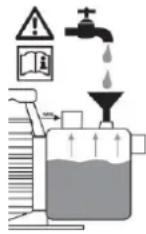
Please use the filling opening to fill the pump housing with water. Check to make sure that no leakage is present. Then close the filling opening airtight. It is recommendable - but not indispensable - to fill the intake line with water, too.
Petrol engine pumps are self-priming. This means that putting them to operation requires only the pump casing to be filled with water, i.e. not necessarily the intake line, too. However, in this case the pump will take some more minutes to suck in the liquid to be discharged. The additional filling of the intake line will facilitate and accelerate the first suction cycle considerably. If the intake line is not filled with liquid, it might be necessary during putting to operation to fill the pump housing more than once. This will depend on the length and diameter of the intake line. To permit the air to escape, you should open a shut-off devices in the pressure line, such as for instance a faucet.
6.5. Starting the engine
To start the engine of an LTP 250/25 model, you have to put the ignition breaker to the "ON" position, the choke lever to the start position, and the throttle control to "full throttle". Subsequently, pull the starter rope several times strongly until the engine starts. As soon as the engine is running, slowly move the choke lever to the "operating" position. Priming will start as soon as the engine has begun to run. During this process, please leave the throttle control in the "full throttle" position. As soon as the liquid is being discharged evenly without any noticeable air admixture, priming is completed and the system is fully vented. The throttle control can now be set according to the specific needs.
6.6. Operation

The petrol engine pump must not run with the withdrawal point being shut off.
The pump must not be operated permanently in the absence of water. This so-called dry running - i.e. the operation of the pump without any water being discharged - may cause considerable damage to the unit.
The petrol engine pump including the entire line system have to be protected from frost and climatic influences.
Combustible or easily inflammable or explosive matters and objects are to be kept out of the area of the pump while in operation.
Please do not top up fuel motor oil while the engine is running. Stop the pump for fuelling it.
During operation, some parts of the petrol engine pump become extremely hot, for instance the exhaust pipe and its cover. After switching the device off until its cooling down, to avoid injury by burning, the device must only be touched at the points provided for this purpose, e.g. at the control elements or handles.
During the first 20 hours of operation of a new device, the engine must not be operated at its full capacity. During this period of time, operation at two thirds of the possible speed is recommended. During this running-in period, full-throttle operation is admissible only for short periods of time up to a max. of 10 minutes, for instance during the priming operation at the time of putting the units to operation.
The pump must not be operated permanently in the absence of water. This so-called dry running - i.e. the operation of the pump without any water being discharged - may cause considerable damage to the unit because the required cooling is missing. If necessary, you have to stop the engine, check the intake line and the connection ports for leakages and refill the pump body and possibly the intake hose, too, with water.
The petrol engine pump must not run with the withdrawal point being shut off. Do not let the pump "work" against a closed pressure side.
Please do not top up fuel or motor oil with the engine running. For fuelling, please switch the pump off and allow at least five minutes for it to cool down. During fuelling, and also during operation or as long as the device is switched off, please make sure that it is standing upright on a level surface in order to prevent any spilling or leaking of fuel.
Do not touch the exhaust pipe and its cover during operation since these parts become very hot and bear the hazard of burning. Even after the device has been switched off, these parts remain very hot and must only be touched after allowing for an appropriate period of four cooling down. Other parts of the engine, too, become hot during operation. Therefore, please avoid to touch the unit during operation and afterwards from power-off to its cooling down at any points other than those intended for this purpose, e.g. at the control switches and levers or the handles.
Combustible or easily inflammable or explosive matters and objects are to be kept out of the area of the pump while in operation. Please do not place any objects on top of the engine.
6.7. To stop the engine
Put the throttle control to the idle position, then the ignition breaker to "OFF".
The pump inlet is equipped with a valve which will prevent the water from escaping out of the pump housing after the pump was switched off. This return stop will shorten the required priming period at the next start. Moreover, in this way it is not necessary to fill the pump housing with water at the next start of the pump.
6.8. Ending the application

The pump must not be transported with its fuel tank filled.
After each use, please drain the water contained in the pump through the opening provided for this purpose. Allow the pump body to dry well to avoid possible damage by corrosion. In the case of frost, water remaining inside the pump may freeze up and thus cause considerable damage.
If the device is transported after having been in use, the fuel has to be drained completely. Transporting the pump with its fuel tank filled is not allowed.
7. Maintenance and troubleshooting

If possible, please stop the engine, pull off the spark plug socket, and allow the engine to cool down prior to performing any maintenance work. If it is necessary to keep the motor running for performing certain maintenance work, please ensure sufficient ventilation because the exhaust gases are toxic.
Regular maintenance and thorough care will reduce the risk of possible operational malfunction and contribute to extend the life cycle of the unit. The technical design of engines is very complex, and they contain a huge number of moving parts which are subject to high mechanical, thermal and chemical influences from the side of the environment and the combustion process. The use of proper, high-quality and fresh operating fluids - fuel and motor oil - will prevent both damage to the engine and downtimes.
Abrasive matters contained in the liquid being discharged - such as sand - accelerate wear and tear and reduce the performance of the pump. When discharging liquids containing such matters, the installation of a prefilter is recommended. This useful accessory it will efficiently filter sand and similar particles out of the liquids, thus minimize wear and tear and extend the lifetime of the pump.
| Maintenance intervals | Visual inspection each time before operation | After the first month or after 20 hours | Every 3 months or after 30 hours | Every 6 months or after 50 hours | Once a year or after 100 hours | |
| Engine oil | Check oil level | X | ||||
| Change | X | X | ||||
| Air filter | Inspect | X | ||||
| Clean | X | |||||
| Change | X | |||||
| Spark plug | Clean | X | ||||
| Change | X | |||||
| Valve clearance | X | |||||
| Fuel line | X | Replace every 2 years! | ||||
| Inspect pump impeller | X | |||||
| Inspect non-return cap | X | |||||
7.1. Oil change and oil level check

When using models with auto-lubrication, please check the oil level prior to each use.
Every 30 operating hours or at least once all three month and after the first 20 operating hours an oil change must be performed. On models with auto-lubrication, an oil change should be carried out at least once per year. During this period of time, the quality of the motor oil will clearly drop even if the device is used only infrequently. To carry out such an oil change, please drain the old oil and fill in new oil through the filling opening into the oil reservoir. Quickly turn the engine several times in the running direction, in order to distribute the oil evenly.
Meticulous maintenance and care should include the check of the oil level prior to each use. To carry out this check, please use the dipstick provided. During the check the unit has to stand level and must be switched off and cooled down. Please make absolutely sure that the oil level is within the indicated minimum and maximum limits. Please observe the local regulations regarding the disposal of waste oil.
7.2. Automatic activation of the low-oil auto-stop feature
The pump is equipped with a low-oil safety feature. The models with auto-lubrication are equipped with an auto-stop feature. This handy feature will automatically cut out the engine in case the motor oil level drops below the required minimum. In this case starting the motor again is impossible until a sufficient quantity of motor oil has been topped up. When topping up motor oil, please observe all information contained in this manual regarding motor oil and oil level check.
7.3. Spark plug
Cleaning the spark plug and, where necessary, an adjustment of the electrode gaps should be performed at intervals of six months or 50 hours of operation. To perform maintenance on the spark plug, please pull off the spark plug socket first. Then use a spark plug wrench to remove the spark plug. For a disturbance-free functioning the spark plug has to be dry and free of combustion residues, and the electrode gap must be between 0.6-0.7 mm.
If required, please clean the spark plug. We recommend using a fine-wire brush to remove combustion residues. Where needed, correct the electrode gap by carefully bending the electrode. In the case of excessive deposits or worn electrodes you should insert a new spark plug.
Manually screw in the inspector, clean or, possibly, new spark plug until it comes to a stop. Then tighten the spark plug carefully using the spark plug wrench. Please do not use excessive force in order to avoid overtightening and consequently damaging the spark plug. To complete your work, slip the spark plug connector on the spark plug.
7.4. Air filter

For reason of the fire or explosion hazard involved, please do never use petrol or solvents with a low flashpoint to clean the air filter.
A dirty air filter means that the airflow into the carburetor is inhibited. To avoid operational malfunction of the carburettor, the air filter has to be checked regularly and cleaned or replaced, if necessary.
Basically, checking the air filter for contamination is recommended prior to each use. Cleaning should be performed at the latest every three months or after 30 hours of operation, respectively. If the device is used in a very dirty or dusty environment, it is advisable to shorten the cleaning intervals, for instance down to 10 hours. A new air filter should be installed every 6 months or after 50 hours of operation, respectively.
To perform this maintenance work, please open the air filter box and take the filter out. If necessary, wash out the air filter in a non-combustible solvent such as a washing-up liquid (dishwashing detergent). For reason of the fire or explosion hazard involved, please do never use petrol or solvents with a low flashpoint to clean the air filter.
After cleaning, please allow the air filter to dry.
Insert the checked, cleaned or new air filter in the air filter box and close the box again.
The pump must never be operated without an air filter since this would increase the wear and tear of the engine.
7.5. Replacing the mechanical shaft seal
The mechanical shaft seal is used to seal the pump body from the motor shaft. It counts among the parts which are subject to natural wear and tear.
If the mechanical shaft seal is defective, water will escape between the engine and the pump body. Qualified persons should only carry out replacement of the mechanical shaft seal.
7.6. Removing foreign matters from the pump
Coarsely sized particles contained in the liquid being discharged may entail the clogging of the pump body and pump wheel. In this case, it is possible to detach the pump housing in order to free the pump body and the pump wheel from the solid matter.
7.7. Transport and storage

In order to avoid the risk of fire, allow the motor to cool down before transporting or putting it in storage.
During transport, the water pump fuel valve should be set to OFF and the water pump kept level, in order to avoid the fuel leaking out. Spilled petrol or petrol vapours can ignite.
If the unit is not used over some extended period of time, the water in the pump ought to be fully drained. Please allow the pump to dry completely in order to prevent corrosion. Likewise, the fuel tank and the carburetor should be emptied, too. On the units with auto-lubrication, the motor oil should be drained as well. Prior to placing the unit in storage, it should be cleaned thoroughly and afforded some kind of preservation, should this be advisable. Please make sure that the device is stored in a dry and frost-proof place.
If the water pump is used to pump slightly dirty water, a residue can be left in the pump. Before storage, take in clean water with the water pump, in order to clean it. Otherwise, the pump impeller may be damaged when it is put in service again. To clean the pump, unscrew the drain plug (2) from the pump and drain the pump thoroughly Troubleshooting

We decline any liability for damage caused by inappropriate repair attempts. Any damage caused by inappropriate repair attempts will avoid all warranty claims.

None of the remedial actions listed below must be performed with the engine running.
The list below shows some cases of malfunction of the device, possible causes and tips on how to eliminate them. None of the remedial actions specified must be performed while the engine is running. If you yourself should feel unable to remove a malfunction, please contact the customer service department or your point of sale. Any repair beyond the scope specified below must only be performed by qualified staff. Always keep in mind that damage caused by improper repair attempts will void any warranty claims and that we decline any liability for ensuing damage.
Should any malfunction occur, please check first whether a faulty operation or any other cause is present, i.e. that the malfunction was not caused by a defect on the side of the device, for instance by a lack of fuel.
| Malfunction | Possible cause | Elimination |
| 1. The pump does not discharge any liquid at all or only a small quantity, engine is running. | Not enough liquid in the pump.Leakage in the intake line.Selected motor performance too low.Filter at the inlet of the intake line is clogged.Intake line is clogged.Pump wheel is blocked by foreign matters.Suction height and/or discharge height too high.Mechanical shaft seal is defective.Pump wheel is not properly seated.Pump wheel is damaged.Motor is not running smoothly. | Fill pump housing through filling opening with liquid.Check intake line and its connections. If required, seal connection parts of intake line with Teflon tape. Replace intake line if it shows damage which cannot be repaired.Increase motor performance.Clean filter.Clean intake line.Remove foreign matters.Modify the arrangement so that the suction height and/or discharge height do not exceed the maximum value any longer.Replace mechanical shaft seal.Arrange pump wheel properly.Replace pump wheel.Contact customer service. |
| 2. Vibration or loud noise during operation. | Suction height and/or discharge height to high.Intake line and/or pump wheel blocked by foreign matters.Instable installation.Unit is not standing firmly.Pump wheel is damaged.Other technical defect. | Modify the arrangement so that the suction height and/or discharge height do not exceed the maximum value any longer.Remove foreign matter.Stabilise the installation.Arrange unit firmly.Replace pump wheel.Contact customer service. |
| 3. Motor does not start or stop to run during operation. | Lack of fuel.Absence of ignition spark.Clogged carburettor.Clogged air filter.On a model with auto-lubrication, the auto-stop feature was activated because the motor oil level had dropped below required minimum.Other technical defect. | Open fuel cock and/or fill in fuel.Check ignition switch. If required, check the spark plug.Clean carburetor.Clean air filter.Top up motor oil.Contact customer service. |
8. Warranty
The present device was manufactured and inspected according to the latest methods. The seller warrants for faultless material and workmanship in accordance with the legal regulations of the country in which the device was purchased. The warranty period begins with the day of the purchase and is subject to the provisions below: Within the period of warranty, all defects which are to be attributable to defective materials or manufacturing will be eliminated free of charge. Any complaints are to be reported immediately upon their detection.
The warranty claim becomes void in the case of interventions undertaken by the purchaser or by third parties. Damage resulting from improper handling or operation, incorrect setting-up or storage, inappropriate connection or installation or Acts of God or other external influences are excluded from warranty.
Parts being subject to wear and tear are excluded from warranty.
All parts were manufactured using maximum care and high-quality materials and are designed for a long lifecycle. It should be understood, however, that the wear and tear depends on the kind of use, the intensity of use and the internals of maintenance. Complying with the installation and maintenance information contained in the present operating instructions will therefore considerably contribute to a long lifecycle of these wearing parts.
In case of complaints, we reserve the option of repairing or replacing the defective parts or replace the entire device. Replaced parts will pass into our property.
Claims for liquidated damages are excluded unless they are caused by wilful acts or negligence on the side of the manufacturer.
The warranty does not provide for any claims beyond those referred to above. The warranty claim has to be evidenced by the purchaser in the form of the submission of the sales receipt. The present warranty commitment is valid in the country in which the device was purchased.
Please note:
- Should your device fail to function properly, please verify first whether an operating error or another cause is present which cannot be attributed to a defect of the device.
- In case you have to take or send in your defective device for repair, please be sure to enclose the following documents:
– Sales receipt (sales slip).
- A description of the occurring defect (a description as accurate as possible will expedite the repair work).
- In case you have to take or send in your defective device for repair, please remove any attached parts which do not belong to the original condition of the device. If any attached parts of this kind should be missing upon the return of the device, we shall not be liable for them.
9. How to order spare parts
The fastest, most simple and cheapest way of ordering spare parts is through the internet. On our www.tip-pumpen.de website you will find a convenient spare part shop where you can order spare parts with just a couple of clicks. In addition, this is also the place where we publish comprehensive information and valuable tips on our products and accessories, introduce new devices and present current trends and innovations in the range of pump technology.
10. Service
In the case of warranty claims or malfunction, please contact your point of sale.
A current operating manual is available as required as a PDF file via e-mail: service@tip-pumpen.de.
11. Disposal hint
Dispose of the old device according to the regulations in force in your country.
Such appliance have to be collected separately and disposed of in an environmental-suitable manner and fed in an recycling system after the end of their life cycle. When disposing of this product, make sure that the fuel and oil are drained from the engine. Should you have any questions, please contact your local waste disposal management or your city administration.
Dispose of the product packaging in an environmentally friendly manner in the provided collection containers.
Chère cliente, cher client,
service@tip-pumpen.de.
11. Notele de eliminare
Pumpni agregat ne smije raditi pri zatvorenom usisu.
1 Filling hole for water
2 Water drain
3 Pressure port
4 Suction port
5 Pump housing
6 Starter rope
7 Choke lever
8 Throttle control
F
Functional parts / Details
9 Ignition breaker
10 Fuel tank
11 Tank cover lid
14 Oil dipstick
15 Petrol hose
16 Carburettor
17 Air filter box
13 Filling opening for motor oil
18 Exhaust pipe
19 Exhaust pipe cover
20 Spark plug connector
21 Support handle
22 Feet
23 Base plate
Email: service@tip-pumpen.de
- EC declaration of conformity
- Table of contents
- General safety information
- Safety of work place
- Safety of persons
- Safety when using a combustion engine
- Maintenance safety
- Please observe the following pictograms:
- Range of use
- Scope of delivery
- Installation
- General installation information
- Installation of the intake line
- Installation of the pressure line
- Stationary installation
- Putting into operation
- Set-up and visual inspection
- Fuel and fuelling
- Motor oil
- Low-oil safety feature
- Filling the pump with water, venting the system
- Starting the engine
- Operation
- To stop the engine
- Ending the application
- Maintenance and troubleshooting
- Oil change and oil level check
- Automatic activation of the low-oil auto-stop feature
- Spark plug
- Air filter
- Replacing the mechanical shaft seal
- Removing foreign matters from the pump
- Transport and storage
- Warranty
- Please note:
- How to order spare parts
- Service
- Disposal hint
- Notele de eliminare
- F
- Functional parts / Details
Brand : T.I.P.
Model : LTP 500/30
Category : Water pump