BUBBLE1L - Chemical product IBIZA SOUND - Free user manual and instructions
Find the device manual for free BUBBLE1L IBIZA SOUND in PDF.


User questions about BUBBLE1L IBIZA SOUND
0 question about this device. Answer the ones you know or ask your own.
Ask a new question about this device
Download the instructions for your Chemical product in PDF format for free! Find your manual BUBBLE1L - IBIZA SOUND and take your electronic device back in hand. On this page are published all the documents necessary for the use of your device. BUBBLE1L by IBIZA SOUND.
USER MANUAL BUBBLE1L IBIZA SOUND
HEALTH & SAFETY DATA SHEET
TITLE 1 : Identification of the Substance / Preparation and Company
1.1. Identification of the preparation
Product form: Mixture
Product Name :
| PRODUCT | REFERENCE | CODE PRODUCT | CONTENT |
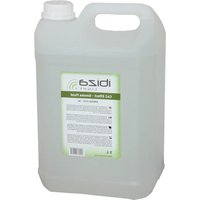
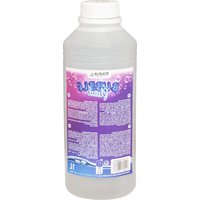
| IBIZA LIGHT - BUBBLE FLUID 1L | BUBBLE1L | 15-1534 | CAN 01L |
| IBIZA LIGHT - BUBBLE FLUID 5L | BUBBLE5L | 15-1019 | CAN 05L |
Customs Code : 34024200
1.2. Relevant identified uses of the substance or mixture and uses
1.2.1. Relevant identified uses
Use of the substance / mixture: Liquid formulation used to produce a bubble effect for show & party's
Professional use and general public use
1.2.2. Uses deprecated No additional information available
1.3. Idendification of the company
LOTRONIC SA
Rue F.Englert 17/2
1480 - Tubize - Belgium
Tel: +32 2 390 91 91 - +32 2 390 93 19
Website: www.lotronic.net
1.4. Emergency Telephone Number
Country Company Emergency Number
France ORFILA +33 (0) 1 45 42 59 59
TITLE 2: Hazards identification
2.1. Classification of the substance or mixture
Classification according to Regulation (EC) No. 1272/2008 [CLP] : Not Classified
Physicochemical harmful effects, for human health and the environment
To our knowledge, this product does not present any particular risk, subject to compliance with the general rules of industrial hygiene
2.2.Label Elements
Labelling according to Regulation (EC) No. 1272/2008 [CLP]
Child-resistant fastening: Not applicable
Tactile warning: Not applicable
2.3. Other Hazards
Contains no PBT/vPvB substances ≥ 0.1% assessed in accordance with REACH Annex XIII
The mixture does not contain substance(s) included in the list established in accordance with Article 59(1) of REACH for having endocrine disrupting properties, or is not identified as having endocrine disrupting properties in accordance with the criteria set out in Commission Delegated Regulation (EU) 2017/2100 or Commission Regulation (EU) 2018/605 at a concentration equal to or greater than 0.1%
TITLE 3 : Composition / information on ingredients
3.1. Substance Not applicable
3.2. Mixture
This mixture does not contain any substances to be mentioned according to the criteria of section 3.2 of REACH Annex II
| Name | Product identifier | % | Classification according to regulation (EC) N° 1272/2008 ( CLP) |
| D-Glucopyranose, oligomers, decyl octyl glycosides | (n° CAS) 68 515-73-1 (Numero CE) 500-220-1 | 0,95 - 0,988 | Eye Dam. 1, H318 |
| Hydroxypropyl Methylcellulose | (N° CAS) 9004-65-3 | 0,1 - 1 | Not classified |
| Glycerol | (n° CAS) 56-81-5 (Numéro CE) 200-289-5 | 0,1 - 1 | Unclassified |
| Sodium Benzoate | (n° CAS) 532-32-1 (Numéro CE) 208-534-8 (n° Reach) 01-2119460683-35 | 0,1 - 1 | Eye Irrit 2, H319 |
Full text of H-phrases: see section 16
TITLE 4 : First Aid
4.1. First aid indications
First aid after inhalation : Remove the person to fresh air and keep her in a position comfortable for breathing.
First aid for skin contact: Wash skin with plenty of water.
First aid after eye contact : Rinse eyes with water as a precaution.
First aid after ingestion: Call a poison control center or physician if you feel unwell.
4.2. Main symptoms and effects, acute and delayed
No additional information available
4.3. Indication of immediate medical attention and special treatment needed
Symptomatic treatment.
TITLE 5 : Measures against fire
5.1. Extinguishing Media
Suitable extinguishing media: Water spray. Dry powder. Foam. Carbon dioxide.
5.2. Special hazards arising from the substance or mixture
Hazardous decomposition products in case Possible release of toxic fumes of fire :
5.3. Advice for firefighters
Protection during firefighting : Do not attempt to take action without suitable protective equipment. Self-contained breathing apparatus Complete protective clothing
TITLE 6 : Measures Accidental Release
6.1. Personal precautions, protective equipment and emergency procedures
6.1.1. For non emergency personnel
Emergency Procedures: Ventilate spill area
6.1.2. For emergency responders
Protection Equipment: Do not attempt to take action without suitable protective equipment. For further information, refer to Section 8: "Control of individual exposure-protection".
6.2. Precautions for environmental protection
Avoid release into the environment.
6.3. Methods and materials for containment and cleaning
Methods for cleaning up: Take up liquid spill into absorbent material. Other information's: Dispose of materials or solid residues at an authorized site
6.4. Reference to other sections
For more information, see Section 13.
TITLE 7 : Handling and storage
7.1. Precautions for safe handling
Precautions for safe handling: Ensure good ventilation of the work station. Wear personal protective equipment.
Hygiene measures: Do not eat, drink or smoke when using this product. Always wash hands after handling the product.
7.2. Conditions for safe storage, including any incompatibilities
Storage conditions: Keep only in the original container. Keep in the dark
Store in a well-ventilated area.
Store away from light.
Storage temperature: 0 - 50 °C
7.3. Particular end use
No additional information available
TITLE 8: Exposure controls / personal protection
8.1. Control Parameters
Glycerol (56-81-5)
8.1.1 National occupational exposure and biological limit values: No additional information available
8.1.2. Recommended monitoring procedures: No additional information available
8.1.3. Air contaminants formed: No additional information available
8.1.4. DNEL and PNEC: No additional information available
8.1.5. Control banding: No additional information available
8.2. Exposure controls
8.2.1 Appropriate engineering controls:
8.2.2 Personal protective equipment symbol (s)
Appropriate engineering controls: Ensure good ventilation of the work station.

natural_image
Three blue circular signs with white pictograms: one with gloves, one with a person wearing glasses, and one with a mannequin (no text or symbols)8.2.2.1. Eye and face protection Eye protection: Safety glasses
8.2.2.2. Skin protection:
Skin and body protection: Wear suitable protective clothing
Hand protection: Protective gloves
8.2.2.3. Respiratory protection
Respiratory protection:
In case of insufficient ventilation, wear suitable respiratory equipment
8.2.2.4. Thermal hazards
No additional information available
8.2.3. Environmental exposure controls
Environmental exposure controls:
Avoid release to the environment.
TITLE 9 : Physical and chemical properties
9.1. Basic physical and chemical properties Information
Physical State: Liquid
Color: Colorless.
Odour: Characteristic.
Odour threshold: No data available
pH: No data available
Relative evaporation rate (butylacetate = 1): No data available
Melting point: No data available
Freezing point: No data available
Boiling point: Not applicable
Flash point: No data available
Auto-ignition temperature: No data available
Decomposition temperature: No data available
Flammability (solid, gas): Not applicable
Vapour pressure: No data available
Relative vapor density at 20 °C: No data available
Relative density: No data available
Solubility: No data available
Log Pow: No data available
Viscosity, kinematic: No data available
Viscosity, dynamic: No data available
Explosive properties: No data available
Oxidizing properties: No data available
Explosive limits: No data available
9.2. Other informations
9.2.1. Information with regard to physical hazard classes: No additional information available
9.2.2. Other safety characteristics: No additional information available
TITLE 10: Stability and reactivity
10.1. Reactivity
The product is not reactive under normal conditions of use, storage and transport.
10.2. Chemical stability
Stable under normal conditions
10.3. Possibility of hazardous reactions
Reacts violently with oxidation agents
10.4. Conditions to avoid
None under conditions of storage and handling recommendations (see section 7).
10.5. Incompatible materials
Strong acids. oxidizing agent.
10.6. Hazardous decomposition products
Thermal decomposition generates: Carbon monoxide. Carbon dioxide.
TITLE 11: Toxicological informations
11.1. Information on hazard classes as defined in Regulation (EC) n° 1272/2008
Acute toxicity: Not classified
Skin corrosion / irritation: Not classified
Serious eye damage / eye irritation : Not classified
Respiratory or skin sensitization: Not classified
Germ cell mutagenicity: Not classified
Carcinogenicity: Not classified
Reproductive toxicity: Not classified
Specific target organ toxicity (single exposure): Not classified
Specific target organ toxicity (repeated exposure): Not classified
Aspiration hazard: Not classified
11.2. Information on other hazards No additional information available
TITLE 12: Ecological informations
12.1. Toxicity
Ecology - general: The product is not considered harmful to aquatic organisms nor to cause long-term adverse effects in the environment
Hazardous to the aquatic environment, short-term (acute): Not classified
Hazardous to the aquatic environment, long-term (chronic): Not classified
12.2. Persistence and degradability
12.3. Potential for bioaccumulation
No additional information available
12.4. Mobility in soil
No additional information available
12.5. Results of PBT and vPvB assessment
No additional information available
12.6. Endocrine disrupting properties
No additional information available
12.7. Other adverse effects
No additional information available
TITLE 13: Considerations Disposal
13.1. Waste treatment methods
Waste treatment methods:
Dispose of contents/container in accordance with licensed collector's sorting instructions.
TITLE 14: Transport information's
In accordance with the requirements of ADR / RID / IMDG / IATA / ADN
14.1. ONU number
UN - N° (ADR) : Not applicable
UN - N° (IMDG) : Not applicable
14.2. Official shipping transport name ONU
Proper Shipping Name (ADR) : Not applicable
Proper Shipping Name (IMDG) : Not applicable
Proper Shipping Name (IATA) : Not applicable
Proper Shipping Name (ADN) : Not applicable
Proper Shipping Name (RID) : Not applicable
14.3. Hazard class for transport
| ADR - Hazard class for transport (ADR) : | Not applicable |
| IMDG - Hazard class for transport (IMDG) : | Not applicable |
| IATA - Hazard class for transport (IATA) : | Not applicable |
| ADN - Hazard class for transport (ADN) : | Not applicable |
| RID - Hazard class for transport (RID) : | Not applicable |
14.4. Packing Group
Packing Group (ADR) : Not applicable
Packing Group (IMDG) : Not applicable
Packing Group (IATA) : Not applicable
Packing Group (ADN) : Not applicable
Packing Group (RID) : Not applicable
14.5. Environmental hazards
Dangerous for the environment: No
Marine pollutant: No
Other information's : No supplementary information available
14.6. Special precautions for user
- Overland transport No data available
- By sea transport No data available
- Air transport No data available
- Inland Waterway transport No data available
- Rail transport No data available
14.7. Transport in bulk according to Annex II of MARPOL 73/78 and the IBC Code
Not applicable
TITLE 15 : Regulatory information
15.1. Regulations / legislation for the substance or mixture Safety, health and environment
15.1.1. EU regulations
Contains no REACH substances with Annex XVII restrictions
Contains no substance on the REACH candidate list
Contains no REACH Annex XIV substances
Contains no substance subject to Regulation (EU) No 649/2012 of the European Parliament and of the Council of 4 July 2012 concerning the export and import of hazardous chemicals.
Contains no substance subject to Regulation (EU) No 2019/1021 of the European Parliament and of the Council of 20 June 2019 on persistent organic pollutants
Contains no substance subject to Regulation (EU) 2019/1148 of the European Parliament and of the Council of 20 June 2019 on the marketing and use of explosives precursors.
15.1.2. National regulations
France
| Occupational diseases | |
| Code | Description |
| RG 84 | Conditions caused by liquid organic solvents for professional use: saturated or unsaturated aliphatic or cyclic liquid hydrocarbons and mixtures thereof; liquid halogenated hydrocarbons; nitrated derivatives of aliphatic hydrocarbons; alcohols; glycols, glycol ethers; ketones; aldehydes; aliphatic and cyclic ethers, including tetrahydrofuran; esters; dimethylformamide and dimethylacetamine; acetonitrile and propionitrile; pyridine; dimethylsulfone and dimethylsulfoxide |
15.2. Chemical safety assessment No chemical safety assessment has been carried out
TITLE 16 : Other informations
| Indication of changes | |||
| Section | Changed item | Change | Comments |
| SDS EU format | Modified | ||
| Abreviations and acronyms | |
| ADN | European Agreement concerning the International Carriage of Dangerous Goods by Inland Waterways |
| ADR | European Agreement concerning the International Carriage of Dangerous Goods by Road |
| ATE | Acute Toxicity Estimate |
| BCF | Bioconcentration factor |
| BLV | Biological limit value |
| BOD | Biochemical oxygen demand (BOD) |
| COD | Chemical oxygen demand (COD) |
| DMEL | Derived Minimal Effect level |
| DNEL | Derived-No Effect Level |
| EC - N° | European Community number |
| EC50 | Median effective concentration |
| EN | European Standard |
| IARC | International Agency for Research on Cancer |
| IATA | International Air Transport Association |
| IMDG | International Maritime Dangerous Goods |
| LC50 | Median lethal concentration |
| LD50 | Median lethal dose |
| LOAEL | Lowest Observed Adverse Effect Level |
| NOAEC | No-Observed Adverse Effect Concentration |
| NOAEL | No-Observed Adverse Effect Level |
| NOEC | No-Observed Effect Concentration |
| Abreviations and acronyms | |
| OECD | Organization for Economic Co-operation and Development |
| OEL | Occupational Exposure Limit |
| PBT | Persistent Bio accumulative Toxic |
| PNEC | Predicted No-Effect Concentration |
| RID | Regulations concerning the International Carriage of Dangerous Goods by Rail |
| SDS | Safety Data Sheet |
| STP | Sewage treatment plant |
| ThOD | Theoretical oxygen demand (ThOD) |
| TLM | Median Tolerance Limit |
| VOC | Volatile Organic Compounds |
| CAS n° | Chemical Abstract Service number |
| N.O.S | Not Otherwise Specified |
| vPvB | Very Persistent and Very Bio accumulative |
| ED | Endocrine disrupting properties |
Other information: None.
The content and format of this safety data sheet comply with European Council Regulation (EC) No. 1907/2006
The information contained in this safety data sheet is based on the state of our knowledge at the date indicated. The information contained in this sheet should be considered a description of the safety requirements of the product. They should not be considered as a guarantee or quality specification and have no contractual value for the properties of the product. The information contained in this safety data sheet relates to the specifically named product and cannot be used for a product combined with any other product. The conditions or methods of handling, manufacturing, use or disposal of the product are beyond our control and cannot be our responsibility.