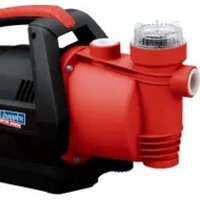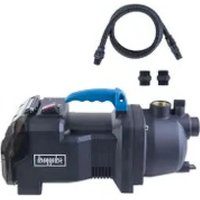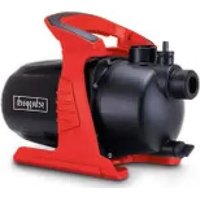
GP600S - Water pump SCHEPPACH - Free user manual and instructions
Find the device manual for free GP600S SCHEPPACH in PDF.


| Product type | Garden water pump |
| Brand | Scheppach |
| Model | GP600S |
| Supply voltage | 230 V~ / 50 Hz |
| Rated power | 600 W |
| Maximum flow rate | 3000 l/h |
| Maximum head | 35 m |
| Maximum discharge pressure | 3.5 bar |
| Maximum suction height | 8 m |
| Suction/pressure connection | Internal thread G1" (1 inch) |
| Maximum water temperature | 35 °C |
| Protection rating | IPX4 |
| Weight | 5.95 kg |
| Sound power level | 80.62 dB(A) |
| Sound pressure level | 68.57 dB(A) |
| Motor type | Alternating current motor |
| Protection | Overheating protection, unprotected dry run (observe) |
| Application | Garden watering, supplying sprinklers, drawing clear water |
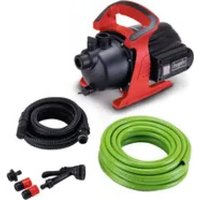
| Included accessories | Suction hose, adapter, quick couplings, watering gun, garden hose |
| Maintenance | Regular cleaning, drain before frost, check impeller |
| Safety | 30 mA residual current device required |
| Wear parts | Seals, pre-filter, flow sensor wheel, check valve |
Frequently Asked Questions - GP600S SCHEPPACH
User questions about GP600S SCHEPPACH
0 question about this device. Answer the ones you know or ask your own.
Ask a new question about this device
Download the instructions for your Water pump in PDF format for free! Find your manual GP600S - SCHEPPACH and take your electronic device back in hand. On this page are published all the documents necessary for the use of your device. GP600S by SCHEPPACH.
USER MANUAL GP600S SCHEPPACH
natural_image
Product photo of a portable pump with coiled hoses and connectors (no visible text or symbols)
GP600S
| DE | GartenpumpeOriginalbetriebsanleitung | 5 |
| GB | Garden pumpTranslation of original instruction manual | 17 |
| FR | Pompe de jardinTraduction des instructions d'origine | 27 |
1
678910
natural_image
Technical line drawing of a mechanical pump assembly with labeled parts (no text or symbols present)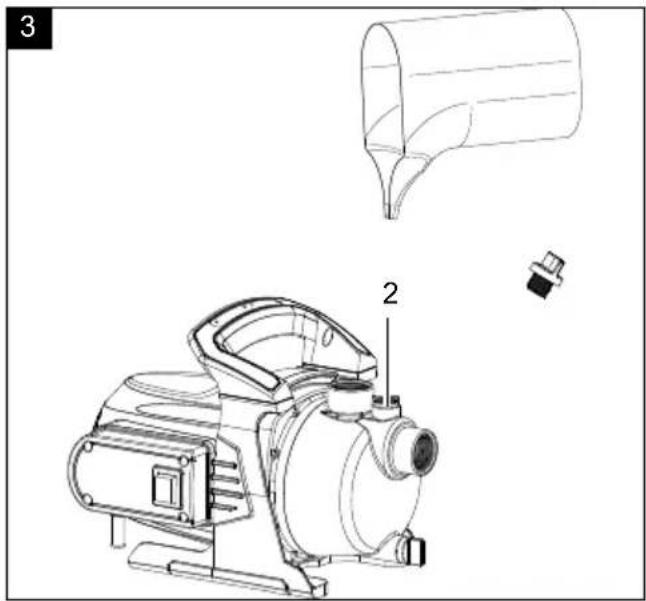
natural_image
Technical line drawing of an electric motor assembly with labeled parts (no text or symbols present)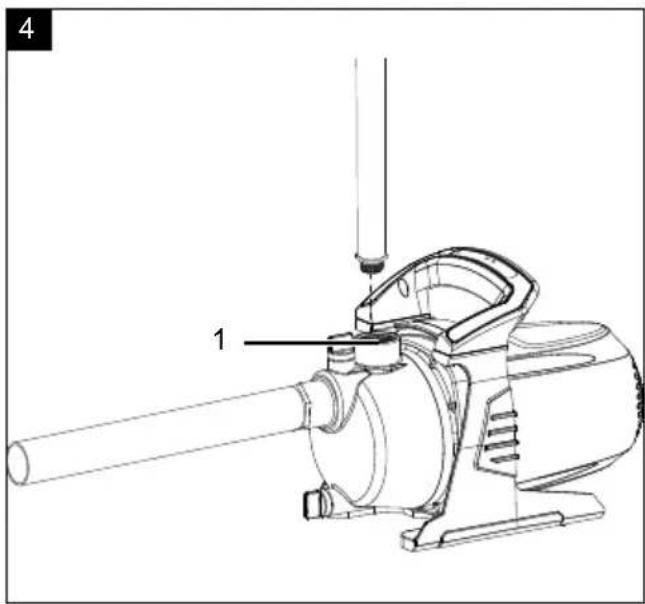
Günzburger Straße 69
D-89335 Ichenhausen
Verehrter Kunde,
10. Deinstallation/Transport
⚠ Achtung!
Homepage: https://www.scheppach.com/de/service
Explanation of the symbols on the product
Symbols are used in this manual to draw your attention to potential hazards. The safety symbols and the accompanying explanations must be fully understood. The warnings themselves will not rectify a hazard and cannot replace proper accident prevention measures.
 | Warning - Read the operating manual to reduce the risk of injury. |
 | Input voltage / frequency |
 | Nominal power |
 | Max. delivery pressure |
 | Weight |
 | Flow rate per hour |
 | Max. fluid temperature |
| IPX4 | Protection category |
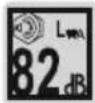 | Guaranteed sound power level |
 | The product complies with the applicable European directives. |
Table of contents: Page:
- Introduction.... 19
- Product description (fig. 1).... 19
- Scope of delivery 19
- Proper use 19
- Safety instructions 20
- Technical data....21
- Unpacking 22
- Before commissioning & installation 22
- Operation....23
- Uninstallation/Transport 23
- Maintenance/Cleaning 23
- Storage 24
- Electrical connection 24
- Disposal and recycling....25
- Troubleshooting 26
- Declaration of conformity 39
1. Introduction
Manufacturer:
Scheppach GmbH
Günzburger Straße 69
D-89335 Ichenhausen
Dear Customer,
We hope your new product brings you much enjoyment and success.
Note:
In accordance with the applicable product liability laws, the manufacturer of this product assumes no liability for damage to the product or caused by the product arising from:
- Improper handling
• Non-compliance with the operating manual
• Repairs carried out by third parties, unauthorised specialists
• Installing and replacing non-original spare parts
• Application other than specified - Failure of the electrical system in the event of the electrical regulations and VDE provisions 0100, DIN 57113 / VDE0113 not being observed
Note:
Read through the complete text in the operating manual before installing and commissioning the device.
This operating manual should help you to familiarise yourself with your product and to use it for its intended purpose.
The operating manual includes important instructions for the safe, proper and economic operation of the product, for avoiding danger, for minimising repair costs and downtimes and for increasing the reliability and extending the service life of the product.
In addition to the safety instructions in this operating manual, you must also observe the regulations applicable to the operation of the product in your country.
Keep the operating manual package with the power tool at all times and store it in a plastic cover to protect it from dirt and moisture. They must be read and carefully observed by all operating personnel before starting the work.
The product may only be used by personnel who have been trained to use it and who have been instructed with respect to the associated hazards.
The required minimum age must be observed.
In addition to the safety instructions in this operating manual and the separate regulations of your country, the generally recognised technical rules relating to the operation of such products must also be observed.
We accept no liability for accidents or damage that occur due to a failure to observe this manual and the safety instructions.
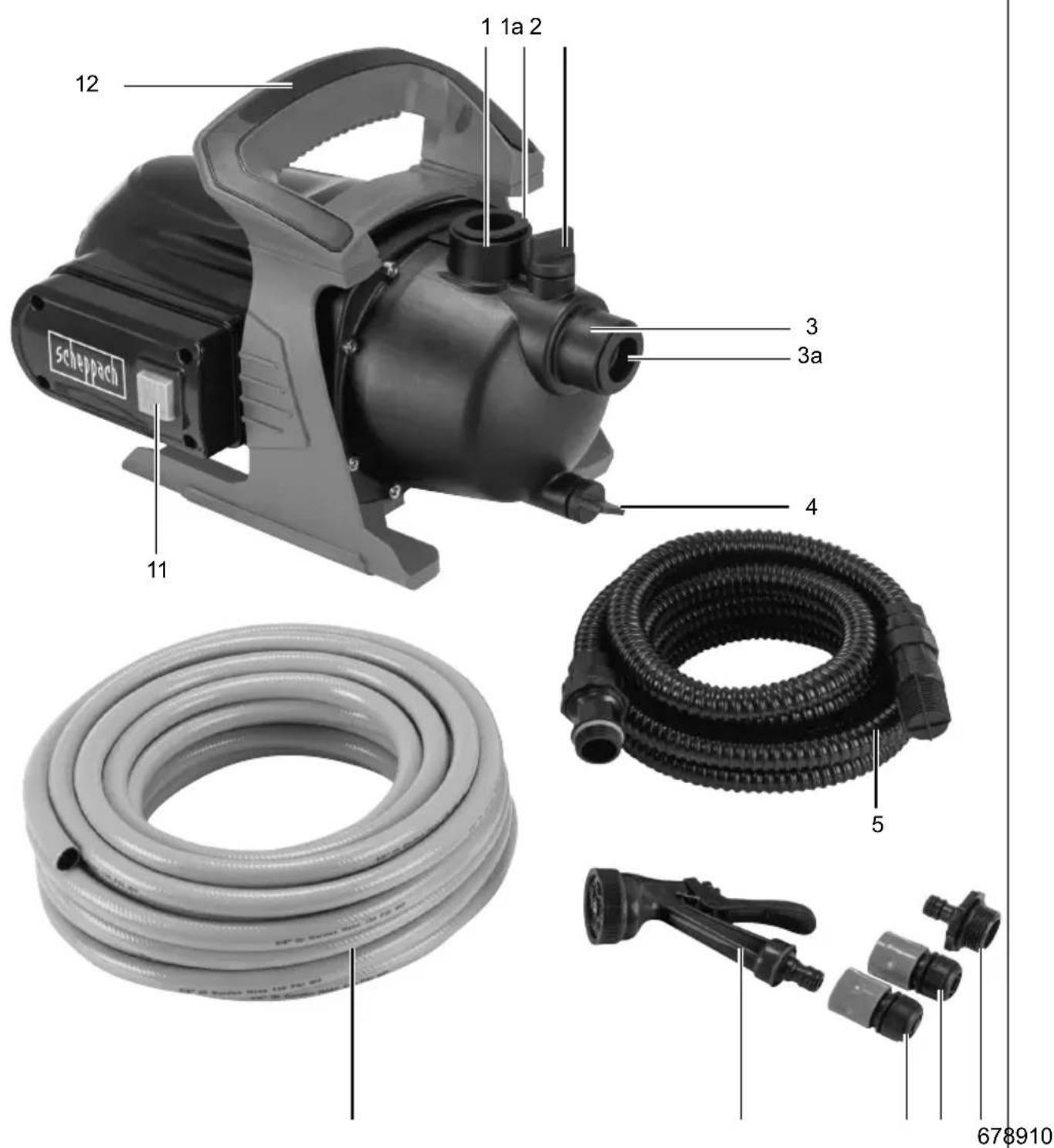
2. Product description (fig. 1)
- Pressure connection (1-inch female thread)
1a. Sealing cap - Filler plug
- Suction connection (1-inch female thread)
3a. Sealing cap - Drain screw
- Vacuum hose
- Hose adapter
- Quick coupling
- Quick coupling with water-stop
- Garden spray gun
- Garden hose
- Main switch
- Carrying handle
3. Scope of delivery
Item Quantity Designation
| 1x Garden pump |
| 5 1x Vacuum hose |
| 6 1x Hose adapter |
| 7 1x Quick coupling |
| 8 1x Quick coupling with water-stop |
| 9 1x Garden spray gun |
| 10 1x Garden hose |
4. Proper use
The garden pump is suitable for garden irrigation. It is intended for private use in the garden.
The machine may only be used in the intended manner.
Any use beyond this is improper.
The user/operator, not the manufacturer, is responsible for damages or injuries of any type resulting from this.
An element of the intended use is also the observance of the safety instructions, as well as the assembly instructions and operating information in the operating manual. Persons who operate and maintain the machine must be familiar with it and must be informed about potential dangers.
In addition, the applicable accident prevention regulations must be strictly observed. Other general occupational health and safety-related rules and regulations must be observed. The liability of the manufacturer and resulting damages are excluded in the event of modifications of the machine.
Area of application
- For watering and irrigation of green areas, vegetable beds and gardens.
• For operating lawn sprinklers. - With pre-filter for drawing water from ponds, streams, rainwater barrels, rainwater cisterns and wells.
Pumped media
For pumping clear water (fresh water), rainwater or light detergent solutions / domestic water:
- The maximum temperature of the pumped liquid must not exceed +35°C.
- This garden pump must not be used to pump flammable, gaseous or explosive liquids.
- The pumping of aggressive liquids (acids, lyes, silo seepage juice etc.), as well as liquids with abrasive (sanding) materials (sand) must also be avoided.
The machine may only be operated with original parts and original accessories from the manufacturer.
The safety, operating and maintenance specifications of the manufacturer, as well as the dimensions specified in the technical data, must be observed.
Please note that our equipment was not designed with the intention of use for commercial or industrial purposes. We assume no guarantee if the device is used in commercial or industrial applications, or for equivalent work.
5. Safety instructions
General power tool safety warnings
⚠ WARNING! Read all safety warnings, instructions, illustrations and specifications provided with this power tool. Failure to follow all instructions listed below may result in electric shock, fire and/or serious injury.
Save all warnings and instructions for future reference. The term "power tool" in the warnings refers to your mains-operated (corded) power tool or battery-operated (cordless) power tool.
General safety instructions
- This product can be used by children from 8 years of age as well as by persons with reduced physical, sensory or mental capabilities or with a lack of experience or knowledge, if they are supervised or if they have been trained in the safe use of the device and understand the resultant hazards.
• Children may not play with the Product. - Cleaning and user maintenance must not be carried out by children unsupervised.
- The product must not be operated if there are people in the water.
- Keep children away from the running engine.
- Dispose of the packaging material properly.
- Do not use the product in the vicinity of combustible fluids or gases. There is a risk of fire or explosion if disregarded.
- The pumping of aggressive, abrasive (scouring), corrosive, flammable (e.g. motor fuels) or explosive liquids, salt water, cleaning agents and foodstuffs is not permitted.
- Store the product in a dry place and out of reach of children.
- The temperature of the pumped liquid shall not exceed 35°C.
- Do not work with a damaged, incomplete or modified product without the consent of the manufacturer. Before commissioning, have a specialist check that the required electrical protective measures are in place.
-
Supervise the product during operation in order to detect automatic shutdown or dry-running of the garden pump in good time. Check the function of the float switch regularly (see chapter "Commissioning"). Failure to do so will invalidate warranty and liability claims.
-
Please note that the garden pump is not suitable for continuous operation (e.g. for watercourses in garden ponds). Regularly check the product for proper function.
- Please note that lubricants are used in the product, which may cause damage or contamination due to leakage. Do not use the garden pump in garden ponds with fish or valuable plants. If lubricants leak out, they may contaminate the liquid.
- Do not carry or attach the product by the cable or hose.
- Protect the product against frost and running dry.
- Only use original spare parts and accessories and do not modify the product.
- Please read the information on "Cleaning, maintenance, storage" in the operating manual. All additional measures, in particular opening the product, must be carried out by a qualified electrician. In the event of repair, always contact our service centre.
Electrical safety instructions
- When operating the product, the power plug must be freely accessible after installation.
-
Before you put your new garden pump into operation, have it professionally tested:
-
Earthing, connection of the neutral line and residual current circuit breaker must comply with the safety regulations of the power supply companies and function properly.
- Protect the electrical plug connections from moisture.
-
If there is a risk of flooding, fit the plug connections in the flood-proof area.
-
Ensure that the mains voltage corresponds to the specifications on the type plate.
- Carry out the electrical installation in accordance with the national regulations.
- Only connect the product to a socket with a residual current circuit breaker (FI switch) with a rated residual triggering current of up to 30 mA; Fuse at least 6 amps.
- Before each use, always check the product, cable and plug for damages. Defective cables must not be repaired but replaced with a new ones. Have product damages repaired by a specialist.
- If the connection cable for the product is damaged then it must be replaced by the manufacturer or their customer services personnel or by a similarly qualified person, in order to avoid hazards.
-
Do not use the cable to pull the plug out of the outlet.
-
Protect the cable from heat, oil and sharp edges.
- Do not carry or attach the product by the cable.
- Use only extension cables that are splash-proof and intended for outdoor use. Always unroll a cable drum completely before use. Check the cable for damage.
- Pull out the mains plug before all work on the product, in work breaks and when not in use.
- Mains connection cables shall not have a smaller cross-section than rubber hose lines with the designation H07RN-F 3*1.0mm ^2 . The cable length must be 10 m. The conductor core cross-section of the extension cable must be at least 1.5 mm ^2 .
Lubricants are used inside the garden pump which may contaminate the liquids flowing out if the product is operated improperly or damaged.
Warning! This power tool generates an electromagnetic field during operation. This field can impair active or passive medical implants under certain circumstances. In order to prevent the risk of serious or deadly injuries, we recommend that persons with medical implants consult with their physician and the manufacturer of the medical implant prior to operating the power tool.
Residual risks
The machine has been built according to the state-of-the-art and the recognised technical safety requirements. However, individual residual risks can arise during operation.
• Health hazard due to electrical power, with the use of improper electrical connection cables.
- Before performing setting or maintenance work, unplug the mains plug.
• Furthermore, despite all precautions having been met, some non-obvious residual risks may still remain.
- Residual risks can be minimised if the "Safety Instructions" and the "Intended Use" together with the operating manual as a whole are observed.
6. Technical data
Engine 230V\~ / 50 Hz
Nominal power 600 W
Max. delivery flow 3000 l/h
Max. delivery height 35 m
Max. delivery pressure 3.5 bar
| Max. suction height 8 m | |
| Pressure connection and Suction connection | G1" |
| Max. water temperature 35°C | |
| Protection category IPX4 | |
| Weight 5.95 kg | |
Subject to technical changes!
Noise and vibration
⚠ Warning: Noise can have serious effects on your health. If the machine noise exceeds 85 dB, please wear suitable hearing protection.
Information about noise level measured in accordance with EN ISO 3744:2010
Noise data
| Sound power level L_WA | 80.62 dB |
| Sound pressure level L_pA | 68.57 dB |
| Uncertainty K_wa/pA | 1.52 dB |
7. Unpacking
- Open the packaging and carefully remove the device.
- Remove the packaging material, as well as the packaging and transport safety devices (if present).
- Check whether the scope of delivery is complete.
- Check the device and accessory parts for transport damage. In the event of complaints the carrier must be informed immediately. Later claims will not be recognised.
- If possible, keep the packaging until the expiry of the warranty period.
- Familiarise yourself with the device by means of the operating manual before using for the first time.
- With accessories as well as wearing parts and replacement parts use only original parts. Spare parts can be obtained from your specialist dealer.
- When ordering please provide our article number as well as type and year of manufacture for your equipment.
⚠ WARNING!
The device and the packaging material are not children's toys! Do not let children play with plastic bags, films or small parts! There is a danger of choking or suffocating!
8. Before commissioning & installation
- Prior to commissioning, all covers and safety devices must be mounted correctly.
- Before connecting the machine, make certain that the data on the type plate matches with the mains power data.
Note:
A 1-inch internal thread serves as the connection for the suction and pressure connection at the factory.
Additional connection system (such as tap piece, hose clamp, bayonet fitting) is required for installation and is not included in the scope of delivery.
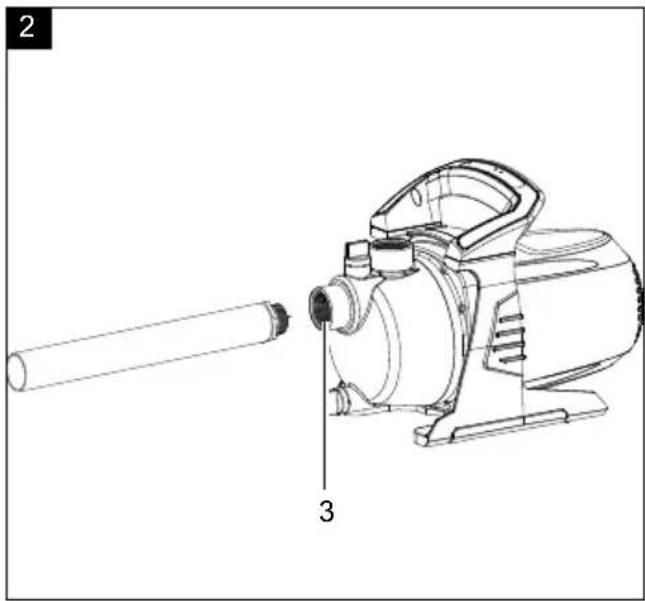
8.1 Installation of a suction line (Fig. 1+2)
- Remove the sealing cap (3a) on the suction connection (3). Keep the sealing cap (3a) in a safe place!
- Connect the suction hose (5) to the suction connection (3) by screwing it into the thread.
- Lay the suction line rising from the water pick-up point to the garden pump.
Notes:
- Please do not lay the suction line above the pump height. Air bubbles in the suction line will delay and prevent the suction process.
- Attach the suction and pressure lines so as to avoid mechanical pressure on the garden pump.
- Place the suction line deep enough in the water to prevent the garden pump from running dry due to the water level sinking.
- Check the suction hose for leaks, to avoid sucking air.
- Avoid sucking in foreign bodies (sand etc.).
8.2 Filling the garden pump with water (Fig. 3)
To reduce the start-up time of the garden pump and to prevent air from being sucked in, the garden pump must be filled with water beforehand!
- The suction line should already be fitted for this purpose to prevent water from flowing out of the suction connection (3).
- Fill the garden pump with water via the opening of the pressure connection (1). Alternatively, water can be poured in through the opening of the filler plug (2). Approx. 2.5 litres of water are required.
- Tilt the garden pump slightly in between to avoid air pockets.
- Now, attach the pressure line as described in the next point.
8.3 Preparing the garden hose (Fig. 1)
- Unscrew and separate the quick-coupling (7). Slide the union nut over the garden hose (10) and attach the quick coupling (7) to the garden hose (10).
- Now screw it onto the union nut.
- Unscrew and separate the quick-coupling with the water-stop (8). Slide the union nut over the other end of the garden hose (10) and attach the quick coupling with water-stop (8) to the garden hose (10).
- Now screw the quick coupling with water-stop (10) back onto the union nut.
8.4 Installation of a pressure line (Fig. 4)
- Remove the sealing cap (1a) on the pressure connection (1). Keep the sealing cap (1a) in a safe place!
- Screw the hose adapter (6) onto the pressure connection (1).
- Then connect the end of the garden hose with the quick coupling (7) to the hose adapter (6).
- During the suction process, the consumers present in the pressure line (e.g. syringe, shower, toilet flush, etc.) must be completely opened so that the air present in the suction line can escape freely.
8.5 Installation and description of the garden spray gun (Fig. 1)
- Connect the garden spray gun (9) to the end of the garden hose (10) using the quick coupling with water-stop (8).
- The spray pattern of the garden spray gun can be adjusted by turning the black ring on the outlet side of the garden spray gun (9). The arrow on the top of the garden spray gun (9) shows which function has been selected.
-
Functions of the garden spray gun (9):
-
Full: Full, straight jet
- Branch: Three straight, smaller jets
- Flat: One flat jet
- Jet: One narrow, powerful jet
- Shower: Fine jets
9. Operation
Attention!
Always make sure the product is fully assembled before commissioning!
NOTE!
The garden pump must be absolutely leak-proof at the inlet and outlet. Therefore, regardless of your chosen connection, use a Teflon or any other sealing tape. The garden pump runs continuously after being switched on. As the garden pump does not have a dry-running cut-off, the pump must be kept under constant observation during operation to avoid damage due to dry running. The pump has overheating protection and switches off when the garden pump becomes too warm.
- Connect the garden pump to the power supply.
- Actuate the main switch (11). (Fig.1)
Attention: The garden pump starts immediately. Please ensure that the product is completely assembled.
- Press the main switch (11) again to switch off the garden pump. (Fig.1)
10. Uninstallation/Transport
Attention!
Always unplug the mains plug.
Only use the carrying handle (12) to transport the product.
10.1 Empty the garden pump and domestic waterworks housing prior to transport.
- Provide a collection bucket with a volume of approx. 2.5 litres (not included) for the water to be drained.
- Remove the drain screw (4).
- Allow the water to flow completely into the collection container from the garden pump.
- Remove the suction and pressure hose.
- Remove the connection systems attached to your garden pump.
- Then tilt the garden pump so that the residual water flows out through the suction and pressure connections (3 and 1).
- Screw the drain screw (4).
- Close the suction and pressure connections (3 and 1) using the sealing caps (1a and 3a) to protect the garden pump from dust and dirt.
11. Maintenance/Cleaning
⚠ Attention!
Only carry out maintenance, cleaning and adjustment work when the mains plug is pulled out.
We recommend that you clean the product directly after every use.
Attention!
Make sure that no water can penetrate the motor. Do not spray the product with water or clean it under running water. There is a danger of electric shock and the product could be damaged.
Clean the product at regular intervals using a damp cloth and a little soft soap. Do not use any cleaning products or solvents; they could attack the plastic parts of the product.
• We recommend regular inspections and care for a long service life (i.e. At least once a month).
- Before extended periods of inactivity or through the winter, the garden pump should be thoroughly flushed through with water, emptied completely and then stored dry.
- To empty the housing, loosen the drain screw (4) and tilt the garden pump slightly.
- If there is a risk of frost the garden pump must be emptied.
• After longer periods of storage check the pump by switching on/off briefly in order to check that the rotor turns normally.
- In the event of the garden pump being jammed connect the pressure line (1) to the water supply line and remove the suction line (3). Open the water supply line. Switch the garden pump on for ca. two seconds several times. This method rectifies blockages in most cases.
Connections and repairs
Connections and repair work on the electrical equipment may only be carried out by electricians.
Service information
With this product, it is necessary to note that the following parts are subject to natural or usage-related wear, or that the following parts are required as consumables.
Wearing parts*: Seals, pre-filter, flow sensor impeller, non-return valve
* may not be included in the scope of delivery!
Spare parts and accessories can be obtained from our Service Centre. To do this, scan the QR code on the front page.
12. Storage
Store the device and its accessories in a dark, dry and frost-free place that is inaccessible to children.
The optimum storage temperature is between 5 and 30°C.
Store the power tool in its original packaging.
Cover the power tool to protect it from dust or moisture.
Store the operating manual with the power tool.
13. Electrical connection
The electrical motor installed is connected and ready for operation. The connection complies with the applicable VDE and DIN provisions. The customer's mains connection as well as the extension cable used must also comply with these regulations.
13.1 Damaged electrical connection cable
The insulation on electrical connection cables is often damaged.
This may have the following causes:
- Pressure points, where connection cables are passed through windows or doors.
- Kinks where the connection cable has been improperly fastened or routed.
- Places where the connection cables have been cut due to being driven over.
• Insulation damage due to being ripped out of the wall outlet. - Cracks due to the insulation ageing.
Such damaged electrical connection cables must not be used and are life-threatening due to the insulation damage.
Check the electrical connection cables for damage regularly. Ensure that the connection cables are disconnected from electrical power when checking for damage.
Electrical connection cables must comply with the applicable VDE and DIN provisions. Only use connection cables of the same designation.
The printing of the type designation on the connection cable is mandatory.
If the mains connection cable of this device is damaged, it must be replaced by a special connection cable which can be obtained from the manufacturer or its service department.
AC motor 230 V\~ / 50 Hz
Mains voltage 230 V\~ / 50 Hz
Mains power connection and extension leads must be 3-core = P + N + SL. - (1/N/PE).
Extension leads up to 25 m must have a minimum cross-section of 1.5 mm ^4 . The mains power connection must be protected with a max. 16 A fuse.
Please provide the following information in the event of any enquiries:
• Type of current for the motor
• Engine data - type plate
14. Disposal and recycling
Notes for packaging


The packaging materials are recyclable. Please dispose of packaging in an environmentally friendly manner.
Notes on the electrical and electronic equipment act [ElektroG]
![SCHEPPACH GP600S - Notes on the electrical and electronic equipment act [ElektroG] - 1](/content/2026/04/735432/images/d6ff13097755142a102a486b1e43f316275fc467bc243102acc782db59fc89d7.jpg)
Waste electrical and electronic equipment does not belong in household waste, but must be collected and disposed of separately!
- Used batteries or rechargeable batteries that are not installed permanently in the old appliance must be removed non-destructively before disposal. Their disposal is regulated by the battery law.
- Owners or users of electrical and electronic devices are legally obliged to return them after use.
- The end user is responsible for deleting their personal data from the old device being disposed of!
- The symbol of the crossed-out dustbin means that waste electrical and electronic equipment must not be disposed of with household waste.
-
Waste electrical and electronic equipment can be handed in free of charge at the following places:
-
Public disposal or collection points (e.g. municipal works yards)
- Points of sale of electrical appliances (stationary and online), provided that dealers are obliged to take them back or offer to do so voluntarily.
- Up to three waste electrical devices per type of device, with an edge length of no more than 25 centimetres, can be returned free of charge to the manufacturer without prior purchase of a new device from the manufacturer or taken to another authorised collection point in your vicinity.
- Further supplementary take-back conditions of the manufacturers and distributors can be obtained from the respective customer service.
- If the manufacturer delivers a new electrical appliance to a private household, the manufacturer can arrange for the free collection of the old electrical appliance upon request from the end user. Please contact the manufacturer's customer service for this.
These statements only apply to devices installed and sold in the countries of the European Union and which are subject to the European Directive 2012/19/EU. In countries outside the European Union, different regulations may apply to the disposal of waste electrical and electronic equipment.
15. Troubleshooting
The following table shows fault symptoms and describes remedial measures in the event of your machine failing to work properly. If you cannot localise and rectify the problem with this, please contact your service workshop.
Note: When returning the device for repair, please ensure for safety reasons that it is empty and dry when it is sent to the service centre.
| Fault Possible cause Remedy | ||
| Motor does not start or stops suddenly during operation. | No mains voltage. Check mains voltage | |
| Electrical interruption. | Have the garden pump checked by a specialist workshop. | |
| Pump impeller jammed and thermal sensor has switched off. | Disconnect the garden pump from the power supply, dismantle and clean the water hoses and connections. | |
| Garden pump does not suck. | Suction valve not in the water. Put the suction valve in the water | |
| Garden pump was not filled with pumped liquid. | Fill the garden pump with water. | |
| Garden pump sucks in air at a connection point. | Seal the suction-side connections airtight | |
| Leaking or damaged suction pipe. | Check suction hose for damages and seal airtight | |
| Max. suction height exceeded. Check suction height | ||
| Waiting time has not been observed. | Switch on the garden pump and wait until the garden pump has sucked in water. | |
| Air cannot escape because the pressure line is closed or there is residual water in the pressure line. | Open the consumer on the pressure line (e.g. sprayer, shower etc.) or empty the pressure line or disconnect it from the garden pump during the suction process. | |
| Suction line blocked. Clean the suction line. | ||
| Engine is running, but the flow rate or pressure suddenly decreases. | Suction height too high. Check suction height | |
| Water level dropping rapidly. Position suction valve lower | ||
| Performance reduces due to hazardous substances. | Clean the garden pump and replace worn parts. | |
| Suction line blocked. Clean the suction line. | ||
| Suction side leaking. Seal suction-side | ||
| Thermal sensor switches off the garden pump. | Motor overloaded, friction too high due to foreign bodies. | Dismantle the garden pump and clean, avoid suctioning foreign bodies. |
Günzburger Straße 69
D-89335 Ichenhausen
Cher client,
EU Declaration of Conformity
| X 2006/42/EG | |
| Annex IV Notified Body: Notified Body No.: Certificate No.: | |
Standard references:
EN 60335-1:2012+A11+A13+A1+A14+A2+A15; EN 60335-2-41:2003+A1+A2; EN 62233:2008; EN ISO 12100:2010; EK1 527-12 Rev. 2; EN IEC 55014-1:2021; EN IEC 55014-2:2021; EN IEC 61000-3-2:2019+A1;
EN 61000-3-3:2013+A1+A2
This declaration of conformity is issued under the sole responsibility of the manufacturer.
The object of the declaration described above fulfils the regulations of the directive 2011/65/EU of the European Parliament and Council from 8th June 2011, on the restriction of the use of certain hazardous substances in electrical and electronic equipment.
Subject to change without notice
Documents registrar: David Rümpelein Günzburger Str. 69, D-89335 Ichenhausen
Garantie DE
Apparent defects must be notified within 8 days from the receipt of the goods. Otherwise, the buyer's rights of claim due to such defects are invalidated. We guarantee for our machines in case of proper treatment for the time of the statutory warranty period from delivery in such a way that we replace any machine part free of charge which provably becomes unusable due to faulty material or defects of fabrication within such period of time. With respect to parts not manufactured by us we only warrant insofar as we are entitled to warranty claims against the upstream suppliers. The costs for the installation of the new parts shall be borne by the buyer. The cancellation of sale or the reduction of purchase price as well as any other claims for damages shall be excluded.