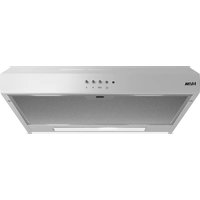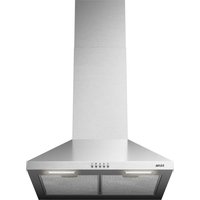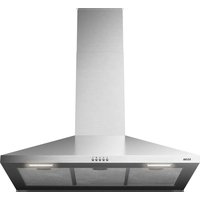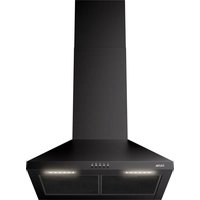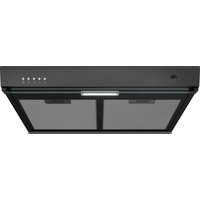
AW6075RVS - Basket ETNA - Free user manual and instructions
Find the device manual for free AW6075RVS ETNA in PDF.


User questions about AW6075RVS ETNA
0 question about this device. Answer the ones you know or ask your own.
Ask a new question about this device
Download the instructions for your Basket in PDF format for free! Find your manual AW6075RVS - ETNA and take your electronic device back in hand. On this page are published all the documents necessary for the use of your device. AW6075RVS by ETNA.
USER MANUAL AW6075RVS ETNA
natural_image
Illustration of a hand inserting a card into a folder (no text or symbols visible)text_image
Diagram showing a device with labeled components and signal paths, including a sensor or sensor device and directional arrows.Montage
text_image
Diagram showing a 3D object with labeled components A, B, and C, including directional arrows and dashed lines indicating movement or force.text_image
Technical diagram of a mechanical assembly with labeled components D and E, showing directional arrows and structural elements.natural_image
Symbol of a trash bin with crossed lines indicating no waste or discharge, plus a black rectangular base (no text or numbers present)natural_image
Illustration of a hand inserting a card into a rectangular device (no text or symbols visible)natural_image
Diagram of a mechanical or electrical component with three labeled sensors and directional arrows, no readable text or symbols present.Montage
text_image
Diagram showing a device with labeled components A, B, and C, illustrating a physical setup with directional arrows and a 3D panel.text_image
Technical diagram of a mechanical assembly with labeled components D and E, showing a cylindrical component inserted into a housing.natural_image
Symbol of a trash bin with crossed x-marks and a blank base (no text or numbers)natural_image
Illustration of a hand pressing down on a folded paper or plastic sheet (no text or symbols visible)text_image
Diagram showing a device with labeled components and signal paths, including a hand holding a sensor or detector.Montage
text_image
Diagram showing a device with labeled components A, B, and C, illustrating a physical setup or assembly.text_image
Technical diagram of a mechanical assembly with labeled components D and E, showing a cylindrical component inserted into a housing.natural_image
Symbol of a trash bin with crossed lines indicating no waste or discharge, plus a black rectangular block below (no text or labels)| Cleaning | 6 | |
| Removing the grease filters | 7 | |
| Lighting | 7 |
Installation
| General | 8 | |
| Electrical connection | 9 | |
| Mounting the canopy hood 10 |
Appendice
| Disposal of appliance and packaging | 11 |
Introduction
You have selected an Etna extractor hood.
Optimum ease of use and simple operation were the most important factors in the development of this product.
The extractor hood operates silently and provides maximum extraction effect. This banishes cooking smells completely. The extractor hood is specially designed for use on a central extraction system and is fitted with an electric flap.
This manual describes how you can make the best possible use of your extractor hood. You can find information in it about the controls and background information about how the appliance works. You will also find tips about how to look after it.
The safety instructions that are important during the installation are included in the installation guide, which is supplied separately and is meant for the installer.
Please keep this manual carefully, since any subsequent user will also find it very useful.

Read the separate safety instructions before using the device!
Controls
text_image
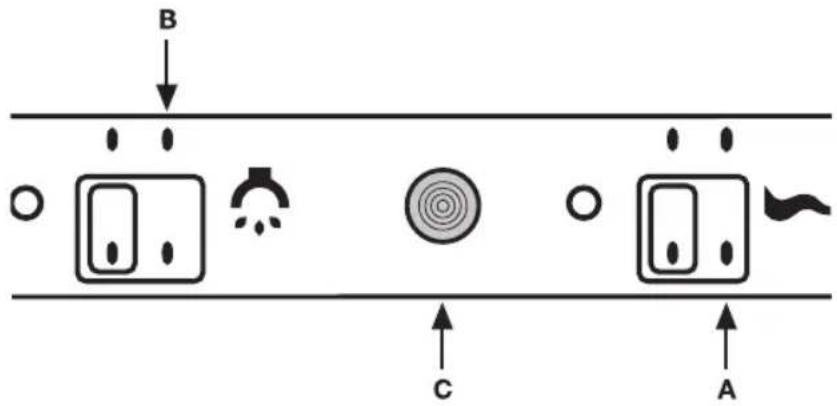
B C ASwitch hood on/off
- Slide the flap control to position A.
• The electric flap is opened.
• The control light C comes on.
After switching on, wait at least 10 seconds before switching the hood back off.
- Slide the flap control to position 0.
• The electric flap is closed.
After switching off, wait at least 10 seconds before switching the hood back on.
Switch lighting on/off
- Slide the light control to position B.
• The lighting comes on. - Slide the light control to position 0
• The lighting goes off.
Cleaning

Attention! Before performing any maintenance operation, isolate the hood from the electrical supply by switching off at the connector and removing the connector fuse. Or if the appliance has been connected through a plug and socket, then the plug must be removed from the socket.
The cooker hood should be cleaned regularly (at least with the same frequency with which you carry out maintenance of the fat filters) internally and externally. Do not use abrasive products. Do not use alcohol!
Attention! Failure to carry out the basic cleaning recommendations of the cooker hood and replacement of the filters may cause fire risks. Therefore, we recommend oserving these instructions.
The manufacturer declines all responsibility for any damage to the hood or any fire damage linked to inappropriate maintenance or failure to observe the above safety recommendations.
Cooker hood
Clean the cooker hood with soapy water and a soft cloth. Then wipe with clean water to rinse. Do not use aggressive cleaning agents such as soda. The cooker hood paintwork will stay looking nice if you wax it occasionally.

Stainless steel canopy hoods
Do not use any sort of scourer. Treat with a stainless steel care product and polish with the structure of the stainless steel.
Metal grease filters
These must be cleaned once a month (or when the filter saturation indication system – if envisaged on the model in possession – indicates this necessity) using non aggressive detergents, either by hand or in the dishwasher, which must be set to a low temperature and a short cycle. The openings must be placed downwards to let the water run out of the filters. The cleaning agents will make the aluminium filter turn dull, this is normal.
Grease filters
natural_image
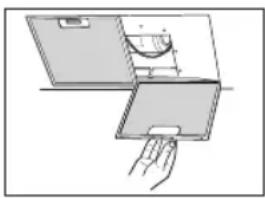
Illustration of a hand inserting a card into two compartments, showing internal structure (no text or symbols)Removing the grease filters
Switch off the electricity! Remove the plug from the socket or switch the electricity off at the mains. Pull the grease filter towards you and tilt it downwards at the front.
Lighting

Please note! Disconnect the appliance from the mains by removing the plug from the socket before the changing the light.
Changing the light bulbs
- Remove the grease filters
- Replace the lamp with a new lamp of the same type.
- Replace the grease filters.
| Lamp | Power (W) | Socket | Voltage (V) | Dimension (mm) | ILCOS Code |
| 3 E14 220-2 | 40 102 x 35 | DRBB/C-3 | -220-240 | E14-35/102 |
General
This appliance should be connected to the power supply by a recognized fitter who is familiar with, and works according to the correct safety regulations. This appliance meets the European requirements.
Important that you know:
- The minimum distance between the supporting surface for the cooking vessels on the gashob and the lowest part of the range hood must be not less than 65 cm. For use with an electric, ceramic or induction hob, this distance must be at least 55 cm.
- The discharge may only be connected to a central mechanical extraction.
- Consider local regulations with respect to the ventilation of gas appliances.
- The shorter the duct, and the fewer the bends in it, the better the cooker hood will work.
- Before you start drilling check that there are no installation cables present.
- The connecting pipe for the cooker hood has a diameter of 125 mm. It is best also to use a flue pipe of the same diameter.
- The installation material supplied with this range hood is designed for fixing to reinforced concrete or masonry walls. For some types of walls you may need special plugs and screws.
Connection

Electric connection
The appliance has been manufactured as a class II, therefore no earth cable is necessary.
Make sure the supply voltage ratings correspond with those stated on the appliance data plate. The connection to the mains is carried out as follows:
BROWN = phase L
BLUE = phase N
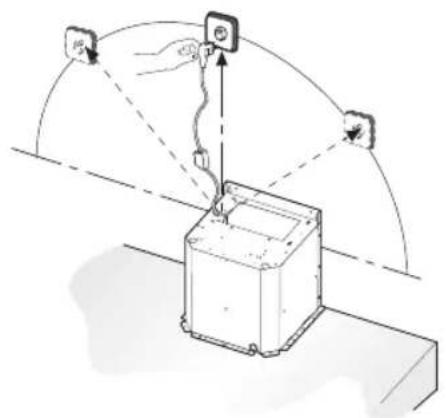
This canopy hood has been provided with a power plug. When installing the hood, make sure that this plug remains accessible. We recommend installing the wall socket out of view, behind the chimney cover.

Attention:
If you want to make a fixed connection, ensure that a multi-pole switch with a distance between contacts of 3 mm is installed in the supply cable.
max 90 cm
natural_image
Diagram of a mechanical or electrical setup with a box, wires, and directional arrows (no text or symbols)Mounting
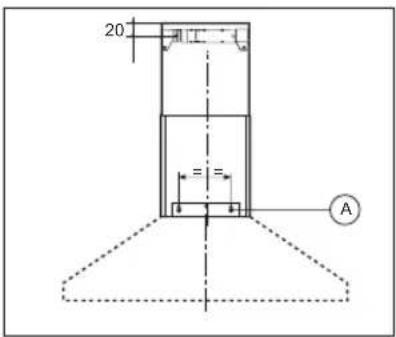
- Mount the hood on the wall using the plugs and screws provided bracket (A). Check size specifications.
text_image
20 A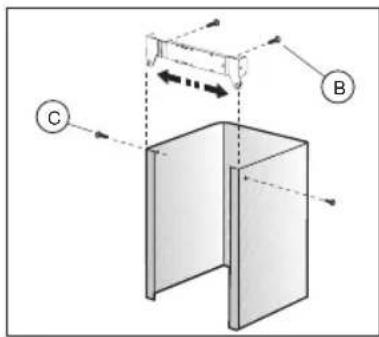
text_image
Diagram showing a device with labeled components A, B, and C, illustrating a physical setup or assembly.- Adjust the width of the brackets to the width of the upper chimney. Next, mount the bracket on the wall using the plugs and the screws (B). Take into account the distance between the brackets bracket and the ceiling (Check size specifications).
text_image
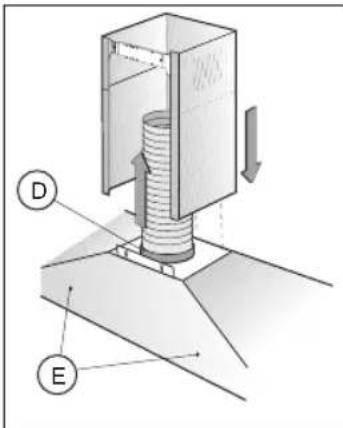
Technical diagram of a mechanical assembly with labeled components D and E, showing a cylindrical component inserted into a housing.- Install the vent duct on the flange (D) and then onto the connecting surface of the exhaust grid.
- Put the plug in the wall socket.
- Slide the upper chimney into the lower chimney.
- Slide the upper chimney around the bracket and attach with the screws provided (C).
- Then fix the cooker hood in place by fitting the screws (E).
Disposal
Disposal of appliance and packaging
By ensuring this product is disposed of correctly, you will help prevent potential negative consequences for the environment and human health, which could otherwise be caused by inappropriate waste handling of this product. The local authorities can provide you with the relevant information.
The packaging of this appliance is recyclable. It could have been made from:
- cardboard;
- polythene foil (PE);
- CFK-free polystyrene (PS-hard foam).
natural_image
Symbol of a trash bin with crossed lines indicating no waste or discharge (no text or numbers present)You need to dispose of these materials responsibly in accordance with official regulations.
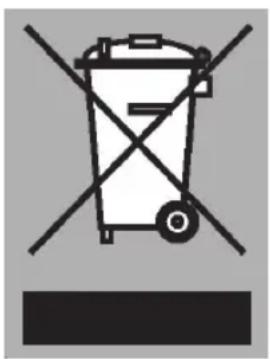
To draw attention to the fact that the segregated processing of electric household appliances is compulsory, this appliance carries the symbol of a crossed-out dustbin. This means that at the end of its working life, you may not dispose of the appliance as household refuse. Instead, you should hand it in at a special refuse collection centre run by the local authority or at a dealer's providing this service.
Segregated processing of household appliances avoids any negative effects on the environment and public health that might otherwise occur.
It enables the recovery of the materials used in the production of this appliance, thus realising considerable savings in terms of raw materials and energy.
CE
Declaration of conformity
We declare that our products meet the applicable European Directives, Decisions and Regulations and the requirements listed in the standards referenced.
*726658*
809410