
KD-XD28BT - Receiver JVC - Free user manual and instructions
Find the device manual for free KD-XD28BT JVC in PDF.
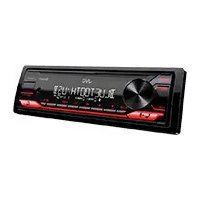


| Brand | JVC |
| Model | KD-XD28BT |
| Product type | Vehicle audio receiver (car radio) |
| Dimensions (approx.) | 1 DIN: 180 x 50 x 160 mm (W x H x D) |
| Weight (approx.) | 1.0 kg |
| Power supply | 12 V DC, negative ground |
| Radio tuner | FM (87.9 – 107.9 MHz) and AM (530 – 1700 kHz) with RDS |
| USB player | USB 2.0 (Mass Storage Class), up to 1.5 A; compatible with MP3, WMA, WAV, FLAC |
| Bluetooth | Version 4.2; profiles HFP, A2DP, AVRCP, PBAP, SPP; range ≈ 10 m |
| Auxiliary input | 3.5 mm stereo mini-jack (AUX) |
| Microphone | External microphone supplied for hands-free calls |
| Output power | Max 50 W × 4 (or 50 W × 2 + 50 W × 1 for subwoofer) |
| Equalizer | Presets (Flat, Rock, Jazz, etc.) + 13-band graphic equalizer |
| Filters and crossover | 2/3 way with frequency, slope and phase adjustments |
| Display | LCD screen, scrolling information (title, artist, clock) |
| Backlight | Customizable color by zone (49 colors, patterns) |
| Faceplate | Removable (detachable) for security |
| Maintenance | Clean the faceplate with a dry cloth; clean the connector with a cotton swab |
| Safety | Do not use functions that distract driving; adjust volume moderately; do not leave metal objects inside |
| Supplied parts | Faceplate, mounting sleeve, extraction keys, wiring harness, microphone |
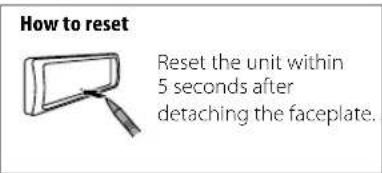
| Repairability | Replaceable 10 A fuse; reset by button; firmware update via USB |
| General information | Manual available in PDF (124 pages); compatible with JVC Remote app; Bluetooth multi-point (2 phones + 1 audio) |
Frequently Asked Questions - KD-XD28BT JVC
User questions about KD-XD28BT JVC
0 question about this device. Answer the ones you know or ask your own.
Ask a new question about this device
Download the instructions for your Receiver in PDF format for free! Find your manual KD-XD28BT - JVC and take your electronic device back in hand. On this page are published all the documents necessary for the use of your device. KD-XD28BT by JVC.
USER MANUAL KD-XD28BT JVC
INSTRUCTION MANUAL
DIGITAL MEDIA RECEIVER
Enter below the Model No. and Serial No. which are located on the top or bottom of the cabinet. Retain this information for future reference.
Model No.
Serial No.
B5A-3840-00 [K]
Changes or modifications not expressly approved by the party responsible for compliance could void the user's authority to operate the equipment.
NOTE: This equipment has been tested and found to comply with the limits for a Class B digital device, pursuant to part 15 of the FCC Rules. These limits are designed to provide reasonable protection against harmful interference in a residential installation. This equipment generates, uses and can radiate radio frequency energy and, if not installed and used in accordance with the instructions, may cause harmful interference to radio communications. However, there is no guarantee that interference will not occur in a particular installation. If this equipment does cause harmful interference to radio or television reception, which can be determined by turning the equipment off and on, the user is encouraged to try to correct the interference by one or more of the following measures:
– Reorient or relocate the receiving antenna. – Increase the separation between the equipment and receiver. – Connect the equipment into an outlet on a circuit different from that to which the receiver is connected. – Consult the dealer or an experienced radio/TV technician for help.
Supplier's Declaration of Conformity
Trade Name: JVC
Products: DIGITAL MEDIA RECEIVER
Model Name: KD-X38MBS/KD-X280BT/KD-XD28BT/KD-SX27BT
Responsible Party: JVCKENWOOD USA CORPORATION
4001 Worsham Avenue, Long Beach, CA 90808, U.S.A.
PHONE:
1-800-252-5722
THIS DEVICE COMPLIES WITH PART 15 OF THE FCC RULES. OPERATION IS SUBJECT TO THE FOLLOWING TWO CONDITIONS:
(1) THIS DEVICE MAY NOT CAUSE HARMFUL INTERFERENCE, AND (2) THIS DEVICE MUST ACCEPT ANY INTERFERENCE RECEIVED, INCLUDING INTERFERENCE THAT MAY CAUSE UNDESIRED OPERATION.
ISED Caution
This device contains licence-exempt transmitter(s)/receiver(s) that comply with Innovation, Science and Economic Development Canada's licence-exempt RSS(s). Operation is subject to the following two conditions:
- This device may not cause interference.
- This device must accept any interference, including interference that may cause undesired operation of the device.
ISED Caution
This transmitter must not be co-located or operated in conjunction with any other antenna or transmitter.
CAUTION
This equipment complies with FCC/ISED radiation exposure limits set forth for an uncontrolled environment and meets the FCC radio frequency (RF) Exposure Guidelines and RSS-102 of the ISED radio frequency (RF) Exposure rules. This equipment should be installed and operated keeping the radiator at least 20 cm or more away from person's body.
ATTENTION
The software embedded in the Product (hereinafter the "Licensed Software") provided by Licensor is copyrighted to or sublicensable by the Licensor, and this Agreement provides for the terms and conditions which Users shall follow in order to use the Licensed Software.
The User shall use the Licensed Software by agreeing with the terms of this Software License Agreement. This Agreement shall be deemed completed at the time the User (hereinafter the "User") initially used the Product in which the "Licensed Software" is embedded.
The Licensed Software may include software that has been licensed to the Licensor directly or indirectly from any third party. In such cases, some third parties require the Users to follow their conditions for use separately from this Software License Agreement. Such software shall not be subject to this Agreement, and the Users are urged to read the "Important Notice concerning the Software" to be provided separately below.
Article 1 General Provision
The Licensor shall grant to the User a non-exclusive and non-transferable (other than the exceptional case referred to in Article 3, Paragraph 1) license to use the Licensed Software within the country of the User (the country where the User bought the Product, hereinafter the "Country").
Article 2 License
- The license granted under this Agreement shall be the right to use the Licensed Software in the Product.
- The User shall not duplicate, copy, modify, add, translate, or otherwise alter, or lease the Licensed Software and any related documents, whether in whole or in part.
- The use of the Licensed Software shall be limited to personal purposes, and the Licensed Software shall not be distributed, licensed, or sub-licensed whether for commercial purposes or not.
- The User shall use the Licensed Software according to the directions described in the operation manual or help file, and is prohibited from using or duplicating any data in a manner violating the Copyright Law or any other laws and regulations by applying the whole or a part of the Licensed Software.
Article 3 Conditions for Grant of License
- When the User transfers the Product, it may also transfer the license to use the Licensed Software embedded in the Product (including any related materials, updates, and upgrades) on condition that no original, copies, or related materials continue in the possession of the User, and that the User shall cause the transferee to comply with this Software License Agreement.
- The User shall not carry out reverse engineering, disassembling, decompiling, or any other code analysis works in connection with the Licensed Software.
Article 4 Right pertaining to the Licensed Software
Any and all copyrights and other rights pertaining to the Licensed Software and related documents shall belong to the Licensor or the original holder of the right who granted to the Licensor the license or sublicense for the Licensed Software (hereinafter the "Original Rightholder"), and the User shall not be entitled to any right other than the license granted hereunder, in respect of the Licensed Software and any related documents.
Article 5 Indemnification of Licensor
- Neither the Licensor nor the Original Rightholder shall be liable for any damage incurred by the User or any third party due to the exercise of the license granted to the User under this Agreement, unless otherwise restricted by law.
- The Licensor will offer no guarantee for the merchantability, convertibility and consistency with certain objective of the Licensed Software.
Article 6 Liability to Third Party
If any dispute has arisen with any third party due to an infringement upon a copyright, patent or any other intellectual property right that was caused by the User's use of the Licensed Software, the User shall settle such dispute at its own cost and hold the Licensor and the Original Rightholder harmless from any inconvenience it may cause.
Article 7 Confidentiality
The User shall keep the confidentiality of such portion of the Licensed Software, related documents thereof or any other information to be granted under this Agreement, as well as the conditions of this Agreement as has not yet entered the public domain, and shall not disclose or divulge the same to any third party without approval of the Licensor.
Article 8 Termination
In case the User falls under any of the events described in the following items, the Licensor may immediately terminate this Agreement or claim that the User compensates for the damage incurred by the Licensor due to such event:
(1) when the User violated any provision of this Agreement; or (2) when a petition has been filed against the User for an attachment, provisional attachment, provisional disposition or any other compulsory execution.
Article 9 Destruction of the Licensed Software
If this Agreement is terminated pursuant to the provision of Article 8, the User shall destroy the Licensed Software, any related documents and copies thereof within two (2) weeks from such date of termination.
Article 10 Protection of Copyright
- The copyright and all the other intellectual property rights relating to the Licensed Software shall belong to the Licensor and the Original Rightholder, and in no event shall they be under the ownership of the User.
- The User shall, whenever it uses the Licensed Software, comply with any laws relating to the copyright and other intellectual property rights.
Article 11 Export Restriction
- It is prohibited to export the Licensed Software and any related documents outside the country of the User (including transmission thereof outside the country of the User via Internet of other communication tools).
- The User shall understand that the Licensed Software shall be subject to the export restrictions adopted by the country of User and any other countries.
- The User shall agree that the software will be subject to any and all applicable international and domestic laws (including the export control regulation of the country of User and any other countries, and any restrictions concerning the end-users, the use by end-users and importing countries to be provided by the country of User and any other countries, and any other governmental authorities).
Article 12 Miscellaneous
- In the event any part of this Agreement is invalidated by operation of law, the residual provisions shall continue in force.
- Matters not stipulated in this Agreement or any ambiguity or question raised in the construction of this Agreement shall be provided or settled upon good-faith consultation between the Licensor and the User.
- The Licensor and the User hereby agree that this Agreement is governed by the laws of Japan, and any dispute arising from, and relating to the rights and obligations under, this Agreement shall be submitted to the exclusive jurisdiction of the Tokyo District Court for its first instance.
Important Notice concerning the Software
-jansson
Copyright (c) 2009-2012 Petri Lehtinen petri@digip.org
Permission is hereby granted, free of charge, to any person obtaining a copy of this software and associated documentation files (the "Software"), to deal in the Software without restriction, including without limitation the rights to use, copy, modify, merge, publish, distribute, sublicense, and/or sell copies of the Software, and to permit persons to whom the Software is furnished to do so, subject to the following conditions:
The above copyright notice and this permission notice shall be included in all copies or substantial portions of the Software.
THE SOFTWARE IS PROVIDED "AS IS", WITHOUT WARRANTY OF ANY KIND, EXPRESS OR IMPLIED, INCLUDING BUT NOT LIMITED TO THE WARRANTIES OF MERCHANTABILITY, FITNESS FOR A PARTICULAR PURPOSE AND NONINFRINGEMENT. IN NO EVENT SHALL THE AUTHORS OR COPYRIGHT HOLDERS BE LIABLE FOR ANY CLAIM, DAMAGES OR OTHER LIABILITY, WHETHER IN AN ACTION OF CONTRACT, TORT OR OTHERWISE, ARISING FROM, OUT OF OR IN CONNECTION WITH THE SOFTWARE OR THE USE OR OTHER DEALINGS IN THE SOFTWARE.
-JSON
Copyright (c) 2009 Dave Gamble
Permission is hereby granted, free of charge, to any person obtaining a copy of this software and associated documentation files (the "Software"), to deal in the Software without restriction, including without limitation the rights to use, copy, modify, merge, publish, distribute, sublicense, and/or sell copies of the Software, and to permit persons to whom the Software is furnished to do so, subject to the following conditions:
The above copyright notice and this permission notice shall be included in all copies or substantial portions of the Software.
THE SOFTWARE IS PROVIDED "AS IS", WITHOUT WARRANTY OF ANY KIND, EXPRESS OR IMPLIED, INCLUDING BUT NOT LIMITED TO THE WARRANTIES OF MERCHANTABILITY, FITNESS FOR A PARTICULAR PURPOSE AND NONINFRINGEMENT. IN NO EVENT SHALL THE AUTHORS OR COPYRIGHT HOLDERS BE LIABLE FOR ANY CLAIM, DAMAGES OR OTHER LIABILITY, WHETHER IN AN ACTION OF CONTRACT, TORT OR OTHERWISE, ARISING FROM, OUT OF OR IN CONNECTION WITH THE SOFTWARE OR THE USE OR OTHER DEALINGS IN THE SOFTWARE.
The MIT License (MIT)
Copyright (c) 2014 Charles Gunyon
Permission is hereby granted, free of charge, to any person obtaining a copy of this software and associated documentation files (the "Software"), to deal in the Software without restriction, including without limitation the rights to use, copy, modify, merge, publish, distribute, sublicense, and/or sell copies of the Software, and to permit persons to whom the Software is furnished to do so, subject to the following conditions:
The above copyright notice and this permission notice shall be included in all copies or substantial portions of the Software.
THE SOFTWARE IS PROVIDED "AS IS", WITHOUT WARRANTY OF ANY KIND, EXPRESS OR IMPLIED, INCLUDING BUT NOT LIMITED TO THE WARRANTIES OF MERCHANTABILITY, FITNESS FOR A PARTICULAR PURPOSE AND NONINFRINGEMENT. IN NO EVENT SHALL THE AUTHORS OR COPYRIGHT HOLDERS BE LIABLE FOR ANY CLAIM, DAMAGES OR OTHER LIABILITY, WHETHER IN AN ACTION OF CONTRACT, TORT OR OTHERWISE, ARISING FROM, OUT OF OR IN CONNECTION WITH THE SOFTWARE OR THE USE OR OTHER DEALINGS IN THE SOFTWARE.
nanopb
Copyright (c) 2011 Petteri Aimonen
This software is provided 'as-is', without any express or implied warranty. In no event will the authors be held liable for any damages arising from the use of this software.
Permission is granted to anyone to use this software for any purpose, including commercial applications, and to alter it and redistribute it freely, subject to the following restrictions:
- The origin of this software must not be misrepresented; you must not claim that you wrote the original software. If you use this software in a product, an acknowledgment in the product documentation would be appreciated but is not required.
- Altered source versions must be plainly marked as such, and must not be misrepresented as being the original software.
- This notice may not be removed or altered from any source distribution.
sha2
AUTHOR: Aaron D. Gifford - http://www.aarongifford.com/
Copyright (c) 2000-2001, Aaron D. Gifford
All rights reserved.
You may obtain a copy of the license at
https://opensource.org/licenses/BSD-3-Clause
THE SOFTWARE IS PROVIDED "AS IS", WITHOUT WARRANTY OF ANY KIND, EXPRESS OR IMPLIED, INCLUDING BUT NOT LIMITED TO THE WARRANTIES OF MERCHANTABILITY, FITNESS FOR A PARTICULAR PURPOSE AND NONINFRINGEMENT. IN NO EVENT SHALL THE AUTHORS OR COPYRIGHT HOLDERS BE LIABLE FOR ANY CLAIM, DAMAGES OR OTHER LIABILITY, WHETHER IN AN ACTION OF CONTRACT, TORT OR OTHERWISE, ARISING FROM, OUT OF OR IN CONNECTION WITH THE SOFTWARE OR THE USE OR OTHER DEALINGS IN THE SOFTWARE.
Posix
Copyright (c) 1990, 1993
The Regents of the University of California. All rights reserved.
Redistribution and use in source and binary forms, with or without modification, are permitted provided that the following conditions are met:
- Redistributions of source code must retain the above copyright notice, this list of conditions and the following disclaimer.
- Redistributions in binary form must reproduce the above copyright notice, this list of conditions and the following disclaimer in the documentation and/or other materials provided with the distribution.
- All advertising materials mentioning features or use of this software must display the following acknowledgement:
This product includes software developed by the University of California, Berkeley and its contributors.
- Neither the name of the University nor the names of its contributors may be used to endorse or promote products derived from this software without specific prior written permission.
Copyright (C) 1993 by Sun Microsystems, Inc. All rights reserved.
Developed at SunPro, a Sun Microsystems, Inc. business.
Permission to use, copy, modify, and distribute this software is freely granted, provided that this notice is preserved.
Copyright (C) 1991-2, RSA Data Security, Inc. Created 1991. All rights reserved.
License to copy and use this software is granted provided that it is identified as the "RSA Data Security, Inc. MD4 Message-Digest Algorithm" in all material mentioning or referencing this software or this function.
Copyright (c) 1995, 1996 Carnegie-Mellon University. All rights reserved.
Author: Chris G. Demetriou
Permission to use, copy, modify and distribute this software and its documentation is hereby granted, provided that both the copyright notice and this permission notice appear in all copies of the software, derivative works or modified versions, and any portions thereof, and that both notices appear in supporting documentation.
CARNEGIE MELLON ALLOWS FREE USE OF THIS SOFTWARE IN ITS "AS IS" CONDITION. CARNEGIE MELLON DISCLAIMS ANY LIABILITY OF ANY KIND FOR ANY DAMAGES WHATSOEVER RESULTING FROM THE USE OF THIS SOFTWARE.
Carnegie Mellon requests users of this software to return to
Software Distribution Coordinator or Software.Distribution@
CS.CMU.EDU
School of Computer Science
Carnegie Mellon University
Pittsburgh PA 15213-3890
any improvements or extensions that they make and grant Carnegie the rights to redistribute these changes.
License is also granted to make and use derivative works provided that such works are identified as "derived from the RSA Data Security, Inc. MD4 Message-Digest Algorithm" in all material mentioning or referencing the derived work.
RSA Data Security, Inc. makes no representations concerning either the merchantability of this software or the suitability of this software for any particular purpose. It is provided "as is" without express or implied warranty of any kind.
Copyright (c) 1993 Martin Birgmeier
All rights reserved.
You may redistribute unmodified or modified versions of this source code provided that the above copyright notice and this and the following conditions are retained.
This software is provided "as is", and comes with no warranties of any kind. I shall in no event be liable for anything that happens to anyone/anything when using this software.
These notices must be retained in any copies of any part of this documentation and/or software.
T-Kernel 2.0
This product uses the source code of T-Kernel 2.0 under T-License 2.0 granted by T-Engine Forum (www.tron.org)
BSD-3-Clause
Copyright (c) 2000-2001, Aaron D. Gifford
All rights reserved.
You may obtain a copy of the license at
https://opensource.org/licenses/BSD-3-Clause
THE SOFTWARE IS PROVIDED "AS IS", WITHOUT WARRANTY OF ANY KIND, EXPRESS OR IMPLIED, INCLUDING BUT NOT LIMITED TO THE WARRANTIES OF MERCHANTABILITY, FITNESS FOR A PARTICULAR PURPOSE AND NONINFRINGEMENT. IN NO EVENT SHALL THE AUTHORS OR COPYRIGHT HOLDERS BE LIABLE FOR ANY CLAIM, DAMAGES OR OTHER LIABILITY, WHETHER IN AN ACTION OF CONTRACT, TORT OR OTHERWISE, ARISING FROM, OUT OF OR IN CONNECTION WITH THE SOFTWARE OR THE USE OR OTHER DEALINGS IN THE SOFTWARE.
LFS Subsystem
Copyright The Regents of the University of California. All rights reserved.
You may obtain a copy of the license at
https://directory.fsf.org/wiki/License:BSD-4-Clause
THE SOFTWARE IS PROVIDED "AS IS", WITHOUT WARRANTY OF ANY KIND, EXPRESS OR IMPLIED, INCLUDING BUT NOT LIMITED TO THE WARRANTIES OF MERCHANTABILITY, FITNESS FOR A PARTICULAR PURPOSE AND NONINFRINGEMENT. IN NO EVENT SHALL THE AUTHORS OR COPYRIGHT HOLDERS BE LIABLE FOR ANY CLAIM, DAMAGES OR OTHER LIABILITY, WHETHER IN AN ACTION OF CONTRACT, TORT OR OTHERWISE, ARISING FROM, OUT OF OR IN CONNECTION WITH THE SOFTWARE OR THE USE OR OTHER DEALINGS IN THE SOFTWARE.
Accordo2 Player
Apache License
Licensed under the Apache License,
Version 2.0, January 2004 (the "License");
You may obtain a copy of the license at
http://www.apache.org/licenses/LICENSE-2.0
THE SOFTWARE IS PROVIDED "AS IS", WITHOUT WARRANTY OF ANY KIND, EXPRESS OR IMPLIED, INCLUDING BUT NOT LIMITED TO THE WARRANTIES OF MERCHANTABILITY, FITNESS FOR A PARTICULAR PURPOSE AND NONINFRINGEMENT. IN NO EVENT SHALL THE AUTHORS OR COPYRIGHT HOLDERS BE LIABLE FOR ANY CLAIM, DAMAGES OR OTHER LIABILITY, WHETHER IN AN ACTION OF CONTRACT, TORT OR OTHERWISE, ARISING FROM, OUT OF OR IN CONNECTION WITH THE SOFTWARE OR THE USE OR OTHER DEALINGS IN THE SOFTWARE.
Contents
Before Use....3
Basics 4
Getting Started 5
1 Acknowledge the crossover type and cancel the demonstration 2 Set the clock and date 3 Set the basic settings
Radio 6
USB/iPod 8
AUX....10
SiriusXM® Radio 10
JVC Remote Application 14
Bluetooth® 15
Bluetooth - Connection
Bluetooth - Mobile phone
Bluetooth - Audio
Audio Settings 22
Display Settings 28
References 29
Maintenance
More information
Change the display information
Troubleshooting....31
Installation/Connection 34
Specifications....38
Before Use
IMPORTANT
• To ensure proper use, please read through this manual before using this product. It is especially important that you read and observe Warnings and Cautions in this manual. - Please keep the manual in a safe and accessible place for future reference.
WARNING
Do not operate any function that takes your attention away from safe driving.
CAUTION
Volume setting:
- Adjust the volume so that you can hear sounds outside the car to prevent accidents.
- Lower the volume before playing digital sources to avoid damaging the speakers by the sudden increase of the output level.
General:
- Avoid using the external device if it might hinder safe driving.
- Make sure all important data has been backed up. We shall bear no responsibility for any loss of recorded data.
- Never put or leave any metallic objects (such as coins or metal tools) inside the unit to prevent a short circuit.
- Depending on the types of cars, the antenna will automatically extend when you turn on the unit with the antenna control wire connected (page 36). Turn off the unit when parking at a low ceiling area.
How to read this manual
- The displays and faceplates shown in this manual are examples used to provide clear explanations of the operations. For this reason, they may be different from the actual displays or faceplates. • Operations are explained mainly using buttons on the faceplate of KD-X38MBS.
- English indications are used for the purpose of explanation. You can select the display language from the menu. (Page 6) • [XX] indicates the selected items. • (Page XX) indicates references are available on the stated page.

This symbol on the product means there are important operating and maintenance instructions in this manual. Be sure to carefully read instructions in this manual.
Basics
Faceplate
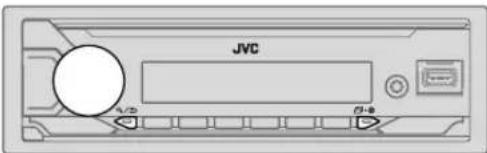
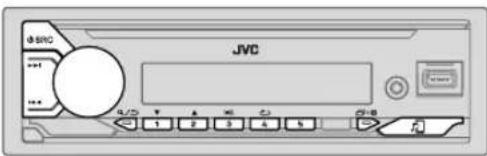
KD-X38MBS:
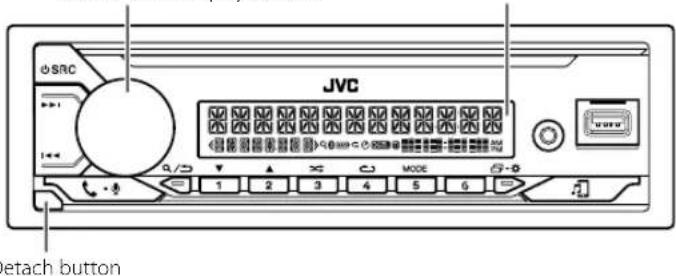
Volume knob Display window*
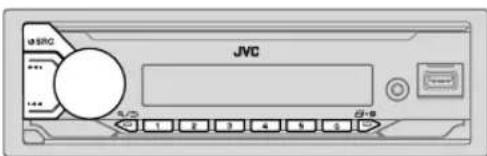
KD-X280BT/KD-XD28BT/KD-SX27BT:
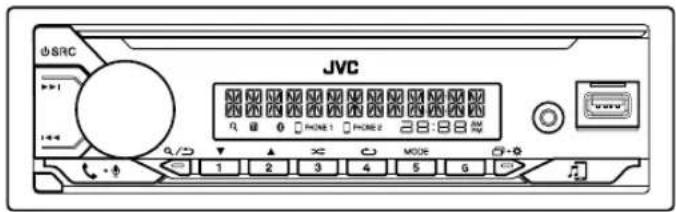
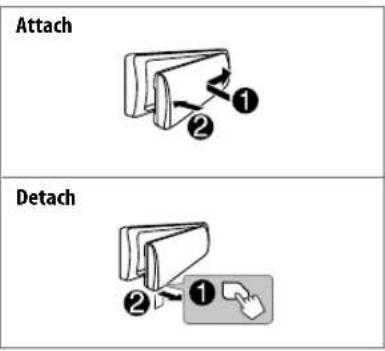
* Only for illustration purpose.
To On the faceplate
| Turn on the power | Press ⏻SRC.• Press and hold to turn off the power. |
| Adjust the volume Turn the volume knob. | |
| Press the volume knob to mute the sound or pause playback.• Press again to cancel. The volume level returns to the previous level before muting or pause. | |
| Select a source | • Press ⏻SRC repeatedly.• Press ⏻ SRC, then turn the volume knob within 2 seconds. |
| Change the display information | Press ⏻•♦ repeatedly. (Page 30, 31) |

ENGLISH
Getting Started

Acknowledge the crossover type and cancel the demonstration
When you turn on the power for the first time (or [FACTORY RESET] is set to [YES], see page 6), the display shows: "2-WAY X'OVER" or "3-WAY X'OVER" → "PRESS" → "VOLUME KNOB" → TO CONFIRM".
1 Press the volume knob to acknowledge the current crossover type. Then, the display shows: "CANCEL DEMO" "PRESS" "VOLUME KNOB". To change the crossover type, see page 23. 2 Press the volume knob. [YES] is selected for the initial setup. 3 Press the volume knob again. "DEMO OFF" appears.

Set the clock and date
1 Press and hold 📞·☀️ 2 Turn the volume knob to select [CLOCK], then press the knob.
To adjust the clock
3 Turn the volume knob to select [CLOCK ADJUST], then press the knob. 4 Turn the volume knob to make the settings, then press the knob. Set the time in the order of "Hour" "Minute". 5 Turn the volume knob to select [CLOCK FORMAT], then press the knob. 6 Turn the volume knob to select [12H] or [24H], then press the knob.
To set the date
7 Turn the volume knob to select [DATE SET], then press the knob. 8 Turn the volume knob to make the settings, then press the knob. Set the date in the order of "Day" "Month" "Year".
9 Press to exit.
To return to the previous setting item, press a/3.

Set the basic settings
1 Press and hold 📞· 2 Turn the volume knob to select an item (see the following table), then press the knob. 3 Repeat step 2 until the desired item is selected or activated. 4 Press to exit.
To return to the previous setting item, press a/3.
Default: [XX]
| [SYSTEM] | |
| [KEY BEEP] | (Not applicable when 3-way crossover is selected.) (Page 23)[ON]: Activates the keypress tone. ; [OFF]: Deactivates. |
| [SOURCESELECT] | |
| [AM SRC]*1 | [ON]: Enables AM in source selection. ; [OFF]: Disables. (Page 6) |
| [BT AUDIO SRC]*1 | [ON]: Enables BT AUDIO in source selection. ; [OFF]: Disables.(Page 21) |
| [BUILT-IN AUX]*1 | [ON]: Enables AUX in source selection. ; [OFF]: Disables. (Page 10) |
*1 Not displayed when the corresponding source is selected.
Getting Started
| [F/W UPDATE]*2 | |
| [UPDATE SYSTEM] | |
| [F/W UP xxxx] | [YES]: Starts upgrading the firmware. ; [NO]: Cancels (upgrading is not activated).For details on how to update the firmware, visit<https://www.jvc.net/cs/car/>. |
| [FACTORYRESET] | [YES]: Resets the settings to default (except the stored station). ;[NO]: Cancels. |
| [CLOCK] | |
| [TIME SYNC] | [ON]: The clock time is automatically set using the Clock Time (CT) data in FM Radio Broadcast Data System signal. ; [OFF]: Cancels. |
| [CLOCK DISPLAY] | [ON]: The clock time is shown on the display even when the unit is turned off. ; [OFF]: Cancels. |
| [ENGLISH] | |
| [ESPANOL] | Select the display language for menu and music information if applicable.By default, [ENGLISH] is selected. |
| [FRANCAIS]*3 | |
| [DEMO MODE] | [ON]: Activates the display demonstration automatically if no operation is done for about 15 seconds. ; [OFF]: Deactivates. |
*2 Firmware downgrade is prohibited. *3 Only for KD-X38MBS.
Radio
Search for a station
1 Press ⏻ SRC repeatedly to select FM or AM. 2 Press |◀◀ / ▶▶▶ to search for a station automatically. (or)
Press and hold ◀◀◀ / ▶▶▶ until "M" flashes, then press repeatedly to search for a station manually.
Settings in memory
You can store up to 18 stations for FM and 6 stations for AM.
Store a station
While listening to a station...
Press and hold one of the number buttons (1 to 6). (or)
1 Press and hold the volume knob until "PRESET MODE" flashes. 2 Turn the volume knob to select a preset number, then press the knob. "MEMORY" appears once the station is stored.
Radio

Select a stored station
Press one of the number buttons (1 to 6).
(or)
1 Press .Q/
2 Turn the volume knob to select a preset number, then press the knob.
Other settings
1 Press and hold 📞·☀️ 2 Turn the volume knob to select an item (see the following table), then press the knob. 3 Repeat step 2 until the desired item is selected/activated or follow the instructions stated on the selected item.
4 Press to exit.
To return to the previous setting item, press a/ɔ.
Default: [XX]
[TUNER SETTING]
| [RADIO TIMER] | (For KD-X38MBS)Turns on the radio at a specific time regardless of the current source.1 [ONCE]/[DAILY]/[WEEKLY]/[OFF]: Select how often the timer will be turned on.2 [FM]/[AM]/[SIRIUS XM]*1: Select the source.3 [01] to [18] (for FM/SIRIUS XM)/[01] to [06] (for AM): Select the preset station.4 Set the activation day*2 and time."◎" indicator lights up when complete.Radio Timer will not activate for the following cases.The unit is turned off.[OFF] is selected for [AM SRC] in [SOURCE SELECT] after Radio Timer for AM is selected. (Page 5) |
| [SSM] | [SSM 01-06]/[SSM 07-12]/[SSM 13-18]: Automatically presets up to 18 stations for FM. "SSM" stops flashing when the first 6 stations are stored.Select [SSM 07-12]/[SSM 13-18] to store the following 12 stations. |
| [IF BAND] | [AUTO]: Increases the tuner selectivity to reduce interference noises from adjacent FM stations. (Stereo effect may be lost.) ;[WIDE]: Subjects to interference noises from adjacent FM stations, but sound quality will not be degraded and the stereo effect will remain. |
| [MONO SET] | [ON]: Improves the FM reception, but the stereo effect will be lost. ;[OFF]: Cancels. |
| [AREA] | [N.AMERICA]: For North/Central/South America, AM/FM intervals: 10 kHz/200 kHz. ;[S.AMERICA]: For some South American countries, AM/FM intervals: 10 kHz/50 kHz. ;[EUROPE]: For any other areas, AM/FM intervals: 9 kHz/50 kHz. |
| [PTY SEARCH] Select a PTY code for FM Radio Broadcast Data System (see the following "PTY code for FM Radio Broadcast Data System").If there is a station broadcasting a program of the same PTY code as you have selected, that station is tuned in. | |
*1 Selectable only when SiriusXM Vehicle Tuner is connected. (Page 10) *2 Selectable only when [ONCE] or [WEEKLY] is selected in step 1.
PTY code for FM Radio Broadcast Data System
[NEWS], [INFORM] (information), [SPORTS], [TALK], [ROCK], [CLS ROCK] (classic rock), [ADLT HIT] (adult hits), [SOFT RCK] (soft rock), [TOP 40], [COUNTRY], [OLDIES], [SOFT], [NOSTALGA] (nostalgia), [JAZZ], [CLASSICL] (classical), [R & B] (rhythm and blues), [SOFT R&B] (soft rhythm and blues), [LANGUAGE], [REL MUSC] (religious music), [REL TALK] (religious talk), [PERSNLTY] (personality), [PUBLIC], [COLLEGE], [HABL ESP] (Spanish talk), [MUSC ESP] (Spanish music), [HIP HOP], [WEATHER]
USB/iPod
Connect a USB device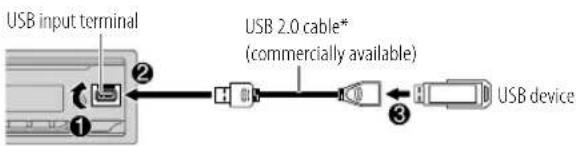
The source changes to USB automatically and playback starts.
* Do not leave the cable inside the car when not in use.
Connect an iPod/iPhone (for KD-X38MBS)![graph LR A["USB input terminal"] --> B["②"] B --> C["Accessory of the iPod/iPhone*"] C --> D["iPod/iPhone"] D --> E["③"]](/content/2026/04/703491/images/9ab6b872af3f944885c0f0323849d29cde0f8b140ad4c181bc97e4ee02252931.jpg)
The source changes to iPod USB automatically and playback starts.
- You can also connect iPod/iPhone via Bluetooth. (Page 15) * Do not leave the cable inside the car when not in use.
Basic operations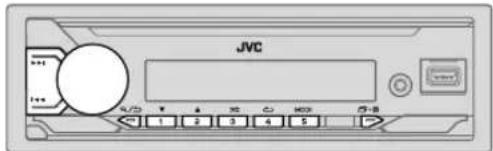
Selectable source:
- KD-X38MBS: USB/iPod USB or iPod BT • KD-X280BT/KD-XD28BT/KD-SX27BT: USB
For playable audio file, see "playable files" on page 29
To On the faceplate
| Reverse/Fast-forward | Press and hold 1 < 1/ > . |
| Select a file | Press 1 < 1/ > . |
| Select a folder* | Press 2 ▲ / 1 ▼. |
| Repeat play | Press 4 → repeatedly.[TRACK REPEAT]/[FOLDER REPEAT]/[ALL REPEAT]:MP3/WMA/AAC/WAV/FLAC file[REPEAT ONE]/[REPEAT ALL]/[REPEAT OFF]:iPod |
| Random play | Press 3 → repeatedly.[FOLDER RANDOM]/[ALL RANDOM]/[RANDOM OFF]:MP3/WMA/AAC/WAV/FLAC file[SHUFFLE OFF]/[SHUFFLE ON]:iPod |
* This does not work for iPod.
USB/iPod
Select music drive
While in USB source, press 5 MODE repeatedly.
Stored songs in the following drive will be played back.
- Selected internal or external memory of a smartphone (Mass Storage Class).
- Selected drive of a multiple drive device. (This unit can support multiple drive device of up to 4 drives. However, this unit may take some time to read if three or more cards are connected.)
Select a file to play
From a folder or list
1 Press Q/ 2 Turn the volume knob to select a folder/list, then press the knob. 3 Turn the volume knob to select a file, then press the knob.
Selected file starts playing.
Quick search (applicable only for USB source)
If you have many files, you can search through them quickly.
1 Press .∅/∅ 2 Turn the volume knob to select a folder/list, then press the knob. 3 Turn the volume knob quickly to browse through the list quickly. 4 Turn the volume knob to select a file, then press the knob.
Selected file starts playing.
Alphabet search (applicable only for iPod USB source and iPod BT source)
You can search for a file according to the first character.
1 Press .∅/∅ 2 Turn the volume knob to select a list, then press the knob. 3 Press 2 ▲ / 1 ▼ or turn the volume knob quickly to select the desired character (A to Z, 0 to 9, OTHERS).
Select "OTHERS" if the first character is other than A to Z, 0 to 9.
4 Press the volume knob to start searching.
Files with the characters you searched for or with similar characters (alphabetical order) will be displayed.
5 Turn the volume knob to select a file, then press the knob.
Selected file starts playing.
- To return to the previous setting item, press Q/D. • To cancel, press and hold Q/⊃.
AUX SiriusXM® Radio
(for KD-X38MBS)
You can listen to music from a portable audio player via the auxiliary input jack.
Preparation:
Select [ON] for [BUILT-IN AUX] in [SOURCE SELECT]. (Page 5)
Start listening
1 Connect a portable audio player (commercially available).
3.5 mm (1/8") stereo mini plug with "L"
shaped connector (commercially available)
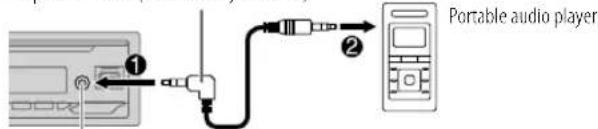
Auxiliary input jack
2 Press ⏻ SRC repeatedly to select AUX.
3 Turn on the portable audio player and start playback.
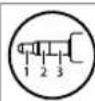
Use a 3-core plug head stereo mini plug for optimum audio output.
Only SiriusXM® brings you more of what you love to listen to, all in one place. Get over 140 channels, including commercial-free music plus the best sports, news, talk, comedy and entertainment. Welcome to the world of satellite radio. A SiriusXM Vehicle Tuner and Subscription are required. For more information, visit .
Preparation:
1 Connect the optional SiriusXM Vehicle Tuner (commercially available).
![graph LR A["Expansion port on the rear panel"] --> B["Antenna"] B --> C["SiriusXM Vehicle Tuner"]](/content/2026/04/703491/images/ef655e30b2ea07d750c94791d91d1322e301019c38ed9687a5d2100d47b9f37a.jpg)
2 Check your Radio ID for activation.
The SiriusXM Radio ID is required for activation and can be found by tuning to Channel 0 as well as on the label found on the SiriusXM Vehicle Tuner and its packaging.
The Radio ID does not include the letters I, O, S or F.
3 Activate the subscription.
For users in the U.S.A.:
Online: Go to
Phone: Call 1-866-635-2349
For users in Canada:
Online: Go to
Phone: Call 1-888-539-7474
4 Press ⏻ SRC repeatedly to select SIRIUS XM to start updating.
Start listening
1 Press ⏻ SRC repeatedly to select SIRIUS XM. 2 Press .∅/∅ " " indicator lights up. 3 Turn the volume knob to select a CATEGORY, then press the knob. 4 Turn the volume knob to select a category from the list, then press the knob. If "ALL CHANNELS" is selected, all the available channels will be shown.
5 Turn the volume knob to select a channel, then press the knob.
- Pressing and holding 1/2 changes the channel rapidly.
- If no operation is done for 10 seconds, a channel will be selected automatically.
(or)
Press ◀◀◀ / ▶▶▶ to search for a channel manually.
- Pressing and holding ◀◀/▶▶ changes the channel rapidly.
If a locked channel or a mature channel is selected, a pass code input screen appears. Enter the pass code to receive the channel. (Page 13)
Parental Control
The Parental Control feature allows you to limit access to any SiriusXM channels, including those with mature content. When enabled, the Parental Control feature requires you to enter a pass code to tune to the locked channels. • Information on setting up the pass code and locking channels can be found on page 13.
Settings in memory
You can store up to 18 channels.
Store a channel
While listening to a channel...
Press and hold one of the number buttons (1 to 6). (or)
1 Press and hold the volume knob until "PRESET MODE" flashes. 2 Turn the volume knob to select a preset number, then press the knob. The preset number flashes and "MEMORY" appears.
Select a stored channel
Press one of the number buttons (1 to 6).
(or)
1 Press .∅/∅ 2 Turn the volume knob to select PRESET, then press the knob. 3 Turn the volume knob to select a preset number, then press the knob.
SiriusXM® Radio (for KD-X38MBS)
SiriusXM Replay™
While listening to a channel...
1 Press the volume knob.
" " indicator lights up and the unit memorizes this paused position.
2 Press the volume knob to start Replay.
Replay starts from the paused position in step 1.
During Replay...
To On the faceplate
| Play back/pause Press the volume knob. | |
| Skip backward/forward* | Press ◀◀/▶▶I. |
| Rewind/Fast-forward* Press and hold ◀◀/▶▶I. | |
| Go to Live and exit Replay* Press and hold the volume knob. | |
| 1 Press .a/52 Turn the volume knob to select LIVE, then press the knob. | |
* When Live is reached or selected, Live playback starts and exit Replay.
SmartFavorites and TuneStart™
User preset channels are initially assigned as the SmartFavorites channels. SmartFavorite channel is available with SXV200 or later SiriusXM Vehicle Tuner. The SiriusXM Vehicle Tuner automatically buffers the broadcast audio content of the SmartFavorites channels in the background.
Using SXV200: This unit can assign a maximum of 6 SmartFavorites channels. If you try to assign the 7th channel, an error beep tone will be heard. Initially, preset channels 1 to 6 are assigned as SmartFavorites.
Using SiriusXM Vehicle Tuner later than SXV200: This unit can assign a maximum of 18 SmartFavorites channels. Initially, all preset channels are assigned as SmartFavorites.
- “*” appears following the last character of the channel name for the SmartFavorites channels.
When you select a SmartFavorite channel, you can rewind and replay up to 30 minutes of any of the missed news, talk, sports or music content.
- Playback starts from the beginning of the song if [TUNE START] is set to [ON] (page 13) for most music channels stored as a SmartFavorite.
To On the faceplate
| Select a storedSmartFavorite channel | Press one of the number buttons (1 to 6). |
| 1 Press .Q/52 Turn the volume knob to select PRESET, then press the knob.3 Turn the volume knob to select a preset number, then press the knob. | |
| CancelSmartFavorites channels | 1 Press .Q/52 Turn the volume knob to select PRESET, then press the knob.3 Turn the volume knob to select a preset number, then press and hold the knob."* " is removed from the last character. |
| ReassignSmartFavorites channels | Repeat step 1 to step 3 of "Cancel SmartFavorites channels"."* " appears following the last character. |
SiriusXM® Radio (for KD-X38MBS)
TuneScan™
You can get a short preview of the songs that you have missed on each of your SmartFavorites music channels or a music channel currently tuned into.
1 Press .Q/
2 Turn the volume knob to select TUNE SCAN, then press the knob. Scanning starts for the first 6 seconds of the recorded music contents.
- To listen to the current song, press the volume knob to stop scanning. The unit continues playing the current song. • To select the previous/next song, press ◀◀◀ / ▶▶▶.
- To cancel scanning, press and hold the volume knob. Playback returns to the channel before you entered TuneScan.
- Pressing any button other than volume knob or ◀◀/▶▶I will interrupt scanning and eventually stop scanning.
SiriusXM settings
1 Press and hold 2 Turn the volume knob to select an item (see the following table), then press the knob. 3 Repeat step 2 until the desired item is selected/activated or follow the instructions stated on the selected item.
4 Press e 2 t.
To return to the previous setting item, press Ⓠ/∅.
Default: [XX]
[SIRIUSXM]
[CHANNELLOCK] To unlock settings:
1 Turn the volume knob to select a number. 2 Press |◀◀ /▶▶▶ to move to the entry position. 3 Repeat step 1 and step 2 to enter the current pass code. (Initial pass code is 0000.) 4 Press the volume knob to confirm.
| [CODE SET] | 1 Turn the volume knob to select a number.2 Press 1◄◄/►►1 to move to the entry position.3 Repeat step 1 and step 2 to enter a new 4-digit pass code.4 Press the volume knob to confirm.5 Repeat step 1 to step 4 to reconfirm the pass code.• Make a note of the new pass code to enter channel lock settings for next time. |
| [LOCK SETTING] | [MATURE CH]: Selects the SiriusXM-defined lock setting.;[USER DEFINED]: Selects the individual channels the user wants to lock.;[OFF]: Cancels. |
| [CHANNEL EDIT]*1 | 1 Turn the volume knob to select a category, then press the knob.2 Turn the volume knob to select a channel you want to lock, then press the knob."L" appears in front of the channel number.3 Press and hold [IMAGE] |
| [CHANNEL CLEAR]*1 | [YES]: Clears all the locked channels.;[NO]: Cancels. |
| [TUNESTART]*2 | [ON]: All qualified music channels in the SmartFavorites will start playback from the beginning of the song.;[OFF]: Cancels. |
| [SIGNAL LEVEL] | Shows the strength ([NO SIGNAL]/[WEAK]/[GOOD]/[STRONG]) of the current received signal. |
| [BUFFER USAGE] | Shows the memory usage ([0%] to [100%]) for Replay buffer. |
| [SXM RESET] | [YES]: Resets all SiriusXM settings to default.;[NO]: Cancels. |
*1 Displayed only when [LOCK SETTING] is set to [USER DEFINED]. *2 Available only if the connected SiriusXM Vehicle Tuner is SXV200 or later which supports SmartFavorites.
JVC Remote Application
You can control the JVC car receiver from the following device using JVC Remote application.
- KD-X38MBS: iPhone/iPod touch (via Bluetooth or via USB input terminal) or Android device (via Bluetooth)
- KD-X280BT/KD-XD28BT/KD-SX27BT: Android device (via Bluetooth)
For more information, visit https://www.jvc.net/cs/car/ .
Preparation:
Install the latest version of JVC Remote application on your device before connecting.
Start using JVC Remote application
1 Start up the JVC Remote application on your device. 2 Connect your device.
- For Android device:
Pair the Android device with this unit via Bluetooth. (Page 15) - For iPhone/iPod touch:
Connect iPhone/iPod touch to the USB input terminal. (Page 8) (or)
Pair the iPhone/iPod touch with this unit via Bluetooth. (Page 15)
(Make sure the USB input terminal is not connected to any device.)
3 Select the device to use from the menu.
See the following "Settings to use JVC Remote application".
For KD-X38MBS: By default, [ANDROID] is selected. To use iPhone/iPod touch, select [YES] for [IOS].
Settings to use JVC Remote application
1 Press and hold 2 Turn the volume knob to select an item (see the following table), then press the knob.
3 Repeat step 2 until the desired item is selected or activated.
4 Press to exit.
To return to the previous setting item, press a/3.
Default: [XX]
[REMOTE APP]
| [SELECT] (For KD-X38MBS)Selects the device ([IOS] or [ANDROID]) to use the application. | |
| [IOS] | [YES]: Selects iPhone/iPod touch to use the application via Bluetooth or connected via USB input terminal. ; [NO]: Cancels.If [IOS] is selected, select iPod BT source (or iPod USB source if your iPhone/iPod touch is connected via USB input terminal) to activate the application.The connectivity of the application will be interrupted or disconnected if:– You change from iPod BT source to any playback source connected via the USB input terminal.– You change from iPod USB source to iPod BT source. |
| [ANDROID] | [YES]: Selects Android device to use the application via Bluetooth. ;[NO]: Cancels. |
| [ANDROID LIST] | Selects the Android device to use from the list.For KD-X38MBS: Displayed only when [ANDROID] of [SELECT] is set to [YES]. |
| [STATUS] Shows the status of the selected device.For KD-X38MBS: [IOS CONNECTED]: You are able to use the application using the iPhone/iPod touch connected via Bluetooth or USB input terminal.For KD-X38MBS: [IOS NOT CONNECTED]: No iOS device is connected to use the application.[ANDROID CONNECTED]: You are able to use the application using the Android device connected via Bluetooth.[ANDROID NOT CONNECTED]: No Android device is connected to use the application. | |
Bluetooth®
- Depending on the Bluetooth version, operating system and the firmware version of your mobile phone, Bluetooth features may not work with this unit.
- Be sure to turn on the Bluetooth function of the device to make the following operations. • Signal conditions vary depending on the surroundings.
Bluetooth — Connection
Supported Bluetooth profiles
- Hands-Free Profile (HFP)
- Advanced Audio Distribution Profile (A2DP) – Audio/Video Remote Control Profile (AVRCP)
- Serial Port Profile (SPP)
- Phonebook Access Profile (PBAP)
Supported Bluetooth codecs
- Sub Band Codec (SBC)
- Advanced Audio Coding (AAC) (for KD-X38MBS)
Connect the microphone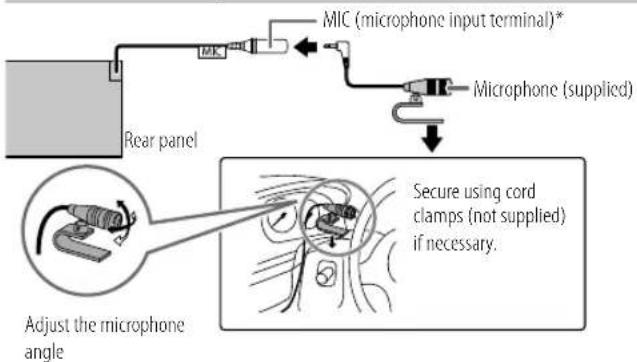
* For the location of the microphone input terminal/microphone input jack, refer to page 37.
Pair and connect a Bluetooth device for the first time
1 Press ⏻ SRC to turn on the unit. 2 Search and select the name of your receiver ("KD-X38MBS"/ "KD-X280BT"/"KD-XD28BT"/"KD-SX27BT") on the Bluetooth device. "BT PAIRING" flashes on the display.
- For some Bluetooth devices, you may need to enter the Personal Identification Number (PIN) code immediately after searching.
Perform (A) or (B) depending on what appears on the display.
For some Bluetooth devices, the pairing sequence may vary from the steps described below.
(A) "Device Name" "XXXXXX" "VOL - YES" "BACK - NO"
"XXXXXX" is a 6-digit passkey randomly generated during each pairing.
Ensure that the passkeys appearing on the unit and the Bluetooth device are the same.
Press the volume knob to confirm the passkey.
Operate the Bluetooth device to confirm the passkey.
(B) "Device Name" "VOL - YES" "BACK - NO"
Press the volume knob to start pairing.
2 • If "PAIRING" → "PIN 0000" scrolls on the display, enter the PIN code "0000" into the Bluetooth device. You can change to a desired PIN code before pairing. (Page 19)
- If only "PAIRING" appears, operate the Bluetooth device to confirm pairing.
"PAIRING COMPLETED" appears when pairing is completed, and "✗" will light up when the Bluetooth connection is established.
- KD-X38MBS, "indicator lights up to show the strength of the battery of the connected device. See also [FORMAT] on page 28 for the battery and signal strength shown on the display.
- KD-X280BT/KD-XD28BT/KD-SX27BT, PHONE 1 "and/or PHONITOR indicator(s) light(s) up.
Bluetooth®
• This unit supports Secure Simple Pairing (SSP). - Up to five devices can be registered (paired) in total. - Once pairing is completed, the Bluetooth device will remain registered in the unit even if you reset the unit. To delete the paired device, see [DEVICE DELETE] on page 19. - A maximum of two Bluetooth phones and one Bluetooth audio device can be connected at any time. To connect or disconnect the registered device, see [PHONE SELECT] or [AUDIO SELECT] in [BT MODE]. (Page 19) However, while in BT AUDIO source, you can connect to five Bluetooth audio devices and switch between these five devices. (Page 21) - Some Bluetooth devices may not automatically connect to the unit after pairing. Connect the device to the unit manually. - When the battery of the connected Bluetooth device runs low, "Device Name" ⇒ "LOW BATTERY" appears. - Refer to the instruction manual of the Bluetooth device for more information.
Auto Pairing (for KD-X38MBS)
When you connect iPhone/iPod touch to the USB input terminal, pairing request (via Bluetooth) is automatically activated if [AUTO PAIRING] is set to [ON]. (Page 19)
Press the volume knob to pair once you have confirmed the device name.
Bluetooth — Mobile phone

Receive a call
When there is an incoming call:
KD-X38MBS:
The buttons will blink in the color you have selected in [RING COLOR]. (Page 18)
KD-X280BT/KD-XD28BT/KD-SX27BT:
The buttons will blink in the blinking pattern you have selected in [RING ILLUMI]. (Page 18)
- The unit answers the call automatically if [AUTO ANSWER] is set to a selected time. (Page 18)
During a call:
- KD-X38MBS:
The buttons stop blinking and illuminate in the color you have selected in [RING COLOR]. (Page 18)
KD-X280BT/KD-XD28BT/KD-SX27BT:
The buttons stop blinking.
- If you turn off the unit or detach the faceplate, Bluetooth is disconnected.
Bluetooth®
The following operations may differ or be unavailable depending on the connected phone.
To On the faceplate First incoming call...
| Answer a call | Press 📞 - 🔊 or the volume knob. |
| Reject a call | Press and hold 📞 - 🔊 or the volume knob. |
| End a call | Press and hold 📞 - 🔊 or the volume knob. |
While talking on the first incoming call...
| Answer another incoming call and hold the current call | Press 📊 - 🔒 or the volume knob. |
| Reject another incoming call | Press and hold 📊 - 🔒 or the volume knob. |
While having two active calls...
| End current call and activate held call | Press and hold 📊 - 🔒 or the volume knob. |
| Swap between the current call and held call | Press 🔊 - 🔒. |
| Adjust the phone volume*1[00] to [35] (Default: [15]) | Turn the volume knob during a call. |
| Switch between hands-free and private talk modes*2 | Press a/2 during a call. |
*1 This adjustment will not affect the volume of the other sources. *2 Operations may vary according to the connected Bluetooth device.
■ Improve the voice quality
While talking on the phone...
1 Press and hold 2 Turn the volume knob to select an item (see the following table), then press the knob. 3 Repeat step 2 until the desired item is selected or activated. 4 Press to exit.
To return to the previous setting item, press Ⓠ/⊃.
Default: [XX]
| [MIC GAIN] | [LEVEL -10] to [LEVEL +10] ([LEVEL -04]): The sensitivity of the microphone increases as the number increases. |
| [NR LEVEL] | [LEVEL -05] to [LEVEL +05] ([LEVEL 00]): Adjust the noise reduction level until the least noise is being heard during a phone conversation. |
| [ECHOCANCEL] | [LEVEL -05] to [LEVEL +05] ([LEVEL 00]): Adjust the echo cancellation delay time until the least echo is being heard during a phone conversation. |
- Call quality may depend on mobile phone.
Make the settings for receiving a call
1 Press to enter Bluetooth mode. 2 Turn the volume knob to select an item (page 18), then press the knob. 3 Repeat step 2 until the desired item is selected or activated.
To return to the previous setting item, press Ⓠ/∅.
Bluetooth®
Default: [XX]
| [SETTINGS] | |
| [AUTOANSWER] | [01 SEC] to [30 SEC]: Answers an incoming call automatically in the selected time (in seconds). ; [OFF]: Cancels. |
| [RINGCOLOR] | (For KD-X38MBS)[COLOR 01] to [COLOR 49] ([COLOR 08]): Selects the illumination color for the buttons as notification when there is an incoming call and during a call. ; [OFF]: Cancels. |
| [RINGILLUMI] | (For KD-X280BT/KD-XD28BT/KD-SX27BT)[BLINK 01] to [BLINK 05] ([BLINK 02]): Selects the blinking pattern for the buttons as notification when there is an incoming call. ; [OFF]: Cancels. |
Make a call
You can make a call from the call history, phonebook, or dialing the number. Call by voice is also possible if your mobile phone has the feature.
1 Press to enter Bluetooth mode.
"(First device name)" appears.
- If two Bluetooth phones are connected, press again to switch to the other phone. "(Second device name)" appears.
2 Turn the volume knob to select an item (see the following table), then press the knob. 3 Repeat step 2 until the desired item is selected/activated or follow the instructions stated on the selected item.
To return to the previous setting item, press a/3.
| [RECENT CALL] (Applicable only if the phone supports PBAP.)1 Press the volume knob to select a name or a phone number."<" indicates call received, "> " indicates call made, "M" indicates call missed." "NO HISTORY" appears if there is no recorded call history or call number.2 Press the volume knob to call. | |
| [PHONEBOOK] (Applicable only if the phone supports PBAP.)1 Press 2▲/1▼to select the desired letter (A to Z, 0 to 9, and OTHERS)."OTHERS" appears if the first character is other than A to Z, 0 to 9.Turn the volume knob to select a name, then press the knob.Turn the volume knob to select a phone number, then press the knob to call.For using phonebook with this unit, make sure to allow access to or transfer from your smartphone. Depending on the connected phone, the process may be different.This unit can display only non-accent letters. (Accent letters such as "U" are shown as "U".) | |
| [DIAL NUMBER] | 1 Turn the volume knob to select a number (0 to 9) or character (**#, +).2 Press ◀◀◀/▶▶to move the entry position.Repeat step 1 and step 2 until you finish entering the phone number.3 Press the volume knob to call. |
| [VOICE] Speak the name of the contact you want to call or the voice command to control the phone functions. (See also the following "Make a call using voice recognition".) | |
Make a call using voice recognition
1 Press and hold to activate the voice recognition of the connected phone. 2 Speak the name of the contact you want to call or the voice command to control the phone functions. - Supported Voice Recognition features vary for each phone. Refer to the instruction manual of the connected phone for details.
Bluetooth®
Store a contact in memory
You can store up to 6 contacts into the number buttons (1 to 6).
1 Press to enter Bluetooth mode. 2 Turn the volume knob to select [RECENT CALL], [PHONEBOOK] or [DIAL NUMBER], then press the knob. 3 Turn the volume knob to select a contact or enter a phone number. If a contact is selected, press the volume knob to show the phone number. 4 Press and hold one of the number buttons (1 to 6).
"MEMORY P(selected preset number)" appears when the contact is stored.
To erase a contact from the preset memory, select [DIAL NUMBER] in step 2, store a blank number in step 3 and proceed to step 4.
Make a call to a registered number
1 Press to enter Bluetooth mode. 2 Press one of the number buttons (1 to 6). 3 Press the volume knob to call.
"NO PRESET" appears if there is no contact stored.
Bluetooth mode settings
1 Press and hold 🔒·☀️ 2 Turn the volume knob to select an item (see the following table), then press the knob. 3 Repeat step 2 until the desired item is selected/activated or follow the instructions stated on the selected item. 4 Press to exit.
To return to the previous setting item, press a/3.
Default: [XX]
| [BT MODE] | |
| [PHONESELECT] | Selects the phone or audio device to connect or disconnect. "★" appears in front of the device name when connected. |
| [AUDIOSELECT] | " ▷ " appears in front of the current playback audio device. · You can connect a maximum of two Bluetooth phones and one Bluetooth audio device at a time. |
| [DEVICEDELETE] | 1 Turn the volume knob to select a device to delete, then press the knob.2 Turn the volume knob to select [YES] or [NO], then press the knob. |
| [PIN CODE EDIT] (0000) | Changes the PIN code (up to 6 digits).1 Turn the volume knob to select a number.2 Press ◀◀/▶▶1 to move the entry position.Repeat step 1 and step 2 until you finish entering the PIN code.3 Press the volume knob to confirm. |
| [RECONNECT] | [ON]: The unit is automatically reconnect when the last connected Bluetooth device is within the connectable range.; [OFF]: Cancels. |
| [AUTOPAIRING] | (For KD-X38MBS)[ON]: The unit is automatically paired with the supported Bluetooth device (iPhone/iPod touch) when it is connected through USB input terminal. Depending on the operating system of the connected device, this function may not work.; [OFF]: Cancels. |
| [INITIALIZE] | [YES]: Initializes all the Bluetooth settings (including stored pairing, phonebook, and etc.).; [NO]: Cancels. |
| [INFORMATION] [MY BT NAME]: Displays the name of your receiver ("KD-X38MBS"/ "KD-X280BT"/"KD-XD28BT"/"KD-SX27BT").; [MY ADDRESS]: Shows address of this unit. | |
Bluetooth®
Bluetooth compatibility check mode
You can check the connectivity of the supported profile between the Bluetooth device and the unit.
• Make sure there is no Bluetooth device paired.
1 Press and hold

"BLUETOOTH" "CHECK MODE" appears. "SEARCH NOW USING PHONE" "PIN IS 0000" scrolls on the display.
2 Search and select the name of your receiver ("KD-X38MBS"/ "KD-X280BT"/"KD-XD28BT"/"KD-SX27BT") on the Bluetooth device within 3 minutes. 3 Perform (A), (B) or (C) depending on what appears on the display.
(A) "PAIRING" → "XXXXXX" (6-digit passkey): Ensure that the same passkey appears on the unit and Bluetooth device, then operate the Bluetooth device to confirm the passkey. (B) "PAIRING" → "PIN IS 0000": Enter "0000" on the Bluetooth device. (C) "PAIRING": Operate the Bluetooth device to confirm pairing.
After pairing is done successfully, "PAIRING OK" → "Device Name" appears and Bluetooth compatibility check starts.
If "CONNECT NOW USING PHONE" appears, operate the Bluetooth device to allow phonebook access to continue.
"TESTING" flashes on the display.
The connectivity result flashes on the display.
"PAIRING OK" and/or "HANDS-FREE OK"*1 and/or "AUD.STREAM OK"*2 and/or "PBAP OK"*3: Compatible
*1 Compatible with Hands-Free Profile (HFP) *2 Compatible with Advanced Audio Distribution Profile (A2DP) *3 Compatible with Phonebook Access profile (PBAP)
After 30 seconds, "PAIRING DELETED" appears to indicate that pairing has been deleted, and the unit exits check mode.
- To cancel, press and hold ⏻ SRC to turn off the power, then turn on the power again.
Bluetooth®
Bluetooth — Audio
Operations and display indications may differ according to their availability on the connected device. Depending on the connected device, some features may not work with your device.
While in BT AUDIO source, you can connect to five Bluetooth audio devices and switch between these five devices.
Listen to the audio player via Bluetooth
1 Press ⏻ SRC repeatedly to select BT AUDIO. - Pressing enters BT AUDIO directly. 2 Operate the audio player via Bluetooth to start playback.
To On the faceplate
| Play back/pause Press the volume knob. | |
| Select group or folder | Press 2 ▲ / 1 ▼. |
| Reverse skip/Forward skip | Press I◀◀ / ▶▶▶. |
| Reverse/Fast-forward | Press and hold I◀◀ / ▶▶▶. |
| To On the faceplate | |
| Repeat play | Press 4 repeatedly.[TRACK REPEAT], [ALL REPEAT],[GROUP REPEAT], [REPEAT OFF] |
| Random play | Press 3 repeatedly.[GROUP RANDOM], [ALL RANDOM],[RANDOM OFF] |
| Select a file from a folder/list Refer to "Select a file to play" onpage 9. | |
| Switch between connectedBluetooth audio devices | Press 5.(Pressing the "Play" key on theconnected device itself also causesswitching of sound output from thedevice.) |
Listen to iPod/iPhone via Bluetooth (for KD-X38MBS)
You can listen to the songs on the iPod/iPhone via Bluetooth on this unit.
Press ⏻ SRC repeatedly to select iPod BT.
- You can operate the iPod/iPhone in the same way as iPod/iPhone via USB input terminal. (Page 8)
- If you plug in an iPod/iPhone to the USB input terminal while listening to iPod BT source, the source automatically changes to iPod USB source. Press ⬇SRC to select iPod BT source if the device is still connected via Bluetooth.
AudioSettings
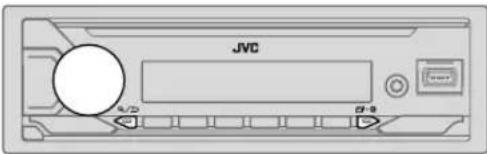
1 Press and hold . 2 Turn the volume knob to select an item (see the following table), then press the knob. 3 Repeat step 2 until the desired item is selected/activated or follow the instructions stated on the selected item. 4 Press eexit.
To return to the previous setting item, press a/3.
Default: [XX]
| [EQ SETTING] | |
| [PRESET EQ] | Selects a preset equalizer suitable to the music genre. Select [USER] to use the settings made in [EASY EQ] or [PRO EQ]. [FLAT]/[DRVN 3]/[DRVN 2]/[DRVN 1]/[HARD ROCK]/[HIP HOP]/[JAZZ]/ [POP]/[R&B]/[USER]/[CLASSICAL]Drive equalizer ([DRVN 3]/[DRVN 2]/[DRVN 1]) boosts specific frequencies in the audio signal to reduce the noise heard from outside the car or running noise of the tyres. |
| [EASY EQ] | Adjusts your own sound settings. The settings are stored to [USER] in [PRESET EQ]. The settings made may affect the current settings of [PRO EQ]. [SUB.W SP]*1*2: [00] to [+06] (Default: [+03] [SUB.W]*1*3: [-50] to [+10] [00] [BASS]: [LVL-09] to [LVL+09] [LVL 00] [MID]: [LVL-09] to [LVL+09] [LVL 00] [TRE]: [LVL-09] to [LVL+09] [LVL 00]) |
| [PRO EQ] Adjusts your own sound settings for each source.· The settings are stored to [USER] in [PRESET EQ].· The settings made may affect the current settings of [EASY EQ]. | ||
| [62.5HZ] | ||
| [LEVEL -09] to [LEVEL +09] ([LEVEL 00]): Adjusts the level to memorize for each source.(Before making an adjustment, select the source you want to adjust.) | ||
| [ON]: Turns on the extended bass.; [OFF]: Cancels. | ||
| [100HZ]/[160HZ]/[250HZ]/[400HZ]/[630HZ]/[1KHZ]/[1.6KHZ]/[2.5KHZ]/[4KHZ]/[6.3KHZ]/[10KHZ]/[16KHZ] | ||
| [LEVEL -09] to [LEVEL +09] ([LEVEL 00]): Adjusts the level to memorize for each source.(Before making an adjustment, select the source you want to adjust.) | ||
| [Q FACTOR] | [1.35]/[1.50]/[2.00]: Adjust the quality factor. | |
| [AUDIO CONTROL] | ||
| [BASS BOOST] | [LEVEL +01] to [LEVEL +05]: Selects your preferred bass boost level.;[OFF]: Cancels. | |
| [LOUDNESS] | [LEVEL 01]/[LEVEL 02]: Boosts low or high frequencies to produce a well-balanced sound at low volume.; [OFF]: Cancels. | |
| [SUB.W LEVEL]*1 | [SPK-OUT]*2 | (Not applicable when 3-way crossover is selected.)[SUB.W 00] to [SUB.W +06] ([SUB.W +03]): Adjuststhe output level of the subwoofer connected via speaker lead. (Page 36) |
| [PRE-OUT]*3 | [SUB.W -50] to [SUB.W +10] ([SUB.W 00]): Adjuststhe output level of the subwoofer connected to the lineout terminals (SW or REAR/SW) through an external amplifier. (Page 37) | |
| [SUBWOOFER SET]*3 | [ON]: Turns on the subwoofer output.; [OFF]: Cancels. | |
*1, *2, *3: (see page 23)
Audio Settings
| [FADER](Not applicable when 3-way crossover is selected.) | |
| [POSITION R15] to [POSITION F15] ([POSITION 00]): Adjusts the front and rear speaker output balance. | |
| [BALANCE]*4 | [POSITION L15] to [POSITION R15] ([POSITION 00]): Adjusts the left and right speaker output balance. |
| [VOLUME ADJUST] | [LEVEL -15] to [LEVEL +06] ([LEVEL 00]): Presets the initial volume level of each source by comparing to the FM volume levels. (Before adjustment, select the source you want to adjust.) |
| [AMP GAIN] | [LOW POWER]: Limits the maximum volume level to 25. (Select if the maximum power of each speaker is less than 50 W to prevent damaging the speakers.) ; [HIGH POWER]: The maximum volume level is 35. |
| [SPK/PRE OUT] (Not applicable when 3-way crossover is selected.) Depending on the speaker connection method, select the appropriate setting for the desired output. (See “Speaker output settings” on page 24.) | |
| [SPEAKER SIZE] Depending on the crossover type you have selected (see the following [X 'OVER TYPE]), 2-way crossover or 3-way crossover setting items will be shown. (See “Crossover settings” on page 25.) By default, 2-way crossover type is selected. | |
| [X 'OVER] | |
| [DTA SETTINGS] | For settings, see “Digital Time Alignment settings” on page 27. |
| [CAR SETTINGS] | |
| [X'OVER TYPE] | Caution: Adjusts the volume before changing the [X'OVER TYPE] to avoid the sudden increase or decrease of the output level.Once you have changed the crossover type, the next time when you turn on the power, the display shows:"2-WAY X'OVER" or "3-WAY X'OVER" → "PRESS" →VOLUME KNOB"→ "TO CONFIRM"Press the volume knob to acknowledge in order to proceed to the next desired operation. |
| [2-WAY] | (Displayed only when [3-WAY] is selected.)[YES]: Selects two way crossover type. ; [NO]: Cancels. |
| [3-WAY] | (Displayed only when [2-WAY] is selected.)[YES]: Selects three way crossover type. ; [NO]: Cancels. |
| [SOUND EFFECT] | |
| [SPACE ENHANCE] | (Not applicable for FM/AM source.)[SMALL]/[MEDIUM]/[LARGE]: Virtually enhances the sound space. ;[OFF]: Cancels. |
| [SND RESPONSE] | [LEVEL1]/[LEVEL2]/[LEVEL3]: Virtually makes the sound more realistic. ;[OFF]: Cancels. |
| [SOUND LIFT] | [LOW]/[MIDDLE]/[HIGH]: Virtually adjusts the sound position heard from the speakers. ; [OFF]: Cancels. |
| [VOL LINK EQ] | [ON]: Boosts the frequency to reduce the noise heard from outside the car or running noise of the tyres. ; [OFF]: Cancels. |
| [K2 TECHNOLOGY] | (Not applicable for FM/AM source, SIRIUS XM source and AUX source.)[ON]: Improves the sound quality of compressed music. ; [OFF]: Cancels. |
*1 Displayed only when [SUBWOOFER SET] is set to [ON]. (Page 22)
*2 For 2-way crossover: Displayed only when [SPK/PRE OUT] is set to [SUB.W/SUB.W]. (Page 24)
*3 For 2-way crossover: Displayed only when [SPK/PRE OUT] is set to [REAR/SUB.W] or [SUB.W/SUB.W]. (Page 24)
*4 This adjustment will not affect the subwoofer output.
Audio Settings
Speaker output settings [SPK/PRE OUT]
(Applicable only if [X' OVER TYPE] is set to [2-WAY]) (page 23)
Select the output setting for the speakers [SPK/PRE OUT], based on the speaker connection method.
Connection via lineout terminals
For connections through an external amplifier (Page 37)
KD-X38MBS:
| Setting on[SPK/PRE OUT] | Audio signal through lineout terminal | ||
| FRONT REAR SW | |||
| [REAR/REAR] (default) | Front speakers output | Rear speakers output Subwoofer output | |
| [SUB.W/SUB.W] Front speakers output | L (left): Subwoofer output R (right): (Mute) | Subwoofer output | |
KD-XD28BT:
| Setting on[SPK/PRE OUT] | Audio signal through lineout terminal | |
| FRONT REAR/SW | ||
| [REAR/REAR] Front speakers output Rear speakers output | ||
| [REAR/SUB.W] (default) Front speakers output Subwoofer output | ||
| [SUB.W/SUB.W] Front speakers output Subwoofer output | ||
KD-X280BT/KD-SX27BT:
| Setting on[SPK/PRE OUT] | Audio signal through lineout terminal |
| REAR/SW | |
| [REAR/REAR] Rear speakers output | |
| [REAR/SUB.W] (default) Subwoofer output | |
| [SUB.W/SUB.W] | Subwoofer output |
■ Connection via speaker leads
You can also connect the speakers without using an external amplifier but still be able to enjoy the subwoofer output with these settings. (Page 36)
| Setting on[SPK/PRE OUT] | Audio signal through rear speaker lead | |
| L (left) | R (right) | |
| [REAR/REAR] Rear speakers output | Rear speakers output | |
| [REAR/SUB.W]* | Rear speakers output | Rear speakers output |
| [SUB.W/SUB.W] | Subwoofer output | (Mute) |
If [SUB.W/SUB.W] is selected:
- [120HZ] is selected in [SUBWOOFER LPF] and [THROUGH] is not available. (Page 26)
- [POSITION R02] is selected in [FADER] and selectable range is [POSITION R15] to [POSITION 00]. (Page 23)
* Except for KD-X38MBS.
Audio Settings
Crossover settings
Below are the available setting items for 2-way crossover and 3-way crossover.
CAUTION
Select a crossover type according to how the speakers are connected. (Page 36, 37)
If you select a wrong type:
• The speakers may be damaged.
• The output sound level may be extremely high or low.
SPEAKER SIZE
Selects according to the connected speaker size for optimum performance.
- The frequency and slope settings are automatically set for the crossover of the selected speaker.
- If [NONE] is selected for the following speaker in [SPEAKER SIZE], the [X'OVER] setting of the selected speaker is not available.
- 2-way crossover [TWEETER] of [FRONT]/[REAR]/[SUBWOOFER]
- 3-way crossover [WOOFER]
X'OVER (crossover)
- [FRQ]/[F-HPF FRQ]/[R-HPF FRQ]/[SW LPF FRQ]/[HPF FRQ]/[LPF FRQ]: Adjusts the crossover frequency for the selected speakers (high pass filter or low pass filter).
If [THROUGH] is selected, all signals are sent to the selected speakers.
- [SLOPE]/[F-HPF SLOPE]/[R-HPF SLOPE]/[SW LPF SLOPE]/[HPF SLOPE]/[LPF SLOPE]: Adjusts the crossover slope. Selectable only if a setting other than [THROUGH] is selected for the crossover frequency.
- [SW LPF PHASE]/[PHASE]: Selects the phase of the speaker output to be in line with the other speaker output.
- [GAIN LEFT]/[GAIN RIGHT]/[F-HPF GAIN]/[R-HPF GAIN]/[SW LPF GAIN]/[GAIN]: Adjusts the output volume of the selected speaker.
2-way crossover setting items
| [SPEAKERSIZE] | ||
| [FRONT] [SIZE] | [3.5"/[4"/[4.75"/[5"/[6.5"/[6.75"/[7"/[4×6]/[5×7]/[6×8]/[6×9]/[7×10] | |
| [TWEETER] | [SMALL]/[MIDDLE]/[LARGE]/[NONE] (not connected) | |
| [REAR]*1 | [3.5"/[4"/[4.75"/[5"/[6.5"/[6.75"/[7"/[4×6]/[5×7]/[6×8]/[6×9]/[7×10]/[NONE] (not connected) | |
| [SUBWOOFER]*2*3 | [6.5"/[8"/[10"/[12"/[15" OVER]/[NONE] (not connected) | |
| [X'OVER] | ||
| [TWEETER] [FRQ] | [1KHZ]/[1.6KHZ]/[2.5KHZ]/[4KHZ]/[5KHZ]/[6.3KHZ]/[8KHZ]/[10KHZ]/[12.5KHZ] | |
| [GAIN LEFT] | [-08DB] to [00DB] | |
| [GAIN RIGHT] | [-08DB] to [00DB] | |
| [FRONT HPF] [F-HPF FRQ] | [30HZ]/[40HZ]/[50HZ]/[60HZ]/[70HZ]/[80HZ]/[90HZ]/[100HZ]/[120HZ]/[150HZ]/[180HZ]/[220HZ]/[250HZ]/[THROUGH] | |
| [F-HPF SLOPE] | [-06DB]/[-12DB]/[-18DB]/[-24DB] | |
| [F-HPF GAIN] | [-08DB] to [00DB] | |
| [REAR HPF]*1 [R-HPF FRQ] | [30HZ]/[40HZ]/[50HZ]/[60HZ]/[70HZ]/[80HZ]/[90HZ]/[100HZ]/[120HZ]/[150HZ]/[180HZ]/[220HZ]/[250HZ]/[THROUGH] | |
| [R-HPF SLOPE] | [-06DB]/[-12DB]/[-18DB]/[-24DB] | |
| [R-HPF GAIN] | [-08DB] to [00DB] | |
*1, *2, *3: (see page 26)
Audio Settings
| [SUBWOOFER LPF]*2*3 | [SW LPF FRQ] | [30HZ]/[40HZ]/[50HZ]/[60HZ]/[70HZ]/[80HZ]/[90HZ]/[100HZ]/[120HZ]/[150HZ]/[180HZ]/[220HZ]/[250HZ]/[THROUGH] |
| [SW LPF SLOPE] | [-06DB]/[-12DB]/[-18DB]/[-24DB] | |
| [SW LPF PHASE] | [REVERSE] (180°)/ [NORMAL] (0°) | |
| [SW LPF GAIN] | [-08DB] to [00DB] |
3-way crossover setting items
| [SPEAKERSIZE] | |
| [TWEETER] | [SMALL]/[MIDDLE]/[LARGE] |
| [MID RANGE] | [3.5"/[4"/[4.75"/[5"/[6.5"/[6.75"/[7"/[4×6]/[5×7]/[6×8]/[6×9] |
| [WOOFER]*3 | [6.5"/[8"/[10"/[12"/[15" OVER]/[NONE] (not connected) |
| [X'OVER] | |
| [TWEETER] [HPF FRQ] | [1KHZ]/[1.6KHZ]/[2.5KHZ]/[4KHZ]/[5KHZ]/[6.3KHZ]/[8KHZ]/[10KHZ]/[12.5KHZ] |
| [SLOPE] [-06DB]/[-12DB] | |
| [PHASE] [REVERSE] (180°)/[NORMAL] (0°) | |
| [GAIN] [-08DB] to [00DB] | |
| [MID RANGE] [HPF FRQ] | [30HZ]/[40HZ]/[50HZ]/[60HZ]/[70HZ]/[80HZ]/[90HZ]/[100HZ]/[120HZ]/[150HZ]/[180HZ]/[220HZ]/[250HZ]/[THROUGH] |
| [HPF SLOPE] | [-06DB]/[-12DB] |
| [LPF FRQ] | [1KHZ]/[1.6KHZ]/[2.5KHZ]/[4KHZ]/[5KHZ]/[6.3KHZ]/[8KHZ]/[10KHZ]/[12.5KHZ]/[THROUGH] |
| [LPF SLOPE] | [-06DB]/[-12DB] |
| [PHASE] | [REVERSE] (180°)/[NORMAL] (0°) |
| [GAIN] | [-08DB] to [00DB] |
| [WOOFER]*3 [LPF FRQ] | [30HZ]/[40HZ]/[50HZ]/[60HZ]/[70HZ]/[80HZ]/[90HZ]/[100HZ]/[120HZ]/[150HZ]/[180HZ]/[220HZ]/[250HZ]/[THROUGH] |
| [SLOPE] | [-06DB]/[-12DB] |
| [PHASE] | [REVERSE] (180°)/[NORMAL] (0°) |
| [GAIN] | [-08DB] to [00DB] |
*1 Displayed only when [SPK/PRE OUT] is set to [REAR/REAR] or [REAR/SUB.W]. (Page 24) *2 Except KD-X38MBS: Displayed only when [SPK/PRE OUT] is set to [REAR/SUB.W] or [SUB.W/SUB.W]. (Page 24) *3 Displayed only when [SUBWOOFER SET] is set to [ON]. (Page 22)
Audio Settings
Digital Time Alignment settings
Digital Time Alignment sets the delay time of the speaker output to create a more suitable environment for your vehicle.
- For more information, see the following "Determining the delay time automatically".
[DTA SETTINGS]
| [POSITION] | Selects your listening position (reference point). [ALL]: Not compensating; [FRONT RIGHT]: Front right seat; [FRONT LEFT]: Front left seat; [FRONT ALL]: Front seats• [FRONT ALL] is displayed only when [X' OVER TYPE] is set to [2-WAY]. (Page 23) |
| [DISTANCE]*1 | [0FT] to [20.01FT]: Fine adjust the distance to compensate. |
| [GAIN]*1 | [-8DB] to [0DB]: Fine adjust the output volume of the selected speaker. |
| [DTA RESET] | [YES]: Resets the settings ([DISTANCE] and [GAIN]) of the selected [POSITION] to default.; [NO]: Cancels. |
[CAR SETTINGS] Identify your car type and rear speaker location in order to make the adjustment for [DTA SETTINGS].
| [CAR TYPE] | [COMPACT]/[FULL SIZE CAR]/[WAGON]/[MINIVAN]/[SUV]/[MINIVAN(LONG)]: Selects the type of vehicle. ; [OFF]: Not compensating. |
| [R-SP LOCATION]*2 | Selects the location of the rear speakers in your vehicle to calculate the furthest distance from the listening position selected (reference point).• [DOOR]/[REAR DECK]: Selectable only when [CAR TYPE] is selected as [OFF], [COMPACT], [FULL SIZE CAR], [WAGON] or [SUV].• [2ND ROW]/[3RD ROW]: Selectable only when [CAR TYPE] is selected as [MINIVAN] or [MINIVAN(LONG)]. |
Determining the delay time automatically
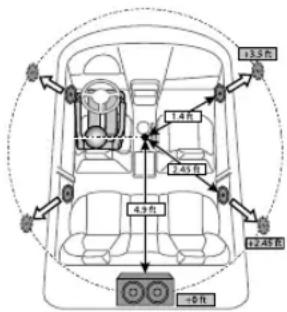
If you specify the distance from the currently set listening position to every speaker, the delay time will be automatically calculated.
1 Set [POSITION] and determine the listening position as the reference point (the reference point for [FRONT ALL] will be the center between the right and left in the front seats). 2 Measure the distances from the reference point to the speakers. 3 Calculate the distance between the furthest speaker (subwoofer on the illustration) and other speakers. 4 Sets the [DISTANCE] calculated in step 3 for individual speakers. 5 Adjusts [GAIN] for individual speakers.
Example: When [FRONT ALL] is selected as the listening position
*1 Before making an adjustment, select the speaker:
When 2-way crossover is selected:
[FRONT LEFT]/[FRONT RIGHT]/[REAR LEFT]/[REAR RIGHT]/[SUBWOOFER]:
— [REAR LEFT], [REAR RIGHT] and [SUBWOOFER] is selectable only if a setting other than [NONE] is selected for [REAR] and [SUBWOOFER] of [SPEAKER SIZE]. (Page 25)
When 3-way crossover is selected:
[TWEETER LEFT]/[TWEETER RIGHT]/[MID LEFT]/[MID RIGHT]/[WOOFER]:
- [WOOFER] is selectable only if a setting other than [NONE] is selected for [WOOFER] of [SPEAKER SIZE]. (Page 26)
*2 Displayed only when [X' OVER TYPE] is set to [2-WAY] (page 23) and if a setting other than [NONE] is selected for [REAR] of [SPEAKER SIZE]. (Page 25)
Display Settings
Zone identification for brightness settings
KD-X38MBS:
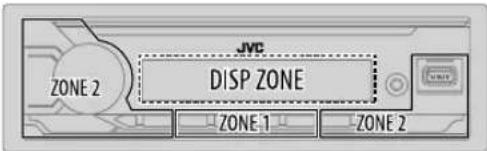
KD-X280BT/KD-XD28BT/KD-SX27BT:
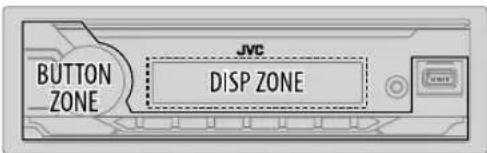
Zone identification for color settings
KD-X38MBS:
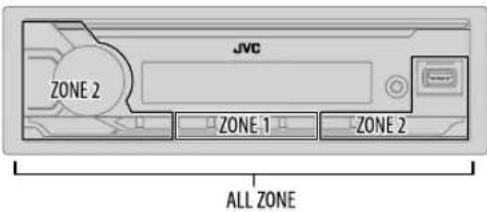
1 Press and hold . 2 Turn the volume knob to select an item (see the following table), then press the knob. 3 Repeat step 2 until the desired item is selected/activated or follow the instructions stated on the selected item.
4 Press to exit.
To return to the previous setting item, press 9/3.
Default: [XX]
| [DISPLAY] | |
| [DIMMER] | Dims the illumination.[OFF]: Dimmer is turned off. Brightness changes to [DAY] setting.[ON]: Dimmer is turned on. Brightness changes to [NIGHT] setting.(See the following "[BRIGHTNESS]" settings.)[DIMMER TIME]: Set the time to turn on dimmer and to turn off dimmer.1 Turn the volume knob to adjust the [ON] time, then press the knob.2 Turn the volume knob to adjust the [OFF] time, then press the knob.(Default: [ON]: [PM6:00]; [OFF]: [AM6:00][DIMMER AUTO]: Dimmer turns on and off automatically when you turn off or on the car headlights.*1 |
| [BRIGHTNESS] Sets the brightness for day and night separately.1 [DAY]/[NIGHT]: Select day or night.2 Select a zone. (See the illustration on the left column.)3 [LEVEL 00] to [LEVEL 31]: Set the brightness level. | |
| [TEXT SCROLL]*2 | [SCROLL ONCE]: Scrolls the display information once.;[SCROLL AUTO]: Repeats scrolling at 5-second intervals.;[SCROLL OFF]: Cancels. |
| [FORMAT]*3 | (For KD-X38MBS)Information below is shown on the supplementary display when Bluetooth device is connected. (Page 30)[BATT/SIGNAL]: Shows the strength of the battery and signal.;[DATE]: Shows the date. |
*1 The illumination control wire connection is required. (Page 36) *2 Some characters or symbols will not be shown correctly (or will be blank). *3 Functionality depends on the type of phone used.
Display Settings
| [COLOR] (for KD-X38MBS) | |
| [PRESET]Selects illumination colors for the buttons on different zones separately.1 Select a zone ([ZONE 1], [ZONE 2], [ALL ZONE]). (See the illustration on page 28.)2 Select a color for the selected zone.[COLOR 01] to [COLOR 49][USER]: The color you have created for [DAY COLOR] or [NIGHT COLOR] is shown.[COLOR FLOW01] to [COLOR FLOW03]: Color changes at different speeds.[CRYSTAL]/[FLOWER]/[FOREST]/[GRADATION]/[OCEAN]/[RELAX]/ [SUNSET]: The selected color pattern is shown.* (Selectable only when [ALL ZONE] is selected in step 1.) | |
| [DAY COLOR] Stores your own day and night illumination colors for different zones.1 Select a zone ([ZONE 1], [ZONE 2]). (See the illustration on page 28.)2 [RED]/[GREEN]/[BLUE]: Select a primary color.3 [00] to [31]: Select the level. | |
| [NIGHT COLOR] | Repeat step 2 and step 3 for all the primary colors.Your setting is stored to [USER] in [PRESET].[NIGHT COLOR] or [DAY COLOR] is changed by turning on or off your car's headlights. |
| [COLOR GUIDE] | [ON]: The illumination color of [ZONE 1] and [ZONE 2] change to white color when settings are performed on menu and list search, except in color setting mode.; [OFF]: Cancels. |
* If one of these color patterns is selected, the [ZONE 1] and [ZONE 2] illumination colors will change to the default colors.
References
Maintenance
Cleaning the unit
Wipe off dirt on the faceplate with a dry silicone or soft cloth.
Cleaning the connector
Detach the faceplate and clean the connector gently with a cotton swab. Be careful not to damage the connector.
Connector (on the reverse side of the faceplate)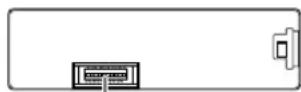
More information
For: — Latest firmware updates and latest compatible item list
- JVC original application
— Any other latest information
Visit https://www.jvc.net/cs/car/ .
Playable files
- USB mass storage class device:
playable audio file:
KD-X38MBS: MP3 (.mp3), WMA (.wma), AAC (.aac), AAC (.m4a), WAV (.wav), FLAC (.flac)
KD-X280BT/KD-XD28BT/KD-SX27BT: MP3 (.mp3), WMA (.wma), WAV (.wav), FLAC (.flac)
playable file system: FAT12, FAT16, FAT32
Even when audio files comply with the standards listed above, playback may be impossible depending on the types or conditions of media or devices.
- For detailed information and notes about the playable audio files, visit
https://www.jvc.net/cs/car/audiofile/ .
References
About USB devices
- You cannot connect a USB device via a USB hub.
- Connecting a cable whose total length is longer than 5 m may result in abnormal playback.
- This unit cannot recognize a USB device whose rating is other than 5 V and exceeds 1.5 A.
About iPod/iPhone (for KD-X38MBS)
- Made for — iPod touch (6th generation) — iPhone 5S, 6, 6 Plus, 6S, 6S Plus, SE, 7, 7 Plus, 8, 8 Plus, X, XS, XS MAX, XR, 11, 11 Pro, 11 Pro Max, SE (2nd generation), 12, 12 mini, 12 Pro, 12 Pro Max
- The song order displayed on the selection menu of this unit may differ from that of the iPod/iPhone.
- Depending on the version of the operating system of the iPod/iPhone, some functions may not operate on this unit.
Change the display information
Each time you press, the display information changes.
- If the information is unavailable or not recorded, "NO TEXT", "NO NAME", or other information (e.g., station name) appears, or the display will be blank.
KD-X38MBS:
Main display
Clock display or Level meter Supplementary display*1
*1 Date will be replaced with battery and signal strength of the connected Bluetooth device if [FORMAT] is set to [BATT/SIGNAL]. (Page 28)
Source name Display information: Main (Supplementary)
| FM or AM Frequency (Date) | Frequency (Date) with Music SynchronizationEffect*2 back to the beginning |
| For FM Radio Broadcast Data System stations only:Station name/Program type (Date) Station name/Program type(Date) with Music Synchronization Effect*2 Radio text (Date)Radio text + (Radio text+) Song title (Artist) Song title(Date) Frequency (Date) back to the beginning | |
| USB For MP3/WMA/AAC/WAV/FLAC files: | |
| Song title (Artist) Song title (Artist) with Music SynchronizationEffect*2 Song title (Album title) Song title (Date) Filename (Folder name) File name (Date) Playing time (Date)back to the beginning | |
| iPod USB/iPod BT Song title (Artist) | Song title (Artist) with Music SynchronizationEffect*2 Song title (Album title) Song title (Date) Playingtime (Date) back to the beginning |
| SIRIUS XM Channel number (Status) | Channel number (Status) with MusicSynchronization Effect*2 Channel name (Status) Artist(Status) Song title (Status) Content information (Status)Category name (Status) Date (Status) back to the beginning |
| BT AUDIO Song title (Artist) | Song title (Artist) with Music SynchronizationEffect*2 Song title (Album title) Song title (Date) Playingtime (Date) back to the beginning |
| AUX | Source name (Date) Source name (Date) with MusicSynchronization Effect*2 back to the beginning |
| *2 During Music Synchronization Effect, the illumination color or brightness level of the button changes and synchronizes with the music level (depending on the color setting made for [PRESET] on page 29). | |
References
KD-X280BT/KD-XD28BT/KD-SX27BT:
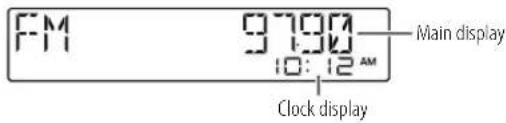
| Source name Display information: Main | |
| FM or AM Frequency | → Frequency with Music Synchronization Effect* → Date→ back to the beginning |
| For FM Radio Broadcast Data System stations only:Station name/Program type → Station name/Program type with Music Synchronization Effect* → Radio text → Radio text + → Radio text+ song title/Radio text+ artist → Frequency → Date → back to the beginning | |
| USB For MP3/WMA/WAV/FLAC files:Song title/Artist → Song title/Artist with Music Synchronization Effect* → Album title/Artist →older name File name Playing time → Date → back to the beginning | |
| BT AUDIO Song title/Artist | → Song title/Artist with Music Synchronization Effect* → Album title/Artist →Playing time Date back to the beginning |
| AUX Source name | → Source name with Music Synchronization Effect* → Date → back to the beginning |
* During Music Synchronization Effect, the brightness level of the buttons changes and synchronizes with the music level.
Troubleshooting
Symptom Remedy
| General | Sound cannot be heard. • Adjust the volume to the optimum level.• Check the cords and connections. | |
| "MISWIRING CHECK WIRING THEN PWR ON" appears. | Turn the power off, then check to be sure the terminals of the speaker wires are insulated properly. Turn the power on again. | |
| "PROTECTING SEND SERVICE" appears. | Send the unit to the nearest service center. | |
| Source cannot be selected. | Check the [SOURCE SELECT] setting. (Page 5) | |
| The unit does not work at all. | Reset the unit. (Page 4) | |
| Correct characters are not displayed. | • This unit can only display uppercase letters, numbers, and a limited number of symbols.• Depending on the display language you have selected (page 6), some characters may not be displayed correctly. | |
| Radio | • Radio reception is poor.• Static noise while listening to the radio. | Connect the antenna firmly. |
| USB/iPod | Playback order is not as intended. | USB device, the folders are played in the order of creation (date and time). The files within each folder are played in the order of the file name (alphabet). |
| Elapsed playing time is not correct. | This depends on the recording process earlier (USB). | |
| "NOT SUPPORT" appears and file skips. | Check whether the file is a playable format. (Page 29) | |
| "READING" keeps flashing. • Do not use too many hierarchical levels and folders.• Reattach the device (USB/iPod/iPhone). | ||
Troubleshooting
| Symptom Remedy | ||
| USB/iPod | "UNSUPPORTED DEVICE" appears. | Check whether the connected USB device is compatible with this unit and ensure the file systems are in supported formats. (Page 29)Reattach the USB device. |
| "UNRESPONSIVE DEVICE" appears. | Make sure the USB device is not malfunction and reattach the USB device. | |
| "USB HUB IS NOT SUPPORTED" appears. | This unit cannot support a USB device connected via a USB hub. | |
| "CANNOT PLAY" appears. | Connect a USB device that contains playable audio files. | |
| The source does not change to "USB" when you connect a USB device while listening to another source."USB ERROR" appears. | The USB port is drawing more power than the design limit. Turn the power off and unplug the USB device. Then, turn on the power and reattach the USB device. If this does not solve the problem, turn the power off and on (or reset the unit) before replacing with another USB device. | |
| The iPod/iPhone does not turn on or does not work. | Check the connection between this unit and iPod/iPhone.Disconnect and reset the iPod/iPhone using hard reset. | |
| "LOADING" appears when you enter search mode by pressingQ/→. | This unit is still preparing the iPod/iPhone music list. It may take some time to load, try again later. | |
| "NO DEVICE" Connect a device (USB/iPod/iPhone), and change the source to USB/iPod USB again. | ||
| "iPod ERROR" Reconnect the iPod.Reset the iPod.Press and hold SRC to turn off the power. Turn the power on again for error recovery. | ||
| "MEMORY FULL" You have reached the maximum storage limit of your iPod/iPhone. | ||
| Symptom Remedy | |
| SiriusXM® Radio | "CH LOCKED LOCK CODE?" The selected channel is locked. Enter the correct pass code to unlock. (Page 13) |
| "CHAN UNSUB" The selected channel is unsubscribed.Call 1-866-635-2349 in the U.S.A. or 1-888-539-7474 in Canada to subscribe. (Page 10) | |
| "CH UNAVAIL" The selected channel is unavailable. For more information about the SiriusXM channel lineup, visit.<www.siriusxm.com>. | |
| "CHECK ANTENNA" Check that the antenna and its connection are in good condition. | |
| "CHECK TUNER" Make sure the SiriusXM Vehicle Tuner is connected to the unit. | |
| "NO SIGNAL" Make sure the antenna is mounted outside the vehicle. | |
| "SUBSCRIPTION UPDATED Your subscription is updated. Press the volume knob to PRESS ENTER TO continue. | |
| "CODE ERROR" Make sure you have entered the correct pass code.(Page 13) | |
| "NO CONTENT" There is insufficient content to start TuneScan. | |
| "SCAN CANCEL" TuneScan has been aborted. | |
Troubleshooting
| Symptom Remedy | ||
| Bluetooth* | No Bluetooth device is detected. | Search from the Bluetooth device again.Reset the unit. (Page 4) |
| Bluetooth pairing cannot be made. | Make sure you have entered the same PIN code to both the unit and Bluetooth device.Delete pairing information from both the unit and the Bluetooth device, then perform pairing again. (Page 15) | |
| Echo or noise is heard during a phone conversation. | Adjust the microphone unit's position. (Page 15)Check the [ECHO CANCEL] setting. (Page 17) | |
| Phone sound quality is poor. | Reduce the distance between the unit and the Bluetooth device.Move the car to a place where you can get a better signal reception. | |
| Phone call sound cannot be heard from the car speakers. | Press Q/D during a call to switch between hands-free and private talk mode. (Page 17) | |
| Voice calling method is not successful. | Use voice calling method in a more quiet environment.Reduce the distance from the microphone when you speak the name.Make sure the same voice as the registered voice tag is used. | |
| Sound is being interrupted or skipped during playback of a Bluetooth audio player. | Reduce the distance between the unit and the Bluetooth audio player.Turn off, then turn on the unit and try to connect again.Other Bluetooth devices might be trying to connect to the unit. | |
| The connected Bluetooth audio player cannot be controlled. | Check whether the connected Bluetooth audio player supports Audio/Video Remote Control Profile (AVRCP). (Refer to the instructions of your audio player.)Disconnect and connect the Bluetooth player again. | |
| Symptom Remedy | |
| Bluetooth e | “PLEASE WAIT” The unit is preparing to use the Bluetooth function. If the message does not disappear, turn off and turn on the unit, then connect the device again. |
| “NOT SUPPORT” The connected phone does not support Voice Recognition feature or phonebook transfer. | |
| “NO ENTRY” There is no registered device connected/found via Bluetooth. | |
| “ERROR” Try the operation again. If “ERROR” appears again, check if the device supports the function you have tried. | |
| “NO INFO”/“NO DATA” Bluetooth device cannot get the contact information. | |
| “H/W ERROR” Reset the unit and try the operation again. If “H/W ERROR” appears again, consult your nearest service center. | |
| “SWITCHING NG” The connected phones might not support phone switching feature. | |
| The Bluetooth connection between the Bluetooth device and the unit is unstable. Delete the unused registered Bluetooth device from the unit. (Page 19) | |
If you have any troubles, try the following:
1 Check TROUBLESHOOTING 2 Reset the unit (page 4) 3 Contact (USA only)
Call: 1-800-252-5722 (or) visit: https://www.jvc.com
Installation/Connection
This section is for the professional installer. For safety's sake, leave wiring and mounting to professionals. Consult the car audio dealer.
WARNING
• The unit can only be used with a 12 V DC power supply, negative ground. - Disconnect the battery's negative terminal before wiring and mounting. - Do not connect Battery wire (yellow) and Ignition wire (red) to the car chassis or Ground wire (black) to prevent a short circuit. • To prevent short circuit: - Insulate unconnected wires with vinyl tape. — Be sure to ground this unit to the car's chassis again after installation. - Secure the wires with cable clamps and wrap vinyl tape around the wires that come in contact with metal parts to protect the wires.
CAUTION
• Install this unit in the console of your vehicle. Do not touch the metal parts of this unit during and shortly after use of the unit. Metal parts such as the heat sink and enclosure become hot. - Do not connect the wires of speakers to the car chassis or Ground wire (black), or connect them in parallel. - Connect speakers with a maximum power of more than 50 W. If the maximum power of the speakers is lower than 50 W, change the [AMP GAIN] setting to avoid damaging the speakers. (Page 23) - Mount the unit at an angle of less than 30° . - If your vehicle wiring harness does not have the ignition terminal, connect Ignition wire (red) to the terminal on the vehicle's fuse box which provides 12 V DC power supply and is turned on and off by the ignition key. - Keep all cables away from heat dissipate metal parts. - After the unit is installed, check whether the brake lamps, blinkers, wipers, etc. on the car are working properly. - If the fuse blows, first make sure the wires are not touching car's chassis, then replace the old fuse with one that has the same rating.
Part list for installation
(A) Faceplate (×1)

(C) Mounting sleeve (×1)
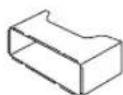
(E) Extraction key (×2)
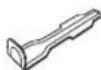
(B) Trim plate (×1)

(D) Wiring harness (×1)
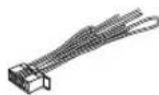
Basic procedure
1 Remove the key from the ignition switch, then disconnect the terminal of the car battery. 2 Connect the wires properly. See "Wiring connection" on page 36. 3 Install the unit to your car. See "Installing the unit (in-dash mounting)" on page 35. 4 Connect the terminal of the car battery. 5 Press ⏻ SRC to turn on the power. 6 Detach the faceplate and reset the unit within 5 seconds. (Page 4)
Installation/Connection
Installing the unit (in-dash mounting)![graph TD A["1: Top Left Slice"] --> B["2: Top Side Slice"] B --> C["3: Top Side Slice"] C --> D["4: Top Side Slice"] D --> E["5: Top Side Slice"] E --> F["6: Top Side Slice"] F --> G["7: Top Side Slice"] G --> H["8: Top Side Slice"] H --> I["9: Top Side Slice"] I --> J["10: Top Side Slice"] J --> K[…](/content/2026/04/703491/images/e88ae4493b258307d7203cbdd41e190f3bc815fc71f60af6b87368390d1a665a.jpg)
1 Remove the mounting sleeve and trim plate from the unit. 2 Align the holes in the unit (on both sides) with the vehicle mounting bracket and secure the unit with screws (commercially available).
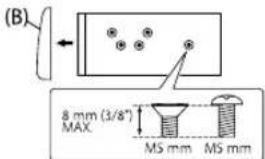
⚠ Use only the specified screws. Using wrong screws might damage the unit.
Removing the unitInstalling the unit (without mounting sleeve)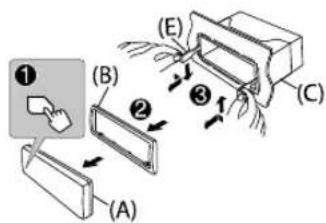
Installation/Connection
Wiring connection
IMPORTANT
We recommend installing the unit with a commercially available custom wiring harness specific for your car and leave this job to professionals for your safety. Consult your car audio dealer.
![graph TD A["Fuse (10 A)"] --> B["Antenna terminal"] B --> C["Vehicle dashboard"] C --> D["Factory wiring harness (vehicle)"] D --> E["Custom wiring harness (separately purchased)"] E --> F["Join the same color wires together."] F --> G["Blue: To power antenna"] F --> H["Blue/white: To amplifier"] F…](/content/2026/04/703491/images/5a144fe9bdccca9493c8090949d5271099a780722ca97f1c68cdd75e282d1410.jpg)
Installation/Connection
Connect external components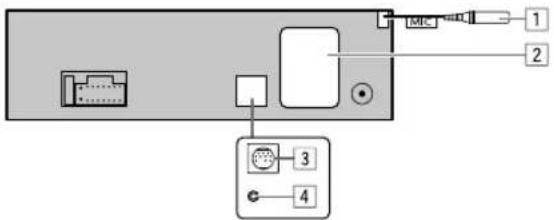
No Part
For KD-X38MBS: MIC (Microphone input terminal) (page 15) 2 Output terminals (See "Connect external amplifiers via output terminals".) [3] For KD-X38MBS: Expansion port (12 V = 500 mA): To the optional SiriusXM Vehicle Tuner (commercially available). (Page 10) 4 KD-X280BT/KD-XD28BT/KD-SX27BT: Microphone input jack (page 15)
Connect external amplifiers via output terminals![graph LR A["Output terminals"] --> B["Signal cord (not supplied)"] B --> C["JVC Amplifier*"] C --> D["Remote wire (not supplied)"] D --> E["To remote lead (blue/white) of the wiring harness. (Page 36)"]](/content/2026/04/703491/images/a03815bccaee33c571ba4df2b0d080d2dd83a09c110561a3bc49bc63f7c54f38.jpg)
* Firmly connect the ground wire of the amplifier to the car's chassis to avoid damaging the unit.
Model Output terminals 2-way crossover 3-way crossover
| KD-X38MBS | REAR: Rear output Tweeter output | |
| FRONT: Front output Mid Range output | ||
| SW: Subwoofer output Woofer output | ||
| KD-XD28BT | FRONT: Front output Mid Range output | |
| REAR/SW: Rear/subwoofer output Woofer output | ||
| KD-X280BT/KD-SX27BT | REAR/SW: Rear/subwoofer output Woofer output |
Specifications
| Tuner | FM Frequency Range 87.9 MHz — 107.9 MHz (200 kHz step)87.5 MHz — 108.0 MHz (50 kHz step) |
| Usable Sensitivity (S/N = 30 dB) 8.2 dBf (0.71 μV/75 Ω) | |
| Quieting Sensitivity (DIN S/N = 46 dB) 17.2 dBf (2.0 μV/75 Ω) | |
| Frequency Response (±3 dB) 30 Hz — 15 kHz | |
| Signal-to-Noise Ratio (MONO) 64 dB | |
| Stereo Separation (1 kHz) 40 dB | |
| AM Frequency Range 530 kHz — 1 700 kHz (10 kHz step)531 kHz — 1 611 kHz (9 kHz step) | |
| Usable Sensitivity (S/N = 20 dB) 29 dBμ (28.2 μV) | |
| USB | USB Standard KD-X38MBS:USB 1.1, USB 2.0 (High speed)KD-X280BT/KD-XD28BT/KD-SX27BT:USB 1.1, USB 2.0 (Full speed) |
| Compatible Devices Mass storage class | |
| File System FAT12/16/32 | |
| Maximum Supply Current DC 5 V — 1.5 A | |
| Digital Filter (D/A) Converter 24 Bit | |
| Frequency Response (±1 dB) 20 Hz — 20 kHz | |
| Signal-to-Noise Ratio (1 kHz) 98 dB | |
| Dynamic Range 93 dB | |
| Channel Separation 91 dB |
| USB | MP3 Decode | Compliant with MPEG-1/2 Audio Layer-3 |
| WMA Decode | Compliant with Windows Media Audio | |
| AAC Decode | KD-X38MBS:AAC-LC ".aac", ".m4a" files | |
| WAV Decode | Linear-PCM | |
| FLAC Decode | FLAC file, up to 24 bit/96 kHz | |
| Auxiliary | Frequency Response (±3 dB) 20 Hz — 20 kHz | |
| Input Maximum Voltage | 1 000 mV | |
| Input Impedance | 30 kΩ | |
| Bluetooth | Version Bluetooth V4.2 | |
| Frequency Range | 2.402 GHz — 2.480 GHz | |
| RF Output Power (E.I.R.P.) | +4 dBm (MAX), Power Class 2 | |
| Maximum Communication Range | Line of sight approx. 10 m (32.8 ft) | |
| Pairing | SSP (Secure Simple Pairing) | |
| Profile | HFP1.7.1 (Hands-Free Profile)A2DP (Advanced Audio Distribution Profile)AVRCP1.6.1 (Audio/Video Remote Control Profile)PBAP (Phonebook Access Profile)SPP (Serial Port Profile) | |
| Audio | Maximum Output Power | 50 W × 4 or50 W × 2 + 50 W × 1 (Subwoofer = 4 Ω) |
| Full Bandwidth Power(at less than 1 % THD) | 22 W × 4 | |
| Speaker Impedance 4 Ω — 8 Ω | ||
Specifications
| Audio | Band 13 Band | |
| Frequency 62.5/ 100/ 160/ 250/ 400/ 630/ 1k/ 1.6k/ 2.5k/4k/ 6.3k/ 10k/ 16k Hz | ||
| Level -09 — +09 (-9 dB — +9 dB) | ||
| Q 1.35/ 1.5/ 2.0 | ||
| HPF Frequency THROUGH/ 30/ 40/ 50/ 60/ 70/ 80/ 90/ 100/ 120/150/ 180/ 220/ 250 Hz | ||
| LPF Frequency 30/ 40/ 50/ 60/ 70/ 80/ 90/ 100/ 120/ 150/ 180/220/ 250 Hz / THROUGH | ||
| Preout Level/Load KD-X38MBS:4 000 mV/10 kΩKD-X280BT/KD-XD28BT/KD-SX27BT:2 500 mV/10 kΩ | ||
| Preout Impedance ≤ 600 Ω | ||
| General | Operating Voltage 12 V DC car battery | |
| Installation Size (W × H × D) 182 mm × 53 mm × 100 mm(7-3/16" × 2-1/16" × 3-15/16") | ||
| Net Weight (includes Trimplate, Mounting Sleeve) | 0.6 kg (1.3 lbs) | |
Subject to change without notice.
Table of contents
Installation/Connection....34
Specifications 38
Before use
IMPORTANT
JVC Remote App
- 3-way crossover: [WOOFER]
X'OVER (crossover)
Consultez https://www.jvc.net/cs/car/ .
https://www.jvc.net/cs/car/audiofile/ .
References
(B) Trim plate (×1)
![graph TD A["1: Opening"] --> B["2: Box ① (A)"] B --> C["3: Box ③ (C)"] C --> D["4: Box ④ (B)"] D --> E["5: Box ⑤ (A)"] E --> F["6: Box ⑥ (B)"] F --> G["7: Box ⑦ (C)"] G --> H["8: Box ⑧ (D)"] H --> I["9: Box ⑨ (C)"] I --> J["10: Box ⑩ (B)"] J --> K["11: Box ⑪ (C)"] K --> L["12: Box ⑫ (D)"] L --> M["1…](/content/2026/04/703491/images/483ef25dd4734a7d3b0523a1b269dd870b8ed89d72ee9ce864c1bd722c7d74a9.jpg)
mounting)
Installation/Connection
Connections
IMPORTANT
Part No.
Release button
KD-X280BT/KD-XD28BT/KD-SX27BT:
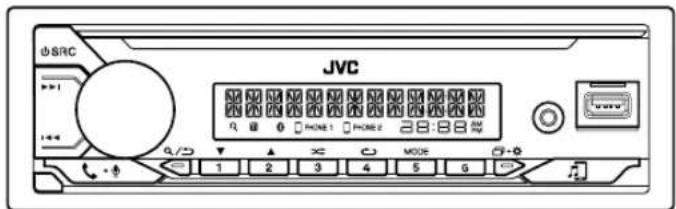
Fix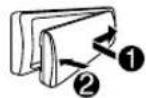
Remove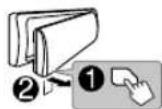
How to initialize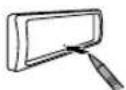
"PAIRING OK" and/or "HANDS-FREE OK" *1 and/or "AUD.STREAM OK" *2 and/or "PBAP OK" *3 : Compatible
Visit https://www.jvc.net/cs/car/ .
mounting)
Part No.
- Windows Media is a registered trademark or trademark of Microsoft Corporation in the United States and/or other countries. This product is protected by certain intellectual property rights of Microsoft. Use or distribution of such technology outside of this product is prohibited without a license from Microsoft.
- Use of the Made for Apple badge means that an accessory has been designed to connect specifically to the Apple product(s) identified in the badge and has been certified by the developer to meet Apple performance standards. Apple is not responsible for the operation of this device or its compliance with safety and regulatory standards. Please note that the use of this accessory with an Apple product may affect wireless performance.
- Apple, iPhone, iPod, and iPod touch are trademarks of Apple Inc., registered in the U.S. and other countries.
- IOS is a trademark or registered trademark of Cisco in the U.S. and other countries and is used under license.
- SiriusXM and all related marks and logos are trademarks of Sirius XM Radio, Inc. All rights reserved. • Android is a trademark of Google LLC.
- The Bluetooth ® word mark and logos are registered trademarks owned by Bluetooth SIG, Inc. and any use of such marks by JVCKENWOOD Corporation is under license. Other trademarks and trade names are those of their respective owners.


- SUPPLIER'S DECLARATION OF CONFORMITY
- ISED CAUTION
- CAUTION
- ATTENTION
- ARTICLE 1 GENERAL PROVISION
- ARTICLE 2 LICENSE
- ARTICLE 3 CONDITIONS FOR GRANT OF LICENSE
- ARTICLE 4 RIGHT PERTAINING TO THE LICENSED SOFTWARE
- ARTICLE 5 INDEMNIFICATION OF LICENSOR
- ARTICLE 6 LIABILITY TO THIRD PARTY
- ARTICLE 7 CONFIDENTIALITY
- ARTICLE 8 TERMINATION
- ARTICLE 9 DESTRUCTION OF THE LICENSED SOFTWARE
- ARTICLE 10 PROTECTION OF COPYRIGHT
- ARTICLE 11 EXPORT RESTRICTION
- ARTICLE 12 MISCELLANEOUS
- IMPORTANT NOTICE CONCERNING THE SOFTWARE
- T-KERNEL
- BSD-3-CLAUSE
- LFS SUBSYSTEM
- ACCORDO2 PLAYER
- CONTENTS
- BEFORE USE
- IMPORTANT
- WARNING
- VOLUME SETTING
- GENERAL
- HOW TO READ THIS MANUAL
- BASICS
- FACEPLATE
- GETTING STARTED
- ACKNOWLEDGE THE CROSSOVER TYPE AND CANCEL THE DEMONSTRATION
- SET THE CLOCK AND DATE
- TO ADJUST THE CLOCK
- TO SET THE DATE
- SET THE BASIC SETTINGS
- RADIO
- SEARCH FOR A STATION
- SETTINGS IN MEMORY
- STORE A STATION
- SELECT A STORED STATION
- OTHER SETTINGS
- PTY CODE FOR FM RADIO BROADCAST DATA SYSTEM
- USB/IPOD
- SELECTABLE SOURCE
- SELECT MUSIC DRIVE
- SELECT A FILE TO PLAY
- FROM A FOLDER OR LIST
- QUICK SEARCH (APPLICABLE ONLY FOR USB SOURCE)
- ALPHABET SEARCH (APPLICABLE ONLY FOR IPOD USB SOURCE AND IPOD BT SOURCE)
- AUX SIRIUSXM® RADIO
- PREPARATION
- START LISTENING
- PARENTAL CONTROL
- STORE A CHANNEL
- SELECT A STORED CHANNEL
- SIRIUSXM® RADIO (FOR KD-X38MBS)
- SIRIUSXM REPLAY™
- SMARTFAVORITES AND TUNESTART™
- TUNESCAN™
- PRESS .Q
- SIRIUSXM SETTINGS
- PRESS E 2 T
- [SIRIUSXM]
- JVC REMOTE APPLICATION
- START USING JVC REMOTE APPLICATION
- SETTINGS TO USE JVC REMOTE APPLICATION
- BLUETOOTH®
- BLUETOOTH — CONNECTION
- SUPPORTED BLUETOOTH PROFILES
- SUPPORTED BLUETOOTH CODECS
- PAIR AND CONNECT A BLUETOOTH DEVICE FOR THE FIRST TIME
- AUTO PAIRING (FOR KD-X38MBS)
- BLUETOOTH — MOBILE PHONE
- RECEIVE A CALL
- IMPROVE THE VOICE QUALITY
- MAKE THE SETTINGS FOR RECEIVING A CALL
- MAKE A CALL
- PRESS TO ENTER BLUETOOTH MODE
- MAKE A CALL USING VOICE RECOGNITION
- STORE A CONTACT IN MEMORY
- MAKE A CALL TO A REGISTERED NUMBER
- BLUETOOTH MODE SETTINGS
- BLUETOOTH COMPATIBILITY CHECK MODE
- PRESS AND HOLD
- THE CONNECTIVITY RESULT FLASHES ON THE DISPLAY
- BLUETOOTH — AUDIO
- LISTEN TO THE AUDIO PLAYER VIA BLUETOOTH
- LISTEN TO IPOD/IPHONE VIA BLUETOOTH (FOR KD-X38MBS)
- AUDIOSETTINGS
- AUDIO SETTINGS
- SPEAKER OUTPUT SETTINGS [SPK/PRE OUT]
- CONNECTION VIA LINEOUT TERMINALS
- CONNECTION VIA SPEAKER LEADS
- CROSSOVER SETTINGS
- SPEAKER SIZE
- X'OVER (CROSSOVER)
- DIGITAL TIME ALIGNMENT SETTINGS
- DETERMINING THE DELAY TIME AUTOMATICALLY
- DISPLAY SETTINGS
- PRESS TO EXIT
- REFERENCES
- MAINTENANCE
- CLEANING THE UNIT
- CLEANING THE CONNECTOR
- MORE INFORMATION
- PLAYABLE FILES
- ABOUT USB DEVICES
- ABOUT IPOD/IPHONE (FOR KD-X38MBS)
- CHANGE THE DISPLAY INFORMATION
- TROUBLESHOOTING
- IF YOU HAVE ANY TROUBLES, TRY THE FOLLOWING
- INSTALLATION/CONNECTION
- PART LIST FOR INSTALLATION
- BASIC PROCEDURE
- WIRING CONNECTION
- NO PART
- TABLE OF CONTENTS
- JVC REMOTE APP
- MOUNTING)
- CONNECTIONS
- PART NO
Brand : JVC
Model : KD-XD28BT
Category : Receiver