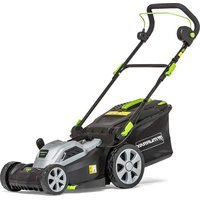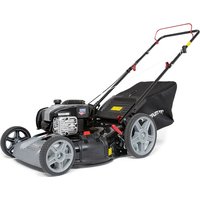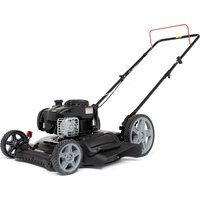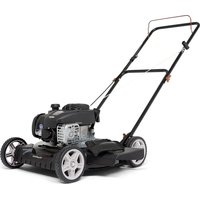
21P675HW - Lawn mower MURRAY - Free user manual and instructions
Find the device manual for free 21P675HW MURRAY in PDF.


User questions about 21P675HW MURRAY
0 question about this device. Answer the ones you know or ask your own.
Ask a new question about this device
Download the instructions for your Lawn mower in PDF format for free! Find your manual 21P675HW - MURRAY and take your electronic device back in hand. On this page are published all the documents necessary for the use of your device. 21P675HW by MURRAY.
USER MANUAL 21P675HW MURRAY
natural_image
Technical line drawings of three lawn mower vehicles with visible motors and wheels (no text or symbols)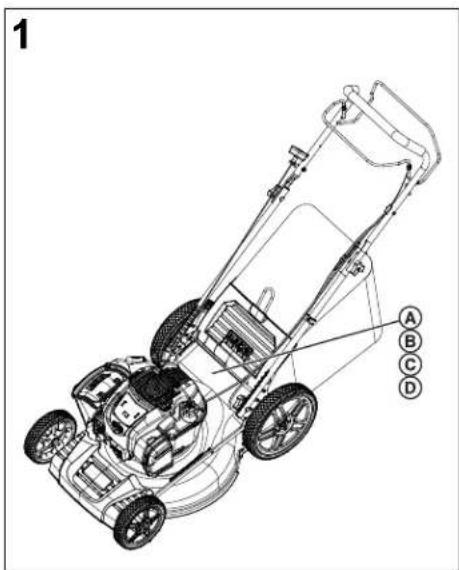
text_image
1 A B C D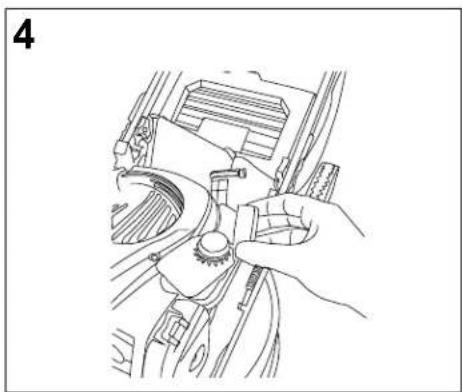
natural_image
Line drawing of a hand operating a mechanical device with gears and adjustment knobs (no text or symbols)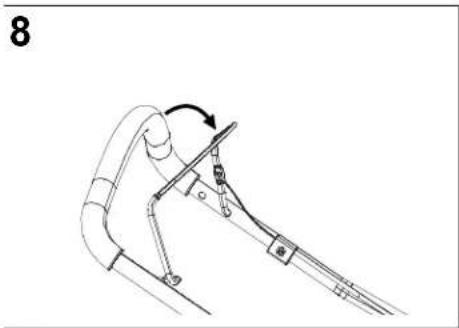
natural_image
Line drawing of a robotic arm with a curved handle and lever mechanism (no text or symbols)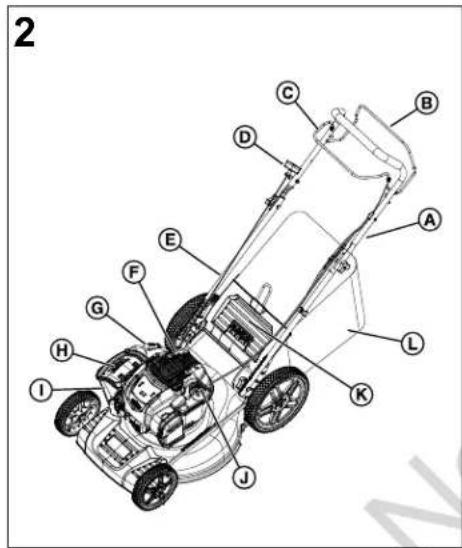
text_image
2 C B D A E F G H I L K J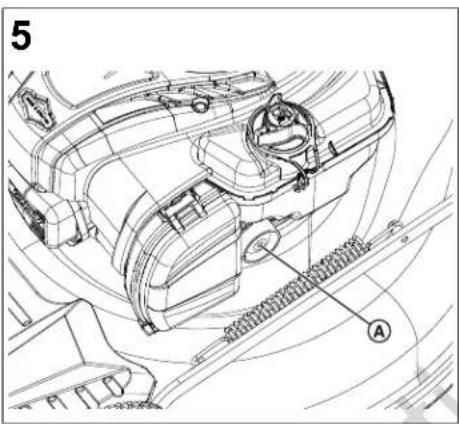
text_image
5 A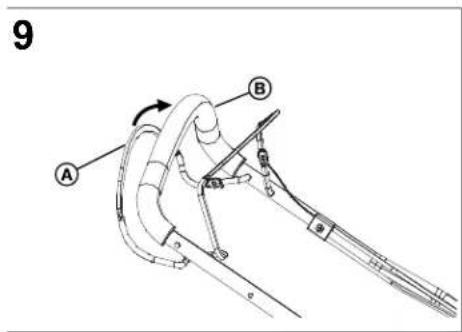
text_image
9 A B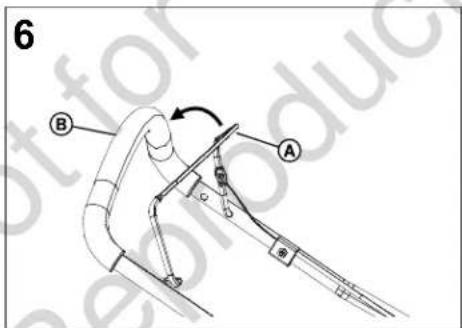
text_image
6 B A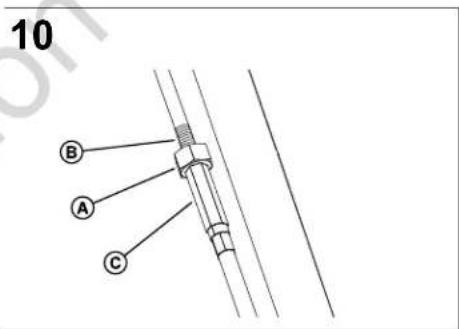
text_image
10 B A C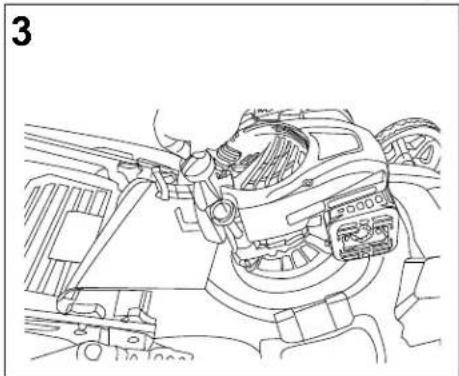
natural_image
Technical line drawing of a car engine compartment showing valve, gear, and housing (no text or labels)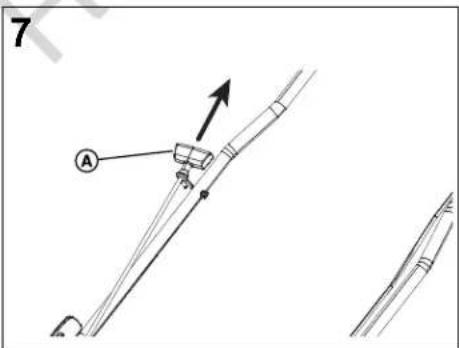
text_image
7 A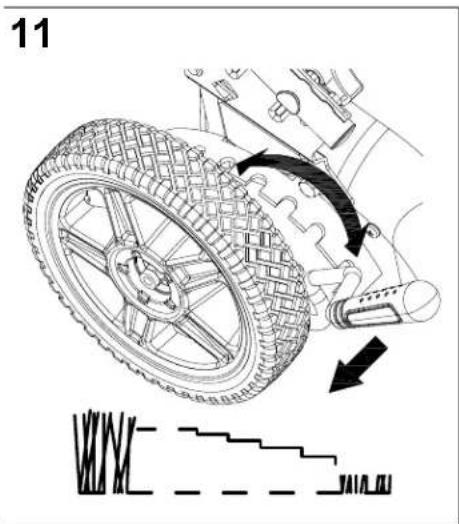
text_image
11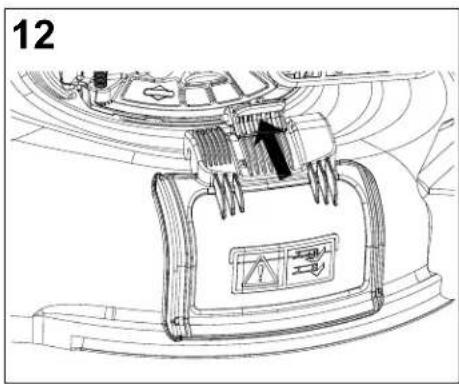
text_image
12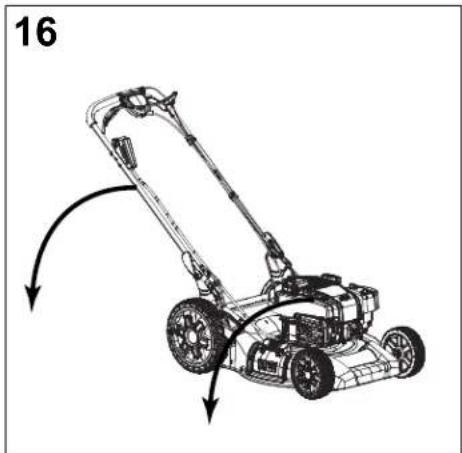
natural_image
Line drawing of a lawn mower with motion arrows indicating maneuver (no text or symbols)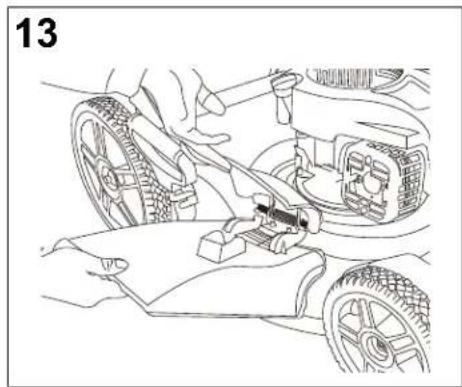
natural_image
Line drawing of a lawn mower with visible tire, pulley, and wheel assembly (no text or symbols)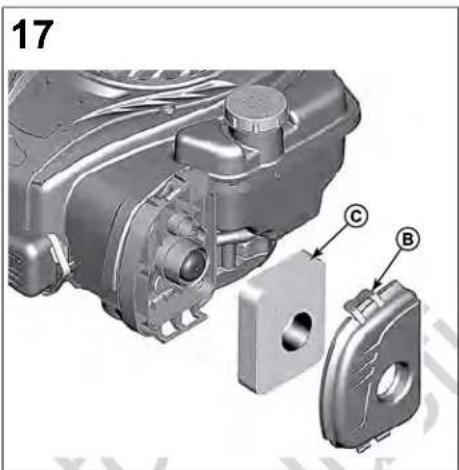
text_image
17 C B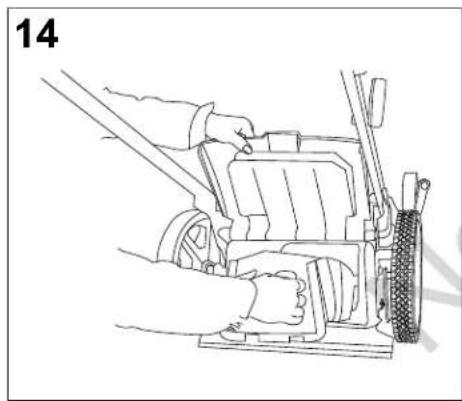
natural_image
Line drawing of a hand operating a sewing machine with a tool, no text or symbols present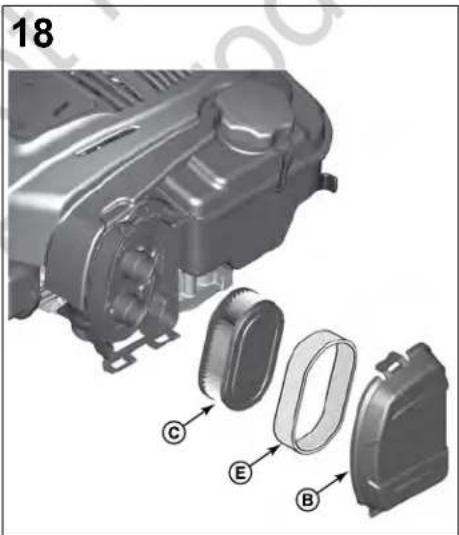
text_image
18 C E B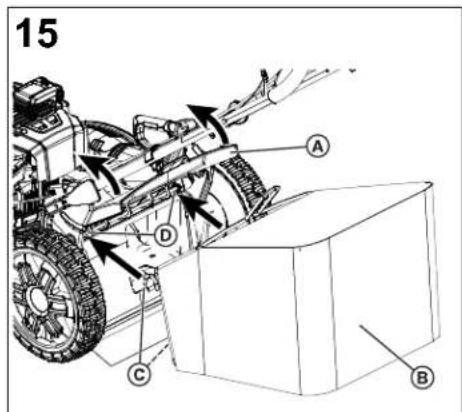
text_image
15 A D C BManual Contents:
European Office Contact Information......4
European Union (EU) Stage V (5): Carbon Dioxide (CO2) Values....4
Operator Safety....4
Features and Controls......8
Operation....9
Maintenance....11
Troubleshooting....14
Warranty Statement....14
Briggs & Stratton Emissions Warranty.... 15
Slope Guide....18
Specifications....19
The images in this document are representative, and are meant to complement the instructional copy they accompany. Your unit may vary from the images displayed. LEFT and RIGHT are as seen from the operator's position.
Thank you for purchasing this quality-built Murray ^™ Walkbehind Mower. We're pleased that you've placed your confidence in the Murray ^™ brand. When operated and maintained according to the manuals, your Murray ^™ product will provide many years of dependable service.
The manuals contain safety information to make you aware of the hazards and risks associated with the unit and how to avoid them. This Walkbehind Mower was designed to be used as described in operator's manual and is not intended for any other purpose. It is important that you read and understand the instructions thoroughly before attempting to start or operate this equipment. Save these original instructions for future reference.
This product requires final assembly before use. Refer to the setup guide for instructions on final assembly procedures. Follow the instructions completely.
European Office Contact Information
For questions regarding European emissions, please contact our European office at:
Max-Born-Straße 2, 68519 Viernheim, Germany.
European Union (EU) Stage V (5): Carbon Dioxide (CO₂) Values
Carbon dioxide values of Briggs & Stratton EU Type-Approval Certificate engines can be found by entering CO2 into the search window on BriggsandStratton.com.
Operator Safety
Safety Definitions
For your safety, the safety of others, and to protect the performance of equipment, follow the precautions listed throughout the manual before operation, during operation, and during maintenance procedures.

indicates a potential personal injury hazard.

DANGER
indicates a hazardous situation which, if not avoided, will result in death or serious injury.

WARNING
indicates a hazardous situation which, if not avoided, could result in death or serious injury.

CAUTION
indicates a hazardous situation which, if not avoided, could result in minor or moderate injury.
NOTICE
indicates a situation which can cause damage to the equipment, personal property and/or the environment, or cause the equipment to operate improperly.
Safety Symbol Definitions
The following safety symbols may be found on the unit.
 | Read the operator's manual before attempting to operate the mower. |
 — — | Mow across slopes, not up or down. |
 | To avoid injury to others, do not mow when others, especially children, are around. |
 | To reduce the potential for fire, wait at least 2 minutes before refueling. |
 | To avoid serious injury or death, keep hands and feet away from the mower deck at all times during operation. |
 | To avoid injury from thrown objects, do not operate the mower unless all mulching, discharge, or bagging components are in their proper place. |
Operating Safety
natural_image
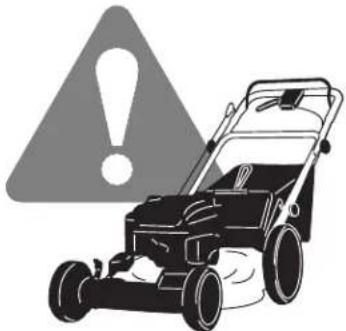
Illustration of a lawn mower with an exclamation mark symbol (no text or labels)Power equipment is only as safe as the operator. If it is misused, or not properly maintained, it can be dangerous! Remember, you are responsible for your safety and that of those around you.
Use common sense, and think through what you are doing. If you are not sure that the task you are about to perform can be safely done with the equipment you have chosen, ask a professional: contact your local authorized dealer.
Read the Manual
natural_image
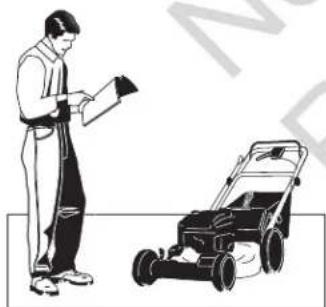
Illustration of a person holding a clipboard next to a lawn mower (no text or symbols present)The operator's manual contains important safety information you need to be aware of BEFORE you operate your unit as well as DURING operation.
Safe operating techniques, an explanation of the product's features and controls, and maintenance information is included to help you get the most out of your equipment investment.
Be sure to completely read the Safety Rules and Information found on the following pages. Also completely read the Operation section.
Children
natural_image
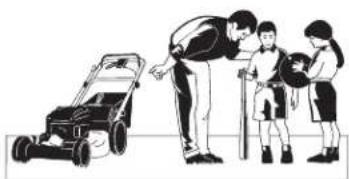
Illustration of a family with a lawn mower and a guide, no text or symbols presentTragic accidents can occur with children. Do not allow them anywhere near the area of operation. Children are often attracted to the unit and mowing activity. Never assume that children will remain where you last saw them. If there is a risk that children may enter the area where you are mowing, have another responsible adult watch them.
Slope Operation
text_image
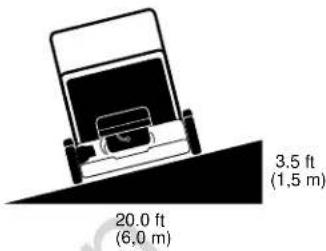
3.5 ft (1,5 m) 20.0 ft (6,0 m)You could be seriously injured or even killed if you use this unit on too steep an incline. Using the unit on a slope that is too steep or where you don't have adequate footing or traction can cause you to lose control or slip and fall.
You should not operate on inclines with a slope greater than 10 degrees, which is a 3.5 ft (1,5 m) rise over 20.0 ft (6,0 m). Always mow across slopes, never up and down.
Also note that the surface you are mowing can greatly impact control. Wet grass or leaves can seriously affect your footing and traction on a slope.
If you feel unsure about operating the unit on an incline, don't do it. It's not worth the risk.
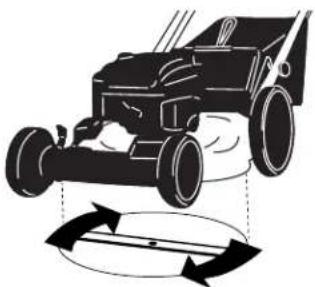
Moving Parts
natural_image
Diagram of a car with motion arrows indicating rotational speed (no text or symbols)This equipment has moving parts that can injure you or someone else. However, if you stand behind the handle properly and follow all the rules in this book, the unit is safe to operate.
The mower has a spinning mower blade that can amputate hands and feet. Do not allow anyone near the equipment while it is running!
To help you, the operator, use this equipment safely, it is equipped with an operator present safety system. Do NOT
attempt to alter or bypass the system. See your dealer immediately if the system does not pass all the safety interlock system tests found in this manual.
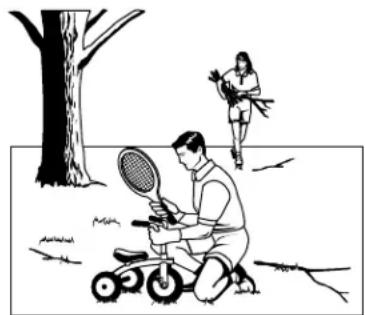
Thrown Objects
natural_image
Illustration of a person using a trolley to examine tennis, with a tree and another figure in the background (no text or symbols)This unit has a spinning mower blade. This blade can pick up and throw debris that could seriously injure a bystander. Be sure to clean up the area to be mowed BEFORE you start mowing.
Do not operate this unit without the entire grass catcher or discharge guard (deflector) in place.
Also, do not allow anyone in the area while the unit is running! If someone does enter the area, turn the unit off immediately until they leave.
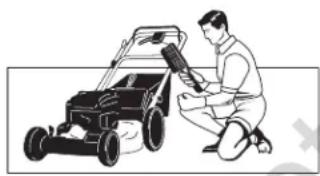
Debris Accumulation
natural_image
Illustration of a person using a lawn mower to clean or install equipment (no text or symbols visible)Accumulation of grass and debris can result in a fire. Be sure to clean any accumulation of grass and debris with a brush or compressed air, before and after operation.
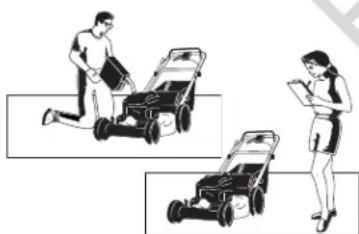
Fuel and Maintenance
natural_image
Illustration showing a person using a lawn mower to lift a cart, and a woman reading a book (no text or symbols present)Gasoline is extremely flammable. Its vapors are also extremely flammable and can travel to distant ignition sources. Gasoline must only be used as a fuel, not as a solvent or cleaner. It should never be stored any place where its vapors can build up or travel to an ignition source like a pilot light. Fuel belongs in an approved, plastic, sealed gas can, or in the tractor fuel tank with the cap securely closed. Spilled fuel needs to be cleaned up immediately.
Proper maintenance is critical to the safety and performance of your unit. Be sure to perform the maintenance procedures listed in this manual, especially periodically testing the safety system.
General Safety Messages

WARNING
This powerful cutting machine is capable of amputating hands and feet and can throw objects that can cause injury and damage! Failure to comply with the following SAFETY instructions could result in serious injury or death to the operator or other persons. The owner of the machine must understand these instructions and must allow only persons who understand these instructions to operate machine. Each person operating the machine must be of sound mind and body and must not be under the influence of any substance, which might impair vision, dexterity or judgment.

WARNING

Engines give off carbon monoxide, an odorless, colorless, poison gas. Breathing carbon monoxide can cause nausea, fainting, or death.
- Start and run engine outdoors.
- Do not run the engine in an enclosed area, even if doors or windows are open.
Protection For Children
Tragic accidents can occur if the operator is not alert to the presence of children. Children are often attracted to the machine and the mowing activity. Never assume that children will remain where you last saw them.
- KEEP children out of the mowing area and under the watchful care of a responsible adult other than the operator.
- DO NOT allow children in yard when machine is operated and turn machine OFF if anyone enters the area.
- DO NOT allow pre-teenage children to operate machine.
- ALLOW only responsible adults & teenagers with mature judgment under close adult supervision to operate the machine.
- DO NOT pull mower backwards unless absolutely necessary. LOOK and SEE behind and down for children, pets and hazards before and while backing.
- USE EXTRA CARE when approaching blind corners, shrubs, trees, or other objects that may obscure vision.
Slope Operation
- Slopes are a major factor related to slip and fall accidents, which can result in severe injury. All slopes require extra caution. If you feel uneasy on a slope, DO NOT mow it.
-
Mow across slopes, never up-and-down. Exercise extreme CAUTION when changing directions on slopes. DO NOT mow steep slopes or other areas where stability or traction is in doubt. Refer to the Slope Guide at the back of this manual.
-
Use extra care with grass catchers or other attachments; these affect the handling and the stability of the machine.
Preparation
-
Read, understand, and obey instructions and warnings in this manual and on the mower, engine and attachments. Know the controls and the proper use of the mower before starting.
-
Only mature, responsible persons shall operate the machine and only after proper instruction.
-
Data indicates that operators age 60 and above, are involved in a large percentage of mower-related injuries. These operators should evaluate their ability to operate the mower safely enough to protect themselves and others from serious injury.
-
Handle fuel with extra care. Fuels are flammable and vapors are explosive. Use only an approved fuel container. DO NOT remove the fuel cap or add fuel with engine running. Add fuel outdoors only with the engine stopped and cool. Clean spilled fuel and oil from the machine. DO NOT smoke.
-
Check the area to be mowed and remove all objects such as toys, wire, rocks, limbs and other objects that could cause injury if thrown by the blade or interfere with mowing. Also note the location of holes, stumps, and other possible hazards.
-
Keep people and pets out of the mowing area. Immediately, STOP Blade, Stop engine and Stop mower if anyone enters the area.
-
Check shields, deflectors, switches, blade controls and other safety devices frequently for proper operation and location.
-
Make sure all safety decals are clearly legible. Replace if damaged.
-
Protect yourself when mowing and wear safety glasses, long pants and substantial footwear. DO NOT mow barefooted or with sandals.
-
Know how to STOP the blade and engine quickly in preparation for emergencies.
-
Use extra care when loading or unloading the machine into a trailer or truck.
-
Check grass catcher components frequently for signs of wear or deterioration and replace as needed to prevent injury from thrown objects going through weak or torn spots.
Safe Handling Of Gasoline
To avoid personal injury or property damage, use extreme care in handling gasoline. Gasoline is extremely flammable and the vapors are explosive.
-
Extinguish all cigarettes, cigars, pipes and other sources of ignition.
-
Use only an approved fuel container.
-
DO NOT remove fuel cap or add fuel with the engine running. Allow the engine to cool before refueling.
-
DO NOT refuel the machine indoors.
-
DO NOT store the machine or fuel container inside where there is an open flame, spark or pilot light such as on a water heater or other appliances.
-
DO NOT fill fuel containers inside a vehicle or on a truck or trailer bed with a plastic liner. Always place the containers on the ground away from the vehicle before filling.
-
Remove gas-powered equipment from the vehicle or trailer and refuel it on the ground. If this is not possible, then refuel equipment using a portable container, rather than a gasoline dispenser nozzle.
-
DO NOT start gas powered equipment in enclosed vehicles or trailers.
-
Keep the nozzle in contact with the rim of the fuel tank or container opening at all times until fueling is complete. DO NOT use a nozzle lock-open device.
-
If fuel is spilled on clothing, change clothing immediately.
-
DO NOT overfill a fuel tank. Replace fuel cap and tighten securely.
Operation
-
DO NOT put hands or feet near or under rotating parts. Keep clear of discharge area while engine is running.
-
STOP engine when crossing gravel drives, walks, or roads, and under any conditions where thrown objects might be a hazard.
-
Mow only in daylight or good artificial light.
-
DO NOT operate mower while under the influence of alcohol or drugs.
-
After striking a foreign object or if the mower vibrates abnormally, STOP the engine, disconnect and secure the spark plug wire. Inspect the mower for any damage and repair the damage before starting.
-
DO NOT mow near drop offs, ditches or embankments. Operator could lose footing or balance.
-
STAY ALERT for holes and other hidden hazards. Tall grass can hide obstacles. Keep away from ditches, washouts, culverts, fences and protruding objects.
-
DO NOT mow on wet grass. Always be sure of your footing. Keep a firm hold on the handle and walk, never run. Slipping could cause injury.
-
ALWAYS stay behind handle when engine (motor) is running.
-
DO NOT leave the machine with the engine running. STOP BLADE and STOP ENGINE before leaving the operators position for any reason.
-
Before cleaning, repairing or inspecting make certain the engine, blade and all moving parts have STOPPED. Disconnect and secure the spark plug wire away from plug to prevent accidental starting.
-
STOP the engine and wait until the blade comes to complete STOP before removing the grass bag and/or clearing grass.
-
DO NOT operate the mower without the entire grass catcher, rear guard, or other safety devices in place and working. DO NOT point discharge at people, passing cars, windows or doors.
- DO NOT discharge material against a wall or obstruction. Material may ricochet back towards the operator.
- Slow down before turning.
- Watch out for traffic when near or crossing roadways.
- DO NOT operate the engine in enclosed areas. Engine exhaust gases contain carbon monoxide, a deadly poison.
- Only use accessories approved by the manufacturer. See manufacturer's instructions for proper operation and installation of accessories.
Maintenance And Storage
-
DO NOT store the mower or fuel container inside where fumes may reach an open flame, spark or pilot light such as in a water heater, furnace, clothes dryer or other gas appliance. Allow the engine to cool before storing the machine in an enclosure. Store fuel containers out of reach of children in a well ventilated, unoccupied building.
-
Keep the mower and engine free of grass, leaves or excess grease to reduce fire hazard and engine overheating.
-
When draining the fuel tank, drain fuel into an approved container outdoors and away from open flame.
-
Keep all bolts, especially blade bolts, nuts and screws properly tight. Check that all cotter pins are in proper position.
-
Always provide adequate ventilation when running engine. Engine exhaust gases contain carbon monoxide, a deadly poison.
-
Service the engine and make adjustments only when engine is stopped. Remove the spark plug wire from the spark plug and secure the wire away from the spark plug to prevent accidental starting.
-
DO NOT change engine governor speed settings or overspeed the engine.
-
Check the grass bag assembly frequently for wear or deterioration to avoid thrown objects and exposure to moving parts. Replace with a new bag if loose seams or tears are evident. Replace slider or bag adapter if broken or cracked.
-
Mower blades are sharp and can cut. Wrap the blades or wear heavy leather gloves and use CAUTION when handling them.
-
DO NOT test for spark by grounding the spark plug next to the spark plug hole; the spark plug could ignite gas exiting the engine.
-
Have the machine serviced by an authorized dealer at least once a year and have the dealer install any new safety devices.
-
Use only factory authorized replacement parts or equivalent parts when making repairs.
-
Remove battery (if equipped) before making adjustments or repairs.
Safety Decals
Reading this manual and the safety instructions it contains will provide the basic knowledge necessary to operate this mower safely and effectively. However, several safety and operation decals have also been placed on the mower as a reminder of this important information during operation.
The decals noted below are located on the mower. The safety warnings and operation instructions they contain should be carefully read, understood, and obeyed. Not following these important warnings and instructions can result in serious injury or death.
If any of these decals are lost or damaged, replace them immediately. Contact your dealer for replacement decals.
Compare Figure 1 with the table following.
| A, B,C, D | Part No. 7101084A. WARNING Read the operator's manual before operating the mower.B. WARNING Amputation Hazard. Keep hands and feet away from the mower deck at all times during operation.C. WARNING Thrown Objects Hazard. Do not operate the mower unless all mulching, discharge, or bagging components are correctly installed.D. WARNING Thrown Objects Hazard. Do not mow when others, especially children, are around. |
Features and Controls
Note: The figures and illustrations in this manual are provided for reference only and may differ from your specific model. Contact your dealer if you have questions.
Compare Figure 2 with the table following.
| A | Upper Handle |
| B | Wheel Drive Control (self-propelled units) |
| C | Blade Control |
| D | Rope Start Handle |
| E | Lower Handle (2) |
| F | Oil Cap / Dipstick |
| G | Cutting Height Adjust Lever |
| H | Mulching Cover |
| I | Side Discharge Deflector |
| J Fuel Cap |
| K Rear Discharge Door |
| L Grass Bag |
| -- Mulching Plug (not shown) |
Operation Before Starting
- Check the guards, deflectors, grass bag, and covers to make sure all are in place and securely tightened.
- Check all controls to make sure they work freely.
- Check the cutting height. Adjust to the desired height. See Cutting Height Adjustment.
- Check the engine oil:
• Make sure the mower is on a level surface.
- Clean the oil fill area of any debris.
- Remove the dipstick (Figure 3) and wipe with a clean cloth.
- Insert and tighten the dipstick.
- Remove the dipstick and check the oil level. It should be at the top of the full indicator on the dipstick.
- If low, add oil slowly into the engine oil fill. See Oil Recommendations. Do not overfill. After adding oil, wait one minute and recheck the oil level.
- Replace and tighten the dipstick.
- Add fuel to the tank:
• Make sure the mower is outside, where fumes can safely dissipate.
- Remove the fuel fill cap (Figure 4).
- Fill the tank with fuel. See Fuel Recommendations. To allow for expansion of the fuel, do not fill above the bottom of the filler neck.
- Reinstall the fuel fill cap.
- Clean the exterior surfaces of the cutting deck and engine of any accumulation of spilled fuel, dirt, grass, oil, etc. Keep the engine air intake screen and cooling fins clear at all times.
Oil Recommendations
We recommend the use of Briggs & Stratton Warranty Certified oils for best performance. Other high-quality detergent oils are acceptable if classified for service SF, SG, SH, SJ or higher. Do not use special additives.
Outdoor temperatures determine the proper oil viscosity for the engine. Use the chart to select the best viscosity for the outdoor temperature range expected.
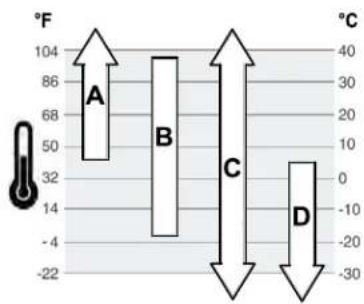
bar
| Label | Value | |---|---| | A | 104 | | B | 68 | | C | 50 | | D | -22 || A. SAE 30 - Below 40°F (4°C) the use of SAE 30 will result in hard starting. |
| B. 10W-30 - Above 80°F (27°C) the use of 10W-30 may cause increased oil consumption. Check oil level more frequently. |
| C. Synthetic 5W-30 |
| D. 5W-30 |
Fuel Recommendations
Fuel must meet these requirements:
- Clean, fresh, unleaded gasoline.
- A minimum of 87 octane / 87 AKI (91 RON). For high altitude use, see below.
• Gasoline with up to 10% ethanol (gasohol) is acceptable.
NOTICE Do not use unapproved gasolines, such as E15 and E85. Do not mix oil in gasoline or modify the engine to run on alternate fuels. Use of unapproved fuels will cause damage to engine components, which will not be covered under warranty.
To protect the fuel system from gum formation, mix a fuel stabilizer into the fuel. See Storage. All fuel is not the same. If starting or performance problems occur, change fuel providers or change brands. This engine is certified to operate on gasoline. The emissions control system for this engine is EM (Engine Modifications).
High Altitude
At altitudes over 5,000 feet (1524 meters), a minimum 85 octane/85 AKI (89 RON) gasoline is acceptable.
For carbureted engines, high altitude adjustment is required to maintain performance. Operation without this adjustment will cause decreased performance, increased fuel consumption, and increased emissions. Contact a Briggs & Stratton Authorized Service Dealer for high altitude adjustment information. Operation of the engine at altitudes below 2,500 feet (762 meters) with the high altitude adjustment is not recommended.
For Electronic Fuel Injection (EFI) engines, no high altitude adjustment is necessary.
Starting the Mower

WARNING

Poisonous Gas Hazard
Engine exhaust contains carbon monoxide, a poisonous gas that could kill you in minutes. You CANNOT see it, smell it, or taste it. Even if you do not smell exhaust fumes, you could still be exposed to carbon monoxide gas. If you start to feel sick, dizzy, or weak while using this product, shut it off and get to fresh air RIGHT AWAY. See a doctor. You may have carbon monoxide poisoning.
- Operate this product ONLY outside far away from windows, doors and vents to reduce the risk of carbon monoxide gas from accumulating and potentially being drawn towards occupied spaces.
- Install battery-operated carbon monoxide alarms or plug-in carbon monoxide alarms with battery back-up according to the manufacturer's instructions. Smoke alarms cannot detect carbon monoxide gas.
- DO NOT run this product inside homes, garages, basements, crawlspaces, sheds, or other partially-enclosed spaces even if using fans or opening doors and windows for ventilation. Carbon monoxide can quickly build up in these spaces and can linger for hours, even after this product has shut off.
-
ALWAYS place this product downwind and point the engine exhaust away from occupied spaces.
-
Push the prime button (A, Figure 5) three times (3x).
Note: The engines on some models are equipped with the Briggs & Stratton® ReadyStart® feature, and require no priming or choking.
- Squeeze the blade control (A, Figure 6) against the handle (B).
- Pull the rope start handle (A, Figure 7) to start the engine.
- To stop the engine (and blade), release the blade control. See Figure 8.
- After the engine starts, allow a brief warm-up until the engine runs smooth before beginning mower operation.
Note: If the engine does not start after repeated attempts, contact a local dealer or go to www.murray.com or call 1-800-233-3723 (in USA).
Propelling the Mower
- Start the mower. See Starting the Mower.
- Self-propelled models: Squeeze the wheel drive control (A, Figure 9) against the handle (B) to move the mower forward. To stop forward motion, release the wheel drive control.
-
If the mower does not propel itself properly, adjust the bowden cable:
-
Loosen the locking nut (A, Figure 10).
-
Hold the upper bolt (B, Figure 10) and turn the stop nut (C) clockwise to shorten the cable, counterclockwise to lengthen the cable.
- Tighten the locking nut.
Note: The self-propelled speed may change on slopes.
Cutting Height Adjustment

WARNING

Amputation Hazard
- DO NOT attempt any maintenance, adjustments or service with engine and blade running.
- STOP engine and blade.
Burn Hazard
• Engine and components are HOT.
- Avoid serious burns, allow sufficient time for all components to cool.
Pull the height adjusting lever outward and move to the desired cutting height. See Figure 11.
Mulching Operation
For best mulching results, cut up to a maximum of 1/3 of grass blade length and recycle ONLY when grass is dry.
-
Configure the mower for mulching operation:
-
Remove the side discharge deflector. See Installing the Side Discharge Deflector.
-
Remove the grass bag. See Installing the Grass Bag.
• Install the mulching plug. See Installing the Mulching Plug. -
Set the cutting height lever to the highest cutting position. See Cutting Height Adjustment.
- Move the ground speed control (if equipped) to the slowest speed setting.
- Proceed mowing slowly.
Installing the Side Discharge Deflector

WARNING

Amputation Hazard
- DO NOT attempt any maintenance, adjustments or service with engine and blade running.
- STOP engine and blade.
- Remove battery (if equipped).
Burn Hazard
• Engine and components are HOT.
- Avoid serious burns, allow sufficient time for all components to cool.
Note: When mowing with the side discharge deflector, remove the grass bag and install the mulching plug (if equipped).
- Lift the locking latch on top of the mulching cover. See Figure 12.
- Lift the mulching cover. See Figure 13.
- Install the side discharge deflector, making sure that the hooks on top of the deflector are behind the mulching cover hinge.
- Lower the mulching cover to lock the side discharge deflector in place.
- To remove: lift the mulching cover, remove the side discharge deflector, and lower the mulching cover.
Installing the Mulching Plug

WARNING


Amputation Hazard
- DO NOT attempt any maintenance, adjustments or service with engine and blade running.
- STOP engine and blade.
- Remove battery (if equipped).
Burn Hazard
• Engine and components are HOT.
- Avoid serious burns, allow sufficient time for all components to cool.
- Raise the rear discharge door. See Figure 14.
- Install the mulching plug.
- Lower the rear discharge door to secure the mulching plug.
- See Mulching Operation.
- To remove: raise the rear discharge door, remove the mulching plug, and lower the rear discharge door.
Installing the Grass Bag

WARNING



Amputation Hazard
- DO NOT attempt any maintenance, adjustments or service with engine and blade running.
- STOP engine and blade.
- Remove battery (if equipped).
Burn Hazard
• Engine and components are HOT.
- Avoid serious burns, allow sufficient time for all components to cool.
- Raise the rear discharge door (A, Figure 15).
- Remove the mulching plug, if installed.
- Install the grass bag (B, Figure 15), making sure the hooks on the bag (C) hook to the rear discharge door hinge (D).
-
Lower the rear discharge door.
-
To remove: raise the rear discharge door, remove the grass bag, and lower the rear discharge door.

WARNING
Unsafe Operation Hazard
Grass Catcher bags are made of woven fabric, and are subject to deterioration and wear during normal usage. Check condition of bag before each use. Immediately replace worn or damaged catcher bags with only genuine replacement bags.
Maintenance
Maintenance Chart

WARNING


Amputation Hazard
- DO NOT attempt any maintenance, adjustments or service with engine and blade running.
- STOP engine and blade.
- Remove battery (if equipped).
Burn Hazard
• Engine and components are HOT.
- Avoid serious burns, allow sufficient time for all components to cool.
Laceration Hazard
- Wear heavy leather gloves when handling or working around cutting blades.
- Blades are extremely sharp and can cause severe injury.
MOWER
| Every 8 Hours or Daily |
| Check safety interlock system |
| Clean debris off mower |
| Every 25 Hours or Annually * |
| Check mower for loose hardware |
| See Dealer Annually to |
| Lubricate mower |
| Check mower blade ** |
| Check mower blade stopping time |
| Check drive belt |
| Clean battery and cables |
* Whichever comes first
** Check blade more often in regions with sandy soils or high dust conditions
ENGINE
| First 5 Hours |
| Change engine oil |
| Every 8 Hours or Daily |
| Check engine oil level |
| Every 25 Hours or Annually * |
ENGINE
| Clean engine air filter and pre-cleaner (if equipped) ** |
Every 50 Hours or Annually *
| Change engine oil |
Replace oil filter (if equipped)
Annually
| Replace air filter |
Replace pre-cleaner (if equipped)
See Dealer Annually to
| Inspect muffler and spark arrester (if equipped) |
Replace spark plug
| Replace fuel filter (if equipped) |
Clean engine air cooling system
* Whichever comes first
** Clean more often in dusty conditions or when airborne debris is present
Check Safety Interlock System
- Start the mower.
- Release the blade control. The engine must stop within 3 seconds.

WARNING
Unsafe Operation Hazard
If the engine does not stop within 3 seconds, do not use the mower. Bring the mower to an authorized dealer for service.
Clean Debris Off Mower

WARNING



Amputation Hazard
- DO NOT attempt any maintenance, adjustments or service with engine and blade running.
- STOP engine and blade.
- Remove battery (if equipped).
Burn Hazard
• Engine and components are HOT.
- Avoid serious burns, allow sufficient time for all components to cool.
Laceration Hazard
- Wear heavy leather gloves when handling or working around cutting blades.
-
Blades are extremely sharp and can cause severe injury.
-
Clean dirt and debris from the top of the mower deck.
- Clean any debris buildup on or around the engine, etc.
While cleaning, check components for wear or damage. Replace worn or damaged components immediately.
12 www.murray.com
Change Engine Oil

WARNING

Amputation Hazard
- DO NOT attempt any maintenance, adjustments or service with engine and blade running.
- STOP engine and blade.
- Remove battery (if equipped).
Burn Hazard
• Engine and components are HOT.
- Avoid serious burns, allow sufficient time for all components to cool.
Laceration Hazard
- Wear heavy leather gloves when handling or working around cutting blades.
-
Blades are extremely sharp and can cause severe injury.
-
Drain the fuel tank completely.
- Remove the oil dipstick, then turn the mower on its side. See Figure 16. Allow the oil to drain from the oil fill tube into an appropriate container. Dispose of used oil properly.
NOTICE To avoid unit damage, remove the side discharge deflector (if installed) before turning the mower on its side. - Place the mower upright, then fill the engine with engine oil to the 'full' mark on the dipstick. See Oil Recommendations. Do not overfill.
NOTICE
Drain the fuel tank before tipping the machine. DO NOT tip the machine with the carburetor or spark plug down. Oil from the crankcase will saturate the air filter and cause the engine to be hard to start or not start at all. If contamination does occur, the air filter will have to be replaced.
Service Air Filter

WARNING

Fuel and its vapors are extremely flammable and explosive.
Fire or explosion can cause severe burns or death.
- Never start and run the engine with the air cleaner assembly (if equipped) or the air filter (if equipped) removed.
NOTICE Do not use pressurized air or solvents to clean the filter. Pressurized air can damage the filter and solvents will dissolve the filter.
See the Maintenance Schedule for service requirements.
Various models use either a foam or a paper filter. Some models may also have an optional pre-cleaner that can be
washed and reused. Compare the illustrations in this manual with the type installed on your engine and service as follows.
Foam Air Filter
See Figure: 17
- Open the cover (B, Figure 17).
- Remove the foam element (C, Figure 17).
- Wash the foam element (C, Figure 17) in liquid detergent and water. Squeeze dry the foam element in a clean cloth.
- Saturate the foam element (C, Figure 17) with clean engine oil. To remove the excess engine oil, squeeze the foam element in a clean cloth.
- Install the foam element (C, Figure 17).
- Close the cover (B, Figure 17).
Paper Air Filter
See Figure: 18
- Open the cover (B, Figure 18).
- Remove the filter (C, Figure 18).
- Remove the pre-cleaner (E, Figure 18), if equipped, from the filter. To loosen debris, gently tap the filter on a hard surface. If the filter is excessively dirty, replace with a new filter.
- Wash the pre-cleaner in liquid detergent and water. Then allow it to thoroughly air dry. Do not oil the pre-cleaner.
- Assemble the dry pre-cleaner, if equipped, to the filter.
- Install the filter (C, Figure 18).
- Close the cover (B, Figure 18).
Storage Procedure

WARNING



Amputation Hazard
- DO NOT attempt any maintenance, adjustments or service with engine and blade running.
- STOP engine and blade.
- Remove battery (if equipped).
Burn Hazard
• Engine and components are HOT.
- Avoid serious burns, allow sufficient time for all components to cool.
Laceration Hazard
- Wear heavy leather gloves when handling or working around cutting blades.
- Blades are extremely sharp and can cause severe injury.
Prepare the mower for end-of-season storage as follows:
- Disconnect the spark plug wire and secure away from the spark plug.
- Drain the fuel tank and let the engine run until all fuel is out of the carburetor.
Note: If using a fuel stabilizer, there is no need to drain the fuel tank. See Storage - Fuel System.
- Use a brush or compressed air to remove loose debris, then use a damp cloth to wipe down the unit.
- Tilt the mower up on its rear wheels and inspect the underside of the deck. (Do not tilt the mower with the spark plug or carburetor down.) Scrape away stubborn accumulation of grass with a putty knife and/or wire brush.
- Lubricate all exposed metal with a light coating of oil to prevent corrosion.
- Carefully fold the handles, flexing the control cables to prevent cable damage.
- Store the mower in a shed or other dry area, protected from weather.
NOTICE Do not stand unit on end.
Storage - Fuel System
Fuel can become stale when kept in a storage container for more than 30 days. Each time you fill the container with fuel, add fuel stabilizer to the fuel as specified by the manufacturer's instructions. This keeps fuel fresh and decreases fuel-related problems or contamination in the fuel system.
It is not necessary to drain fuel from the engine when fuel stabilizer is added as instructed. Before storage, turn the engine ON for 2 minutes to move the fuel and stabilizer through the fuel system.
Troubleshooting
| Problem Probable | Cause Corrective Action | |
| Engine Will Not Start | 1. Fuel tank empty. | 1. Fill fuel tank with fresh fuel. |
| 2. Spark plug wire disconnected. 2. Place spark plug wire onto spark plug. | ||
| Engine Stalls or Stops After Running | 1. Blade control is released or is not being held securely against handle. | 1. Blade control should be held securely against handle at all times during operation of mower. |
| 2. Fuel tank empty. 2. Fill with fuel to proper level. | ||
| 3. Engine air pre-cleaner and or air cleaner dirty. | 3. Clean free of all debris. | |
| 4. Spark plug defective or gap set improperly. 4. Service spark plug. | ||
| 5. Water, debris or stale fuel in fuel system. | 5. Drain and clean fuel system. | |
| Engine Loses Power | 1. Engine air pre-cleaner or air cleaner dirty. | 1. Clean or replace filters. |
| 2. Spark plug faulty. 2. Service spark plug. | ||
| 3. Water, debris or stale fuel in fuel system. | 3. Drain and clean fuel system. | |
| Excessive Vibration | 1. Damaged, out of balance or bent mower blade. | 1. See authorized dealer. |
| 2. Loose blade components. 2. See authorized dealer. | ||
| Cutting Grass Improperly | 1. Cutting height too low or high. 1. Adjust cutting height. | |
| 2. Forward ground speed too fast. 2. Adjust to a slower speed. | ||
| 3. Cutting blade dull or damaged. | 3. See authorized dealer. | |
| Poor Grass Discharge | 1. Forward ground speed too fast. 1. Adjust to a slower ground speed. | |
| 2. Grass is wet. | 2. Mow when grass is dry. | |
| 3. Excessively worn or damaged blade. | 3. See authorized dealer. | |
| 4. Build up of grass clippings and debris under deck. | 4. Clean deck. | |
For all other issues, see your authorized dealer.
Warranty Statement
BRIGGS & STRATTON WARRANTY POLICY (January 2014)
LIMITED WARRANTY
Briggs & Stratton warrants that, during the warranty period specified below, it will repair or replace, free of charge, any part that is defective in material or workmanship or both. Transportation charges on product submitted for repair or replacement under this warranty must be borne by purchaser. This warranty is effective for and is subject to the time periods and conditions stated below. For warranty service, find the nearest Authorized Service Dealer in our dealer locator map at www.murray.com. The purchaser must contact the Authorized Service Dealer, and then make the product available to the Authorized Service Dealer for inspection and testing.
There is no other express warranty. Implied warranties, including those of merchantability and fitness for a particular purpose, are limited to the warranty period listed below, or to the extent permitted by law. Liability for incidental or consequential damages are excluded to the extent exclusion is permitted by law. Some states or countries do not allow limitations on how long an implied warranty lasts, and some states or countries do not allow the exclusion or limitation of incidental or consequential damages, so the above limitation and exclusion may not apply to you. This warranty gives you specific legal rights and you may also have other rights which vary from state to state or country to country.**
WARRANTY PERIOD
| Item | Consumer Use | Commercial Use |
| Equipment | 36 months | 3 months |
| Engine* | 36 months | 3 months |
| Battery (if equipped) | 12 months | 12 months |
* Applies to Briggs & Stratton engines only. Warranty coverage of non-Briggs & Stratton engines is provided by that engine manufacturer. Emissions-related components are covered by the Emissions Warranty Statement.
** In Australia - Our goods come with guarantees that cannot be excluded under the Australian Consumer Law. You are entitled to a replacement or refund for a major failure and for compensation for any other reasonably foreseeable loss or damage. You are also entitled to have the goods repaired or replaced if the goods fail to be of acceptable quality and the failure does not amount to a major failure. For warranty service, find the nearest Authorized Service Dealer in our dealer locator map at BRIGGSandSTRATTON.COM, or by calling 1300 274 447, or by emailing or writing to salesenquires@briggsandstratton.com.au, Briggs & Stratton Australia Pty Ltd, 1 Moorebank Avenue, NSW, Australia, 2170.
The warranty period begins on the date of purchase by the first retail or commercial consumer. "Consumer use" means personal residential household use by a retail consumer.
“Commercial use” means all other uses, including use for commercial, income producing or rental purposes. Once a product has experienced commercial use, it shall thereafter be considered as a commercial use product for purposes of this warranty.
To ensure prompt and complete warranty coverage, register your product at the website shown above or at www.onlineproductregistration.com, or mail the completed registration card (if provided), or call 1-800-743-4115 (in USA).
Save your proof of purchase receipt. If you do not provide proof of the initial purchase date at the time warranty service is requested, the manufacturing date of the product will be used to determine the warranty period. Product registration is not required to obtain warranty service on Briggs & Stratton products.
ABOUT YOUR WARRANTY
Warranty service is available only through Murray ^™ Authorized Service Dealers. This warranty covers only defects in materials or workmanship. It does not cover damage caused by improper use or abuse, improper maintenance or repair, normal wear and tear, or stale or unapproved fuel.
Improper Use and Abuse - The proper, intended use of this product is described in the Operator's Manual. Using the product in a way not described in the Operator's Manual or using the product after it has been damaged will not be covered under this warranty. Warranty coverage will also not be provided if the serial number on the product has been removed or the product has been altered or modified in any way, or if the product has evidence of abuse such as impact damage or water/chemical corrosion damage.
Improper Maintenance or Repair - This product must be maintained according to the procedures and schedules provided in the Operator's Manual, and serviced or repaired using genuine Briggs & Stratton parts or equivalent. Damage caused by lack of maintenance or use of non-original parts is not covered by warranty.
Normal Wear and Tear - Like most mechanical devices, your unit is subject to wear even when properly maintained. This warranty does not cover repairs when normal use has exhausted the life of a part or the equipment. Maintenance and wear items such as filters, belts, cutting blades, and brake pads (except engine brake pads) are not covered by warranty due to wear characteristics alone, unless the cause is due to defects in material or workmanship.
Stale or Unapproved Fuel - In order to function correctly, this product requires fresh fuel that conforms to the criteria specified in the Operator's Manual. Engine or equipment damage caused by stale fuel or the use of unapproved fuels (such as E15 or E85 ethanol blends) is not covered by warranty.
Other Exclusions - This warranty excludes damage due to accident, abuse, modifications, alterations, improper servicing, freezing or chemical deterioration. Attachments or accessories that were not originally packaged with the product are also excluded. There is no warranty coverage on equipment used for primary power in place of utility power or on equipment used in life support applications. This warranty does not include used, reconditioned, second-hand, or demonstration equipment or engines. This warranty also excludes failures due to acts of God and other force majeure events beyond the manufacturer's control.
Briggs & Stratton Emissions Warranty
California, U.S. EPA, and Briggs & Stratton Corporation Emissions Control Warranty - Your Warranty Rights and Obligations
For Briggs & Stratton Engine Models with "B" or "G" Trim Designation (Model-Type-Trim Representation xxxxxx xxxx Bx or xxxxxx xxxx Gx)
The California Air Resources Board, U.S. EPA, and Briggs & Stratton (B&S) are pleased to explain the exhaust emissions (“emissions”) control system warranty on your 2019-2021 engine. In California, new small off-road engines and large spark ignited engines less than or equal to 1.0 liter must be designed, built, and equipped to meet the State’s stringent anti-smog standards. B&S must warrant the emissions control system on your engine for the periods of time listed below provided there has been no abuse, neglect or improper maintenance of your small off-road engine or equipment leading to the failure of the emissions control system.
Your emissions control system may include parts such as the carburetor or fuel-injection system, the ignition system, catalytic converter, fuel tanks, fuel lines (for liquid fuel and fuel vapors), fuel caps, valves, canisters, filters, clamps and other associated components. Also included may be hoses, belts, connectors, and other emission-related assemblies.
Where a warrantable condition exists, B&S will repair your engine at no cost to you including diagnosis, parts, and labor.
Manufacturer's Warranty Coverage:
The exhaust emissions control system on your engine is warranted for two years. If any emissions-related part on your engine is defective, the part will be repaired or replaced by B&S.
Owner's Warranty Responsibilities:
- As the engine owner, you are responsible for the performance of the required maintenance listed in your owner's manual. B&S recommends that you retain all receipts covering maintenance on your engine, but B&S cannot deny warranty coverage solely for the lack of receipts or for your failure to ensure the performance of all scheduled maintenance.
- As the engine owner, you should however be aware that B&S may deny you warranty coverage if your engine or a part has failed due to abuse, neglect, or improper maintenance or unapproved modifications.
- You are responsible for presenting your engine to a B&S distribution center or service center as soon as the problem exists. The warranty repairs shall be completed in a reasonable amount of time, not to exceed 30 days. If you have a question regarding your warranty rights and responsibilities, you
should contact B&S at 1-800-444-7774 (in USA) or BRIGGSandSTRATTON.COM.
Briggs & Stratton Emissions Control Warranty Provisions
The following are specific provisions relative to your Emissions Control Warranty Coverage. It is in addition to the B&S engine warranty for non-regulated engines found in the Operator's Manual.
1. Warranted Emissions Parts
Coverage under this warranty extends only to the parts listed below (the emissions control systems parts) to the extent these parts were present on the B&S engine.
a. Fuel Metering System
- Cold start enrichment system (soft choke)
• Carburetor or fuel injection system - Oxygen sensor
• Electronic control unit - Fuel pump module
b. Air Induction System
- Air cleaner
- Intake manifold
c. Ignition System
- Spark plug(s)
- Magneto ignition system
d. Catalyst System
• Catalytic converter
- Exhaust manifold
• Air injection system or pulse value
e. Miscellaneous Items Used in Above Systems
• Vacuum, temperature, position, time sensitive valves and switches
- Connectors and assemblies
- Electronic controls
2. Length of Coverage
Coverage is for a period of two years from the date of delivery to an ultimate purchaser, or for the time period listed in the respective engine or product warranty statement, whichever is greater. B&S warrants to the original purchaser and each subsequent purchaser that the engine is designed, built, and equipped so as to conform with all applicable regulations adopted by the Air Resources Board; that it is free from defects in material and workmanship that could cause the failure of a warranted part; and that it is identical in all material respects to the engine described in the manufacturer's application for certification. The warranty period begins on the date the engine or equipment is delivered to an ultimate purchaser.
The warranty on emissions-related parts is as follows:
- Any warranted part that is not scheduled for replacement as required maintenance in the Operator's Manual supplied, is warranted for the
warranty period stated above. If any such part fails during the period of warranty coverage, the part will be repaired or replaced by B&S at no charge to the owner. Any such part repaired or replaced under the warranty will be warranted for the remaining warranty period.
- Any warranted part that is scheduled only for regular inspection in the Operator's Manual supplied, is warranted for the warranty period stated above. Any such part repaired or replaced under warranty will be warranted for the remaining warranty period.
- Any warranted part that is scheduled for replacement as required maintenance in the Operators's Manual supplied, is warranted for the period of time prior to the first scheduled replacement point for that part. If the part fails prior to the first scheduled replacement, the part will be repaired or replaced by B&S at no charge to the owner. Any such part repaired or replaced under warranty will be warranted for the remainder of the period prior to the first scheduled replacement point for the part.
- Add-on or modified parts that are not exempted by the Air Resources Board may not be used. The use of any non-exempted add-on or modified parts by the owner will be grounds for disallowing a warranty claim. The manufacturer will not be liable to warrant failures of warranted parts caused by the use of a non-exempted add-on or modified part.
3. Consequential Coverage
Coverage shall extend to the failure of any engine components caused by the failure of any warranted emissions parts.
4. Claims and Coverage Exclusions
Warranty claims shall be filed according to the provisions of the B&S engine warranty policy. Warranty coverage does not apply to failures of emissions parts that are not original equipment B&S parts or to parts that fail due to abuse, neglect, or improper maintenance as set forth in the B&S engine warranty policy. B&S is not liable for warranty coverage of failures of emissions parts caused by the use of add-on or modified parts.
Look For Relevant Emissions Durability Period and Air Index Information On Your Small Off-Road Engine Emissions Label
Engines that are certified to meet the California Air Resources Board (CARB) small off-road Emissions Standard must display information regarding the Emissions Durability Period and the Air Index. Briggs & Stratton makes this information available to the consumer on our emissions labels. The engine emissions label will indicate certification information.
The Emissions Durability Period describes the number of hours of actual running time for which the engine is certified to be emissions compliant, assuming proper maintenance in accordance with the Operator's Manual. The following categories are used:
Moderate:
Engines at or less than 80 cc displacement are certified to be emissions compliant for 50 hours of actual engine running time. Engines greater than 80 cc displacement are certified to be emissions compliant for 125 hours of actual engine running time.
Intermediate:
Engines at or less than 80 cc displacement are certified to be emissions compliant for 125 hours of actual engine running time. Engines greater than 80 cc displacement are certified to be emissions compliant for 250 hours of actual engine running time.
Extended:
Engines at or less than 80 cc displacement are certified to be emissions compliant for 300 hours of actual engine running time. Engines greater than 80 cc displacement are certified to be emissions compliant for 500 hours of actual engine running time.
For example, a typical walk-behind lawn mower is used 20 to 25 hours per year. Therefore, the Emissions Durability Period of an engine with an intermediate rating would equate to 10 to 12 years.
Briggs & Stratton engines are certified to meet the United States Environmental Protection Agency (USEPA) Phase 2 or Phase 3 emissions standards. The Emissions Compliance Period referred to on the Emissions Compliance label indicates the number of operating hours for which the engine has been shown to meet Federal emissions requirements.
For engines at or less than 80 cc displacement:
Category C = 50 hours, Category B = 125 hours, Category A = 300 hours
For engines greater than 80 cc displacement and less than 225 cc displacement:
Category C = 125 hours, Category B = 250 hours, Category A = 500 hours
For engines of 225 cc or more displacement:
Category C = 250 hours, Category B = 500 hours, Category A = 1000 hours
80084161_A
Slope Guide

WARNING


Amputation Hazard and Rollover Hazard
To prevent death or serious injury:
- Mow across slopes, not up and down slopes.
- Do not mow slopes that are more than 10 degrees.
-
Be careful when you turn on slopes. Turn the unit gradually to maintain control.
-
Fold this page along the dotted line (A). The angle of the fold shows a slope of 10 degrees.
-
Hold the page in front of you so that its left edge is parallel to a tree trunk or other vertical structure.
-
Compare the slope you want to mow with the angle of the fold. If the slope is more than the angle of the fold, do not mow.
Slope Guide
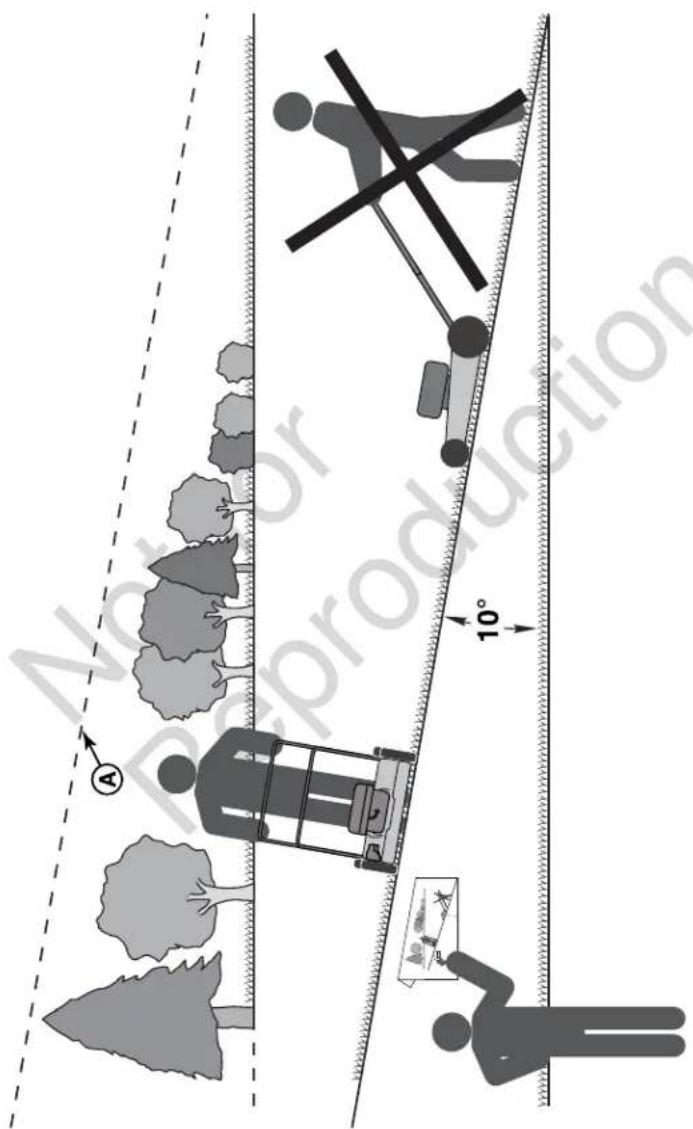
text_image
Diagram illustrating a road safety scenario with a person crossing over a vehicle, trees, and a 10° angle marker.Specifications
| Specifications | ||
| Mower 2691762-00 2691763-00 2691764-00 | ||
| Cutting Width (in / cm) 21 / 53 | 21 / 53 21 / 53 | |
| Height of Cut (in / cm) 1.25 - 3.75 / 3,1 - 9,5 1.25 - 3.75 / 3,1 - 9,5 | ||
| Engine Displacement (cc) 140 | 163 163 | |
| Fuel Tank Capacity (qt / l) 1.0 / 1,0 1.0 / 1,0 1.0 / 1,0 | ||
| Oil Capacity (oz / l) 15 / 0,44 15 / 0,44 15 / 0,44 | ||
| Spark Plug Gap (in / mm) 0.030 / 0,76 0.030 / 0,76 0.030 / 0,76 | ||
| Spark Plug Torque (lb-in / Nm) | 180 / 20 180 / 20 180 / 20 | |
* See Power Ratings.
Power Ratings: The gross power rating for individual gasoline engine models is labeled in accordance with SAE (Society of Automotive Engineers) code J1940 Small Engine Power & Torque Rating Procedure, and is rated in accordance with SAE J1995. Torque values are derived at 2600 RPM for those engines with "rpm" called out on the label and 3060 RPM for all others; horsepower values are derived at 3600 RPM. The gross power curves can be viewed at www.BRIGGSandSTRATTON.COM. Net power values are taken with exhaust and air cleaner installed whereas gross power values are collected without these attachments. Actual gross engine power will be higher than net engine power and is affected by, among other things, ambient operating conditions and engine-to-engine variability. Given the wide array of products on which engines are placed, the gasoline engine may not develop the rated gross power when used in a given piece of power equipment. This difference is due to a variety of factors including, but not limited to, the variety of engine components (air cleaner, exhaust, charging, cooling, carburetor, fuel pump, etc.), application limitations, ambient operating conditions (temperature, humidity, altitude), and engine-to-engine variability. Due to manufacturing and capacity limitations, Briggs & Stratton may substitute an engine of higher rated power for this engine.
Manual Contents:
natural_image
Illustration of a lawn mower with an exclamation mark symbol (no text or labels)natural_image
Illustration of a person reading a document next to a lawn mower (no text or symbols present)natural_image
Illustration of a person assisting children with a lawn mower (no text or symbols)text_image
3.5 ft (1,5 m) 20.0 ft (6,0 m)natural_image
Diagram of a tractor with motion arrows indicating rotational speed (no text or symbols)natural_image
Illustration of a person playing tennis outdoors near a tree and another running, with no visible text or symbols.natural_image
Illustration of a person using a lawn mower to clean or install equipment (no text or symbols visible)natural_image
Illustration showing two people using different types of lawn mower: one pushing a lawn mower, the other reading a book (no text or symbols present)text_image
A 10° Notor reproductionEspecificaciones
| Especificaciones | ||
| Cortacésped 2691762-00 2691763-00 2691764-00 | ||
| Ancho de corte (pulg / cm) 21/53 21/53 21/53 | ||
| Altura de corte (pulg / cm) 1,25 - 3,75/3,1 - 9,5 1,25 - 3,75/3,1 | - 9,5 1,25 - 3,75/3,1 - 9,5 | |
| Cilindrada del Motor (cc) 140 163 163 | ||
| Capacidad del tanque de combustible (qt / l) | 1.0/1,0 1.0/1,0 1.0/1,0 | |
| Capacidad de aceite (oz / l) 15/0,44 15/0,44 15/0,44 | ||
| Brecha de la bujía (pulg / mm) | 0,030/0,76 0,030/0,76 0,030/0,76 | |
| Torsión de la bujía (lb-pulg / N.m) | 180/20 180/20 180/20 | |
natural_image
Illustration of a lawn mower with an exclamation mark symbol (no text or labels)natural_image
Illustration of a person reading a document next to a lawn mower (no text or symbols present)natural_image
Illustration of a person assisting children with a lawn mower (no text or symbols)text_image
3.5 ft (1,5 m) 20.0 ft (6,0 m)natural_image
Diagram of a car with motion arrows indicating rotational speed (no text or symbols)natural_image
Illustration of a person playing tennis outdoors near a tree and another running figure (no text or symbols)natural_image
Illustration of a person using a tool on a small utility vehicle (no text or symbols present)natural_image
Illustration showing a person using a lawn mower to clean another (no text or symbols present)text_image
Not for procaction 10°Spécifications
natural_image
Illustration of a lawn mower with an exclamation mark symbol (no text or labels)natural_image
Illustration of a person reading a document next to a lawn mower (no text or symbols present)natural_image
Illustration of a family scene with a lawn mower, a person holding a cane, and two children playing with toys (no text or symbols)natural_image
Diagram of a car with motion arrows indicating rotational speed (no text or symbols)natural_image
Illustration of a person playing badminton with a trolley, another person standing near a tree (no text or symbols)natural_image
Illustration of a person using a lawn curling machine (no text or symbols present)natural_image
Illustration showing a person using a lawn mower to lift a cart, with another person observing (no text or symbols present)SOBRE A NOSSA GARANTIA
text_image
Diagram illustrating a road safety scenario with a person crossing over a vehicle, trees, and a 10° angle marker.Especificações
| Especificações | ||
| Cortador de grama 2691762 | -00 2691763-00 2691764-00 | |
| Largura de corte (pol/cm) 21 / | 53 21 / 53 21 / 53 | |
| Altura de corte (pol / cm) 1.25 | -3.75 / 3,1 - 9,5 1.25 - 3.75 / 3, | 1 - 9,5 1.25 - 3.75 / 3,1 - 9,5 |
| Deslocamento do motor (cc) 1 | 40 163 163 | |
| Capacidade do tanque de combustível (qt / l) | 1.0 / 1,0 1.0 / 1,0 1.0 / 1,0 | |
| Capacidade de óleo (oz / l) 15 | / 0,44 15 / 0,44 15 / 0,44 | |
| Folga da vela de ignição (pol / mm) | 0.030 / 0,76 0.030 / 0,76 0.030 / 0,76 | |
| Torque da vela de ignição (lb-pol / Nm) | 180 / 20 180 / 20 180 / 20 | |
natural_image
Illustration of a lawn mower with an exclamation mark symbol (no text or labels)natural_image
Illustration of a person reading a document next to a lawn mower (no text or symbols present)natural_image
Illustration of a family cleaning a lawn mower with an adult guiding them (no text or symbols)natural_image
Diagram of a lawn mower with motion arrows indicating rotational motion (no text or symbols)natural_image
Illustration of a person using a tennis racket on a bicycle near a tree, with another person standing nearby (no text or symbols)natural_image
Illustration of a person using a tool on a small utility vehicle (no text or symbols present)natural_image
Illustration showing a person using a lawn mower to lift a person's phone, with another person observing (no text or symbols present)text_image
Diagram illustrating a road safety scenario with a person crossing over a vehicle, trees, and directional arrows indicating angles.| المواصفات | ||
| أَلَةِ الْجَرِ | 2691762-00 2691763-00 2691764-00 | |
| (عَرْضِ الْقَطَعِ (بُوصَّة / سَم) | 21 / 53 21 / 53 21 / 53 | |
| (ارتَفَاعِ الْقَطَعِ (بُوصَّة/سَم) | 1.25 - 3.75 / 3,1 - 9,5 1.25 - 3.75 / 3,1 - 9,5 1.25 - 3.75 / 3,1 - 9,5 | |
| (ازَاحَةِ الْمَحْرِك (سَم مَكَعِب) | 140 163 163 | |
| (سَعَةِ خَزَانِ الْوَقِ وَد (ربَعْغَالِون/الْتَر) | 1.0 / 1,0 1.0 / 1,0 1.0 / 1,0 | |
| (سَعَةِ الْزَيْتِ (أَوْنَصَة/لَتْر) | 15 / 0,44 15 / 0,44 15 / 0,44 | |
| فَجَوَةِ شَمْعَةِ الْإِشْعَالِ(بُوصَّة/امٌ) | 0.030 / 0,76 0.030 / 0,76 0.030 / 0,76 | |
| (عَزمٍ دورَانِ شَعَلَةِ الْإِشْعَالِ(رَطَلٍ لَكَلٍ بُوصَّة/نيَوَتِن) | 180 / 20 180 / 20 180 / 20 | |