MS333 - Pump Maruyama - Free user manual and instructions
Find the device manual for free MS333 Maruyama in PDF.


| Product Type | High-pressure water pump for agricultural spraying and irrigation |
| Brand | Maruyama |
| Model | MS333 |
| Dimensions (L × W × H) | 403 × 243 × 281 mm |
| Weight | 7.2 kg |
| Max crankshaft speed | 1300 rpm (irrigation) |
| Max suction capacity | 35 L/min (irrigation) |
| Max pressure | 3.5 MPa (irrigation) |
| Required power | 2.1 kW (2.9 PS) |
| Engine oil type | SAE10W-30 or SAE30 non-detergent |
| Oil capacity | 0.42 L |
| Suction hose | 19 × 3000 mm, G3/4 fitting |
| Overflow hose | 13 × 3000 mm, G1/2 fitting |
| Main valve | G1/4 × 2 |
| Usage | Agriculture, irrigation, chemical spraying (non-industrial) |
| Maintenance | Oil change every 50 hours; inspection of valves and pistons; antifreeze protection |
| Pressure adjustment | Adjustment knob from 0 to 3.5 MPa; regulation button |
| Spare parts | Seal, valve, piston, strainer, hoses available at authorized dealer |
| Warranty | Contact an authorized Maruyama dealer |
Frequently Asked Questions - MS333 Maruyama
User questions about MS333 Maruyama
0 question about this device. Answer the ones you know or ask your own.
Ask a new question about this device
Download the instructions for your Pump in PDF format for free! Find your manual MS333 - Maruyama and take your electronic device back in hand. On this page are published all the documents necessary for the use of your device. MS333 by Maruyama.
USER MANUAL MS333 Maruyama
natural_image
Line drawing of a mechanical device with gears and a valve, no text or symbols presentINSTRUCTION MANUAL
MODE D'EMPLOI
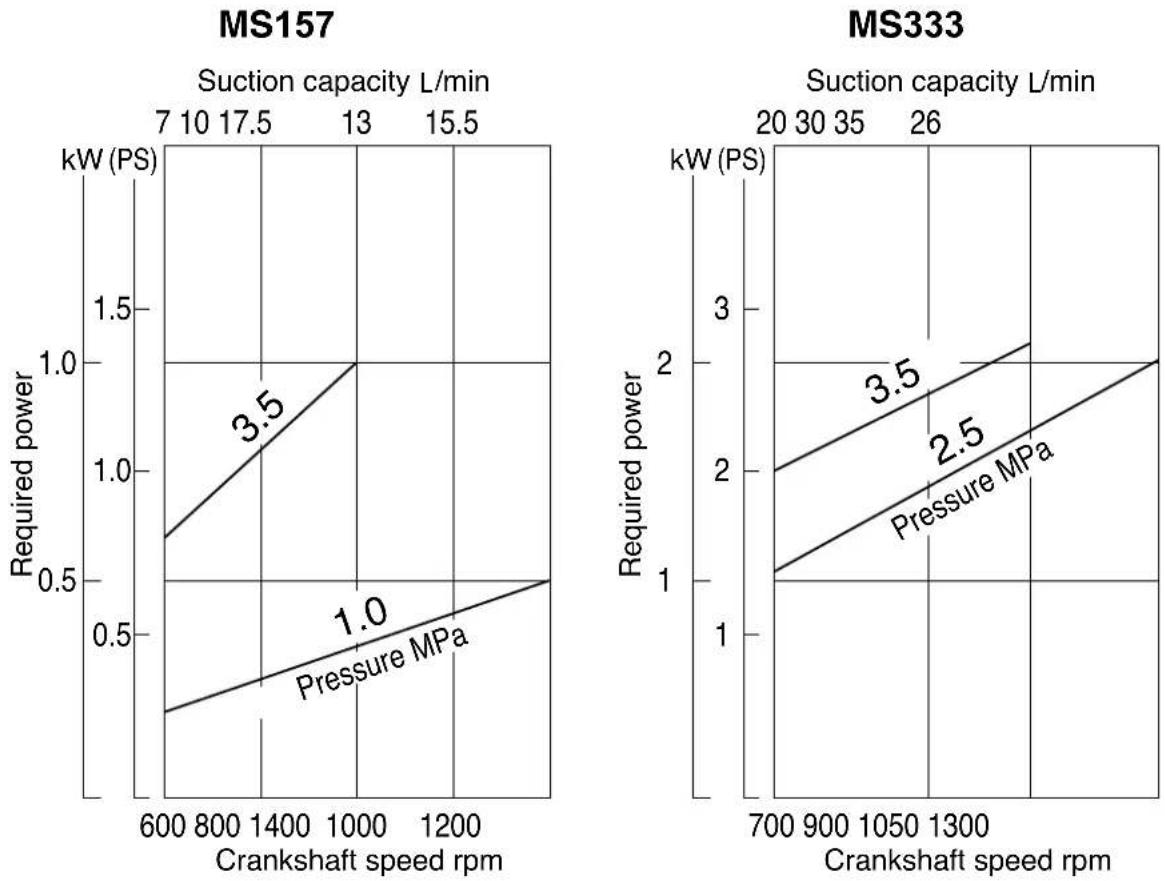
Specifications
| Model | MS157 | MS333 | ||||
| Dimensions | Overall length (mm) | 378 | 403 | |||
| Overall width (mm) | 215 | 243 | ||||
| Overall height (mm) | 288 | 281 | ||||
| Weight (kg) | 6.9 | 7.2 | ||||
| Maximum | Irrigation | Maximum | Irrigation | |||
| Specifications | Crankshaft speed | (rpm) | 1000 | 1400 | 1050 | 1300 |
| Suction capacity | (L/min) | 13 | 17.5 | 30 | 35 | |
| Pressure | MPa | 3.5 | 1.0 | 3.5 | 2.5 | |
| Required power | kW | 1.0 | 0.5 | 2.1 | 2.0 | |
| (PS) | (1.4) | (0.7) | (2.9) | (2.7) | ||
| Suction hose (mm) | 13× 3000, G^1/_2 | 19× 3000, G^3/_4 | ||||
| Overflow hose (mm) | 13× 3000, G^1/_2 | |||||
| Main cock | G^1/_4×2 | |||||
| Type of Lubricant | SAE10W-30, or SAE30 Non-detergent | |||||
| Lubricant volume(L) | 0.23 | 0.42 | ||||
Performance curve
Specifications
| Model | MS157 | MS333 | ||||
| Dimensions | Overall length | 14.9" | 15.9" | |||
| Overall width | 8.5" | 9.6" | ||||
| Overall height | 11.3" | 11.1" | ||||
| Weight (lbs) | 15.2 | 15.9 | ||||
| Maximum | Irrigation | Maximum | Irrigation | |||
| Specifications | Crankshaft speed | (RPM) | 1000 | 1400 | 1050 | 1300 |
| Suction capacity | (GPM) | 3.4 | 4.6 | 7.9 | 9.2 | |
| Pressure | PSI | 510 | 146 | 510 | 364 | |
| Required power | HP | 1.3 | 0.7 | 2.8 | 2.7 | |
| Suction hose | ^1/2"× 9.8', G^1/2 | ^3/4"× 9.8', G^3/4 | ||||
| Overflow hose | ^1/2"× 9.8', G^1/2 | |||||
| Main cock | G^1/4× 2 | |||||
| Type of Lubricant | SAE10W-30, or SAE30 Non-detergent | |||||
| Lubricant volume (OZ) | 8 | 14.5 | ||||
Performance curve
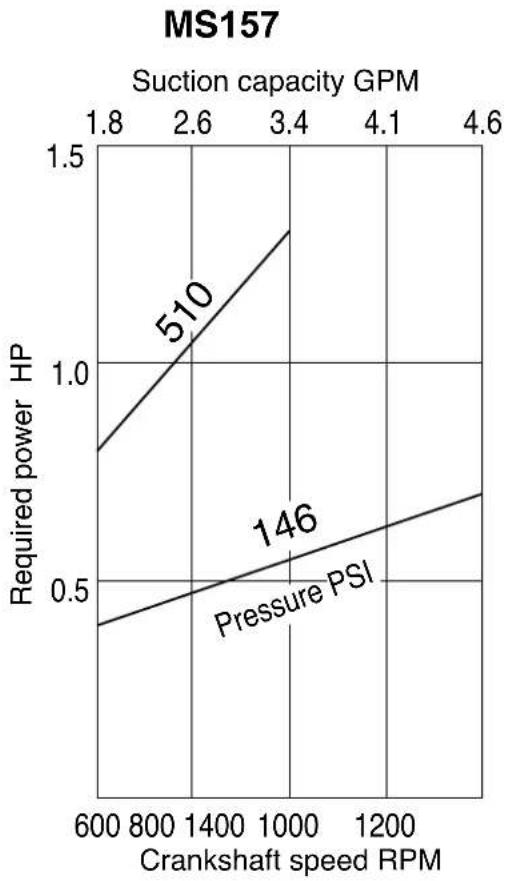
line
| Crankshaft speed RPM | Required power HP | | --------------------- | ----------------- | | 600 | 0.4 | | 800 | 0.5 | | 1000 | 0.6 | | 1200 | 0.7 | | 1400 | 0.8 | | 1600 | 0.9 | | 1800 | 1.0 | | 2000 | 1.1 | | 2200 | 1.2 | | 2400 | 1.3 | | 2600 | 1.4 | | 2800 | 1.5 |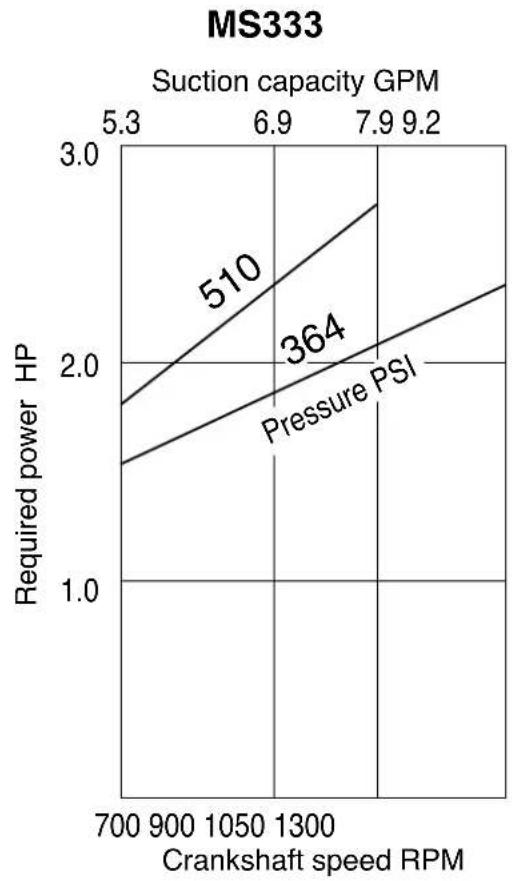
line
| Crankshaft speed RPM | Required power HP | | --------------------- | ----------------- | | 700 | 1.5 | | 900 | 1.8 | | 1050 | 2.0 | | 1300 | 2.5 |Operating procedure
Be sure to check all the screws for tightness.
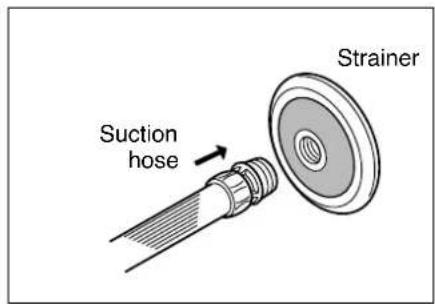
4 Attaching the strainer for the hose coupling.
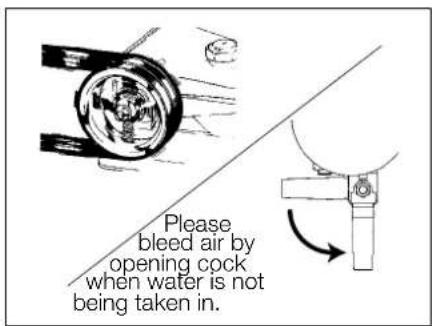
8 Starting
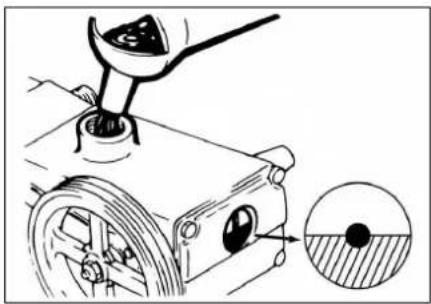
1 Lubricating oil.
Fill the lubricating oil into the crankcase up to the center level of the gauge.
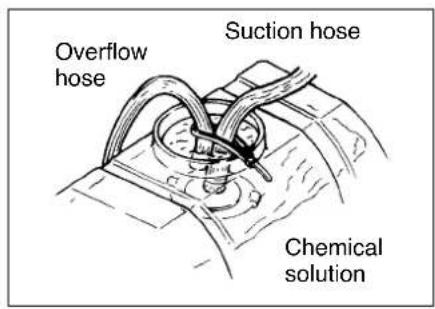
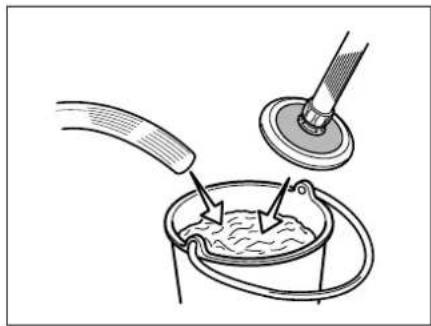
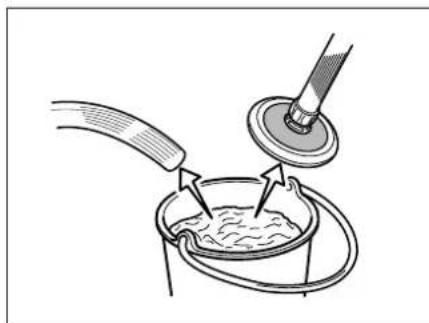
5 Insert the suction hose and overflow hose into the chemical tank.
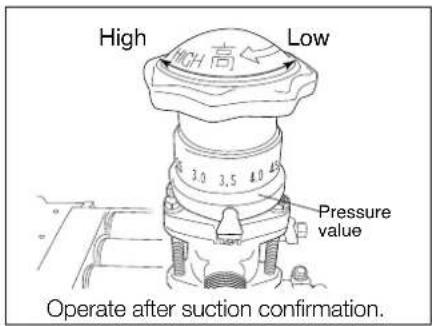
9 Pressure regulation.
natural_image
Mechanical diagram showing a tool interacting with a mechanical component, with an inset close-up of a circular feature (no text or symbols)2 Oiling
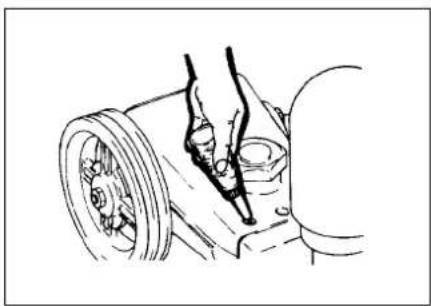
Feed a few drops of oil into the 3 holes of the crankcase.
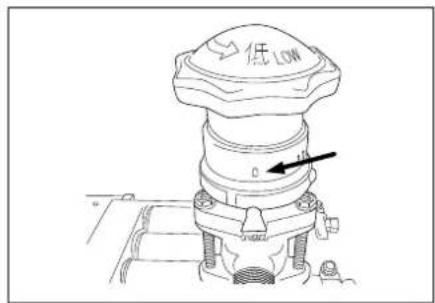
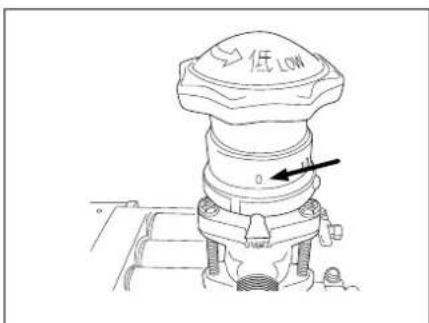
6 Coincide knob of pressure regulator with 0.
10 Spraying
natural_image
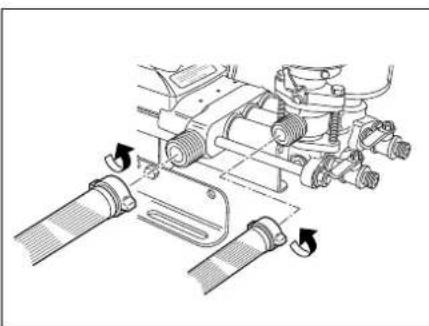
Technical line drawing of a mechanical assembly with a pulley and shaft (no text or symbols)3 Installing the suction hose and overflow hose.
When installing the suction hose, check the condition and presence of sealing gaskets at the threaded couplings.
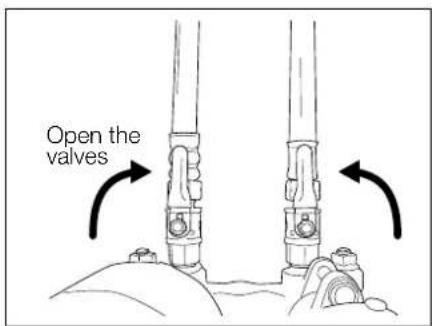
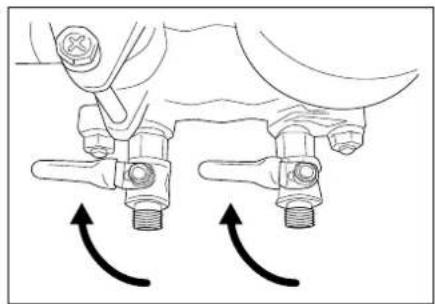
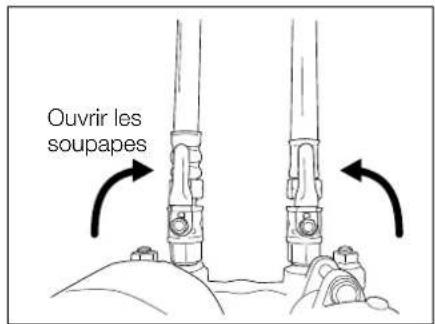
7 Close the valve.
natural_image
Mechanical assembly diagram showing two connected components with directional arrows indicating motion (no text or symbols)
11 Stopping spraying
natural_image
Technical line drawing of a wheel assembly with motion lines indicating motion (no text or symbols)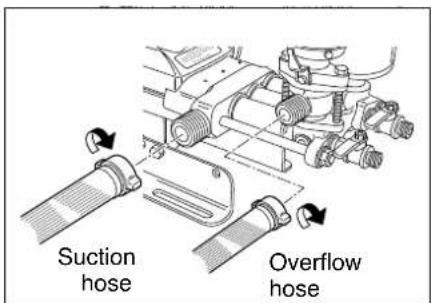
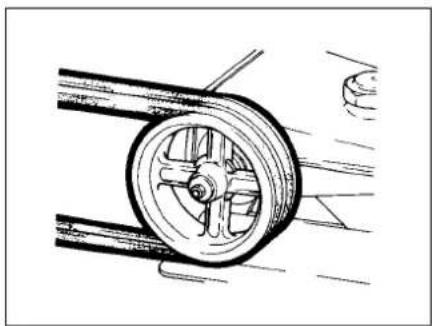
12 Wash up with the clean 15 Stopping the operation. water after spraying.
natural_image
Illustration of a medical procedure involving a tool and a container with liquid, no text or symbols present.13 Running the Power Sprayer.
natural_image
Technical line drawing of a mechanical pulley system with no visible text or symbols16 Detach the suction hose and overflow hose.
natural_image
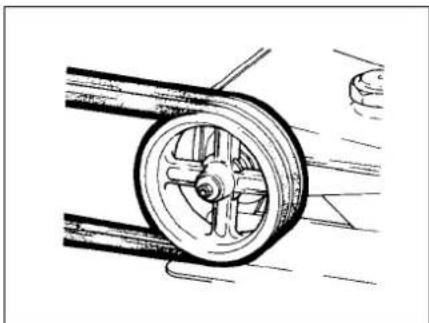
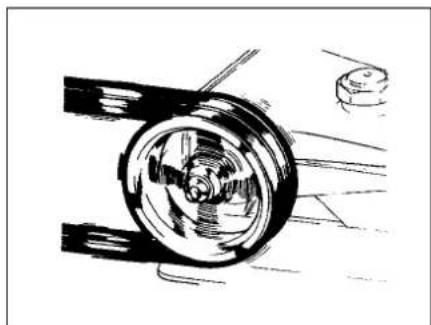
Technical line drawing of a mechanical component with no visible text or symbols14 Continue to run the sprayer for one minute after raising the strainer.
natural_image
Mechanical assembly diagram showing motor components and adjustment parts (no text or labels)17 Resume knob to 0 position.
natural_image
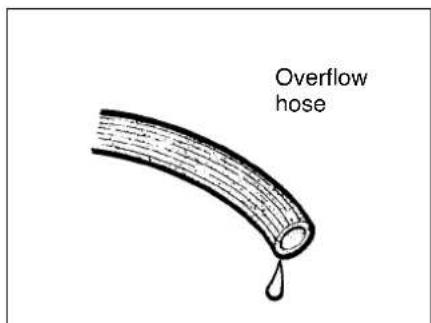
Illustration of a medical procedure showing a tool interacting with a bowl containing granular material (no text or symbols present)Caution!!
Running the sprayer for more than one minute without the presence of liquid may cause severe pump damage!
Protection from freezing.
Water should be completely drained during winter storage to prevent freezing. The operation is performed according to items from 11 to 18 in the operation procedure.
Inspection and adjustment
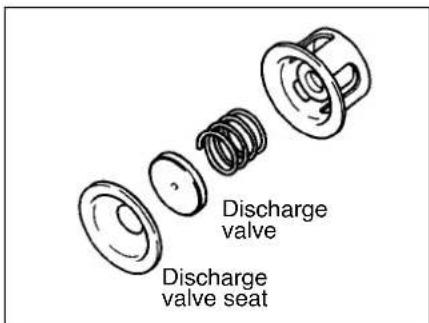
Discharge valve and its vicinity.
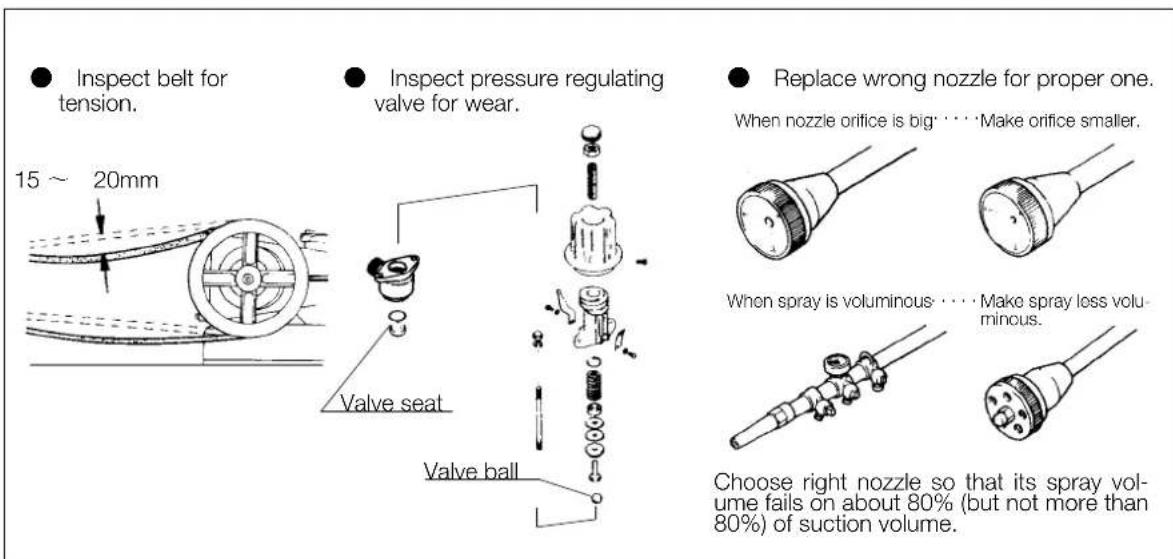
Inspect discharge valve and valve seat for wearing degree over their contact surface. Replace worn or spoiled ones, if any.
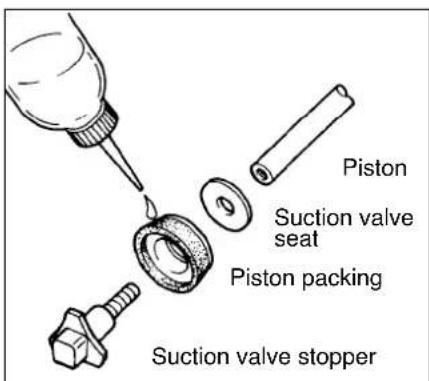
Piston and its vicinity.
Inspect parts as exploded for damage wear break, etc. Lubricate mobile oil over piston packing when reassembled.
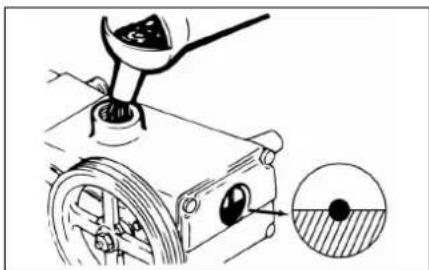
Replacement of Crankcase oil.
Replace at 50 hours operation after initial operation.
natural_image
Mechanical assembly diagram showing a tool interacting with a motor and a close-up of a circular component (no text or symbols)Precautions
Thank you very much for your purchase this time. Needless to say, no matter how excellent the quality of the product may be it won't display its maximum potential performance unless operated properly.
Read this instruction manual repeatedly prior to operation in order to make the best use of the product.
Power sprayers are for agricultural or irrigation uses and not for industrial use. Therefore, do not use chemicals, seawater, hot water, etc. When agrichemicals are used, read and follow the instruction manual for chemicals.
For further information or assistance, please contact the nearest authorized Maruyama Dealer of the store which you purchased this product from.
When pump fails to suck liquid.
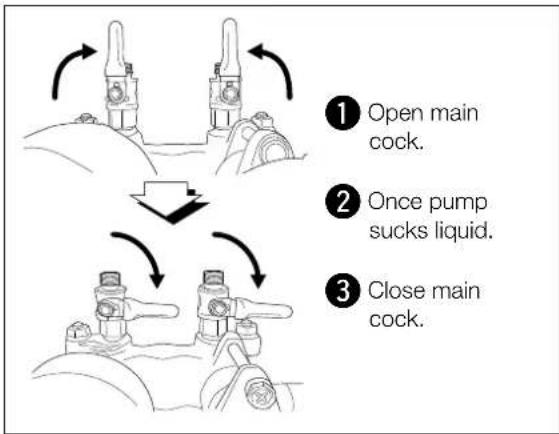
flowchart
graph TD
    A["① Open main cock."] --> B["② Once pump sucks liquid."]
    B --> C["③ Close main cock."]
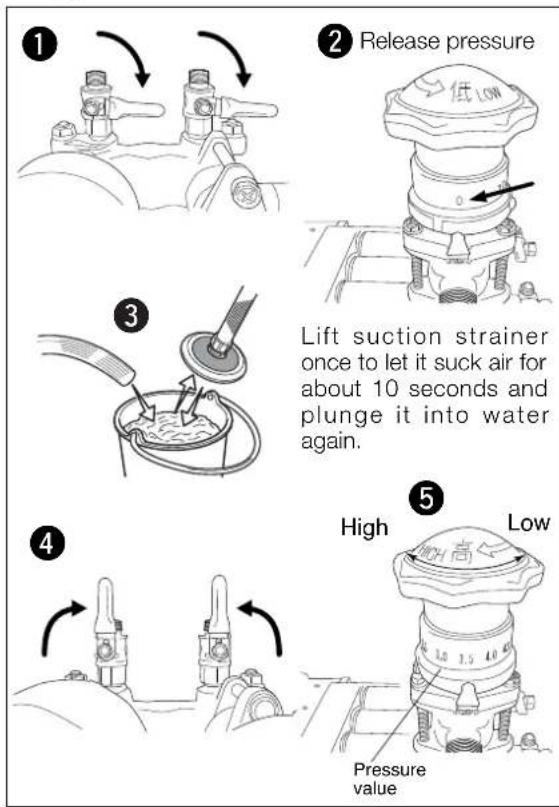
When hoses are vibrating themselves...
Hose vibration occurs when air is released out of air-chamber. It will stop if you let air send forth as following procedural.
When pressure fails to get accumulated...
natural_image
Mechanical assembly diagram showing a tool pressing down on a motor with a magnified inset showing a circular component (no text or symbols)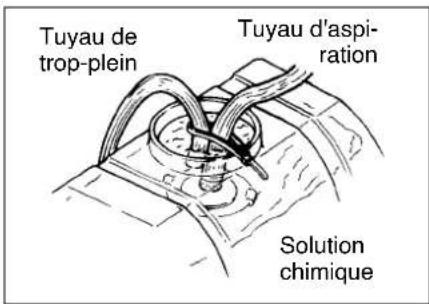
natural_image
Technical line drawing of a mechanical assembly with pulley and motor (no text or symbols)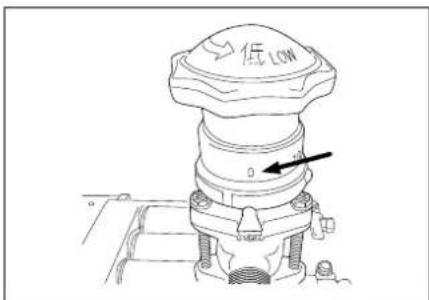
natural_image
Mechanical diagram showing two connected components with directional arrows indicating motion (no text or symbols)
natural_image
Technical line drawing of a wheel and mechanical components (no text or symbols)natural_image
Illustration of a medical procedure showing a tool interacting with a basin containing granular material (no text or symbols present)natural_image
Technical line drawing of a mechanical component with no visible text or symbolsnatural_image
Illustration of a medical procedure showing a tool injecting liquid into a basin with a cap (no text or symbols)Attention !!
natural_image
Technical line drawing of a wheel and conveyor belt system (no text or symbols)natural_image
Mechanical assembly diagram showing motor components and valve connections (no text or labels)natural_image
Mechanical assembly diagram showing a lever pressing a component with a magnified inset (no text or symbols)Précautions
natural_image
Mechanical assembly diagram showing a tool interacting with a motor and a circular cross-section (no text or symbols)2 Lubricación
natural_image
Technical line drawing of a mechanical assembly with pulleys and gears (no text or symbols)natural_image
Mechanical diagram showing two mechanical components with directional arrows indicating motion (no text or symbols)
natural_image
Technical line drawing of a wheel and shaft assembly (no text or symbols)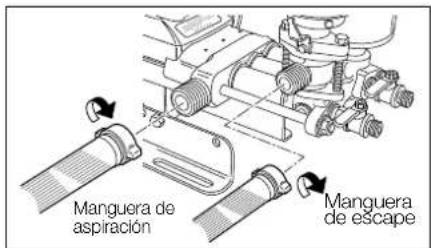
natural_image
Illustration of a medical procedure showing a tool interacting with a cup and another cup, no text or symbols present.natural_image
Technical line drawing of a mechanical component with no visible text or symbolsnatural_image
Illustration of a medical procedure showing a tool interacting with a bowl containing granular material (no text or symbols present)Cuidado!
natural_image
Technical line drawing of a mechanical pulley system with no visible text or symbolsnatural_image
Mechanical assembly diagram showing motor components and adjustment knobs (no text or labels)natural_image
Mechanical assembly diagram showing a lever and wheel with a magnified inset (no text or symbols)Precaución
- Operating procedure
- Attaching the strainer for the hose coupling.
- Starting
- Lubricating oil.
- Insert the suction hose and overflow hose into the chemical tank.
- Pressure regulation.
- Oiling
- Coincide knob of pressure regulator with 0.
- Spraying
- Installing the suction hose and overflow hose.
- Close the valve.
- Stopping spraying
- Caution!!
- Protection from freezing.
- Inspection and adjustment
- Discharge valve and its vicinity.
- Piston and its vicinity.
- Replacement of Crankcase oil.
- Precautions
- When hoses are vibrating themselves...
- When pressure fails to get accumulated...
- Attention !!
- Précautions
- Lubricación
- Cuidado!
- Precaución
Brand : Maruyama
Model : MS333
Category : Pump