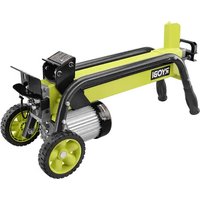
RYAC490 - Log splitter RYOBI - Free user manual and instructions
Find the device manual for free RYAC490 RYOBI in PDF.


| Product Type | Hydraulic Log Splitter |
| Brand | RYOBI |
| Model | RYAC490 |
| Splitting Force | 4,535.9 kg (5 tons) |
| Log Diameter Capacity (max) | 254 mm (10 in) |
| Log Diameter Capacity (min) | 102 mm (4 in) |
| Log Length Capacity | 521 mm (20.5 in) |
| Power Supply | 120 V AC, 60 Hz, 15 A |
| Hydraulic Oil Capacity | 3.2 L (3.4 quarts) |
| Recommended Oil Type | Hydraulic oil (consult the manual for equivalents) |
| Oil Change | Every 150 hours of use |
| Wedge Sharpening | Using a fine file to remove burrs |
| Lubrication | No additional lubrication required (sealed bearings) |
| Purge Screw | Loosen 3-4 turns before use |
| User Zone | Rear right facing the controls, never behind the cylinder |
| Required Safety Equipment | Safety glasses (ANSI Z87.1), non-slip gloves, safety shoes |
| Safety Distance for Bystanders | At least 3.05 m (10 ft) |
| Two-Hand Operation | Requires simultaneously activating the switch and hydraulic lever |
| Locking Device | Option to install a padlock (not included) in the control lever |
| Mobility | Lifting handle and wheels |
| Intended Use | Household use only |
| Warranty | 5 years for personal use (90 days for commercial use) |
| Service and Parts | www.ryobitools.com or 1-800-860-4050 |
Frequently Asked Questions - RYAC490 RYOBI
User questions about RYAC490 RYOBI
0 question about this device. Answer the ones you know or ask your own.
Ask a new question about this device
Download the instructions for your Log splitter in PDF format for free! Find your manual RYAC490 - RYOBI and take your electronic device back in hand. On this page are published all the documents necessary for the use of your device. RYAC490 by RYOBI.
USER MANUAL RYAC490 RYOBI
natural_image
Line drawing of a tracked robotic vehicle with wheels and attached sensors (no text or symbols)TABLE OF CONTENTS
■ General Safety Rules 2-3
■ Log Splitter SpecificSafety Rules ... 3-4
■ Additional Safety Rules......4
■ Symbols 5-6
■ Electrical ....7
■ Features ....8
■ Assembly 8-9
■ Operation 9-10
■ Maintenance ....11
■ Troubleshooting ....12
■ Parts Ordering/Service......Back Page

WARNING: To reduce the
risk of injury, the user must read and understand the operator's manual before using this product.
SAVE THIS MANUAL FOR FUTURE REFERENCE
TABLE DES MATIÈRES
See this fold-out section for all the figures referenced in the operator's manual.
A - Hydraulic control lever (levier de commande hydraulique, palanca de control hidráulico)
B - Ram (vérin, ariete)
C - Work table (gâchette, gatillo del interruptor)
D - Wedge (coin, cuña)
E - Side supports (supports latéraux, soportes laterales)
F - Push button box (boîtier de commande, caja de botones pulsadores)
G - On/off switch (interrupteur marche / arrêt, interruptor de encendido/apagado)
Fig. 3
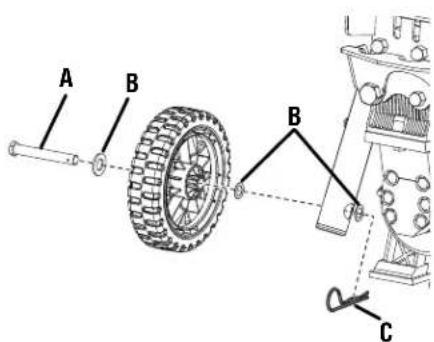
A - Axle (essieu, eje)
B - Washers (rondelles, arandelas)
C - Hitch pin (axe d'attelage, pasador de enganche
Fig. 4
natural_image
Line drawing of a person climbing a ladder using a cart (no text or symbols)natural_image
Prohibition sign showing a person using a tool to avoid excessive weight loss (no text or symbols)Fig. 8
CORRECT
CORRECT
FORMA CORRECTA
natural_image
Technical line drawing of a mechanical device with wheels and a central body (no text or symbols)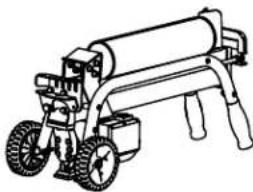
natural_image
Line drawing of a portable electric drill press with wheels and control panel (no text or symbols)Fig. 10
RIGHT
CORRECT
FORMA CORRECTA
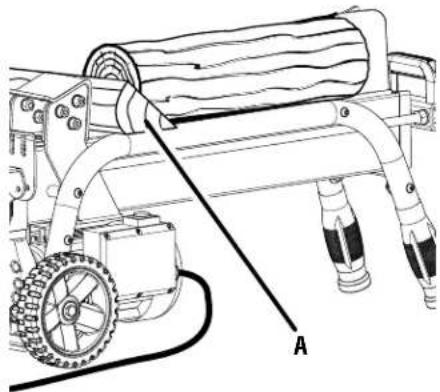
natural_image
Technical line drawing of a mechanical device with labeled component A (no text or symbols beyond label)A - Wood wedge (coin de bois, cuña de madera)
Fig. 11
INCORRECT
INCORRECT
INCORRECTO
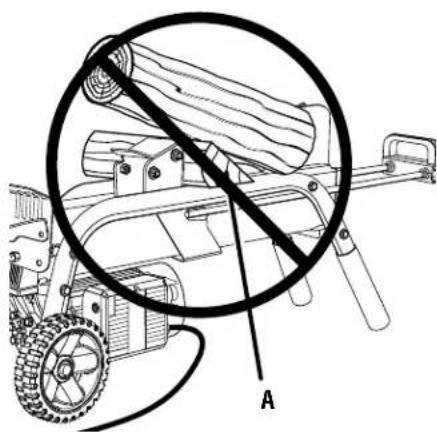
A - Wood wedge (coin de bois, cuña de madera)
Fig. 9
INCORRECT / INCORRECT / INCORRECTO
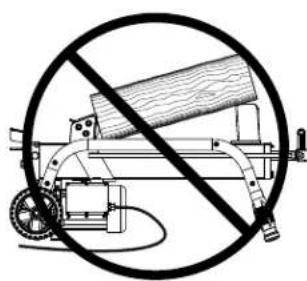
natural_image
No crossed-out diagram of a mechanical device with diagonal line crossing, no text or symbols present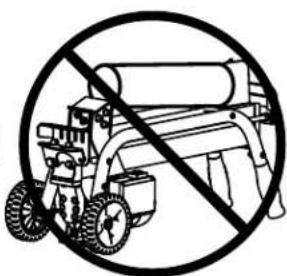
natural_image
Symbolic illustration of a machine with a diagonal line crossing through it, no text or labels present.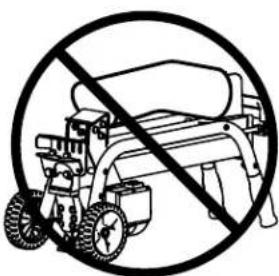
natural_image
No crossed-out diagram of a mechanical device with a diagonal line crossing through it, no text or symbols present.Fig. 12
POSITION IN WHICH TO CHECK OIL LEVEL
POSITION POUR LA VÉRIFICATION DU NIVEAU D'HUILE
POSICIÓN CORRECTA PARA REVISAR EL
NIVEL DE ACEITE

natural_image
Technical line drawing of a mechanical device with a cylindrical shaft and attached motor (no text or symbols)Fig. 13
DRAINING OIL FROM OIL TANK
natural_image
Technical line drawing of a mechanical device with wheels and a handle (no text or symbols)Fig. 14
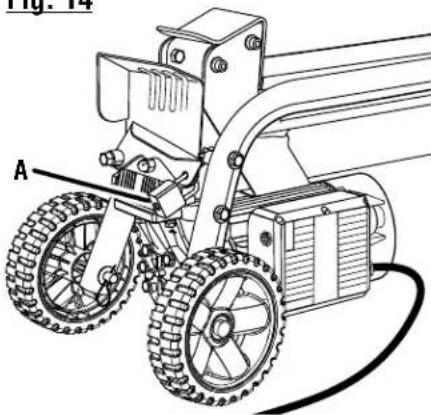
natural_image
Technical line drawing of a mechanical device with two wheels and a connecting rod (no text or symbols)A - Padlock (cadenas, candado)
GENERAL SAFETY RULES

WARNING:
Read all safety warnings, instructions, illustrations and specifications provided with this power tool.
Failure to follow all instructions listed below may result in electric shock, fire and/or serious injury.
Save all warnings and instructions for future reference. The term “power tool” in the warnings refers to your mains-operated (corded) power tool or battery-operated (cordless) power tool.
WORK AREA SAFETY
- Keep work area clean and well lit. Cluttered or dark areas invite accidents.
■ Do not operate power tools in explosive atmospheres, such as in the presence of flammable liquids, gases or dust. Power tools create sparks which may ignite the dust or fumes. - Keep children and bystanders away while operating a power tool. Distractions can cause you to lose control.
ELECTRICAL SAFETY
■ Power tool plugs must match the outlet. Never modify the plug in any way. Do not use any adapter plugs with earthed (grounded) power tools. Unmodified plugs and matching outlets will reduce risk of electric shock.
■ Avoid body contact with earthed or grounded surfaces, such as pipes, radiators, ranges and refrigerators. There is an increased risk of electric shock if your body is earthed or grounded.
■ Do not expose power tools to rain or wet conditions. Water entering a power tool will increase the risk of electric shock.
- Do not abuse the cord. Never use the cord for carrying, pulling or unplugging the power tool. Keep cord away from heat, oil, sharp edges or moving parts. Damaged or entangled cords increase the risk of electric shock.
■ When operating a power tool outdoors, use an extension cord suitable for outdoor use. Use of a cord suitable for outdoor use reduces the risk of electric shock.
If operating a power tool in a damp location is unavoidable, use a ground fault circuit interrupter (GFCI) protected supply. Use of a GFCI reduces the risk of electric shock.
PERSONAL SAFETY
■ Stay alert, watch what you are doing and use common sense when operating a power tool. Do not use a power tool while you are tired or under the influence of drugs, alcohol or medication. A moment of inattention while operating power tools may result in serious personal injury.
■ Use personal protective equipment. Always wear eye protection. Protective equipment such as dust mask, non-skid safety shoes, hard hat, or hearing protection used for appropriate conditions will reduce personal injuries.
■ Prevent unintentional starting. Ensure the switch is in the off-position before connecting to power source and/or battery pack, picking up or carrying the tool. Carrying power tools with your finger on the switch or energising power tools that have the switch on invites accidents.
■ Remove any adjusting key or wrench before turning the power tool on. A wrench or a key left attached to a rotating part of the power tool may result in personal injury.
■ Do not overreach. Keep proper footing and balance at all times. This enables better control of the power tool in unexpected situations.
■ Dress properly. Do not wear loose clothing or jewellery. Keep your hair, clothing and gloves away from moving parts. Loose clothes, jewellery or long hair can be caught in moving parts.
If devices are provided for the connection of dust extraction and collection facilities, ensure these are connected and properly used. Use of dust collection can reduce dust-related hazards.
■ Do not let familiarity gained from frequent use of tools allow you to become complacent and ignore tool safety principles. A careless action can cause severe injury within a fraction of a second.
POWER TOOL USE AND CARE
- Do not force the power tool. Use the correct power tool for your application. The correct power tool will do the job better and safer at the rate for which it was designed.
■ Do not use the power tool if the switch does not turn it on and off. Any power tool that cannot be controlled with the switch is dangerous and must be repaired.
■ Disconnect the plug from the power source and/or remove the battery pack, if detachable, from the power tool before making any adjustments, changing accessories, or storing power tools. Such preventive safety measures reduce the risk of starting the power tool accidentally.
GENERAL SAFETY RULES
■ Store idle power tools out of the reach of children and do not allow persons unfamiliar with the power tool or these instructions to operate the power tool. Power tools are dangerous in the hands of untrained users.
- Maintain power tools and accessories. Check for misalignment or binding of moving parts, breakage of parts and any other condition that may affect the power tool's operation. If damaged, have the power tool repaired before use. Many accidents are caused by poorly maintained power tools.
- Keep cutting tools sharp and clean. Properly maintained cutting tools with sharp cutting edges are less likely to bind and are easier to control.
■ Use the power tool, accessories and tool bits etc. in accordance with these instructions, taking into account the working conditions and the work to be performed. Use of the power tool for operations different from those intended could result in a hazardous situation.
- Keep handles and grasping surfaces dry, clean and free from oil and grease. Slippery handles and grasping surfaces do not allow for safe handling and control of the tool in unexpected situations.
SERVICE
■ Have your power tool serviced by a qualified repair person using only identical replacement parts. This will ensure that the safety of the power tool is maintained.
LOG SPLITTER SPECIFIC SAFETY RULES
■ DO NOT ALLOW anyone to operate the log splitter who has not read the operator's manual or has not been instructed on the safe use of the splitter.
■ NEVER ALLOW CHILDREN OR UNTRAINED ADULTS TO OPERATE THIS MACHINE.
■ IF SOMEONE is helping bring logs to be split, DO NOT start the machine until that person is clear of the area by at least 10 feet. Only one person should operate, load, and unload the log splitter.
■ NEVER ALLOW ANYONE TO SIT OR RIDE ON THE MACHINE.
■ NEVER TRANSPORT ANYTHING OR ANYONE ON THE LOG SPLITTER.
■ HIGH FLUID PRESSURES ARE DEVELOPED IN HYDRAULIC LOG SPLITTERS. Pressurized hydraulic fluid escaping through a pinhole opening can puncture skin and cause serious injury and/or severe blood poisoning. Observe the following instructions at all times:
a) Do not operate the log splitter if it has pinhole leaks, cracks, and/or any damage to the pressurized hydraulic fluid system, including the bleed screw, oil drain bolt/dipstick, hydraulic fluid tank/bolts, fittings, or any other hydraulic fluid system component.
b) Stop the motor and relieve hydraulic system pressure before changing or adjusting fittings, hoses, tubing, or other system components.
c) Do not adjust the pressure settings of the pump or value.
d) Ensure all hydraulic fluid system components are secured and in good condition before starting the log splitter. Keep your body and hands away from pinholes, cracked, or damaged bleed screw, oil drain bolt/dipstick, hydraulic fluid tank/bolts, fittings, or other hydraulic fluid system components. Leaks can
be located by passing cardboard or wood over the suspected area. Look for discoloration. If injured by escaping fluid, see a doctor at once. Serious injury, infection, and/or reaction can develop if proper medical treatment is not administered immediately.
- KEEP THE OPERATOR ZONE and adjacent area clear for safe, secure footing.
■ LOG SPLITTERS SHOULD BE USED ONLY for splitting wood. DO NOT use for other purposes.
■ MAKE SURE THE LOG SPLITTER is on a level surface. Block the splitter as required to prevent unintended movement.
■ ALWAYS OPERATE the splitter from the manufacturer's indicated operator zone. The operator zone is in the right rear area as facing the log splitter controls and never directly behing the ram.
■ LOGS TO BE SPLIT ON RAM-TYPE UNITS should be cut as flat as possible on each end.
■ ALWAYS keep hands and feet clear of moving parts and partially split logs during the splitting operation.
■ NEVER attempt to split logs larger than 10 in. in diameter or 20-1/2 in. in length. Only split dry whole logs and not partial, unevenly shaped, logs that will not sit flat on the work table, or logs that will not sit flat against the ram. Only split one log at a time and do not attempt to split stacked logs. Some types of wood are harder to split than others. If the log splitter is having trouble splitting a log, never continue to try for longer than five seconds.
■ BE thoroughly familiar with all controls and with the proper use of the log splitter.
■ ALWAYS wear eye protection with side shields marked to comply with ANSI Z87.1. Failure to do so could result in objects being thrown into your eyes, resulting in possible serious injury.
LOG SPLITTER SPECIFIC SAFETY RULES
■ ALWAYS operate the log splitter with all safety equipment in place and all controls operating properly.
■ ALWAYS operate the log splitter at manufacturer's recommended speed.
■ WHEN LOADING a ram-type log splitter, place your hands on the sides of the log not at the ends. NEVER place your hands or any part of your body between a log and any part of the log splitter.
■ ON RAM-TYPE log splitters, NEVER attempt to split more than one (1) log at a time.
■ ONLY operate log splitter in daylight or good artificial light.
■ ON RAM-TYPE log splitters on which the logs are not flat on one end, the longest portion of the log should be rotated down and placed against the wedge and the most flat end placed against the ram.
■ CLEAR DEBRIS from moving parts but only when the power source is shut off.
■ USE ONLY YOUR HAND TO OPERATE THE LOG SPLITTER CONTROLS.
■ ALWAYS UNPLUG FROM THE POWER SOURCE while repairing or adjusting the splitter except as recommended by the manufacturer.
■ CIRCUIT CAPACITY AND FUSES:
a) Use only an electrical circuit having adequate capacity as recommended by the log splitter manufacturer.
b) "Blowing" a fuse or tripping a circuit breaker is usually a warning that you are overloading the machine or have too many devices taking power from the circuit, or both. Do not install a higher capacity fuse!
■ LEARN AND UNDERSTAND all controls and the proper use of the equipment.
■ SAVE THESE INSTRUCTIONS. Refer to them frequently and use to instruct other users. If you loan someone this tool, loan them these instructions also.
ADDITIONAL SAFETY RULES
- KEEP CHILDREN AND BYSTANDERS AWAY. All bystanders should wear safety glasses and be kept a safe distance of at least 10 feet from work area. Do not let bystanders contact tool or extension cord while operating.
■ NEVER LEAVE TOOL RUNNING UNATTENDED. TURN THE POWER OFF. Don't leave tool until it comes to a complete stop.
■ Before inspecting, cleaning, or servicing the unit, stop the motor, wait for all moving parts to stop, and disconnect from power supply.
■ USE THE PROPER EXTENSION CORD. Make sure your extension cord is in good condition. Use only a cord heavy enough to carry the current your product will draw. An undersized cord will cause a drop in line voltage resulting in loss of power and overheating. A wire gauge size (A.W.G.) of at least 14 is recommended for an extension cord 25 feet or less in length. If in doubt, use the next heavier gauge. The smaller the gauge number, the heavier the cord.
■ DRESS PROPERLY. Do not wear loose clothing, neckties, scarves, or jewelry that can get caught and draw you into
moving parts. Rubber gloves and nonskid footwear are recommended when working outdoors. Also wear protective hair covering to contain long hair above shoulder length.
■ NEVER use an indoor type of extension power cord, these cords are designed for use with lamps and small appliances and are inadequate for high amperage machines used outdoors.
■ INSPECT TOOL CORDS PERIODICALLY. If damaged, have repaired by a qualified service technician at an authorized service facility. The conductor with insulation having an outer surface that is green with or without yellow stripes is the equipment-grounding conductor. If repair or replacement of the electric cord or plug is necessary, do not connect the equipment-grounding conductor to a live terminal. Repair or replace a damaged or worn cord immediately. Stay constantly aware of cord location and keep it well away from the rotating blade.
■ INSPECT EXTENSION CORDS PERIODICALLY and replace if damaged.
SYMBOLS
| The following signal words and meanings are intended to explain the levels of risk associated with this product. SYMBOL SIGNAL MEANING | ||
 | DANGER: | Indicates a hazardous situation, which, if not avoided, will result in death or serious injury. |
 | WARNING: | Indicates a hazardous situation, which, if not avoided, could result in death or serious injury. |
 | CAUTION: | Indicates a hazardous situation, that, if not avoided, may result in minor or moderate injury. |
| NOTICE: | (Without Safety Alert Symbol) Indicates information considered important, but not related to a potential injury (e.g. messages relating to property damage). | |
| Some of the following symbols may be used on this tool. Please study them and learn their meaning. Proper interpretation of these symbols will allow you to operate the tool better and safer. SYMBOL NAME DESIGNATION/EXPLANATION | ||
 | Safety Alert Indicates a potential personal injury hazard. | |
 | Read Operator's Manual | To reduce the risk of injury, user must read and understand operator's manual before using this product. |
 | Eye Protection Always wear eye protection marked to comply with ANSI Z87.1. | |
 | Wet Conditions Alert Do not expose to rain or use in damp locations. | |
 | Wear Gloves | Always wear nonslip, heavy-duty protective gloves when operating this product. |
 | Wear Safety Footwear Always wear nonslip safety footwear when operating this product. | |
 | Keep Bystanders Away Always keep bystanders at least 10 ft. (3 m) away. | |
 | Keep Hands Away | Always keep hands and body parts away from the wedge and the ram. |
SYMBOLS
| Some of the following symbols may be used on this tool. Please study them and learn their meaning. Proper interpretation of these symbols will allow you to operate the tool better and safer. SYMBOL NAME DESIGNATION/EXPLANATION | ||
 | Proper Loading | Only place dry logs flat and lengthwise in the direction of the grain on the work table. Only attempt to split one log at a time. |
 | Improper Loading | Never attempt to split a wet log or a log that is not placed flat and lengthwise on the worktable. Neither end should be off of the work table on the ram or wedge. Never attempt to split more than one log at a time. |
 | Improper Log Type | Only split dry, cylindrically shaped logs that are cut squarely on each end. Never attempt to split wet logs or logs that are curved or are cut at angles on either end. |
 | Operator Zone/Correct OperatingPosition | Always be positioned in the right rear area as facing the log splitter controls. |
 | Incorrect Operating Position Never stand or kneel directly behind the ram when operating. | |
| V Volts Voltage | ||
| A Amperes Current | ||
| Hz Hertz Frequency (cycles per second) | ||
| ~ | Alternating Current Type of current | |
| ☐ | Class II Construction Double-insulated construction | |
ELECTRICAL
EXTENSION CORDS
Use only 3-wire extension cords that have 3-prong grounding plugs and 3-pole receptacles that accept the tool's plug. When using a power tool at a considerable distance from the power source, use an extension cord heavy enough to carry the current that the tool will draw. An undersized extension cord will cause a drop in line voltage, resulting in a loss of power and causing the motor to overheat. Use the chart provided below to determine the minimum wire size required in an extension cord. Only round jacketed cords listed by Underwriter's Laboratories (UL) should be used.
**Ampere rating (on tool faceplate)
0-2.0 2.1-3.4 3.5-5.0 5.1-7.0 7.1-12.0 12.1-16.0
| Cord Length | Wire Size (A.W.G.) | |||||
| 25' | 16 | 16 | 16 | 16 | 14 | 14 |
| 50' | 16 | 16 | 16 | 14 | 14 | 12 |
| 100' | 16 | 16 | 14 | 12 | 10 | — |
**Used on 12 gauge - 20 amp circuit.
NOTE: AWG = American Wire Gauge
When working with the tool outdoors, use an extension cord that is designed for outside use. This is indicated by the letters "WA" or "W" on the cord's jacket.
Before using an extension cord, inspect it for loose or exposed wires and cut or worn insulation.

WARNING:
Keep the extension cord clear of the working area. Position the cord so that it will not get caught on lumber, tools or other obstructions while you are working with a power tool. Failure to do so can result in serious personal injury.

WARNING:
Check extension cords before each use. If damaged replace immediately. Never use tool with a damaged cord since touching the damaged area could cause electrical shock resulting in serious injury.
ELECTRICAL CONNECTION
This tool is powered by a precision built electric motor. It should be connected to a power supply that is nominal 120V/60Hz AC (typical U.S. household circuit). Do not operate this tool on direct current (DC). A substantial voltage drop will cause a loss of power and the motor will overheat. If the product does not operate when plugged into an outlet, double check the power supply.
SPEED AND WIRING
The speed is not constant and decreases under a load or with lower voltage. For voltage, the wiring in a shop is as important as the motor's horsepower rating. A line intended only for lights cannot properly carry a power tool motor. Wire that is heavy enough for a short distance will be too light for a greater distance. A line that can support one power tool may not be able to support two or three tools.
GROUNDING INSTRUCTIONS
In the event of a malfunction or breakdown, grounding provides a path of least resistance for electric current to reduce the risk of electric shock. This tool is equipped with an electric cord having an equipment-grounding conductor and a grounding plug. The plug must be plugged into a matching outlet that is properly installed and grounded in accordance with all local codes and ordinances.
Do not modify the plug provided. If it will not fit the outlet, have the proper outlet installed by a qualified electrician. Improper connection of the equipment-grounding conductor can result in a risk of electric shock. The conductor with insulation having an outer surface that is green with or without yellow stripes is the equipment-grounding conductor. If repair or replacement of the electric cord or plug is necessary, do not connect the equipment-grounding conductor to a live terminal.
Check with a qualified electrician or service personnel if the grounding instructions are not completely understood, or if in doubt as to whether the tool is properly grounded.
Repair or replace a damaged or worn cord immediately.
This tool is intended for use on a circuit that has an outlet like the one shown in figure 1. It also has a grounding pin like the one shown.
FEATURES
PRODUCT SPECIFICATIONS
Splitting Force 5 tons
Oil Capacity....3.4 qts.
Input ......nominal 120V/60Hz AC only, 15 Amps
KNOW YOUR LOG SPLITTER
See Figure 2.
The safe use of this product requires an understanding of the information on the product and in this operator's manual as well as a knowledge of the project you are attempting. Before use of this product, familiarize yourself with all operating features and safety rules.
BLEED SCREW
Loosen the bleed screw to ensure the smooth flow of air in and out of the oil tank.
HYDRAULIC CONTROL LEVER
Push down on the hydraulic control lever and the ram starts pushing the log into the wedge.
Log Capacity Diameter, maximum.... 10 in.
Log Capacity Diameter, minimum....4 in.
Log Capacity Length 20.5 in.
LIFT HANDLE
The lift handle makes rolling the log splitter from one location to another simple and easy.
OIL DRAIN BOLT/DIPSTICK
The oil drain bolt/dipstick makes checking and changing hydraulic oil easy.
SIDE SUPPORTS
Side supports on each side of the work table keep logs resting securely on the log splitter.
WORK TABLE
Provides surface to support log prior to splitting operation.
ASSEMBLY
UNPACKING
This product requires assembly.
- Carefully remove the tool and any accessories from the box. Make sure that all items listed in the packing list are included.

WARNING:
Do not use this product if any parts in the Packing List are already assembled to your product when you unpack it. Parts on this list are not assembled to the product by the manufacturer and require customer installation. Use of a product that may have been improperly assembled could result in serious personal injury.
■ Inspect the tool carefully to make sure no breakage or damage occurred during shipping.
■ Do not discard the packing material until you have carefully inspected and satisfactorily operated the tool.
■ If any parts are damaged or missing, please call 1-800-860-4050 for assistance.

WARNING:
If any parts are damaged or missing do not operate this product until the parts are replaced. Use of this product with damaged or missing parts could result in serious personal injury.

WARNING:
Do not attempt to modify this tool or create accessories not recommended for use with this tool. Any such alteration or modification is misuse and could result in a hazardous condition leading to possible serious personal injury.

WARNING:
Do not connect to power supply until assembly is complete. Failure to comply could result in accidental starting and possible serious personal injury.
PACKING LIST
Log Splitter
Wheel (2)
Hardware Bag
Operator's Manual
ASSEMBLY
ASSEMBLING THE WHEELS
See Figure 3.
- Locate the axle and the hardware bag.
■ Slide a washer onto the axle and insert the axle through the wheel. Slide a second washer onto the axle.
■ Lift the unit slightly and and insert the axle through the hole in the frame.
■ Slide a washer onto the axle. Push the hitch pin into the hole on the end of the axle to secure the wheel assembly.
NOTE: The hitch pin should be pushed into the axle until the center of the pin rests on top of the axle.
■ Repeat with the second wheel assembly.
OPERATION

WARNING:
Do not allow familiarity with tools to make you careless. Remember that a careless fraction of a second is sufficient to inflict serious injury.

WARNING:
Always wear eye protection with side shields marked to comply with ANSI Z87.1. Failure to do so could result in objects being thrown into your eyes, resulting in possible serious injury.

WARNING:
Do not use any attachments or accessories not recommended by the manufacturer of this tool. The use of attachments or accessories not recommended can result in serious personal injury.

CAUTION:
The log splitter is heavy. Seek assistance from a second person when lifting the log splitter to avoid possible injury.
NOTICE:
Before each use, inspect the entire product for damaged, missing, or loose parts such as screws, nuts, bolts, caps, etc. Tighten securely all fasteners and caps and do not operate this product until all missing or damaged parts are replaced. Please contact customer service or a qualified service center for assistance.
BEFORE USING THE LOG SPLITTER
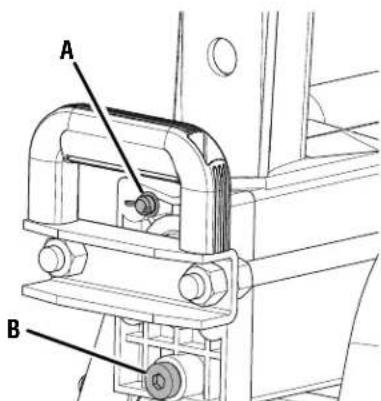
See Figures 4 - 5.

WARNING:
Ensure all hydraulic fluid system components are secured and in good condition before starting the log splitter. Keep your body and hands away from pinholes, cracked, or damaged bleed screw, oil drain bolt/dipstick, hydraulic fluid tank/bolts, fittings, or other hydraulic fluid system components. Leaks can be located by passing cardboard or wood over the suspected area. Look for discoloration. If injured by escaping fluid, see a doctor at once. Serious injury, infection, and/or reaction can develop if proper medical treatment is not administered immediately.
Never operate the log splitter until the bleed screw has been slightly loosened (one to two full turns). Air flow through the bleed screw should be detectable once the log splitter is started. If no air flow is detected, loosen the screw until the air flow can be felt.
Air must flow in and out of the oil tank during operation to prevent the seals in the hydraulic system from rupturing.
Always check the oil level before you start the log splitter.
To check the oil level:
■ Unplug the log splitter.
■ Using the lift handle, stand the log splitter up on the end with the wheels (see figure 12).
■ Using an 8 mm hex key, remove the oil drain bolt and wipe the dipstick clean.
■ Reinsert it back into the oil tank.
■ Remove the dipstick and check to see if the oil level is between the first and second groove on the dipstick.
■ If there is not enough oil in the oil tank, add oil until the proper level is reached.
If there is the proper amount of oil in the oil tank, wipe the dipstick clean, then replace it in the oil tank and tighten the oil drain bolt securely.
NOTE: See Replacing Hydraulic Oil in the Maintenance section for recommended oil or equivalents.
OPERATION
STARTING THE LOG SPLITTER
See Figures 6 - 7.

WARNING:
Operator must be positioned in the right rear area of the log splitter as facing the log splitter controls and never directly behind the ram when operating. Failure to follow these instructions could result in serious personal injury from a dislodged log or piece of wood.
NOTICE:
Failure to loosen the bleed screw prior to operation of this product may cause the seals in the hydraulic system to blow out. Blown seals could cause permanent damage to the log splitter.
■ This tool is designed for home use only.
■ Operator should be positioned in the operator zone, which is in the right rear area as facing the log splitter controls and never directly behind the ram as shown.
■ Place your left hand on the hydraulic control lever and your right hand on the on/off switch.
■ Push down and hold the on/off switch.
■ While continuing to hold down the on/off switch, push down and hold the hydraulic control lever.
NOTE: Both hands are required to start this product. The combination of both steps starts the ram which pushes the log into the wedge.
■ To stop the log splitter, release both controls to return the ram to the starting position.
NOTE: If only one hand is removed from either the switch or the lever, the log splitter will freeze in place. When both the switch and the lever are released, the ram will return to the starting position.
SPLITTING LOGS
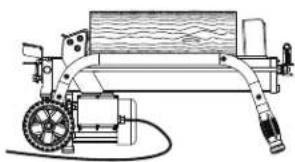
See Figures 8 - 9.

WARNING:
Never attempt to split logs larger than 10 in. in diameter or 20-1/2 in. in length. Only split dry whole logs and not partial, unevenly shaped, logs that will not sit flat on the work table, or logs that will not sit flat against the ram. Only split one log at a time and do not attempt to split stacked logs. Some types of wood are harder to split than others. If the log splitter is having trouble splitting a log, never continue to try for longer than five seconds. Failure to follow these instructions can result in the log or piece of wood dislodging and cause serious personal injury.

WARNING:
Never place your hands or any body part in between the log and ram or log and wedge or allow anyone else to hold a log that is being split. Keep children and bystanders at least 10 feet away. Contact between the moving ram and log or log and wedge can result in serious personal injury.
Only place logs onto the log splitter that have flat cuts on the ends and make sure all limbs are removed. Always place logs lengthwise so that the log will sit as evenly as possible on the work table and resting firmly on the side supports with one end against the wedge. Place logs flat and in the direction of the grain. Never angle the log to split it or place the log crosswise on the splitter. Never split more than one log at a time.
NOTICE:
Never keep pressure on the wood by trying to force the log splitter for more than five seconds. After five seconds, the oil will heat and can damage the tool.
■ Place log lengthwise and lying flat on the work table.
NOTE: If the log is small, place it against the wedge before starting the log splitter.
■ Using your right hand, push down and hold the on/off switch.
■ Push down and hold the hydraulic control lever with your left hand. With both the lever and the on/off switch activated, the ram will push the log into the wedge and split the wood.
■ Once the log is split, release both controls to return the ram to the starting position.
FREEING A JAMMED LOG
See Figures 10 - 11.
■ Release both controls.
■ Insert a wood wedge slightly under the jammed log after the ram is back at the starting position.
■ Start the log splitter to push the wood wedge completely under the jammed log until it is completely freed.
If the log is still jammed, repeat the above steps as needed using a thicker angled wood wedge until the log is completely freed.
■ Do not place the wood wedge under the log so that the log is completely lifted off of the work table.

WARNING:
Never try to knock the jammed log off the splitter. Doing so can damage the tool or could cause the log to fly up and hit someone causing serious personal injury.
MAINTENANCE

WARNING:
Before inspecting, cleaning, or servicing the unit, stop the motor, wait for all moving parts to stop, and disconnect from power supply. Failure to follow these instructions can result in serious personal injury or property damage.

WARNING:
Always wear eye protection with side shields marked to comply with ANSI Z87.1. Failure to do so could result in objects being thrown into your eyes, resulting in possible serious injury.

WARNING:
When servicing, use only identical replacement parts. Use of any other parts could create a hazard or cause product damage.
NOTICE:
Periodically inspect the entire product for damaged, missing, or loose parts such as screws, nuts, bolts, caps, etc. Tighten securely all fasteners and caps and do not operate this product until all missing or damaged parts are replaced. Please contact customer service or a qualified service center for assistance.
GENERAL MAINTENANCE
Avoid using solvents when cleaning plastic parts. Most plastics are susceptible to damage from various types of commercial solvents and may be damaged by their use. Use clean cloths to remove dirt, dust, lubricant, grease, etc.

WARNING:
Do not at any time let brake fluids, gasoline, petroleum-based products, penetrating lubricants, etc., come in contact with plastic parts. Chemicals can damage, weaken or destroy plastic which could result in serious personal injury.
LUBRICATION
All of the bearings in this tool are lubricated with a sufficient amount of high grade lubricant for the life of the unit under normal operating conditions. Therefore, no further lubrication is required.
REPLACING HYDRAULIC OIL
See Figures 12 - 13.

CAUTION:
Allow log splitter to cool off for 15 minutes after use before replacing hydraulic oil, as contact with warm hydraulic oil may cause burns.
The hydraulic oil in the log splitter should be changed every 150 hours of use.
■ Unplug the log splitter.
■ Position the log splitter so the motor end is slightly higher than the oil drain plug.
■ Using an 8 mm hex key, remove the oil drain bolt.
- Drain the used hydraulic oil from the oil tank into a four liter capacity container that is approved for containing oil.
■ Once the oil has drained from the oil tank, turn the log splitter up on the end with the wheels.
■ Refill the oil tank with fresh hydraulic oil (3.4 qts. or 3.2 l).
■ Place the cleaned dipstick into the oil tank. Remove and check the oil level.
NOTE: The oil level should be between the two grooves around the bottom of the dipstick as shown in figure 5.
■ Replace the oil drain bolt. Tighten securely.
■ Properly dispose of the used oil at an oil recycling center.
After using the log splitter for some time, it may be necessary to sharpen the wedge. Using a fine-toothed file, smooth any burrs or crushed areas along the cutting edge.
LOCKING THE LOG SPLITTER
See Figure 14.

WARNING:
To prevent unauthorized use of the log splitter when moving, storing, or leaving the machine unattended that can result in serious personal injury, disconnect it from the power supply and install a padlock (not included) through the hole in the hydraulic control lever.
TROUBLESHOOTING
| PROBLEM POSSIBLE CAUSE SOLUTION | ||
| Won't split logs Log is improperly positioned. | Refer toOperationsection for log loading. | |
| The size or hardness of the log exceeds the machine's capacity. | ||
| Wedge cutting edge is blunt. | ||
| Oil leaks. | ||
| Unauthorized adjustment was made on the Maximum Pressure Limiting Screw. Lower maximum pressure rating was set. | ||
| Log mover jerks and vibrates Lack of hydraulic oil and excessive air in the hydraulic system. | Check oil level for possible oil refilling. Contact an authorized service center. | |
| Oil leaks around cylinder ram or from other points | Air sealed in hydraulic system while operating. | Loosen bleed screw by 3 – 4 rotations before operating the log splitter. |
| Bleed screw is not tightened before moving the log splitter. | Tighten the bleed screw before moving the log splitter. | |
| Oil drain bolt is not tight. | Tighten the oil drain bolt. | |
| Hydraulic control valve assembly and/or seal(s) are worn. | Contact an authorized service center. | |
This product has a Five-year Limited Warranty for personal, family, or household use (90 days for business or commercial use).
For warranty details, visit www.ryobitools.com or call (toll free) 1-800-860-4050.
RÈGLES DE SÉCURITÉ GÉNÉRALES

AVERTISSEMENT :
0-2,0 2,1-3,4 3,5-5,0 5,1-7,0 7,1-12,0 12,1-16,0
| Longitud del cordón | Calibre conductores (A.W.G.) | ||||
| 25' | 16 | 16 | 16 | 16 | 14 |
| 50' | 16 | 16 | 16 | 14 | 14 |
| 100' | 16 | 16 | 14 | 12 | 10 |
ACOPLAMIENTO DE RUEDA
Vea la figura 3.
- PARTS AND SERVICE: Prior to requesting service or purchasing replacement parts, please obtain your item, manufacturing, and serial numbers from the product data plate.
ITEM NO.
MANUFACTURING NO.
SERIAL NO.
HOW TO OBTAIN REPLACEMENT PARTS: Replacement parts can be purchased online at www.ryobitools.com or by calling 1-800-860-4050. Replacement parts can also be obtained at one of our service centers.
HOW TO LOCATE A SERVICE CENTER: Service centers can be located online at www.ryobitools.com or by calling 1-800-860-4050.
HOW TO OBTAIN CUSTOMER OR TECHNICAL SUPPORT: To obtain customer or technical support please contact us at 1-800-860-4050.
RYOBI is a trademark of Ryobi Limited and is used pursuant to a license granted by Ryobi Limited.
- TABLE OF CONTENTS
- TABLE DES MATIÈRES
- See this fold-out section for all the figures referenced in the operator's manual.
- GENERAL SAFETY RULES
- WARNING:
- WORK AREA SAFETY
- ELECTRICAL SAFETY
- PERSONAL SAFETY
- POWER TOOL USE AND CARE
- SERVICE
- LOG SPLITTER SPECIFIC SAFETY RULES
- ADDITIONAL SAFETY RULES
- SYMBOLS
- ELECTRICAL
- EXTENSION CORDS
- ELECTRICAL CONNECTION
- SPEED AND WIRING
- GROUNDING INSTRUCTIONS
- FEATURES
- PRODUCT SPECIFICATIONS
- KNOW YOUR LOG SPLITTER
- BLEED SCREW
- HYDRAULIC CONTROL LEVER
- LIFT HANDLE
- OIL DRAIN BOLT/DIPSTICK
- SIDE SUPPORTS
- WORK TABLE
- ASSEMBLY
- UNPACKING
- PACKING LIST
- ASSEMBLING THE WHEELS
- OPERATION
- CAUTION:
- NOTICE:
- BEFORE USING THE LOG SPLITTER
- To check the oil level:
- STARTING THE LOG SPLITTER
- SPLITTING LOGS
- FREEING A JAMMED LOG
- MAINTENANCE
- GENERAL MAINTENANCE
- LUBRICATION
- REPLACING HYDRAULIC OIL
- LOCKING THE LOG SPLITTER
- TROUBLESHOOTING
- RÈGLES DE SÉCURITÉ GÉNÉRALES
- AVERTISSEMENT :
- ACOPLAMIENTO DE RUEDA
Brand : RYOBI
Model : RYAC490
Category : Log splitter