FQ-LIO 4060 - Battery For_Q - Free user manual and instructions
Find the device manual for free FQ-LIO 4060 For_Q in PDF.


User questions about FQ-LIO 4060 For_Q
0 question about this device. Answer the ones you know or ask your own.
Ask a new question about this device
Download the instructions for your Battery in PDF format for free! Find your manual FQ-LIO 4060 - For_Q and take your electronic device back in hand. On this page are published all the documents necessary for the use of your device. FQ-LIO 4060 by For_Q.
USER MANUAL FQ-LIO 4060 For_Q
c.c. (current continuu)
Accumulatorii FQ-LIO 4020, FQ-LIO 4040, FQ-LIO 4060 sunt certificati in conformitate cu standardul IEC 62133.
Incarcarea accumulatorilor se va efectua in exclusivitate cu incarcatoarele FQ-AL40135 si FQ-ASL4060 indicate.

Instruţiuni de siguranta

We are convinced that this appliance will exceed your expectations and wish you joy while using it.
Please read this user manual completely and observe the safety instructions.
Table of content
Scope of Delivery 33
Symbols 33
Technical Data 33
Safety Instructions 34
Care & Maintenance 35
Disposal 35
Product overview 36
Transport 36
Battery state of charge 36
Scope of delivery
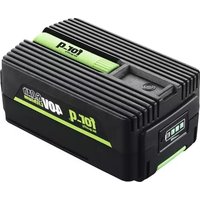
1x Battery
If any parts are missing or damaged, please contact your Hornbach Store.
Symbols

Please read this user manual carefully and keep it for further reference.

Warning of accident and injury to persons and serious damage to property.

DC (Direct current)
Technical Data
| Type FQ-LIO | 4020 | FQ-LIO 4040 | FQ-LIO 4060 | |
| Nominal voltage 40 V | 40 V | 40 V | ||
| Capacity | 2 Ah | 4 Ah | 6 Ah | |
| Operating temperature | 0 - 40°C | 0 - 40°C | 0 - 40°C | |
| Weight | 0,9 kg | 1,3 kg | 1,7 kg | |
| Battery charger | FQ-AL 40135 / FQ-ASL 4060 | |||
The batteries FQ-LIO 4020, FQ-LIO 4040, FQ-LIO 4060 are certified according to IEC 62133.
The batteries may exclusively be charged using the FQ-AL40135 and FQ-ASL4060 battery chargers.

Safety Instructions

WARNING Read all safety warnings and all instructions.
Failure to follow the warnings and instructions may result in electric shock, fire and/or serious injury.
Save all warnings and instructions for future reference.
- Never use a damaged battery.
- Do not open the battery. There is a risk of a short-circuit.
- Protect the battery from heat, e.g. from continuous exposure to sunlight, fire, water and humidity. There is a risk of explosion.
- In case of damage and improper use of the battery, vapours may be emitted. Ventilate the area and seek medical help in case of complaints. The vapours can irritate the respiratory system.
- Under abusive conditions, liquid may be ejected from the battery; avoid contact. If contact accidentally occurs, flush with water. If liquid contacts eyes, additionally seek medical help. Liquid ejected from the battery may cause irritation or burns.
- Use only original batteries with the voltage indicated on the rating plate of your electric power tool. If other batteries are used, e.g. imitations, reconditioned batteries or third-party products, there is a risk of injuries as well as damage caused by exploding batteries.
- The battery voltage must match the battery charging voltage of the battery charger. Otherwise there is a risk of fire and explosion.
- Recharge only with the charger specified by the manufacturer. A charger that is suitable for one type of battery pack may create a risk of fire when used with an
other battery pack.
- Pointed objects, such as nails or screwdrivers, or external forces may damage the battery. This may cause an internal short-circuit and the battery to burn, smoke, explode or overheat.
- When not in use, keep the battery away from paper-clips, coins, keys, nails, screws, or other small metal objects, that can cause a short-circuit at the charging contacts.
Used batteries must be disposed of safely and correctly.
For safety instructions for the battery charger please refer to the manual of the charger.
Transport
The equivalent lithium content of the batteries included in the product package is below the appropriate limit values. Therefore the battery as an individual component as well as the power tool and its product package are not subject to national or international dangerous goods regulations. If several machines with lithium ion batteries are transported, these regulations may become relevant and special safety measures may be required (e.g. for the packaging). In this case find out about the currently valid regulations for the country of use.
Danger! Do not post batteries which have a damaged casing.
Disposal
This appliance must not be disposed as unsorted municipal waste. It must be returned to a designated collection point for recycling. By doing so, you will help to conserve resources and protect the environment. Contact your local authorities for more information.
Batteries that have reached the end of their lives must be disposed of safely and correctly to avoid environmental pollution. Battery selling stores and municipal collection points offer special containers for battery disposal.
Children must not play with plastic bags and packaging material, due to possible injury or danger of suffocation. Store such material safely or dispose of environmentally friendly.
Product overview
1 Battery
2 LED indicator
3 Contacts
4 Release button
5 Indicator button for state of charge

0^ C or above 40^ C .
Caution! Never charge bat
teries at temperatures below
0^ C or above 40^ C .

Caution! Do not charge bat
teries in an environment
which has high air humidity or at a
high ambient temperature.
Care & Maintenance
- Battery and charger heat up during the charging process. This is perfectly normal!
- Lithium ion batteries do not exhibit the well known "memory effect". Nevertheless, before a battery is recharged, it should be fully discharged and the charging process always run to the end.
- Follow the instructions for charging the battery in the operating instructions of the battery charger.
- Reduced operating times after recharging indicate that the battery is worn out. The battery must be replaced. If the batteries are not used for a prolonged period, store batteries partially charged and in a cool location (10 - 25^) .
Battery state of charge
Press the button 5 to check the state of charge on LED indicator 2.
The LED indicator 2 turns off after 5 seconds.

Warning! Do not cover bat
teries and/or the battery
charger during the charging process.
2 The LED indicator 2 shows the different states of charge as shown in the pictures.
If the LED flashes, the battery must be recharged.
If the LED does not light up after the button is pressed, the battery is faulty and must be replaced.