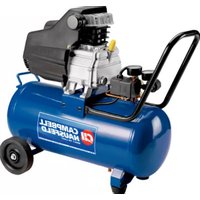
HL5401 - Compressor Campbell Hausfeld - Free user manual and instructions
Find the device manual for free HL5401 Campbell Hausfeld in PDF.


User questions about HL5401 Campbell Hausfeld
0 question about this device. Answer the ones you know or ask your own.
Ask a new question about this device
Download the instructions for your Compressor in PDF format for free! Find your manual HL5401 - Campbell Hausfeld and take your electronic device back in hand. On this page are published all the documents necessary for the use of your device. HL5401 by Campbell Hausfeld.
USER MANUAL HL5401 Campbell Hausfeld
Operating Instructions HL5401, HX5400 Series
Please read and save these instructions. Read carefully before attempting to assemble, install, operate or maintain the product described. Protect yourself and others by observing all safety information. Failure to comply with instructions could result in personal injury and/or property damage! Retain instructions for future reference.

CAMPBELL HAUSFELD®
Oil-Lubricated Compressors
Description
This residential oil-lubricated compressor is designed for do-it-yourselfers with a variety of home and automotive jobs. These compressors power spray guns, impact wrenches and other tools. Compressed air from this unit will contain moisture. Install a water filter or air dryer if application requires dry air.
Unpacking
After unpacking the unit, inspect carefully for any damage that may have occurred during transit. Make sure to tighten fittings, bolts, etc., before putting unit into service. In case of questions, damaged or missing parts, please call 1-800-543-6400 for customer assistance. Have the serial number, model number, and parts list (with missing parts circled) before calling.

DO NOT RETURN THE PRODUCT TO THE RETAILER!
Do not operate unit WARNING
if damaged during
shipping, handling or use. Damage may result in bursting and cause injury or property damage.
READ & FOLLOW ALL INSTRUCTIONS SAVE THESE INSTRUCTIONS DO NOT DISCARD
natural_image
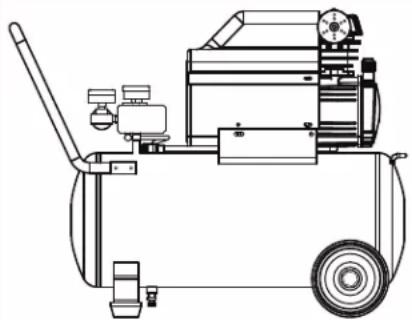
Technical line drawing of a mechanical device with wheels and control components (no text or symbols)Record the Model No., Serial No. and date of purchase located on the base below the pump in the space below.
Model No. HL5401
Serial No. ____
Date of purchase ____
Retain these numbers for future reference.
Safety Guidelines
This manual contains information that is very important to know and understand. This information is provided for SAFETY and to PREVENT EQUIPMENT PROBLEMS. To help recognize this information, observe the following symbols.
DANGER
an imminently
hazardous situation which, if not avoided, WILL result in death or serious injury.
Warning Indicates WARNING
a potentially
hazardous situation which, if not avoided, COULD result in death or serious injury.
DANGER
Breathable Air Warning
This compressor / pump is not equipped and should not be used "as is" to supply breathing quality air. For any application of air for human consumption, the air compressor / pump will need to be fitted with suitable in-line safety and alarm equipment. This additional equipment is necessary to properly filter and purify the air to meet minimal specifications for Grade D breathing as described in Compressed Gas Association Commodity Specification G 7.1 - 1966, OSHA 29 CFR 1910. 134, and / or Canadian Standards Associations (CSA).
DISCLAIMER OF WARRANTIES In the event the compressor is used for the purpose of breathing air application and proper in-line safety and alarm equipment is not simultaneously used, existing warranties shall be voided, and the manufacturer disclaims any liability whatsoever for any loss, personal injury or damage.
Caution indicates CAUTION
a potentially
hazardous situation which, if not avoided, MAY result in minor or moderate injury.
Notice Indicates NOTICE
important
information, that if not followed, may cause damage to equipment.
NOTE: Information that requires special attention.
REMINDER: Keep your dated proof of purchase for warranty purposes!
Attach it to this manual or file it for safekeeping.
General Safety Information CALIFORNIA PROPOSITION 65
This product or its WARNING
power cord may
contain chemicals, including lead, known to the State of California to cause cancer and birth defects or other reproductive harm. Wash hands after handling.
You can WARNING
create
dust when you cut, sand, drill or grind materials such as wood, paint, metal, concrete, cement, or other masonry. This often contains chemicals known cause cancer, birth defects, or reproductive harm. Wear prot gear.

GENERAL SAFETY
Since the air compressor and other components (material pump, spray guns, filters, lubricators, hoses, etc.) used, make up a high pressure pumping system, the following safety precautions must be observed at all times:
Do not run WARNING
unattended. Leaving
compressor in AUTO position may allow it to turn on inadvertently. To prevent this and possible damage from power surge, turn to OFF position after each use.
- Read all manuals included with this product carefully. Be thoroughly familiar with the controls and the proper use of the equipme
-
Follow all local electrical and safety codes as well as in the United States, the National Electrical Codes (NEC) and Occupational Safety and Health Act (OSHA).
-
Only persons well acquainted with these rules of safe operation should be allowed to use the compressor.
-
Keep visitors away and NEVER allow children in the work area.
-
Wear safety glasses and use hearing protection when operating the unit.
-
Do not stand on or use the unit as a handhold.
-
Before each use, inspect compressed air system and electrical components for signs of damage, deterioration, weakness or leakage. Repair or replace defective items before using.
-
Check all fasteners at frequent intervals for proper tightness.
Motors. WARNING
electrical

equipment and controls can cause electrical arcs that will ignite a flammable gas or vapor. Never operate or repair in or near a flammable gas or vapor. Never store flammable liquids or gases in the vicinity of the compressor.
CAUTION
Compressor parts may be hot even if the unit is stopped.

-
Keep fingers away from a running compressor; fast moving and hot parts will cause injury and/or burns.
-
If the equipment should start to vibrate abnormally, STOP the engine/motor and check immediately for the cause. Vibration is generally a warning of trouble.
-
To reduce fire hazard, keep engine/motor exterior free of oil, solvent, or excessive grease.

Never remove or WARNING
attempt to adjust
safety valve. Keep safety valve free from paint and other accumulations.
Never use plastic WARNING
(PVC) pipe for
compressed air. Serious injury or death could result.
DANGER
attempt
to repair or modify a tank! Welding, drilling or any other modification will weaken the tank resulting in damage from or explosion. Always replace v cracked or damaged tanks.

Drain liquid from NOTICE
tank daily.
- Tanks rust from moisture build-up, which weakens the tank. Make sure to drain tank regularly and inspect periodically for unsafe conditions such as rust formation and corrosion.
- Fast moving air will stir up dust and debris which may be harmful. Release air slowly when draining moisture or depressurizing the compressor system.
SPRAYING PRECAUTIONS
Do not WARNING
spray
flammable materials in vicinity of open flame or near ignition sources including the compressor unit.


- Do not smoke when spraying paint, insecticides, or other flammable substances.
- Use a face mask / respirator when spraying and spray in a well ventilated area to prevent health and fire hazards.
- Do not direct paint or other sprayed material at the compressor. Locate compressor as far away from the spraying area as possible to minimize overspray accumulation on the compressor.
- When spraying or cleaning with solvents or toxic chemicals, follow the instructions provided by the chemical manufacturer.
Assembly
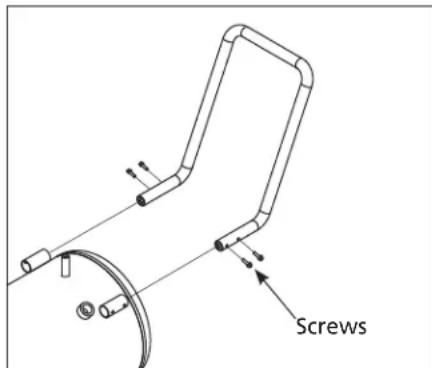
HANDLE ASSEMBLY (Figure 1)
- Place ends of handle around tank and into the mounting pipe. Align holes in handle to holes in mounting pipe.
- Assemble four (4) screws (from parts package) through holes in mounting pipe and handle. Tighten screws.
Never use the WARNING
handle to lift the unit completely off the ground. Only use the handle to lift one end so the wheels may be used to move the unit.
text_image
ScrewsFigure 1 - Handle Assembly
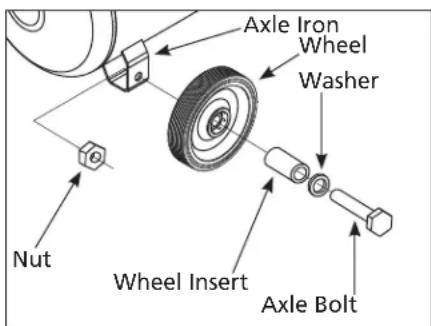
WHEEL ASSEMBLY (Figure 2)
Wheel assembly kit includes:
- 2 wheels *
- 2 axle bolts *
- 2 washers *
- 2 nuts *
- 2 wheel inserts *
The items marked with an asterisk (*) were shipped loose with the unit.
- Wheel has an offset hub. Place wheel insert into center of hub. With offset hub facing axle iron, assemble axle bolt through washer and then holes in wheel and axle iron.
- Place lock washer on axle bolt. Then tighten nut securely to threaded part of axle bolt.
- Repeat procedure with other side.
text_image
Nut Wheel Insert Axle Iron Wheel Washer Axle BoltFigure 2 - Wheel Assembly
LUBRICATION
THIS UNIT IS SHIPPED CAUTION WITHOUT OIL!
Follow lubrication instructions before operating compressor.
Use oil shipped with the compressor. Do not use regular automotive oil such as 10W-30. Additives in regular motor oil can cause valve deposits and reduce pump life. For maximum pump life, drain and replace oil after the first hour of run time.
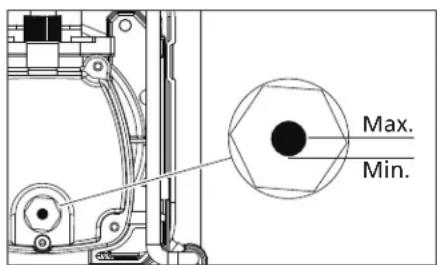
The compressor pump takes approximately 165mL (5.6 oz.) of oil. The sight glass, located on the crankcase portion of the pump, is used to determine proper oil level. Fill the crankcase with oil until the level is in the middle of the sight glass. Avoid overfilling by adding oil gradually and checking the oil level with the sight glass several times. Add enough oil to reach the "max" level on the sight glass. Proper oil level is illustrated in Figure 3.
text_image
Max. Min.Figure 3 - Proper Oil Level
INTAKE FILTER
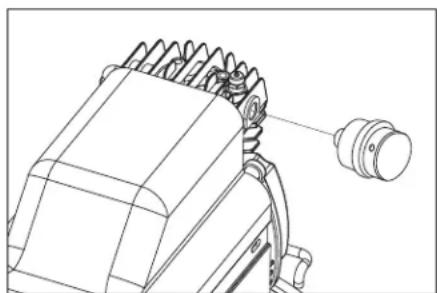
Thread the intake air filter into the threaded opening in the side of the compressor head as illustrated in Figure 4.
natural_image
Technical line drawing of a mechanical component with threaded ends and a cylindrical pin (no text or symbols)Figure 4 - Intake Filter Installation
text_image
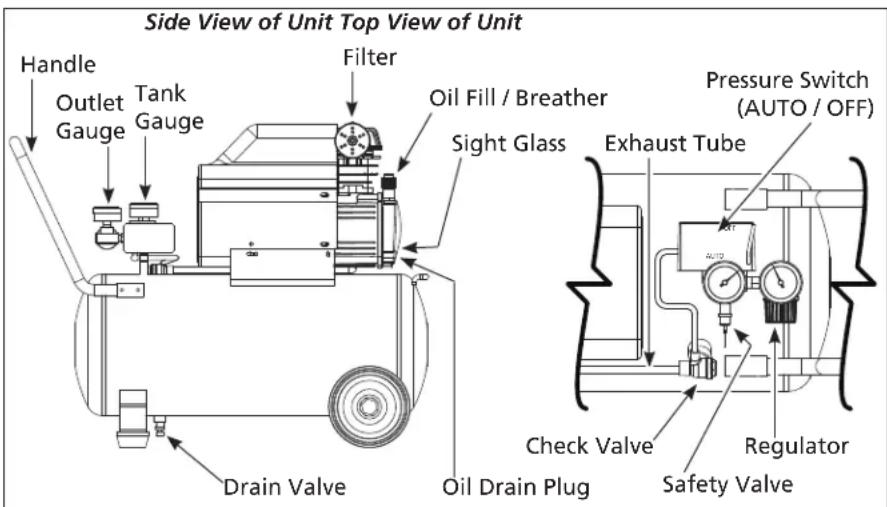
Side View of Unit Top View of Unit Handle Outlet Gauge Tank Gauge Filter Oil Fill / Breather Sight Glass Exhaust Tube Pressure Switch (AUTO / OFF) Check Valve Regulator Safety Valve Oil Drain Plug Drain ValveFigure 5 - Unit Identification
Introduction
Refer to Figure 5 to locate the following items.
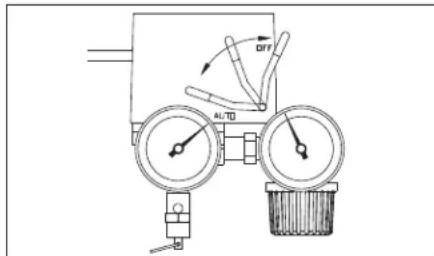
Pressure Switch - Auto/Off Switch - In the "AUTO" position, the compressor shuts off automatically when tank pressure reaches the maximum preset pressure. In the "OFF" position, the compressor will not operate. This switch should be in the "OFF" position when connecting or disconnecting the power cord from the electrical outlet.
text_image
OFF AL-TDFigure 6 - Auto / Off Switch
Regulator - The regulator controls the amount of air pressure at the hose outlet.
ASME Safety Valve - This valve automatically releases air if the tank pressure exceeds the preset maximum.
Exhaust Tube - This tube carries compressed air from the pump to the check valve. This tube becomes very hot during use. To avoid the risk of severe burns, never touch the discharge tube.
Check Valve - One-way valve that allows air to enter the tank, but prevents air in the tank from flowing back into the compressor pump.
Handle - Designed to move the compressor.
Never use the ▲WARNING handle on wheeled units to lift the unit completely off the ground.
Drain Valve - This valve is located on the bottom of the tank. Use this valve to drain moisture from the tank daily to reduce the risk of corrosion.
Pressure Gauges - These gauges will show air pressure in the compressor tank and at the compressor outlet.
Outlet Pressure Gauge - Will show air pressure at the outlet in pounds per square inch (psi). Make sure this gauge reads ZERO (by adjusting regulator knob fully counterclockwise) before changing air tools or disconnecting air hose from outlet.
Tank Pressure Gauge - Will show air pressure in tank while the compressor is running, indicating compressor is building pressure properly. This gauge will show maximum pressure of compressor when it shuts off automatically at the pressure switch.
Motor Reset - (not shown, located inside motor). Designed to keep the motor from overheating. The motor has an auto reset protector. To reset once the motor has cooled, turn the pressuer switch to the OFF position, then to the AUTO position.
This compressor is CAUTION
equipped with an
overload protector which will shut off motor if it becomes overloaded.
If the overload CAUTION
protector is
actuated, the motor must be allowed to cool down for approximately 30 minutes before it will reset.
Installation
LOCATION
It is extremely important to install the compressor in a clean, dry, and well ventilated area. The compressor must be placed on a firm, level surface where the surrounding air temperature will not be more than 100^ F.
A minimum clearance of 18 inches between the compressor and a wall is required because objects could obstruct air flow.
Do not locate the CAUTION
compressor air inlet
near steam, paint spray, sandblast areas or any other source of contamination. This debris will damage the motor.
ELECTRICAL INSTALLATION
All wiring WARNING
and
electrical connections should be performed by a qualified electrician. Installation must be in accordance with local co-national electrical codes.

WIRING
- Local electrical wiring codes differ from area to area. Source wiring, plug and protector must be rated for at least the amperage and voltage indicated on motor nameplate, and meet all electrical codes for this minimum.
- Use a slow blow fuse or a circuit breaker.
- This product is for use on a nominal 120 volt circuit and has a grounding plug that looks like the plug illustrated in Figure 7. Make sure the product is connected to an outlet having the same configuration as the plug. This product must be grounded. In the event of an electrical short circuit, grounding reduces risk of electrical shock by providing an escape wire for electric current. This product is equipped with a cord having a grounding wire with an appropriate grounding plug. Plug must be plugged into an outlet that is properly installed and grounded in accordance with all local codes and ordinances.
Overheating short CAUTION
circuiting and fire
damage will result from inadequate wiring.
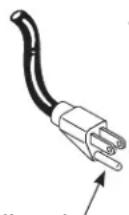
Grounded Outlet

Grounding Pin
Figure 7 - Grounding Method
Minimum Gauge of Extension Cord
| 25 ft. 50 ft. 100 ft.14 12 10 | |
| Use of an extension cord may cause excess heat to motor. This could lead to tripped breaker (at electrical panel) or tripped thermal overload (on compressor motor).If this occurs, eliminate extension cord and plug compressor directly into electrical outlet. Avoid using extension cords; use longer air hose(s) instead. | |
Operation
BEFORE FIRST START-UP BREAK-IN PROCEDURE
(Complete this procedure before using compressor for the first time. Once completed, it is not necessary to repeat.)
- Open drain valve located on bottom of tank.
- Turn ON / OFF switch to OFF position.
- Plug in power cord.
- Turn ON / OFF switch to ON position and run compressor for 30 minutes.
- Turn ON / OFF switch to OFF position.
- Unplug power cord.
- Close drain valve.
The compressor is now ready for use.
OPERATING PROCEDURE
- Turn switch to OFF position and plug in power cord.
- Turn regulator knob counterclockwise to close air flow.
- Turn switch to AUTO position.
- Compressor will build to maximum pressure and shut off.
- With hose attached to outlet of compressor, attach tire chuck or other tool to open end of hose.
- Adjust regulator to proper pressure for tool or tire. Operate tool per instructions.
As air is depleted from the tank by use of a tire chuck, tool, etc., the compressor will restart automatically at its preset "cut-in" pressure. When a tool is being used continuously, the compressor will cycle on and off automatically.
- Turn switch to OFF position, unplug power cord and drain tank of air when finished using compressor.
Maintenance
WARNING
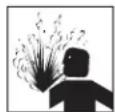
Disconnect, tag and lock out power source, then release all pressure from the system before attempting to install, relocate or perform any main
Check compressor often for any visible problems and follow maintenance procedures each time compressor is used.
ASME SAFETY VALVE
Do not remove or WARNING
attempt to adjust
the safety valve!
Check the safety valve by performing the following steps:
- Plug the compressor in and run until shut off pressure is reached.
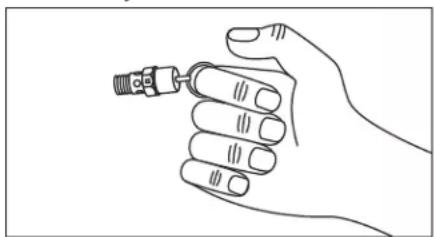
- Wearing safety glasses, pull the ring on the safety valve to release pressure from compressor tank. Use your other hand to deflect fast-moving air from being directed toward your face.
natural_image
Line drawing of a hand holding a small electronic component (no text or symbols)Figure 8
- The safety valve should automatically close at approximately 40 psi - 50 psi. If the safety valve does not allow air to be released when you pull on the ring, or if it does not close automatically, it MUST be replaced.
Safety valve mus WARNING
replaced if it cannot
be actuated or it leaks air after ring is released.
DRAIN TANK
- Turn compressor off and release pressure from system. (To release pressure from system, pull ring on ASME safety valve. Deflect escaping air by shielding valve with one hand as you pull ring with other hand.) Pull ring until tank is empty.
A large amount of CAUTION
fast moving air will
be released when the safety valve is opened with pressure in the tank. Wear ANSI approved Z87.1 safety glasses.
- Drain moisture from tank by opening drain valve underneath tank. Tilt tank to remove all moisture.
- Clean dust and dirt from tank, air lines and pump cover while compressor is still OFF.
OIL CHANGE
- Allow compressor to run and warm up oil. Unplug unit.
- Position a pan under pump end of unit.
- Remove drain plug. Allow oil to collect in pan. Tilt unit to completely drain.
- Replace drain plug, fill pump to center of sight glass. Use Chevron synthetic 5W-30, Mobil 1 5W-30 or 10W-30 synthetic motor oil. Using other types of oil will cause starting problems.
- Change oil after every 50 hours of use.
Maintenance (Continued)
INTAKE AIR FILTER MAINTENANCE
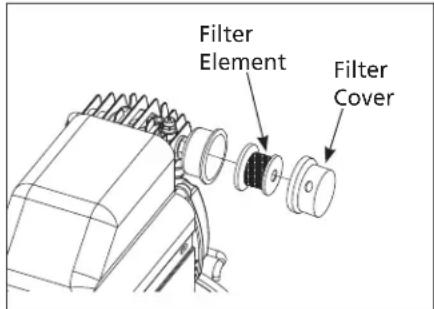
Removal, Inspection and Replacement (Figure 9).
text_image
Filter Element Filter CoverFigure 9 - Intake Filter Maintenance
The intake filter element should be removed and checked periodically. A clogged intake filter can decrease compressor performance and cause the compressor to overheat.
- Rotate the filter cover counterclockwise and remove.
- Remove the filter element and inspect.
- If the filter element is dirty or clogged, replace it.
- Reinstall filter and cover.
IMPORTANT: Locate unit as far from spraying area as hose will allow to prevent overspray from clogging filter.
- Turn AUTO/OFF switch to the OFF position.
- Unplug power cord from wall outlet and wrap around handle to prevent damage when not in use.
- Wearing safety glasses drain tank of air by pulling the ring on the safety valve. Use other hand to deflect fast moving air from being directed toward your face.
- Drain tank of condensation by opening drain valve on bottom of tank. Tank pressure should be below 10 psi when draining tank.
- Air hose should be disconnected from compressor and hung open ends down to allow any moisture to drain.
- Compressor and hose should be stored in a cool, dry place.
TECHNICAL SERVICE
For information regarding the operation or repair of this product, please call 1-800-543-6400.
MOISTURE IN COMPRESSED AIR
Moisture in compressed air will form into droplets as it comes from an air compressor pump. When humidity is high or when a compressor is in continuous use for an extended period of time, this moisture will collect in the tank. When using a paint spray or sandblast gun, this water will be carried from the tank through the hose, and out of the gun as droplets mixed with the spray material.
IMPORTANT: This condensation will cause water spots in a paint job, especially when spraying other than water based paints. If sandblasting, it will cause the sand to cake and clog the gun, rendering it ineffective. A filter in the air line, located as near to the gun as possible, will help eliminate this moisture.
| MAINTENANCE SCHEDULE | |
| OPERATION DAILY WEEKLY MONTHLY 3 MONTHS | |
| CHECK OIL LEVEL | ● |
| DRAIN TANK | ● |
| CHECK AIR FILTER | ● |
| CHECK SAFETY VALVE | ● |
| CLEAN UNIT | ● |
| CHANGE OIL | ● |
notes
Troubleshooting Chart
| Symptom Possible Cause(s) Corrective Action | ||
| Compressor will not run | 1. No electrical power 1. Plugged in? Switch on? Check fuse/breaker2. Breaker open 2. Reset, determine cause of problem3. Pressure switch bad 3. Replace4. Motor over worked 4. Turn off, let cool, turn on.5. Tank pressure above cut-in 5. Bleed tank pressure down to cut-in. | |
| Fuses blow / circuit breaker trips repeatedly | 1. Incorrect size fuse, circuit overloaded2. Extension cord usage - wrong gauge wire and/or too long.3. Worn check valve 3. Replace check valve.4. Defective unloader valve (on pressure switch)5. Defective motor capacitor(s) 5. Replace capacitor(s)6. Defective motor 6. Replace motor | 1. Check for proper fuse, use time-delay fuse. Disconnect other electrical appliances from circuit or operate compressor on its own branch circuit.2. Remove extension cord or refer to Extension Cord Chart on page 4. |
| Tank pressure drops when compressor shuts off | 1. Loose connections (fittings, tubing, etc.)2. Open tank drain valve 2. Close tank drain valve3. Tank leaks 3. Check tank for leaks with soap and water solution. If leak is detected, tank must be replaced with genuine replacement part. | 1. Check all connections with soap and water solution. Tighten; or remove and apply pipe dope or pipe tape to the threads, then reassemble.2. Open tank drain valve 2. Close tank drain valve3. Tank leaks 3. Check tank for leaks with soap and water solution. If leak is detected, tank must be replaced with genuine replacement part. |
| Compressor runs continuously and / or air output is lower than normal / low discharge pressure | 1. Excessive air usage2. Clogged intake filter3. Open tank drain valve 3. Close tank drain valve4. Air leaks in piping (on machine or in outside system)5. Piston ring worn6. Broken valve (in pump)7. Tank leaks 7. Check tank for leaks with soap and water solution. If leak is detected, tank must be replaced with genuine replacement part.8. Defective pressure switch | 1. Decrease air usage; compressor not large enough for air requirement2. Clean or replace filter3. Clean or replace filter4. Check all connections with soap and water solution. Tighten; or remove and apply pipe dope or pipe tape to the threads, then reassemble.5. Replace piston and cylinder.6. Replace valve7. Make piston and cylinder. If leak is detected, tank must be replaced with genuine replacement part.8. Replace switch |
| Excessive moisture in discharge air | 1. Excessive water in tank2. High humidity | 1. Drain tank2. Move to area of less humidity; use air line filter |
Troubleshooting Chart (Continued)
Symptom Possible Cause(s) Corrective Action
| Tank pressure drops when compressor shuts off | 1. Circuit overloaded 1. Disconnect other electrical appliances from circuit or operate compressor on its own branch circuit | |
| 2. Low voltage 2. Check voltage at wall outlet with voltmeter. | ||
| 3. Extension cord usage - wrong gauge wire and/or too long. | 3. Remove extension cord or refer to Extension Cord Chart on page 4 | |
| 4. Loose electrical connections 4. Check all electrical connections | ||
| 5. Worn check valve 5. Replace check valve | ||
| ▲DANGER▲ple check valve with air pressure in tank; bleed tank. | ||
| 6. Defective unloader valve (on pressure switch) | 6. Replace unloader valve | |
| 7. Defective motor capacitor(s) 7. Replace capacitor(s) | ||
| 8. Defective motor 8. Replace motor | ||
| Compressor runs continuously and air output is lower than normal/low discharge pressure | 1. Lack of proper ventilation / room temperature too high | 1. Move compressor to well ventilated area |
| 2. Clogged intake filter 2. Clean or replace filter | ||
| 3. Circuit overloaded 3. Check for proper fuse, use time-delay fuse. Disconnect other electrical appliances from circuit or operate compressor on its own branch circuit | ||
| 4. Extension cord usage - wrong gauge wire and/or too long. | 4. Remove extension cord or refer to Extension Cord Chart on page 4 | |
| 5. Worn check valve 5. Replace check valve | ||
| ▲DANGER▲ple check valve with air pressure in tank; bleed tank. | ||
| 6. Defective unloader valve (on pressure switch) | 6. Replace unloader valve. | |
| 7. Defective motor 7. Replace motor | ||
| Knocks, rattles, and/or excessive vibration | 1. Loose mounting bolts 1. Tighten bolts. | |
| 2. Tank not level 2. Use sturdy wedge/object to bring tank to level position. | ||
| 3. Cylinder or piston is worn/ scored | 3. Replace or repair as necessary. | |
| Compressor runs continuously and safety valve opens as pressure rises | 1. Defective pressure switch 1. Replace switch. | |
| 2. Defective safety valve 2. Replace safety valve with genuine replacement part. | ||
| Air leaking from unloader valve on pressure switch | 1. Check valve stuck in an open position | 1. Replace check valve. |
| 2. Unloader valve stuck in open position | 2. Replace unloader valve. | |
| ▲DANGER▲ple check valve with air pressure in tank; bleed tank. | ||
Limited Warranty
- DURATION: From the date of purchase by the original purchaser as follows: One Year.
- WHO GIVES THIS WARRANTY (WARRANTOR):
Campbell Hausfeld / Scott Fetzer Company, 100 Production Drive, Harrison, Ohio, 45030, Telephone: (800) 543-6400 - WHO RECEIVES THIS WARRANTY (PURCHASER): The original purchaser (other than for purposes of resale) of the Campbell Hausfeld compressor.
- WHAT PRODUCTS ARE COVERED BY THIS WARRANTY: Any Campbell Hausfeld air compressor.
- WHAT IS COVERED UNDER THIS WARRANTY: Parts and Labor to remedy substantial defects due to material and workmanship during the first year of ownership with the exceptions noted below. Parts only to remedy substantial defects due to material and workmanship during remaining term of coverage with exceptions noted below.
- WHAT IS NOT COVERED UNDER THIS WARRANTY:
A. Implied warranties, including those of merchantability and FITNESS FOR A PARTICULAR PURPOSE ARE LIMITED FROM THE DATE OF ORIGINAL PURCHASE AS STATED IN THE DURATION. If the compressor is used for commercial, industrial or rental purposes, the warranty will apply for ninety (90) days from the date of purchase. Two-stage compressors are not limited to a ninety (90) day warranty when used in commercial or industrial applications. Some States do not allow limitations on how long an implied warranty lasts, so the above limitations may not apply to you
B. ANY INCIDENTAL, INDIRECT, OR CONSEQUENTIAL LOSS, DAMAGE, OR EXPENSE THAT MAY RESULT FROM ANY DEFECT, FAILURE, OR MALFUNCTION OF THE CAMPBELL HAUSFELD PRODUCT. Some States do not allow the exclusion or limitations of incidental or consequential damages, so the above limitation or exclusion may not apply to you.
C. Any failure that results from an accident, purchaser's abuse, neglect or failure to operate products in accordance with instructions provided in the owner's manual(s) supplied with compressor.
D. Pre-delivery service, i.e. assembly, oil or lubricants, and adjustment.
E. Items or service that is normally required to maintain the product, i.e. lubricants, filters and gaskets, etc.
F. Gasoline engines and components are expressly excluded from coverage under this limited warranty. The Purchaser must comply with the warranty given by the engine manufacturer which is supplied with the product
G. Additional items not covered under this warranty:
- Excluded items pertaining to All Compressors
a. Any component damaged in shipment or any failure caused by installing or operating unit under conditions not in accordance with installation and operation guidelines or damaged by contact with tools or surroundings.
b. Pump or valve failure caused by rain, excessive humidity, corrosive environments or other contaminants.
c. Cosmetic defects that do not interfere with compressor functionality.
d. Rusted tanks, including but not limited to rust due to improper drainage or corrosive environments.
e. The following components are considered normal wear items and are not covered after the first year of ownership. Electric motor, check valve, pressure switch, regulator, pressure gauges, hose, tubing, pipe, fittings and couplers, screws, nuts, hardware items, belts, pulleys, flywheel, air filter and housing, gaskets, seals, oil leaks, air leaks, oil consumption or usage, piston rings.
f. Tank drain valves.
g. Damage due to incorrect voltage or improper wiring.
h. Other items not listed but considered general wear parts.
i. Pressure switches, air governors, load/unload devices, throttle control devices and safety valves modified from factory settings.
j. Damage from inadequate filter maintenance.
k. Induction motors operated with electricity produced by a generator.
- Excluded items specific to Lubricated Compressors:
a. Pump wear or valve damage caused by using oil not specified.
b. Pump wear or damage caused by any oil contamination.
c. Pump wear or damage caused by failure to follow proper oil maintenance guidelines, operation below proper oil level or operation without oil.
H. Labor, service call, or transportation charges after the first year of ownership of stationary compressors. Stationary compressors are defined as not including a handle or wheels.
- RESPONSIBILITIES OF WARRANTOR UNDER THIS WARRANTY: Repair or replace, at Warrantor's option, compressor or component which is defective, has malfunctioned and/or failed to conform within duration of the warranty period.
- RESPONSIBILITIES OF PURCHASER UNDER THIS WARRANTY:
A. Provide dated proof of purchase and maintenance records.
B. Call Campbell Hausfeld (800-543-6400) to obtain your warranty service options. Freight costs must be borne by the purchaser.
C. Use reasonable care in the operation and maintenance of the products as described in the owner's manual(s).
D. Repairs requiring overtime, weekend rates, or anything beyond the standard manufacturer warranty repair labor reimbursement rate.
E. Time required for any security checks, safety training, or similar for service personnel to gain access to facility.
F. Location of unit must have adequate clearance for service personnel to perform repairs and easily accessible.
- WHEN WARRANTOR WILL PERFORM REPAIR OR REPLACEMENT UNDER THIS WARRANTY: Repair or replacement will be scheduled and serviced according to the normal work flow at the servicing location, and depending on the availability of replacement parts.
This Limited Warranty applies in the U.S., Canada and Mexico only and gives you specific legal rights. You may also have other rights which vary from State to State or country to country.
NE PAS RENVOYER LE PRODUIT AU MARCHAND!
natural_image
Technical line drawing of a mechanical device with wheels and control components (no text or symbols)natural_image
Technical line drawing of a mechanical component with threaded ends and a separate cylindrical component (no text or symbols)Figure 4 - Installation du Filtre D'aspiration
Installation (Suite)
natural_image
Line drawing of a hand holding a small electronic component (no text or symbols)Figure 8
NE PAS RENVOYER LE PRODUIT AU MARCHAND!
natural_image
Technical line drawing of a mechanical device with wheels and control components (no text or symbols)natural_image
Technical line drawing of a mechanical component with threaded ends and a cylindrical pin (no text or symbols)natural_image
Line drawing of a hand holding a small mechanical component (no text or symbols)Figura 8
Date Maintenance Performed Repair Components Required


