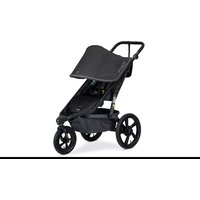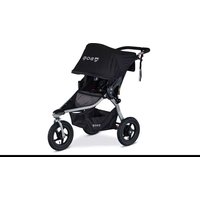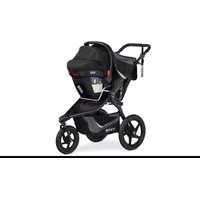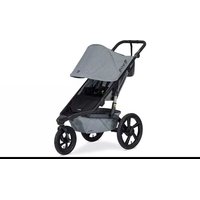
Alterrain - Stroller BOB Gear - Free user manual and instructions
Find the device manual for free Alterrain BOB Gear in PDF.


| Product type | All-terrain stroller |
| Brand | BOB Gear |
| Model | Alterrain |
| Maximum child weight | 34 kg (75 lb) |
| Maximum child height | 112 cm (44 in) |
| Recommended age | From 0 to 5 years (walking from birth with car seat, jogging from 8 months) |
| Storage basket capacity | 4.5 kg (10 lb) |
| Seat back pocket capacity | 1 kg (2 lb) |
| Canopy pocket capacity | 0.45 kg (1 lb) |
| Wheel type | Pneumatic (max pressure 30 psi) |
| Brakes | Foot parking brake, hand brake on handlebar |
| Harness | Adjustable height 5-point harness |
| Seat recline | Strap recline (multiple positions) |
| Handlebar | Height adjustable |
| Canopy | Removable, with viewing window and storage flaps |
| Fold | Compact fold (stands upright), chassis lock |
| Suspension | Rear suspension for added comfort |
| Usage mode | Walking (swivel front wheel) and jogging/off-road (locked front wheel) |
| Compatible accessories | Car seat adapter, BOB Gear accessories (visit) |
| Warranty | Frame: 5 years; components and fabrics: 1 year (tires excluded) |
| Cleaning | Sponge with mild soap solution and cold water, air dry |
| Certifications | Complies with applicable safety standards |
Frequently Asked Questions - Alterrain BOB Gear
User questions about Alterrain BOB Gear
0 question about this device. Answer the ones you know or ask your own.
Ask a new question about this device
Download the instructions for your Stroller in PDF format for free! Find your manual Alterrain - BOB Gear and take your electronic device back in hand. On this page are published all the documents necessary for the use of your device. Alterrain by BOB Gear.
USER MANUAL Alterrain BOB Gear
natural_image
Illustration of a stroller with adjustable seat and wheels (no text or symbols)ALTERRAIN™
USER GUIDE
GUIDE DE L'UTILISATEUR
GUÍA DEL USUARIO

natural_image
Abstract shield-shaped logo with mountain and river design (no text or symbols)WELCOME TO BOB GEAR
BOB Gear® recommends that you register your stroller at bobgear.com/registration. This will allow us to notify you directly if there are any product recalls.
For updates to this user guide, warranty and other recent product notifications, please visit bobgear.com periodically or any time before making approved changes or adding approved equipment to your stroller.
Contents
Safety Information....2
Warnings....2
Notes....3
Stroller Features ....4
Age Guidelines....5
Stroller Assembly ....5
Unpacking the Stroller 5
Installing/Removing Wheels....5
Installing/Removing Canopy....7
Stroller Operation....8
Unfolding and Folding......8
Walk or Jog Mode....10
Checking Tire Pressure....10
Adjusting the Tracking 10
Setting the Parking Brake....12
Securing the Child in the Seat 12
Using the Wrist Strap....13
Reclining the Seat....14
Positioning the Canopy....14
Adjusting Handle Position....14
Care and Maintenance....15
Cleaning....15
Regular Inspections 15
Stroller Accessories....15
Warranty 15
Notes 17
Safety Information
WARNING!
Failure to follow all warnings and instructions could result in SERIOUS INJURY or DEATH.
Read these instructions carefully before using this product. To ensure proper use, store this user guide in a convenient place so it can be consulted often.
- Never leave child unattended.
- The maximum weight capacity of the stroller (child plus luggage weight) is 75 lbs (34 kg). Maximum child height is 44 inches (112 cm). Do not exceed the maximum weight or height, as stroller will become unstable and tip resulting in serious injury.
- Avoid serious injury from falling or sliding out. Always use seat harness.
- DO NOT attach parcels or bags to the handlebar or frame of stroller except those recommended by BOB Gear by Britax, as stroller can become unstable and tip over.
- Child may slip into leg openings and strangle. Never use in reclined position unless child is harnessed.
- DO NOT overload the seat back pocket. Maximum weight is 2 lbs (1 kg). Overloading the seat back pocket may cause the stroller to become unstable.
- FALL HAZARD - Wheel can detach and cause tip over. Pull on the wheel to assure it is securely attached.
- DO NOT overload the low boy cargo basket. Maximum weight is 10 lbs (4.5 kg).
- FALL HAZARD from tip over - Before running, jogging, or walking fast, LOCK the front wheel from swiveling.
- Do not overload the canopy pocket. Maximum weight is 1 lb (0.45 kg). Overloading the canopy pocket may cause the stroller to become unstable and tip over.
- Avoid finger entrapment or injury. Always ensure any child occupants or bystanders are away from the stroller while folding or unfolding.
- DO NOT park on inclines. The parking brake is intended to park the stroller on flat surfaces only. Parking on inclines may result in tip over or runaway stroller.
- The parking brake is not designed as a stopping brake. The parking brake should not be used to slow or stop the stroller because doing so could cause the stroller to stop abruptly, resulting in loss of control.
• Always set the parking brake when stroller is not moving.
- Never load or unload the stroller without the parking brake set.
- Never use with low tire pressure or deflated tires as this could result in loss of control. Inflating tires above the maximum inflation pressure embossed on the tire can damage the rim and/or tire, resulting in loss of control and injury.
- Use extreme caution when using stroller on uneven and/or unpaved, wet, or slick surfaces, as these conditions create additional hazards and can lead to a loss of stability, resulting in serious injury.
- DO NOT use stroller on stairs, escalators, moving vehicles, or steep inclines. Stroller can tip over.
- DO NOT wear roller skates or inline skates while pushing stroller.
- Always jog with the stroller seat in the fully upright position. Jogging with the seat in reclined positions may result in a loss of stability.
- When seat is fully reclined, backward tip-over is more likely, and may result in injury to stroller occupant.
• Always use wrist strap to prevent being separated from stroller.
- Never allow child to stand in stroller.
- DO NOT modify the stroller or any labels. Doing so voids the warranty and could lead to a dangerous condition.
- DO NOT place sharp objects in any seat pocket. Leaning against sharp objects in pockets can result in injury to occupant.
NOTES
- Before and during use, always make sure the child's hands and feet are away from wheels.
- Never pull stroller backward up stairs. Doing so could damage the suspension system, leading to frame failure.
- Protect stroller when transporting or shipping to prevent damage to stroller and stroller components. Check closely for damage after transporting or shipping.
- Discontinue using stroller if damaged or if any parts are missing.
- It is best to store your stroller indoors when it is not in use. Extended exposure to rain or the sun's ultraviolet rays can fade and damage the fabric, tires, and plastic parts.
Stroller Features
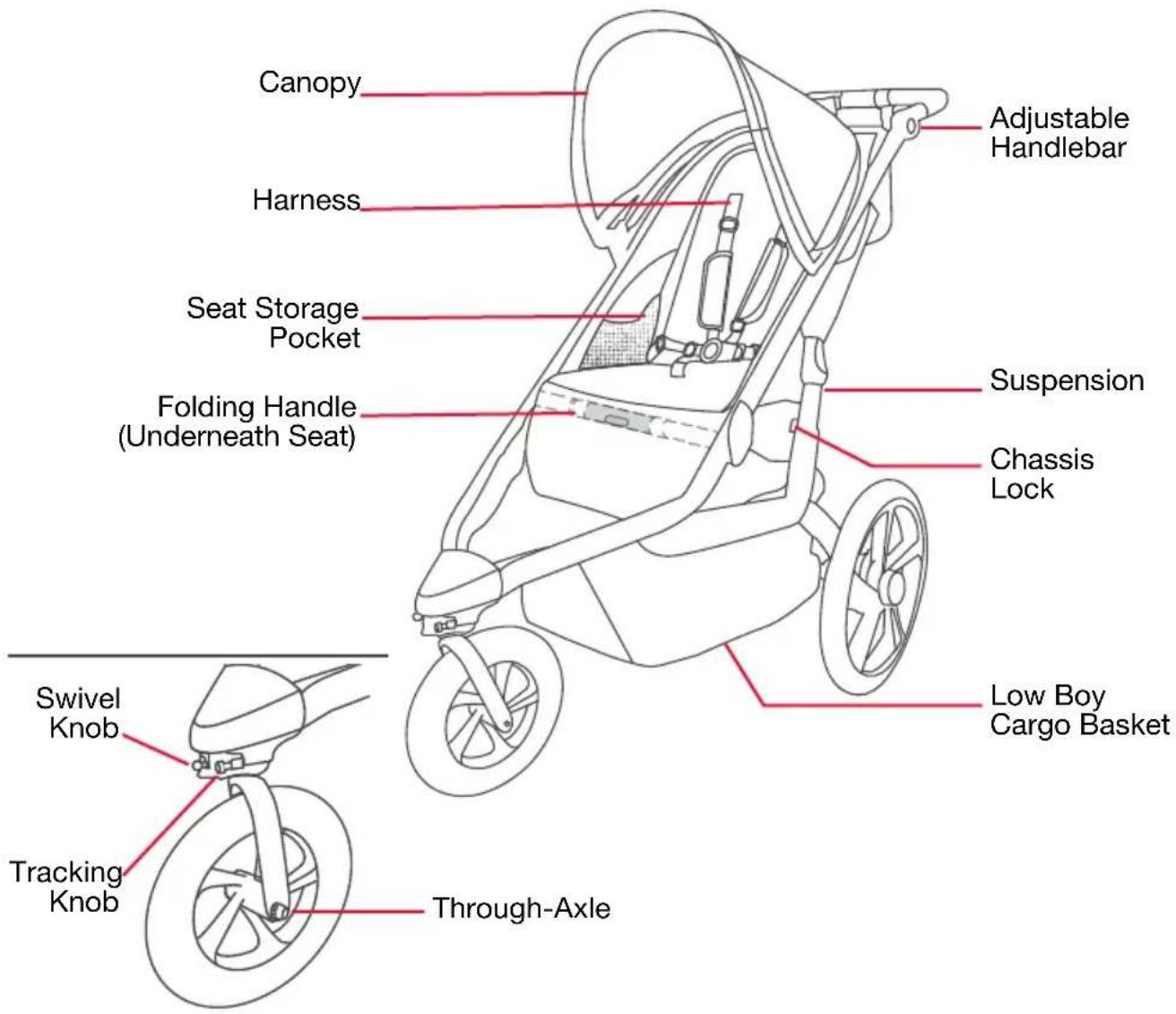
text_image
Canopy Adjustable Handlebar Harness Seat Storage Pocket Folding Handle (Underneath Seat) Suspension Chassis Lock Swivel Knob Low Boy Cargo Basket Tracking Knob Through-Axle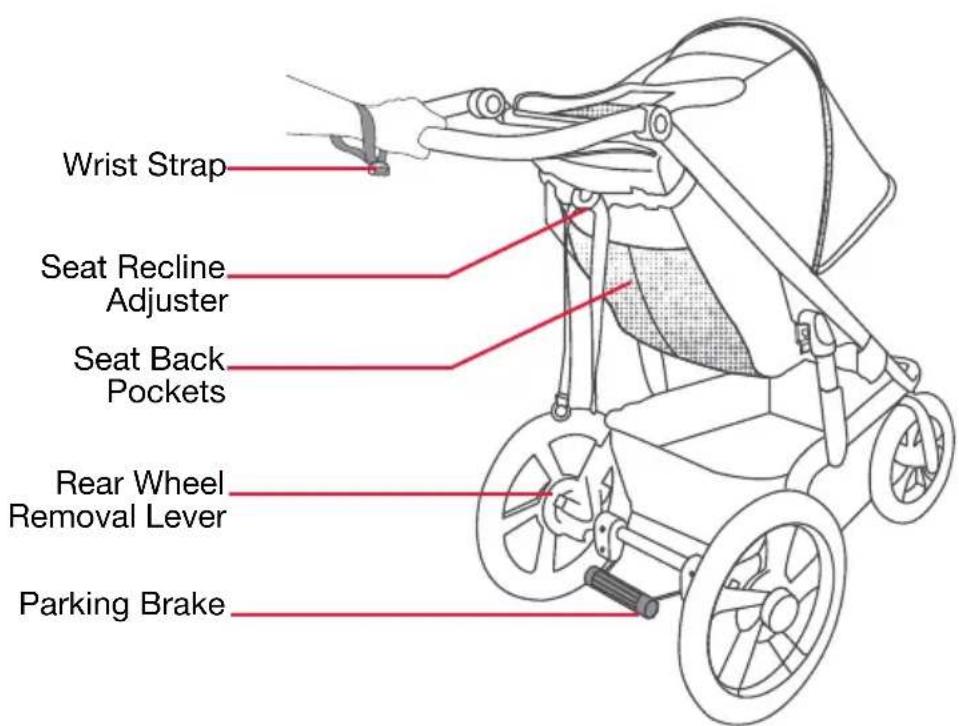
text_image
Wrist Strap Seat Recline Adjuster Seat Back Pockets Rear Wheel Removal Lever Parking BrakeActual product may vary from images
Age Guidelines
Prior to first use, consult with your pediatrician regarding suitability of stroller use with your child.
Infants incapable of holding their head up must have additional head and neck support to ride safely and comfortably. From 0-8 weeks, or as recommended by your pediatrician, the use of an infant car seat and adapter is encouraged.
Children are unique and develop at different rates. Most may not have the neck strength for jogging or off-road motion until 8 months of age. For jogging or off-road stroller use, BOB Gear by Britax recommends you limit use of this stroller to children over the age of 8 months.
Please refer to the below table for age/use guidelines:
RECOMMENDED STROLLER USE
0 - 8 Wks
0 - 8 Mos
8 Mos- 5 Yrs
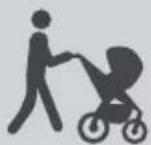
Walk Only (Infant Car Seat & Adapter)
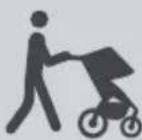
Walk Only
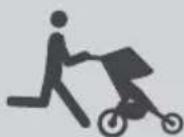
Jogging/Off-Road
Stroller Assembly
Unpacking the Stroller
! WARNING!
Remove all packaging materials and discard to avoid choking and suffocation hazards.
Installing/Removing Wheels
Rear Wheel Installation
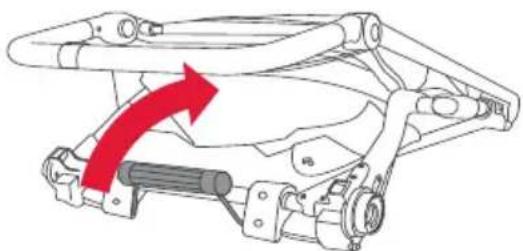
1. Unlock Parking Brake
Prior to installing the rear wheels, position the parking brake in the unlocked position.
natural_image
Mechanical assembly diagram showing a lever mechanism with red directional arrow indicating motion (no text or symbols)2. Insert Rear Wheel Stub Axle
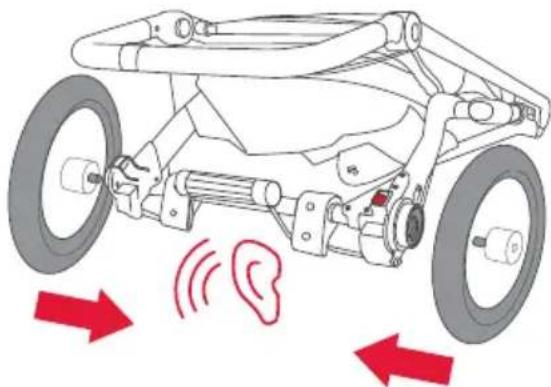
Insert the rear wheel's stub axle into the hole in the rear dropout until a "click" is heard. Repeat for other side.
natural_image
Diagram of a wheeled vehicle with red arrows indicating sound waves or sound disturbance, no text or symbols present.NOTE: If no click is heard, the wheel may not be secure in the attachment bracket and may detach during operation. Pull on wheel to ensure proper installation.
Rear Wheel Removal
1. Unlock Parking Brake
Prior to removing the rear wheels, position the parking brake in the unlocked position.
2. Remove Wheel
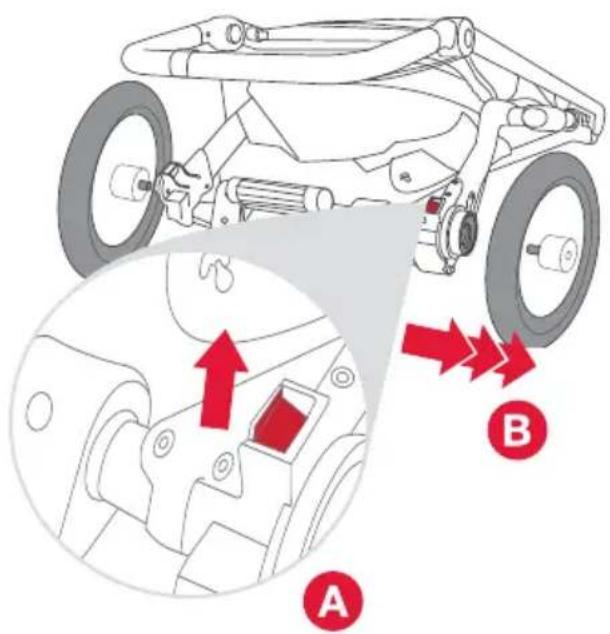
Raise the wheel a few inches off the ground, (A)pull the release lever, and (B)pull the wheel out of the rear wheel attachment bracket. Repeat for the other side.
text_image
Diagram of a vehicle's steering wheel assembly with labeled parts A and B, showing gear shift and adjustment mechanism.Front Wheel Installation
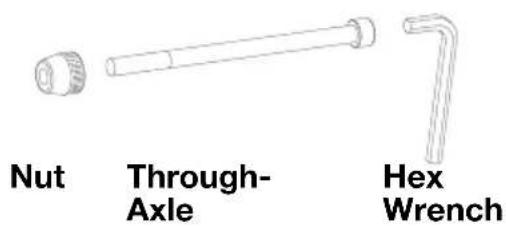
1. Remove Through-Axle and Hex Wrench From Storage Bag
Remove nut from through-axle.
text_image
Nut Through- Axle Hex Wrench2. Rotate Front Fork Into Jog Mode
Rotate the front fork until it locks into jog mode. See page 10.
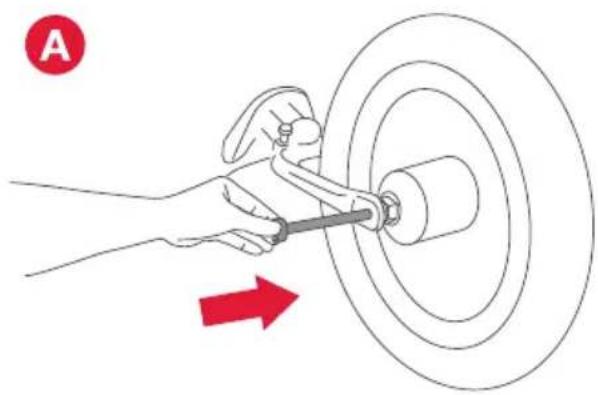
3. Insert Front Wheel
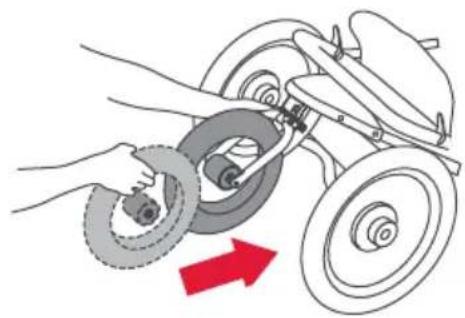
When facing the front of the stroller, insert the wheel between the fork and align the wheel hub with holes in the fork blades.
natural_image
Illustration of a hand using a tire to lift a car, with a red arrow indicating clockwise motion (no text or symbols)4. Insert Through-Axle
(A) Insert the through-axle through the wheel hub,(B) then install the tension adjusting nut on the opposite side. The washer should remain on the outside portion of the fork dropout when tightening.
natural_image
Illustration of a hand using a tool to work on a large circular target, with a red arrow indicating direction (no text or symbols)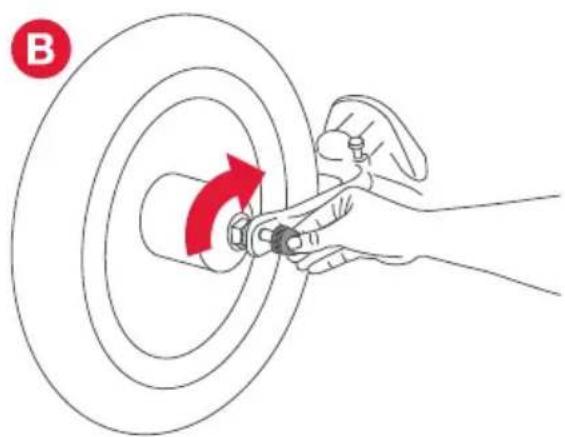
natural_image
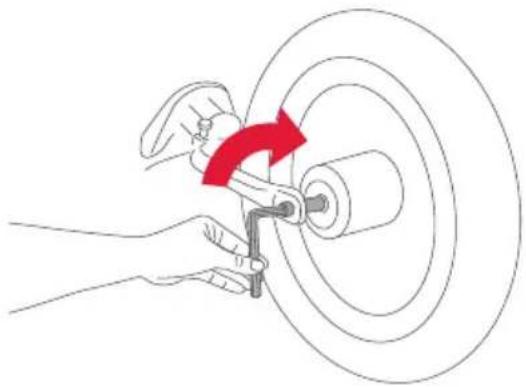
Illustration of a hand adjusting a mechanical component with concentric rings and a red arrow indicating rotation (no text or symbols)5. Tighten Through-Axle
While securely holding the nut in place with one hand, use the hex wrench provided to fully tighten the through-axle. Tighten as secure as possible with your own strenght against the fork dropout. Pull on wheel to check that it is securely installed and does not wobble.
natural_image
Illustration of a hand using a tool to adjust a circular component with concentric rings (no text or symbols)WARNING!
Check the front wheel before each use of the stroller to ensure it is properly secured. Failure to secure the front wheel can cause the wheel to vibrate, wobble, or become detached from the stroller.
FALL HAZARD - Wheel can detach and cause tip over. Pull on the wheel to assure it is securely attached.
Front Wheel Removal
1. Rotate Front Fork Into Jog Mode
Rotate the front fork until it locks into jog mode. See page 10.
2. Remove Through-Axle
Hold the nut in place and use the hex wrench to loosen the through-axle. Then remove the through-axle from the front wheel and fork.
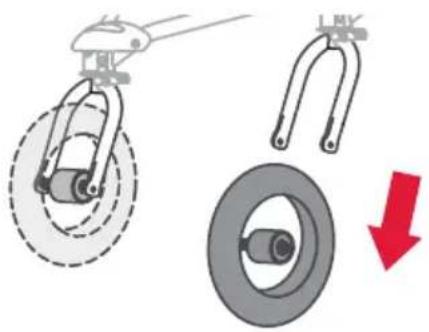
3. Remove Front Wheel
Raise the front wheel a few inches off ground and tap the top of the wheel with the palm of your hand to knock the wheel out of the front fork.
natural_image
Diagram showing two mechanical components with a red downward arrow indicating rotation or clearance (no text or symbols present)NOTE: Secure and safely store all small parts.
Installing/Removing canopy
Canopy Installation
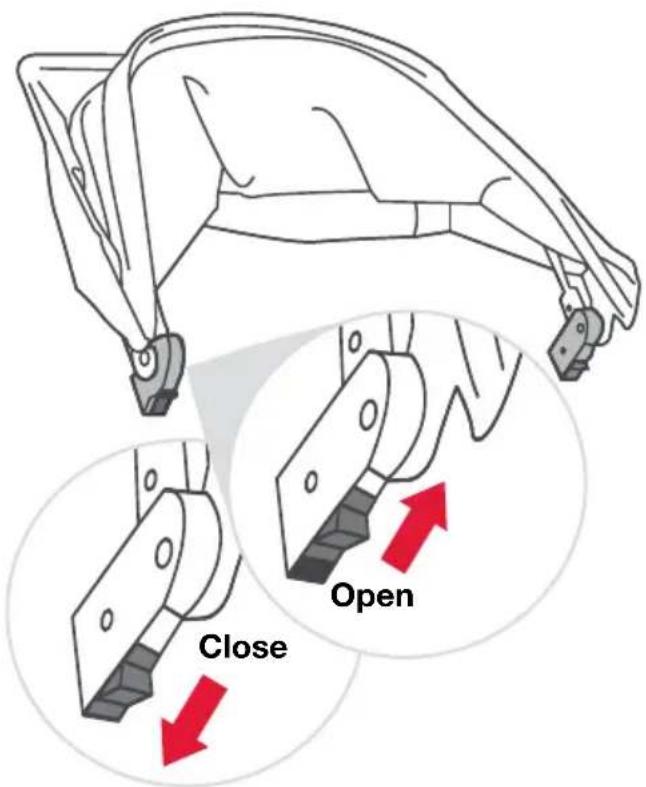
1. Open Canopy Lock
Slide lock open on each side of the canopy.
text_image
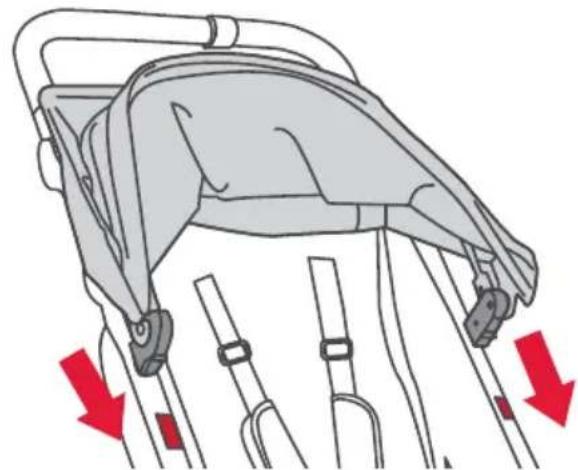
Open Close2. Connect Canopy to Stroller Frame
Slide canopy connectors onto the stroller frame mount, then close canopy connectors.
natural_image
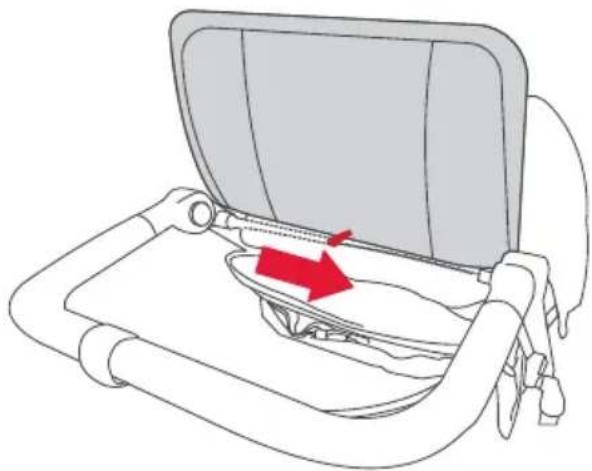
Illustration of a person using a back cover device with red arrows indicating force or movement (no text or symbols present)3. Attach Canopy Flap
Connect the zipper under the canopy flap to the stroller frame.
natural_image
Diagram of a baby seat with a red arrow indicating the seat area, showing no text or symbols.Canopy Removal
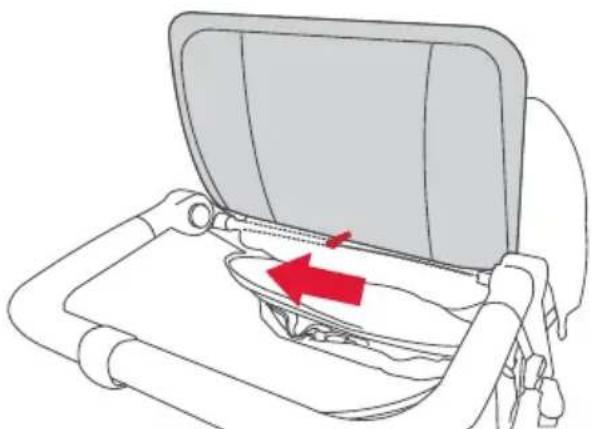
1. Detach Canopy Flap
Locate zipper under canopy flap between stroller handlebars, then unzip.
natural_image
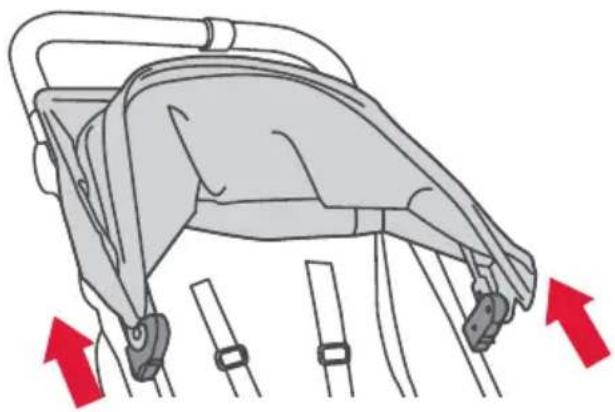
Line drawing of a person using a toilet to lift a seat, with a red arrow indicating the motion (no text or symbols present)2. Unlock Canopy From Stroller Frame
Open canopy connectors on both sides of the stroller frame, then slide canopy upwards off frame.
natural_image
Illustration of a baby car seat with red arrows indicating movement or force direction (no text or symbols)Stroller Operation
Unfolding and Folding
Unfolding the Stroller
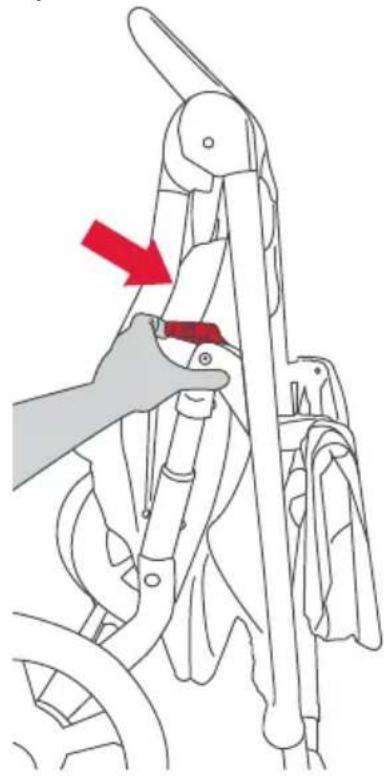
1. Unlock Chassis Lock Lever
Push frame together and pull tab to separate chassis lock.
natural_image
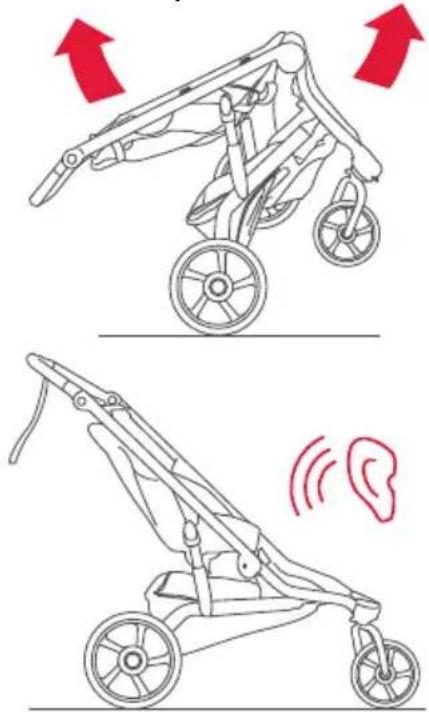
Line drawing of a hand using a tool to adjust or install a mechanical component, with no visible text or symbols.2. Open Stroller Frame
Pull apart top and bottom of the frame until it opens into locked position.
natural_image
Illustration of a stroller with red directional arrows indicating motion, and a close-up of the ear with sound waves (no text or symbols)Locked Position
Folding the Stroller
1. Lock Parking Brake
Set parking brake in locked position.
2. Empty Stroller
Remove child and all contents from low boy cargo basket and pockets.
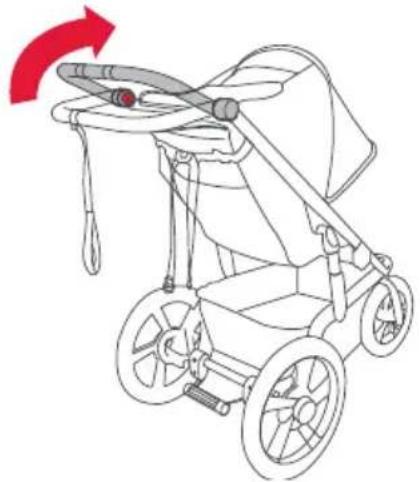
3. Rotate Handlebar
Squeeze both handlebar release buttons simultaneously. Rotate handlebar and position so that it is inline with stroller frame. This will allow stroller to stand on its own when folded.
natural_image
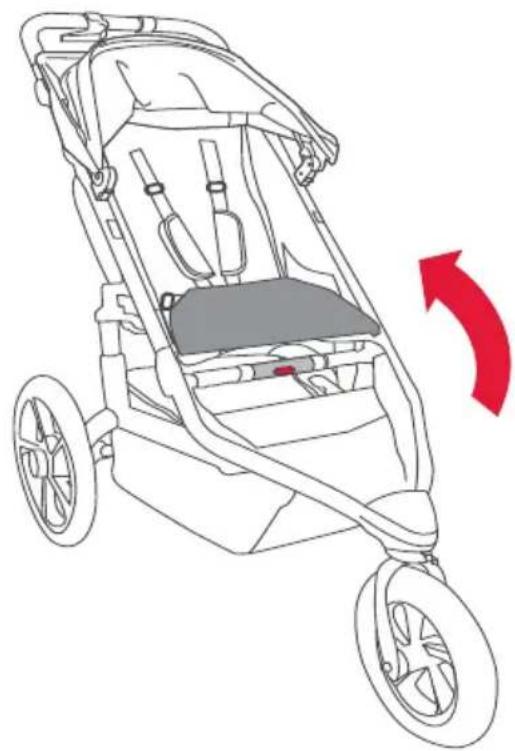
Line drawing of a stroller with a red arrow indicating rotation (no text or symbols)4. Pull the Leg Rest Flap Up
This will reveal the folding handle.
natural_image
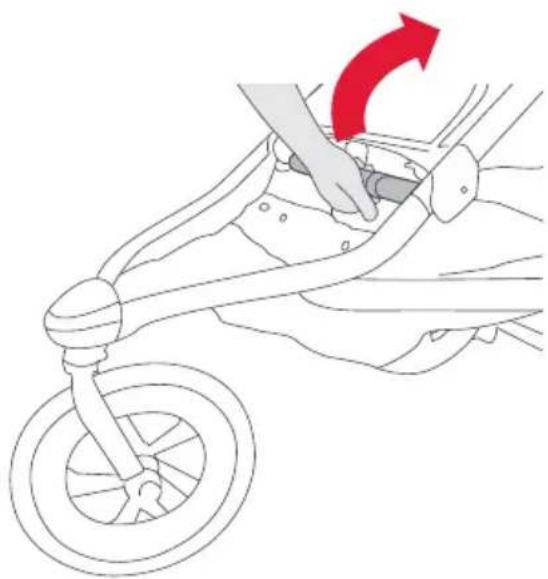
Line drawing of a stroller with wheels and seat, showing a red directional arrow indicating motion (no text or symbols)5. Activate Folding Handle
Push yellow button with palm of hand and twist while pulling stroller up.
natural_image
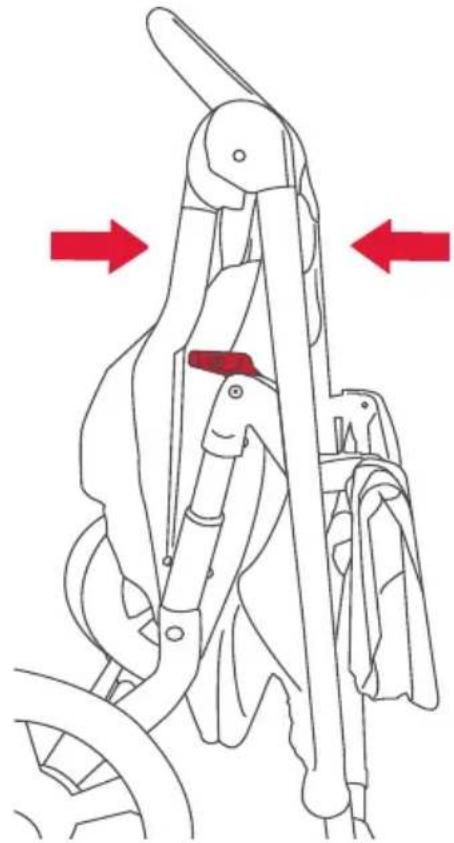
Line drawing of a person using a bicycle tire to lift a wheel, with a red arrow indicating the motion direction (no text or symbols)6. Lock Stroller In Folded Position
Push frame together allowing chassis lock lever to engage with chassis lock knob.
natural_image
Mechanical linkage diagram showing two red arrows pointing to different components (no text or labels)NOTE: Stroller should be freestanding on handlebar bumpers and wheels.
Walk or Jog Mode
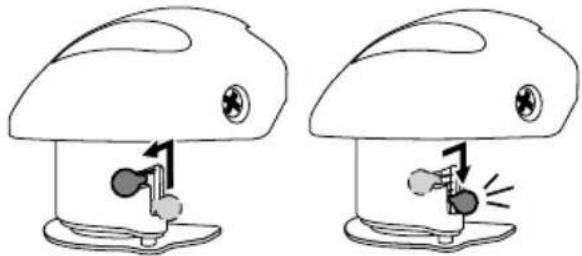
Walk Mode Jog Mode
natural_image
Two identical line drawings of a mushroom-shaped object with internal components and directional arrows, no text or symbols present.Walk Mode
Slide swivel knob up and to the left. Fork will now rotate 360 degrees.
NOTE: Stroller is shipped in walk mode.
Jog Mode (Jogging/Off-Road)
Slide swivel knob upward and to the right. Knob will slide into downward position. Rotate fork/wheel until it snaps into forward position.
If the front fork is in jog mode, it will be locked and will not swivel left or right as it does in walk mode.
NOTE: Never run, jog, or walk fast with the stroller in walk mode. Doing so could result in loss of control and serious injury.
Checking Tire Pressure
Plastic wheels are rated to a maximum tire inflation pressure of 30 pounds per square inch (psi). The maximum inflation pressure is embossed on the wheel next to the valve stem.
Adjusting the Tracking
If stroller pulls left or right when the front wheel is in jog mode and stroller is on flat terrain, adjust tracking as outlined in the following steps.
WARNING!
Do not roll test with a child or any occupant in the stroller.
1. Empty Stroller
Remove child and all contents from low boy cargo basket and pockets.
2. Check Tire Pressure
3. Set Stroller to Jog Mode
Slide swivel knob to right. Knob will slide into downward position. Rotate fork/wheel until it snaps into forward position. See Choosing Walk or Jog Mode on page 10.
4. Place Stroller On Level Ground
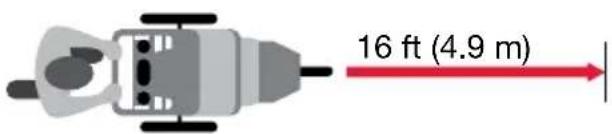
Find a stretch of level ground about 16 feet (4.9 m) long.
text_image
16 ft (4.9 m)5. Align Rear Wheel Axles
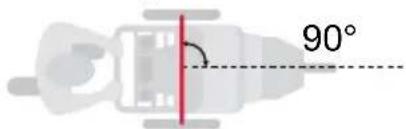
Align stroller so rear wheel axles are perpendicular to a straight line.
text_image
90°6. Test Alignment
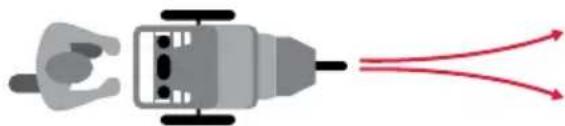
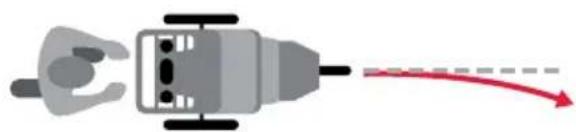
Push stroller straight forward and release to see if stroller veers right or left. Repeat push test several times.
natural_image
Diagram of a plug with internal components and red arrows indicating flow or direction (no text or symbols)If stroller consistently pulls to left or right, see Fine Tuning the Tracking.
Fine Tuning the Tracking
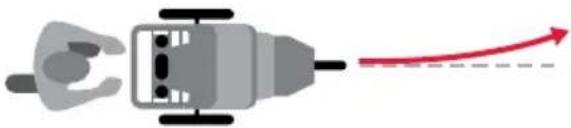
If Stroller Pulls LEFT
natural_image
Diagram of a vehicle head and engine with a red arrow indicating motion or direction (no text or symbols)If your stroller pulls LEFT, turn tracking knob counterclockwise up to one half turn.
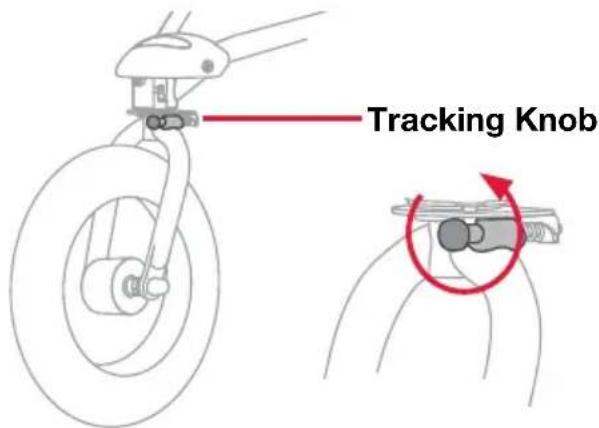
text_image
Tracking KnobIf Stroller Pulls RIGHT
natural_image
Diagram of a plug with internal components and a red arrow indicating direction (no text or symbols)If your stroller pulls RIGHT, turn tracking knob clockwise up to one half turn.
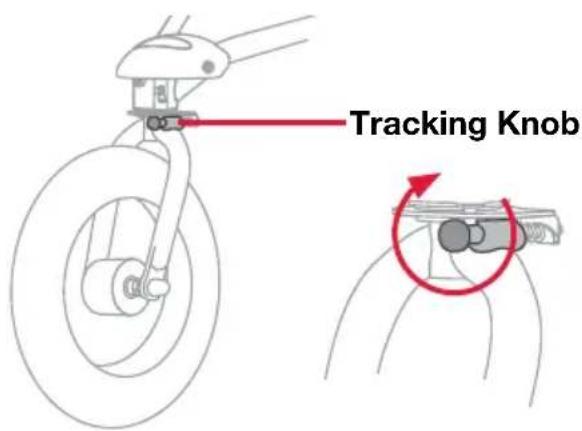
text_image
Tracking KnobREPEAT roll test and adjust as needed until stroller rolls straight.
Setting the Parking Brake
The parking brake prevents the stroller from moving while loading and unloading. The parking brake is not designed as a stopping brake.
Locked Position
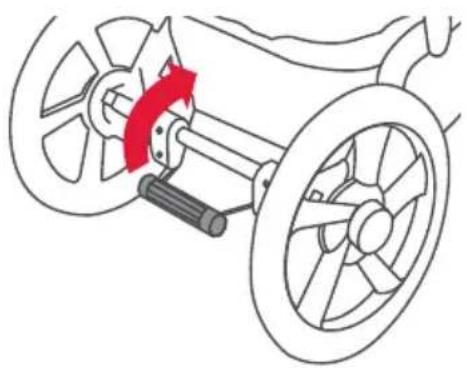
To set the parking brake, press down on the foot pedal – making sure the locking pin fully engages the locking disk.
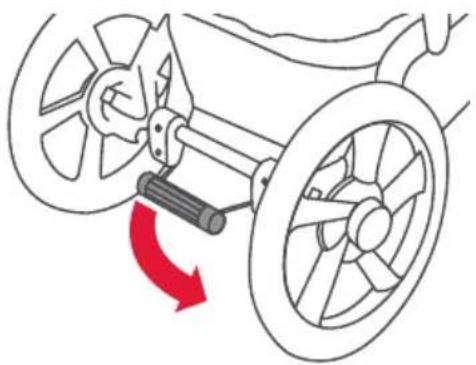
natural_image
Diagram of a car's steering wheel assembly with a red directional arrow indicating rotation (no text or symbols)NOTE: To ensure the brake is set properly, attempt to roll the stroller forward and backward after setting the brake. If the stroller will not roll, the brake is set properly.
Unlocked Position
To release the parking brake, lift up on the foot pedal with your foot until the brake bar springs up into the fully unlocked position.
natural_image
Diagram of a vehicle's wheel assembly with a red directional arrow indicating rotation (no text or symbols)Securing the Child in the Seat
1. Set Parking Brake
Rotate parking brake down into locked position.
NOTE: Rear wheels should not rotate when parking brake is set.
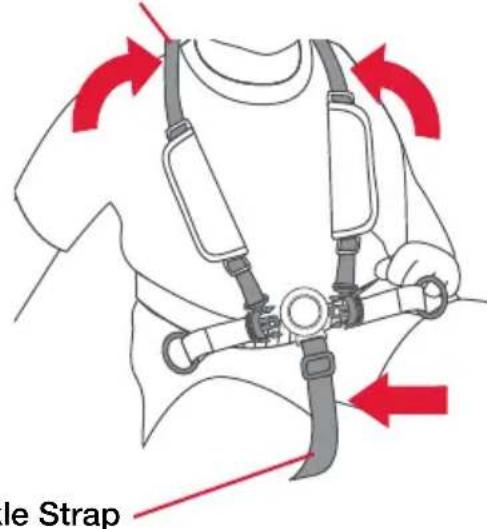
2. Place Child In Seat
Slip one shoulder strap over each shoulder. Position buckle strap between legs.
Shoulder Strap
text_image
le StrapBuckle Strap
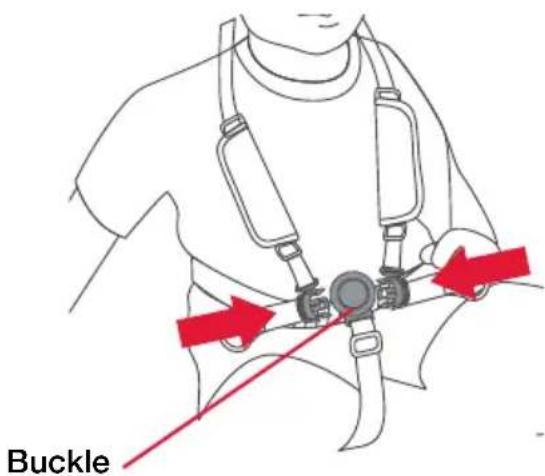
3. Fasten Shoulder Straps
Insert both shoulder strap tongues into the buckle.
text_image
BuckleNOTE: Buckle Strap should be adjusted to have a snug fit.
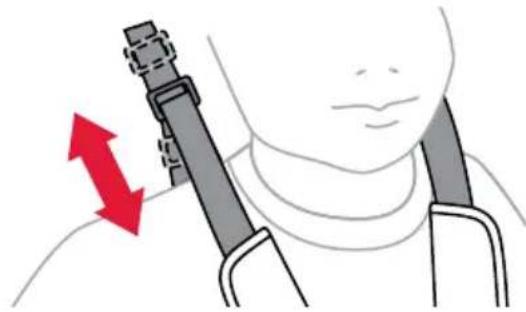
- Adjust Shoulder Strap Height Adjust height of shoulder strap to fit just above child shoulder height.
natural_image
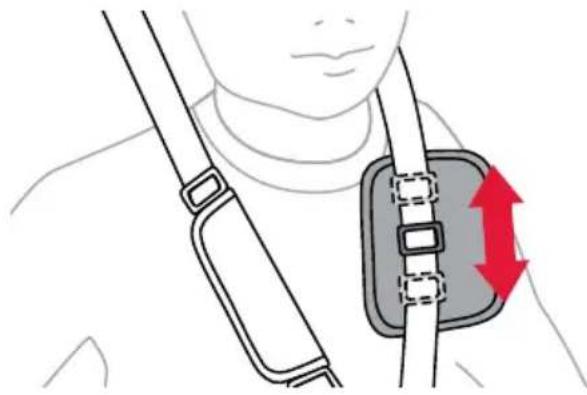
Illustration of a medical professional holding a stethoscope, with a red arrow indicating direction (no text or symbols)- Adjust Shoulder Straps Open pads with hook and loop fasteners. Slide buckle up or down to adjust straps. Seat harness should fit snug and be comfortable.
natural_image
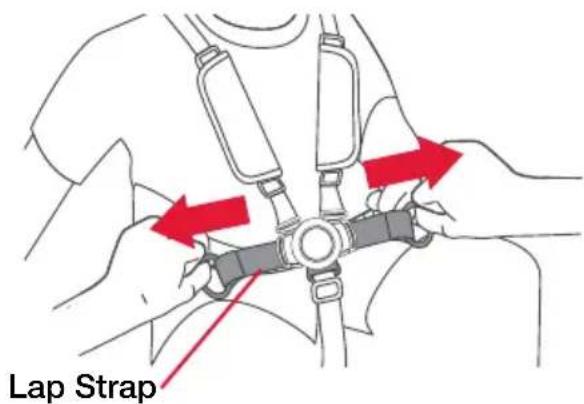
Illustration of a person wearing a neck and belt with a red directional arrow indicating movement or pressure (no text or symbols)- Tighten Lap Strap Adjust lap strap to fit snug and be comfortable.
text_image
Lap StrapUsing the Wrist Strap
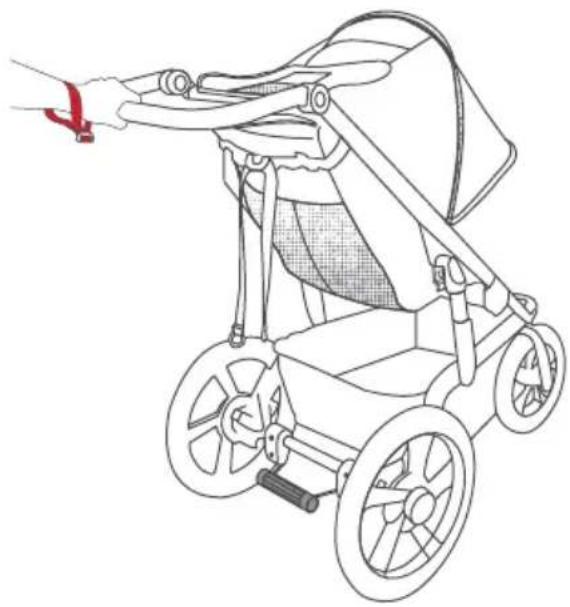
Slip Loop of Strap Securely Onto Wrist
The wrist strap is designed to help prevent the stroller from rolling away should you lose your grip on the stroller. When using the stroller, make sure the strap is securely looped over your wrist.
natural_image
Line drawing of a baby stroller with hand holding a red object (no text or symbols)Reclining the Seat
WARNING!
When seat is fully reclined, backward tip-over is more likely, and may result in injury to stroller occupant.
NOTE: Set parking brake before making any seat adjustments.
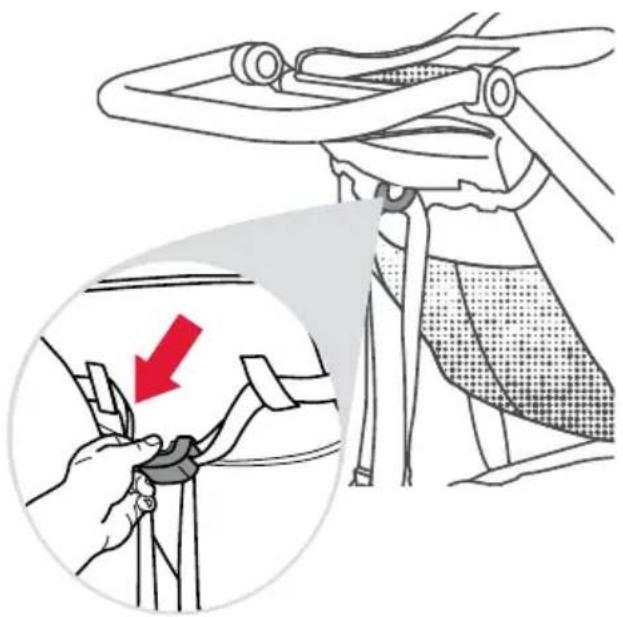
1. Recline Seat
Squeeze the recline button and pull the seat back down into the desired position.
natural_image
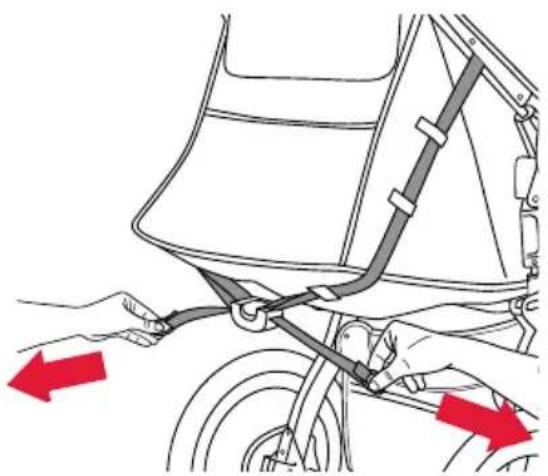
Illustration of a car seatbelt being adjusted for a seatbelt, showing a red arrow indicating the adjustment (no text or symbols present)2. Return To Upright Position
Grab the rings on either side of the recline button and pull the straps out to the sides to raise the seat.
natural_image
Diagram of a bicycle seatbelt mechanism with red arrows indicating force directions (no text or symbols present)Positioning the Canopy
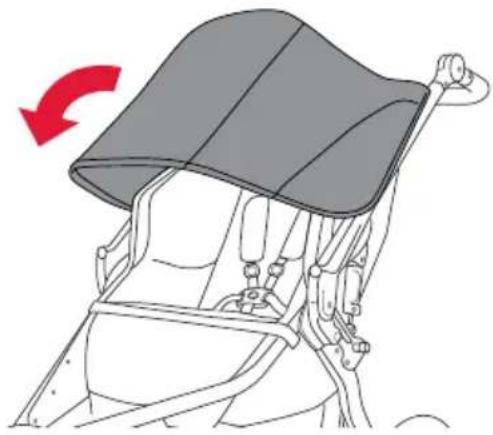
1. Extend Canopy
Rotate canopy away from handlebar for additional shade.
natural_image
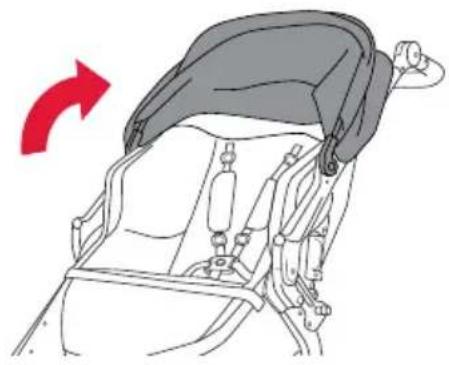
Line drawing of a bicycle seat with a red arrow indicating rotation (no text or symbols)2. Retract Canopy
Push canopy toward handlebar.
natural_image
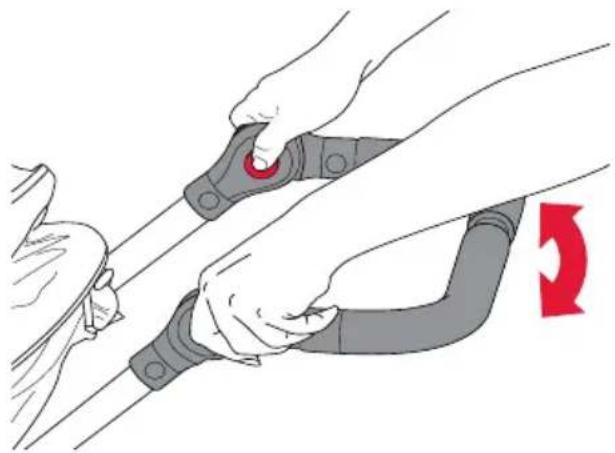
Diagram of a car seatbelt device with a red arrow indicating rotation (no text or symbols)Adjusting Handle Position
To adjust the handle position, depress and hold the two release buttons on the inside of the handle assembly while raising or lowering the handle to one of the individual positions.
natural_image
Illustration of hands adjusting a cable buckle with a red belt, showing mechanical assembly (no text or symbols)Care and Maintenance
WARNING!
Check tire pressure before every use.
Cleaning
The fabric has a stain resistant treatment that makes most cleanups easy.
- Use a sponge with a solution of mild soap and cold water (maximum temperature of 100^ F / 38^ C).
- Rinse thoroughly with clean water to remove soap, then air dry.
- Do not use detergent or abrasive cleansers.
- Do not pressure wash.
Regular Inspections
We recommend inspecting your stroller before every use.
- Verify tire pressure.
- Verify all screws, attachment points and fasteners are tight.
- Check all wheels to be sure they are securely clamped.
- Check for tears or excessive wear in the fabric.
Stroller Accessories
BOB Gear® offers a complete line of accessories for your stroller. Visit our website bobgear.com for full details.
Warranty
This stroller was manufactured by Britax Child Safety, Inc. Britax warrants this product to the original retail purchaser as follows:
Limited Warranty
The frame is warranted against defective materials or workmanship for five (5) years from the date of original purchase. Components and fabric are warranted for one (1) year from the date of original purchase. Tires and tubes are NOT covered under this limited warranty.
Your exclusive remedy for this warranty is that Britax will, at its option, provide repair or replacement components for this product. Britax reserves the right to discontinue or change fabrics, parts, models, or products, or to make substitutions. Warranty is only valid for the original purchaser and proof of purchase is required to exercise this warranty. Labor and freight charges are not included.
To make a claim under this warranty, you must contact BOB Gear's Customer Support Team at 1-888-427-4829 or 1-704-409-1699, or write to us using the address on the front cover of this booklet.
Warranty Limitations
This warranty does not include damages which arise from negligence, misuse or use not in accordance with the product instruction.
The use of non-Britax/BOB Gear products or accessories are NOT approved and may void the warranty.
Limitations of Damages
The warranty and remedies as set forth above are exclusive and in lieu of all others, oral or written, express or implied. In no event will Britax, or the retailer selling this product, be liable for you to any damages, including incidental or consequential damages, arising out of the use or inability to use this product.
Limitations of Warranties and Other Warranty Terms and State Laws
Any implied warranties, including implied warranties of merchantability and fitness for a particular purpose, shall be limited to the duration and terms of the express written warranty. Some states do not allow limitations on how long an implied warranty lasts or the exclusion or limitation of incidental or consequential damages, so the above limitations may not apply to you. This warranty gives you specific legal rights, and you may have other rights, which vary from state to state. Neither Britax, nor the retailer selling this product, authorizes any person to create for it any other warranty, obligation, or liability in connection with this product.
Product Registration
Please complete and mail the owner registration card or visit bobgear.com/registration to register your stroller.
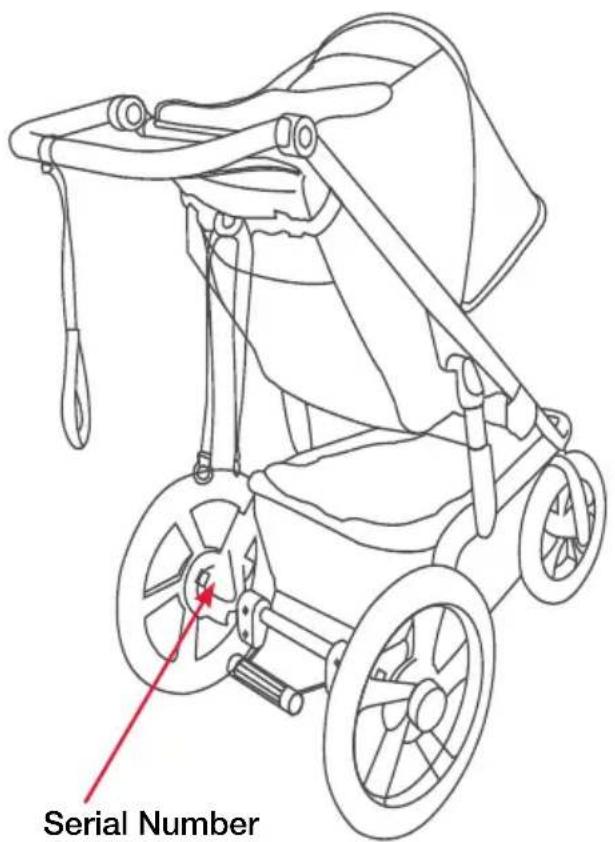
Serial Number
Open the stroller. From the back of stroller, look on the inside of the right swing arm.
text_image
Serial Number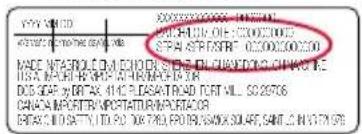
text_image
YAY ON I D 000322000000000000000000000000000000000000000000000000000000000000000000000000000000000000000000000 ORDER BY: 1987-54-26 ORDER BY: 1987-54-26 ORDER BY: 1987-54-26 ORDER BY: 1987-54-26 ORDER BY: 1987-54-26 ORDER BY: 1987-54-26 ORDER BY: 1987-54-26 ORDER BY: 1987- ORDER BY: 1987- ORDER BY: 1987- ORDER BY: 1987- ORDER BY: 1987- ORDER BY: 1987- ORDER BY: 1987- ORDER BY: 1987- ORDER BY: 1987- ORDER BY: 1987- ORDER BY: 1987- ORDER BY: 1987- Order BY: 1987- Order BY: 1987- Order BY: 1987- Order BY: 1987- Order BY: 1987- Order BY: 1987- Order BY: 1987- Order BY: 1987- Order BY: 1987- Order BY: 1987- Order BY: 1987- Order by: 1987- Order by: 1987- Order by: 1987- Order by: 1987- Order by: 1987- Order by: 1987- Order by: 1987- Order by: 1987- Order by: 1987- Order by: 1987- Order by: 1987- Order by: 1987-54-26 Order by: 1987-54-26 Order by: 1987-54-26 Order by: 1987-54-26 Order by: 1987-54-26 Order by: 1987-54-26 Order by: 1987-54-26 Order by: 1987-54-26 Order BY: BRYA Order BY: BRYA Order BY: BRYA Order BY: BRYA Order BY: BRYA Order BY: BRYA Order BY: BRYA Order BY: BRYA Order BY: BRYA Order BY: BRYA Order BY: BRYA Order BY: BRYA Order BY: BRYA Order BY: BRYA Order BY: BRYA BRYA Order BY: BRYA Order BY: BRYA Order BY: BRYA Order BY: BRYA Order BY: BRYA Order BY: BRYA Order BY: BRYA Order BY: BRYA Order BY: BRYA Order BY: BRYA Order BY: BRYA Order BY: BRYA Order BY: BRYA Order BY: BRY A Order BY: BRY A Order BY: BRY A Order BY: BRY A Order BY: BRY A Order BY: BRY A Order BY: BRY A Order BY: BRY A Order BY: BRY A Order BY: BRY A Order BY: BRY A Order BY: BRY A Order BY: BRY A Order BY: BRY A Order BY: BRY A order by: order by: order by: order by: order by: order by: order by: order by: order by: order by: order by: order by: order by: order by: order by: order by: order by: order by: order by: order by: order by: order by: order by: order by: order by: order by: order by: order by: order by: order by: order by: order by: order by: order by: orderby: orderby: orderby: orderby: orderby: orderby: orderby: orderby: orderby: orderby: orderby: orderby: orderby: orderby: orderby: orderby: orderby: orderby: orderby: orderby: orderby: orderby: orderby: orderby: orderby: orderby: orderby: orderby: orderby: orderby: orderby: orderby: orderby: orderby:Notes

natural_image
Abstract shield-shaped logo with mountain and river design (no text or symbols)BIENVENUE CHEZ BOB GEAR
natural_image
Mechanical assembly diagram showing a lever mechanism with red directional arrow indicating motion (no text or symbols)natural_image
Diagram of a wheeled vehicle showing wheel, suspension, and ear signals (no text or symbols)REMARQUE : Si
text_image
Technical diagram of a vehicle's steering wheel assembly with labeled parts A and B, showing gear shift and mounting features.natural_image
Line drawings of three mechanical parts: a cylindrical nut, a long rod with flange, and a bent tool (no text or symbols)Écrou Cléssieu
traversant hexagonale
natural_image
Illustration of a hand using a tire to lift a car wheel, with a red arrow indicating the motion direction (no text or symbols present)natural_image
Illustration of a hand using a tool to lift a large cylindrical object, with a red arrow indicating direction (no text or symbols)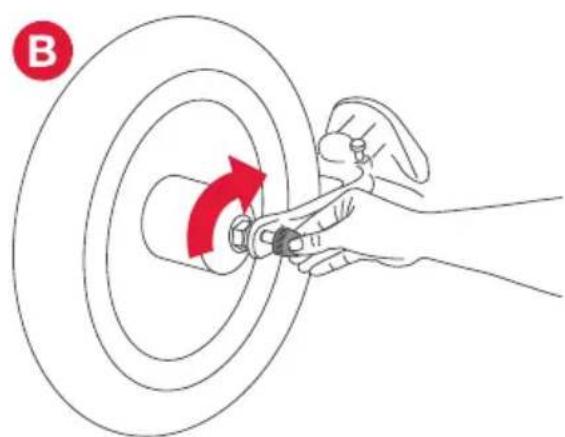
natural_image
Illustration of a hand holding a tool with a red arrow indicating rotation around a circular target (no text or symbols)natural_image
Illustration of a hand using a tool to adjust a circular component, with concentric rings and a red arrow indicating rotation (no text or symbols)AVERTISSEMENT
natural_image
Diagram showing a mechanical linkage system with a wheel and a pulley, accompanied by a red downward arrow indicating motion (no text or symbols)natural_image
Diagram of a car seatbelt with red arrows indicating downward motion (no text or symbols)natural_image
Line drawing of a baby seat with a red arrow indicating the seat width (no text or symbols present)Enlever l'auvent
natural_image
Line drawing of a person using a toilet to lift a bowl, with a red arrow indicating the direction (no text or symbols)natural_image
Diagram of a vehicle chassis with red arrows indicating movement or force direction (no text or symbols present)natural_image
Line drawing of a bicycle steering wheel with a hand adjusting the seat (no text or symbols)natural_image
Illustration of a stroller with red directional arrows indicating motion, and a close-up of the ear with sound waves (no text or symbols)Position verrouillée
Plier la poussette
natural_image
Line drawing of a baby stroller with a red arrow indicating rotation (no text or symbols)natural_image
Line drawing of a stroller with wheels and seat, showing a red directional arrow indicating motion (no text or symbols)natural_image
Line drawing of a person using a bicycle tire to lift a wheel, with a red arrow indicating the motion direction (no text or symbols present)natural_image
Mechanical device diagram showing a lever mechanism with red arrows indicating direction (no text or symbols)natural_image
Two cartoon mushroom-shaped objects with arrows indicating movement or force (no text or symbols)Mode marche
text_image
5m (16 pied)natural_image
Diagram of a device emitting red arrows, showing internal components and signal flow (no text or labels)natural_image
Diagram of a vehicle with a red arrow indicating motion or direction (no text or symbols)natural_image
Diagram of a plug with internal components and a red arrow indicating direction (no text or symbols)natural_image
Diagram of a vehicle's steering wheel assembly with a red curved arrow indicating rotational motion (no text or symbols)natural_image
Diagram of a bicycle steering wheel assembly with a red directional arrow indicating rotation (no text or labels)natural_image
Illustration of a person holding a medical device with a red arrow indicating direction (no text or symbols)natural_image
Medical illustration showing a person's neck and shoulder with a belt buckle, no text or symbols presentnatural_image
Illustration of hands adjusting a car seatbelt with red arrows indicating motion (no text or symbols)natural_image
Line drawing of a baby stroller with hand holding a tool, no text or symbols presentIncliner le siège
! AVERTISSEMENT
natural_image
Illustration of a car seatbelt switch mechanism with a magnified inset showing the red arrow pointing to the switch (no text or symbols present)2. Replacer en position verticale
natural_image
Diagram of a bicycle seatbelt mechanism with red arrows indicating direction (no text or symbols present)Déplacer l'auvent
1. Étendre l'auvent
natural_image
Line drawing of a bicycle seat with a red arrow indicating rotation (no text or symbols)2. Replier l'auvent
natural_image
Diagram of a car seatbelt with a red arrow indicating rotation (no text or symbols)natural_image
Illustration of hands adjusting a cable buckle with a red belt, showing mechanical adjustment (no text or symbols)SOIN ET ENTRETIEN

AVERTISSEMENT
natural_image
Abstract shield-shaped logo with mountain and river design (no text or symbols)BIENVENIDOS A BOB GEAR
natural_image
Mechanical assembly diagram showing a red arrow indicating rotational motion (no text or symbols present)natural_image
Diagram of a vehicle chassis with red arrows indicating sound waves or sound pressure, no text or symbols present.text_image
Diagram of a vehicle's steering wheel assembly with labeled parts A and B, showing gear shift and adjustment mechanism.natural_image
Illustration of a hand using a tire to lift a vehicle, with a red arrow indicating the motion direction (no text or symbols present)natural_image
Illustration of a hand using a tool to work on a large circular object, with a red arrow indicating direction (no text or symbols)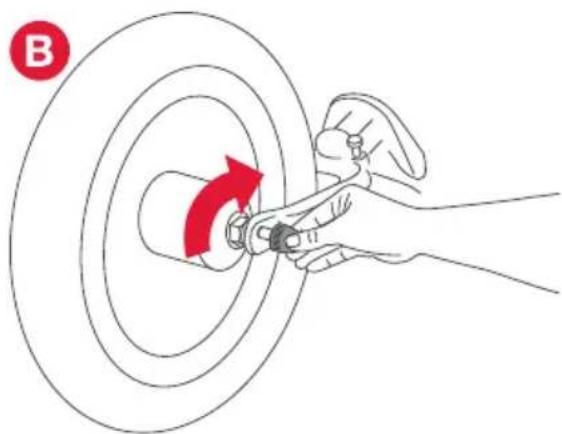
natural_image
Hand holding a small object with a red arrow indicating rotation around the ring (no text or symbols)natural_image
Illustration of a hand using a tool to adjust a circular component with concentric rings (no text or symbols)ADVERTENCIA!
natural_image
Diagram showing a mechanical linkage system with a wheel and a pulley, accompanied by a red downward arrow (no text or symbols)natural_image
Diagram of a vehicle's seatbelt mechanism with red arrows indicating force or movement (no text or symbols present)natural_image
Diagram of a baby seat with a red arrow indicating the seat area (no text or symbols present)Retire la capota
natural_image
Diagram of a device with a red arrow indicating a movement or change, no text or symbols presentnatural_image
Diagram of a car seatbelt device with red directional arrows indicating movement or force (no text or symbols present)natural_image
Line drawing of a hand adjusting a mechanical component with a red arrow indicating the step (no text or symbols present)natural_image
Illustration of a stroller with motion arrows indicating movement, and a close-up of the body with sound waves (no text or symbols)Posición de bloqueo
natural_image
Line drawing of a baby stroller with a red arrow indicating rotation (no text or symbols)natural_image
Line drawing of a stroller with wheels and seat, showing a red directional arrow indicating motion (no text or symbols)5. Accione la manija de plegado
natural_image
Line drawing of a hand operating a bicycle wheel with a red arrow indicating rotation (no text or symbols)natural_image
Mechanical assembly diagram showing a lever mechanism with red arrows indicating direction (no text or symbols present)natural_image
Two identical cartoon mushroom-shaped objects with arrows indicating movement or force (no text or symbols)Modo para caminar
text_image
4,9 m (16 pies)natural_image
Diagram of a plug with internal components and red arrows indicating flow or direction (no text or symbols)natural_image
Diagram of a plug with internal components and a red arrow indicating direction (no text or symbols)natural_image
Diagram of a robotic arm with a red arrow indicating motion or force direction (no text or symbols)natural_image
Diagram of a car's steering wheel assembly with a red directional arrow indicating rotation (no text or symbols)natural_image
Diagram of a vehicle steering wheel assembly with a red directional arrow indicating rotation (no text or symbols)natural_image
Illustration of a person holding a medical device with red directional arrows indicating movement (no text or symbols)natural_image
Illustration of a person wearing a neck and belt with a red directional arrow indicating movement or pressure (no text or symbols present)natural_image
Illustration of a person adjusting a seatbelt with red arrows indicating movement or force (no text or symbols present)Correa de la hebilla
Uso de la muñequera
natural_image
Line drawing of a baby stroller with hand holding a tool, no text or symbols presentReclinar el asiento
¡ADVERTENCIA!
natural_image
Illustration of a car seatbelt switch mechanism with a magnified inset showing the red arrow pointing to the component (no text or symbols present)natural_image
Diagram of a bicycle seatbelt mechanism with red arrows indicating direction (no text or symbols present)natural_image
Line drawing of a bicycle seat with a curved roof and seatbelt, showing a red arrow indicating rotation (no text or symbols)natural_image
Diagram of a vehicle seatbelt with a red arrow indicating rotation (no text or symbols)Ajuste de la manija
natural_image
Illustration of hands adjusting a cable buckle with a red circular button, no text or symbols presentcontour
| X | Y | Intensity | |---|---|---------| | 0.0 | 0.0 | Low | | 0.1 | 0.1 | Medium | | 0.2 | 0.2 | High | | 0.3 | 0.3 | Medium | | 0.4 | 0.4 | Low | | 0.5 | 0.5 | Medium | | 0.6 | 0.6 | High | | 0.7 | 0.7 | Medium | | 0.8 | 0.8 | Low | | 0.9 | 0.9 | Medium | | 1.0 | 1.0 | High | | 1.1 | 1.1 | Medium | | 1.2 | 1.2 | Low | | 1.3 | 1.3 | Medium | | 1.4 | 1.4 | High | | 1.5 | 1.5 | Medium | | 1.6 | 1.6 | Low | | 1.7 | 1.7 | Medium | | 1.8 | 1.8 | High | | 1.9 | 1.9 | Medium | | 2.0 | 2.0 | Low | | 2.1 | 2.1 | Medium | | 2.2 | 2.2 | High | | 2.3 | 2.3 | Medium | | 2.4 | 2.4 | Low | | 2.5 | 2.5 | Medium | | 2.6 | 2.6 | High | | 2.7 | 2.7 | Medium | | 2.8 | 2.8 | Low | | 2.9 | 2.9 | Medium | | 3.0 | 3.0 | High | | 3.1 | 3.1 | Medium | | 3.2 | 3.2 | Low | | 3.3 | 3.3 | Medium | | 3.4 | 3.4 | High | | 3.5 | 3.5 | Medium | | 3.6 | 3.6 | Low | | 3.7 | 3.7 | Medium | | 3.8 | 3.8 | High | | 3.9 | 3.9 | Medium | | 4.0 | 4.0 | Low | | 4.1 | 4.1 | Medium | | 4.2 | 4.2 | High | | 4.3 | 4.3 | Medium | | 4.4 | 4.4 | Low | | 4.5 | 4.5 | Medium | | 4.6 | 4.6 | High | | 4.7 | 4.7 | Medium | | 4.8 | 4.8 | Low | | 4.9 | 4.9 | Medium | | 5.0 | 5.0 | High | | 5.1 | 5.1 | Medium | | 5.2 | 5.2 | Low | | 5.3 | 5.3 | Medium | | 5.4 | 5.4 | High | | 5.5 | 5.5 | Medium | | 5.6 | 5.6 | Low | | 5.7 | 5.7 | Medium | | 5.8 | 5.8 | High | | 5.9 | 5.9 | Medium | | 6.0 | 6.0 | Low | | 6.1 | 6.1 | Medium | | 6.2 | 6.2 | High | | 6.3 | 6.3 | Medium | | 6.4 | 6.4 | Low | | 6.5 | 6.5 | Medium | | 6.6 | 6.6 | High | | 6.7 | 6.7 | Medium | | 6.8 | 6.8 | Low | | 6.9 | 6.9 | Medium | | 7.0 | 7.0 | High | | 7.1 | 7.1 | Medium | | 7.2 | 7.2 | Low | | 7.3 | 7.3 | Medium | | 7.4 | 7.4 | High | | 7.5 | 7.5 | Medium | | 7.6 | 7.6 | Low | | 7.7 | 7.7 | Medium | | 7.8 | 7.8 | High | | 7.9 | 7.9 | Medium | | 8.0 | 8.0 | Low | | 8.1 | 8.1 | Medium | | 8.2 | 8.2 | High | | 8.3 | 8.3 | Medium | | 8.4 | 8.4 | Low | | 8.5 | 8.5 | Medium | | 8.6 | 8.6 | High | | 8.7 | 8.7 | Medium | | 8.8 | 8.8 | Low | | 8.9 | 8.9 | Medium | | 9.0 | 9.0 | High | | ... (additional values estimated) are not provided in the image.
contour
| X | Y | Intensity | |---|---|---------| | 0.0 | 0.0 | Low | | 0.1 | 0.1 | Medium | | 0.2 | 0.2 | High | | 0.3 | 0.3 | Medium | | 0.4 | 0.4 | Low | | 0.5 | 0.5 | Medium | | 0.6 | 0.6 | High | | 0.7 | 0.7 | Medium | | 0.8 | 0.8 | Low | | 0.9 | 0.9 | Medium | | 1.0 | 1.0 | High | | 1.1 | 1.1 | Medium | | 1.2 | 1.2 | Low | | 1.3 | 1.3 | Medium | | 1.4 | 1.4 | High | | 1.5 | 1.5 | Medium | | 1.6 | 1.6 | Low | | 1.7 | 1.7 | Medium | | 1.8 | 1.8 | High | | 1.9 | 1.9 | Medium | | 2.0 | 2.0 | Low | | 2.1 | 2.1 | Medium | | 2.2 | 2.2 | High | | 2.3 | 2.3 | Medium | | 2.4 | 2.4 | Low | | 2.5 | 2.5 | Medium | | 2.6 | 2.6 | High | | 2.7 | 2.7 | Medium | | 2.8 | 2.8 | Low | | 2.9 | 2.9 | Medium | | 3.0 | 3.0 | High | | 3.1 | 3.1 | Medium | | 3.2 | 3.2 | Low | | 3.3 | 3.3 | Medium | | 3.4 | 3.4 | High | | 3.5 | 3.5 | Medium | | 3.6 | 3.6 | Low | | 3.7 | 3.7 | Medium | | 3.8 | 3.8 | High | | 3.9 | 3.9 | Medium | | 4.0 | 4.0 | Low | | 4.1 | 4.1 | Medium | | 4.2 | 4.2 | High | | 4.3 | 4.3 | Medium | | 4.4 | 4.4 | Low | | 4.5 | 4.5 | Medium | | 4.6 | 4.6 | High | | 4.7 | 4.7 | Medium | | 4.8 | 4.8 | Low | | 4.9 | 4.9 | Medium | | 5.0 | 5.0 | High | | 5.1 | 5.1 | Medium | | 5.2 | 5.2 | Low | | 5.3 | 5.3 | Medium | | 5.4 | 5.4 | High | | 5.5 | 5.5 | Medium | | 5.6 | 5.6 | Low | | 5.7 | 5.7 | Medium | | 5.8 | 5.8 | High | | 5.9 | 5.9 | Medium | | 6.0 | 6.0 | Low | | 6.1 | 6.1 | Medium | | 6.2 | 6.2 | High | | 6.3 | 6.3 | Medium | | 6.4 | 6.4 | Low | | 6.5 | 6.5 | Medium | | 6.6 | 6.6 | High | | 6.7 | 6.7 | Medium | | 6.8 | 6.8 | Low | | 6.9 | 6.9 | Medium | | 7.0 | 7.0 | High | | 7.1 | 7.1 | Medium | | 7.2 | 7.2 | Low | | 7.3 | 7.3 | Medium | | 7.4 | 7.4 | High | | 7.5 | 7.5 | Medium | | 7.6 | 7.6 | Low | | 7.7 | 7.7 | Medium | | 7.8 | 7.8 | High | | 7.9 | 7.9 | Medium | | 8.0 | 8.0 | Low | | 8.1 | 8.1 | Medium | | 8.2 | 8.2 | High | | 8.3 | 8.3 | Medium | | 8.4 | 8.4 | Low | | 8.5 | 8.5 | Medium | | 8.6 | 8.6 | High | | 8.7 | 8.7 | Medium | | 8.8 | 8.8 | Low | | 8.9 | 8.9 | Medium | | 9.0 | 9.0 | High | | ... (additional values estimated) are not provided in the image.BOB Gear® by Britax © 2019 Britax Child Safety, Inc.
(888) 427-4829 (704) 409-1699 bobgear.com
All rights reserved. Printed in China. This product and its components are subject to change without notice.