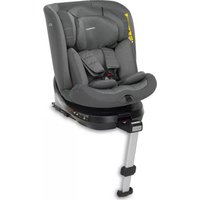
Iturn i-Size - Car seat Foppapedretti - Free user manual and instructions
Find the device manual for free Iturn i-Size Foppapedretti in PDF.



| Product type | Car seat for children |
| Brand | Foppapedretti |
| Model | Iturn i-Size |
| Homologation | R129/03 i-Size |
| Child height | 40 to 150 cm |
| Rear-facing installation | 40 to 105 cm, ISOFIX + support leg |
| Forward-facing installation (5-point harness) | 76 to 105 cm, ISOFIX + support leg |
| Forward-facing installation (booster) | 100 to 150 cm, ISOFIX + 3-point belt or belt only |
| Harness | 5-point, adjustable in height with headrest |
| Rotation | 360°, with support leg deployed |
| Recline positions | 5 positions (40-105 cm), 1 position (100-150 cm) |
| Headrest | 12 positions, continuous adjustment |
| Support leg | Adjustable height with green indicator |
| Infant insert | Integrated, usable up to 87 cm |
| Side protection | Integrated system |
| Cover | Removable, machine washable at 30°C |
| Warranty | 12 months (standard) |
| Country of origin | Italy |
Frequently Asked Questions - Iturn i-Size Foppapedretti
User questions about Iturn i-Size Foppapedretti
0 question about this device. Answer the ones you know or ask your own.
Ask a new question about this device
Download the instructions for your Car seat in PDF format for free! Find your manual Iturn i-Size - Foppapedretti and take your electronic device back in hand. On this page are published all the documents necessary for the use of your device. Iturn i-Size by Foppapedretti.
USER MANUAL Iturn i-Size Foppapedretti
natural_image
Line drawing of a car seat with seats and legs, no text or symbols presentEN CAR SEAT - Assembly instructions
natural_image
Icon depicting a person sitting in a chair next to an icon with a lowercase 'i' (no text or symbols)ECE R129-03
IT. IMPORTANTE - LEGGERE ATTENTAMENTE E CONSERVARE PER FUTURO RIFERIMENTO
EN. IMPORTANT! READ THE INSTRUCTIONS CAREFULLY AND KEEP FOR FUTURE REFERENCE
FR. IMPORTANT! LIRE ATTENTIVEMENT ET CONSERVER SOIGNEUSEMENT A PORTEE DE MAIN POUR UNE UTILISATION ULTERIEURE
ES. IMPORTANTE! LEER ATENTAMENTE Y CONSERVAR PARA FUTURAS REFERENCIAS
PT. IMPORTANTE! LER ATENTAMENTE E GUARDAR PARA FUTURA CONSULTA
40-75 cm
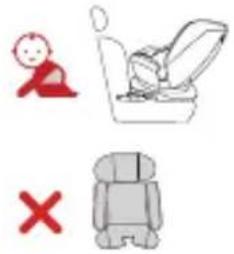
76-105 cm
natural_image
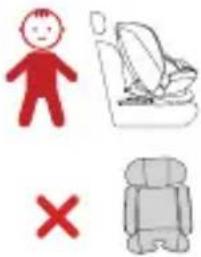
Illustration of a child with a red figure, seatbelt, and a gray backpack with a red X mark (no text or symbols)76-150 cm
2A
natural_image
Illustration of a car seatbelt with red arrows indicating pressure points (no text or symbols)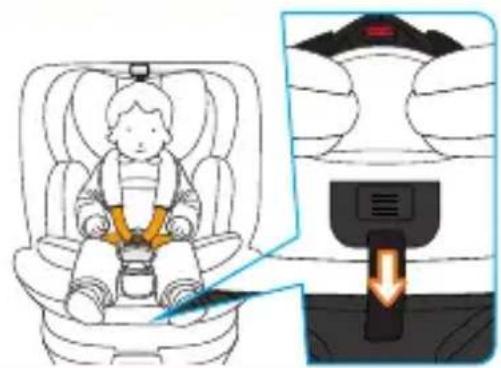
natural_image
Illustration of a child in a car seat connected to a car seatbelt device (no text or symbols present)3A
natural_image
Diagram showing two mechanical components with arrows indicating motion or force direction (no text or symbols)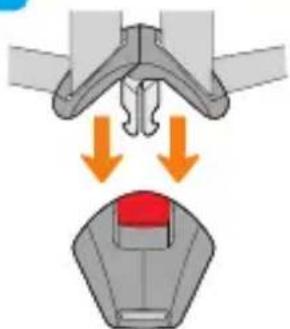
natural_image
Diagram showing two mechanical components with downward arrows indicating motion or force, no text or symbols present.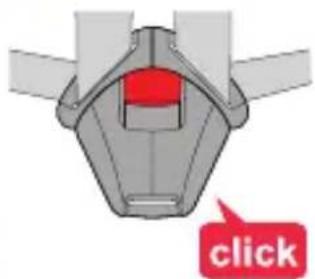
natural_image
Mechanical component diagram with red highlighted section and 'click' annotation (no readable text or symbols)3D
natural_image
Diagram of a mechanical assembly with a highlighted component (no text or symbols)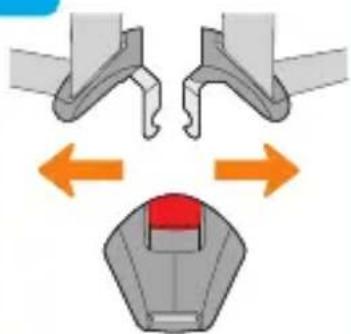
natural_image
Diagram showing two mechanical components with directional arrows indicating movement or force (no text or symbols)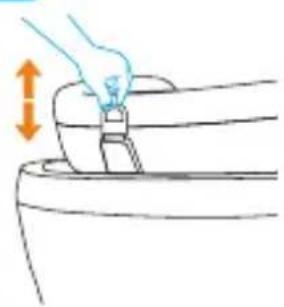
natural_image
Line drawing of a hand pressing down on a car seatbelt, with an orange double-headed arrow indicating the angle (no text or symbols)5
5A
5B
5C
natural_image
Line drawing of a car seat with seat number 1 and seat angle marked (no text or symbols on the diagram itself)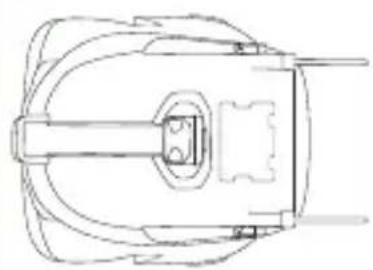
natural_image
Technical line drawing of a mechanical component with no visible text or symbols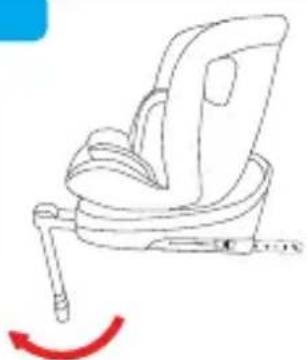
natural_image
Line drawing of a car seat with a red curved arrow indicating rotation (no text or symbols)6C6
7A
natural_image
Line drawing of a baby car seat with a red curved arrow indicating rotation (no text or symbols)7B
natural_image
Line drawing of a car seat assembly with a close-up inset showing the seat structure (no text or symbols)7C
natural_image
Technical line drawing of a mechanical component with no visible text or symbols8
natural_image
Line drawing of a car seatbelt with a magnified inset showing a hand holding a tool (no text or symbols)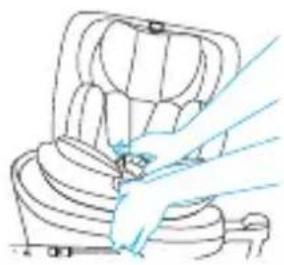
natural_image
Line drawing of a car seatbelt with a hand adjusting the seat (no text or symbols)9
10A
natural_image
Line drawing of a car seatbelt with a blue tool inserted, showing a red arrow indicating force or motion (no text or symbols)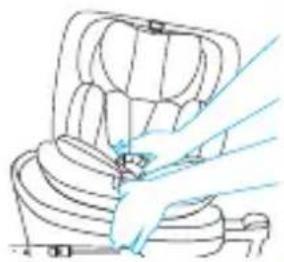
natural_image
Line drawing of a car seatbelt with a hand inserting a cable to the seat (no text or symbols)10B
natural_image
Line drawing of a baby car seat with adjustable arm and seat plate (no text or symbols)11A
13A
natural_image
Line drawing of a baby car seat with a red arrow indicating direction (no text or symbols)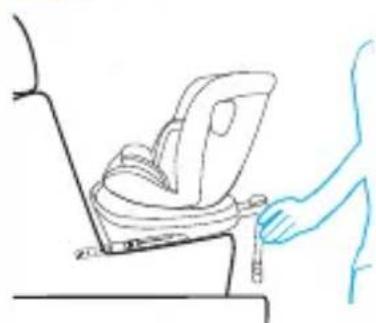
natural_image
Line drawing of a baby car seat with hand adjusting seat (no text or symbols)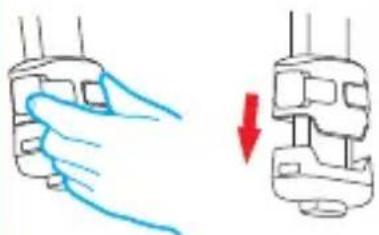
natural_image
Illustration of a hand holding a small electronic component and a separate mechanical component with a red arrow indicating rotation (no text or symbols)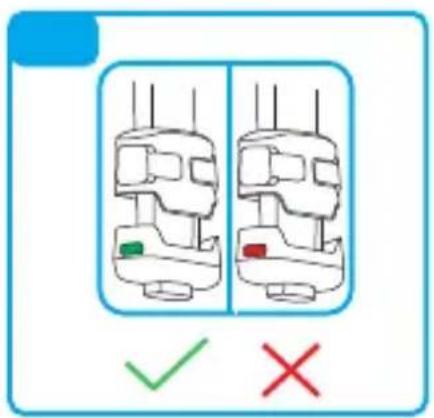
natural_image
Line drawing of a car seatbelt with a hand adjusting the seat (no text or symbols)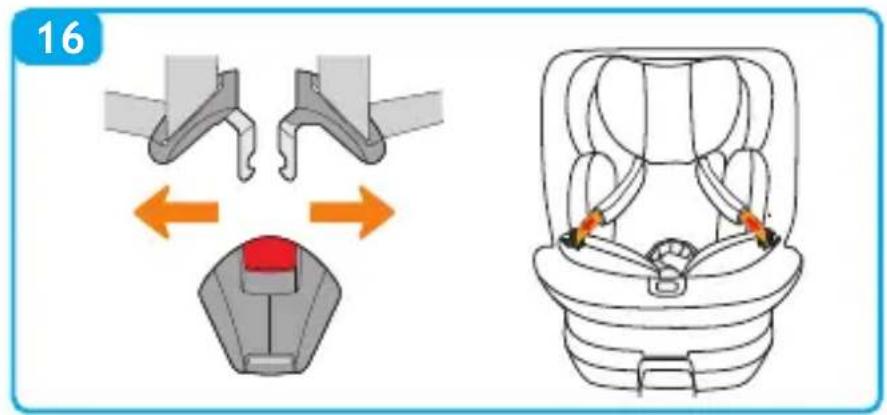
natural_image
Line drawing of a baby sitting in a car seat (no text or symbols)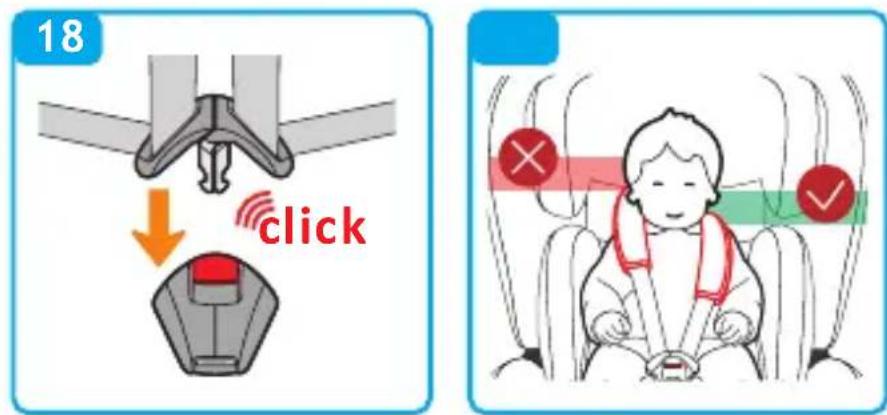
natural_image
Illustration of a child wearing a seatbelt in a car seat (no text or symbols)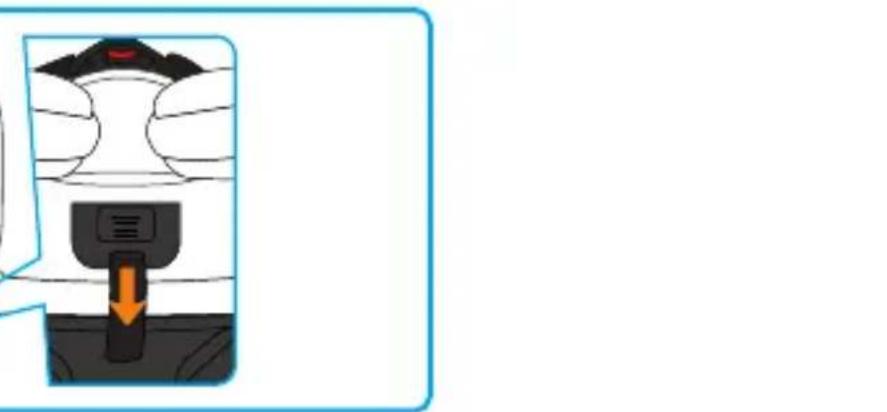
natural_image
Diagram of a mechanical device with a downward arrow indicating force or movement (no text or symbols)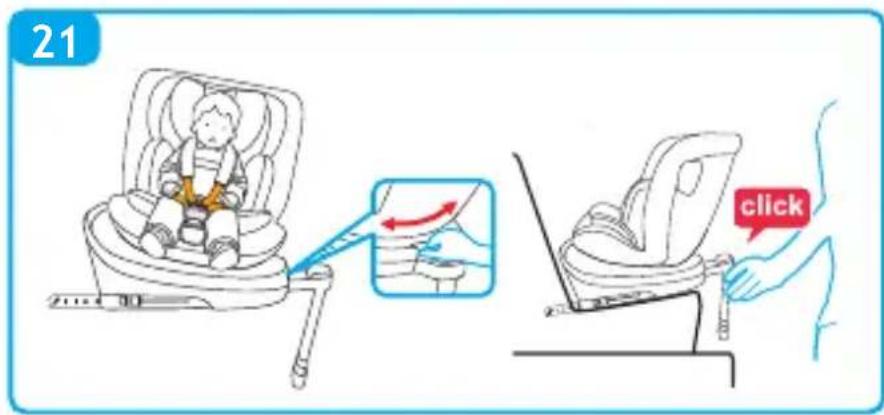
natural_image
Line drawing of a car seat with a hand holding the seatbelt, no text or symbols present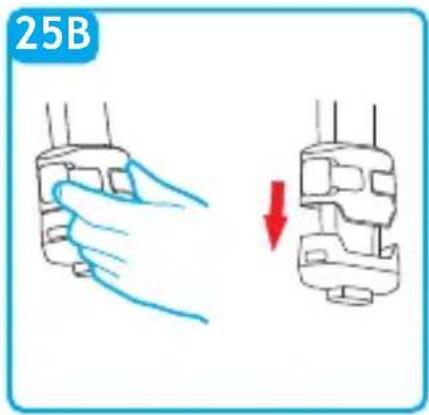
26
natural_image
Illustration of a hand pressing down on a curved surface with a red arrow indicating motion (no text or symbols)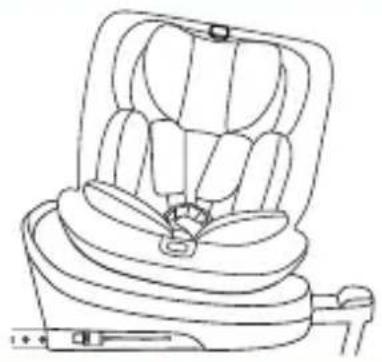
natural_image
Line drawing of a car seat assembly (no text or symbols)27
natural_image
Line drawing of a car seatbelt with hand adjusting seat (no text or symbols)28A
natural_image
Diagram showing two mechanical components with directional arrows indicating movement or force (no text or symbols)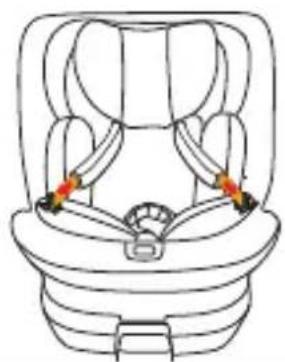
natural_image
Line drawing of a car seat with orange connectors and seatbelt (no text or symbols)28B
natural_image
Line drawing of a baby sitting in a car seat (no text or symbols)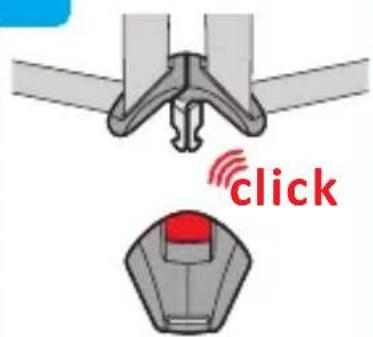
30
32
natural_image
Illustration of a hand pressing down on a curved surface with a red arrow indicating direction (no text or symbols)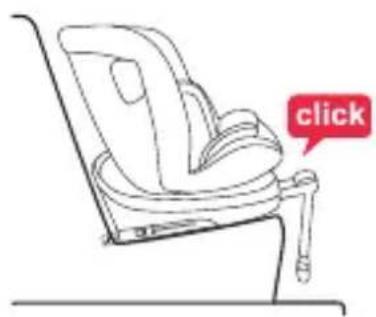
natural_image
Line drawing of a car seat with a hand holding a cane, no text or symbols present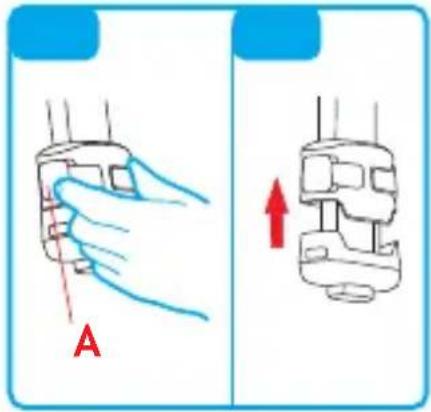
natural_image
Line drawing of a car seat with a red curved arrow indicating rotation (no text or symbols)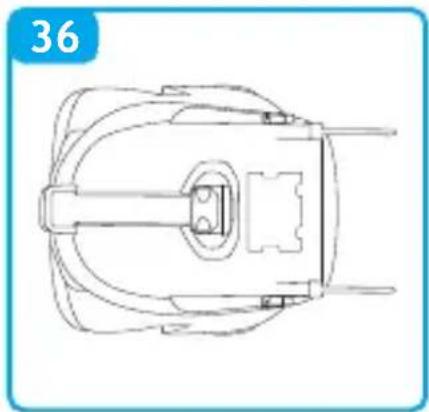
natural_image
Technical line drawing of a mechanical component with no visible text or symbols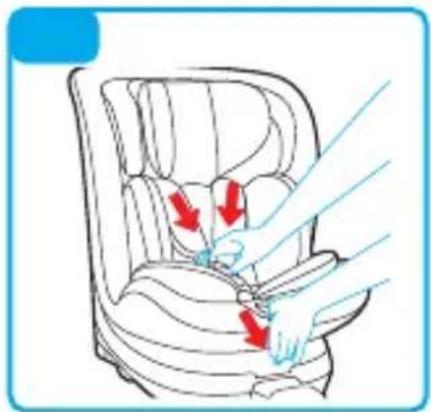
natural_image
Illustration of a car seatbelt with red arrows indicating pressure points (no text or symbols)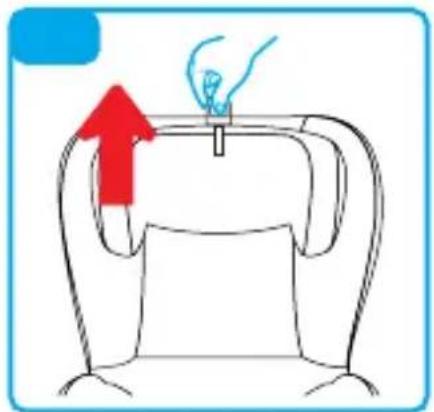
natural_image
Simple line drawing of a chair with a hand holding a tool above it, no text or symbols present.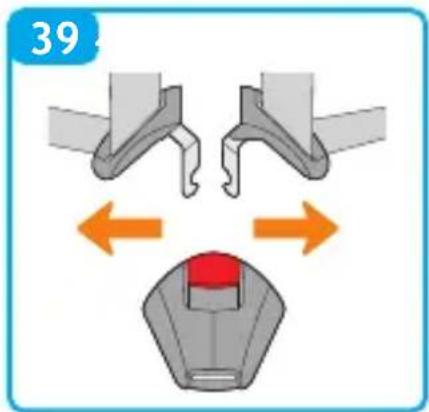
natural_image
Illustration of a car seat assembly with a magnified inset showing the internal structure (no text or symbols)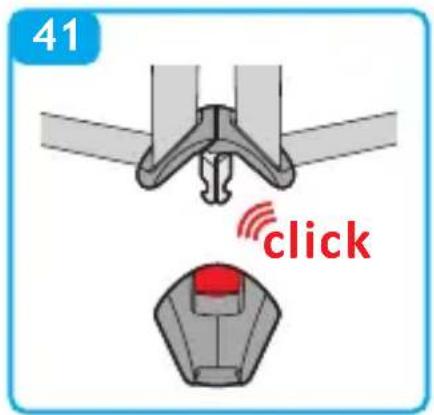
natural_image
Line drawing of a car seat with a magnified inset showing a red arrow indicating the adjustment (no text or symbols present)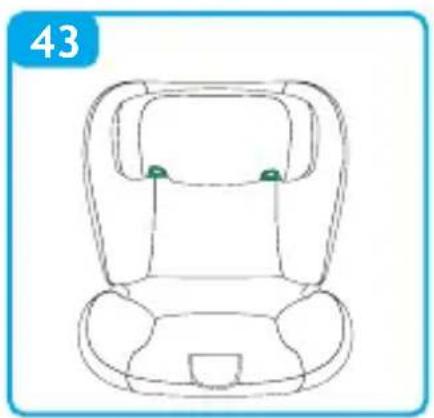
natural_image
Line drawing of a car seat with two green connectors (no text or symbols)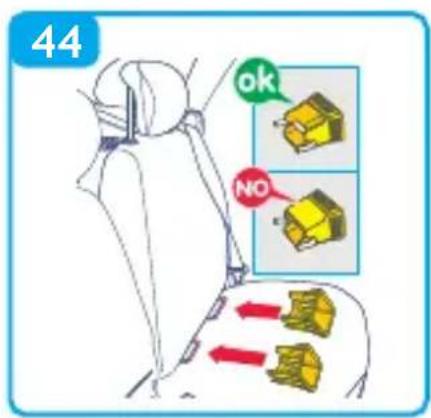
natural_image
Line drawing of a car seat with a highlighted side view showing the seat and seat details (no text or symbols)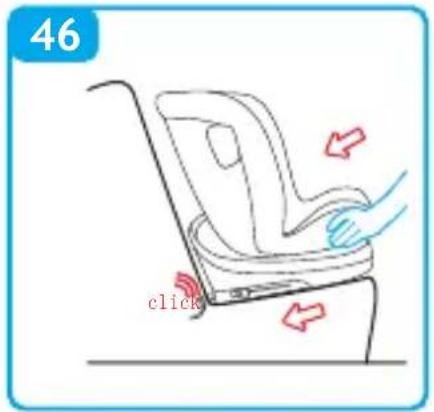
natural_image
Illustration of a car seat with hand placement and red arrows indicating movement (no text or symbols)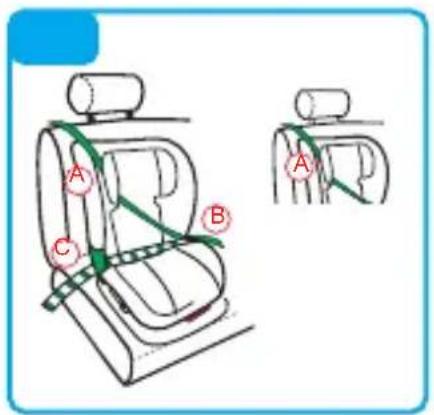
natural_image
Illustration of a child seated in a car seat with green safety belt (no text or symbols)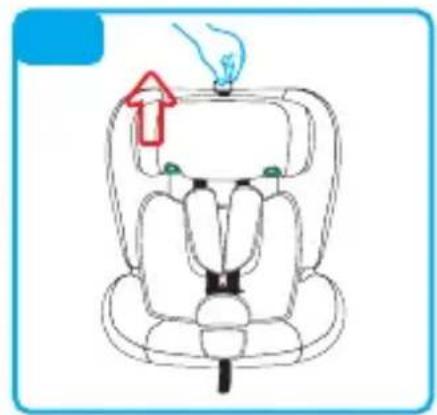
natural_image
Line drawing of a car seat with a hand pressing down on the seat (no text or symbols)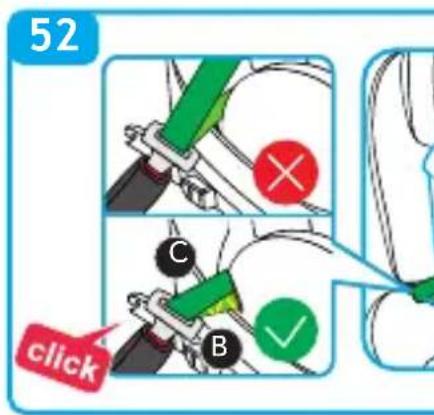
natural_image
Line drawing of a car seat with a red arrow indicating compression or dislocation (no text or symbols)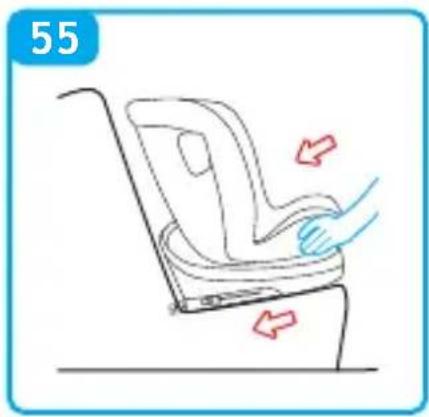
natural_image
Line drawing of a car seat with hand placement and red arrows indicating motion (no text or symbols)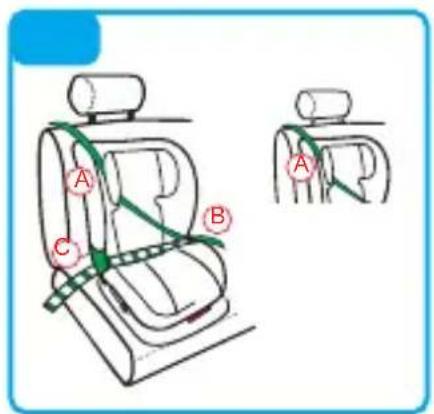
natural_image
Illustration of a child seated in a car seat with a green belt, no text or symbols present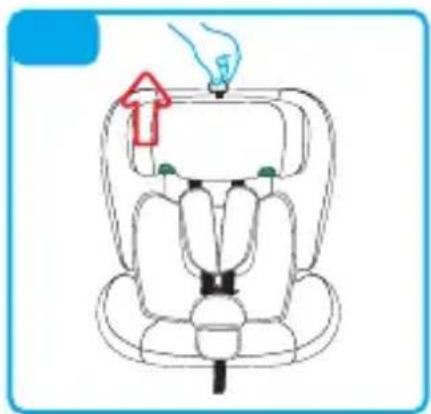
natural_image
Illustration of a car seat with a hand pressing a button, showing no text or symbols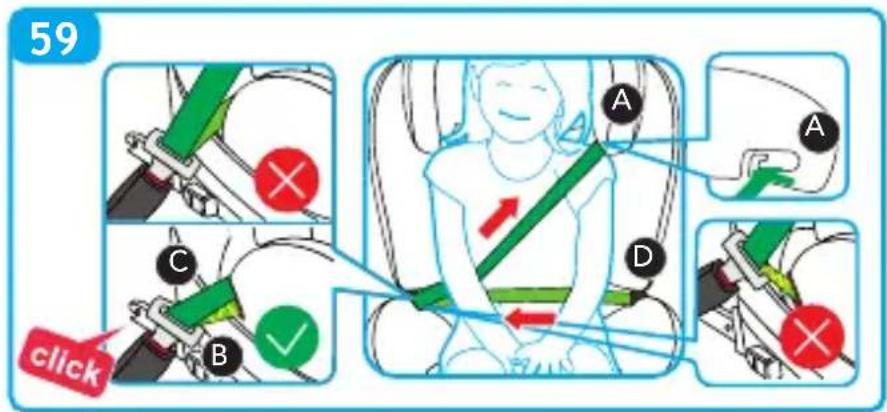
natural_image
Illustration of a hand using a device to lift a seatbelt (no text or symbols visible)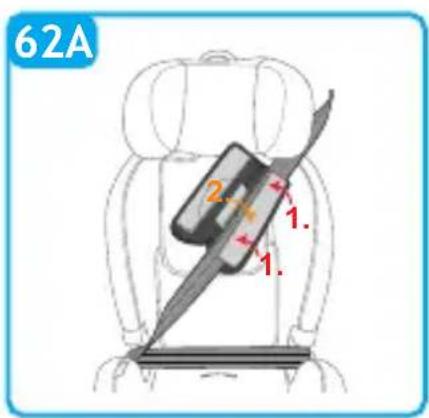
natural_image
Line drawing of a car seatbelt with a knife inserted, no text or symbols present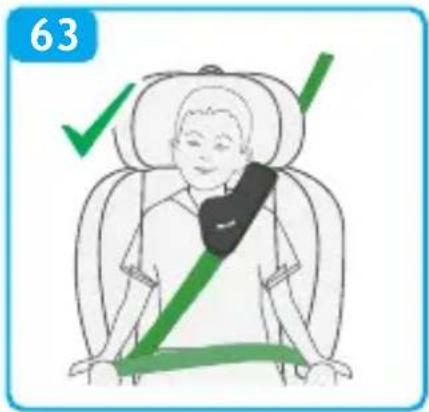
INDICE
natural_image
Diagram showing a green checkmark on a mechanical component with no readable text or symbols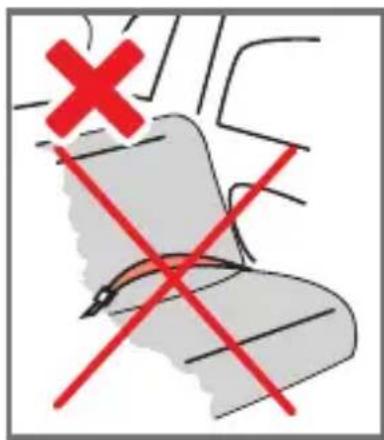

| Warnings | PAG 39 |
| Components | PAG 43 |
| Restrictions and requirements regarding the use of the product and vehicle seat | PAG 44 |
| Using the reducer | PAG 46 |
| Adjusting the height of the headrest and straps | PAG 46 |
| Adjusting the seat belt (harness) (from 76 cm to 105 cm) | PAG 47 |
| Using the buckle - (from 40 cm to 105 cm) | PAG 47 |
| Headrest adjustment | PAG 47 |
| Reclining the seat | PAG 47 |
| Pull out the support leg | PAG 47 |
| Fold up the support leg | PAG 48 |
| 360° Seat rotation | PAG 48 |
| Placing the car seat in the rear-facing position (children between 40 and 105 cm in height, ISOFIX + support leg + harness) | PAG 49 |
| Installation in the forward-facing position(Children between 76 and 105 cm in height, ISOFIX + support leg + harness) | PAG 50 |
| Removing the car seat from the vehicle / removing the ISOFIX system | PAG 53 |
| Removing the harness (storing the safety harness away) | PAG 53 |
| allation in the forward-facing position (children between 100 and 150 cm in height, 3-point seat belt or isofix + 3-point seat belt Mode A / B) | PAG 53 |
| KID-PAD installation | PAG 56 |
| Removing the lining | PAG 56 |
| Maintenance and cleaning | PAG 57 |
| Formal guarantee | PAG 58 |
WARNINGS
ATTENTION:
- Before use, it is recommended that you carefully read the instructions, which you will need to follow strictly in order to have the highest levels of product safety.
- Store these instructions carefully for future reference. These instructions can be stored in the special compartment on the car seat during the period of use.
- Failure to follow the car seat installation instructions carefully could pose a risk to your baby.
- Do not use a car seat on the front seat where active airbags are fitted, as this can be dangerous. This risk does not apply to the side airbags.
- WARNING! Deactivate the passenger airbag when the child is in the front seat in the rear facing direction.
-
This car seat is approved according to the ECE R129/03 regulation for the transport of children between 40 cm and 150 cm in height, and can be installed:
-
In the rear-facing position (children between 40 and 105 cm in height), with the ISOFIX anchoring system + support leg.
- In the forward-facing position (children between 76 and 105 cm in height), with the ISOFIX anchoring system + support leg.
- In the forward-facing position (children between 100 and 150 cm in height), with the ISOFIX anchoring system + the vehicle 3-point seat belt or with the vehicle 3-point seat belt only.
- IMPORTANT: Do not use forward facing before the child's age exceeds 15 months.
- The car seat can be installed facing forward once the child is at least 76 cm tall.
- NOTICE: This is an i-Size Enhanced Child Restraint System. It is approved according to UN Regulation No. 129, for use in, i-Size compatible vehicle seating positions as indicated by vehicle manufacturers in the vehicle users' manual. If in doubt, consult either the Enhanced Child Restraint System manufacturer or the retailer.
- NOTICE: This is a i-Size booster seat Enhanced Child Restraint System. It is approved according to UN Regulation No. 129. for use primarily in "i-Size seating positions" as indicated by vehicle manufacturers in the vehicle user's manual. If in doubt, consult either the Enhanced Child Restraint System manufacturer or the retailer.
- WARNING: NEVER leave your child unattended – your child's safety is your responsibility.
- WARNING: Adult assembly required.
- WARNING: The child car seat must be fitted in accordance with the manufacturer's instructions. Incorrect installation could be dangerous.
- WARNING: Always ensure that new or occasional users [e.g. grandparents] have read the instructions or been taught the correct installation by someone who has read and understood the instructions. ^39
WARNINGS
- WARNING: Always keep this instruction manual with the child car seat, or in the vehicle in which you are carrying the child car seat. Some models of child car seat have a pocket to store the instructions.
- WARNING: If in doubt regarding the installation and correct use of the car seat, contact the manufacturer of the child restraint device.
BEFORE STARTING
- WARNING: Do not fit the child car seat in a rearward facing position
- WARNING: Before installing the child car seat ensure that the passenger seat you are using is locked in the upright position.
- WARNING: Do not use the child car seat in the home - it has only been designed to be used in the car.
- WARNING: Do not leave loose/unsecured objects on the back seat of your car or the parcel shelf. They may be dangerous to your child if you are forced to brake suddenly.
WHEN USING THE CHILD CAR SEAT
- WARNING: WARNING: Make sure that the child car seat is placed somewhere so that rigid items and plastic parts do not become trapped in doors or movable seat units when the seat is in everyday use.
- WARNING: Always use the vehicle's door child safety lock system, if one is available, to make it impossible for the child to open the car doors from inside.
- WARNING: Allow the child a break during long car journeys and make sure they don't get out of the car seat unaided and without supervision.
- WARNING: NEVER leave your child unattended – your child's safety is your responsibility.
- WARNING: Ensure that the child car seat is secured to the car seat at all times even when not in use.
- WARNING: The child car seat must be fitted securely to the passenger seat. Ensure that it is not loose or wobbly after you have fitted it.
- WARNING: The child seat shall not be used without the cover.
- WARNING: The seat cover should not be replaced with any other than the one recommended by the manufacturer, because the cover constitutes an integral part of the restraint performance.
- WARNING: Allow the child a break during long car journeys and make sure they don't get out of the car seat unaided and without supervision.
- WARNING: In the event of an emergency it is important to be able to release the
WARNINGS
child quickly (as defined by British Standards). This means that seat buckle cannot be fully tamper proof and you should actively discourage your child from playing with or using the buckle.
- You should actively discourage your child from playing with or using the buckle.
SEAT BELT
- WARNING: NEVER use any load bearing contact points other than those described in these instructions.
- WARNING: Ensure that the lap section of the seatbelt or harness is worn low down, so that pelvis is firmly engaged. The harness must be tight enough, the space between the pectoral belt and the child's chest must not be more than two fingers thick. The abdominal belt of the harness should be in the lowest possible position to adequately restrain the child's pelvis.
- WARNING: Make sure that ALL the passengers in your vehicle have their seatbelts fastened, as unrestrained people can be very dangerous to the child in an accident..
- WARNING: NEVER use a seatbelt routing scheme that differs from these instructions.
- WARNING: The lap and diagonal seatbelt must be used at all times when your child is in the child car seat.
SUNLIGHT/HOT DAYS
- WARNING: Do not leave your child in the child car seat while parked in direct sunlight or on a hot day.
- WARNING: Do not subject the child car seat to prolonged direct sunlight as this may be dangerous for your child (the metal and plastic fittings could become hot) and may cause the fabric to fade. You can reduce this problem by covering the child car seat with a sheet when not in use.
SECOND HAND OR DAMAGED CHILD CAR SEATS AND SEATBELTS
- WARNING: Never buy a second hand child car seat. It may have unseen damage.
- WARNING: The manufacturer only guarantees this product when the original owner uses it.
- WARNING: You MUST replace the child car seat and your vehicles seatbelts if they become badly worn or amazed.
- WARNING: You MUST replace the child car seat if it is involved in an accident it may have unseen damage and may not protect your child as well as it should. At the very least send the child car seat to your retailer for inspection, together with the accident report.
WARNINGS
- The FOPPAPEDRETTI company declines all responsibility for improper use of the product and for any use that does not comply with these instructions.
IMPORTANT WARNING
from 40 to 105 cm (i-Size universal ISOFIX)
- This is an i-Size Enhanced Child Restraint System. It is approved according to UN Regulation No. 129, for use in, i-Size compatible vehicle seating positions as indicated by vehicle manufacturers in the vehicle users' manual. "Iturn i-Size" can be used in all i-Size seating positions and in any ISOFIX seating positions. If in doubt, consult either the Enhanced Child Restraint System manufacturer or the retailer.
- From 40 cm to 105 cm it must be installed on seats equipped with the Isofix System and support leg.
From 100 cm to 150 cm (i-Size booster seat)
- This is a i-Size booster seat Enhanced Child Restraint System. It is approved according to UN Regulation No. 129, for use primarily in “i-Size seating positions” as indicated by vehicle manufacturers in the vehicle user’s manual. “Itturn i-Size” can be used in all i-Size seating positions and, it can be used also in any UNIVERSAL seating position provided that it does not conflict with the interior of the car. If in doubt, consult either the Enhanced Child Restraint System manufacturer or the retailer.
- WARNING! DO NOT use the support leg from 100 to 150 cm.
- If the vehicle is not fitted with Isofix anchorage, the "lturn i-Size" can be installed (in the 100-150 cm configuration) front-facing with a 3-point adult safety belt, approved according to UN/ECE Regulation No. 16 or equivalent.
- WARNING! When using the 3-point adult safety belt, make sure that the lap portion is positioned correctly on the pelvic area.
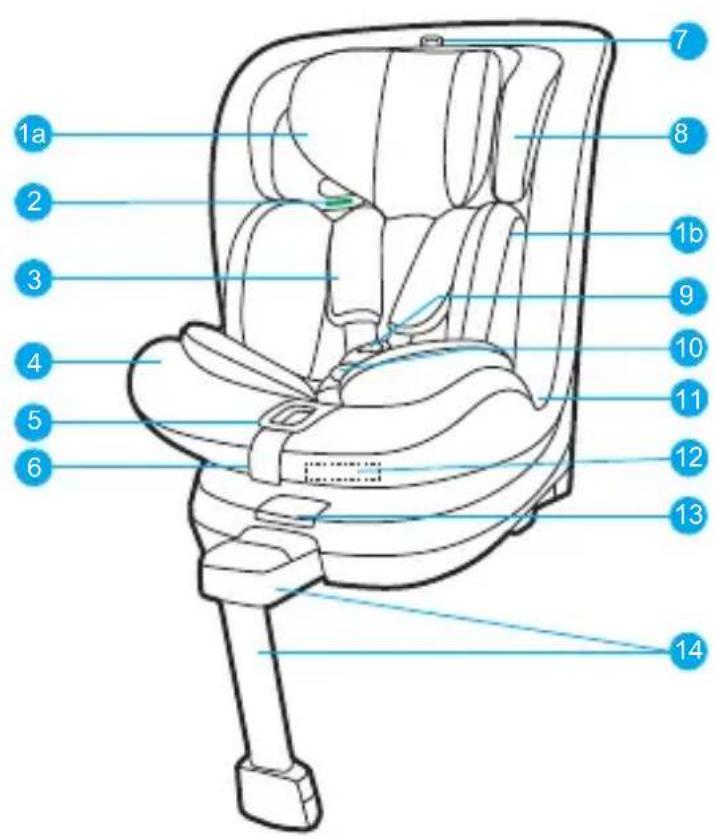
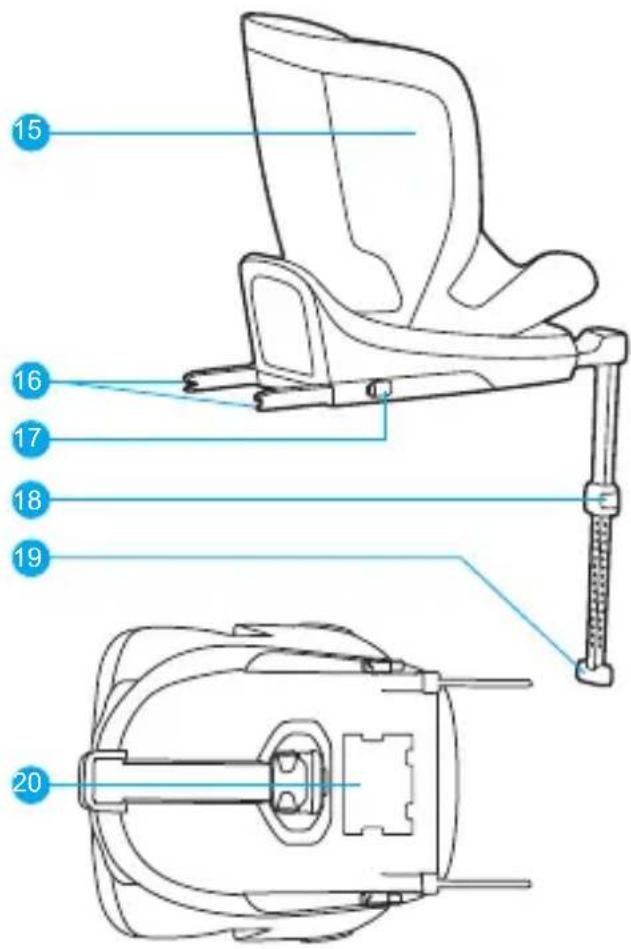
- Reducer :
a. Headrest reducer
b. Seat reducer - Diagonal belt guide
- Chest belt protection
- 5-point seat belt
- Shoulder strap adjustment button
- Shoulder strap adjustment belt
- Headrest height adjustment lever
- Headrest
- Fibbia
-
Crotch protection
-
Lap belt guide
- Lever to recline the seat
- Seat rotation lever
- Support leg
- Side protection system
- ISOFIX connectors
- ISOFIX release button
- Support leg adjustment button
- Indicator for the correct adjustment of the support leg
- Instruction compartment
USE IN THE VEHICLE
RESTRICTIONS AND REQUIREMENTS REGARDING THE USE OF THE PRODUCTAND VEHICLE SEAT
WARNING! Follow the restrictions at all times:
- This child car seat can be installed so that it faces opposite of the car driving direction. The car seat can be installed in the rear facing position when the height of the child is between 40 cm and 105 cm. The car seat can be installed
- facing forward once the child is at least 76 cm tall.
- IMPORTANT! Do not use forward facing before the child's age exceeds 15 months.
- WARNING! Deactivate the passenger airbag when the child is in the front seat in the rear facing direction.
- The car seat can be used on all i-Size approved vehicle seats (check the vehicle's instruction manual) and on seats of vehicles included in the "Vehicle compatibility list" given with the car seat.
- The vehicle seat must be forward facing. Never use this car seat on vehicle seats facing the sides or opposite to the direction of the driver's seat.
| CAR SEAT | GROUP ORIENTATION INSTALLATION METHODS TYPE | |||
| Iturn i-Size 40 - 105 cm | Rear-facing | ISOFIX + support leg | i-Size | |
| Iturn i-Size 76 - 105 cm | Forward-facing | ISOFIX + support leg | i-Size | |
| Iturn i-Size 100 - 150 cm | Forward-facing | ISOFIX + 3-point Seat Belt | i-Size booster seat | |
| Forward-facingIturn i-Size 3 point Seat Belt | i-Size booster seat | |||
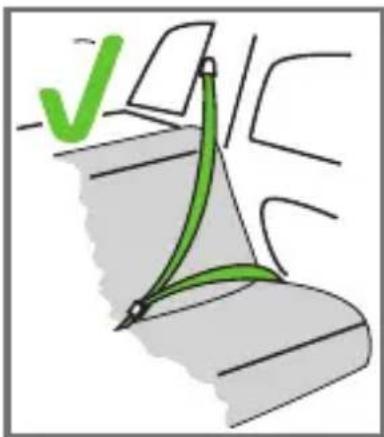
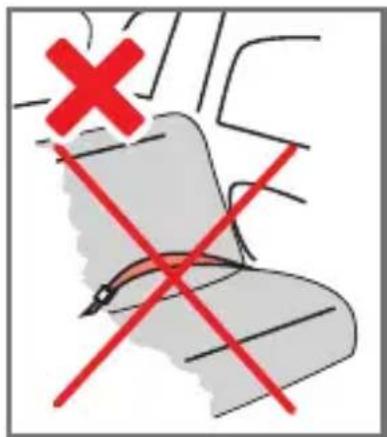
The car seat can be fitted only if the vehicles considered as suitable are equipped with 3-point seat belts approved pursuant to Regulation UN/ECE n.16 or other equivalent standards
USE IN THE VEHICLE
THE CAR SEAT CAN BE INSTALLED AS SHOWN IN THE FIGURE:
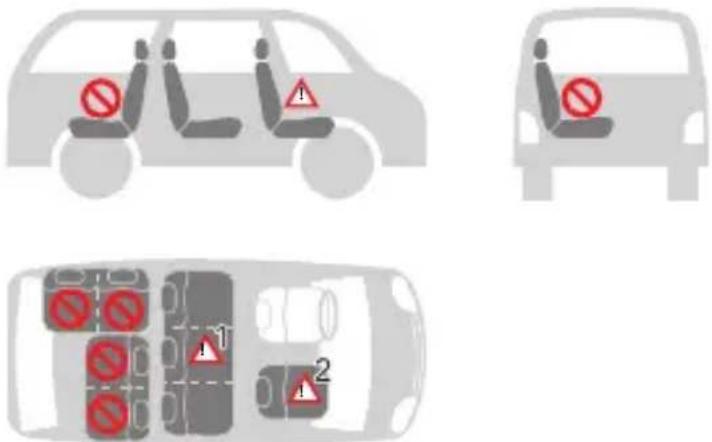

| • Forward-facing | YES |
| • Rear-facing | YES |
| • With a 2-point seat beltThe use of two-point seat belts significantly increases the risk of injury to the child in the event of an accident. | NO |
| • With a 3-point seat beltThe seat belt must be approved according to the ECE R16 regulation or other equivalent standards | YES |
| • With the ISOFIX and support leg | YES |
| • On the front passenger seatDO NOT USE ON PASSENGER SEATS EQUIPPED WITH ACTIVE FRONT AIRBAGS!The car seat can be attached to the front passenger seat using the ISOFIX systems, or alternatively without these, by following the same warnings as for these systems (slide the passenger seat backwards and consult the instructions in the vehicle user manual). | YES ^2 |
| • On the two rear side passenger seat | YES |
| • On the rear centre passenger seatThe car seat can be used on the central rear passenger seat if it is equipped with a three-point seat belt. | YES ^1 |
(You must comply with local regulations in force in your country of residence).
USE IN THE VEHICLE
USING THE REDUCER
The seat reducer is designed for use with children, to ensure greater comfort and stability and provide a more reclined position, preventing their head from falling forwards.
The reducer must be used until the child reaches 87 cm (fig 1).
ADJUSTING THE HEIGHT OF THE HEADREST AND STRAPS
Adjusting the headrest correctly ensures maximum protection for your child when inside the car seat.
From 40 to 105 cm: When using the 5-point harness, the headrest must be adjusted so that there is a 1-finger (1 cm) space between the shoulder straps and the top of the shoulders.
IMPORTANT: Loosen the shoulder straps before adjusting the headrest. Adjusting the straps to a position lower or higher than the child's shoulders can compromise your child's safety.
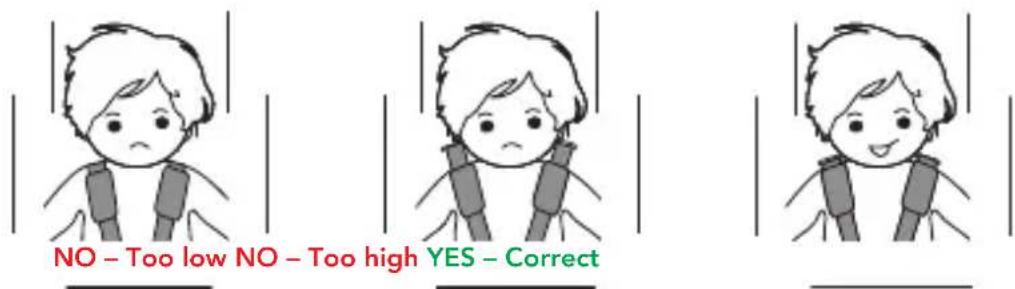
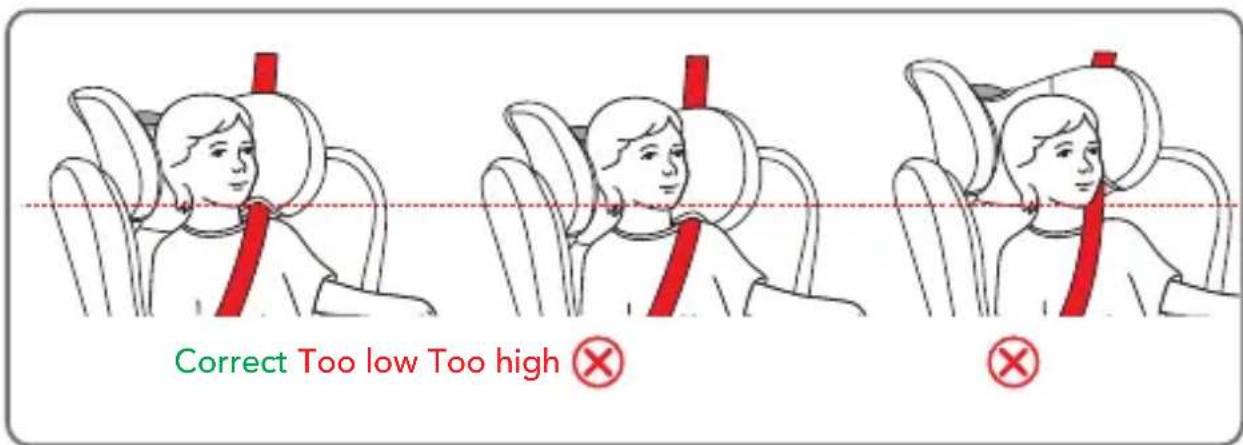
From 100 to 150 cm: When using the 3-point vehicle seat belt, the headrest must be adjusted so that there is a two-finger space between the headrest and the child's shoulders. Make sure that the diagonal belt, when passing through the "diagonal belt guide loop" on the side of the headrest, is positioned at the shoulders and not at the child's neck.
USE IN THE VEHICLE
ADJUSTING THE SEAT BELT (HARNESS) (From 76 cm to 105 cm)
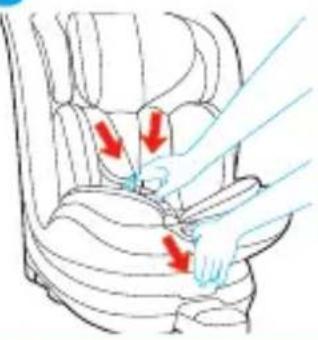
To loosen the harness: Press the adjustment button and at the same time grip the straps (chest belts) at the bottom, under the pads of the chest protectors, and pull them forwards to loosen them (fig. 2A).
IMPORTANT: Do not pull on the shoulder pads.
Tightening the harness: Pull the harness adjustment strap so as to tighten it properly against the body of the child (fig. 2B). The harness is correctly tightened when the gap between the harness and the child is no greater than the thickness of your finger (1 cm).
NOTE: check that the buckle is secured by tugging the shoulder and waist straps.
ATTENTION: Do not twist or overlap the harness straps.
USING THE BUCKLE - (From 40 cm to 105 cm)
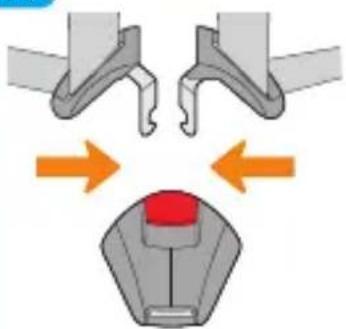
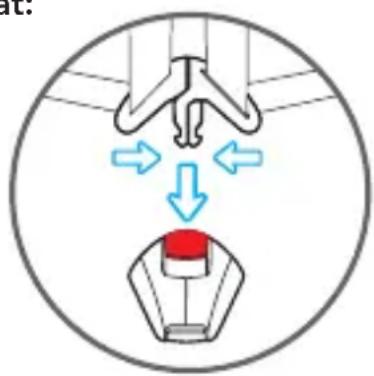
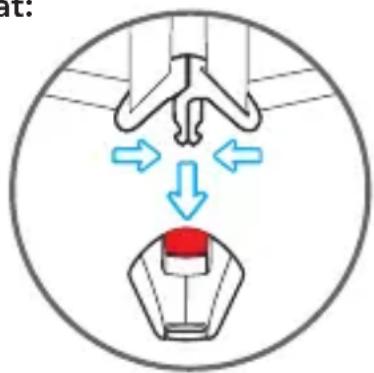
To attach the buckle: Hold together the central buckle tabs (fig. 3A, 3B) and insert them in the special slot inside the harness buckle. A “click” will indicate that it has attached correctly (fig. 3C).
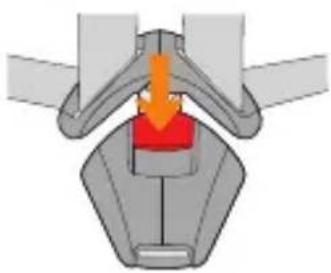
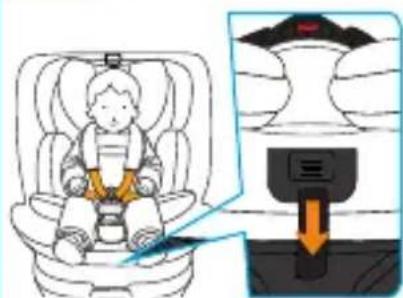
To release the buckle: Press the red button to remove the tabs from the central buckle (fig. 3D, 3E).
HEADREST ADJUSTMENT
The headrest can be adjusted to different heights (n.12). Pull the ring of the adjustment strap and raise or lower the headrest to the correct position (fig.4).
In group 40-105cm, the adjustment of the headrest also changes the height of the shoulder straps.
RECLINING THE SEAT
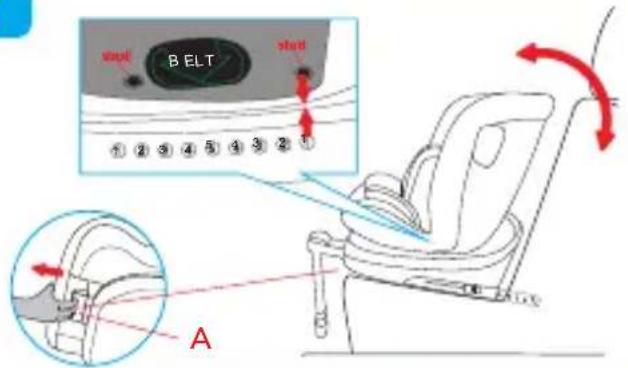
The seat of the car seat can be reclined in 5 different positions (pos. 1, 2, 3, 4, 5).
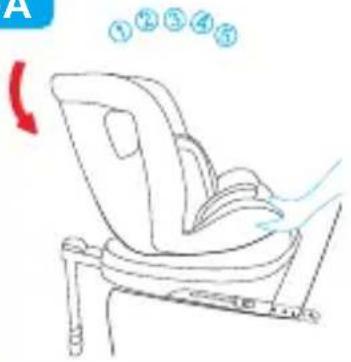
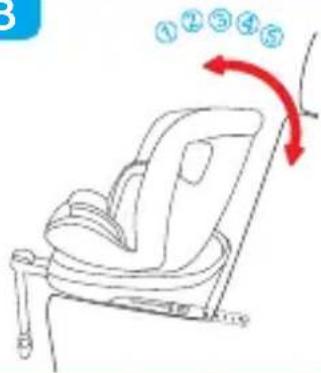
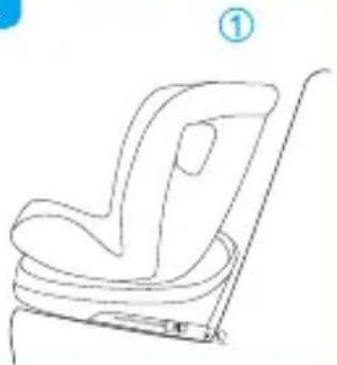
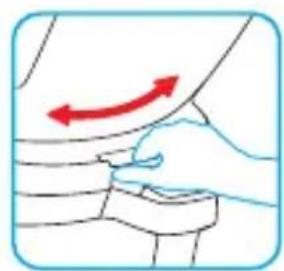
To adjust the tilt: Press the adjustment handle located under the front of the car seat and, holding it down, pull or push the seat forwards or backwards. Release the handle when the seat is in the desired position and make sure that it is locked correctly; you will hear a "click" when the seat has attached (fig. 5).
(Fi. 5A) In the rear-facing position (children between 40 and 105 cm in height): the seat of the car seat can be reclined in 5 different positions;
(Fig. 5B) In the forward-facing position (children between 76 and 105 cm in height): the seat of the car seat can be reclined in 5 different positions;
(Fig. 5C) In the forward-facing position (children between 100 and 150 cm in height): the seat of the car seat can be reclined only in 1 position.
PULL OUT THE SUPPORT LEG
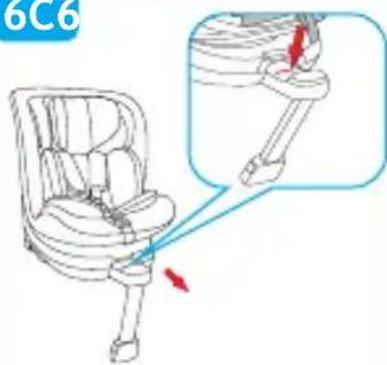
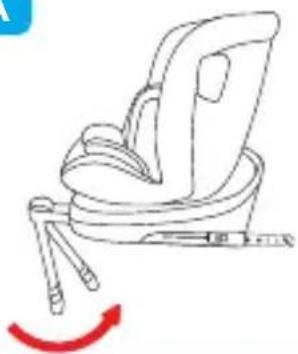
Pull out the support leg from its housing in the lower part of the car seat. When the support leg is folded by (fig. 6A, 6B, 6C) it can be pulled outwards until it locks into
USE IN THE VEHICLE
position. The visible red indicator shows that it has been opened correctly.
CAUTION You can only rotate the car seat when the support leg is extended outwards.
FOLD UP THE SUPPORT LEG
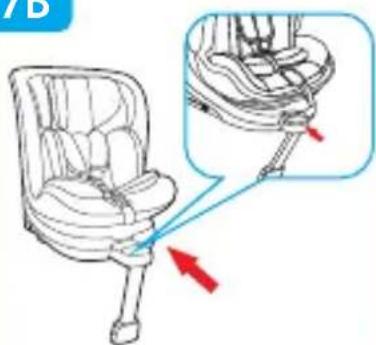
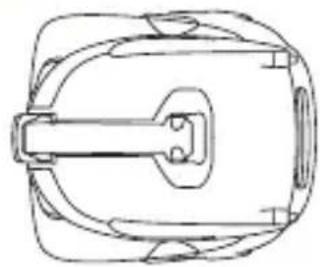
Rotate the support leg by 45^ , push the support leg towards the base, as far as it will go (fig. 7A, 7B) and fold the support leg inwards into its housing (fig. 7C).
360° SEAT ROTATION
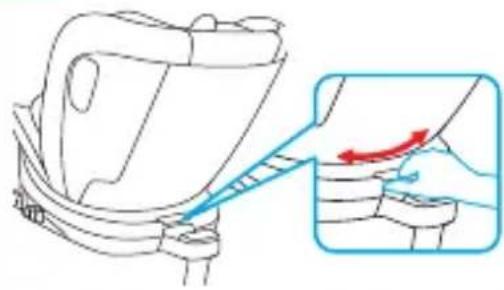
CAUTION You can only rotate the car seat when the support leg is extended outwards. The 360-degree rotation of the seat makes it easy to change the direction to forwardfacing or rear-facing and facilitates the process of putting the child in the car seat and removing them. Press the rotation button (fig. 8) and rotate the seat towards the door, to place your child in the car seat easily. To secure the child, see section "Harness adjustment". Rotate the seat into the forward-facing or rear-facing position, and a click will indicate that it has locked in place correctly.
PLACING THE CAR SEAT IN THE REAR-FACING POSITION (Children between 40
and 105 cm in height, ISOFIX + support leg + harness)
WARNING! The child car seat must be installed in the rear facing position until the child is older than 15 months. The rear-facing position remains the safest, even after exceeding this limit, and it is therefore advisable to use the car seat facing backwards for as long as possible.

DO NOT install the car seat on the passenger seat with an active airbag: this cause SERIOUS, OR EVEN FATAL, INJURY.
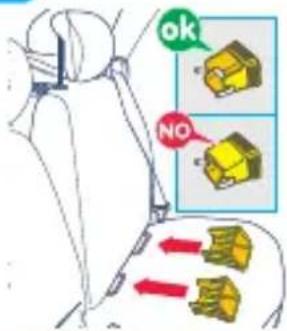
If your car does not have standard ISOFIX connector guides, insert those supplied with the car seat with the recess facing upwards in the two ISOFIX anchoring points in the car (fig. 9).
SUGGESTION: The ISOFIX anchoring points are located between the seat and the backrest of the passenger seat.
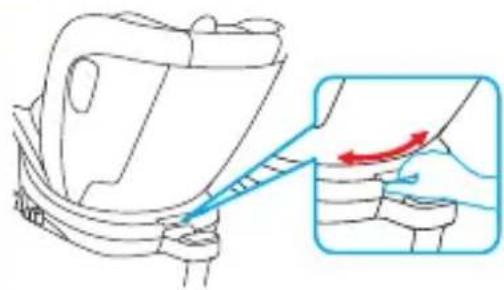
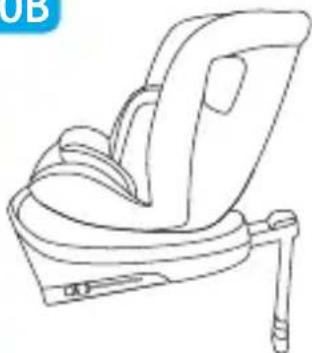
Press the rotation button and place the car seat in the rear-facing position. Make sure that it is locked (fig. 10A, 10B).
CAUTION: Before every journey, make sure that the rotating part of child seat is fully engaged by trying to turn the seat around in both directions.
Fold down the "support leg" until it locks into position, see paragraph "Pull out the support leg".
USE IN THE VEHICLE
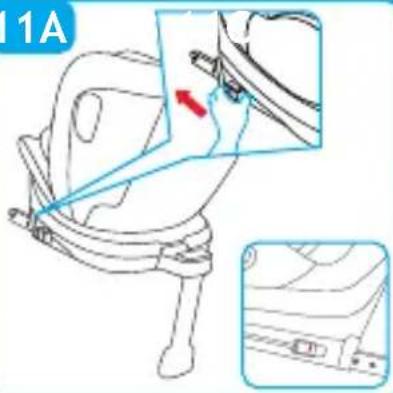
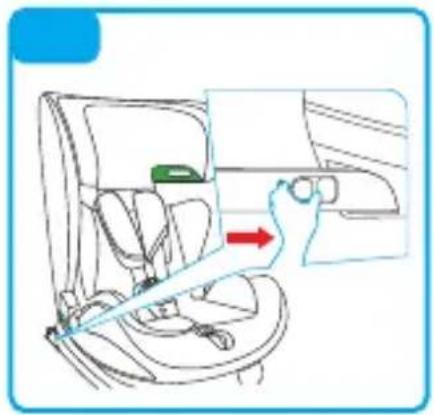
Press both sides of the adjustment/release button on the ISOFIX connectors simultaneously and extend the ISOFIX connectors. (fig. 11A) Repeat this process on both connectors of the car seat. Insert the two ISOFIX connectors into the appropriate guides, and push to attach the two connectors to the ISOFIX hooks in the vehicle.
You will hear a "click" once they have attached.
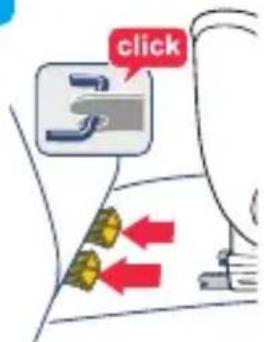
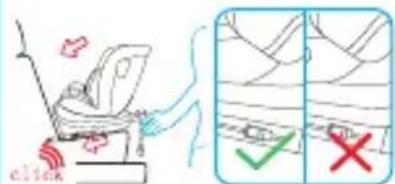
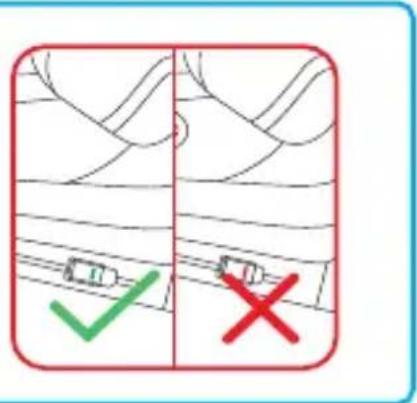
Check that the ISOFIX attachment indicators are green on both sides (fig. 11B, 11C). Push the car seat against the passengerseat, making sure that both ISOFIX connectors are extended in the same position. Shake the car seat to be sure it is correctly fixed in place and check again that the ISOFIX safety buttons are green (fig. 12).
Fold down the "support leg" until it locks into position.
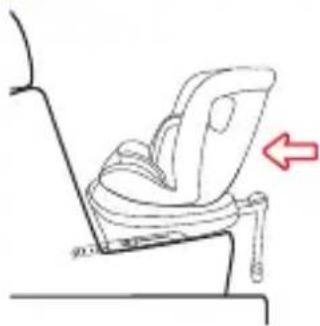
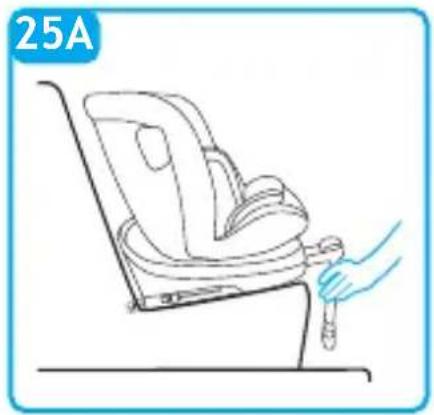
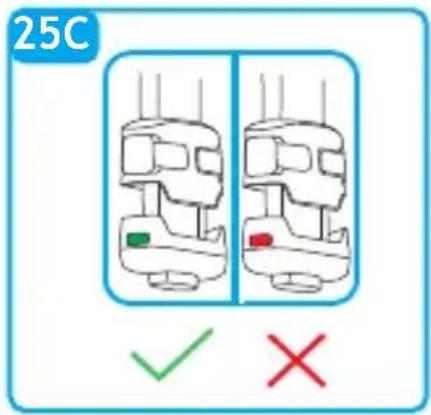
Press the support leg adjustment button and lower the leg down, so that it correctly touches the vehicle floor, then release the button. The leg height adjuster must change from red to green: this will indicate that the leg is placed correctly.
Check that the support leg is positioned and adjusted correctly (fig. 13A, 13B, 13C).
WARNING: Do not place the front support leg on a storage compartment located on the floor of the vehicle. The support leg must rest on a stable and secure surface on the floor of the vehicle.
WARNING: Make sure that the support leg does not lift the car seat up from the vehicle seat.
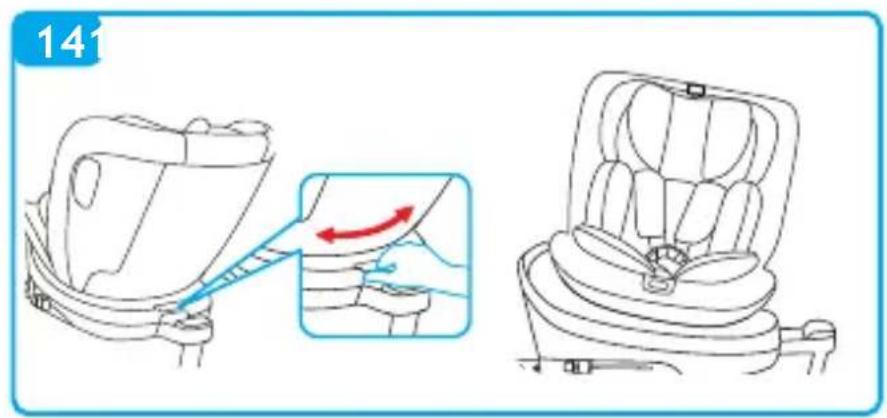
Press the rotation button and rotate the seat towards the door, to place your child in the car seat easily (fig. 14).
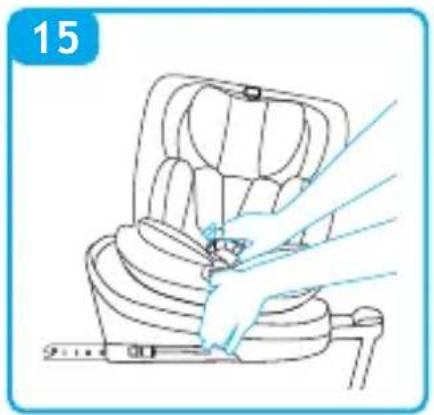
Press the adjustment button and at the same time grip the straps (chest belts) at the bottom, under the pads of the chest protectors, and pull them forwards to loosen them (fig. 15).
IMPORTANT: Do not pull on the shoulder pads. See paragraph "Adjusting the seat belt (harness)".
Press the red button on the central buckle to release the shoulder straps (fig. 16).
Place the shoulder straps on the sides of the car seat.
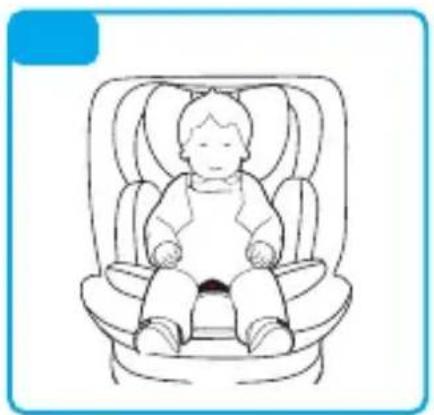
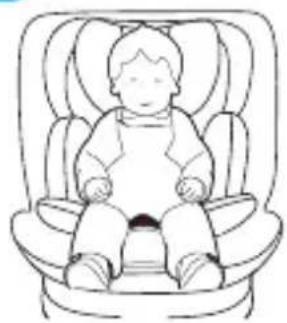
Place the child into the car seat (fig. 17). Place the straps over the child's shoulders, join together the two belt tabs and hook them to the buckle (fig. 18).
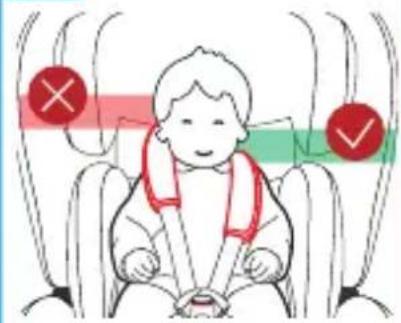
IMPORTANT! Correct adjustment of the headrest ensures maximum protection for your child when they are inside the car seat. When using the 5-point harness, the headrest
USE IN THE VEHICLE
must be adjusted so that there is 1 finger (1 cm) gap between the shoulder straps and the top of the shoulders. fig. 19.
IMPORTANT: Loosen the shoulder straps before adjusting the headrest.
To attach the buckle: See paragraph "Using the buckle".
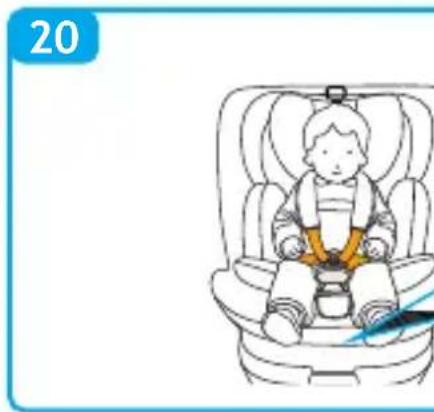
Tightening the harness: (fig. 20) See paragraph "Adjusting the seat belt (harness)".
PRECAUTIONS TO MAKE SURE YOU HAVE CORRECTLY FASTENED THE CAR SEAT HARNESS
IMPORTANT

For the safety of your child, always make sure that:
- The harness belts are correctly adjusted according to the child's height, and are correctly tightened;
- The chest straps are adjusted in the correct position;
- The harness belts are not twisted;
- The tabs are properly engaged in the buckle
natural_image
Diagram showing a mechanical component with directional arrows indicating motion or force (no text or symbols)Rotate the seat into the rear-facing position, and a click will indicate that it has locked in place correctly (fig. 21).
CAUTION: Before travelling, make sure that the seat is locked in a forward-facing or rearfacing position by trying to rotate the seat without pressing the rotation release button.
INSTALLATION IN THE FORWARD-FACING POSITION
(Children between 76 and 105 cm in height, ISOFIX + support leg + harness)
WARNING! Using the car seat in the rear-facing position is mandatory for a child up to 15 months of age and 76 cm in height. The rear-facing position remains the safest, even after exceeding this limit, and it is therefore advisable to use the car seat facing backwards for as long as possible.
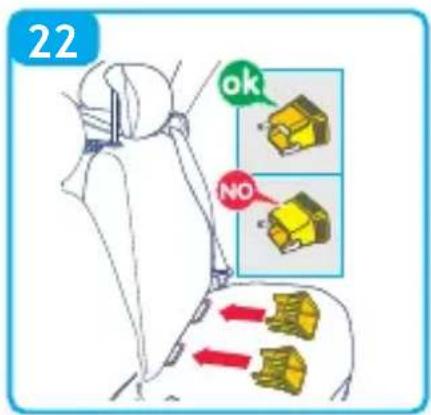
If your car does not have standard ISOFIX connector guides, insert those supplied with the car seat with the recess facing upwards in the two ISOFIX anchoring points in the car (fig. 22).
SUGGESTION: The ISOFIX anchoring points are located between the seat and the backrest of the passenger seat.
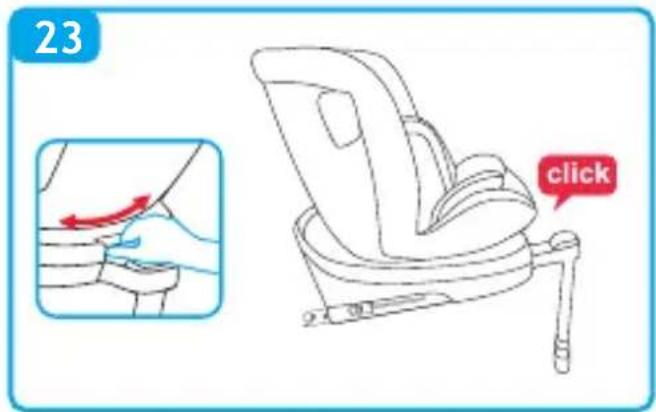
Press the rotation button and place the car seat in the forward-facing position. Make
USE IN THE VEHICLE
sure that it is locked (fig. 23).
CAUTION: Before every journey, make sure that the rotating part of child seat is fully engaged by trying to turn the seat around in both directions.
Fold up the support leg until it locks into position, see paragraph "Pull out the support leg".
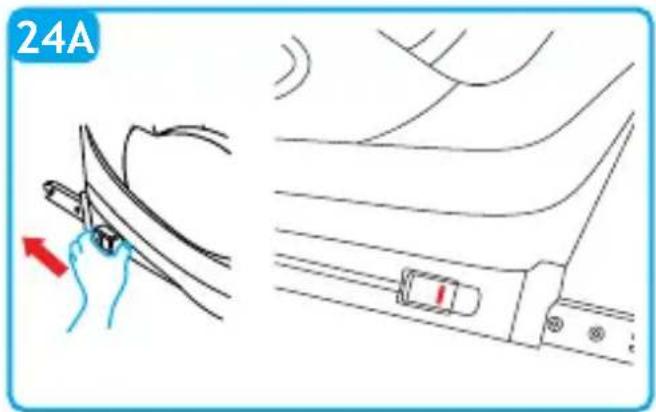
Press both sides of the adjustment/release button on the ISOFIX connectors simultaneously and extend the ISOFIX connectors (fig. 24A).
Repeat this process on both connectors of the car seat.
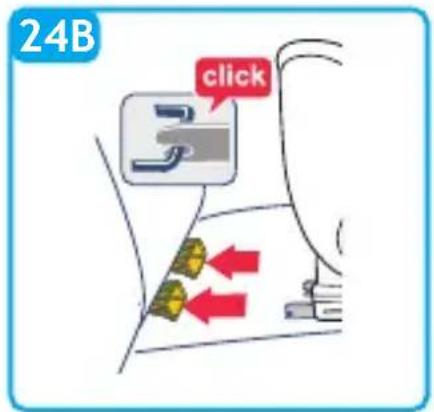
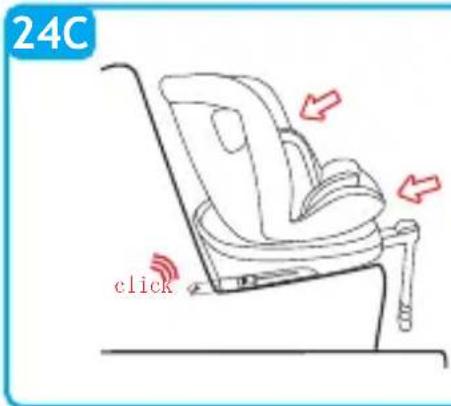
Insert the two ISOFIX connectors into the appropriate guides, and push to attach the two connectors to the ISOFIX hooks in the vehicle. You will hear a "click" once they have attached. Check that the ISOFIX attachment indicators are green on both sides (fig. 24B, 24C).
Push the car seat against the passengerseat, making sure that both ISOFIX connectors are extended in the same position. Shake the car seat to be sure it is correctly fixed in place and check again that the ISOFIX safety buttons are green (fig. 24C).
NOTE: before use, check that the ISOFIX connectors are correctly attached on both sides, when pulling the car seat, they must not detach.
ADJUSTING THE SUPPORT LEG
Fold down the "support leg" until it locks into position.
Press the support leg adjustment button and lower the leg down, so that it correctly touches the vehicle floor, then release the button. The leg height adjuster must change from red to green: this will indicate that the leg is placed correctly.
Check that the support leg is positioned and adjusted correctly (fig. 25A, 25B, 25C).
WARNING: Do not place the front support leg on a storage compartment located on the floor of the vehicle. The support leg must rest on a stable and secure surface on the floor of the vehicle.
WARNING: Make sure that the support leg does not lift the car seat up from the vehicle seat.
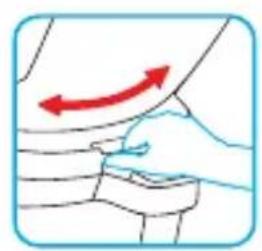
Press the rotation button and rotate the seat towards the door, to place your child in the car seat easily (fig. 26).
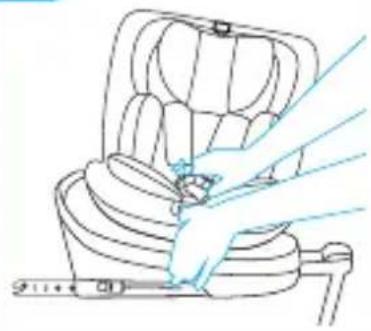
Press the adjustment button and at the same time grip the straps (chest belts) at the bottom, under the pads of the chest protectors, and pull them forwards to loosen the (fig. 27).
IMPORTANT: Do not pull on the shoulder pads. See paragraph "Adjusting the seat belt (harness)".
USE IN THE VEHICLE
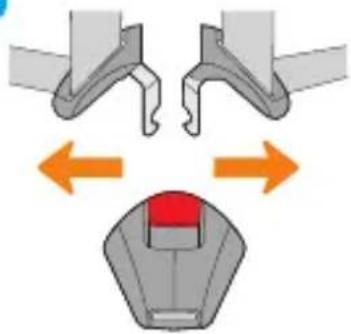
Press the red button on the central buckle to release the shoulder straps (fig. 28A).
Place the shoulder straps on the sides of the car seat.
Place the child into the car seat (fig. 28B). Place the straps over the child's shoulders, join together the two belt tabs and hook them to the buckle (fig. 29).
IMPORTANT! Correct adjustment of the headrest ensures maximum protection for your child when they are inside the car seat. When using the 5-point harness, the headrest must be adjusted so that there is 1 finger (1 cm) gap between the shoulder straps and the top of the shoulders (fig. 30).
IMPORTANT: Loosen the shoulder straps before adjusting the headrest.
To attach the buckle: See paragraph "Using the buckle".
Tightening the harness: (fig. 31) See paragraph "Adjusting the seat belt (harness)".
USE IN THE VEHICLE
PRECAUTIONS TO MAKE SURE YOU HAVE CORRECTLY FASTENED THE CAR SEAT HARNESS
IMPORTANT

For the safety of your child, always make sure that:
- The harness belts are correctly adjusted according to the child's height, and are correctly tightened;
- The chest straps are adjusted in the correct position;
- The harness belts are not twisted;
- The tabs are properly engaged in the buckle
natural_image
Diagram showing airflow or movement between two objects, one with red object and arrow indicating direction (no text or symbols)Rotate the seat into the forward-facing, and a click will indicate that it has locked in place correctly (fig. 32).
CAUTION: Before travelling, make sure that the seat is locked in a forward-facing or rearfacing position by trying to rotate the seat without pressing the rotation release button.
REMOVING THE CAR SEAT FROM THE VEHICLE / REMOVING THE ISOFIX SYSTEM
At the same time press the ISOFIX release buttons and retract the ISOFIX connectors (fig. 33). Remove the car seat from the vehicle.
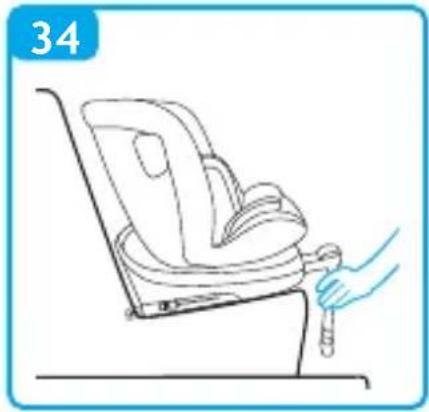
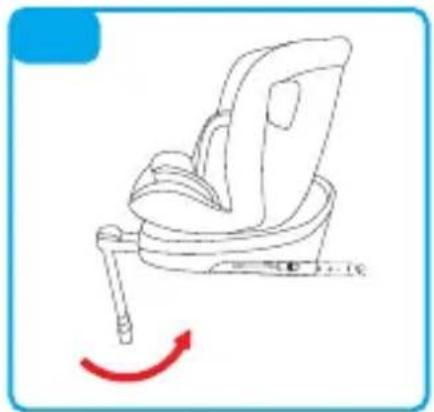
Press the button (A) and lift up the support leg (1) until it locks (fig. 34A, 34B).
Fold up the support leg under the base (fig. 35, 36).
REMOVING THE HARNESS (Storing the safety harness away)
- (Fig 37) - Completely loosen the shoulder straps, see paragraph "ADJUSTING THE SEAT BELT (HARNESS) (From 76 cm to 105 cm)".
- (Fig. 38) - Pull the handle on the headrest and, keeping it pulled, raise or lower the headrest, adjusting it according to the child's height.
• (Fig. 39) Press the red button on the central buckle to release the shoulder straps. - Unhook the press studs on the sides of the backrest fabric.
- Lift up the seat cover fabric, pulling it out of the harness adjustment device and lift up the inner padding, pulling it out of the harness adjustment device, pulling carefully and gently.
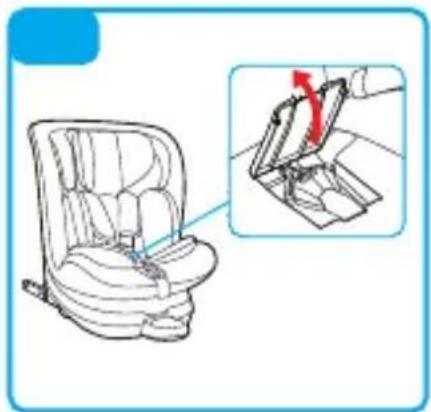
- Unthread the buckle inwards from the slots in the fabric and padding, open up the container compartment door and put the buckle back inside (fig. 40).
USE IN THE VEHICLE
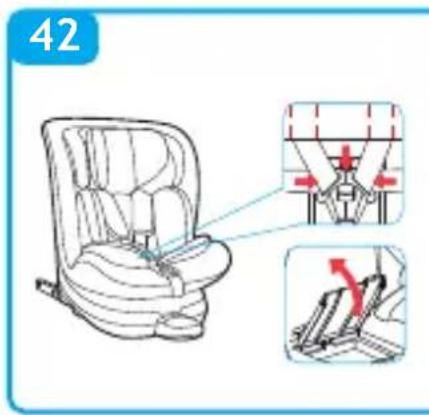
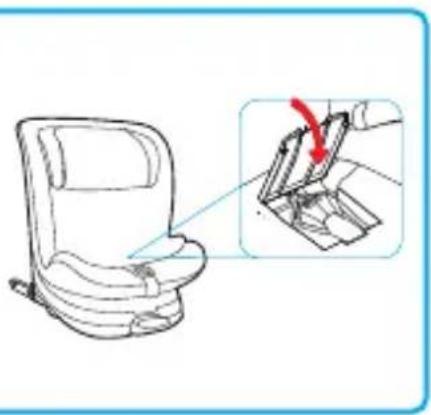
- Hook the tips to the buckle and insert the buckle into the internal compartment, then close the compartment again (fig. 41, 42).
- Reposition the internal padding correctly on the seat.
- Put the fabric back onto the seat and backrest, then attach the press studs (fig. 43).
INSTALLATION IN THE FORWARD-FACING POSITION (Children between 100 and 150 cm in height, 3-point seat belt or ISOFIX + 3-point seat belt)
It is recommended that you use the 5-point harness for as long as possible. When the growing child reaches a height of 100 cm, the car seat must be transformed for use with children between 100 and 150 cm in height. In this configuration, it is necessary to remove the 5-point seat belt (harness) supplied with the car seat.
See paragraph "REMOVING THE HARNESS (Storing the safety harness away)" and push the support leg towards the base, see paragraph "Fold up the support leg".
Only suitable for use in vehicles equipped with 3-point static or retractor seat belts, approved according to regulation UN/ ECE no.16 or other equivalent standards.
Mode A - INSTALLING WITH 3-POINT SEAT BELT TOGETHER WITH ISOFIX CONNECTORS
If your car does not have standard ISOFIX connector guides, insert those supplied with the car seat with the recess facing upwards in the two ISOFIX anchoring points in the car (fig 44).
SUGGESTION: The ISOFIX anchoring points are located between the seat and the backrest of the passenger seat.
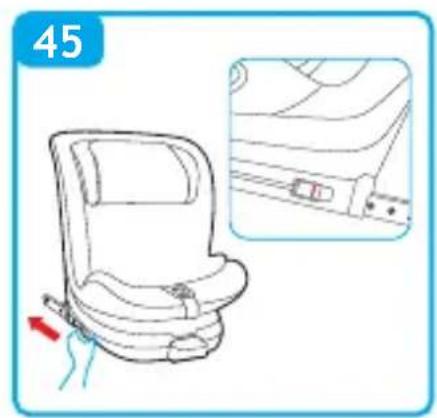
Press both sides of the adjustment/release button on the ISOFIX connectors simultaneously and extend the ISOFIX connectors ( (fig. 45).
Locate the ISOFIX attachments supplied with the vehicle.
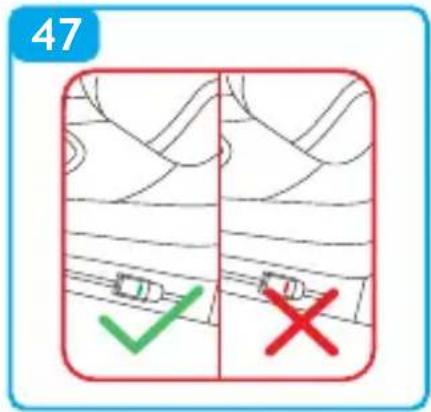
Align the ISOFIX connectors with the anchoring points fixed to the vehicle passenger seat and press until you hear a "click" (fig. 46). The indicator on both brackets will turn green, confirming that they have attached (fig. 47).
Ensure that both brackets are correctly fastened. Shake the car seat to be sure it is correctly fixed in place.
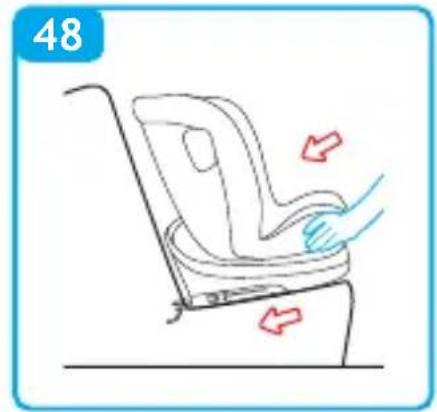
Push the car seat against the passenger seat, making sure that both ISOFIX connectors are extended in the same position. There must not be any space between the backrest of the passenger seat and the car seat (fig. 48).
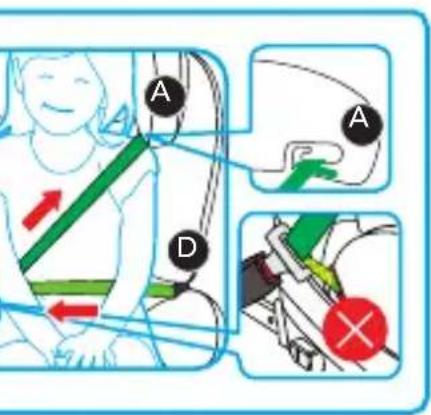
Pass the diagonal part of the 3-point seat belt behind the headrest of the car seat and through the green diagonal belt guide (A) located on the lower part of the headrest, on the retractor side (fig. 49).
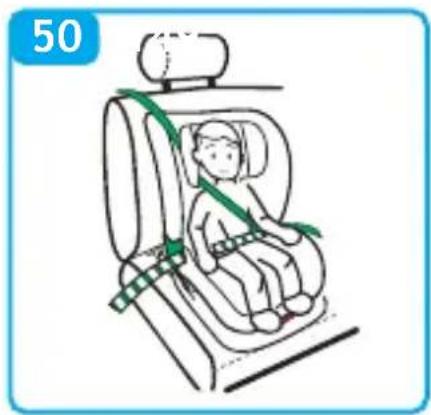
Place the child into the car seat (fig. 50). Press the button and raise or lower the headrest, adjusting it according to the child's height (fig. 51). Make sure that it is correctly locked in the chosen position (see par. "Headrest adjustment").
USE IN THE VEHICLE
Pull out the 3-point seat belt of the vehicle and, passing it over the front of your child, attach the vehicle's seat belt by inserting the tip into the buckle (B). A "click" will indicate that it is attached correctly (fig. 52).
WARNING! The vehicle's seat belt buckle must not be placed in the lower guide of the lap belt passage. Insert the diagonal belt and the lap belt into the lower loop from the side near the fastening buckle of the vehicle's seat belt (C) (fig. 52). Thread the lap belt on the opposite side of the car seat into the lap belt loop (D) (fig. 52).
WARNING! The lap belt must run as low as possible over your baby's pelvis. Insert the diagonal belt into the belt guide loop (A), making sure it is not twisted.
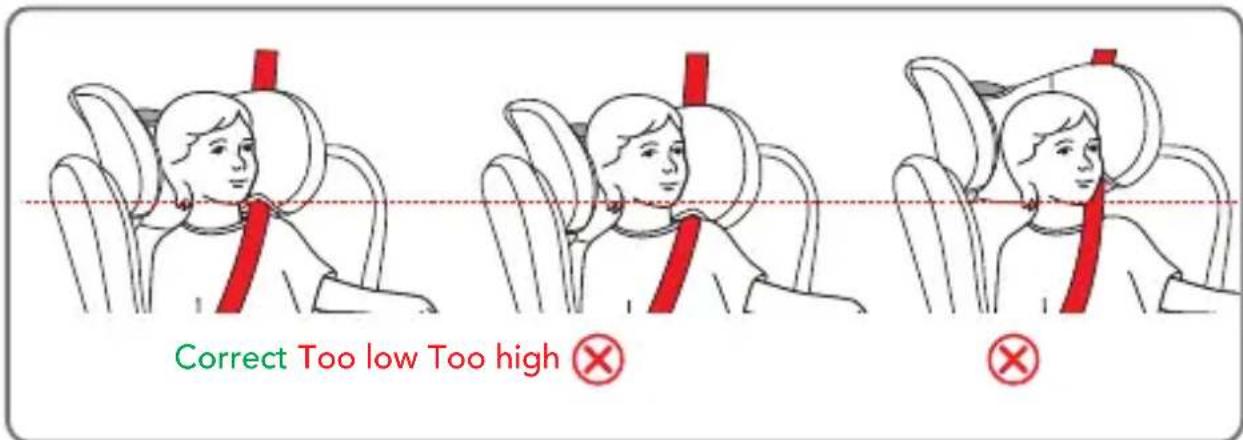
NOTE: When using the 3-point vehicle seat belt, the headrest must be adjusted so that there is a two-finger space between the headrest and the child's shoulders. Make sure that the diagonal belt, when passing through the "diagonal belt guide loop" on the side of the headrest, is positioned at the shoulders and not at the child's neck.
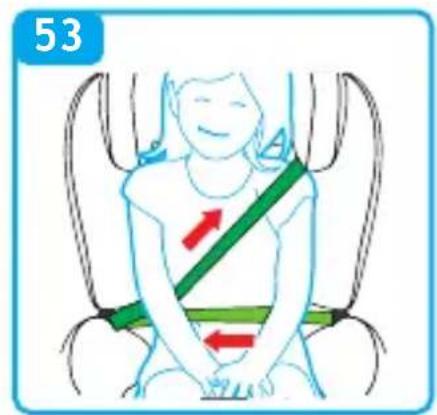
Tighten the belt as shown in the figure 53. Make sure that you have positioned the lap belt as low as possible on the child's pelvis, and that it has been inserted in the belt guides of the lap seat belt and that you have correctly attached the buckle. The diagonal belt must pass through the diagonal belt guide.
Mode B - INSTALLING WITH 3-POINT SEAT BELT
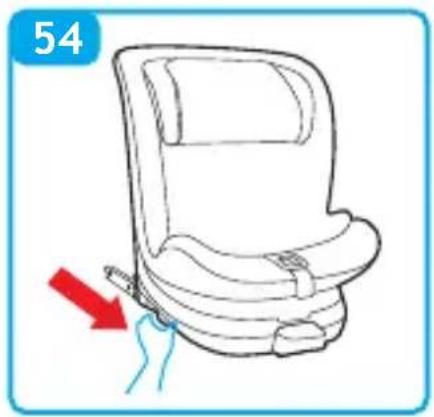
Press the ISOFIX release buttons and retract the ISOFIX connectors (fig. 54).
Place the car seat on the car's seat.
Push the car seat against the backrest of the passenger seat. There must not be any space between the backrest of the passenger seat and the car seat (fig. 55).
Pass the diagonal part of the 3-point seat belt behind the headrest of the car seat and through the green diagonal belt guide (A) located on the lower part of the headrest, on the retractor side (fig. 56).
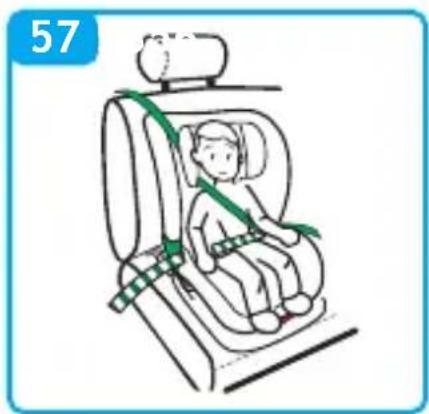
Place the child into the car seat (fig. 57). Press the button and raise or lower the headrest, adjusting it according to the child's height (fig. 58). Make sure that it is correctly locked in the chosen position (see par. "Headrest adjustment").
Pull out the 3-point seat belt of the vehicle and, passing it over the front of your child,
USE IN THE VEHICLE
attach the vehicle's seat belt by inserting the tip into the buckle (B). A "click" will indicate that it is attached correctly (fgi. 59).
WARNING! The vehicle's seat belt buckle must not be placed in the lower guide of the lap belt passage. Insert the diagonal belt and the lap belt into the lower loop from the side near the fastening buckle of the vehicle's seat belt (C) (fig. 59). Thread the lap belt on the opposite side of the car seat into the lap belt loop (D) (fig. 59).
WARNING! The lap belt must run as low as possible over your baby's pelvis. Insert the diagonal belt into the belt guide loop (A), making sure it is not twisted.
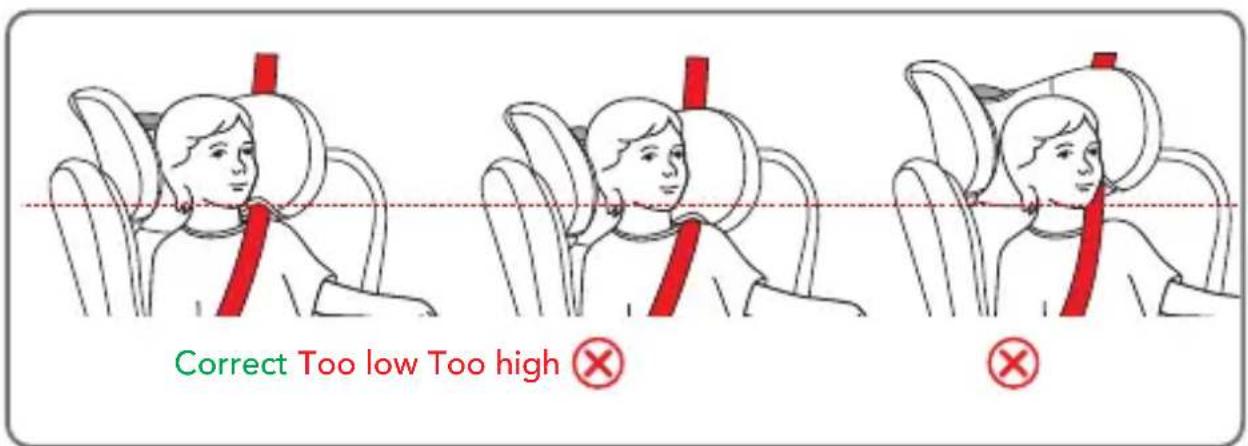
NOTE: When using the 3-point vehicle seat belt, the headrest must be adjusted so that there is a two-finger space between the headrest and the child's shoulders. Make sure that the diagonal belt, when passing through the "diagonal belt guide loop" on the side of the headrest, is positioned at the shoulders and not at the child's neck.
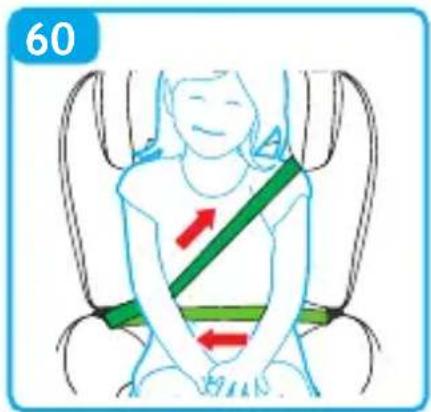
Tighten the belt as shown in the figure 60. Make sure that you have positioned the lap belt as low as possible on the child's pelvis, and that it has been inserted in the belt guides of the lap seat belt and that you have correctly attached the buckle. The diagonal belt must pass through the diagonal belt guide.
KID-PAD INSTALLATION
The KID-PAD is a device that must ALWAYS be installed on the diagonal vehicle seat belt to ensure proper protection in the event of an impact.
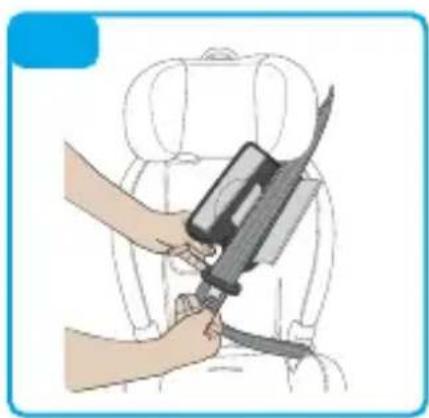
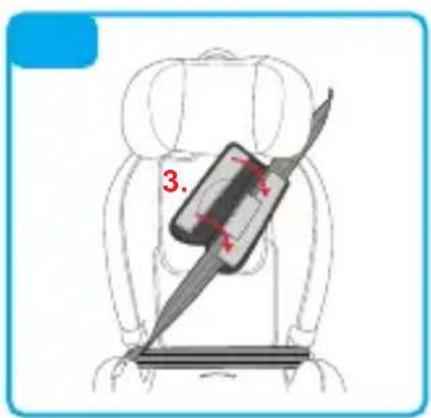
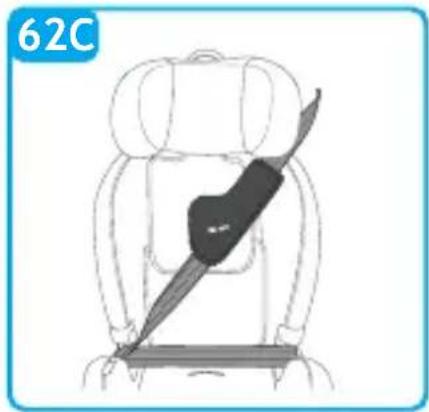
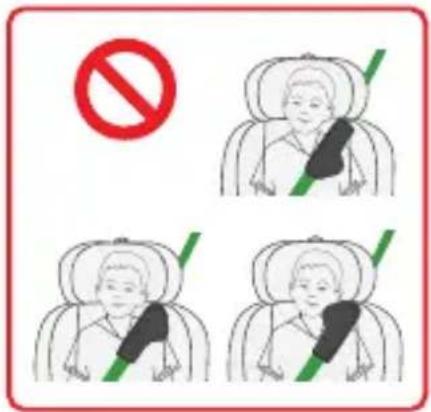
Position the diagonal belt under the two Velcro straps of the KID-PAD (fig. 61), close the KID-PAD on itself (fig. 62) making sure that the shaped part is positioned between the chin and the chest of the child (fig. 63).
WARNING! The KID-PAD must ALWAYS be used.
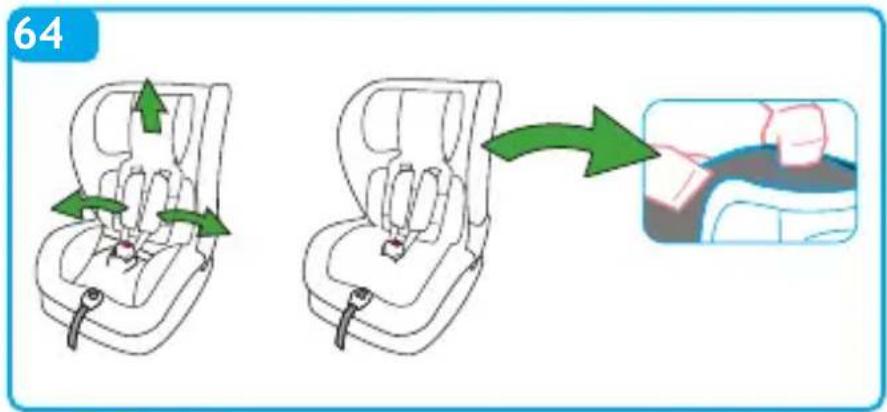
REMOVING THE LINING (fig. 64)
Loosen the harness and remove the reducer if it is being used.
Lift up the headrest to the highest position.
Remove it, carefully pulling the fabric off from the headrest.
Remove it, carefully pulling the fabric off from the frame, starting from one side, being
MAINTENANCE AND CLEANING
careful while removing the fabric from the lap belt guide.
Remove the leg separator harness from the lining and take off the fabric.
To put the lining back on, follow the reverse procedure.
MAINTENANCE AND CLEANING
Only use original linings, as these components are of fundamental importance for the device to function correctly. Do not use the car seat without the lining.
Cleaning
The lining can be removed and washed in a washing machine with a mild detergent, using the delicate fabric cycle (30°C). Follow the washing instructions shown on the label. The colours may fade if washed at temperatures above 30°C. Never spin dry or tumble dry (as the fabric could become detached from the padding).
The plastic parts may be cleaned with water and soap. Do not use harsh detergents (such as solvents).
The harness may be removed and washed with soap and warm water.
MAINTENANCE AND CLEANING
IMPORTANT: The lining is a fundamental component for your child's safety. Never use the car seat without the lining, nor replace it with other products which have not been approved, so as to avoid endangering the child's safety or compromising the proper functioning of the device.
Washing instruction:
The lining can be removed, washed at 30^ C and hung out to dry.
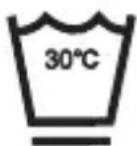
Washing machine
cold water
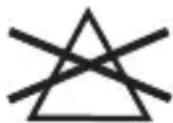
Do not
bleach
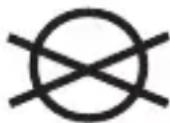
No dry
cleaning
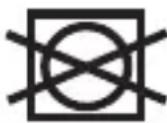
tumble dry
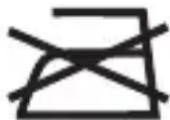
Do not ironDo not
The contents of this document as stated below will come into effect as from 01.01.2005 and replace, on every account and in full, any previous message referring to the guarantee provided by Foppa Pedretti S.p.A.
FORMAL GUARANTEE
Foppa Pedretti S.p.A. the head office of which is located at n. 11 Via Volta, Grumello del Monte (Italy), guarantees directly to the Consumer that this brand new product is free of faults with regard to the materials, design and manufacture and that it complies with the characteristics as declared by the manufacturer. This formal guarantee is valid in all Member Countries of the European Union and it neither excludes nor limits the Consumer's rights in accordance with mandatory measures provided for by the law with regard to the Retailer of the Product.
To take advantage of this formal guarantee, the Consumer must return the faulty product to the Retailer, presenting to the same the proof of purchase of the Product which must clearly show the Retailer's address, the date of purchase of the Product with the Retailer's stamp and signature and an indication of the Product itself or, alternatively, the receipt which must not have been altered and which must clearly show the same information as that referred to above.
The formal guarantee is valid for twelve (12) months from the date of purchase of the Product. During this period, Foppa Pedretti S.p.A. will repair or replace the faulty product, at its own discretion. The formal guarantee is granted to the end buyer of the Product (Consumer) and it neither excludes nor limits the mandatory rights of the Consumer as provided for by the law and/or the rights that the Consumer may have with regard to the Dealer/Retailer of the Product.
EXCLUSIONS TO THE FORMAL GUARANTEE.
The formal guarantee is excluded in the case of damage caused to the Product for the following reasons: if the product is used in a way that does not comply with the information contained in the use and assembly instruction sheet, if the product is knocked or dropped, if the Product is exposed to humidity or extreme heat or environmental conditions, or to sudden changes in the same, corrosion, oxidization, unauthorized alterations or repairs to the Product, repairs using unauthorised spare parts, improper use, improper maintenance or failure to carry out the same, improper maintenance compared to the information given on the use and assembly instruction sheet, incorrect assembly, accidents, damage caused by food or drink, damage caused by chemical products, cases of force majeure.
In any case, Foppa Pedretti S.p.A. declines all responsibility for damage caused to persons or to property, other than the Product, when such damage is caused by a failure to comply with the instructions/advice/warnings cont a ined in the manua I or, alternatively, in the use and assembly instruction sheet provided with each Product for the owner/user. (Purely as an example, in the case of a cot: "Check your baby constantly. Make sure that the sheets and blankets do not cover the baby's head...").
Furthermore, Foppa Pedretti S.p.A. declines all responsibility for damage to persons and to property when the breakage of its products is due to a deterioration in the components of the Product that are subject to wear. All the components of the Product made of plastic are considered to be components subject to wear.
Avertissements PAG 60
Composants PAG 66
natural_image
Diagram showing a green checkmark on a curved surface with no readable text or symbols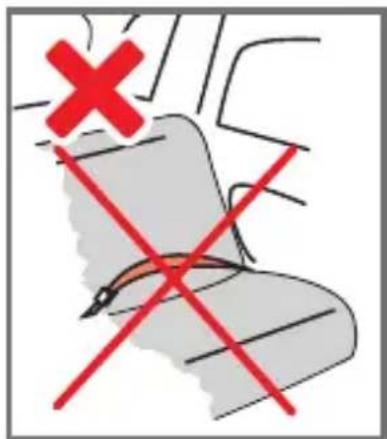
natural_image
Diagram showing a mechanical component with arrows indicating motion or force direction, no text or symbols present.natural_image
Diagram showing airflow or movement between two objects, one with red object and arrow indicating direction (no text or symbols)EXCLUSIONS DE LA GARANTIE CONVENTIONNELLE.
natural_image
Diagram showing a green checkmark and a curved green line on a gray surface, with no readable text or symbols.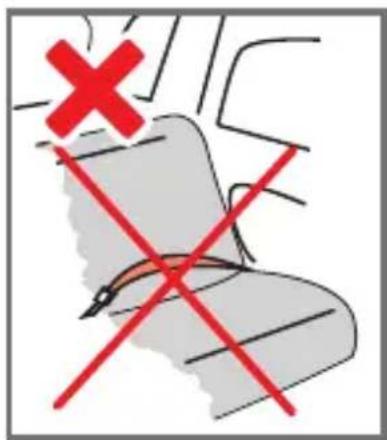
Dos 100 cm ate os 150 cm (i-Size booster seat)
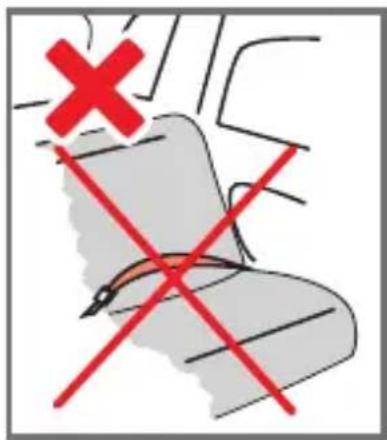

natural_image
Diagram showing a green checkmark on a curved surface with no text or symbols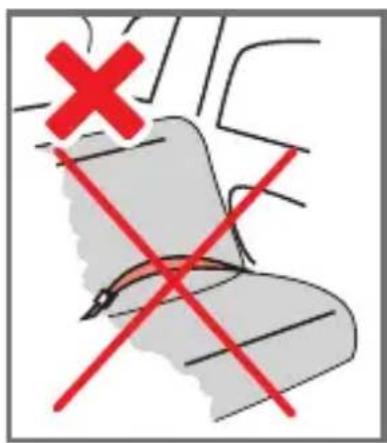

natural_image
Diagram showing airflow or movement between two objects, one with a red object inside and arrows indicating direction (no text or symbols)natural_image
Diagram showing a hand holding a device with blue arrows indicating direction, no text or symbols present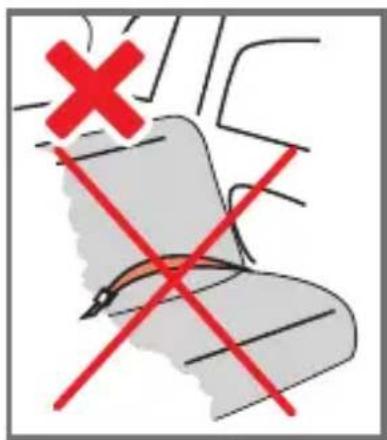
natural_image
Diagram showing hand positioning and movement of a device, no text or symbols presentnatural_image
Diagram showing hand positioning and movement of a device with blue arrows indicating direction (no text or symbols)natural_image
Icon depicting a person sitting in a car seat, enclosed in a rounded square frame (no text or symbols)ECE R129-03
IT LISTA AUTOVETTURE
EN VEHICLE LIST
FR LISTE DES VOITURES
ES LISTA AUTOMÓVILES
PT LISTA DE VEÍCULOS
EL KATAΛΟΓΟΣ ΑΥΤΟΚΙΝΗΤΩΝ
RU СПИСОК АВТОТРАНСПОРТНЫХ СРЕДСТВ
natural_image
Simple icon of a person sitting in a car seat, enclosed in a rounded square frame (no text or symbols)natural_image
Simple icon of a person sitting in a car seat, enclosed in a rounded square frame (no text or symbols)Cars approved for the lturn i-Size car seat, provided the car is equipped with the ISOFIX system.
- Itturn i-Size is a universal child restraint device. It is approved under the R129 regulation for use in all vehicle positions marked with the i-Size logo.
- Refer to the list of vehicles if the vehicle equipped with Isofix car positions that are not i-Size: the Iturn i-Size car seat is also suitable for attachment in the seating positions of the cars listed below, provided that the approved ISOFIX points are present and available. The seating positions in other cars may also be suitable to accommodate this child restraint device, however we have not yet tested these cars in conjunction with the Iturn i-Size. If in doubt, consult either the enhanced child restraint system manufacturer or the retailer.
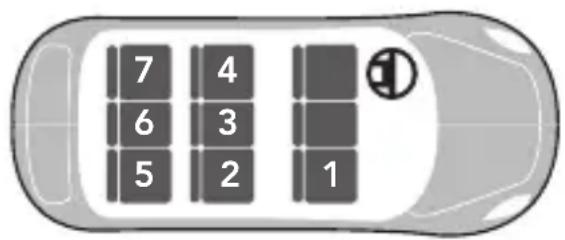
- The ISOFIX anchoring points on the passenger seat (position 1) are normally available as an option, therefore, this may or may not be the case for this position,
depending on the model. Installation on the rear passenger seat of the car may limit the space for the passenger in the front seat.
- Do not place the front support leg on a floor storage compartment lid. The front support leg MUST make full and firm contact with the vehicle floor.
- Adjust the vehicle seat so that the base front support leg does not make contact with the floor storage compartment.
- Always check the compatibility of the "lturn i-Size" car seat with your car to verify that the available space is adequate.
- Please note that this list undergoes ongoing revision procedures, with changes and additions of vehicles accordingly.
- The up to date list can be consulted on our web site: www. foppapedretti.it
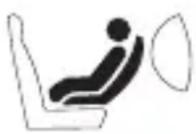
Warning: Do NOT use on a passenger seat fitted with an activated front airbag.
INFORMATION
Please consult with the vehicle manufacturer regarding access to ISOFIX points.
WARNING: before purchasing, consult the vehicle Use and Maintenance Guide to ensure the ISOFIX anchor is present, as this could be an optional.
natural_image
Icon depicting a person sitting in a car seat, enclosed in a rounded square frame (no text or symbols)natural_image
Icon of a person sitting in a car seat, no text or symbols presentnatural_image
Simple icon of a person sitting in a car seat, enclosed in a rounded square frame (no text or symbols)natural_image
Simple icon of a person sitting in a car seat, enclosed in a rounded square frame (no text or symbols)natural_image
Simple icon of a person sitting in a car seat, enclosed in a rounded square frame (no text or symbols)| Car manufacturer | 1st year of production | Seat 3-point belt | Approved seat ISOFIX |
| X3 | 2004 | 2 4 | 2 4 |
| X6 | 2008 | 2 4 | 2 4 |
| X6 FL | 2012 | 2 4 | 2 4 |
| HINI MINI cooper | 1994-1997 | 2 4 | 2 4 |
| HINI MINI cooper cabrio | 2006 | 2 4 | 2 4 |
| HINI MINI club man | 2007 | 2 4 | 2 4 |
| HINI MINI 2nd gen. | 2006 | 2 4 | 2 4 |
Cadillac
| CTS | 2007 | 2 4 | 2 4 |
Chevrolet
| Aveo | 2006 | 2 4 | 2 4 |
| Aveo hatchback | 2011 | 2 4 | 2 4 |
| Captiva | 2006-2011 | 2 4 | 2 4 |
| Matiz | 2005 | 2 4 2 4 | |
| Captiva FL | 2011 | 2 4 | 2 4 |
| Captiva FL2 | 2013 | 2 4 | 2 4 |
| Cruze | 2009 | 2 4 | 2 4 |
| Cruze SW | 2012 | 2 4 | 2 4 |
| Epica | 2006-2010 | 2 4 | 2 4 |
| Malibu | 2012 | 2 4 | 2 4 |
| Orlando | 2011 | 2 4 | 2 4 |
| Spark | 2010-2013 | 2 4 | 2 4 |
| Spark FL | 2013 | 2 4 | 2 4 |
| TRAX | 2010-2013 | 2 4 | 2 4 |
| Volt | 2011 | 2 4 | 2 4 |
| Car manufacturer | 1st year of production | Seat 3-point belt | Approved seat ISOFIX |
Chrysler
| 300 | 2004 | 2 4 | 2 4 |
| 300 C | 2008 | 2 4 | 2 4 |
| Donge calibre | 2006 | 2 4 | 2 4 |
| Donge journey | 2008 | 2 4 | 2 4 |
| Donge nitro | 2006 | 2 3 4 | 2 4 |
| Donge eam(1500) | 2006-2008 | 2 4 | 2 4 |
| Jeep cherokee | 2002 | 2 4 | 2 4 |
| Jeep grand ch. | 2005 | 2 4 | 2 4 |
| PT Cruiser | 2000 | 2 4 | 2 3 4 |
| Sebring cabrio | 2007 | 2 4 | 2 4 |
Citroen
| C-Crosser | 2007-2013 | 2 4 | 2 4 |
| C1 | 2005 | 2 4 2 4 | |
| C1 | 2014 | 2 4 2 4 | |
| C3 | 2009 | 2 4 2 4 | |
| C4 | 2010 | 2 4 2 4 | |
| C5 | 2008 | 2 4 2 4 | |
| C5 Tourer | 2008 | 2 4 2 4 | |
| C3 Picasso | 2008 | 2 4 2 4 | |
| Berlingo | 2008 | 2 4 2 4 | |
| C4 Picasso | 2006 | 2 4 2 4 | |
| C4 Picasso | 2013 | 2 4 2 4 | |
| Grand C4 Picasso | 2013 | 2 4 2 4 | |
| C3 FL | 2013 | 2 4 | 2 4 |
| C3 FL 5 door | 2005-2009 | 2 4 | 2 4 |
| C4 | 2004-2010 | 2 4 | 2 4 |
| Car manufacturer | 1st year of production | Seat 3-point belt | Approved seat ISOFIX |
| C4 3 door | 2004-2010 | 2 4 | 2 4 |
| C4 Aircross | 2012 | 2 4 | 2 4 |
| C5 FL | 2010-2012 | 2 4 | 2 4 |
| C5 Tourer FL | 2010 | 2 4 | 2 4 |
| C6 | 2005-2012 | 2 4 | 2 4 |
| Ds3 Cabrio | 2013 | 2 4 | 2 4 |
| Ds3 | 2010 | 2 4 | 2 4 |
| Ds4 | 2011 | 2 4 | 2 4 |
| Ds5 | 2012 | 2 4 | 2 4 |
Dacia
| Logan | 2013 | 2 4 | 2 4 |
| Dokker | 2012 | 2 3 4 | 2 4 |
| Duster | 2010 | 2 4 | 2 4 |
| Duster FL | 2014 | 2 4 | 2 4 |
| Lodgy | 2012 | 2 3 4 | 2 4 |
| Lodgy MCV | 2013 | 2 4 | 2 4 |
| Lodgy MCV FL | 2009-2013 | 2 4 | 2 4 |
| Sandero | 2008 | 2 4 | 2 4 |
| Sandero II | 2012 | 2 4 | 2 4 |
| Sandero StepWay | 2013 | 2 4 | 2 4 |
Daihatsu
| Cuore | 2007 | 2 4 | 2 4 |
| Materia | 2006 | 2 4 | 2 4 |
| Sirion | 2005-2012 | 2 4 | 2 4 |
| Terios | 2005 | 2 4 | 2 4 |
| Trevis | 2005 | 2 4 | 2 4 |
| Car manufacturer | 1st year of production | Seat 3-point belt | Approved seat ISOFIX |
| 3 | 2009 | 2 4 2 4 | |
| 4 | 2011 | 2 4 2 4 | |
| 5 | 2011 | 2 4 2 4 |
FIAT
| 500 | 2007 | 2 4 2 4 | |
| 500L | 2012 | 2 4 | 2 4 |
| 500L Living | 2013 | 2 4 | 2 4 |
| 500X | 2014 | 2 4 2 4 | |
| Bravo | 2007 | 2 4 | 2 4 |
| Croma II | 2005-2008 | 2 4 | 2 4 |
| Croma II FL | 2008-2010 | 2 4 | 2 4 |
| Doblo | 2009 | 2 4 | 2 4 |
| Grande Punto | 2006 | 2 4 | 2 4 |
| Idea | 2003 | 2 4 | 2 4 |
| Panda | 2012 | 2 4 | 2 4 |
| Punto 3door FL2 | 2012 | 2 4 | 2 4 |
| Punto Evo | 2010-2011 | 2 4 | 2 4 |
| Tipo | 2015 | 2 4 2 4 | |
| Tipo 5 porte | 2016 | 2 4 2 4 | |
| Tipo station wagon | 2016 | 2 4 2 4 | |
| Freemont | 2011 | 2 4 2 4 | |
| Qubo | 2008 | 2 4 | 2 4 |
Ford
| B-max | 2012 | 2 4 | 2 4 |
| EcoSport | 2014 | 2 4 | 2 4 |
| Focus hatchback | 2011 | 2 4 | 2 4 |
| Mondeo FL | 2010 | 2 4 | 2 4 |
| Car manufacturer | 1st year of production | Seat 3-point belt | Approved seat ISOFIX |
| Mondeo Turnier | 2007-2010 | 2 4 | 2 4 |
| Mondeo Turnier FL | 2010 | 2 4 | 2 4 |
| S-Max FL | 2010 | 2 3 4 2 3 4 | |
| Tourneo Connect | 2009-10.2009 | 2 4 2 4 | |
| Ka | 2008 | 2 4 | 2 4 |
| Fiesta | 2008 | 2 4 2 4 | |
| Focus | 2004 | 2 4 2 4 | |
| Focus Wagon | 2004 | 2 4 2 4 | |
| Focus Wagon | 2011 | 2 4 2 4 | |
| Mondeo | 2007 | 2 4 2 4 | |
| C-max | 2003 | 2 4 2 4 | |
| C-max | 2010 | 2 4 2 4 | |
| C-max 7 | 2010 | 2 4 2 4 | |
| S-max | 2006 | 2 4 2 4 | |
| S-max | 2015 | 2 4 2 4 | |
| Galaxy | 2015 | 2 4 2 4 | |
| Ecosport | 2013 | 2 4 2 4 | |
| Kuga | 2008 | 2 4 2 4 | |
| Kuga | 2012 | 2 4 2 4 | |
| Edge | 2016 | 2 4 2 4 | |
| Tourneo Custom | 2012 | 2 3 | 2 3 |
| Transit Kombi | 2013 | 2 3 | 2 3 |
Honda
| Accord(5 doors) | 2003 | 2 4 | 2 4 |
| Accord tourer | 2002-2008 | 2 4 | 2 4 |
| Accord | 2008 | 2 4 | 2 4 |
| City | 2009 | 2 4 | 2 4 |
| Civic | 2012 | 2 4 | 2 4 |
| Car manufacturer | 1st year of production | Seat 3-point belt | Approved seat ISOFIX |
| CR-V | 2012 | 2 3 4 | 2 4 |
| FR-V | 2004 | 2 4 | 2 4 |
| Insight | 2009 | 2 4 | 2 4 |
| Jazz | 2015 | 2 4 | 2 4 |
Hyundai
| Grand Santa Fe 6-seater | 2013 | 2 3 4 | 2 4 |
| Grand Santa Fe 7-seater | 2010 | 2 4 | 2 4 |
| H1-Travel | 2008 | 2 4 | 2 4 |
| i10 | 2013 | 2 3 4 | 2 4 |
| i10FL | 2011 | 2 4 | 2 4 |
| 2014i20 | 2 4 | 2 4 | |
| i20FL3door | 2012 | 2 4 | 2 4 |
| i20FL5door | 2012 | 2 4 | 2 4 |
| i30 | 2013 | 2 4 | 2 4 |
| i30 cw | 2012 | 2 4 | 2 4 |
| 2012i30 Wagon | 2 4 | 2 4 | |
| i40 | 2011 | 2 4 | 2 4 |
| i40 cw | 2011 | 2 4 | 2 4 |
| 2011i40 Wagon | 2 4 | 2 4 | |
| 2014Genesis | 2 4 | 2 4 | |
| 2015Tucson | 2 4 | 2 4 | |
| ix20 | 2010 | 2 4 | 2 4 |
| ix35 | 2009 | 2 4 | 2 4 |
| ix35 FL | 2013 | 2 4 | 2 4 |
| Santa Fe | 2012 | 2 4 | 2 4 |
Jaguar
2014XE 24 24
| Car manufacturer | 1st year of production | Seat 3-point belt | Approved seat ISOFIX |
| XF | 2008 | 2 4 | 2 4 |
| 2015XF | 2 4 | 2 4 | |
| XF FL | 2011 | 2 4 | 2 4 |
| XJ | 2009 | 2 4 | 2 4 |
Jeep
| Compass FL | 2013 | 2 4 | 2 4 |
| 2014Renegade | 2 4 | 2 4 | |
| Grand cherokee | 2010 | 2 3 4 | 2 4 |
| Grand cherokee FL | 2013 | 2 4 | 2 4 |
Kia
| Cee'd | 2012 | 2 4 | 2 4 |
| Cee'd FL | 2000 | 2 4 | 2 4 |
| Cee'd sw | 2007 | 2 4 | 2 4 |
| Cee'd Sportswagon | 2012 | 2 4 | 2 4 |
| Optima | 2012-2013.11 | 2 4 | 2 4 |
| Optima FL | 2013 | 2 4 | 2 4 |
| Optima hybrid | 2013-2014 | 2 4 | 2 4 |
| Pro Cee'd FL | 2011-2013 | 2 4 | 2 4 |
| Pro Cee'd GT | 2013 | 2 4 | 2 4 |
| Sorento | 2015 | 2 4 | 2 4 |
| Sorento FL | 2012 | 2 4 | 2 4 |
| Soul | 2014 | 2 4 | 2 4 |
| Soul FL | 2011 | 2 4 | 2 4 |
| Picanto | 2011 | 2 4 | 2 4 |
| Rio | 2011 | 2 4 | 2 4 |
| Venga | 2010 | 2 4 | 2 4 |
| Carens | 2013 | 2 4 | 2 4 |
| Car manufacturer | 1st year of production | Seat 3-point belt | Approved seat ISOFIX |
| Sportage | 2010 | 2 4 | 2 4 |
| Sportage | 2016 | 2 4 | 2 4 |
| Sportage FL | 2014 | 2 4 | 2 4 |
Lancia
| Delta | 2008-2011 | 2 4 | 2 4 |
| Delta FL | 2011 | 2 4 | 2 4 |
| Flavia Cabrio | 2012 | 2 4 | 2 4 |
| Thema | 2011 | 2 4 | 2 4 |
| Voyager | 2011 | 2 4 | 2 4 |
| Ypsilon | 2011 | 2 4 | 2 4 |
| Ypsilon 4seater | 2011 | 2 4 | 2 4 |
| Ypsilon 5seater | 2011 | 2 4 | 2 4 |
Land Rover
| Discovery FL | 2011 | 2 4 | 2 4 |
| Discovery Sport | 2014 | 2 4 | 2 4 |
| Freelander | 2006-2011 | 2 4 | 2 4 |
| Freelander2 FL | 2011 | 2 4 | 2 4 |
| Freelander2 FL2 | 2013 | 2 4 | 2 4 |
| Range Rover | 2012 | 2 4 | 2 4 |
| Range Rover Evoque | 2011 | 2 4 | 2 4 |
| Range Rover Sport | 2012 | 2 4 | 2 4 |
| Range Rover Sport | 2013 | 2 4 | 2 4 |
Mazda
| 20142 | 2 4 | 2 4 |
| 20126 Wagon | 2 4 | 2 4 |
| 2015CX-3 | 2 4 | 2 4 |
| Car manufacturer | 1st year of production | Seat 3-point belt | Approved seat ISOFIX |
| 2012CX-5 | 2 4 | 2 4 | |
| 3 (BL) | 2009-2011 | 2 4 | 2 4 |
| 3 (BM) | 2013 | 2 4 | 2 4 |
| 3 FL (BL) | 2011 | 2 4 | 2 4 |
| 3 saloon | 2013 | 2 4 | 2 4 |
| 3 saloon FL2 | 2011-2013 | 2 4 | 2 4 |
| 5 | 2010 | 2 4 | 2 4 |
| 5 FL | 2013 | 2 4 | 2 4 |
| 6 estate | 2013 | 2 4 | 2 4 |
| 6 estate FL | 2010 | 2 4 | 2 4 |
| 6 Hatchback FL | 2010 | 2 4 | 2 4 |
| 6 saloon | 2013 | 2 4 | 2 4 |
| CX-5 | 2012 | 2 4 | 2 4 |
| CX-7 | 2007-2009 | 2 4 | 2 4 |
| CX-7 FL | 2009 | 2 4 | 2 4 |
Mercedes
| 2004A | 2 4 | 2 4 | |
| 2013C | 2 4 | 2 4 | |
| 2014C SW | 2 4 | 2 4 | |
| 2016E | 2 4 | 2 4 | |
| 2016E SW | 2 4 | 2 4 | |
| A(176) | 2012 | 2 4 | 2 4 |
| B(246) | 2011 | 2 4 | 2 4 |
| C(204) | 2007 | 2 4 | 2 4 |
| C(205) | 2014 | 2 4 | 2 4 |
| C Coup FL (204) | 2011 | 2 4 | 2 4 |
| C FL(204) | 2011 | 2 4 | 2 4 |
| C model T (204) | 2007-2011 | 2 4 | 2 4 |
| Car manufacturer | 1st year of production | Seat 3-point belt | Approved seat ISOFIX |
| C model T FL (204) | 2011 | 2 4 | 2 4 |
| GLA | 2013 | 2 4 | 2 4 |
| GL (164G) | 2006 | 2 4 | 2 4 |
| GLA (245G) | 2014 | 2 4 | 2 4 |
| GLK (X 204) | 2008 | 2 4 | 2 4 |
| GLK FL | 2012 | 2 4 | 2 4 |
| ML | 2005-2011 | 2 4 | 2 4 |
| R | 2010 | 2 4 | 2 4 |
| CLS | 2010 | 2 4 | 2 4 |
| E (212) | 2009 | 2 4 | 2 4 |
| E Cabrio (207) | 2010 | 2 4 | 2 4 |
| E Coupe (207) | 2009 | 2 4 | 2 4 |
| E FL | 2013 | 2 4 | 2 4 |
| E model T (212) | 2009 | 2 4 | 2 4 |
| E model T FL (212) | 2013 | 2 4 | 2 4 |
| G FL | 2012 | 2 4 | 2 4 |
| 2013CLA | 2 4 | 2 4 | |
| 2015CLA Shooting Brake | 2 4 | ||
| 2013CLS Shooting Brake | 2 4 | ||
| 2013S | 2 4 | 2 4 | |
| 2015GLC | 2 4 | 2 4 | |
| 2015GLE | 2 4 | 2 4 | |
| 2015GLS | 2 4 | 2 4 | |
Mini
| 2013Mini | 2 4 | 2 4 |
| 2014Mini 5 Doors | 2 4 | 2 4 |
| 2015Mini Clubman | 2 4 | 2 4 |
| Car manufacturer | 1st year of production | Seat 3-point belt | Approved seat ISOFIX |
| 2010Mini Countryman | 4 | 2 4 |
Mitsubishi
| ASX | 2010 | 2 4 | 2 4 |
| ASX FL | 2012 | 2 4 | 2 4 |
| Outlander | 2012 | 2 4 | 2 4 |
| Outlander | 2006 | 2 4 | 2 4 |
| Outlander PHEV | 2013 | 2 4 | 2 4 |
| 2013Space Star | 2 4 | 2 4 |
Nissan
| Juke | 2010 | 2 4 | 2 4 |
| Leaf | 2011 | 2 4 | 2 4 |
| Micra | 2010 | 2 4 | 2 4 |
| Micra FL | 2013 | 2 4 | 2 4 |
| Note | 2013 | 2 4 | 2 4 |
| Pixo | 2009 | 2 4 | 2 4 |
| 2014Pulsar | 2 4 | 2 4 | |
| 2006Qashqai | 2 4 | 2 4 | |
| 2013Qashqai | 2 4 | 2 4 | |
| 2014X Trail | 2 4 | 2 4 |
Opel/Vauxhall
| Adam | 2012 | 2 4 | 2 4 |
| Agila | 2008 | 2 4 | 2 4 |
| Ampera | 2011 | 2 4 | 2 4 |
| Antara FL | 2010 | 2 4 | 2 4 |
| Astra H Caravan FL | 2007-2010 | 2 4 | 2 4 |
| Astra | 2009 | 2 4 | 2 4 |
| Car manufacturer | 1st year of production | Seat 3-point belt | Approved seat ISOFIX |
| Astra | 2015 | 2 4 | 2 4 |
| Astra Sports Tourer | 2009 | 2 4 | 2 4 |
| Astra Sports Tourer | 2015 | 2 4 | 2 4 |
| Astra J | 2009 | 2 4 | 2 4 |
| Astra J GTC | 2012 | 2 4 | 2 4 |
| Astra J sedan | 2012 | 2 4 | 2 4 |
| Astra J Sports Tourer | 2010 | 2 4 | 2 4 |
| Cascada | 2013 | 2 4 | 2 4 |
| Insignia | 2008 | 2 4 | 2 4 |
| Insignia | 2008Sport Tourer | 2 4 | 2 4 |
| Insignia 5door FL I | 2011 | 2 4 | 2 4 |
| Insignia 5door FL II | 2013 | 2 4 | 2 4 |
| Insignia Country Tourer FL II | 2009 | 2 4 | 2 4 |
| Insignia FL I | 2011 | 2 4 | 2 4 |
| Insignia FL II | 2013 | 2 4 | 2 4 |
| Insignia Sports Tourer FL I | 2011 | 2 4 | 2 4 |
| Insignia Sports Tourer FL II | 2013 | 2 4 | 2 4 |
| Meriva | 2010 | 2 4 | 2 4 |
| Meriva B | 2010 | 2 4 | 2 4 |
| Meriva B FL | 2014 | 2 4 | 2 4 |
| 2010Zafira | 2 4 | 2 4 | |
| Zafira C Tourer | 2012 | 2 4 | 2 4 |
| 2012Mokka | 2 4 | 2 4 | |
| 2006Antara | 2 4 | 2 4 |
Peugeot
2014108 24 24
| Car manufacturer | 1st year of production | Seat 3-point belt | Approved seat ISOFIX |
| 2007308 | 2 4 | 2 4 | |
| 2013308 | 2 4 | 2 4 | |
| 2007308 SW | 2 4 | 2 4 | |
| 308 SW | 2014 | 2 4 | 2 4 |
| 207 | 2006-2009 | 2 4 | 2 4 |
| 2008 | 2013 | 2 4 | 2 4 |
| 207 CC | 2007 | 2 4 | 2 4 |
| 207 SW | 2006-2009 | 2 4 | 2 4 |
| 207 SW FL | 2009-2013 | 2 4 | 2 4 |
| 208 3 doors | 2012 | 2 4 | 2 4 |
| 208 5 doors | 2012 | 2 4 | 2 4 |
| 4007 | 2007 | 2 4 | 2 4 |
| 2010508 | 2 4 | 2 4 | |
| 508 RXH sw | 2012 | 2 4 | 2 4 |
| 508 sw | 2011 | 2 4 | 2 4 |
| 3008 | 2016 | 2 4 | 2 4 |
| 4008 | 2012 | 2 4 | 2 4 |
| 5008 | 2009 | 2 4 | 2 4 |
| 5008 FL | 2014 | 2 4 | 2 4 |
| 2008Partner Tepee2 | 4 | 2 4 | |
| Expert tepee | 2007-2012 | 2 4 | 2 4 |
| Expert tepee FL 8seater | 2012 | 2 4 | 2 4 |
| Expert tepee FL 9seater | 2012 | 2 4 | 2 4 |
| RCZ | 2010 | 2 4 | 2 4 |
| Car manufacturer | 1st year of production | Seat 3-point belt | Approved seat ISOFIX |
| Porsche | |||
| Cayenne | 2009 | 2 4 | Airbag off |
| Cayenne II | 2010 | 2 4 | Airbag off |
| Cayenne II Turbo S | 2013 | 2 4 | Airbag off |
| Macan | 2013 | 2 4 | Airbag off |
| Panamera | 2010 | 2 4 | Airbag off |
| Panamera 4 | 2009-2013 | 2 4 | Airbag off |
| Panamera Executive FL | 2013 | 2 4 | Airbag off |
| Renault | |||
| Captur | 2013 | 2 4 | 2 4 |
| Clio | 2005 | 2 4 | 2 4 |
| Clio 3door | 2009-2012 | 2 4 | 2 4 |
| Clio 5door | 2009 | 2 4 | 2 4 |
| 2013Clio Sporter | 2 4 | 2 4 | |
| Clio Grandtour | 2008 | 2 4 | 2 4 |
| Clio Grandtour FL | 2008-2013 | 2 4 | 2 4 |
| Clio 4 | 2012 | 2 4 | 2 4 |
| Clio 4 Grandtour | 2013 | 2 4 | 2 4 |
| Clio 4 RS | 2013 | 2 4 | 2 4 |
| 2008Megane Sporter | 2 4 | 2 4 | |
| 2015Megane Sporter | 2 4 | 2 4 | |
| 2015Espacer | 2 4 | 2 4 | |
| 2015Kadjar | 2 4 | 2 4 | |
| Espace 4 | 2006-2010 | 2 4 | 2 4 |
| Espace 4 FL | 2010-2012 | 2 4 | 2 4 |
| Fluence | 2010 | 2 4 | 2 4 |
| Grand Espace 4 FL4 | 2012 | 2 4 | 2 4 |
| Grand Modus | 2008-2012 | 2 4 | 2 4 |
| Grand Scenic | 2009-2013 | 2 4 | 2 4 |
| Grand Scenic FL | 2012-2013 | 2 4 | 2 4 |
| Kangoo | 2008-2012 | 2 4 | Airbag off |
| Kangoo FL | 2013 | 2 4 | 2 4 |
| Laguna 3 FL | 2010 | 2 4 | 2 4 |
| Laguna 3 Grandtour | 2008-2010 | 2 4 | 2 4 |
| Laguna 3 Grandrout FL | 2010 | 2 4 | 2 4 |
| Megane 2 CC | 2006-2010 | 2 4 | 2 4 |
| Megane 3 5door | 2008-2012 | 2 4 | 2 4 |
| Megane 3 CC | 2010 | 2 4 | 2 4 |
| Megane 3 Coupe | 2006-2009 | 2 4 | 2 4 |
| Megane 3 Coupe FL | 2012 | 2 4 | 2 4 |
| Megane 3 FL | 2014 | 2 4 | 2 4 |
| Megane 3 FL Grandtour | 2014 | 2 4 | 2 4 |
| Modus | 2005 | 2 4 | Airbag off |
| Scenic 3 | 2009 | 2 4 | 2 4 |
| Scenic 3 FL | 2012 | 2 4 | 2 4 |
| Scenic XMOD | 2013 | 2 4 | 2 4 |
| Twingo | 2014 | 2 4 | 2 4 |
| Twingo 2 | 2007-2012 | 2 4 | Airbag off |
| Twingo 2 FL | 2012 | 2 4 | Airbag off |
| Twingo 2 FL seatbench | 2012 | 2 4 | Airbag off |
| ZOE | 2013 | 2 4 | 2 4 |
| SEAT | |||
| Alhambra | 2010 | 2 3 4 5 7 | 2 3 4 5 7 |
| 2016Ateca | 2 4 | 2 4 | |
| Leon | 2012 | 2 4 | 2 4 |
| Leon SC | 2013 | 2 4 | 2 4 |
| Leon ST | 2013 | 2 4 | 2 4 |
| Mii | 2012 | 2 4 | 2 4 |
| Mii 3door | 2012 | 2 4 | 2 4 |
| Mii 5door | 2012 | 2 4 | 2 4 |
| Skoda | |||
| Octavia 3 | 2013 | 2 4 | Airbag off |
| Octavia 3 Combi | 2013 | 2 4 | Airbag off |
| Superb | 2015 | 2 4 | Airbag off |
| Superb Wagon | 2015 | 2 4 | Airbag off |
| Superb Combi FL | 2013 | 2 4 | Airbag off |
| Super FL | 2013 | 2 4 | Airbag off |
| 2014Fabia | 2 4 | 2 4 | |
| Fabia Wagon | 2015 | 2 4 | 2 4 |
| 2013Rapid Spaceback | 2 4 | ||
| 2007Roomster | 2 4 | 2 4 | |
| Yeti | 2009 | 2 4 | 2 4 |
| Yeti FL2 | 2013 | 2 4 | Airbag off |
| Smart | |||
| ForTwo | 2014 | 1 | Airbag off |
| ForTwo 2 FL | 2010 | 1 | Airbag off |
| Subaru | |||
| Forester | 2013 | 2 4 | 2 4 |
| Forester (SH) | 2008-2013 | 2 4 | 2 4 |
| Forester (SJ) | 2013 | 2 4 | 2 4 |
| Impre WRX STI | 2008 | 2 4 | 2 4 |
| Suzuki | |||
| Alto | 2008 | 2 4 | 2 4 |
| Grand Vitara 5door FL | 2013 | 2 4 | 2 4 |
| Jimny FL | 2012 | 2 4 | 2 4 |
| 2014Celerio | 2 4 | 2 4 | |
| 2010Swift | 2 4 | 2 4 | |
| 2016Baleno | 2 4 | 2 4 | |
| 2013S-Cross | 2 4 | 2 4 | |
| 2015Vitara | 2 4 | 2 4 | |
| Kizashi | 2010 | 2 4 | 2 4 |
| Splash | 2008-2012 | 2 4 | 2 4 |
| Splash FL | 2012 | 2 4 | 2 4 |
| Sx4 | 2010 | 2 4 | 2 4 |
| Sx4 S-Cross | 2013 | 2 4 | 2 4 |
| Tesla | |||
| Model S | 2013-2014 | 2 4 | 2 4 |
| Model S FL | 2014 | 2 4 | 2 4 |
| Toyota | |||
| Auris | 2012 | 2 4 | 2 4 |
| Auris Touring Sports | 2013 | 2 4 | 2 4 |
| Auris 5door | 2013 | 2 4 | 2 4 |
| Car manufacturer | 1st year of production | Seat 3-point belt | Approved seat ISOFIX |
| Land Cruiser FL2 | 2014 | 2 4 | 2 4 |
| Prius | 2016 | 2 4 | 2 4 |
| Prius+ | 2012 | 2 4 | 2 4 |
| Yaris | 2011 | 2 4 | 2 4 |
| Corolla verso | 2004 | 2 4 | 2 4 |
| 2014Aygo | 2 4 | 2 4 | |
| 2009Verso | 2 4 | 2 4 | |
| 2013Rav4 | 2 4 | 2 4 | |
| 2003Lanc Cruiser | 2 4 | 2 4 |
Volvo
| C70 FL | 2009-2013 | 2 4 | 2 4 |
| S60 | 2010 | 2 4 | 2 4 |
| S80 FL2 | 2013 | 2 4 | 2 4 |
| V40 | 2012 | 2 4 | 2 4 |
| V40 Cross Country | 2013 | 2 4 | 2 4 |
| V50 | 2011-2012 | 2 4 | 2 4 |
| V60 | 2010 | 2 4 | 2 4 |
| V60 FL | 2013 | 2 4 | 2 4 |
| V70 | 2007-2011 | 2 4 | 2 4 |
| V70 FL | 2011-2013 | 2 4 | 2 4 |
| 2008Xc60 | 2 4 | 2 4 | |
| Xc60 FL | 2013 | 2 4 | 2 4 |
| Xc70 | 2007-2011 | 2 4 | 2 4 |
| Xc 70 FL | 2011-2013 | 2 4 | 2 4 |
| Xc 90 | 2014 | 2 4 | 2 4 |
| Xc90 FL | 2011 | 2 4 | 2 4 |
Car manufacturer 1st year of production Seat 3-point belt Approved seat ISOFIX
| VW | |||
| Amarok | 2010 | 2 4 | 2 4 |
| Beetle | 2011 | 2 4 | 2 4 |
| Beetle Cabrio | 2012 | 2 4 | 2 4 |
| CC | 2012 | 2 4 | 2 4 |
| E-UP | 2013 | 2 4 | 2 4 |
| Eos FL | 2010 | 2 4 | 2 4 |
| Golf 6 | 2008 | 2 4 | 2 4 |
| Golf 6 Cabrio | 2011 | 2 4 | 2 4 |
| Golf 6 plus | 2009 | 2 4 | 2 4 |
| Golf 6 R | 2009 | 2 4 | 2 4 |
| Golf 7 | 2012 | 2 4 | 2 4 |
| Golf GTI | 2013 | 2 4 | 2 4 |
| Golf 7 Sportsvan | 2014 | 2 4 | 2 4 |
| Golf 7 Variant | 2013 | 2 4 | 2 4 |
| Jetta 6 | 2011 | 2 4 | 2 4 |
| Jetta Hybrid | 2013 | 2 4 | 2 4 |
| Passat B6 | 2005-2010 | 2 4 | 2 4 |
| Passat B6 Variant | 2005-2010 | 2 4 | 2 4 |
| Passat B7 | 2010 | 2 4 | 2 4 |
| Passat B7 Alltrack | 2012 | 2 4 | 2 4 |
| Passat B7 Variant | 2010 | 2 4 | 2 4 |
| Passat CC | 2008-2012 | 2 4 | 2 4 |
| Phaeton FL 2 | 2010 | 2 4 | 2 4 |
| Polo 5 | 2009-2014 | 2 4 | 2 4 |
| Car manufacturer | 1st year of production | Seat 3-point belt | Approved seat ISOFIX |
| Polo 5 Crosspolo | 2010 | 2 4 | 2 4 |
| Scirocco | 2008 | 2 4 | 2 4 |
| Sharan 2 | 2010 | 2 4 | 2 4 |
| T5 | 2009 | 2 4 | 2 4 |
| Tiguan | 2007-2011 | 2 4 | 2 4 |
| Tiguan FL | 2011 | 2 4 | 2 4 |
| Touareg 2 | 2010 | 2 4 | 2 4 |
| Up 3door | 2011 | 2 4 | 2 4 |
| Up 5door | 2012 | 2 4 | 2 4 |
| Passat | 2013 | 2 4 | 2 4 |
| Passat Variant | 2004 | 2 4 | 2 4 |
| 2004Caddy | 2 4 | 2 4 | |
| Touran | 2003 | 2 4 | 2 4 |
| Touran | 2015 | 2 4 | 2 4 |
Importato da:
- IMPORTANTE! LER ATENTAMENTE E GUARDAR PARA FUTURA CONSULTA
- INDICE
- WARNINGS
- ATTENTION:
- BEFORE STARTING
- WHEN USING THE CHILD CAR SEAT
- SEAT BELT
- SUNLIGHT/HOT DAYS
- SECOND HAND OR DAMAGED CHILD CAR SEATS AND SEATBELTS
- IMPORTANT WARNING
- from 40 to 105 cm (i-Size universal ISOFIX)
- From 100 cm to 150 cm (i-Size booster seat)
- USE IN THE VEHICLE
- RESTRICTIONS AND REQUIREMENTS REGARDING THE USE OF THE PRODUCTAND VEHICLE SEAT
- WARNING! Follow the restrictions at all times:
- THE CAR SEAT CAN BE INSTALLED AS SHOWN IN THE FIGURE:
- USING THE REDUCER
- ADJUSTING THE HEIGHT OF THE HEADREST AND STRAPS
- ADJUSTING THE SEAT BELT (HARNESS) (From 76 cm to 105 cm)
- USING THE BUCKLE - (From 40 cm to 105 cm)
- HEADREST ADJUSTMENT
- RECLINING THE SEAT
- PULL OUT THE SUPPORT LEG
- FOLD UP THE SUPPORT LEG
- 360° SEAT ROTATION
- PLACING THE CAR SEAT IN THE REAR-FACING POSITION (Children between 40
- DO NOT install the car seat on the passenger seat with an active airbag: this cause SERIOUS, OR EVEN FATAL, INJURY.
- PRECAUTIONS TO MAKE SURE YOU HAVE CORRECTLY FASTENED THE CAR SEAT HARNESS
- IMPORTANT
- For the safety of your child, always make sure that:
- INSTALLATION IN THE FORWARD-FACING POSITION
- ADJUSTING THE SUPPORT LEG
- REMOVING THE CAR SEAT FROM THE VEHICLE / REMOVING THE ISOFIX SYSTEM
- REMOVING THE HARNESS (Storing the safety harness away)
- INSTALLATION IN THE FORWARD-FACING POSITION (Children between 100 and 150 cm in height, 3-point seat belt or ISOFIX + 3-point seat belt)
- Mode A - INSTALLING WITH 3-POINT SEAT BELT TOGETHER WITH ISOFIX CONNECTORS
- Mode B - INSTALLING WITH 3-POINT SEAT BELT
- KID-PAD INSTALLATION
- REMOVING THE LINING (fig. 64)
- MAINTENANCE AND CLEANING
- Cleaning
- Washing instruction:
- FORMAL GUARANTEE
- EXCLUSIONS TO THE FORMAL GUARANTEE.
- EXCLUSIONS DE LA GARANTIE CONVENTIONNELLE.
- Dos 100 cm ate os 150 cm (i-Size booster seat)
- INFORMATION
- Mini
Brand : Foppapedretti
Model : Iturn i-Size
Category : Car seat