FT260811 - Food Processor MOULINEX - Free user manual and instructions
Find the device manual for free FT260811 MOULINEX in PDF.


User questions about FT260811 MOULINEX
0 question about this device. Answer the ones you know or ask your own.
Ask a new question about this device
Download the instructions for your Food Processor in PDF format for free! Find your manual FT260811 - MOULINEX and take your electronic device back in hand. On this page are published all the documents necessary for the use of your device. FT260811 by MOULINEX.
USER MANUAL FT260811 MOULINEX
natural_image
Line drawing of a coffee maker with lid and handle (no text or symbols)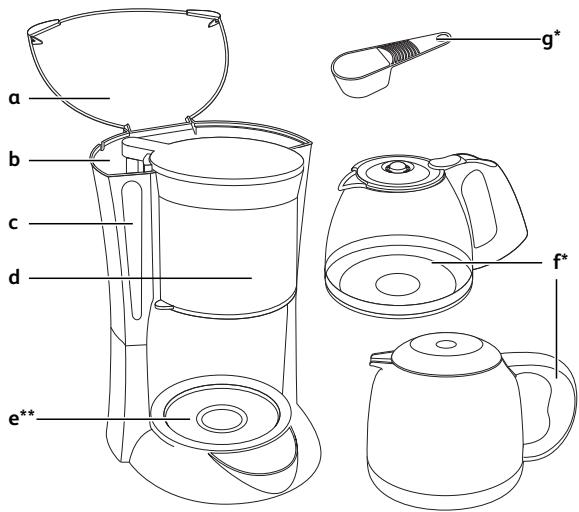
text_image
a b c d e** g* f*a Couvercle - Lid - Deksel - Deckel - Coperchio - Tapa - Tampa - Калакı - Kapak - Låg - Lokk - Lock - Kansi - غطاء - درب - Крышка - Кришка - Каклағы
b Réservoir - Tank - Reservoir - Wassertank - Serbatoio dell'acqua - Depósito - Depósito - Доχείο - Hazne - Vandtank - Tank - Behállare - Vesisäiliö - مخزن - Резервуар - Резервуар - Су құттын ыдысы
c Niveau d'eau - Water level - Waterpeil - Wasserstandanzeige - Livello dell'acqua - Nivel de agua - Nivel de água - Στάθμη νερού - Su seviyesi - Vandniveau - Vannivå - Vattennivå - Vedentason näyttö - سطح آب - مستوى immune - Уровень воды - Рівень води - Су деңгейі
d Porte-filtre - Filter holder - Filterhouder - Filterträger - Alloggio del filtro - Portafiltros - Portafiltro - Θήκη φίλτρου - Filtre desteği - Filterholder - Filterholder - Filterhållare - Suodatinkotelo - نگهدار Fairitters - دержатель фильтра - Тримач фильтра - Алынбалы суггі
e Plaque-chauffante** - Warming plate** - Opwarmplaat** - Heizplatte** - Piastra riscaldante** - Placa calefactora**. Placa de aquecimento** - Θερμαινόμενη πλάκα** - Isinan levha** - Varmeplate** - Varmeplate** - Värmeplatta** - Lämpölevy** - **- لOutcome **- **- �ظوف ۱۶۰۰ کرups ۱۶۰۰ - Нарревающая пластина** - Пластина, що нагривасться** - ۱۶тық табаны**
f Verseuse* - Jug* - Koffiekan* - Kanne* - Caraffa* - Jarra* - Jarra* - Kaváta* - Súrahi* - Kande* - Kanne* - Kanna* - Kannu* - *ابريق - *کونه* - Кофейник с прямой ручкой* - Кофейник з прямою ручкою* - Çуман*
g Cuillère doseuse - Dosing spoon - Maatlepel - Dosierlöffel - Cucchiaio dosatore - Cuchara dosificadora - Colher doseadora - Μεζούρα - Ölçme kaşığı - Måleske - Doseringsskje - Kaffemätt - Mittalusikka - قATCH φαση - Lожка-дозатор - Ложка-дозатор - Łyżka dozująca - Олшейтін
Қасық
* Selon modèle - Depending on model - Afhankelijk van de model - Je nach Modell - A seconda del modelo - Según modelo - Consoante o modelo - Aváloya με το μοντέλο - Modeline göre - Afhængigt af modellen - Ahengig av modell - Beroende på modell - Riippuu mallista - حسب الموديل * - بسته به مهل * - В зависимости от модели - В залежності від моделі - Улгіге байланысты
** Pour le modèle verseuse verre - For the glass jug model - Voor de glazen koffiekan - Beim Modell mit Glaskanne - Per il modello con caraffa in vetro - Para el modelo con jarra de cristal - Para o modelo com jarra de vidro - Για το μοντέλο με γυάλινη κανάτα - Cam surahi modeli için - Til modellen med glaskande - For modellen med glaskanne - För modellen med glaskanna - Lasikannulliselle mallille - **الزابي مِدْتَكَى شَيْشَىٌ٠١٠٠٠٠٠٠٠٠٠٠٠٠٠٠٠٠٠٠٠٠٠٠٠٠٠٠٠٠٠٠٠٠٠٠٠٠٠٠٠٠٠٠٠٠٠٠٠٠٠٠١.
1
natural_image
Simple line drawing of a container with an upward arrow, placed on an open box (no text or symbols)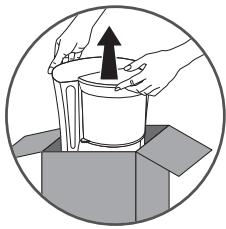
natural_image
Illustration of hands holding a cup with an upward arrow inside, inside a circle (no text or symbols)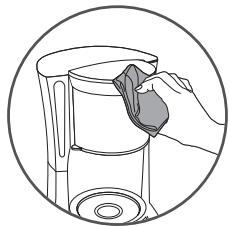
natural_image
Line drawing of a hand cleaning a container with a cloth (no text or symbols)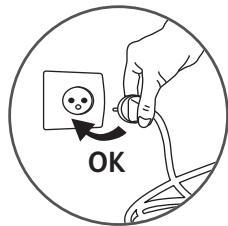
text_image
OKfig.1
2
natural_image
Diagram showing a hand pouring liquid into a container, enclosed in a circular frame (no text or symbols)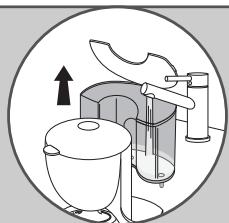
natural_image
Diagram of a kitchen appliance with a kettle and fan, enclosed in a circular frame (no text or symbols)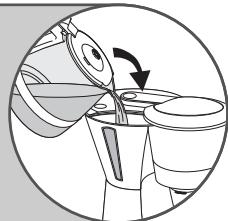
natural_image
Diagram of a kitchen utensil with a hand pouring liquid into a container, showing a circular arrow (no text or symbols)fig.2
3

flowchart
graph TD
    A["Uncleaning food"] --> B["Heating with lid"]
    B --> C["Close using lid lock"]
    C --> D["Shaking with lid lock"]
    D --> E["Shaking with lid lock"]
    E --> F["Shaking with lid lock"]
fig.3
* Selon modèle - Depending on model - Afhankelijk van de model - Je nach Modell - A seconda del modello - Según modelo - Consoante o modelo - Aváloya με το μοντέλο - Modeline göre - Afhængigt af modellen - Avhengig av modell - Beroende på modell - Riippuu mallista - بسته ١ مِدْل * حسب� au الموديل * - В зависимости от модели - В залежності від модели - Улгіге байланысты
4

text_image
fig.45

text_image
N°2 N°4fig.5
6
natural_image
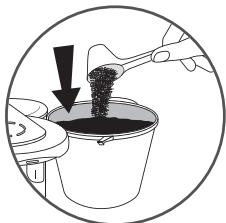
Illustration of a hand pouring dark granular material into a bucket, with an arrow indicating downward motion (no text or symbols)fig.6
* Selon modèle - Depending on model - Afhankelijk van de model - Je nach Modell - A seconda del modello - Según modelo - Consoante o modelo - Avàloya με το μοντέλο - Modeline göre - Afhængigt af modellen - Avhengig av modell - Beroende på modell - Riippuu mallista - بسته ۱۰ مید - حسب� الموديل - В зависимости от модели - В залежності від модели - Улгіге байланысты
7

flowchart
graph TD
    A["Coffee Cup"] --> B["Coffee Cup"]
    B --> C["Coffee Cup"]
    style A fill:#f9f,stroke:#333
    style B fill:#bbf,stroke:#333
    style C fill:#dfd,stroke:#333
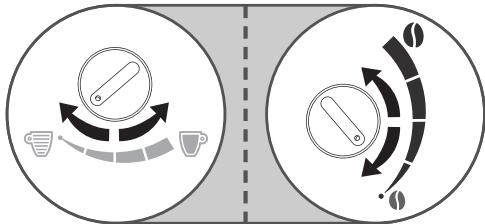
fig.7
8


text_image
Diagram showing three-step electrical switch operation: wire winding, switch button, and power button with indicator finger.fig.8
9
natural_image
Illustration of a hand pouring liquid into a cup with an asterisk symbol (no text or symbols present)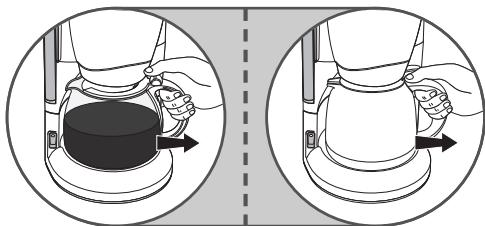
natural_image
Illustration of a coffee maker's side view showing the cup being opened with a hand, no text or symbols presentfig.9
* Selon modèle - Depending on model - Afhankelijk van de model - Je nach Modell - A seconda del modello - Según modelo - Consoante o modelo - Aváloya με το μοντέλο - Modeline göre - Afhængigt af modellen - Avhengig av modell - Beroende på modell - Riippuu mallista - حسبته ٥ مِدْل - بسته ٠- В зависимости от модели - В залежності від модели - Улгіге байланысты
natural_image
Simple line drawing of a bucket with a cross mark inside, enclosed in a circle (no text or symbols)fig.10
natural_image
Diagram showing a hand holding a tool with a cross mark, enclosed in a circle, with a magnified inset illustrating a defect or hazard symbol (no text or labels present)fig.11
natural_image
Illustration of a cooking pot on a stove burner with a knife (no text or symbols)fig.12
natural_image
Illustration of a hand pressing down on a steaming cup with a crossed-out arrow, enclosed in a circle (no text or symbols)fig.13
natural_image
Illustration of a person using a balance scale to measure a weight (no text or symbols)fig.14
natural_image
Circular diagram showing a teapot with crossed arrows indicating direction (no text or symbols)fig.15
natural_image
Diagram of a mechanical component with a cross mark and downward arrow, no text or symbols presentfig.16
natural_image
Circular diagram showing a crossed-out device with smoke and a crossed-out X (no text or symbols)fig.17
- Please read the instructions carefully before using your appliance for the first time and keep them in a safe place for future reference: the manufacturer shall accept no liability in the event of any use that does not comply with the instructions.
Safety Instructions
- This appliance is not designed to be used by persons (including children) with reduced physical, sensory or mental capacities, or lacking experience or knowledge, unless they are supervised, or given prior instructions relating to the use of the appliance, by a person responsible for their safety.
• Children should be supervised to ensure that they do not play with the appliance.
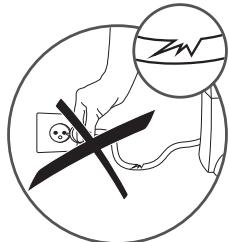
- If the power supply cable is damaged, do not use the appliance. To avoid any danger, immediately return the appliance to the manufacturer, after-sales service or other qualified persons to replace the cable.
- This appliance is designed for indoor household use only and at an altitude below 2000 m.
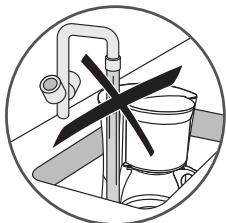
- Do not put the appliance, the power supply cable or the plug into water or other liquids.
- Your machine is designed for household use only.
- It is not intended to be used in the following environments, which are not covered by the guarantee:
- In kitchen areas reserved for staff in shops, offices and other professional environments; on farms; by clients of hotels, motels and other residential environments; in guest houses and other similar accommodation.
- When cleaning the appliance, always follow the instructions;
- Unplug the appliance.
- Do not clean when hot.
- Clean with a damp cloth or sponge.
- Do not put the appliance in water or under a running tap.
- WARNING: Risk of injury if the appliance is not used properly.
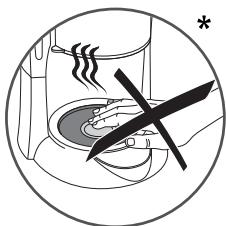
- WARNING: After use, do not touch the heating plate, as it may still be hot.
- Only touch the handle of the glass pot during heating and until it has cooled down completely.
- This appliance can be used by children over 8 years old, provided that they are properly supervised or as long as they have been given instructions on how to use the appliance safely and are full aware of the dangers involved. The appliance should not be cleaned and maintained by children, unless they are over 8 years of age and supervised by an adult.
- Keep the appliance and its cord out of reach of children under 8 years of age.
- This appliance may be used by persons with reduced physical, sensory or mental capabilities, or whose experience or knowledge is not sufficient, provided they are supervised or have received instructions to use the appliance safely and understand the dangers.
- Children must not use the appliance as a toy.
- *The temperature of the accessible surfaces may be high when the appliance is in operation. Do not touch the hot surfaces of the appliance.
- Before plugging in the appliance, ensure that the power supply corresponds to that of the appliance. Also check that the current includes an earthed socket.
- The guarantee will not apply in the event of faulty connection to a power supply.
- When using the appliance, always place it on a flat, stable, heat resistant work surface away from water splashes and any sources of heat.
- Unplug the appliance if you do not intend to use it for a prolonged period and during cleaning.
- Do not use the appliance if it is not working correctly or if it is damaged. In this case, contact an approved service centre.
- Do not leave the appliance unattended whilst in operation.
- Cleaning and standard maintenance may be carried out by the customer; any other servicing must be carried out by an approved service centre.
- The power cable must never be in proximity to or in close contact with the heated elements of your appliance, close to a source of heat or a sharp edge.
- For your safety, only use accessories and spare parts designed for your appliance.
- Do not remove the plug from the socket by pulling on the cord.
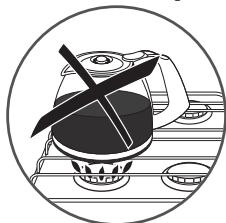
- Do not use the pot in a microwave oven, on a flame or on electric cooking plates.
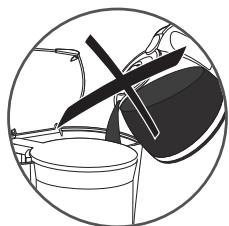
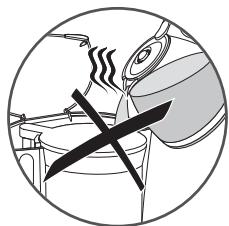
- Do not fill the appliance with water if it is still hot.
- All appliances are subject to strict quality controls. Practical performance tests are conducted on appliances picked out by chance, which explains any possible signs of use.
- When the coffee machine is in use, always close the lid.
- Do not use the coffee pot without the lid.
- Do not pour hot water into the tank.
Using the machine for the first time
Before making coffee you should use the coffee maker once with water only (without coffee).
Preparing the coffee
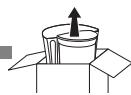
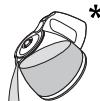
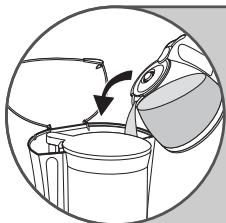
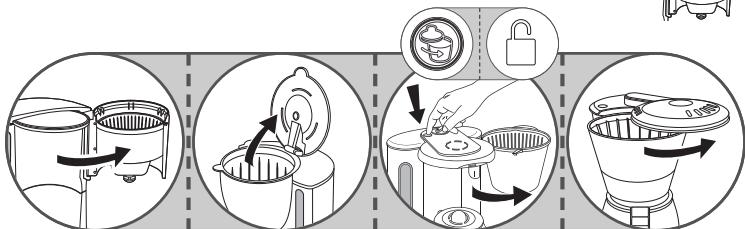
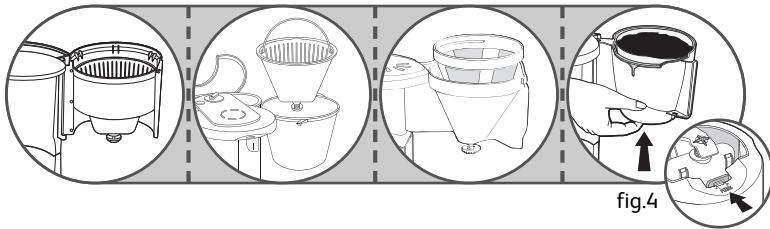
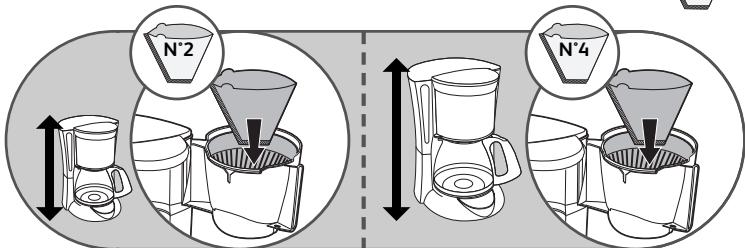
(Follow figures 1 to 9)
- Use only cold water and filter paper n°2 or 4 (fig.5) or the permanent filter* (fig.4).
- Do not exceed the maximum quantity of water indicated by the water level on the tank.
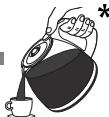
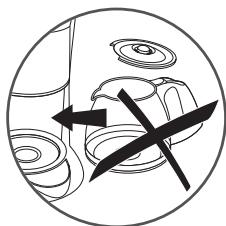
- This coffee maker has a drip stop so that you can serve coffee before the end of the cycle. Once your coffee is served, replace the jug or thermal pot* to prevent overflowing.
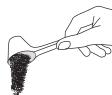
- Ground Coffee: Use one measuring spoon of ground coffee per large cup.
- Wait a few minutes before making a second pot of coffee.
- Do not make another pot of coffee if the jug already contains coffee.
Thermal pot\*
- Do not use the thermal pot without its lid.
- The lid of the isothermal pot must be closed properly when preparing coffee and to keep it warm.
- To serve coffee, press the lever on the lid of the isothermal pot downwards or unscrew the lid half way*.
- Do not put your thermal pot in the microwave or dishwasher.
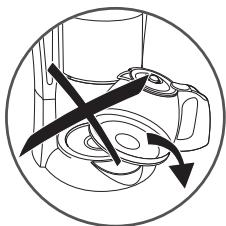
- Rinse the thermal pot in hot water before using so that it retains heat better and do not put it back inside the coffee maker after you have prepared the coffee.
- The thermal pot keeps your coffee warm for a maximum of four hours.
Aroma selector\* (see figure n°7)
- The aroma selector (fig.7) allows you to adjust the intensity of the coffee.
- For a stronger cup of coffee, turn the aroma setting either towards the black cup or the large coffee grain*.
Automatic stop
- In order to save energy, your coffee machine will turn off automatically.
- Models with glass pot:
About 30 minutes after the end of the coffee brewing cycle (i.e. about 30 minutes after there is no more water in the tank), your coffee machine will turn off automatically. The light on the on/off button will turn off.
During these 30 minutes, your coffee will be kept warm at a suitable temperature. - Models with thermo pot:
A few minutes after the end of the brewing cycle (i.e. a few minutes after there is no more water in the tank), your coffee machine will turn off automatically. The light on the on/off button will turn off.
Reheating the coffee
- Do not put the glass jug into the microwave if it has a metallic part (e.g.: metal band).
Cleaning
- To dispose of the used coffee grounds, remove the filter paper (fig.5) or permanent filter* (fig.4).
- Unplug the appliance from the wall socket outlet, and allow the coffee maker to completely cool down.
- Clean with a cloth or damp sponge.
- Do not clean the appliance when it is still hot.
- Never immerse the appliance, the power cord or plug in water or any other liquid.
Dishwasher:
- The removable filter holder is dishwasher safe.
- Only glass jugs without a metal band can be placed in the dishwasher (without lid).
Thermal jug\*
- Do not clean with abrasive cleaning products.
- Do not put your hand inside to clean (risk of breaks).
- To clean your Thermal jug, fill it with soapy water and then rinse out thoroughly.
- In cases where the jug becomes very stained by the coffee, fill it with lukewarm water, add a dishwasher detergent tablet and let it soak. Afterwards, rinse out thoroughly.
Descaling
- Descale your coffee maker every 40 uses.
You can use: - a sachet of descaling agent diluted in two large cups of water;
- or two large cups of commercially available white vinegar.
- Pour into the tank (b) and turn on the coffee maker (without coffee).
-
Allow the equivalent of one cup flow into the jug or thermal pot (f) then stop your coffee maker (you will have to turn off the coffee maker on some automatic models).
-
Allow to act for one hour.
- Restart the coffee maker to stop the flow.
- Run the coffee maker two or three times with the equivalent of one jug of water to rinse.
The guarantee excludes coffee makers that are not working or are not working properly due to lack of descaling.
N.B.: as soon as the coffee brewing cycle takes longer or becomes noisier, de-scale your machine.
Accessories\*
- Glass jug
- Thermal pot
- Permanent filter
Think of the environment!

i Your appliance contains valuable materials which can be recovered or recycled.
Leave it at a local civic waste collection point or at an approved service centre, where it will be disposed of properly.
- European Directive 2012/19/EU on Waste Electrical and Electronic Equipment (WEEE), stipulates that used household appliances must not be disposed of in normal unsorted municipal waste. Old appliances must be collected separately to optimise the sorting and recycling of their parts and to reduce the impact on human health and the environment.

The Ground Truth image displays a single, solid horizontal line. According to Rule 2 (UNDERSCORE & LINE RULES), this is a stylistic or background line, not a placeholder underscore. Therefore, the OCR result must ignore it and output nothing or only meaningful text. The provided OCR content is "____", which consists of four underscores. This is an incorrect interpretation of the line as a placeholder, violating the rule that stylistic lines must be ignored. The OCR has hallucinated underscores where none should exist based on the GT's visual context. Hence, the OCR result is inconsistent with the Ground Truth.