Enea - Pan Cola - Free user manual and instructions
Find the device manual for free Enea Cola in PDF.



| Product type | Domestic wood stove |
| Brand | Cola |
| Model | Enea (Enea Forno with oven) |
| Nominal power | 7.5 kW |
| Max. heating volume | 214 m³ (coefficient 35 W/m³) |
| Fuel | Natural dry wood (beech, oak, birch) |
| Log length | 20-25 cm |
| Max. wood humidity | 20% |
| Required draft | 10-14 Pa |
| Firebox material | Refractory plates |
| Door | Cast iron with ceramic glass |
| Adjustments | Primary air (rotary, 0-3), secondary air (rear openings) |
| Oven (optional) | Volume 18.3 L, stainless steel, thermometer on glass |
| Included accessories | Hook poker, protective glove, manual |
| Standards | EN 13240, UNI 10683 |
| Type of use | Intermittent combustion |
| Daily maintenance | Clean the grate and empty the ash pan |
| Cleaning the glass | Damp cloth or non-abrasive detergent |
| Chimney cleaning | Periodic according to fuel (at least once a year) |
| Safety distances | 20 cm sides/back, 100 cm in front of door |
| Floor protection | Non-flammable base if combustible floor (50 cm front, 30 cm sides) |
| Spare parts | Original Cola, order from retailer |
Frequently Asked Questions - Enea Cola
User questions about Enea Cola
0 question about this device. Answer the ones you know or ask your own.
Ask a new question about this device
Download the instructions for your Pan in PDF format for free! Find your manual Enea - Cola and take your electronic device back in hand. On this page are published all the documents necessary for the use of your device. Enea by Cola.
USER MANUAL Enea Cola
natural_image
3D rendering of a small industrial stove or oven with black and white panels, featuring a central vent and side drawers (no text or symbols visible)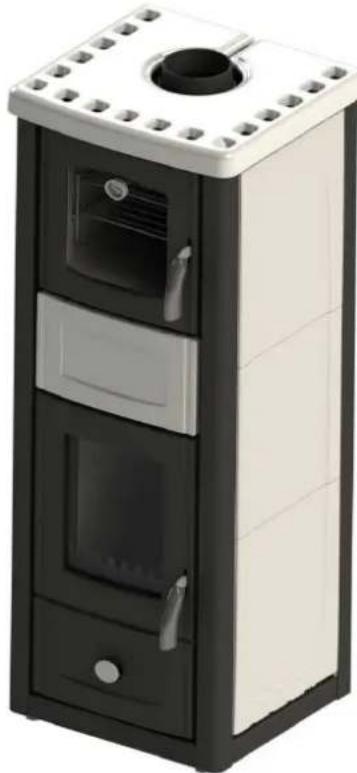
natural_image
Exterior view of a modern office building (no signage)484110100_M5-10/14
Read the instructions carefully before installation, use and maintenance.
The manual is an integral part of the unit.
COLA guarantees its products, except for parts subject to normal wear, in accordance with the current regulations. For the warranty terms, please contact the importer or the authorised agent who can integrate the compulsory warranty period with an additional period under his sole and exclusive responsibility.
The product warranty is invalidated for any trouble, breakage or accident due to failure to comply with or apply the instructions provided in this manual.
FR 29 - 37
Declaration of Performance according to Regulation (EU) n° 305/2011
Unique identification code of the product type:
Model and/or batch no. and/or series no. (Art 11-4):
Intended uses of the construction product, in accordance with the applicable harmonised technical specification:
Residential space heating appliance without water fired by wood
Name or trademark of the manufacturer (Art. 11-5):
+39.045.6144043 / +39.045.6144048
Name and address of the agent (Art. 12-2)
Assessment and verification system for constancy of performance (Annex V):
Notified laboratory:
N° Test report under system 3:
1/2 - DoP LB01F00Y M5
8 Prestazione dichiarata / Declared performance / Performance déclarée / Erklärte Leistungen / Prestaciones declaradas
| Specifica tecnica armonizzataHarmonized technical specificationSpécifications techniques harmoniséesHarmonisierte technische SpezifikationEspecificación técnica armonizada | EN 13240:2006 | ||
| Caratteristiche EssenzialiEssential characteristicsCaractéristiques essentiellesWesentliche MerkmaleCaracterísticas esenciales | PrestazionePerformancePerformanceLeistungenPrestación | ||
| Reazione al fuoco / Reaction to fire / Résistance au feu / Feuerbeständigkeit / Resistencia al fuego : A1 | |||
| Distanza da materiali combustibiliDistance to combustible materialsDistance de sécurité aux matériaux combustiblesAbstand von brennbarem MaterialDistancia de mat. combustible | Minime distanze / Minimum distances / Distance minimumMindestabstand / Distancia mínima [mm] :posteriore / rear / arrière Rückseite / revés = 200lati / sides / côté / Seite / lado = 200frontale / front / avant / Vorderseite / frente = 1000soffitto / ceiling / plafond / Decke / techo = 1200pavimento / floor / sol / Boden / fondo = 0 | ||
| Rischio di fuoriuscita di braci incandescenti / Risk of burning fuel falling outRisque de fuite de combustibile / Gefahr Brennstoffaustritt / Riesgo de pérdida de combustible | Conforme / CompliantConforme / konform /Conforme | ||
| Emissione di prodotti della combustioneEmission of combustion productsÉmission des produits de combustionEmission von VerbrennungsproduktenEmisiones de productos de combustión | CONOxOGCPM | 0,099 % - 1235,3 mg/Nm ^3 89,7 mg/Nm ^3 53,5 mg/Nm ^3 5,9 mg/Nm ^3 | |
| Temperatura superficiale / Surface temp. / Temp.de surface/ Oberflächentemperatur/Temp.superficial | Conforme / CompliantConforme / konform /Conforme | ||
| Sicurezza elettrica / Electrical safety / Sécurité électrique / Elektrische Sicherheit / Seguridad eléctrica | - | ||
| Pulibilità / Cleanability/ Facilité d'accès et nettoyage/Zugänglichkeit und Reinigung / Accesibilidad y limpieza | Conforme / CompliantConforme / konform /Conforme | ||
| Pressione massima di esercizio / Max operating pressure / Pression maximale de serviceMaximaler Betriebsdruck / Presión máxima de trabajo | - bar | ||
| Temperatura fumi a potenza termica nominale / Flue gas temperature at nominal heat outputTemp.des funée à la puissance nominale/Rauchgastemperatur Nennleistung /Temp.de humos a Pot.nominal | 221,8 °C | ||
| Resistenza meccanica ( per sopportare un camino-canna fumaria)/Mechanical resistance ( to carry a chimney/flue )/Résistance mécanique (pour soutenir la cheminée) / Mechanische Festigkeit (um den Kamin zu tragen) / Resistencia mecánica (de soporte de la chimenea) | NPD ( Nessuna Prestazione Determinata /No Performance Determined / Aucune performance déterminée)Keine Leistung festgestellt / Prestación no determinada ) | ||
| Prestazioni termiche / Thermal performance / Performance thermique / Thermische Leistungen / Prestaciones térmicas | |||
| Potenza introdotta/ Heat input/ Puis.introduite/ Eingeführt Leistung / Pot.introducidaPotenza nominale/ Nominal heat output / Puis. nominale/ Nennleistung / Pot. nominalPot. resa in ambiente / Room heating output / Puissance rendeu à l'ambientUmgebung gelieferteLeist. / Potencia suminis.entornoPotenza ceduta all'acqua / Water heating output / Puissance rendue àl'eauDem Wasser gelieferte Leist./ Potencia cedida al agua | 8,74 kW7,5 kW7,5 kW- | ||
| Rendimento / Efficiency / Rendement / Wirkungsgrad / Rendimiento | 85,81 % | ||
The performance of the product identified in points 1 and 2 is in conformity with the declared performance in point 8.
This declaration of performance is issued under the sole responsibility of the manufacturer identified in point 4.
Signed for and on behalf of the manufacturer
2/2 - DoP_LB01F00Y_M5
Declaration of Performance according to Regulation (EU) n° 305/2011
Unique identification code of the product type:
Model and/or batch no. and/or series no. (Art 11-4):
Intended uses of the construction product, in accordance with the applicable harmonised technical specification:
Residential space heating appliance without water fired by wood.
Name or trademark of the manufacturer (Art. 11-5):
4
+39.045.6144043 / +39.045.6144048
Name and address of the agent (Art. 12-2):
Assessment and verification system for constancy of performance (Annex V).
N° Test report under system 3:
1/2 - DoP_LB0BF00Y_M5
8 Prestazione dichiarata / Declared performance / Performance déclarée / Erklärte Leistungen / Prestaciones declaradas
| Specifica tecnica armonizzataHarmonized technical specificationSpécifications techniques harmoniséesHarmonisierte technische SpezifikationEspecificación técnica armonizada | EN 13240:2006 | ||
| Caratteristiche EssenzialiEssential characteristicsCaractéristiques essentiellesWesentliche MerkmaleCaracterísticas esenciales | PrestazionePerformancePerformanceLeistungenPrestación | ||
| Reazione al fuoco / Reaction to fire / Résistance au feu / Feuerbeständigkeit / Resistencia al fuego : A1 | |||
| Distanza da materiali combustibiliDistance to combustible materialsDistance de sécurité aux matériaux combustiblesAbstand von brennbarem MaterialDistancia de mat. combustible | Minime distanze / Minimum distances / Distance minimumMindestabstand / Distancia mínima [mm] :posteriore / rear / arrière Rückseite / revés = 200lati / sides / côte / Seite / lado = 200frontale / front / avant / Vorderseite / frente = 1000soffitto / ceiling / plafond / Decke / techo = 1200pavimento / floor / sol / Boden / fondo = 0 | ||
| Rischio di fuoriuscita di braci incandescenti / Risk of burning fuel falling outRisque de fuite de combustibile / Gefahr Brennstoffaustritt / Riesgo de pérdida de combustible | Conforme / CompliantConforme / konform /Conforme | ||
| Emissione di prodotti della combustioneEmission of combustion productsÉmission des produits de combustionEmission von VerbrennungsproduktenEmissions de productos de combustión | CONOxOGCPM | 0,099 % - 1235,3 mg/Nm ^3 89,7 mg/Nm ^3 53,5 mg/Nm ^3 5,9 mg/Nm ^3 | |
| Temperatura superficiale / Surface temp. / Temp.de surface/ Oberflächentemperatur/Temp.superficial | Conforme / CompliantConforme / konform /Conforme | ||
| Sicurezza elettrica / Electrical safety / Sécurité électrique / Elektrische Sicherheit / Seguridad eléctrica | - | ||
| Pulibilità / Cleanability/ Facilité d'accès et nettoyage/Zugänglichkeit und Reinigung / Accesibilidad y limpieza | Conforme / CompliantConforme / konform /Conforme | ||
| Pressione massima di esercizio / Max operating pressure / Pression maximale de serviceMaximaler Betriebsdruck / Presión máxima de trabajo | - bar | ||
| Temperatura fumi a potenza termica nominale / Flue gas temperature at nominal heat outputTemp.des funée à la puissance nominale/Rauchgastemperatur Nennleistung /Temp.de humos a Pot.nominal | 221.8 °C | ||
| Resistenza meccanica ( per sopportare un camino-canna fumaria)/Mechanical resistance ( to carry a chimney/flue )/Résistance mécanique (pour soutenir la cheminée) / Mechanische Festigkeit (um den Kamin zu tragen) / Resilencia mecânica (de soporte de la chimenea) | NPD ( Nessuna Prestazione Determinata /No Performance Determined / Aucune performance déterminée)Keine Leistung festgestellt / Prestación no determinada ) | ||
| Prestazioni termiche / Thermal performance / Performance thermique / Thermische Leistungen / Prestaciones térmicas | |||
| Potenza introdotta/ Heat input/ Puis.introduite/ Eingefuhrt Leistung / Pot.introducidaPotenza nominale/ Nominal heat output / Puis. nominale/ Nennleistung / Pot. nominalPot. resa in ambiente / Room heating output / Puissance rendeu à l'ambientUmgebung gelieferteLeist. / Potencia suminis.entomoPotenza ceduta all'acqua / Water heating output / Puissance rendue àl'eauDem Wasser gelieferte Leist./ Potencia cedida al agua | 8,74 kW7,5 kW7,5 kW- | ||
| Rendimento / Efficiency / Rendement / Wirkungsgrad / Rendimiento | 85,81 % | ||
The performance of the product identified in points 1 and 2 is in conformity with the declared performance in point 8.
This declaration of performance is issued under the sole responsibility of the manufacturer identified in point 4.
Signed for and on behalf of the manufacturer :
2/2 - DoP_LB0BF00Y_M5
CE MARKING INFORMATION
INFORMATIONS RELATIVES AU MARQUAGE CE
CE MARKING INFORMATION
INFORMATIONS RELATIVES AU MARQUAGE CE
natural_image
Three technical illustrations of industrial equipment components, labeled 6, 6.1, and showing different interior views (no text or symbols on the devices themselves)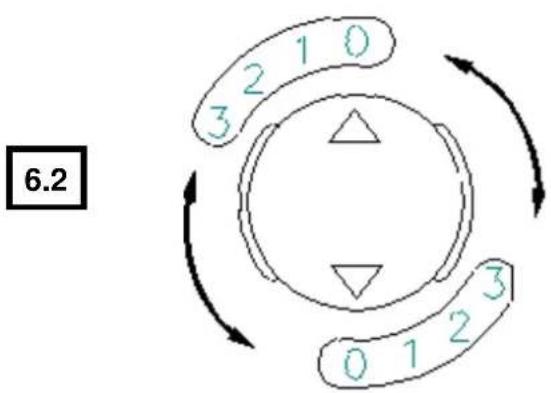
flowchart
graph TD
    A["0"] --> B["1"]
    B --> C["2"]
    C --> D["3"]
    D --> A
    style A fill:#f9f,stroke:#333
    style B fill:#f9f,stroke:#333
    style C fill:#f9f,stroke:#333
    style D fill:#f9f,stroke:#333
    subgraph Central Circle
        E["△"]
        F["▽"]
    end
    subgraph Circular Flow
        G["○"]
        H["○"]
        I["○"]
        J["○"]
        K["○"]
    end
    subgraph Right-Center Flow
        L["1"]
        M["2"]
        N["3"]
    end
    subgraph Left-Center Flow
        O["6.2"]
    end
7 - LAYOUT
7.1 - ENEA
natural_image
Technical diagram of a grid-based electronic component with circular holes and a central circular element labeled 'C' (no text or symbols beyond label)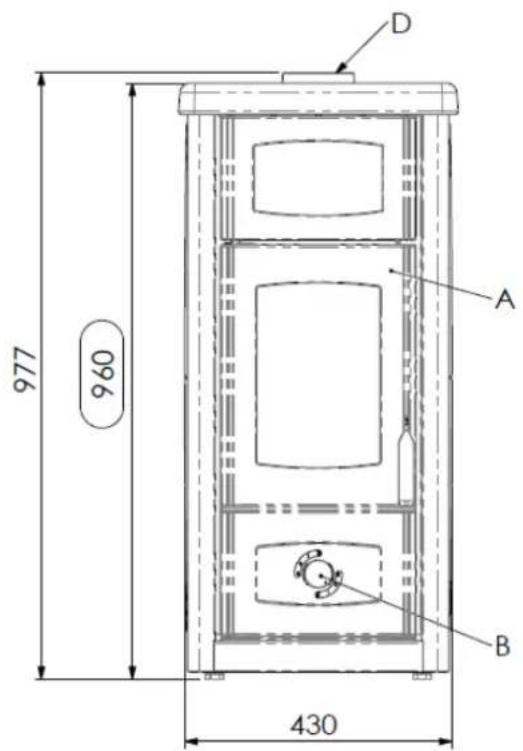
text_image
D A 977 960 B 430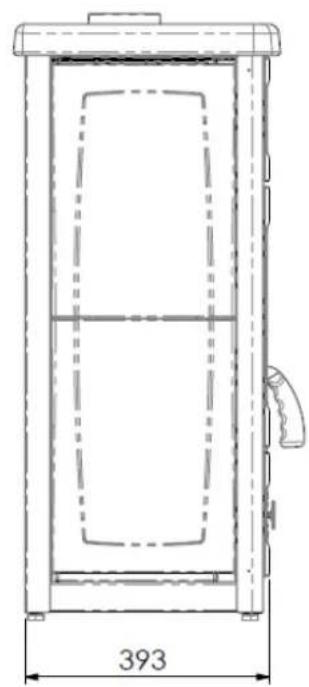
natural_image
Technical line drawing of a cabinet or enclosure with dimension标注 (393 mm), no readable text or symbols present.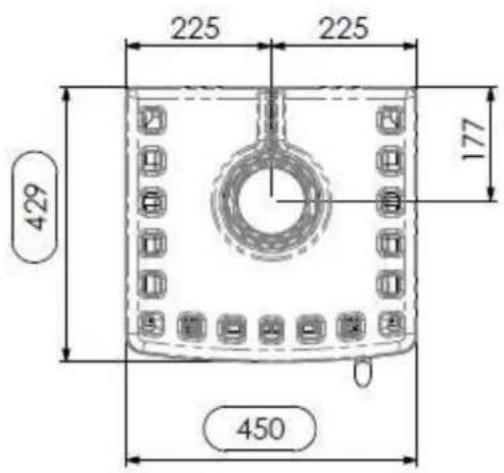
text_image
225 225 177 429 450Legenda
5 - RICERCA DEI GUASTI
5 - RICERCA DEI GUASTI
1.3.3 Primary air control
1.3.4 Secondary air
1.3.5 Oven
1.4 Fuel
1.5 Accessories supplied
1.6 Reference standards
1.7 Data plate
1.8 Instructions for ordering replacement parts
1.9 Stove decommissioning
2 – TRANSPORT AND INSTALLATION
2.1 Packing, handling, shipment and transport
2.2 Instructions for safe installation
2.3 Connection to the flue
2.4 Room ventilation
2.5 Advice on flues and connections
2.6 Emergency
3 - STOVE USE
3.1 Introduction
3.2 Startup
3.3 Lighting and fuel
3.4 Adjusting the combustion air flow
- 5 Normal operation
3.6 Operation with slow combustion
3.7 Operation in low season
3.8 Oven operation
3.9 Idle period and summer
4 – ROUTINE STOVE CLEANING AND MAINTENANCE
4.1 Removing ash
4.2 Cleaning the glass
4.3 Stove cladding
4.4 Cleaning the oven
4.5 Cleaning the flue pipe and the baffle
5 - TROUBLESHOOTING
5.1 The stove does not work
5.2 Difficult lighting
5.3 Smoke leaks
5.4 The glass gets dirty easily
5.5 Condensate in combustion chamber
5.6 The oven does not heat up
1 - GENERAL INFORMATION
1.1 Introduction
Dear Customer
First of all we wish to thank you for the trust placed in us by purchasing one of our products. Please read and carefully follow the advice given in this installation, use and maintenance manual in order make best use of the product.
Important:
- Installation, testing, use and cleaning must be carried out according to that described in this manual, and in compliance with the local regulations, including the national and European reference standards; otherwise the product warranty will be void.
- Have the flue pipe checked by a specialised technician.
For operation faults, doubts or problems, contact the nearest service centre.
1.2 Safety rules
- Read and follow the instructions given in the installation, use and maintenance manual.
- Installation, the electrical connection, testing and maintenance must be carried out by a qualified and/or authorised technician.
- Connect the stove to an approved flue not shared with other appliances.
- Make sure the stove is cold before carrying out any maintenance or cleaning.
- Do not use flammable liquids or substances (alcohol, hydrocarbons) to light the stove.
- The stove is suitable for intermittent combustion and must only be used with fuels having the characteristics described in this manual.
- The room where the stove is placed must have openings or air inlets communicating with the outside of the house and adequate for ensuring a sufficient air change.
- Never block the combustion air inlet and fume outlet openings.
- Do not handle easily flammable or explosive substances near the stove while it is operating.
- During operation the intense heat generated by combustion of the wood makes the external surfaces of the stove very hot, and in particular the fire door, handle and flue pipe and cover; therefore avoid contact with these parts without suitable protection.
- Keep objects which are not heat resistant at a suitable distance.
- Clean the ash pan regularly.
- Hot ashes must not be put in waste bins or left unattended outdoors.
- Warn children and guests about the hazards described above.
- In case of operation faults, the stove must only be relit after eliminating the cause of the problem.
- Oils and fats can easily catch fire if overheated, therefore pay maximum attention when cooking.
- A hood used for exhausting stale air/steam and operated in the same area or in the vicinity of the stove, could involve fumes escaping through the fire door during loading, if the room is not sufficiently ventilated from the outside.
- The oven must only be used for its intended purpose, i.e. for warming and/or cooking of food; any other use is improper and dangerous.
- Tampering and/or unauthorised replacements with non-original parts of the stove can create a risk for the user's safety and relieves the manufacturer of any civil or penal liability.

Cola s.r.l. declines any liability for problems, breakage or accidents caused by failure to follow or apply the instructions contained in this manual.
1.3 Technical description
ENEA – ENEA FORNO model stoves burn solid fuel and are suitable for home heating.
Both stoves have the same combustion chamber, with a nominal output of 7.5 kW, and ensure a maximum heatable volume of approx. 214 m3 considering an energy requirement coefficient equal to 35 W/m3; this can vary depending on the insulation, type of building and climatic zone.
The stove is tested with wood fuel complying with the requirements of Standard EN 13240 and is classified as an intermittent combustion domestic appliance.
The firebox is entirely in refractory tiles, which allows clean combustion with low emissions, and is closed frontally by a cast iron door with ceramic glass for aesthetic purposes and control.
The layouts of the stoves are given in the enclosures, i.e. 7.1 ENEA model and 7.2 ENEA FORNO model; the following sections refer to the points in the above-mentioned layouts.
1.3.1 Fire door (A)
The fire door is opened by pulling the handle outwards; use the protective glove supplied with the stove when the handle is hot. Thin slots around the top and bottom edges of the fire door glass provide an airwash to keep the glass clean.
1.3.2 Ash door
The ash door is integrated with the fire door (A) and is opened by pulling the handle outwards, to access a compartment with the removable ash pan inside.
1.3.3 Primary air flow control (B)
The rotary control on the ash door regulates the primary air flow into the lower part of the stove through the ash pan and grate. The primary air is necessary for the combustion process, therefore make sure to empty the ash pan regularly so that the ash cannot obstruct the combustion air inlet. When the arrow is in position '0' the air inlet is closed; when the arrow is in position 3 the air inlet is fully open (figure 6.2).

Higher air settings may cause overheating and consequent damage to the stove.
1.3.4 Secondary air (C)
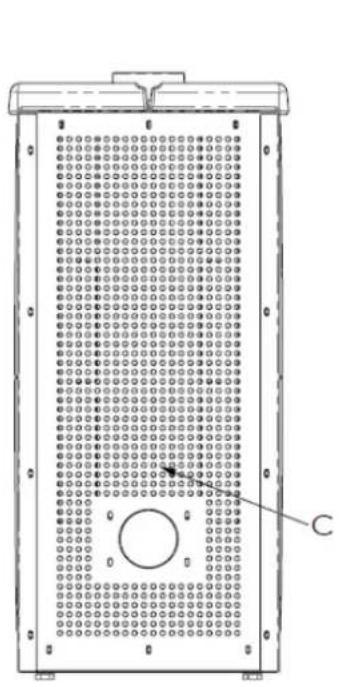
The stove's secondary air inlet located on the back is for burning unburnt gases produced by the combustion process.
1.3.5 Oven (F) (if present)
The oven is heated by the flow of combustion gases around it and its temperature can be read on the thermometer on the door glass (E). A sufficient draught and clean fume ducts are essential for optimum efficiency. The oven has two racks. When putting pans into the oven, allow for possible rising of the product inside and ensure a space of at least 20 mm between the pan and the sides of the oven.
1.4 Permissible and non-permissible fuels
Permissible fuels are natural-type pieces of dry and resin-free wood (beech, oak and birch), 20-25 cm long. The wood should be seasoned at least two years; the maximum recommended moisture content is 20%, in order to ensure combustion without smoke and soot.
Do not use:
- coal dust;
- thin strips of wood (only permitted as kindling);
- bark and shavings;
- waste in general;
- treated cardboard and paper;
- wood treated with protective substances.
The burning of waste is prohibited according to European and national laws.

- The burnt gases produced by the combustion of unsuitable materials can cause damage to the stove and flues, and compromise your health.
- The use of any fuel that does not comply with the above indications will void the warranty.
1.5 Accessories supplied
The stove comes complete with an instruction manual, poker, and a protective glove for hot handles.
1.6 Reference standards
Standard EN 13240 : European standard for solid fuel burning stoves, containing the technical requirements for design, fabrication, construction, safety and performance, instructions and markings, together with the relevant approval test methods.
Standard UNI 10683 : Italian Standard specifying the installation requirements for heat generators burning wood or other solid biofuels.
Standard UNI EN ISO 17225-5 : Technical standard regarding the characteristics of biofuels, such as firewood.
1.7 Data plate
The data plate is located on the back of the stove. It gives the following data:
- model;
- serial number;
- type of fuel;
- heat output;
- max. consumption;
- dust emissions;
- min. flue draught;
- average flue gas temperature;
- thermal efficiency;
- flue pipe size;
- stove external dimensions;
- minimum safety distances;
- weight.
1.8 Instructions for ordering replacement parts
For the end-user:
Contact the service centre and/or your dealer to order replacement parts.
For the dealer:
To request any replacement parts, contact the Cola s.r.l. assistance service and/or send a fax clearly specifying the following:
- stove model;
- serial number;
- date of purchase;
- list of replacement parts;
- details of faults detected.

- Operations on components must be carried out by authorised and/or qualified personnel.
- Only use Cola original replacement parts.
1.9 Stove decommissioning
For its disposal, the stove must be sealed inside strong packing; contact the competent local authorities for information on how to proceed according to the current local regulations.
2 - TRANSPORT AND INSTALLATION
2.1 Packing, handling, shipment and transport
The stove can be lifted using a lift truck, inserting the forks (of suitable length) in the special spaces in the wooden packing. Make sure the equipment used for lifting and transport can take the weight of the stove, specified on the data plate and in this manual.
Avoid taking the load in areas where it could be a danger if dropped.
Set the stove down on the floor carefully without jolting and position it in the required place, after making sure the floor can take the weight of the stove; otherwise consult a specialised technician.
2.2 Instructions for safe installation
Proper operation of a heating and cook stove depends above all on its installation, which must be carried out by a competent person, in compliance with the current safety regulations.
The stove must only be operated with the ash pan inserted, and disposal of the products of combustion must take place daily, avoiding excessive deposits that can affect its safe operation.
The sides and back must be 20 cm (fig.5-ref A_B) from flammable materials.
No flammable material or objects must be placed less than 100 cm (fig.5-ref.C) in front of the fire door. If the floor is made of combustible material (wood, carpet, etc.), a protection base in 2-3 mm thick sheet metal or other non-flammable material of a certain thickness must be provided; in this case the base should protrude at least 50 cm from the front and 20 cm from the sides of the stove.

- An incorrectly installed stove can be the cause of serious accidents (flue, insulation materials, etc., catching fire).
- Do not store flammable material near the stove.
- Installation must be carried out, ensuring access for maintenance and cleaning the stove and flue.
2.3 Connection to the flue
The ENEA – ENEA FORNO stove must be connected to the flue via the collar on the hotplate, using flue pipes that are readily available on the market. Connection to the chimney must be made using strong and sturdy pipes of recommended minimum thickness 1.2-2 mm. The flue pipe must possibly be straight, to avoid pressure losses, and towards the flue. The ends of the flue pipe must be tight.
To ensure regular operation, the flue draught with stove operating must be between 10 and 14 Pa.
For maximum stove efficiency, a draught restrictor or damper should be installed in the flue pipe or chimney. Each stove must eliminate the fumes through its own flue; never use the same flue for several units.
2.4 Room ventilation
The air necessary for combustion, i.e. up to 25 m ^3 every hour, must be ensured in rooms where stoves with natural flue draught are installed. The air exchange must occur with at least one fixed opening to the outside, whose section depends on the current local regulations and in any case must not be less than 100 cm ^2 . Such openings must be protected with grilles and must never be obstructed.
If the air is insufficient, even the operation of an extractor hood in the room can negatively affect stove operation.
2.5 Advice on flues and connections
Flues must be made from suitable materials and perfectly insulated, with characteristics that prevent temperature decreases.
The inner walls must be perfectly smooth without any narrowing or protrusions along the entire length, so as not to create friction or vortices in the smoke which could cause a considerable reduction in draught.
Any doors for cleaning and inspection must be perfectly closed during operation.
The flue outlets must be 0.5 m higher than any obstacles located less than 10 m away and must end with chimney caps or cowls having a useful outlet cross section of at least double that of the flue.
Figures 1–2 give the data regarding the distances and positioning of chimney caps in conformity with the provisions of UNI 10683.
Before connecting the stove to an existing chimney, in addition to complying with that described above, make sure there are no openings or cracks where air could enter and cause a temperature decrease affecting the draught.
Also make sure there are no obstructions caused by foreign bodies or a buildup of soot.
The first connection section leaving the stove should be vertical, whereas the flue connection to the chimney (which goes to the chimney cap) must only enter by a few cm, so as not to reduce the cross section of the flue.
If the flue is not perpendicular to the chimney it is advisable to make the connection with special steel fittings that allow a maximum slope of 45^ .
If the walls and ceiling are made of flammable materials, the parts in contact with the flue must be suitably insulated. All connection joints must be carefully sealed, in particular where the connection enters the flue.
If there are several heating cook stoves in the same home, each must have its own flue.
It is inadvisable to make openings in the flue for connecting other appliances, as this could affect the draught.
According to Standard UNI 7429, the chimney cap must meet several requirements; above all, it must have a useful outlet cross section at least double that of the flue. It is also advisable to install an "antiwind" cap that guarantees fume exhaust even in the presence of strong crosswinds (figures 3-4).
2.6 Emergency
Suitable fire-prevention devices should be arranged for any eventuality.
In case of a fire, proceed as follows:

- Immediately close the loading door and the ash pan.
- Close the combustion air controls.
- Extinguish the fire using suitable fire-extinguishers.
- Call the fire department immediately.
- Do not use jets of waters to extinguish the fire.
3- STOVE USE
3.1 Introduction
Never leave children unsupervised in the vicinity of the stove; there is a very high risk of burns from the hot surfaces.
Also:

- never use the stove with the fire door open;
- do not store firelighters or other easily combustible materials in the vicinity of the stove;
- do not try to move or lift the stove by the handles.
3.2 Startup
When lighting the stove the first time, bad odours may be created, therefore air the room thoroughly.
When lighting the stove the first time, allow it to burn with a low flame for several hours (air control on ash door open 30%) and with very little fuel.
The heat can then be increased a little at a time, so that the stove expands slowly and the sealants and putties dry.
During the heating and cooling cycles, the combustion chamber in refractory cement undergoes heat stress and expansion, which causes fine cracks to form. Such cracks do not affect stove efficiency or its service life.
3.3 Lighting and adding fuel
To light the stove, it is advisable to use kindling and newspaper, or commercially available firelighters (excluding all inflammable liquids). When lighting the stove, the air control on the fire door must be fully open; after lighting, it is used to regulate stove heat output.

Never use petrol, alcohol or other flammable liquids to light the fire.
3.4 Adjusting the combustion air flow
Primary air:
the primary air is adjusted using the manual revolving controls located on the ash door, and feeds the fire through the grate.
Secondary air:
the secondary air enters the stove through the holes in the back.
Optimum combustion conditions are obtained when, on loading wood, the air necessary for combustion enters through the grate, whereas the secondary air ensures the completion of combustion in the upper part of the firebox.
3.5 Normal operation
Remove the ash from the grate each time before loading fuel. Put 2-3 pieces of wood on the bed of embers. Given the large capacity of combustion chamber it is advisable not to exaggerate, but to load up to 2-3 pieces of wood at a time. For normal operation set the primary air control to halfway. Overloading does not increase heat output, but will overheat the stove, damaging it.
3.6 Operation with slow combustion
Heat output can be adjusted by reducing the combustion air. To ensure operation for many hours at low heat, the primary air controls must be opened at minimum.
With partial feed operation, a patina may form on the glass due to the low temperature in the combustion chamber. In any case, a continuous fire with low heat is not advisable.
3.7 Operation in low season
With outside temperatures above 15^ C, the draught may be affected, resulting in a decrease in heat output and with flue gases not being completely exhausted (smell of smoke in the room). In this case it is advisable to clean the ash from the grate and increase the combustion air. Put less fuel on the fire and clean the grate more frequently.
3.8 Oven operation (if present)
The stove has a 18-litre static oven, covered entirely in stainless steel sheet and provided with 2 racks for holding trays. A thermometer installed on the glass of the enamelled door shows the oven temperature.
When the stove is lit for the first time, the oven should only be used after 1-2 hours of operation at 200-250°C with the oven door left ajar to eliminate fumes produced by manufacturing process residuals such as grease, oil and sealants. To reach adequate temperatures is necessary increase the primary air.
Clean the oven every time it is used, following the instructions given in the section on cleaning.

The oven must only be used for its intended purposes, i.e. cooking foods; any other use is improper and dangerous.
3.9 Idle period and summer
In summer, it is advisable to clean the combustion chamber, ash pan, fume ducts in the oven, the chimney and flue; also, remove all residuals on the inside and outside of the stove, check all seals and replace them if necessary.
The appearance of the hotplate and other cast iron parts can be maintained by applying neutral vaseline.
At the end of maintenance operations, close the doors and air controls to prevent dust, etc., from entering.
If the stove is not going to be used for a long period, after the above operations and disconnecting from the flue, it is advisable cover it with a protective cloth and store in a safe and protected place.
4 – ROUTINE STOVE CLEANING AND MAINTENANCE
Good maintenance will help keep improve the stove's efficiency and prolong its service life.
Daily, before lighting the fire, clean the grate and remove any unburnt wood and ash from the ash pan zone.
4.1 Removing ash
The ENEA – ENEA FORNO stove has a removable grate which should be cleared of ash, using the poker supplied, every time before loading fuel.
Make sure to empty the ash pan regularly, as accumulated ash under the grate will obstruct the flow of combustion air. The grate will get too hot and may be damaged.

To prevent the risk of fire, allow the ashes to cool outdoors in a metal container or in the stove and eliminate them in compliance with the current local regulations.
4.2 Cleaning the glass
The glass can be cleaned using a damp cloth and normal non-abrasive detergents.
Remove any encrustations with suitable detergents, before they become dry.
The ceramic glass can withstand temperatures of around 750^ C: in case of breakage, it is advisable to replace it with another original glass supplied by Cola.

Do not clean the glass during stove operation: cleaning must be carried out when the stove is cold.
4.3 Stove cladding
The stove's cladding must only be cleaned when cold. The ceramic tiles are hand-crafted products and therefore may have minor surface imperfections such as tiny spots or slight colour differences.
It is advisable to use a soft dry cloth to clean the ceramic surfaces; the use of detergents could highlight any flaws.
4.4 Cleaning the oven
It is advisable to clean the oven when lukewarm or cold and after each use, to prevent dirt from depositing on the surface. To clean the stainless steel surfaces of the oven, use non-abrasive detergents with a soft cloth, rinsing thoroughly to prevent any residues of detergent from contaminating food and corroding the oven materials.
To clean the bottom baffle under and around the oven, remove the oven door "D" and its closing frame.
4.5 Cleaning the flue and baffle
A reduction in heat output is nearly always due to obstruction of the flue. Also, the escaping of burnt gases with odours can be the sign of an obstructed flue.
The flue of your stove must be cleaned at regular intervals. The amount of soot and the frequency of cleaning will depend largely on the type of fuel and how the stove is used (i.e. low or high output).
Clean the flue pipes, proceeding as follows:
- Clean only when the stove is cold;
- Close all openings that are not to be cleaned;
- Remove the flue pipes and clean them outdoors;
- Detach and suck the deposits inside the stove with the wire brush;
- All residuals on the grate or in the ash pan must be removed;
- Remove the layer of soot under the oven zone using ascaper;
Close accurately the openings for the cleaning and also check the seal of the closure cap; in case it is damaged during cleaning the seal must be replaced.
5 - TROUBLESHOOTING
5.1 The stove does not work
- Make sure the connector and size of the flue are suitable for the stove's heating power.
- Make sure the flue is constructed in accordance with the current regulations.
- Make sure the flue inspection doors and openings are closed and sealed.
- Make sure no other appliances are connected to the flue.
5.2 Difficult lighting
- Open the primary air control and damper.
- Use wood and lignite blocks with a low moisture content.
- Make sure room ventilation ensures a sufficient amount of oxygen in the air.
- Make sure the flue is adequate for the stove's heating power.
5.3 Smoke leaks
- Check the flue draught.
- Make sure the flue pipe connection complies with the tightness requirements.
- Make sure the flow of primary air through the grate is not obstructed by ash.
- Make sure combustion residuals are not blocking the flue pipe.
- Make sure the primary air control is open.
5.4 The glass gets dirty easily
- Make sure the fuel is of a recommended type.
- Make sure the wood is seasoned and dry.
- Too much fuel in the combustion chamber.
- Make sure the secondary air flow control is properly adjusted.
- Check the flue draught..
5.5 Condensate in combustion chamber
- Make sure the procedure for first lighting has been carried out.
- Make sure the fuel is of a recommended type.
- Make sure the wood is seasoned and dry.
- Make sure the flue is insulated and complies with the regulations.
- Check the flue draught..
5.6 The oven does not heat up
- Check closing of the oven door.
- Make sure the fuel burns normally.
- Make sure there is sufficient flue draught.
- Make sure the flueways are clean.
The Manufacturer reserves the right to make technical or aesthetic changes to the products at any time without notice. The drawings, measurements, diagrams and any other configurations are given only by way of example.
1 - RECOMMANDATIONS GÉNÉRALES
1.3 Introduction
1.3 Description technique