
MultiSync LCD1550VMBK - Monitor NEC - Free user manual and instructions
Find the device manual for free MultiSync LCD1550VMBK NEC in PDF.




| Product Type | 15-inch LCD Monitor |
| Brand | NEC |
| Model | MultiSync LCD1550VMBK |
| Optimal Resolution | 1024 x 768 |
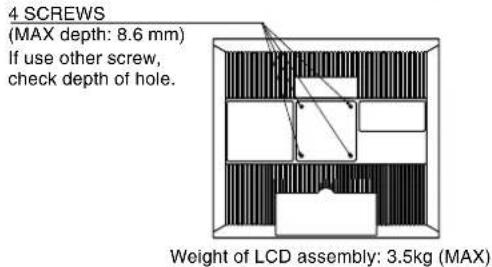
| Weight (with stand) | 3.5 kg maximum |
| Power Supply | 220-240 V AC, 50/60 Hz |
| Power Consumption | Energy efficient (ENERGY STAR) |
| Tilt | Manually adjustable |
| Main Functions | OSM settings (brightness, contrast, position, color), built-in speakers, headphone jack, power saving mode |
| Video Inputs | Mini D-SUB 15-pin (VGA) |
| Audio Input | 3.5 mm audio jack |
| Headphone Output | Front of monitor |
| Compatibility | PC (IBM compatible), Mac (with adapter) |
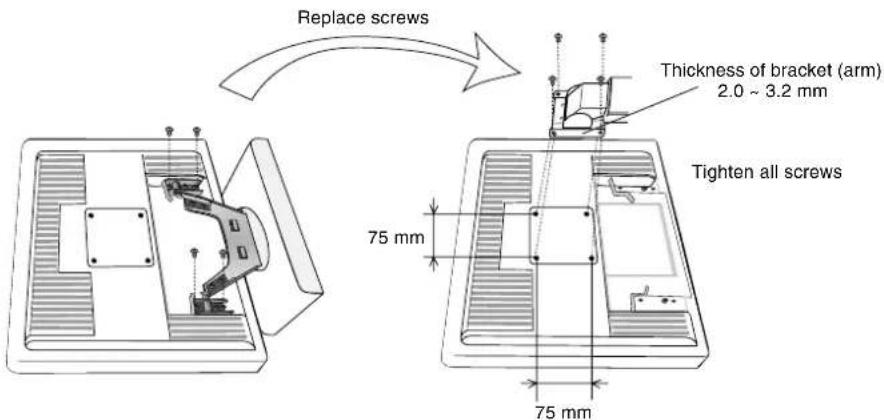
| VESA Mounting | 75 x 75 mm, max screw depth 8.6 mm |
| Cleaning and Maintenance | Use a soft non-lint cloth, no cleaning agents or glass cleaners |
| Safety | Do not open the cabinet, unplug if problems occur, do not expose to moisture |
| General Information | Manual available in several languages, free download at notice-facile.com |
Frequently Asked Questions - MultiSync LCD1550VMBK NEC
User questions about MultiSync LCD1550VMBK NEC
0 question about this device. Answer the ones you know or ask your own.
Ask a new question about this device
Download the instructions for your Monitor in PDF format for free! Find your manual MultiSync LCD1550VMBK - NEC and take your electronic device back in hand. On this page are published all the documents necessary for the use of your device. MultiSync LCD1550VMBK by NEC.
USER MANUAL MultiSync LCD1550VMBK NEC
Declaration of the Manufacturer
We hereby certify that the colour monitor
MultiSync LCD1550VM (LA-15R04)
is in compliance with
Council Directive 73/23/EEC:
- EN 60950
Council Directive 89/336/EEC:
- EN 55022
- EN 61000-3-2
- EN 61000-3-3
- EN 55024
and marked with

NEC-Mitsubishi Electric Visual Systems, Corp.
MS Shibaura Bldg., 13-23,
Shibaura 4-chome,
Minato-Ku, Tokyo 108-0023, Japan
TCO'99
MultiSync LCD1550VM (LA-15R04)
Congratulations! You have just purchased a TCO'99 approved and labeled product! Your choice has provided you with a product developed for professional use. Your purchase has also contributed to reducing the burden on the environment and also to the further development of environmentally adapted electronics products.

Why do we have environmentally labelled computers?
In many countries, environmental labelling has become an established method for encouraging the adaptation of goods and services to the environment. The main problem, as far as computers and other electronics equipment are concerned, is that environmentally harmful substances are used both in the products and during the manufacturing. Since it has not been possible for the majority of electronics equipment to be recycled in a satisfactory way, most of these potentially damaging substances sooner or later enter Nature.
There are also other characteristics of a computer, such as energy consumption levels, that are important from the viewpoints of both the work (Internal) and natural (external) environments. Since all methods of conventional electricity generation have a negative effect on the environment (acidic and climate-influencing emissions, radioactive waste, etc.), it is vital to conserve energy. Electronics equipment in offices consume an enormous amount of energy since they are often left running continuously.
What does labelling involve?
This product meets the requirements for the TCO'99 scheme which provides for international and environmental labelling of personal computers. The labelling scheme was developed as a joint effort by the TCO (The Swedish Confederation of Professional Employees), Svenska Naturskyddsforeningen (The Swedish Society for Nature Conservation) and Statens Energimydighet (The Swedish National Energy Administration).
The requirements cover a wide range of issues: environment, ergonomics, usability, emission of electrical and magnetic fields, energy consumption and electrical and fire safety.
The environmental demands concern restrictions on the presence and use of heavy metals, brominated and chlorinated flame retardants, CFCs (freons) and chlorinated solvents, among other things. The product must be prepared for recycling and the manufacturer is obliged to have an environmental plan which must be adhered to in each country where the company implements its operational policy. The energy requirements include a demand that the computer and/or display, after a certain period of inactivity, shall reduce its power consumption to a lower level in one or more stages. The length of time to reactivate the computer shall be reasonable for the user.
Labelled products must meet strict environmental demands, for example, in respect of the reduction of electric and magnetic fields, physical and visual ergonomics and good usability.
Environmental Requirements
Flame retardants
Flame retardants are present in printed circuit boards, cables, wires, casings and housings. In turn, they delay the spread of fire. Up to thirty percent of the plastic in a computer casing can consist of flame retardant substances. Most flame retardants contain bromine or chloride and these are related to another group of environmental toxins, PCBs, which are suspected to give rise to severe health effects, including reproductive damage in fisheating birds and mammals, due to the bioaccumulative* processes. Flame retardants have been found in human blood and researchers fear that disturbances in foetus development may occur.
TCO'99 demand requires that plastic components weighing more than 25 grams must not contain flame retardants with organically bound chlorine and bromine. Flame retardants are allowed in the printed circuit boards since no substitutes are available.
Lead\*\*
Lead can be found in picture tubes, display screens, solders and capacitors. Lead damages the nervous system and in higher doses, causes lead poisoning.
TCO'99 requirement permits the inclusion of lead since no replacement has yet been developed.
Cadmium\*\*
Cadmium is present in rechargeable batteries and in the colour generating layers of certain computer displays. Cadmium damages the nervous system and is toxic in high doses.
TCO'99 requirement states that batteries, the colourgenerating layers of display screens and the electrical or electronics components must not contain any cadmium.
Mercury\*\*
Mercury is sometimes found in batteries, relays and switches, Mercury damages the nervous system and is toxic in high doses.
TCO'99 requirement states that batteries may not contain any Mercury. It also demands that no mercury is present in any of the electrical or electronics components associated with the display unit.
CFCs (freons)
CFCs (freons) are sometimes used for washing printed circuit boards. CFCs break down ozone and thereby damage the ozone layer in the stratosphere, causing increased reception on Earth of ultraviolet light with consequent increased risks of skin cancer (malignant melanoma).
The relevant TCO'99 requirement; Neither CFCs nor HCFCs may be used during the manufacturing and assembly of the product or its packaging.
* Bio-accumulative is defined as substances which accumulate within living organisms.
** Lead, Cadmium and Mercury are heavy metals which are Bioaccumulative.
To obtain complete information on the environmental criteria document, order from:
TCO Development Unit
SE-114 94 Stockholm
SWEDEN
FAX Number: +46 8 782 92 07
E-mail (Internet): development@tco.se
You may also obtain current information on TCO'99 approved and labelled products by visiting their website at:
http://www.tco-info.com/
flowchart
graph LR
    A["English"] --> B["Česky"]
    B --> C["Deutsch"]
    C --> D["Ελληνικά"]
    D --> E["Espanöl"]
    E --> F["Français"]
    F --> G["Italiano"]
    G --> H["Nederlands"]
    H --> I["Polski"]
    I --> J["Русский"]
    J --> K["Türkçe"]

WARNING

TO PREVENT FIRE OR SHOCK HAZARDS, DO NOT EXPOSE THIS UNIT TO RAIN OR MOISTURE. ALSO, DO NOT USE THIS UNIT'S POLARIZED PLUG WITH AN EXTENSION CORD RECEPTACLE OR OTHER OUTLETS UNLESS THE PRONGS CAN BE FULLY INSERTED. REFRAIN FROM OPENING THE CABINET AS THERE ARE HIGH VOLTAGE COMPONENTS INSIDE. REFER SERVICING TO QUALIFIED SERVICE PERSONNEL.
CAUTION
RISK OF ELECTRIC SHOCK • DO NOT OPEN


CAUTION
TO REDUCE THE RISK OF ELECTRIC SHOCK, DO NOT REMOVE COVER (OR BACK). NO USER SERVICEABLE PARTS INSIDE. REFER SERVICING TO QUALIFIED SERVICE PERSONNEL.

This symbol warns user that uninsulated voltage within the unit may have sufficient magnitude to cause electric shock. Therefore, it is dangerous to make any kind of contact with any part inside this unit.

This symbol alerts the user that important literature concerning the operation and maintenance of this unit has been included. Therefore, it should be read carefully in order to avoid any problems.
Caution:
When operating the MultiSync LCD1550VM (LA-15R04) with a 220-240V AC power source in Europe, use the power cord provided with the monitor.
In the UK, a BS approved power cord with a moulded plug has a Black (five Amps) fuse installed for use with this equipment. If a power cord is not supplied with this equipment please contact your supplier.
When operating the MultiSync LCD1550VM with a 220-240V AC power source in Australia, use the power cord provided with the monitor.
For all other cases, use a power cord that matches the AC voltage of the power outlet and has been approved by and complies with the safety standard of your particular country.
ENERGYSTAR is a U.S. trademark.
As an ENERGYSTAR ^10 Partner, NEC-Mitsubishi Electronics Display of America, Inc. has determined that this product meets the ENERGYSTAR guidelines for energy efficiency.
The ENERGYSTAR emblem does not represent EPA endorsement of any product or service.
IBM PC/XT/AT, PS/2, MCGA, VGA, 8514/A and XGA are registered trademarks of International Business Machines Corporation.
Apple and Macintosh are registered trademarks of Apple Computer Inc.
Microsoft and Windows are registered trademarks of the Microsoft Corporation.
NEC is a registered trademark of NEC Corporation.
All other trademarks or registered trademarks are property of their respective owners.
English-1
Contents
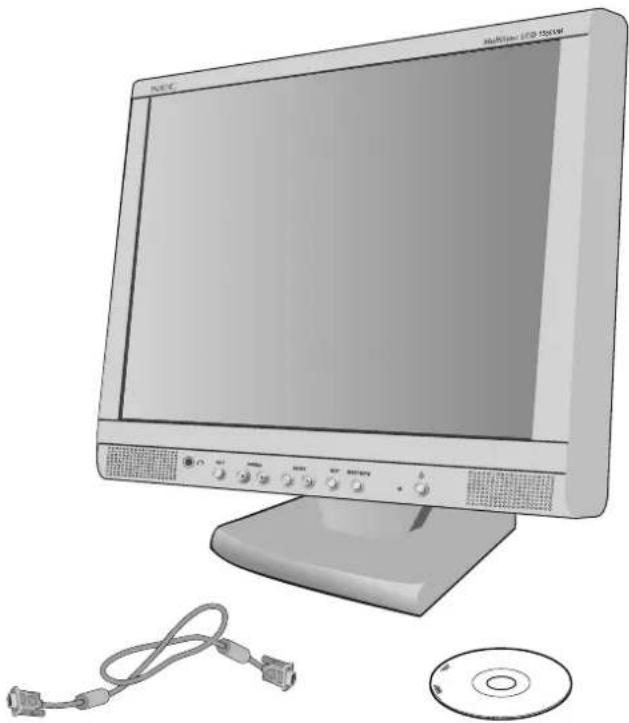
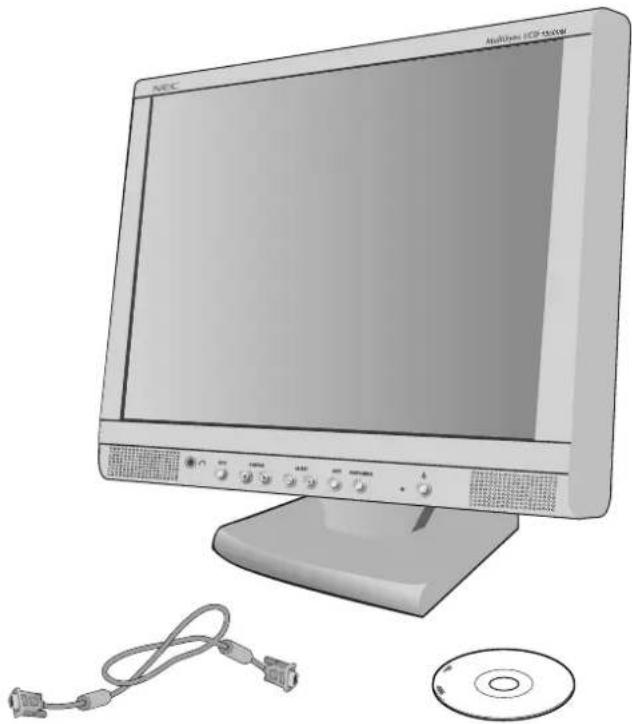
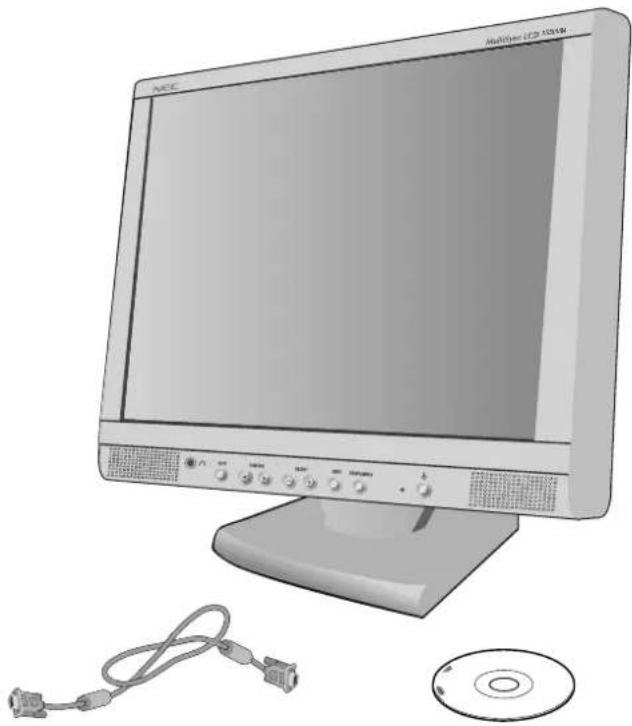
Your new NEC MultiSync LCD monitor box* should contain the following:
- MultiSync LCD1550VM monitor with tilt base
- Power Cord
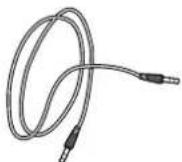
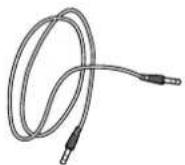
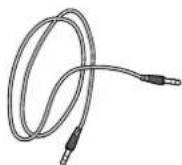
• V ideo Signal Cable - Audio Cable
- User's Manual
- CD ROM (includes complete User's Manual in PDF format). To see the User's Manual, Acrobat Reader 4.0 must be installed on your PC.
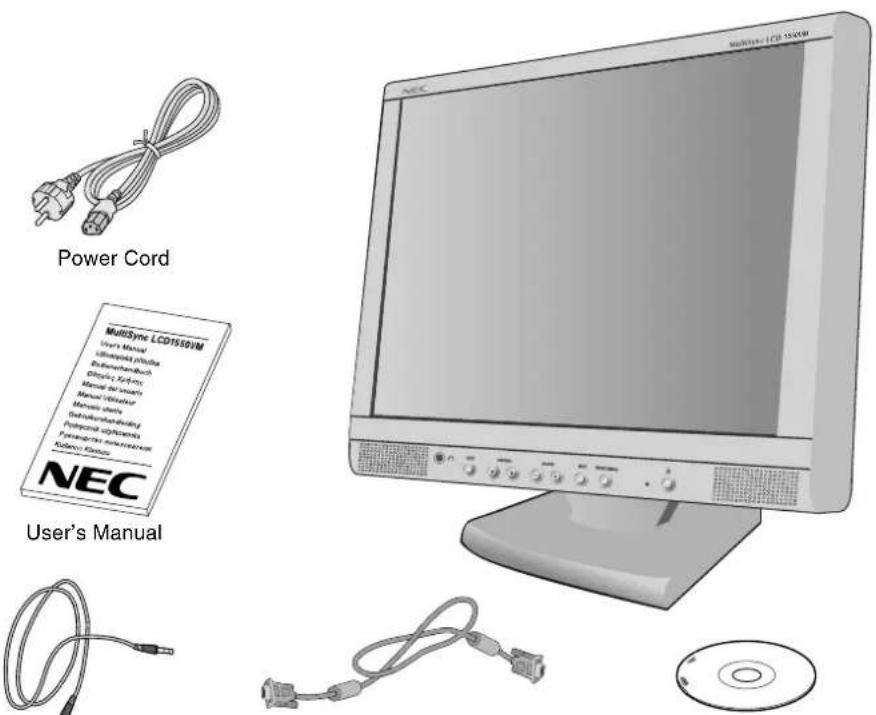
CD ROMVideo Signal CableAudio Cable
* Remember to save your original box and packing material to transport or ship the monitor.
English-2
Quick Start
English
To attach the MultiSync LCD monitor to your system, follow these instructions:
- Turn off the power to your computer.
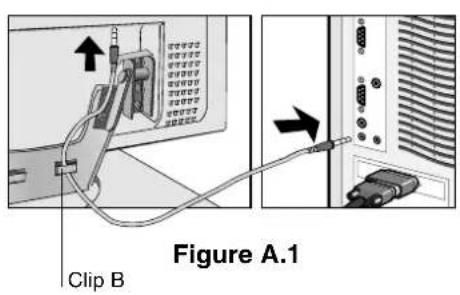
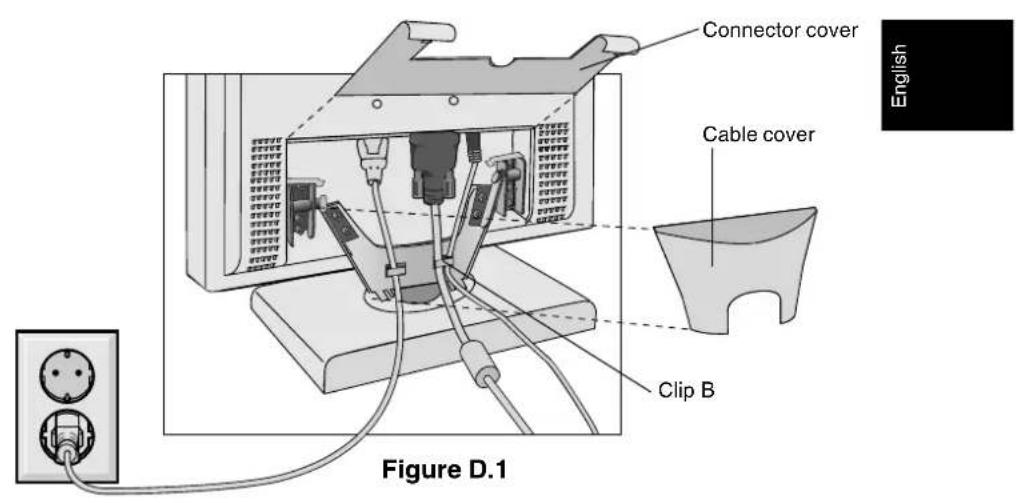
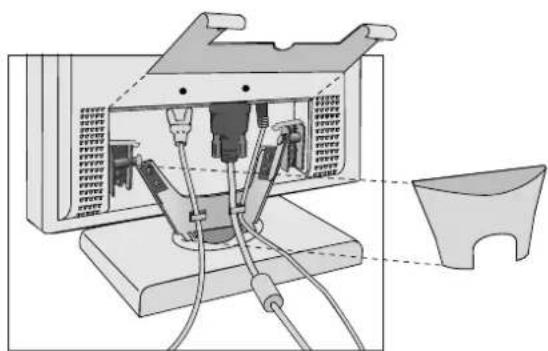
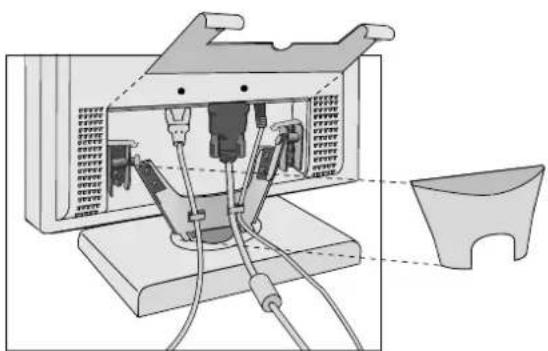
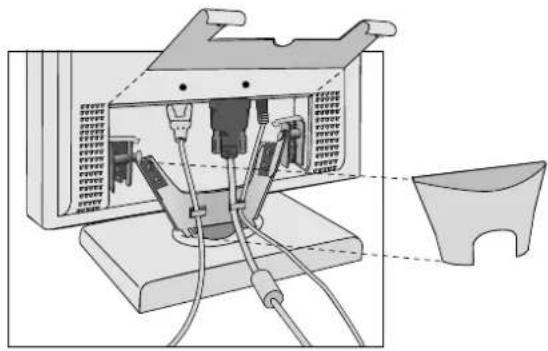
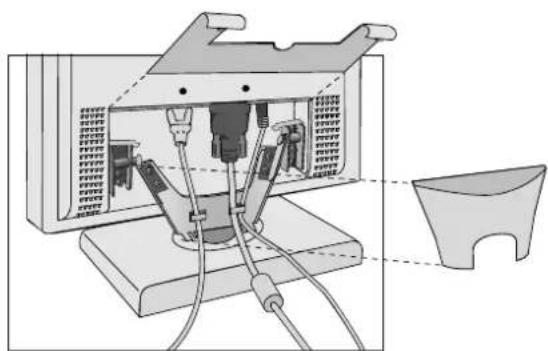
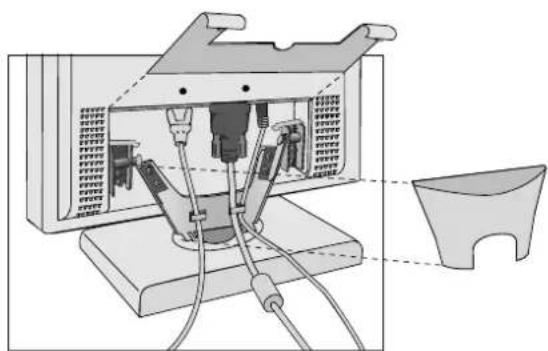
- Remove connector cover and cable cover. Connect the audio cable to "AUDIO INPUT" on the back of the monitor and the other end to the "Audio out" terminal of the computer. Place the Audio cable under Clip B (Figure A.1).
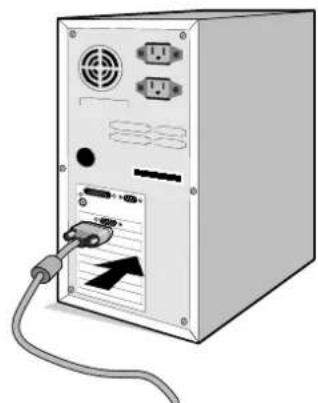
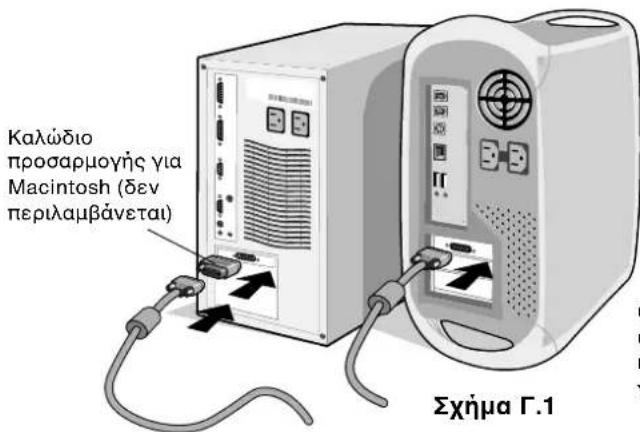
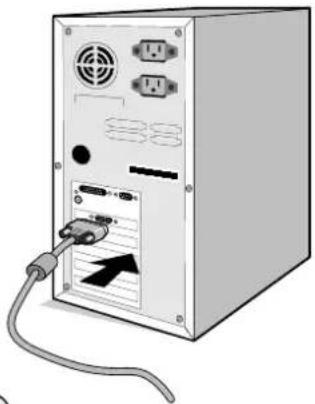
- For PC: Connect the 15-pin mini D-SUB of the appropriate signal cable to the connector for the display card in your system (Figure B.1). Tighten all screws.
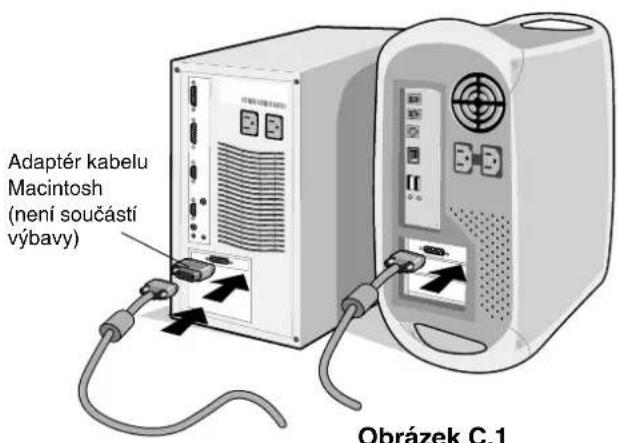
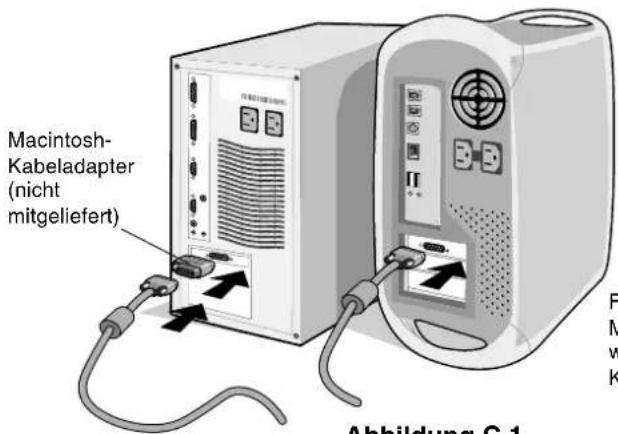
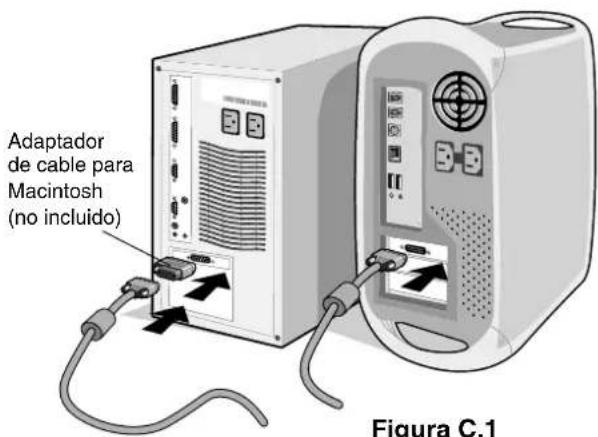
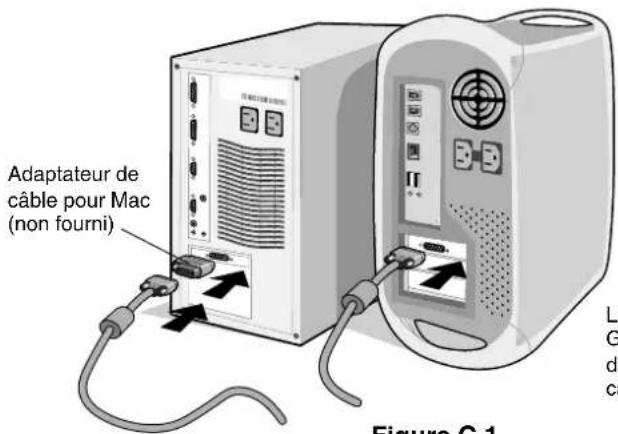
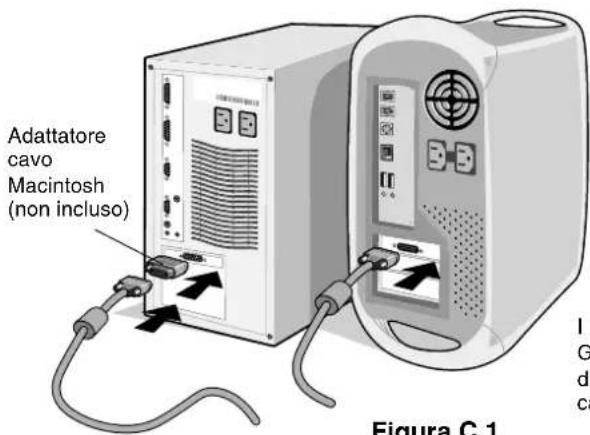
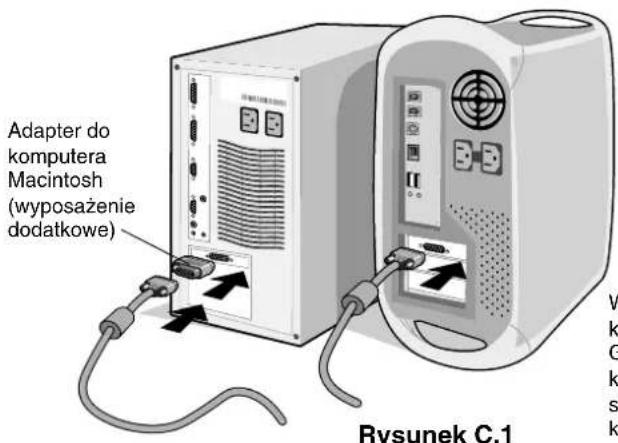
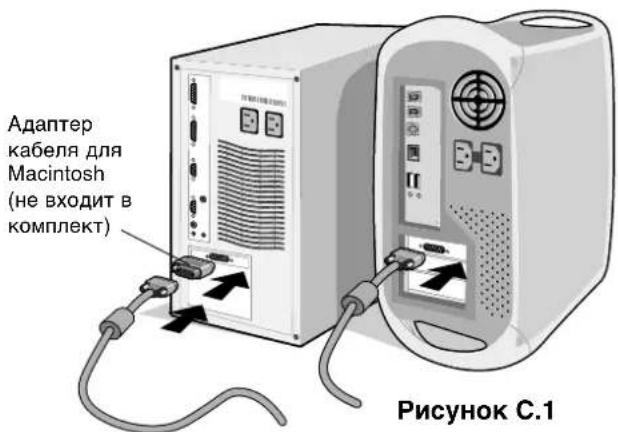
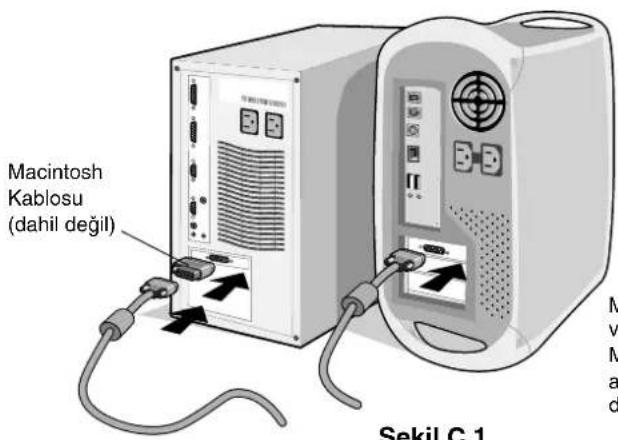
For Mac: Connect the MultiSync LCD1550VM Macintosh cable adapter to the computer (Figure C.1). Attach the 15-pin mini D-SUB end of the appropriate signal cable to the MultiSync LCD1550VM Macintosh cable adapter (Figure C.1). Tighten all screws. - Connect the 15-pin mini D-SUB of the video signal cable to the appropriate connector on the back of the monitor (Figure D.1). Place the Video Signal Cable under Clip B.
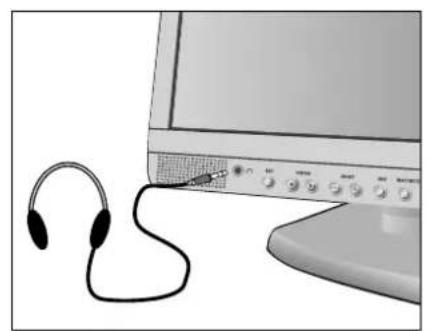
- Headphones may be connected to the "Headphones" output on the front of the monitor's bezel marked "○" (Figure E.1). While the headphones are connected, the sound from the speakers will be disabled. Headphones can be purchased from your local electronics store.
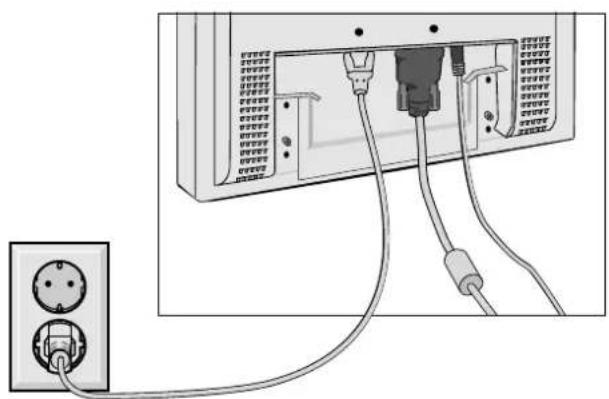
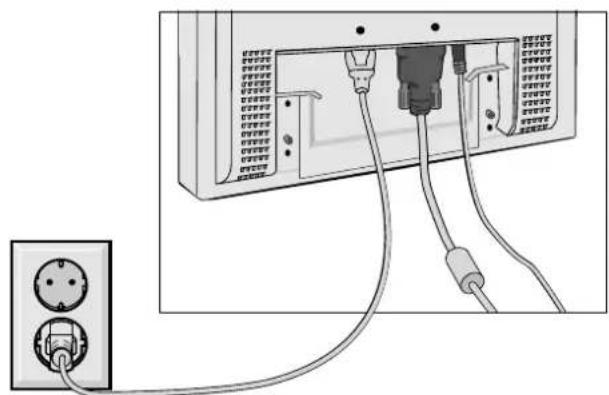
- Connect one end of the power cord to the MultiSync LCD Series monitor and the other end to the power outlet. Place the video signal cable and AC power cord under the clips (Figure D.1). Replace connector cover and cable cover.
NOTE: Adjust the position of the cable under the clips to avoid damage for cable or monitor.
NOTE: Please refer to Caution section of this manual for proper selection of AC power cord.
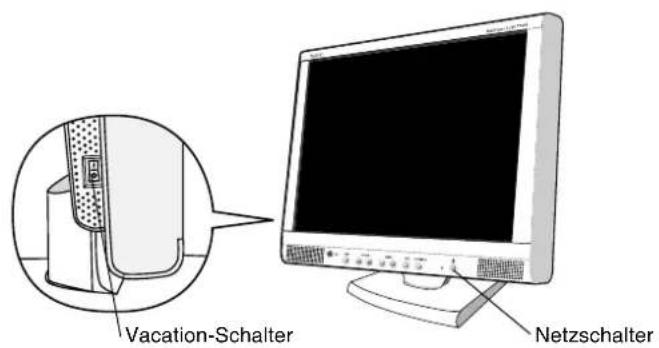
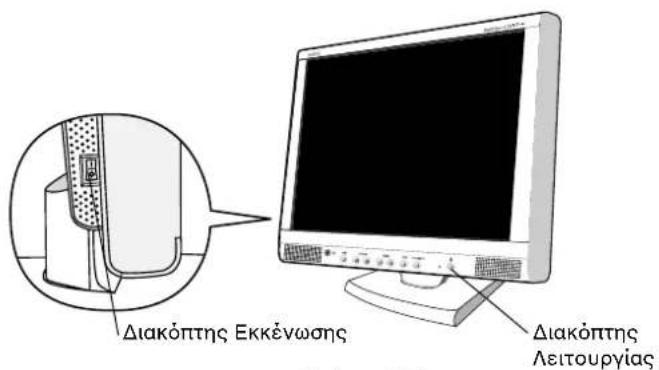
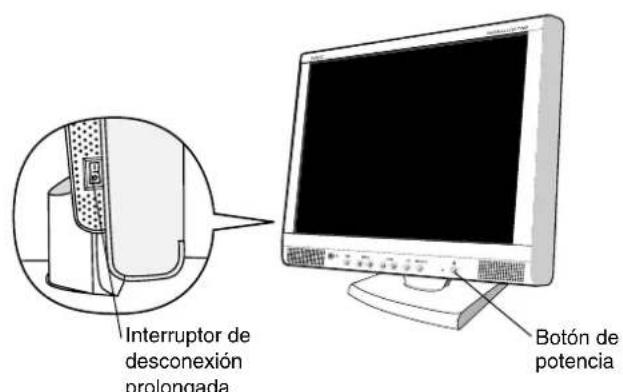
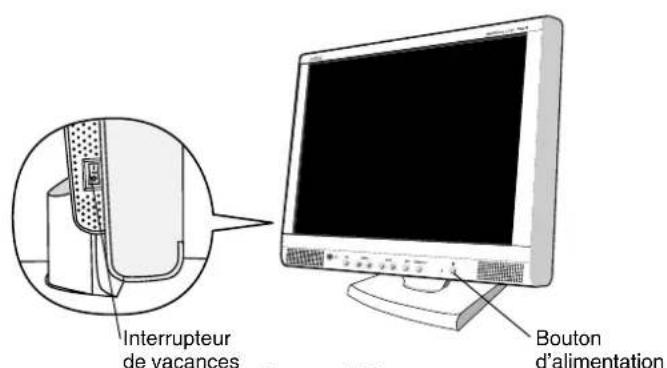
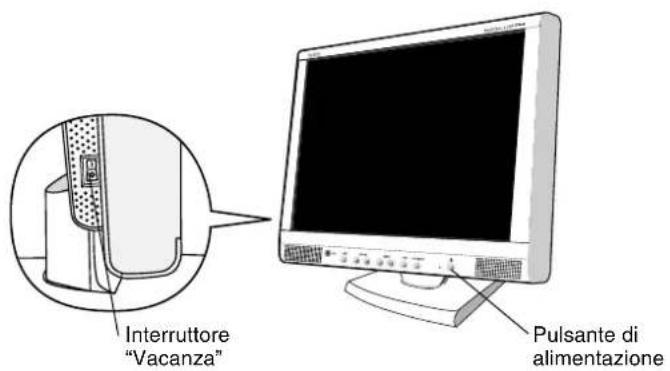
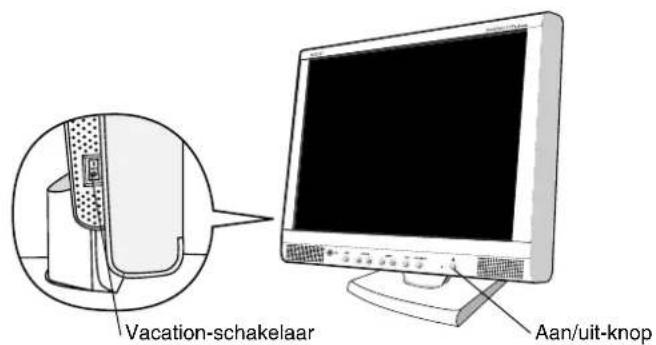
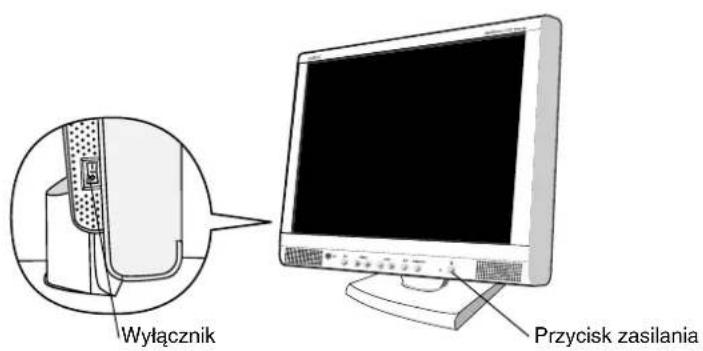
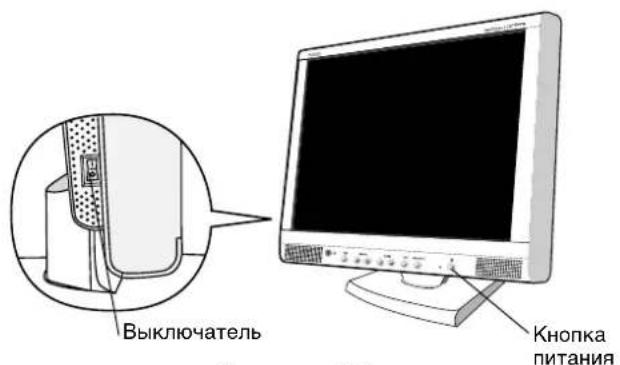
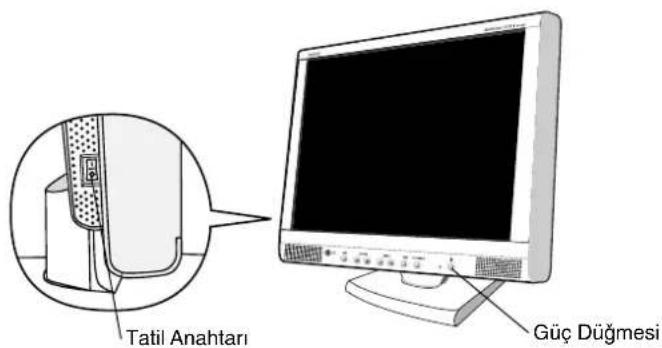
- The Vacation Switch on the left side of the monitor must be turned on (Figure F.1). Turn on the monitor with the Power Button and the computer.
English-3
NOTE: The Vacation Switch is a true on/off switch. If this switch is on the OFF position, the monitor cannot be turned on using the front button. DO NOT switch on/off repeatedly.
- No-touch auto adjust automatically adjusts the monitor to optimal settings upon initial setup for most timings. For further adjustments, use the following OSM controls:
• Auto Adjust Contrast
- Auto Adjust
Refer to the Controls section of this User's Manual for a full description of these OSM controls.
NOTE: If you have any problems, please refer to the Troubleshooting section of this User's Manual.
natural_image
Front view of a computer tower drive with ports, cables, and a cable (no visible text or labels)Figure B.1
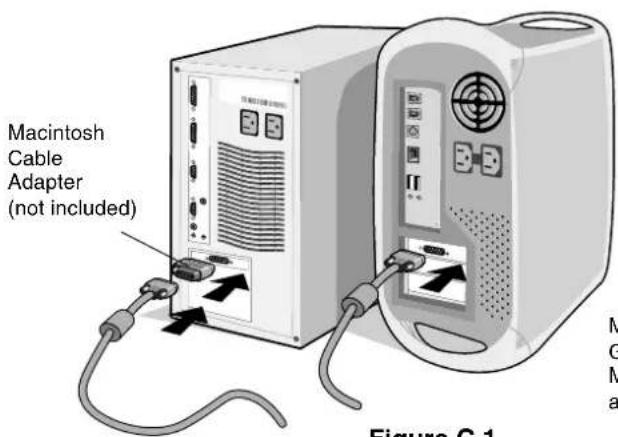
Macintosh G3 and G4 do not need a Macintosh cable adapter
Figure C.1
English-4
natural_image
Illustration of a computer monitor with earphones connected to a power cord (no text or symbols visible)Figure E.1
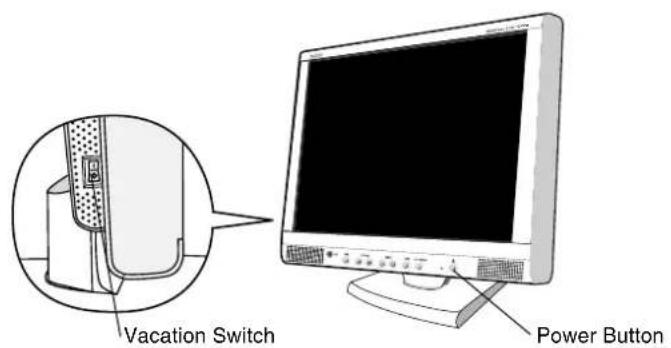
Figure F.1
English-5
Tilt
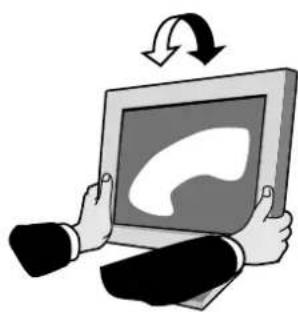
Grasp both sides of the monitor screen with your hands and adjust the tilt as desired (Figure TS.1).
Remove Monitor Stand for Mounting
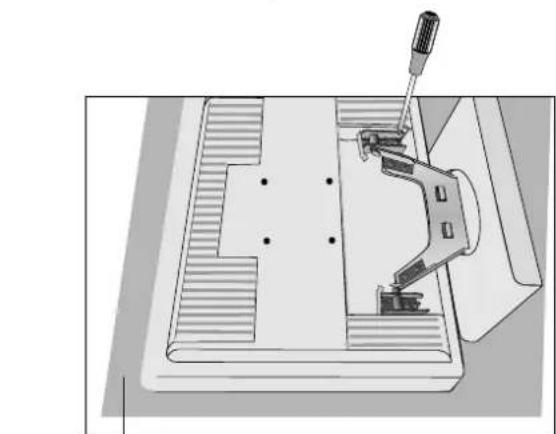
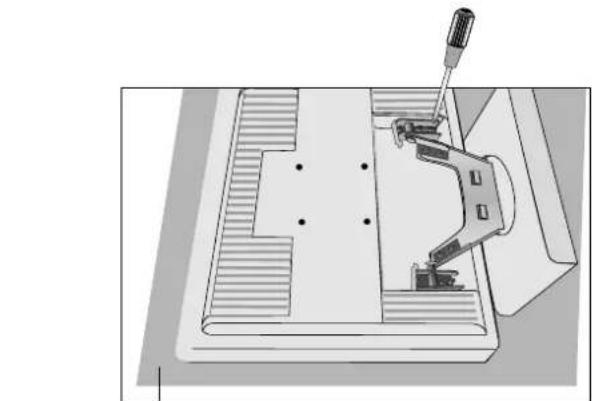
To prepare the monitor for alternate mounting purposes:
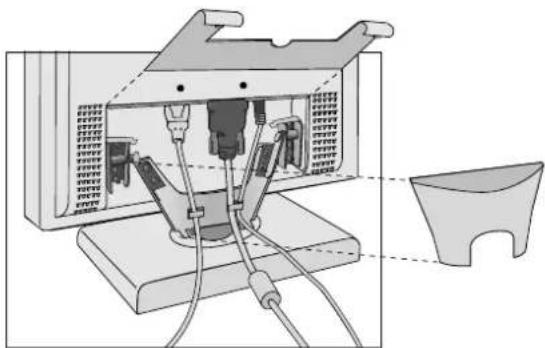
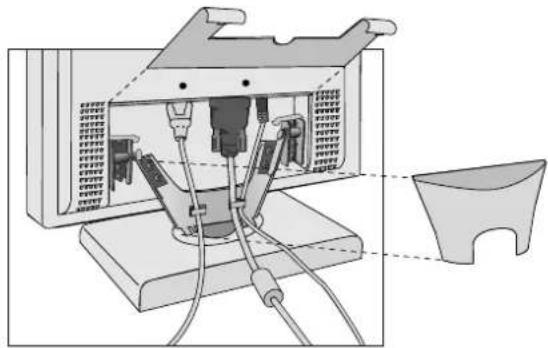
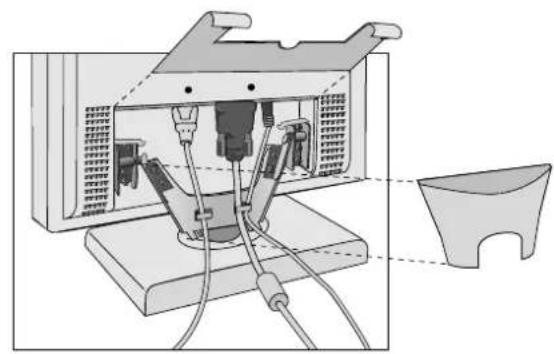
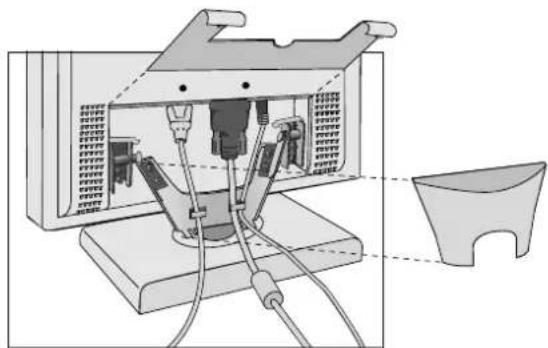
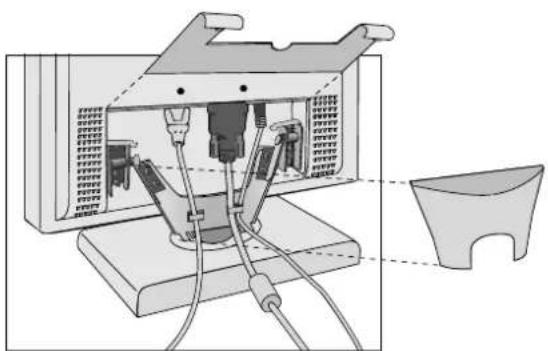
- Remove the connector cover and cable cover (Figure R.1).
- Disconnect all cables.
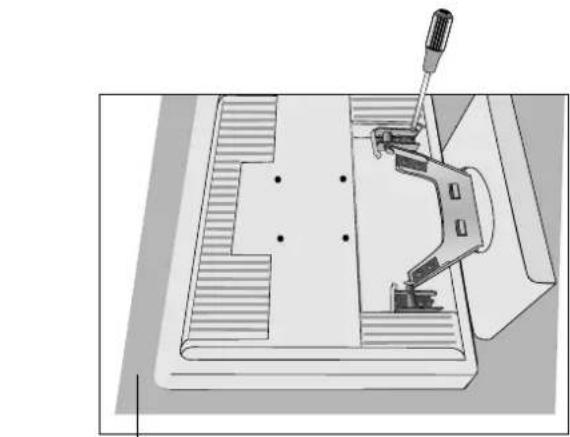
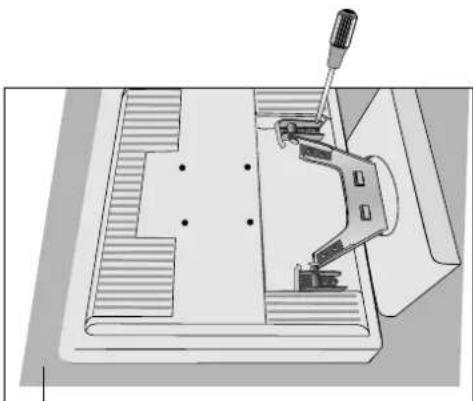
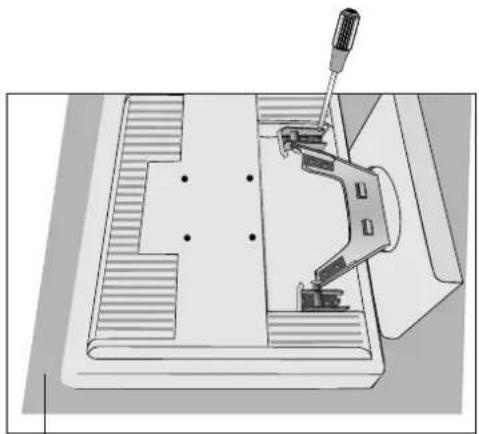
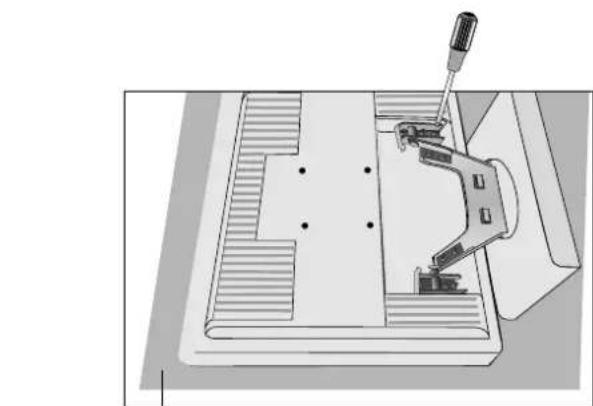
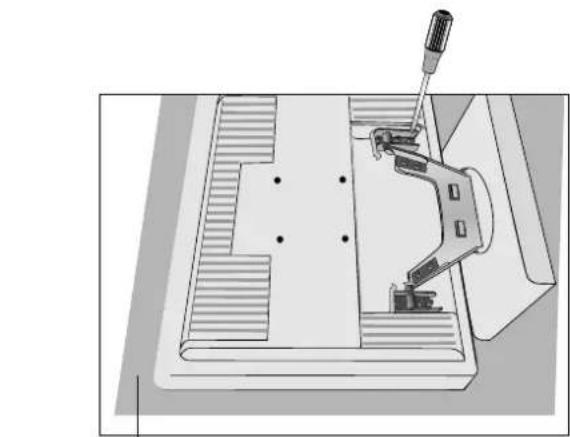
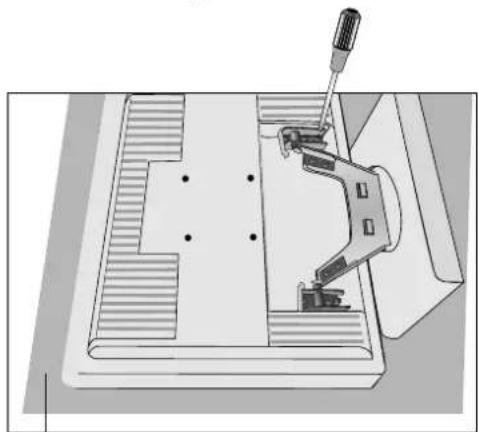
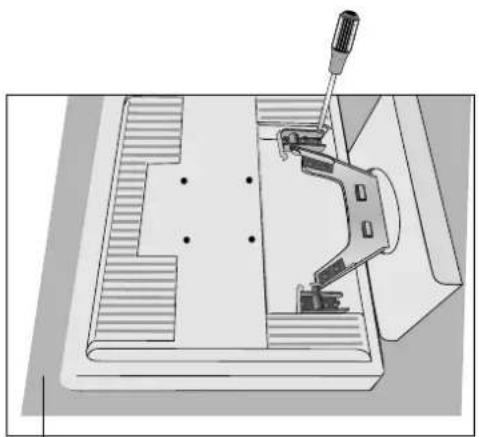
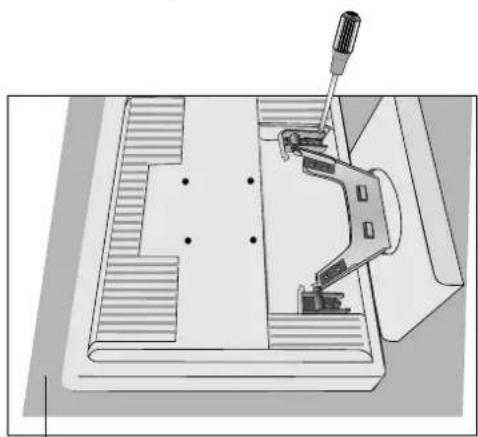
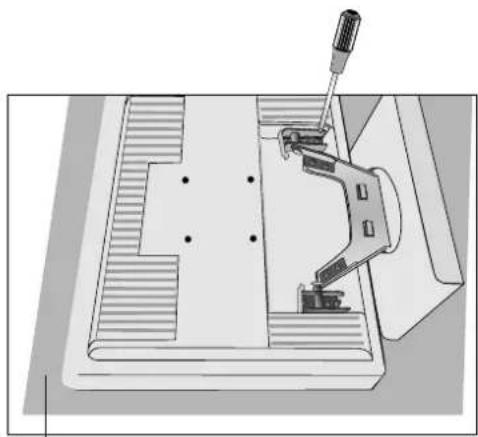
- Place monitor face down on a non-abrasive surface (Figure R.2).
- Remove the 4 screws connecting the monitor to the stand and lift off the stand assembly (Figure R.2) the monitor is now ready for mounting in an alternate manner.
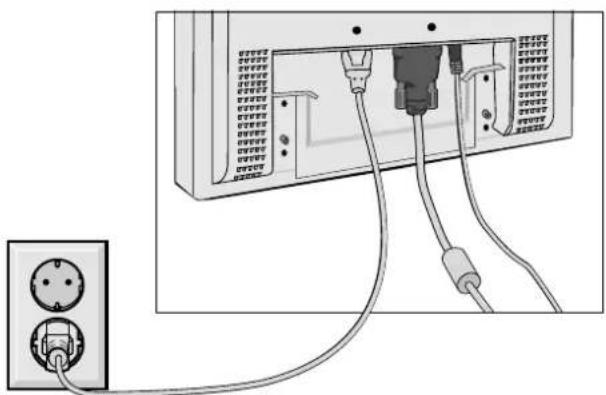
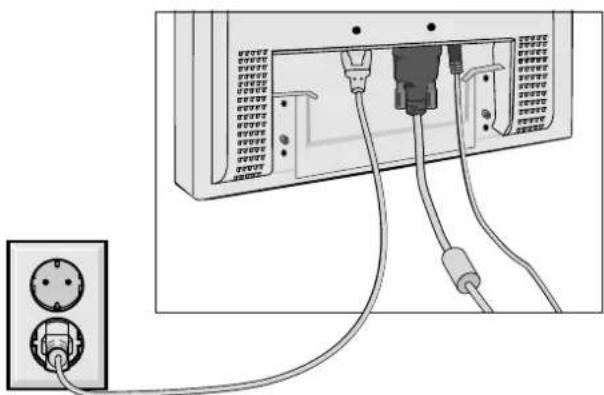
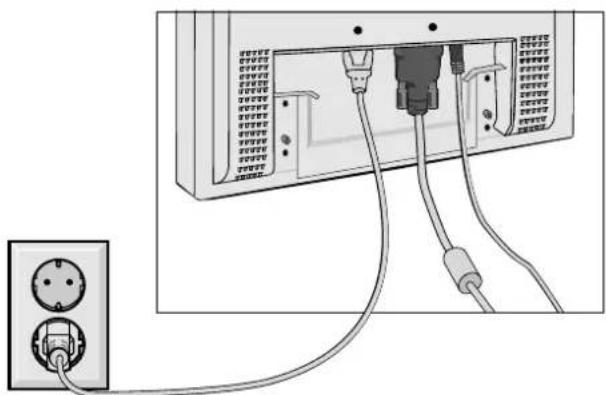
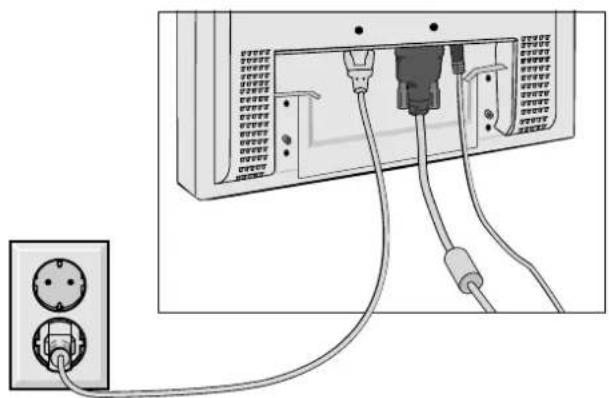
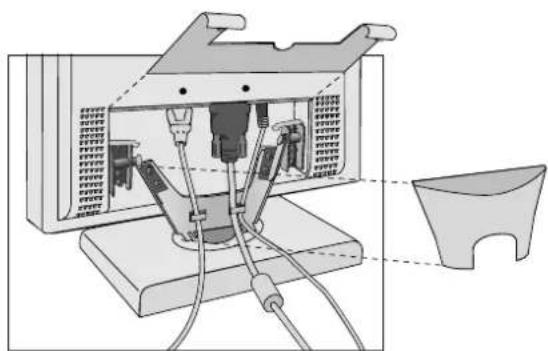
- Connect the AC cord, signal cable and audio cable to the back of the monitor (Figure R.3).
- Reverse this process to reattach stand.
NOTE: Use only VESA-compatible alternative mounting method.
natural_image
Illustration of hands holding a tablet with a speech bubble icon, no text or symbols presentFigure TS.1
English-6
natural_image
Diagram of an open computer monitor with cable and socket, showing internal components (no text or labels)Figure R.1
natural_image
Technical illustration of a mechanical clamp or bracket assembly (no text or symbols visible)Figure R.2
natural_image
Diagram showing connections between a TV wall and an electrical outlet, with no visible text or symbols.Figure R.3
English-7
- This LCD monitor is designed for use with a flexible arm. Please use the attached screws (4pcs) when mounting. To meet the safety requirements the monitor must be mounted to an arm which guarantees the necessary stability under consideration of the weight of the monitor. The LCD monitor shall only be used with an approved arm (e.g. GS mark).
English-8
Controls
English
OSM (On-Screen-Manager) Controls
The OSM controls on the front of the monitor function as follows: To access OSM press any of the control buttons (◀, ▶, -, +, NEXT).
Control Menu
EXIT Exits the OSM controls. Exits to the OSM main menu.
CONTROL ▶ Moves the highlighted area left/right to select control menus. Moves the highlighted area up/down to select one of the controls.
ADJUST -/+ Moves the bar left/right to increase or decrease the adjustment. Activates Auto Adjust function. Enter the sub menu.
NEXT Moves the highlighted area of main menu right to select one of the controls.
RESET/MUTE Resets the highlighted control to the factory setting. When no OSM menu is shown, the speaker sound will be muted.
NOTE: When RESET is pressed in the main and sub-menu, a warning window will appear allowing you to cancel the RESET function by pressing the EXIT button.
Sound
VOLUME
Control the sound volume of speakers and headphones.
Brightness/Contrast Controls
BRIGHTNESS
Adjusts the overall image and background screen brightness.
English-9
CONTRAST
Adjusts the image brightness in relation to the background.
AUTO AUTO ADJUST
Adjusts the image displayed for non-standard video inputs.
AUTO Auto Adjust
Automatically adjusts the Image Position, the H. Size and Fine setting.
Position Controls
LEFT/RIGHT
Controls Horizontal Image Position within the display area of the LCD.
DOWN/UP
Controls Vertical Image Position within the display area of the LCD.
H. SIZE
Adjusts the horizontal size by increasing or decreasing this setting.
| | FINE
Improves focus, clarity and image stability by increasing or decreasing this setting.
RGB Colour Control Systems
Five colour presets select the desired colour setting. Each colour setting is adjusted at the factory.
R,G,B
Increases or decreases Red, Green or Blue colour depending upon which is selected. The change in colour will appear on screen and the direction (increase or decrease) will be shown by the bars.
English-10

Tools

OSM POSITION
You can choose where you would like the OSM control image to appear on your screen. Selecting OSM Location allows you to manually adjust the position of the OSM control menu left, right, down or up.

OSM TURN OFF
The OSM control menu will stay on as long as it is use. In the OSM Turn Off submenu, you can select how long the monitor waits after the last touch of a button to shut off the OSM control menu. The preset choices are 10, 20, 30, 45, 60 and 120 seconds.

OSM LOCK OUT
This control completely locks out access to all OSM control functions. When attempting to activate OSM controls while in the Lock Out mode, a screen will appear indicating the OSM controls are locked out. To activate the OSM Lock Out function, press ,then ▶ and hold down simultaneously. To de-activate the OSM Lock Out, press ,then ▶ and hold down simultaneously.

RESOLUTION NOTIFIER
This optimal resolution is 1024 x 768. If ON is selected, a message will appear on the screen after 30 seconds, notifying you that the resolution is not at 1024 x 768.

FACTORY PRESET
Selecting Factory Preset allows you to reset all OSM control settings back to the factory settings. The RESET button will need to be held down for several seconds to take effect. Individual settings can be reset by highlighting the control to be reset and pressing the RESET button.
Information
MODE
DISPLAY MODE
Indicates the current display resolution and frequency setting of the monitor.
English-11

MONITOR INFO.
Indicates the model and serial numbers of your monitor.
OSM Warning
OSM Warning menus disappear with Exit button.
NO SIGNAL: This function gives a warning when there is no signal present. After power is turned on or when there is a change of input signal or video is inactive, the No Signal window will appear.
RESOLUTION NOTIFIER: This function gives a warning of use with optimized resolution. After power is turned on or when there is a change of input signal or the video signal doesn't have proper resolution, the Resolution Notifier window will open. This function can be disabled in the TOOL menu.
OUT OF RANGE: This function gives a recommendation of the optimized resolution and refresh rate. After the power is turned on or there is a change of input signal or the video signal doesn't have proper timing, the Out Of Range menu will appear.
CHECK CABLE: This function will advise you to check all Video Inputs on the monitor and computer to make sure they are properly connected.
Recommended Use
English
Safety Precautions and Maintenance

FOR OPTIMUM PERFORMANCE, PLEASE NOTE THE FOLLOWING WHEN SETTING UP AND USING THE MULTISYNC LCD COLOUR MONITOR:

- DO NOT OPEN THE MONITOR. There are no user serviceable parts inside and opening or removing covers may expose you to dangerous shock hazards or other risks. Refer all servicing to qualified service personnel.
- Do not spill any liquids into the cabinet or use your monitor near water.
- Do not insert objects of any kind into the cabinet slots, as they may touch dangerous voltage points, which can be harmful or fatal or may cause electric shock, fire or equipment failure.
- Do not place any heavy objects on the power cord. Damage to the cord may cause shock or fire.
- Do not place this product on a sloping or unstable cart, stand or table, as the monitor may fall, causing serious damage to the monitor.
- Do not place any objects onto the monitor and do not use the monitor outdoors.
- The inside of the fluorescent tube located within the LCD monitor contains mercury. Please follow the bylaws or rules of your municipality to dispose of the tube properly.
Immediately unplug your monitor from the wall outlet and refer servicing to qualified service personnel under the following conditions:
- When the power supply cord or plug is damaged.
- If liquid has been spilled, or objects have fallen into the monitor.
- If the monitor has been exposed to rain or water.
- If the monitor has been dropped or the cabinet damaged.
- If the monitor does not operate normally by following operating instructions.
- Do not bend power cord.
- Do not use monitor in high temperatured, humid, dusty, or oily areas.
- Do not cover vent on monitor.
- If monitor is broken, do not come in contact with the liquid crystal.
- If glass is broken. Handle with care.
English-13

CAUTION
- Allow adequate ventilation around the monitor so that heat can properly dissipate. Do not block ventilated openings or place the monitor near a radiator or other heat sources. Do not put anything on top of monitor.
- The power cable connector is the primary means of detaching the system from the power supply. The monitor should be installed close to a power outlet which is easily accessible.
- Handle with care when transporting. Save packaging for transporting.

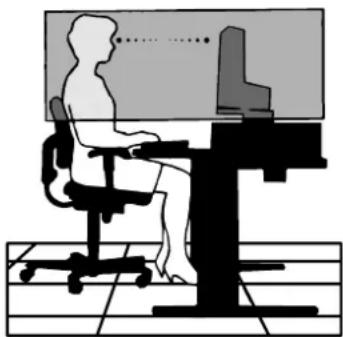
CORRECT PLACEMENT AND ADJUSTMENT OF THE MONITOR CAN REDUCE EYE, SHOULDER AND NECK FATIGUE. CHECK THE FOLLOWING WHEN YOU POSITION THE MONITOR:

- For optimum performance, allow 20 minutes for warm-up.
- Adjust the monitor height so that the top of the screen is at or slightly below eye level. Your eyes should look slightly downward when viewing the middle of the screen.
- Position your monitor no closer than 40 cm and no further away than 70 cm from your eyes. The optimal distance is 53 cm.
- Rest your eyes periodically by focusing on an object at least 6 m away. Blink often.
- Position the monitor at a 90^ angle to windows and other light sources to minimize glare and reflections. Adjust the monitor tilt so that ceiling lights do not reflect on your screen.
- If reflected light makes it hard for you to see your screen, use an antiglare filter.
- Clean the LCD monitor surface with a lint-free, non-abrasive cloth. Avoid using any cleaning solution or glass cleaner!
- Adjust the monitor's brightness and contrast controls to enhance readability.
- Use a document holder placed close to the screen.
- Position whatever you are looking at most of the time (the screen or reference material) directly in front of you to minimize turning your head while you are typing.
natural_image
Silhouette of a person sitting at a desk with a computer, no text or symbols visibleEnglish-14
- A void displaying fixed patterns on the monitor for long periods of time to avoid image persistence (after-image effects).
- Get regular eye checkups.
English
Ergonomics
To realize the maximum ergonomics benefits, we recommend the following:
- Use the preset Size and Position controls with standard signals.
- Use the preset Colour Setting.
- Use non-interlaced signals with a vertical refresh rate between 60-75 Hz.
- Do not use primary colour blue on a dark background, as it is difficult to see and may produce eye fatigue to insufficient contrast.
English-16

VAROVÁNÍ

CHRAŃTE ZAŘÍZENÍ PŘED DEŠTĚM A VLHKEM. ZABRÁNÍTE TAK NEBEZPEČÍ POŽÁRU NEBO ÚRAZU ELEKTRICKÝM PROUDEM. POLARIZOVANOU ZÁSTRČKU JEDNOTKY NEPOUŽÍVEJTE VE SPOJENÍ SE ZÁSUVKOU PRODLUŽOVACÍ ŠŇÚRY NEBO JINÝMI ZÁSUVKAMI, POKUD KOLÍKY NELZE ZCELA ZASUNOUT. UVNITŘ ZAŘÍZENÍ SE NACHÁZÍ VYSOKONAPĚTOVÉ KOMPONENTY, PROTO SKŘÍŇ NEOTEVÍREJTE. SERVIS SVĚŘTE KVALIFIKOVANÉ OSOBĚ.
UPOZORNĚNÍ
RIZIKO ÚRAZU ELEKTRICKÝM PROUDEM • NEOTVÍRAT

UPOZORNĚNÍ
Z DÜVODU SNÍŽENÍ RIZIK ÚRAZU ELEKTRICKÝM PROUDEM NEODNÍMEJTE KRYT (NEBO ZADNÍ ČÁST). UVNITŘ SE NENACHÁZEJÍ DÍLY, DO KTERÝCH UŽIVATEL MŮŽE ZASAHOVAT. SERVIS SVĚŘTE KVALIFIKOVANÉ OSOBĚ.

natural_image
Illustration of a desktop computer monitor with an attached CD and cable, no visible text or symbols on the device itself.natural_image
Front view of a computer tower drive with cable and ports (no visible text or labels)Obrázek B.1
natural_image
Illustration of a person holding a tablet with a speech bubble and curved arrow (no text or symbols)Obrázek TS.1
Česky-6
natural_image
Technical diagram of an electronic device with cables and components, no visible text or symbolsObrázek R.1
Cesky
natural_image
Technical illustration of a mechanical assembly with a tool and bracket (no text or symbols)Obrázek R.2
Hladký povrch
natural_image
Diagram showing connections between a TV cable and an electrical outlet, with no visible text or symbols.Obrázek R.3
Česky-7
natural_image
Silhouette of a person sitting at a desk using a computer, no text or symbols visibleČesky-14
natural_image
Illustration of a desktop computer monitor with an attached CD and cable, no visible text or symbols on the device itself.Signalkabel Audiokabel
CD-ROM
natural_image
Illustration of a computer tower with ports, cables, and a cable connector (no text or symbols visible)Abbildung B.1
natural_image
Illustration of a computer monitor with earphones connected to a cable (no text or symbols visible)Abbildung E.1
natural_image
Illustration of a person holding a tablet with a speech bubble icon, no text or symbols presentAbbildung TS.1
Deutsch-6
natural_image
Technical diagram of an electronic device with ports and wiring, no visible text or symbolsAbbildung R.1
Deutsch
natural_image
Technical illustration of a mechanical clamp or clamping device mounted on a workbench (no text or symbols visible)Abbildung R.2
Weiche Oberfläche
natural_image
Diagram showing connections between a TV cable and an electrical outlet (no text or symbols present)natural_image
Silhouette of a person sitting at a desk with a computer, viewed from behind (no text or symbols)Deutsch-14
Οδηγίες Χρήσης
Καλώδιο Ηχου
natural_image
Illustration of a desktop computer monitor with an attached CD and cable, no text or symbols present.natural_image
Illustration of a computer tower rear panel with ventilation fans and connected cables (no text or symbols visible)Σχήμα Β.1
natural_image
Illustration of a computer monitor with earphones connected to a cable (no text or symbols visible)Σχήμα Ε.1
natural_image
Illustration of hands holding a tablet with a white telephone icon, no text or symbols presentΣχήμα ΤΣ.1
Ελληνικά-6
natural_image
Technical diagram of an electronic device with internal components and wiring, no visible text or symbolsΣχήμα P.1
natural_image
Technical illustration of a mechanical assembly with a tool and clamping mechanism (no text or symbols)Σχήμα P.2
natural_image
Diagram showing connections between an outdoor network device and a power outlet (no text or symbols present)H. SIZE (OPIZONTIO MEGEOOΣ)
natural_image
Silhouette of a person sitting at a desk using a computer, no text or symbols visibleΕλληνικά-14
natural_image
Illustration of a desktop computer monitor with an attached CD and cable, no text or symbols present.Figura A.1
Abrazadera B
natural_image
Illustration of a computer tower with attached cable and ports (no text or symbols visible)Figura B.1
natural_image
Illustration of a computer monitor connected to an earphone (no text or symbols visible)Figura E.1

natural_image
Illustration of a person holding a tablet with a speech bubble icon, no text or symbols presentFigura TS.1
Español-6
natural_image
Technical diagram of an electronic device with internal components and wiring, no visible text or symbolsFigura R.1
natural_image
Technical illustration of a mechanical clamp or lever assembly (no text or symbols visible)Figura R.2
natural_image
Diagram showing connections between a TV wall-mounted device and an electrical outlet (no text or symbols present)Figura R.3
Español-7
H. SIZE (APROXIMADO)
natural_image
Silhouette of a person sitting at a desk with a computer, no text or symbols presentnatural_image
Illustration of a computer monitor with attached CD and cable (no text or symbols)natural_image
Front view of a computer tower drive with ports, cables, and an attached cable (no visible text or labels)Figure B.1
natural_image
Illustration of a computer monitor with earphones connected to a power cord (no text or symbols visible)Figure E.1

natural_image
Illustration of a person using a tablet with a speech bubble icon, no text or symbols presentFigure TS.1
Français-6
natural_image
Technical diagram of an electronic device with internal components and wiring, no visible text or symbolsFigure R.1
natural_image
Technical illustration of a mechanical clamp or clamping device mounted on a workbench (no text or symbols visible)Figure R.2
natural_image
Diagram of a TV cable connector with two cables and a power outlet, no text or symbols presentFigure R.3
Français-7
natural_image
Silhouette of a person sitting at a desk with a computer, no text or symbols visibleFrançais-14
Manuale Utente
natural_image
Illustration of a desktop computer monitor with an attached CD and cable, no visible text or symbols on the device itself.natural_image
Front view of a computer tower drive with cable and indicator lights (no visible text or labels)Figura B.1
natural_image
Illustration of a computer monitor with earphones connected to a cable (no text or symbols visible)Figura E.1
Italiano
natural_image
Illustration of a person holding a tablet with a speech bubble icon, no text or symbols presentFigura TS.1
Italiano-6
natural_image
Technical diagram of an electronic device with internal components and wiring (no text or symbols visible)Figura R.1
natural_image
Technical illustration of a mechanical assembly with a screwdriver inserted, showing no text or symbols.natural_image
Diagram of a TV cable connector with power outlet and cable routing (no text or symbols)Figura R.3
Italiano-7
DISPLAY MODE (MODALITÀ DISPLAY)
natural_image
Silhouette of a person sitting at a desk with a computer, no text or symbols visibleItaliano-14
natural_image
Illustration of a computer monitor with earphones connected to a power cord (no text or symbols visible)Illustratie E.1
natural_image
Illustration of two hands holding a tablet with a speech bubble icon, no text or symbols presentIllustratie TS.1
Nederlands-6
natural_image
Diagram of a computer monitor with cable and socket, showing internal components without any text or symbolsIllustratie R.1
natural_image
Mechanical assembly diagram showing a tool interacting with a bracket (no text or symbols visible)natural_image
Diagram of a TV cable connector with two cables and a power outlet, no text or symbols presentnatural_image
Silhouette of a person sitting at a desk with a computer, viewed from the side (no text or symbols present)Nederlands-14
natural_image
Illustration of a desktop computer monitor with an attached CD and cable, no text or symbols present.natural_image
Front view of a computer tower drive with ports, cables, and a cable (no visible text or labels)Rysunek B.1
natural_image
Illustration of a computer monitor with earphones connected to a cable (no text or symbols visible)Rysunek E.1
To prepare the monitor for alternate mounting purposes:
natural_image
Illustration of a person holding a tablet with a speech bubble icon, no text or symbols presentRysunek TS.1

Polski-7
natural_image
Technical diagram of an electronic device with internal components and wiring (no text or symbols visible)Rysunek R.1
natural_image
Technical illustration of a mechanical assembly with a tool inserted, showing no text or symbols.natural_image
Diagram showing connections between a TV cable and an electrical outlet (no text or symbols present)DOWN/UP (POZYCJA PIONOWA)
DISPLAY MODE (TRYB PRACY)
natural_image
Silhouette of a person sitting at a desk with a computer, no text or symbols visible
Polski-15
MS Shibaura Bldg., 13-23,
Shibaura 4-chome,
Minato-Ku, Tokyo 108-0023, Japan
natural_image
Illustration of a flat-screen computer monitor with control knobs and a stand (no visible text or symbols)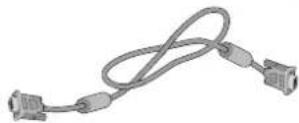
Кабель видеосигнала
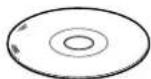
CD ROM
natural_image
Illustration of a computer tower with ventilation slots and cable (no text or symbols)Рисунок В.1
natural_image
Illustration of a computer monitor with earphones connected to a power cord (no text or symbols visible)Рисунок Е.1
natural_image
Illustration of a person holding a tablet with a speech bubble icon, no text or symbols presentРисунок TS.1
Русский-9
natural_image
Technical diagram of an electronic device with internal components and wiring, no visible text or symbolsРисунок R.1
natural_image
Technical illustration of a mechanical clamp or bracket assembly (no text or symbols visible)natural_image
Diagram showing connections between a TV cable and an electrical outlet (no text or symbols present)natural_image
Architectural floor plan showing room layouts and structural elements (no text or labels)natural_image
Silhouette of a person sitting at a desk with a computer, no text or symbols visibleРусский
Русский-17
Kullanıcı Klavuzu
Ses Kablosu
natural_image
Illustration of a computer monitor with an attached CD and cable, no text or symbols present.Video Sinyal Kablosu
CD ROM
natural_image
Front view of a computer tower drive with cable and ventilation slots (no visible text or labels)Şekil B.1
natural_image
Illustration of a computer monitor with earphones connected to a power cord (no text or symbols visible)Şekil E.1
natural_image
Illustration of a person holding a tablet with a speech bubble icon, no text or symbols presentŞekil TS.1
Türkçe-6
natural_image
Technical diagram of an electronic device with internal components and wiring, no visible text or symbolsŞekil R.1
natural_image
Technical illustration of a mechanical clamp or lever assembly (no text or symbols visible)natural_image
Diagram of a TV cable connector with two cables and an electrical outlet, no text or symbols presentŞekil R.3
Türkçe-7
natural_image
Silhouette of a person sitting at a desk using a computer, with no visible text or symbolsTürkçe-14


- TCO'99
- MultiSync LCD1550VM (LA-15R04)
- Why do we have environmentally labelled computers?
- What does labelling involve?
- Environmental Requirements
- Flame retardants
- Lead\*\*
- Cadmium\*\*
- Mercury\*\*
- CFCs (freons)
- TCO Development Unit
- WARNING
- CAUTION
- Caution:
- English-1
- Contents
- English-2
- Quick Start
- English-3
- Tilt
- Remove Monitor Stand for Mounting
- English-6
- English-8
- Controls
- OSM (On-Screen-Manager) Controls
- Control Menu
- Sound
- VOLUME
- Brightness/Contrast Controls
- BRIGHTNESS
- English-9
- CONTRAST
- AUTO AUTO ADJUST
- Position Controls
- LEFT/RIGHT
- DOWN/UP
- SIZE
- ↔ | | FINE
- RGB Colour Control Systems
- R,G,B
- English-10
- Tools
- OSM POSITION
- OSM TURN OFF
- OSM LOCK OUT
- RESOLUTION NOTIFIER
- FACTORY PRESET
- Information
- DISPLAY MODE
- English-11
- MONITOR INFO.
- OSM Warning
- Recommended Use
- Safety Precautions and Maintenance
- English-13
- English-14
- Ergonomics
- English-16
- VAROVÁNÍ
- UPOZORNĚNÍ
- Česky-14
- Deutsch-6
- Ελληνικά-6
- SIZE (OPIZONTIO MEGEOOΣ)
- Ελληνικά-14
- Español-6
- SIZE (APROXIMADO)
- Français-6
- Français-14
- Italiano-6
- DISPLAY MODE (MODALITÀ DISPLAY)
- Italiano-14
- Nederlands-6
- Nederlands-14
- Polski-7
- DOWN/UP (POZYCJA PIONOWA)
- DISPLAY MODE (TRYB PRACY)
- Polski-15
- Русский-9
- Русский-17
- Türkçe-6
- Türkçe-14
Brand : NEC
Model : MultiSync LCD1550VMBK
Category : Monitor