RBC121R - Battery charger RIDGID - Free user manual and instructions
Find the device manual for free RBC121R RIDGID in PDF.

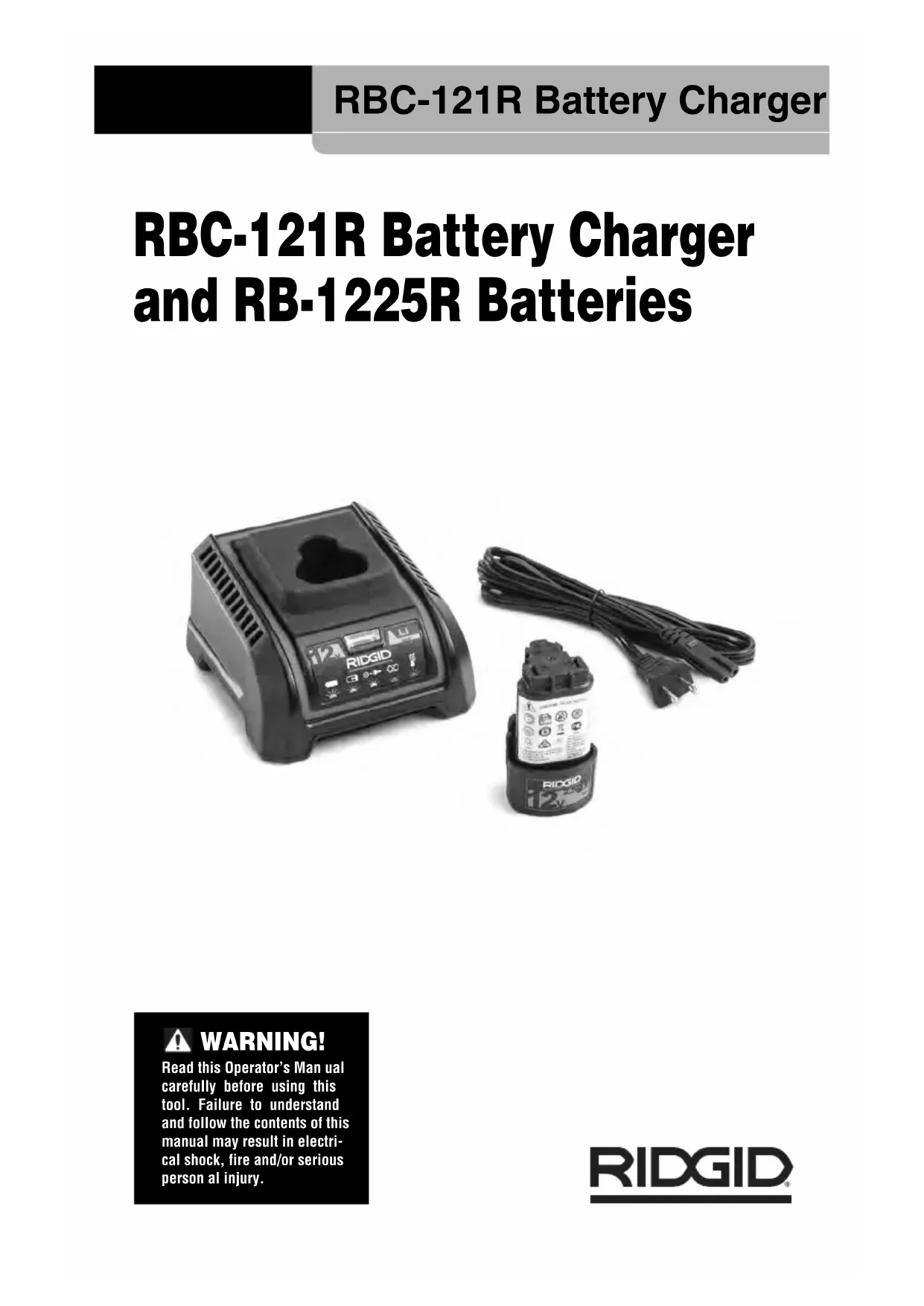


| Product Type | Lithium-ion battery charger |
| Brand | RIDGID |
| Model | RBC121R |
| Input Voltage | 100-240 V AC, 50/60 Hz, 1.5 A max |
| Output Voltage | 12 V DC |
| Max Output Current | 4 A |
| Dimensions (L x W x H) | 145 x 134 x 89 mm |
| Weight | 700 g |
| Compatible Battery Type | RIDGID RB-12XXX series (10.8 V) lithium-ion |
| Recommended Battery Capacity | 2.5 Ah (27 Wh) |
| Charging Temperature Range | 0 °C to 45 °C |
| LED Indicators | Yellow (standby), Green (charging/charged), Red (error) |
| Charge Maintenance Function | Yes |
| Wall Mounting | Possible, 76 mm hole spacing |
| Usage | Indoor only |
| Cleaning | Dry cloth, do not use water or chemicals |
| Maintenance | No user-serviceable parts |
| Safety Protections | Overload, over-temperature, and short circuit |
| Included Accessories | Region-specific power cord |
| Warranty | Lifetime warranty (subject to conditions) |
| Recycling | Li-ion batteries recyclable, do not dispose of with household waste |
Frequently Asked Questions - RBC121R RIDGID
User questions about RBC121R RIDGID
0 question about this device. Answer the ones you know or ask your own.
Ask a new question about this device
Download the instructions for your Battery charger in PDF format for free! Find your manual RBC121R - RIDGID and take your electronic device back in hand. On this page are published all the documents necessary for the use of your device. RBC121R by RIDGID.
USER MANUAL RBC121R RIDGID
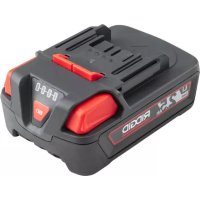
RBC-121R Battery Charger and RB-1225R Batteries
Operator's Manual
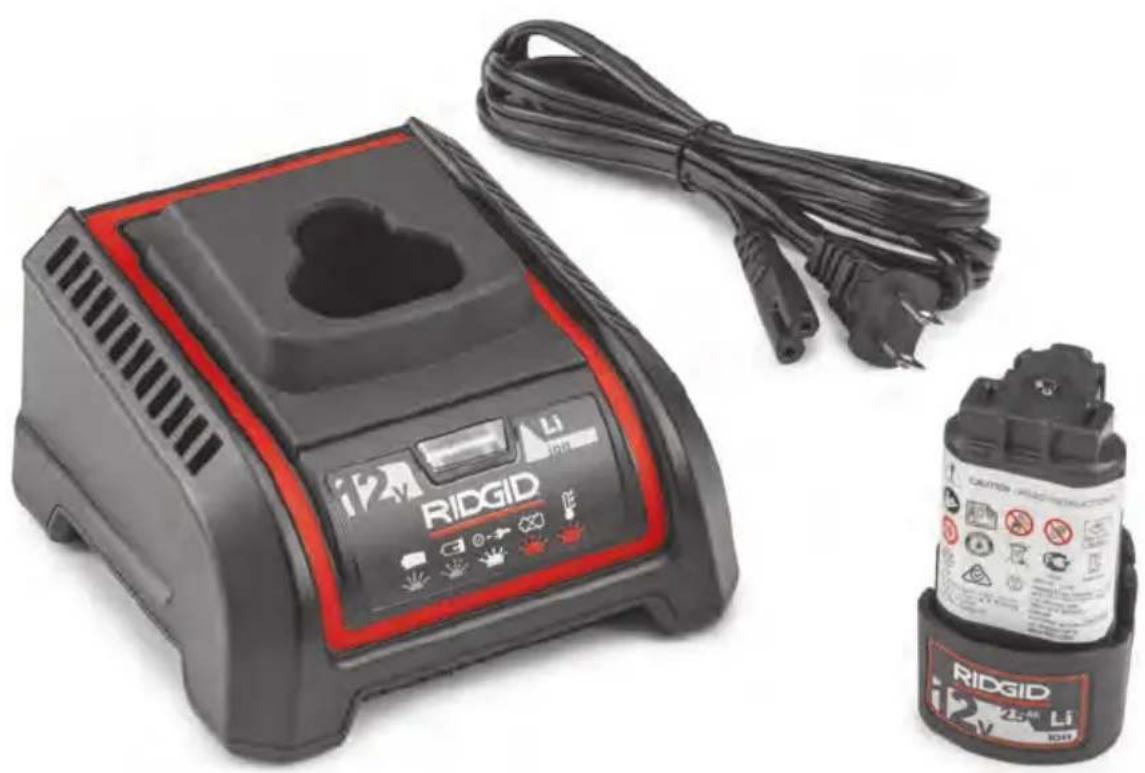
Table of Contents
Safety Symbols 2
Important Safety Information
Battery Charger Safety 2
Charger and Battery Safety. 3
Battery Safety 3
RIDGID Contact Information 4
Description
Description 4
Light Diagnostic Chart 5
Specifications
Batteries 4
RBC-121R Charger. 4
Inspection and Assembly 5
Operating Instructions 6
Charging Procedure 6
Inserting/Removing Battery 7
Storage 7
Cleaning 7
Service and Repair 7
Optional Equipment 8
Disposal 8
Battery Disposal 8
Battery Transport 8
FFC Compliance Information 32
EC Declaration of Conformity . Inside Back Cover
Lifetime Warranty . Back Cover
*Original Instructions - English
RBC-121R Battery Charger and RB-1225R Batteries

WARNING!
Read this Operator's Manual carefully before using this tool. Failure to understand and follow the contents of this manual may result in electrical shock, fire and/or serious personal injury.
Safety Symbols
In this operator's manual and on the product, safety symbols and signal words are used to communicate important safety information. This section is provided to improve understanding of these signal words and symbols.
DANGER
DANGER indicates a hazardous situation which, if not avoided, will result in death or serious injury.
WARNING
WARNING indicates a hazardous situation which, if not avoided, could result in death or serious injury.
CAUTION
CAUTION indicates a hazardous situation which, if not avoided, could result in minor or moderate injury.
NOTICE
NOTICE indicates information that relates to the protection of property.


These symbols mean read the operator's manual carefully before using the equipment. The opera
tor's manual contains important information on the safe and proper operation of the equipment.

This symbol means always wear safety glasses with side shields or goggles while using this equipment to reduce the risk of injury.
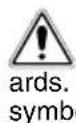
This is the safety alert symbol. It is used to alert you to potential personal injury hazard. Obey all safety messages that follow this I to avoid possible injury or death.

This symbol indicates the risk of electrical shock.

This symbol means do not expose the charge to water or rain to reduce the risk of electrical shock.

This symbol means do not expose the battery to water or rain to reduce the risk of electrical shock

This is the China RoHS symbol.

This symbol means do not burn the battery or expose to high temperatures to reduce the risk of fire or explosion.

This symbol means the battery storage temperature should not exceed 60°C (140°F) to reduce the risk of fire or explosion.

This symbol indicates that RIDGID RBC-12XX series battery chargers (such as the RIDGID RBC-121R or RBC-121) should be used to charge this battery.
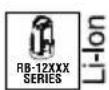
This symbol indicates that RIDGID RB-12XXX series batteries (such as the RIDGID RB-1225R and RB-1225) can be charged with this battery charger.

This symbol indicates that the product is For Indoor Use Only.

This symbol indicates that the product is Class II equipment.

This symbol indicates this is electrical equipment that should not be disposed of with household waste. See "Disposal" section

This is the symbol for a fuse.
Important Safety Information
WARNING
This section contains important safety information that is specific to the RIDGID RBC-121R Battery Charger and RB-1225R batteries.
Read all instructions, markings and warnings for the battery charger, batteries and any other equipment being used before use to reduce the risk of electrical shock, fire, explosion or serious personal injury.
SAVE ALL WARNING AND INSTRUCTIONS FOR FUTURE REFERENCE!
Battery Charger Safety
- To reduce risk of injury, charge only RIDGID RB-12XXX series rechargeable batteries or batteries indicated in specifications. Other types of batteries, including non-rechargeable batteries, may burst causing injury to persons and damage.
- Charger is for indoor use only.
- Charge Li-Ion batteries at ambient temperatures specified in the instructions. Charging at low or high ambient temperatures (i.e. below 32°F (0°C) or above (113°F (45°C)) increases the risk of battery leakage, electrical shock or fire.
-
Properly insert battery into charger. Battery polarity must match charger output polarity to reduce risk.
-
Use of an attachment not recommended or sold by the battery charger manufacturer may result in a risk of fire, electric shock, or injury to persons.
- To reduce risk of damage to cord, pull by connector rather than cord when disconnecting charger.
- Make sure cord is located so that it will not be stepped on, tripped over, or otherwise subjected to damage or stress.
- Do not operate charger with damaged cord - replace it immediately.
- To reduce risk of electric shock, unplug charger before attempting any maintenance or cleaning.
- Use an appropriate power source. An improper power source may cause damage to charger resulting in electrical shock, fire or burns.
- Do not allow anything to cover the charger while in use. Proper ventilation is required for correct operation of charger. Covering vents may result in fire. Allow a minimum of 3'' (76 mm) of clearance around the charger for proper ventilation.
- Unplug the charger when not in use. Reduces risk of injury to children and untrained persons.
- Do not carry charger by power cord. Do not pull cord to unplug. Reduces risk of electrical shock.
Charger and Battery Safety
- Use appropriate Charger and Battery combinations. See Specifications. Using chargers and batteries that are not rated for use together can cause the battery to burst, fire or other personal injury.
- Do not use charger or battery if either has been dropped, modified or damaged in any way. Modified or damaged charger or battery increases the risk of electrical shock.
- Do not open or disassemble the charger or battery. There are no user serviceable parts. Have repairs performed only at authorized locations. Opening or disassembling the charger or batteries may cause electrical shock or personal injury.
- Do not probe charger or battery terminals with conductive objects. Shorting of
terminals may cause sparks, burns or electrical shock.
- Do not expose charger or battery to damp or wet conditions, such as rain. Make sure hands are dry when handling. Moisture increases the risk of electrical shock.
- Follow all charging instructions and do not charge or store the battery pack outside the temperature range specified in the instructions. Charging or storing improperly or at temperatures outside the specified range may damage the battery and increase the risk of battery leakage, electrical shock or fire.
- This appliance can be used by children 8 years and above and persons with reduced physical, sensory or metal capabilities or lack of experience and knowledge if they have been given supervision or instruction concerning use of the appliance in a safe way and under-stand the hazards involved.
Children should be supervised to ensure that they do not play with the appliance. Cleaning and maintenance shall not be done by children without supervision.
Battery Safety
- Avoid contact with battery fluids. Fluids may cause burns or skin irritation. For skin contact, wash with soap and water. For eye contact, immediately flush eyes thoroughly with water and continue flushing for at least 15 minutes without rubbing. Seek medical attention. See battery SDS for additional information.
- Use batteries only with equipment specifically designating their use. Using equipment and batteries that are not rated for use together can cause fire or other personal injury.
- When battery pack is not in use, keep it away from other metal objects, like paper clips, coins, keys, nails, screws or other small metal objects that can make a connection from one terminal to another. Shorting the battery terminals together may cause burns or a fire.
- Do not burn battery or expose to high temperatures. High temperatures can cause the battery to explode.
- Properly dispose of batteries. Do not
burn. When disposing, place tape over batNominal Voltage....10.8 V tery terminals to prevent shorting. BatteriesAmp-hour.....2.5 Ah are Li-Ion and should be recycled. Follow all applicable local regulations for disposal of Watt-Hour .......27 Wh batteries. Refer to Disposal section. Battery Weight ....0.40 lb
RldGld Contact Information
If you have any question concerning this RIDGID® product:
- Contact your local RIDGID distributor.
- Visit RIDGID.com to find your local RIDGID contact point.
- Contact Ridge Tool Technical Service De part ment at rttechservices@emerson.com, or in the U.S. and Canada call (800) 519-3456.
description
The RIDGIDRBC-121R 10.8V Lithium-Ion Bat -
tery Charger is designed to charge 10.8V Lithi um-Ion Batteries (as listed in the Speci fications section). This charger requires no adjustments.Approximate
The charger includes lights to indicate battery Charge Time 2.5 Ah battery ≤ 40 min charge state and charger condition.
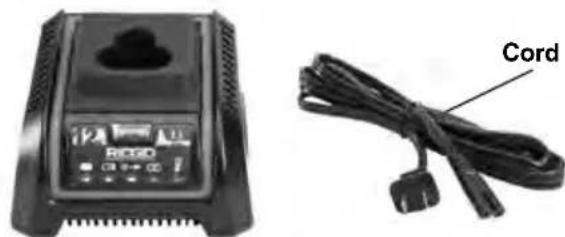
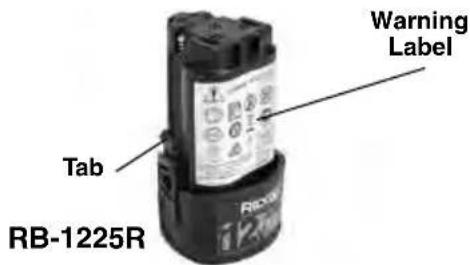
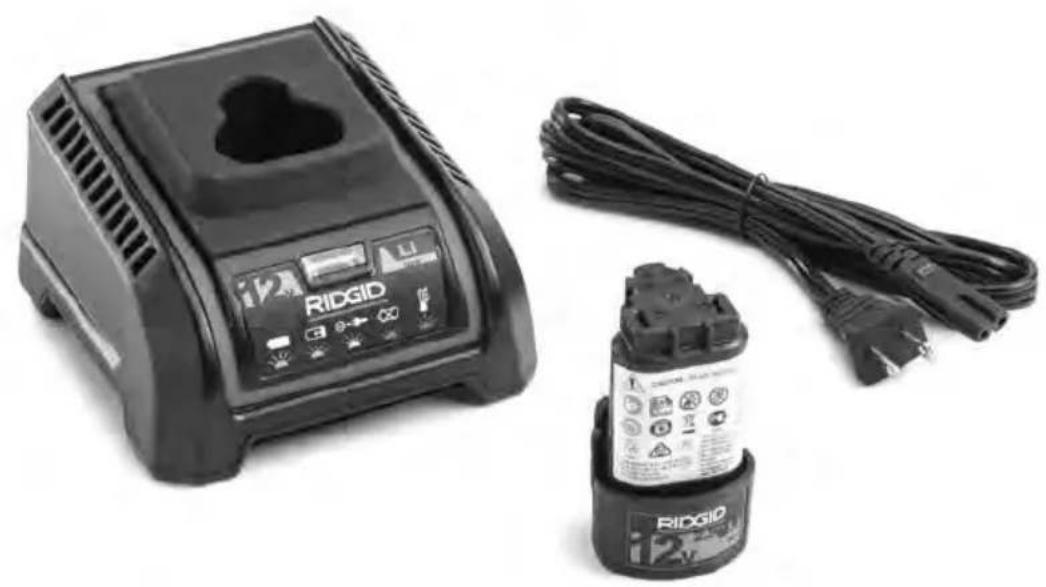
Figure 1 - RBC-121R Lithium-Ion Battery Charger
Figure 2 - RB-12XXX Series 10.8V Lithium-Ion Batteries
Cooling...........Passive convection cooling (no fan)
Charging
Temperature Range ...32° F (0° C) - 113° F (45° C)
Charger Dimension ....5.7" x 5.3" x 3.5" (145 x 134 x 89 mm)
Charger Weight.1.55 lbs. (0.70kg)
Compatibility.RIDGID RB-12XXX series batteries (such as the RB-1225R & RB-1225)
Specifications
Batteries
Type . Lithium-Ion (Li-Ion)
Model.RB-1225R
Cell Information ....3INR19/65
| Charger Icon | Solid Light | Blinking Light | Meaning |
| - Yellow | Charger is plugged in with no battery installed - ready to charge. | ||
| - Green Battery is being charged. | Charge level <85%. | ||
| Green - | Battery Charge level >85%, ready for use. Battery continues to charge. Once battery is fully charged, the charger switches to retention charging. | ||
| - Red | Battery is misaligned in charger. Remove battery and reinsert onto charger. | ||
| Battery is damaged. See Optional Equipment Section to select an appropriate replacement battery. See Disposal Section for recycling information. | |||
| Charger is damaged. See Service and Repair section for contact information. | |||
| Red - | Battery or charger outside of charging temperature range. Allow battery and charger to reach temperature range by sitting in a conditioned environment. | ||
| NO Lights ON | Charger does not have power. Ensure that charger is properly connected to electrical outlet. | ||
| Charger is not working properly. See Service and Repair Section for contact information. | |||
| Light | |||
Inspection and Assembly
WARNING
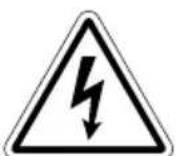
Figure 3 - Light Diagnostic Chart

Daily before use, inspect the charger and batteries and correct any problems. Assemble charger according to these procedures to reduce the risk of injury from electric shock, fire and other causes, and to prevent tool and system damage.
- Make sure the charger is unplugged. Inspect the power cord, charger and batteries for damage or modifications, or broken, worn, missing, misaligned or
binding parts. If any problems are found, do not use charger or batteries until the parts have been properly repaired or replaced.
-
Clean the equipment. This helps to prevent the equipment from slipping from your grip, allows proper ventilation as well as allowing any damage to be seen.
-
Check to see that all warning labels and decals on the charger and batteries are intact and readable. See Figure 4 & 5.
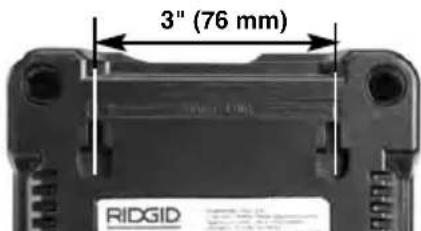
Figure 4 - Warning Label Location on Charger
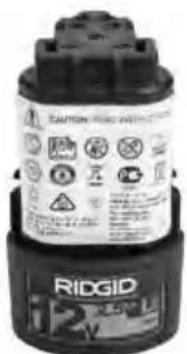
Figure 5 - Battery Warning Label
-
Select an appropriate location for the charger before use. Check work area for:
-
Flammable liquids, vapors or dust that may ignite. If present, do not work in area until sources have been identified and corrected. Battery charger is not explosion proof and can cause sparks.
- Clear, level, stable, dry indoor location for charger. Do not use in wet or damp areas.
- Proper charging temperature range.
- Appropriate power source. Confirm that outlet matches the charger plug. Use of extension cords is not recommended.
- Sufficient ventilation area. The charger needs a clearance of at least 3 (76 mm) on all sides to maintain the proper operating temperature.
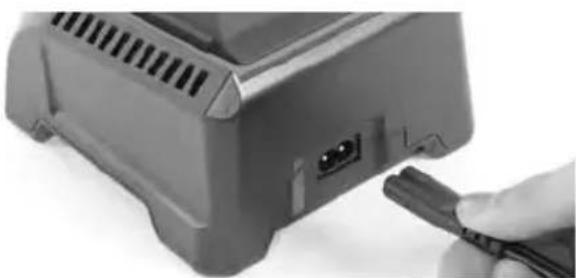
Figure 6 - Inserting Power Cord
- If needed, securely install power cord into charger (Figure 6). See Optional Equipment section for proper cords for use with the RBC-121R Battery Charger.
- This charger is provided with a keyhole hanging feature if wall mounting is desired. Screws should be installed at a center distance of 3'' (76mm) - See Figure 4.
Operating Instructions
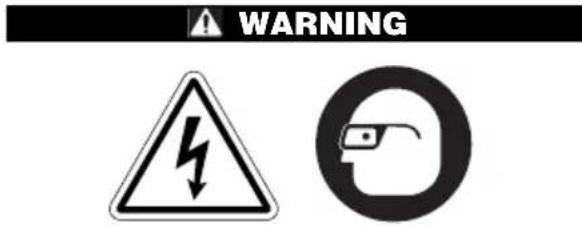
Follow operating instructions to reduce the risk of injury from electrical shock.
Charging Procedure
New batteries reach their full capacity after approximately five charging and discharging cycles. It is not necessary to completely discharge a battery pack before recharging.
- Set up charger according to Inspection and Assembly section.
- With dry hands, insert plug into appropriate power source. Route cords to prevent tripping or cord damage.
- When charger is in "ready to charge" mode, the yellow LED light will blink continuously.
- With dry hands, insert the battery pack onto the charger. (See Figure 7.) Do not force the battery into the charger. The battery pack will begin charging automatically. The battery pack will become slightly warm to the touch during charging. This is normal and does not indicate a problem. The LED light on the battery charger will indicate charging condition (Figure 3).
Once the battery is charged, it may remain on the charger until use. There is no risk of overcharging the battery.
- When charging is complete, with dry hands, remove the battery from the charger and unplug the charger from outlet.
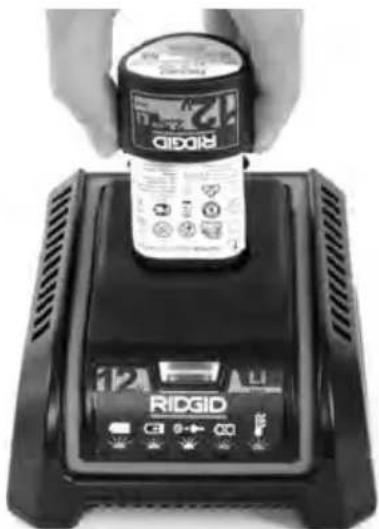
Figure 7 - Inserting Battery In Charger
Inserting/Removing Battery In Tool
- With dry hands, insert battery into tool receptacle. Battery only fits into receptacle one way. If the battery will not fully seat into the receptacle, do not force. As the battery is inserted, the tabs will engage the tool to retain the battery in place.
- To remove battery, depress tabs and pullsoft, non-metallic brush. straight out (Figure 8).
3 Always remove the battery from the tool when making adjustments, changing attachments or storing.
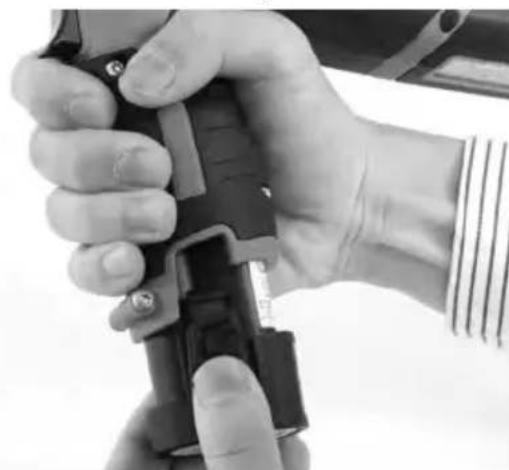
Figure 8 - Installing/Removing Battery In Tool
Storage
WARNING Store the charger and batteries in a dry, secured, locked area that is out of reach of children and people unfamiliar with proper charger operation.
Remove batteries from tool or charger before storage. The battery packs and charger should be protected against hard impacts, moisture and humidity, dust and dirt, extreme high and low temperatures, and chemical solutions and vapors.
NOTICE Long term storage in the fully charged state, the fully discharged state or in temperatures above 140°F (60°C) can permanently reduce the capacity of a battery pack.
Cleaning
!
WARNING
Unplug charger and remove the battery before cleaning. Do not use any water or chemicals to clean charger or battery to reduce the risk of electrical shock.
Remove any dirt or grease from the exterior of the charger and battery pack with a cloth or
Service And Repair
#
WARNING
Improper service or repair can make machine unsafe to operate.
There are no user-serviceable parts for the charger or battery packs. Do not attempt to open charger or battery packs, charge individual battery cells, or clean internal components.
For information on your nearest RIDGID In dependent Service Center or any service or repair questions see Contact Information section in this manual.
Optional Equipment
WARNING
To reduce the risk of injury, only use optional equipment specifically designed and recommended for use with the RIDGID RBC-121R Battery Charger, such as those listed.
RBC-121R Chargers and Cords
| Catalog No. Region Type | |||
| 55193 Charger USA, Canada and Mexico A | |||
| 55198 Charger | Europe C | ||
| 55203 Charger | China A | ||
| 55208 Charger Australia & Latin America I | |||
| 55213 Charger | Japan A | ||
| 55218 Charger | United Kingdom G | ||
| 44798 Charger Cord | North America | A | |
| 44808 Charger Cord | Europe | C | |
| 44803 Charger Cord | China | A | |
| 44813 Charger Cord | Australia & Latin America | I | |
| 44818 Charger Cord | Japan | A | |
| 44828 Charger Cord | United Kingdom | G | |
Batteries
| Catalog No. | Model | Capacity |
| 55183 | RB-1225R | 10.8V 2.5Ah |
All listed batteries can be charged with any catalog number RBC-121R Battery Charger.
For a complete listing of RIDGISOptional equipment available for this tool, see the Ridge Tool Catalog online at RIDGID.com or see Contact Information.
Disposal

Li-lon
The batteries are Li-ion type and should be recycled.
Parts of the unit contain valuable materials and can be recycled. The
are companies that specialize in recycling that may be found locally. Dispose of the components in compliance with all applicable regulations. Contact your local waste management authority for more information.
For EC Countries: Do not dispose of electrical equipment with household waste!
According to the European Guideline 2012/19/EU for Waste Electrical
and Electronic Equip ment and its implemen tation into national legislation, this marking indicates that this battery charger and battery pack should not be disposed of with other household wastes throughout the EU. To prevent possible harm to the environment or human health from improper waste disposal, recycle it responsibly to promote the sustainable reuse of material resources. To recycle your used device, please use existing collection systems or contact the retailer from whom the product was purchased. They can take this product for environmentally safe recycling.
Battery Disposal

For USA and Canada: The RBRC™ (Re charge able Battery Recycling Corporation) Seal on the battery packs means that RIDGID has al
ready paid the cost of recycling the lithium-ion battery packs once they have reached the end of their useful life.
RBRC™, RIDGID, and other battery suppliers have de veloped programs in the USA and Canada to collect and recycle rechargeable batteries. Normal and rechargeable batteries contain materials that should not be directly disposed of in nature, and contain valuable materials that can be recycled. Help to protect the environment and conserve natural resources by returning your used batteries to your local retailer or an authorized RIDGID service center for recycling. Your local recycling center can also provide you with additional drop off locations.
RBRCTM is a registered trademark of the Re-chargeable Battery Recycling Corporation.
For EC countries: Defective or used battery packs/batteries must be recycled according to the guideline 2012/19/EU.
Battery Transport
The battery is tested according to UN Docu-ment ST/SG/AC.10/11/Rev/6 Part III, subsection 38.3. It has effective protection against internal overpressure and short-circuiting as well as devices for the prevention of violent rupture and dangerous reverse current flow.
The lithium-equivalent content in the battery is below applicable limit values. Therefore, the battery is not subject to national or international regulations pertaining to dangerous mediums, neither as an individual component nor when inserted into a machine. However, the regulations governing dangerous goods may be relevant when transporting several batteries. In this case, it may be necessary to comply with special conditions (e.g., concerning the packaging).
Type ...Lithium-ion (Li-Ion)
Modèle.RB-1225R
Référence
cellules.3INR19/65
Tension nominale...10,8 V
approximative.......Bloc-piles 2,5 Ah ≤ 40 minutes
Model Number: RIDGID RBC-121R Battery Charger
Company: Ridge Tool Company
Address: 400 Clark Street, Elyria, Ohio 44035-6001
Compliance Statement: This device complies with part 15 of the FCC Rules. Operation is subject to the following two conditions: (1) This device may not cause harmful interference, and (2) this device must accept any interference received, including interference that may cause undesired operation.
Warning: Any changes or modifications to this unit not expressly approved by the party responsible for compliance could void the user's authority to operate the equipment.
NOTE: This equipment has been tested and found to comply with the limits for a Class B digital device, pursuant to part 15 of the FCC Rules. These limits are designed to provide reasonable protection against harmful interference in a residential installation. This equipment generates, uses and can radiate radio frequency energy and, if not installed and used in accordance with the instructions, may cause harmful interference to radio communications. However, there is no guarantee that interference will not occur in a particular installation. If this equipment does cause harmful interference to radio or television reception, which can be determined by turning the equipment off and on, the user is encouraged to try to correct the interference by one or more of the following measures:
Reorient or relocate the receiving antenna.
Increase the separation between the equipment and receiver.
- Connect the equipment into an outlet on a circuit different from that to which the receiver is connected.
- Consult the dealer or an experienced radio/TV technician for help.
RIDGID® RBC-121R Charger
RIDGE TOOL COMPANY Ridge Tool Europe NV (RIDGID)
EC DECLARATION OF CONFORMITY
Signature:
Name: Harald Krondorfer
Qualification: V.P. Engineering
Date: 12/31/2019

4000415
Conforms to UL STD. 1310
Certified to CSA STD. C22.2 No. 223
What is covered
RIDGID*tools are warranted to be free of defects in workmanship and material.
How long coverage lasts
This warranty lasts for the lifetime of the RIDGID tool. Warranty coverage ends when the product becomes unusable for reasons other than defects in workmanship or material.
How you can get service
To obtain the benefit of this warranty, deliver via prepaid transportation the complete product to RIDGE TOOL COMPANY, Elyria, Ohio, or any authorized RIDGE INDEPENDENT SERVICE CENTER. Pipe wrenches and other hand tools should be returned to the place of purchase.
What we will do to correct problems
Warranted products will be repaired or replaced, at RIDGE TOOL'S option, and returned at no charge; or, if after three attempts to repair or replace during the warranty period the product is still defective, you can elect to receive a full refund of your purchase price.
What is not covered
Failures due to misuse, abuse or normal wear and tear are not covered by this warranty. RIDGE TOOL shall not be responsible for any incidental or consequential damages.
How local law relates to the warranty
Some states do not allow the exclusion or limitation of incidental or consequential damages so the above limitation or exclusion may not apply to you. This warranty gives you specific rights, and you may also have other rights, which vary, from state to state, province to province, or country to country.
No other express warranty applies
This FULL LIFETIME WARRANTY is the sole and exclusive warranty for RIDGfD products. No employee, agent, dealer, or other person is authorized to alter this warranty or make any other warranty on behalf of the RIDGE TOOL COMPANY.

Parts are available online at Store.RIDGID.com
Ridge Tool Company
400 Clark Street
Elyria, Ohio 44035-6001
U.S.A.
Ce qui est couvert


- RBC-121R BATTERY CHARGER AND RB-1225R BATTERIES
- TABLE OF CONTENTS
- SAFETY SYMBOLS 2
- IMPORTANT SAFETY INFORMATION
- RIDGID CONTACT INFORMATION 4
- DESCRIPTION
- SPECIFICATIONS
- INSPECTION AND ASSEMBLY 5
- OPERATING INSTRUCTIONS 6
- STORAGE 7
- CLEANING 7
- SERVICE AND REPAIR 7
- OPTIONAL EQUIPMENT 8
- DISPOSAL 8
- BATTERY TRANSPORT 8
- FFC COMPLIANCE INFORMATION 32
- EC DECLARATION OF CONFORMITY . INSIDE BACK COVER
- LIFETIME WARRANTY . BACK COVER
- WARNING
- SAFETY SYMBOLS
- DANGER
- CAUTION
- NOTICE
- BATTERY CHARGER SAFETY
- CHARGER AND BATTERY SAFETY
- BATTERY SAFETY
- RLDGLD CONTACT INFORMATION
- BATTERIES
- INSPECTION AND ASSEMBLY
- OPERATING INSTRUCTIONS
- CHARGING PROCEDURE
- INSERTING/REMOVING BATTERY IN TOOL
- STORAGE
- CLEANING
- !
- SERVICE AND REPAIR
- OPTIONAL EQUIPMENT
- DISPOSAL
- BATTERY DISPOSAL
- BATTERY TRANSPORT
- RIDGID® RBC-121R CHARGER
- EC DECLARATION OF CONFORMITY
- WHAT IS COVERED
- HOW LONG COVERAGE LASTS
- HOW YOU CAN GET SERVICE
- WHAT WE WILL DO TO CORRECT PROBLEMS
- WHAT IS NOT COVERED
- HOW LOCAL LAW RELATES TO THE WARRANTY
- NO OTHER EXPRESS WARRANTY APPLIES
- RIDGE TOOL COMPANY
- CE QUI EST COUVERT
Brand : RIDGID
Model : RBC121R
Category : Battery charger