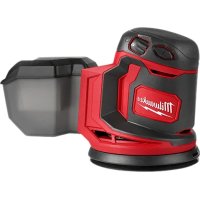
264820 - Sander MILWAUKEE - Free user manual and instructions
Find the device manual for free 264820 MILWAUKEE in PDF.



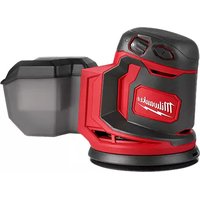
| Product Type | Random Orbital Sander |
| Brand | Milwaukee |
| Model | 2648-20 |
| Voltage | 18 V DC |
| No-Load Speed | 7,000 - 12,000 orbits/min |
| Abrasive Disc Diameter | 125 mm (5") |
| Battery Type | M18™ Lithium-ion |
| Charger Type | M18™ |
| Operating Temperature | -18°C to 50°C |
| Dust Extraction System | Dust canister with filter and universal vacuum adapter |
| Variable Speed Control | Yes, 6-position dial (1-6) |
| Switch | ON/OFF button |
| Disc Attachment Type | Hook and loop (Velcro) or PSA adhesive |
| Warranty | 5 years (power tool) |
| Included Accessories | Dust canister, hose adapter, extender |
Frequently Asked Questions - 264820 MILWAUKEE
User questions about 264820 MILWAUKEE
0 question about this device. Answer the ones you know or ask your own.
Ask a new question about this device
Download the instructions for your Sander in PDF format for free! Find your manual 264820 - MILWAUKEE and take your electronic device back in hand. On this page are published all the documents necessary for the use of your device. 264820 by MILWAUKEE.
USER MANUAL 264820 MILWAUKEE
natural_image
Line drawing of a Milwaukee air purifier with no text or symbols on the device itselfCat. No. / No de cat.
2648-20
M18 ^TM RANDOM ORBIT SANDER
PONCEUSE À MOUVEMENTS ORBITAUX ASYNCHRONES M18™
WARNING To reduce the risk of injury, user must read and understand operator's manual.
⚠ WARNING Read all safety warnings, instructions, illustrations and specifica-
tions provided with this power tool. Failure to follow all instructions listed below may result in electric shock, fire and/or serious injury. Save all warnings and instructions for future reference. The term "power tool" in the warnings refers to your mains-operated (corded) power tool or battery-operated (cordless) power tool.
WORK AREA SAFETY
- Keep work area clean and well lit. Cluttered or dark areas invite accidents.
- Do not operate power tools in explosive atmospheres, such as in the presence of flammable liquids, gases or dust. Power tools create sparks which may ignite the dust or fumes.
- Keep children and bystanders away while operating a power tool. Distractions can cause you to lose control.
ELECTRICAL SAFETY
- Power tool plugs must match the outlet. Never modify the plug in any way. Do not use any adapter plugs with earthed (grounded) power tools. Unmodified plugs and matching outlets will reduce risk of electric shock.
- Avoid body contact with earthed or grounded surfaces, such as pipes, radiators, ranges and refrigerators. There is an increased risk of electric shock if your body is earthed or grounded.
- Do not expose power tools to rain or wet conditions. Water entering a power tool will increase the risk of electric shock.
- Do not abuse the cord. Never use the cord for carrying, pulling or unplugging the power tool. Keep cord away from heat, oil, sharp edges or moving parts. Damaged or entangled cords increase the risk of electric shock.
- When operating a power tool outdoors, use an extension cord suitable for outdoor use. Use of a cord suitable for outdoor use reduces the risk of electric shock.
- If operating a power tool in a damp location is unavoidable, use a ground fault circuit interrupter (GFCI) protected supply. Use of an GFCI reduces the risk of electric shock.
PERSONAL SAFETY
- Stay alert, watch what you are doing and use common sense when operating a power tool. Do not use a power tool while you are tired or under the influence of drugs, alcohol or medication. A moment of inattention while operating power tools may result in serious personal injury.
- Use personal protective equipment. Always wear eye protection. Protective equipment such as a dust mask, non-skid safety shoes, hard hat or hearing protection used for appropriate conditions will reduce personal injuries.
-
Prevent unintentional starting. Ensure the switch is in the off-position before connecting to power source and/or battery pack, picking up or carrying the tool. Carrying power tools with your finger on the switch or energizing power tools that have the switch on invites accidents.
-
Remove any adjusting key or wrench before turning the power tool on. A wrench or a key left attached to a rotating part of the power tool may result in personal injury.
- Do not overreach. Keep proper footing and balance at all times. This enables better control of the power tool in unexpected situations.
- Dress properly. Do not wear loose clothing or jewelry. Keep your hair and clothing away from moving parts. Loose clothes, jewelry or long hair can be caught in moving parts.
- If devices are provided for the connection of dust extraction and collection facilities, ensure these are connected and properly used. Use of dust collection can reduce dust-related hazards.
- Do not let familiarity gained from frequent use of tools allow you to become complacent and ignore tool safety principles. A careless action can cause severe injury within a fraction of a second.
POWER TOOL USE AND CARE
- Do not force the power tool. Use the correct power tool for your application. The correct power tool will do the job better and safer at the rate for which it was designed.
- Do not use the power tool if the switch does not turn it on and off. Any power tool that cannot be controlled with the switch is dangerous and must be repaired.
- Disconnect the plug from the power source and/or remove the battery pack, if detachable, from the power tool before making any adjustments, changing accessories, or storing power tools. Such preventive safety measures reduce the risk of starting the power tool accidentally.
- Store idle power tools out of the reach of children and do not allow persons unfamiliar with the power tool or these instructions to operate the power tool. Power tools are dangerous in the hands of untrained users.
- Maintain power tools and accessories. Check for misalignment or binding of moving parts, breakage of parts and any other condition that may affect the power tool's operation. If damaged, have the power tool repaired before use. Many accidents are caused by poorly maintained power tools.
- Keep cutting tools sharp and clean. Properly maintained cutting tools with sharp cutting edges are less likely to bind and are easier to control.
- Use the power tool, accessories and tool bits etc. in accordance with these instructions, taking into account the working conditions and the work to be performed. Use of the power tool for operations different from those intended could result in a hazardous situation.
- Keep handles and grasping surfaces dry, clean, and free from oil and grease. Slippery handles and grasping surfaces do not allow for safe handling and control of the tool in unexpected situations.
BATTERY TOOL USE AND CARE
- Recharge only with the charger specified by the manufacturer. A charger that is suitable for one type of battery pack may create a risk of fire when used with another battery pack.
-
Use power tools only with specifically designated battery packs. Use of any other battery packs may create a risk of injury and fire.
-
When battery pack is not in use, keep it away from other metal objects, like paper clips, coins, keys, nails, screws or other small metal objects, that can make a connection from one terminal to another. Shorting the battery terminals together may cause burns or a fire.
- Under abusive conditions, liquid may be ejected from the battery; avoid contact. If contact accidentally occurs, flush with water. If liquid contacts eyes, additionally seek medical help. Liquid ejected from the battery may cause irritation or burns.
- Do not use a battery pack or tool that is damaged or modified. Damaged or modified batteries may exhibit unpredictable behavior resulting in fire, explosion or risk of injury.
- Do not expose a battery pack or tool to fire or excessive temperature. Exposure to fire or temperature above 265^ (130°C) may cause explosion
- Follow all charging instructions and do not charge the battery pack or tool outside the temperature range specified in the instructions. Charging improperly or at temperatures outside the specified range may damage the battery and increase the risk of fire.
SERVICE
- Have your power tool serviced by a qualified repair person using only identical replacement parts. This will ensure that the safety of the power tool is maintained.
- Never service damaged battery packs. Service of battery packs should only be performed by the manufacturer or authorized service providers.
SPECIFIC SAFETY RULES FOR SANDERS
- Collected sanding dust from sanding surface coatings such as polyurethanes, linseed oil, etc. can self-ignite in the sander dust box or elsewhere and cause fire. To reduce the risk of fire always empty the dust box frequently (10-15 minutes) while sanding and never store or leave a sander without totally emptying its dust box. Also follow the recommendations of the coatings manufacturers.
- Maintain labels and nameplates. These carry important information. If unreadable or missing, contact a MILWAU KEE service facility for a free replacement.
•WARNING Some dust created by power sanding, sawing, grinding, drilling, and other construction activities contains chemicals known to cause cancer, birth defects or other reproductive harm. Some examples of these chemicals are:
•WARNING Some dust created by power sanding, sawing, grinding, drilling, and other construction activities contains chemicals known to cause cancer, birth defects or other reproductive harm. Some examples of these chemicals are:
- lead from lead-based paint
• crystalline silica from bricks and cement and other masonry products, and
• arsenic and chromium from chemically-treated lumber. Your risk from these exposures varies, depending on how often you do this type of work. To reduce your exposure to these chemicals: work in a well ventilated area, and work with approved safety equipment, such as those dust masks that are specially designed to filter out microscopic particles.
SYMBOLOGY


Direct Current
OPM
Orbits per Minute (OPM)

UL Listing for Canada and U.S.
FUNCTIONAL DESCRIPTION
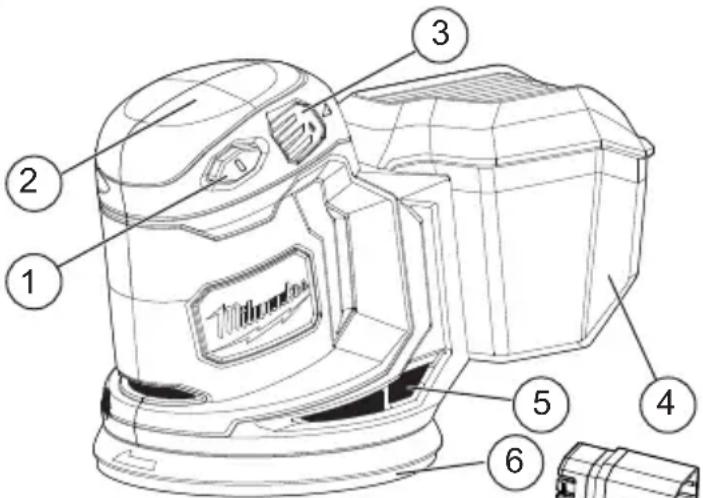
- On/Off switch
- Hand grip
- Variable speed dial
-
Dust box
-
Air vents
- Backing pad
- Extender
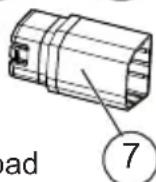
SPECIFICATIONS
Cat. No....2648-20
Volts.... 18 DC
Orbits Per Min.... 7,000-12,000
Paper Size 5" dia.
Battery Type ......M18™
Charger Type.....M18™
Recommended Ambient
Operating Temperature 0°F to 125°F
ASSEMBLY
WARNING
Recharge only with the charger specified for the battery. For spe-
cific charging instructions, read the operator's manual supplied with your charger and battery.
Removing/Inserting the Battery
To remove the battery, push in the release buttons and pull the battery pack away from the tool.
WARNING
Always remove battery pack before changing or removing accessories.
To insert the battery, slide the pack into the body of the tool. Make sure it latches securely into place.
WARNING
Only use accessories specifically recommended for this tool. Others dous.
Selecting Sandpaper and Grits
Sandpaper can be made from various grit materials and these should be selected according the material to be sanded. The guidelines below list materials and grit materials that should be used with them.
- Fine woodwork – garnet or aluminum oxide
- Rough woodwork – aluminum zirconia or ceramic aluminum oxide
- Manufactured wood products (particleboard, medium density fiber board, etc.) – silicon carbide or aluminum oxide
- Solid surface materials (Corian®, quartz, granite, etc.) – silicon carbide or aluminum oxide
- Metals – emery or aluminum oxide Sandpaper is also graded by coarseness. Start your work with an abrasive grit just coarse enough to remove high spots and excessive roughness. Follow with a second sanding using a grit one or two grades finer. Continue with successively finer grits until you obtain the desired finish.
Do not switch from a coarse grit to a very fine grit in one step because it may be difficult to remove the marks made by the coarse grit abrasive. Use the finest grits practical for the roughing operation, and finish by using successively finer grits.
| Grit Type Typical Application | ||
| 6080 | Course | Ideal for initial sanding on rougher surfaces. For fast stock removal. Rough sanding and stripping of painted and rusted surfaces. |
| 100120 | Medium | For intermediate sanding and removal of minor surface imperfections. |
| 150180220 | Fine | Ideal for fine sanding prior to straining, priming, or sealing. |
Attaching Hook-and-Loop Sanding Discs
- Remove the battery pack.
- Align holes in hook-and-loop type sanding disc with holes in pad, then carefully press fuzzy side of sanding disc against pad as tightly as possible.
NOTE: Hook-and-loop type sanding discs can be reused for the life of the sanding abrasive. It is recommended that you keep the sanding disc backing pad clean to provide for best adhesion. Clean occasionally by brushing lightly with a small brush.
Changing the Backing Pad
The sander comes assembled with the hook-and-loop pad. To attach a pressure sensitive adhesive (PSA) pad (not included), first remove the hook-and-loop pad. Inspect backing pad before installing. Do not use if broken or defective.
- Remove the battery pack.
- Remove the four screws that hold the hook-and-loop pad in place.
- Remove the hook-and-loop pad.
- Clean dust particles from the pad brake.
- Apply a thin layer of lightweight grease to the back of the pad.
- Align the holes in the pressure sensitive adhesive (PSA) pad with the four screw holes in the sander.
- Replace the four screws securely.
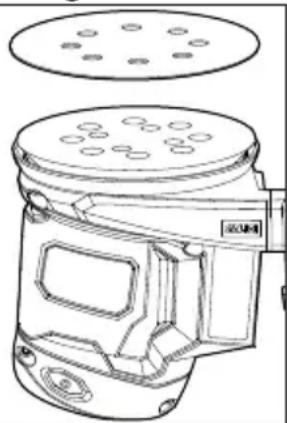
natural_image
Technical line drawing of a mechanical device with circular components and a labeled component (no text or symbols present)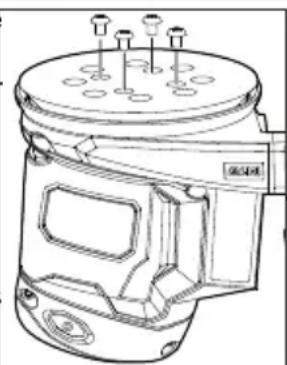
natural_image
Technical line drawing of a mechanical device with multiple ports and mounting holes (no text or symbols)Attaching PSA Sanding Discs
- Remove the battery pack.
- Carefully peel paper backing from the pressure sensitive adhesive type sanding disc.
- Align holes in sanding disc with holes in backing pad, then carefully press sticky side of disc against pad as tightly as possible.
NOTE: "Holes in sanding disc must line up with holes in the backing pad in order for the dustless feature of the sander to function properly.
NOTE: It is recommended that you clean backing pad occasionally by brushing lightly with a small brush. Dust buildup on backing pad could cause sanding disc not to stick properly.
Remove PSA Sanding Disc Before Storage
Do not store the sander with the sanding disc installed. Heat generated from sanding causes the pressure sensitive adhesive to flow and form a tight bond between the backing pad and sanding disc.
Removing the sanding disc soon after you have finished a sanding operation avoids letting the adhesive set up. If the sanding disc is left on the backing pad for an extended period of time after use, the adhesive will set up and cause the sanding disc to become difficult to remove.
It may also tear when removing. When this situation occurs, it becomes difficult to clean the backing pad for the next sanding disc.
NOTE: If you forget to remove the sanding disc after a sanding operation, sand for a few minutes to soften the adhesive backing before attempting to remove sanding disc.
⚠ WARNING Collected sanding dust from sanding surface coatings such as polyurethanes, linseed oil, etc. can self-ignite in the sander dust box or elsewhere and cause fire. To reduce the risk of fire always empty the dust box frequently (10-15 minutes) while sanding and never store or leave a sander without totally emptying its dust box. Also follow the recommendations of the coatings manufacturers.
Dust Box with Filter
The dust box provides a dust collection and air filtration system for the sander. Sanding dust is drawn up through the holes of the sanding pad and collected in the dust box during sanding. To use the dust box: 1. Remove the battery pack.
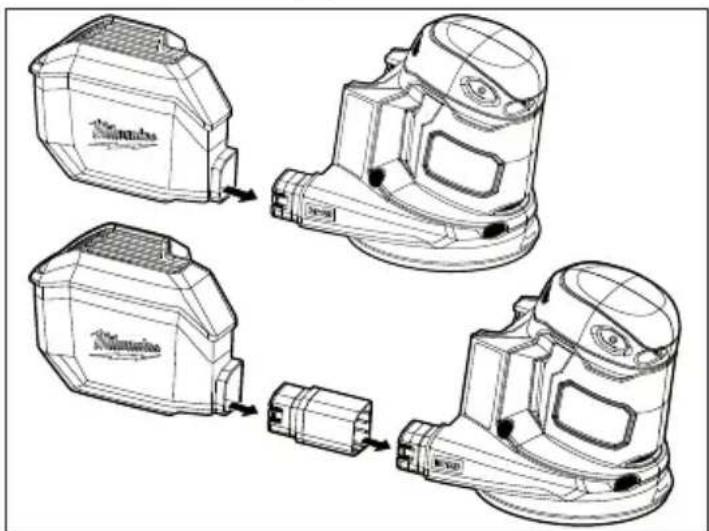
natural_image
Technical line drawing of four different industrial vacuum cleaner components with internal mechanisms (no text or symbols)-
To insert, slide the dust box chute into the sander's dust port. Ensure the dust box vents are facing up and push sander and dust box together firmly. Use the extender when using larger M18 ^™ battery packs
-
To remove, grasp the sander and dust box firmly and pull apart.
-
To empty, using the tabs, pull off the dust box lid Empty dust from the dust box and tap filter clean. Do not clean filter with water or compressed air. Replace filter when necessary (Cat. No. 43-31-0105). Reinstall the lid and ensure it snaps into place.
For more efficient operation, empty the dust box when it is no more than half full. This will permit air to flow through the box better. Always empty and clean the dust box thoroughly upon completion of a sanding operation and before storing the sander.
Universal Hose Adapter
Use the universal hose adapter to attach the sander to a vacuum hose.
- Remove the battery pack.
- Remove the dust box from the sander.
- To insert, slide the adapter into the sander's dust port. Push sander and adapter together firmly. Connect the vacuum hose to the adapter, twisting together to secure.
NOTE: For extra length, use the extender.
- To remove, disconnect the vacuum hose from the adapter. Then, grasp the sander and adapter firmly and pull apart.
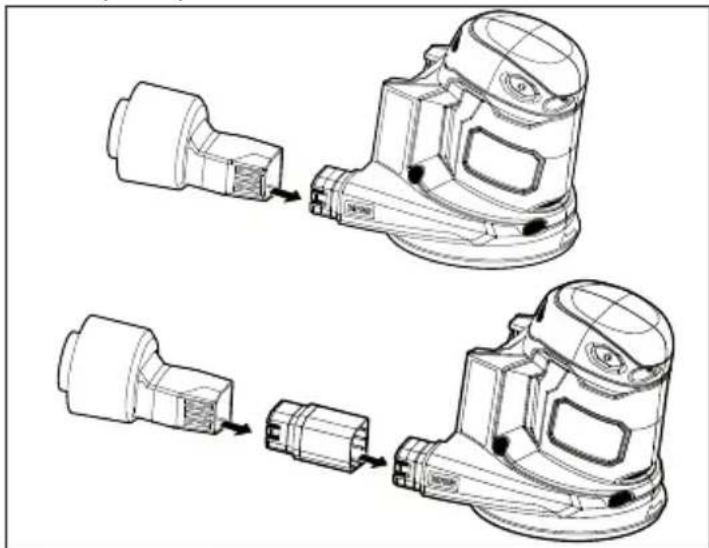
natural_image
Technical line drawing of a mechanical component assembly (no text or symbols)⚠ WARNING When sander is not connected to vacuum, always reinstall dust box assembly back onto sander. Failure to do so could cause sanding dust or foreign objects to be thrown into your face or eyes which could result in possible serious injury.
OPERATION
WARNING
To reduce the risk of injury, always remove battery pack before chang-
ing or removing accessories or making adjustments. Only use accessories specifically recommended for this tool. Others may be hazardous.
To reduce the risk of injury, always wear safety goggles or glasses with side shields.
Starting and Stopping the Tool
To start the sander, press the ON (I) button.
To stop sander, press the OFF (O) button.
Speed Dial
The speed dial allows the sander to operate at variable speeds - from low speed (1) to high speed (6).
- To increase sanding disc speed, turn the dial to a higher setting.
- To decrease sanding disc speed, turn the dial to a lower setting.
WARNING
Finish sanding can produce clouds of fine dust that could ignite in the
presence of sparks or open flame. Always wear a suitable dust mask or respirator and use your sander in a well-ventilated area.
To reduce the risk of injury, inspect for and remove all raised nails and fasteners from workpiece before sanding. Striking a fastener while sanding could cause loss of control.
General Sanding with Random Orbit Sanders
When using random orbit sanders there are a few things to keep in mind:
- Unlike most sanders, random orbit sanders should be placed on the workpiece BEFORE the tool is started. If the sander is started before it is placed on the workpiece, the free floating pad may be spinning at a speed that can cause scratches when it is finally placed on workpiece.
- Unlike most sanders, random orbit sanders can be moved across the workpiece in any direction (in the case of wood, regardless of the direction of the grain).
- Varying pressure applied to the sander will affect its rotating speed. A light pressure is recommended for fine work, moderate pressure for rough work. Excessive pressure does not allow the pad to rotate enough
- Keep sanding pad flat on the workpiece. Tipping the sander or using the edges of the pad may produce an uneven finish, and reduce pad life.
- Keep sander moving in broad even strokes across the workpiece. Sanding in one spot too long can cause gouging and uneven results.
- Check the workpiece frequently, random orbit sanders work more aggressively than simple orbital sanders.
WARNING
Properly secure workpiece before sanding. Unsecured work could be is the operator causing injury.
Do not wear loose clothing or jewelry when operating sander. They could get caught in moving parts causing serious injury. Keep head away from sander and sanding area. Hair could be drawn into sander causing serious injury.
- Place sander on the workpiece and turn on the sander.
- Keep the sanding disc flat against the workpiece, keep the sander moving across the workpiece, and use long, sweeping strokes.
- Begin sanding with a coarse grit sandpaper and gradually use finer and finer grits of sandpaper until
the desired finish is reached. For example when using the sander on wood, begin with an 80 grit followed by a 120 grit, then a 180 grit and so on.
Removing Paint or Varnish
- When removing several layers of paint or varnish, remove as much as possible with a paint solvent or varnish remover.
- Scrape away the residue with a putty knife or other scraping tool and allow the surface to cool and dry before applying sander to the workpiece.
AWARNING To reduce the risk of fire and explosion, paint solvents and varnish removers must be removed from the workpiece and the workpiece must be completely dry before sanding.
- Select a coarse grit sandpaper disc to help prevent the sandpaper from clogging.
- Keep the sander moving over new areas to avoid heating and softening the old coating (paint or varnish).
- Work in wide, overlapping strokes to produce a uniform finish.
- As the workpiece begins to show through the old coating, switch to a medium grit sandpaper disc to avoid scratching the surface of the workpiece. Gradually switch to a fine grit sandpaper until you achieve the desired finish.
MAINTENANCE
WARNING
To reduce the risk of injury, always unplug the charger and remove the battery pack from the charger or tool before performing any maintenance. Never disassemble the tool, battery pack or charger. Contact a MILWAUKEE service facility for ALL repairs.
Maintaining Tool
Keep your tool, battery pack and charger in good repair by adopting a regular maintenance program. Inspect your tool for issues such as undue noise, misalignment or binding of moving parts, breakage of parts, or any other condition that may affect the tool operation. Return the tool, battery pack, and charger to a MILWAUKEE service facility for repair. After six months to one year, depending on use, return the tool, battery pack and charger to a MILWAUKEE service facility for inspection.
If the tool does not start or operate at full power with a fully charged battery pack, clean the contacts on the battery pack. If the tool still does not work properly, return the tool, charger and battery pack, to a MIL-WAUKEE service facility for repairs.
WARNING
To reduce the risk of personal in-jury and damage, never immerse your tool, battery pack or charger in liquid or allow a liquid to flow inside them.
Cleaning
Clean dust and debris from vents. Keep handles clean, dry and free of oil or grease. Use only mild soap and a damp cloth to clean, since certain cleaning agents and solvents are harmful to plastics and other insulated parts. Some of these include gasoline, turpentine, lacquer thinner, paint thinner, chlorinated cleaning solvents, ammonia and household detergents containing ammonia. Never use flammable or combustible solvents around tools.
Repairs
For repairs, return the tool, battery pack and charger to the nearest service center.
ACCESSORIES
WARNING
Use only recommended accessories. Others may be hazardous.
For a complete listing of accessories, go online to www.milwaukeetool.com or contact a distributor.
SERVICE - UNITED STATES
1-800-SAWDUST (1.800.729.3878)
Monday-Friday, 7:00 AM - 6:30 PM CST
or visit www.milwaukeetool.com
Contact Corporate After Sales Service Technical Support with technical, service/repair, or warranty questions.
Email: metproductsupport@milwaukeeetool.com
Become a Heavy Duty Club Member at www.milwaukeetool.com to receive important notifications regarding your tool purchases.
SERVICE - CANADA
Milwaukee Tool (Canada) Ltd 1.800.268.4015
Monday-Friday, 7:00 AM - 4:30 PM CST
or visit www.milwaukeetool.ca
LIMITED WARRANTY USA & CANADA
Every MILWAUKEE power tool* (see exceptions below) is warranted to the original purchaser only to be free from defects in material and workmanship. Subject to certain exceptions, MILWAUKEE will repair or replace any part on an electric power tool which, after examination, is determined by MILWAUKEE to be defective in material or workmanship for a period of five (5) years** after the date of purchase unless otherwise noted. Return of the power tool to a MILWAUKEE factory Service Center location or MILWAUKEE Authorized Service Station, freight prepaid and insured, is required. A copy of the proof of purchase should be included with the return product. This warranty does not apply to damage that MILWAUKEE determines to be from repairs made or attempted by anyone other than MILWAUKEE authorized personnel, misuse, alterations, abuse, normal wear and tear, lack of maintenance, or accidents.
Normal Wear: Many power tools need periodic parts replacement and service to achieve best performance. This warranty does not cover repair when normal use has exhausted the life of a part including, but not limited to, chucks, brushes, cords, saw shoes, blade clamps, o-rings, seals, bumpers, driver blades, pistons, strikers, lifters, and bumper cover washers.
*This warranty does not cover Air Nailers & Staplers; Airless Paint Sprayer; Cordless Battery Packs; Gasoline Driven Portable Power Generators; Hand Tools; Hoist – Electric, Lever & Hand Chain; M12™ Heated Gear; Reconditioned Product; and Test & Measurement Products. There are separate and distinct warranties available for these products.
**The warranty period for Job Site Radios, M12™ Power Port, M18™ Power Source, Jobsite Fan and Trade Titan™ Industrial Work Carts is one (1) year from the date of purchase. The warranty period for the Drain Cleaning Cables is two (2) years from the date of purchase. The warranty period for the M18™ Compact Heat Gun and the 8 Gallon Dust Extractor is three (3) years from the date of purchase. The warranty period for the LED in the LED Work Light and the LED Upgrade Bulb for the Work Light is the lifetime of the product subject to the limitations above. If during normal use the LED or LED Bulb fails, the part will be replaced free of charge.
Warranty Registration is not necessary to obtain the applicable warranty on a MILWAUKEE power tool product. The manufacturing date of the product will be used to determine the warranty period if no proof of purchase is provided at the time warranty service is requested.
ACCEPTANCE OF THE EXCLUSIVE REPAIR AND REPLACE MENT REMEDIES DESCRIBED HEREIN IS A CONDITION OF THE CONTRACT FOR THE PURCHASE OF EVERY MILWAUKEE PRODUCT. IF YOU DO NOT AGREE TO THIS CONDITION, YOU SHOULD NOT PURCHASE THE PRODUCT. IN NO EVENT SHALL MILWAUKEE BE LIABLE FOR ANY INCIDENTAL, SPECIAL, CONSEQUENTIAL OR PUNITIVE DAMAGES, OR FOR ANY COSTS, ATTORNEY FEES, EXPENSES, LOSSES OR DELAYS ALLEGED TO BE AS A CONSEQUENCE OF ANY DAMAGE TO, FAILURE OF, OR DEFECT IN ANY PRODUCT INCLUDING, BUT NOT LIMITED TO, ANY CLAIMS FOR LOSS OF PROFITS. SOME STATES DO NOT ALLOW THE EXCLUSION OR LIMITATION OF INCIDENTAL OR CONSEQUENTIAL DAMAGES, SO THE ABOVE LIMITATION OR EXCLUSION MAY NOT APPLY TO YOU. THIS WARRANTY IS EXCLUSIVE AND IN LIEU OF ALL OTHER EXPRESS WARRANTIES, WRITTEN OR ORAL. TO THE EXTENT PERMITTED BY LAW, MILWAUKEE DISCLAIMS ANY IMPLIED WARRANTIES, INCLUDING WITHOUT LIMITATION ANY IMPLIED WARRANTY OF MERCHANTABILITY OR FITNESS FOR A PARTICULAR USE OR PURPOSE; TO THE EXTENT SUCH DISCLAIMER IS NOT PERMITTED BY LAW, SUCH IMPLIED WARRANTIES ARE LIMITED TO THE DURATION OF THE APPLICABLE EXPRESS WARRANTY AS DESCRIBED ABOVE. SOME STATES DO NOT ALLOW LIMITATIONS ON HOW LONG AN IMPLIED WARRANTY LASTS, SO THE ABOVE LIMITATION MAY NOT APPLY TO YOU, THIS WARRANTY GIVES YOU SPECIFIC LEGAL RIGHTS, AND YOU MAY ALSO HAVE OTHER RIGHTS WHICH VARY FROM STATE TO STATE.
This warranty applies to product sold in the U.S.A. and Canada only.
Please consult the 'Service Center Search' in the Parts & Service section of MILWAUKEE's website www.milwaukeeetool.com or call 1.800.SAWDUST (1.800.729.3878) to locate your nearest service facility for warranty and non-warranty service on a Milwaukee electric power tool.
LIMITED WARRANTY - MEXICO, CENTRAL AMERICA & CARIBBEÁN
TECHTRONIC INDUSTRIES' warranty is for 5 years since the original purchase date.
This warranty card covers any defect in material and workmanship on this Product.
To make this warranty valid, present this warranty card, sealed/ stamped by the distributor or store where you purchased the product, to the Authorized Service Center (ASC). Or, if this card has not been sealed/stamped, present the original proof of purchase to the ASC.
Call toll-free1 01 (800) 030-7777 to find the nearest ASC, for service, parts, accessories or components.
Procedure to make this warranty valid
Take the product to the ASC, along with the warranty card sealed/stamped by the distributor or store where you purchased the product, and any faulty piece or component will be replaced without cost for you. We will cover all freight costs relative with this warranty process.
Exceptions
This warranty is not valid in the following situations
a) When the product is used in a different manner from the end-user guide or instruction manual.
b) When the conditions of use are not normal.
c) When the product was modified or repaired by people not authorized by TECHTRONIC INDUSTRIES.
Note: If cord set is damaged, it should be replaced by an Authorized Service Center to avoid electric risks.
SERVICE AND ATTENTION CENTER
Call to 01 (800) 030-7777
IMPORTED AND COMMERCIALIZED BY
TECHTRONIC INDUSTRIES MEXICO, SA DE CV
Av President Masarik #29 piso 7, Col. Polanco V Sección
CP 11560, Deleg. Miguel Hidalgo, CDMX
Model:
Date of Purchase:
Distributor or Store Stamp:
RÈGLES DE SÉCURITÉ GÉNÉRALES RELATIVESAUXOUTILSÉLECTRIQUES
AVERTISSEMENT
Orbites/Minute (OPM)

natural_image
Technical line drawing of a cylindrical mechanical device with circular components and mounting holes (no text or symbols)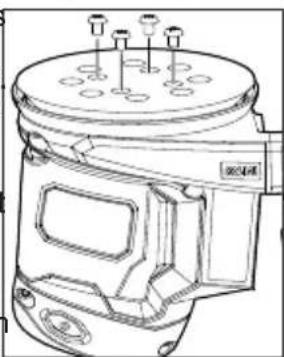
natural_image
Technical line drawing of a mechanical component with multiple holes and mounting brackets (no text or symbols)natural_image
Technical line drawing of four different industrial vacuum cleaner components with internal mechanisms (no text or symbols)natural_image
Technical line drawing of a mechanical component assembly (no text or symbols)Milwaukee Tool (Canada) Ltd
1.800.268.4015
Monday-Friday, 7:00 AM - 4:30 PM CST
www.milwaukeetool.ca
GARANTIE LIMITÉE- AUX ÉTATS-UNIS ET AU CANADA
natural_image
Line drawing of a mechanical device with circular top and handle (no text or symbols)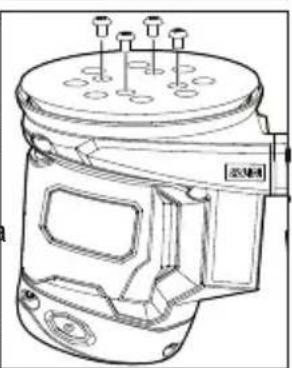
natural_image
Technical line drawing of a mechanical device with multiple ports and mounting holes (no text or symbols)natural_image
Technical line drawing of four different industrial vacuum cleaner components with internal structure and mounting bracket (no text or symbols)natural_image
Technical line drawing of a mechanical component assembly (no text or symbols)ADVERTENCIA
Lunes a Viernes (9am a 6pm)
13135 West Lisbon Road
Brookfield, WI 53005 USA
- M18 TM RANDOM ORBIT SANDER
- PONCEUSE À MOUVEMENTS ORBITAUX ASYNCHRONES M18™
- ⚠ WARNING Read all safety warnings, instructions, illustrations and specifica-
- WORK AREA SAFETY
- ELECTRICAL SAFETY
- PERSONAL SAFETY
- POWER TOOL USE AND CARE
- BATTERY TOOL USE AND CARE
- SERVICE
- SPECIFIC SAFETY RULES FOR SANDERS
- SYMBOLOGY
- OPM
- FUNCTIONAL DESCRIPTION
- SPECIFICATIONS
- ASSEMBLY
- WARNING
- Removing/Inserting the Battery
- Selecting Sandpaper and Grits
- Attaching Hook-and-Loop Sanding Discs
- Changing the Backing Pad
- Attaching PSA Sanding Discs
- Remove PSA Sanding Disc Before Storage
- Dust Box with Filter
- Universal Hose Adapter
- OPERATION
- Starting and Stopping the Tool
- Speed Dial
- General Sanding with Random Orbit Sanders
- Removing Paint or Varnish
- AWARNING To reduce the risk of fire and explosion, paint solvents and varnish removers must be removed from the workpiece and the workpiece must be completely dry before sanding.
- MAINTENANCE
- Maintaining Tool
- Cleaning
- Repairs
- ACCESSORIES
- SERVICE - UNITED STATES
- 1-800-SAWDUST (1.800.729.3878)
- SERVICE - CANADA
- Milwaukee Tool (Canada) Ltd 1.800.268.4015
- LIMITED WARRANTY USA & CANADA
- LIMITED WARRANTY - MEXICO, CENTRAL AMERICA & CARIBBEÁN
- Procedure to make this warranty valid
- Exceptions
- RÈGLES DE SÉCURITÉ GÉNÉRALES RELATIVESAUXOUTILSÉLECTRIQUES
- AVERTISSEMENT
- Milwaukee Tool (Canada) Ltd
- 1.800.268.4015
- GARANTIE LIMITÉE- AUX ÉTATS-UNIS ET AU CANADA
- ADVERTENCIA
Brand : MILWAUKEE
Model : 264820
Category : Sander