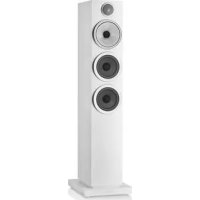
704 S3 - Speaker BOWERS & WILKINS - Free user manual and instructions
Find the device manual for free 704 S3 BOWERS & WILKINS in PDF.


| Product Type | Column speaker |
| Brand | Bowers & Wilkins |
| Model | 704 S3 |
| Speaker type | Floor-standing speaker |
| Tweeter | Decoupled Carbon Dome tweeter |
| Midrange | Continuum FST midrange driver |
| Bass | Dedicated bass driver |
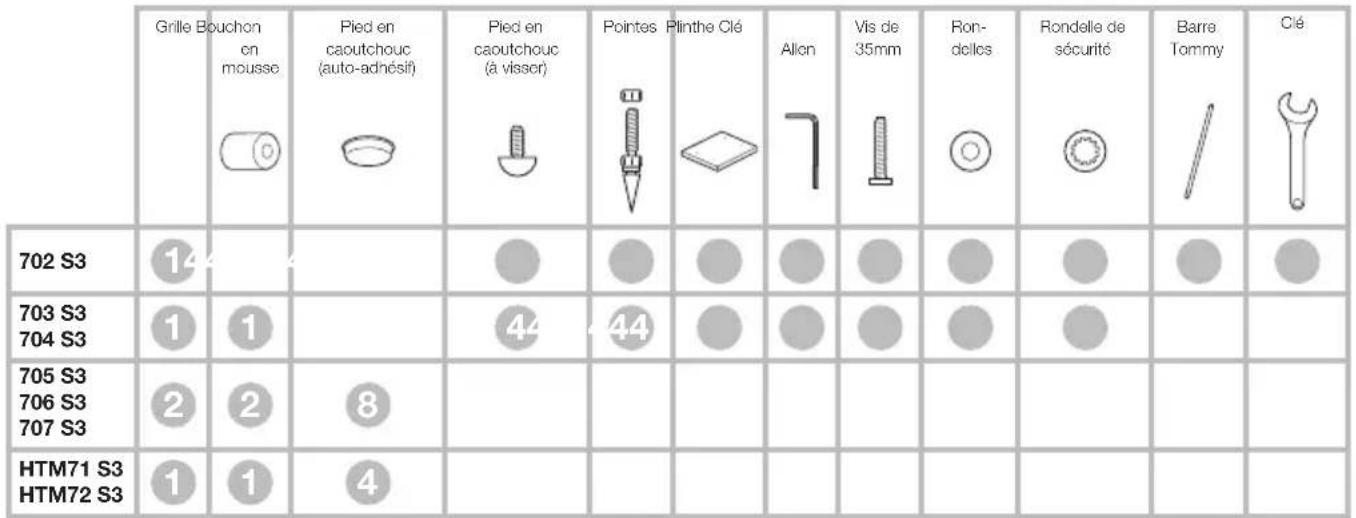
| Included accessories | Base, spikes, rubber feet, foam bungs |
| Recommended placement | On floor, at least 50 cm from walls |
| Bi-wiring/Bi-amping | Possible (remove jumpers) |
| Impedance | 8 ohms (not specified, typical value) |
| Finish | Real wood veneer with UV-resistant lacquer |
| Maintenance | Soft microfiber cloth, avoid abrasive products |
| Safety | Very sharp spikes, magnetic fields (keep CRT at least 50 cm away) |
| Environmental compliance | RoHS, REACH, WEEE |
| Break-in | Approximately 15 hours of normal use |
| Repairability | Spare parts available (foam bungs, spikes, feet) |
Frequently Asked Questions - 704 S3 BOWERS & WILKINS
User questions about 704 S3 BOWERS & WILKINS
0 question about this device. Answer the ones you know or ask your own.
Ask a new question about this device
Download the instructions for your Speaker in PDF format for free! Find your manual 704 S3 - BOWERS & WILKINS and take your electronic device back in hand. On this page are published all the documents necessary for the use of your device. 704 S3 by BOWERS & WILKINS.
USER MANUAL 704 S3 BOWERS & WILKINS
Welcome and thank you for choosing Bowers & Wilkins. Our founder, John Bowers, believed that imaginative design, innovative engineering and advanced technology were keys that could unlock the enjoyment of audio in the home. His belief is one that we continue to share and inspires every product we design.
This is a high performance product that rewards thoughtful installation, so we suggest that you take some time to read this manual before you begin. Continue on page 4
The table above illustrates the component parts that are packed with the product. In the unlikely event that anything is missing please contact the retailer from whom you purchased the speakers.
The tweeter assembly on 702 S3, 703 S3, 705 S3 and HTM71 S3 loudspeakers is a decoupled component that is mechanically isolated from the main part of the cabinet. As such, it may appear to be loose when the product is first removed from its packaging. This is not a fault: it is an inherent feature of the design and ensures optimum performance from your speaker.
Environmental Information
This product complies with international directives, including but not limited to:
i. the Restriction of Hazardous Substances (RoHS) in electrical and electronic equipment,
ii. the Registration, Evaluation, Authorisation and restriction of CHEmicals (REACH)
iii. the disposal of Waste Electrical and Electronic Equipment (WEEE).
Consult your local waste disposal authority for guidance on how properly to recycle or dispose of this product.
Speaker Installation
702 S3/703 S3/704 S3
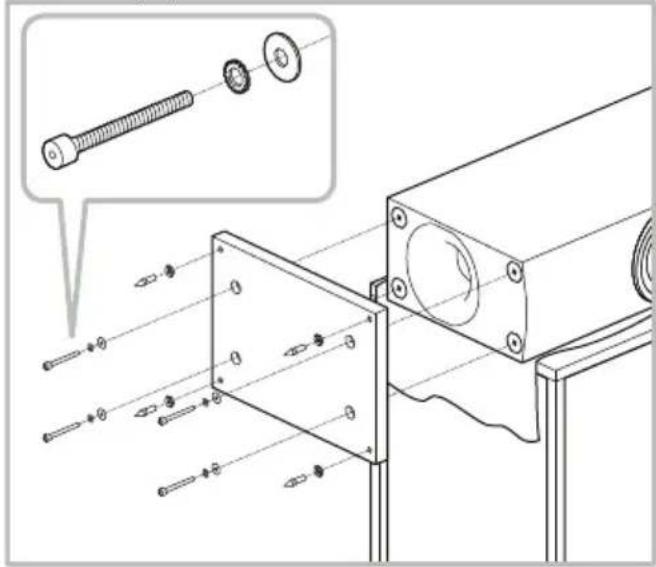
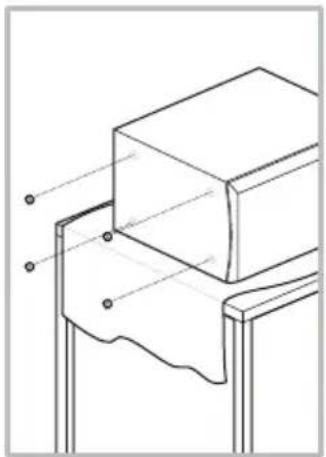
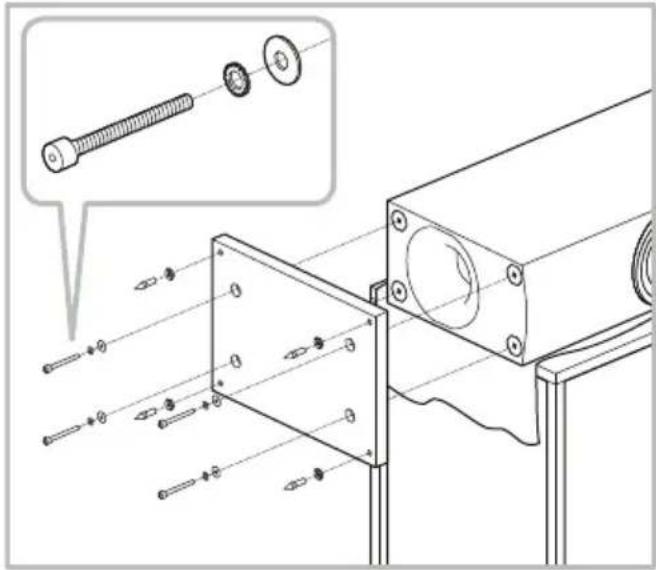
702 S3, 703 S3 and 704 S3 are intended to be floor mounted only. For proper stability, always install the provided plinth, then ensure that the speakers stand firmly on the floor using the spike or rubber feet supplied.
You may attach the plinth during the unpacking process, following the illustrations above or the diagrams on the top flap of the carton.
Warning
The plinth MUST always be used, with the rubber or spike feet inserted into the plinth. DO NOT insert rubber or spike feet directly into the cabinet.
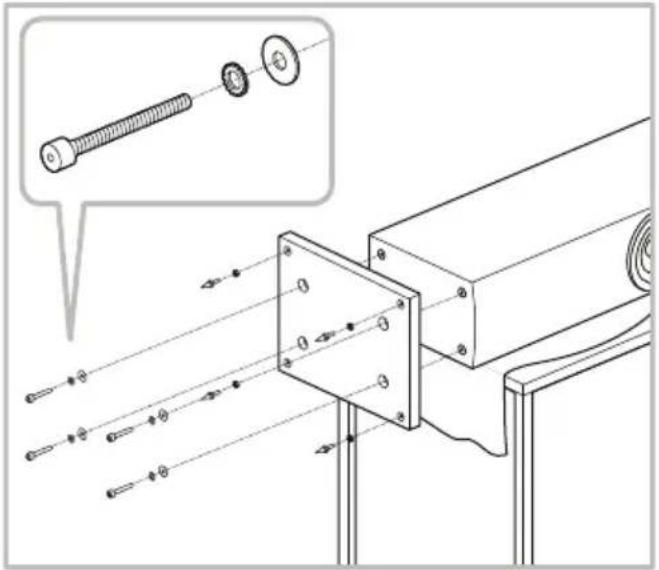
702 S3 703 S3 / 704 S3
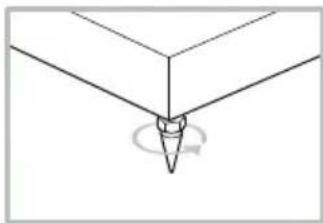
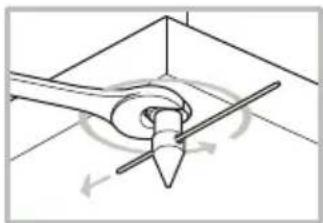
Note: Rubber feet installation is nearly identical to spike feet installation. The tommy bar and spanner are only included and used with the 702 S3 model during spike / rubber feet installation.
702S3703S3/704S3
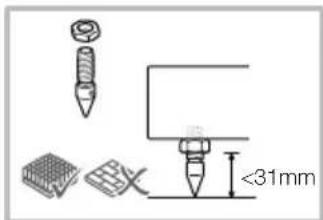
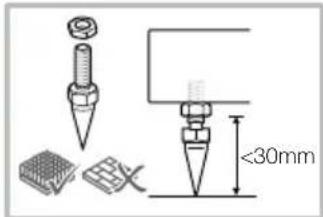
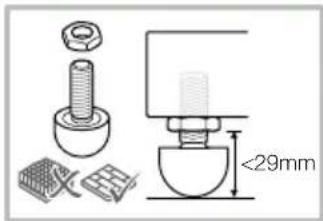
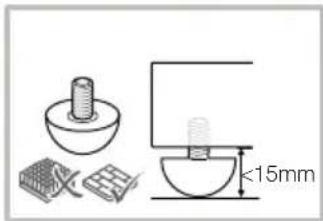
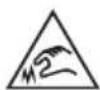
Important Safety Notice
Sharp spikes, do not touch.
The spike feet are designed to pierce carpet and rest on the floor surface. Initially, screw the lock nuts onto the spikes just far enough to leave the nuts floating just above the carpet when the spikes are resting on the floor beneath. Then, screw the spikes fully into the threaded inserts in the plinth. If the cabinet rocks when placed on the floor, unscrew the two spikes that do not touch the floor until the cabinet rests firmly without rocking. Finally, lock the nuts against the base by using the supplied spanner to gently tighten the nut whilst using the supplied tommy bar to stop the spike foot rotating. It may be more convenient to fit and adjust the spike feet after speaker positioning has been optimised.
If there is no carpet and you wish to avoid scratching the floor surface, use either a protective metal disc (a coin perhaps) between the spike and the floor, or use the supplied rubber feet. Fit the rubber feet and level the cabinet in the same manner as with the spike feet.
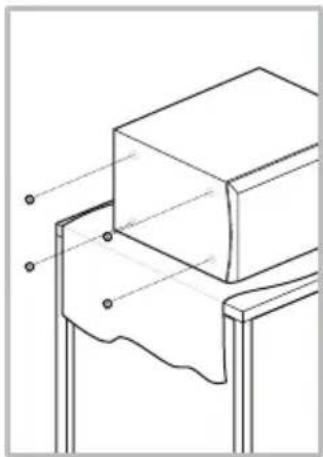
705 S3/706 S3/707 S3
The 705 S3, 706 S3 and 707 S3 are primarily designed to be mounted on a dedicated floor stand (FS-700 S3), but may be placed on a shelf if preferred. However, it should be noted that this offers less flexibility to optimise the speaker's performance. If shelf placement must be used, we recommend using the foam plugs (supplied) to optimise port performance (see Section 4; Fine-Tuning).
In both installation cases, the speakers' tweeters should be approximately at ear height at your usual listening position.
Note: If using a shelf, ensure that it is strong enough to properly support the weight and fit the four self-adhesive rubber feet to the underside of the speaker.
HTM71 S3 / HTM72 S3
If using a projection television with an acoustically transparent screen, position the speaker behind the centre of the screen. Otherwise, position it either directly below or above the screen using either a floor stand, furniture unit or wall shelf, ensuring the speaker is as close to ear height as possible. If the speaker is to be placed either on a shelf or in a rack shared with other AV equipment, fix the four self-adhesive rubber feet to the base of the speaker. They provide a degree of vibration isolation.
Speaker Positioning
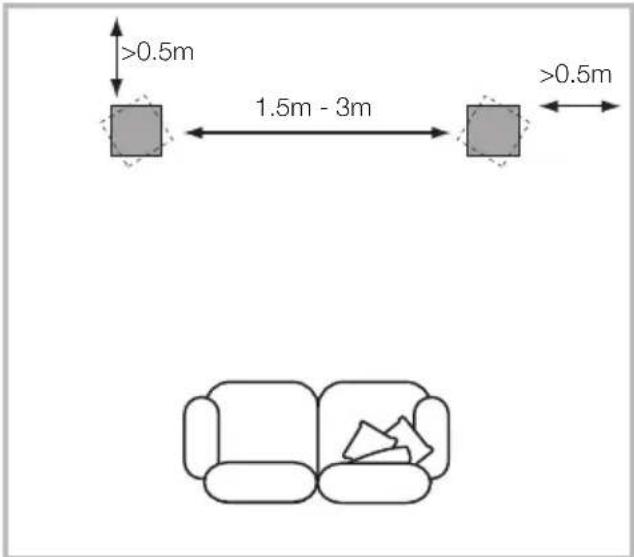
In either stereo or home theatre installations, try to ensure that the immediate surroundings of each speaker are similar in acoustic character. For example, if one speaker is adjacent to bare walls while the other is adjacent to soft furnishings and curtains, both the overall sound quality and the stereo image are likely to be compromised.
Conventional Stereo Systems
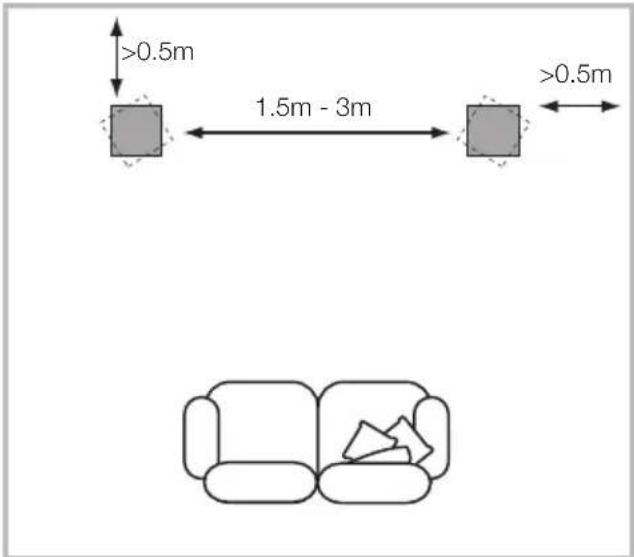
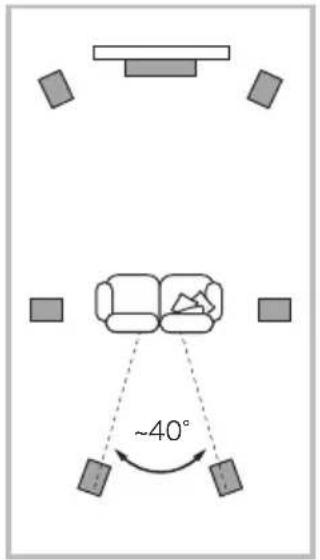
To begin with, the speakers should be positioned between 1.5m and 3m apart at two corners of an equilateral triangle completed by the listening area at the third corner. The speakers should be placed at least 0.5m away from the back and any side walls (as per the illustration above).
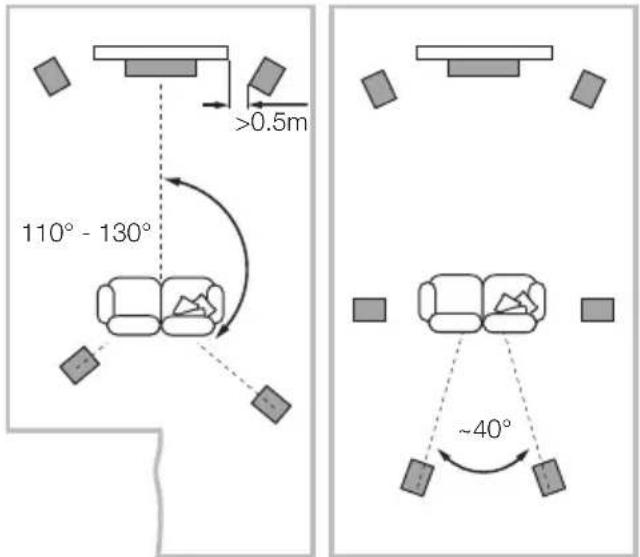
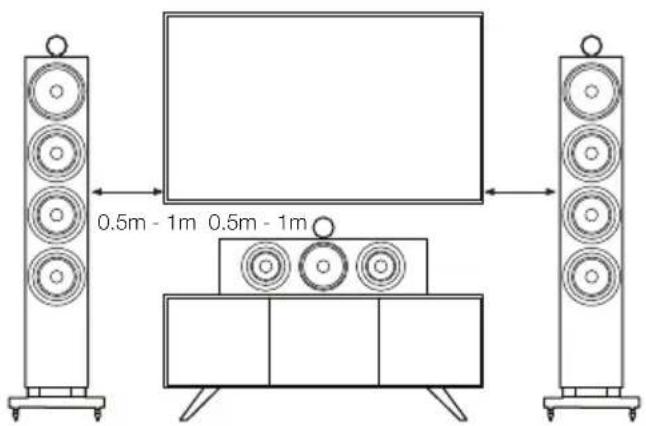
5 Channels 7 Channels
Home Theatre Systems
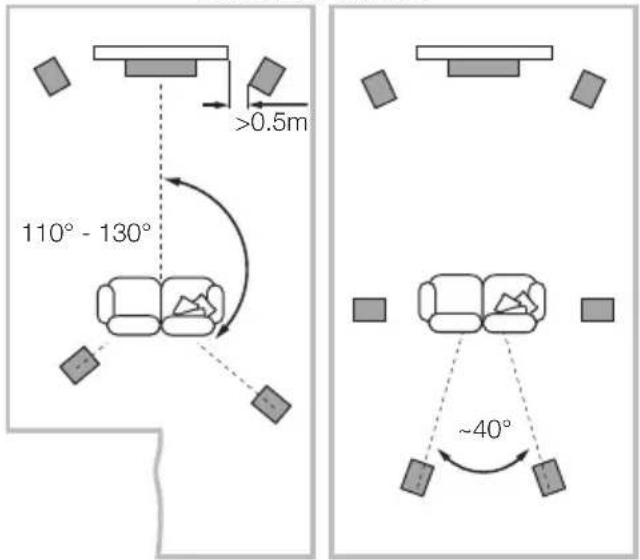
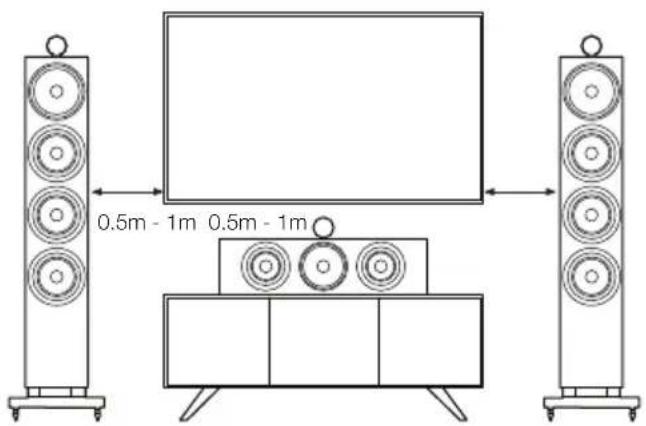
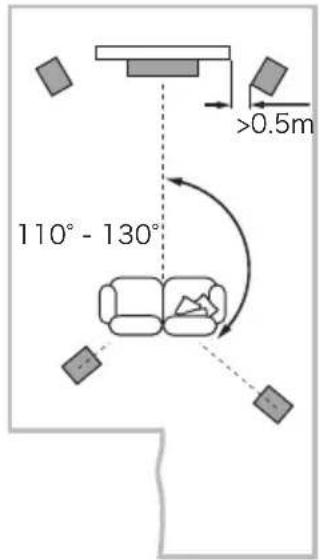
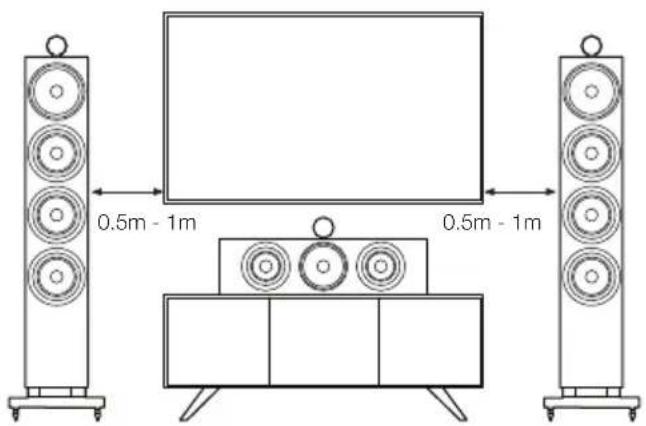
If the speakers are to be used for the front channels in a home theatre system, they should be placed closer together than for 2-channel audio, because the surround channels tend to widen the image. Positioning the speakers within approximately 0.5m of the sides of the screen will also help keep the sound image in scale with the visual image. As with conventional stereo positioning, the speakers should ideally be at least 0.5m away from any side walls.
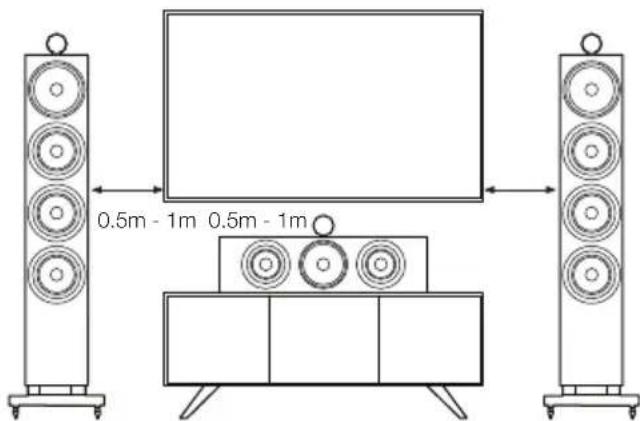
Stray Magnetic Fields
The speaker drive units create stray magnetic fields that extend beyond the boundaries of the cabinet. We recommend you keep magnetically sensitive articles (CRT television and computer screens, computer discs, audio and video tapes, swipe cards and the like) at least 0.5m from the speaker. LCD, OLED and plasma screens are not affected by magnetic fields.
3. Connections
Conventional Connection Bi-Wired Connection

Important Safety Notice
All connections should be made with the audio equipment switched off. When using audio equipment in normal operation, touching uninsulated speaker
terminals or wiring may result in an unpleasant sensation. The 700 S3 speaker terminals accept a variety of cable terminations: 4mm banana plugs, 6mm and 8mm (1/4 in and 5/16 in) spades, or bare wires up to 4mm (5/32 in) diameter.

Important Safety Notice
In certain countries, notably those in Europe, the use of 4mm banana plugs is considered a potential safety hazard, because they may be inserted into the holes
of unshuttered mains supply sockets. In order to comply with European CENELEC safety regulations, the 4mm holes in the ends of the terminals are blocked by plastic pins. If you are using the products in any country where these conditions apply, you should ensure that any banana plugs cannot be used in an unsafe manner by children or other uninformed persons. The plastic pins can be removed if you wish to use banana plugs.
Ask your dealer for advice when selecting speaker cable. Keep its total impedance below the maximum recommended in the speaker specification and use a low inductance cable to avoid attenuation of high frequencies.
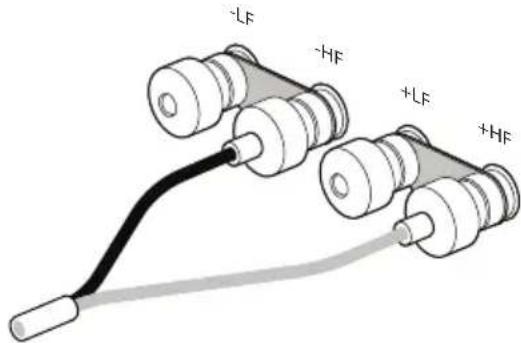
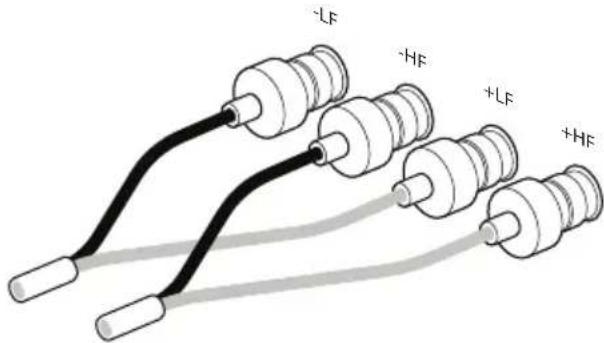
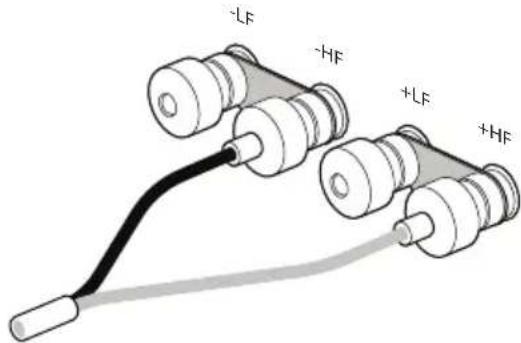
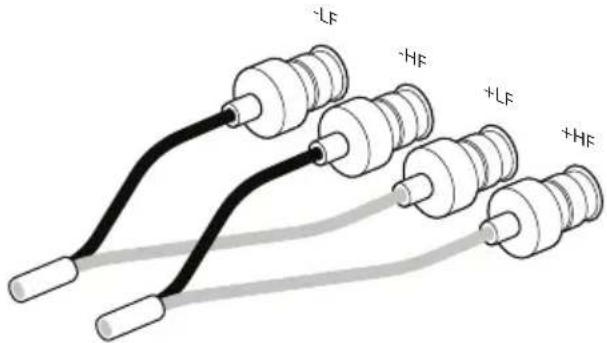
There are two linked pairs of terminals on the back of the speaker. For conventional connection (above left), the terminal links should remain in place (as delivered) and just one pair of terminals connected to the amplifier. For bi-wire connections or bi-amplification (above right), the terminal links should be removed and each pair of terminals connected to the amplifier or amplifiers independently. Bi-wiring can improve the resolution of low-level detail.
Ensure that the positive terminals on the speaker (with red ring) are connected to the positive output terminal on the amplifier and the negative terminals on the speaker (with black ring) are always connected to the negative output terminal on the amplifier. Incorrect connection will not result in damage but will cause poor stereo imaging and loss of bass. Always screw the terminal caps down fully to prevent rattles.
4. Fine-Tuning
Before fine-tuning, make sure that all the connections in the installation are correct and secure.
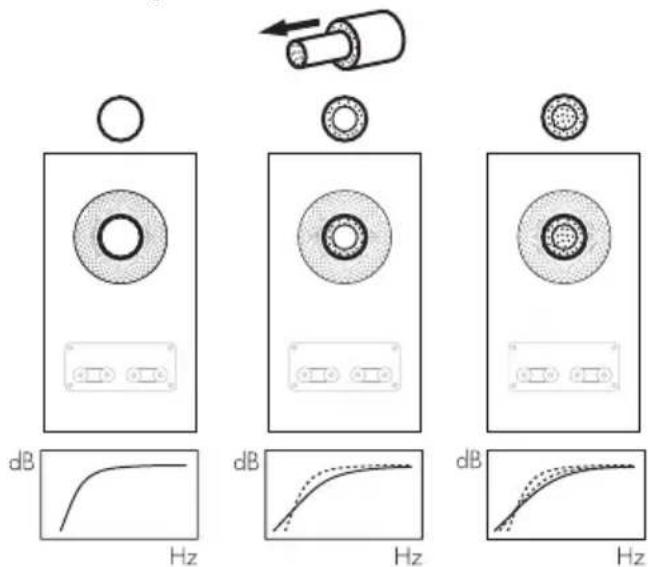
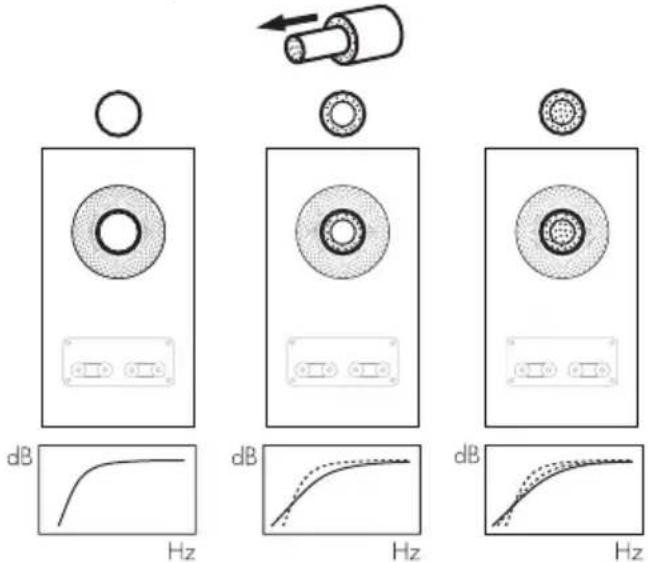
Moving the speakers further from the walls will generally reduce the volume of bass. Space behind the speakers will also help to create an aural impression of depth. Conversely, moving the speakers closer to the walls will increase the volume of bass. If you want to reduce the volume of bass without moving the speakers further from the wall, fit the foam plugs or, for less severe bass reduction, the foam rings in the port tubes (above).
If the bass seems uneven with frequency this will most probably be due to resonance modes in the listening room. Even small changes in the position of the speakers or the listening position can have a profound effect on how these resonances affect the sound. Try moving the listening position or locating the speakers along a different wall. The presence and position of large pieces of furniture can also influence resonance modes.
If no alternatives exist, you can adjust your loudspeakers' low-frequency performance using the supplied foam plugs. The plugs are a two-piece part, allowing for a degree of fine-tuning using either the outer, larger-diameter piece in isolation or the two parts together. Using solely the outer, larger-diameter foam piece will deliver less bass attenuation than the complete plug assembly.
If the central image lacks focus, try moving the speakers closer together or angle them inward so that they point at a location just in front of the listening position. If the sound is too bright, increasing the amount of soft furnishing in the room (heavier curtains for example) may help balance the sound. Conversely, reducing the amount of soft furnishing may help brighten a dull sound.
For the most discerning listening, remove the grilles by gripping around their edges and gently pulling them away from the cabinet.
- Running In 6. Aftercare
The performance of the speaker will change subtly during the initial listening period. If the speaker has been stored in a cold environment, the damping compounds and suspension materials of the drive units will take some time to recover their correct mechanical properties. The drive unit suspensions will also loosen up during the first hours of use. The time taken for the speaker to achieve its intended performance will vary depending on previous storage conditions and how it is used. As a guide, allow up to a week for the temperature effects to stabilise and 15 hours of average use for the mechanical parts to attain their intended design characteristics.
The cabinet surfaces will usually only require dusting. We recommend you use a soft microfibre cloth. If you wish to use an aerosol or other cleaner, apply the cleaner onto the cloth, not directly onto the product, and test a small area first, as some cleaning products may damage some of the surfaces. Avoid products that are abrasive, or contain acid, alkali or anti-bacterial agents. Do not use cleaning agents on the drive units. Avoid touching the drive units as damage may result.
Whenever Bowers & Wilkins speakers are finished in real wood, the finest veneers are selected and treated with an ultra-violet resistant lacquer to minimise changes in colour over time. Nevertheless, like all natural materials, the veneer will respond to its environment and a degree of colour change is to be expected. Colour differences may be rectified by exposing all the veneer surfaces equally and evenly to sunlight until the colour is uniform. This process can take several days or even weeks, but may be accelerated by careful use of an ultra-violet lamp. Wood veneered surfaces should also be kept away from direct sources of heat such as radiators and warm air vents in order to minimise the possibility of the wood veneer cracking.
The tweeteter housing has a textured finish that may collect superficial marks when handled. It can be cleaned by wiping a soft microfibre cloth around the housing, in line with the surface texture.
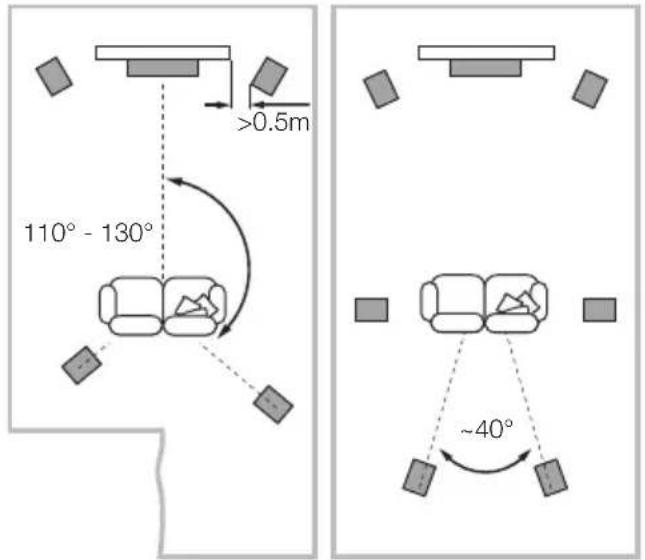
5 Channels 7 Channels
5 Channels 7 Channels
5 Channels 7 Channels
Sistemi Home Theatre
Auto to npoiov nnpoi tic diethetaic oynie, otic onoe ouykataaoyovtai, xwpi nepiopouoc, oE:
i. n obnyia Restriction of Hazardous Substances (RoHS - Nepioooc on xnoe tivuvwovoiy) yia nAektpko kalnAektpovkoEoTluo,
ii. n odnyia Registration, Evaluation, Authorisation and restriction of CHemicals (REACH-Kataxwpi, aioynoa, adoosn kai npiooiow npoiovv),
iii. n odnyia oxetka me tvn anoppwni Waste Electrical and Electronic Equipment (WEEE-AntoBnTa nAektpko'kai nAektovikou Eonlaumou).
Uouaeite nTv tonk apxdiaceang aonbntwv yia odnyie oxetika me touc tpouoc owatnc avakukawone n anoppnc tou poiovtoc autou.
2. ToroTeTm
702S3703S3/704S3
Eykataoan nxeiou
702 S3/703 S3/704 S3
Ta 702 S3, 703 S3 and 704 S3 npoopicovtai movy ia tonotheom oTo daneo. Ta owatn otaepoTnta, naVva ykaotate Tnv npexoxevn bao n kai, otu vexia, va diaofoalcTe ot ta nxie aonpivovtai otaepa oTo daneo xpoiouwvtac Ta npexoxeva nodia-akides noidia antkoutouk.
Mtopeite va npooaptnoe T baon kata n diapkeia tnc aannouokveaiaac, akolouwvtac tsikovec naparavw n ta biaypauata oTo enawu TEPUIO tou Koutiou nca uokveaiaac.
Ppoetodoroio
Hbaon npentv xaonpoonoeitai NANTA, ta nobia antkaoutouk n ta nobia-akides totoetmeva eaa otn baon. MHN tootheite ta nobia ano kaoutouk n ta nobia-akides ateuthetaiae mea oto nepiBna
Octpbie KOHyChbIe ONOpbl, pyKaMn He TporaTb.
LHnIpaaccntahbHaTo,TO6bI npOTKHyTB KOEB n ONpTaBcH a HOBepxHOCTb NOA.ChaaJaHabeBHNE KOHTPraaKn Ha WnIb TaK, TTO6bOCTANC HeBOJbIO 3a03Op HAD KOBpOM pN IINXAP, PPOHO CToAUX HA NIOy.3aTeM 3aBEPHNTe WnIb DO yNopa B OTBepCTnC Pe8bOBo H OOPHO NITNE. Ecln Kopync WataTcH a NOny, OTBEPHNTe H3aDnbl, KOTObIE He KacaOTcNl, TO6bOH pNOHO BCTaN H Bce ONOpbl. BoJeYdObHO OTPERynpoBaT b BICOTU WnIOB NOCE TORO, Ka Bb BiBepete OTIMMaIBHO MeCtO DIA KONHOHK. HakoHeu, 3aФNKcpye TReaKN HAI NITe OCHOBAHN C NOMOJIbO pINNArEMO raeHORO KIOVA, OCTpOxHO 3ATRINBAI RAky N ODNOBpeMeHNO MIOJIb3y CTEpXeHb, TTO6bU dyepKaT bINOT BPASeHn. BoJeYdOho OTERynpoBaT bICOTU WnIOB NOCe TORO, Ka Bb BiBepete OTIMMaIBHO MeCtO DIA KONHOK.
ECINyBACHTKOBpa,N BYXOTNEM36bexaTbLapannHHaNOLY,
NCN0NL3yIe 3aunTHIe MTeAUNHECKNe DnCKn (HAnPmep,MOHeTbl),
BCTABINREMExMyuINAMN INIOOM,INJe yctAHOBITEpe3INHOBIE
HOKNNKOMNIKETA.PINBHTNTpe3HNHOBIEOONpNBbIPoBHnTE
KOPnycTOHO TAK Xe,KAK N Bcnyae CwnnAM.
705 S3/706 S3/707 S3
705 S3, 706 S3 n 707 S3 npeHa3nHeBb, npeJe BcEro, nIy yCTaHOKn H a CneuAaBbHbIe NoCTaBKn (FS-700 S3), HO no XeNaHIO INX MOxHO yCTaHaBbATb H a NOnK, OJnako Heo6xOJIMo OTMeTINb, YTO TAKoe pa3MeUeHne OCTaBnEe MHeBbIe BO3MOXHOCTe IINr ONTMM3aUMN 3ByAHnK KOHOK. EClJe HEo6xOJIMo VcNOJIb3OBaBt pa3MeUeHne HA NOKax, MBI peKoMeHdyem BCTaBnB, NOPoNoHOBJBe 3aNPyWK (IpNJIaEaMble B KOMTIKeTe) DIA ONTMM3aUMn PA60Tb IPOPTOB fa3OHHeptopa (CM. Pa3Den 4: TohKaHaCTpoKa).
PnO60uX BapnaHTax yCTaHOBKn TBNTepbKOJHOK DOJIKHb 6bTb np6bn3nteHbHO Ha ypoBHe ywe CnywateNe B O6bHOM MecTe InpocnyuBaHn.
PnmeaHHe: Ecn BBi NCIOB3yTe NOKy, y6eNTecb, yTO OHa DOCTaTOHO IpOuHAR, YTObI BbIDepkATb BEC KOHOK, N HAKNeTte YeTbpe CAMOKNEUINCePe3NHOBbIE ONOpbl HA HNX HXXHOYACTb.
HTM71 S3 / HTM72 S3
IpiuNCIOJIb3OBAHnnpoEeTopaCakCTUeCKnPi03paHbIM 3KpaHOM, pa3MeCTe KOnOHky 3a CEHTPOM 3kPaHa.B OCTaIbHbIX CnyHax yctAHaJIbAaBe ee Bblwe IIN HNKe 3kPaHa, INIOJb3yra NODCTABKy, Me6eBnII NaHcTeHNyHO NOKy, Bblupar BbcOTy cTaHOBKn Ka MOKHO 6bnXe KypOBHko Uyei CnyWateJe. EcnI ayCtUeCKa CnCTema DOJXHa 6bITyCTAHOBHeHa NONKe IIN Ha NOCTABKe BmCTe C DpyrVM AV O6OpYIOBaHnEM, HAKJIeTe YcTBpe CamOKJIeOUIneCe pezHOBbie ONOpBaHa ee OCHOBHe. OHn ObecNeat HeKOToPyu BNbPon3OJIaIIO.
Bb6op MeCTa JnKoHOHOK
B CNTeMAX DOMAUHRE ToTaPa NIN CTepeOcnCTeMax CTapaTecb cDetaTb TaK, Tc0bbl 6nJxHHe OkyxHHe Kaxdo n3 KOHOK 6blno IOXoXM IIO AkyCTnckm CBOICTBaM. HanpImep, eCIN OHa AC PnIMMaK T KOrbIM CTeHaM, aDpyra - K MKAKOJI MBeENI UToPAM, TO 10 MoKET OTPiUaTeIbHo NOBIMrTa Hb 38yauHHe.
06bHbIcTepeocnTeMbI
Iyra hana paccnooxnte AC hpa pacctoHHn ot 1,5do3 m npyr ot npya Bdyx yrrax paHOBTOPOHrero TpeYrOblHa, TpEYrOblHa, TpEYrOblHa, TpEYrOblHa, TpEYrOblHa, TpEYrOblHa, TpEYrOblHa, TpEYrOblHa, TpEYrOblHa, TpEYrOblHa, TpEYrOblHa, TpEYrOblHa, TpEYYrOblHa, TpEYYrOblHa, TpEYYrOblHa, TpEYYrOblHa, TpEYYrOblHa, TpEYYrOblHa, TpEYYrOblHa, TpEYYrOblHa, TpEYYrOblHa, TpEYYrOblHa, TpEYYrOblHa, TpEYYRbHbPocNcUuBAHNa. KOHKn cneNyET paMeauTa hpa paccToHHn He MeHee 0,5 M OT cTeH Czadn bC60ky (CM.pncyHK BbWe).
5 kaHaIob 7 kaHaIob
CnCTembldomaawheroTeaTpa
ECNN AC nCnOJb3yOTcKa KpOHaTJIbHbIe KaHaJIb B DOMaUHem TEaTe, OHN DoJXHb CTOrTaB 6nJxke Dpyr KdpYy, cEM B2-KaHaJIbHOM BapMaHTE, T.K. TblOBBe KaHaJIb paacuHnOt Obpa3. PaMeueHeNE AC Ha paccTOAHn PnpSn3ntEhBO No 0.5 M OT cToPOH 3KpaHa TaXKe NOMaER COnlACOBaTB MacuTAb 3ByKOBo r 3PnTeJIbHO O6pa3a. Ka N B CUYae oBbHORo CTpeCo, AC DoJnxHb B INeJePa cponaRaTcBa H paacCTOAHn He MeHee 0.5 M OT 3aDHeN b60KBbIX CTHe.
PaccceHHoe MarHmTHOH noJe
HAMKNOLOHOOKO3aOTMaHHTHOE NOE, BbXOJAAEE 3a IN npenBb. Mbl peKOMeHyem DEpXaTB MaHHTOuyBCTBNbHe npedMeTb (KNHECKONHbCRTeBn3OpbI, DCNJIEN, NICKETb, MaHHTHbYE ayIOu BO BnDEoKacTeB, KAPTOKN T.N.) Ha pacCToAHm MNHMMy0.5 OT KO10HOK.LCD, OLED nIIa3MeHHbI NaHEn He NODBepKeHbJeCTBnIO MaHHTHBIX none.
3.Полсоевненя
ObivHoe coeunHeHne CoeunHeHne 6n-BAepnHrom

BaxHoe yBeDomMHeHne no texHnke 6e3onacHOCTN
Bce NOKIOUHNE BbIIOHIOHTOPI BbIKIOUHHO ayINOCNTMe. PpN UcPONb3OBAHn ayINOCNTMebl BCTaHApTHom pexmme KacHne HEn30JIMPOBaHbIX
BbBOOBKOLOHNINPBOOKNMOXETBb3BaTbHnPNRAHTbIe OuyueHH. KEMMb700S3 npHnMaKOT WnPOKoe pa3HOOBpaseKaBeJIbHbXpa3EBMOB:4-MM pa3BEmbl《bHaHb》,nonATKNuPinHO 6MMn8MM(1/4in n5/16in)nnJx3aunHHe KOHcJI KaBene JnAmETPOMdo4MM(5/32in).

Baxkhoe 3ameyHne no 6e0nacHOCTN
B HeKOTopbIX CTPaHax, B YAcTHOCTn B Ebpone, IICNOJb30BaHHe 4-MM pa3bEmOB 6aHaHOB CHNTaeTcN TNEHuaNbHO OAnChbIM, T.K. IN NO OUni6Ke MOxHO
BCTABNTB B 3JNEKTPnueckyPO3eTky.ДIaCOrIacOBaHIN C eBpOeNCKMM HOpMaMn Be30NaChOCTn (Eurpean CENELEC),4-MM OTBepCTHa KOnCuX KJIEMM 3a6IOKIpOBAHbI NlAactMACCOBBIM npo6kAMn.EcNN bIcNoB3ye TnpOyKT B cTpaHc, Tge 3TN HopMbI DeNCTByOT,BblDIOJxHBb6bITbYbePeHb,HTo pa3BeMbI《BaHaHbI He CMORYb6bITb PnIMHeHbI DeTbMbI NIIH HeOCBEdOMnEHBMN IIOdBmN C OAnCHOTbIOI JIINI 3IDOPOBBJ.PIACTIKOBBLE WITnΦTb MOrYbTb ydaJIeHbI, ECNN Heo6xOdmoNcNoB3OBaTB pa3BeMbI TnIaBaHaH.
NonpocTeBaIeroIInepaNopeKomeHDoabTka6en.CTapaTecb, T0b6I EIO NIMIEAHC bHI HIXE MAcNMAIbHO DOnYCTMOrO B CNEUIMKAUAM, aHNDyKTNBHOCTbTOKe bIaN3KOJ, T0b6I He OCLBAHTB BIICOKNE ACTOTbI.
Ha 3aHneI nAHeII KIOHOK NIMEOTcB DBe NapbI COeINHEHHbIX KOIOHOCHbIX KJIEMM. PnO obHOM COeINHEHHN (KaK BBepx CNEBA), COeINHITbHLBIE IaCTINbI DOJXHa OCTaBaTbC H Ma MecTe (KaK B MOMENT NOCTABIK AC) IN TOLKo Ody Napy KJIEMM Heo6xoJIMO NOcEOEHNITb K YcINITeI. IINI NOKIOHEN KIOHOK Bu-BaepHROM IINI Bn-AmHNrOM (Kk BBepx Cnpaba), CoeINHITbHLBie IaCTINbI CNeDyET YdaIINbI, IN KaXyIO Napy KJIEMME NOcEOEHNITb K YcINITeI0 (INlYcYNITeJIAM) He3ABNCmIO, IIOKNIOHEne 6n-BaepHrOM MoXET yUyIWITb pa3peSeHHe NeTaeI ManOr YoPBOH.
IopcoeHNHTe pIOOCOBy pa3bem KOHOKN (C KpachBIM 6oDOKOM)
K PIIIOBOOMBy bIXOxy yCNNTEn, a MHHCOBY (C YepHbIM 6oDOKOM)
-K MHHOCOBMy Ha cYNNTEn. HeBepeNoiKnIOUeHne npBvEdet
K NCKaKeHNI 3ByKOBOrO 6bPa3aNytpe HcBos O6hataTeNbHO 3aBNHTe
KpbIky pa3bema do ynpa anpeD, TTObl npOHO 3akpenNTb Ka6enb.
4. Tohka NaCTpoiKa
IpeoOKOHateBHOHToCHHOH HAcTPOJOH y6eNTecb, YTO BCE IOKIOUcEHO IpaBmBHO HAdExHO.
OTOBINAR KOIOHNOTCTEH, Bbl, KaK IpaBnIO, yMeHbwaete ypoBeHB
bacOB. OocTaOCHOE paccToHHe N03aDN KonoHOK No3BOJARET TAKXe
co3dab OuyueHne TlbNBI. COoTBETCTBEHHO, PnDyBNYB KOIOHNK
CTeHAM, Bbl yBENuHTe NOIIO bacOB. Ecnbl Bbl XOTNE CHN3NTb ypoBeHB
bacOB, He OTOBINAR KOIOHNOT CTeh, BCTABTe NopOLOHOBYk 3aJIyUky
B nOPT faoOHBePTOpA, INJxKe -JnHE TaKORO pe3KOrO ChHXeHnA - IopoONHOBOE KOJIbCu (CM.PNC.BblSe).
Ecn HHTEHCBHOCTb CACOB CINbHO 3aBNCNT OACTOTb, 3TO MOKET
6bTB Bb3BaHO akyCTNueCKMN CBOCTBaMn BAeTo NOMEeHnI InpocnyuBAHnA. DaKe He6oBnUme N3MeHeHnB PaacNOJoxeHN
KONOHO NN CYuATaeNe MOrTy CUYeCTBeHNo NOBIMrHa KaYeCTBO
3ByAHnA,OC6eHHO HA Hn3KnX YACTOTax. NonpoByTe CmEHnTb
MeTO IpocyUWBnAHn IN PA3MeUeHne BAuxN KOLOHOK, HApPIMep,
ycTHAOBtNx BdoDpyroTcBHeI, cCNI 3TO BO3MOxHO.HaHnHne
INN OTCYCTBNE KpyTHOra6apuTHo MEeN TaKke MOKET NOBIMrBa H
BO3HNKHOBEHnpe3OHaHCOB B KOMHaTe.
Ecnn BbOpa Het, MoKHO HAcTPOuTH XapAKTeP 3ByaHnBaUHX
aKyCTNueCKNX CNTcEM Ha HN3KNX cactOTax C NOMOULIO PpINaIaeMbIX
npoONHOBbX 3arNyUeK.3aRyUeK COCToR n3 DByX cacteY,TO
06ecneuBAeT ONpeDeneHHyC TcTeNeHb TOHKOI HAcTPOKn C
NCNoJIb3OBAHNem NIO O hORo KOnBuJa 6bnJbEero DNAmETpa, NIOo
Dbx YacteB Bmecte, NcNOJIb3OBAHme TOnBo HApXHO R KOJIbua N3
NEHONPiACTa 6bnJbEero DNAmETpa ObecneuBAeT MehJbIee OocNa6IeHHe
HN3KNX cactOT, Yem NIOHAR 3aFlyUka IopTa.
Ecnn 3BkyobO B opa3 B ueHtpc cna6oBAt, nonpo6yTe ndoDBHyTb KOHOK 6nIeXe Dpy K dpyr nnx Je Hapabnt B TOUky nepeD cnWATEmM. E3Bk 3Bky NKwOM pe3kn, doBaBte MArKO MeBenn B KOMHATE (HaPIMep, NOBecbTe TAnKeNle bIToTpbl), NN HAo6OpOT - y6epnte nx, ecnn 3Bky rnyxoi Nbe3xu3HeHhbl.
Hn60eBbckatehBxCnywateenCHMNTe3uHTHepeWETKNC6aCOB0NcpeHNeHAcTOTHOceKm,B3HBnx3aKpaNocTopoXHONotyHBKc6e.
5 Channels
7 Channels
木一山沙夕一斯
i. 直接且直接者,如能以应大而以应大。RoHS(Restriction of Hazardous Substances (异态)
ii. REACH(Registration, Evaluation, Authorisation and restriction of CH), 1998
iii. WEEE(disposal of Waste Electrical and Electronic Equipment 1
iJ 1
2.
702 S3 703 S3 / 704 S3
△卡贝
702 S3/703 S3/704 S3
書:S1EETI.05m05m05m05m05m05m05m05m05m05m05m05m05m05m05m05m05m05m05m05m05m05m05m05m05m05m05m05m05m05m05m05m05m05m
豆用
SππKπEπEπEπEπEπEπEπEπEπEπEπEπEπEπEπEπEπEπEπEπEπEπEπEπEπEπEπEπEπEπEπEπEπEπEπEπEπEπEπEπEπEπEπEπEπEπEπEπEπEπ E
日,
默默默默默默默默默默默默默默默默默默默默默默默默默默默默默默默默默默默默默默默默默默默默默默默默默默默默默默默默默默默默默默默默默默默默默默默默默默默默默默默默默默默默默默默默默默默默默默默默默默默默
Worthing West Sussex
BN11 2BH England
EU Importer:
Bowers & Wilkins
Beemistraat 11
5653 MA Eindhoven
The Netherlands
Copyright © B&W Group Ltd. E&OE


- Environmental Information
- Speaker Installation
- S3/703 S3/704 S3
- Warning
- Important Safety Notice
- S3/706 S3/707 S3
- HTM71 S3 / HTM72 S3
- Speaker Positioning
- Conventional Stereo Systems
- Home Theatre Systems
- Stray Magnetic Fields
- Connections
- Conventional Connection Bi-Wired Connection
- Fine-Tuning
- Sistemi Home Theatre
- Eykataoan nxeiou
- Ppoetodoroio
- Bb6op MeCTa JnKoHOHOK
- 06bHbIcTepeocnTeMbI
- CnCTembldomaawheroTeaTpa
- PaccceHHoe MarHmTHOH noJe
- 3.Полсоевненя
- ObivHoe coeunHeHne CoeunHeHne 6n-BAepnHrom
- BaxHoe yBeDomMHeHne no texHnke 6e3onacHOCTN
- Baxkhoe 3ameyHne no 6e0nacHOCTN
- Tohka NaCTpoiKa
- 木一山沙夕一斯
- △卡贝
- 豆用
Brand : BOWERS & WILKINS
Model : 704 S3
Category : Speaker