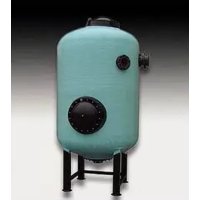
Ampuria - Water filter ASTRALPOOL - Free user manual and instructions
Find the device manual for free Ampuria ASTRALPOOL in PDF.



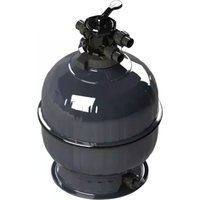
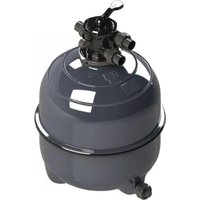
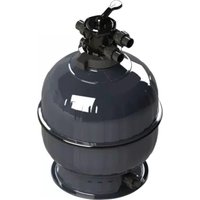
| Product type | Sand filter for swimming pool |
| Brand | AstralPool |
| Model | Ampuria |
| Body material | Fiberglass reinforced polyester |
| Internal material | Unalterable PVC and PP |
| Corrosion resistance | Yes, totally anticorrosive |
| Maximum water temperature | 50 °C |
| Maximum working pressure | Indicated on the filter nameplate |
| Filter media type | Sand |
| Collection system | Collector arms or strainer plates |
| Air purge | Manual, on the top |
| Water purge | Manual, on the bottom |
| Main functions | Filtration, wash, rinse, drain, close |
| Recommended filtration speed | Do not exceed 40 m³/h/m² |
| Filter maintenance | Periodic water or air+water wash, sand replacement if necessary |
| Exterior cleaning | With pressurized water, no solvents |
| Safety precautions | Stop the pump before any valve operation |
| Spare parts | Lid gasket, pressure gauges, collector arms, strainers, diffusers |
| Repairability | Access via top lid and sand drain port |
| Recommended installation | Below water level, near pool, on horizontal ground |
Frequently Asked Questions - Ampuria ASTRALPOOL
User questions about Ampuria ASTRALPOOL
0 question about this device. Answer the ones you know or ask your own.
Ask a new question about this device
Download the instructions for your Water filter in PDF format for free! Find your manual Ampuria - ASTRALPOOL and take your electronic device back in hand. On this page are published all the documents necessary for the use of your device. Ampuria by ASTRALPOOL.
USER MANUAL Ampuria ASTRALPOOL
BOBBIN FILTERS FILTRES BOBINÉS FILTROS BOBINADOS FILTRI BOBINATI FILTROS BOBINADOS FILTRY ZWOJONE

natural_image
Exterior view of a cylindrical industrial pressure vessel with two flanged chambers and a central top (no text or symbols visible)INSTRUCTIONS AND OPERATION MANUAL MANUEL D'INSTRUCTIONS ET DE FONCTIONNEMEN MANUAL DE INSTRUCCIONES Y FUNCIONAMIENTO MANUALE DI ISTRUZIONI E FUNZIONAMENTO MANUAL DE INSTRUÇÕES E FUNCIONAMENTO INSTRUKCJA OBS UGI I DZIA ANIA
ASTRALPOOL

IMPORTANT: The instruction manual that you have in your hands contains fundamental information on the necessary security measures which need to be adhered to when installing and commissioning the filter. It is therefore essential that both the installation engineer and the end user read these instructions before proceeding any further.
"In order to archive optimum performance from your filter, please see the following instructions".
1. CHECK THE PACKAGING
Check that the filter and all its components are in good condition after transportation.
There is a box with the filter, which contains pressure gauges, along with other accessories. There will also be a guarantee and test certificate.
2. GENERAL SPECIFICATIONS
Filters are the most important part of a water filtration system, and their function is to remove suspended solids and clarify the water.
The effect of correct filtration will influence the results of disinfectant process.
The principle of filtration involves retaining the suspended particles that the water tries to carry with it through the filter sand bed.
The water treatment process involves a range of equipment besides filters, such as; pumps, chemical dosing, pool shell fittings, which ensure the correct suction and return of water, which with the rest of the equipment ensures the correct circulation and maintenance of the water quality.
Whilst standards are approaching homologation throughout Europe, each country normally has its own standards, regulations or recommendations governing private and public pools, and installers should adhere to these when designing and installing any system. All designs and all materials used must meet the relevant standards.
The filtration quality may depend on different factors: Design of the filter, type of collector used - collectors or nozzles, media bed depth, specifications and density of the filtering material etc. At the same time the filtration velocity is a determining factor when seeking good quality filtration and a velocity of no more than 40 m/h is recommended.
Bobbin filters are manufactured from polyester resin and glass fibre materials, which have excellent anticorrosive properties. The interior includes a collector and diffuser made from PVC and PP plastic. They are also resistant to salt water and can operate up to a maximum temperature of 50^ C.
The special layer of isophthalic resin on the interior of the filter gives it maximum durability against wear and tear and abrasion, also enabling it to be used with potable water. Filters may also be manufactured on request with a vinylester lining, which is resistant to most chemicals including ozone.
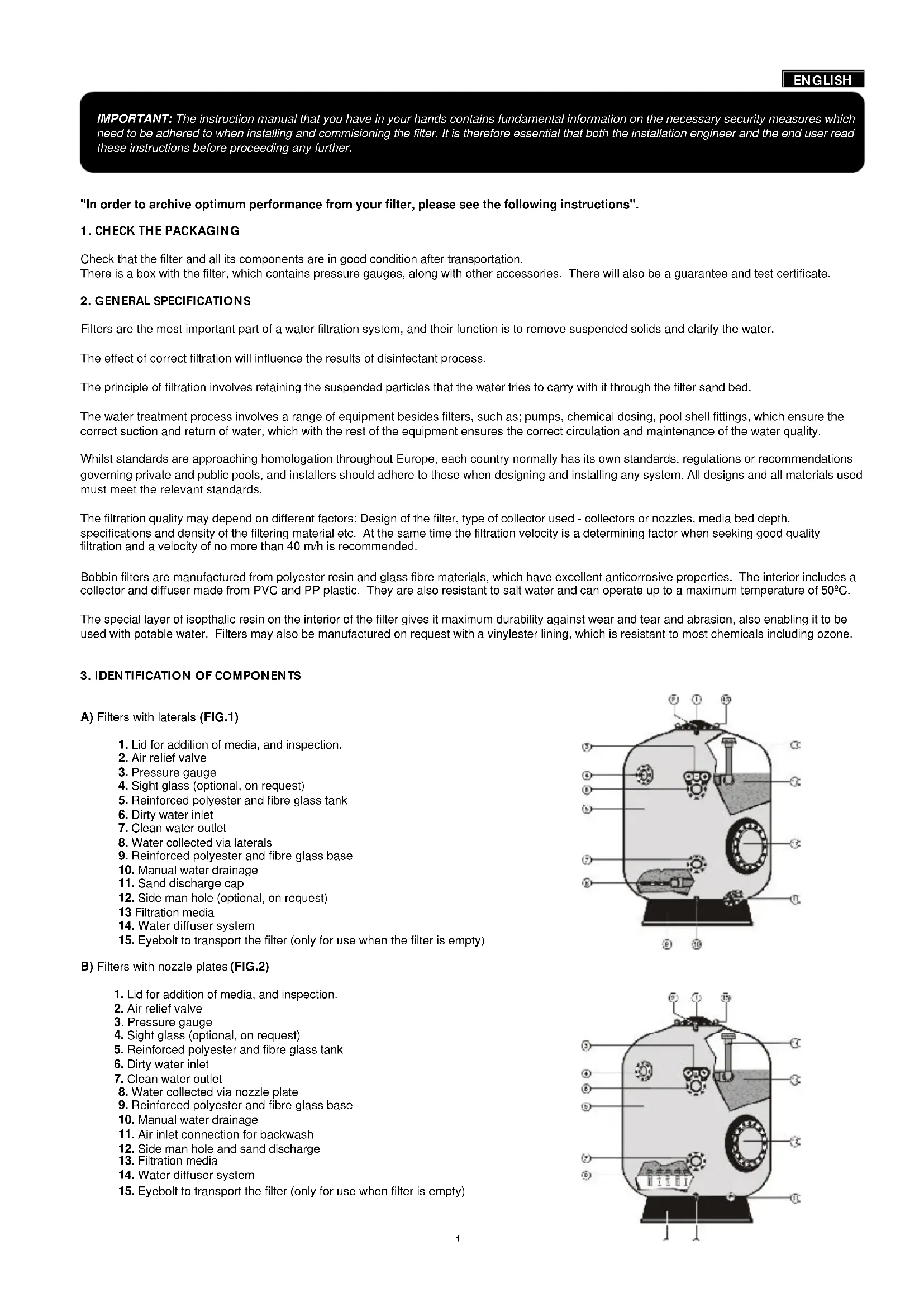
3. IDENTIFICATION OF COMPONENTS
A) Filters with laterals (FIG.1)
- Lid for addition of media, and inspection.
- Air relief valve
- Pressure gauge
- Sight glass (optional, on request)
- Reinforced polyester and fibre glass tank
- Dirty water inlet
- Clean water outlet
- Water collected via laterals
- Reinforced polyester and fibre glass base
- Manual water drainage
- Sand discharge cap
- Side man hole (optional, on request)
13 Filtration media - Water diffuser system
- Eyebolt to transport the filter (only for use when the filter is empty)
B) Filters with nozzle plates (FIG.2)
- Lid for addition of media, and inspection.
- Air relief valve
- Pressure gauge
- Sight glass (optional, on request)
- Reinforced polyester and fibre glass tank
- Dirty water inlet
- Clean water outlet
- Water collected via nozzle plate
- Reinforced polyester and fibre glass base
- Manual water drainage
- Air inlet connection for backwash
- Side man hole and sand discharge
- Filtration media
- Water diffuser system
- Eyebolt to transport the filter (only for use when filter is empty)


4. INSTALLATION SPECIFICATIONS
• In order to achieve successful installation it is important to consider the following points:
- Choose a pump suitable for the required flow at 10 m head (water).
- In order to backwash the filter, the system of pumps and filters must combine to obtain the necessary flow, which can be from 40 - 50m/h lateral models, and up to 60 m/h for nozzle plate models.
- To scour the filter with air (nozzle plate models or models with double laterals) it will use one or more air blower or capable of supplying air at a velocity of 60 m/h 300 mbar. Never use a compressor because damage could occur due to excessive pressure.
• It is advised to install the filters below the level of, and as close to the pool as possible.
- The plant room where the filters are installed should be well ventilated and have the necessary drainage channels available to allow escape of water, should a pipe, filter or pump leak in the case of an accident, preventing damage to any equipment. If it is not possible to install such drainage measures then an alternative automated system (e.g. submersible pumps) should be installed for water removal.
5. INSTALLATION
Filters are delivered packaged and palleted, due to their weight and volume. This can make them difficult to manoeuvre around the building site and install so it is recommended that they be transported by fork lift, crane etc.
Filters are made of plastic, and although they are designed to be resist to internal pressure, they can be susceptible to external damage. It is important to ensure that the filter does not receive any external knocks during installation or operation that could damage the base, the tank or any connections.
Always use suitable plastic connections and make ensure they are fitted with suitable supports and are not forced, or under stress.
The media must only be loaded once the filter is situated in its final position, following the instructions for "Commissioning".
Filters like other items of plant, will need regular checks, so it is essential to leave a suitable working clearance above and around the filter. (FIG. 3)
Correct installation of the filters:
- Place the filters in their designated position, and ensure that they are stable and the floor is perfectly flat. (FIG. 4)
- Assemble the batteries on the filters, ensuring they are not stressed. Remember that the water tightness of the unions is achieved with seals and gaskets, so do not over tighten the bolts. Do not use Teflon (PTFE) tape.
• Install adequate battery/pipe supports and adjust their height accordingly. - Plumb the batteries to the pump discharge pipes, the return pipes to the pool and to the waste drain.
5.1. INSTALLATION OF THE PRESSURE GAUGES
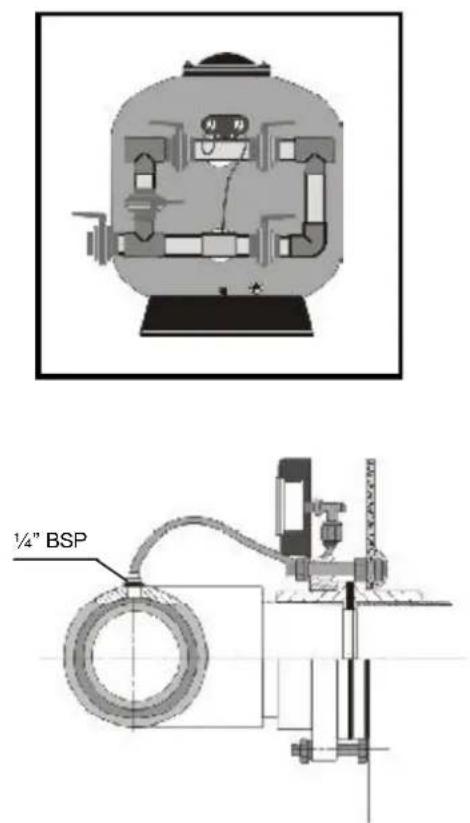
Once you have installed the pressure gauge panel on the flange of the filter connection, note the flexible plastic and transparent pipes that must be connected between the pressure gauges and the 14 " threaded holes in the battery tees, as the illustration shows (FIG 5).
The pressure gauge panel clearly identifies the pressure gauge that controls the inlet and outlet pressures. The pressure gauges indicate when backwash of the filter is necessary. For example, in a clean filter the entrance pressure should be between 0.8 and 1 kg/cm ^2 and the exit pressure should be between 0.4 and 0.6 kg/cm ^2 .
When the difference between the pressure in the inlet pressure gauge and that in the outlet pressure gauge is 1 kg/cm^2 or higher, then it is time to backwash the filter.
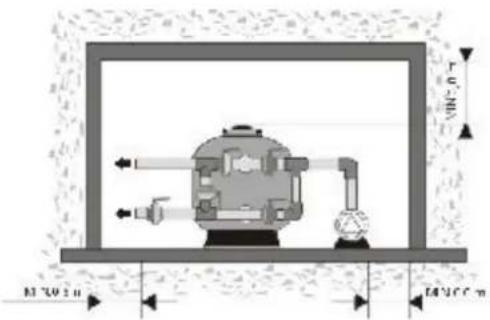
BATTERY ASSEMBLY:

FIG.3

natural_image
Two identical cylindrical objects with black cross marks on a horizontal surface, no text or symbols present.FIG.4


FIG.5
5.2. INSTALLATION OF THE BATTERY SUPPORT.
Once the battery has been installed it is recommended to set up special supports in order to hold the battery's weight as well as the weight of the water that flows through it.
It is recommended to install adjustable height supports:
To install them it is first necessary to adjust the height of the clamps according to the battery and then fix the support to the floor with the expanding bolt provided.
6. STARTING UP
- Remove the lid of the filter trying not to damage the joints or the surrounding area around the lid.
- Check that all the filter components are in good condition and ensure that the laterals or nozzle plate are secure, as they may have come loose or been damaged in transit.
- Fill the filter approximately half full of water.
- Introduce the sand, ensuring you first pour in a support layer, enough to cover the groove of the laterals or nozzle plate, covering them by approx. 10cm. This should be done very carefully so as not to damage any internal components. Whilst filling the filter with sand ensure that you distribute the sand evenly over the whole surface area.
- Introduce the desired sand size, up to the maximum filtration height limit.
- Carefully clean the filter neck, the seal and the lid before proceeding with the assembly. It is also advised to grease the screws before putting in the nuts, and once the lid assembly is complete, put the flanges (supplied with the filter) to the screws.
- Close the filter placing the seal in its correct position.
- Once the filter is full and properly closed, it is necessary to backwash the filter. To do this follow the instructions in the section labelled 'backwash'.
7. NORMAL WORKING CYCLE. (FIG.6)

FIG.6
7.1 FILTRATION (FIG.7)
With the pump stopped set the valves to the position labelled filtration.
During the filter's normal operation, it is recommended to periodically check the entrance and exit pressure gauges and carry out a backwash when the difference in pressure is equal to or more than 0.8-1 kg/cm ^2 .
In industrial applications the pressure difference should not exceed 0.6-0.8 kg/cm².
Normally when referring to filtration for pools the entrance pressure gauge shows a pressure of 0.8-1kg/cm² and the exit pressure gauge 0.4-0.6 kg/cm² (standard pressure when the filter is clean).
As the filter gets dirty during its use, the entrance pressure gauge experiences an increase in pressure at the same time as the exit pressure gauge shows a fall in working pressure.
EXAMPLE
Entrance pressure gauge 1.4 kg/cm ^2
Exit pressure gauge 0.3 kg/cm ^2
Pressure difference 1.1 kg/cm ^2
In this case it is necessary to backwash the filter.
7.2 BACKWASH (FIG.8)
The bed of sand inside the filter forms thousands of channels through which the water flows and logically they collect impurities and solid deposits that the water brings with it to the filter. In time these deposits block the channels and it is periodically necessary to clean the filter to leave it in optimum working condition and drain the dirt that had collected.
It is recommended to backwash with water for 7 minutes at a speed of 40-50 m³/h/m².
It is advised to place a sight glass in the drainage pipework so that during the backwash you can see the dirt leaving the filter and in this way determine the duration of the backwash needed.
We recommend that backwash does not exceed 50 m^3/h/m^2 to avoid any sand being expelled into the drainage system.
To carry out a backwash cycle, ALWAYS WITH THE PUMP SWITCHED OFF, set the valves to the backwash position indicated on the template.
7.2.1. BACKWASH WITH AIR AND WATER (ONLY FOR FILTERS WITH NOZZLE PLATES OR DOUBLE LATERALS)
Air is used to dislodge and agitate the sand bed. This makes the backwash process more efficient in less time and saves a substantial amount of water.
This process is carried out in three phases:
- Inject air at a speed of approx. 60 m/h
- Inject water at a speed of approx. 50 m/h
- Inject water and air at a speed of no more than approx. 50 m/h
7.3 RINSING (FIG.9)
This operation is recommended straight after the backwash, in order to expel any remaining deposits that had penetrated the collectors during the backwash cycle.
This operation should last approx. 3 minutes and prevents cloudy water returning to the pool.
To carry out this operation set the valves to the rinse position (ALWAYS WITH THE PUMP SWITCHED OFF) and immediately afterwards reset the valves to the filter setting.
The rinse position can only be applied if the battery has 5 valves.
7.4 DRAIN (FIG.10)
When it is necessary to empty the pool and in the case of not having the drainage connected directly to the mains sewer system, you can empty it using the filter pump by positioning the valves to the 'drain' section on the template.
To do this and before commencing, the skimmer, overflow channel and pool cleaner valves must be closed.

FIG.7

FIG.8
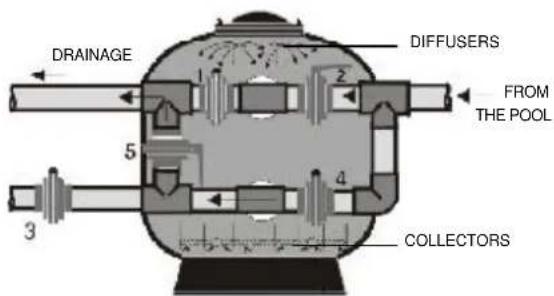
FIG.9

FIG.10
7.5. CLOSED (FIG.11)
As the name indicates all the battery valves are closed.
This operation is used when cleaning or maintenance work is carried out on the filter or pre-filter, etc.
8. VALVE BATTERIES. POSITION OF THEM IN EACH OPERATION
8.1. BATTERIES WITH 4 VALVES (FIG.12)
Template of operations for batteries with 4 valves:
| POSITION | 1 | 2 | 3 | 4 |
| FILTRATION Closed Opened Opened Closed | ||||
| BACKWASH Opened Closed Closed Opened | ||||
| DRAIN Opened Opened Closed Closed | ||||
| CLOSED | Closed Closed Closed Closed | |||
8.2. BATTERIES WITH 5 VALVES (FIG.13)
Template of operations for batteries with 4 valves:
| POSITION 1 | 2 | 3 | 4 | 5 | |
| FILTRATION | Closed | Opened | Opened | Closed | Closed |
| BACKWASH | Opened | Closed | Closed | Opened | Closed |
| RINSING | Closed | Opened | Closed | Closed | Opened |
| DRAIN | Opened | Opened | Closed | Closed | Closed |
| CLOSED | Closed | Closed | Closed | Closed | Closed |

FIG.11

FIG.12
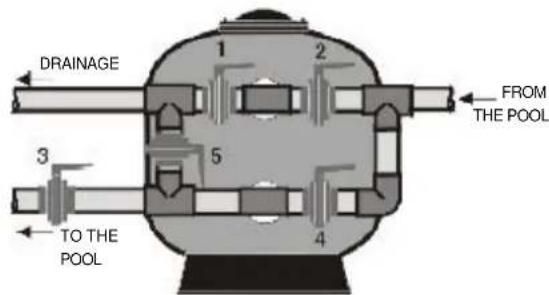
FIG.13
NOTE: To carry out any operation indicated on the template, the pump must be OFF.
9. DRAINING THE SAND FROM THE FILTER
When you need to drain the sand, due to an accident or because you want to change the sand due to wear and tear, follow the following steps:
- Drain the water from the filter
- Remove the sand purge lid
- While the sand is draining, remove it from around the purge lid to stop it blocking
• One person needs to get inside the filter to aid the sand towards the purge opening - To fill the filter with sand again, follow the instructions for 'Starting Up'
Use the time the filter is without sand to check all the internal components, most importantly the laterals and replace any that are damaged.
10. OTHER RECOMMENDATIONS
The interior assembly, the number of laterals and diffusers, varies depending on the size and type of filter. The diffusers function is to distribute the water in the most even way possible over the filtration bed. The laterals function is to collect the water once filtrated and channel it to the exit of the filter.
Each filter is equipped with a manual air drain cock in the upper part of the filter. Likewise, all filters have a manual water drain cock in the lower part of the filter that can be connected directly to the sewer system.
Once the swimming pool installation is complete, it is recommended to give the filter a good clean with pressurised water in order to clean all dust and dirt gained during construction or installation.
Remember that your installation can be totally automated, in which case an Astral technician can recommend the most appropriate installation for your needs.
If the installation is likely to be left for a long period of time without being used, it is advisable to drain the filter of water.
If the filter lives outdoors it is advisable to paint it with an appropriate paint every 2 years.
11. MAINTENANCE
A regular and thorough clean is necessary for the maintenance of your pool, in the long term this will save time, the equipment will last longer and the water will be of a better quality.
For the correct maintenance of the filtration equipment (pump, valves, etc..) follow the manufacturers instructions.
Periodically inspect the filter media and all the filter components (diffusers, laterals, air and water drain cocks, pipes, seals etc.) including the polyester tank, replacing or repairing any damaged parts.
Periodically clean the filter with pressurised water to remove dust accumulated over time. Do not use solvents that could damage the plastic parts or the sight glass.
If you close the pool in winter adequately drain the equipment to prevent any damage from ice.
12. TABLE OF LOAD LOSS FROM VALVE BATTERY AND SAND FILTERS
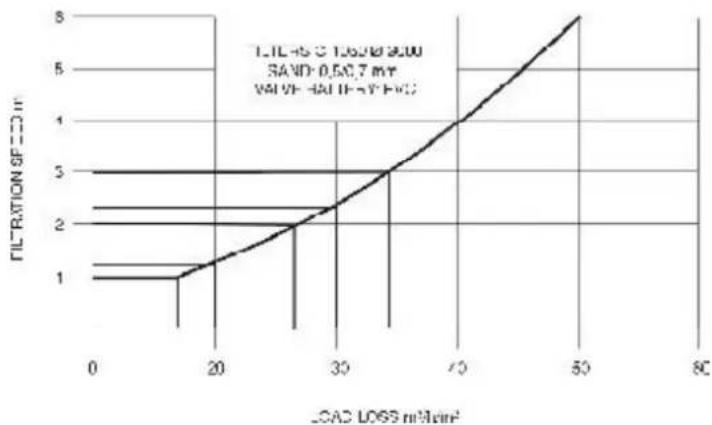
line
| LOAD LOSS mMeV² | FILTRATION SF-230 m | | --------------- | --------------------- | | 0 | 1 | | 20 | 1 | | 30 | 2 | | 40 | 3 | | 50 | 5 | | 80 | 8 |The maximum operating temperature is 50°C.
13. SAFETY WARNINGS
Switch off the pump before operating any valve.
Do not connect the filter direct to the mains drinking water as the pressure can rise and exceed the maximum authorised working pressure for the filter.
Remember that it is very important to position the battery valve supports to prevent any filter connections from breaking.
The filters are designed to be highly resistant to internal pressure, but at the same time they are very susceptible to exterior knocks.
If the installation has more than one filter installed on the same battery there should be a valve on each of the connections to allow the filter to be completely isolated.
Under no circumstances should you exceed the maximum working pressure, indicated on the filter characteristics plate.
- POSSIBLE FAULTS
| PROBLEM CAUSE SOLUTION | ||
| No filtered water flowing | The filter is dirty Start backwash | |
| The collecting basket is covered Clean the collecting basket | ||
| You observe characters in the sand bed | Formation of preferential channels, lack of backwash or broken collector | Start a backwashDrain the sand and check if the collector is defective. Replace the sand |
| Pressure gauge oscillates violently | The pump has air in it | Check the whole installation and eliminate possible leaks |
| Suction half closed Check the suction valves are completely open | ||
| Sand is entering the pool from the filter | There is something broken in the collector system | Repair the collector system |
| Sand is escaping to the drain during backwash | Excessive water flow during backwash | Reduce the flow rate during backwash |
| Leaks in the connections or lids Loose screws | Tighten the screws, being careful not to break any plastic pieces. If the problem is not resolved, phone technical support | |
MONTAGES DE LA BATTERIE:

FIG.3

natural_image
Two gray cylindrical objects with black cross marks on a horizontal surface, no text or symbols presentFIG.4
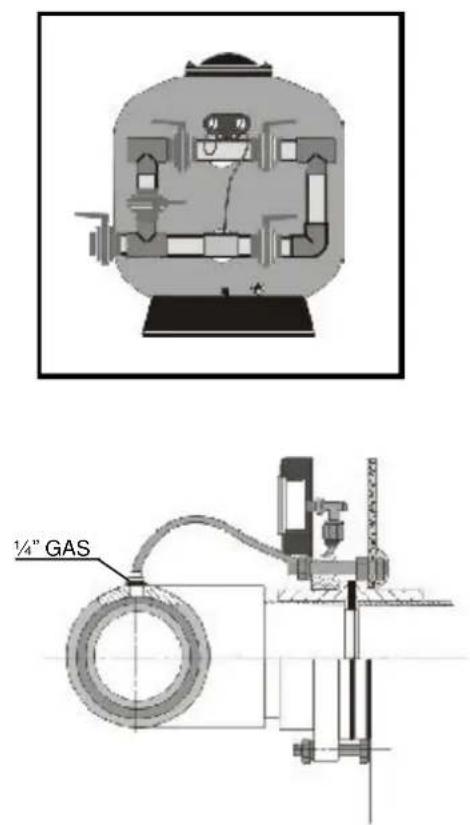
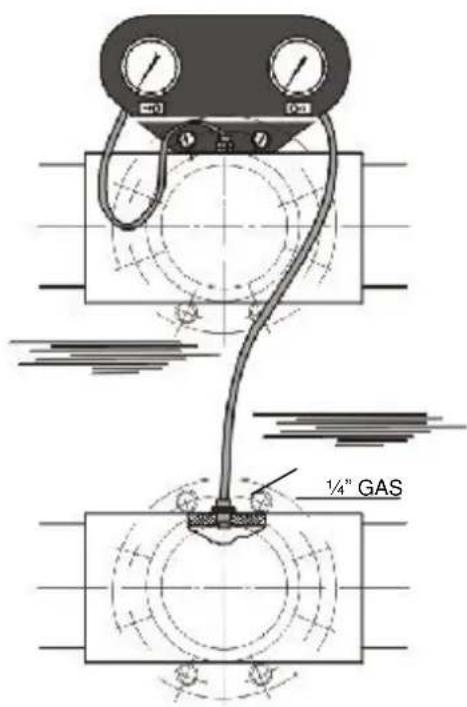
FIG.5
5.2. INSTALLATION DES SUPPORTS DE BATTERIE

FIG.3

natural_image
Two identical cylindrical objects with black cross marks placed on a horizontal surface (no text or symbols)FIG.4


FIG.5

4. CARATTERISTICHE DELL'IMPIANTO
natural_image
Two gray cylindrical objects with cross-shaped marks placed on a horizontal surface, no text or symbols present.FIG.4
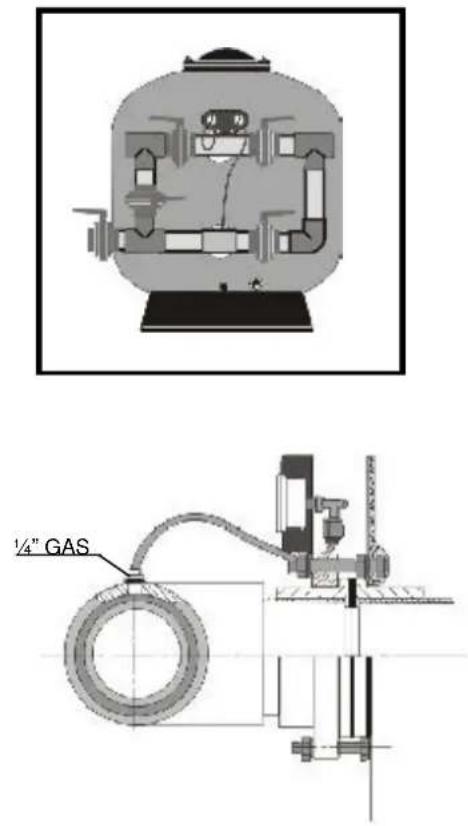

FIG.5
FIG.7
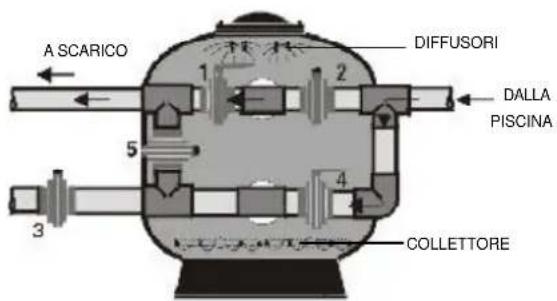
FIG.8
7.5 CHIUSURA (FIG.11)

natural_image
Two identical cylindrical objects with black cross marks placed on a horizontal surface (no text or symbols)FIG.4

natural_image
Cross-sectional diagram of a mechanical or electrical device with no visible text or symbols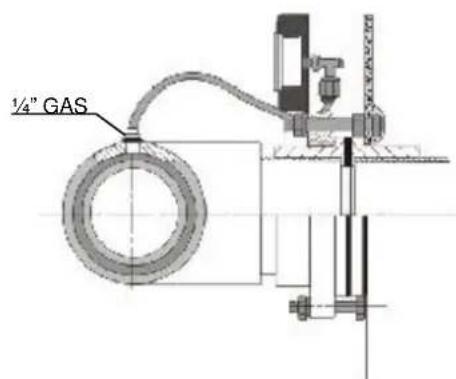

FIG.5

4. INFORMACJA DOTYCZACA INSTALACJI
natural_image
Two gray cylindrical objects with black cross marks on a horizontal surface, no text or symbols presentRYS.4

RYS. 5
5.2 MONTAZ PODPÓR DO ZESPOLÓW
7. NORMALNY CYKL PRACY (RYS. 6)

RYS.6
7.1 FILTROWANIE (RYS. 7)
RYS.7

RYS.8

RYS. 9

RYS. 10
7.5 ZAMYKANIE (RYS. 11)
- CHECK THE PACKAGING
- GENERAL SPECIFICATIONS
- IDENTIFICATION OF COMPONENTS
- INSTALLATION SPECIFICATIONS
- INSTALLATION
- INSTALLATION OF THE PRESSURE GAUGES
- INSTALLATION OF THE BATTERY SUPPORT.
- STARTING UP
- NORMAL WORKING CYCLE. (FIG.6)
- FILTRATION (FIG.7)
- EXAMPLE
- BACKWASH (FIG.8)
- BACKWASH WITH AIR AND WATER (ONLY FOR FILTERS WITH NOZZLE PLATES OR DOUBLE LATERALS)
- RINSING (FIG.9)
- DRAIN (FIG.10)
- CLOSED (FIG.11)
- VALVE BATTERIES. POSITION OF THEM IN EACH OPERATION
- BATTERIES WITH 4 VALVES (FIG.12)
- BATTERIES WITH 5 VALVES (FIG.13)
- DRAINING THE SAND FROM THE FILTER
- OTHER RECOMMENDATIONS
- MAINTENANCE
- TABLE OF LOAD LOSS FROM VALVE BATTERY AND SAND FILTERS
- SAFETY WARNINGS
- INSTALLATION DES SUPPORTS DE BATTERIE
- CARATTERISTICHE DELL'IMPIANTO
- CHIUSURA (FIG.11)
- INFORMACJA DOTYCZACA INSTALACJI
- MONTAZ PODPÓR DO ZESPOLÓW
- NORMALNY CYKL PRACY (RYS. 6)
- FILTROWANIE (RYS. 7)
- ZAMYKANIE (RYS. 11)
Brand : ASTRALPOOL
Model : Ampuria
Category : Water filter