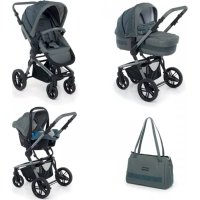
iWood - Stroller Foppapedretti - Free user manual and instructions
Find the device manual for free iWood Foppapedretti in PDF.



| Product type | Stroller |
| Brand | Foppapedretti |
| Model | iWood |
| Recommended age | From 6 months |
| Maximum child weight | 15 kg |
| Safety standard | EN 1888-1:2018 |
| Brake | Foot parking brake |
| Backrest adjustment | Reclining with rear lever |
| Seat orientation | Forward-facing or parent-facing |
| Canopy | Removable with ventilation window and sun visor |
| Adjustable handlebar | Yes, height and rotation |
| Adjustable footrest | Yes |
| Protective armrest | Removable and height-adjustable |
| Lower basket | Capacity 4 kg |
| Compatible accessories | Car seat Group 0+, carrycot, rain cover, leg cover, mosquito net |
| Standard warranty | 12 months |
| Maintenance | Hand wash at 30°C, lubrication of moving parts with WD-40 |
Frequently Asked Questions - iWood Foppapedretti
User questions about iWood Foppapedretti
0 question about this device. Answer the ones you know or ask your own.
Ask a new question about this device
Download the instructions for your Stroller in PDF format for free! Find your manual iWood - Foppapedretti and take your electronic device back in hand. On this page are published all the documents necessary for the use of your device. iWood by Foppapedretti.
USER MANUAL iWood Foppapedretti
natural_image
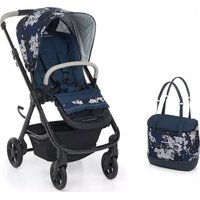
Black and white stroller with floral pattern backrest, no visible text or symbolsThis seat is not suitable for children under 6 months, maximum weight 15kg
EN. IMPORTANT! READ THE INSTRUCTIONS CAREFULLY AND KEEP FOR FUTURE REFERENCE
FR. IMPORTANT! LIRE ATTENTIVEMENT ET CONSERVER SOIGNEUSEMENT A PORTEE DE MAIN POUR UNE UTILISATION ULTERIEURE
natural_image
Mechanical assembly diagram showing two workers assembling a rail vehicle (no text or symbols visible)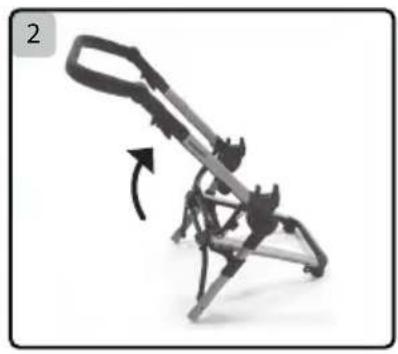
natural_image
Mechanical device with articulated arm and motion arrow, no visible text or symbols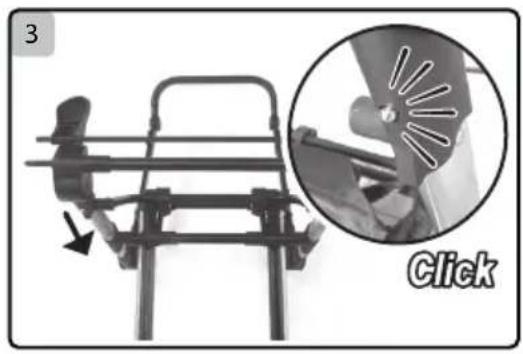
natural_image
Mechanical device with a highlighted lever mechanism and a magnified inset showing a person using a tool (no text or symbols on the device itself)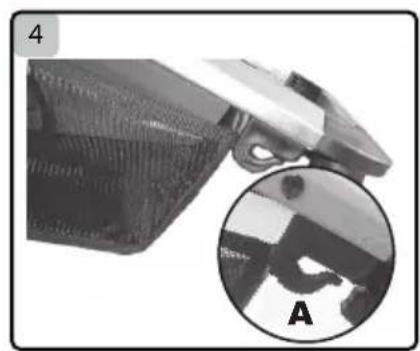
natural_image
Close-up of a mechanical component with a magnified inset showing a close-up view labeled 'A' (no text or symbols on the main subject)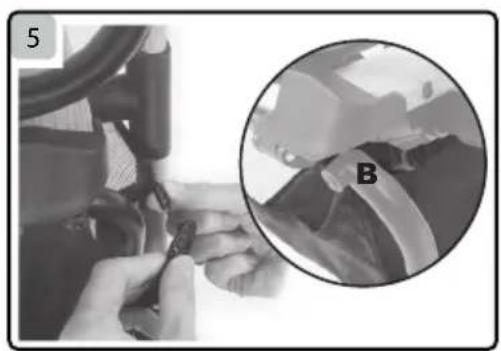
natural_image
Close-up of hands adjusting a mechanical component, with an inset magnified view labeled B (no text or symbols present)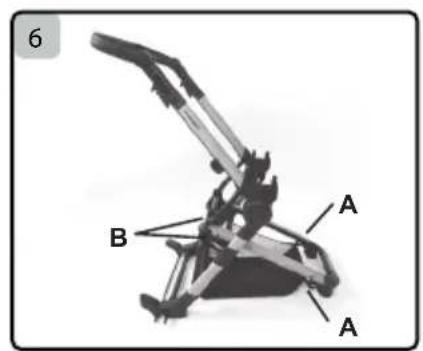
natural_image
Close-up of a hand adjusting a bicycle wheel with a tool, showing the wheel being adjusted (no text or symbols visible)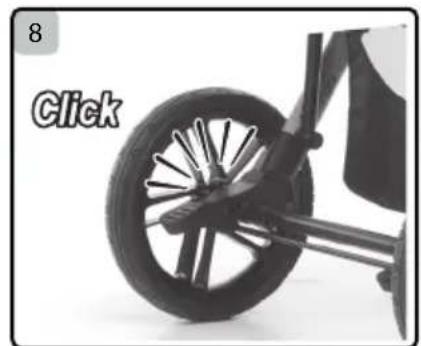
natural_image
Close-up of a bicycle wheel with visible spokes and a black tricycle (no text or symbols)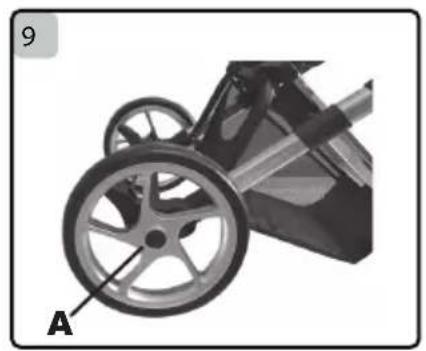
natural_image
Close-up of a car wheel with labeled component 'A' (no text or symbols beyond label)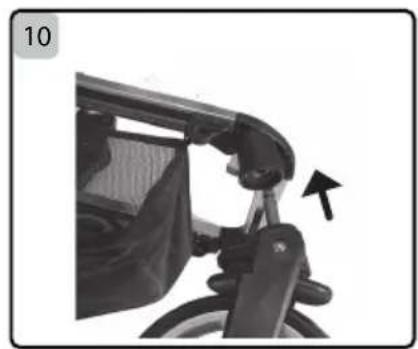
natural_image
Close-up of a bicycle seatbelt mechanism with a black arrow pointing to the handle (no text or symbols visible)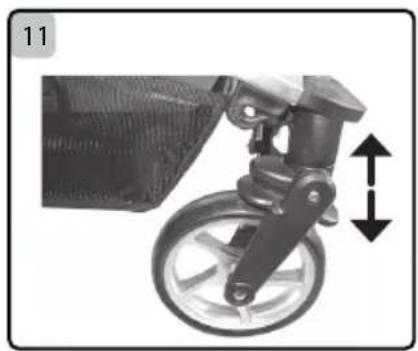
natural_image
Mechanical device with a wheel and attached lever, showing a dimension arrow (no text or symbols)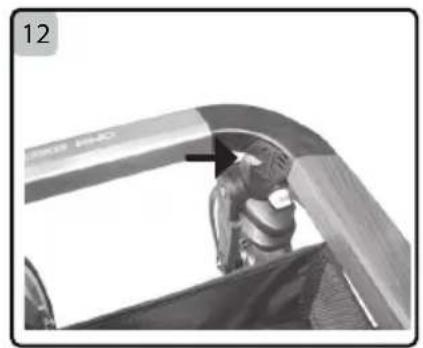
natural_image
Close-up of a mechanical component with a curved bracket and a metallic part, no visible text or symbols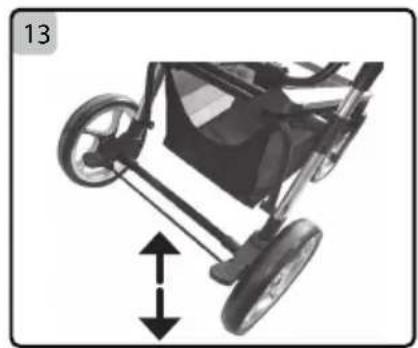
natural_image
Mechanical stroller with wheels and a vertical double-headed arrow indicating motion (no text or symbols)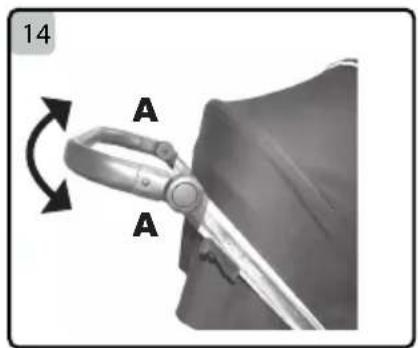
natural_image
Close-up of a mechanical assembly with a belt buckle and clamped components (no visible text or symbols)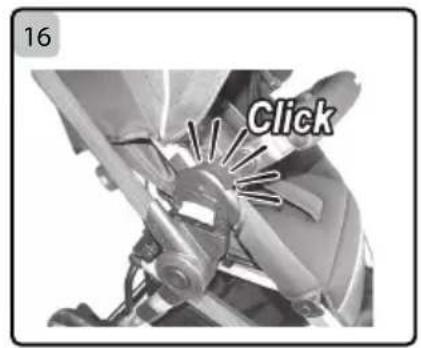
natural_image
Close-up of a mechanical component with a labeled arrow pointing to component A (no readable text or symbols)
natural_image
Close-up of mechanical components with no visible text or symbols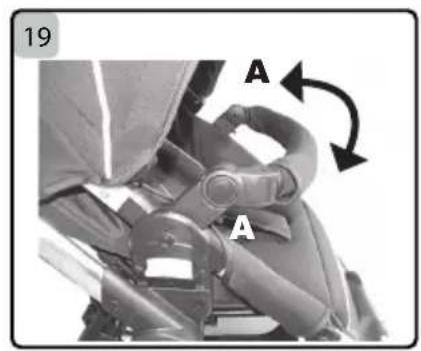
natural_image
Close-up of a car seatbelt with labeled points A and directional arrows indicating rotation (no text or symbols beyond labels)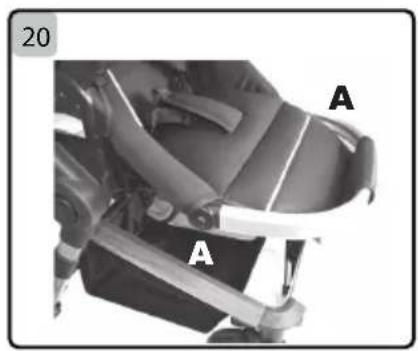
natural_image
Close-up of a car's front panel showing structural components and arrows indicating movement (no text or symbols)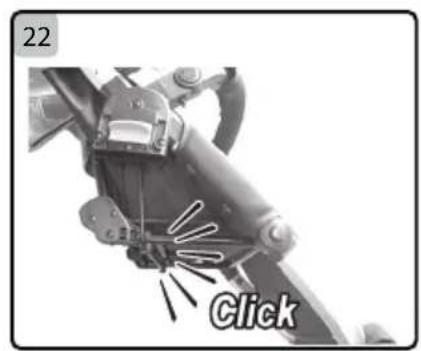
natural_image
Mechanical assembly diagram showing a stroller with a device and a hand operating it (no text or symbols visible)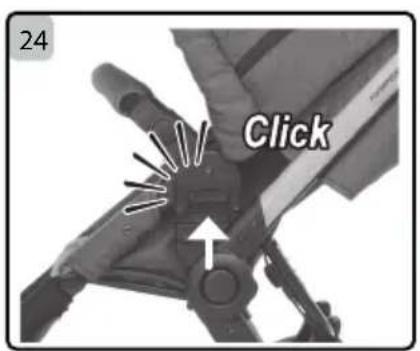
natural_image
Close-up of a mechanical device with labeled component 'A' and page number 26 (no readable text or symbols beyond labels)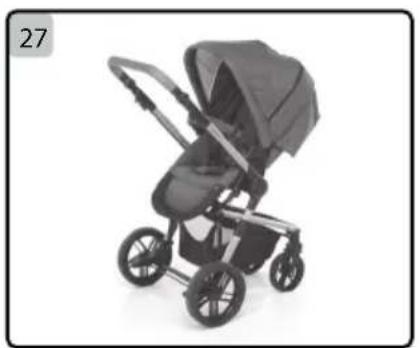
natural_image
Black and white photo of a baby stroller with a canopy cover, no visible text or symbols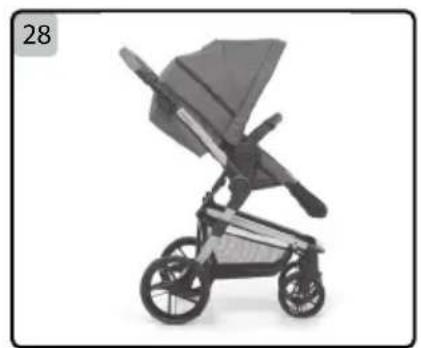
natural_image
Black and white photo of a baby stroller with a canopy cover, no visible text or symbols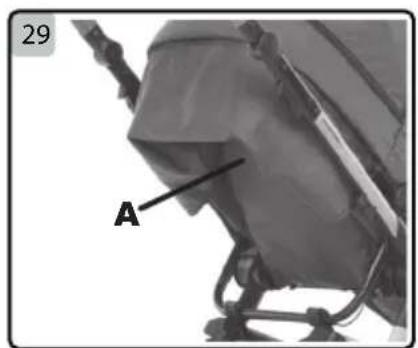
natural_image
Close-up of a mechanical component with arrows indicating motion direction (no visible text or symbols)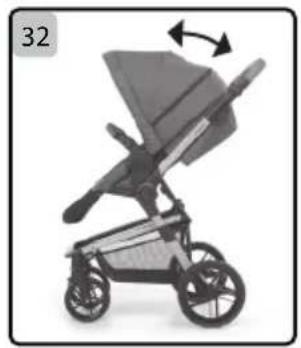
natural_image
Illustration of a baby stroller with a curved arrow indicating motion (no text or symbols)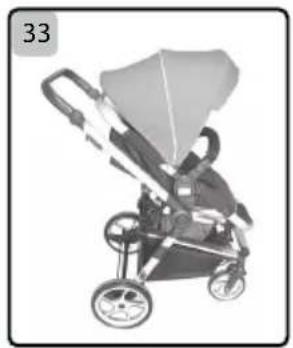
natural_image
Illustration of a baby stroller with wheels and a canopy cover (no text or symbols)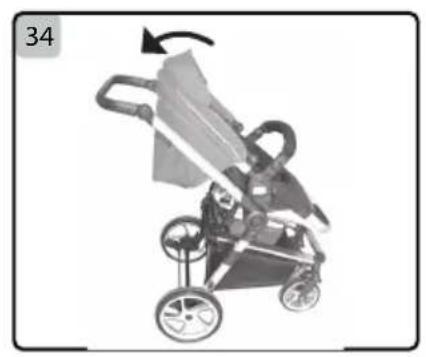
natural_image
Illustration of a baby stroller with wheels and a curved arrow indicating rotation (no text or symbols)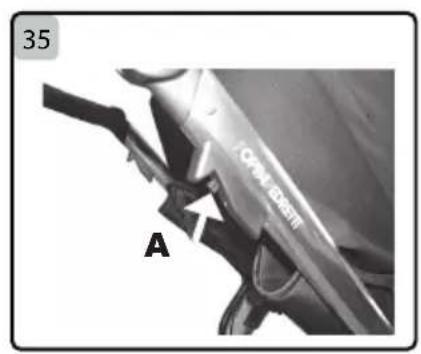
natural_image
Close-up of a person's seatbelt with arrows pointing to the arm and legs (no text or symbols visible)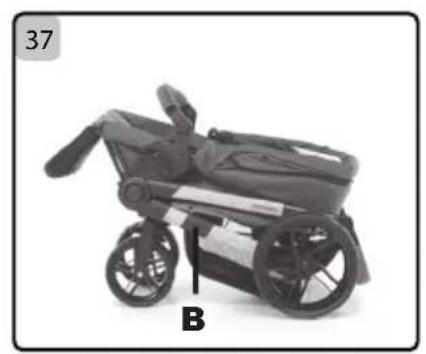
natural_image
Black and white photo of a baby stroller with wheels and seat, labeled 'B' (no text or symbols on the device itself)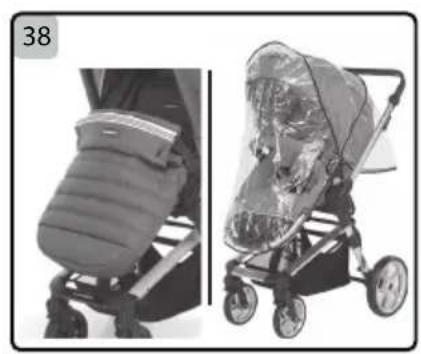
natural_image
Two stuccoetry car vats with different sizes and designs, shown from front and side views (no text or symbols visible)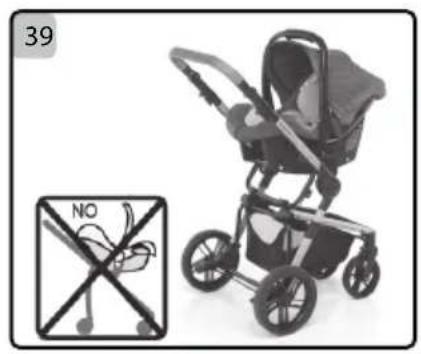
natural_image
Side view of a baby stroller with a handrail and arrow indicating motion (no text or symbols)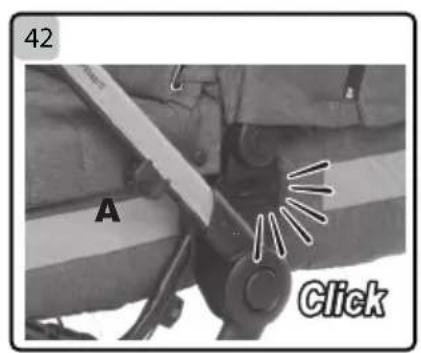
natural_image
Close-up of two views of a mechanical component with labeled parts (1 and 2), no text or symbols present.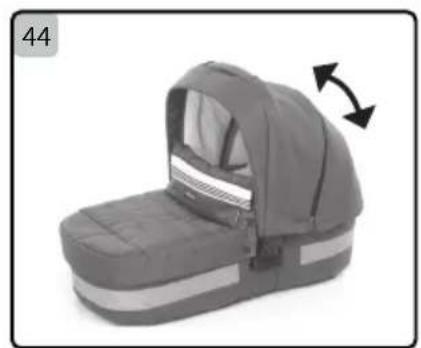
natural_image
Product photo of a gray athletic backpack with a side panel and directional arrow indicating rotation (no text or symbols)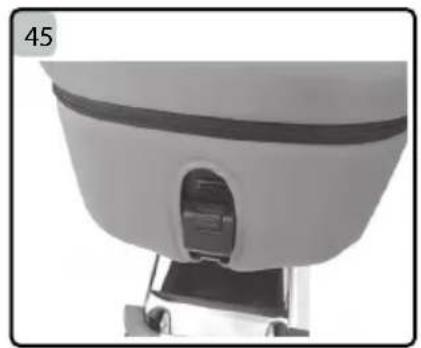
natural_image
Close-up of a white cylindrical device with a black opening and metallic base, mounted on a stand (no visible text or symbols)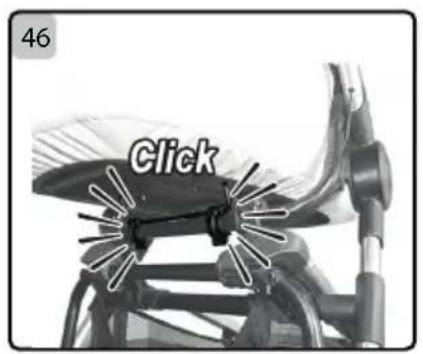
natural_image
Close-up of a mechanical component with a tool, possibly part of a device or tool, shown in grayscale (no visible text or symbols)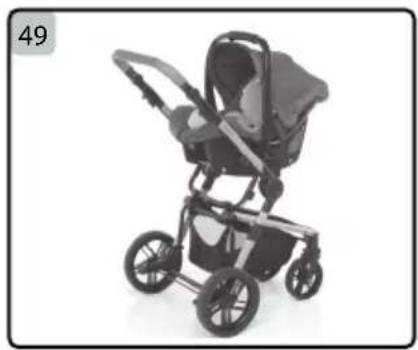
natural_image
Black and white photo of a baby stroller with two wheels and a backrest (no text or symbols visible)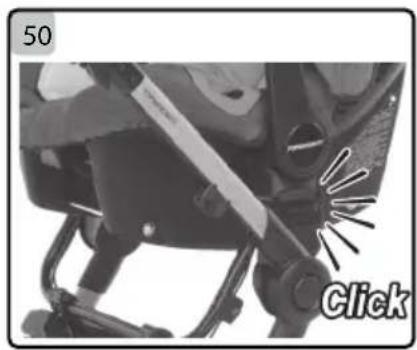
natural_image
Close-up of a motorcycle seat with a diagonal tool and spoked wheels, labeled '50' and 'Click' (no other text or symbols)MONTAGGIO
Important note: the images and instructions contained in this handbook refer to one version of the stroller; some components and functions described herein may vary according to the version of the stroller you have purchased.
UNFOLD THE STROLLER (fig.1, fig.2)
Press the folding lock button and then lift up the handlebar to open the folding lock.
Step on the lever, and then lift up the handlebar until the stroller is unfolded.
Make sure the pushchair has been opened correctly.
INSTALL WHEELS SUPPORTS (fig.3)
Insert the rear wheel group into the end of the tubes of the rear legs.
The wheel supports are correctly assembled when the metal pins are locked in the corresponding holes on the tubes of the chassis.
SHOPPING BASKET (fig.4, fig.5, fig.6)
Fix the basket by passing the front ring hooks through the supports (A). Then pass the rear straps around the tubes (B) and fasten the studs.
The basket should be emptied before folding the pushchair.
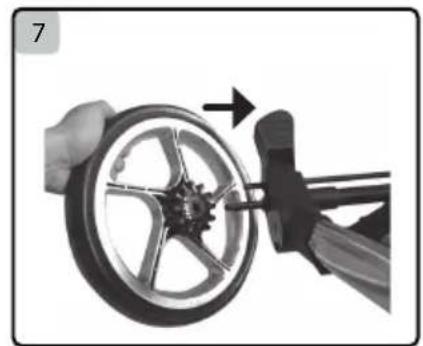
INSTALL REAR WHEELS (fig.8, fig.9)
Assemble the rear wheels along the arrow direction.
Press the button situated on the center of wheel and pull it to take the wheel apart from the axle.
INSTALL FRONT WHEELS (fig.10, fig.11, fig.12)
Insert the end bushing into the slot situated in the center of the wheel block.
Press the button down front wheel blocked. Raise the lock lever to activate the swivel function.
Press the steel button front wheel released.
PARKING BRAKE (fig.13)
To apply the brake: Press the brake lever, push the pushchair forward gently to ensure the brake has been applied correctly.
To release the brake: Lift the brake lever as shown.
ADJUSTING THE HANDLEBAR (fig.14)
Press both buttons "A" side handle and rotate the handle to the desired position.
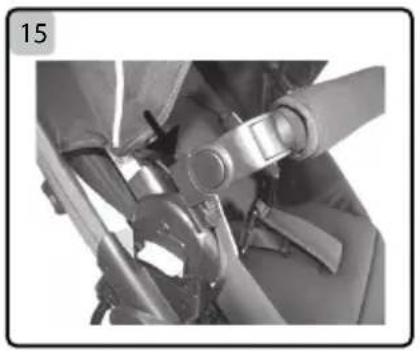
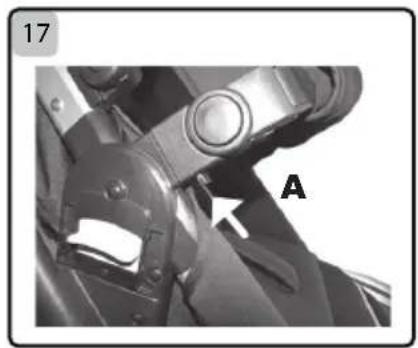
FITTING THE BUMPER BAR (fig.15, fig.16, fig.17, fig.18, fig.19)
Assembly: Align the bumper bar and insert it in its seat on both sides, a click will indicate the correct assembly.
Disassembly: Push the release button "A" on each side of the bumper bar and contemporary lift the bar upwards to hook it off.
Unhook the bumper bar on only one side : Push the release button “A” on one side of the bumper bar and contemporary lift the bar upwards to open it as a gate.
Push the buttons "A" on both sides, to adjust the height of the bumper bar.
ADJUST THE FOOTREST (fig.20)
Press buttons “A” and adjust the footrest in the required position.
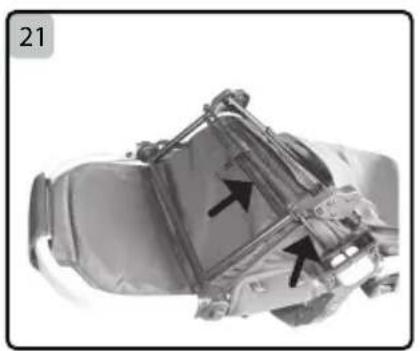
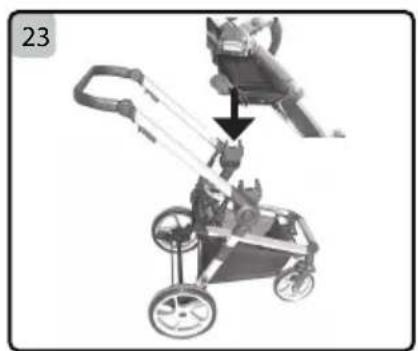
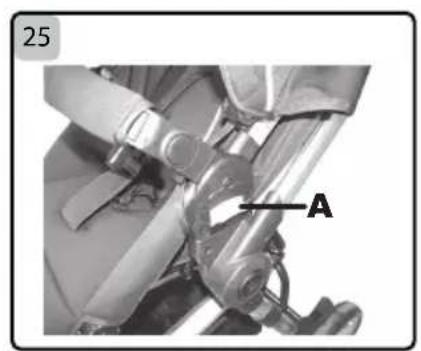
INSTALL THE SEAT (fig.21, fig.22, fig.23, fig.24, fig.25)
Align the seat with the adaptors and press until “click” sound.
Lift up the buttons of the adaptors with one finger at each side and lift up the seat to remove the seat.
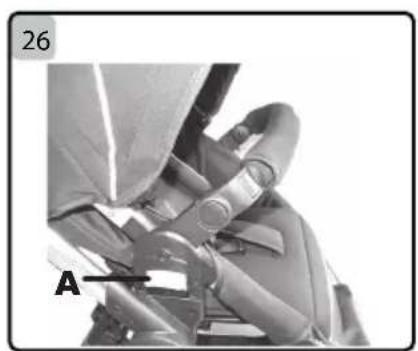
REVERSIBLE SEAT (fig.26, fig.27, fig.28)
Lift buttons "A" on both sides and remove the seat by lifting it.
Position the seat so that it is forward facing or parent-facing.
Replace the seat on the chassis of the pushchair, see the paragraph “INSTALL THE SEAT” for correct assembly.
TO REGULATE THE BACKREST (fig.29)
Lift the regulating lever located behind the backrest and recline the backrest to the required position. Release the lever and make sure the backrest is secured in position.
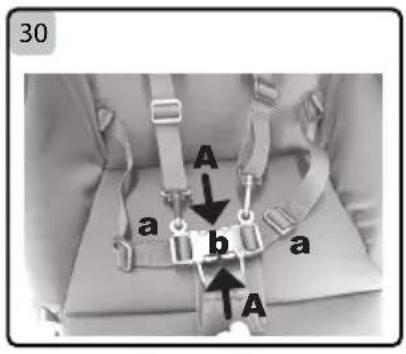
SAFETY HARNESS (fig.30)
Apply the brake before placing your baby in the pushchair.
Release the buckle: press button "A" and remove the components
Fasten the buckle: by inserting part a in part b, a click will indicate that it has been fastened correctly.
WARNING: The lap belt is provided with 2 side rings to be used for additional belts in compliance with the standard BS 6684.
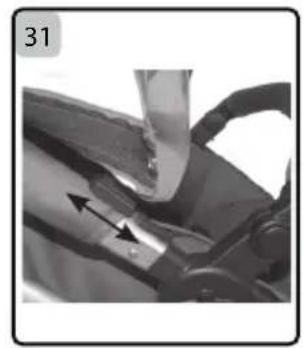
ASSEMBLY / ADJUSTING THE CANOPY (fig.31, fig.32, fig.33, fig. 34)
Extend the hood according to requirements to protect baby from the sun.
Note: babies' skin is very delicate. NEVER leave baby under direct sunlight.
Always make sure that the hood has been adjusted correctly.
Remove the rear part of the hood to use it as a parasol.
Open the zip or the viewing window, according to the model purchased, for ventilate.
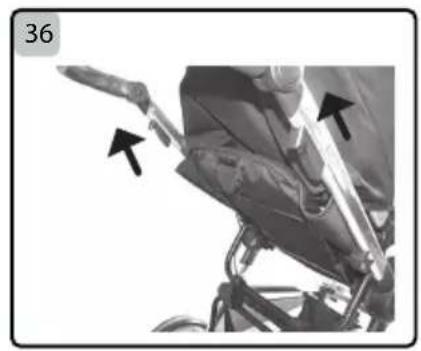
FOLDING THE PUSHCHAIR (fig.35, fig.36, fig.37)
Before folding the pushchair, make sure that:
The seat is forward facing
The backrest is adjusted in the upright position
The canopy is folded
Push the button “A”, on the lower side of the right lever and keep pressed while sliding the levers, left and right, downwards. Fold the stroller. Ensure the locking device “B” is correctly engaged.
Note: It is NOT possible to close the pushchair with the travel system accessories, the infant car seat and carrycot, fitted on the chassis.
FITTING THE FOOTMUFF (fig.38)
Insert the lower part of the footmuff on the seat of the chassis.
Secure the footmuff to the chassis of the pushchair using the press fasteners.
FITTING THE PUSHCHAIR RAINCOVER (fig.38)
Fit the raincover over the hood.
Fasten the front of the raincover to the chassis of the pushchair using the Velcro tabs.
ASSEMBLY
USING THE TRAVEL SYSTEM ACCESSORIES
WARNING: This vehicle has been designed for children of above 6 month age!
If you wish to use one of the accessories with which you can equip with your chassis car seat iWood of the Group 0+ or carry cot iWood developed for when your baby is small, pls. Operate it by following these instruction.
Remove the seat from the chassis (see the paragraph "INSTALL THE SEAT").
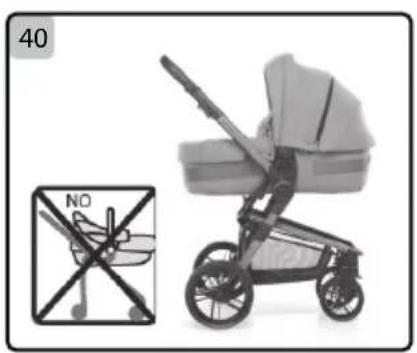
USING THE INFANT CAR SEAT AND CARRYCOT TRAVEL SYSTEM ACCESSORIES (fig.39, fig.40)
IMPORTANT: the travel system accessories must be secured to the chassis only in the parent facing position.8
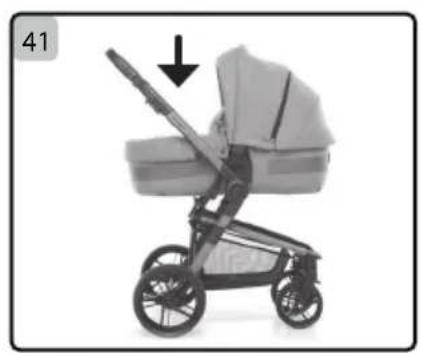
CARRY COT (fig.41, fig.42)
Montage: Align the carry cot with the adaptors at both side, and press until "click" sound.
Remove: Lift up the buttons of the adaptors with one finger at each side and lift up the seat to remove the carry cot.
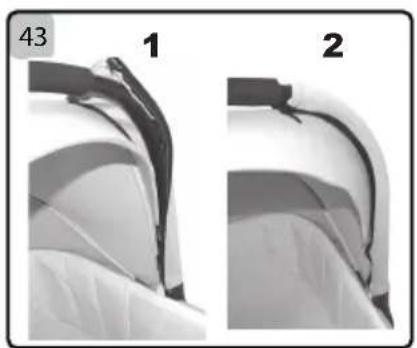
ADJUST CANOPY (fig.43, fig.44)
Montage (fig.43)
Press the buttons at both side to adjust he handlebar of carry cot (fig.44).
Open the zip or the viewing window, according to the model purchased, for ventilate.
ADJUST THE BACKREST (fig.45)
Lift up the adjusting Holder to adjust the backrest up, press the button situated on the upper part of the Holder and push the Holder down to adjust the backrest down.
Hook the support bar to the frame to prevent swinging movement of the carrycot when using it on uneven terrains.(fig.46)
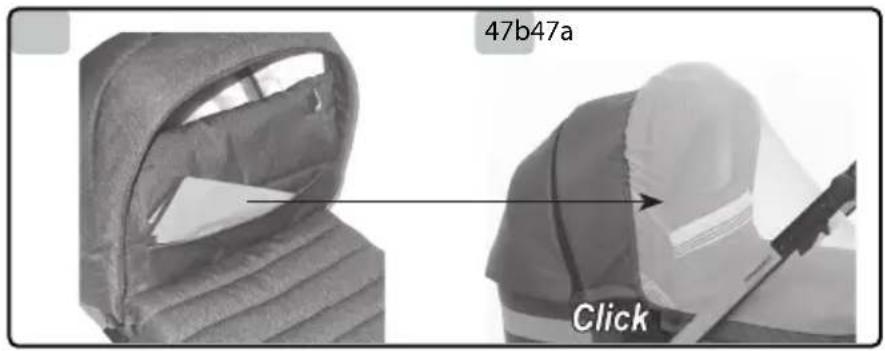
Fit the mosquito net over the handlebar of carry cot, as shown.
Fasten the mosquito net using the press fastener, as shown.
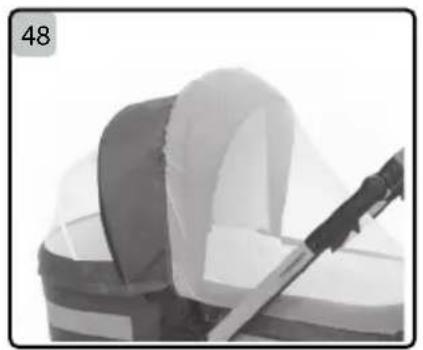
Ventilation (fig.48)
Open the zip, according to the model purchased, to ventilate the inside of the carrycot.
CAR SEAT (fig.49, fig.50)
Montage: Align the carry cot with the adaptors at both side, and press until “click” sound.
Remove: Lift up the buttons of the adaptors with one finger at each side and lift up the seat to remove the car seat.
CARRYCOT
• This product is suitable for babies from birth up to 9 kg.
- WARNING: THIS PRODUCT IS ONLY SUITABLE FOR A CHILD WHO CANNOT SIT UP UNAIDED.
- WARNING: ONLY USE ON A FIRM, HORIZONTAL LEVEL AND DRY SURFACE.
- WARNING: DO NOT LET OTHER CHILDREN PLAY UNATTENDED NEAR THE CARRYCOT.
- WARNING: DO NOT USE IF ANY PART OF THE CARRY COT IS BROKEN, TORN OR MISSING.
- WARNING: Never leave child unattended. Always keep baby under supervision when he is in the carrycot.
- WARNING: This product is suitable only for a child who cannot sit up unaided, roll over and cannot push itself up on its hands and knees. Maximum weight of the child: 9Kg.
- WARNING: Suitable for children under 6 months of age.
- Before lifting or transporting the carrycot, check that the carrying handle is in a vertical position and correctly attached on both sides.
- The handles and the bottom of the crib must be inspected regularly to check for signs of wear and damage.
- When the child is in the carrycot, their head must never be lower than their body.
- Do not add mattresses other than the one supplied with the carrycot or approved by the manufacturer.
- RISK OF SUFFOCATION: the carrycot could tip over on soft surfaces and suffocate the child. NEVER place the carrycot on beds, sofas or other soft surfaces.
- Check regularly that the crib is intact, do not use if a part is damaged, worn or missing.
STROLLER
- WARNING: NEVER LEAVE THE CHILD UNATTENDED.
- WARNING: ENSURE THAT ALL THE LOCKING DEVICES ARE ENGAGED BEFORE USE.
- WARNING: TO AVOID INJURY, ENSURE THAT THE CHILD IS KEPT AWAY WHEN UNFOLDING AND FOLDING THIS PRODUCT.
- WARNING: DO NOT LET THE CHILD PLAY WITH THIS PRODUCT.
- WARNING: ALWAYS USE THE RESTRAINT SYSTEM.
- WARNING: CHECK THAT THE PRAM BODY OR SEAT UNIT OR CAR SEAT ATTACHMENT DEVICES ARE CORRECTLY ENGAGED BEFORE USE.
- WARNING: THIS PRODUCT IS NOT SUITABLE FOR RUNNING OR SKATING.
- WARNING: THIS SEAT UNIT IS NOT SUITABLE FOR CHILDREN UNDER 6 MONTHS.
-
WARNING: THIS STROLLER IS SUITABLE FOR CHILDREN WITH A MAXIMUM WEIGHT OF 15 KG.
-
WARNING! Ensure that all the locking devices are engaged before use.
- WARNING: Always keep child in view when in stroller.
- WARNING: If the pushchair is used with the accessory, make sure it has been fastened correctly.
- WARNING: Use seat belt, avoid serious injury from falling or sliding out Always.
- WARNING: Only one child for one stroller.
- WARNING: This product is not suitable for running or skating.
- WARNING: Check that the seat unit attachment devices are correctly engaged before use.
- WARNING: Do not place or hang parcels, bags or accessories on any part of the stroller including the handle. Failure to comply with this warning may cause, hazardous, unstable conditions to exist.
- WARNING: Always make sure that the brake is engaged when positioning the child into the stroller seat or taking him/her out.
- WARNING: Always use the parking brake, even when standing still for only a few moments.
- WARNING: When parking check if the brake is properly engaged by moving forward/rearward the stroller.
- WARNING: Never fold the stroller, not even partly, when your child is in it.
WARNING
- A basket is provided for the carriage of 4kg of goods, evenly distributed.
- The product must be assembled by an adult.
- Only the minder can operate the recline adjuster.
- Never use the stroller if any part of it is damaged or any component is missing.
- Do not allow children to play with or hang onto the stroller.
- This vehicle requires regular maintenance by the user.
- Do not use replacement parts or accessories other than those approved by the supplier as they may render the pushchair unsafe.
- Any load applied to the handle and/or the backrest and/or laterally to the product can compromise the stability of the product.
- Do not overload this pushchair with additional children, goods or accessories. Bags and other items must not be hung from the handle.
- Ensure all users are familiar with the products operation. It should always open and fold easy. If it does not, do not force the mechanism - stop and read the instructions.
- Do not use your pushchair in a manner for which it is not designed.
- Do not allow your child to climb unassisted into, play with or hang onto your pushchair.
- Hold on to your pushchair when close to moving road vehicles or trains. Even with the brake on the draught from the vehicle may move the pushchair.
- Exercise caution when mounting or dismounting a kerb.
- Remove your children and fold the pushchair when ascending or descending stairs or escalators.
- Ensure the folded pushchair is stored away from children so that it does not fall and cause injury.
- Do not use replacement parts or accessories, e.g. child seats, bags, hooks, trays, rain covers etc. other than those approved by the supplier, they may render the pushchair unsafe.
- Never carry a second child on your pushchair.
- Do not use any platforms or attachments that allow transportation of the child.
- CARE: Your pushchair has been designed to meet safety standards and with correct use and maintenance will give many years of trouble free performance.
- The chassis is strong but will weaken should the back wheels be bumped down stairs or kerbs. continual impact will cause damage.
- If your child wears hard shoes these might damage the soft fabric.
- Storing a damp pushchair will encourage mildew to form.
- After exposure to damp conditions, dry off with a soft cloth, open fully and allow to dry thoroughly before storing.
- Store your pushchair in a dry, safe place.
- Do not leave the pushchair in sunlight for prolonged periods - some fabrics may fade.
- For car seats used in conjunction with a chassis, this vehicle does not replace a cot or a bed. Should your child need to sleep, then it should be placed in a suitable pram body, cot or bed. The infant car seat is not designed for long periods of sleep.
- Be aware of the risks related to open flames or other heat sources, such as radiators, fireplaces, electric and gas stoves, etc.: do not leave the product close to these heat sources.
RAINCOVER
WARNING!
- Use under an adult surveillance.
- When in use make sure the rain cover does not come in contact with the face of the child as it may cause suffocation
- Don't use the raincover on the product without a hood that can hold it.
- Never leave rain covers on indoors, in a hot atmosphere or near a heat source as the baby could overheat.
- Do not use on products other than those recommended by the Manufacturer.
- Hand wash at 30ircC .
- This pushchair requires a minimum amount of regular maintenance.
- The lifetime of the pushchair will be increased if the moving parts are lubricated and it will also make the opening and folding operations easier.
- If any of the parts of the pushchair should become stiff or difficult to operate, apply a small quantity of spray lubricant, for example WD 40. Do not use oil or grease. The WD 40 should not be used to lubricate the removable wheels. If necessary, the wheels must be removed and cleaned with a soft, dry cloth.
- Check the locking mechanisms, the brakes, the wheels, the harnesses, the levers, the seat regulators, the joints and the securing devices regularly to make sure that they are fastened correctly and in good operating order.
- The wheels are subject to wear and should be replaced if necessary.
- Carry out a careful inspection to check the pushchair is in good operating condition after 18 months of use, after a long period of storage and before using it for another baby.
- Clean the fabric with water, neutral detergent and a sponge.
- Clean the fabric using warm water, a sponge and a neutral detergent.
- The plastic and metal parts can be cleaned with warm water, a sponge and a neutral detergent.
- Never use abrasive products for cleaning or ammonia based products, bleach or turpentine.
The contents of this document as stated below will come into effect as from 01.01.2005 and replace, on every account and in full, any previous message referring to the guarantee provided by Foppa Pedretti S.p.A.
FORMAL GUARANTEE
Foppa Pedretti S.p.A. the head office of which is located at n. 11 Via Volta, Grumello del Monte (Italy), guarantees directly to the Consumer that this brand new product is free of faults with regard to the materials, design and manufacture and that it complies with the characteristics as declared by the manufacturer.
This formal guarantee is valid in all Member Countries of the European Union and it neither excludes nor limits the Consumer's rights in accordance with mandatory measures provided for by the law with regard to the Retailer of the Product.
To take advantage of this formal guarantee, the Consumer must return the faulty product to the Retailer, presenting to the same the proof of purchase of the Product which must clearly show the Retailer's address, the date of purchase of the Product with the Retailer's stamp and signature and an indication of the Product itself or, alternatively, the receipt which must not have been altered and which must clearly show the same information as that referred to above. The formal guarantee is valid for twelve (12) months from the date of purchase of the Product. During this period, Foppa Pedretti S.p.A. will repair or replace the faulty product, at its own discretion. The formal guarantee is granted to the end buyer of the Product (Consumer) and it neither excludes nor limits the mandatory rights of the Consumer as provided for by the law and/or the rights that the Consumer may have with regard to the Dealer/Retailer of the Product.
EXCLUSIONS TO THE FORMAL GUARANTEE.
The formal guarantee is excluded in the case of damage caused to the Product for the following reasons: if the product is used in a way that does not comply with the information contained in the use and assembly instruction sheet, if the product is knocked or dropped, if the Product is exposed to humidity or extreme heat or environmental conditions, or to sudden changes in the same, corrosion, oxidization, unauthorized alterations or repairs to the Product, repairs using unauthorised spare parts, improper use, improper maintenance or failure to carry out the same, improper maintenance compared to the information given on the use and assembly instruction sheet, incorrect assembly, accidents, damage caused by food or drink, damage caused by chemical products, cases of force majeure.
In any case, Foppa Pedretti S.p.A. declines all responsibility for damage caused to persons or to property, other than the Product, when such damage is caused by a failure to comply with the instructions/advice/warnings cont a ined in the manua I or, alternatively, in the use and assembly instruction sheet provided with each Product for the owner/user. (Purely as an example, in the case of a cot: “Check your baby constantly. Make sure that the sheets and blankets do not cover the baby’s head...”).
Furthermore, Foppa Pedretti S.p.A. declines all responsibility for damage to persons and to property when the breakage of its products is due to a deterioration in the components of the Product that are subject to wear. All the components of the Product made of plastic are considered to be components subject to wear.
SIÈGE RÉVERSIBLE (fig.26, fig.27, fig.28)
EXCLUSIONS DE LA GARANTIE CONVENTIONNELLE.
BANCO REVERSÍVEL (fig.26, fig.27, fig.28)
natural_image
Blue and gray baby car seat with black trim, no visible text or symbolsFor children up to 13 kg - Complies with ECE R44-04
READ THE INSTRUCTIONS CAREFULLY AND KEEP FOR FUTURE REFERENCE
F. IMPORTANT!
LIRE ATTENTIVEMENT ET CONSERVER SOIGNEUSEMENT A PORTEE DE MAIN POUR UNE UTILISATION ULTERIEURE
D. WICHTIG!
natural_image
Front view icon of a car inside a circular frame (no text or symbols)natural_image
Simple line drawing of a boat hull with orange hull and red hull, no text or symbols presentnatural_image
Diagram of a car seat assembly with blue connectors, showing no text or symbolsnatural_image
Illustration of a car seat assembly with a hand inserting a blue component (no text or symbols)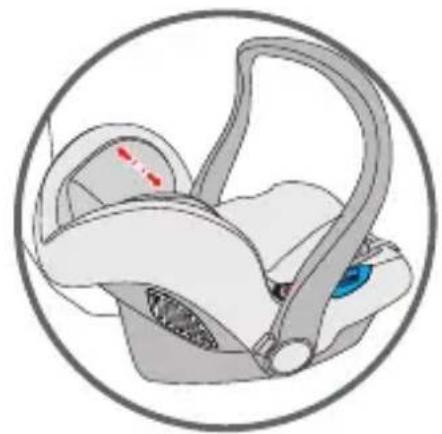
natural_image
Illustration of a baby car seat with a blue accent, enclosed in a circular frame (no text or symbols)natural_image
Illustration of a baby car seatbelt being adjusted for a person's seatbelt, showing red directional arrows indicating movement (no text or symbols present)natural_image
Diagram of a car seatbelt with red arrows indicating force or movement (no text or symbols present)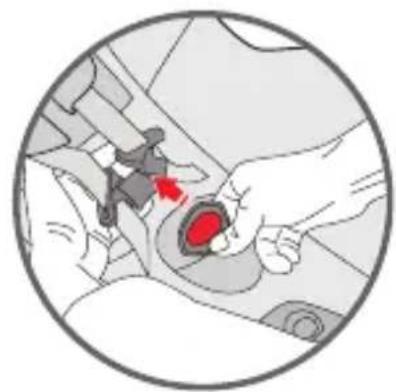
natural_image
Illustration of a hand pressing a red circular component on a vehicle's seat (no text or symbols visible)natural_image
Illustration of a baby sitting in a car seat with arms extended (no text or symbols)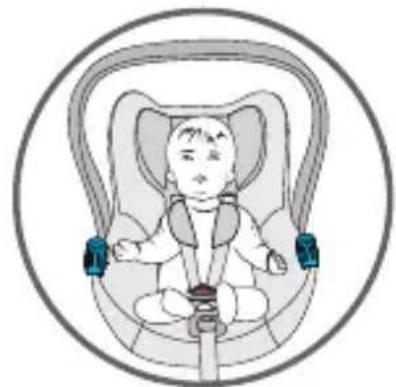
natural_image
Illustration of a baby car seatbelt inside a circular frame (no text or symbols)natural_image
Diagram showing two mechanical components with red arrows indicating movement or force, converging to a red circular component (no text or symbols)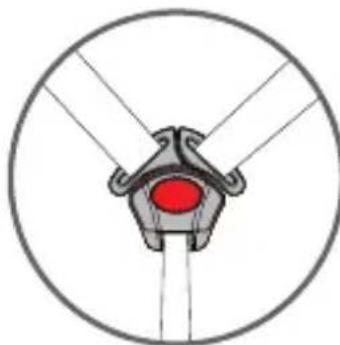
natural_image
Cross-sectional diagram of a mechanical component with red center and gray body, enclosed in a circular boundary (no text or symbols)natural_image
Illustration of a baby in a car seat being held by adult hands, with no visible text or symbolsnatural_image
Illustration of a baby car seatbelt inside a circular frame (no text or symbols)natural_image
Diagram showing mechanical components with red arrows indicating direction, no text or symbols presentflowchart
graph TD
    A["Step 1: Surgical Tool Manipulation"] --> B["Step 2: Disruptive Stimulation"]
    B --> C["Step 3: Disruptive Stimulation"]
natural_image
Illustration of a car seatbelt switch with red indicator lights (no text or symbols)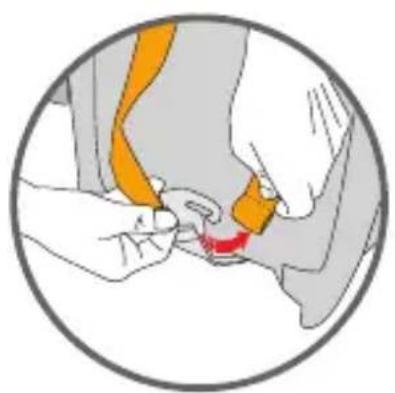
natural_image
Illustration of a medical procedure showing hands performing a neck massage with a yellow band and red clip (no text or symbols)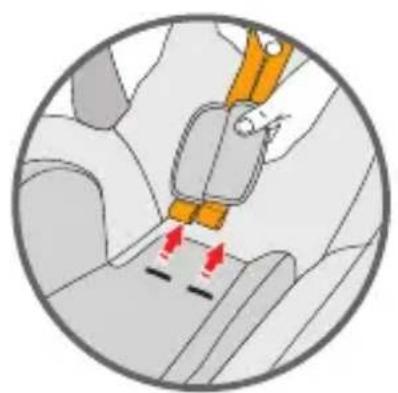
natural_image
Diagram of a car seatbelt buckle being inserted into the seat, showing red arrows indicating force or movement (no text or symbols present)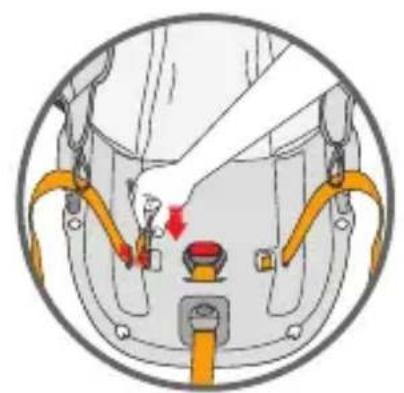
natural_image
Diagram of a medical or surgical device with orange connectors and red arrows indicating force or movement (no text or symbols)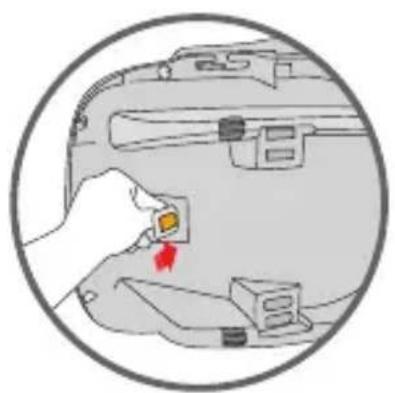
natural_image
Diagram of a hand inserting a small orange component into a device casing (no text or symbols)natural_image
Illustration of a person's seatbelt with red arrows indicating movement or pressure points (no text or symbols present)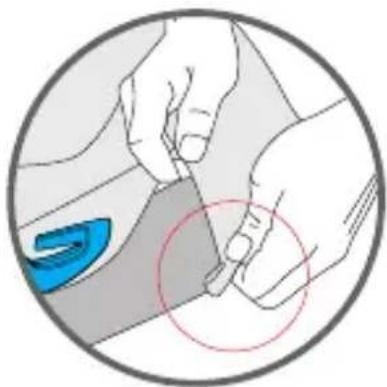
natural_image
Illustration of hands using a tool to cut a component, with a blue tool partially visible (no text or symbols)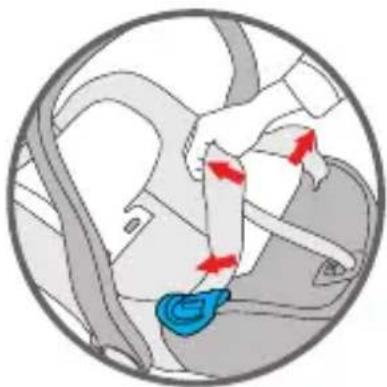
natural_image
Diagram of a car interior showing hand positioning and red directional arrows indicating movement (no text or symbols)Checks before use PAG 32
Components PAG 33
-
Approval PAG 34
-
Installation in the vehicle PAG 35
2.1 with 3-point belt PAG 36
- Placing your child in the car seat PAG 37
3.1 Using the reducer PAG 37
3.2 Adjusting the handle PAG 38
3.3 Adjusting the headrest PAG 39
3.4 Loosening the straps PAG 39
3.5 Using the harness PAG 40
3.6 Tightening the harness PAG 41
3.7 Checking that the fastening is correct PAG 41
-
Installing the car seat in the vehicle PAG 42
-
Canopy PAG 45
-
Car seat maintenance and care PAG 46
FORMAL GUARANTEE PAG 50
NOTICE
- This is an Universal child restraint. It is approved to Regulation No. 44, 04 series of amendments, for general use in vehicles and it will fit most, but not all, car seats.
- A correct fit is likely if the vehicle manufacturer has declared in the vehicle hand book that the vehicle is capable of accepting an Universal child restraint for this age group.
- This child restraint has been classified as Universal under more stringent conditions than those which applied to earlier designs which do not carry this notice.
- If in doubt, consult either the child restraint manufacturer or the retailer.
- Only suitable if the approved vehicles are fitted with 3 point safety belt, approved to UN/ECE Regulation No. 16 or other equivalent standards.
WARNING
IMPORTANT! Please read all instructions in this manual and in the vehicle owner's manual related to child safety seats carefully and understand them. Install and use the child safety seat as described in the instruction manual. Failure to do this could result in serious injury or death of your child. The instructions shall be retrained with the child restraint for the future use.
IMPORTANT! Because of potential medical issues inherent in low birth weight and premature infants, always have a trained professional doctor, or hospital staff member assess the suitability of the child restraint prior to leaving the hospital or using the child restraint.
DO NOT remove any labels on the child safety seat. Important information is contained on the labels.
DO NOT use a child safety seat with damaged or missing parts.
DO NOT use damaged or frayed harness straps or vehicle belt.
DO NOT modify or attempt to modify the child safety seat in any way.
DO NOT take apart or attempt to take apart this child safety seat except as instructed in this manual.
DO NOT use a child safety seat that has been in a crash. A crash can cause damage to the child safety seat that you cannot see.
DO NOT replace the child seat cover or harness with any other than the ones we recommend as these parts are integral to the child safety seat's performance.
DO NOT use a second-hand child seat or child seat whose history you do not know.
WARNING
MAKE sure that the child safety seat does not become trapped by folding or moveable passenger seat or in the door of your car.
DO NOT USE in any configuration not shown in the instructions.
NEVER use this child safety seat with 2 point vehicle belts.
DO NOT use belt routing methods not shown in these instructions.
DO NOT allow children to play with or adjust the child safety seat.
Always check the tightness of the restraint and the harness before each use.
DO NOT use this child safety seat in a passenger seat with an active airbag unless the vehicle manufacturer confirms that it is safe.
This child restraint should be securely belted in the vehicle even when not in use. In a crash or sudden stop, an unsecured child safety seat may injure other occupants.
- Make sure to properly secure any loose objects, such as luggage or books, in your car as they may cause injuries in the event of an accident.
NEVER leave your child unattended in a car even for a short time.
NEVER take your child out of the child safety seat when the vehicle is moving.
NEVER use this child safety seat without the car seat cover.
HOT! Cover the child safety seat when left in direct sunlight. Parts of a child safety seat may become too hot for the child's skin. Always check surfaces before placing a child in the child seat.
DO NOT use any load bearing contact points other than those described in the instructions and marked in the child restraint.
The rigid items and plastic parts of a child restraint must be so located and installed that they are not liable, during everyday use of the vehicle to become trapped by a movable seat or in a door of the vehicle.
We recommended that any straps holding the restraint to the vehicle should be tight, that any straps restraining the child should be adjusted to the child's body, and that straps should not be twisted.
IMPORTANT! Please ensure that any lap strap is worn low down, so that the pelvis is firmly engaged.
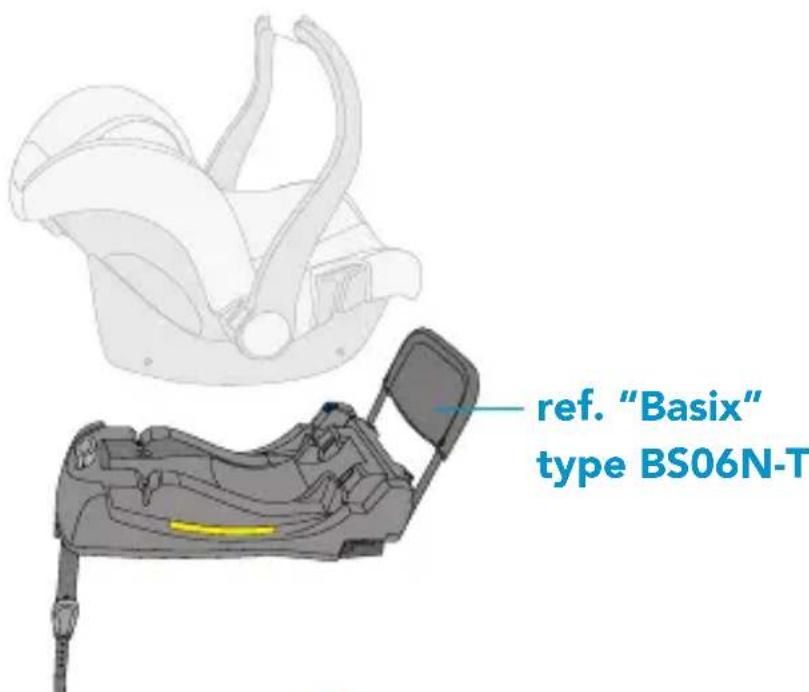
NEVER use this child restraint with any other base except ones that the manufacturer permits.
ALWAYS make sure all vehicle belts and harness straps are not twisted before each use.
NEVER leave the child in the child seat when the harness straps are loose or undone.
DO NOT leave your child in this child restraint for an extended period of time.
ALWAYS install the child safety seat in a rear-facing position.
NEVER install the child safety seat forward-facing.
WARNING
DO NOT use alternative routings not shown in these instructions.
MAKE SURE all folding passenger seats are property latched.
ALL occupants of the vehicle should be correctly restrained. Unrestrained passengers may be thrown into other passengers and cause serious injury or death in a crash.
ALWAYS MAKE SURE the handle is properly locked in the upright carrying position before carrying a child in the child seat.
NEVER place the car seat or infant carrier near the edge of an elevated surface or on a soft such as a seat cushion or mattress. The car seat or infant carrier could fall off these surfaces and cause serious injury or death.
NEVER use the child safety seat with a shopping cart.
CHECKLIST BEFORE USE
Inspect:
-child restraint free of damage
Verify Child within Size Range:
-weight between 0-13kg
Install Child Restraint Rearward-facing in Safe Location in Vehicle:
-vehicle seats that face front of vehicle only
-handle locked in specified position
-child facing rear of vehicle
-position with NO active airbag
-3 point (shoulder/lap) belt used
-seat belt not twisted
-belt path followed
-tight against vehicle seat
Secure Child Properly in Child Restraint:
-correct shoulder strap height
-harness not twisted
-harness low across hips
-harness secure and tight
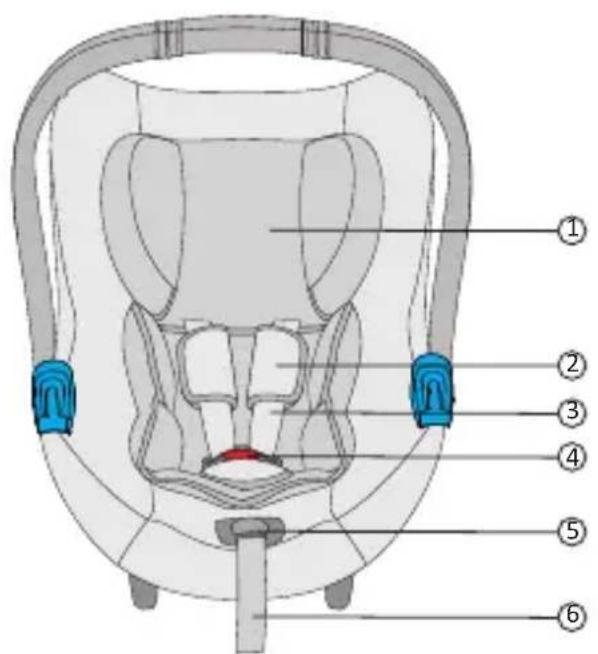
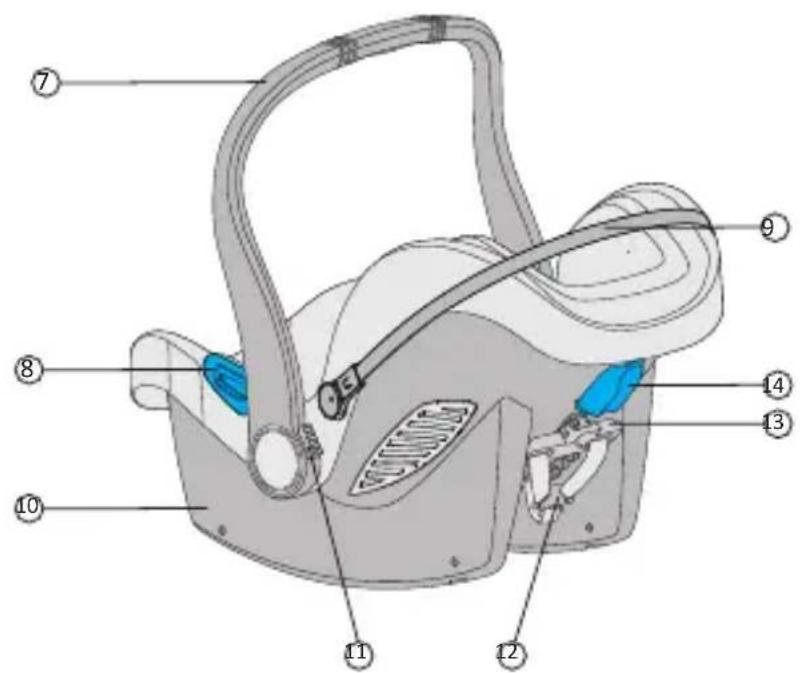
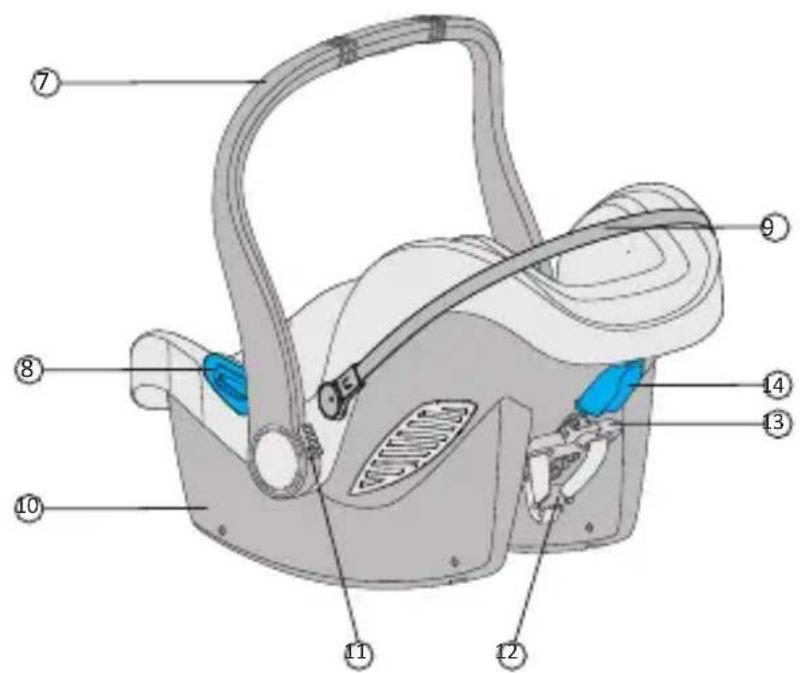
- Had support
- Shoulder pads
- Harness
- Buckle
- Adjuster button
- Adjuster strap
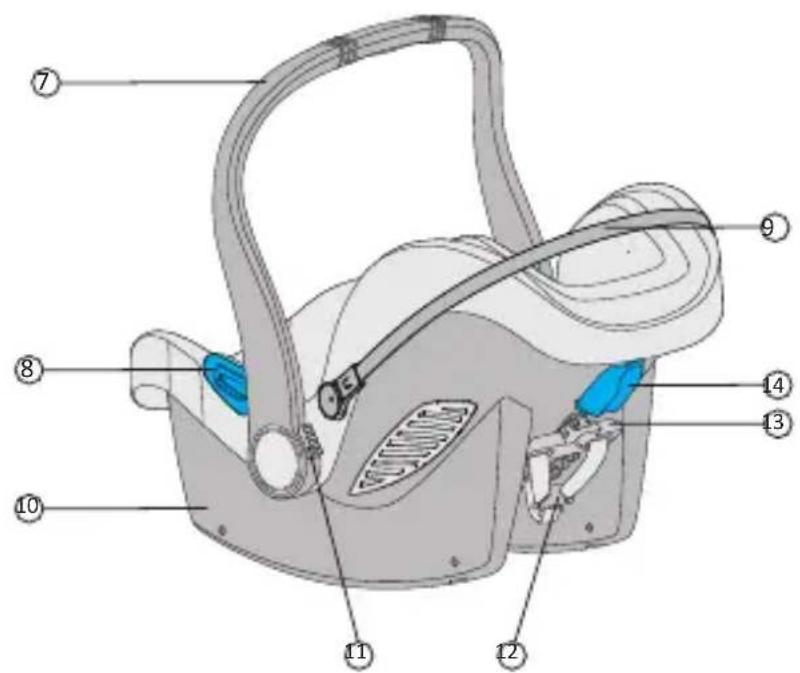
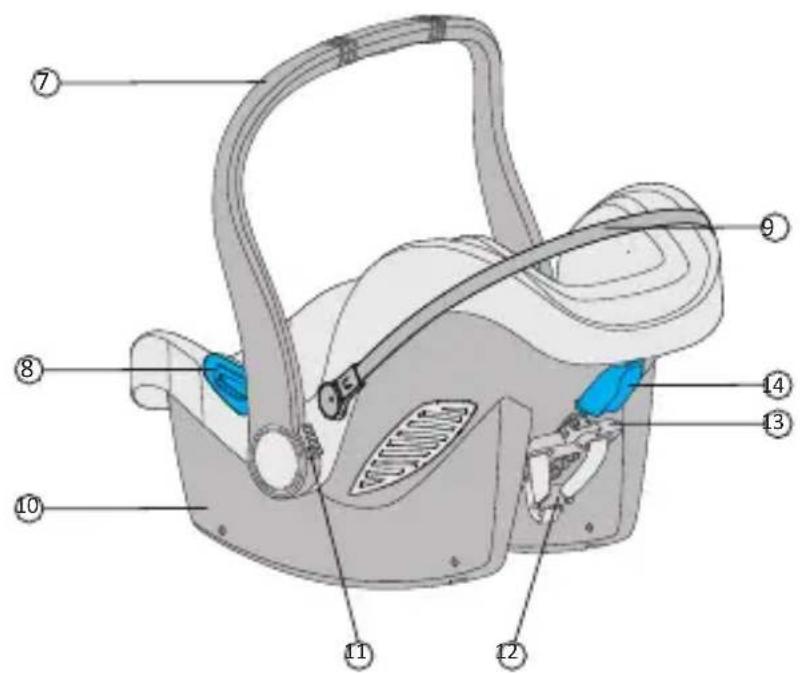
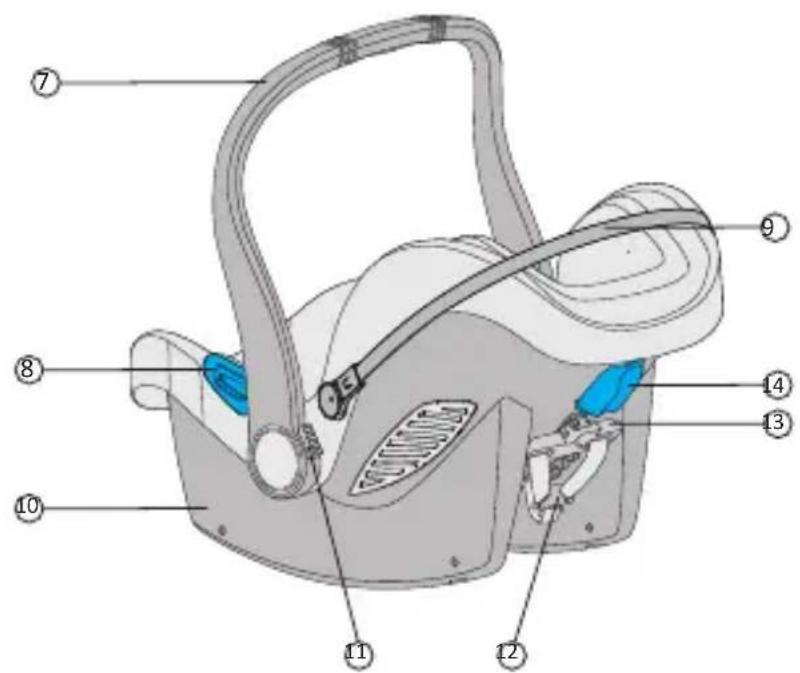
- Handle
- Lap belt guide
- Frame structure of the canopy
- Shell
- Handle release button
- Splitter plate
- Headrest adjustment lever
- Shoulder belt guide
1. Certification
natural_image
Front view icon of a car inside a circular frame (no text or symbols)... as a safety car seat.
| Car seat iWood | Complies with standard ECE R 44/04 | |
| Group Weight | ||
| Type BS06N | up to 13 kg0+ | |
This car seat has been designed, tested and approved according to the requirements of the European Regulation ECE R 44/04.
On the shell of the car seat there is a label that lists the approval number.
Any changes made to the car seat will invalidate the approval.
Only the manufacturer is authorised to make changes to the car seat.
2. Use in the car

DO NOT USE THE CAR SEAT PLACED ON A PASSENGER SEAT FITTED WITH AN AIRBAG.
Danger! If the airbag explodes it may hit the seat, and cause serious injury to the child, if not death.
Follow the instructions in the vehicle owner's manual for the use of child seats.
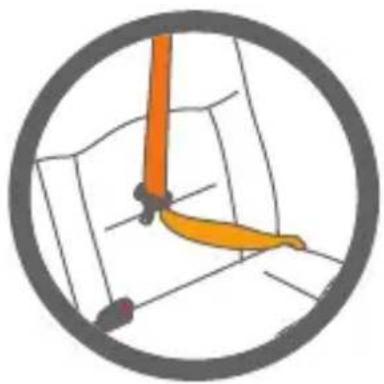
NEVER use a 2-point seat belt to fix the child's car seat to the passenger seat.
natural_image
Diagram of a mechanical component with orange and yellow parts, enclosed in a circular frame (no text or symbols)Use only 3-point seat belts.
Comply with the regulations in force in your own country.
NEVER use a 2-point seat belt to fix this child's car seat to the passenger seat.
Only suitable for use in vehicles equipped with 3-point
static or retractor seat belts, approved according to regulation UN/ECE 16 or other equivalent standards.
Never use this car seat on a front passenger seat fitted with an active front airbag.
INSTALLATION IN THE VEHICLE
2.1 With 3-point car seat belt
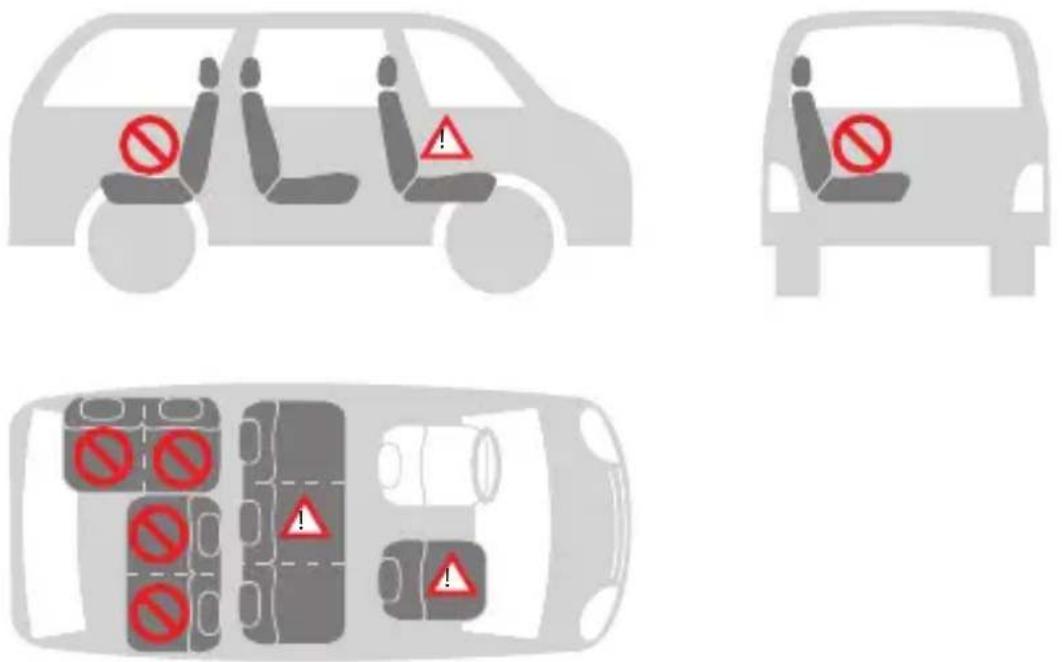
You can install the car seat as follows:
| in the direction of travel no | |
| in the opposite direction to the direction of travel | yes |
| with a 2-point belt | no 1) |
| with a 3-point belt | yes 2) |
| on the front passenger seat | yes 3) |
| on the side rear seat | yes |
| on the central rear seat | no 4) |
1) The use of a 2-point belt increases the risk of injury to the child in
the event of an accident.
2) The seat belt must be approved to ECE R 16 or to other equivalent standards.
3) Do not use on a front passenger seat fitted with an active front airbag.
4) It may be used if the central seat of the vehicle is equipped with a 3-point belt.
N THE CAR SEAT
3. Child protection
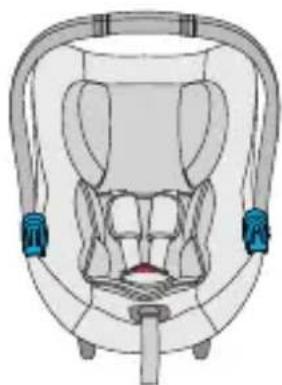
3.1 Protecting the child by using the reducer

To protect your child
natural_image
Top-down diagram of a car seat with seats and two blue buttons, no text or symbols presentThe reducer gives your child greater support during the first months.
The reducer is used to ensure greater comfort to young children.
WARNING! Use the car seat with the reducer supplied when the child weighs less than 9 kg.
• Always secure the child with the belt when placed in the car seat
- Never leave the child unattended in the child seat when placed on high-up surfaces (such as tables, etc.).
• Make sure that the end of the belt does not get caught in moving parts (such as automatic doors, escalators, etc.).
- Warning! The plastic parts of the car seat can heat up in the sun, causing burns to the child. Protect the car seat from excessive heat, for example, by using a light covering.
- The car seat has only one installation position in the car, leaving the child always semi-reclined.
• Take regular breaks when travelling on long journeys. Your child can get tired very easily. Avoid leaving the child in the car seat for too long.
3.2 Adjusting the handle
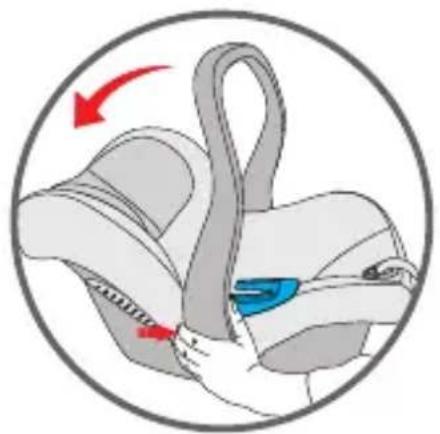
The handle has 3 positions
natural_image
Illustration of a car seatbelt buckle being adjusted, showing red arrows indicating movement (no text or symbols)
(A) For use in the car and for transport
(B) For placing your child in the seat
(C) For use as a bouncer with rocking movement locked
To adjust, squeeze handle release buttons on both sides, then rotate the handle, The handle will lock into position.
WARNING:
Always make sure the handle is securely locked in the upright carrying position before carrying.
You should hear a click when the handle button is engaged and handle is locked into the upright carrying position.
3.3 Adjusting the headrest
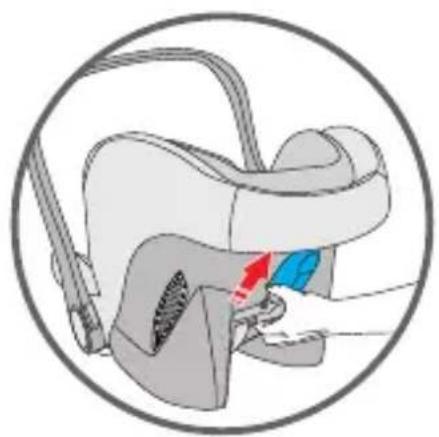
A properly-adjusted headrest ensures the optimal position for the child sitting in the car seat.
The headrest should be positioned so that the straps are at the same level or slightly above the child's shoulders.
natural_image
Illustration of a baby car seat with a hand inserting a blue object into the seat (no text or symbols)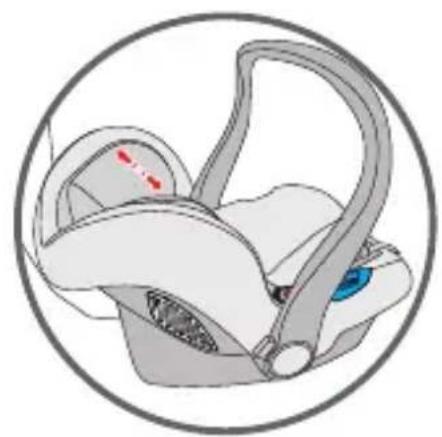
natural_image
Illustration of a baby car seat with a blue accent, enclosed in a circular border (no text or symbols)To adjust the headrest for the child:
Slide the regulator until the shoulder belts are at the correct height. Lock the regulator in the new position.
3.4 Loosening the straps
natural_image
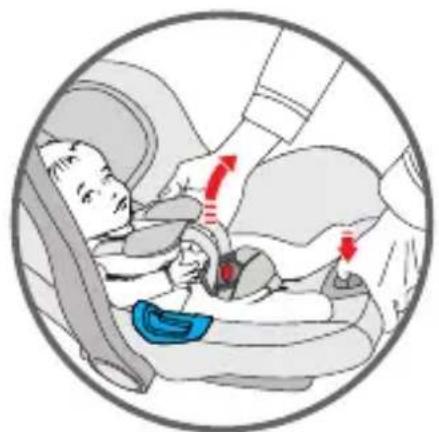
Illustration of a baby car seatbelt being adjusted for a person's seatbelt, showing red directional arrows (no text or symbols)Press the adjuster button on the front center of the seat, and pull on both shoulder straps to loosen the harness.
PLACING YOUR CHILD IN THE CAR SEAT
3.5 Securing the child with the harness
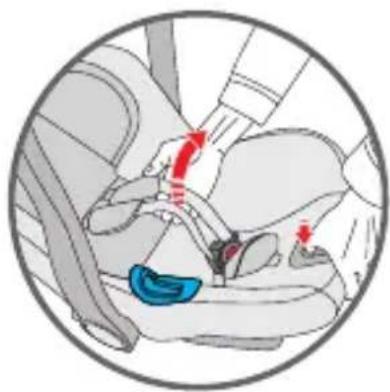
natural_image
Diagram of a car seatbelt with red arrows indicating force or movement (no text or symbols present)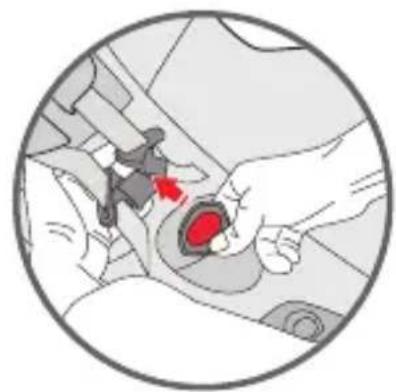
natural_image
Illustration of a hand using a tool to adjust a car's seatbelt, showing red adjustment arrows (no text or symbols)- Loosen the straps
- Press the red button on the buckle to release the shoulder straps and move them to the side.
natural_image
Illustration of a baby wearing a seatbelt, seated in a vehicle (no text or symbols)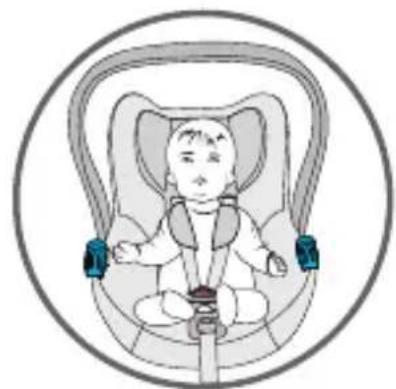
natural_image
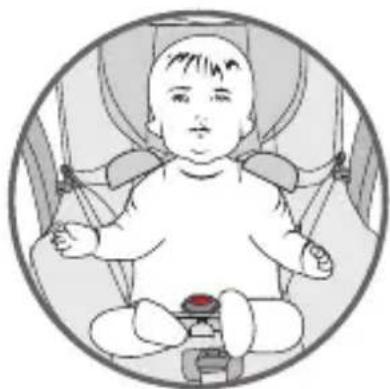
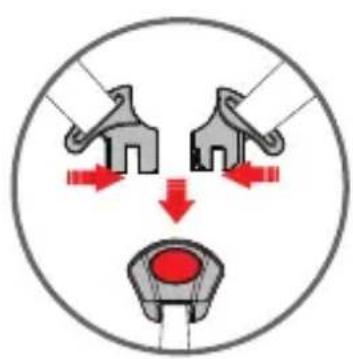
Illustration of a baby car seatbelt in a car seatbelt seat, enclosed in a circular frame (no text or symbols)- Place child's bottom on the seat and the child's back flat against the back of the child restraint. This will increase the child's comfort and allow the harness to properly secure the child. Slide shoulder straps over the child's shoulders. Make sure that the straps are at the same height and positioned just above the child's shoulders.
natural_image
Diagram showing two mechanical components with red arrows pointing to a central red component, enclosed in a circle (no text or symbols)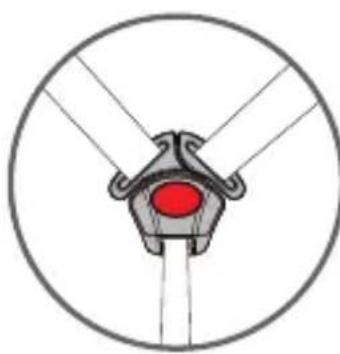
natural_image
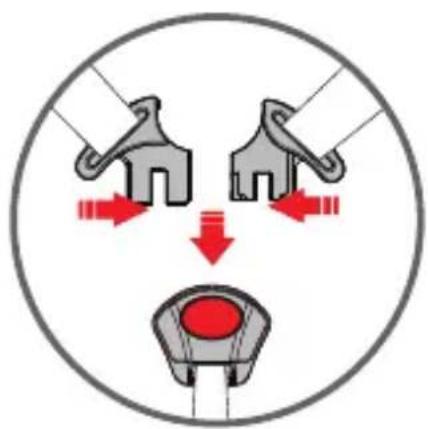
Circular diagram with a central red oval and surrounding gray lines, no text or symbols present.- Join together the two ends/ tabs of the straps to form a single connector.
Insert the connector into the central buckle until you hear a click.
Make sure that the straps are not twisted. Adjust the chest protectors to the centre of the child's shoulders.
ILD IN THE CAR SEAT
3.6 Tightening the harness
natural_image
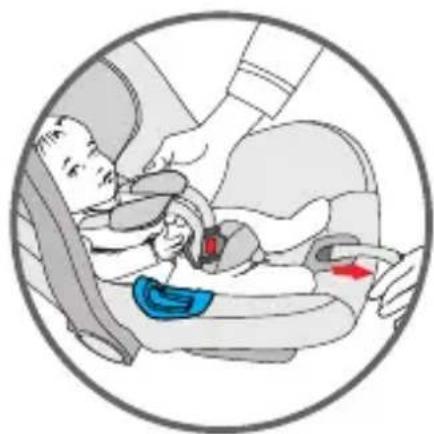
Illustration of a baby being assisted by a medical procedure on a car seat, showing pressure points and hand placement (no text or symbols)IMPORTANT! Pull the end of the adjuster strap outwards, not upwards or downwards.
During transport (especially when not in the car), the adjuster strap must be placed in the belt compartment.
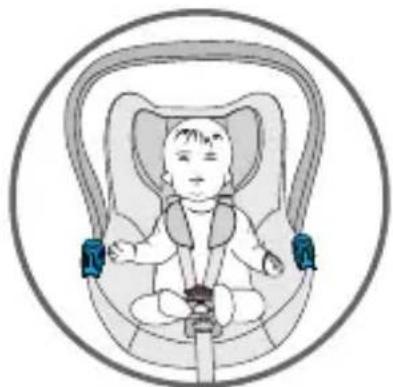
3.7 Ensuring that your child is properly secured with the harness

To ensure the safety of your child, check that ...
- The straps are adjusted correctly with the child's shoulders.
• The straps are not twisted.
natural_image
Illustration of a baby car seatbelt inside a circular frame (no text or symbols)• The tabs are properly engaged in the harness buckle
• The straps are properly tightened, as the gap between the harness and the child must not be greater than the thickness of your finger.
natural_image
Diagram showing mechanical components with red arrows indicating movement or force, no text or symbols present4. Installing the car seat in the vehicle
Do not leave your child unattended in the car.

For the safety of all occupants of the vehicle
In the event of emergency braking or an accident, people without a seat belt and loose objects may cause injury to the other occupants of the vehicle. Always check that...
- the headrests on the vehicle seats are secured, and that the folding rear seat lock is correctly latched.
- all movable objects, such as luggage or books in the vehicle, are immobilised as they may cause injury in the event of an accident.
- the car seat is secured when placed in the vehicle, even if it is not transporting a child.
- everyone in the car is wearing seat belts.
4.1 Installing the car seat in the vehicle
To secure the car seat in the vehicle with the 3-point seat belt, proceed as follows:
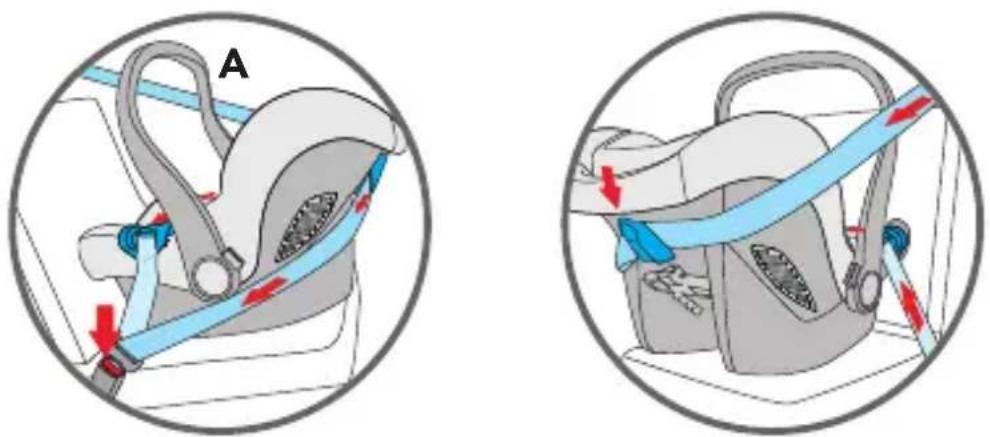
Place the child restraint rear-facing on the, vehicle seat and make sure the handles in specified position The child will face the rear of the vehicle.
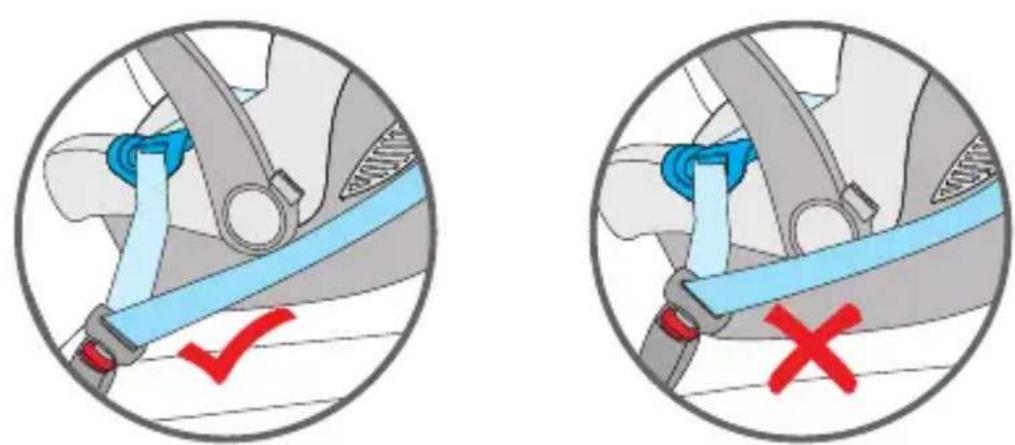
Route the vehicle lap belt through both lap belt guides and buckle the seat belt.
Route the vehicle shoulder belt around the back of the child restraint and through the shoulder belt guide.
If vehicle shoulder belt is too short, please move vehicle seat belt height adjustment to the lowest possible height. If the vehicle belt is still too short, try another seating position.
Adjuster the child restraint to the proper recline to ensure maximum protection for the child. A tightly rolled towel under the front edge of the child restraint can be used to achieve the correct recline.
WARNING:
DO NOT route the vehicle belt using any other path when using the child seat. For assistant contact our Customer Service team.
DO NOT use 2 point vehicle belt to install this child seat.
ONLY install the child restraint rear-facing on forward-facing vehicle seats.
Make sure the child is properly secured in the child restraint, and the child restraint is tightly installed in the vehicle.
4.2 Check that the car seat has been installed correctly in the vehicle

To ensure the safety of your child, check that ...
- the car seat is installed so that the child is facing in the opposite direction to the direction of travel.
- the car seat is installed on the front passenger seat only if there is no AIRBAG or if this has been disabled.
• the car seat is secured with a 3-point seat belt only,
- the lap belt part passes through both the blue guides placed on the car seat.
- the diagonal part of the belt passes round the back through the blue support guide and the car seat.
• the vehicle seat belt is tight enough and not twisted or rolled up.
E SUN CANOPY
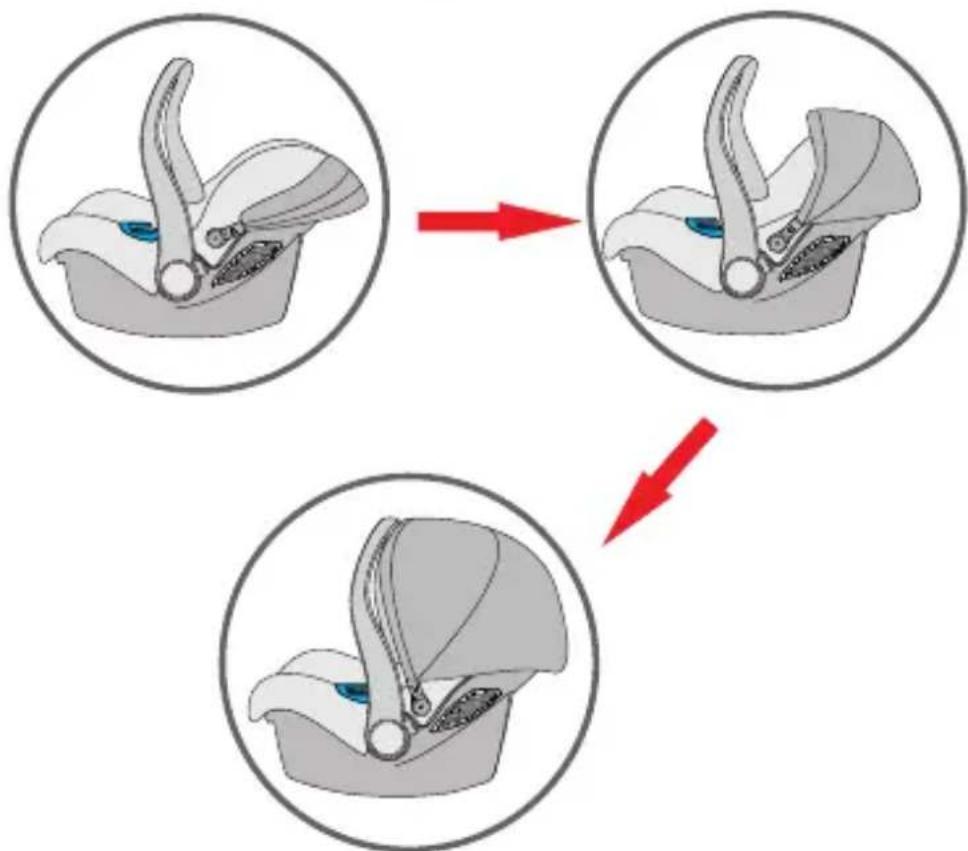
5. Positioning the sun canopy
flowchart
graph TD
    A["Step 1: Surgical Tool Manipulation"] --> B["Step 2: Discharge to Head"]
    B --> C["Step 3: Discharge to Head"]
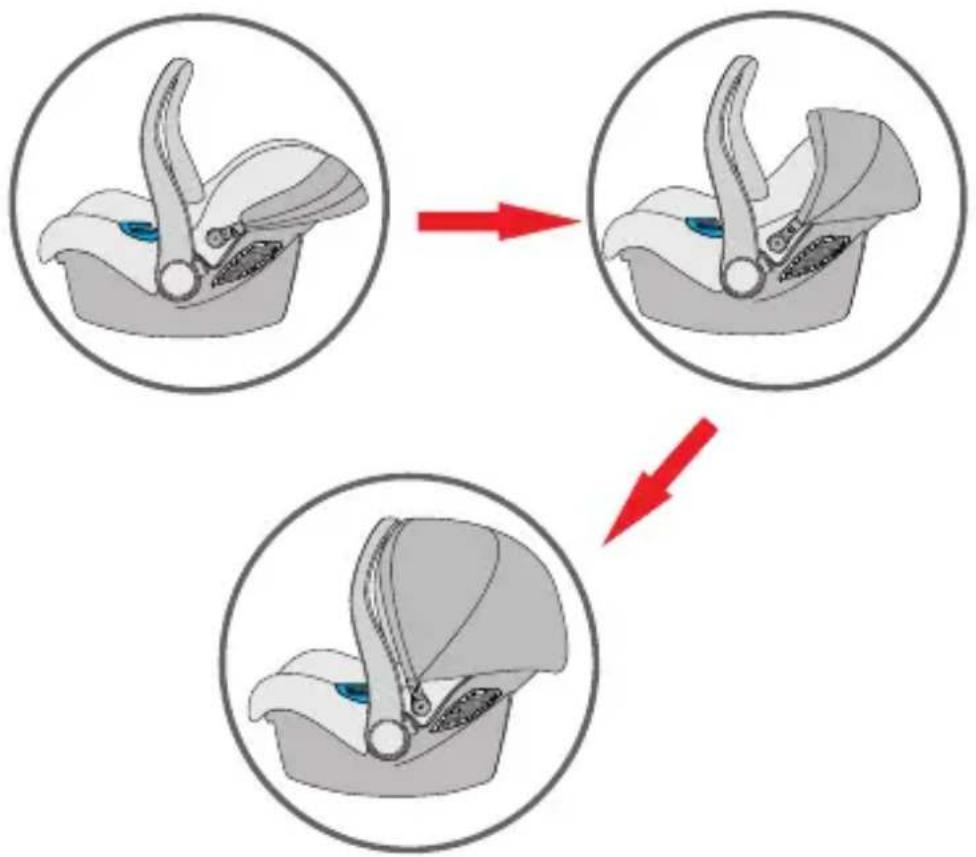
• The sun canopy is easily adjustable.
It enables your child to rest peacefully and gives protection from the sun's rays.
OPTIONAL
6. Information for car seat care
To ensure effective protection of the car seat
- In the event of an accident with an impact speed of over 10 km/h, the car seat may be damaged in a way that is not necessarily visible, in which case it is extremely important to replace it.
- Check the car seat regularly to ensure that there are NO damaged parts.
- Check that all the mechanical components are working correctly.
- To prevent the car seat from being damaged or broken, make sure that it does not get stuck between the doors or seat rails, etc.
- If the car seat is damaged (for example as a result of being dropped), have it checked by the manufacturer.
6.1 Maintenance of the harness buckle
The buckle needs to function correctly to ensure the safety of your child in the car seat. If the buckle fails to work, this is most likely due to an accumulation of dirt and dust.
Possible faults
The tabs on the buckle come out slowly after pressing the red release button. The tabs do not attach together properly (they are released).
The tabs attach together without emitting the "click" sound.
The tabs do not fit together easily (you feel some resistance).
The buckle only opens with strong pressure.
Solution
Wash the buckle so that it starts to work properly again:
1. How to remove the harness buckle
Unclip the buckle (press the red release button).
Loosen the belts on the harness.
Locate the metal ring attached to the belt under the child restraint. Rotate the metal ring and remove it through the shell and the padding.
2. How to clean the harness buckle
Soak the buckle in warm water with washing-up liquid for at least an hour. Rinse and dry thoroughly.
3. How to replace the harness buckle
Insert the metal ring and the crotch strap through the padding and the shell. The metal ring, fastened to the belt, must come out from the shell. Pull the centre buckle to check that the crotch strap is correctly secured.
Fault
The tabs no longer fit into the appropriate slot in the buckle.
Solution
Unclip the buckle, pressing the red button.
6.2 Cleaning
When replacing the lining, only use the original FOPPAPEDRETTI ones, since the lining is an important part necessary to ensure the protection of your child.
The car seat must not be used without the lining.
The lining can be removed and washed with gentle detergent and in a cycle for delicate fabrics (30°C). Follow the washing instructions on the label of the lining. The colours of the lining may fade if washed at more than 30°C.
Do not spin or tumble dry (the fabric could be detached from the padding). The plastic parts must be cleaned with soapy water. Do not use harsh detergents (such as solvents).
The harness can be removed and washed with warm soapy water.
Warning! Never remove the tabs from the belts.
6.3 How to remove the harness

natural_image
Illustration of a car seatbelt being adjusted for a red angle (no text or symbols)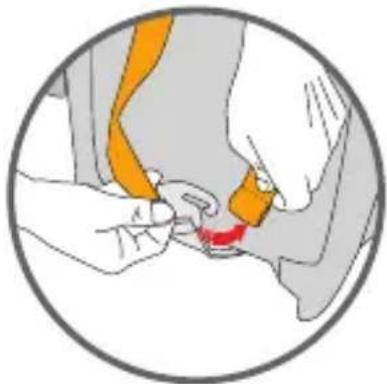
natural_image
Illustration of a medical procedure showing hands performing a neck massage technique (no text or symbols present)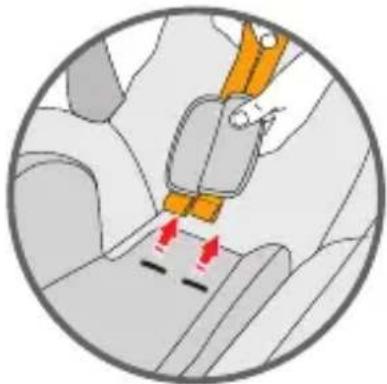
natural_image
Illustration of a car seatbelt being inserted into the seat, showing red arrows indicating force or movement (no text or symbols present)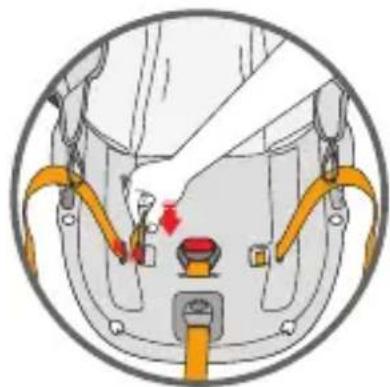
natural_image
Diagram of a medical or surgical device with orange tubing and red arrows indicating force or movement (no text or symbols)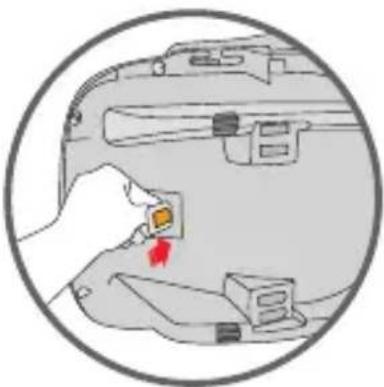
natural_image
Illustration of a hand inserting a small orange component into a device casing (no text or symbols)- Unclip the harness buckle (press the red button).
- Unclip the shoulder straps from the belt-tightening device, located on the rear of the backrest.
- Pull both belts through the shell and the lining and remove the chest protectors.
- Locate the metal ring attached to the belt under the child restraint. Rotate the metal ring and remove it through the shell and the padding.
HOW TO REMOVE THE LINING
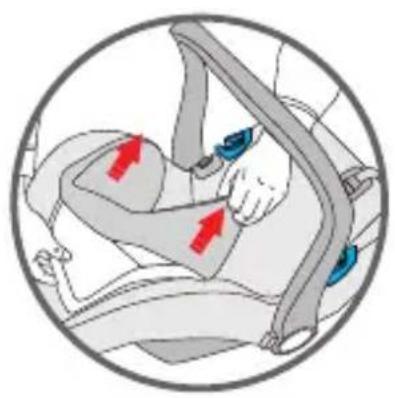
6.4 How to remove the lining
Take off the harness and remove the headrest lining.
Take off the elastic parts from the hooks along the edge of the shell.
Unhook all the elastic parts from their fastenings to remove the lining from the car seat.
natural_image
Diagram of a car seatbelt with red arrows indicating movement or pressure points (no text or symbols present)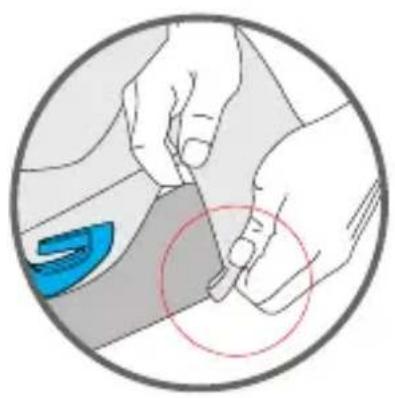
natural_image
Illustration of hands using a tool to cut a blue object, enclosed in a circular frame (no text or symbols)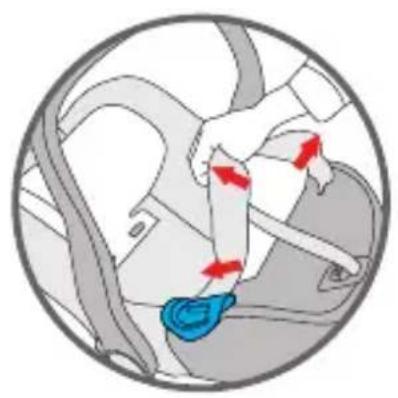
natural_image
Diagram of a car seatbelt mechanism with red directional arrows indicating movement (no text or symbols)6.5 How to replace the lining
To put the car seat lining back on, attach the elastic parts to the hooks and fit the lining around the headrest.
FORMAL GUARANTEE
The contents of this document as stated below will come into effect as from 01.01.2005 and replace, on every account and in full, any previous message referring to the guarantee provided by Foppa Pedretti S.p.A.
FORMAL GUARANTEE
Foppa Pedretti S.p.A. the head office of which is located at n. 11 Via Volta, Grumello del Monte (Italy), guarantees directly to the Consumer that this brand new product is free of faults with regard to the materials, design and manufacture and that it complies with the characteristics as declared by the manufacturer.
This formal guarantee is valid in all Member Countries of the European Union and it neither excludes nor limits the Consumer's rights in accordance with mandatory measures provided for by the law with regard to the Retailer of the Product.
To take advantage of this formal guarantee, the Consumer must return the faulty product to the Retailer, presenting to the same the proof of purchase of the Product which must clearly show the Retailer's address, the date of purchase of the Product with the Retailer's stamp and signature and an indication of the Product itself or, alternatively, the receipt which must not have been altered and which must clearly show the same information as that referred to above.
The manufacturer's formal guarantee is valid for twelve (12) months from the date of purchase of the Product. During this period, Foppa Pedretti S.p.A. will repair or replace the faulty product, at its own discretion.
The formal guarantee is granted to the end buyer of the Product (Consumer) and it neither excludes nor limits the mandatory rights of the Consumer as provided for by the law and/or the rights that the Consumer may have with regard to the Dealer/Retailer of the Product.
EXCLUSIONS TO THE FORMAL GUARANTEE.
The formal guarantee is excluded in the case of damage caused to the Product for the following reasons: if the product is used in a way that does not comply with the information contained in the use and assembly instruction sheet, if the product is knocked or dropped, if the Product is exposed to humidity or extreme heat or environmental conditions, or to sudden changes in the same, corrosion, oxidization, unauthorized alterations or repairs to the Product, repairs using unauthorised spare parts, improper use, improper maintenance or failure to carry out the same, improper maintenance compared to the information given on the use and assembly instruction sheet, incorrect assembly, accidents, damage caused by food or drink, damage caused by chemical products, cases of force majeure.
In any case, Foppa Pedretti S.p.A. declines all responsibility for damage caused to persons or to property, other than the Product, when such damage is caused by a failure to comply with the instructions/advice/warnings cont a ined in the manua l or, alternatively, in the use and assembly instruction sheet provided with each Product for the owner/user. (Purely as an example, in the case of a cot: "Check your baby constantly. Make sure that the sheets and blankets do not cover the baby's head...").
Furthermore, Foppa Pedretti S.p.A. declines all responsibility for damage to persons and to property when the breakage of its products is due to a deterioration in the components of the Product that are subject to wear. All the components of the Product made of plastic are considered to be components subject to wear.
AVERTISSEMENT PAGE 52
natural_image
Front view icon of a car inside a circular frame (no text or symbols)natural_image
Diagram of a mechanical component with orange and yellow parts, enclosed in a circular frame (no text or symbols)natural_image
Diagram of a car seat assembly with blue connectors and seat covers (no text or labels)natural_image
Illustration of a car seat with a hand inserting a blue component into the seat (no text or symbols)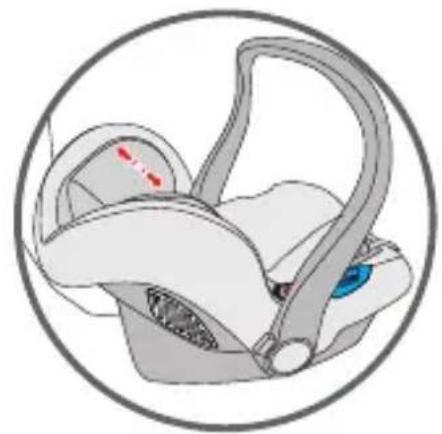
natural_image
Illustration of a baby car seat with a blue accent, enclosed in a circular frame (no text or symbols)natural_image
Illustration of a baby in a car seatbelt being adjusted for a seatbelt, with no text or symbols present.natural_image
Diagram of car seatbelt buckle assembly showing red directional arrows indicating movement (no text or symbols)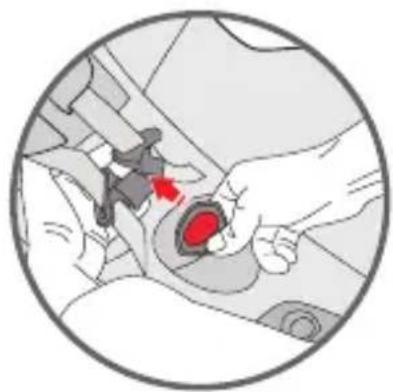
natural_image
Illustration of a hand adjusting a car seatbelt with red arrows indicating a specific area (no text or symbols present)natural_image
Illustration of a baby seated in a car seat, wearing a seatbelt (no text or symbols)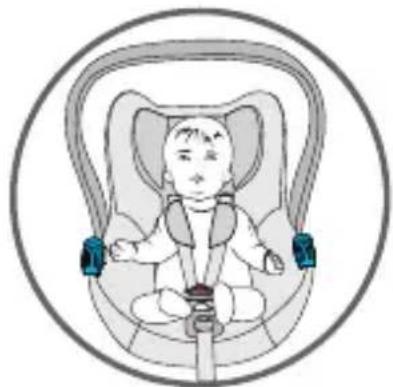
natural_image
Illustration of a baby car seatbelt with no text or symbolsnatural_image
Diagram showing mechanical components with red arrows indicating movement or force, no text or symbols present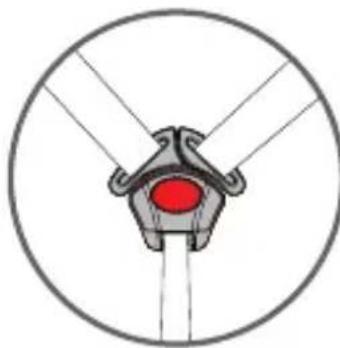
natural_image
Cross-sectional diagram of a mechanical component with red center and gray body, enclosed in a circular frame (no text or symbols)natural_image
Illustration of a baby in a car seat being assisted by a hand, with no visible text or symbolsnatural_image
Illustration of a baby car seatbelt in a circular frame (no text or symbols)natural_image
Diagram showing mechanical components with red arrows indicating movement or force, no text or symbols presentflowchart
graph TD
    A["Step 1: Surgical Tool Manipulation"] --> B["Step 2: Discharge to Top"]
    B --> C["Step 3: Discharge to Bottom"]
natural_image
Illustration of a car seatbelt being adjusted for a red belt (no text or symbols present)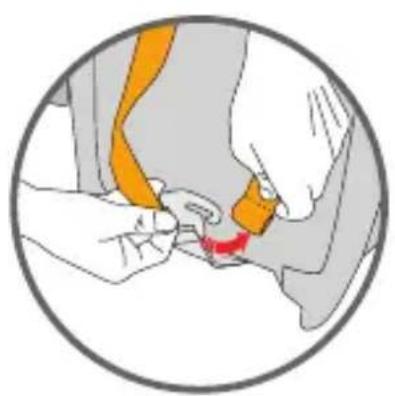
natural_image
Illustration of a person adjusting a yellow belt with a red accent, enclosed in a circular frame (no text or symbols)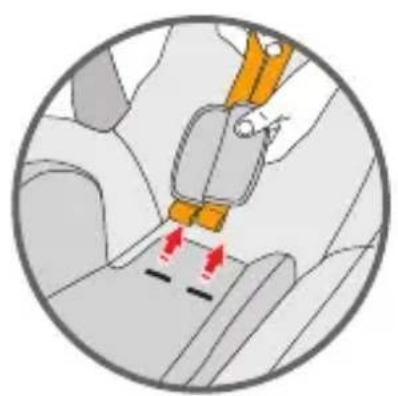
natural_image
Illustration of a car seatbelt being inserted into the seat, showing red arrows indicating force or movement (no text or symbols present)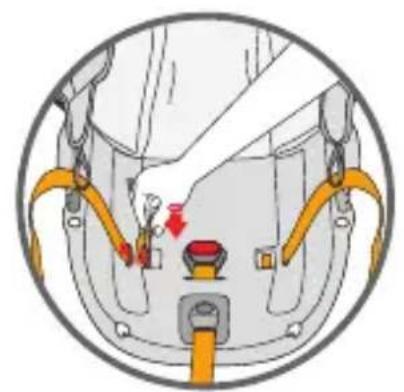
natural_image
Diagram of a medical device with orange tubing and a red arrow indicating a point of interest (no text or symbols present)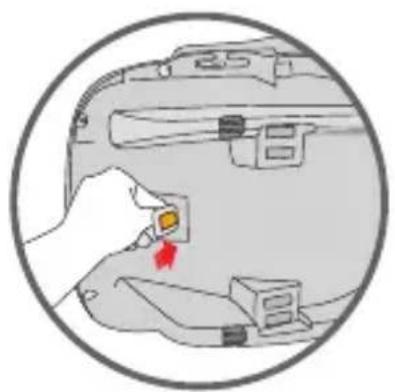
natural_image
Illustration of a hand pressing a yellow button on a vehicle's seat (no text or symbols)natural_image
Diagram of a car seatbelt with red directional arrows indicating movement or force (no text or symbols present)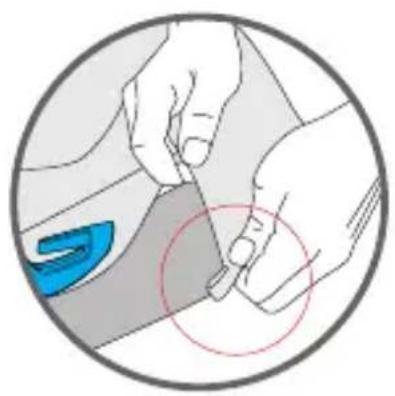
natural_image
Illustration of hands using a tool to apply a blue tool on a surface, with a red circle highlighting the area (no text or symbols present)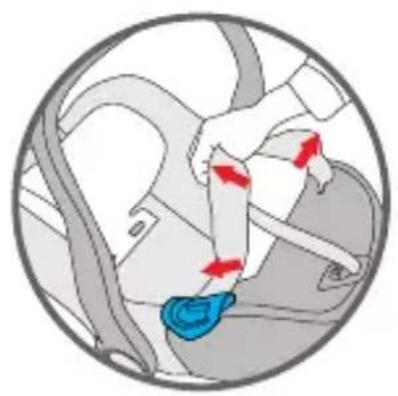
natural_image
Diagram of a car seatbelt mechanism with red arrows indicating clockwise motion (no text or symbols)EXCLUSIONS DE LA GARANTIE CONVENTIONNELLE.
natural_image
Front view icon of a car inside a circular frame (no text or symbols)natural_image
Diagram of a mechanical component with orange and yellow parts, enclosed in a circular frame (no text or symbols)natural_image
Diagram of a car seat assembly with blue connectors and seat covers (no text or labels)natural_image
Illustration of a car seat with a hand inserting a blue component into the seat (no text or symbols)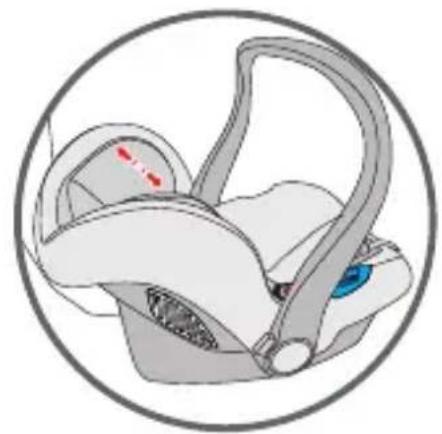
natural_image
Illustration of a baby car seat with a blue accent, enclosed in a circular frame (no text or symbols)natural_image
Illustration of a baby car seatbelt being adjusted for a person's seatbelt, showing red directional arrows indicating movement (no text or symbols present)natural_image
Diagram of a car seatbelt with red arrows indicating force or movement (no text or symbols present)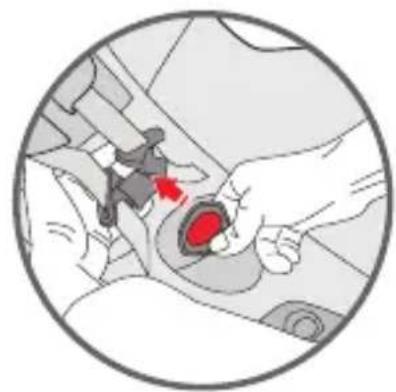
natural_image
Illustration of a hand pressing a red circular object on a car interior (no text or symbols)natural_image
Illustration of a baby seated in a baby car seat, no text or symbols present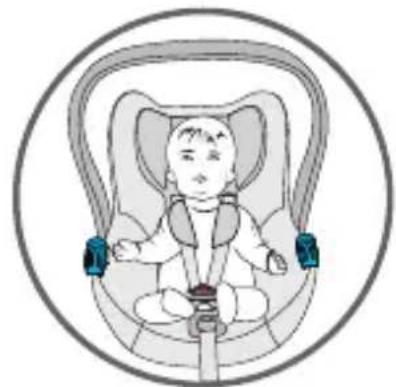
natural_image
Illustration of a baby car seatbelt in a circular frame (no text or symbols)natural_image
Diagram showing mechanical components with red arrows indicating movement or force, no text or symbols present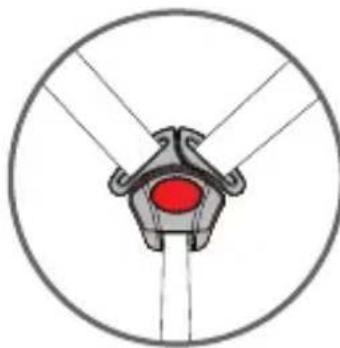
natural_image
Cross-sectional diagram of a mechanical component with red center and gray body, enclosed in a circular frame (no text or symbols)natural_image
Illustration of a baby in a car seat being held by adult hands, with no visible text or symbolsnatural_image
Illustration of a baby in a car seatbelt inside a circular frame (no text or symbols)natural_image
Diagram showing mechanical components with red arrows indicating direction, no text or symbols presentnatural_image
Illustration of a hand adjusting a car seatbelt with a red arrow indicating the joint (no text or symbols present)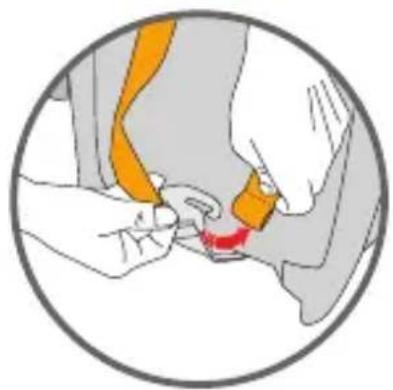
natural_image
Illustration of a person's seatbelt being adjusted to a seatbelt, showing orange band and red grip (no text or symbols)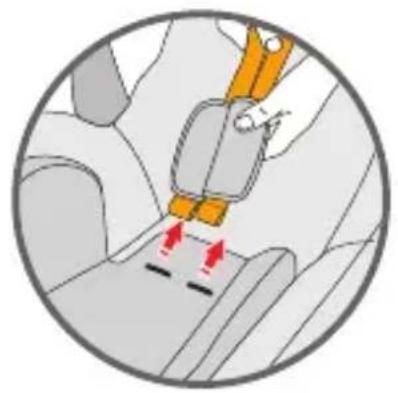
natural_image
Diagram showing a car seatbelt being inserted into the seat, with red arrows indicating force direction (no text or symbols present)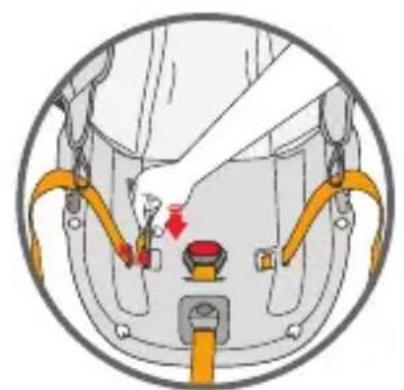
natural_image
Diagram of a medical device with orange tubing and a central switch, showing no text or symbols.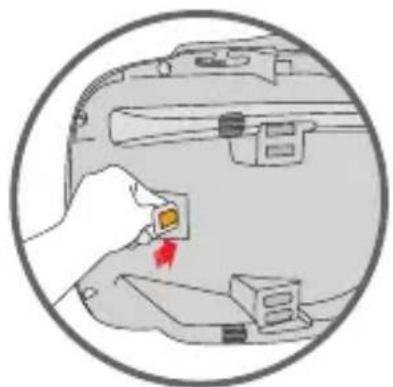
natural_image
Illustration of a hand inserting a small orange component into a device casing (no text or symbols visible)natural_image
Diagram of a car seatbelt with red directional arrows indicating movement or force (no text or symbols present)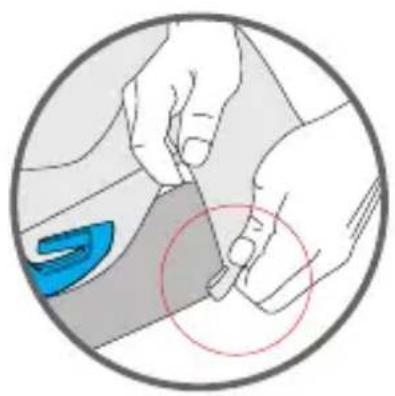
natural_image
Illustration of hands using a tool to apply a blue tool on a surface, with a red circle highlighting the area (no text or symbols present)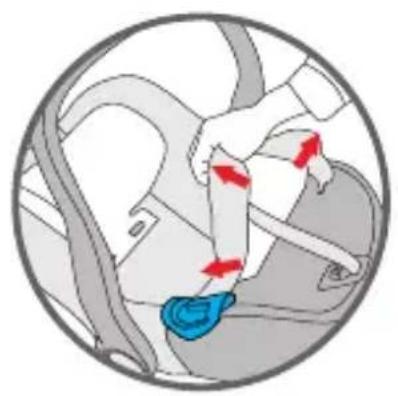
natural_image
Diagram of a car seatbelt mechanism with red directional arrows indicating movement (no text or symbols)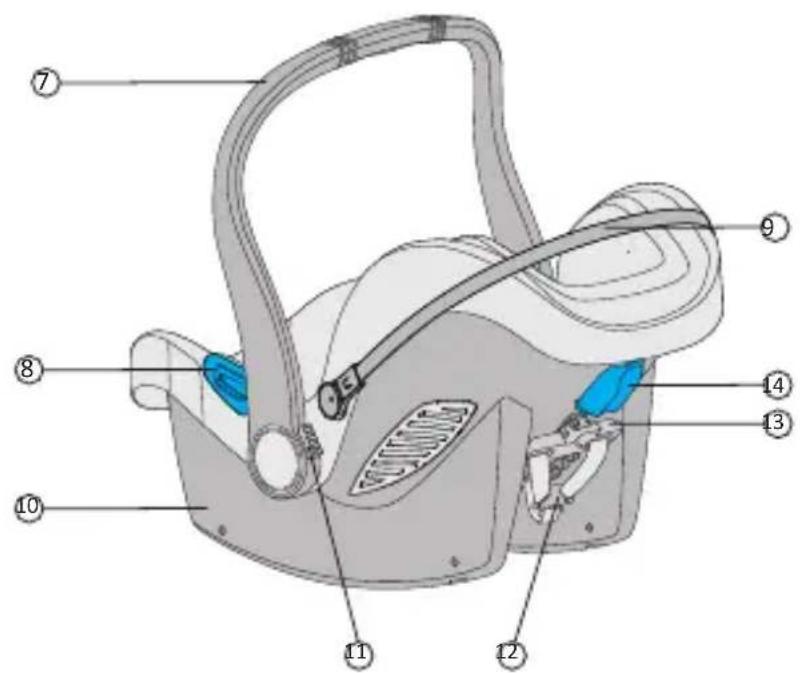
natural_image
Front view icon of a car inside a circular frame (no text or symbols)natural_image
Diagram of a mechanical component with orange and yellow parts, enclosed in a circular frame (no text or symbols)natural_image
Diagram of a car seat assembly with blue belt connectors (no text or labels)natural_image
Illustration of a car seat with a hand inserting a blue component into the seat (no text or symbols)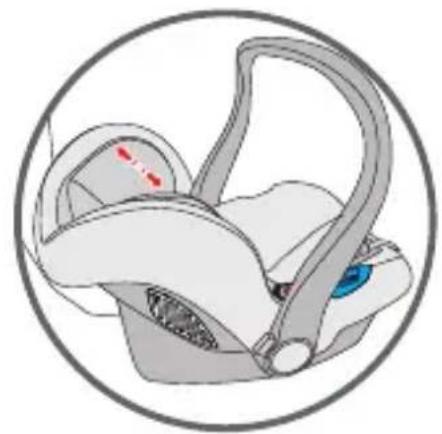
natural_image
Illustration of a baby car seat with a blue accent, enclosed in a circular frame (no text or symbols)natural_image
Illustration of a baby in a car seatbelt with red directional arrows indicating motion or pressure points (no text or symbols present)natural_image
Diagram of car seatbelt and seatbelt mechanism showing red directional arrows indicating movement (no text or symbols)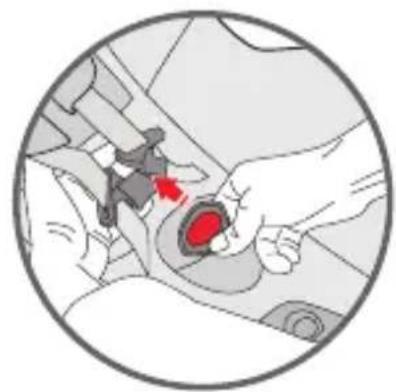
natural_image
Illustration of a hand using a car seatbelt to adjust the seatbelt (no text or symbols present)• Afloje los tirantes.
natural_image
Illustration of a baby sitting in a car seat with arms extended (no text or symbols)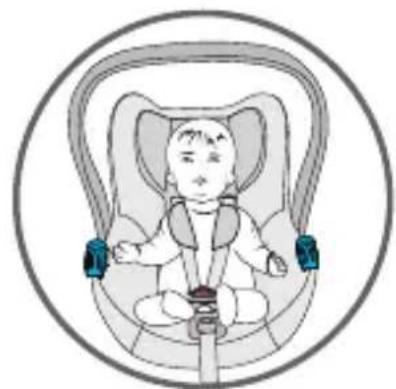
natural_image
Illustration of a baby car seatbelt with no text or symbolsnatural_image
Diagram showing mechanical components with red arrows indicating direction, no text or symbols present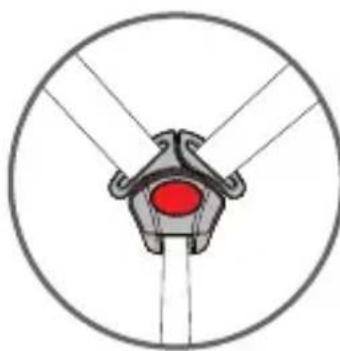
natural_image
Cross-sectional diagram of a mechanical component with central red area and surrounding lines (no text or symbols)natural_image
Illustration of a baby car seat with a hand adjusting the seatbelt, showing no text or symbols.natural_image
Illustration of a baby car seatbelt inside a circular frame (no text or symbols)natural_image
Diagram showing mechanical components with red arrows indicating direction, no text or symbols presentflowchart
graph TD
    A["Step 1: Surgical Tool Manipulation"] --> B["Step 2: Discharge to Top"]
    B --> C["Step 3: Discharge to Bottom"]
natural_image
Illustration of a car seatbelt being adjusted to a seatbelt, showing hand placement and red arrow indicating adjustment (no text or symbols)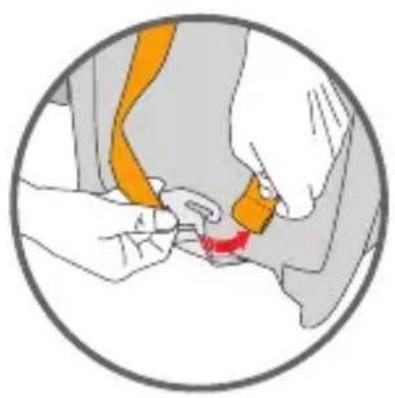
natural_image
Illustration of a person adjusting a yellow belt with a red accent, enclosed in a circular frame (no text or symbols)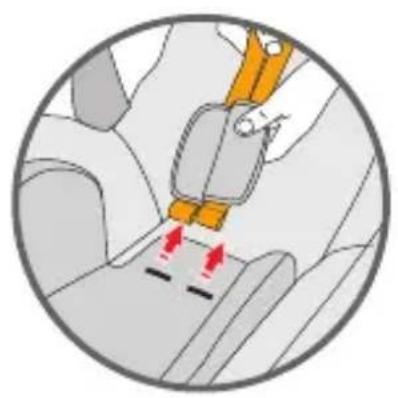
natural_image
Diagram of a car seatbelt being inserted into the seat, showing red arrows indicating force or movement (no text or symbols present)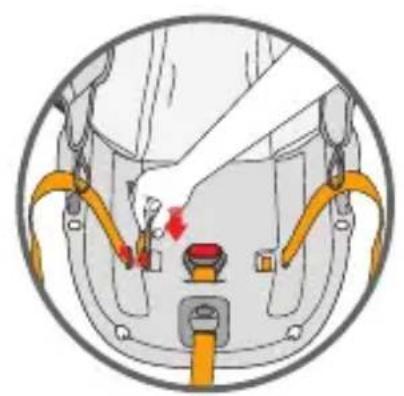
natural_image
Diagram of a car seatbelt with orange belt and red valve, no text or symbols present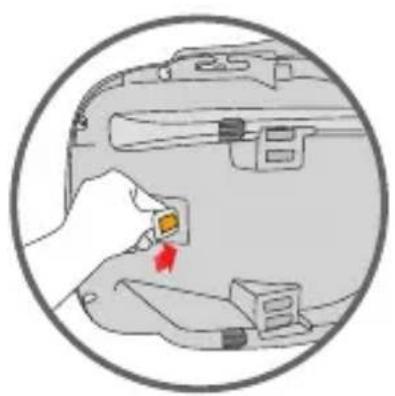
natural_image
Illustration of a hand inserting a small orange component into a device casing (no text or symbols)natural_image
Diagram of a car seatbelt with red arrows indicating movement or pressure points (no text or symbols present)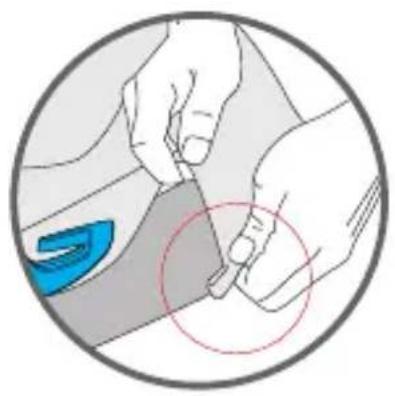
natural_image
Illustration of hands using a tool to cut a blue object, enclosed in a circular frame (no text or symbols)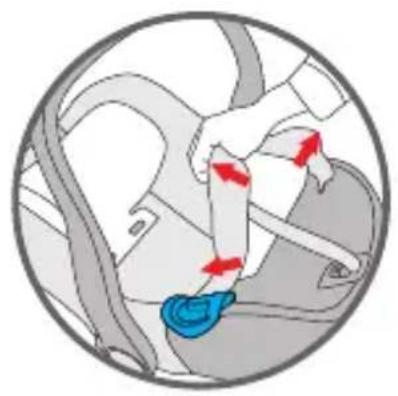
natural_image
Diagram of a car seatbelt mechanism showing hand placement and blue cushion (no text or symbols)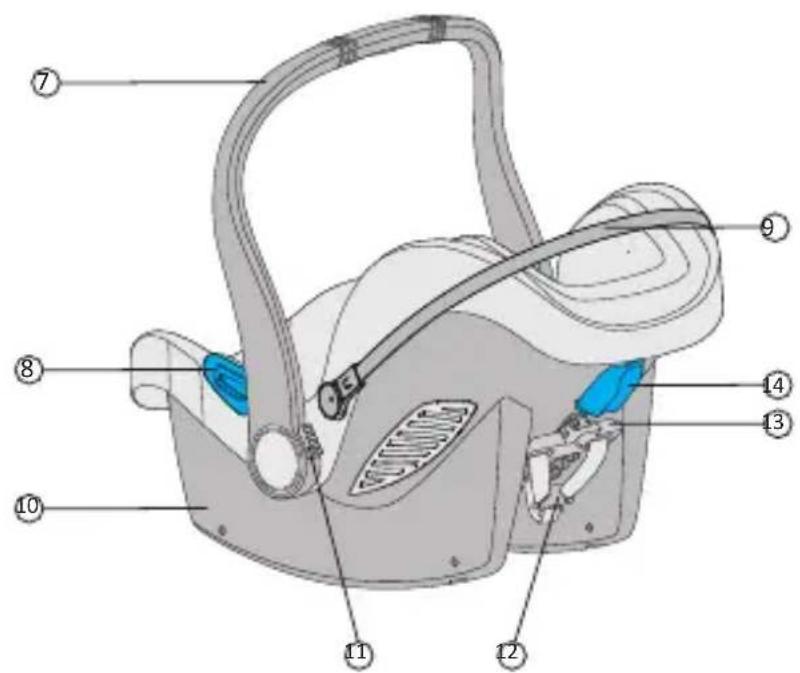
natural_image
Simple icon of a car front view inside a circle (no text or symbols)natural_image
Diagram of a boat navigating a circular ship deck with visible hull and hull (no text or symbols)natural_image
Diagram of a car seat assembly with no text or symbolsnatural_image
Illustration of a person's seatbelt with a blue clip and red arrow indicating rotation (no text or symbols)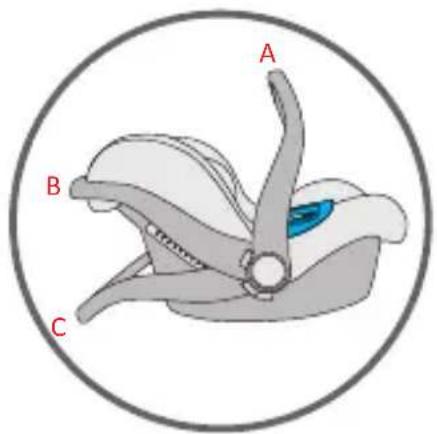
natural_image
Diagram of a car seat assembly with a hand inserting a blue component into the seat (no text or labels)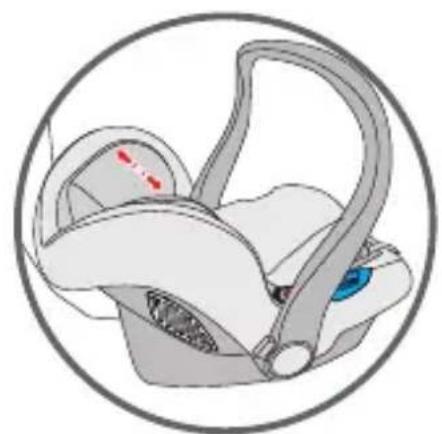
natural_image
Illustration of a baby car seat with a handle and blue accent, enclosed in a circular border (no text or symbols)natural_image
Illustration of a baby car seat with a hand adjusting the seat, showing red arrows indicating direction (no text or symbols present)natural_image
Diagram of car seatbelt and seatbelt mechanism showing red directional arrows indicating movement (no text or symbols)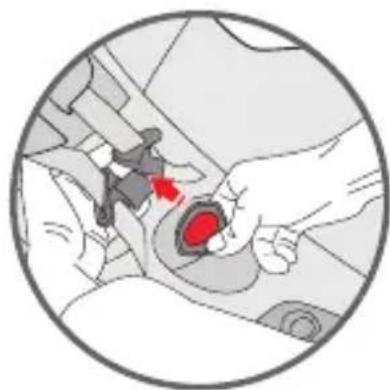
natural_image
Illustration of a hand adjusting a car seatbelt with a red arrow indicating the grip (no text or symbols present)natural_image
Illustration of a baby sitting in a car seat with arms extended (no text or symbols)
natural_image
Illustration of a baby car seatbelt in a circular frame (no text or symbols)natural_image
Diagram showing two mechanical components with red arrows indicating movement or force, no text or symbols present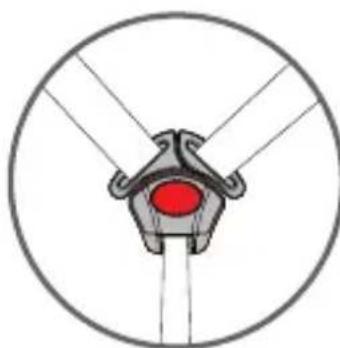
natural_image
Cross-sectional diagram of a mechanical component with central red area and surrounding lines (no text or symbols)natural_image
Illustration of a baby in a car seat being held by adult hands, with no visible text or symbolsnatural_image
Illustration of a baby car seatbelt inside a circular frame (no text or symbols)natural_image
Diagram showing mechanical components with red arrows indicating movement or force, no text or symbols presentnatural_image
Diagram of a car seatbelt with blue belt and red directional arrows indicating movement (no text or symbols)flowchart
graph TD
    A["Step 1: Surgical Tool Manipulation"] --> B["Step 2: Discharge to Top"]
    B --> C["Step 3: Discharge to Bottom"]
natural_image
Illustration of a car seatbelt buckle being adjusted to a red belt (no text or symbols)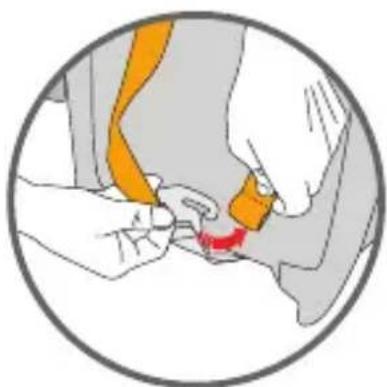
natural_image
Illustration of a person performing a medical procedure with an orange bandage and red patch, enclosed in a circular frame (no text or symbols)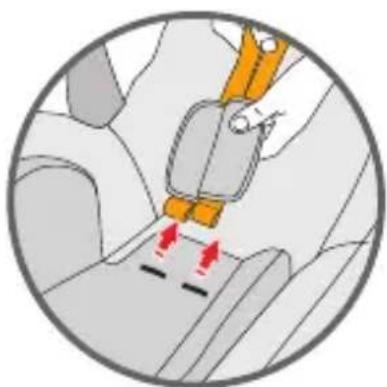
natural_image
Diagram of a car seatbelt being adjusted to lift a seatbelt, showing red arrows indicating force or movement (no text or symbols present)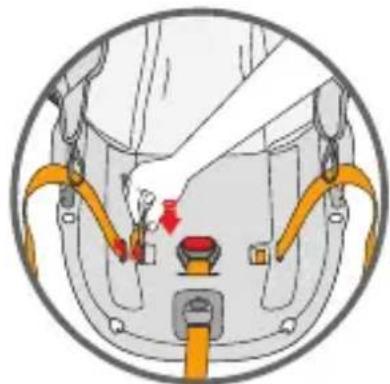
natural_image
Diagram of a medical or surgical device with orange safety harness and red directional arrows indicating movement (no text or symbols)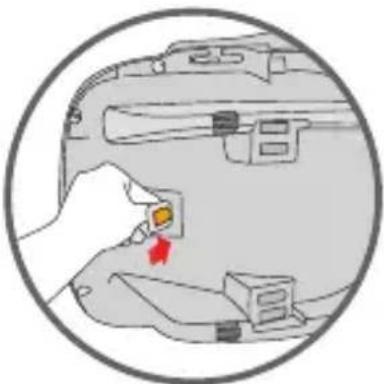
natural_image
Illustration of a hand pressing a yellow button on a vehicle interior (no text or symbols)natural_image
Diagram of a car seatbelt with red arrows indicating movement or pressure points (no text or symbols present)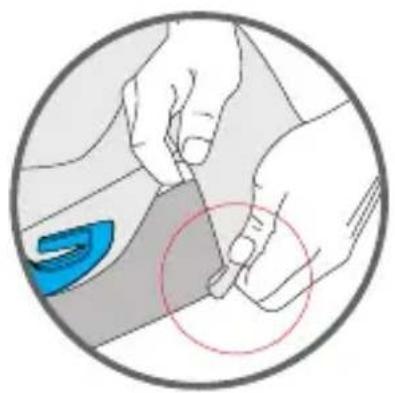
natural_image
Illustration of hands using a tool to cut a blue object, enclosed in a circular frame (no text or symbols)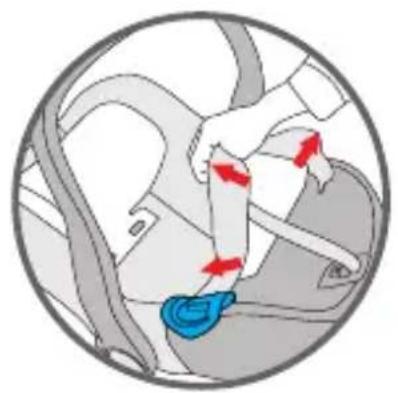
natural_image
Diagram of a car interior showing hand positioning and red directional arrows indicating movement or force (no text or symbols)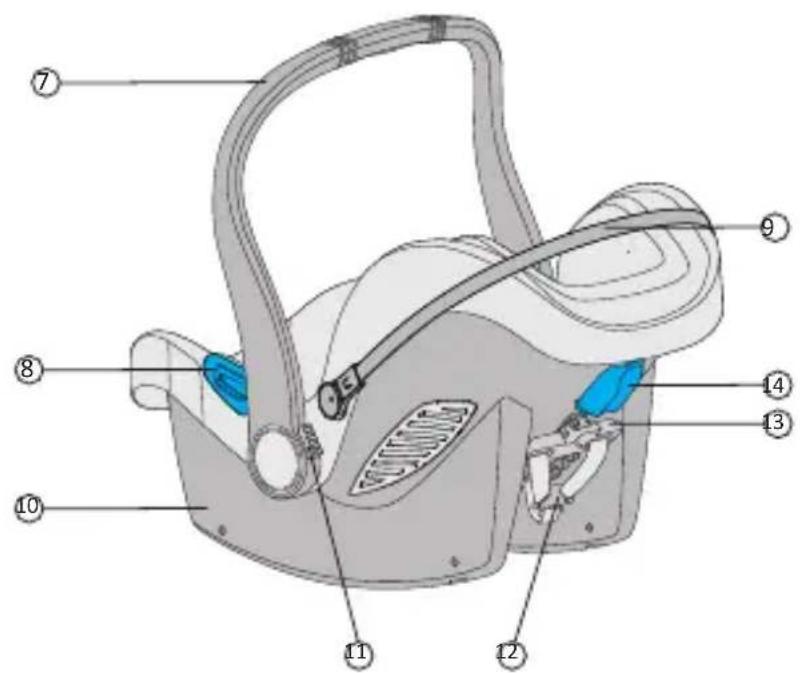
natural_image
Front view icon of a car inside a circular frame (no text or symbols)natural_image
Diagram of a mechanical component inside a circular frame, showing orange and yellow parts (no text or symbols)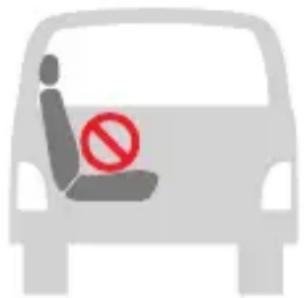
natural_image
Front view of a car with a red prohibition symbol on the seat (no text or numbers present)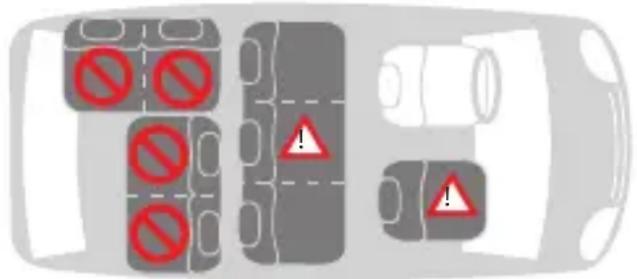
natural_image
Diagram of a car seat assembly with blue connectors and seat covers (no text or labels)natural_image
Illustration of a person's seatbelt with a blue clip and red arrow indicating rotation (no text or symbols)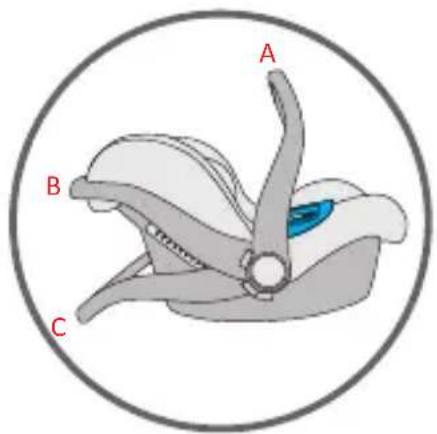
natural_image
Illustration of a car seat with a hand inserting a blue clip into the seat (no text or symbols)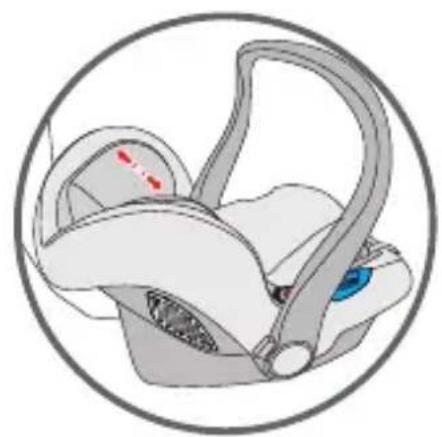
natural_image
Illustration of a baby car seat with a blue accent, enclosed in a circular border (no text or symbols)natural_image
Illustration of a baby car seatbelt being adjusted for a person's seatbelt, showing red directional arrows indicating movement (no text or symbols present)natural_image
Diagram of car seatbelt buckle with red arrows indicating force or movement (no text or symbols)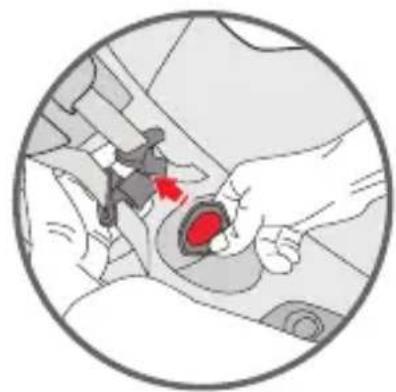
natural_image
Illustration of a hand using a car seatbelt to interact with a red circular button (no text or symbols)natural_image
Illustration of a baby sitting in a chair with arms extended, enclosed in a circular frame (no text or symbols)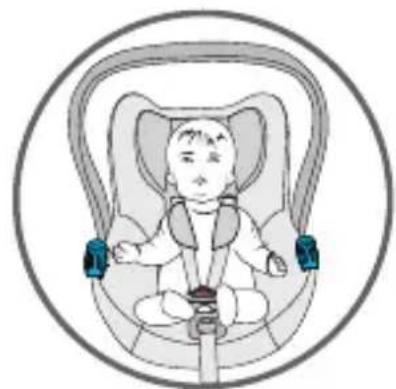
natural_image
Illustration of a baby car seatbelt in a circular frame (no text or symbols)natural_image
Diagram showing mechanical components with red arrows indicating direction, no text or symbols present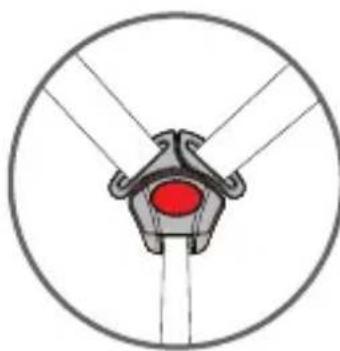
natural_image
Abstract geometric diagram with a central red circle and surrounding lines, enclosed in a gray circular border (no text or symbols)natural_image
Illustration of a baby in a car seat being held by adult hands, with no visible text or symbolsnatural_image
Illustration of a baby car seatbelt inside a circular frame (no text or symbols)natural_image
Diagram showing mechanical components with red arrows indicating movement or force, no text or symbols presentnatural_image
Diagram of a handbag with a blue handle and red arrows indicating force or movement (no text or symbols)flowchart
graph TD
    A["Step 1: Surgical Tool Application"] --> B["Step 2: Surgical Tool Application"]
    B --> C["Step 3: Surgical Tool Application"]
natural_image
Illustration of a car seatbelt buckle being adjusted to a seatbelt, showing red marking (no text or symbols)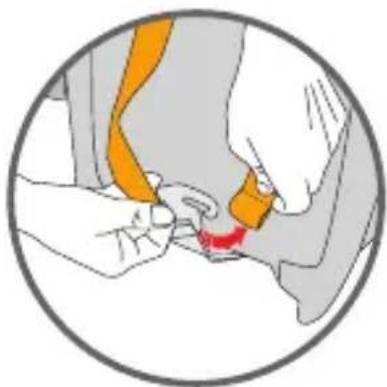
natural_image
Illustration of a medical procedure showing hands performing a necktie insertion (no text or symbols present)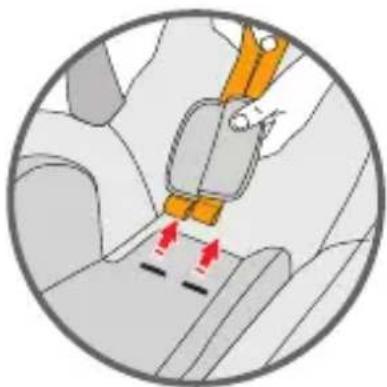
natural_image
Illustration of a car seatbelt buckle being lifted, showing red arrows indicating force or movement (no text or symbols present)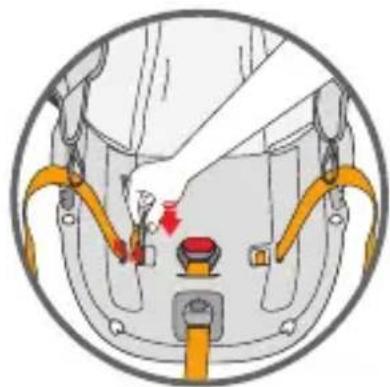
natural_image
Diagram of a medical or safety device with orange and red components, no visible text or symbols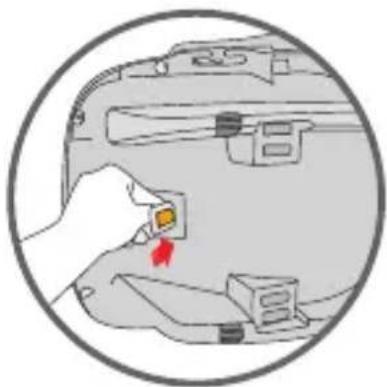
natural_image
Illustration of a hand inserting a small orange component into a vehicle's head panel (no text or symbols)natural_image
Diagram of a car seatbelt with red arrows indicating movement or pressure points (no text or symbols present)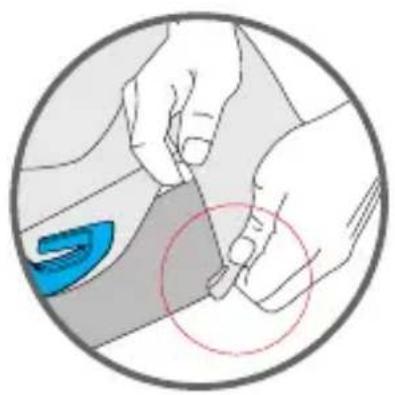
natural_image
Illustration of hands using a tool to cut a blue object, enclosed in a circular frame (no text or symbols)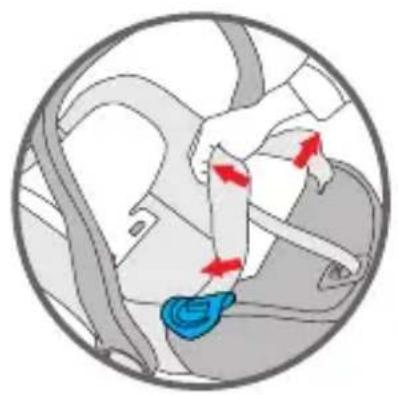
natural_image
Diagram of a car seatbelt mechanism with red directional arrows indicating movement (no text or symbols)6.5 Установка обивки
3.4 Soltar as alças PÁG 15
natural_image
Front view icon of a car inside a circular frame (no text or symbols)natural_image
Diagram of a mechanical component with orange and yellow parts, enclosed in a circular frame (no text or symbols)natural_image
Diagram of a car seat assembly with no text or symbolsnatural_image
Illustration of a person's seatbelt with a blue clip and red arrow indicating rotation (no text or symbols)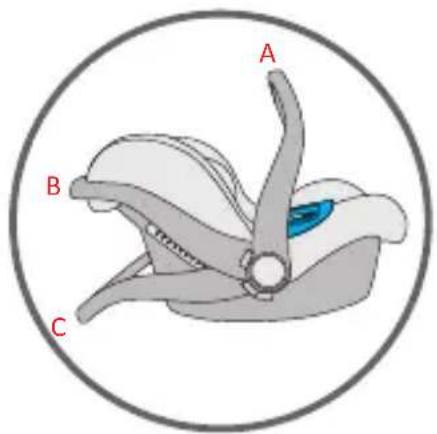
natural_image
Illustration of a car seat with a hand inserting a blue component into the seat (no text or symbols)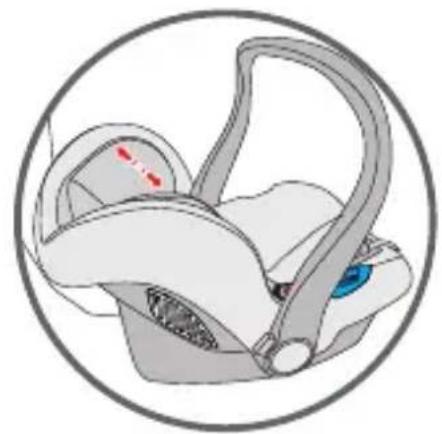
natural_image
Illustration of a baby car seat with a blue accent, enclosed in a circular frame (no text or symbols)natural_image
Illustration of a baby car seatbelt being adjusted for a person's seatbelt, showing red directional arrows indicating movement (no text or symbols present)natural_image
Diagram of car seatbelt and seatbelt mechanism showing red directional arrows indicating movement (no text or symbols)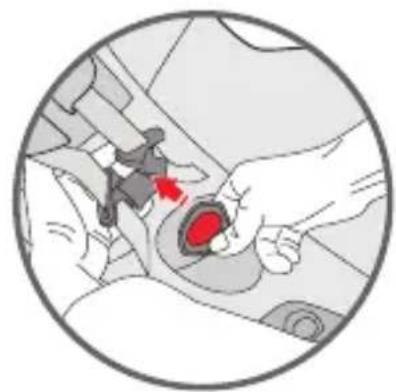
natural_image
Illustration of a hand pressing a car seatbelt with a red arrow indicating the pressure point (no text or symbols present)natural_image
Illustration of a baby sitting in a car seat with arms extended (no text or symbols)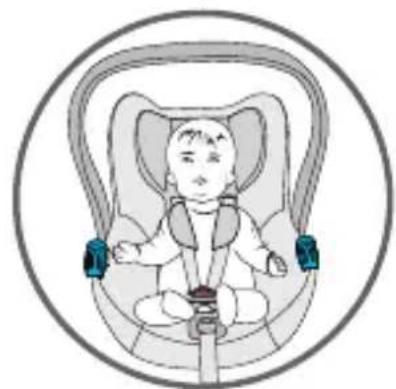
natural_image
Illustration of a baby car seatbelt in a circular frame (no text or symbols)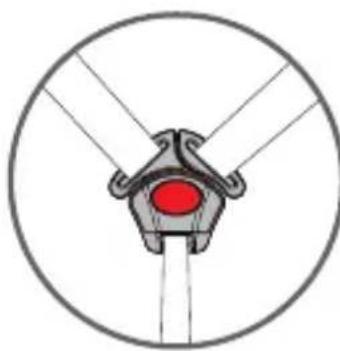
natural_image
Pure mechanical component diagram without any text, numbers, or symbolsnatural_image
Illustration of a baby in a car seat being held by adult hands, with no visible text or symbolsnatural_image
Illustration of a baby car seatbelt in a passenger seat, enclosed in a circular frame (no text or symbols)natural_image
Diagram showing mechanical components with red arrows indicating direction, no text or symbols presentnatural_image
Circular diagram showing a car seatbelt with blue and red belt, no text or symbols present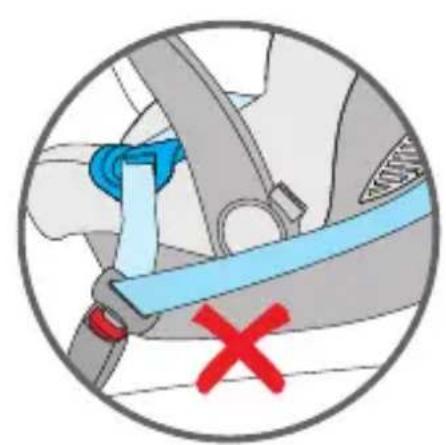
natural_image
Circular diagram showing a car seatbelt with a blue belt and red X mark, no text or symbols present5. Posicionar a capota guarda-sol
flowchart
graph TD
    A["Step 1: Surgical Tool Manipulation"] --> B["Step 2: Discharge to Top"]
    B --> C["Step 3: Discharge to Bottom"]
natural_image
Illustration of a car seatbelt buckle being adjusted for a person's seatbelt (no text or symbols present)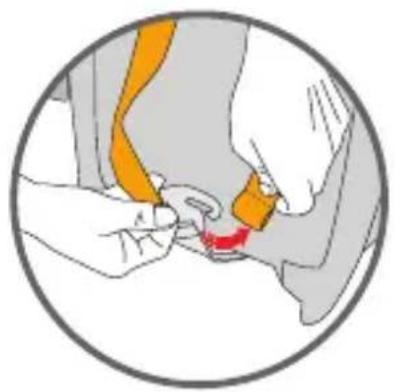
natural_image
Illustration of a medical procedure showing hands performing a neck massage technique (no text or symbols present)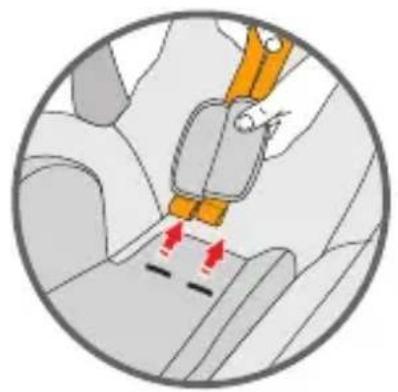
natural_image
Illustration of a mechanical assembly with orange clamps and red arrows indicating force or movement (no text or symbols)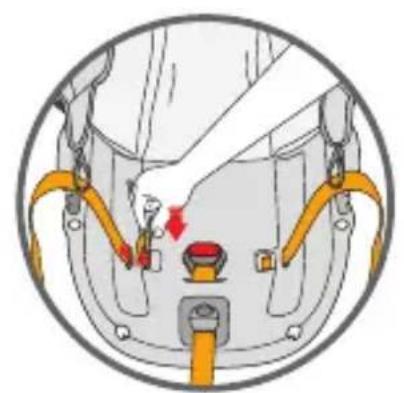
natural_image
Diagram of a medical or surgical device with orange and red arrows indicating force or movement (no text or symbols)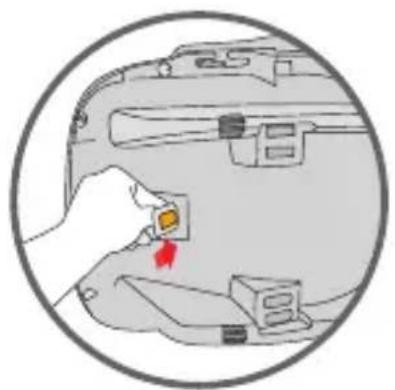
natural_image
Illustration of a hand inserting a small orange component into a vehicle's seat (no text or symbols)natural_image
Diagram of a car seatbelt with red arrows indicating movement or pressure points (no text or symbols present)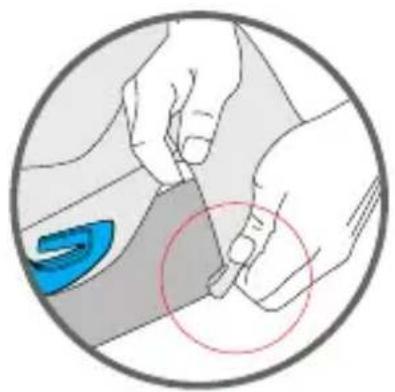
natural_image
Illustration of hands performing a manual task with a blue tool and a red circle highlighting a specific area (no text or symbols present)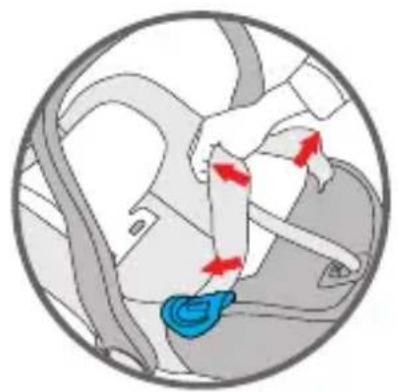
natural_image
Diagram of a car seatbelt mechanism with red arrows indicating clockwise motion (no text or symbols)


- MONTAGGIO
- UNFOLD THE STROLLER (fig.1, fig.2)
- INSTALL WHEELS SUPPORTS (fig.3)
- SHOPPING BASKET (fig.4, fig.5, fig.6)
- INSTALL REAR WHEELS (fig.8, fig.9)
- INSTALL FRONT WHEELS (fig.10, fig.11, fig.12)
- PARKING BRAKE (fig.13)
- ADJUSTING THE HANDLEBAR (fig.14)
- FITTING THE BUMPER BAR (fig.15, fig.16, fig.17, fig.18, fig.19)
- ADJUST THE FOOTREST (fig.20)
- ASSEMBLY
- USING THE TRAVEL SYSTEM ACCESSORIES
- USING THE INFANT CAR SEAT AND CARRYCOT TRAVEL SYSTEM ACCESSORIES (fig.39, fig.40)
- CARRY COT (fig.41, fig.42)
- ADJUST CANOPY (fig.43, fig.44)
- ADJUST THE BACKREST (fig.45)
- Ventilation (fig.48)
- CAR SEAT (fig.49, fig.50)
- CARRYCOT
- STROLLER
- WARNING
- RAINCOVER
- WARNING!
- FORMAL GUARANTEE
- EXCLUSIONS TO THE FORMAL GUARANTEE.
- SIÈGE RÉVERSIBLE (fig.26, fig.27, fig.28)
- BANCO REVERSÍVEL (fig.26, fig.27, fig.28)
- NOTICE
- CHECKLIST BEFORE USE
- Verify Child within Size Range:
- Install Child Restraint Rearward-facing in Safe Location in Vehicle:
- Secure Child Properly in Child Restraint:
- Certification
- Use in the car
- DO NOT USE THE CAR SEAT PLACED ON A PASSENGER SEAT FITTED WITH AN AIRBAG.
- NEVER use a 2-point seat belt to fix the child's car seat to the passenger seat.
- INSTALLATION IN THE VEHICLE
- With 3-point car seat belt
- You can install the car seat as follows:
- N THE CAR SEAT
- Child protection
- Protecting the child by using the reducer
- To protect your child
- Adjusting the handle
- WARNING:
- Adjusting the headrest
- A properly-adjusted headrest ensures the optimal position for the child sitting in the car seat.
- To adjust the headrest for the child:
- Loosening the straps
- PLACING YOUR CHILD IN THE CAR SEAT
- Securing the child with the harness
- ILD IN THE CAR SEAT
- Tightening the harness
- Ensuring that your child is properly secured with the harness
- To ensure the safety of your child, check that ...
- Installing the car seat in the vehicle
- Installing the car seat in the vehicle
- Check that the car seat has been installed correctly in the vehicle
- E SUN CANOPY
- Positioning the sun canopy
- OPTIONAL
- Information for car seat care
- To ensure effective protection of the car seat
- Maintenance of the harness buckle
- Possible faults
- Solution
- How to remove the harness buckle
- How to clean the harness buckle
- How to replace the harness buckle
- Fault
- Cleaning
- The car seat must not be used without the lining.
- How to remove the harness
- HOW TO REMOVE THE LINING
- How to remove the lining
- How to replace the lining
- AVERTISSEMENT PAGE 52
- EXCLUSIONS DE LA GARANTIE CONVENTIONNELLE.
- Установка обивки
- Posicionar a capota guarda-sol
Brand : Foppapedretti
Model : iWood
Category : Stroller