
Pavilion PE4200N - Television HP - Free user manual and instructions
Find the device manual for free Pavilion PE4200N HP in PDF.
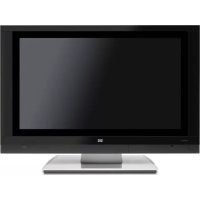



| Product type | HP Pavilion PE4200N Plasma Television |
| Brand | HP |
| Model | Pavilion PE4200N |
| Screen size | 42 inches (106 cm) - 16:9 |
| Dimensions (W x H x D) | 113.8 cm x 73.1 cm x 13.75 cm |
| Weight | 39 kg (86 lb) |
| Power supply | 120 V, 50/60 Hz |
| Power consumption | 390 W (max), 0.6 W (standby) |
| Supported resolutions | 1080i, 720p, 480p, 480i |
| Speakers | Woofer 8 cm x 2, Tweeter 1.6 cm x 7.3 cm x 4 |
| Audio power | 26 W (8 W + 8 W + 5 W + 5 W) at 10% THD |
| Main functions | 3D Y/C filter, closed captioning, HDMI, parental control (V-chip) |
| Inputs | AV1-2 (composite, S-Video, audio), component (Y, Pb, Pr), HDMI, program output, optical digital audio output |
| Included accessories | Remote control, stand, AC cord, cable clip, F-type antenna adapter, user guide |
| Cleaning | Dry, lint-free cloth; avoid volatile and abrasive products |
| Safety | Mandatory grounding, lightning protection, adequate ventilation |
| Repairability | Refer to a qualified technician; no user-serviceable parts |
Frequently Asked Questions - Pavilion PE4200N HP
User questions about Pavilion PE4200N HP
0 question about this device. Answer the ones you know or ask your own.
Ask a new question about this device
Download the instructions for your Television in PDF format for free! Find your manual Pavilion PE4200N - HP and take your electronic device back in hand. On this page are published all the documents necessary for the use of your device. Pavilion PE4200N by HP.
USER MANUAL Pavilion PE4200N HP
HP Pavilion Plasma TV User's Guide
HP Pavilion PE4200N 42-Inch (106-Centimeter) Plasma Television
Before connecting, operating, or adjusting this product, please read these instructions completely. Please keep this User's Guide for future reference.
The only warranties for HP products and services are set forth in the express warranty statements accompanying such products and services. Nothing herein should be construed as constituting an additional warranty. HP shall not be liable for technical or editorial errors or omissions contained herein.
HP assumes no responsibility for the use or reliability of its software on equipment that is not furnished by HP.
This document contains proprietary information that is protected by copyright. No part of this document may be photocopied, reproduced, or translated to another language without the prior written consent of HP.
Hewlett-Packard Company
P.O. Box 4010
Cupertino, CA 95015-4010
USA
Copyright © 2005 Hewlett-Packard Development Company, L.P.
Manufactured under license from Dolby Laboratories. Dolby, and the double-D symbol are trademarks of Dolby Laboratories.
HDMI, the HDMI logo and High-Definition Multimedia Interface are trademarks or registered trademarks of HDMI Licensing LLC.
This product incorporates copyright protection technology that is protected by method claims of certain U.S. patents and other intellectual property rights owned by Macrovision Corporation and other rights owners. Use of this copyright protection technology must be authorized by Macrovision Corporation, and is intended for home and other limited viewing uses only unless otherwise authorized by Macrovision Corporation. Reverse engineering or disassembly is prohibited. Apparatus Claims of U.S. Patent Nos. 4,631,603, 4,577,216, 4,819,098, 4,907,093, 6,381,747, and 6,516,132.
HP supports lawful use of technology and does not endorse or encourage the use of our products for purposes other than those permitted by copyright law.
The information in this document is subject to change without notice.
CAUTION
RISK OF ELECTRIC SHOCK
DO NOT OPEN

WARNING: To reduce the risk of electric shock, do not remove cover or back. No user-serviceable parts inside. Refer servicing to qualified service personnel.
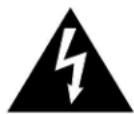
The lightning flash with arrow-head within a triangle is intended to tell the user that parts inside the product are a risk of electric shock to persons.

The exclamation point within a triangle is intended to tell the user that important operating and servicing instructions are in this user's guide.
WARNING: To reduce the risk of fire or electric shock, do not expose this apparatus to rain or moisture. Do not place liquid containers (flower vase, cups, cosmetics, etc.) above the set (including on shelves above, etc.).
WARNING: 1) To prevent electric shock, do not remove cover. No user-serviceable parts inside. Refer servicing to qualified service personnel. 2) Do not remove the grounding pin on the power plug. This apparatus is equipped with a three-pin grounding-type power plug. This plug will only fit a grounding-type power outlet. This is a safety feature. If you are unable to insert the plug into the outlet, contact an electrician. Do not defeat the purpose of the grounding plug.
NOTE: Do not allow a still picture to be displayed for an extended period, as this can cause a permanent afterimage to remain on the Plasma Television. Examples of still pictures include logos, video games, computer images, teletext and images displayed in 4:3 mode.

DIGITAL
Manufactured under license from Dolby Laboratories. "Dolby" and the double-D symbols are trademarks of Dolby Laboratories.

HIGH-DEFINITION MULTIMEDIA INTERFACE
HDMI, the HDMI logo and High-Definition Multimedia Interface are trademarks or registered trademarks of HDMI Licensing LLC.
License description: To view the license information for software used in this product, press the Menu button and select Set up, About, License. (See "About" on page 47.)
Important Safety Instructions
1. Read these instructions. 2. Keep these instructions. 3. Heed all warnings. 4. Follow all instructions. 5. Do not use this apparatus near water. 6. Clean only with a dry cloth. 7. Do not block any ventilation openings. Install in accordance with the manufacturer's instructions. 8. Do not install near any heat sources such as radiators, heat registers, stoves, or other apparatus (including amplifiers) that produce heat. 9. Do not defeat the safety purpose of the polarized or grounding-type plug. A polarized plug has two blades with one wider than the other. A grounding-type plug has two blades and a third grounding prong. The wide blade or the third prong are provided for your safety. If the provided plug does not fit into your outlet, consult an electrician for replacement of the obsolete outlet. 10. Protect the power cord from being walked on or pinched, particularly at plugs, convenience receptacles, and the point where they exit from the apparatus. 11. Only use attachments/accessories specified by the manufacturer. 12. Use only with the cart, stand, tripod, bracket, or table specified by the manufacturer, or sold with the apparatus. When a cart is used, use caution when moving the cart/apparatus combination to avoid injury from tip-over. 13. Unplug this apparatus during lightning storms or when unused for long periods of time. 14. Refer all servicing to qualified service personnel. Servicing is required when the apparatus has been damaged in any way, such as power-supply cord or plug is damaged, liquid has been spilled or objects have fallen into the apparatus, the apparatus has been exposed to rain or moisture, does not operate normally, or has been dropped. 15. To prevent electric shock, ensure the grounding pin on the AC cord power plug is securely connected.
FCC Statement
This equipment has been tested and found to comply with the limits for a Class B digital device, pursuant to Part 15 of the FCC Rules. These limits are designed to provide reasonable protection against harmful interference in a residential installation. This equipment generates, uses, and can radiate radio frequency energy and, if not installed and used in accordance with the instructions, may cause harmful interference to radio communications. However, there is no guarantee that interference will not occur in a particular installation. If this equipment does cause harmful interference to radio or television reception, which can be determined by turning the equipment off and on, the user is encouraged to try to correct the interference by one of the following measures:
Reorient or relocate the receiving antenna. Increase the separation between the equipment and receiver. Connect the equipment into an outlet on a circuit different from that to which the receiver is connected. Consult HP or an experienced radio/TV technician for help.
FCC Caution:
To assure continued compliance, use only shielded interface cables when connecting the TV to peripheral devices. Any changes or modifications not expressly approved by the responsible party may cause harmful interference and could void the user's authority to operate this device.
RESPONSIBLE PARTY:
Hewlett-Packard Company
Digital TV Solutions
Attn: Product Regulations Manager
10435 N. Tantau Avenue
CAC 07, MS 4295
Cupertino, CA 95014
USA
CANADIAN NOTICE:
This Class B digital apparatus complies with Canadian ICES-003.
Regulatory and Safety Information
WARNING: The TV is heavy; be sure to use ergonomically correct lifting procedures when moving the TV.
Additional Safety Information
This product has not been evaluated for connection to an "IT" power system (an AC distribution system with no direct connection to earth, according to IEC 60950).
AC Power Safety Warning
WARNING: Install the TV near an AC outlet. The AC power cord is your main AC disconnecting device and must be easily accessible at all times. For your safety, the power cord provided with your TV has a grounded plug. Always use the power cord with a properly grounded wall outlet, to avoid the risk of electrical shock.
WARNING: Do not operate the TV with the cover removed.
WARNING: The TV is not user serviceable. To prevent damage to the TV, have a qualified person repair or replace it.
WARNING: For your safety, always unplug the TV from its power source and from any telecommunications systems (such as CATV, SAT, or any other peripheral) before performing any service procedures. Failure to do so may result in personal injury or equipment damage. Hazardous voltage levels are inside the TV.
TV Antenna Connectors Protection
External Television Antenna Grounding
If an outside antenna or cable system is connected to the product, be sure the antenna or cable system is electrically grounded so as to provide some protection against voltage surges and built-up static charges. Article 810 of the National Electrical Code, ANSI/NFPA 70, provides information with regard to proper electrical grounding of the mast and supporting structure, grounding of the lead-in wire to an antenna-discharge unit, size of grounding conductors, location of antenna-discharge unit, connection to grounding electrodes, and requirements for the grounding electrode.
Lightning Protection
For added protection of any product during a lightning storm, or when it is left unattended and unused for long periods of time, unplug the product from the wall outlet and disconnect the antenna or cable system. This will prevent damage to the product from lightning and power line surges.
Power Lines
An outside antenna system should not be located in the vicinity of overhead power lines or other electric light or power circuits, or where it can fall into such power lines or circuits.
WARNING: When installing an outside antenna system, extreme care should be taken to keep from touching such power lines or circuits as contact with them could be fatal.
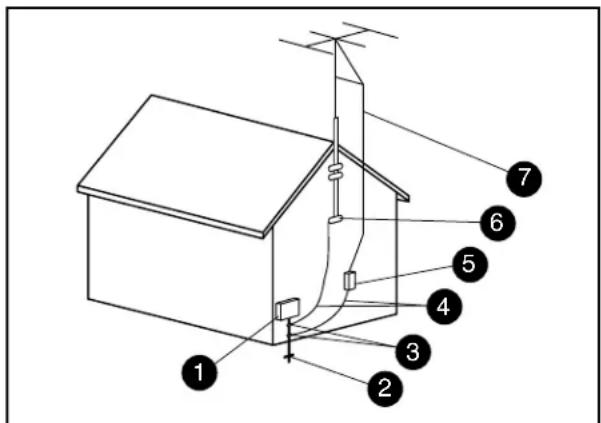
Antenna Grounding
| Reference | Grounding Component |
| 1 | Electric Service Equipment |
| 2 | Power Service Grounding Electrode System (NEC Art 250, Part H) |
| 3 | Ground Clamps |
| 4 | Grounding Conductors (NEC Section 810-21) |
| 5 | Antenna Discharge Unit (NEC Section 810-20) |
| 6 | Ground Clamp |
| 7 | Antenna Lead in Wire |
Welcome to the HP family of customers. We hope that you will have many years of enjoyment from your new Plasma TV.
To obtain maximum benefit from your set, please read these instructions before making any adjustments, and retain them for future reference.
Retain your purchase receipt, and record the product number and serial number of your set in the space provided on the last page of these instructions.
Table of Contents
Important Safety Instructions .iv
FCC Statement.
Regulatory and Safety Information
Safety Precautions 1
Set up 1 AC Power Supply Cord 1 If problems occur during use 1 When using the Plasma TV 2
Cleaning and maintenance. 2
Accessories 3
Attaching the Pedestal 4
Assembling and setting up the TV 4
Assembling the Pedestal 4 Attaching the Pedestal. 5
Installing 6
Receiver Location. 6 Optional External Equipment 6 Remote Control Battery Installation 6
Installing Cable Binding 7
Cable Cover 7 AC cord 7 Cable Clamp 8
Connecting 9
Connecting the Antenna 9 Connecting a Cable Box 9 Connecting HDMI. 10 Connecting a Set-top Box or DVD. 12 Connecting the Video Input. 12 Connecting the Amplifier 13 Connecting Program Out. 14
Turning the TV On or Off. 15
TV Buttons. 16
Using the Remote Control 17
HP MCPC and HP DEC PCs 20
Using the First Time Setup. 21
Language 21 Clock 22 Auto program 23
Watching TV Programs 24
VHF and UHF. 24 Cable TV 24 Aspect Controls 25
Using the Onscreen Navigation Menu 26
Using the Menus. 27
Picture 27
Default/Pic. mode/Picture/Brightness/Color/Tint/ Sharpness/Color Temp/Color Mng. 28 Pic. mode 29 Zoom Adjust 29 Other Adjust (Picture) 30
Audio. 31
Default/Bass/Treble/Balance 31 Other Adjust (Audio) 32
Timer. 34
Sleep Timer 35 Timer set 35
Setup 37 CH list. 37 Language 37 Clock 38 Program channel 38 Input labels 42 CC (closed caption) 43 Other Adjust (setup) 46 About 47 Reset. 48 Lock. 48 Lock Mode 49 Channel (block channel selection) 50 Blocking a program 50 CustomerCaution. 53 Blocking Messages 54 Change password 54
Operating Peripheral Equipment ... 55
Programming the remote control code 55
Programming the device code 55 Searching for the device code 56
Mode Operational Key Chart. 64
Video/Component/HDMI Input
Signals 66
Specifications 67
Troubleshooting Chart 68
Safety Precautions

Keep unneeded small parts and other objects out of the reach of small children. These objects can be accidentally swallowed. Also, be careful about packaging materials and plastic sheets.
Set up
Do not place the Plasma TV on sloped or unstable surfaces.
The Plasma TV may fall off or tip over.
Do not place any objects on top of the Plasma TV.
If water spills onto the Plasma TV or foreign objects get inside it, a short-circuit may occur which could result in fire or electric shock. If any foreign objects get inside the Plasma TV, please consult an Authorized Service Center.
Do not cover the ventilation holes.
Doing so may cause the Plasma TV to overheat, which can cause fire or damage to the Plasma TV.
If using the pedestal, leave a space of 3 15/16 inch (10 cm) or more at the top, left and right, 2 3/8 inch (6 cm) or more at the bottom, and 2 3/4 inch (7 cm) or more at the rear. If using some other method for setup, leave a space of 3 15/16 inch (10 cm) or more at the top, bottom, left and right, and 3/4 inch (1.9 cm) or more at the rear.
Avoid installing this product near electronic equipment that is readily affected by electromagnetic waves.
It may cause interference in image, sound, etc. In particular, keep video equipment away from this product.
AC Power Supply Cord
The Plasma TV is designed to operate on 120 V, 50/60 Hz.
Securely insert the power cord plug as far as it will go, and use the clamp to secure it. (See "AC cord" on page 7.)
If the plug is not fully inserted, heat may be generated which could cause fire. If the plug is damaged or the wall socket plate is loose, they should not be used.
Do not handle the power cord plug with wet hands.
Doing so may cause electric shocks.
Do not do anything that might damage the power cable. When disconnecting the power cable, hold the plug, not the cable.
- Do not make any modifications to, place heavy objects on, place near hot objects, heat, bend, twist, or forcefully pull the power cable. Doing so may cause damage to the power cable which can cause fire or electric shock. If damage to the cable is suspected, have it repaired at an Authorized Service Center.
If the Plasma TV will not be used for a long period of time, unplug the power cord from the wall outlet.
If problems occur during use
If a problem occurs (such as no picture or no sound), or if smoke or an abnormal odor is detected from the Plasma TV, unplug the power cord immediately.
Continued use of the TV under these conditions might cause fire or permanent damage to the unit. Have the TV evaluated at an Authorized Service Center. Service to the TV by any unauthorized personnel is strongly discouraged due to its high voltage dangerous nature.
If water or foreign objects get inside the Plasma TV, if the Plasma TV is dropped, or if the cabinet becomes damaged, disconnect the power cord plug immediately.
A short may occur, which could cause fire. Contact an Authorized Service Center for any repairs that need to be made.
When using the Plasma TV
Do not bring your hands, face, or objects close to the ventilation holes of the Plasma TV.
Top of the Plasma TV is usually very hot due to the high temperature of exhaust air being released through the ventilation holes. Burns or personal injuries can happen if any body parts are brought too close. Placing any object near the top of the TV could also result in heat damage to the object as well as to the TV if its ventilation holes are blocked.
Cleaning and maintenance
The front of the display panel has been specially treated. Wipe the panel surface gently using only a cleaning cloth or a soft, lint-free cloth.
Do not scratch or hit the surface of the panel with fingernails or other hard objects. Furthermore, avoid contact with volatile substances such as insect sprays, solvents, and thinner; otherwise, the quality of the surface may be adversely affected.
If the cabinet becomes dirty, wipe it with a soft, dry cloth.
- Do not allow any detergent to come into direct contact with the surface of the Plasma TV. If water droplets get inside the unit, operating problems may result. Avoid contact with volatile substances such as insect sprays, solvents and thinner; otherwise, the quality of the cabinet surface may be adversely affected or the coating may peel off. Furthermore, do not leave it for long periods in contact with articles made from rubber or PVC.
Be sure to disconnect all cables before moving the Plasma TV.
Moving the TV with its cables attached might damage the cables which, in turn, can cause fire or electric shock.
Disconnect the power plug from the wall outlet as a safety precaution before carrying out any cleaning.
Electric shocks can result if this is not done.
Clean the power cable regularly to prevent it from becoming dusty.
Built-up dust on the power cord plug can increase humidity which might damage the insulation and cause fire. Unplug the cord from the wall outlet and clean it with a dry cloth.
This Plasma TV radiates infrared rays; therefore, it may affect other infrared communication equipment. Install your infrared sensor in a place away from direct or reflected light from your Plasma TV.

Do not allow a still picture to be displayed for an extended period, as this can cause a permanent afterimage to remain on the Plasma TV.
Examples of still pictures include logos, video games, computer images, teletext, and images displayed in 4:3 mode.

Image Retention Protection: If still image data is displayed for more than a few minutes, the image retention prevention function activates automatically and the image disappears. Change the image or change the input source to see an image.
Accessories
Check that you have the accessories and items listed in this table.
| Documentation | |
| Remote control | |
| Pedestal and parts | |
| AC cord | |
| Cable clamp (2) | |
| F-Type antenna adapter (for 5C-2V) |
Attaching the Pedestal
Assembling and Setting Up the TV
Points to note during installation:
■ Select a location for the TV that has easy access to the AC power receptacle. ■ Provide adequate ventilation so that the temperature around the television does not rise above 40°C (104°F). If there is insufficient movement of air inside the display, heat may build up inside the television and fire may result. For ventilation spacing specifics, refer to the information listed under "Set up" on page 1. Due to the size and weight of the display and the pedestal, it is recommended that a minimum of two people assemble and move the TV.
Accessories for pedestal assembly
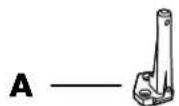


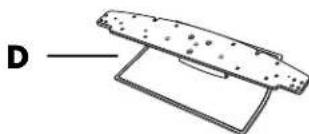
A: Pole (2) B: Short screw (4) C: Long screw (4) D: Stand
Assembling the Pedestal
Match each pole (A) to the mark (a circle or a triangle) on the pedestal (D). When facing the front of the pedestal, the right mark is a triangle and the left mark is a circle. Insert two short screws (B) for each pole.
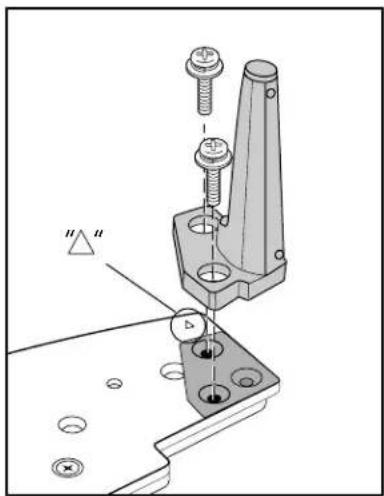
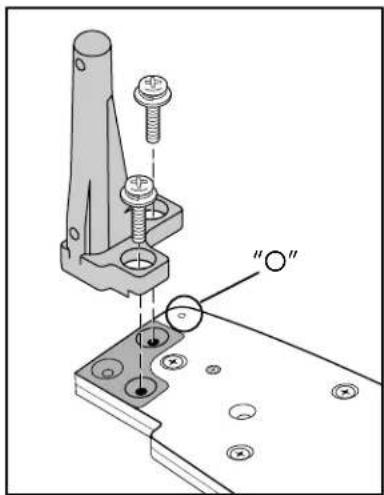
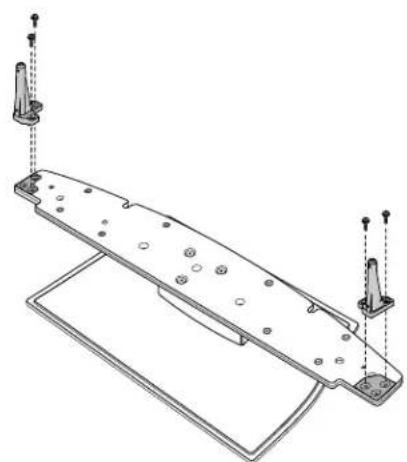
Attaching the Pedestal
These steps attach the pedestal to the TV. To remove the pedestal, perform these steps in reverse order.
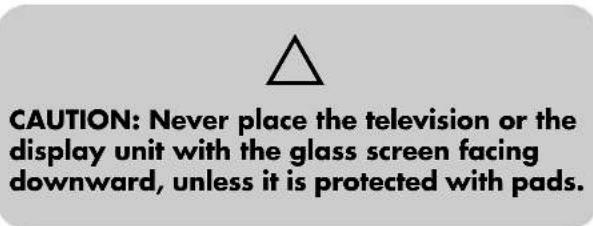
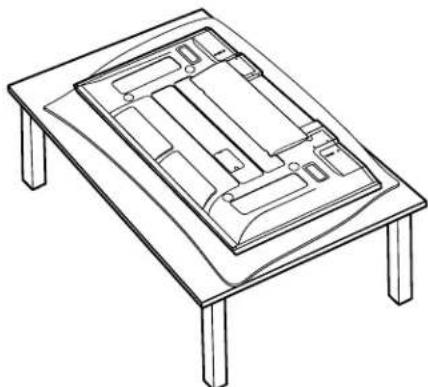
1. Position the TV display unit and the pedestal:
Put a pad or clean cloth on a smooth, stable table. Put the display unit with the glass screen facing downward on the pad. Position the pedestal with the back (thick part of stand base) toward you on a stable table or on the floor.
2. Lower the TV display unit onto the pedestal poles, matching the marks:
Hold the display with the back toward you. Align the holes in the display bottom with the poles of the pedestal, matching the stamped marks on the back of the display with the pedestal marks. Gently lower the display onto the pedestal, inserting the poles into the display.
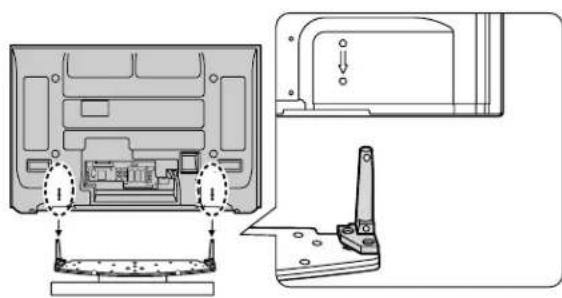
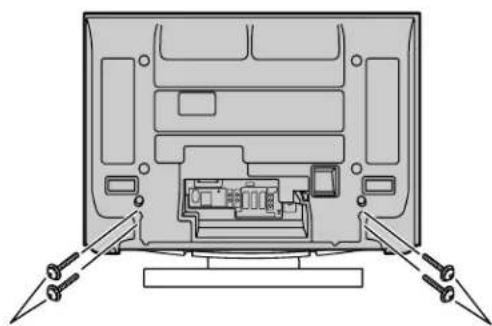
Insert two long screws (C, see figure under "Assembling the Pedestal") for each pole into the back of the display.
Installing
Receiver Location
This unit is intended to be used with the stand. Consult your dealer for available options. Position for comfortable viewing. Avoid placing where sunlight or other bright light (including reflections) will fall on the screen. Use of some types of fluorescent lighting can reduce remote control transmitter range.
Adequate ventilation is essential to prevent internal component failure. Keep away from areas of excessive heat or moisture.
Optional External Equipment
The video and audio connections between components can be made with shielded video and audio cables. For best performance, video cables should utilize 75-Ohm coaxial shielded wire. Cables are available from your dealer or electronic supply store.
Before you purchase any cables, be sure you know what type of output and input connectors your various components require. Also determine the length of cable you will need.
Remote Control Battery Installation
1. Open the cover. 2. Install the batteries and replace the cover.
Note the correct polarity (+ and -).
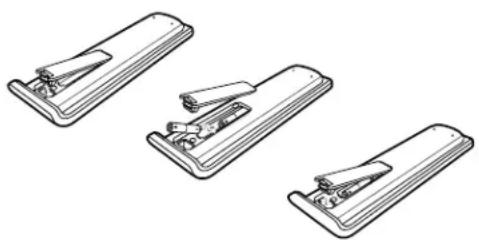

Replace used batteries with alkaline batteries for longer life.

CAUTION: Incorrect installation can cause battery leakage and corrosion that will damage the remote control transmitter.
Observe the following precautions:
Batteries should always be replaced as a set. Always use new batteries when replacing the old set. Do not combine a used battery with a new one. Do not mix battery types (example: "zinc carbon" with "alkaline"). Do not attempt to charge, short-circuit, disassemble, heat, or burn used batteries. Battery replacement is necessary when remote control acts sporadically or stops operating the TV set. When not using the remote for a long period of time, remove the batteries to prevent damage or injury from possible battery leakage. Do not try to recharge batteries that are not intended to be recharged: they can overheat and rupture. Follow the battery manufacturer's directions for the batteries you are using.
6 HP Pavilion Plasma TV User's Guide
Installing Cable Binding
Cable Cover
Removing
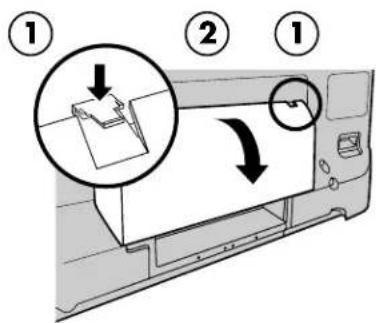
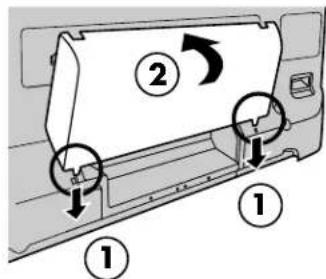
1. Push down hooks and pull the cover slightly towards yourself to disengage the claws (at two points). 2. Slowly pull out in the downward direction.
Attaching
1. Insert the claws (at two points) at the bottom end. 2. Push until it clicks.
Cables and connectors are not supplied with this set.
AC cord
1. Connect power plug to the socket of the main body. 2. Fix the clamp.
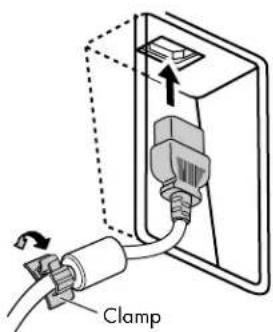
Clamp
Close Open
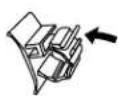
Closing
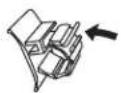
Close by pushing in until a clicking sound is heard.
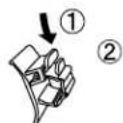
Releasing
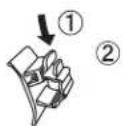
Pull down while drawing the knob.
Cable Clamp
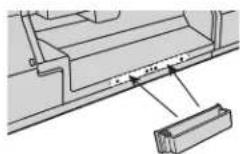
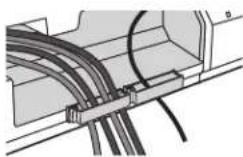
To avoid interference appearing on the screen, do not bundle the antenna cable and AC cord together.
Connecting
Connecting the Antenna
The Ant In mode must be set to Antenna. For more information, see "Auto program" on page 23 or "Auto program" on page 38.
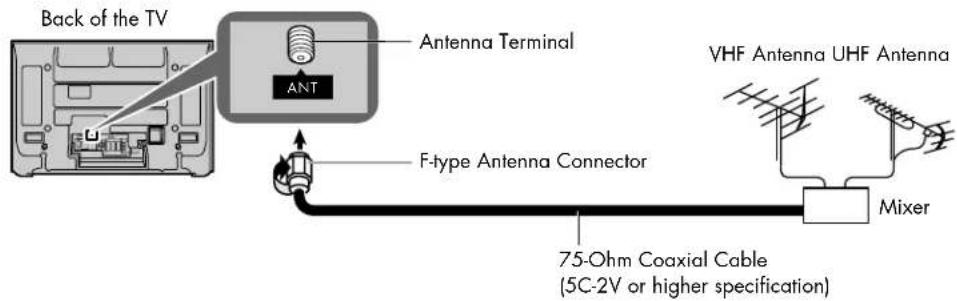
Connecting a Cable Box
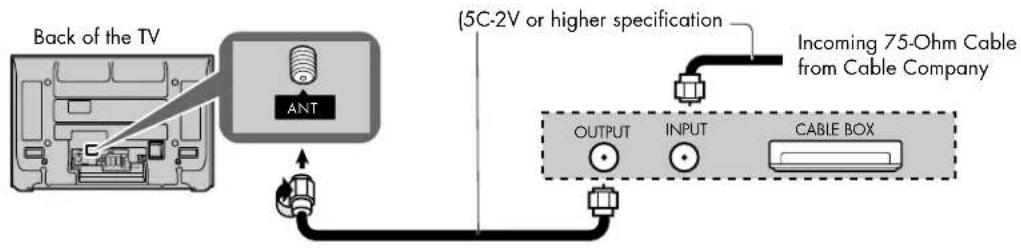
For reception of cable channels (01-135), connect the cable supplied by your local cable company. The Ant In mode must be set to Cable; see "Auto program" on page 23 or "Auto program" on page 38.
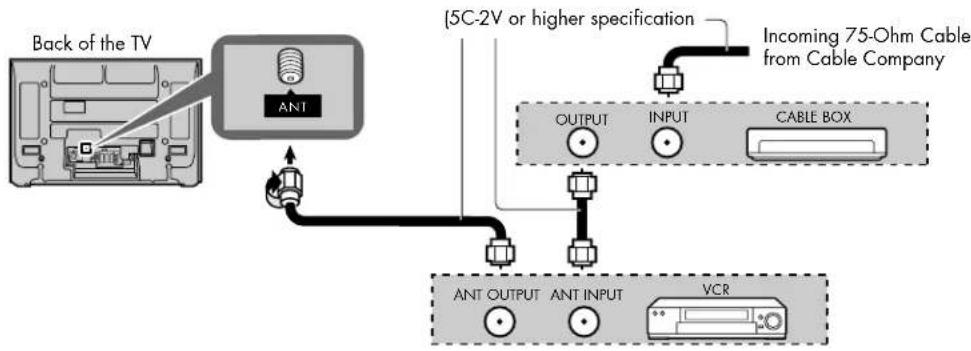
Certain cable systems offset some channels to reduce interference or view Premium (scrambled) channels. A cable converter box is required for proper reception. Check with your local cable company for its compatibility requirements.
Set the TV channel to CH3 or CH4 when using this connection.
Connecting a cable box:
Connecting a cable box and VCR:
Connecting HDMI
High Definition Multimedia Interface (HDMI) is an all-digital consumer electronics A/V interface. The HDMI terminal supports both video and audio information.
You can connect an EIA/CEA-861/861B†-compliant consumer electronic device, such as a set-top box or DVD player with HDMI or DVI output terminal, to the HDMI input terminal. Select the HDMI In audio setting in the audio menu; see "Other Adjust (Audio)" on page 32.
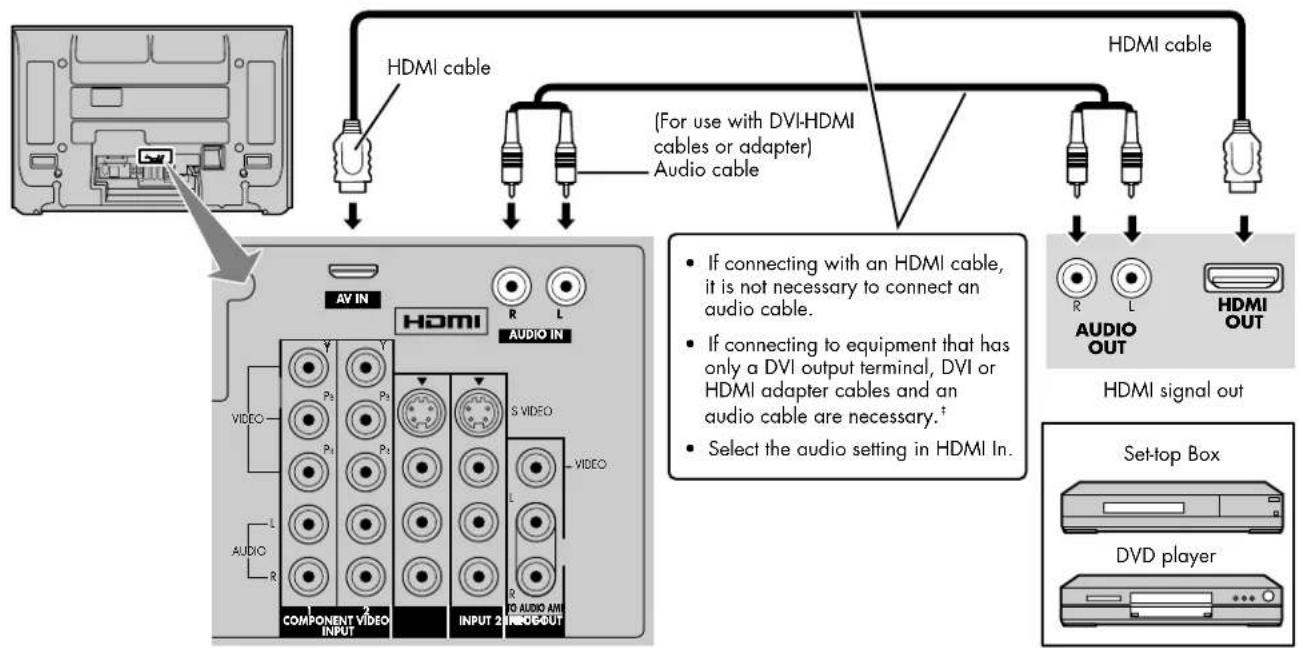
† EIA/CEA-861/861B profiles compliance covers profiles for transmission of uncompressed digital video including high bandwidth digital content protection.
† HDMI-DVI conversion cable: purchase separately. Consult your consumer electronics dealer for availability details.
Compatible VIDEO Signal
| No. of dots (HxV) | Vertical scanning frequency (Hz) | |
| 1080i | 1920x1080i 59.94/60 | |
| 720p | 1280x720p 59.94/60 | |
| 480p | 720x480p 640x480p | 59.94/60 59.94/60 |
| 480i | 720(1440)x480i 59.94/60 |

This input terminal is not intended for use with computers.
1080i and 720p signals are re-formatted for viewing on your plasma display.
Compatible sampling frequency of Audio signal through HDMI (.PCM): 48 kHz/44.1 kHz/32 kHz

This HDMI connector is Type A.
If you connect equipment without a digital output terminal, connect to the Component Video, S-video, or Video input terminal on the TV so you can enjoy an analog signal.
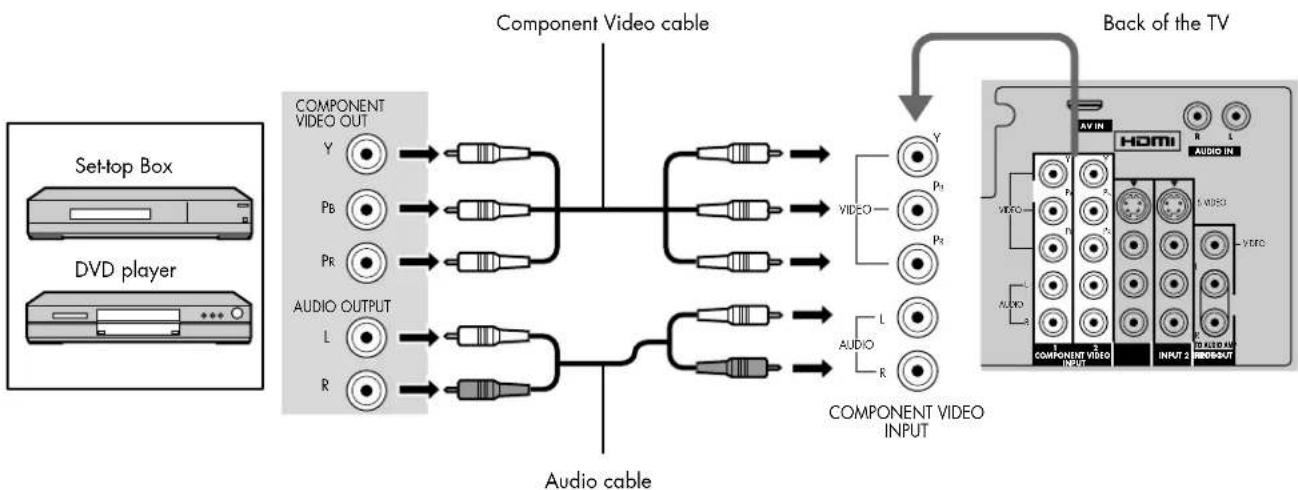
Connecting a Set-top Box or DVD
This TV is capable of receiving 1080i, 720p, 480p, and 480i DTV signals when connected to a DTV Tuner set-top box (STB). This TV also utilizes a progressive scan doubler, which de-interlaces the NTSC signal and progressively scans the image.
To view DTV programs, connect the STB to the component video input terminals (Y, PB, PR) of the TV. Component color inputs provide luminance and separate color signal. Set the output of the STB to either 1080i, 720p, 480p, or 480i. All signals are converted to 480p format and output to the display. A DTV signal must be available in your area.
Connecting the Video Input
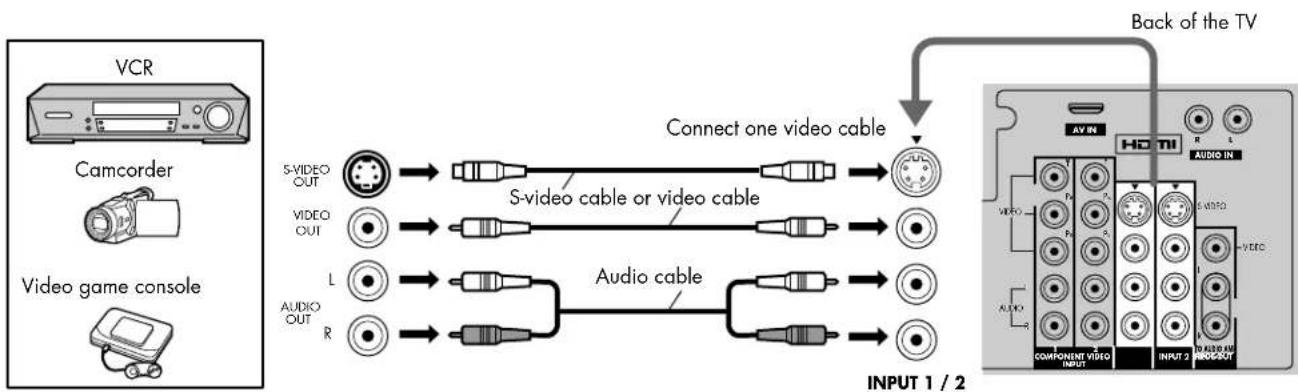

The S-video input overrides the composite video signal when S-video cable is connected. Connect either S-video cable or video cable.
Connecting the Amplifier
For a full home theater sound experience, an external Dolby Digital* decoder and a multichannel amplifier must be connected to the Digital Audio Out terminal on the TV.
*Dolby Digital 5.1 channel surround sound delivers digital-quality sound. Dolby Digital provides five discrete full bandwidth channels for front left, front right, center, surround left and surround right, plus a LFE (Low Frequency Effect) subwoofer channel.
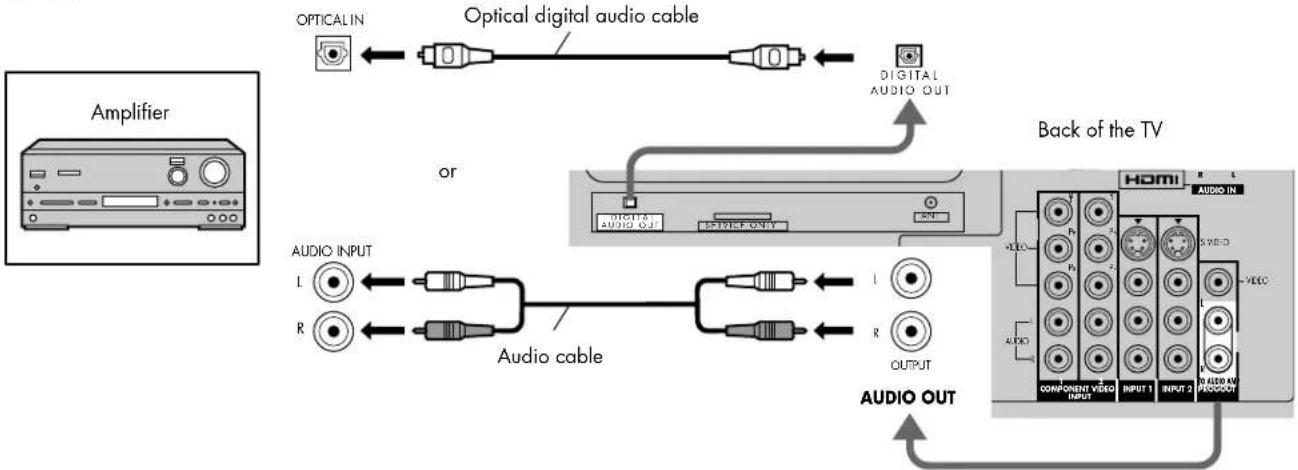
Procedure
1. Select Off for Speakers Off in Audio menu (see "Speakers" under "Other Adjust (Audio)" on page 32). 2. Adjust the amplifier volume to the desired level.

Depending on your DVD player and DVD-audio software, the copyright protection function may operate and disable optical output. External speakers cannot be connected directly to Output terminals. ■With an ATSC channel, the output from the Digital Audio Out is Dolby Digital. With an NTSC channel, the output is PCM.
Connecting Program Out
See your equipment manual for instructions.
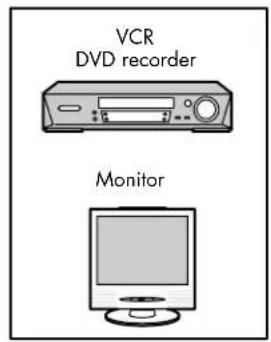
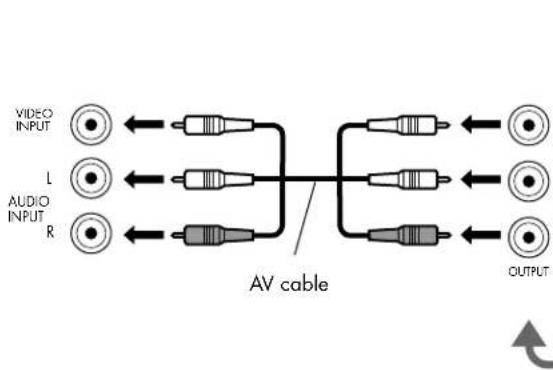
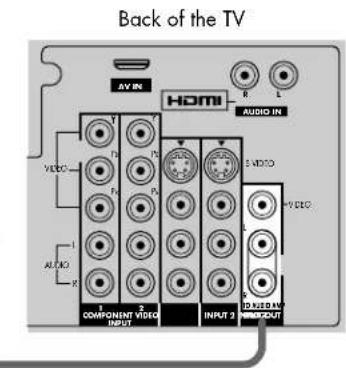

When a device (STB, DVD, etc.) is connected to the HDMI terminal (see "Connecting HDMI" on page 10), only audio signals output. No video signals output. - When receiving digital channel signals, all digital formats are down-converted to composite NTSC video for output through Program Out terminals. Some programs contain copy protection signals to prevent recording.
Turning the TV On or Off
1. Connect the AC cord plug to the plasma TV.
Fix the power cord plug securely with the clamp (see "Installing Cable Binding" on page 7).
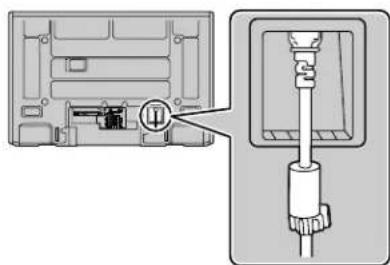
2. Connect the plug to the wall outlet. 3. Press POWER button (A) on front of this unit.
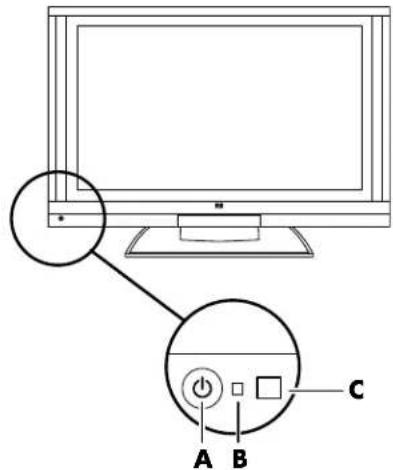
A: Power button B: Power status indicator C: Remote control sensor
First time setup is displayed on screen. (Refer to "Using the First Time Setup" on page 21 for operation.)
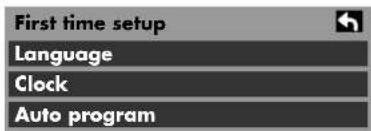
4. Press on remote control or TV) to turn the TV on or off.
Power status indicator
| Power on Red | |
| Power off No | Light |

The TV will still consume some power as long as the power cord is inserted into the wall outlet.

The first time setup screen is displayed only the first time you turn the power on after purchase.
If you wish to change the settings of these items later, select them with the Setup menu. (See "Setup" on page 37.)
TV Buttons
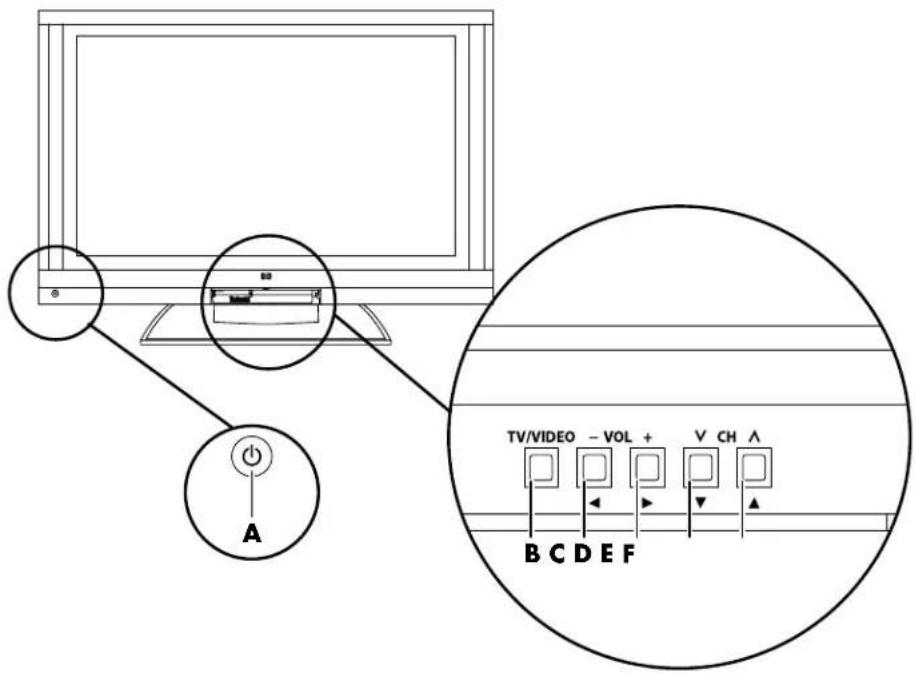
A: Power button
Press to turn the TV main power on/off.
B: TV/Video
Change the input mode.
C: Volume down
Lower volume, or move left in menu.
D: Volume up
Increase volume, or move right in menu.
E: Channel down
Lower channel, or move down in menu.
F: Channel up
Increase channel, or move up in menu.
Using the Remote Control
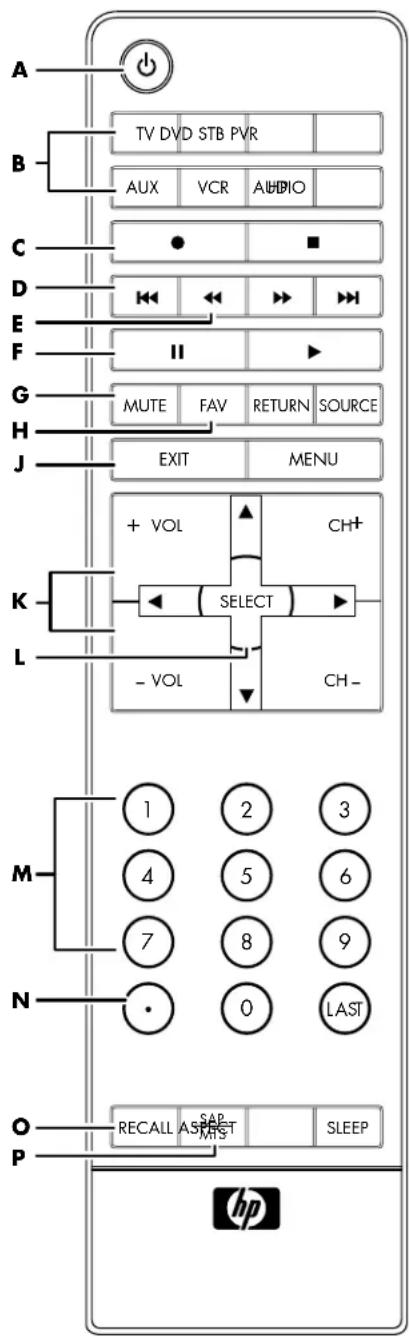
| Name Description | Icon | |
| A P o w | Press Power to turn on or off the TV or the selected home entertainment device. | ● |
| B TV, DVD, STB, PVR, AUX, VCR, AUDIO, or HP | Press one of these buttons once to select a home entertainment device to control. To program the remote control to operate with a home entertainment device, see "Programming the remote control code" on page 55. | TV |
| C Record | Press Record to start recording from the selected recordable home entertainment device (VCR, DVD recorder, HP MCPC, or HP DEC). | ● |
| D Skip backward | Press Skip backward to go back to the beginning of the current chapter (DVD). | ▲ |
| E Rewind | Press Rewind to rewind the selected home entertainment device (VCR, DVD, HP MCPC, or HP DEC). | ▲ |
| F Pause | Press Pause to pause the selected home entertainment device (VCR, DVD, HP MCPC, or HP DEC). | II |
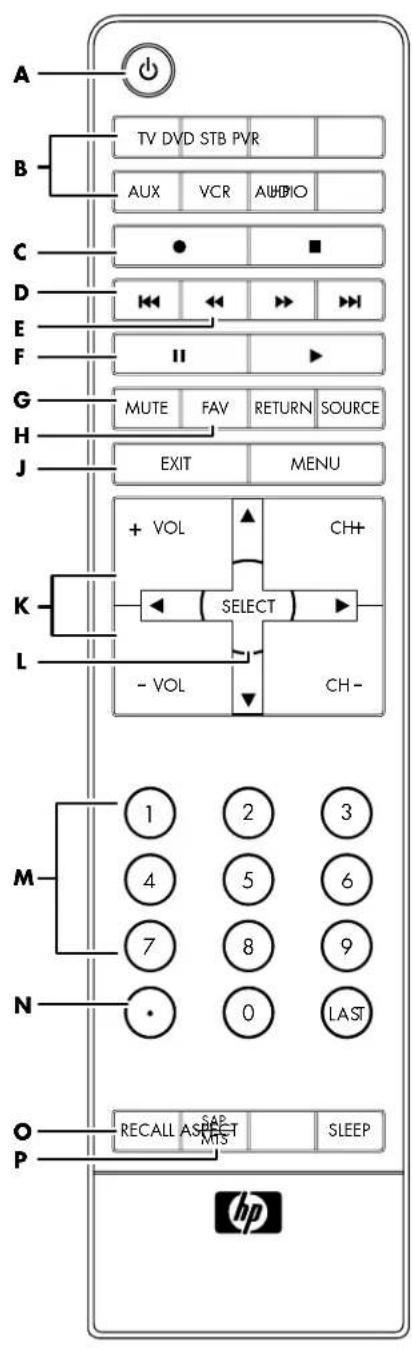
| Name Description | Icon | |
| G M u t e | Press Mute to turn sound off or on. | MUTE |
| H Fav | Press Fav to display channels you programmed as your favorites. | FAV |
| J Exit | Press Exit to exit out of the selected home entertainment device's menu or submenu. | EXIT |
| K Vol | Press + Vol (- Vol) to raise (or lower) the sound. | + VOL - VOL |
| L Select | Press Select after entering a channel number. Press Select to choose the current menu option. | SELECT |
| M Keypad | Press the keypad (0-9) to directly select channels. | 1 |
| N . (Period) | Press . (period) to enter a period or dash for a subchannel number of a digital channel. For example, channel 123.1 or 4-1. | ● |
| O Recall | Press Recall to display or remove the channel banner. | RECALL |
| P SAP/MTS | Press SAP/MTS to select an available secondary audio program. | SAPMTS |
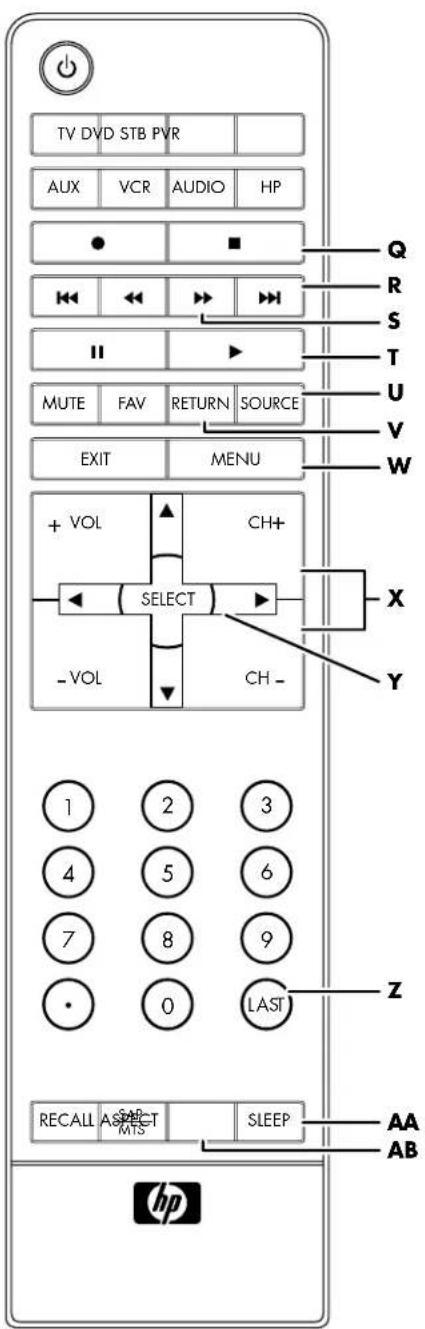
| Name Description | Icon | |
| Q St o p | Press Stop to stop the selected home entertainment device. | |
| R S k i forward | Press Skip forward to skip to the beginning of the next chapter (DVD). | |
| S Fast-forward | Press Fast-forward to fast-forward the selected home entertainment device (VCR, DVD, HP MCPC, or HP DEC). | |
| T Play | Press Play to start playing the selected home entertainment device (VCR, DVD, HP MCPC, or HP DEC). | |
| U Source | Press Source to display all input sources. | |
| V Return | Press Return to return to the previous menu. | |
| W Menu | Press Menu to open the onscreen display (OSD). |
| Name Description Icon | |
| X C H Press CH + (or CH-) to select the next higher (or lower) channel. | CH + CH - |
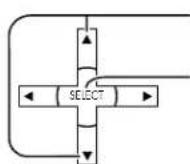
| Y Up/ down/ left/right arrows Press the arrow keys to move the cursor in the menu screens. | |
| Z L a s t Press Last to recall the previous channel you were viewing. | LAST |
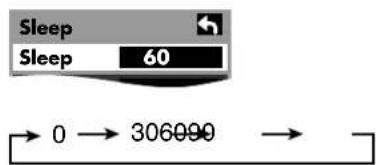
| AA Sleep Press Sleep to set the timer in this order: 30, 60, or 90 minutes. | SLEEP |
| AB Aspect Press Aspect to change the dimensions of your display. Your options depend on what is currently viewed. | ASPECT |
HP MCPC and HP DEC PCs
The remote control is already programmed to work with Media Center on HP MCPC and HP DEC PCs.
1 Press the HP button on the remote control to select the HP MCPC or HP DEC as the controlled device. 2 Point the remote control at the HP MCPC or HP DEC remote control sensor and press the buttons you want to use.
| Name Description | Icon | |
| Record | Press Record to start recording the TV display. | |
| Stop | Press Stop to stop the recording or playback. | |
| Skip backward | Press Skip backward to go back 30 seconds in the program. | |
| Skip forward | Press Skip forward to go forward 30 seconds in the program. | |
| Rewind | Press Rewind to rewind the program or song. | |
| Fast-forward | Press Fast-forward to fast-forward the program or song. | |
| Pause | Press Pause to pause the program or song. | |
| Play | Press Play to view the program or listen to the song. | |
| Menu | Press Menu to open Media Center. | |
| Select | Press Select to choose the current menu option. | |
| Mute | Press Mute to turn sound off or on. | |
| Info | Press Info to view information on your current program. | |
| Guide | Press Guide to display the program guide. | |
| Keypad | Press the keypad (0 ~ 9) to directly select channels. |
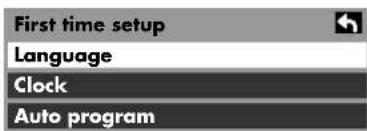
Using the First Time Setup
The first time setup menu is displayed on screen when the set is turned on for the first time. Follow the menus and procedures for setting up the features. You can also adjust the settings in the Setup menu (see "Setup" on page 37).
Language
Allows you to select the language used for onscreen displays.
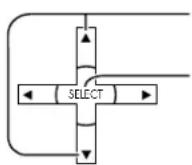
Press to select Language.
Press to display Language screen.
Press to select English, Espanol or Français.
Press to move the cursor to
Press to go to previous screen.


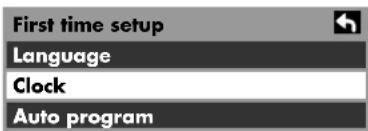
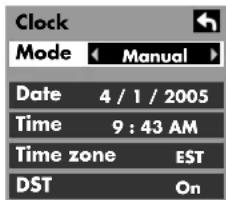
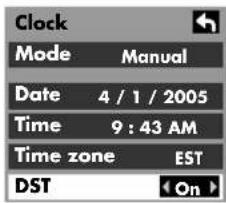
Clock
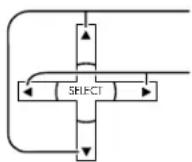
Press to select Clock.
Press to display the clock adjust screen.
Mode
Press to select Mode.
Press to select Manual or Auto.
Manual: Registers the time set by user.
Auto: Updates the clock time by extracting time information from the digital broadcast.
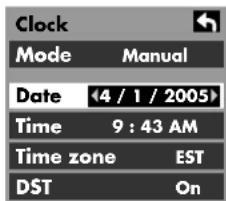
Date
Valid when Mode is set to manual.
Press to select Date.
Press and release immediately to change the day; press and hold to change the month.
Time
Valid when Mode is set to manual.
Press to select Time.
Press to adjust Time.
If the button is held, the speed of change increases.
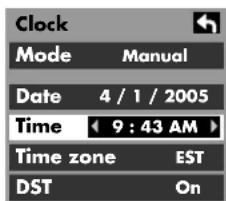
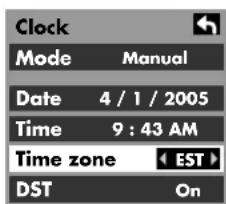
Time zone
Valid when Mode is set to Auto.
Press to select Time zone.
Press to select your zone.

22 HP Pavilion Plasma TV User's Guide
Daylight saving
Valid when Mode is set to Auto.
Press to select DST (daylight saving).
Press to select On or Off.
Auto program
You can scan all (analog and digital) channels. If needed, follow the menus and procedures displayed on screen for setting up the features.
You can also adjust the settings in Set up menu.
1
Press to select ANT In.
Press to select Cable or Antenna.
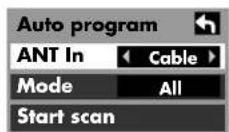
2
Press to select Mode.
Press to select All or Analog.
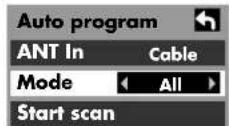
3
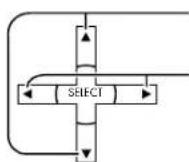
Press to select Start scan.
Press to start. Channels available for reception will be set automatically.
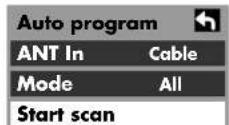
To exit the menu screen
Press
EXIT
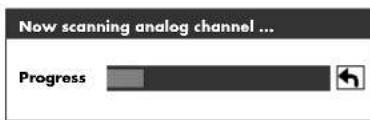
Watching TV Programs
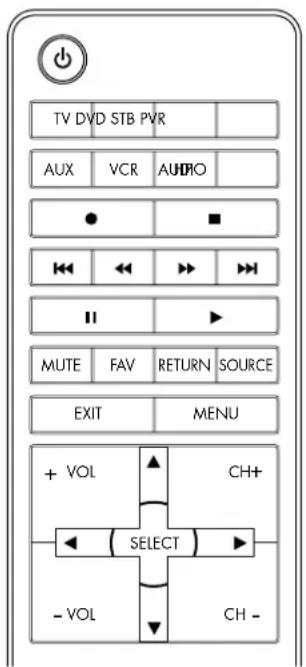
VHF and UHF
1 Press to operate the TV set with the remote control. 2 Press to turn on the TV. 3 Press to select desired channel.
You can also use the direct program number selection buttons.
4 Select the desired volume level.
TV

CH+
CH-
- VOL
VOL

The channel number and volume level remain the same even after the TV is turned off. Power consumption can be reduced if the volume level is lowered.
Cable TV
Make sure that registration with cable TV provider and connection of equipment are completed.
1 Select TV channel 3 or 4.
CH+
CH-
STB
2 Press to operate the cable box with the remote control. 3 Press to turn the cable box on.
Point the remote control towards the cable box.


To operate other manufacturer's product see "Programming the remote control code" on page 55.
Aspect Controls
These let you choose the aspect depending on the format of the received signal and your preference.
Press to change the aspect mode.
ASPECT

The available aspect modes depend on the receiving signal.
For 480i, 480p (4:3), and 480p (16:9), choose 4:3, Zoom, Full, or Just mode.
For 1080i and 720p, choose Full mode only.
| Mode Picture Explanation | |
| 4:3 | 4 3 |
| Zoom | 4 3 → 16 3 9 |
| Full | 4 3 → 16 3 9 |
| Just | 4 3 → 16 3 9 |
Using the Onscreen Navigation Menu
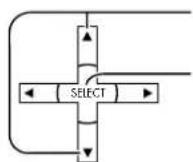
Press to change selection.
Press to enter each adjust screen.
Press RETURN to return to previous menu.
Press to display main menu.
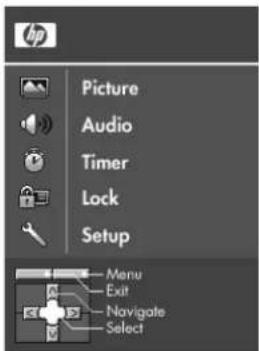
For the main menu entries:
See "Picture" on page 27. See "Audio" on page 31. See "Timer" on page 34. See "Lock" on page 48. See "Setup" on page 37. See "Language" on page 21. See "Clock" on page 22. See "Program channel" on page 38. See "Input labels" on page 42. See "CC (closed caption)" on page 43. See "Other Adjust (setup)" on page 46. See "About" on page 47.
Using the Menu
Picture
Press the Menu button to display the Main menu.
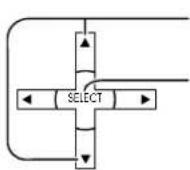
Press to select Picture.
Press to enter sub-menu.
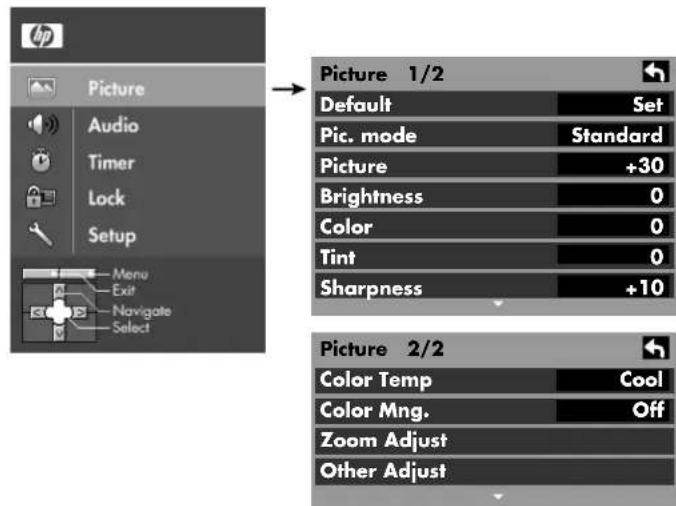
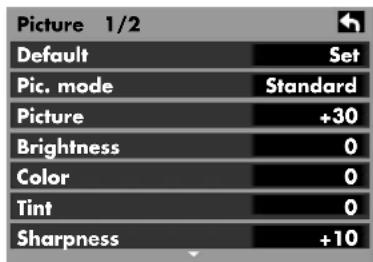
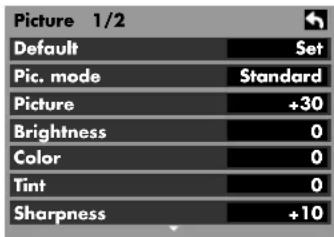
Default/Pic. mode/Picture/Brightness/Color/Tint/Sharpness/Color Temp/Color Mng.
Press to select the sub menu.
Press to adjust the sub menu.
| Picture 1/2 | |
| Default | Set |
| Pic, mode | Standard |
| Picture | +30 |
| Brightness | 0 |
| Color | 0 |
| Tint | 0 |
| Sharpness | +10 |
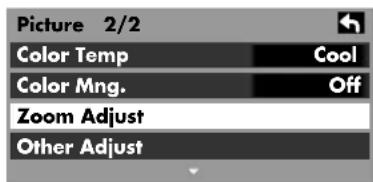
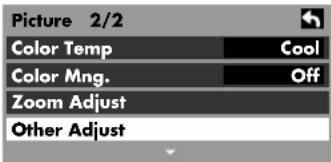
| Picture 2/2 |
| Color Temp Cool |
| Color Mng. Off |
| Zoom Adjust |
| Other Adjust |
| Item Explanations | |
| Default Resets all picture adjustments | to factory default settings. |
| Pic.Mode Adjusts to preset brightness and color settings. | |
| Picture Adjusts white areas of picture. | |
| Brightness Adjusts dark areas of picture. | |
| Color Adjusts desired color intensity. | |
| Tint Adjusts natural flesh tones. | |
| Sharpness Adjusts clarity of outline detail. | |
| Color Temp (Temperature) | Increase or decrease warm (red) and cool (blue) colors to suit personal preferences. |
| Color Mng. (Color Management) | Setting this to On enables vivid color adjustment automatically. |
Pic. mode
Choose the preset picture mode that best suits the program you are viewing. This feature also affects Color Temp setting.

Each mode has its own picture settings (Picture, Brightness, Color, Tint, and Sharpness).
Press to select Pic. mode.
Press to select the picture mode.
Vivid (default): Provides enhanced picture contrast and sharpness for viewing in a well-lit room. Standard: Recommended for normal viewing conditions with subdued room lighting. Cinema: For watching movies in a darkened room. It provides a soft, film-like picture.
Zoom Adjust
Adjust the Zoom position. It works when Aspect mode is Zoom.

To return to the default setting, press the Select button.
Press to select the Zoom Adjust menu.
Press to display the Zoom Adjust screen.
Press to adjust V-Position.
Press to adjust Size.
V-Position: Adjust the vertical position.
Size: Adjust the vertical size.
Other Adjust (Picture)
Press to select Other Adjust.
Press to display the Other Adjust menu.
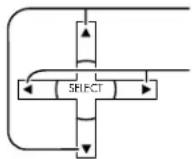
Press to select the menu.
Press to select or adjust the submenu.
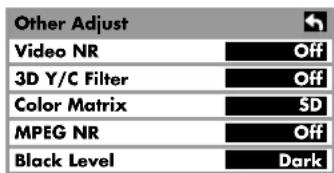
| Item Explanations | |
| Video NR | Reduces noise, commonly called snow. Leave off when receiving a strong signal. |
| 3D Y/C Filter Minimizes noise and cross-color in the picture. | |
| Color Matrix | Select SD or HD: ■SD: When the input signal is a normal TV system (NTSC). ■HD: When the input signal is a high-definition system (ATSC). Displays 480p input signals in natural color from digital equipment adapters connected to Component Video Input (Y, Pb, Pr) terminals. Select HD or SD to adjust color parameters automatically for HD (high-definition) or SD (standard definition). Notes: ■ This feature is available only with 480p signal and not available with regular TV (NTSC) programming. ■When viewing a nonstandard DTV signal format, you can change color parameters manually for the best picture quality. |
| MPEG NR Reduces noise to DVD, STB, or other device. | |
| Black level | Select Dark or Light. Valid only for external input signals. |
Audio
Press the Menu button to display the Main menu.
Press to select Audio. Press to enter submenu
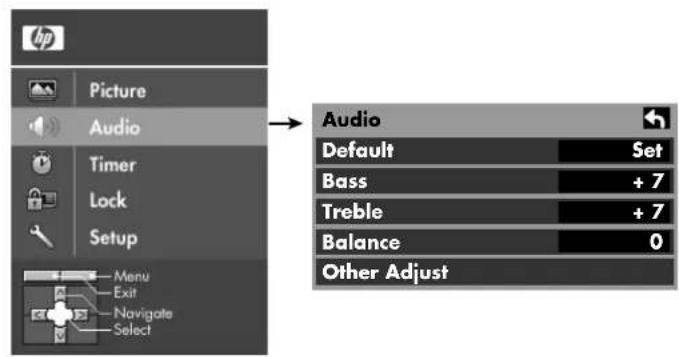
Default/Bass/Treble/Balance
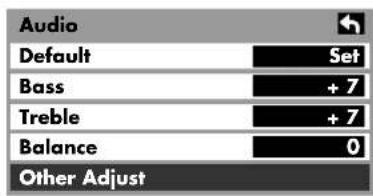
Press to select Default, Bass, Treble, or Balance.
Press to select or adjust the submenu.
| Item Explanations | |
| Default | Reset Bass, Treble, and Balance adjustments to factory default settings. |
| Bass Increase | or decrease the bass response. |
| Treble Increase | or decrease the treble response. |
| Balance Emphasize the left/right speaker volume. | |
Other Adjust (Audio)
1
Press to select Other Adjust.
Press to display the menu.
| Audio | |
| Default | Set |
| Bass | + 7 |
| Treble | + 7 |
| Balance | 0 |
| Other Adjust | |
2
Press to select the menu.
Press to select or adjust the submenu.
| Other Adjust | |
| AI Sound | On |
| Surround | Off |
| Speakers | On |
| HDMI In | Auto |
| Audio Leveler | 0 |
AI Sound
Equalize overall volume levels across all channels. AI sound is not available in Video input mode. See "Connecting the Video Input" on page 12.

AI Sound is Off when Speakers is set to Off.
Press to select AI Sound.
Press to select On or Off.
| Other Adjust | |
| AI Sound | On |
| Surround | Off |
| Speakers | On |
| HDMI In | Auto |
| Audio Leveler | 0 |
Surround
Enhances audio response when listening to stereo.

Surround is Off when Speakers is set to Off.
Press to select Surround.
Press to select On or Off.
On: For stereo audio. Off: For monaural audio.
| Other Adjust | |
| AI Sound | On |
| Surround | Off |
| Speakers | On |
| HDMI In | Auto |
| Audio Leveler | 0 |
Speakers
This feature is used to turn TV speakers On or Off. See "Connecting the Amplifier" on page 13.

AI Sound, Surround and Audio Leveler are not available when Speakers is set to Off.
Press to select Speakers.
Press to select On or Off.
On: TV speakers operate normally. Off: TV speakers off.
| Other Adjust | |
| AI Sound | On |
| Surround | Off |
| Speakers | On |
| HDMI In | Auto |
| Audio Leveler | 0 |
HDMI In
Set this option when using HDMI; see "Connecting HDMI" on page 10. This feature lets you switch between digital audio input (audio signal is taken from
the HDMI In connector) and analog audio input (audio is taken from the HDMI R/L Audio In connectors when using a DVI-HDMI adapter or cable).
Press to select HDMI In.
Press to select the mode.
■Auto: Automatically selects Audio signal. Digital: selects Digital Input only. ■Analog: selects Analog Input only.
| Other Adjust | |
| AI Sound | On |
| Surround | Off |
| Speakers | On |
| HDMI In | Auto |
| Audio Leveler | 0 |
Audio Leveler
The audio leveler monitors the difference in audio levels between input signals from external equipment and minimizes the change in output volume that can occur when switching input signals.
Press to select Audio Leveler.
Press to adjust Audio level.

Audio Leveler is not available when Speakers is set to Off.
| Other Adjust | |
| AI Sound | On |
| Surround | Off |
| Speakers | On |
| HDMI In | Auto |
| Audio Leveler | 0 |
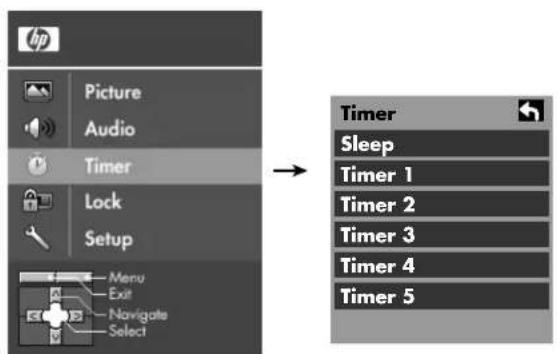
Timer
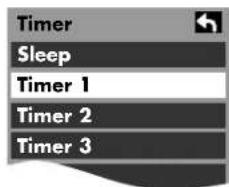
Select Timer to turn the TV on and off at selected times and on selected days. Press the Menu button to display the Main menu.
Press to select Timer.
Press to enter the menu.
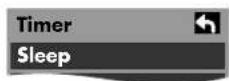
Sleep Timer
1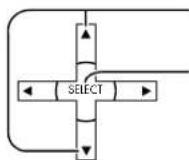
Press to select Sleep.
Press to enter the Sleep set screen.
2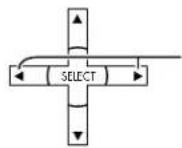
Press to select off time (minutes).
Timer set
The clock must be set before On time/Off time settings can be made.
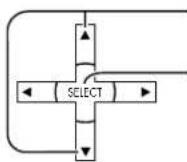
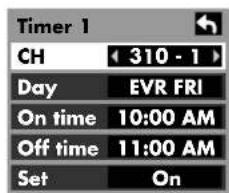
Press to select Timer 1-Timer 5.
Press to enter the Timer adjust screen.
Channel
Press to select CH.
Press to set CH.
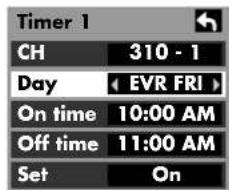
Day
Press to select Day.
Press to select appropriate day setting.
■ Selectable day items: Sun, Mon, Tue, Wed, Thu, Fri, Sat, Mon-Fri, Sat-Sun, Daily, Evr Sun, Evr Mon, Evr Tue, Evr Wed, Evr Thu, Evr Fri, Evr Sat
On time/Off time
Perform the following operations for both On time and Off time.
Press to select On time/Off time.
Press to select hour (AM or PM) and the minutes of On time/Off time.
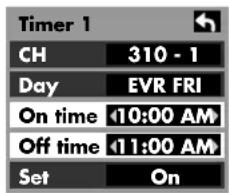
Set

Press to select Set.
Press to select On or Off.
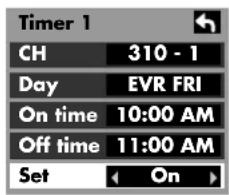

The TV automatically turns off after 90 minutes when turned on by the Timer. This operation is cancelled if the Off time is selected or if a key is pressed. When the power to the TV set is disrupted due to a power outage or similar problem, the off-timer is deactivated, and the TV will be in standby mode even after power is restored.
To return to the previous screen
Press RETURN any submenu and return to the previous screen in the Timer.
Setup
Press the Menu button to display the Main menu.
Press to select Setup.
Press to enter the submenu.
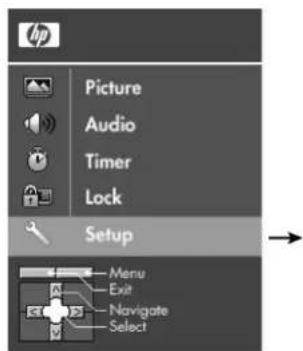
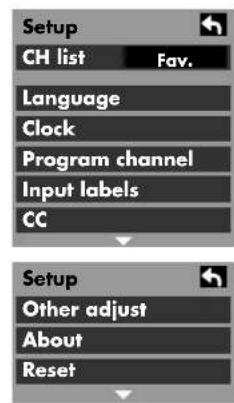
CH list
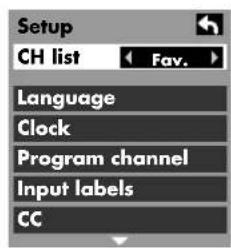
Press to select CH list.
Press to select Fav or All.
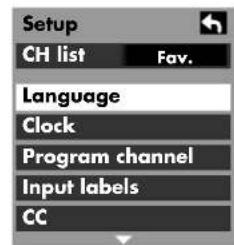
Language
Press to select Language.
Press to display the Language screen.
Clock
Press to select Clock.
Press to display the Clock screen.
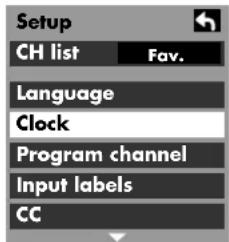
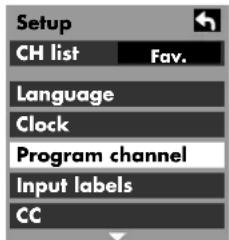
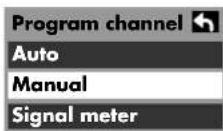
Program channel
1
Press to select Program channel.
Press to enter the Program channel menu.
2
Press to select submenus.
Press to enter submenu.
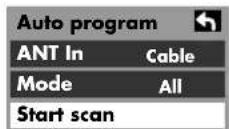
Auto program
Automatically scans all available channels.
1
Press to select ANT In.
Press to select Cable or Antenna.
2
Press to select Mode.
Press to select All or Analog.
■All: Analog and Digital
■Analog: Analog only
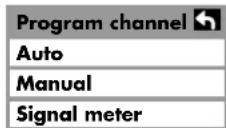
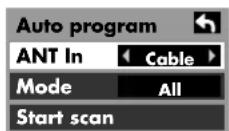
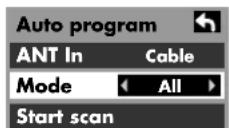
3
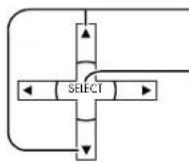
Press to select Start scan.
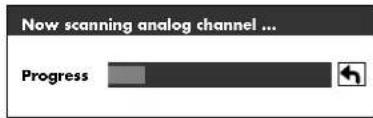
Press to start.
After Auto program is complete, the unit returns to Manual program mode.
To make available a channel that has been located by auto scan, in the Manual program mode, move the cursor to Apply and press Select.
Manual program
To add or delete channels from the channels list manually.

Press to select Manual.
Press to enter the Manual Program screen.
■Program edit
1
Press to select Edit.
Press to enter the edit mode.
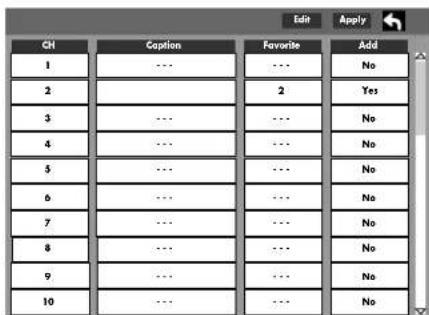
2
Press to select the desired preset channel line.
Press to select edit area: Caption, Favorite, Add.
Press to enter the preset screen.
Refer to the following for each adjustment.
3
RETURN
Press to move cursor to Apply.
4
Press to enter your program.
Edit (Caption)
1
Press to select Preset.
Press to select Broadcast st.
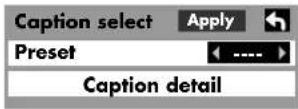
2
Press to select Caption detail.
Press to display the Caption input screen.
3
Press to move cursor to Caption.
Press to enter input field.
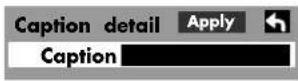
4
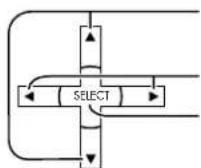
Press to select the character to input/change.
Press to move to next character. You can repeat this for up to 7 characters.
Press to enter your selection.
5
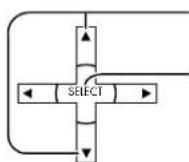
Press to move cursor to Apply.
Press to enter Caption.
Edit (Favorite)
1
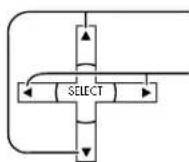
Press to select Favorite.
Press to select Favorite number.
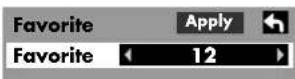
2
Press to move the cursor to Apply.
Press to enter Favorite and return to the Edit screen.
Edit (Add)
To register/delete in Program channel.
Press to select Yes or No.
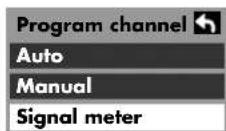
Signal meter
(For digital channels only)
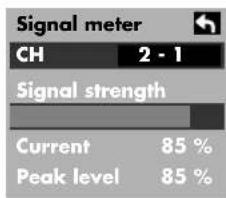
Displays the signal strength of the ATSC digital channel in antenna.
Press to select Signal meter.
Press to display Signal meter.
2
Press to select desired channel.
Press to tune desired channel.

The signal meter works only for digital signals input with the antenna.
Input labels
To label video input connections for onscreen display.
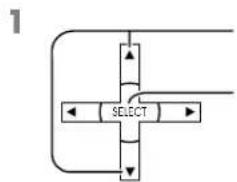
Press to select Input labels.
Press to enter the menu field.
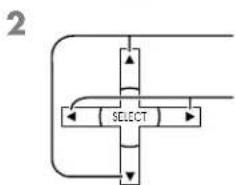
Press to select the Video input.
Press to select the input label.
To skip the input, select Skip. The input is skipped when you press the Source button on the remote control or TV.
42 HP Pavilion Plasma TV User's Guide
■ Selectable input labels: Skip, VCR, DVD, Cable, DBS, PVR, Game, Aux.
CC (closed caption)
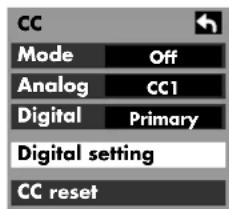
The television includes a built-in decoder that is capable of providing a visual display of the audio portion. The program viewed must provide closed captioning (CC) for the television to display it.
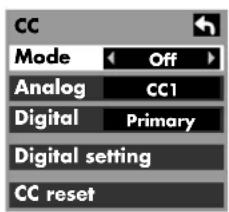
CC Mode
Press to select Mode.
Press to select the setting.
Off: Recommended mode when closed captioning is not being used. On: To display closed captioning.

The closed captioning is not displayed when you use HDMI connection. To control the closed caption of an analog connected home entertainment device, use the closed captions On/Off controls for that home entertainment device. The CC mode setting of the TV will not affect the analog input.

If a digital program is being output in analog format, the CC data will also be output in analog format. If digital connected equipment is used for input, CC should be set On on either the connected equipment or the TV. If CC is set On on both the connected equipment and the TV, captions from each unit will overlap.
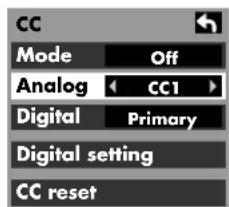
Analog
Choose the closed caption service of analog broadcasting.
Press to select Analog.
Press to select the setting.
CC1: For video-related information that can be displayed (up to four lines of script on the screen, where it does not disturb the relevant parts of the picture). Script can be in any language. CC2/CC3/CC4: Other modes used for video related information.
T1: Blanks out a large portion of the picture on the television screen and displays program guide or any other information currently being transmitted. T2/T3/T4: Other modes that display information and blank out a large portion of the picture of the TV screen.
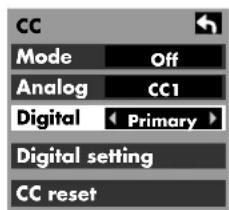
Digital
The Digital CC menu lets you configure the way you choose to view the digital captioning.
Press to select Digital.
Press to select the setting:
■Settings: Primary, Second, Service 3, Service 4, Service 5, Service 6
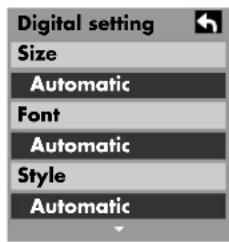
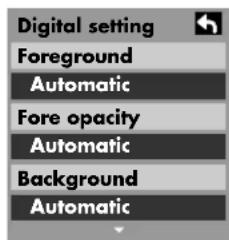
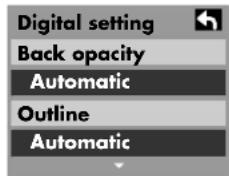
Digital setting
Selecting digital broadcast service and viewing formats.
1
Press to select Digital setting.
Press to enter the Digital setting menu.
2
Press to select the menu.
Press to select the submenu:
Size: Automatic, Normal, Small, Large Font: Automatic, Default, Mono-serif, Prop-serif, Mono, Prop, Casual, Cursive, Small caps Style: Automatic, None, Raised, Depressed, Uniform, Drop shadow ■Foreground: The color of the font (Automatic, Black, White, Red, Green, Blue, Yellow, Magenta, Cyan) Fore Opacity: The opacity of the font (Automatic, Transparent, Translucent, Solid, Flashing) Background: The color of the text box (Automatic, Black, White, Red, Green, Blue, Yellow, Magenta, Cyan) Back Opacity: The opacity of the text box (Automatic, Transparent, Translucent, Solid, Flashing) Outline: The outline of the text (if selected under style) (Automatic, Black, White, Red, Green, Blue, Yellow, Magenta, Cyan)
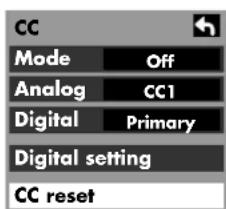
CC Reset
Reset the CC settings.
Press to select CC reset.
Press to reset CC settings.
Other Adjust (setup)
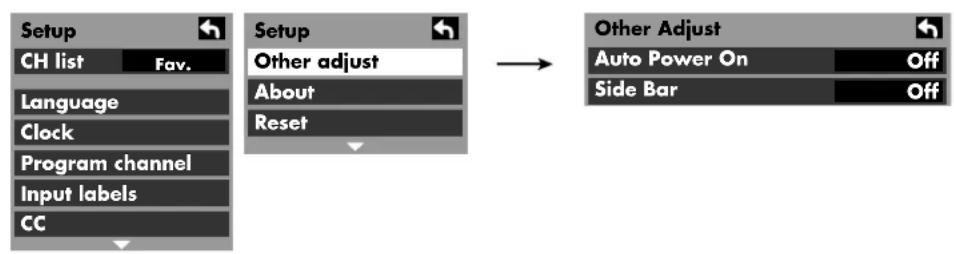
Auto Power On
Press to select Auto Power On.
Press to select Set or Off.
Select Set to power the TV on at the same time as the cable box or other connected components are powered on.
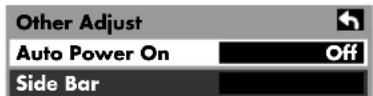

The sleep timer and on/off timer will not function if Auto Power On is set.
Side Bar
Do not display a picture in 4:3 mode for an extended period, as this can cause an afterimage to remain on either or both sides of the display field.
To reduce the risk of such an afterimage, change the brightness of the side bars.
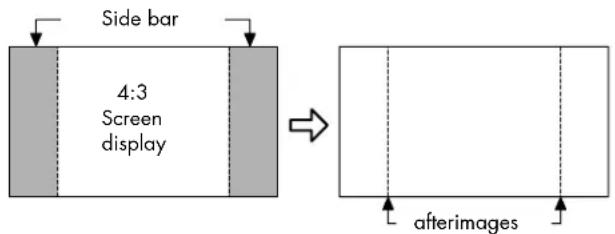

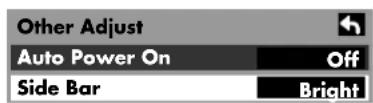
To reduce the occurrence of afterimages, set the Side Bar to Bright. The side bar may flash (alternate black/white) depending on the picture. Using Cinema mode reduces such flashing. See "Pic. mode" on page 29.
Press to select Side bar.
Press to select Off, Dark, Mid, Bright.
About
Display the TV set version and Software License.
1
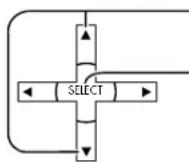
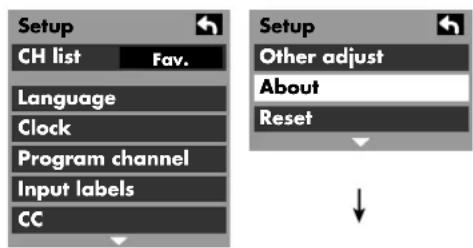
Press to select About.
Press to display the About screen.
2
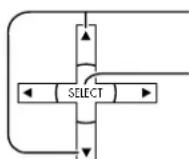
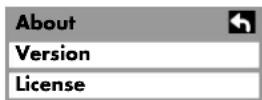
Press to select Version or License.
Press to display Version or License.
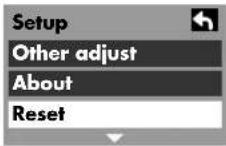
Reset
1
Press to select Reset.
Press to display the Password screen.
2 Enter your password by pressing the number
keys on the remote to reset the Setup settings.
The confirmation screen is displayed.
Select Yes, and press Select.
3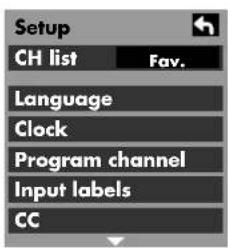
Enter password.
Performing a Reset clears all items set with Setup, such as channel settings. Use Reset with care.

Lock
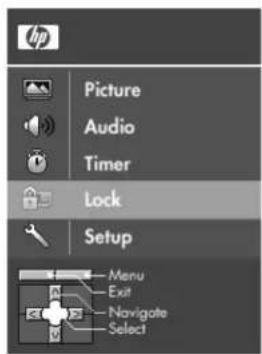
Press the Menu button to display the Main menu.
1
Press to select Lock.
Press to display the Input password screen.
2
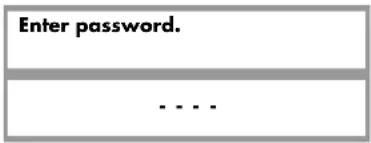
Enter your password by pressing the number keys on the remote.
3
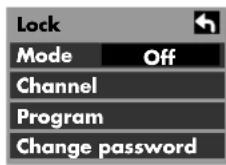
Create a four-digit password to enter the Lock menu.
4
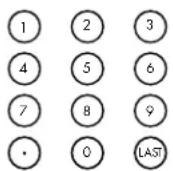
Enter a four-digit password.
After entering your password for the first time, Create password changes to Enter password.
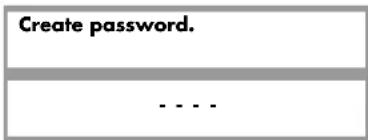

Use a code that is easy to remember and record it in a safe place.

If you forget your secret code, the TV must be serviced by a qualified technician to clear the Lock setup.
Lock Mode
Select Lock mode to prevent viewing of video games, VCR tapes, channels and Video modes.
Press to select Mode.
Press to select the setting:
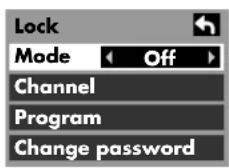
Off: Turns off Lock set functions. ■All: All channels are locked regardless of the rating level. Game: Locks out CH 3, CH 4, and Video inputs. CH: Locks out specific analog and digital channels. Password is required to view any of the locked channels.
Channel (block channel selection)
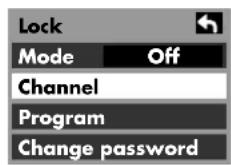
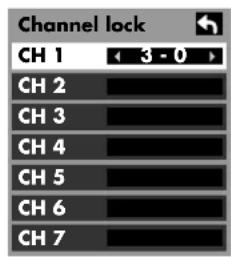
Select up to seven (1-7) channels to be blocked out. These channels are blocked out regardless of the program rating.
1
Press to select Channel.
Press to display the channel block screen.
2
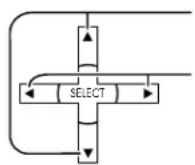
Press to select CH 1-CH 7.
Press to select the desired Block channel.
Blocking a program
This television incorporates V-Chip technology to block the viewing of movies and television programs according to the rating category. There are four content advisory categories: MPAA (Motion Picture Association of America), U.S. TV Program, Canadian
English ratings, and Canadian French ratings. These categories are used as guidelines for blocking programs.
The default mode for the Lock category is the Unlocked state.
1
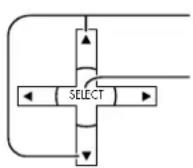
Press to select Program.
Press to enter Program menu.

2
Press to select MPAA, U.S.TV, C.E.L.R., or C.F.L.R.
Press to enter Block program adjust screen.
MPAA: for U.S movie ratings U.S.TV: for U.S TV program ratings C.E.L.R.: for Canadian English ratings C.F.L.R.: for Canadian French ratings
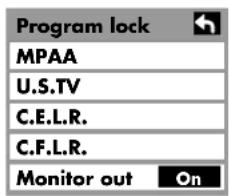
3
Press to highlight the desired rating level.
4
Press to select Monitor out.
Press to select On or Off.
Monitor out
On turns on the monitor terminal output for programs that have been set to blocked. Off turns off the monitor terminal output for programs that have been set to blocked.

The Off rating is independent of other ratings.

When placing a block on a specific age based rating level, the Off rating and any other more restrictive ratings are blocked.
U.S. Movie Ratings Chart
| NR | No Rating (Not Rated) and NA (Not Applicable) programs. Movie has not been rated or rating does not apply. |
| G General | Audiences. All ages admitted. |
| PG Parental | Guidance Suggested. Some material may not be suitable for children. |
| PG-13 | Parents Strongly Cautioned. Some material may be inappropriate for children under 13. |
| R | Restricted. Under 17 requires accompanying parent or adult guardian. |
| NC-17 No | one 17 and Under Admitted. |
| X Adults Only. | |
U.S. TV Program Ratings Chart
The TV Parental Guidelines has seven levels of age-based ratings that can be selected. These seven levels are split into two age-based groups:
youth age-based ratings and guidance age-based ratings. Some of these age-based ratings can also have content-based ratings, denoted as D (dialogue), L (language), S (sex), and V (violence). The table below shows the age-based ratings selection.
| Age-based Group | Age-based Ratings | Possible Content Selections Description | |
| NR (Not Rated) | TV-NR | ■Viewable■Blocked | Not Rated. See CAUTION under “Canadian French Ratings Chart” on page 53. |
| Youth TV-Y | ■Viewable■Blocked | All children. The themes and elements in this program are specifically designed for a very young audience, including children from ages 2-6. | |
| TV-Y7 | ■FV blocked■Viewable■Blocked | Directed to older children. Themes and elements in this program may include mild physical or comedic violence, or may frighten children under the age of 7. | |
| Guidance TV-G | ■Viewable■Blocked | General audience. It contains little or no violence, no strong language, and little or no sexual dialogue or situations. | |
| TV-PG | ■D,L,S,V(all selected)■Any combination of D,L,S,V | Parental guidance suggested. The program may contain infrequent coarse language, limited violence, some suggestive sexual dialogue and situations. | |
| TV-14 | ■D,L,S,V(all selected)■Any combination of D,L,S,V | Parents strongly cautioned. This program may contain sophisticated themes, sexual content, strong language and more intense violence. | |
| TV-MA | ■D,L,S,V(all selected)■Any combination of D,L,S,V | Mature audiences only. This program may contain mature themes, profane language, graphic violence, and explicit sexual content. | |
| FV: Fantasy/Cartoon Violence V: Violence S: Sex L: Offensive Language D: Dialogue with sexual content | |||
Canadian English Ratings Chart
| E | Exempt programming includes: news, sports, documentaries and other information programming, talk shows, music videos, and variety programming. |
| C | Programming intended for children under age 8. No offensive language, nudity or sexual content. |
| C8+ | Programming generally considered acceptable for children 8 years and over. No profanity, nudity or sexual content. |
| G General programming, suitable for all audiences. | |
| PG | Parental Guidance suggested. Some material may not be suitable for children. |
| 14+ | Programming contains themes or content which may not be suitable for viewers under the age of 14. Parents are strongly cautioned to exercise discretion in permitting viewing by pre-teens and early teens. |
| 18+ | 18+ years old. Programming restricted to adults. Contains constant violence or scenes of extreme violence. |
Canadian French Ratings Chart
| E Exempt programming. | |
| G | Programming intended for audience of all ages. Contains no violence, or the violence content is minimal or is depicted appropriately. |
| 8 ans+ | 8+ general, not recommended for young children. Programming intended for a broad audience but contains light or occasional violence. Adult supervision recommended. |
| 13 ans+ | Programming may not be suitable for children under the age of 13. Contains either a few violent scenes or one or more sufficiently violent scenes to affect them. Adult supervision strongly suggested. |
| 16 ans+ | Programming may not be suitable for children under the age of 16. Contains frequent scenes of violence or intense violence. |
| 18 ans+ | Programming restricted to adults. Contains constant violence or scenes of extreme violence. |
Customer Caution
The V-Chip system that is used in this set is capable of blocking NR programs (non-rated, not applicable and none) as per FCC Rules Section 15.120(e)(2). If the option of blocking NR programs is chosen unexpected and possibly confusing results may occur, and you may not receive emergency bulletins or any of the following types of programming:
Emergency Bulletins (such as EAS messages, weather warnings, and others) Locally originated programming: news, political, public service announcements, religious, sports, and weather
Blocking Messages
Various Blocking messages are displayed onscreen depending upon the type of blocking you have selected in the Lock menu.

Entering the password overrides the block condition. However, the ratings selection will be retained.
| Message Possible | cause |
| Game locked The Source button was pressed when the Game lock had been selected. | |
| Channel Locked | Tuned to the designated channel when the Channel lock had been selected.Tuned to CH 3 or CH 4 when the Game lock had been selected. |
| All locked Lock All is selected. | |
| Program locked | Received program that exceeds the Block Program rating level. |
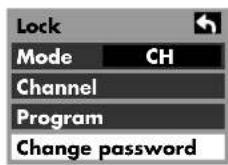
Change password
Press to select Change password.
Press to enter the Input Password screen.

Operating Peripheral Equipment
Programming the remote control code
Your HP remote control is programmable. You can program the remote control to operate other home entertainment devices such as your VCR, DVD player, audio receiver, or set-top box. Manufacturer codes for compatible brands are listed at the end of this chapter. If the brand of your device is not listed, see "Searching for the device code" on page 56.
Programming the device code
The following steps describe how to program a device button if your brand is listed.
1 Turn on the TV. Turn on the device you would like to program.

Please read steps 2 through 4 completely before proceeding. Highlight or write down the codes and device you wish to program before performing step 2.
2 Hold down a device button on the remote control for 5 seconds until the device button blinks, and then release the device button. The device button blinks one more time and then remains lit. 3 Locate the brand of your device and manufacturer's codes (see listing that follows). 4 Enter the first four-digit code. If the code is accepted, the device button flashes twice. If the code is not accepted, the device button flashes three times.

If the device button did not blink twice, then repeat steps 2 through 4, entering either the same code or the next code if provided.
5 Aim the remote control at the device, and press the Power button once. The device should turn off. If it does not respond, repeat steps 2 through 4, trying each code for your brand until you find one that works. If it still does not work, try searching for the code; see "Searching for the device code" on page 56.

If the device does not have a Power button, press Play.
6 Repeat steps 1 through 5 for each device you want to control with the remote control.
Searching for the device code
If your device does not respond to the remote control after trying all codes listed for your brand, or if your brand is not listed at all, try searching for your code.
1 Turn on your home entertainment device. 2 Hold down a device button on the remote control for 5 seconds until the device button blinks, and then release the device button. The device button blinks one more time and then remains lit. 3 Enter 1, 1, 1, 1, and the device button blinks once and then remains lit. 4 Press and release the Power button once on the remote control. Wait until the device button stops blinking. Continue to press and release the Power button, waiting each time for the device button to stop blinking, until the home entertainment device turns off.
Manufacturer's codes
The following charts include manufacturer codes for these home entertainment devices:
■ VCR ■ DVD/VCR combo ■ Home Theater in a Box ■ DVD ■ Cable Box ■ Satellite Box ■ Satellite receiver/recorder ■ Amplifier ■ Audio Cassette ■ Audio System ■ Phono ■ Receiver/Tuner ■ PVR

Each time you press the Power button it is trying a different code. Be sure to wait until the device button stops blinking before pressing the Power button again. You may need to press the Power button several times before the correct code is found.
5 Once the home entertainment device turns off, press the Select button on the remote control to save the code.
VCR manufacturer codes
| Brand Code | Brand Code Brand | Code | |||
| Admiral 0073, 0074, 0101 Daytron 0067, 0068 | 083, 0102 JC Penney | 0046, 0047, 0048, | 0049, 0050, 0051, 0053, 0054, 0057, 0058, 0059, 0060, 0065, 0079, 0085, 0088, 0090 | ||
| Aiko 0056 Denon | 0088 Jensen 0057, 0058, 0068 | ||||
| Aiwa 0055 Dimensia | 0043, 0112 JVC 0000 | 0019, 0046, | 0047, 0048, 0068, 0071, 0087, 0088 | ||
| Akai 0044, 0045, | 0068, 0069, 0080, 0093 | Electrohome 0051, | 0090 Kenwood 0046, 0047, 0048, | 0068, 0071, 0077 | |
| Audiovox 0051 Emerson | 0044, 0045, 0049, 0051, | 0052, 0053, 0055, 0061, 0069, 0087, 0090, 0106 | KLH | 0059 | |
| Bell & Howell | 0048 Fisher | 0048, 0089, 0105 | Kodak 0051, 0053 | ||
| Broksonic | 0023, 0049 | Fuji | 0045, 0053 | LG | 0051 |
| Calix 0051 Funai | 0055, 0095 | Lloyds | 0077, 0095, 0105 | ||
| Canon | 0053, 0054 | Garrard | 0055 | Logik | 0059, 0085 |
| Capehart | 0067, 0083 GE | 0040, 0043, 0050, 0053, 0054, 0070, 0079, 0112 | LXI | 0051 | |
| Carver | 0060, 0110 GoVideo | 021, 0024, 0026, | 0028, 0034, 0079, 0081, 0085, 0086 | Magnasonic | 0085, 0090, 0102 |
| CCE 0056, 0059 | Goldstar 0046 | 0051, 0079, | 0090, 0092 | Magnavox | 0008, 0053, 0054, 0060, 0064, 0085, 0110 |
| Citizen 0050, 0051 | 0052, 0056, 0095 | Gradiente | 0055, 0090 Marantz | 0046, 0047, 0048, 0053, 0060, 0077, 0092, 0110 | |
| Colortyme | 0046, 0096 | Harman Kardon | 0046, 0110 | Matsushita | 0053 |
| Craig | 0050, 0051, 0059, 0085, 0090, 0105 | Harwood 0059 Memorex | 0033, 0048, 0050, | 0051, 0053, 0055, 0064, 0073, 0074, 0088, 0090, 0091, 0097, 0105 | |
| Curtis Mathes | 0043, 0046, 0050, 0053, 0054, 0077, 0079, 0112 | Hitachi 0025, 0036, 0037, 0057, 0058, 0065, 0068, 0070, 0088 | MGA | 0061, 0069 | |
| Daewoo | 0052, 0055, 0056, 0067, 0083, 0102 | JBL | 0098 MGN | 0079 | |
| Minolta 0057, 0058 | 0065, 0088 | Pioneer 0047, 0057 | 7, 0071, 0075, 0078, 0104 | Sharp 0014, 0015 | 0062, 0073, 0074, 0091, 0094, 0101 |
| Mitsubishi 0003, 0005 | 0005, 0006, 0057, 0058, 0061, 0069, 0071, 0090 | Portland 0067, 0083 | Shintom 0045, 0058, 0073, 0074 | 059, | 0085 |
| Montgomery Ward | 0073, 0074 Proscan 0084 | 43, 0112 Signature | 0073, 0074 | ||
| Motorola | 0053, 0073, 0074 | Proton | 0085 | Signature 2000 | 0097, 0101 |
| MTC | 0050, 0085 | Quasar | 0053, 0054 | Singer | 0053, 0059, 0072, 0076, 0085 |
| Multitech | 0050, 0055, 0059 | Radio Shack | 0051, 0062, 0074, 0090 | Sony | 0007, 0045, 0063, 0080, 0082, 0084, 0098, 0099 |
| NEC | 0046, 0047, 0048, 0068, 0071, 0077, 0092 | Radio Shack/Realistic | 0048, 0050, 0051, 0053, 0054, 0055, 0062, 0073 | STS | 0053, 0065 |
| Nikko | 0051 | Radix | 0051 | Sylvania | 0030, 0032, 0053, 0054, 0055, 0060, 0061, 0110 |
| Noblex 0050 | RCA | 0012, 0016 | 6, 0043, 0044, 0050, 0053, 0057, 0058, 0065, 0070, 0078, 0079, 0088, 0107, 0108, 0112 | Symphonic | 0055, 0077, 0095, 0105 |
| Olympus | 0053 | Realistic | 0048, 0050, 0051, 0052, 0053, 0054, 0055, 0062, 0073, 0074, 0079, 0090, 0094, 0097, 0105 | Tandy 0048 | |
| Optimus | 0051, 0073, 0074, 0090, 0094 | Ricoh | 0072, 0076 Tashiko | 0051 | |
| Optonica | 0062 | Runco | 0064 | Tatung | 0068 |
| Orion 0087, 0090 | Samsung 0091 | 29, 0031, 0035, | 0039, 050, 052, 079, 095 | Teac | 0055, 0068, 0107 |
| Panasonic | 002, 004, 009, 020, 053, 054, 066, 085, 105 | Sansui | 0047, 0068, 0071, 0085 | Technics 0053, 0066 | |
| Pentax | 0057, 0058, 0065, 0070, 0077, 0088 | Sanyo | 0022, 0048, 0050, 0089, 0097, 0105 | Teknika | 0051, 0053, 0055, 0090 |
| Philco 0053, 0054 | 0060, 0088, 0106 | Scott | 0049, 0052, 0061, 0090 | Toshiba 0010, 0011 | 1, 0052, 0057, 0061, 0069, 0100, 0102, 0105, 0109 |
| Philips | 0017, 0018, 0053, 0060, 0062, 0110 | Sears | 0048, 0051, 0053, 0057, 0058, 0065, 0077, 0088, 0089, 0090, 0097, 0105 | Totevision | 0050, 0051, 0090 |
| Unitec 0095 Video | Concepts 0046, 0047, 0052, | 0052, | 0069, 0077 | XR-1000 0053, 0055, 0059 | |
| Unitech 0050 Wards | 0050, 0051, 0052, | 0053, 0055, 0057, 0058, 0059, 0062, 0065, 0073, 0074, 0079, 0090, 0091, 0094, 0105, 0108, 0110 | Yamaha 0046, 0047, 0048, 0068, 0077 | ||
| Vector Research 0046, 0047, 0052, 0077 | White Westinghouse | White Zenith 0027, 0038, 0045, 0046, 0072, 0076, 0093' | |||
DVD/VCR combo manufacturer codes
| Brand Code | Brand Code Brand | Code | |||
| GoVideo 0026, 0027 | 28,0068,0070 | JVC 0000, 0010 | anyo 0022, 0063 | ||
| Hitachi 0025, 0067 | Samsung 0031, 0017 | Zenith 0027, 0069 |
Home Theater in a Box manufacturer codes
| Brand | Code | Brand | Code |
| Bose | 0010, 0071 | Philips | 0022 |
| Onkyo | 0086 | Toshiba | 0025 |
Miscellaneous video manufacturer codes
| Type | Brand | Code |
| DVR | Philips | 0042 |
| Digital network recorder | Sony | 0041 |
| PVR | TiVo | 0111 |
DVD manufacturer codes
| Brand Code | Brand Code Brand | Code | |||
| Aiwa 0073 Hitachi | 0065, 0067 Pioneer 0027 | 0032 | |||
| Apex 0000, 0001, 0003, 0004, 0016, 0028, 0029, 0030 | Irradio 0092 Proscan | 0005, 0099 | |||
| Audiovox 0074 JVC | 0007, 0010, 0011, | 0012, 0013 | Qwestar 0057 | ||
| Blaupunkt 0078 Kenwood 0097, 0100 RCA 0005, 0024, 0038 | 005, 0024, 0038 | ||||
| Bose 0062, 0071 Koss 0093 Sampo 0058 | 0045 | ||||
| Broksonic | 0045 | Magnavox | 0020, 0035 | Samsung | 0006, 0017, 0033, 0041 |
| Clarion 0046 Marantz 0085 Sansui | 0060 | ||||
| Classic 0047 Memorex 0087 Sanyo | 0059, 0063 | ||||
| Daewoo | 0079, 0080 Mintek 0053 | Sharp | 0014, 0031 | ||
| Denon | 0075, 0095, 0096 | Mitsubishi | 0088, 0089, 0090, 0091 | Sherwood | 0061 |
| Emerson | 0048, 0049 | NAD | 0048, 0081 | Sony | 0015, 0018, 0034, 0039 |
| Fisher | 0050, 0076 Nakamichi | 0054 Sylvania | 0049, 0072, 0077 | ||
| Funai | 0049, 0064 | Norcent | 0055, 0056 | Techwood | 0083 |
| GE | 0005, 0051, 0102 | Onkyo | 0082, 0086 | Toshiba | 0019, 0026, 0040, 0042 |
| GoVideo | 0068, 0070 | Oritron | 0057 | Yamaha | 0084, 0098 |
| GPX | 0052 | Panasonic | 0008, 0036, 0037 | Zenith | 0069, 0094 |
| Harman Kardon | 0066 | Philips | 0002, 0009, 0021, 0022, 0023, 0043 |
Cable box manufacturer codes
| Brand Code | Brand Code Brand | Code | |||
| ABC 0000, 0001, 0002, 0030 | Motorola 0031 Scientific | Atlanta | 0002, 0023, 0024, 0025 | ||
| Archer 0006, 0007 | Movie Time 0039 Signatire 0000 | ||||
| Cableview 0003 | NEC 0033 Sprucer 0029 | ||||
| Contec 0034 NSC | 0039 Standard | Component | 0042, 0043 | ||
| Eastern 0035 Oak | 0034, 0041 Starcom 0012, 0030 | ||||
| GE | 0000 | Panasonic | 0027, 0029 | Stargate | 0012 |
| Gemini 0012, 0013 | 3 Philips 0008, 0009, 0010, 0011, 0013, 0017, 0018, 0019, 0020' | 0011, 0013, 0017, 0018, 0019, 0020' | Tocom | 0001, 0015 | |
| General Instruments | 0000, 0032 Pioneer | 0021, 0022 United Cable 0030 | |||
| Hamlin | 0036, 0037, 0038, 0040, 0044 | Proscan | 0000 | Universal | 0004, 0006, 0007 |
| Hitachi | 0000 | RCA | 0003, 0029, 0032 | Viewstar | 0017, 0034, 0039 |
| Jerrold | 0000, 0012, 0015, 0016, 0026, 0030, 0032 | Realistic 0006 Zenith 0028 | |||
| Magnavox | 0017 Samsung 0022 | ||||
Satellite box manufacturer codes
| Brand Code | Brand Code Brand | Code | |||
| Alphastar | 0073 Hughes | 0068 Samsung 0051, 0073 | |||
| Chaparral | 0069 | Janeil | 0067 | Sony | 0052, 0079 |
| DirecTV | 0046 JVC | 0060 Star Choice | 0076 | ||
| Drake | 0072 | Mitsubishi | 0047 | Star Trak | 0066 |
| Echostar | 0071 | Panasonic | 0050, 0056 | STS | 0065 |
| Express Vu | 0075 | Philips | 0045 | Toshiba | 0053, 0074 |
| Fujitsu | 0067 | Proscan | 0077, 0078 | Uniden | 0061, 0062 |
| GE | 0049, 0077, 0078 | Radio Shack | 0063, 0064 | Zenith | 0054, 0067 |
| General Instruments | 0063, 0064 RCA 0077 | 0078 | |||
| Hitachi | 0068 | Realistic 0059 |
Satellite receiver/recorder codes
| Brand Code Brand Code | |||
| Philips 0057 Sony 0080 | |||
| RCA 0055 Zenith 0058 |
Amplifier manufacturer codes
| Brand Code Brand Code | |||
| Kenwood 0048 Pioneer 0041 | |||
| Yamaha 0001, 0053 RCA 0069 |
Audio cassette manufacturer codes
| Brand Code | Brand | Code | Brand Code | ||
| Aiwa | 0039 | Onkyo | 0055 | RCA | 0070 |
| Curtis Mathes | 0041 | Optimus | 0041, 0047 | Sansui | 0057 |
| Denon | 0052 | Panasonic | 0015, 0050 | Sanyo | 0044 |
| Fisher | 0042, 0049 | Philips | 0013 | Sherwood | 0047 |
| GE | 0070 | Pioneer | 0018, 0041, 0045 | Sony | 0043 |
| Kenwood | 0048, 0056 | Proscan | 0070 | Technics | 0050 |
| NAD | 0040 | Quasar | 0050 | Yamaha | 0053 |
| Nakamichi | 0054 | Radio Shack | 0047 |
Audio system manufacturer codes
| Brand Code | Brand | Code | Brand Code | ||
| Aiwa | 0039 | Nakamichi | 0054 | Scientific Atlanta | 0067 |
| Carver | 0051 | Panasonic | 0015, 0016 | Sony | 0043 |
| Curtis Mathes | 0041 | Philips | 0013, 0014 | Starcom | 0066 |
| Denon | 0052 | Pioneer | 0018, 0041 | Technics | 0050 |
| Harman Kardon | 0046 | RCA & Dimensia | 0031, 0032, 0033, 0034, 0035 | Yamaha | 0053 |
| Jerrold | 0066, 0068 | Sansui | 0057 | ||
| Kenwood | 0048, 0056 | Sanyo | 0044 |
Miscellaneous audio manufacturer codes
| Type Brand Code Type | Type Brand Code | ||||
| Digital audio tape Sony 0043 | Receiver/amplifier | Yamaha 0001 | |||
| Tuner Philips 0022 TV/VCR/tuner combo Panasonic 0012 | |||||
Phono manufacturer codes
| Brand | Code | Brand | Code |
| Kenwood | 0048 | Sony | 0043 |
| Pioneer | 0041 | Yamaha | 0053 |
Receiver/tuner manufacturer codes
| Brand | Code | Brand | Code | Brand | Code |
| Aiwa | 0017, 0036, 0039 | Luxman | 0064 | Radio Shack | 0047 |
| BOSE | 0010 | Marantz | 0019 | RCA | 0071, 0072 |
| Carver 0051 | McIntosh 0058 | Sansui 0057 | |||
| Curtis Mathes | 0041 | NAD | 0040 | Sanyo | 0042, 0044 |
| Denon 0006, 0026 | 0027, 0052 | Nakamichi | 0054 | Sharp | 0060 |
| Fisher | 0042, 0044, 0049 | NEC | 0040 | Sherwood | 0047 |
| Gradienté | 0062 | Nikko | 0063 | Sony | 0000, 0024, 0043 |
| Harman Kardon | 0008, 0038, 0046 | Onkyo | 0003, 0021, 0055 | Technics | 0002, 0020, 0050 |
| Hitachi | 0059 | Optimus | 0041, 0047 | Toshiba | 0025 |
| JBL | 0038 | Panasonic | 0009, 0012, 0016, 0029, 0050 | Yamaha | 0048, 0053 |
| Jensen 0061 | Philips 0014 | Zenith 0065 | |||
| JVC | 0007, 0030 | Pioneer | 0004, 0023, 0041, 0045 | ||
| Kenwood 0005, 0028 | 0048, 0056 | Quasar | 0050 | ||
PVR manufacturer codes
| Brand Code Brand Code | |||
| Philips 0001, 0004 TiVO 0002 | |||
| Sony 0000, 0005 Zenith 0003 |
Mode Operational Key Chart
This chart defines which keys are operational after programming (if needed), while in the selected remote control mode, DTV, CABLE, DBS, VCR, DVD, etc.
| KEY NAME DTV MODE CABLE MODE | ||
| Power Power | ||
| Navigation Up/Down Cable channel Up/Down | ||
| Navigation Right/Left - | ||
| OK | - | |
| MENU | DTV Menu | - |
| RECALL | PROGRAM INFO. | - |
| EXIT | Exit Electronic Program Guide | - |
| 1 2 3 4 5 6 7 8 9 · 0 A.SI | Select Channel | Select Channel |
| Info Electronic Program Guide | - | |
| CH+ CH - | - | - |
| KEY NAME | VCR MODE | DVD/CD Mode AUX | Mode | RCVR Mode(DVD) (CD) (I | |||
| Power Power Power Power Power Power | |||||||
| MUTE | TV Mute TV Mute RCVR Mute TV Mute RCVR Mute RCVR Mute RCVR Mute | ||||||
| SOURCE | TV Input SW -- TV Input SW - RCVR Input SW | ||||||
| Navigation Up/ Down | Next/Previous Track | Navigation Up/ Down | - | - | T | ||
| Volume +/-+ Navigation Right/Left | RCVR Volume +/-+ | Navigation Right/Left | Volume +/-+ | Volume +/-+ | RCVR Volume +/-+ | ||
| - | - | - | - | - | - | ||
| MENU | - | - | - | P | V | R | M |
| RECALL | Onscreen VCR Display | DVD Display | Time Format | - Onscreen VCR | Display | - | - |
| EXIT | - | - | - | E | x | i | t |
| 1 2 3 6 5 6 7 8 9 0 0 8 | -1....AV1 | 2....AV2 3....AV3 4....AV4 5....CD 6....TUNER 7....PHONO 8....TAPE 9....AUX | - | S | e | I | e 2....AV2 3....AV3 4....AV4 5....CD 6....TUNER 7....PHONO 8....TAPE 9....AUX |
| VCR Rew/FF | Skip Search Rew/FF | Search Rew/FF | - | VCR Rew/FF | Tape Rew/FF | Surround +/- | |
| Play | Play | Play | Play | Play | Play | - | |
| II | Pause | Still/Pause | Pause | Pause | Pause | Pause | - |
| Stop | Stop | Stop | - | Stop | Stop | - | |
| VCR Record | - | - | PVR Record | VCR Record | Tape Record | - | |
| SOURCE | Source Switch | -- Source Switch -- | |||||
| CH + CH - | VCR Channel Up/Down | - | - | P Up/Down | VCR Channel Up/Down | -R | RC Center +/- |
Video/Component/HDMI Input Signals
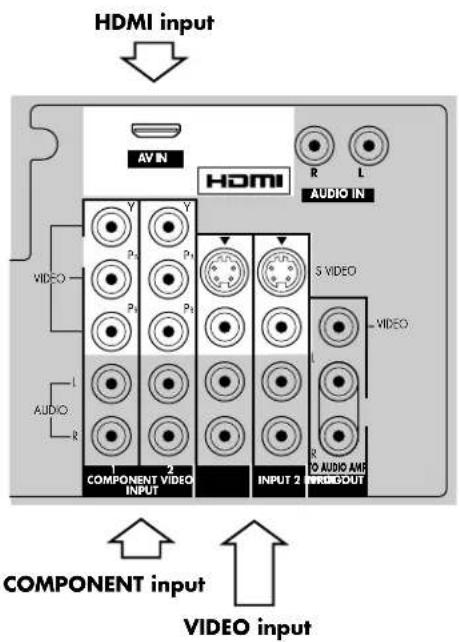
VIDEO input
| Signal Name | Horizontal Frequency (kHz) | Vertical Frequency (Hz) | |
| 1 NTSC 15.73 59.94/60 |
Applicable input signals (* mark)
| Signal Name | Horizontal Frequency (kHz) | Vertical Frequency (Hz) | Component HDMI | |
| 1 525 | (480) /60i 15.73 59.9 | 4/60 * * | ||
| 2 525 | (480) /60p 31.47 59.9 | 4/60 * * | ||
| 3 750 | (720) /60p 45.00 59.9 | 4/60 * * | ||
| 4 1125 | (1080) /60i 33.75 59.9 | .94/60 * * |
Specifications
| PE4200N | |||
| Power Source | 120Vv, 50/60 Hz | ||
| Power Consumption Maximum: 390 WStand-by condition: 0.6 W | |||
| Plasma Display panel Drive method: AC type 42 in., 16:9 aspect ratio | |||
| Screen Size | Approx. 36.2 in. (92 cm) (W) x 20.4 in. (51.8 cm) (H) x 41.6 in. (105.6 cm) (diagonal) | ||
| Dimensions (W x H x D) | Approx. 44.8 in. (113.8 cm) x 28.78 in. (73.1 cm) x 5.41 in. (13.75 cm) | ||
| Mass (Weight) 86 lb. (39 kg) | |||
| Channel Capability-ATSC/NTSC | VHF/UHF: 2-69, CATV:1-135 | ||
| Sound Speakerwoofer 3.1 in. | (8 cm) x 2, Tweeter 0.63 in. (1.6 cm) x 2.9 in. (7.3 cm) x 4 | ||
| Audio Output 26W [8W + 8W], 5W + 5W] (10% THD) | |||
| FEATURES 3D Y/C FILTER; Closed Caption; HDMI; V-Chip | |||
| Operating Conditions | Temperature: 32°F-104°F (0°-40°C)Humidity: 20%-80% (non-condensing) | ||
| Connection Terminals | AV Input 1-2 | VIDEO (Phono Jack Type) S-VIDEO (Mini DIN 4-pin) AUDIO L/R (Phono Jack Type x2) AV Prog. Out VIDEO 1.0 Vp-p (75Ω) (Phono Jack Type) AUDIO L/R (Phono Jack Type x2) Component Video Input1-2 | 1.0 Vp-p (75Ω) Y: 1.0 Vp-p (75Ω), C: 0.286 Vp-p (75Ω) 0.5 Vrms |
| Y | 1.0 Vp-p (Including Synchronization) | ||
| PB/PR | ±0.35 Vp-p | ||
| AUDIO L/R (Phono Jack Type x2) HDMI type A Connector | 0.5 Vrms | ||
| AUDIO L/R (Phono Jack Type x2) Digital Audio Out | PCM/Dolby Digital, Fiber Optic | ||
All specifications represent the typical specifications provided by HP's component manufacturers; actual performance may vary either higher or lower.

Design and specifications are subject to change without notice. Weight and dimensions shown are approximate.
Troubleshooting Chart
Refer to this section if you are having viewing, picture, or sound problems with your TV.
| Symptoms | SolutionVideo Audio | |
| Snowy Video Noisy Audio | Adjust the antenna location and connection. | |
| Multiple Image Noisy | Audio | Adjust the antenna location and connection. Check the antenna lead-in cable. |
| Interference Noisy Audio | Move the television away from electrical appliances, lights, vehicles, and medical equipment. | |
| Normal Video No Audio | Check to see if the volume is set at the minimum. Verify that Mute mode is not set. Check the speaker connection. Check all audio inputs. Change the channel. | |
| No Video with Snow | Noisy Audio | Set Input Setup properly. Check the antenna cables. |
| No Video No Audio? | Check to see if the TV power cord is plugged into a power outlet. Try another channel in case of station trouble. Ensure the remote control codes are properly programmed. Check cable connections. Adjust brightness and audio controls. Press the source button, to select the correct input source. Make sure a PC is not connected with an HDMI input. Unplug any HDMI connections, and plug them back in. | |
| No Color Normal Audio | Adjust the Color settings. Change the channel. | |
| Digitalization of image Image freeze up | Audio Break up | ■ Reposition the ATSC (digital) antenna. ■Check signal meter. If the signal is weak, add a signal booster to boost the signal strength. |
| Normal Video Wrong | Audio | ■ Verify that the Audio mode is set to Stereo or Mono, not SAP. ■ Check to see if there is a problem with the audio setting for HDMI. If so, use analog audio. ■Make sure the audio input matches the output. For example, set the audio of HDMI to linear PCM. |
| Black Box on Screen | Normal Audio | ■ Verify that the CC (closed caption) Analog settings are set to something other than T1, T2, T3, or T4. |
| Normal Video Normal | Audio | ■ Replace the remote control batteries. |
| Intermittent Remote Control Operation | ||
Plasma Display panel
| Symptoms Check | |
| Some parts of the screen do not light up. | ■ The plasma display panel is manufactured using an extremely high level of precision technology; however, sometimes some parts of the screen may be missing picture elements or have luminous spots. This is not a malfunction. |
| An afterimage appears. | Do not allow a still picture to be displayed for an extended period, as this can cause a permanent afterimage to remain on the Plasma TV. Examples of still pictures include logos, video games, computer images, teletext, and images displayed in 4:3 mode. NOTE: The permanent afterimage on the plasma TV resulting from fixed image use is not an operating defect and as such is not covered by the warranty. This product is not designed to display fixed images for extended periods of time. |
| Whirring sounds can be heard from the display unit. | ■ The TV includes a cooling fan to dissipate heat generated during normal use. The rotating fan may cause a whirring sound which is normal. |
Customer's Record
The product number and serial number of this product can be found on the back cover of the television. You should note this serial number in the space provided below. Retain this User's Guide, plus your purchase receipt, as a permanent record of your purchase to aid in identification in the event of theft or loss, and for warranty service purposes.
Product Number:
Serial Number:
Copyright © 2005 Hewlett-Packard Development Company, L.P.
Digital TV Solutions
Attn: Product Regulations Manager
10435 N. Tantau Avenue
CAC 07, MS 4295
Cupertino, CA 95014 USA
CANADIAN NOTICE:
A: Support (2) B: Viscourte (4) C: Vislongue (4) D: Support
Base assembly
■ Adjustments: Primary, Secondary, Service 3, Service 4, Service 5, Service 6
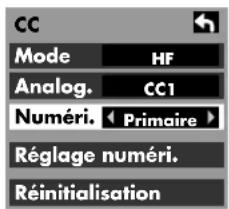
Digital adjustment
Copyright © 2005 Hewlett-Packard Development Company, L.P.
RESPONSIBLE ENTITY:
Hewlett-Packard Company
Digital TV Solutions
Attention: Product Regulations Manager
10435 N. Tantau Avenue
CAC 07, MS 4295
Some examples of static images


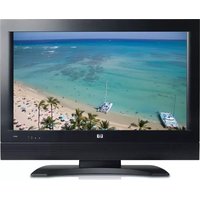
- HP PAVILION PLASMA TV USER'S GUIDE
- CAUTION
- RISK OF ELECTRIC SHOCK
- DO NOT OPEN
- WARNING: TO REDUCE THE RISK OF FIRE OR ELECTRIC SHOCK, DO NOT EXPOSE THIS APPARATUS TO RAIN OR MOISTURE. DO NOT PLACE LIQUID CONTAINERS (FLOWER VASE, CUPS, COSMETICS, ETC.) ABOVE THE SET (INCLUDING ON SHELVES ABOVE, ETC.)
- DIGITAL
- HIGH-DEFINITION MULTIMEDIA INTERFACE
- IMPORTANT SAFETY INSTRUCTIONS
- FCC STATEMENT
- FCC CAUTION
- RESPONSIBLE PARTY
- CANADIAN NOTICE
- REGULATORY AND SAFETY INFORMATION
- ADDITIONAL SAFETY INFORMATION
- AC POWER SAFETY WARNING
- TV ANTENNA CONNECTORS PROTECTION
- EXTERNAL TELEVISION ANTENNA GROUNDING
- LIGHTNING PROTECTION
- POWER LINES
- TABLE OF CONTENTS
- IMPORTANT SAFETY INSTRUCTIONS .IV
- SAFETY PRECAUTIONS
- ACCESSORIES
- ATTACHING THE PEDESTAL
- INSTALLING
- INSTALLING CABLE BINDING
- CONNECTING
- TURNING THE TV ON OR OFF
- USING THE REMOTE CONTROL
- USING THE FIRST TIME SETUP
- WATCHING TV PROGRAMS
- USING THE ONSCREEN NAVIGATION MENU
- USING THE MENUS
- OPERATING PERIPHERAL EQUIPMENT
- VIDEO/COMPONENT/HDMI INPUT
- SPECIFICATIONS
- SET UP
- AC POWER SUPPLY CORD
- IF PROBLEMS OCCUR DURING USE
- WHEN USING THE PLASMA TV
- DO NOT BRING YOUR HANDS, FACE, OR OBJECTS CLOSE TO THE VENTILATION HOLES OF THE PLASMA TV
- CLEANING AND MAINTENANCE
- ASSEMBLING AND SETTING UP THE TV
- ACCESSORIES FOR PEDESTAL ASSEMBLY
- ASSEMBLING THE PEDESTAL
- RECEIVER LOCATION
- OPTIONAL EXTERNAL EQUIPMENT
- REMOTE CONTROL BATTERY INSTALLATION
- CABLE COVER
- REMOVING
- ATTACHING
- AC CORD
- CLAMP
- CLOSE OPEN
- CLOSING
- RELEASING
- CABLE CLAMP
- CONNECTING THE ANTENNA
- CONNECTING A CABLE BOX
- CONNECTING A CABLE BOX AND VCR
- CONNECTING HDMI
- CONNECTING A SET-TOP BOX OR DVD
- CONNECTING THE VIDEO INPUT
- CONNECTING THE AMPLIFIER
- PROCEDURE
- CONNECTING PROGRAM OUT
- POWER STATUS INDICATOR
- TV BUTTONS
- A: POWER BUTTON
- B: TV/VIDEO
- C: VOLUME DOWN
- D: VOLUME UP
- E: CHANNEL DOWN
- F: CHANNEL UP
- HP MCPC AND HP DEC PCS
- LANGUAGE
- CLOCK
- MODE
- DATE
- TIME
- TIME ZONE
- DAYLIGHT SAVING
- AUTO PROGRAM
- TO EXIT THE MENU SCREEN
- VHF AND UHF
- CABLE TV
- ASPECT CONTROLS
- USING THE MENU
- PICTURE
- DEFAULT/PIC. MODE/PICTURE/BRIGHTNESS/COLOR/TINT/SHARPNESS/COLOR TEMP/COLOR MNG
- PIC. MODE
- ZOOM ADJUST
- OTHER ADJUST (PICTURE)
- AUDIO
- DEFAULT/BASS/TREBLE/BALANCE
- OTHER ADJUST (AUDIO)
- AI SOUND
- SURROUND
- SPEAKERS
- HDMI IN
- AUDIO LEVELER
- TIMER
- SLEEP TIMER
- TIMER SET
- CHANNEL
- DAY
- ON TIME/OFF TIME
- SET
- TO RETURN TO THE PREVIOUS SCREEN
- SETUP
- CH LIST
- PROGRAM CHANNEL
- MANUAL PROGRAM
- PROGRAM EDIT
- EDIT (CAPTION)
- EDIT (FAVORITE)
- EDIT (ADD)
- SIGNAL METER
- INPUT LABELS
- CC (CLOSED CAPTION)
- CC MODE
- ANALOG
- DIGITAL SETTING
- CC RESET
- OTHER ADJUST (SETUP)
- AUTO POWER ON
- SIDE BAR
- ABOUT
- RESET
- LOCK
- LOCK MODE
- CHANNEL (BLOCK CHANNEL SELECTION)
- BLOCKING A PROGRAM
- MONITOR OUT
- U.S. MOVIE RATINGS CHART
- U.S. TV PROGRAM RATINGS CHART
- CANADIAN ENGLISH RATINGS CHART
- CANADIAN FRENCH RATINGS CHART
- CUSTOMER CAUTION
- BLOCKING MESSAGES
- CHANGE PASSWORD
- PROGRAMMING THE REMOTE CONTROL CODE
- PROGRAMMING THE DEVICE CODE
- SEARCHING FOR THE DEVICE CODE
- MANUFACTURER'S CODES
- MODE OPERATIONAL KEY CHART
- VIDEO/COMPONENT/HDMI INPUT SIGNALS
- TROUBLESHOOTING CHART
- PLASMA DISPLAY PANEL
- CUSTOMER'S RECORD
- BASE ASSEMBLY
- DIGITAL ADJUSTMENT
- RESPONSIBLE ENTITY
Brand : HP
Model : Pavilion PE4200N
Category : Television