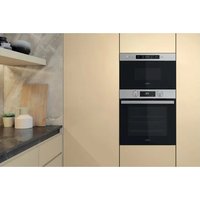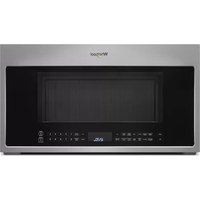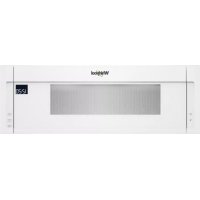
AMV1154BAW - Microwave WHIRLPOOL - Free user manual and instructions
Find the device manual for free AMV1154BAW WHIRLPOOL in PDF.



| Product Type | Built-in Microwave Oven |
| Brand | Whirlpool |
| Model | AMV1154BAW |
| Power Supply | 120 V AC, 60 Hz |
| Input Power | 1650 W |
| Cooking Power | 1000 W (IEC 60705 standard) |
| Frequency | 2450 MHz |
| Rated Current | 14.5 A |
| Exterior Dimensions (W x H x D) | 759 x 419 x 381 mm |
| Interior Volume | 42.5 L |
| Net Weight | 20.5 kg |
| Automatic Cooking Functions | Popcorn, Potato, Reheat, Cook, Vegetables, Pizza Slice, Auto Defrost |
| Power Levels | 10 levels (10% to 100%) |
| Kitchen Timer | Yes (up to 99 min 99 sec) |
| Clock | Yes |
| Child Safety | Yes (control panel lock) |
| Ventilation | High / Low / Off, with grease filter |
| Cooktop Light | Yes (High / Low / Off, 40 W bulb) |
| Turntable | Yes |
| Charcoal Filter | Replace every 6 to 12 months |
| Warranty | 1 year parts and labor |
Frequently Asked Questions - AMV1154BAW WHIRLPOOL
User questions about AMV1154BAW WHIRLPOOL
0 question about this device. Answer the ones you know or ask your own.
Ask a new question about this device
Download the instructions for your Microwave in PDF format for free! Find your manual AMV1154BAW - WHIRLPOOL and take your electronic device back in hand. On this page are published all the documents necessary for the use of your device. AMV1154BAW by WHIRLPOOL.
USER MANUAL AMV1154BAW WHIRLPOOL
Over The Range Microwave Oven
Use & Care Guide
Model MMV1153BA
UMV1152CA
AMV1154BA
IMPORTANT SAFETY INSTRUCTIONS 2
Precautions to Avoid Possible Exposure to Excessive Microwave Energy 4
Getting The Best Cooking Results 6
Features 7
Operating Instructions 9
Cooking Utensils 18
Care and Cleaning 19
Troubleshooting 21
Warranty 22
Keep instructions for future reference.
Be sure Use & Care Guide stays with oven.
IMPORTANT SAFETY INSTRUCTIONS
Installer: Please leave this guide with this appliance.
Consumer: Please read and keep this Use & Care Guide for future reference.
Keep sales receipt and/or cancelled check as proof of purchase.
Model Number
Serial Number Date of Purchase
In our continuing effort to improve the quality and performance of our appliances, it may be necessary to make changes to the appliance without revising this guide.
If you have questions, write us (include your model number and phone number) or call:
Maytag Services
Attn: CAIR Center
P.O.Box 2370
Cleveland, TN 37320-2370
1-800-688-9900 U.S.A.
1-800-688-2002 Canada
1-800-688-2080 (US TTY for hearing or speech impaired)
(Mon.-Fri., 8 a.m.-8 p.m. Eastern Time)
Internet: http://www.amana.com
http://www.maytag.com
What You Need to Know About Safety Instructions
Warning and Important Safety Instructions appearing in this Use & Care Guide are not meant to cover all possible conditions and situations that may occur. Common sense, caution, and care must be exercised when installing, maintaining, or operating microwave.
Always contact your dealer, distributor, service agent, or manufacturer about problems or conditions you do not understand.
Recognize Safety Symbols, Words, Labels
DANGER
DANGER - Immediate hazards which WILL result in severe personal injury or death.
WARNING
WARNING - Hazards or unsafe practices which COULD result in severe personal injury or death.
CAUTION
CAUTION - Hazards or unsafe practices which COULD result in minor personal injury.
CAUTION
To avoid personal injury or property damage, observe the following:
- Do not deep fat fry in oven. Fat could overheat and be hazardous to handle.
- Do not cook or reheat eggs in shell or with an unbroken yolk using microwave energy. Pressure may build up and erupt. Pierce yolk with fork or knife before cooking.
- Pierce skin of potatoes, tomatoes, and similar foods before cooking with microwave energy. When skin is pierced, steam escapes evenly.
- Do not operate oven without load or food in oven cavity.
- Use only popcorn in packages designed and labeled for microwave use. Popping time varies depending on oven wattage. Do not continue to heat after popping has stopped. Popcorn will scorch or burn. Do not leave oven unattended.
- Do not use regular cooking thermometers in oven. Most cooking thermometers contain mercury and may cause an electrical arc, malfunction, or damage to oven.
- Do not use metal utensils in oven.
- Never use paper, plastic, or other combustible materials that are not intended for cooking.
- When cooking with paper, plastic, or other combustible materials, follow manufacturer's recommendations on product use.
- Do not use paper towels which contain nylon or other synthetic fibers. Heated synthetics could melt and cause paper to ignite.
- Do not heat sealed containers or plastic bags in oven. Food or liquid could expand quickly and cause container or bag to break. Pierce or open container or bag before cooking.
- To avoid pacemaker malfunction, consult physician or pacemaker manufacturer about effects of microwave energy on pacemaker.
SAVE THESE INSTRUCTIONS
IMPORTANT SAFETY INSTRUCTIONS
WARNING
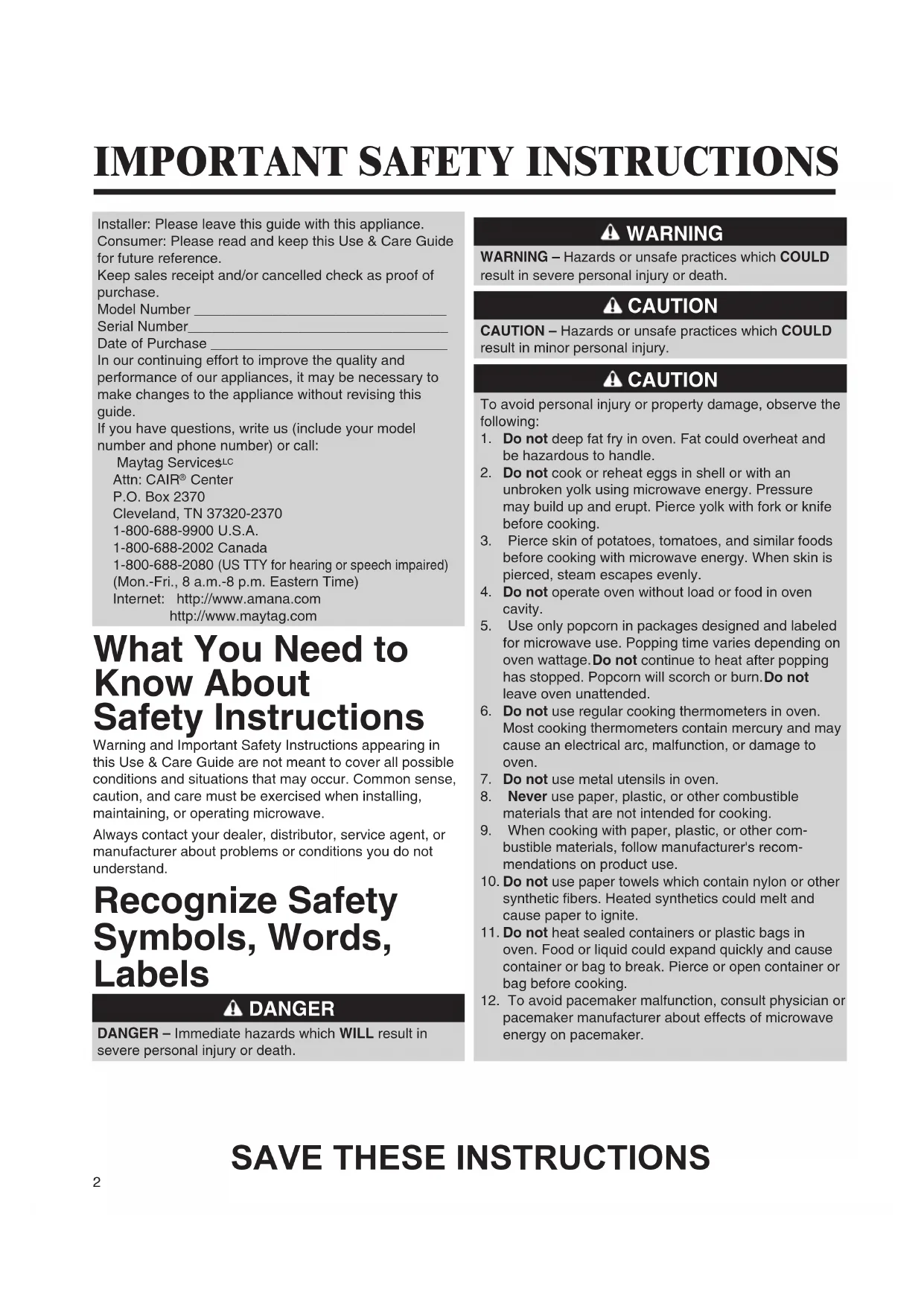
To avoid risk of electrical shock or death, this oven must be grounded and plug must not be altered.
Grounding Instructions
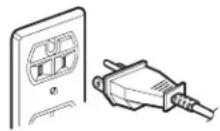
Oven MUST be grounded. Grounding reduces risk of electric shock by providing an escape wire for the electric current if an electrical short occurs. This oven is equipped with a cord having a grounding wire with a grounding plug. The plug must be plugged into an outlet that is properly installed and grounded. See Installation Instructions.
Consult a qualified electrician or servicer if grounding instructions are not completely understood, or if doubt exists as to whether the oven is properly grounded.
Do not use an extension cord. If the product power cord is too short, have a qualified electrician install a three-slot receptacle. This oven should be plugged into a separate 60 hertz circuit with the electrical rating as shown in specifications table. When the oven is on a circuit with other equipment, an increase in cooking times may be required and fuses can be blown.
Microwave operates on standard household current, 110-120V.
Federal Communications Commission Radio Frequency Interference Statement (U.S.A. Only)
This equipment generates and uses ISM frequency energy and if not installed and used properly, that is in strict accordance with the manufacturer's instructions, may cause interference to radio and television reception. It has been type tested and found to comply with limits for ISM Equipment pursuant to part 18 of FCC Rules, which are designed to provide reasonable protection against such interference in a residential installation.
However, there is no guarantee that interference will not occur in a particular installation. If this equipment does cause interference to radio or television reception, which can be determined by turning the equipment off and on, the user is encouraged to try to correct the interference by one or more of the following:
- Reorient the receiving antenna of the radio or television.
- Relocate the microwave oven with respect to the receiver.
- Move the microwave oven away from the receiver.
- Plug the microwave oven into a different outlet so that the microwave oven and the receiver are on different branch circuits.
The manufacturer is not responsible for any radio or television interference caused by unauthorized modification to this microwave oven. It is the responsibility of the user to correct such interference.
IMPORTANT SAFETY INSTRUCTIONS
Precautions to Avoid Possible Exposure to Excessive Microwave Energy
A. DO NOT attempt to operate this oven with the door open since open door operation can result in harmful exposure to microwave energy. It is important not to defeat or tamper with the safety interlocks.
B. DO NOT place any object between the oven front face and the door or allow soil or cleaner residue to accumulate on sealing surfaces.
C. DO NOT operate the oven if it is damaged. It is particularly important that oven door close properly and that there is no damage to:
- door (bent),
- hinges and latches (broken or loosened),
- door seals and sealing surfaces.
D. Oven should not be adjusted or repaired by anyone except properly qualified service personnel.
WARNING
Liquids such as water, coffee, or tea are able to be overheated beyond the boiling point without appearing to be boiling due to surface tension of the liquid. Visible bubbling or boiling when the container is removed from the microwave oven is not always present. THIS COULD RESULT IN VERY HOT LIQUIDS SUDDENLY BOILING OVER WHEN A SPOON OR OTHER UTENSIL IS INSERTED INTO THE LIQUID. To reduce the risk of injury to persons:
- Do not overheat the liquid.
- Stir the liquid both before and halfway through heating it.
- Do not use straight-sided containers with narrow necks.
- After heating, allow the container to stand in the microwave oven for a short time before removing the container.
- Use extreme care when inserting a spoon or other utensil into the container.
IMPORTANT SAFETY INSTRUCTIONS
WARNING
When using electrical appliances, basic safety precautions should be followed to reduce the risk of burns, electric shock, fire, or injury to persons or exposure to excessive microwave energy.
1. READ all instructions before using oven.
2. READ AND FOLLOW the specific "PRECAUTIONS TO AVOID POSSIBLE EXPOSURE TO EXCESSIVE MICROWAVE ENERGY" on page 4.
3. Install or locate this oven ONLY in accordance with the installation instructions in this manual.
4. Some products such as whole eggs and sealed containers—for example, closed glass jars—are able to explode and SHOULD NOT be HEATED in this oven.
5. Use this oven ONLY for its intended use as described in this manual. Do not use corrosive chemicals or vapors in this oven. This type of oven is specifically designed to heat, cook, or dry food. It is not designed for industrial or laboratory use.
6. As with any appliance, CLOSE SUPERVISION is necessary when used by CHILDREN or INFIRM PERSONS.
7. See door cleaning instructions in the Care and Cleaning section on page 19.
8. Baby food jars shall be open when heated and contents stirred or shaken before consumption, in order to avoid burns.
9. DO NOT use this oven for commercial purposes. It is made for household use only.
CAUTION
To avoid risk of fire in the oven cavity:
a. DO NOT overcook food. Carefully attend oven when paper, plastic, or other combustible materials are placed inside the oven to facilitate cooking.
b. Remove wire twist-ties from paper or plastic bags before placing bag in oven.
c. If materials inside the oven ignite, keep oven door CLOSED, turn oven off and disconnect the power cord, or shut off power at the fuse or circuit breaker panel.
d. DO NOT use the cavity for storage. DO NOT leave paper products, cooking utensils, or food in the cavity when not in use.
Getting The Best Cooking Results
To get the best results from your microwave oven, read and follow the guidelines below.
Storage Temperature: Foods taken from the freezer or refrigerator take longer to cook than the same foods at room temperature.
- Size: Small pieces of food cook faster than large ones, pieces similar in size and shape cook more evenly. For even cooking, reduce the power level when cooking large pieces of food.
- Natural Moisture: Very moist foods cook more evenly because microwave energy is attracted to water molecules.
- Stir foods such as casseroles and vegetables from the outside to the center to distribute the heat evenly and speed cooking. Constant stirring is not necessary.
- Turn over foods like pork chops, roasts, or whole cauliflower halfway through the cooking time to expose all sides equally to microwave energy.
- Place delicate areas of foods, such as asparagus tips, toward the center of the dish.
- Arrange unevenly shaped foods, such as chicken pieces or salmon steaks, with the thicker, meatier parts toward the outside of the dish.
- Shield, with small pieces of aluminum foil, parts of food that may cook quickly, such as wing tips and leg ends of poultry.
- Let It Stand: After you remove the food from the microwave, cover food with foil or casserole lid and let it stand to finish cooking in the center and avoid overcooking the outer edges. The length of standing time depends on the density and surface area of the food.
- Wrapping in waxed paper or paper towel: Sandwiches and many other foods containing prebaked bread should be wrapped prior to microwaving to prevent drying out.
Features
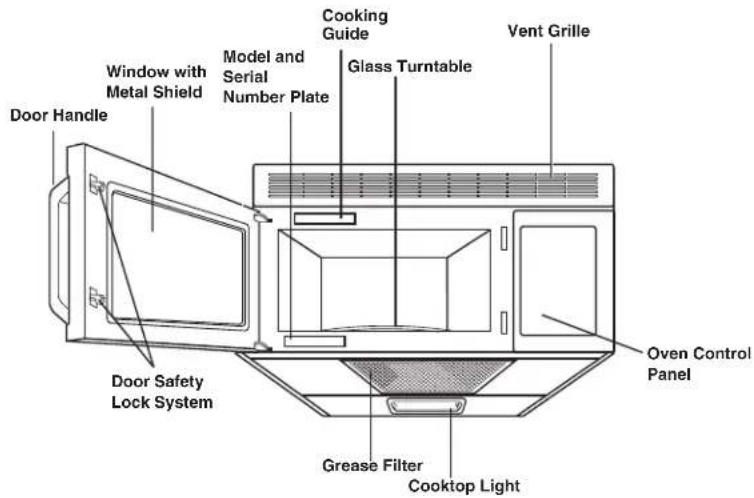
OVEN SPECIFICATIONS
| Power Supply 1 | 20 VAC, 60 Hz |
| Input Power 1,6 | 50 W |
| Cooking Power | 1,000 W (IEC 60705 Standard) |
| Frequency | 2,450 MHz |
| Rated Current 14 | .5 A |
| Outer Dimensions (WxHxD) | 29 7/8" x 16 1/2" x 15" |
| Cavity Volume 1.5 | Cu. Ft. |
| Net Weight 45.4 | Ibs. |
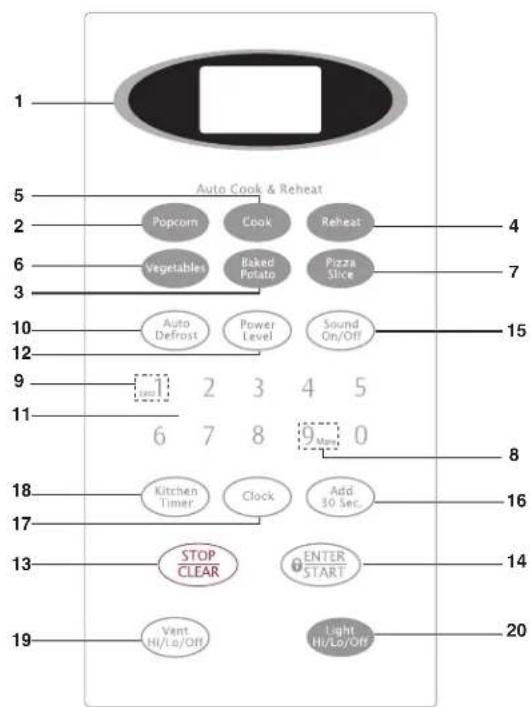
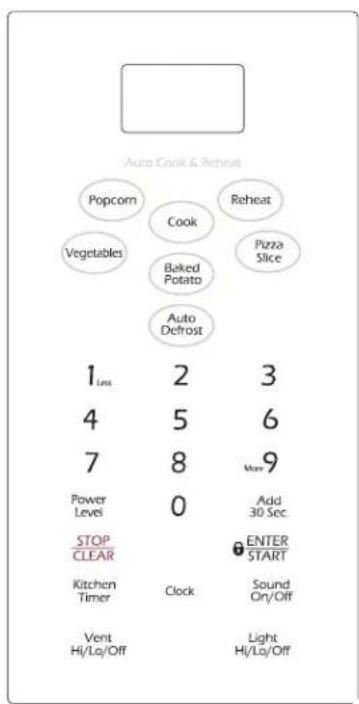
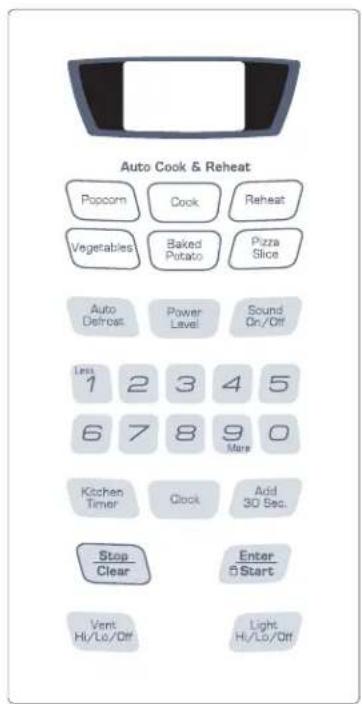
MMV1153BA
UMV1152CA AMV1154BA
Features
FEATURES
- DISPLAY: The Display includes a clock and indicators to tell you time of day, cooking time settings and cooking functions selected.
- POPCORN: Touch this pad when popping popcorn in your microwave oven. See page 12 for more information.
- BAKED POTATOch this pad to cook potatoes. See page 12 for more information.
- REHEAT: Touch this pad to reheat dinner plate, casserole, and pasta. See page 14 for more information.
- COOK: Touch this pad to cook beverage, bacon, frozen dinner, frozen breakfast. See page 13 for more information.
- VEGETABLES: Touch this pad to cook fresh vegetables, frozen vegetables. See page 12 for more information.
- PIZZA SLICE: Touch this pad to reheat pizza. See page 12 for more information.
- MORE: Touch this pad to add more cooking time. See page 10 for more information.
9.LESS: Touch this pad to subtract the cooking time. See page 10 for more information. - AUTO DEFROST: Touch this pad to defrost food by weight. See page 15 for more information.
- NUMBER: Touch number pads to enter cooking time, power level, quantities, or weights.
- POWER LEVEL: Touch this pad to select a cooking power level.
- STOP/CLEAR: Touch this pad to stop the oven or to clear all entries.
-
ENTER/START: Touch this pad to start a function. If you open the door after oven begins to cook, close door and touch ENTER/START again.
-
SOUND ON/OFF: Touch this pad to turn off the sound. OFF will appear in the display.
- ADD 30 SEC: Touch this pad to set and start quickly at 100% power level. See page 9 for more information.
- CLOCK: Touch this pad to enter the time of day. See page 9 for more information.
- KITCHEN TIMER: Touch this pad to set the kitchen timer. See page 9 for more information.
- VENT HI/LO/OFF: Touch this pad to turn the fan on or off. See page 9 for more information.
- LIGHT HI/LO/OFF: Touch this pad to turn on the cooktop light. See page 9 for more information.
Operating Instructions
This section introduces you to the basics you need to know to operate your microwave oven. Please read this information before use.
CAUTION
- To avoid risk of personal injury or property damage, do not run oven empty.
- To avoid risk of personal injury or property damage, do not use stoneware, aluminum foil, metal utensils, or metal trimmed utensils in the oven.
CLOCK
Example: To set 8:00.
Clock
- Touch Clock pad.
800
- Enter the time by using the number pads.

- Touch ENTER/START pad.
KITCHEN TIMER
You can use your microwave oven as a timer. Use the Kitchen Timer for timing up to 99 minutes, 99 seconds.
Example: To set for 3 minutes.
Kitchen Timer
- Touch Kitchen Timer pad.
300
- Enter the time by using the number pads.

- Touch ENTER/START pad.
When the time is over, you will hear beeps and End will display.
SOUND ON/OFF
Sound On/Off
- Touch Sound On/off pad. The display shows On.
Sound On/Off
- Touch Sound On/off pad. The display shows OFF.
ENTER START
- Touch ENTER/ START pad. The display returns to the time of day.
VENT HI/LO/OFF
The VENT moves steam and other vapors from the cooking surface. The vent will operate at low speed whenever the oven is on.
Vent Hi/Lo/Off
To operate the vent manually: Touch Vent pad once for High fan speed, twice for Low fan speed, or three times to turn the fan off.
NOTE:
- If the temperature gets too hot around the microwave oven, then in the vent hood will automatically turn on at the LOW setting to cool the oven. The fan will automatically turn off when the internal parts are cool. When this occurs, the vent cannot be turned off.
CHILD LOCK
You may lock the control panel to prevent the microwave from being accidentally started or used by children.
The Child Lock feature is also useful when cleaning the control panel.
Child Lock prevents accidental programming when wiping the control panel.
Example: To set the child lock.
ENTER START
Touch and hold ENTER/START pad more than 3 seconds. L will appear in the display window with one beep.
Example: To cancel the child lock.
ENTER START
Touch and hold ENTER/START pad more than 3 seconds. L will disappear and you hear one beep.
LIGHT HI/LO/OFF
Light HI/Lo/Off
Touch Light Hi/Lo/ Off pad once for bright light, twice for night light, or three times to turn the light off.
ADD 30 SEC.
A time-saving pad, this simplified control lets you quickly set and start microwave cooking without the need to touch the ENTER/START pad at 100% power level.
Example: To set ADD 30 SEC. for 2 minutes.
Add 30 Sec.
Touch Add 30 Sec. pad 4 times. The oven begins cooking and display shows time counting down.
Operating Instructions
DEMONSTRATION MODE
You can use the Demonstration mode to see how your microwave oven operates without the oven heating.
0 less1
Touch 0 pad and
1 pad at the same time.
To turn demo mode off, repeat step 1 above.
MORE/LESS
The More(9)/Less(1) pads allow you to adjust pre-set cooking times. They only work in the Reheat, Auto Cooking, Add 30 sec, Time Cook modes. Use the More(9)/Less(1) pads only after you have already begun cooking with one of these procedures.
9More
- To ADD more time to an automatic cook procedure: Tou the More(9) pa
Less
- To REDUCE the time of an automatic cooking procedure: Touch the Less(1) pad.
COOKING AT HIGH POWER LEVELS
Example: To cook food for 8 minutes 30 seconds at 100% power.
830
- Enter the cook time.
ENTER START
- Touch ENTER/START pad.
When the cook time is over, you will hear four beeps and End will display.
HIGH power cooking does not always give you the best results with foods that need slower cooking, such as roasts, baked goods, or custards. Your oven has 9 power settings in addition to HIGH.
Example: To cook food for 7 minutes 30 seconds at 70% power.
730
- Enter the cook time.
Power Level
- Touch Power Level pad.
7
- Enter the power level.
ENTER START
- Touch ENTER/START pad.
When the cook time is over, you will hear four beeps and End will display.
See cooking guide for Power levels, page 11.
COOKING WITH MORE THAN ONE COOK CYCLE
For best results, some recipes call for one Power Level for a certain length of time, and another Power Level for another length of time. Your oven can be set to change from one to another automatically, for up to three cycles at the first cycle is defrost.
Example: To cook food for 3 minutes at 90% power and then 70% power for 7 minutes 30 seconds.
300
- Enter the first cook time.
Power Level
- Touch Power Level pad.
9More
- Enter the power level.
730
- Enter the second cook time.
Power Level
- Touch Power Level pad.
7
- Enter the power level.
ENTER START
- Touch ENTER/STARTpad.
When the cook time is over, you will hear four beeps and End will display.
Operating Instructions
COOKING GUIDE FOR POWER LEVELS
The 9 power levels in addition to HIGH allow you to choose the best power level for the food you are cooking. Below are listed all the power levels, examples of foods best cooked at each level, and the amount of microwave power you are using.
| POWER LEVEL | MICROWAVE OUTPUT USE |
| 10 High 100% • Boil water. | Cook ground beef. Make candy. Cook fresh fruits and vegetables. Cook fish and poultry. Preheat browning dish. Reheat beverages. Bacon slices. |
| 9 90% • Reheat meat slices quickly. | Saute onions, celery, and green pepper. |
| 8 80% • All reheating. | Cook scrambled eggs. |
| 7 70% • Cook breads and cereal products. Cook cakes, muffins, brownies, cupcakes. | Cook cheese dishes, veal. Cook cakes, muffins, brownies, cupcakes. |
| 6 60% • Cook pasta. | |
| 5 50% • Cook meats, whole poultry. | Cook custard. Cook whole chicken, turkey, spare ribs, rib roast, sirloin roast. |
| 4 40% • Cook less tender cuts of meat. | Reheat frozen convenience foods. |
| 3 30% • Thaw meat, poultry, and seafood. | Cook small quantities of food. Finish cooking casserole, stew, and some sauces. |
| 2 20% • Soften butter and cream cheese. | Heat small amounts of food. |
| 1 10% • Soften ice cream. | Raise yeast dough. |
Operating Instructions
POPCORN
CAUTION
DO NOT leave microwave oven unattended while popping corn.
Popcorn pad lets you pop 3.0 and 3.5 ounce bags of commercially packaged microwave popcorn. Pop only one package at a time. If you are using a microwave popcorn popper, follow manufacturer's instructions.
To correctly set your microwave oven, follow this chart:
| Bag Size-ounces | Times to touch |
| 3.5 Once | |
| 3.0 - 3.5 Twice |
Example: To pop a 3.5 oz. bag.
Popcorn
- Touch Popcorn pad once.
- The oven will start automatically.
When the cook time is over, you will hear four beeps and End will display.
Recommended amounts: 3.0-3.5 ozs.
IMPORTANT:
When using Auto Cook, the oven must cool for 5 minutes between uses or food will not cook properly.
BAKED POTATO
The Baked Potato pad lets you cook potatoes with the preset times and cook powers. You can choose from 1 to 4 potatoes.
NOTES:
- Cooking times based on an average 8-10 oz. potato.
- Before baking, pierce potato with fork several times.
After baking, let stand for 5 minutes.
Example: To cook 2 potatoes.
Baked Potato
- Touch Baked Potato pad twice.
- The oven will start automatically.
When the cook time is over, you will hear four beeps and End will display.
Recommended amounts: 1-4 potatoes (about 8-10 ozs. each).
PIZZA SLICE
Pizza Slice pad lets you reheat up to three 3-5 oz. slices of pizza.
Example: To reheat 1 slice of pizza.
Pizza Slice
- Touch Pizza Slice pad once.
- The oven will start automatically.
When the cook time is over, you will hear four beeps and End will display.
Recommended amounts: 1-3 slices, (about 3-5 ozs. per each slice)
NOTE:
Use the More/Less pads to fit your temperature preference.
VEGETABLES
The Vegetables pad lets you cook vegetables with the preset times and cook powers.
VEGETABLES provide two preset categories (fresh and frozen) with a choice of 1 to 4 servings for each category.
Example: To cook 2 servings of Frozen vegetables.
Vegetables
- Touch Vegetables pad twice.
2
- Enter the serving size (1 to 4) using the number pads.

- Touch ENTER/ START pad.
When the cooking time is over, you will hear four beeps and End will display.
NOTE:
If food is not thoroughly cooked or reheated when using the Auto Cook feature, complete cooking using a power level and cooking time.
DO NOT continue using the Auto Cook pad.
Operating Instructions
COOK
Cook pad provides four preset categories for cooking.
Example: To Cook 8 ozs of Frozen Dinner.
Cook 1. Touch Cook pad three times.
3 2. Touch number pads to enter quantity, serving size or package weight.
The oven will start automatically. When the cook time is over, you will hear four beeps and End will display.
| Category Times to touch Display | ||
| Beverage | once Ac-1 | |
| Bacon twice Ac-2 | ||
| Frozen Dinner | three times Ac-3 | |
| Frozen Breakfast four times | Ac-4 | |
AUTO COOK TABLE
| CATEGORY | DIRECTIONS AMOUNT | ||
| Popcorn | Use only one microwave-only bag of popcorn at a time. Use caution when removing and opening the hot bag from oven. Let oven cool for at least 5 minutes before using again. | 3.0-3.5 oz1 package | |
| Potato | Prick each potato several times with fork. Place on turntable in spoke-like fashion.Let stand 3-5 minutes. Let oven cool for at least 5 minutes before using again.Use More(9) pad when cooking larger potatoes. | 1 to 4 potatoes | |
| VEGETABLES | (Fr-1) Fresh Vegetables | Place fresh vegetables in microwave-safe ceramic, glass or plastic dish and add 2-4 Tbs. water. Cover with lid or vented plastic wrap during cooking and stir before standing. Let oven cool for at least 5 minutes before using again.Use More(9) pad when cooking dense vegetables such as carrots or broccoli spears. | 1 to 4 servings |
| (Fr-2) Frozen Vegetables | Place frozen vegetables in microwave-safe ceramic, glass or plastic dish and add 2-4 Tbs. water. Cover with lid or vented plastic wrap during cooking and stir before standing. Let oven cool for at least 5 minutes before using again.Use More(9) pad when cooking dense vegetables such as carrots or broccoli spears. | 1 to 4 servings | |
| Pizza Slice | Put 1-3 slices of pizza on a microwave-safe plate with wide end of slice toward the outside edge of the plate. Do not let slices overlap. Do not cover. Let oven cool for at least 5 minutes before using again.Use More(9) pad to increase reheat time for thick crust pizza. | 1 to 3 slices | |
| COOK | (Ac-1) Beverage | Use measuring cup or mug; do not cover. Place the beverage in the oven. After heating, stir well. Let oven cool for at least 5 minutes before using again.Note: • Reheat times based on an 8 ounce cup.Beverage heated with the beverage feature may be very hot.Remove container with care. | 0.5 cup1 cup2 cups |
| (Ac-2) Bacon | Place 2 paper towels on plate and arrange bacon on towels, do not overlap.Cover with additional paper towel. Remove paper towel immediately after cooking.Use More(9)/Less(1) pads for desired crispness. | 2 to 6 slices | |
| (Ac-3) Frozen Dinner | Remove food from outer wrapping and follow box instructions for covering and standing. Let oven cool for at least 5 minutes before using again. | 8 to 14 oz. | |
| (Ac-4) Frozen Breakfast | Follow package instructions for covering and standing. Use this pad for frozen sandwich, breakfast entree, etc. Let oven cool for at least 5 minutes before using again. | 4 to 8 oz. | |
NOTE:
Desired food temperature varies from person to person. Use the More(9)/Less(1) pads to fit your temperature preference.
Operating Instructions
REHEAT
Reheat pad provides three preset categories for reheating.
Example: To reheat 3 servings of Casserole.
Reheat 1. Touch Reheat pad 2 times.
3 2. Touch number pads to enter quantity/ servings.
The oven will start automatically. When the cook time is over, you will hear four beeps and End will display.
| Category Times to touch Display | ||
| Dinner Plate once rh-1 | ||
| Casserole twice rh-2 | ||
| Pasta | 3 times rh-3 | |
REHEAT TABLE
| CATEGORY | DIRECTIONS AMOUNT | |
| Dinner Plate | Use only pre-cooked, refrigerated foods. Cover plate with vented plastic wrap or waxed paper, tucked under plate. If food is not as hot as you prefer after heating with REHEAT, continue heating using time and power. Contents: - 3-4 oz. meat, poultry or fish (up to 6 oz. with bone) - 1/2 cup starch (potatoes, pasta, rice, etc.) - 1/2 cup vegetables (about 3-4 oz.) | 1 serving (1 plate) |
| Casserole | Cover plate with lid or vented plastic wrap. If food is not as hot as you prefer after heating with REHEAT, continue heating using time and power. Stir foods once before serving. Contents: - Casserole-refrigerated foods. (Examples: Beef stew, Lasagna) - Pasta-Canned spaghetti and ravioli, refrigerated foods. | 1 to 4 servings |
| Pasta |
Notes:
- Desired food temperature varies from person to person. Use the More(9)/Less(1) pads to fit your temperature preference.
- Allow food to stand 1 to 5 minutes before serving.
Operating Instructions
AUTO DEFROST
Defrost choices are preset in the oven. The defrost feature provides you with the best defrosting method for frozen foods, because the oven automatically sets the defrosting times according to the weight you enter. For added convenience, the AUTO DEFROST beeps foremind you to check or turn over the food during the defrost cycle.
After touching the Auto Defrost pad once, select the food weight. Available weight ranges are 0.1 to 6.0 lbs.
Example : To defrost 1.2 lbs of meat.
Auto Defrost
- Touch Auto
Defrost pad.
Less 12
- Enter the weight.
ENTER START
- Touch ENTER/
START pad.
NOTES:
After you touch ENTER/START pad, the display counts down the defrost time. The oven will beep twice during the Defrost cycle. At this time, open the door and turn the food as needed. Remove any portions that have thawed then return frozen portions to the oven and touch ENTER/START pad to resume the defrost cycle.
- The oven will not stop during the BEEP unless the door is opened.
DEFROSTING GUIDE
- Follow the instructions below when defrosting different types of food.
| Food | Standard Amount | Procedure |
| Roast Beef, Pork | 2.5-6.0 lbs. | Start with the food placed fat side down. After each stage, turn the food over and shield any warm portions with narrow strips of aluminum foil. Let stand, covered for 15-30 minutes. |
| Steaks, Chops, Fish | 0.5-3.0 lbs. | After each stage, rearrange the food. If there are any warm or thawed portions of food, shield them with narrow flat pieces of aluminum foil. Remove any pieces of food that are nearly defrosted. Let stand, covered, for 5-10 minutes. |
| Ground Meat | 0.5-3.0 lbs. | After each stage, remove any pieces of food that are nearly defrosted. Let stand, covered with foil, for 5-10 minutes. |
| Whole Chicken | 2.5-6.0 lbs. | Remove giblets before freezing poultry. Start defrosting with the breast side down. After the first stage, turn the chicken over and shield any warm portions with narrow strips of aluminum foil. After the second stage, again shield any warm portions with narrow strips of aluminum foil. Let stand, covered, for 30-60 minutes in the refrigerator. |
| Chicken Pieces | 0.5-3.0 lbs. | After each stage, rearrange or remove any pieces of food that are nearly defrosted. Let stand for 10-20 minutes. |
DEFROST TIPS
- When using AUTO DEFROST, the weight to be entered is the net weight in pounds and tenths of pounds (the weight of the food minus the container).
- Use AUTO DEFROST only for raw food. AUTO DEFROST gives best results when food to be thawed is a minimum of 0^ (taken directly from a true freezer). If food has been stored in a refrigerator-freezer that does not maintain a temperature of 5^ or below, always program a lower food weight (for a shorter defrosting time) to prevent cooking the food.
- If the food is stored outside the freezer for up to 20 minutes, enter a lower food weight.
- The shape of the package alters the defrosting time. Shallow rectangular packets defrost more quickly than a deep block.
- Separate pieces as they begin to defrost. Separated pieces defrost more easily.
- Shield areas of food with small pieces of foil if they start to become warm.
- You can use small pieces of aluminum foil to shield foods like chicken wings, leg tips, and fish tails, but the foil must not touch the side of the oven. Foil causes arcing, which can damage the oven lining.
Operating Instructions
COOKING GUIDE
Guide for Cooking Meat in Your Microwave
- Place meat on a microwave-safe roasting rack in a microwave-safe dish.
- Start meat fat side down. Use narrow strips of aluminum foil to shield any bone tips or thin meat areas.
- Check the temperature in several places before letting the meat stand the recommended time.
- The following temperatures are removal temperatures. The temperature of the food will rise during the standing time.
| Food Cook time | Power level Directions | ||
| Roast Beef Boneless (Up to 4 lbs.) | 10-15 min./lb. for 145° F (Rare) | High(10) for first 5 minutes, then medium(5) | Place roast fat-side down on roasting rack. Cover with wax paper. Turn over half way through cooking. Let stand 10 to 15 minutes. |
| 12-17 min./lb. for 160° F (Medium) | |||
| 14-19 min./lb. for 170° F (Well Done) | |||
| Roast Pork Boneless or bone-in (Up to 4 lbs.) | 15-20 min./lb. for 170° F (Well Done) | High(10) for first 5 minutes, then medium(5) | Place roast fat-side down on roasting rack. Cover with wax paper. Turn over half way through cooking. Let stand 10 to 15 minutes. |
- Expect a 10^ rise in temperature during the standing time.
| Food Remove from oven After standing (10 -15 min.) | ||
| Beef | Rare | 135°F 145°F |
| Medium | 150°F 160°F | |
| Well Done | 160°F 170°F | |
| Pork | Medium | 150°F 160°F |
| Well Done | 160°F 170°F | |
| Poultry | Dark meat | 170°F 180°F |
| Light meat | 160°F 170°F | |
Guide for Cooking Poultry in Your Microwave
- Place poultry on a microwave-safe roasting rack in a microwave-safe dish.
- Cover poultry with wax paper to prevent spattering.
- Use aluminum foil to shield bone tips, thin meat areas, or areas that start to overcook.
- Check the temperature in several places before letting the poultry stand the recommended time.
| Food Cook | Time/Power Level Directions | |
| Whole Chicken Up to 4 lbs. | Cooking Time: 7-10 min. / lb. 180°F dark meat 170°F light meat Power Level: Medium High(7). | Place chicken breast-side down on roasting rack. Cover with wax paper. Turn over half way through cooking. Cook until juices run clear and meat near the bone is no longer pink. Let stand 5-10 minutes. |
| Chicken Pieces Up to 2 lbs. | Cooking Time: 7-10 min. / lb. 180°F dark meat 170°F light meat Power Level: Medium High(7). | Place chicken bone-side down on dish, with the thickest portions toward the outside of the dish. Cover with wax paper. Turn over half way through cooking. Cook until juices run clear and meat near the bone is no longer pink. Let stand 5-10 minutes. |
Operating Instructions
Guide for Cooking Seafood in Your Microwave
Cook fish until it flakes easily with a fork.
- Place fish on a microwave-safe roasting rack in a microwave-safe dish.
- Use a tight cover to steam fish. A lighter cover of wax paper or paper towel provides less steaming.
- Do not overcook fish; check it at minimum cooking time.
| Food Cook | Time/Power Level Directions | |
| Steaks Up to 1.5 lbs. | Cooking Time: 7-11 min. / lb. Power Level: Medium-High(7). | Arrange steaks on roasting rack with meaty portions towards the outside of rack. Cover with wax paper. Turn over and rearrange when cooking time is half up. Cook until fish flakes easily with a fork. Let stand 3-5 minutes. |
| Filletts Up to 1.5 lbs. | Cooking Time: 4-8 min. / lb Power Level:Medium-High(7). | Arrange fillets in a baking dish, turning any thin pieces under. Cover with wax paper. If over 1/2 inch thick, turn over and rearrange when cooking time is half up. Cook until fish flakes easily with a fork. Let stand 2-3 minutes. |
| Shrimp Up to 1.5 lbs. | Cooking Time: 4-6 1/2 min. / lb. Power Level: Medium-High(7). | Arrange shrimp in a baking dish without overlapping or layering. Cover with wax paper. Cook until firm and opaque, stirring 2 or 3 times. Let stand 5 minutes. |
Guide for Cooking Eggs in Your Microwave
- Never cook eggs in the shell, and never warm hard-cooked eggs in the shell; they can explode.
- Always pierce whole eggs to keep them from bursting.
Cook eggs just until set; they become tough if overcooked.
Guide for Cooking Vegetables in Your Microwave
Vegetables should be washed just before cooking. Often, no extra water is needed. If dense vegetables such as potatoes, carrots and green beans are being cooked, add about 14 cup water.
- Small vegetables (sliced carrots, peas, lima beans, etc.) will cook faster than larger ones.
Whole vegetables, such as potatoes, acorn squash or corn on the cob, should be arranged in a circle on the turntable before cooking. They will cook more evenly if turned over after half the cooking time has passed.
- Always place vegetables like asparagus and broccoli with the stem ends pointing towards the edge of the dish and the tips toward the center.
- When cooking cut vegetables, always cover the dish with a lid or vented microwavable plastic wrap.
Whole, unpeeled vegetables such as potatoes, squash, eggplant, etc., should have their skin pricked in several spots before cooking to prevent them from bursting.
- For more even cooking, stir or rearrange whole vegetables halfway through the cooking time.
- Generally, the denser the food, the longer the standing time (Standing time refers to the time necessary for dense, large foods and vegetables to finish cooking after they come out of the oven.). A baked potato can stand on the counter for five minutes, while a dish of peas can be served immediately.
Cooking Utensils
MICROWAVE UTENSIL GUIDE
| USE DO NOT USE | |
| OVEN PROOF GLASS (treated for high intensity heat): Utility dishes, loaf dishes, pie plates, cake plates, liquid measuring cups, casseroles and bowls without metallic trim. | METAL UTENSILS: Metal shields the food from microwave energy and produces uneven cooking. Also avoid metal skewers, thermometers or foil trays. Metal utensils can cause arcing, which can damage your microwave oven. |
| CHINA: Bowls, cups, serving plates and platters without metallic trim. | METAL DECORATION: Metal-trimmed or metal-banded dinnerware, casserole dishes, etc. The metal trim interferes with normal cooking and may damage the oven. |
| PLASTIC: Plastic wrap (as a cover)-- lay the plastic wrap loosely over the dish and press it to the sides. Vent plastic wrap by turning back one edge slightly to allow excess steam to escape. The dish should be deep enough so that the plastic wrap will not touch the food. As the food heats it may melt the plastic wrap wherever the wrap touches the food. Use plastic dishes, cups, semirigid freezer containers and plastic bags only for short cooking times. Use these with care because the plastic may soften from the heat of the food. | ALUMINUM FOIL: Avoid large sheets of aluminum foil because they hinder cooking and may cause harmful arcing. Use small pieces of foil to shield poultry legs and wings. Keep ALL aluminum foil at least 1 inch from the side walls and door of the oven. |
| WOOD: Wooden bowls and boards will dry out and may split or crack when you use them in the microwave oven. Baskets react in the same way. | |
| TIGHTLY COVERED UTENSILS: Be sure to leave openings for steam to escape from covered utensils. Pierce plastic pouches of vegetables or other food items before cooking. Tightly closed pouches could explode. | |
| BROWN PAPER: Avoid using brown paper bags. They absorb too much heat and could burn. | |
| FLAWED OR CHIPPED UTENSILS: Any utensil that is cracked, flawed, or chipped may break in the oven. | |
| PAPER: Paper towels, waxed paper, paper napkins, and paper plates with no metallic trim or design. Look for the manufacturer's label for use in the microwave oven. | METAL TWIST TIES: Remove metal twist ties from plastic or paper bags. They become hot and could cause a fire. |
Care and Cleaning
CARE AND CLEANING
For best performance and safety, keep the oven clean inside and out-side. Take special care to keep the inner door panel and the oven front frame free of food or grease build-up. Never use rough powder or pads. Wipe the microwave oven inside and out, including the hood bottom cover, with a soft cloth and a warm (not hot) mild detergent solution. Then rinse and wipe dry. Use a chrome cleaner and polish on chrome, metal and aluminum surfaces. Wipe spatters immediately with a wet paper towel, especially after cooking chicken or bacon. Clean your oven weekly or more often, if needed.
Follow these instructions to clean and care for your oven.
- Keep the inside of the oven clean. Food particles and spilled liquids can stick to the oven walls, causing the oven to work less efficiently.
- Wipe up spills immediately. Use a damp cloth and mild soap. Do not use harsh detergents or abrasives.
- To help loosen baked on food particles or liquids, heat two cups of water (add the juice of one lemon if you desire to keep the oven fresh) in a four-cup measuring glass at High power for five minutes or until boiling. Let stand in the oven for one or two minutes.
- Remove the glass tray from the oven when cleaning the oven or tray. To prevent the tray from breaking, handle it carefully and do not put it in water immediately after cooking. Wash the tray carefully in warm sudsy water or in the dishwasher.
- Clean the outside surface of the oven with soap and a damp cloth. Dry with a soft cloth. To prevent damage to the operating parts of the oven, don't let water seep into the openings.
- Wash the door window with very mild soap and water. Be sure to use a soft cloth to avoid scratching.
-
If steam accumulates inside or outside the oven door, wipe with a soft cloth. Steam can accumulate when operating the oven in high humidity and in no way indicates microwave leakage.
-
Never operate the oven without food in it; this can damage the magnetron tube or glass tray. You may wish to leave a cup of water in the oven when it is not in use to prevent damage if the oven is accidentally turned on.
CLEANING THE GREASE FILTER
The grease filter should be removed and cleaned often, at least once a month.
CAUTION
To avoid risk of personal injury or property damage, do not operate oven hood without filters in place.
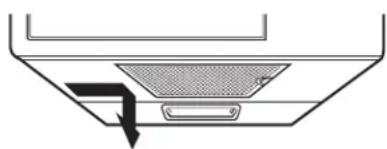
- To remove grease filter, slide filter to the side. Pull filter downward and push to the other side. The filter will drop out.
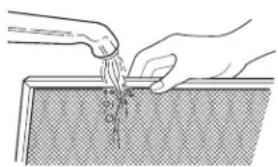
- Soak grease filter in hot water and a mild detergent. Rinse well and shake to dry. Do not use ammonia or place in a dishwasher. The aluminum will darken.
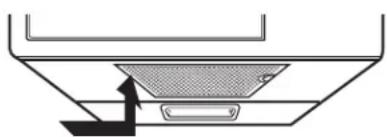
- To reinstall the filter, slide it into the side slot, then push up and toward oven center to lock.
CHARCOAL FILTER REPLACEMENT
If your oven is vented to the inside, the charcoal filter should be replaced every 6 to 12 months, and more often if necessary. The charcoal filter cannot be cleaned. To order a new charcoal filter, contact the Parts Department at your nearest Authorized Service Center or call
1-800-688-9900 (inside U.S.A) or
1-800-688-2002 (Canada).
- Unplug oven or turn off power at the main power supply.
- Open the door.
- Remove the two vent grille mounting screws. (3 middle screws)
- Slide the grille to the left, then pull straight out.
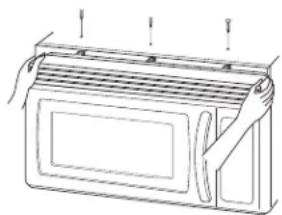
- Push the hook and remove old filter.
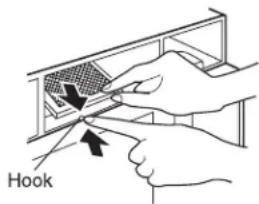
- Slide a new charcoal filter into place. The filter should rest at the angle shown.
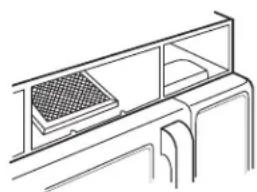
- Replace the grille and 3 screws and close the door. Turn the power back on at the main power supply and set the clock.
CHARCOAL FILTER PART NO. 8310P008-60
Care and Cleaning
COOKTOP/NIGHT LIGHT REPLACEMENT
CAUTION
To avoid personal injury or property damage, wear gloves when replacing light bulb.
- Unplug the oven or turn off power at the main power supply.
- Remove the bulb cover mounting screws.
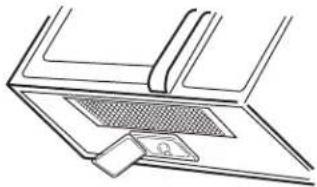
- Replace bulb with 40 watt appliance bulb.
- Replace bulb cover, and mounting screws.
- Turn the power back on at the main power supply.
OVEN LIGHT REPLACEMENT
- Unplug oven or turn off power at the main power supply.
- Open the door.
- Remove the vent cover mounting screws. (3 middle screws)
- Slide the grille to the left, then pull straight out.
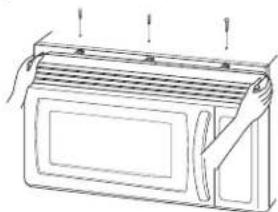
- Remove the charcoal filter, if present.
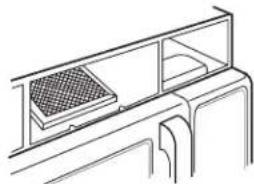
- Press and hold the center snap while lifting the tab on the left corner. Remove the cover. Remove the bulb by turning gently.
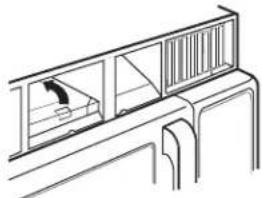
- Replace bulb with a 40 watt appliance bulb.
- Replace the bulb holder.
- Replace the grille and 2 screws.
Turn the power back on at the main power supply.
OPTIONAL
Filler Kits
UXA3036BDB - BLACK
UXA3036BDW - WHITE
UXA3036BDS - STAINLESS
STEEL
When replacing a 36" range hood, the filler kit fills in the additional width to provide a custom built-in appearance. For installation between cabinets only; not for end-of-cabinet installation. Each kit contains two 3" wide filler panels.
Troubleshooting
TROUBLESHOOTING GUIDE
Before you call a repair person for your oven, check this list of possible problems and solutions.
Neither the oven's display nor the oven operate.
- Properly insert the plug into a grounded outlet.
- If the outlet is controlled by a wall switch, make sure the wall switch is turned on.
- Remove the plug from the outlet, wait ten seconds, then plug it in again.
- Reset the circuit breaker or replace any blown fuse.
- Plug another appliance into the outlet; if the other appliance doesn't work, have a qualified electrician repair the outlet.
- Plug the oven into a different outlet.
The oven's display works, but the power won't come on.
- Make sure the door is closed securely.
- Check to see if packing material or other material is stuck to the door seal.
- Check for door damage.
- Press STOP/CLEAR pad twice and re-enter all cooking instructions.
The power goes off before the set time has elapsed.
- If there has not been a power outage, remove the plug from the outlet, wait ten seconds, then plug it in again. If there was a power outage, the time indicator will display:
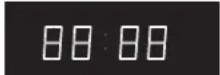
- Reset the clock and any cooking instructions.
- Reset the circuit breaker or replace any blown fuse.
The food is cooking too slowly.
- Make sure the oven is on its own 20 amp circuit line. Operating another appliance on the same circuit can cause a voltage drop. If necessary, move the oven to its own circuit.
You see sparks or arcing.
- Remove any metallic utensils, cookware, or metal ties. If using foil, use only narrow strips and allow at least one inch between the foil and interior oven walls.
The turntable makes noises or sticks.
- Clean the turntable, roller ring and oven floor.
- Make sure the turntable and roller ring are positioned correctly.
Using your microwave causes TV or radio interference.
- This is similar to the interference caused by other small appliances, such as hair dryers. Move your microwave further away from other appliances, like your TV or radio.
Note:
If the oven is set to cook for more than 25 minutes, it will automatically adjust itself to 70 percent power after 25 minutes to avoid overcooking.
If you have a problem you cannot solve, please call our service line: (1-800-688-9900)
Warranty
Limited One Year Warranty - Parts and Labor
For one (1) Year from the original retail purchase date, any part that fails in normal home use will be repaired or replaced free of charge.
Canadian Residents
The above warranties only cover an appliance installed in Canada that has been certified or listed by appropriate test agencies for a compliance to a National Standard of Canada unless the appliance was brought into Canada due to transfer of residence from the United States to Canada.
The specific warranties expressed above are the ONLY warranties provided by the manufacturer. These warranties give you specific legal rights, and you may also have other rights which vary from state to state.
CUSTOMER'S SOLE AND EXCLUSIVE REMEDY UNDER THIS LIMITED WARRANTY SHALL BE PRODUCT REPAIR AS PROVIDED HEREIN. IMPLIED WARRANTYES, INCLUDING WARRANTYES OF MERCHANTABILITY OR FITNESS FOR A PARTICULAR PURPOSE, ARE LIMITED TO ONE YEAR OR THE SHORTEST PERIOD ALLOWED BY LAW. MAYTAG CORPORATION SHALL NOT BE LIABLE FOR INCIDENTAL OR CONSEQUENTIAL DAMAGES. SOME STATES AND PROVINCES DO NOT ALLOW THE EXCLUSION OR LIMITATION OF INCIDENTAL OR CONSEQUENTIAL DAMAGES, OR LIMITATIONS ON THE DURATION OF IMPLIED WARRANTYES OF MERCHANTABILITY OR FITNESS, SO THESE EXCLUSIONS OR LIMITATIONS MAY NOT APPLY TO YOU. THIS WARRANTY GIVES YOU SPECIFIC LEGAL RIGHTS AND YOU MAY ALSO HAVE OTHER RIGHTS, WHICH VARY STATE TO STATE OR PROVINCE TO PROVINCE.
What is Not Covered By These Warranties
- Conditions and damages resulting from any of the following: a. Improper installation, delivery, or maintenance.
b. Any repair, modification, alteration, or adjustment not authorized by the manufacturer or an authorized servicer.
c. Misuse, abuse, accidents, unreasonable use, or acts of God.
d. Incorrect electric current, voltage, electrical and/or gas supply.
e. Improper setting of any control. - Warranties are void if the original serial numbers have been removed, altered or cannot be readily determined.
- Light bulbs, water filters and air filters.
- Products purchased for commercial or industrial use.
- The cost of service or service call to:
a. Correct installation errors. For products requiring ventilation, rigid metal ducting must be used.
b. Instruct the user on the proper use of the product.
c. Transport the appliance to and from the servicer.
- Any food loss due to refrigerator or freezer product failures.
- Expenses for travel and transportation for product service in remote locations.
- Outside of the United States and Canada this warranty does not apply. Contact your dealer to determine if another warranty applies.
- Consequential or incidental damages sustained by any person as a result of any breach of these warranties. Some states do not allow the exclusion or limitation of consequential or incidental damages, so the above exclusion may not apply.
If You Need Service
First see the Troubleshooting section in your Use and Care Guide or call the dealer from whom your appliance was purchased or call Maytag Services, LLC, Customer Assistance at 1-800-688-9900 USA and 1-800-688-2002 Canada to locate an authorized servicer.
- Be sure to retain proof of purchase to verify warranty status. Refer to WARRANTY for further information on owner's responsibilities for warranty service.
- If the dealer or service company cannot resolve the problem, write to Maytag Services LLC, Attn: CAIR® Center, P.O. Box 2370, Cleveland, TN 37320-2370, or call 1-800-688-9900 U.S.A. and 1-800-688-2002 Canada. U.S. customers using TTY for deaf, hearing impaired or speech impaired, call 1-800-688-2080.
- User's guides, service manuals and parts information are available from Maytag Services LLC, Customer Assistance.
Notes: When contacting about a service problem, please include
a. Your name, address and telephone number.
b. Model number and serial number.
c. Name and address of your dealer or servicer.
d. A clear description of the problem you are having.
e. Proof of purchase (sales receipt).
ADD 30 SEC (AJOUTER 30 S)
VERRE ALLANT AU FOUR
FILTRE A CHARBON,
REFERENCE: 8310P008-60