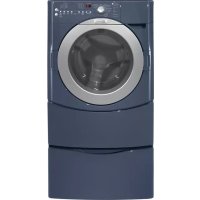
Epic MFW9800TK - Washing machine MAYTAG - Free user manual and instructions
Find the device manual for free Epic MFW9800TK MAYTAG in PDF.



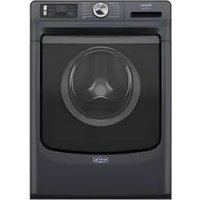
| Product Type | Front-load washing machine |
| Brand | Maytag |
| Model | Epic MFW9800TK |
| Dimensions (H × W × D) | Approximately 96.5 cm × 68.6 cm × 76.2 cm (without pedestal) |
| Total weight (with water and load) | Up to 180 kg |
| Power supply | 120 V, 60 Hz, AC, 15 or 20 A, 3-prong grounded outlet |
| Capacity | Super capacity (without agitator) |
| Wash cycles | Sanitize, Whites Most Whites, Heavy Duty, Normal/Casual, Quick Wash, Delicate, Silk, Wool, Hand Wash, Soak, Rinse/Spin, Drain/Spin |
| Spin speeds | Up to 5 speeds (Extra High, High, Medium, Low, Extra Low, No Spin) |
| Water temperature | Super Hot, Hot, Warm, Cold; automatic temperature control |
| Recommended detergent type | High efficiency (HE) only |
| Dispenser | 4 compartments: Oxi prewash, main wash, bleach, fabric softener |
| Special features | Add a garment (8 min), control lock, integrated water heater, dynamic imbalance detection, anti-foam system |
| Drum material | Commercial-grade stainless steel |
| Drain system | Drain hose (up to 2.4 m height); compatible with wall, floor, or sink drain |
| Required water pressure | 20-100 psi (137.9-689.6 kPa) |
| Available options | Oxi prewash, Auto soak, Extra rinse, Rinse/Hold |
| Adjustable feet | Yes, with lock nuts |
| Optional pedestal | Available in white, black, or blue, height 10" or 15.5" |
| Stacking kit | Available (part no. 8212640) for stacking with dryer |
| Door seal maintenance | Clean with diluted bleach solution (1/4 cup to 1 gallon of warm water) |
| Warranty | 1 year, limited (parts and labor) |
Frequently Asked Questions - Epic MFW9800TK MAYTAG
User questions about Epic MFW9800TK MAYTAG
0 question about this device. Answer the ones you know or ask your own.
Ask a new question about this device
Download the instructions for your Washing machine in PDF format for free! Find your manual Epic MFW9800TK - MAYTAG and take your electronic device back in hand. On this page are published all the documents necessary for the use of your device. Epic MFW9800TK by MAYTAG.
USER MANUAL Epic MFW9800TK MAYTAG
FOR QUESTIONS ABOUT FEATURES, OPERATION/PERFORMANCE
PARTS, ACCESSORIES OR SERVICE CALL: 1.800.680.9900
IN CANADA, CALL: 1.800.807.6777
VISIT OUR WEBSITE AT WWW.MAYTAG.COM
IN CANADA,WWW.MAYTAG.CA
SI TIENE PREGUNTAS RESPECTO A LAS CARACTERISTICAS,
FUNCTIONAMIENTO, RENDIMIENTO, PARTES, ACCESORIOS O
SERVICIO TECNICO,LLAME AL:1.800.688.9900
EN CANADÁ, LLAME AL: 1.800.807.6777
WASHER SAFETY 3
INSTALLATION REQUIREMENTS. 4
Tools and Parts 4
Options 5
Location Requirements. 6
Drain System. 8
Electrical Requirements. 8
INSTALLATION INSTRUCTIONS 9
Remove Transport System 9
Connect the Inlet Hoses 10
Route the Drain Hose. 10
Secure the Drain I lose 11
Level the Washer. 11
Complete Installation 11
FEATURES AND BENEFITS. 12
WASHER USE. 13
Starting Your Washer 13
Using the Proper Detergent. 13
Using the Dispenser. 14
Pausing or Restarting. 15
Changing Cycles, Options and Modifiers. 16
Status Lights. 16
Cycles 17
Options 18
Modifiers 19
Laundry Guide 20
LAUNDRY TIPS. 20
Loading 21
WASHER CARE. 21
Cleaning Your Washer 21
Water Inlet Hoses. 21
Vacation, Storage, and Moving Care. 21
TROUBLESHOOTING 22
ASSISTANCE OR SERVICE. 25
In the U.S.A. 25
In Canada. 25
WARRANTY 26
INDICE
ASSISTANCE OU SERVICE. 78
Your safety and the safety of others are very important.
We have provided many important safety messages in this manual and on your appliance. Always read and obey all safety messages.

This is the safety alert symbol.
This symbol alerts you to potential hazards that can kill or hurt you and others.
All safety messages will follow the safety alert symbol and either the word "DANGER" or "WARNING."
These words mean:
ADANGER
You can be killed or seriously injured if you don't immediately follow instructions.
AWARNING
You can be killed or seriously injured if you don't follow Instructions.
All safety messages will tell you what the potential hazard is, tell you how to reduce the chance of injury, and tell you what can happen if the instructions are not followed.
IMPORTANT SAFETY INSTRUCTIONS
WARNING: To reduce the risk of fire, electric shock, or injury to persons when using the washer, follow basic precautions, including the following:
Read all instructions before using the washer.
- Do not wash articles that have been previously cleaned in, washed in, soaked in, or spotted with gasoline, dry-cleaning solvents, other flammable, or explosive substances as they give off vapors that could ignite or explode.
- Do not add gasoline, dry-cleaning solvents, or other flammable, or explosive substances to the wash water. These substances give off vapors that could ignite or explode.
Under certain conditions, hydrogen gas may be produced in a hot water system that has not been used for 2 weeks or more. HYDROGEN GAS IS EXPLOSIVE. If the hot water system has not been used for such a period, before using the washing machine, turn on all hot water faucets and let the water flow from each for several minutes. This will release any accumulated hydrogen gas. As the gas is flammable, do not smoke or use an open flame during this time.
- Do not allow children to play on or in the washer. Close supervision of children is necessary when the washer is used near children.
Before the washer is removed from service or discarded, remove the door or lid. - Do not reach into the washer if the drum, tub or agitator is moving.
- Do not install or store the washer where it will be exposed to the weather.
Do not tamper with controls. - Do not repair or replace any part of the washer or attempt any servicing unless less specifically recommended in this manual or in published user-repair instructions that you understand and have the skills to carry out.
See "Electrical Requirements" for grounding instructions.
SAVE THESE INSTRUCTIONS
INSTALLATION REQUIREMENTS
Tools and Parts
Gather the required tools and parts before starting installation. The parts supplied are in the washer drum.
Tools needed for connecting the water inlet hoses
Pliers (that open to 1% [39.5 mm])
■ Flashlight (optional)
Tools needed for installation
Open end wrenches 17 mm and 13 mm
Level
Wood block
Ruler or measuring tape
Parts supplied:
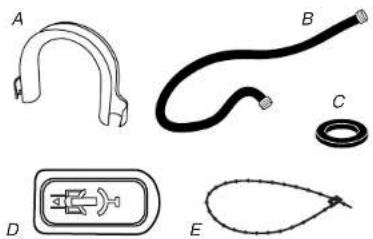
A. Drain hose form
B. Inlet hose (2)
C. Inlet hose washers (4)
D. Transport bolt hole plug (4)
E. Bcoded strap
Alternate Parts
Your installation may require additional parts. If you are interested in purchasing one of the items listed here, call the toll-free number on the cover or in the "Assistance or Service" section.
| If You Have You Will Need to Buy | |
| Laundry tub or standpipe taller than 96° (2.4 m) | Sump pump system (if not already available) |
| Overhead sewer | Standard 20 gal. (76 L), 30" (76.2 cm) tall drain tub or utility sink and sump pump (available from local plumbing suppliers) |
| Floor drain Siphon break, Part | Number 285834; additional drain hose |
| Part Number 8318155; and connector kit, Part Number 285835 | |
| Drain hose too short | 4 ft (1.2 m) drain hose extension kit, Part Number 285863 |
| Water faucets beyond reach of fill hoses | 2 longer water fill hoses:6 ft (1.8 m) Part Number 76314,10 ft (3.0 m) Part Number 350008 |
Options
Pedestal
A pedestal will add to the total height of the washer for a total height of 53.5'' (135.9 cm).
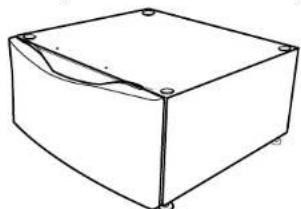
Optional pedestal
This pedestal is available in several colors.
To order, call the dealer from whom you purchased your washer or refer to the "Assistance or Service" section.
| Pedestal Height | Color Part Number |
| 10" (25.4 cm) White MHP1000SQ | |
| 10" (25.4 cm) Black MHP1000SB | |
| 15.5" (39.4 cm) White MHP1500SQ | |
| 15.5" (39.4 cm) Black MHP1500SB | |
| 15.5" (39.4 cm) Blue | MHP1500SK |
Stack Kit
Are you planning to stack your Maytag washer and dryer? To do so you will need to purchase a Stack Kit.
To order, call the dealer from whom you purchased your dryer or refer to the "Assistance or Service" section. Ask for Part Number 8212640.
Location Requirements
Selecting the proper location for your washer improves performance and minimizes noise and possible washer "walk."
Your washer can be installed under a custom counter, or in a basement, laundry room, closet, or recessed area. See "Drain System."
Companion appliance location requirements should also be considered. Proper installation is your responsibility.
You will need
A water heater set to deliver 120^ (49^) water to the washer.
A grounded electrical outlet located within 6 ft (1.8 m) of where the power cord is attached to the back of the washer. See "Electrical Requirements."
Hot and cold water faucets located within 4 ft (1.2 m) of the hot and cold water fill valves, and water pressure of 20-100 psi (137.9-689.6 kPa).
A level floor with a maximum slope of 1^ (2.5cm) under entire washer. Installing the washer on soft floor surfaces, such as carpets or surfaces with foam backing, is not recommended.
A sturdy and solid floor to support the washer with a total weight (water and load) of 400 lbs (180 kg).
Do not operate your washer in temperatures below 32^ (0^) . Some water can remain in the washer and can cause damage in low temperatures.
Installation clearances
The location must be large enough to allow the washer door to be fully opened.
Additional spacing should be considered for ease of installation and servicing.
Additional clearances might be required for wall, door, and floor moldings.
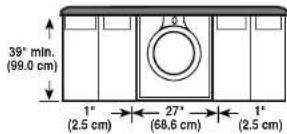
Additional spacing of 1^ (2.5 cm) on all sides of the washer is recommended to reduce noise transfer.
Companion appliance spacing should also be considered.
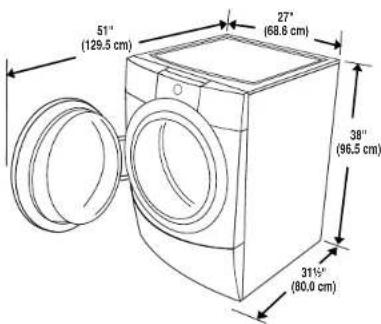
Washer Dimensions
Recommended installation spacing for custom undercounter installation
The dimensions shown are for the recommended spacing.
Custom undercounter installation - Washer only
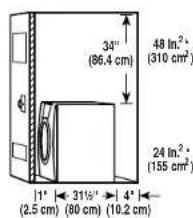
Recommended installation spacing for recessed or closet installation, with or without a pedestal
The dimensions shown are for the recommended spacing.
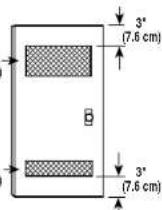
Recessed area or closet installation
B
A. Side view - closet or confined area B. Closet door with vents
Recessed or closet installation - Washer on pedestal
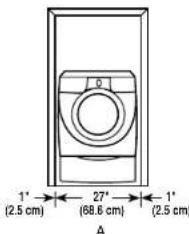
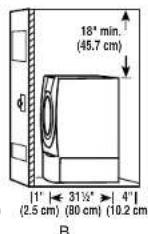
A. Recessed area
B. Side view - closet or confined area
Recommended installation spacing for recessed or closet installation, with stacked washer and dryer
The dimensions shown are for the recommended spacing.
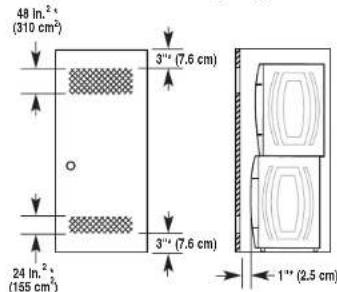
*Required spacing
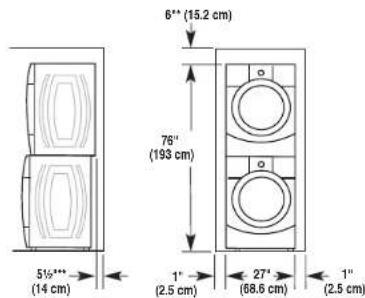
*Required spacing
**For venting out the side, 1" (2.5 cm) spacing is allowed.
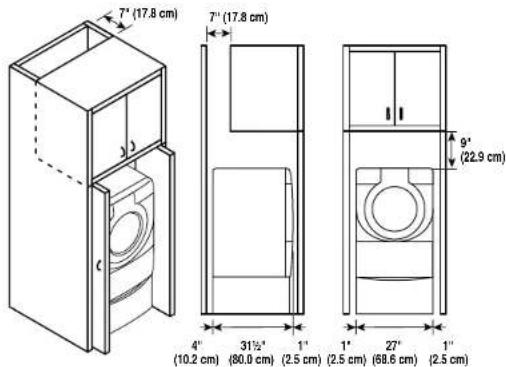
Recommended installation spacing for cabinet installation
The dimensions shown are for the recommended spacing.
For cabinet installation, with a door, the minimum ventilation openings in the top are required.
Drain System
The washer can be installed using the standpipe drain system (floor or wall), the laundry tub drain system, or the floor drain system. Select the drain hose installation method you need. See "Tools and Parts."
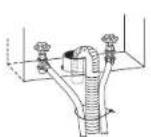
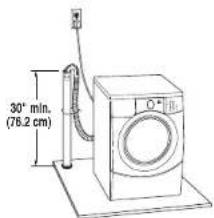
Standpipe drain system - wall or floor (views A & B)
The standpipe drain requires a minimum diameter standpipe of 2^ (5 cm). The minimum carry-away capacity can be no less than 17 gal. (64 L) per minute.
The top of the standpipe must be at least 30^ (76.2cm) high and no higher than 96^ (2.4m) from the bottom of the washer.
A
B
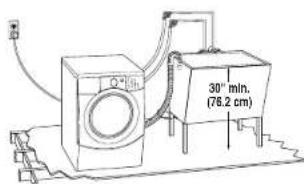
Laundry tub drain system (view C)
The laundry tub needs a minimum 20 gal. (76 L) capacity. The top of the laundry tub must be at least 30^ (76.2 cm) above the floor.
Floor drain system (view D)
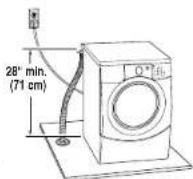
The floor drain system requires a siphon break that may be purchased separately. See "Tools and Parts."
The siphon break must be a minimum of 28" (71 cm) from the bottom of the washer. Additional hoses might be needed.
C
D
Electrical Requirements
WARNING

Electrical Shock Hazard
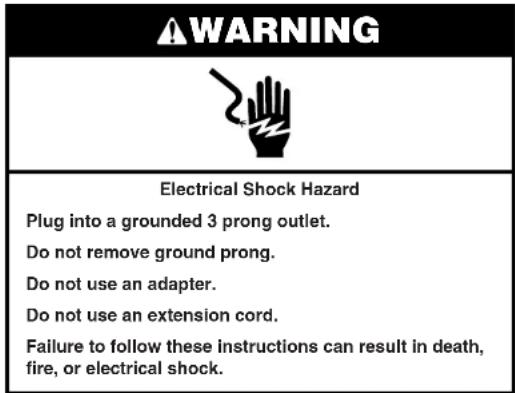
Plug into a grounded 3 prong outlet.
Do not remove ground prong.
Do not use an adapter.
Do not use an extension cord.
Failure to follow these instructions can result in death,
fire, or electrical shock.
A 120 volt, 60Hz AC only, 15- or 20-amp, fused electrical supply is required. Timedelay fuse or circuit breaker is recommended. It is recommended that a separate circuit serving only this appliance be provided.
This washer is equipped with a power supply cord having a 3 prong grounding plug.
To minimize possible shock hazard, the cord must be plugged into a mating, 3 prong, grounding-type outlet, grounded in accordance with local codes and ordinances. If a mating outlet is not available, it is the personal responsibility and obligation of the customer to have the properly grounded outlet installed by a qualified electrician.
If codes permit and a separate ground wire is used, it is recommended that a qualified electrician determine that the ground path is adequate.
Do not ground to a gas pipe.
Check with a qualified electrician if you are not sure the washer is properly grounded.
Do not have a fuse in the neutral or ground circuit.
GROUNDING INSTRUCTIONS
For a grounded, cord-connected washer:
This washer must be grounded. In the event of a malfunction or breakdown, grounding will reduce the risk of electrical shock by providing a path of least resistance for electric current. This washer is equipped with a cord having an equipment-grounding conductor and a grounding plug. The plug must be plugged into an appropriate outlet that is properly installed and grounded in accordance with all local codes and ordinances.
WARNING: Improper connection of the equipment
grounding conductor can result in a risk of electric shock. Check with a qualified electrician or serviceman if you are in doubt as to whether the appliance is properly grounded. Do not modify the plug provided with the appliance - if it will not fit the outlet, have a proper outlet installed by a qualified electrician.
For a permanently connected washer:
This washer must be connected to a grounded metal, permanent wiring system, or an equipment grounding conductor must be run with the circuit conductors and connected to the equipment-grounding terminal or lead on the appliance.
INSTALLATION INSTRUCTIONS
Remove Transport System
AWARNING
Excessive Weight Hazard
Use two or more people to move and install washer.
Failure to do so can result in back or other injury.
IMPORTANT: Position the washer so that the rear of the washer is within approximately 3 ft (90 cm) of its final location.
There are 4 bolts in the rear panel of the washer that support the suspension system during transportation. These bolts also retain the power cord inside the washer until the bolts are removed.
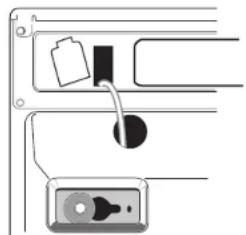
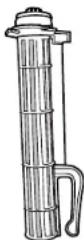
- Using a 13mm wrench, loosen each of the bolts.
- Once the bolt is loose, move it to the center of the hole and completely pull out the bolt, including the plastic spacer covering the bolt.
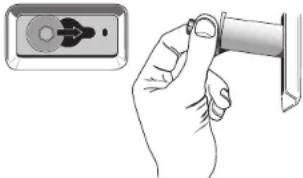
- Once all 4 bolts are removed discard bolt and spacers. Then pull the power cord through the opening of the rear panel and close the hole with the attached cap.
- Close the bolt holes with the 4 transport bolt hole plugs.
NOTE: If the washer is to be transported at a later date, call your local service center. To avoid suspension and structural damage to your washer, it must be properly set up for relocation by a certified technician.
Connect the Inlet Hoses
Make sure the washer drum is empty.
- Attach the hose with the red color indicator to the Hot (left) inlet valve. Attaching the red coupling first makes it easier to tighten connection with piers. Screw on coupling by hand until it is seated on the washer.
- Attach the hose with the blue color indicator to the Cold (right) water inlet valve. Screw on coupling by hand until it is seated on the washer.
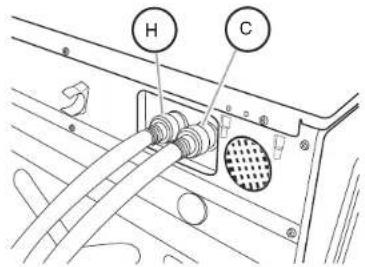
H. Hol yaler inel
C. Cold water injection
- Using pliers, check the tightness of the hose couplings already attached to the washer. NOTE: Do not overtighten. Damage to the coupling can result.
- Attach hot water hose to the hot water faucet. Screw on coupling by hand until it is seated on the washer.
- Attach cold water hose to the cold water faucet. Screw on coupling by hand until it is seated on the washer.
- Using pliers, tighten the couplings with an additional two-thirds turn.
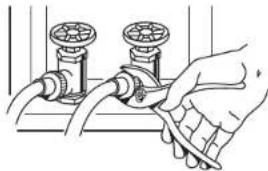
NOTE: Do not overtighten. Damage to the coupling can result.
- Turn on the water faucets and check for leaks.
NOTE: Replace inlet hoses after 5 years of use to reduce the risk of hose failure. Record hose installation or replacement dates on the hoses for future reference.
Periodically inspect and replace hoses if bulges, kinks, cuts, wear, or leaks are found.
Route the Drain Hose
Proper routing of the drain hose protects your floors from damage due to water leakage. Read and follow these instructions.
Remove drain hose from washer cabinet
Gently pull the corrugated drain hose from the shipping clips.
Laundry tub drain or standpipe drain
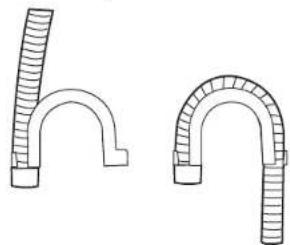
Connect the drain hose form to the corrugated drain hose.
A
B
A. Snap either end of the drain hose form to the drain hose at the point where the corrugation begins.
B. Bend drain hose over drain hose form and snap into place.
To keep drain water from going back into the washer:
- Do not straighten the drain hose, and do not force excess drain hose into standpipe. Hose should be secure, but loose enough to provide a gap for air.
- Do not lay excess hose on the bottom of the laundry tub.
Floor drain
You may need additional parts. See Floor drain under "Tools and Parts."
Secure the Drain Hose
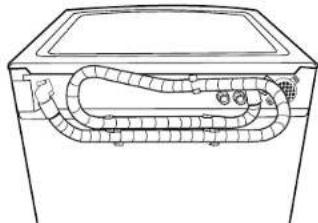
- Drape the power cord over the washer top.
- Secure the drain hose to the laundry tub leg or standpipe with the beaded strap provided. (See illustrations A and B.)
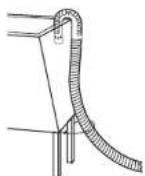
A
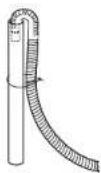
B
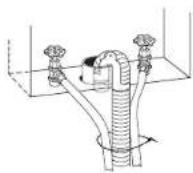
C
If the washer faucets and the drain standpipe are recessed (see illustration C), put the hooked end of the drain hose in the standpipe. Tightly wrap the beaded strap around the water inlet hoses and the drain hose.
Do not force excess drain hose into the standpipe.
Level the Washer
Properly leveling your washer avoids excessive noise and vibration.
- Check the levelness of the washer by placing a level on the top edge of the washer, first side to side, then front to back.
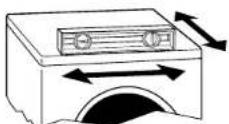
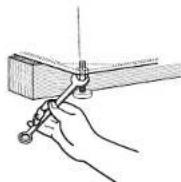
If the washer is against a wall, move the washer out slightly before tipping back. If the washer is not level, first prop the front with a wood block and adjust the feet as necessary; then prop the back and adjust feet as necessary. Repeat this step until washer is level.
- Make sure all four feet are stable and resting on the floor. Then check that the appliance is perfectly level (use a level).
- After the washer is level, use a 17mm open-end wrench to turn the nuts on the feet tightly against the washer cabinet.
IMPORTANT: All four feet must be tightened. If the nuts are not tight against the washer cabinet, the washer may vibrate.
- The washer should not move front to back, side to side, or diagonally when pushed on its top edges.
- Slide the washer to its final location.
- Confirm the levelness of the washer.
Complete Installation
- Check the electrical requirements. Be sure that you have the correct electrical supply and the recommended grounding method. See "Electrical Requirements."
-
Check that all parts are now installed. If there is an extra part, go back through the steps to see which step was skipped.
-
Check that you have all of your tools.
- Dispose of/recycle all packaging materials.
- Check that the water faucets are on.
- Check for leaks around faucets and inlet hoses.
AWARNING

Electrical Shock Hazard
Plug into a grounded 3 prong outlet.
Do not remove ground prong.
Do not use an adapter.
Do not use an extension cord.
Failure to follow these instructions can result in death,
fire, or electrical shock.
- Plug into a grounded 3 prong outlet.
- Rcad "Washer Usc."
- To test and to clean your washer, measure 12 the detergent manufacturer's recommended amount of HE High Efficiency detergent for a medium-size load. Pour the detergent into the detergent dispenser. Select NORMAL/CASUAL, and then select HOLD TO START.

Use only HF High Efficiency divergent.
FEATURES AND BENEFITS
Electronic Controls
Flexible electronic controls are easy to use whether you are a beginner or an expert.
Smart Dispensers
The Smart Dispensers make your washer truly automatic. This washer provides a four-compartment dispenser which includes separate compartments for main wash detergent, fabric softener, bleach, and auto oxi prewash or auto soak. The dispenser has large pour zones. The dispenser is self-cleaning, and can be easily removed. Laundry products are diluted with fresh water and added to the load at the proper time in the wash cycle.
Auto Water Level
This washer automatically adjusts water level for optimal cleaning and rinsing performance. Two sensors determine load size, load composition, and suds level, then the sensors adjust the water level to the proper setting. This eliminates guesswork. The water level is just right for every wash load size.
Super Size Capacity
Since there is no agitator, you can wash larger, bulkier items such as a king-sized bedspread. You are also able to wash more clothes at one time, which means fewer loads.
Smooth BalanceTM Balance System
To reduce washer "walk" and "off-balance" conditions, your new washer combines:
2 Springs to isolate vibration
4 Shock absorbers at the washer base to minimize movement
Commercial Quality Stainless Steel Drum
The commercial quality stainless steel drum eliminates corrosion and enables higher spin speeds for more water extraction, reducing drying time compared to traditional front-load washers.
High-Efficiency Wash System
Your new front-loading, high-efficiency washer saves time with fewer, larger loads, and lowers your water and energy bills by helping conserve resources.
Spin Speeds
This washer automatically selects the spin speed based on the cycle selected. This factory setting can be changed, however. This washer offers up to five different spin speed choices.
Heating Element
This washer has a heating element that automatically heats the water to the optimal temperature on select cycles. This enables stepped cleaning, a process in which warm water is brought in and mixed with detergent first, then the water is heated. Stepped cleaning starts the wash cycle with warm water to help remove stains (such as blood and grass). This heater is active in the Sanitary, Whitest Whites and Heavy Duty cycles.
Automatic Temperature Control
The automatic temperature control electronically senses and maintains a uniform water temperature. Automatic temperature control regulates incoming hot and cold water. Automatic temperature control is automatically turned on when a cycle is selected.
Add A Garment
When this option is available at the beginning of the cycle the Add A Garment status light will glow for the first 8 minutes. This washer allows an 8-minute period in which other garments may be added to a load.
Special Cleaning Action with Sensi-Care™ Wash System
This washer channels 100% of the water through the dispensers to assure thorough rinse-out and mixture of all the laundry products before they touch any garments. The water is then sprayed from the top front onto the center of the load, providing even distribution and optimum cleaning performance. It is normal for small amounts of water to remain in the dispensers when the wash cycle is complete.
Efficient Detergent System
This washer has a specially designed valve that closes during the wash portion of the cycle so that 100% of the water and detergent mixture is used on the load. The Efficient Detergent System ensures that no water or detergent is wasted.
Dynamic Off-Balance Detection
This washer uses two sensors to detect load size and the amount of off-balance within the load. The suspension system and controls are specially designed to redistribute the load automatically.
WASHER USE
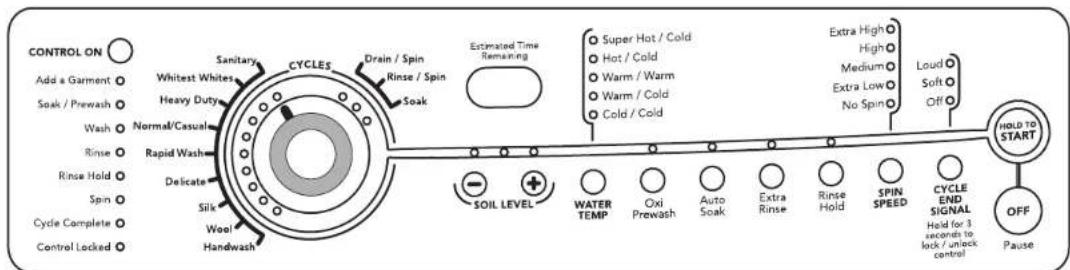
NOTE: The panel shown above may be different from that of your model.
Starting Your Washer
WARNING

Fire Hazard
Never place items in the washer that are dampened with gasoline or other flammable fluids.
No washer can completely remove oil.
Do not dry anything that has ever had any type of oil on it (including cooking oils).
Doing so can result in death, explosion, or fire.
WARNING: To reduce the risk of fire, electric shock, or injury to persons, read the IMPORTANT SAFETY INSTRUCTIONS before operating this appliance.
The following is a guide to using your washer. Please refer to specific sections of this manual for more detailed information.
Do not store laundry products on the top surface of this washer. Vibration is normal during operation.
Using the Proper Detergent
Use only High Efficiency detergents. The package for this type of detergent will be marked "HE" or "High Efficiency." This wash system, along with less water, will create too much sudressing with a regular non-IE detergent. Using regular detergent will likely result in washer errors, longer cycle times and reduced rinsing performance. It may also result in component failures and noticeable mold or mildew. HE detergents are made to produce the right amount of suds for the best performance. Follow the manufacturer's instructions to determine the amount of detergent to use.

Use only HE High Efficiency detergent.
First Wash Cycle Without Laundry
Before washing clothes for the first time, if not completed during the final installation step, choose the Normal/Casual cycle and run it without clothes. Use only HF High Efficiency detergent. Use ½ the manufacturer's recommended amount for a medium-size load. This initial cycle serves to ensure the interior is clean before washing clothes.
For All Wash Cycles
- Open the washer door by pulling on the handle. Sort laundry according to color and type of fabric. Place a load of sorted clothes in the washer. Do not overload washer. Overloading can cause poor cleaning.
The washer can be fully loaded, but not tightly packed. Washer door should close easily.
Mix large and small items and avoid washing single items. Load evenly.
It is recommended that you wash small items such as infant socks in a mesh garment bag.
- When unloading garments, occasionally check under the gray colored seal at the front of the tub for small items.
- Close the washer door by pushing it firmly until the lock clicks. The washer door will remain locked during the wash cycle.
NOTE: After any wash cycle is completed, the door must be opened and then closed before a new cycle can begin. The door can be opened only if PAUSE/OFF is selected while the ADD A GARMENT light is glowing or if the cycle has been canceled. See "To cancel a cycle" in "Changing Cycles, Options and Modifiers" section.
8. To begin the wash cycle immediately Select I HOLD TO START.
- Open the dispenser drawer and add laundry products to the detergent, bleach, or fabric softener compartments. Close drawer slowly to avoid spills. See "Using the Dispenser."
- Turn on the washer by selecting CONTROL ON. Select one of the cycles by turning the cycle selector. The indicator light for the selected cycle will glow. When selecting a wash cycle, the preset Options, Water Temp, Spin Speed, and Soil Level for the selected cycle will glow. The display shows the estimated time remaining. The preset settings provide the recommended fabric care for the selected cycle. See "Cycles."
- Select the desired Options, such as Oxi Prewash, Auto Soak, Extra Rinse and Rinse Hold. Not all options are available with all cycles. See "Options."
- Select the desired Modifiers, such as Soil Level, Waler Temp, Spin Speed and Cycle End Signal. Not all modifiers are available with all cycles and options. See "Modifiers."
- If desired, select the CYCLE END SIGNAL. The signal is helpful when you are washing items that should be removed from the washer as soon as it stops. Select Loud, Soft or OFF.
If you do not select HOLD TO START within 5 minutes of choosing a cycle, the washer automatically shuts off.
- When the wash cycle is complete, the CYCLE COMPLETE status light glows, the door unlocks, and the wash load can be removed from the washer. The washer powers down automatically 5 minutes after the cycle is complete and the CYCLE COMPLETE light goes off. To power down the washer manually after the wash cycle is complete, select
PAUSE/OFF once.
Using the Dispenser
Your new washer has a dispenser drawer with four separate compartments for your laundry products—two are for detergent, one is for liquid chlorine bleach, and one is for liquid fabric softener. Laundry products are diluted and dispensed automatically at the proper time during the wash cycle, making it unnecessary for you to return to the washer during the cycle to add them.
It is normal for small amounts of water to remain in the dispensers when the wash cycle is complete.
Do not put laundry products directly into the wash tub. Always use the proper dispensers when adding laundry products.
Choosing the Right Detergent
Use only High Efficiency detergents. The package for this type of detergent will be marked "HE" or "High Efficiency." This wash system, along with less water, will create too much sudcing with a regular non-HE detergent. Using regular detergent will likely result in washer errors, longer cycle times and reduced rinsing performance. It may also result in component failures and noticeable mold or mildew. HE detergents are made to produce the right amount of suds for the best performance. Follow the manufacturer's instructions to determine the amount of detergent to use.

Use only HE High Efficiency detergent.
To fill dispenser compartments
- Pull out the dispenser drawer.
- Add the desired laundry product to the proper compartment.
- Push in the dispenser drawer slowly and completely (to avoid a spill).
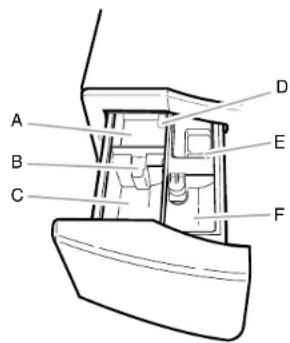
Dispenser
A. Oxi Prewash deleergent compaition
B. Separator
C. Main Wash detergent compartment
D. Dispenser release lever
E. Chlorine bleach compartment
F. Fabric softener compartment
Oxi Prewash detergent compartment
(Letter A in Dispenser Illustration)
Add detergent to this compartment when using the Oxi Prewash option or Auto Soak. Liquid or powdered detergent may be used in this compartment. The detergent will automatically be dispensed during Oxi Prewash, if the Oxi Prewash option is selected, or during the soak time if Soak is selected.
Using High Efficiency (HE) detergent, add 1% the recommended amount to the Oxi Prewash compartment and 3 % the recommended amount to the Main Wash compartment.
For the use of an oxygenated pre-treater or laundry product, use the recommended dosage for High Efficiency (HE) machines, located on the back of the detergent packaging.
■ Do not fill beyond the "MAX" level.
Main Wash detergent compartment
(Letter C in Dispenser Illustration)
Add liquid or powdered detergent to this compartment for your main wash cycle. The detergent separator must always be in place, either in the front or back position.
IMPORTANT: If you are using the Oxi Prewash or Soak option, powdered detergent must be used in the Main Wash compartment, since liquid detergents may seep out of the Main Wash compartment before the main wash begins.
- Do not fill beyond the "MAX" level. Use the detergent manufacturer's recommended amount for load size.
Liquid or powdered color-safe bleach may be added to the Main Wash compartment along with the same type of detergent, liquid or powdered.
Liquid detergent: Put the separator in the front position, between the guides, as shown following. There will be no gap between the bottom of the wash cycle detergent compartment and the bottom of the separator.
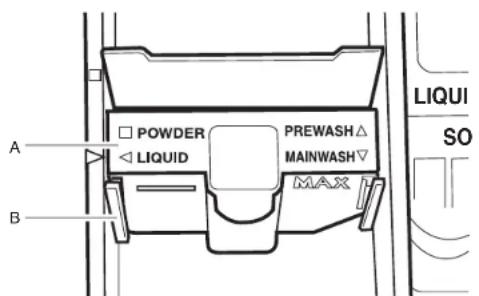
Separator in front position, between guides
A. Separator
B. Guide
Powdered detergent: Put the separator in the back position, behind the guides, as shown following. There will be a gap between the bottom of the wash cycle detergent compartment and the bottom of the separator.
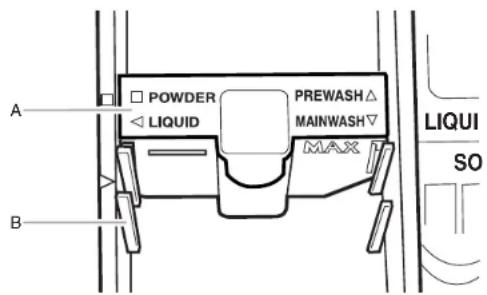
Separator in back position, behind guides
A. Separator
B. Guide
NOTE: The separator will be in the POWDER (back) position when shipped from the factory.
Chlorine bleach compartment
(Letter E in Dispenser Illustration)
Add no more than 12 cup (80 mL) liquid chlorine bleach to this compartment. The bleach will be automatically diluted and dispensed at the optimum time during the first rinse after the wash cycle. This compartment cannot dilute powdered bleach.
Always measure liquid chlorine bleach. Use a measuring cup with a pour spout; do not guess.
Do not fill beyond the "MAX" level. Overfilling could cause severe garment damage.
Fabric softener compartment
(Letter F in Dispenser Illustration)
Add 14 cup (60 mL) liquid fabric softener to this compartment. Fabric softener will be automatically dispensed in the final rinse.
Do not fill beyond the "MAX" level.
Pausing or Restarting
- To pause the washer at any time, select PAUSE/OFF.
- To continue the cycle, select HOLD TO START (for approximately 1 second).
Changing Cycles, Options and Modifiers
Not all Options and Modifiers are available with all cycles. Cycles, Options and Modifiers can be changed anytime before HOLD TO START is selected.
Options and Modifiers can be changed anytime after HOLD TO START is selected and before the start of the selected Option or Modifier.
To cancel a cycle and select a new cycle
-
Select PAUSE/OFF twice.
-
Select desired cycle.
-
Select the desired OPTIONS.
-
Select HOLD TO START (for approximately 1 second) to restart the washer at the beginning of the new cycle.
To cancel a cycle
-
Select PAUSE/OFF twice.
-
The washer powers down, the door unlocks, and clothes can be removed.
NOTE: If the water level or the temperature is too high, the washer will drain automatically before the door unlocks.
To change Options or Modifiers after the cycle has started
- Select PAUSE/OFF once.
- Select the desired OPTIONS or MODIFIERS.
- Select HOLD TO START (for approximately 1 second) to continue the cycle.
To drain the washer manually - Select PAUSE/OFF once.
- Select DRAIN/SPIN.
- Select HOLD TO START (for approximately 1 second) to begin the drain.
- When the spin is complete, the door unlocks. Items can be removed from the washer.
Status Lights
These lights show which portion of the cycle the washer is operating. They also indicate when you can add an additional item to the wash cycle and when the controls are locked.
CONTROLON
Add a Garment
Soak/Prewash
Wash O
Rinse O
Rinse Hold
Spin 0
Cycle Complete
Control Locked
Adding items
This washer allows an 8-minute period in which other garments may be added to the load. You can add items to the washer if the ADD A GARMENT status light is glowing.
To add items
- Select PAUSE/OFF once. The washer door unlocks, and items can be added.
- To continue the cycle, close the door and select HOLD TO START (for approximately 1 second).
- To unlock the door after the Add a Garment period, press PAUSE/OFF twice. This will cancel the Wash Cycle.
Cycle Complete
The cycle complete light slays on for 5 minutes after the cycle is complete, and then the washer shuts off.
Locking controls
The Control Lock avoids unintended use of the washer. You can also use the control lock feature to avoid unintended cycle or option changes during a cycle. When CONTROL LOCKED is lit, all buttons are disabled except for PAUSE/OFF and START. You can lock the controls while the washer is operating.
To lock the controls
Select and hold CYCLE END SIGNAL for 3 seconds.
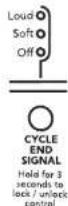
The CONTROL LOCKED status light glows.
To unlock the controls
Select and hold CYCLE END SIGNAL for 3 seconds until the CONTROL LOCKED Status light turns off.
Door Locked
When the status light glows, the door is locked.
Estimated time remaining
The cycle time varies automatically based on your water pressure, water temperature, detergent and clothes load. The cycle time will be extended if oversudsing occurs or the load is unbalanced. The SUDs routine removes extra suds and assures proper rinsing of your garments. During the unbalance routine, the time displayed may pause until this activity is complete, then resume with the cycle. These routines may add up to a half-hour to the default cycle time.
Cycles
Cycles can be selected by turning the Cycle control knob to the desired cycle. Each cycle is designed for different types of fabric and soil levels.
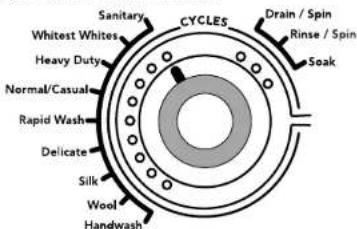
Each cycle has a preset Soil Level (cycle time), Water Temperature and Spin Speed, and may have preset options. The preset settings provide the recommended fabric care for the selected cycle.
The preset settings can be changed anytime before HOLD TO START is pressed. Not all options and modifiers are available with all cycles. (To change settings after the cycle has started, press PAUSE/OFF once, then select the desired settings. Press HOLD TO START to continue the cycle.)
Sanitary
Use this cycle to clean heavily soiled, colorfast fabrics. This cycle combines a super hot water temperature and fast-speed tumbling to help ensure the removal of heavy soils and stains. It is recommended that you set your hot water heater to 120^ (49°C) to ensure proper performance during this cycle. Extra high speed spin helps shorten drying time.
Whitest Whites
This cycle is especially designed for cleaning loads of soiled white fabrics with the addition of bleach. Hot washing temperatures assure optimal bleach activity. An additional rinse provides optimal rinse performance to avoid chlorine residues on your laundry. This cycle combines fast-speed tumbling, longer wash time, and extra high speed spin to shorten drying time.
Heavy Duty
Use this cycle to wash loads of sturdy, colorfast fabrics and heavily soiled garments. This cycle combines fast-speed tumbling, longer wash time, and extra high speed spin to shorten drying times. If the water temperature is lower than needed for this cycle, the heater will warm the water to the optimum temperature.
Normal/Casual
Use this cycle to wash normally soiled cottons and linens. This cycle combines medium-speed tumbling and high-speed spin.
Rapid Wash
Use this cycle to wash small loads of lightly soiled garments that are needed in a hurry. This cycle combines fast-speed tumbling, a shortened wash time, and extra high speed spin to shorten drying time.
Delicate
Use this cycle to wash no-iron fabrics and garments labeled "Permanent Press" or "Wrinkle Free" or that indicate using a "Gentle" cycle on the care label. This cycle combines low-speed tumbling and low-speed spin to help reduce wrinkling.
Silk
Use this cycle to clean washable silk garments. (Check label instructions to make sure that garment is washable.) This cycle gently tumbles and drains without spinning to gently clean garments and help minimize wrinkling. Because there is no spinning action, garments will contain a higher amount of water at the end of this cycle.
Wool
Use this cycle to clean machine washable woolen garments. (Check the care instructions to make sure that garment is washable.) This cycle features gentle tumbling and low-speed spin to provide optimum garment care.
Handwash
Use this cycle to clean hand washable and special-care garments. Similar to the way garments are hand washed in a sink, the wash action of this cycle combines periods of low-speed tumbling and soaking. Low-speed spin helps reduce wrinkling.
Soak
Use the Soak cycle to remove small spots of set-in stains on fabrics. This cycle provides a soak time with warm or cold water followed by drain. Extra water, a short tumbling phase for equal distribution of the laundry, and a soaking lime without drum movement improve the removal of set-in stains. Drain without spin assures gentle treatment, even for delicate articles.
Rinse/Spin
Use this cycle to get a rinse and spin only. This cycle combines fast-speed tumbling and extra high speed spin. If desired, you can reduce the spin speed by selecting the speed you want from the SPIN SPEED modifier.
A Rinse/Spin cycle is useful for
- Loads that need rinsing only.
- Adding fabric softener to a load.
Drain/Spin
Use this cycle to drain your washer or to drain and spin your wash load. The spin speed is preset to extra high. If desired, you can reduce the spin speed by selecting the speed you want from the SPIN SPEED modifier.
NOTE: Loads of synthetics, delicate fabrics, hand washables, and washable woolens should be drained with no spin or low spin speed to avoid fabric stress.
Preset cycle settings
Each cycle has a preset Soil Level (cycle time), Water Temperature, and Spin Speed. The preset settings provide the recommended fabric care for the selected cycle. See chart.
| Cycles Soil Level | Water Temp Spin Speed | |
| (cycle time) | ||
| Sanitary Normal | Super Hot/Cold Extra High | ' |
| (1:55) | ||
| Whitest Whites Normal | Hot/Cold Extra High | ' |
| (1:00) | ||
| Heavy Duty Normal | Hot/Cold Extra High | ' |
| (1:15) | ||
| Normal/Casual Normal | Warm/Cold High | |
| (0:40) | ||
| Rapid Wash | Less soil | Warm/Cold Extra High' |
| (0:35) | ||
| Delicate | Normal | Warm/Cold Medium |
| (0:35) | ||
| Silk | Normal | Cold/Cold No Spin |
| (0:26) | ||
| Wool | Normal | Cold/Cold Medium |
| (0:30) | ||
| Handwash | Normal | Cold/Cold Extra Low |
| (0:30) | ||
| Soak | Normal | Warm/Cold No Spin |
| (0:30) | ||
| Rinse/Spin | Normal | Cold/Cold Extra High |
| (0:21) | ||
| Drain/Spin | Normal | N/A Extra High |
| (0:11) | ||
*Spin speeds may vary on some models
To change the preset cycle settings
Press the selector of each setting until the desired setting glows.
Normal Washer Sounds
As with any new product, you will hear sounds that you are not accustomed to. You may hear various sounds when the door is locked and unlocked, and during the washing, rinsing, and spinning process. Between changes in wash actions, there will be momentary pauses. You will hear water spraying and splashing during the wash and rinse cycles. These new sounds and pauses are part of normal washer operation.
Options
You can customize your wash by adding options to your cycle selections. You can add or change an option after starting a cycle anytime before the selected option begins. Not all options are available with all cycles.
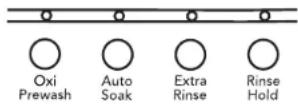
See the "Laundry Guide" for an overview of possible options for each Wash Cycle selection.
You can select more than one option for a cycle. Some options cannot be added to some cycles; for example, Oxi Prewash cannot be added to the Rapid Wash cycle.
If an option is available with a selected cycle, the light for that option will glow when selected.
If an option is unavailable with a selected cycle, there will be a short tone, and the light for that option will not glow when selected.
Oxi Prewash
Use this option for heavily soiled loads that need pretreatment. This option adds a 15-minute Oxi Prewash and drain to the main wash cycle.
NOTES:
Add Oxi or color safe products or detergent to the Oxi Prewash and Main Wash compartments of the Dispenser Printer.
When using Oxi Prewash, use powdered detergent for the Main Wash detergent compartment because liquid detergent will seep into the washer during Auto Soak.
NOTE: The Oxi Prewash and Auto Soak options cannot be selected in the same cycle.
Auto Soak
Use the Auto Soak option for loads of heavily soiled cotton, linen, polyester or nylon with stains. During Auto Soak, water will be added to the drum and the laundry will be equally distributed by a short tumbling phase. Laundry will then be soaked by phases without drum movement. After soaking, the washer drains without spinning.
Add detergent to both the Oxi Prewash and Main Wash compartments of the Dispenser.
Drawer.
Use powdered detergent for the main wash cycle because liquid detergent will seep into the washer during Auto Soak.
For cycles with Hot Wash Temperatures, the Soak temperature is set to WARM. Otherwise, the Soak temperature is the same as the Wash Temperature.
The Auto Soak and Oxi Prewash options cannot be selected in the same cycle.
Extra Rinse
An extra rinse can be used to ensure the removal of detergent or bleach residue from garments. This option provides an additional rinse with the same water temperature as the first rinse.
Rinse Hold
Use this option to help avoid wrinkling of your laundry when a load cannot be removed from the washer immediately. The wash cycle is paused before the final drain and spin phase so that the laundry stays in the rinse water until the cycle is continued. This provides optimal wrinkle care of your wet laundry. The door stays locked during the Rinse Hold cycle and the indicator light is flashing. Press RINSE HOLD to finish the cycle and unload the washer.
Modifiers
Preset cycle settings of Soil Level (cycle time), Water Temperature, and Spin Speed can be changed. You can change a modifier after starting a cycle anytime before the selected modifier begins. Not all modifiers are available with all cycles and options.
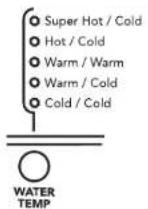
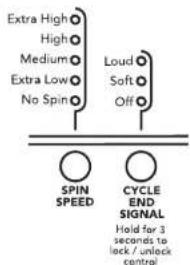
To change the water temperature, select the WATER TEMP button until the desired setting glows.
To change the spin speed, select the SPIN SPEED button until the desired setting glows.
To change the loudness of the Cycle End Signal, select (ADJUSTABLE) CYCLE END SIGNAL.
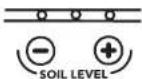
To change cycle time, select SOIL LEVEL button.
Wash/Rinse Temp
Select a water temperature based on the type of load you are washing. Use the warmest wash water safe for fabrics. Follow garment label instructions.
Warm rinses leave the loads dryer than cold rinses. Warm rinses increase wrinkling. In cold climates, a warm rinse makes the load more comfortable to handle. Cold rinses save energy.
Temperature Guide
| Wash Water Temperature Suggested Fabrics | |
| SUPER HOT Sturdy colorfast fabrics | Heavy soils |
| HOT Sturdy colorfast fabrics | Whites and pastels Heavy soils |
| WARM Bright colors | Moderate to light soils |
| COLD Colors that bleed or fade | Light soils |
In wash water temperatures colder than 60^ (15.6°C), detergents do not dissolve well. Soils may be difficult to remove.
Automatic Temperature Control
The automatic temperature control electronically senses and maintains a uniform water temperature. Automatic temperature control regulates incoming hot and cold water. Automatic temperature control is automatically turned On when a cycle is selected. See "Preset Cycle Settings" in "Cycles."
Automatic temperature control works for all wash and rinse temperature settings.
Laundry Guide
Refer to this chart for suggested load types and their corresponding cycles. Listed to the right are the options available to each of these washer cycles.
CYCLE SUGGESTED LOAD TYPE AVAILABLE OPTIONS
| Rinse/Hold Oxi Prewash* Auto Soak* Extra Rinse | |||||
| Sanitary | Heavily soiled underwear, towels, work clothes, diapers, etc. | ✓ | ✓ | ✓ | ✓ |
| Whitest Whites | Heavily soiled white fabrics | ✓ | ✓ | ✓ | ✓ |
| Heavy Duty | Heavily soiled underwear, towels, shirts, etc. | ✓ | ✓ | ✓ | ✓ |
| Normal/Casual | Normally soiled blouses, shirts, overalls, etc., made of polyester, nylon, cotton, linen, or cotton blends | ✓ | ✓ | ✓ | ✓ |
| Rapid Wash | Lightly soiled sports wear made of cotton, polyester, nylon, or cotton blends | ✓ | ✓ | ✓ | |
| Delicate | Use this cycle to wash no-iron fabrics and garments labeled "Permanent Press" or "Wrinkle Free" or that indicate using a "Gentle" cycle on the care label. | ✓ | ✓ | ✓ | ✓ |
| Silk | Fabrics made of silk identified as machine washable | ✓ | ✓ | ||
| Wool | Woolens with a felt-free finish, identified as machine washable | ✓ | ✓ | ||
| Handwash | Fabrics made of silk, special-care items marked "I landwashable" | ✓ | ✓ | ||
| Soak | Fabrics made of cotton, linen, polyester or nylon | ||||
| Rinse/Soak | Fabrics made of cotton, linen, polyester or nylon | ✓ | ✓ | ||
| Drain/Spin | Fabrics made of cotton, linen, polyester or nylon | ||||
*Oxi Prewash and Auto Soak cannot be selected at the same time.
LAUNDRY TIPS
Preparing clothes for washing
Follow these recommendations to help you prolong the life of your garments.
- Use only High Efficiency detergents. The package for this type of detergent will be marked "HE" or "High Efficiency." This wash system, along with less water, will create too much sudressing with a regular non-HE detergent. Using regular detergent will likely result in washer errors, longer cycle times and reduced rinsing performance. It may also result in component failures and noticeable mold or mildew. HE detergents are made to produce the right amount of suds for the best performance. Follow the manufacturer's instructions to determine the amount of detergent to use.

Use only HF High Efficiency detergent.
- Close zippers, snaps, and hooks to avoid snagging other items. Remove pins, buckles, and other hard objects to avoid scratching the washer interior. Remove non-washable trim and ornaments.
Empty pockets and turn them inside-out.
Turn down cuffs; brush away lint and dirt.
Turn wool and synthetic knits inside-out to avoid pilling.
Tie strings and sashes so they will not tangle.
Mend tears, loose hems, and scars.
Treat spots and stains.
Stained or wet garments should be washed promptly for best results.
Mix large and small items, avoid washing single items, and load evenly.
- Wash small items, such as infant socks, in a mesh garment bag. To create a balanced load it is recommended that more than one garment bag be used, and that each garment bag be filled with equal amounts of material.
NOTE: If you are washing only small items, it is recommended that more than one mesh garment bag be used, and that each garment bag be filled with equal amounts of material.
Sorting
Separate heavily soiled items from lightly soiled ones, even if they would normally be washed together. Separate lint-givers (towels, chenille) from lint-takers (corduroy, synthetics, permanent press). When possible, turn lint-givers inside-out.
Separate dark colors from light colors, colorfast items from noncolorfast items.
Sort by fabric and construction (sturdy cottons, knits, delicate items).
Unloading
- Remove clothes from washer after the cycle is completed. Metal objects such as zippers, snaps, and buckles may rust if left in the washer basket for a long time.
- When unloading garments, occasionally check under the gray colored seal at the front of the tub for small items.
Loading
| Loading suggestions | |
| Heavy Work Clothes | |
| 4 jeans | 2 sweatpants |
| 4 workpants | 2 sweatsheets |
| 4 workshirts | |
| Towels | |
| 10 bath towels | 14 washcloths |
| 10 hand towels | |
| Mixed Load | |
| 3 sheets (1 king, 2 twin) | 9 T-shirts |
| 4 pillowcases | 9 shorts |
| 3 shirts | 10 handkerchiefs |
| 3 blouses | |
WASHER CARE
Cleaning the exterior
Use a soft damp cloth or sponge to wipe up any spills. Occasionally wipe the outside of your washer to keep it looking new. Use mild soap and water. Do not use abrasive products.
Cleaning the interior
To keep the interior of your washer clean, run the Sanitary cycle without clothes. Use 12 of the detergent manufacturer's recommended amount of High Efficiency (HE) powdered or liquid detergent for a medium-size load.
Cleaning the door seal
Check the fold of the seal periodically for any foreign objects. To clean the seal, mix a dilute solution, using 344 cup (177.4 mL) of liquid chlorine bleach, and 1 gal. (3.8 L) of warm tap water. Wipe the seal area with the dilute solution, using a damp cloth. Let stand 5 minutes. Wipe down area thoroughly with a dry cloth and let the washer interior air dry with door open.
IMPORTANT:
Wear rubber gloves when cleaning for prolonged periods.
Refer to the bleach manufacturer's instructions for proper use.
Cleaning the dispenser drawer
The dispenser drawer is removable for easy cleaning.
- Unlock the dispenser drawer by pressing the Release Lever in the Oxi Prewash compartment. See "Using the Dispenser." Remove the drawer.
- Remove the inserts (the siphon from the soitener and bleach compartments and the separator).
-
Wash the parts under running water.
-
Replace the inserts and return the dispenser to the drawer.
Water Inlet Hoses
Replace inlet hoses after 5 years of use to reduce the risk of hose failure. Periodically inspect and replace inlet hoses if bulges, kinks, cuts, wear or leaks are found.
When replacing your inlet hoses, record the date of replacement.
Vacation, Storage, and Moving Care
Install and store your washer where it will not freeze. Because some water may stay in the hoses, freezing can damage your washer. If storing or moving your washer during freezing weather, winterize it.
Non-use or vacation care:
Operate your washer only when you are at home. If you will be on vacation or not using your washer for an extended period of time, you should:
Unplug washer or disconnect power.
Turn off the water supply to the washer. This helps avoid unintended flooding (due to a water pressure surge) while you are away.
Slightly open door to provide ventilation.
To winterize washer:
- Put 1 qt (1 L) of R.V.-type antifreeze in the drum.
- Run washer on a Drain/Spin cycle.
- Unplug washer or disconnect power.
- Shut off both water faucets.
- Disconnect water inlet hoses from faucets and drain.
To use washer again:
- Flush water pipes. Reconnect water inlet hoses to faucets. Turn on both water faucets.
-
Plug in washer or reconnect power.
-
Run the washer through the Normal/Casual cycle with 12 the manufacturer's recommended amount of HE detergent for a medium-size load, to clean the washer and remove the antifreeze, if used.
To transport the washer:
- If washer will be moved during freezing weather, put in 1 qt (1 L) of R.V.-type antifreeze in the drum. Run washer on a Drain/Spin cycle.
- Unplug the power cord.
- Disconnect the drain hose from the drain system and attach to rear panel clips.
4.Shut off both water faucets. - Disconnect the water inlet hoses from faucets, then drain the hoses and clip them to the rear panel of the washer.
IMPORTANT: Call for service. Do not reuse transport bolts. Washer must be transported in the upright position. To avoid suspension and structural damage to your washer, it must be properly set up for relocation by a certified technician.
Reinstalling the washer
- Follow the "Installation Instructions" to locate, level and connect the washer.
- Run the washer through the Normal/Casual cycle with 12 the manufacturer's recommended amount of HE detergent for a medium-size load, to clean the washer and remove the antifreeze, if used.
TROUBLESHOOTING
First try the solutions suggested here to possibly avoid the cost of a service call...
Washer displaying code message and tone sounds
FH" (Water Inlet Problem—no water or insufficient water supply)
Select PAUSE/OFF twice to cancel the cycle. Unplug washer or disconnect power.
Check the following:
Are water faucets completely turned on?
Are screens at inlet hose connection to washer clogged?
Are water inlet hoses kinked?
Are water inlet hoses frozen?
Plug in washer or reconnect power. Re-select cycle and press HOLD TO START. If the
problem remains, call for service.
F02" (Drain Problem)
Select PAUSE/OFF twice to cancel the cycle. Unplug washer or disconnect power.
Check the following:
Is the drain hose kinked?
Is the drain hose frozen?
Is the drain hose clogged?
Is the drain hose more than 96^ (2.4m) above the floor?
"SUD" (Suds Routine)
When excessive suds are detected, a suds routine automatically starts. This routine removes extra suds and assures proper rinsing of your garments. "SUD" is displayed during rinsing and at the end of the cycle to inform you that Suds Routine was activated. Use only HE (High Efficiency) detergents.
F Variables [other than FH and F02] (Electrical Problem)
Select PAUSE/OFF twice to cancel the cycle. Select DRAIN/SPIN if there is excessive water in the washer.
Re-select cycle and press HOLD TO START. If the problem remains, call for service.
Washer won't start
AWARNING

Electrical Shock Hazard
Plug into a grounded 3 prong outlet.
Do not remove ground prong.
Do not use an adapter.
Do not use an extension cord.
Failure to follow these instructions can result in death,
fire, or electrical shock.
Check the following:
Is the power cord plugged into a grounded 3 prong outlet?
Is the washer door firmly closed?
Has a cycle been selected, but HOLD TO START has not been selected and held for
1 second?
Was the door open after completion of last cycle?
Washer won't fill, wash or rinse
Check the following:
Is the power cord plugged into a grounded 3 prong outlet?
Is there power at the plug? Check electrical source or call an electrician.
Are the hot and cold water faucets turned on?
Is the water inlet hose kinked?
Are the water inlet valve screens clogged?
Turn off the water and remove inlet hoses from the washer. Remove any accumulated film
or particles. Reinstall hoses, turn water on and check for leaks.
Washer stops
Check the following:
Is the power cord plugged into a grounded 3 prong outlet?
Is there power at the plug?
Check electrical source or call an electrician.
Has a household fuse blown, or has a circuit breaker tripped? Replace the fuse or reset the circuit breaker. If the problem continues, call an electrician.
Are you using an extension cord?
Do not use an extension cord.
Washer won't drain or spin
■ Is the drain hose clogged, or the end of the drain hose more than 96^u (2.4 m) above the floor?
■ Is your voltage low?
Check electrical source or call electrician. Do not use an extension cord.
■ Is the "SUD" routine active?
Cycle will complete once extra suds are removed.
■ Is the load balanced?
A single or bulky item may cause imbalance. Add more items or redistribute the load.
Washer makes noise or vibrates
■ Is the washer level?
The washer must be level. The four feet should be properly installed, and the nuts should be tightened against the washer cabinet.
As water is drained from the washer, you may hear air being pulled through the pump. This happens during the end of draining. It is normal.
Are you washing items with metal snaps, buckles or zippers?
You may hear metal items touching the washer drum. This is normal.
■ Is washer installed on a sturdy and solid floor?
Refer to the "Installation Instructions" for flooring requirements. Noise and vibration may be reduced by placing a piece of 14 (19.1 mm) plywood underneath your washer. The plywood may extend underneath both washer and dryer to keep them at equal heights.
Washer leaks
Check household plumbing for leaks.
Dispensers clogged or leaking
Are the laundry products in the correct dispenser compartment?
Add the correct amounts of detergent, fabric softener or liquid chlorine bleach to the correct compartments. Add powdered or liquid color-safe bleach to the Main Wash compartment. Be sure to match powdered color-safe bleach with powdered detergent or match liquid color-safe bleach with liquid detergent.
■ Is the detergent separator in the correct position?
Separator should be in the front position when using liquid detergent and in the back position when using powdered detergent.
Washer odor
See "Cleaning Your Washer."
Are you using HE detergent?
Use of non-HE detergent can cause a film residue which can result in odor.
Did you leave the door open after usc?
This washer has a tight seal to avoid water leaks. To avoid odors leave the door open to allow the washer to dry between uses.
Load too wet
■ Did you use the right cycle for the load being washed?
Select a cycle with a higher spin speed.
Did you wash a single item or bulky items or have you overloaded the washer?
A single item, bulky items, or overloading may cause imbalance. Add items or try to evenly distribute your wet laundry in the drum, and start a Drain/Spin cycle. If the laundry is still wet, take half of the load out of the washer and try again.
Residue or lint on load
Did you add detergent to the dispenser?
For best results, add detergent to the detergent compartment. Do not add detergent to the washer drum.
Did you sort properly?
Sort lint givers (towels, chenille) from lint takers (corduroy, synthetics). Also sort by color.
Did you overload the washer?
Do not overload the washer. The washer can be fully loaded, but not tightly packed. The wash load must be balanced. Lint can be trapped in the load if overloaded.
Check the following:
Was paper or tissue left in pockets?
Did you use enough HE detergent?
Use enough detergent to remove lint and hold it in suspension. Use only IIE detergent. Follow the manufacturer's instructions to determine the amount of detergent to use.
■ Is your water colder than 60^ (15.6°C)?
Wash water colder than 60^ (15.6°C) may not completely dissolve the detergent.
Are you using a low speed wash cycle?
Powdered detergents may not dissolve well in a slow-speed cycle. For best results, use liquid detergent for slow-speed cycles such as Delicate, Silk, Wool, and Handwash.
Stains on load
Did you add detergent to the dispenser?
For best results, add detergent to the detergent compartment. Do not add detergent to the washer drum.
Did you use enough HE detergent?
Use enough detergent to remove soil and hold it in suspension. Use only HE detergent. Follow the manufacturer's instructions to determine the amount of detergent to use.
■ Is there above average iron (rust) in water?
You may need to install an iron filter.
Did you properly sort the load?
Sort dark clothes from whites and lights.
Did you unload the washer promptly?
To avoid transfer of dye, unload the washer as soon as it stops.
Did you use a fabric softener dispensing ball?
Dispensing balls will not operate correctly with this washer. Add liquid fabric softener to the fabric softener compartment.
Did you use powdered detergent in a low-speed cycle?
Consider using liquid detergent.
Did you use Rapid Wash on a large load?
For best results, use Rapid Wash for small, lightly soiled loads.
Load is wrinkled
■ Did you unload the washer promptly?
Unload the washer as soon as it stops.
Did you use the right cycle for the load being washed?
Use the Delicate cycle or another cycle with a low spin speed to reduce wrinkling.
Did you overload the washer?
The wash load must be balanced and not overloaded. Loads should tumble freely during washing.
Gray whites, dingy colors
Did you properly sort the load?
Transfer of dye can occur when mixing whites and colors in a load. Sort dark clothes from whites and lights.
Was the wash temperature too low?
Use hot or warm washes if safe for the load. Make sure your hot water system is adequate to provide a hot water wash.
Did you use enough detergent, or do you have hard water?
Use more detergent for washing heavy soils in cold or hard water.
Cycle too long
Did you choose the Sanitary cycle?
The heater will be activated to provide maximum cleaning performance. Additional time will be added to the regular cycle to heat the water. This additional time will depend on the load size and the hot water inlet temperature.
■ Is "SUD" shown in the display?
Excessive suding has been detected and a suds routine has been started to destroy excessive suds. This routine will add time to the original cycle.
Did you wash a large load using the Quick Wash cycle?
The Quick Wash Cycle is designed for smaller load sizes (2-3 items of lightly soiled garments). If larger loads are washed using this cycle, wash time will be increased.
■ Did you wash a large load using a gentle cycle?
When using the Delicate, Handwash, Silk and Wool cycles you should use small loads. This ensures a gentle wash for your garments without increasing cycle times.
■ Did the load cause imbalance?
When too much imbalance occurs, an imbalance routine will start to redistribute the load. During the imbalance routine, the time displayed may pause until this activity is complete, then resume with the remainder of the cycle.
Door locked at end of wash cycle
■ Did all of the water drain out of the washer during the spin?
Select DRAIN/SPIN to remove any water remaining in the washer. The washer door will unlock at the end of the drain.
ASSISTANCE OR SERVICE
Before calling for assistance or service, please check "Troubleshooting." It may save you the cost of a service call. If you still need help, follow the instructions below.
When calling, please know the purchase date and the complete model and serial number of your appliance. This information will help us to better respond to your request.
If you need replacement parts
If you need to order replacement parts, we recommend that you use only factory specified parts. Factory specified parts will fit right and work right because they are made with the same precision used to build every new Maytag appliance.
To locate factory specified parts in your area, call the Maytag Services, LLC Customer Assistance telephone number or your nearest designated service center.
In the U.S.A.
Call the Maytag Services, LLC Customer Assistance toll free:
1-800-688-9900.
Our consultants provide assistance with:
Features and specifications on our full line of appliances.
■ Installation information.
Use and maintenance procedures.
■ Accessory and repair parts sales.
Specialized customer assistance (Spanish speaking, hearing impaired, limited vision, etc.).
Referrals to local dealers, repair parts distributors and service companies. Maytag appliances designated service technicians are trained to fulfill the product warranty and provide after-warranty service, anywhere in the United States.
To locate the Maytag appliances designated service company in your area, you can also look in your telephone directory Yellow Pages.
For further assistance
If you need further assistance, you can write to Maytag appliances with any questions or concerns at:
Maytag Services, LLC
ATTN:CAIR Center
P.O.Box 2370
Cleveland, TN 37320-2370
Please include a daytime phone number in your correspondence.
In Canada
Call the Whirlpool Canada LP Customer Interaction Centre toll free: 1-800-807-6777.
Our consultants provide assistance with:
Features and specifications on our full line of appliances.
Use and maintenance procedures.
■ Accessory and repair parts sales.
Referrals to local dealers, repair parts distributors, and service companies. Whirlpool Canada LP designated service technicians are trained to fulfill the product warranty and provide after-warranty service, anywhere in Canada.
For further assistance
If you need further assistance, you can write to Whirlpool Canada LP with any questions or concerns at:
Customer Interaction Centre
Whirlpool Canada LP
1901 Minnesota Court
Mississauga, Ontario L5N 3A7
Please include a daytime phone number in your correspondence.
MAYTAG CORPORATION MAJOR APPLIANCE WARRANTY
ONE YEAR LIMITED WARRANTY
For one year from the date of purchase, when this major appliance is operated and maintained according to instructions attached to or furnished with the product, Maytag Corporation or Maytag Limited (hereafter "Maytag") will pay for Factory Specified Parts and repair labor to correct defects in materials or workmanship. Service must be provided by a Maytag designated service company. This limited warranty applies only when the major appliance is used in the country in which it was purchased.
ITEMS MAYTAG WILL NOT PAY FOR
-
- Service calls to repair or replace appliance light bulbs, air filters or water filters. Those consumable parts are excluded from warranty coverage.
- Repairs when your major appliance is used for other than normal, single-family household use.
- Damage resulting from accident, alteration, misuse, abuse, fire, flood, acts of God, improper installation, installation not in accordance with electrical or plumbing codes, or use of products not approved by Maytag.
- Any food loss due to refrigerator or freezer product failures.
- Replacement parts or repair labor costs for units operated outside the United States or Canada.
- Pickup and delivery. This major appliance is designed to be repaired in the home.
- Repairs to parts or systems resulting from unauthorized modifications made to the appliance.
- Expenses for travel and transportation for product service in remote locations.
- The removal and reinstallation of your appliance if it is installed in an inaccessible location or is not installed in accordance with published installation instructions.
- Replacement parts or repair labor costs when the major appliance is used in a country other than the country in which it was purchased.
DISCLAIMER OF IMPLIED WARRANTY; LIMITATION OF REMEDIES
CUSTOMER'S SOLE AND EXCLUSIVE REMEDY UNDER THIS LIMITED WARRANTY SHALL BE PRODUCT REPAIR AS PROVIDED HEREIN. IMplied Warranties, INCLUDING WARRANTY OF MERCHANTABILITY OR FITNESS FOR A PARTICULAR PURPOSE, ARE LIMITED TO ONE YEAR OR THE SHORTEST PERIOD ALLOWED BY LAW. MAYTAG SHALL NOT BE LIABLE FOR INCIDENTAL OR CONSEQUENTIAL DAMAGES. SOME STATES AND PROVINCES DO NOT ALLOW THE EXCLUSION OR LIMITATION OF INCIDENTAL OR CONSEQUENTIAL DAMAGES, OR LIMITATIONS ON THE DURATION OF IMPLIED WARRANTY OF MERCHANTABILITY OR FITNESS, SO THESE EXCLUSIONS OR LIMITATIONS MAY NOT APPLY TO YOU. THIS WARRANTY GIVES YOU SPECIFIC LEGAL RIGHTS AND YOU MAY ALSO HAVE OTHER RIGHTS, WHICH VARY FROM STATE TO STATE OR PROVINCE TO PROVINCE.
Outside the 50 United States and Canada, this warranty does not apply. Contact your authorized Maytag dealer to determine if another warranty applies.
If you need service, first see the "Troubleshooting" section of the Use & Care Guide. After checking "Troubleshooting," additional help can be found by checking the "Assistance or Service" section or by calling Maytag. In the U.S.A., call 1-800-688-9900. In Canada, call 1-800-807-6777.
9/06
Keep this book and your sales slip together for future reference. You must provide proof of purchase or installation date for in-warranty service.
Write down the following information about your major appliance to better help you obtain assistance or service if you ever need it. You will need to know your complete model number and serial number. You can find this information on the model and serial number label located on the product.
Dealer name
Address
Phone number
Model number
Serial number
Purchase date
Notes
Normal/Informal (Normal/Casual)
Maytag Services, LLC
ATTN: CAIR Center
P.O.Box 2370
Cleveland, TN 37320-2370
Customer Interaction Centre
Whirlpool Canada LP
1901 Minnesota Court
Mississauga, Ontario L5N 3A7
Rinse/Spin (rinçage/essorage)
ASSISTANCE OU SERVICE
Maytag Services, LLC
ATTN: CAIR Center
P.O.Box 2370
Cleveland, TN 37320-2370
All rights reserved.
MAYTAG and the "M" Symbol are registered trademarks of Maytag Limited in Canada.


- INDICE
- Your safety and the safety of others are very important.
- ADANGER
- AWARNING
- IMPORTANT SAFETY INSTRUCTIONS
- SAVE THESE INSTRUCTIONS
- INSTALLATION REQUIREMENTS
- Tools and Parts
- Tools needed for connecting the water inlet hoses
- Tools needed for installation
- Alternate Parts
- Options
- Pedestal
- Stack Kit
- Location Requirements
- You will need
- Installation clearances
- Recommended installation spacing for custom undercounter installation
- Recommended installation spacing for recessed or closet installation, with or without a pedestal
- Recommended installation spacing for recessed or closet installation, with stacked washer and dryer
- Recommended installation spacing for cabinet installation
- Drain System
- Standpipe drain system - wall or floor (views A & B)
- Laundry tub drain system (view C)
- Floor drain system (view D)
- Electrical Requirements
- WARNING
- Electrical Shock Hazard
- GROUNDING INSTRUCTIONS
- For a grounded, cord-connected washer:
- For a permanently connected washer:
- INSTALLATION INSTRUCTIONS
- Remove Transport System
- Connect the Inlet Hoses
- Route the Drain Hose
- Floor drain
- Secure the Drain Hose
- Level the Washer
- Complete Installation
- FEATURES AND BENEFITS
- Electronic Controls
- Smart Dispensers
- Auto Water Level
- Super Size Capacity
- Smooth BalanceTM Balance System
- Commercial Quality Stainless Steel Drum
- High-Efficiency Wash System
- Spin Speeds
- Heating Element
- Automatic Temperature Control
- Add A Garment
- Special Cleaning Action with Sensi-Care™ Wash System
- Efficient Detergent System
- Dynamic Off-Balance Detection
- WASHER USE
- Starting Your Washer
- Fire Hazard
- Using the Proper Detergent
- First Wash Cycle Without Laundry
- For All Wash Cycles
- To begin the wash cycle immediately Select I HOLD TO START.
- Using the Dispenser
- Choosing the Right Detergent
- To fill dispenser compartments
- Oxi Prewash detergent compartment
- Main Wash detergent compartment
- Chlorine bleach compartment
- Fabric softener compartment
- Pausing or Restarting
- Changing Cycles, Options and Modifiers
- Status Lights
- Adding items
- To add items
- Cycle Complete
- Locking controls
- To lock the controls
- To unlock the controls
- Door Locked
- Estimated time remaining
- Cycles
- Sanitary
- Whitest Whites
- Heavy Duty
- Normal/Casual
- Rapid Wash
- Delicate
- Silk
- Wool
- Handwash
- Soak
- Rinse/Spin
- A Rinse/Spin cycle is useful for
- Drain/Spin
- Preset cycle settings
- To change the preset cycle settings
- Normal Washer Sounds
- Oxi Prewash
- NOTES:
- Auto Soak
- Extra Rinse
- Rinse Hold
- Modifiers
- Wash/Rinse Temp
- Laundry Guide
- LAUNDRY TIPS
- Preparing clothes for washing
- Sorting
- Unloading
- Loading
- WASHER CARE
- Cleaning the exterior
- Cleaning the interior
- Cleaning the door seal
- IMPORTANT:
- Cleaning the dispenser drawer
- Water Inlet Hoses
- Vacation, Storage, and Moving Care
- Non-use or vacation care:
- To winterize washer:
- To use washer again:
- To transport the washer:
- Reinstalling the washer
- TROUBLESHOOTING
- Washer displaying code message and tone sounds
- Washer won't start
- Check the following:
- Washer won't fill, wash or rinse
- Washer stops
- Washer won't drain or spin
- ■ Is your voltage low?
- ■ Is the "SUD" routine active?
- ■ Is the load balanced?
- Washer makes noise or vibrates
- ■ Is the washer level?
- Are you washing items with metal snaps, buckles or zippers?
- ■ Is washer installed on a sturdy and solid floor?
- Washer leaks
- Dispensers clogged or leaking
- Washer odor
- Load too wet
- Residue or lint on load
- Stains on load
- Load is wrinkled
- Gray whites, dingy colors
- Cycle too long
- Did you choose the Sanitary cycle?
- ■ Is "SUD" shown in the display?
- Did you wash a large load using the Quick Wash cycle?
- ■ Did you wash a large load using a gentle cycle?
- ■ Did the load cause imbalance?
- Door locked at end of wash cycle
- ■ Did all of the water drain out of the washer during the spin?
- ASSISTANCE OR SERVICE
- If you need replacement parts
- In the U.S.A.
- 1-800-688-9900.
- Our consultants provide assistance with:
- For further assistance
- In Canada
- MAYTAG CORPORATION MAJOR APPLIANCE WARRANTY
- ONE YEAR LIMITED WARRANTY
- ITEMS MAYTAG WILL NOT PAY FOR
- DISCLAIMER OF IMPLIED WARRANTY; LIMITATION OF REMEDIES
- Normal/Informal (Normal/Casual)
- Rinse/Spin (rinçage/essorage)
- ASSISTANCE OU SERVICE
Brand : MAYTAG
Model : Epic MFW9800TK
Category : Washing machine