EasyManual
OWA206WIT - Basket Pelgrim - Free user manual and instructions
Find the device manual for free OWA206WIT Pelgrim in PDF.


User questions about OWA206WIT Pelgrim
0 question about this device. Answer the ones you know or ask your own.
Ask a new question about this device
Download the instructions for your Basket in PDF format for free! Find your manual OWA206WIT - Pelgrim and take your electronic device back in hand. On this page are published all the documents necessary for the use of your device. OWA206WIT by Pelgrim.
USER MANUAL OWA206WIT Pelgrim
Instructions for use
Cooker hood
NL Gebruiksaanwijzing NL 3 - NL 14
FR Mode d'emploi FR 3 - FR 14
DE Bedienungsanleitung DE 3 - DE 14
EN Instructions for use EN 3-EN 14
| Description | 4 | |||||
| Introduction | 4 | |||||
| Extraction | systems | 5 | ||||
| Use | ||||||
| Controls | 6 | |||||
| Maintenance | ||||||
| Cleaning | 7 | |||||
| Removing the grease filters | 8 | |||||
| Replacing the carbon filter | 8 | |||||
| Changing | the | light | bulbs | |||
| Installation | ||||||
| General | 10 | |||||
| Electrical | connection | |||||
| Preparation | 12 | |||||
| Recirculation | 12 | |||||
| Mounting | 13 | |||||
Disposal of appliance and packaging 14
Description
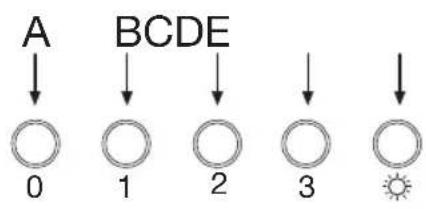
A Switch off
B Fan position 1
C Fan position 2
D Fan position 3
E Lighting
Introduction
This user manual gives you a quick overview of all the possibilities offered by the appliance. You will find information on safety measures and maintaining the appliance.

Please retain this user manual and the installation guide.
They may be of use to future users of the appliance.
Extraction systems
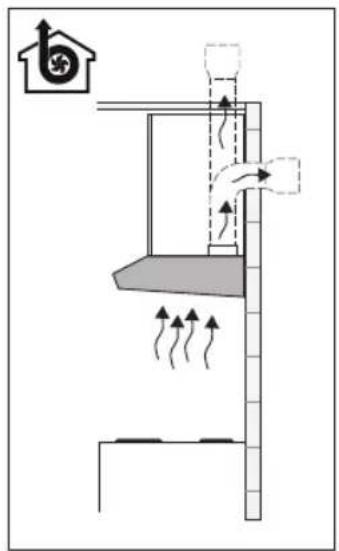
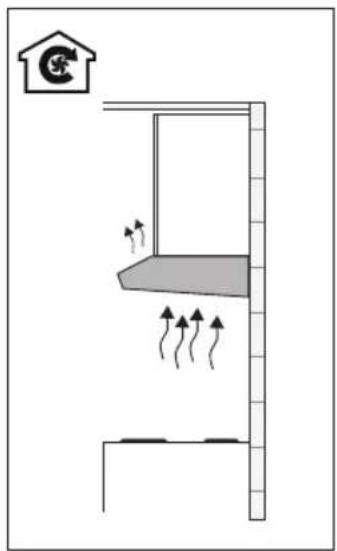
Depending on the type, the cooker hoods can
be connected in one of two ways:

- To a duct. To a duct, the cooking vapours extracted by suction are carried outside, once the grease particles have been filtered. This is the best method.

- Recirculation hood. As a recirculation hood, the grease particles and the smell
in the extracted vapours are filtered.
The air that has been sucked in is not carried outside but recirculates in the kitchen. In this case you must have a carbon filter fitted.

Attention! The carbon filter needs to be ordered separately. More noise is produced when a carbon filter is used than when the cooker hood is used with an exhaust vent.

Read the separate safety instructions before using the device!
USE
Controls
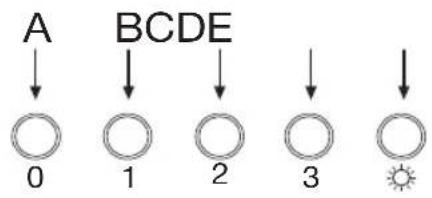
Switching fan on and off
- Press the speed button B, C or D
The extractor hood switches on in the corresponding position.
- Press the off button A.
The fan will switch off.
Switching lighting on and off
- Press the lighting button E.
The lighting switches on.
- Press the lighting button E again.
The lighting switches off.
Cleaning

Note! Before each servicing, first disconnect the cooker hood by removing the plug from the wall socket or by switching off the main switch of the residence. Or if the appliance has been connected through a plug and socket, then the plug must be removed from the socket.
The cooker hood should be cleaned regularly (at least with the same frequency with which you carry out maintenance of the fat filters) internally and externally. Do not use abrasive products. Do not use alcohol!
Attention! Failure to carry out the basic cleaning recommendations of the cooker hood and replacement of the filters may cause fire risks. Therefore, we recommend observing these instructions. The manufacturer declines all responsibility for any damage to the motor or any fire damage linked to inappropriate maintenance or failure to observe the above safety recommendations.
Cooker hood
Clean the cooker hood with soapy water and a soft cloth. Then wipe with clean water to rinse. Do not use aggressive cleaning agents such as soda. The cooker hood paintwork will stay looking nice if you wax it occasionally.

Stainless steel canopy hoods
Do not use any sort of scourer. Treat with a stainless steel care product and polish with the structure of the stainless steel.
Metal grease filters
These must be cleaned once a month (or when the filter saturation indication system – if envisaged on the model in possession – indicates this necessity) using non aggressive detergents, either by hand or in the dishwasher, which must be set to a low temperature and a short cycle. The openings must be placed downwards to let the water run out of the filters. The cleaning agents will make the aluminium filter turn dull, this is normal.
MAINTENANCE
Grease filters
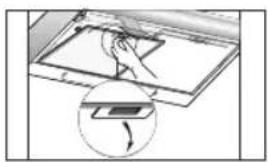
Removing the grease filters
Switch off the electricity! Remove the plug from the socket or switch the electricity off at the mains. Pull the grease filter towards you and tilt it downwards at the front.
Carbon filter
Replacing the carbon filter
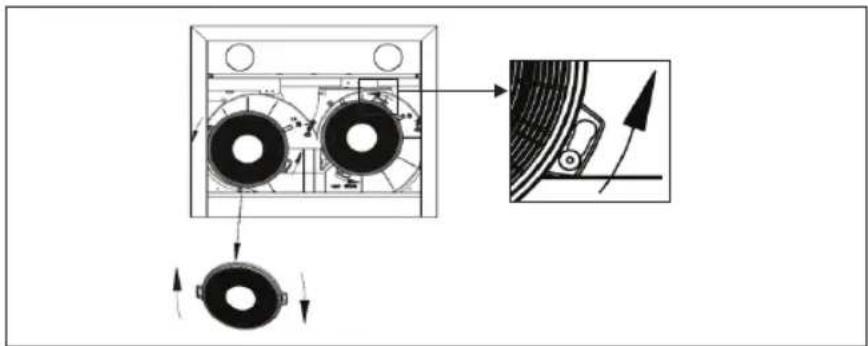
The carbon filter must always be used if the cooker hood is not ducted.
- Remove the grease filters.
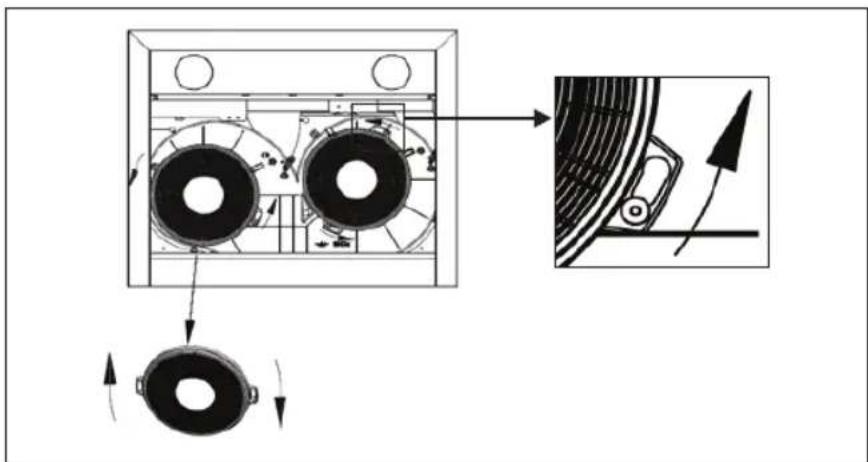
- Attach the carbon filters to the motor.
- Replace the filter grids in the extractor hood.
Note:
- Saturation of the activated charcoal will eventually occur after more or less prolonged use, depending on the type of cooking and how frequently the grease filter is cleaned.
- In all cases it is necessary to replace the cartridge at least every four months.
DO NOT wash or reuse the carbon filter. Saturated carbon is not environmentally friendly, change the filter regularly.
Lighting

- The cooker hood is fitted with LED lighting.
LEDs guarantee you optimum lighting, a service life of up to 10 times longer than conventional lamps and energy savings of as much as 90% . - Contact the technical department when LED lighting needs to be replaced.
General
This appliance should be connected to the power supply by a recognized fitter who is familiar with, and works according to the correct safety regulations. This appliance meets the European requirements.
Important that you know:
- The minimum distance between the supporting surface for the cooking vessels on the gashob and the lowest part of the range hood must be not less than 65~cm . For use with an electric, ceramic or induction hob, this distance must be at least 55~cm .
- If the cooker hood is to be fitted to an existing duct no other appliances, such as a geyser or heater, may be connected to that same duct.
- Consider local regulations with respect to the ventilation of gas appliances.
- The shorter the duct, and the fewer the bends in it, the better the cooker hood will work.
- Before you start drilling check that there are no installation cables present.
- The connecting pipe for the cooker hood has a diameter of 125mm . It is best also to use a flue pipe of the same diameter.
- The installation material supplied with this range hood is designed for fixing to reinforced concrete or masonry walls. For some types of walls you may need special plugs and screws.
- Use if supplied, the mounting template for marking the mounting holes.
Connection

Electric connection
The appliance has been manufactured as a class II, therefore no earth cable is necessary.
Make sure the supply voltage ratings correspond with those stated on the appliance data plate. The connection to the mains is carried out as follows:
BROWN = phase L
BLUE = phase N
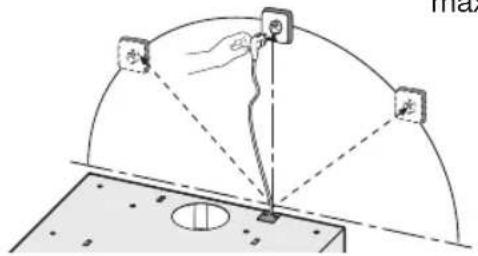
This canopy hood has been provided with a power plug.
When installing the hood, make sure that this plug remains accessible.
We recommend installing the wall socket out of view, behind the chimney cover.

Attention:
If you want to make a fixed connection, ensure that a multi-pole switch with a distance between contacts of 3mm is installed in the supply cable.
max. 100mm
Preparations

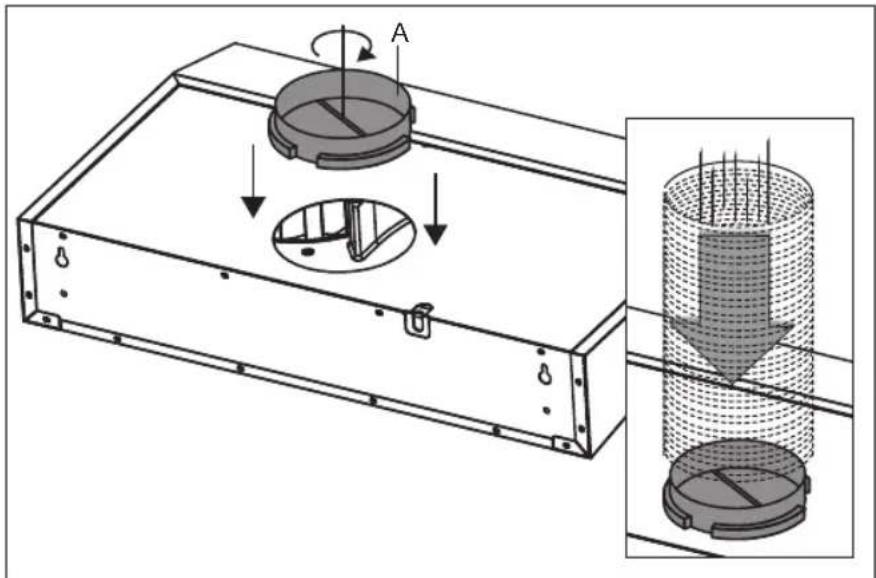
Attach the supplied flange (A) to the hood and fit the exhaust duct to the flange.
Recirculation

This cooker hood is suitable for recirculation use (see 'Cooker hood systems'). Convert the cooker hood for recirculation use.
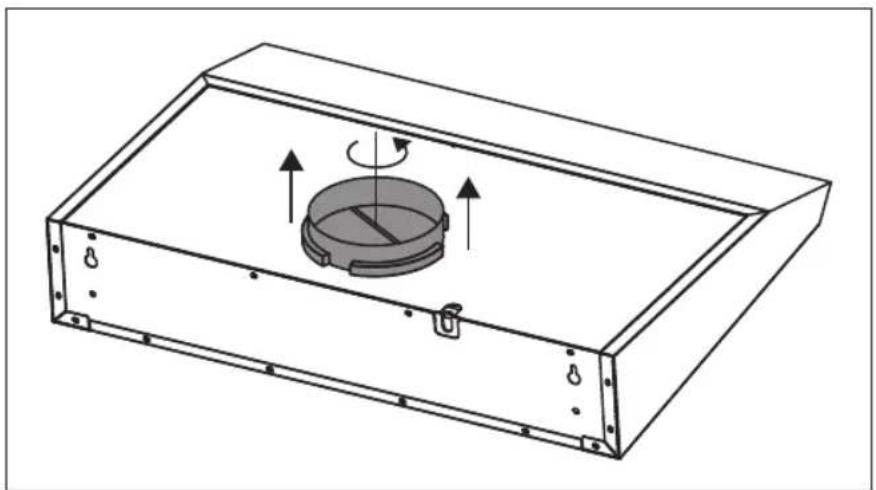
- Remove the exhaust flange
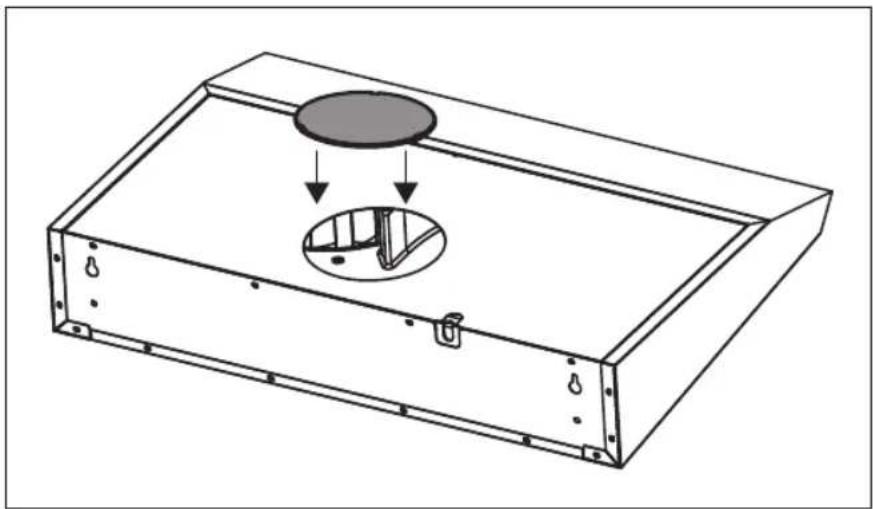
- Fit the cap.
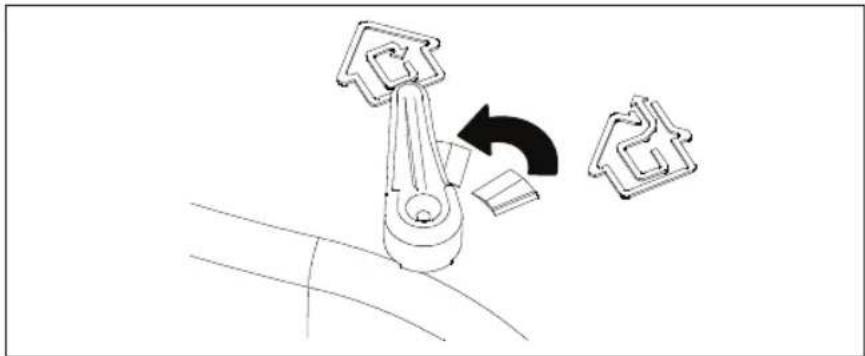
- Turn the air distribution levers on both motor housings to the 'Recirculation' position.
- Fit the carbon filters.
Mounting
Against the wall

- Remove the filters from the extractor hood.
- Hold the hood against the wall.
- Working through the hood, draw the mounting holes (A) and the holes to secure the hood (B).
- Drill the holes.
- Push the wall plugs supplied into the holes.
- Insert the screws into the 2 mounting holes (A).
NB: screw the screws in until 1 cm is left protruding from the wall.
- Hang the hood on the 2 mounting screws.
- Tighten the mounting screws.
- Tighten the locking screws.
- Connect the flue pipe to the flue ring.
Below a kitchen cupboard

- Use the template supplied with the unit to mark the positions of the 4 fixing holes (A), the opening for the power cable (C) and the opening for the exhaust (D) on the underside of the kitchen cupboard.
- Drill the holes.
- Pull the power cable upwards through the correct opening and push the exhaust ring through the opening.
- Fasten the hood to the bottom of the kitchen cupboard using the screws supplied with the kitchen cupboard.
- Connect the exhaust duct to the exhaust ring.
- Put the plug into the socket.
Disposal
Disposal of appliance and packaging
By ensuring this product is disposed of correctly, you will help prevent potential negative consequences for the environment and human health, which could otherwise be caused by inappropriate waste handling of this product. The local authorities can provide you with the relevant information.
The packaging of this appliance is recyclable. It could have been made from:
cardboard;
polythene foil (PE);
CFK-free polystyrene (PS-hard foam).
You need to dispose of these materials responsibly in accordance with official regulations.
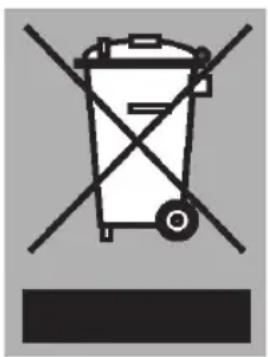
To draw attention to the fact that the segregated processing of electric household appliances is compulsory, this appliance carries the symbol of a crossed-out dustbin. This means that at the end of its working life, you may not dispose of the appliance as household refuse. Instead, you should hand it in at a special refuse collection centre run by the local authority or at a dealer's providing this service.
Segregated processing of household appliances avoids any negative effects on the environment and public health that might otherwise occur.
It enables the recovery of the materials used in the production of this appliance, thus realising considerable savings in terms of raw materials and energy.

Declaration of conformity
We declare that our products meet the applicable European Directives, Decisions and Regulations and the requirements listed in the standards referenced.

825811/VER1/22-09-2020